Domina Conceptos Médicos

Estudia para la escuela de medicina y tus examenes con Lecturio.

Intususcepción

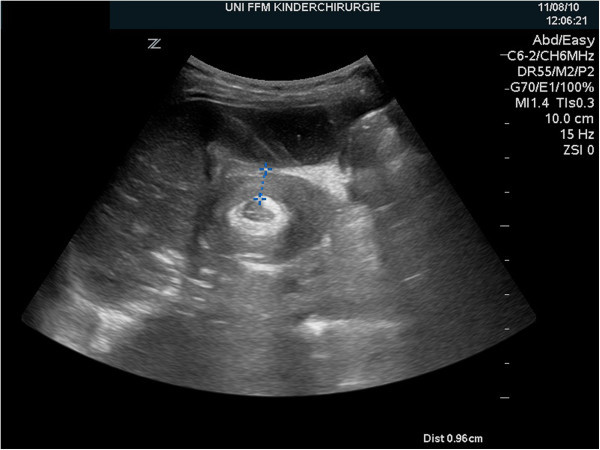
La intususcepción se produce cuando una parte del intestino (porción invaginada) se introduce en EN Erythema nodosum is an immune-mediated panniculitis (inflammation of the subcutaneous fat) caused by a type IV (delayed-type) hypersensitivity reaction. It commonly manifests in young women as tender, erythematous nodules on the shins. Erythema Nodosum otra parte (porción invaginante) del intestino. La afección puede causar obstrucción y, si no se trata, evolucionar a una isquemia intestinal. La intususcepción es más común en EN Erythema nodosum is an immune-mediated panniculitis (inflammation of the subcutaneous fat) caused by a type IV (delayed-type) hypersensitivity reaction. It commonly manifests in young women as tender, erythematous nodules on the shins. Erythema Nodosum la población pediátrica, pero ocasionalmente se encuentra en EN Erythema nodosum is an immune-mediated panniculitis (inflammation of the subcutaneous fat) caused by a type IV (delayed-type) hypersensitivity reaction. It commonly manifests in young women as tender, erythematous nodules on the shins. Erythema Nodosum adultos. El paciente pediátrico suele presentar dolor Dolor Inflammation abdominal cíclico agudo y vómitos, mientras que los LOS Neisseria adultos presentan síntomas de obstrucción intestinal. El diagnóstico en EN Erythema nodosum is an immune-mediated panniculitis (inflammation of the subcutaneous fat) caused by a type IV (delayed-type) hypersensitivity reaction. It commonly manifests in young women as tender, erythematous nodules on the shins. Erythema Nodosum los LOS Neisseria niños suele ser clínico, pero puede apoyarse en EN Erythema nodosum is an immune-mediated panniculitis (inflammation of the subcutaneous fat) caused by a type IV (delayed-type) hypersensitivity reaction. It commonly manifests in young women as tender, erythematous nodules on the shins. Erythema Nodosum un ultrasonido abdominal evidenciando un signo de diana clásico. Las opciones de tratamiento en EN Erythema nodosum is an immune-mediated panniculitis (inflammation of the subcutaneous fat) caused by a type IV (delayed-type) hypersensitivity reaction. It commonly manifests in young women as tender, erythematous nodules on the shins. Erythema Nodosum los LOS Neisseria niños incluyen el enema de contraste o neumático, y las opciones quirúrgicas se reservan para el fracaso de las medidas no quirúrgicas, las complicaciones como la gangrena o la perforación, y el tratamiento de la patología subyacente. En EN Erythema nodosum is an immune-mediated panniculitis (inflammation of the subcutaneous fat) caused by a type IV (delayed-type) hypersensitivity reaction. It commonly manifests in young women as tender, erythematous nodules on the shins. Erythema Nodosum los LOS Neisseria pacientes adultos, suele ser necesaria la cirugía.

Last updated: Dec 15, 2025

Editorial responsibility: Stanley Oiseth, Lindsay Jones, Evelin Maza

Descripción General

Definición

La intususcepción es la introducción de una porción proximal (porción invaginada) en EN Erythema nodosum is an immune-mediated panniculitis (inflammation of the subcutaneous fat) caused by a type IV (delayed-type) hypersensitivity reaction. It commonly manifests in young women as tender, erythematous nodules on the shins. Erythema Nodosum una porción distal (porción invaginante) del intestino.

Epidemiología

  • Incidencia: 26–38 por cada 100 000 nacidos vivos
  • Causa más común de obstrucción intestinal en EN Erythema nodosum is an immune-mediated panniculitis (inflammation of the subcutaneous fat) caused by a type IV (delayed-type) hypersensitivity reaction. It commonly manifests in young women as tender, erythematous nodules on the shins. Erythema Nodosum el grupo de edad de 6–36 meses
  • 60% de los LOS Neisseria casos en EN Erythema nodosum is an immune-mediated panniculitis (inflammation of the subcutaneous fat) caused by a type IV (delayed-type) hypersensitivity reaction. It commonly manifests in young women as tender, erythematous nodules on the shins. Erythema Nodosum el 1er año de vida
  • Niños > niñas (proporción de 3:2)
  • Mayor prevalencia en EN Erythema nodosum is an immune-mediated panniculitis (inflammation of the subcutaneous fat) caused by a type IV (delayed-type) hypersensitivity reaction. It commonly manifests in young women as tender, erythematous nodules on the shins. Erythema Nodosum época de virosis

Etiología

  • Idiopática (75%–80% de los LOS Neisseria casos), sin punto de inicio identificable:
    • Más común en EN Erythema nodosum is an immune-mediated panniculitis (inflammation of the subcutaneous fat) caused by a type IV (delayed-type) hypersensitivity reaction. It commonly manifests in young women as tender, erythematous nodules on the shins. Erythema Nodosum los LOS Neisseria niños
    • Rara en EN Erythema nodosum is an immune-mediated panniculitis (inflammation of the subcutaneous fat) caused by a type IV (delayed-type) hypersensitivity reaction. It commonly manifests in young women as tender, erythematous nodules on the shins. Erythema Nodosum adultos
  • Infección (provoca el aumento de la placa de Peyer):
    • Infección de las vías respiratorias superiores (30%)
    • Enteritis Enteritis Inflammation of any segment of the small intestine. Lactose Intolerance bacteriana
    • Inmunización o infección reciente por rotavirus Rotavirus A genus of Reoviridae, causing acute gastroenteritis in birds and mammals, including humans. Transmission is horizontal and by environmental contamination. Seven species (rotaviruses A through G) are recognized. Rotavirus
  • Patología subyacente:
    • Divertículo de Meckel (el más común)
    • Púrpura de Henoch-Schönlein (provoca el engrosamiento de la mucosa)
    • Linfoma
    • Pólipos o tumores intestinales

Fisiopatología y Presentación Clínica

Fisiopatología

  • La intususcepción se considera idiopática si no tiene un punto de inicio.
  • La intususcepción idiopática es más frecuente en EN Erythema nodosum is an immune-mediated panniculitis (inflammation of the subcutaneous fat) caused by a type IV (delayed-type) hypersensitivity reaction. It commonly manifests in young women as tender, erythematous nodules on the shins. Erythema Nodosum la población pediátrica.
  • Punto de inicio: lesión que queda atrapada durante el peristaltismo, arrastrando ese segmento hacia la parte distal del intestino:
    • Tumor Tumor Inflammation/pólipo
    • Divertículo de Meckel
    • Quiste de duplicación
    • Malformación vascular
    • Hematoma Hematoma A collection of blood outside the blood vessels. Hematoma can be localized in an organ, space, or tissue. Intussusception
  • Se debe sospechar de un punto de inicio patológico si:
    • Múltiples episodios de intususcepción
    • En EN Erythema nodosum is an immune-mediated panniculitis (inflammation of the subcutaneous fat) caused by a type IV (delayed-type) hypersensitivity reaction. It commonly manifests in young women as tender, erythematous nodules on the shins. Erythema Nodosum adultos y niños < 6 meses o > 3 años de edad
  • Según la localización anatómica, la intususcepción puede ser:
    • Ileocecal/ileocólica (la más común, representa el 85%–90% de los LOS Neisseria casos)
    • Ileoileal
    • Ileocólica
    • Yeyuno-ileal
    • Yeyuno-yeyunal
    • Colo-cólica
  • Introducción del intestino hacia sí mismo → obstrucción y deterioro del drenaje linfático
  • Aumento de la presión en EN Erythema nodosum is an immune-mediated panniculitis (inflammation of the subcutaneous fat) caused by a type IV (delayed-type) hypersensitivity reaction. It commonly manifests in young women as tender, erythematous nodules on the shins. Erythema Nodosum la pared intestinal de la porción invaginada → deterioro del drenaje venoso y linfático → compromiso vascular
  • Isquemia de la mucosa de la porción invaginada→ infartos de la mucosa intestinal y desprendimientos → heces sanguinolentas
  • La necrosis Necrosis The death of cells in an organ or tissue due to disease, injury or failure of the blood supply. Ischemic Cell Damage transmural y la perforación pueden ocurrir con la isquemia prolongada

Presentación Clínica

Niños pequeños/lactantes:

  • Aparición repentina, cólicos, dolor Dolor Inflammation abdominal severo e intermitente
  • Posición de las piernas contra el abdomen
  • Llanto inconsolable
  • Los LOS Neisseria episodios se producen cada 15–20 minutos y se hacen más frecuentes con el tiempo.
  • Vómitos:
    • No biliosos primero
    • Después de un episodio de dolor Dolor Inflammation
    • Puede volverse bilioso a medida que la obstrucción empeora
  • Heces muy sanguinolentas (<25% de los LOS Neisseria casos)
  • Tríada clásica (solo presente en EN Erythema nodosum is an immune-mediated panniculitis (inflammation of the subcutaneous fat) caused by a type IV (delayed-type) hypersensitivity reaction. It commonly manifests in young women as tender, erythematous nodules on the shins. Erythema Nodosum el 15% de los LOS Neisseria casos):
    • Dolor Dolor Inflammation abdominal
    • Masa en EN Erythema nodosum is an immune-mediated panniculitis (inflammation of the subcutaneous fat) caused by a type IV (delayed-type) hypersensitivity reaction. It commonly manifests in young women as tender, erythematous nodules on the shins. Erythema Nodosum forma de salchicha en EN Erythema nodosum is an immune-mediated panniculitis (inflammation of the subcutaneous fat) caused by a type IV (delayed-type) hypersensitivity reaction. It commonly manifests in young women as tender, erythematous nodules on the shins. Erythema Nodosum el cuadrante superior derecho
    • Heces en EN Erythema nodosum is an immune-mediated panniculitis (inflammation of the subcutaneous fat) caused by a type IV (delayed-type) hypersensitivity reaction. It commonly manifests in young women as tender, erythematous nodules on the shins. Erythema Nodosum gelatina de grosella:
      • Sangre mezclada con moco
      • Sugiere necrosis Necrosis The death of cells in an organ or tissue due to disease, injury or failure of the blood supply. Ischemic Cell Damage y descamación de la mucosa
      • Presentación tardía

Adultos/niños mayores:

  • El dolor Dolor Inflammation abdominal intermitente es el síntoma más común.
  • Pueden aparecer otros síntomas de obstrucción intestinal:
    • Náuseas/vómitos
    • Estreñimiento
  • Síntomas de un proceso subyacente (e.g., malignidad, infección):
    • Fiebre
    • Pérdida de peso

Diagnóstico

Intususcepción pediátrica

Antecedentes clínicos:

  • Episodios de llanto, piernas contra el abdomen
  • Episodios de letargo
  • Heces sanguinolentas
  • Vómitos
  • Fiebre
  • Contacto con otros enfermos
  • Posible intoxicación alimentaria/exposición a toxinas

Examen físico:

  • Aspecto general:
    • Palidez
    • Letargo
  • Palpación:
    • Masa en EN Erythema nodosum is an immune-mediated panniculitis (inflammation of the subcutaneous fat) caused by a type IV (delayed-type) hypersensitivity reaction. It commonly manifests in young women as tender, erythematous nodules on the shins. Erythema Nodosum forma de salchicha en EN Erythema nodosum is an immune-mediated panniculitis (inflammation of the subcutaneous fat) caused by a type IV (delayed-type) hypersensitivity reaction. It commonly manifests in young women as tender, erythematous nodules on the shins. Erythema Nodosum el cuadrante superior derecho
    • Signo de Dance: cuadrante inferior derecho escafoideo (vacío)
    • Puede o no tener sensibilidad abdominal localizada
    • Defensa, rebote: suelen ser signos tardíos asociados a la isquemia intestinal
  • Auscultación: ruidos intestinales agudos (indicativos de obstrucción)

Imagenología:

  • Ultrasonido abdominal:
    • Mejor prueba inicial
    • Signo de la diana: signo en EN Erythema nodosum is an immune-mediated panniculitis (inflammation of the subcutaneous fat) caused by a type IV (delayed-type) hypersensitivity reaction. It commonly manifests in young women as tender, erythematous nodules on the shins. Erythema Nodosum el que la porción invaginada del intestino aparece como un anillo de una diana (pared exterior del intestino)
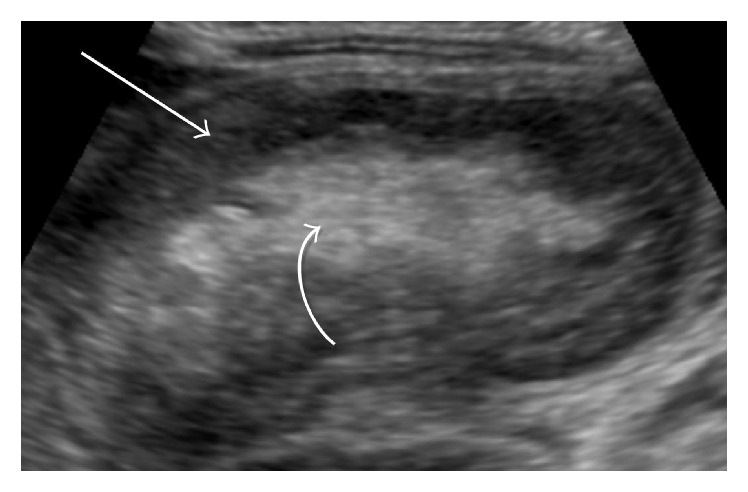
    • Signo del pseudoriñón: aparición del segmento intestinal invaginado, que imita un riñón
  • Radiografía de abdomen:
    • Prueba poco sensible o específica
    • Signo de la media luna: densidad de tejido blando que se proyecta hacia la luz del colon Colon The large intestines constitute the last portion of the digestive system. The large intestine consists of the cecum, appendix, colon (with ascending, transverse, descending, and sigmoid segments), rectum, and anal canal. The primary function of the colon is to remove water and compact the stool prior to expulsion from the body via the rectum and anal canal. Colon, Cecum, and Appendix: Anatomy
    • Signos de obstrucción del intestino delgado:
      • Asas dilatadas
      • Ausencia de gases en EN Erythema nodosum is an immune-mediated panniculitis (inflammation of the subcutaneous fat) caused by a type IV (delayed-type) hypersensitivity reaction. It commonly manifests in young women as tender, erythematous nodules on the shins. Erythema Nodosum el colon Colon The large intestines constitute the last portion of the digestive system. The large intestine consists of the cecum, appendix, colon (with ascending, transverse, descending, and sigmoid segments), rectum, and anal canal. The primary function of the colon is to remove water and compact the stool prior to expulsion from the body via the rectum and anal canal. Colon, Cecum, and Appendix: Anatomy
    • Neumoperitoneo si se ha HA Hemolytic anemia (HA) is the term given to a large group of anemias that are caused by the premature destruction/hemolysis of circulating red blood cells (RBCs). Hemolysis can occur within (intravascular hemolysis) or outside the blood vessels (extravascular hemolysis). Hemolytic Anemia producido una perforación
  • TC abdominal:
    • Se realiza solo si las otras modalidades arrojan un diagnóstico poco claro
    • Suele identificar una patología subyacente (punto de inicio) si está presente
  • Enema de contraste o neumático:
    • Confirmatorio
    • Terapia y diagnóstico de la intususcepción ileocecal
    • Se realiza mediante ultrasonido o fluoroscopia
    • Procedimiento: Se inyecta aire/contraste en EN Erythema nodosum is an immune-mediated panniculitis (inflammation of the subcutaneous fat) caused by a type IV (delayed-type) hypersensitivity reaction. It commonly manifests in young women as tender, erythematous nodules on the shins. Erythema Nodosum los LOS Neisseria intestinos para crear presión, que expulsa la parte atrapada del intestino fuera del intestino distal.

Intususcepción en EN Erythema nodosum is an immune-mediated panniculitis (inflammation of the subcutaneous fat) caused by a type IV (delayed-type) hypersensitivity reaction. It commonly manifests in young women as tender, erythematous nodules on the shins. Erythema Nodosum adultos

Antecedentes clínicos:

  • Revelará síntomas de obstrucción intestinal
  • Puede ser de inicio agudo o lento, insidioso e intermitente

Examen físico:

  • Distensión abdominal
  • Sensibilidad localizada o difusa
  • La peritonitis Peritonitis Inflammation of the peritoneum lining the abdominal cavity as the result of infectious, autoimmune, or chemical processes. Primary peritonitis is due to infection of the peritoneal cavity via hematogenous or lymphatic spread and without intra-abdominal source. Secondary peritonitis arises from the abdominal cavity itself through rupture or abscess of intra-abdominal organs. Penetrating Abdominal Injury es una presentación tardía indicativa de isquemia/perforación.

Imagenología:

  • Radiografía de abdomen:
    • No específica
    • Puede mostrar un patrón obstructivo:
      • Asas de intestino delgado dilatadas
      • Escasez de gases colónicos
      • Neumoperitoneo si hubo perforación
  • TC abdominal:
    • Obstrucción del intestino delgado:
      • Asas de intestino delgado dilatadas
      • Colapso del intestino delgado distal y del colon Colon The large intestines constitute the last portion of the digestive system. The large intestine consists of the cecum, appendix, colon (with ascending, transverse, descending, and sigmoid segments), rectum, and anal canal. The primary function of the colon is to remove water and compact the stool prior to expulsion from the body via the rectum and anal canal. Colon, Cecum, and Appendix: Anatomy
    • Engrosamiento de la pared intestinal
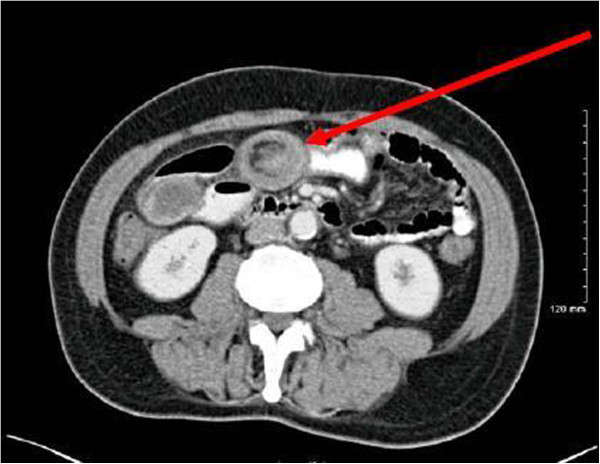
    • Signo de la diana, masa en EN Erythema nodosum is an immune-mediated panniculitis (inflammation of the subcutaneous fat) caused by a type IV (delayed-type) hypersensitivity reaction. It commonly manifests in young women as tender, erythematous nodules on the shins. Erythema Nodosum forma de salchicha
Intususcepción yeyuno-yeyunal

Intususcepción yeyuno-yeyunal secundaria a un pólipo fibroide inflamatorio

Imagen: “Recurrent adult jejuno-jejunal intussusception due to inflammatory fibroid polyp – Vanek’s tumour: a case report” por Joyce KM, Waters PS, Waldron RM, Khan I, Orosz ZS, Németh T, Barry K. Licencia: CC BY 4.0

Tratamiento

Intususcepción pediátrica

Tratamiento inicial:

  • Nada por via oral
  • Descompresión con sonda nasogástrica
  • Reanimación con líquidos

Reducción no quirúrgica:

  • Terapia de 1ra línea para:
    • Intususcepción ileocecal
    • Pacientes estables sin peritonitis Peritonitis Inflammation of the peritoneum lining the abdominal cavity as the result of infectious, autoimmune, or chemical processes. Primary peritonitis is due to infection of the peritoneal cavity via hematogenous or lymphatic spread and without intra-abdominal source. Secondary peritonitis arises from the abdominal cavity itself through rupture or abscess of intra-abdominal organs. Penetrating Abdominal Injury/evidencia de perforación/isquemia
  • Realizado con contraste o enema neumático
  • Tasa de éxito: 80%–95% en EN Erythema nodosum is an immune-mediated panniculitis (inflammation of the subcutaneous fat) caused by a type IV (delayed-type) hypersensitivity reaction. It commonly manifests in young women as tender, erythematous nodules on the shins. Erythema Nodosum centros con experiencia
  • Si la reducción es parcial, se puede intentar repetir la reducción.
  • La tasa de recurrencia es 10%–20% (el 50% de los LOS Neisseria casos en EN Erythema nodosum is an immune-mediated panniculitis (inflammation of the subcutaneous fat) caused by a type IV (delayed-type) hypersensitivity reaction. It commonly manifests in young women as tender, erythematous nodules on the shins. Erythema Nodosum las primeras 72 horas).
  • Se puede repetir la reducción en EN Erythema nodosum is an immune-mediated panniculitis (inflammation of the subcutaneous fat) caused by a type IV (delayed-type) hypersensitivity reaction. It commonly manifests in young women as tender, erythematous nodules on the shins. Erythema Nodosum un paciente estable.

Tratamiento quirúrgico:

  • Indicaciones:
    • Paciente inestable, peritonitis Peritonitis Inflammation of the peritoneum lining the abdominal cavity as the result of infectious, autoimmune, or chemical processes. Primary peritonitis is due to infection of the peritoneal cavity via hematogenous or lymphatic spread and without intra-abdominal source. Secondary peritonitis arises from the abdominal cavity itself through rupture or abscess of intra-abdominal organs. Penetrating Abdominal Injury; evidencia de perforación/isquemia
    • Intento de reducción totalmente fallido con enema
    • Un defecto de llenado persistente después de la reducción, que sugiere un tumor Tumor Inflammation
    • Para una intususcepción de intestino delgado a intestino delgado:
      • Algunos se resolverán espontáneamente.
      • Si la intususcepción no se resuelve, suele estar indicada la cirugía.
      • La reducción con enema suele ser infructuosa.
      • También, mayor probabilidad de un punto de inicio/patología subyacente
  • Procedimientos:
    • Maniobra de Hutchinson:
      • Reducción manual de la intususcepción
      • El intestino puede aparecer edematoso/inflamado, pero si es viable, no es necesario resecarlo.
      • Si no se ha HA Hemolytic anemia (HA) is the term given to a large group of anemias that are caused by the premature destruction/hemolysis of circulating red blood cells (RBCs). Hemolysis can occur within (intravascular hemolysis) or outside the blood vessels (extravascular hemolysis). Hemolytic Anemia identificado ningún punto de inicio, solo es necesario realizar una reducción manual.
      • A veces se realiza una apendicectomía concomitante.
      • Puede realizarse por vía abierta o laparoscópica
    • Resección intestinal:
      • Para la perforación del intestino
      • Para el intestino no viable: matidez permanente o ausencia de pulsaciones detectables
      • Punto de inicio patológico identificado (divertículo de Meckel, tumor Tumor Inflammation)
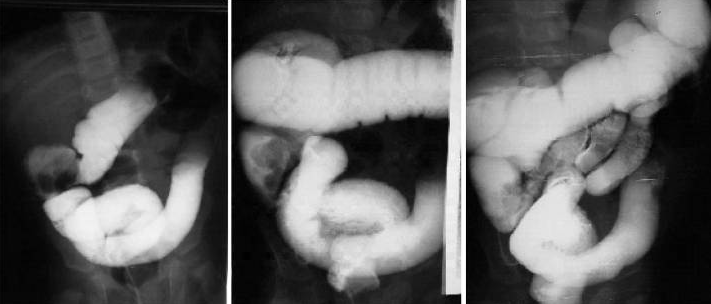
Reducción de la iintususcepción ileocólica

Reducción de la intususcepción ileocólica con enema de bario en un niño de 2 años. La última imagen muestra el llenado del ciego y del intestino delgado distal, lo que indica una reducción completa.

Imagen: “Comparison of different modalities for reducing childhood intussusception” por Alehossein M, Babaheidarian P, Salamati P. Licencia: CC BY 2.5

Intususcepción en EN Erythema nodosum is an immune-mediated panniculitis (inflammation of the subcutaneous fat) caused by a type IV (delayed-type) hypersensitivity reaction. It commonly manifests in young women as tender, erythematous nodules on the shins. Erythema Nodosum adultos

Consideraciones generales:

  • Intususcepción asintomática sin obstrucción:
    • Suele ser un hallazgo incidental en EN Erythema nodosum is an immune-mediated panniculitis (inflammation of the subcutaneous fat) caused by a type IV (delayed-type) hypersensitivity reaction. It commonly manifests in young women as tender, erythematous nodules on the shins. Erythema Nodosum la TC
    • Se resuelve espontáneamente y no requiere una intervención
  • Intususcepción asociada a una obstrucción intestinal:
    • Generalmente asociado a un punto de inicio patológico (> 92% de los LOS Neisseria casos)
    • Puede afectar al AL Amyloidosis intestino delgado o al AL Amyloidosis colon Colon The large intestines constitute the last portion of the digestive system. The large intestine consists of the cecum, appendix, colon (with ascending, transverse, descending, and sigmoid segments), rectum, and anal canal. The primary function of the colon is to remove water and compact the stool prior to expulsion from the body via the rectum and anal canal. Colon, Cecum, and Appendix: Anatomy
    • Requiere cirugía
    • El enfoque general es el mismo que para cualquier obstrucción intestinal.

Tratamiento inicial/de soporte:

  • Nada por via oral
  • Descompresión con sonda nasogástrica
  • Líquidos intravenosos, corrección de electrolitos

Cirugía:

  • El procedimiento depende de la causa subyacente
  • Suele implicar la resección de un punto de inicio patológico ( tumor Tumor Inflammation, divertículo de Meckel)
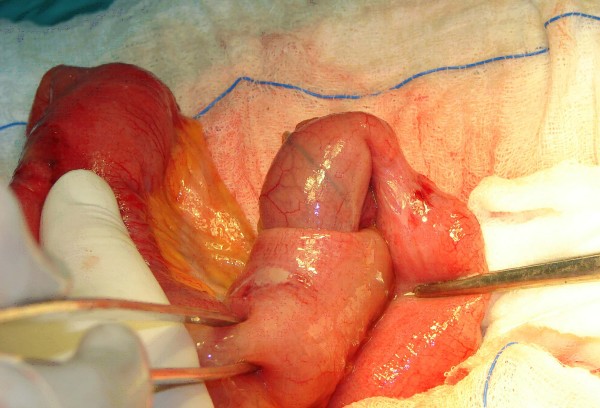
Imagen intraoperatoria de una intususcepción ileoileal

Imagen intraoperatoria de una intususcepción ileoileal

Imagen: “Ileoileal intussusception induced by a gastrointestinal stromal tumor” por Vasiliadis K, Kogopoulos E, Katsamakas M, Karamitsos E, Tsalikidis C, Pringos B, Tsalikidis A. Licencia: CC BY 2.0

Diagnóstico Diferencial

  • Vólvulo: obstrucción del intestino delgado secundaria a malrotación intestinal en EN Erythema nodosum is an immune-mediated panniculitis (inflammation of the subcutaneous fat) caused by a type IV (delayed-type) hypersensitivity reaction. It commonly manifests in young women as tender, erythematous nodules on the shins. Erythema Nodosum niños. Los LOS Neisseria pacientes tienen una presentación similar a la intususcepción, con vómitos y retracción de las rodillas. El diagnóstico puede establecerse con un ultrasonido o una serie gastrointestinal superior. Esta afección requiere una cirugía de emergencia para la detorsión del intestino.
  • Hernia Hernia Protrusion of tissue, structure, or part of an organ through the bone, muscular tissue, or the membrane by which it is normally contained. Hernia may involve tissues such as the abdominal wall or the respiratory diaphragm. Hernias may be internal, external, congenital, or acquired. Abdominal Hernias inguinal estrangulada: hernia Hernia Protrusion of tissue, structure, or part of an organ through the bone, muscular tissue, or the membrane by which it is normally contained. Hernia may involve tissues such as the abdominal wall or the respiratory diaphragm. Hernias may be internal, external, congenital, or acquired. Abdominal Hernias inguinal no reducible que contiene un asa ASA Anterior Cord Syndrome de intestino con suministro de sangre comprometido. Se presenta como una masa inguinal irreducible que suele ser sensible y asociada a síntomas de obstrucción del intestino delgado. El diagnóstico suele establecerse con la exploración física. El tratamiento consiste en EN Erythema nodosum is an immune-mediated panniculitis (inflammation of the subcutaneous fat) caused by a type IV (delayed-type) hypersensitivity reaction. It commonly manifests in young women as tender, erythematous nodules on the shins. Erythema Nodosum la reparación quirúrgica urgente de la hernia Hernia Protrusion of tissue, structure, or part of an organ through the bone, muscular tissue, or the membrane by which it is normally contained. Hernia may involve tissues such as the abdominal wall or the respiratory diaphragm. Hernias may be internal, external, congenital, or acquired. Abdominal Hernias.
  • Gastroenteritis Gastroenteritis Gastroenteritis is inflammation of the stomach and intestines, commonly caused by infections from bacteria, viruses, or parasites. Transmission may be foodborne, fecal-oral, or through animal contact. Common clinical features include abdominal pain, diarrhea, vomiting, fever, and dehydration. Gastroenteritis: infección viral aguda del tracto gastrointestinal que se presenta con diarrea y dolor Dolor Inflammation abdominal. La diarrea acuosa suele ser una característica destacada y el diagnóstico se establece clínicamente. El tratamiento suele ser de soporte y consiste en EN Erythema nodosum is an immune-mediated panniculitis (inflammation of the subcutaneous fat) caused by a type IV (delayed-type) hypersensitivity reaction. It commonly manifests in young women as tender, erythematous nodules on the shins. Erythema Nodosum la hidratación oral o intravenosa.
  • Cólico: episodios agudos de dolor Dolor Inflammation abdominal en EN Erythema nodosum is an immune-mediated panniculitis (inflammation of the subcutaneous fat) caused by a type IV (delayed-type) hypersensitivity reaction. It commonly manifests in young women as tender, erythematous nodules on the shins. Erythema Nodosum lactantes, asociados a llanto e irritabilidad. Puede confundirse con una intususcepción, pero el lactante está sano y se desarrolla, con un examen físico normal.
  • Apendicitis: inflamación aguda del apéndice. En EN Erythema nodosum is an immune-mediated panniculitis (inflammation of the subcutaneous fat) caused by a type IV (delayed-type) hypersensitivity reaction. It commonly manifests in young women as tender, erythematous nodules on the shins. Erythema Nodosum los LOS Neisseria niños pequeños, se presenta con dolor Dolor Inflammation abdominal y ataques de llanto. El cuadrante inferior derecho suele estar particularmente sensible en EN Erythema nodosum is an immune-mediated panniculitis (inflammation of the subcutaneous fat) caused by a type IV (delayed-type) hypersensitivity reaction. It commonly manifests in young women as tender, erythematous nodules on the shins. Erythema Nodosum la exploración física sin masa palpable. El diagnóstico se establece basándose en EN Erythema nodosum is an immune-mediated panniculitis (inflammation of the subcutaneous fat) caused by a type IV (delayed-type) hypersensitivity reaction. It commonly manifests in young women as tender, erythematous nodules on the shins. Erythema Nodosum la exploración e imagenología, generalmente ultrasonido en EN Erythema nodosum is an immune-mediated panniculitis (inflammation of the subcutaneous fat) caused by a type IV (delayed-type) hypersensitivity reaction. It commonly manifests in young women as tender, erythematous nodules on the shins. Erythema Nodosum niños. El tratamiento es la apendicectomía.

Referencias

  1. Bordeianou L., Yeh D.D. (2023). Etiologies, clinical manifestations, and diagnosis of mechanical small bowel obstruction in adults. UpToDate. Retrieved August 12, 2025, from https://www.uptodate.com/contents/etiologies-clinical-manifestations-and-diagnosis-of-mechanical-small-bowel-obstruction-in-adults
  2. Erkan N, Haciyanli M, Yildirim M, Sayhan H, Vardar E, Polat A.F. Intussusception in adults: an unusual and challenging condition for surgeons. Int J Colorectal Dis. 2005;20(5):452. Epub 2005 Mar 10. 
  3. Nghia V, Sato T.T. (2024). Intussusception in children. UpToDate. Retrieved August 12, 2025, from https://www.uptodate.com/contents/intussusception-in-children
  4. Ntoulia A, Tharakan S.J., Reid J.R., Mahboubi S. Failed Intussusception Reduction in Children: Correlation Between Radiologic, Surgical, and Pathologic Findings. AJR Am J Roentgenol. 2016;207(2):424. Epub 2016 May 25.
  5. Williams N., Bulstrode Ch. (2013). Bailey and Love’s Short Practice of Surgery 26th edition (pg 1184-1185).

¡Crea tu cuenta gratis o inicia una sesión para seguir leyendo!

Regístrate ahora y obtén acceso gratuito a Lecturio con páginas de concepto, videos médicos y cuestionarios para tu educación médica.

User Reviews

Que tengas una sesión de estudio alegre y navideña 🎁 Ahorra 50% en todos los planes >>

Details