Domina Conceptos Médicos

Estudia para la escuela de medicina y tus examenes con Lecturio.

Infección por el Virus del Zika

El virus Virus Viruses are infectious, obligate intracellular parasites composed of a nucleic acid core surrounded by a protein capsid. Viruses can be either naked (non-enveloped) or enveloped. The classification of viruses is complex and based on many factors, including type and structure of the nucleoid and capsid, the presence of an envelope, the replication cycle, and the host range. Virology del Zika Zika Zika virus belongs to the genus Flavivirus and is primarily transmitted by Aedes aegypti mosquitoes, but can also be transmitted sexually and transplacentally. Although most infected patients are asymptomatic, some may present with low-grade fever, pruritic rash, and conjunctivitis. Zika Virus Infection pertenece al AL Amyloidosis género Flavivirus Flavivirus A genus of flaviviridae containing several subgroups and many species. Most are arboviruses transmitted by mosquitoes or ticks. The type species is yellow fever virus. Tick-borne Encephalitis Virus y es transmitido principalmente por mosquitos Aedes aegypti, pero también puede transmitirse por vía sexual y transplacentaria. Aunque la mayoría de los LOS Neisseria pacientes infectados son asintomáticos, algunos pueden presentar fiebre, erupción pruriginosa y conjuntivitis. El síndrome de Zika Zika Zika virus belongs to the genus Flavivirus and is primarily transmitted by Aedes aegypti mosquitoes, but can also be transmitted sexually and transplacentally. Although most infected patients are asymptomatic, some may present with low-grade fever, pruritic rash, and conjunctivitis. Zika Virus Infection congénito es la complicación más grave de una infección por el virus Virus Viruses are infectious, obligate intracellular parasites composed of a nucleic acid core surrounded by a protein capsid. Viruses can be either naked (non-enveloped) or enveloped. The classification of viruses is complex and based on many factors, including type and structure of the nucleoid and capsid, the presence of an envelope, the replication cycle, and the host range. Virology del Zika Zika Zika virus belongs to the genus Flavivirus and is primarily transmitted by Aedes aegypti mosquitoes, but can also be transmitted sexually and transplacentally. Although most infected patients are asymptomatic, some may present with low-grade fever, pruritic rash, and conjunctivitis. Zika Virus Infection, donde la infección fetal transplacentaria se manifiesta con defectos oculares, microcefalia, espasticidad y convulsiones. El diagnóstico se realiza mediante PCR PCR Polymerase chain reaction (PCR) is a technique that amplifies DNA fragments exponentially for analysis. The process is highly specific, allowing for the targeting of specific genomic sequences, even with minuscule sample amounts. The PCR cycles multiple times through 3 phases: denaturation of the template DNA, annealing of a specific primer to the individual DNA strands, and synthesis/elongation of new DNA molecules. Polymerase Chain Reaction (PCR) con transcripción inversa o serología. Dado que no existe un tratamiento definitivo para una infección por el virus Virus Viruses are infectious, obligate intracellular parasites composed of a nucleic acid core surrounded by a protein capsid. Viruses can be either naked (non-enveloped) or enveloped. The classification of viruses is complex and based on many factors, including type and structure of the nucleoid and capsid, the presence of an envelope, the replication cycle, and the host range. Virology del Zika Zika Zika virus belongs to the genus Flavivirus and is primarily transmitted by Aedes aegypti mosquitoes, but can also be transmitted sexually and transplacentally. Although most infected patients are asymptomatic, some may present with low-grade fever, pruritic rash, and conjunctivitis. Zika Virus Infection, el tratamiento es principalmente de soporte. La prevención incluye el control de la población de mosquitos, el uso de repelentes de insectos y el uso de ropa protectora.

Last updated: Jan 9, 2025
Editorial responsibility: Stanley Oiseth, Lindsay Jones, Evelin Maza

Clasificación

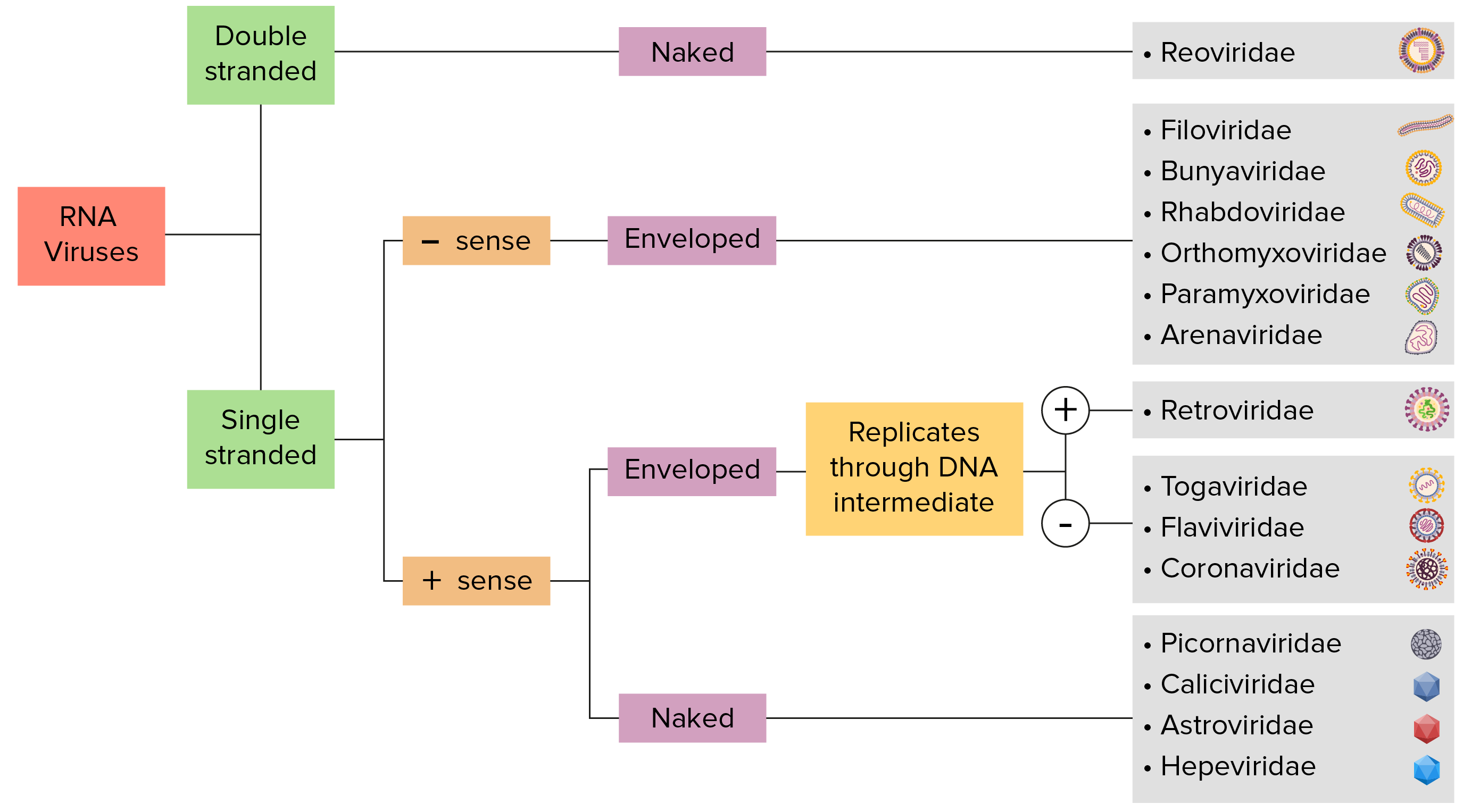
Diagrama de flujo de la clasificación de virus de ARN

Identificación del virus de ARN:
Los virus se pueden clasificar de muchas formas. La mayoría de los virus, sin embargo, tendrán un genoma formado por ADN o ARN. Los virus con genoma de ARN pueden caracterizarse además por ARN monocatenario o bicatenario. Los virus “envueltos” están cubiertos por una fina capa de membrana celular (generalmente extraída de la célula huésped). Si la envoltura está ausente, los virus se denominan virus “desnudos”. Los virus con genomas monocatenarios son virus de “sentido positivo” si el genoma se emplea directamente como ARN mensajero (ARNm), que se traduce en proteínas. Los virus monocatenarios de “sentido negativo” emplean la ARN polimerasa dependiente de ARN, una enzima viral, para transcribir su genoma en ARN mensajero.
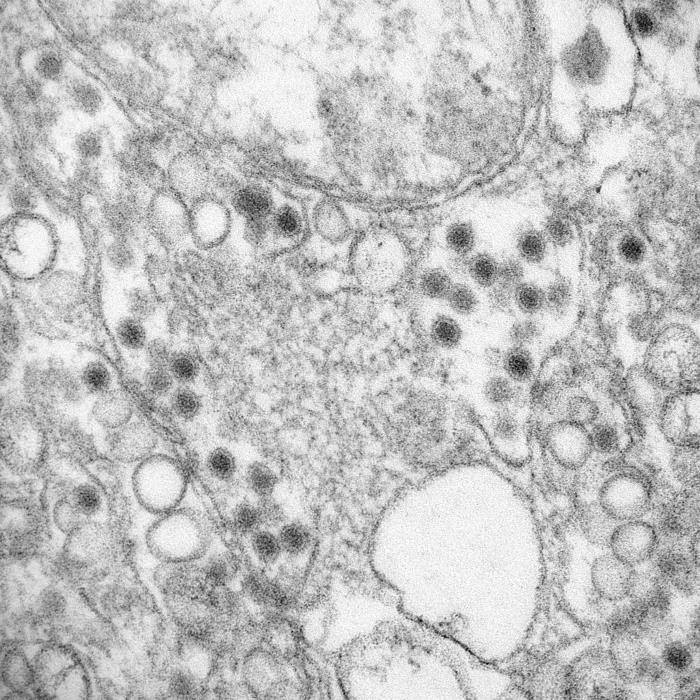
Imagen por Lecturio. Licencia: CC BY-NC-SA 4.0

Características Generales y Epidemiología

Características generales

  • Género: Flavivirus Flavivirus A genus of flaviviridae containing several subgroups and many species. Most are arboviruses transmitted by mosquitoes or ticks. The type species is yellow fever virus. Tick-borne Encephalitis Virus
  • También clasificado como arbovirus porque es transmitido por un artrópodo
  • Estructura:
    • Sentido positivo
    • ARN lineal monocatenario
    • Envuelto
    • Cápside icosaédrica
Imagen de microscopía electrónica de transmisión del virus Zika

Imagen de microscopía electrónica de transmisión del virus del Zika:
Miembro de la familia Flaviviridae, cultivado en células de cultivo LLC-MK2. Las partículas virales tienen un diámetro de 40 nm y tienen una envoltura exterior y un núcleo denso interior. También nótense las vesículas de membrana lisa, que se reconocen como el complejo de replicación de esta familia viral.
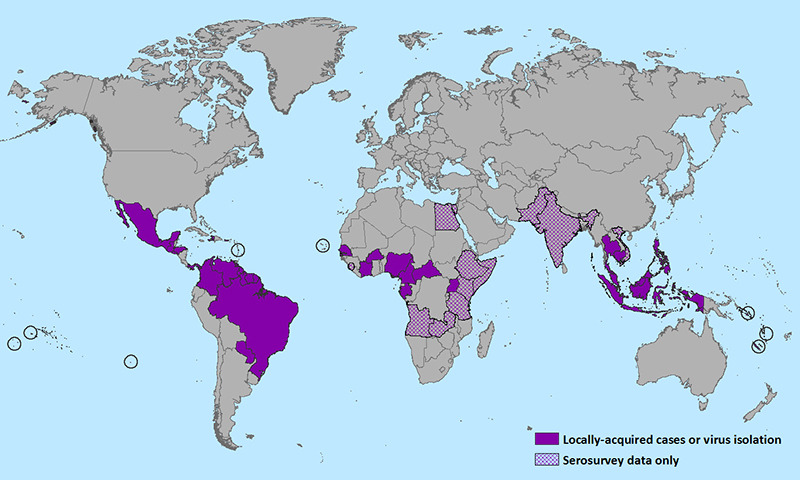
Imagen: “22059” por CDC. Licencia: Dominio Público

Epidemiología

  • Identificado por 1ra vez en EN Erythema nodosum is an immune-mediated panniculitis (inflammation of the subcutaneous fat) caused by a type IV (delayed-type) hypersensitivity reaction. It commonly manifests in young women as tender, erythematous nodules on the shins. Erythema Nodosum Uganda en EN Erythema nodosum is an immune-mediated panniculitis (inflammation of the subcutaneous fat) caused by a type IV (delayed-type) hypersensitivity reaction. It commonly manifests in young women as tender, erythematous nodules on the shins. Erythema Nodosum 1947
  • Ahora está ampliamente distribuido en EN Erythema nodosum is an immune-mediated panniculitis (inflammation of the subcutaneous fat) caused by a type IV (delayed-type) hypersensitivity reaction. It commonly manifests in young women as tender, erythematous nodules on the shins. Erythema Nodosum las zonas tropicales y subtropicales de:
  • Recientemente, se han reportado brotes locales en EN Erythema nodosum is an immune-mediated panniculitis (inflammation of the subcutaneous fat) caused by a type IV (delayed-type) hypersensitivity reaction. It commonly manifests in young women as tender, erythematous nodules on the shins. Erythema Nodosum Estados Unidos.
  • Los LOS Neisseria casos de Zika Zika Zika virus belongs to the genus Flavivirus and is primarily transmitted by Aedes aegypti mosquitoes, but can also be transmitted sexually and transplacentally. Although most infected patients are asymptomatic, some may present with low-grade fever, pruritic rash, and conjunctivitis. Zika Virus Infection en EN Erythema nodosum is an immune-mediated panniculitis (inflammation of the subcutaneous fat) caused by a type IV (delayed-type) hypersensitivity reaction. It commonly manifests in young women as tender, erythematous nodules on the shins. Erythema Nodosum las Américas cayeron de 40 000 en EN Erythema nodosum is an immune-mediated panniculitis (inflammation of the subcutaneous fat) caused by a type IV (delayed-type) hypersensitivity reaction. It commonly manifests in young women as tender, erythematous nodules on the shins. Erythema Nodosum 2022 a 8 750 a mediados de 2023, una reducción del 59%.
Mapa mundial de riesgo de virus del Zika (2016)

Mapamundi que muestra la distribución del virus del Zika (2016)

Imagen: “CDC map of Zika virus distribution as of 15 January 2016” por CDC. Licencia: Dominio Público
Related videos

Patogénesis

Reservorios

  • Humanos
  • Primates no humanos

Transmisión

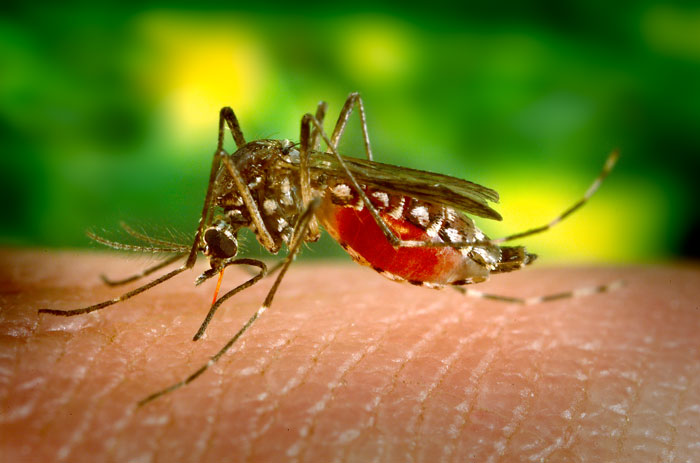
  • Transmitido con mayor frecuencia por los LOS Neisseria mosquitos Aedes aegypti
  • La transmisión transplacentaria puede ocurrir si las mujeres embarazadas están infectadas.
  • Posible transmisión sexual
Aedes aegypti alimentándose de sangre

Aedes aegypti alimentándose en piel humana

Imagen: “Aedes aegypti bloodfeeding CDC Gathany” por James Gathany. Licencia: Dominio Público
Factores de riesgo del huésped

  • Viajes recientes a áreas endémicas (áreas tropicales y subtropicales)
  • Relaciones sexuales con una persona infectada o recientemente infectada

Fisiopatología

  • El mosquito A. aegypti sirve como vector:
    • El virus Virus Viruses are infectious, obligate intracellular parasites composed of a nucleic acid core surrounded by a protein capsid. Viruses can be either naked (non-enveloped) or enveloped. The classification of viruses is complex and based on many factors, including type and structure of the nucleoid and capsid, the presence of an envelope, the replication cycle, and the host range. Virology del Zika Zika Zika virus belongs to the genus Flavivirus and is primarily transmitted by Aedes aegypti mosquitoes, but can also be transmitted sexually and transplacentally. Although most infected patients are asymptomatic, some may present with low-grade fever, pruritic rash, and conjunctivitis. Zika Virus Infection se replica en EN Erythema nodosum is an immune-mediated panniculitis (inflammation of the subcutaneous fat) caused by a type IV (delayed-type) hypersensitivity reaction. It commonly manifests in young women as tender, erythematous nodules on the shins. Erythema Nodosum el intestino medio de un mosquito.
    • Después de la replicación, el virus Virus Viruses are infectious, obligate intracellular parasites composed of a nucleic acid core surrounded by a protein capsid. Viruses can be either naked (non-enveloped) or enveloped. The classification of viruses is complex and based on many factors, including type and structure of the nucleoid and capsid, the presence of an envelope, the replication cycle, and the host range. Virology vive en EN Erythema nodosum is an immune-mediated panniculitis (inflammation of the subcutaneous fat) caused by a type IV (delayed-type) hypersensitivity reaction. It commonly manifests in young women as tender, erythematous nodules on the shins. Erythema Nodosum las glándulas salivales del mosquito.
  • El mosquito pica Pica Pica is an eating disorder characterized by a desire or recurrent compulsion to eat substances that are nonnutritive and not food. These compulsions and ingested substances are inappropriate for age or culture. Pica a un huésped humano, inoculando el virus Virus Viruses are infectious, obligate intracellular parasites composed of a nucleic acid core surrounded by a protein capsid. Viruses can be either naked (non-enveloped) or enveloped. The classification of viruses is complex and based on many factors, including type and structure of the nucleoid and capsid, the presence of an envelope, the replication cycle, and the host range. Virology en EN Erythema nodosum is an immune-mediated panniculitis (inflammation of the subcutaneous fat) caused by a type IV (delayed-type) hypersensitivity reaction. It commonly manifests in young women as tender, erythematous nodules on the shins. Erythema Nodosum los LOS Neisseria queratinocitos.
  • El virus Virus Viruses are infectious, obligate intracellular parasites composed of a nucleic acid core surrounded by a protein capsid. Viruses can be either naked (non-enveloped) or enveloped. The classification of viruses is complex and based on many factors, including type and structure of the nucleoid and capsid, the presence of an envelope, the replication cycle, and the host range. Virology se mueve a los LOS Neisseria ganglios linfáticos antes de diseminarse sistémicamente.
  • En EN Erythema nodosum is an immune-mediated panniculitis (inflammation of the subcutaneous fat) caused by a type IV (delayed-type) hypersensitivity reaction. It commonly manifests in young women as tender, erythematous nodules on the shins. Erythema Nodosum el síndrome de Zika Zika Zika virus belongs to the genus Flavivirus and is primarily transmitted by Aedes aegypti mosquitoes, but can also be transmitted sexually and transplacentally. Although most infected patients are asymptomatic, some may present with low-grade fever, pruritic rash, and conjunctivitis. Zika Virus Infection congénito, el virus Virus Viruses are infectious, obligate intracellular parasites composed of a nucleic acid core surrounded by a protein capsid. Viruses can be either naked (non-enveloped) or enveloped. The classification of viruses is complex and based on many factors, including type and structure of the nucleoid and capsid, the presence of an envelope, the replication cycle, and the host range. Virology infecta las células progenitoras neurales del feto.

Presentación Clínica

Infección por el virus Virus Viruses are infectious, obligate intracellular parasites composed of a nucleic acid core surrounded by a protein capsid. Viruses can be either naked (non-enveloped) or enveloped. The classification of viruses is complex and based on many factors, including type and structure of the nucleoid and capsid, the presence of an envelope, the replication cycle, and the host range. Virology del Zika Zika Zika virus belongs to the genus Flavivirus and is primarily transmitted by Aedes aegypti mosquitoes, but can also be transmitted sexually and transplacentally. Although most infected patients are asymptomatic, some may present with low-grade fever, pruritic rash, and conjunctivitis. Zika Virus Infection en EN Erythema nodosum is an immune-mediated panniculitis (inflammation of the subcutaneous fat) caused by a type IV (delayed-type) hypersensitivity reaction. It commonly manifests in young women as tender, erythematous nodules on the shins. Erythema Nodosum adultos

  • Período de incubación: 3–14 días
  • La mayoría de los LOS Neisseria pacientes permanecen asintomáticos después del período de incubación.
  • Si es sintomático, los LOS Neisseria hallazgos son inespecíficos:
    • Cefalea
    • Artralgia
    • Mialgia
    • Fiebre
    • Erupción pruriginosa
    • Conjuntivitis no exudativa
  • Posibles complicaciones:
    • Síndrome de Guillain-Barré
    • Meningoencefalitis
    • Mielitis transversa

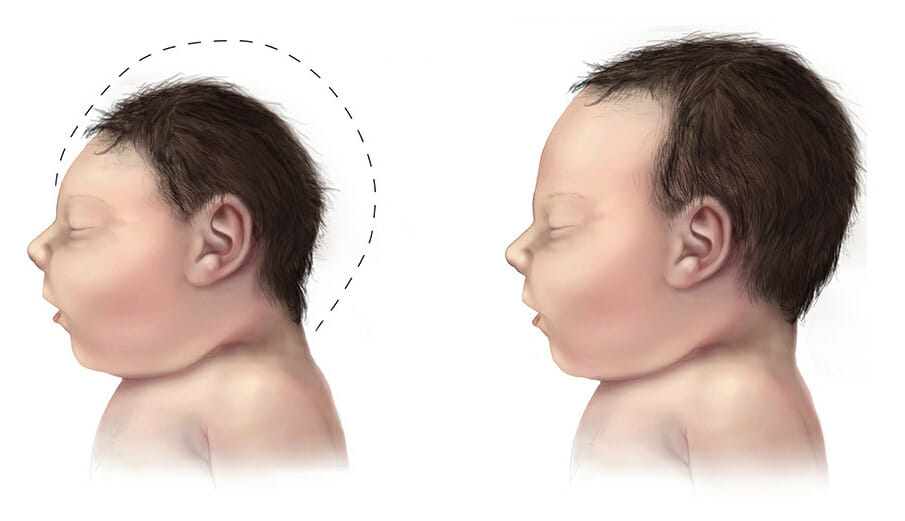
Síndrome de Zika Zika Zika virus belongs to the genus Flavivirus and is primarily transmitted by Aedes aegypti mosquitoes, but can also be transmitted sexually and transplacentally. Although most infected patients are asymptomatic, some may present with low-grade fever, pruritic rash, and conjunctivitis. Zika Virus Infection congénito

  • Complicación más preocupante de la infección por el virus Virus Viruses are infectious, obligate intracellular parasites composed of a nucleic acid core surrounded by a protein capsid. Viruses can be either naked (non-enveloped) or enveloped. The classification of viruses is complex and based on many factors, including type and structure of the nucleoid and capsid, the presence of an envelope, the replication cycle, and the host range. Virology del Zika Zika Zika virus belongs to the genus Flavivirus and is primarily transmitted by Aedes aegypti mosquitoes, but can also be transmitted sexually and transplacentally. Although most infected patients are asymptomatic, some may present with low-grade fever, pruritic rash, and conjunctivitis. Zika Virus Infection
  • El virus Virus Viruses are infectious, obligate intracellular parasites composed of a nucleic acid core surrounded by a protein capsid. Viruses can be either naked (non-enveloped) or enveloped. The classification of viruses is complex and based on many factors, including type and structure of the nucleoid and capsid, the presence of an envelope, the replication cycle, and the host range. Virology del Zika Zika Zika virus belongs to the genus Flavivirus and is primarily transmitted by Aedes aegypti mosquitoes, but can also be transmitted sexually and transplacentally. Although most infected patients are asymptomatic, some may present with low-grade fever, pruritic rash, and conjunctivitis. Zika Virus Infection infecta las células progenitoras neurales del SNC.
  • Los LOS Neisseria hallazgos incluyen:
    • Calcificaciones subcorticales
    • Microcefalia
    • Ventriculomegalia
    • Defectos oculares
    • Espasticidad
    • Convulsiones

Diagnóstico y Tratamiento

Diagnóstico

  • Estudios de diagnóstico específicos basados en EN Erythema nodosum is an immune-mediated panniculitis (inflammation of the subcutaneous fat) caused by a type IV (delayed-type) hypersensitivity reaction. It commonly manifests in young women as tender, erythematous nodules on the shins. Erythema Nodosum el tiempo transcurrido desde la infección:
    • 0‒14 días después de la infección: reacción en EN Erythema nodosum is an immune-mediated panniculitis (inflammation of the subcutaneous fat) caused by a type IV (delayed-type) hypersensitivity reaction. It commonly manifests in young women as tender, erythematous nodules on the shins. Erythema Nodosum cadena de la polimerasa con transcriptasa inversa ( RT-PCR RT-PCR A variation of the pcr technique in which cDNA is made from RNA via reverse transcription. The resultant cDNA is then amplified using standard pcr protocols. Polymerase Chain Reaction (PCR), por sus siglas en EN Erythema nodosum is an immune-mediated panniculitis (inflammation of the subcutaneous fat) caused by a type IV (delayed-type) hypersensitivity reaction. It commonly manifests in young women as tender, erythematous nodules on the shins. Erythema Nodosum inglés) de muestras de sangre u orina para detectar el ARN del Zika Zika Zika virus belongs to the genus Flavivirus and is primarily transmitted by Aedes aegypti mosquitoes, but can also be transmitted sexually and transplacentally. Although most infected patients are asymptomatic, some may present with low-grade fever, pruritic rash, and conjunctivitis. Zika Virus Infection
    • > 14 días después de la infección: serología (para anticuerpos contra Zika Zika Zika virus belongs to the genus Flavivirus and is primarily transmitted by Aedes aegypti mosquitoes, but can also be transmitted sexually and transplacentally. Although most infected patients are asymptomatic, some may present with low-grade fever, pruritic rash, and conjunctivitis. Zika Virus Infection)
  • Anormalidades de laboratorio inespecíficas:
    • Leucopenia
    • Trombocitopenia
    • Proteína C reactiva y velocidad de eritrosedimentación (VES) elevadas
  • Realizar PCR PCR Polymerase chain reaction (PCR) is a technique that amplifies DNA fragments exponentially for analysis. The process is highly specific, allowing for the targeting of specific genomic sequences, even with minuscule sample amounts. The PCR cycles multiple times through 3 phases: denaturation of the template DNA, annealing of a specific primer to the individual DNA strands, and synthesis/elongation of new DNA molecules. Polymerase Chain Reaction (PCR) o serologías para descartar coinfección con los LOS Neisseria virus Virus Viruses are infectious, obligate intracellular parasites composed of a nucleic acid core surrounded by a protein capsid. Viruses can be either naked (non-enveloped) or enveloped. The classification of viruses is complex and based on many factors, including type and structure of the nucleoid and capsid, the presence of an envelope, the replication cycle, and the host range. Virology del dengue Dengue An acute febrile disease transmitted by the bite of aedes mosquitoes infected with dengue virus. It is self-limiting and characterized by fever, myalgia, headache, and rash. Severe dengue is a more virulent form of dengue. Dengue Virus o de la fiebre amarilla.

Tratamiento

  • No hay terapias curativas disponibles.
  • Tratamiento sintomático:
    • Líquidos orales o intravenosos para mantener una hidratación adecuada
    • Acetaminofén para disminuir la fiebre y el dolor Dolor Inflammation articular
  • Notificar a los LOS Neisseria CDC.

Comparación de Especies

Tabla: Comparación de especies
Virus Virus Viruses are infectious, obligate intracellular parasites composed of a nucleic acid core surrounded by a protein capsid. Viruses can be either naked (non-enveloped) or enveloped. The classification of viruses is complex and based on many factors, including type and structure of the nucleoid and capsid, the presence of an envelope, the replication cycle, and the host range. Virology del Zika Zika Zika virus belongs to the genus Flavivirus and is primarily transmitted by Aedes aegypti mosquitoes, but can also be transmitted sexually and transplacentally. Although most infected patients are asymptomatic, some may present with low-grade fever, pruritic rash, and conjunctivitis. Zika Virus Infection Virus Virus Viruses are infectious, obligate intracellular parasites composed of a nucleic acid core surrounded by a protein capsid. Viruses can be either naked (non-enveloped) or enveloped. The classification of viruses is complex and based on many factors, including type and structure of the nucleoid and capsid, the presence of an envelope, the replication cycle, and the host range. Virology del Nilo Occidental Virus Virus Viruses are infectious, obligate intracellular parasites composed of a nucleic acid core surrounded by a protein capsid. Viruses can be either naked (non-enveloped) or enveloped. The classification of viruses is complex and based on many factors, including type and structure of the nucleoid and capsid, the presence of an envelope, the replication cycle, and the host range. Virology del Dengue Dengue An acute febrile disease transmitted by the bite of aedes mosquitoes infected with dengue virus. It is self-limiting and characterized by fever, myalgia, headache, and rash. Severe dengue is a more virulent form of dengue. Dengue Virus
Características
  • Envuelto
  • Icosaédrico
  • ARN monocatenario de sentido positivo
  • Envuelto
  • Icosaédrico
  • ARN monocatenario de sentido positivo
  • Envuelto
  • Icosaédrico
  • ARN monocatenario de sentido positivo
  • 4 serotipos distintos
Transmisión
  • Mosquitos Aedes
  • Transplacentaria
  • Sexual
Mosquitos Culex Mosquitos Aedes
Cuadro clínico
  • Fiebre
  • Cefalea
  • Erupción
  • Mialgias
  • Conjuntivitis
  • Fiebre
  • Cefalea
  • Erupción
  • Mialgias
  • Encefalitis
  • Meningitis Meningitis Meningitis is inflammation of the meninges, the protective membranes of the brain, and spinal cord. The causes of meningitis are varied, with the most common being bacterial or viral infection. The classic presentation of meningitis is a triad of fever, altered mental status, and nuchal rigidity. Meningitis
  • Fiebre
  • Cefalea
  • Dolor “rompehuesos”
  • Erupción
  • Hemorragia
  • Shock Shock Shock is a life-threatening condition associated with impaired circulation that results in tissue hypoxia. The different types of shock are based on the underlying cause: distributive (↑ cardiac output (CO), ↓ systemic vascular resistance (SVR)), cardiogenic (↓ CO, ↑ SVR), hypovolemic (↓ CO, ↑ SVR), obstructive (↓ CO), and mixed. Types of Shock
Diagnóstico
  • Clínico
  • Antecedente de viajes
  • Serología
  • PCR PCR Polymerase chain reaction (PCR) is a technique that amplifies DNA fragments exponentially for analysis. The process is highly specific, allowing for the targeting of specific genomic sequences, even with minuscule sample amounts. The PCR cycles multiple times through 3 phases: denaturation of the template DNA, annealing of a specific primer to the individual DNA strands, and synthesis/elongation of new DNA molecules. Polymerase Chain Reaction (PCR)
  • Clínico
  • Antecedente de viajes
  • Serología
  • PCR PCR Polymerase chain reaction (PCR) is a technique that amplifies DNA fragments exponentially for analysis. The process is highly specific, allowing for the targeting of specific genomic sequences, even with minuscule sample amounts. The PCR cycles multiple times through 3 phases: denaturation of the template DNA, annealing of a specific primer to the individual DNA strands, and synthesis/elongation of new DNA molecules. Polymerase Chain Reaction (PCR)
  • Clínico
  • Antecedente de viajes
  • Cultivos celulares
  • Ensayo inmunoabsorbente ligado a enzimas ( ELISA ELISA An immunoassay utilizing an antibody labeled with an enzyme marker such as horseradish peroxidase. While either the enzyme or the antibody is bound to an immunosorbent substrate, they both retain their biologic activity; the change in enzyme activity as a result of the enzyme-antibody-antigen reaction is proportional to the concentration of the antigen and can be measured spectrophotometrically or with the naked eye. Many variations of the method have been developed. St. Louis Encephalitis Virus, por sus siglas en EN Erythema nodosum is an immune-mediated panniculitis (inflammation of the subcutaneous fat) caused by a type IV (delayed-type) hypersensitivity reaction. It commonly manifests in young women as tender, erythematous nodules on the shins. Erythema Nodosum inglés)
  • PCR PCR Polymerase chain reaction (PCR) is a technique that amplifies DNA fragments exponentially for analysis. The process is highly specific, allowing for the targeting of specific genomic sequences, even with minuscule sample amounts. The PCR cycles multiple times through 3 phases: denaturation of the template DNA, annealing of a specific primer to the individual DNA strands, and synthesis/elongation of new DNA molecules. Polymerase Chain Reaction (PCR) con transcripción inversa
  • Serología
Tratamiento Tratamiento sintomático
Prevención
  • Control de mosquitos
  • Protección personal con repelentes de insectos y ropa protectora
  • Control de mosquitos
  • Protección personal con repelentes de insectos y ropa protectora
  • Control de mosquitos
  • Vacuna

Diagnóstico Diferencial

Las siguientes afecciones son diagnósticos diferenciales para el síndrome de Zika Zika Zika virus belongs to the genus Flavivirus and is primarily transmitted by Aedes aegypti mosquitoes, but can also be transmitted sexually and transplacentally. Although most infected patients are asymptomatic, some may present with low-grade fever, pruritic rash, and conjunctivitis. Zika Virus Infection congénito:

  • Toxoplasmosis Toxoplasmosis Toxoplasmosis is an infectious disease caused by Toxoplasma gondii, an obligate intracellular protozoan parasite. Felines are the definitive host, but transmission to humans can occur through contact with cat feces or the consumption of contaminated foods. The clinical presentation and complications depend on the host’s immune status. Toxoplasma/Toxoplasmosis congénita: una infección congénita TORCH causada por el protozoo Toxoplasma Toxoplasma Toxoplasmosis is an infectious disease caused by Toxoplasma gondii, an obligate intracellular protozoan parasite. Felines are the definitive host, but transmission to humans can occur through contact with cat feces or the consumption of contaminated foods. The clinical presentation and complications depend on the host’s immune status. Toxoplasma/Toxoplasmosis gondii. La toxoplasmosis Toxoplasmosis Toxoplasmosis is an infectious disease caused by Toxoplasma gondii, an obligate intracellular protozoan parasite. Felines are the definitive host, but transmission to humans can occur through contact with cat feces or the consumption of contaminated foods. The clinical presentation and complications depend on the host’s immune status. Toxoplasma/Toxoplasmosis se transmite con mayor frecuencia por la ingestión de carne de cerdo poco cocida, pero también puede transmitirse después del contacto con heces de gato. La toxoplasmosis Toxoplasmosis Toxoplasmosis is an infectious disease caused by Toxoplasma gondii, an obligate intracellular protozoan parasite. Felines are the definitive host, but transmission to humans can occur through contact with cat feces or the consumption of contaminated foods. The clinical presentation and complications depend on the host’s immune status. Toxoplasma/Toxoplasmosis congénita se presenta con la tríada de coriorretinitis, hidrocefalia y calcificaciones intracraneales difusas ( en EN Erythema nodosum is an immune-mediated panniculitis (inflammation of the subcutaneous fat) caused by a type IV (delayed-type) hypersensitivity reaction. It commonly manifests in young women as tender, erythematous nodules on the shins. Erythema Nodosum lugar de subcorticales). El diagnóstico se realiza con serología. El tratamiento consiste en EN Erythema nodosum is an immune-mediated panniculitis (inflammation of the subcutaneous fat) caused by a type IV (delayed-type) hypersensitivity reaction. It commonly manifests in young women as tender, erythematous nodules on the shins. Erythema Nodosum pirimetamina-sulfadiazina.
  • Infección congénita por citomegalovirus: una infección congénita TORCH causada por citomegalovirus, también conocido como virus herpes humano 5 (HHV-5, por sus siglas en inglés). El citomegalovirus se transmite a través de orina, sangre, saliva, sexo y trasplante de órganos. El citomegalovirus congénito se presenta con pérdida de audición, convulsiones, erupción en “muffin de arándanos” y calcificaciones periventriculares ( en EN Erythema nodosum is an immune-mediated panniculitis (inflammation of the subcutaneous fat) caused by a type IV (delayed-type) hypersensitivity reaction. It commonly manifests in young women as tender, erythematous nodules on the shins. Erythema Nodosum lugar de subcorticales). El diagnóstico se realiza mediante serología o PCR PCR Polymerase chain reaction (PCR) is a technique that amplifies DNA fragments exponentially for analysis. The process is highly specific, allowing for the targeting of specific genomic sequences, even with minuscule sample amounts. The PCR cycles multiple times through 3 phases: denaturation of the template DNA, annealing of a specific primer to the individual DNA strands, and synthesis/elongation of new DNA molecules. Polymerase Chain Reaction (PCR). El tratamiento consiste en EN Erythema nodosum is an immune-mediated panniculitis (inflammation of the subcutaneous fat) caused by a type IV (delayed-type) hypersensitivity reaction. It commonly manifests in young women as tender, erythematous nodules on the shins. Erythema Nodosum usar ganciclovir Ganciclovir An acyclovir analog that is a potent inhibitor of the herpesvirus family including cytomegalovirus. Ganciclovir is used to treat complications from aids-associated cytomegalovirus infections. Antivirals for Herpes Virus o valganciclovir.
  • Infección congénita por herpes: una infección congénita TORCH causada por el virus Virus Viruses are infectious, obligate intracellular parasites composed of a nucleic acid core surrounded by a protein capsid. Viruses can be either naked (non-enveloped) or enveloped. The classification of viruses is complex and based on many factors, including type and structure of the nucleoid and capsid, the presence of an envelope, the replication cycle, and the host range. Virology herpes simple ( HSV HSV Herpes simplex virus (HSV) is a double-stranded DNA virus belonging to the family Herpesviridae. Herpes simplex virus commonly causes recurrent infections involving the skin and mucosal surfaces, including the mouth, lips, eyes, and genitals. Herpes Simplex Virus 1 and 2, por sus siglas en EN Erythema nodosum is an immune-mediated panniculitis (inflammation of the subcutaneous fat) caused by a type IV (delayed-type) hypersensitivity reaction. It commonly manifests in young women as tender, erythematous nodules on the shins. Erythema Nodosum inglés) 2. El virus Virus Viruses are infectious, obligate intracellular parasites composed of a nucleic acid core surrounded by a protein capsid. Viruses can be either naked (non-enveloped) or enveloped. The classification of viruses is complex and based on many factors, including type and structure of the nucleoid and capsid, the presence of an envelope, the replication cycle, and the host range. Virology herpes simple se transmite por vía transvaginal de una madre infectada al AL Amyloidosis feto mientras el feto está en EN Erythema nodosum is an immune-mediated panniculitis (inflammation of the subcutaneous fat) caused by a type IV (delayed-type) hypersensitivity reaction. It commonly manifests in young women as tender, erythematous nodules on the shins. Erythema Nodosum contacto con lesiones en EN Erythema nodosum is an immune-mediated panniculitis (inflammation of the subcutaneous fat) caused by a type IV (delayed-type) hypersensitivity reaction. It commonly manifests in young women as tender, erythematous nodules on the shins. Erythema Nodosum el canal del parto. La infección por herpes congénita se presenta con vesículas en EN Erythema nodosum is an immune-mediated panniculitis (inflammation of the subcutaneous fat) caused by a type IV (delayed-type) hypersensitivity reaction. It commonly manifests in young women as tender, erythematous nodules on the shins. Erythema Nodosum la piel y membranas mucosas, similares a las que se observan en EN Erythema nodosum is an immune-mediated panniculitis (inflammation of the subcutaneous fat) caused by a type IV (delayed-type) hypersensitivity reaction. It commonly manifests in young women as tender, erythematous nodules on the shins. Erythema Nodosum los LOS Neisseria adultos. La infección congénita por herpes también puede diseminarse y afectar a múltiples órganos. El diagnóstico se confirma mediante PCR PCR Polymerase chain reaction (PCR) is a technique that amplifies DNA fragments exponentially for analysis. The process is highly specific, allowing for the targeting of specific genomic sequences, even with minuscule sample amounts. The PCR cycles multiple times through 3 phases: denaturation of the template DNA, annealing of a specific primer to the individual DNA strands, and synthesis/elongation of new DNA molecules. Polymerase Chain Reaction (PCR) viral y el tratamiento incluye aciclovir.

Referencias

  1. LaBeaud, A.D. (2024). Zika virus infection: An overview. UpToDate. Retrieved January 9, 2025, from https://www.uptodate.com/contents/zika-virus-infection-an-overview
  2. Nielsen-Saines, K. (2024). Congenital Zika virus infection: Clinical features, evaluation, and management of the neonate. UpToDate. Retrieved January 9, 2025, from https://www.uptodate.com/contents/congenital-zika-virus-infection-clinical-features-evaluation-and-management-of-the-neonate
  3. Navalkele, B.D. (2021). Zika virus: Background, pathophysiology, epidemiology. Medscape. Retrieved January 9, 2025, from https://emedicine.medscape.com/article/2500035-overview
  4. Vouga M, et al. (2018). Updated Zika virus recommendations are needed. Lancet. 392(10150), 818–819. https://pubmed.ncbi.nlm.nih.gov/30146329/
  5. Moreira-Soto, A., et al. (2018). Exhaustive TORCH pathogen diagnostics corroborate Zika virus etiology of congenital malformations in Northeastern Brazil. mSphere, 3(4) https://pubmed.ncbi.nlm.nih.gov/30089647/
  6. Shehu, N.Y., et al. (2018). Pathogenesis, diagnostic challenges and treatment of Zika virus disease in resource-limited settings. Niger Postgrad Med J. 25(2), 67–72. https://pubmed.ncbi.nlm.nih.gov/30027916/
  7. Pan American Health Organization / World Health Organization. (2023, June 10). Epidemiological update: Dengue, chikungunya, and Zika. Washington, D.C.: PAHO/WHO.
  8. ARUP Laboratories. (2021). Zika Virus Detection by RT-PCR: Instructions for use. [Emergency Use Authorization]. Retrieved January 8, 2025, from https://www.fda.gov/media/100192/download
  9. Burciaga-Flores, M., Reyes-Galeana, M., Camacho-Villegas, T. A., Gutiérrez-Ortega, A., & Elizondo-Quiroga, D. E. (2020). Updating Zika diagnostic methods: The point-of-care approach. Revista de investigación clínica, 72(6). https://doi.org/10.24875/ric.20000160

¡Crea tu cuenta gratis o inicia una sesión para seguir leyendo!

Regístrate ahora y obtén acceso gratuito a Lecturio con páginas de concepto, videos médicos y cuestionarios para tu educación médica.

User Reviews

Que tengas una sesión de estudio alegre y navideña 🎁 Ahorra 50% en todos los planes >>

Details