Domina Conceptos Médicos

Estudia para la escuela de medicina y tus examenes con Lecturio.

Imagenología del Hígado y Vías biliares

El sistema hepatobiliar está compuesto por el hígado, la vesícula biliar y los LOS Neisseria conductos biliares (dentro del hígado y fuera del hígado). El hígado produce bilis, que es un líquido compuesto por colesterol, fosfolípidos, bilirrubina conjugada, sales biliares, electrolitos y agua. La bilis, que ayuda en EN Erythema nodosum is an immune-mediated panniculitis (inflammation of the subcutaneous fat) caused by a type IV (delayed-type) hypersensitivity reaction. It commonly manifests in young women as tender, erythematous nodules on the shins. Erythema Nodosum la digestión y ayuda a eliminar los LOS Neisseria productos de desecho, se almacena en EN Erythema nodosum is an immune-mediated panniculitis (inflammation of the subcutaneous fat) caused by a type IV (delayed-type) hypersensitivity reaction. It commonly manifests in young women as tender, erythematous nodules on the shins. Erythema Nodosum la vesícula biliar. El sistema hepatobiliar puede verse afectado por infecciones, quistes, masas sólidas, isquemia y obstrucción mecánica del flujo, lo que exige la presencia de pruebas de imagenología confiables para determinar la etiología. Los LOS Neisseria métodos que evalúan los LOS Neisseria cambios estructurales en EN Erythema nodosum is an immune-mediated panniculitis (inflammation of the subcutaneous fat) caused by a type IV (delayed-type) hypersensitivity reaction. It commonly manifests in young women as tender, erythematous nodules on the shins. Erythema Nodosum el hígado y las vías biliares incluyen ultrasonido, TC y RM (incluida la colangiopancreatografía por resonancia magnética). Además, la colescintigrafía, una imagenología funcional, ayuda a identificar la patología de la vesícula biliar mediante el seguimiento de la vía biliar.

Last updated: Dec 15, 2025

Editorial responsibility: Stanley Oiseth, Lindsay Jones, Evelin Maza

Introducción

Métodos de imagenología

  • Métodos radiológicos comunes utilizados para evaluar el hígado y las vías biliares:
    • Ultrasonido
    • TC
    • RM
    • Imagenología nuclear
  • Para la imagenología hepatobiliar, la radiografía no juega un papel tan importante como lo hace HACE Altitude Sickness para la imagenología del tórax, las vías urinarias o el sistema esquelético.

Preparación y orientación

Antes de la interpretación de cualquier imagen, el médico debe tomar ciertas medidas preparatorias. Se debe seguir el mismo enfoque sistemático en EN Erythema nodosum is an immune-mediated panniculitis (inflammation of the subcutaneous fat) caused by a type IV (delayed-type) hypersensitivity reaction. It commonly manifests in young women as tender, erythematous nodules on the shins. Erythema Nodosum todo momento.

  • Confirmar el nombre, la fecha y la hora en EN Erythema nodosum is an immune-mediated panniculitis (inflammation of the subcutaneous fat) caused by a type IV (delayed-type) hypersensitivity reaction. It commonly manifests in young women as tender, erythematous nodules on the shins. Erythema Nodosum todas las imágenes.
  • Obtener información sobre los LOS Neisseria antecedentes médicos y el examen físico del paciente.
  • Confirmar el estudio y la técnica adecuada para la patología deseada.
  • Comparar cualquier imagen disponible de la misma área tomada con el mismo método.
  • Determinar la orientación de la imagen:
    • En EN Erythema nodosum is an immune-mediated panniculitis (inflammation of the subcutaneous fat) caused by a type IV (delayed-type) hypersensitivity reaction. It commonly manifests in young women as tender, erythematous nodules on the shins. Erythema Nodosum Estados Unidos, las vistas de examen estándar colocan un marcador (punto) a la derecha del paciente.
    • Para TC/RM: en EN Erythema nodosum is an immune-mediated panniculitis (inflammation of the subcutaneous fat) caused by a type IV (delayed-type) hypersensitivity reaction. It commonly manifests in young women as tender, erythematous nodules on the shins. Erythema Nodosum la vista axial Axial Computed Tomography (CT), la imagen se corta y se ve VE Ventilation: Mechanics of Breathing de abajo hacia arriba (como si estuviera mirando desde los LOS Neisseria pies hacia arriba)
  • Se recomienda el ayuno antes de realizar ultrasonidos, TC y RM abdominales.

Ultrasonido

Descripción general

  • Indicaciones médicas:
    • Cuidados de emergencia:
      • Traumatismo con preocupación por lesión hepatobiliar
      • Preocupación por obstrucción biliar
      • Preocupación por absceso hepático
      • Evaluación por colecistitis
    • Cuidados de rutina:
      • Signos y síntomas de insuficiencia hepática/enfermedad hepática crónica
      • Evaluación de la esteatosis hepática
      • Tamizaje de neonatos con anomalías detectadas en EN Erythema nodosum is an immune-mediated panniculitis (inflammation of the subcutaneous fat) caused by a type IV (delayed-type) hypersensitivity reaction. It commonly manifests in young women as tender, erythematous nodules on the shins. Erythema Nodosum el ultrasonido prenatal ( atresia Atresia Hypoplastic Left Heart Syndrome (HLHS) biliar)
    • Monitorización: cirrosis conocida para evaluar el carcinoma hepatocelular
  • Ventajas:
    • Bajo costo
    • Sin dosis de radiación
    • Disponibilidad generalizada
    • Rápida
  • Desventajas:
    • Mala resolución
    • Campo de visión reducido
    • El individuo debe quedarse quieto para el procedimiento.
    • Dependiente del técnico

Técnica de examen

  • Posicionamiento:
    • Individual:
      • Acceso al AL Amyloidosis cuadrante superior derecho del abdomen
      • Maximizar el contacto entre la piel del individuo y la sonda de ultrasonido
    • Visualización: el hígado debe estar más superficial a la sonda, sin otros órganos/intestino entre él y la sonda de ultrasonido.
  • Profundidad y ganancia:
    • Determinar el campo de visión y las características de ecogenicidad del tejido
    • La ganancia (amplificación de señales) se ajusta para que el parénquima se visualice sin saturar demasiado la señal.

Interpretación y evaluación

El reporte incluye:

  • Tamaño
    • Hígado:
      • La extensión normal del hígado generalmente es < 16 cm en EN Erythema nodosum is an immune-mediated panniculitis (inflammation of the subcutaneous fat) caused by a type IV (delayed-type) hypersensitivity reaction. It commonly manifests in young women as tender, erythematous nodules on the shins. Erythema Nodosum la línea medioclavicular (puede variar según el sexo y el tamaño corporal).
      • La variante anatómica incluye un lóbulo de Riedel, un proceso papilar del lóbulo caudado y lóbulos hepáticos accesorios.
    • Vesícula biliar:
      • Dimensión transversal: 4 cm
      • La longitud es más variable Variable Variables represent information about something that can change. The design of the measurement scales, or of the methods for obtaining information, will determine the data gathered and the characteristics of that data. As a result, a variable can be qualitative or quantitative, and may be further classified into subgroups. Types of Variables: generalmente ≤ 10 cm
      • El espesor de la pared debe ser ≤ 3 mm MM Multiple myeloma (MM) is a malignant condition of plasma cells (activated B lymphocytes) primarily seen in the elderly. Monoclonal proliferation of plasma cells results in cytokine-driven osteoclastic activity and excessive secretion of IgG antibodies. Multiple Myeloma.
  • Ecogenicidad:
    • Parénquima hepático:
      • Homogéneo en EN Erythema nodosum is an immune-mediated panniculitis (inflammation of the subcutaneous fat) caused by a type IV (delayed-type) hypersensitivity reaction. It commonly manifests in young women as tender, erythematous nodules on the shins. Erythema Nodosum ecotextura
      • Generalmente, isoecoico (brillo igual) o levemente hiperecoico (más brillante o blanco en EN Erythema nodosum is an immune-mediated panniculitis (inflammation of the subcutaneous fat) caused by a type IV (delayed-type) hypersensitivity reaction. It commonly manifests in young women as tender, erythematous nodules on the shins. Erythema Nodosum la pantalla) en EN Erythema nodosum is an immune-mediated panniculitis (inflammation of the subcutaneous fat) caused by a type IV (delayed-type) hypersensitivity reaction. It commonly manifests in young women as tender, erythematous nodules on the shins. Erythema Nodosum comparación con el riñón derecho
    • La vesícula biliar es anecoica (negra en EN Erythema nodosum is an immune-mediated panniculitis (inflammation of the subcutaneous fat) caused by a type IV (delayed-type) hypersensitivity reaction. It commonly manifests in young women as tender, erythematous nodules on the shins. Erythema Nodosum la pantalla).
  • Posición:
    • Hígado: inferior al AL Amyloidosis hemidiafragma derecho
    • Vesícula biliar: se encuentra en EN Erythema nodosum is an immune-mediated panniculitis (inflammation of the subcutaneous fat) caused by a type IV (delayed-type) hypersensitivity reaction. It commonly manifests in young women as tender, erythematous nodules on the shins. Erythema Nodosum la fosa de la vesícula biliar (debajo del lóbulo derecho del hígado)
  • Anomalías encontradas
Hígado y sistema biliar

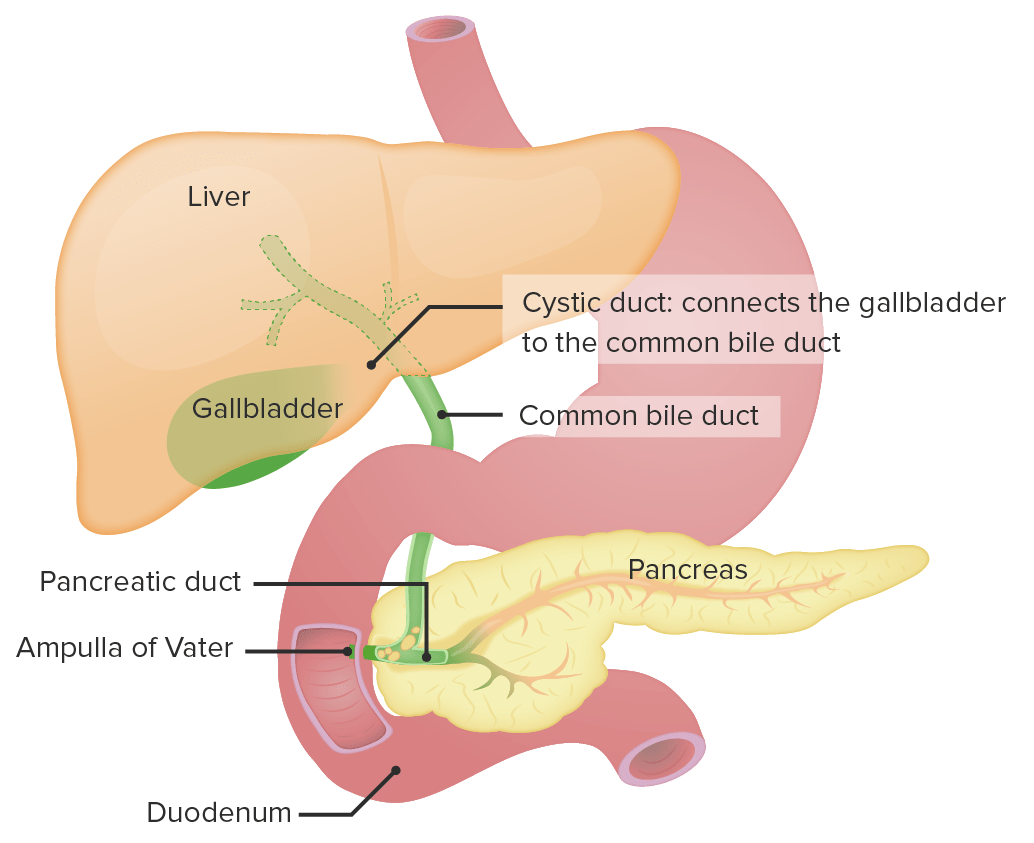
Anatomía del hígado y del sistema biliar

Imagen por Lecturio.

Hallazgos normales

  • Hígado:
    • El tamaño normal del hígado es < 16 cm en la línea medioclavicular.
    • Anatomía variante como el lóbulo de Riedel (alargamiento congénito del lóbulo hepático derecho):
      • Puede dar una impresión de hepatomegalia
      • La imagenología transversal (e.g., TC) pueden confirmar la anatomía benigna.
  • Vesícula biliar:
    • Dimensión (4 cm de diámetro) y espesor de pared (≤ 3 mm)
    • Anecoica
    • Pared delgada y homogénea
    • Sin cálculos ni barro
  • Los conductos biliares son tubos delgados (no más grandes que las venas porta intrahepáticas asociadas o las arterias hepáticas).
    • A medida que los conductos se extienden desde el hígado (hasta el esfínter de Oddi), aumenta el calibre.
    • Conductos extrahepáticos: el conducto hepático común y el conducto cístico (desde la vesícula biliar) forman el conducto biliar común.
    • El conducto biliar común debe tener < 6 mm de diámetro en personas de 60 años o menos.
      • Se agrega 1 mm por cada década después de los 60 años (e.g., 7 mm para los 70, 8 mm para los 80).
      • El estado postcolecistectomía puede causar agrandamiento del conducto biliar común, lo que se denomina “efecto de reservorio”.
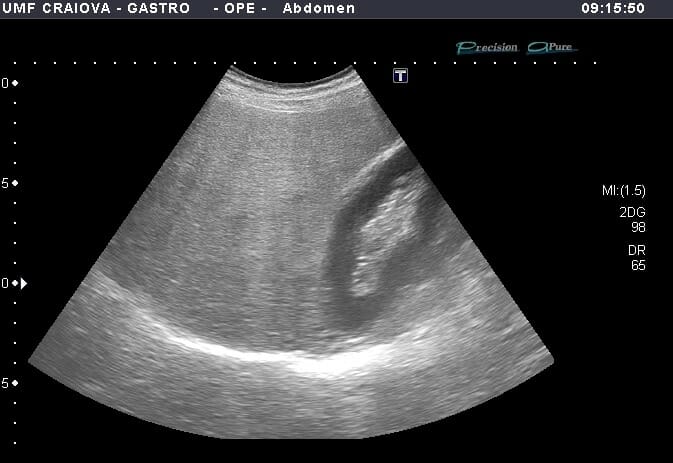
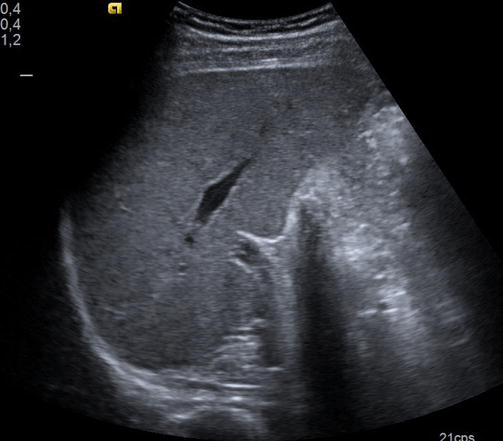
Hígado normal

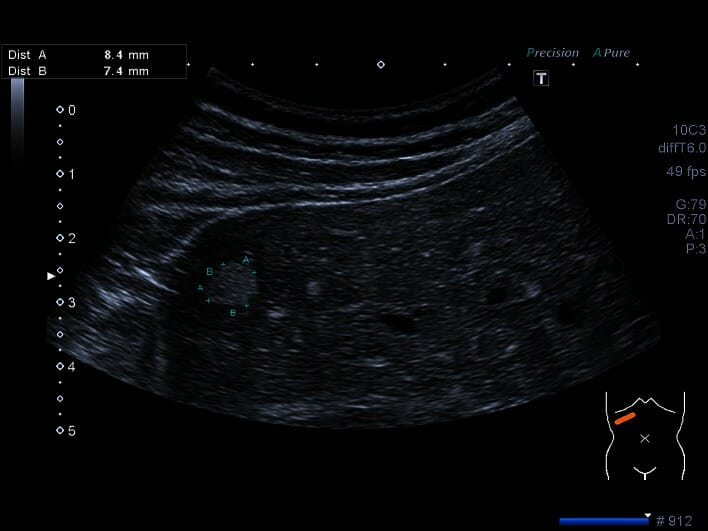
Ultrasonido hepático normal que muestra un parénquima homogéneo

Imagen: “Normal liver” por Fuster, D. et al. Licencia: CC BY 3.0

TC

Descripción general

  • Indicaciones médicas:
    • Seguimiento de ultrasonidos sospechosos:
      • Lesiones hipoecoicas/hiperecoicas
      • Preocupación por patología vascular
      • Deformidades del contorno
      • Dilatación del conducto biliar
      • Colección de fluidos
    • Malignidad:
      • Evaluar la estadificación inicial del carcinoma hepatocelular
      • Vigilancia de la recurrencia de la enfermedad
      • Trombosis venosa tumoral
    • Traumatismo mayor:
      • Evaluación del parénquima hepático
      • Evaluación de hemorragia hepática +/– extravasación activa en EN Erythema nodosum is an immune-mediated panniculitis (inflammation of the subcutaneous fat) caused by a type IV (delayed-type) hypersensitivity reaction. It commonly manifests in young women as tender, erythematous nodules on the shins. Erythema Nodosum imágenes tardías
      • Preocupación por una patología sutil que no se observa en EN Erythema nodosum is an immune-mediated panniculitis (inflammation of the subcutaneous fat) caused by a type IV (delayed-type) hypersensitivity reaction. It commonly manifests in young women as tender, erythematous nodules on the shins. Erythema Nodosum el ultrasonido
  • Ventajas:
    • Excelente resolución con detalle anatómico
    • Las estructuras se pueden ver en EN Erythema nodosum is an immune-mediated panniculitis (inflammation of the subcutaneous fat) caused by a type IV (delayed-type) hypersensitivity reaction. It commonly manifests in young women as tender, erythematous nodules on the shins. Erythema Nodosum 3 dimensiones.
  • Desventajas:
    • Implica dosis altas de radiación
    • El individuo debe quedarse quieto para el examen.
    • Es costoso

Técnica de examen

  • TC simple:
    • El individuo se acuesta en EN Erythema nodosum is an immune-mediated panniculitis (inflammation of the subcutaneous fat) caused by a type IV (delayed-type) hypersensitivity reaction. It commonly manifests in young women as tender, erythematous nodules on the shins. Erythema Nodosum decúbito supino sobre la mesa.
    • La mesa se mueve hacia el tomógrafo, que gira alrededor del individuo.
    • Se le indica al AL Amyloidosis individuo que contenga la respiración y permanezca quieto durante la exploración (durante unos segundos)
    • El estudio se pueden realizar con o sin contraste intravenoso u oral.
    • El momento de la inyección del medio de contraste intravenoso puede ayudar a dirigir la investigación radiológica de ciertas áreas de patología:
      • La TC con medio de contraste intravenoso se realiza inicialmente en EN Erythema nodosum is an immune-mediated panniculitis (inflammation of the subcutaneous fat) caused by a type IV (delayed-type) hypersensitivity reaction. It commonly manifests in young women as tender, erythematous nodules on the shins. Erythema Nodosum la fase venosa portal.
      • Se obtiene otro conjunto de imágenes en EN Erythema nodosum is an immune-mediated panniculitis (inflammation of the subcutaneous fat) caused by a type IV (delayed-type) hypersensitivity reaction. It commonly manifests in young women as tender, erythematous nodules on the shins. Erythema Nodosum un momento posterior para evaluar la extravasación activa.

Interpretación y evaluación

  • La interpretación debe seguir un patrón sistemático y reproducible
  • Revisar los antecedentes del individuo y los hallazgos del examen físico.
  • Evaluación ideal con ventana/nivel de tejido blando
  • Comparar con una imagen reciente disponible del área de interés.
  • Orientar la imagen:
    • Las imágenes axiales se observan como si se miraran desde los pies hacia arriba.
    • Sagitales y coronales
  • Identificar estructuras anatómicas de referencia
  • Observe la “continuidad” del parénquima mientras se desplaza por los LOS Neisseria cortes de imagen.

Hallazgos normales

  • Hígado normal:
    • Ubicación en EN Erythema nodosum is an immune-mediated panniculitis (inflammation of the subcutaneous fat) caused by a type IV (delayed-type) hypersensitivity reaction. It commonly manifests in young women as tender, erythematous nodules on the shins. Erythema Nodosum el cuadrante superior derecho
    • < 16 cm en EN Erythema nodosum is an immune-mediated panniculitis (inflammation of the subcutaneous fat) caused by a type IV (delayed-type) hypersensitivity reaction. It commonly manifests in young women as tender, erythematous nodules on the shins. Erythema Nodosum dimensión craneocaudal en EN Erythema nodosum is an immune-mediated panniculitis (inflammation of the subcutaneous fat) caused by a type IV (delayed-type) hypersensitivity reaction. It commonly manifests in young women as tender, erythematous nodules on the shins. Erythema Nodosum la línea medioclavicular
    • Dividido en EN Erythema nodosum is an immune-mediated panniculitis (inflammation of the subcutaneous fat) caused by a type IV (delayed-type) hypersensitivity reaction. It commonly manifests in young women as tender, erythematous nodules on the shins. Erythema Nodosum lóbulos hepáticos derecho e izquierdo por la fosa de la vesícula biliar
    • Atenuación: 50–75 unidades Hounsfield (UH) en EN Erythema nodosum is an immune-mediated panniculitis (inflammation of the subcutaneous fat) caused by a type IV (delayed-type) hypersensitivity reaction. It commonly manifests in young women as tender, erythematous nodules on the shins. Erythema Nodosum la TC sin contraste
  • Vesícula biliar normal:
    • ≤ 4 cm de diámetro
    • Espesor de pared ≤ 3 mm MM Multiple myeloma (MM) is a malignant condition of plasma cells (activated B lymphocytes) primarily seen in the elderly. Monoclonal proliferation of plasma cells results in cytokine-driven osteoclastic activity and excessive secretion of IgG antibodies. Multiple Myeloma
  • Los LOS Neisseria conductos intrahepáticos son muy pequeños y se visualizan débilmente en EN Erythema nodosum is an immune-mediated panniculitis (inflammation of the subcutaneous fat) caused by a type IV (delayed-type) hypersensitivity reaction. It commonly manifests in young women as tender, erythematous nodules on the shins. Erythema Nodosum los LOS Neisseria estudios con contraste.
  • El conducto biliar común debe tener < 6 mm MM Multiple myeloma (MM) is a malignant condition of plasma cells (activated B lymphocytes) primarily seen in the elderly. Monoclonal proliferation of plasma cells results in cytokine-driven osteoclastic activity and excessive secretion of IgG antibodies. Multiple Myeloma de diámetro en EN Erythema nodosum is an immune-mediated panniculitis (inflammation of the subcutaneous fat) caused by a type IV (delayed-type) hypersensitivity reaction. It commonly manifests in young women as tender, erythematous nodules on the shins. Erythema Nodosum pacientes de 60 años o menos.
    • Al AL Amyloidosis igual que en EN Erythema nodosum is an immune-mediated panniculitis (inflammation of the subcutaneous fat) caused by a type IV (delayed-type) hypersensitivity reaction. It commonly manifests in young women as tender, erythematous nodules on the shins. Erythema Nodosum los LOS Neisseria ultrasonidos, se observa un aumento del diámetro con el aumento de la edad.
    • El estado postcolecistectomía puede causar agrandamiento de los LOS Neisseria conductos biliares extrahepáticos.
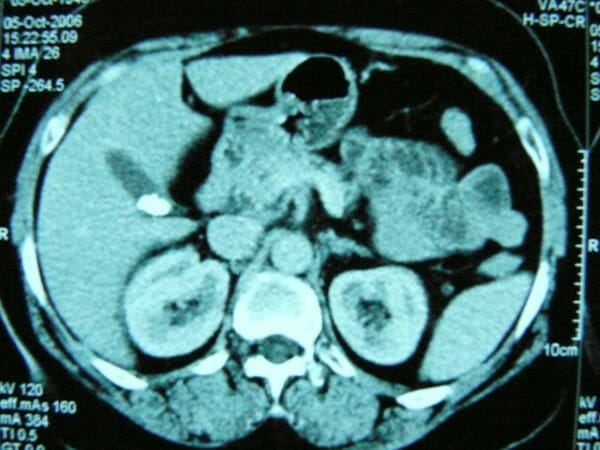
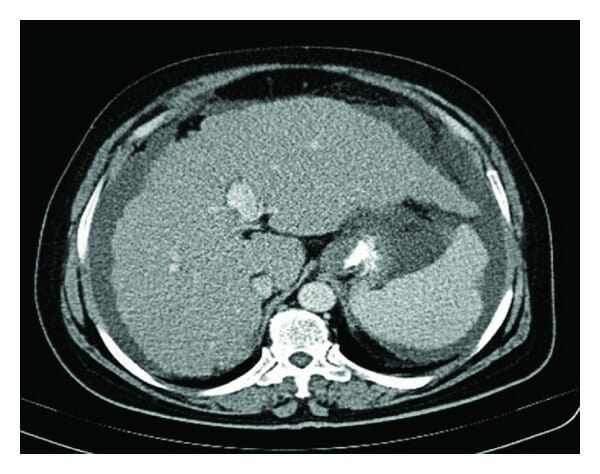
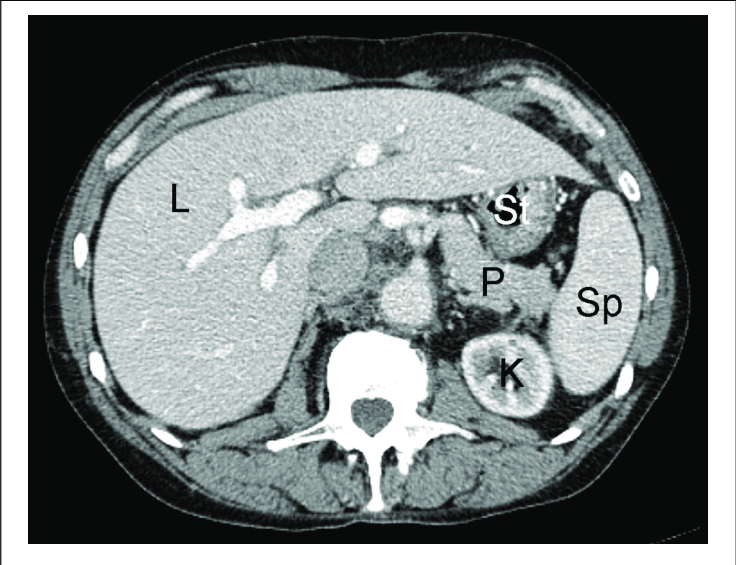
Tomografía computarizada del hígado

Una TC hepática con contraste normal:
K: riñón (por sus siglas en inglés)
L: hígado (por sus siglas en inglés)
P: páncreas
St: estómago (por sus siglas en inglés)
Sp: bazo (por sus siglas en inglés)

Imagen: “FIGURE 1” por Faraji, F. and Gaba R.C. Licencia: CC BY 4.0

RM

Descripción general

  • Indicaciones médicas:
    • Evaluación detallada de las lesiones hepáticas
      • Hemangiomas
      • Quistes
      • Carcinoma hepatocelular
      • Metástasis
      • Lesiones indeterminadas observadas incidentalmente en EN Erythema nodosum is an immune-mediated panniculitis (inflammation of the subcutaneous fat) caused by a type IV (delayed-type) hypersensitivity reaction. It commonly manifests in young women as tender, erythematous nodules on the shins. Erythema Nodosum el ultrasonido y la TC
  • Ventajas:
    • Proporciona imagenología de mayor nivel y mejor detalle de fluidos, realce y tejidos blandos
    • Se puede utilizar para la evaluación de personas embarazadas
    • Utilizado como complemento de una prueba anterior (ultrasonido o TC)
  • Desventajas:
    • ↑↑↑ Costo
    • Lleva mucho más tiempo realizarlo que una TC o un ultrasonido
    • No apto para todas las personas:
      • Los LOS Neisseria implantes (particularmente de metal) distorsionan la imagen.
      • Requiere que el individuo esté en EN Erythema nodosum is an immune-mediated panniculitis (inflammation of the subcutaneous fat) caused by a type IV (delayed-type) hypersensitivity reaction. It commonly manifests in young women as tender, erythematous nodules on the shins. Erythema Nodosum un espacio cerrado y ruidoso
      • El individuo debe permanecer quieto para obtener la imagenología adecuada.

Técnica de examen

  • Posicionamiento:
    • En EN Erythema nodosum is an immune-mediated panniculitis (inflammation of the subcutaneous fat) caused by a type IV (delayed-type) hypersensitivity reaction. It commonly manifests in young women as tender, erythematous nodules on the shins. Erythema Nodosum decúbito supino sobre la mesa
    • La mesa avanza hacia el escáner.
    • El individuo debe permanecer quieto durante el escaneo.
  • Vistas:
    • Imágenes ponderadas en EN Erythema nodosum is an immune-mediated panniculitis (inflammation of the subcutaneous fat) caused by a type IV (delayed-type) hypersensitivity reaction. It commonly manifests in young women as tender, erythematous nodules on the shins. Erythema Nodosum T1:
      • Las lesiones con alto contenido de grasa (e.g., lipoma Lipoma A lipoma is a benign neoplasm of fat cells (adipocytes) and the most common soft tissue tumor in adults. The etiology is unknown, but obesity is a predisposing factor; genetics also play a role, with multiple lipomas occurring in various inherited disorders. Lipoma) se observan brillantes/blancas y los LOS Neisseria compartimentos llenos de agua se observan oscuros/negros.
      • Las imágenes postcontraste suelen estar ponderadas en EN Erythema nodosum is an immune-mediated panniculitis (inflammation of the subcutaneous fat) caused by a type IV (delayed-type) hypersensitivity reaction. It commonly manifests in young women as tender, erythematous nodules on the shins. Erythema Nodosum T1 debido a las propiedades intrínsecas del gadolinio.
    • Imágenes ponderadas en EN Erythema nodosum is an immune-mediated panniculitis (inflammation of the subcutaneous fat) caused by a type IV (delayed-type) hypersensitivity reaction. It commonly manifests in young women as tender, erythematous nodules on the shins. Erythema Nodosum T2: los LOS Neisseria compartimentos llenos de agua se observan brillantes/blancos.
    • Imágenes orientadas en EN Erythema nodosum is an immune-mediated panniculitis (inflammation of the subcutaneous fat) caused by a type IV (delayed-type) hypersensitivity reaction. It commonly manifests in young women as tender, erythematous nodules on the shins. Erythema Nodosum “cortes” tridimensionales:
Tabla: Principios generales de las imágenes de RM
Tejido Imágenes ponderadas en EN Erythema nodosum is an immune-mediated panniculitis (inflammation of the subcutaneous fat) caused by a type IV (delayed-type) hypersensitivity reaction. It commonly manifests in young women as tender, erythematous nodules on the shins. Erythema Nodosum T1 Imágenes ponderadas en EN Erythema nodosum is an immune-mediated panniculitis (inflammation of the subcutaneous fat) caused by a type IV (delayed-type) hypersensitivity reaction. It commonly manifests in young women as tender, erythematous nodules on the shins. Erythema Nodosum T2
Líquido (e.g., LCR) Oscuro Brillante
Grasa Brillante Brillante
Inflamación Oscuro Brillante

Interpretación y evaluación

  • La interpretación debe seguir un patrón sistemático y reproducible.
  • Revisar los LOS Neisseria antecedentes y los LOS Neisseria hallazgos del examen físico.
  • Comparar con la imagenología reciente disponible del área de interés.
  • Orientar la imagen.
  • Identificar estructuras anatómicas de referencia
  • Observar la continuidad de las estructuras mientras se desplaza por los LOS Neisseria cortes de imagen.

Hallazgos normales

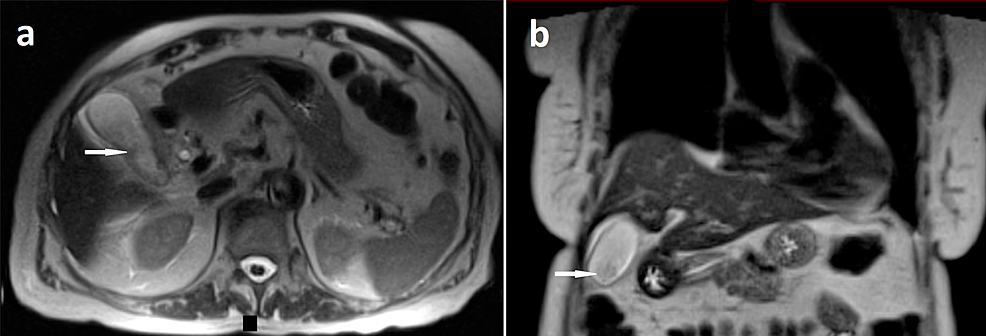
  • Aspecto normal de la RM del hígado
    • Ubicación en EN Erythema nodosum is an immune-mediated panniculitis (inflammation of the subcutaneous fat) caused by a type IV (delayed-type) hypersensitivity reaction. It commonly manifests in young women as tender, erythematous nodules on the shins. Erythema Nodosum el cuadrante superior derecho
    • Bordes suaves
    • Señal parenquimatosa homogénea
    • Intensidad ponderada en EN Erythema nodosum is an immune-mediated panniculitis (inflammation of the subcutaneous fat) caused by a type IV (delayed-type) hypersensitivity reaction. It commonly manifests in young women as tender, erythematous nodules on the shins. Erythema Nodosum T1:
      • Isointensa a los LOS Neisseria músculos paraespinales
      • Ligeramente más intensa que el bazo y el riñón
    • Intensidad ponderada en EN Erythema nodosum is an immune-mediated panniculitis (inflammation of the subcutaneous fat) caused by a type IV (delayed-type) hypersensitivity reaction. It commonly manifests in young women as tender, erythematous nodules on the shins. Erythema Nodosum T2:
      • Menos intensa que el riñón
      • Los LOS Neisseria quistes hepáticos, los LOS Neisseria hamartomas biliares, los LOS Neisseria abscesos y los LOS Neisseria hemangiomas son brillantes ( en EN Erythema nodosum is an immune-mediated panniculitis (inflammation of the subcutaneous fat) caused by a type IV (delayed-type) hypersensitivity reaction. It commonly manifests in young women as tender, erythematous nodules on the shins. Erythema Nodosum comparación con el hígado).
    • Contraste:
      • Fase arterial: realce heterogéneo
      • Fase venosa: realce homogéneo del hígado
      • La fase tardía proporciona información sobre el lavado de la lesión o el realce tardío.
      • Similar al AL Amyloidosis patrón de la TC
    • La intensidad de la señal del parénquima hepático normal es la misma en EN Erythema nodosum is an immune-mediated panniculitis (inflammation of the subcutaneous fat) caused by a type IV (delayed-type) hypersensitivity reaction. It commonly manifests in young women as tender, erythematous nodules on the shins. Erythema Nodosum la imagenología de fase y fuera de fase.
  • Vías biliares:
    • Los LOS Neisseria conductos intrahepáticos son muy pequeños y se visualizan débilmente en EN Erythema nodosum is an immune-mediated panniculitis (inflammation of the subcutaneous fat) caused by a type IV (delayed-type) hypersensitivity reaction. It commonly manifests in young women as tender, erythematous nodules on the shins. Erythema Nodosum los LOS Neisseria estudios con contraste.
    • Conducto biliar común: < 6 mm MM Multiple myeloma (MM) is a malignant condition of plasma cells (activated B lymphocytes) primarily seen in the elderly. Monoclonal proliferation of plasma cells results in cytokine-driven osteoclastic activity and excessive secretion of IgG antibodies. Multiple Myeloma generalmente, pero afectado por la edad y la colecistectomía previa
  • Colangiopancreatografía por resonancia magnética
    • Se utiliza para aquellos con sospecha de enfermedad pancreaticobiliar y con afecciones que impiden la colangiopancreatografía retrógrada endoscópica
    • Imágenes muy ponderadas en EN Erythema nodosum is an immune-mediated panniculitis (inflammation of the subcutaneous fat) caused by a type IV (delayed-type) hypersensitivity reaction. It commonly manifests in young women as tender, erythematous nodules on the shins. Erythema Nodosum T2 (el líquido pancreático y biliar son brillantes)
    • Un cálculo o masa produciría un vacío de señal.

Imagenología Nuclear

Descripción general

La medicina nuclear se diferencia del resto de la radiología porque es imagenología funcional, más que estructural.

  • Gammagrafía con ácido iminodiacético hepatobiliar (o colescintigrafía):
    • Estudio de la vesícula biliar
    • El radiofármaco normalmente es absorbido por el hígado y excretado a través del sistema biliar en EN Erythema nodosum is an immune-mediated panniculitis (inflammation of the subcutaneous fat) caused by a type IV (delayed-type) hypersensitivity reaction. It commonly manifests in young women as tender, erythematous nodules on the shins. Erythema Nodosum forma de bilis.
  • Indicaciones:
    • Colecistitis aguda con hallazgos ambiguos en EN Erythema nodosum is an immune-mediated panniculitis (inflammation of the subcutaneous fat) caused by a type IV (delayed-type) hypersensitivity reaction. It commonly manifests in young women as tender, erythematous nodules on the shins. Erythema Nodosum el ultrasonido
    • Atresia Atresia Hypoplastic Left Heart Syndrome (HLHS) biliar
    • Fuga biliar
    • Discinesia biliar (se administra colecistoquinina y se calcula la fracción de eyección de la vesícula biliar)
  • Contraindicación: alergia al AL Amyloidosis radiotrazador (puede causar anafilaxia)

Técnica de examen

  • El individuo se acuesta en EN Erythema nodosum is an immune-mediated panniculitis (inflammation of the subcutaneous fat) caused by a type IV (delayed-type) hypersensitivity reaction. It commonly manifests in young women as tender, erythematous nodules on the shins. Erythema Nodosum decúbito supino sobre una mesa.
  • Uso de radiofármacos:
    • Isótopos producidos artificialmente unidos a productos farmacéuticos (radioisótopo + molécula orgánica)
    • Administrados intravenosamente
    • La molécula orgánica permite que los LOS Neisseria isótopos se concentren dentro del hígado y las vías biliares (siguiendo el camino de la bilis).
    • El radioisótopo emite radiación ionizante detectable (rayos de alta energía) cuando se desintegra, y esto se ve VE Ventilation: Mechanics of Breathing en EN Erythema nodosum is an immune-mediated panniculitis (inflammation of the subcutaneous fat) caused by a type IV (delayed-type) hypersensitivity reaction. It commonly manifests in young women as tender, erythematous nodules on the shins. Erythema Nodosum la imagenología.
  • La máquina está equipada con una cámara gamma que detecta la radiación, formando una imagen.
    • Las imágenes se obtienen en EN Erythema nodosum is an immune-mediated panniculitis (inflammation of the subcutaneous fat) caused by a type IV (delayed-type) hypersensitivity reaction. It commonly manifests in young women as tender, erythematous nodules on the shins. Erythema Nodosum diferentes momentos.
    • Se revisan las señales de diferentes áreas del tracto biliar (e.g., la vesícula biliar, el conducto biliar común y el duodeno).

Hallazgos normales

  • Conducto cístico permeable: el rastreador entrará en EN Erythema nodosum is an immune-mediated panniculitis (inflammation of the subcutaneous fat) caused by a type IV (delayed-type) hypersensitivity reaction. It commonly manifests in young women as tender, erythematous nodules on the shins. Erythema Nodosum la vesícula biliar, haciendo que la vesícula biliar sea visible.
  • Conducto biliar común y ampolla permeables:
    • La visualización de contraste observada en EN Erythema nodosum is an immune-mediated panniculitis (inflammation of the subcutaneous fat) caused by a type IV (delayed-type) hypersensitivity reaction. It commonly manifests in young women as tender, erythematous nodules on the shins. Erythema Nodosum el conducto biliar común, la vesícula biliar y el intestino delgado se produce en EN Erythema nodosum is an immune-mediated panniculitis (inflammation of the subcutaneous fat) caused by a type IV (delayed-type) hypersensitivity reaction. It commonly manifests in young women as tender, erythematous nodules on the shins. Erythema Nodosum un plazo de 30–60 minutos
    • Se pueden obtener imágenes tardías (3–4 horas) o se puede aumentar con morfina si no se visualiza la vesícula biliar.
    • Si no se observa la vesícula biliar en EN Erythema nodosum is an immune-mediated panniculitis (inflammation of the subcutaneous fat) caused by a type IV (delayed-type) hypersensitivity reaction. It commonly manifests in young women as tender, erythematous nodules on the shins. Erythema Nodosum las imágenes tardías, los LOS Neisseria resultados son compatibles con colecistitis aguda.

Resultados diferentes

Tabla: Interpretación
Hallazgos de la imagenología Significado
Conductos biliares visibles Función hepática normal
Llenado de la vesícula biliar Conducto cístico permeable
Radiotrazador visto en EN Erythema nodosum is an immune-mediated panniculitis (inflammation of the subcutaneous fat) caused by a type IV (delayed-type) hypersensitivity reaction. It commonly manifests in young women as tender, erythematous nodules on the shins. Erythema Nodosum el duodeno Conducto biliar común permeable
No se observa radiotrazador en EN Erythema nodosum is an immune-mediated panniculitis (inflammation of the subcutaneous fat) caused by a type IV (delayed-type) hypersensitivity reaction. It commonly manifests in young women as tender, erythematous nodules on the shins. Erythema Nodosum la vesícula biliar Vesícula biliar obstruida (colecistitis aguda)
No se observa radiotrazador en EN Erythema nodosum is an immune-mediated panniculitis (inflammation of the subcutaneous fat) caused by a type IV (delayed-type) hypersensitivity reaction. It commonly manifests in young women as tender, erythematous nodules on the shins. Erythema Nodosum el duodeno Atresia Atresia Hypoplastic Left Heart Syndrome (HLHS) biliar
Radiotrazador fuera del sistema biliar Fuga biliar
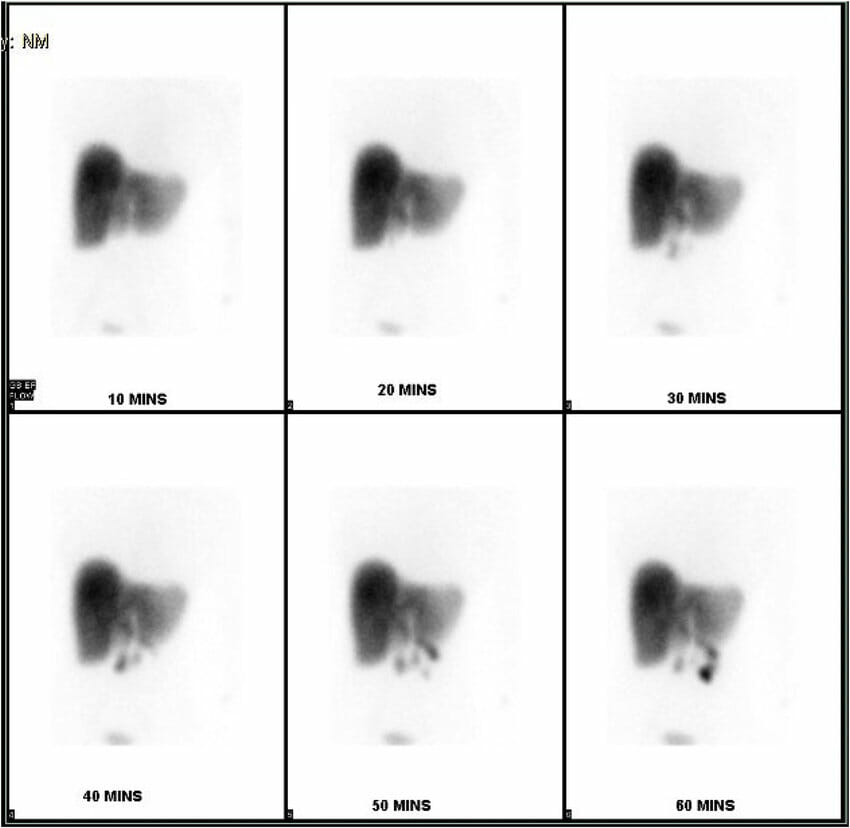
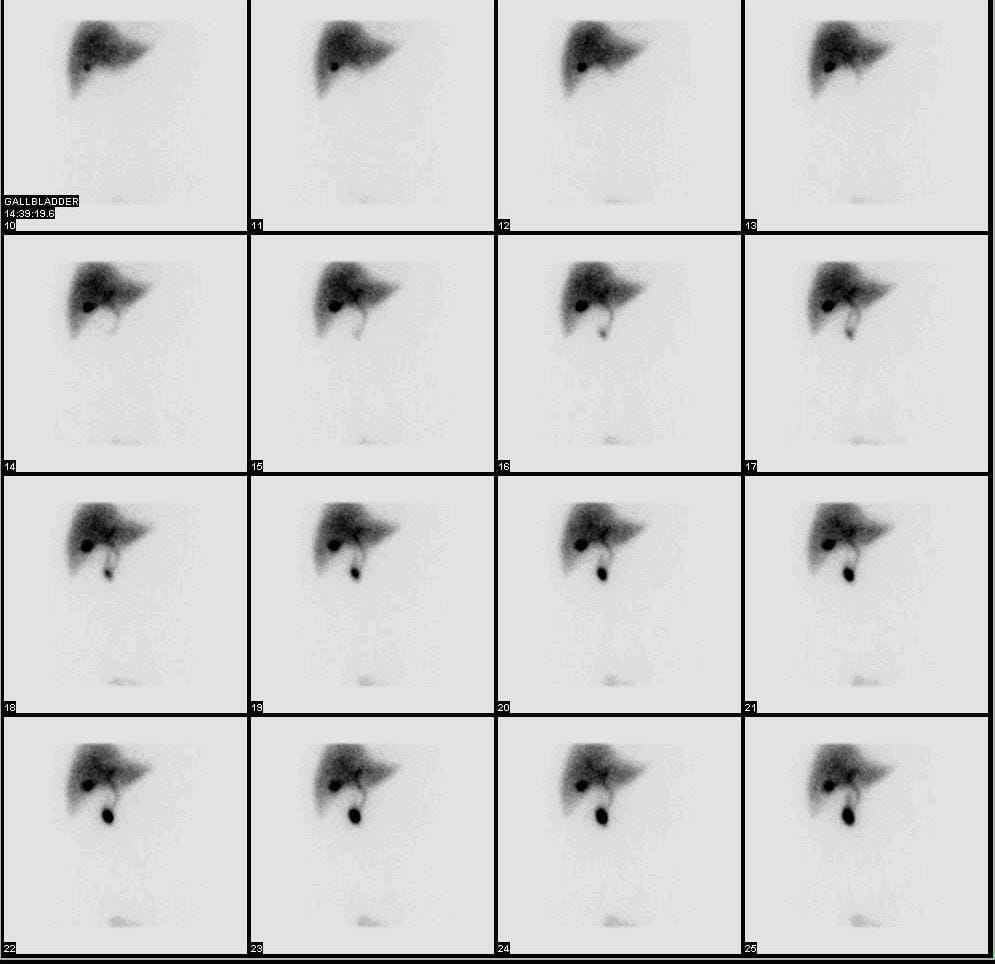
Gammagrafía con ácido iminodiacético hepatobiliar normal

Gammagrafía con ácido iminodiacético hepatobiliar normal que muestra la sustancia radiactiva moviéndose a través del sistema biliar

Imagen: “HIDA” por Myo Han. Licencia: CC BY 3.0

Hallazgos Anormales

Esteatosis hepática

  • Ultrasonido:
    • Aumento de la ecogenicidad parenquimatosa
    • Provoca pérdida de visualización de las tríadas portales
    • La esteatosis grave provoca atenuación del haz de sonido, lo que oscurecerá la visualización de las porciones profundas del hígado.
  • TC:
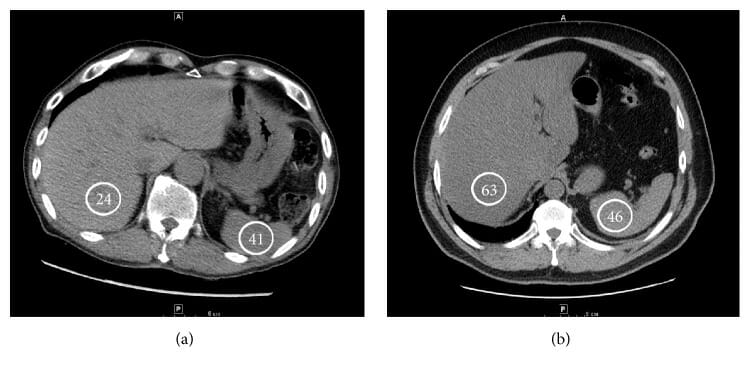
    • Disminución de la atenuación del parénquima hepático por infiltración grasa (esteatosis):
      • Definido como un valor de unidad Hounsfield (UH) de 10 por debajo que la del bazo en EN Erythema nodosum is an immune-mediated panniculitis (inflammation of the subcutaneous fat) caused by a type IV (delayed-type) hypersensitivity reaction. It commonly manifests in young women as tender, erythematous nodules on the shins. Erythema Nodosum exámenes sin contraste
      • Un valor relativo < 40 UH también es aceptable en EN Erythema nodosum is an immune-mediated panniculitis (inflammation of the subcutaneous fat) caused by a type IV (delayed-type) hypersensitivity reaction. It commonly manifests in young women as tender, erythematous nodules on the shins. Erythema Nodosum exámenes sin contraste
    • Puede producir la apariencia de vasos hiperdensos dentro del hígado en EN Erythema nodosum is an immune-mediated panniculitis (inflammation of the subcutaneous fat) caused by a type IV (delayed-type) hypersensitivity reaction. It commonly manifests in young women as tender, erythematous nodules on the shins. Erythema Nodosum exámenes sin contraste
    • Puede oscurecer lesiones que normalmente son hipodensas en EN Erythema nodosum is an immune-mediated panniculitis (inflammation of the subcutaneous fat) caused by a type IV (delayed-type) hypersensitivity reaction. It commonly manifests in young women as tender, erythematous nodules on the shins. Erythema Nodosum comparación con el hígado de fondo
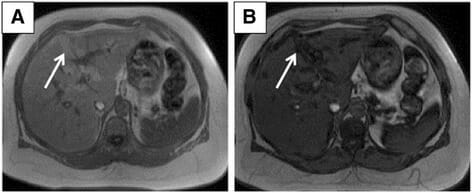
  • RM: la infiltración grasa del hígado conduce a la pérdida de señal en EN Erythema nodosum is an immune-mediated panniculitis (inflammation of the subcutaneous fat) caused by a type IV (delayed-type) hypersensitivity reaction. It commonly manifests in young women as tender, erythematous nodules on the shins. Erythema Nodosum la imagenología fuera de fase en EN Erythema nodosum is an immune-mediated panniculitis (inflammation of the subcutaneous fat) caused by a type IV (delayed-type) hypersensitivity reaction. It commonly manifests in young women as tender, erythematous nodules on the shins. Erythema Nodosum relación con la imagenología de fase.

Colecistitis y colelitiasis

  • Ultrasonido:
    • Hallazgos más sensibles:
      • Colelitiasis
      • Distensión de la vesícula biliar
      • Signo de Murphy positivo
    • Otros hallazgos:
      • Líquido pericolecístico (signo de la doble pared)
      • Engrosamiento de pared > 3 mm MM Multiple myeloma (MM) is a malignant condition of plasma cells (activated B lymphocytes) primarily seen in the elderly. Monoclonal proliferation of plasma cells results in cytokine-driven osteoclastic activity and excessive secretion of IgG antibodies. Multiple Myeloma
    • La colecistitis enfisematosa produce múltiples focos de aire interno, que oscurecen los LOS Neisseria detalles subyacentes debido a las sombras.
  • TC:
    • Colelitiasis: los LOS Neisseria cálculos pueden ser invisibles en EN Erythema nodosum is an immune-mediated panniculitis (inflammation of the subcutaneous fat) caused by a type IV (delayed-type) hypersensitivity reaction. It commonly manifests in young women as tender, erythematous nodules on the shins. Erythema Nodosum la TC porque hay poca diferencia de densidad entre la bilis y los LOS Neisseria cálculos.
    • Los LOS Neisseria cálculos dentro del conducto biliar son compatibles con coledocolitiasis.
    • Colecistitis: distensión de la vesícula biliar y engrosamiento de la pared con cambios inflamatorios pericolequísticos
  • RM: mayor sensibilidad para detectar coledocolitiasis como defectos de llenado en EN Erythema nodosum is an immune-mediated panniculitis (inflammation of the subcutaneous fat) caused by a type IV (delayed-type) hypersensitivity reaction. It commonly manifests in young women as tender, erythematous nodules on the shins. Erythema Nodosum la imagenología muy ponderadas T2
  • Gammagrafía con ácido iminodiacético hepatobiliar: vesícula biliar no observada en EN Erythema nodosum is an immune-mediated panniculitis (inflammation of the subcutaneous fat) caused by a type IV (delayed-type) hypersensitivity reaction. It commonly manifests in young women as tender, erythematous nodules on the shins. Erythema Nodosum imágenes tardías

Cirrosis

  • Ultrasonido:
    • Contorno hepático nodular
    • Mayor ecogenicidad
    • Atrofia del lóbulo hepático derecho con hipertrofia del lóbulo caudado
    • En EN Erythema nodosum is an immune-mediated panniculitis (inflammation of the subcutaneous fat) caused by a type IV (delayed-type) hypersensitivity reaction. It commonly manifests in young women as tender, erythematous nodules on the shins. Erythema Nodosum la enfermedad avanzada, se observa un hígado encogido.
    • Asociado a hipertensión portal:
      • Venas colaterales
      • Aumento del diámetro de la vena porta
      • Disminución del flujo en EN Erythema nodosum is an immune-mediated panniculitis (inflammation of the subcutaneous fat) caused by a type IV (delayed-type) hypersensitivity reaction. It commonly manifests in young women as tender, erythematous nodules on the shins. Erythema Nodosum la circulación portal (detectada por imagenología Doppler Doppler Ultrasonography applying the doppler effect, with frequency-shifted ultrasound reflections produced by moving targets (usually red blood cells) in the bloodstream along the ultrasound axis in direct proportion to the velocity of movement of the targets, to determine both direction and velocity of blood flow. Ultrasound (Sonography))
    • El ultrasonido también se utiliza para estimar la rigidez del hígado ( fibrosis Fibrosis Any pathological condition where fibrous connective tissue invades any organ, usually as a consequence of inflammation or other injury. Bronchiolitis Obliterans hepática): elastografía
  • TC (no se usa de forma rutinaria para evaluar la cirrosis):
    • Atrofia del lóbulo hepático derecho, hipertrofia del lóbulo caudado
    • Contorno hepático nodular
    • Signos de hipertensión portal:
      • Vena porta dilatada
      • Várices
      • Ascitis
      • Esplenomegalia
  • RM:
    • Papel poco claro en EN Erythema nodosum is an immune-mediated panniculitis (inflammation of the subcutaneous fat) caused by a type IV (delayed-type) hypersensitivity reaction. It commonly manifests in young women as tender, erythematous nodules on the shins. Erythema Nodosum el diagnóstico de la cirrosis (la información también se puede obtener de otras modalidades de imagenología)
      • Puede ayudar en EN Erythema nodosum is an immune-mediated panniculitis (inflammation of the subcutaneous fat) caused by a type IV (delayed-type) hypersensitivity reaction. It commonly manifests in young women as tender, erythematous nodules on the shins. Erythema Nodosum casos de sobrecarga de hierro (estimación de la concentración de hierro hepático)
      • La angiografía por RM también es más sensible para la trombosis de la vena porta, una complicación de la cirrosis.
      • La elastografía por RM también se utiliza para medir la fibrosis Fibrosis Any pathological condition where fibrous connective tissue invades any organ, usually as a consequence of inflammation or other injury. Bronchiolitis Obliterans hepática.

Carcinoma hepatocelular

  • Ultrasonido:
    • Cualquier lesión en EN Erythema nodosum is an immune-mediated panniculitis (inflammation of the subcutaneous fat) caused by a type IV (delayed-type) hypersensitivity reaction. It commonly manifests in young women as tender, erythematous nodules on the shins. Erythema Nodosum un individuo con cirrosis es sospechosa.
    • Puede ser hiperecoica o hipoecoica con un halo de edema Edema Edema is a condition in which excess serous fluid accumulates in the body cavity or interstitial space of connective tissues. Edema is a symptom observed in several medical conditions. It can be categorized into 2 types, namely, peripheral (in the extremities) and internal (in an organ or body cavity). Edema circundante
  • TC:
    • La lesión realzada en EN Erythema nodosum is an immune-mediated panniculitis (inflammation of the subcutaneous fat) caused by a type IV (delayed-type) hypersensitivity reaction. It commonly manifests in young women as tender, erythematous nodules on the shins. Erythema Nodosum un individuo con cirrosis es sospechosa de carcinoma hepatocelular.
    • Muestra realce arterial con lavado rápido
  • RM:
    • Muestra realce arterial con lavado rápido
    • Realce del borde en EN Erythema nodosum is an immune-mediated panniculitis (inflammation of the subcutaneous fat) caused by a type IV (delayed-type) hypersensitivity reaction. It commonly manifests in young women as tender, erythematous nodules on the shins. Erythema Nodosum imágenes tardías postcontraste que causan una apariencia de cápsula

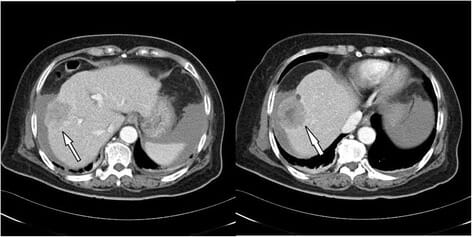
Absceso

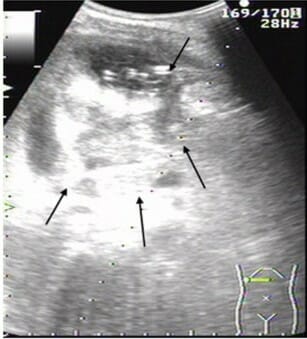
  • Ultrasonido:
    • El absceso piógeno tiene apariencias variables, que van desde lesiones hipoecoicas a hiperecoicas.
    • Se pueden visualizar ecos internos (de restos y/o tabicaciones).
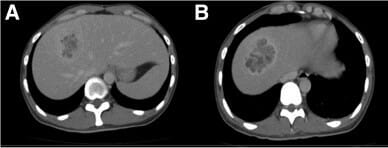
  • TC (con contraste):
    • Lesión redonda bien definida, pero los LOS Neisseria abscesos complejos pueden tener bordes irregulares
    • Hipoatenuación central
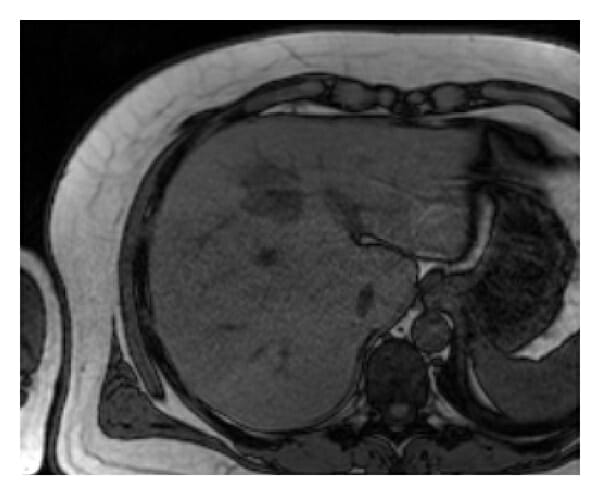
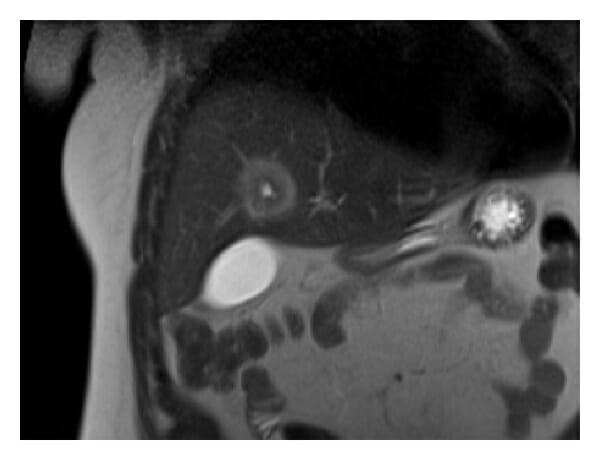
  • RM:
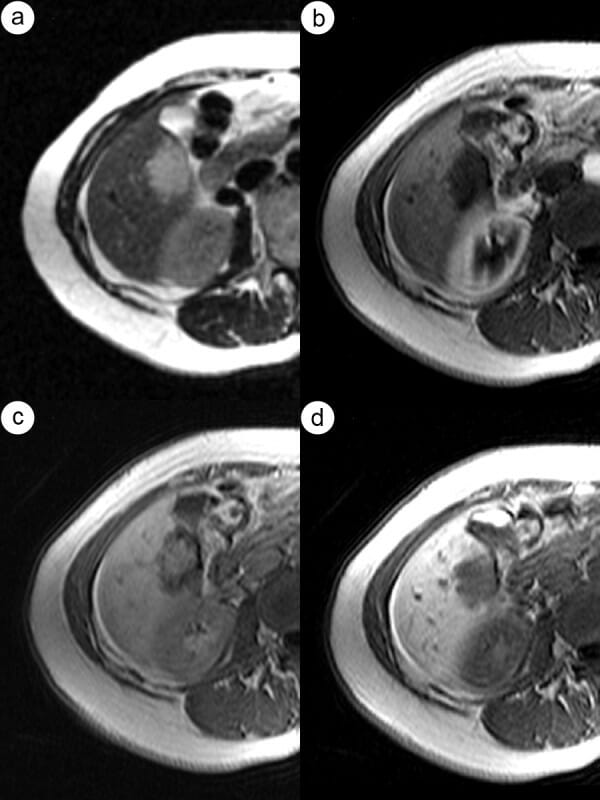
    • Imagenología ponderada en EN Erythema nodosum is an immune-mediated panniculitis (inflammation of the subcutaneous fat) caused by a type IV (delayed-type) hypersensitivity reaction. It commonly manifests in young women as tender, erythematous nodules on the shins. Erythema Nodosum T1: baja intensidad de señal central
    • Imagenología ponderada en EN Erythema nodosum is an immune-mediated panniculitis (inflammation of the subcutaneous fat) caused by a type IV (delayed-type) hypersensitivity reaction. It commonly manifests in young women as tender, erythematous nodules on the shins. Erythema Nodosum T2: alta intensidad de señal

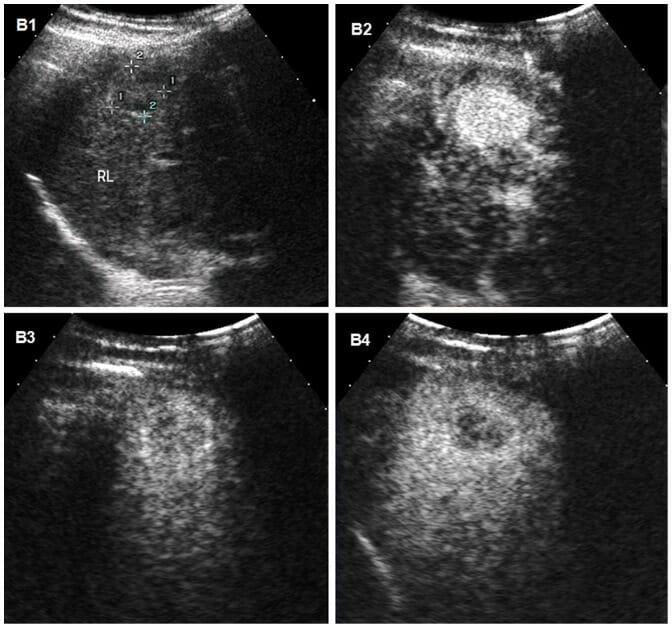
Hemangioma Hemangioma A vascular anomaly due to proliferation of blood vessels that forms a tumor-like mass. The common types involve capillaries and veins. It can occur anywhere in the body but is most frequently noticed in the skin and subcutaneous tissue. Imaging of the Liver and Biliary Tract

  • Ultrasonido:
    • Sin contraste: foco homogéneo hiperecogénico que está bien definido en EN Erythema nodosum is an immune-mediated panniculitis (inflammation of the subcutaneous fat) caused by a type IV (delayed-type) hypersensitivity reaction. It commonly manifests in young women as tender, erythematous nodules on the shins. Erythema Nodosum relación con el hígado de fondo
    • Contraste: en EN Erythema nodosum is an immune-mediated panniculitis (inflammation of the subcutaneous fat) caused by a type IV (delayed-type) hypersensitivity reaction. It commonly manifests in young women as tender, erythematous nodules on the shins. Erythema Nodosum la fase arterial hay realce nodular periférico.
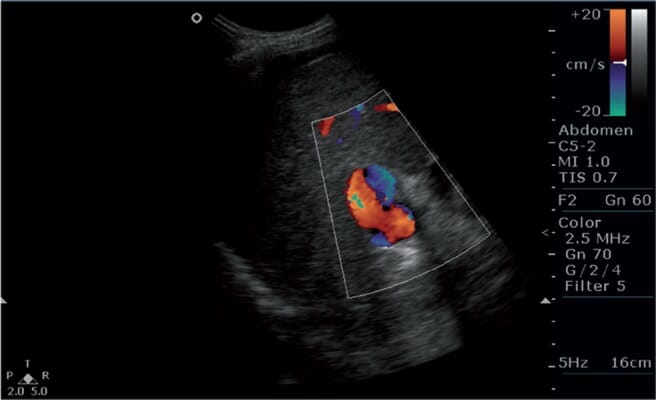
    • El Doppler Doppler Ultrasonography applying the doppler effect, with frequency-shifted ultrasound reflections produced by moving targets (usually red blood cells) in the bloodstream along the ultrasound axis in direct proportion to the velocity of movement of the targets, to determine both direction and velocity of blood flow. Ultrasound (Sonography) puede mostrar el flujo de sangre dentro del hemangioma Hemangioma A vascular anomaly due to proliferation of blood vessels that forms a tumor-like mass. The common types involve capillaries and veins. It can occur anywhere in the body but is most frequently noticed in the skin and subcutaneous tissue. Imaging of the Liver and Biliary Tract.
    • Puede oscurecerse en EN Erythema nodosum is an immune-mediated panniculitis (inflammation of the subcutaneous fat) caused by a type IV (delayed-type) hypersensitivity reaction. It commonly manifests in young women as tender, erythematous nodules on the shins. Erythema Nodosum la esteatosis
  • TC:
    • Fase temprana: realce nodular periférico
    • Fase tardía: “relleno” o patrón centrípeto
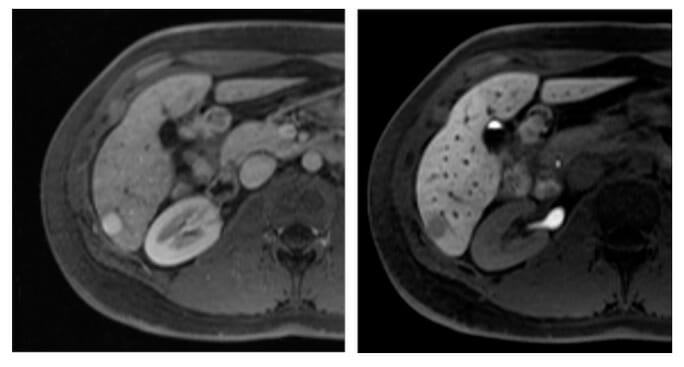
  • RM:
    • Masa homogénea bien delimitada
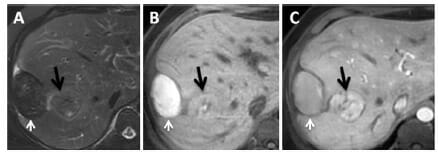
    • Lesión hipointensa en EN Erythema nodosum is an immune-mediated panniculitis (inflammation of the subcutaneous fat) caused by a type IV (delayed-type) hypersensitivity reaction. It commonly manifests in young women as tender, erythematous nodules on the shins. Erythema Nodosum imágenes ponderadas en EN Erythema nodosum is an immune-mediated panniculitis (inflammation of the subcutaneous fat) caused by a type IV (delayed-type) hypersensitivity reaction. It commonly manifests in young women as tender, erythematous nodules on the shins. Erythema Nodosum T1
    • Alta intensidad de señal en EN Erythema nodosum is an immune-mediated panniculitis (inflammation of the subcutaneous fat) caused by a type IV (delayed-type) hypersensitivity reaction. It commonly manifests in young women as tender, erythematous nodules on the shins. Erythema Nodosum imágenes ponderadas en EN Erythema nodosum is an immune-mediated panniculitis (inflammation of the subcutaneous fat) caused by a type IV (delayed-type) hypersensitivity reaction. It commonly manifests in young women as tender, erythematous nodules on the shins. Erythema Nodosum T2
    • Con contraste: realce nodular periférico, con progresión centrípeta

Otras lesiones hepáticas benignas

  • Hiperplasia nodular focal:
    • Ultrasonido:
      • Sin contraste: masa isoecoica
      • Con contraste: realce sostenido en EN Erythema nodosum is an immune-mediated panniculitis (inflammation of the subcutaneous fat) caused by a type IV (delayed-type) hypersensitivity reaction. It commonly manifests in young women as tender, erythematous nodules on the shins. Erythema Nodosum fase arterial, con arterias centrales vistas con patrón en EN Erythema nodosum is an immune-mediated panniculitis (inflammation of the subcutaneous fat) caused by a type IV (delayed-type) hypersensitivity reaction. It commonly manifests in young women as tender, erythematous nodules on the shins. Erythema Nodosum rueda de carreta en EN Erythema nodosum is an immune-mediated panniculitis (inflammation of the subcutaneous fat) caused by a type IV (delayed-type) hypersensitivity reaction. It commonly manifests in young women as tender, erythematous nodules on the shins. Erythema Nodosum la fase arterial (centrífugo)
    • TC:
      • Precontraste: isodensa
      • Con contraste: lesión hiperdensa homogénea en EN Erythema nodosum is an immune-mediated panniculitis (inflammation of the subcutaneous fat) caused by a type IV (delayed-type) hypersensitivity reaction. It commonly manifests in young women as tender, erythematous nodules on the shins. Erythema Nodosum fase arterial, volviéndose isodensa (como el parénquima hepático) en EN Erythema nodosum is an immune-mediated panniculitis (inflammation of the subcutaneous fat) caused by a type IV (delayed-type) hypersensitivity reaction. It commonly manifests in young women as tender, erythematous nodules on the shins. Erythema Nodosum fase venosa
      • La cicatriz central se vuelve hiperdensa en EN Erythema nodosum is an immune-mediated panniculitis (inflammation of the subcutaneous fat) caused by a type IV (delayed-type) hypersensitivity reaction. It commonly manifests in young women as tender, erythematous nodules on the shins. Erythema Nodosum la imagenología tardía.
    • RM:
      • Máxima precisión diagnóstica
      • Precontraste: isointensa en EN Erythema nodosum is an immune-mediated panniculitis (inflammation of the subcutaneous fat) caused by a type IV (delayed-type) hypersensitivity reaction. It commonly manifests in young women as tender, erythematous nodules on the shins. Erythema Nodosum imágenes ponderadas en EN Erythema nodosum is an immune-mediated panniculitis (inflammation of the subcutaneous fat) caused by a type IV (delayed-type) hypersensitivity reaction. It commonly manifests in young women as tender, erythematous nodules on the shins. Erythema Nodosum T1; ligeramente hiperintensa en EN Erythema nodosum is an immune-mediated panniculitis (inflammation of the subcutaneous fat) caused by a type IV (delayed-type) hypersensitivity reaction. It commonly manifests in young women as tender, erythematous nodules on the shins. Erythema Nodosum imágenes ponderadas en EN Erythema nodosum is an immune-mediated panniculitis (inflammation of the subcutaneous fat) caused by a type IV (delayed-type) hypersensitivity reaction. It commonly manifests in young women as tender, erythematous nodules on the shins. Erythema Nodosum T2
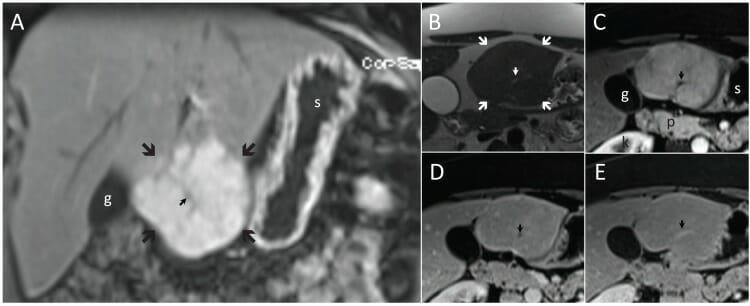
      • Con contraste: masa temprana con realce homogéneo (fase arterial), convirtiéndose en EN Erythema nodosum is an immune-mediated panniculitis (inflammation of the subcutaneous fat) caused by a type IV (delayed-type) hypersensitivity reaction. It commonly manifests in young women as tender, erythematous nodules on the shins. Erythema Nodosum una masa isointensa (fase tardía)
      • Realce de la cicatriz central observado en EN Erythema nodosum is an immune-mediated panniculitis (inflammation of the subcutaneous fat) caused by a type IV (delayed-type) hypersensitivity reaction. It commonly manifests in young women as tender, erythematous nodules on the shins. Erythema Nodosum la fase tardía.
    • Medicina nuclear (exploración con coloide de azufre y tecnecio-99m):
      • Aumento de la captación de azufre coloidal (actividad de las células de Kupffer) se ve VE Ventilation: Mechanics of Breathing en EN Erythema nodosum is an immune-mediated panniculitis (inflammation of the subcutaneous fat) caused by a type IV (delayed-type) hypersensitivity reaction. It commonly manifests in young women as tender, erythematous nodules on the shins. Erythema Nodosum 60%–70% de los LOS Neisseria casos.
      • Ayuda en EN Erythema nodosum is an immune-mediated panniculitis (inflammation of the subcutaneous fat) caused by a type IV (delayed-type) hypersensitivity reaction. It commonly manifests in young women as tender, erythematous nodules on the shins. Erythema Nodosum la diferenciación del adenoma (que no tiene actividad de células de Kupffer)
  • Adenoma hepático:
    • Ultrasonido:
      • Sin contraste: masa heterogénea inespecífica
      • Con contraste: hiperrealce rápido de la periferia al AL Amyloidosis centro (centrípeto)
    • TC:
      • Sin contraste: lesión isodensa
      • Con contraste: puede tener realce periférico (fase arterial), luego tendrá flujo centrípeto (fase venosa portal)
      • Si hay áreas de hemorragia, necrosis Necrosis The death of cells in an organ or tissue due to disease, injury or failure of the blood supply. Ischemic Cell Damage y calcificación, el adenoma parece heterogéneo.
    • RM con contraste:
      • Superior a otros métodos para el diagnóstico del carcinoma hepatocelular
      • Fase arterial: lesión bien delimitada y realzada (heterogénea por hemorragia, necrosis Necrosis The death of cells in an organ or tissue due to disease, injury or failure of the blood supply. Ischemic Cell Damage, esteatosis)
      • El patrón en EN Erythema nodosum is an immune-mediated panniculitis (inflammation of the subcutaneous fat) caused by a type IV (delayed-type) hypersensitivity reaction. It commonly manifests in young women as tender, erythematous nodules on the shins. Erythema Nodosum fases posteriores se correlaciona con subtipos moleculares en EN Erythema nodosum is an immune-mediated panniculitis (inflammation of the subcutaneous fat) caused by a type IV (delayed-type) hypersensitivity reaction. It commonly manifests in young women as tender, erythematous nodules on the shins. Erythema Nodosum la mayoría de los LOS Neisseria casos.
    • Por lo general, no mostrará captación en EN Erythema nodosum is an immune-mediated panniculitis (inflammation of the subcutaneous fat) caused by a type IV (delayed-type) hypersensitivity reaction. It commonly manifests in young women as tender, erythematous nodules on the shins. Erythema Nodosum la exploración de medicina nuclear con coloide de azufre y tecnecio-99m

Referencias

  1. Chopra, S. (2021) Focal nodular hyperplasia. UpToDate. Retrieved December 18, 2021, from https://www.uptodate.com/contents/focal-nodular-hyperplasia
  2. Curry, M., Bonder, A. (2021) Overview of the evaluation of hepatomegaly. UpToDate. Retrieved December 16, 2021, from https://www.uptodate.com/contents/overview-of-the-evaluation-of-hepatomegaly-in-adults
  3. Curry, M., Chopra, S. (2021) Hepatic hemangioma. UpToDate. Retrieved December 18, 2021, from https://www.uptodate.com/contents/hepatic-hemangioma
  4. Gill, R.M., Kakar, S. (2020). Liver and gallbladder. In: Kumar, V., Abbas, A. K., Aster, J.C. (Eds.), Robbins & Cotran Pathologic Basis of Disease, 10th ed. Elsevier, pp. 868–872.
  5. Goldberg E., Chopra S. (2021). Cirrhosis in adults: etiologies, clinical manifestations, and diagnosis. UpToDate. Retrieved July 17, 2021, from https://www.uptodate.com/contents/cirrhosis-in-adults-etiologies-clinical-manifestations
  6. Hundt, M., Wu, C.Y., Young, M. (2021) Anatomy, abdomen and pelvis, biliary ducts. StatPearls. Retrieved December 21, 2021, from https://www.ncbi.nlm.nih.gov/books/NBK459246/
  7. Perret, R.S., Sloop, G.D., Borne, J.A. (2000) Common bile duct measurements in an elderly population. J Ultrasound Med 19:727–731. doi: 10.7863/jum.2000.19.11.727.
  8. Schwartz, J.M., Carithers, R.L. (2020). Epidemiology and risk factors for hepatocellular carcinoma. UpToDate. Retrieved July 17, 2021, from https://www.uptodate.com/contents/epidemiology-and-risk-factors-for-hepatocellular-carcinoma?topicRef=16348&source=see_link
  9. ​​Skoczylas, K., Pawełas, A. (2015). Ultrasound imaging of the liver and bile ducts—expectations of a clinician. J Ultrasonogr 15:292–306. https://doi.org/10.15557/JoU.2015.0026
  10. Snyder, E., Kashyap, S., Lopez, P.P. (2021). Hepatobiliary iminodiacetic acid scan. StatPearls. Retrieved December 21, 2021, from https://www.ncbi.nlm.nih.gov/books/NBK539781/
  11. Vollmer, C., Zakko, S., Afdhal, N. (2019) Treatment of acute calculous cholecystitis. UpToDate. Retrieved July 17, 2021, from https://www.uptodate.com/contents/treatment-of-acute-calculous-cholecystitis
  12. Vu, L. N., Morelli, J. N., Szklaruk, J. (2018). Basic MRI for the liver oncologists and surgeons. J Hepatocell Carcinoma 5:37–50. https://doi.org/10.2147/JHC.S154321
  13. Wells, M. M., Li, Z., Addeman, B., McKenzie, C. A., Mujoomdar, A., Beaton, M., Bird, J. (2016). Computed tomography measurement of hepatic steatosis: prevalence of hepatic steatosis in a Canadian population. Can J Gastroenterol Hepatol 2016:4930987. https://doi.org/10.1155/2016/4930987
  14. Yeh, B., Liu, P., Soto, J., Corvera, C., Hussain, H. (2009) MR imaging and CT of the biliary tract. Radiographics 29:1669–1688. https://doi.org/10.1148/rg.296095514

¡Crea tu cuenta gratis o inicia una sesión para seguir leyendo!

Regístrate ahora y obtén acceso gratuito a Lecturio con páginas de concepto, videos médicos y cuestionarios para tu educación médica.

User Reviews

Que tengas una sesión de estudio alegre y navideña 🎁 Ahorra 50% en todos los planes >>

Details