Domina Conceptos Médicos

Estudia para la escuela de medicina y tus examenes con Lecturio.

Imagenología del Mediastino

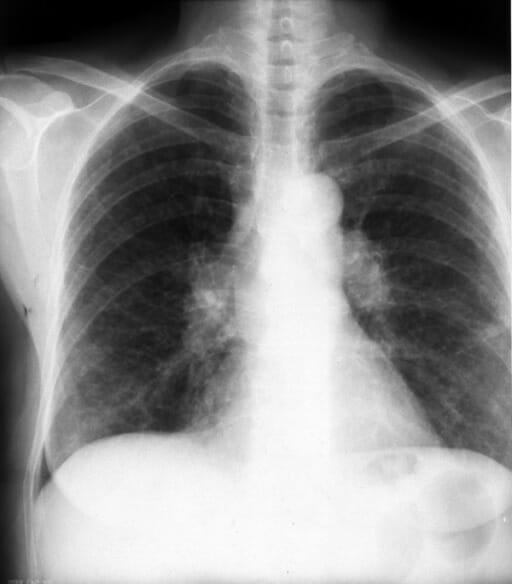
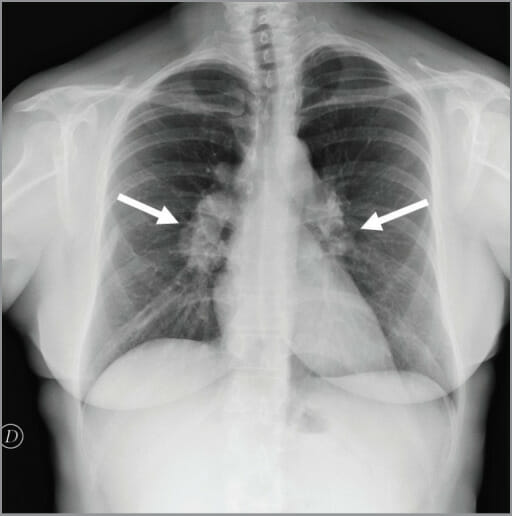
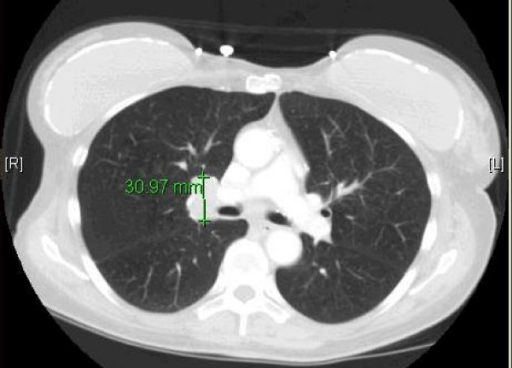
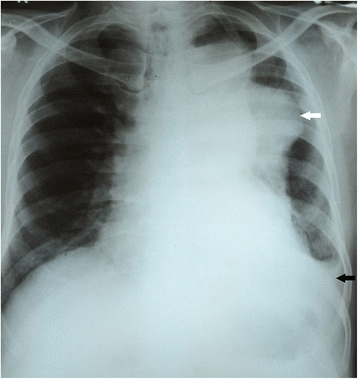
El mediastino es la parte central de la cavidad torácica que contiene muchas estructuras vitales, como el corazón, los LOS Neisseria grandes vasos, la tráquea, el esófago torácico, los LOS Neisseria ganglios linfáticos, varios nervios, las cadenas simpáticas y la columna torácica. La patología mediastínica (e.g., masas) se puede observar en EN Erythema nodosum is an immune-mediated panniculitis (inflammation of the subcutaneous fat) caused by a type IV (delayed-type) hypersensitivity reaction. It commonly manifests in young women as tender, erythematous nodules on the shins. Erythema Nodosum las radiografías convencionales como parte de la evaluación de los LOS Neisseria síntomas relacionados con el tórax, o se puede detectar de manera incidental. Para dilucidar las características de la anomalía mediastínica, se justifican más estudios de imagenología. Las modalidades adicionales comunes son TC y RM.

Last updated: Dec 15, 2025
Editorial responsibility: Stanley Oiseth, Lindsay Jones, Evelin Maza

Introducción

Mediastino

  • La mitad de la cavidad torácica, ubicada entre los LOS Neisseria pulmones.
  • Subdividido en EN Erythema nodosum is an immune-mediated panniculitis (inflammation of the subcutaneous fat) caused by a type IV (delayed-type) hypersensitivity reaction. It commonly manifests in young women as tender, erythematous nodules on the shins. Erythema Nodosum:
    • Mediastino superior
    • Mediastino inferior:
      • Anterior: desde el esternón por delante hasta la superficie anterior del pericardio por detrás.
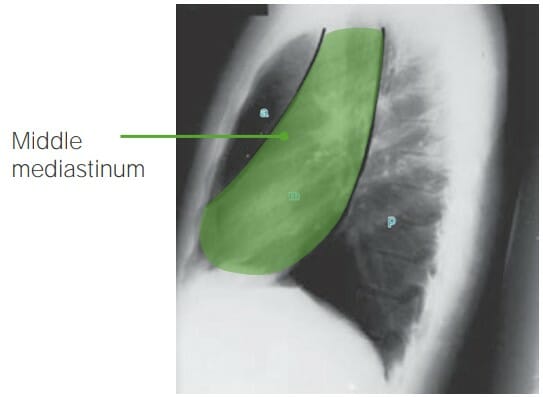
      • Medio: entre las superficies anterior y posterior del pericardio
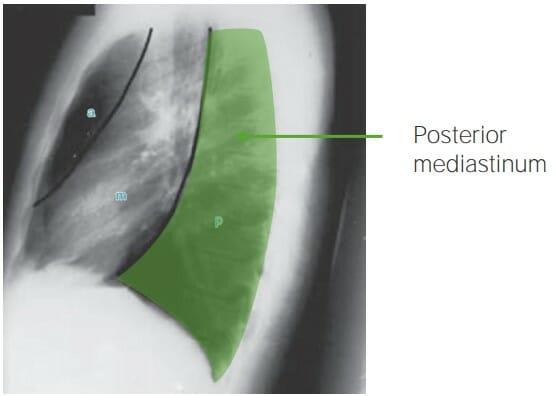
      • Posterior: entre la superficie posterior del pericardio y T4 T4 The major hormone derived from the thyroid gland. Thyroxine is synthesized via the iodination of tyrosines (monoiodotyrosine) and the coupling of iodotyrosines (diiodotyrosine) in the thyroglobulin. Thyroxine is released from thyroglobulin by proteolysis and secreted into the blood. Thyroxine is peripherally deiodinated to form triiodothyronine which exerts a broad spectrum of stimulatory effects on cell metabolism. Thyroid Hormones–T12
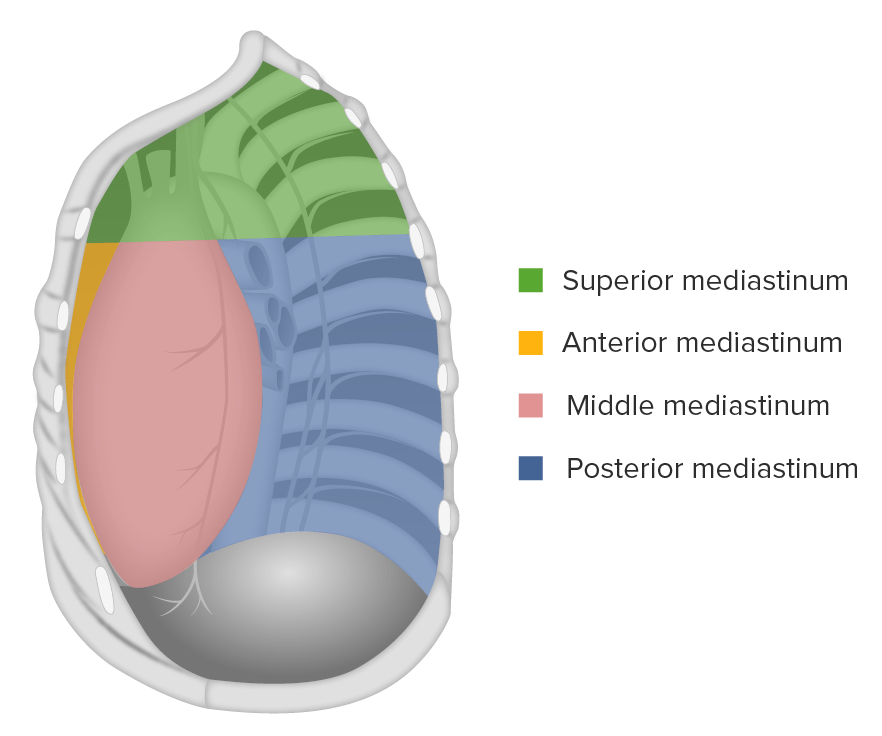
el mediastino

El mediastino:
subdividido en mediastino superior e inferior, que a su vez se divide en tercios anterior, medio y posterior.
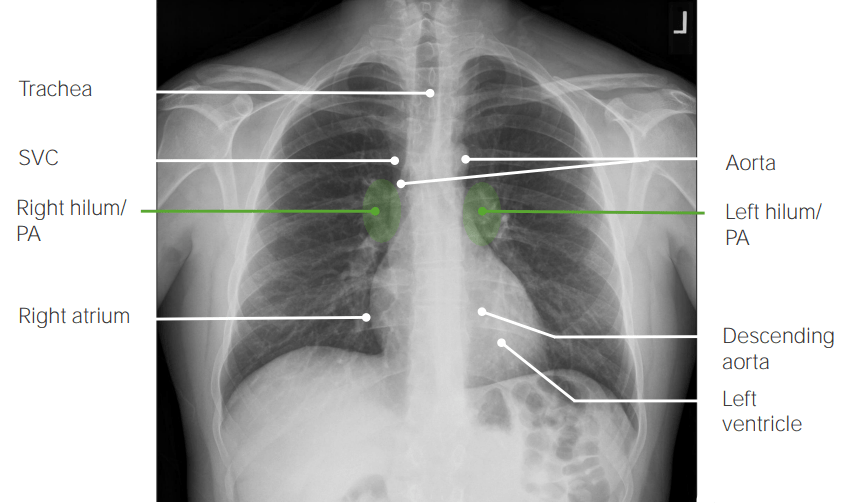
Imagen por Lecturio.

Modalidades de imagenología

  • Las modalidades radiológicas comunes utilizadas para evaluar el mediastino:
    • Radiografía de Tórax
    • TC
    • RM
  • Los LOS Neisseria detalles adicionales que cubren las modalidades radiológicas para la evaluación del tórax se resumen en EN Erythema nodosum is an immune-mediated panniculitis (inflammation of the subcutaneous fat) caused by a type IV (delayed-type) hypersensitivity reaction. It commonly manifests in young women as tender, erythematous nodules on the shins. Erythema Nodosum Radiología Pulmonar.

Radiografía de Tórax

Descripción general

  • La radiografía de tórax es la modalidad inicial de elección en EN Erythema nodosum is an immune-mediated panniculitis (inflammation of the subcutaneous fat) caused by a type IV (delayed-type) hypersensitivity reaction. It commonly manifests in young women as tender, erythematous nodules on the shins. Erythema Nodosum la evaluación de las estructuras mediastínicas.
  • Posicionamiento:
    • Rotación:
      • No debe haber rotación.
      • Apófisis espinosas en EN Erythema nodosum is an immune-mediated panniculitis (inflammation of the subcutaneous fat) caused by a type IV (delayed-type) hypersensitivity reaction. It commonly manifests in young women as tender, erythematous nodules on the shins. Erythema Nodosum la línea media entre los LOS Neisseria extremos mediales de las clavículas
    • Visualización:
      • Los LOS Neisseria pulmones deben ser completamente visibles desde los LOS Neisseria vértices, por encima de las clavículas, hasta las bases Bases Usually a hydroxide of lithium, sodium, potassium, rubidium or cesium, but also the carbonates of these metals, ammonia, and the amines. Acid-Base Balance.
      • Realizado en EN Erythema nodosum is an immune-mediated panniculitis (inflammation of the subcutaneous fat) caused by a type IV (delayed-type) hypersensitivity reaction. It commonly manifests in young women as tender, erythematous nodules on the shins. Erythema Nodosum inspiración: 7–10 costillas posteriores visualizadas por encima del diafragma
      • Sin superposición del mentón sobre el cuello o los LOS Neisseria brazos sobre el tórax periférico
  • Posicionamiento para vistas específicas:
    • Posteroanterior (PA):
      • La tabla se coloca contra el pecho anterior.
      • Haces de rayos X en EN Erythema nodosum is an immune-mediated panniculitis (inflammation of the subcutaneous fat) caused by a type IV (delayed-type) hypersensitivity reaction. It commonly manifests in young women as tender, erythematous nodules on the shins. Erythema Nodosum dirección posterior → anterior a través del paciente
    • Anteroposterior (AP):
      • La tabla se coloca contra la espalda.
      • Haces de rayos X en EN Erythema nodosum is an immune-mediated panniculitis (inflammation of the subcutaneous fat) caused by a type IV (delayed-type) hypersensitivity reaction. It commonly manifests in young women as tender, erythematous nodules on the shins. Erythema Nodosum dirección anterior → posterior a través del paciente
    • Lateral (de lado):
      • El paciente se coloca de pie.
      • La tabla se coloca contra el costado (izquierdo o derecho).
    • Decúbito lateral (de lado, acostado):
      • El paciente se coloca en EN Erythema nodosum is an immune-mediated panniculitis (inflammation of the subcutaneous fat) caused by a type IV (delayed-type) hypersensitivity reaction. It commonly manifests in young women as tender, erythematous nodules on the shins. Erythema Nodosum decúbito supino.
      • La tabla se coloca contra el costado.
      • Por lo general, con el lado izquierdo hacia abajo en EN Erythema nodosum is an immune-mediated panniculitis (inflammation of the subcutaneous fat) caused by a type IV (delayed-type) hypersensitivity reaction. It commonly manifests in young women as tender, erythematous nodules on the shins. Erythema Nodosum la mesa

Vista PA

  • La tráquea es la línea media.
  • La sombra de la vena cava superior está inmediatamente a la derecha del mediastino.
  • Se ven los LOS Neisseria hilios derecho e izquierdo.
  • Los LOS Neisseria bordes cardíacos, derecho (aurícula derecha) e izquierdo (ventrículo izquierdo), son claramente visibles.
  • Son visibles porciones de la aorta Aorta The main trunk of the systemic arteries. Mediastinum and Great Vessels: Anatomy ascendente y descendente.
Vista posteroanterior (PA) en la radiografía de tórax que muestra hallazgos normales

Vista posteroanterior (PA) en la radiografía de tórax que muestra hallazgos normales:
La tráquea es la línea media. La sombra de la vena cava superior está inmediatamente a la derecha del mediastino. Se ven los hilios derecho e izquierdo. Los bordes cardíacos, derecho (aurícula derecha) e izquierdo (ventrículo izquierdo), son claramente visibles. Son visibles porciones de la aorta ascendente y descendente.
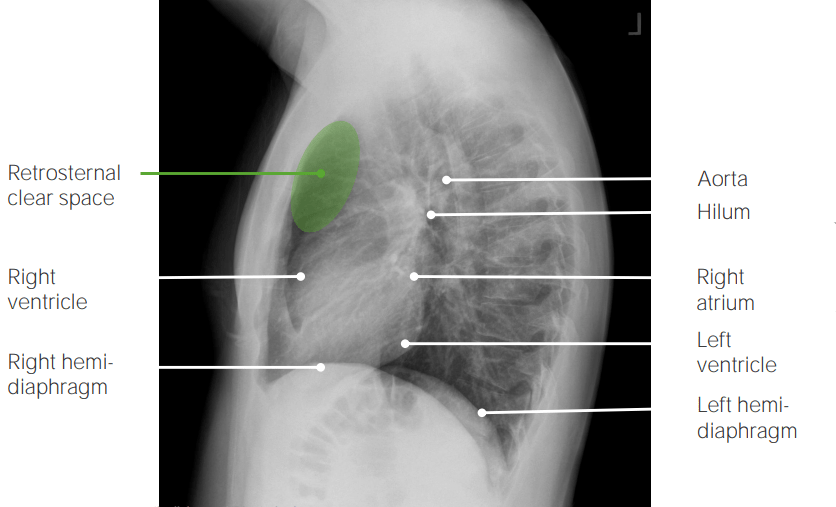
Imagen por Hetal Verma.

Vista lateral

  • El espacio retroesternal es claro.
  • Los LOS Neisseria bordes cardíacos, anterior (ventrículo derecho) y posterior (aurícula derecha), son visibles.
  • El hemidiafragma derecho está ligeramente más alto.
  • Los LOS Neisseria hilios se superponen entre sí en EN Erythema nodosum is an immune-mediated panniculitis (inflammation of the subcutaneous fat) caused by a type IV (delayed-type) hypersensitivity reaction. It commonly manifests in young women as tender, erythematous nodules on the shins. Erythema Nodosum esta vista.
Vista lateral de la radiografía de tórax que muestra hallazgos normales

Vista lateral de la radiografía de tórax que muestra hallazgos normales:
El espacio retroesternal es claro. Los bordes del corazón, anterior (ventrículo derecho) y posterior (aurícula derecha), son claramente visibles.
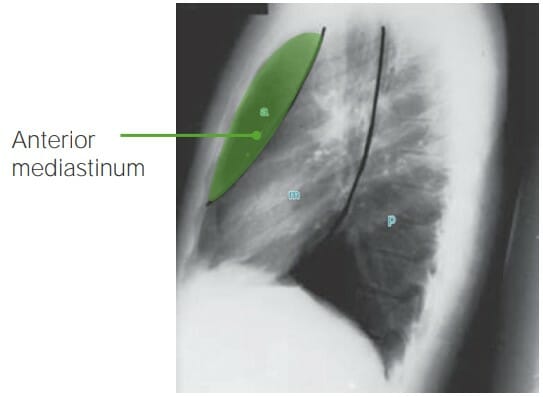
Imagen por Hetal Verma.

Compartimentos del mediastino

  • Mediastino anterior (prevascular):
    • Área entre el esternón y el borde anterior del corazón (esencialmente anterior al AL Amyloidosis pericardio)
    • Contenido:
      • Timo
      • Grasa
      • Ganglios linfáticos
      • Arterias mamarias internas
    • En EN Erythema nodosum is an immune-mediated panniculitis (inflammation of the subcutaneous fat) caused by a type IV (delayed-type) hypersensitivity reaction. It commonly manifests in young women as tender, erythematous nodules on the shins. Erythema Nodosum adultos, área más común de masas mediastínicas
    • Masas mediastínicas típicamente encontradas aquí (“Terribles Ts”):
      • Timoma
      • Teratoma Teratoma A true neoplasm composed of a number of different types of tissue, none of which is native to the area in which it occurs. It is composed of tissues that are derived from three germinal layers, the endoderm, mesoderm, and ectoderm. They are classified histologically as mature (benign) or immature (malignant). Imaging of the Mediastinum/ tumor Tumor Inflammation de células germinales
      • Terrible Linfoma
      • Tejido tiroideo
  • Mediastino medio (visceral):
    • Área que se extiende desde los LOS Neisseria márgenes anterior y posterior del corazón
    • Se encuentra entre el mediastino anterior y posterior.
    • Contenido:
    • Masas típicamente encontradas:
      • Linfadenopatías
      • Masas quísticas
      • Aneurismas vasculares
      • Tumores esofágicos
  • Mediastino posterior (paravertebral):
    • Zona que se extiende desde la pared posterior del pericardio, en EN Erythema nodosum is an immune-mediated panniculitis (inflammation of the subcutaneous fat) caused by a type IV (delayed-type) hypersensitivity reaction. It commonly manifests in young women as tender, erythematous nodules on the shins. Erythema Nodosum sentido anterior, hasta la columna torácica anterior, en EN Erythema nodosum is an immune-mediated panniculitis (inflammation of the subcutaneous fat) caused by a type IV (delayed-type) hypersensitivity reaction. It commonly manifests in young women as tender, erythematous nodules on the shins. Erythema Nodosum sentido posterior (incluyendo la columna y los LOS Neisseria cuerpos vertebrales)
    • Contenido:
      • Médula espinal
      • Columna torácica
      • Paquete neurovascular
      • Cadena simpática
    • Masas típicamente encontradas aquí:
      • Tumores neurogénicos
      • Lesiones de la columna torácica
      • Meningoceles
      • Hematopoyesis extramedular (puede presentarse como una masa de tejido blando)

Tomografía Computarizada

Descripción general

  • La TC identifica la ubicación de la patología con precisión y, por lo tanto, es la modalidad de elección en EN Erythema nodosum is an immune-mediated panniculitis (inflammation of the subcutaneous fat) caused by a type IV (delayed-type) hypersensitivity reaction. It commonly manifests in young women as tender, erythematous nodules on the shins. Erythema Nodosum la evaluación del mediastino.
    • El contraste ayuda a definir las estructuras (e.g., vasculatura, ganglios linfáticos, masas).
    • El grado y la variabilidad de la atenuación de una masa o estructura depende de su contenido.
    • Las unidades Hounsfield ( HU HU Computed Tomography (CT)) miden la densidad de las estructuras:
      • Aire (visto en EN Erythema nodosum is an immune-mediated panniculitis (inflammation of the subcutaneous fat) caused by a type IV (delayed-type) hypersensitivity reaction. It commonly manifests in young women as tender, erythematous nodules on the shins. Erythema Nodosum neumomediastino): HU HU Computed Tomography (CT) más bajo
      • Grasa
      • Agua
      • Tejido blando
      • Ca CA Condylomata acuminata are a clinical manifestation of genital HPV infection. Condylomata acuminata are described as raised, pearly, flesh-colored, papular, cauliflower-like lesions seen in the anogenital region that may cause itching, pain, or bleeding. Condylomata Acuminata (Genital Warts)2+/calcificación
      • Hueso: mayor HU HU Computed Tomography (CT)
    • Niveles de ventana: manipulación digital de las imágenes para acentuar las estructuras (e.g., en EN Erythema nodosum is an immune-mediated panniculitis (inflammation of the subcutaneous fat) caused by a type IV (delayed-type) hypersensitivity reaction. It commonly manifests in young women as tender, erythematous nodules on the shins. Erythema Nodosum la ventana de tejidos blandos, se ven bien los LOS Neisseria tejidos blandos, como los LOS Neisseria músculos)

Hallazgos normales

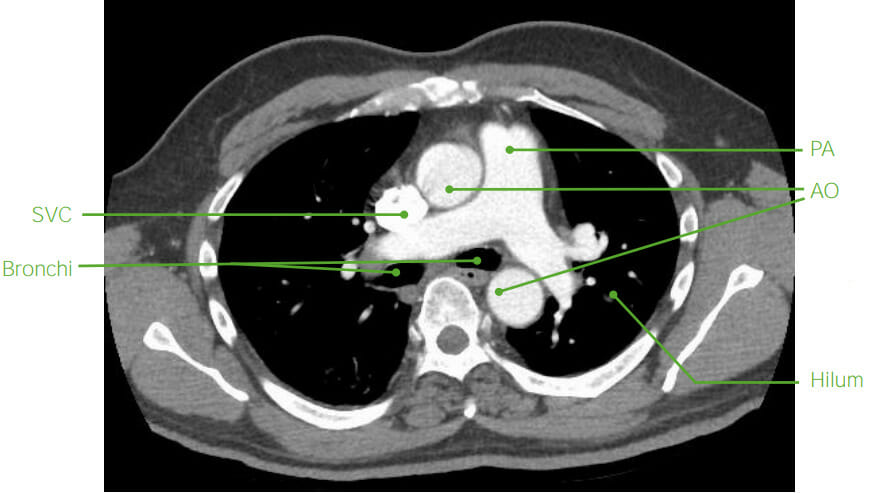
  • La tráquea es visible como un espacio negro lleno de aire.
  • Corazón:
  • Vasos sanguíneos:
    • Las estructuras llenas de sangre aparecen más brillantes en EN Erythema nodosum is an immune-mediated panniculitis (inflammation of the subcutaneous fat) caused by a type IV (delayed-type) hypersensitivity reaction. It commonly manifests in young women as tender, erythematous nodules on the shins. Erythema Nodosum la TC con contraste.
    • Los LOS Neisseria vasos principales (arterias y venas pulmonares, aorta Aorta The main trunk of the systemic arteries. Mediastinum and Great Vessels: Anatomy y vena cava superior) se continúan con el corazón.
    • Cada bronquio más pequeño (negro) está emparejado con un vaso sanguíneo (blanco).
  • Estructuras óseas: costillas, vértebras, escápulas y húmeros deben ser visibles y de color más claro (las estructuras más densas).
Anatomía mediastínica axial en TC (post-contraste)

Anatomía mediastínica axial en TC (post-contraste):
los vasos sanguíneos (SVC: vena cava superior; PA: arteria pulmonar, AO: aorta) se llenan de contraste. Los bronquios están llenos de aire. Se observa que las estructuras óseas son brillantes en la TC.

Imagen por Hetal Verma.

Imagenología de Resonancia Magnética

Descripción general

RM

  • Suele utilizarse para estudiar masas mediastínicas, concretamente para:
    • Determinar la ubicación precisa
    • Evaluar la invasión y la estadificación (las masas de ganglios linfáticos subcarinales y aortopulmonares se visualizan bien en EN Erythema nodosum is an immune-mediated panniculitis (inflammation of the subcutaneous fat) caused by a type IV (delayed-type) hypersensitivity reaction. It commonly manifests in young women as tender, erythematous nodules on the shins. Erythema Nodosum las secciones coronal Coronal Computed Tomography (CT) y sagital)
    • Evaluar el contenido de las masas (debido a la excelente resolución de las estructuras de tejido blando)
  • También indicada para personas con alergia al AL Amyloidosis contraste y/o insuficiencia renal.
  • No asociada a radiaciones ionizantes
  • Entre las desventajas:
    • Alto costo
    • Mayor tiempo de escaneo

Hallazgos normales

  • Vistas:
    • Imagen ponderada en EN Erythema nodosum is an immune-mediated panniculitis (inflammation of the subcutaneous fat) caused by a type IV (delayed-type) hypersensitivity reaction. It commonly manifests in young women as tender, erythematous nodules on the shins. Erythema Nodosum T1 (T1):
      • Los LOS Neisseria tejidos con alto contenido de grasa aparecen brillantes/blancos.
      • Los LOS Neisseria compartimentos llenos de agua aparecen oscuros/negros.
    • Imagen ponderada en EN Erythema nodosum is an immune-mediated panniculitis (inflammation of the subcutaneous fat) caused by a type IV (delayed-type) hypersensitivity reaction. It commonly manifests in young women as tender, erythematous nodules on the shins. Erythema Nodosum T2 (T2):
      • Los LOS Neisseria compartimentos llenos de agua aparecen brillantes/blancos.
      • Los LOS Neisseria tejidos con alto contenido de grasa aparecen oscuros/negros.
  • Estructuras:
    • Timo:
      • Lobulación de tejidos blandos
      • Bordes convexos, rectos o cóncavos según la edad del paciente
      • Más grande entre los LOS Neisseria 12–19 años, luego involuciona (7 mm después de los LOS Neisseria 19 años)
    • La RM evalúa en EN Erythema nodosum is an immune-mediated panniculitis (inflammation of the subcutaneous fat) caused by a type IV (delayed-type) hypersensitivity reaction. It commonly manifests in young women as tender, erythematous nodules on the shins. Erythema Nodosum el corazón su:
      • Espesor muscular
      • Tamaño ventricular
      • Volumen diastólico final
    • Estructuras de tejidos blandos:
      • Médula espinal
      • Parénquima pulmonar
      • Diafragma
      • Parte superior del hígado
      • Vasculatura

Hallazgos Anormales

Descripción general

  • Las anormalidades incluyen:
    • Neumomediastino
    • Anomalías vasculares
    • Masas (e.g., tumores, quistes)
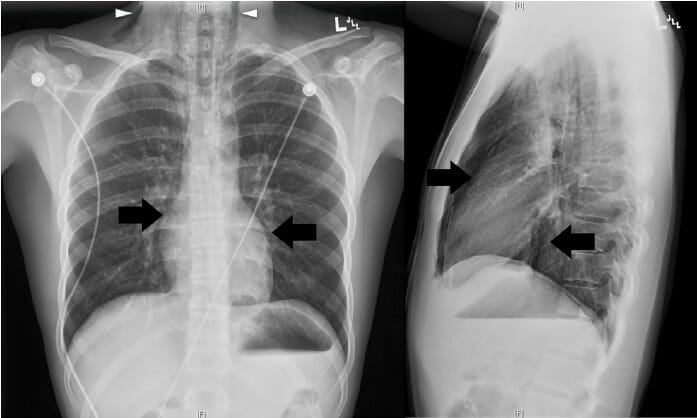
  • Estas condiciones pueden producir un mediastino ensanchado, pero hay variantes normales a considerar que también pueden producir el mismo efecto:
    • Proyección AP ( en EN Erythema nodosum is an immune-mediated panniculitis (inflammation of the subcutaneous fat) caused by a type IV (delayed-type) hypersensitivity reaction. It commonly manifests in young women as tender, erythematous nodules on the shins. Erythema Nodosum lugar de proyección PA)
    • Grasa mediastínica ( en EN Erythema nodosum is an immune-mediated panniculitis (inflammation of the subcutaneous fat) caused by a type IV (delayed-type) hypersensitivity reaction. It commonly manifests in young women as tender, erythematous nodules on the shins. Erythema Nodosum obesos o en EN Erythema nodosum is an immune-mediated panniculitis (inflammation of the subcutaneous fat) caused by a type IV (delayed-type) hypersensitivity reaction. It commonly manifests in young women as tender, erythematous nodules on the shins. Erythema Nodosum terapia con esteroides)
    • Tortuosidad vascular (observada en EN Erythema nodosum is an immune-mediated panniculitis (inflammation of the subcutaneous fat) caused by a type IV (delayed-type) hypersensitivity reaction. It commonly manifests in young women as tender, erythematous nodules on the shins. Erythema Nodosum los LOS Neisseria ancianos)
    • Posición supina inspiratoria baja

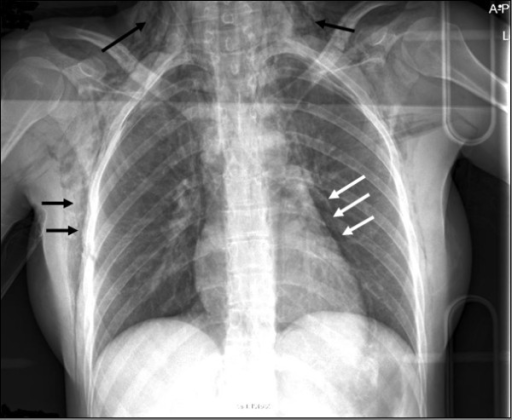
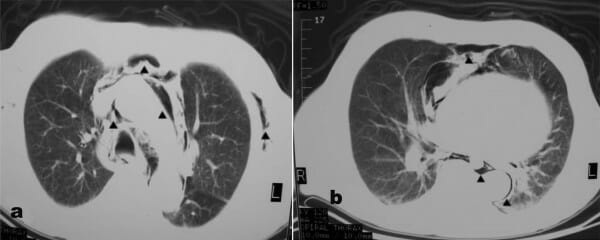
Neumomediastino

  • Gas extraluminal (que puede ser de los LOS Neisseria pulmones, la tráquea, el esófago, la cavidad peritoneal) que se encuentra en EN Erythema nodosum is an immune-mediated panniculitis (inflammation of the subcutaneous fat) caused by a type IV (delayed-type) hypersensitivity reaction. It commonly manifests in young women as tender, erythematous nodules on the shins. Erythema Nodosum el mediastino
  • Hallazgos radiográficos:
    • Transparencias lineales que delimitan las estructuras mediastínicas:
      • Bronquios o tráquea
      • Vasos sanguíneos principales
      • Pericardio y corazón
    • Los LOS Neisseria hallazgos son consistentes con el aire que rodea la(s) estructura(s):
      • Signo de vela tímica: desplazamiento hacia arriba de los LOS Neisseria lóbulos tímicos, formando un borde tímico inferior triangular (que se encuentra en EN Erythema nodosum is an immune-mediated panniculitis (inflammation of the subcutaneous fat) caused by a type IV (delayed-type) hypersensitivity reaction. It commonly manifests in young women as tender, erythematous nodules on the shins. Erythema Nodosum los LOS Neisseria recién nacidos)
      • Signo del anillo alrededor de la arteria: gas alrededor de las principales ramas aórticas
      • Signo de doble pared bronquial: gas que rodea la pared bronquial
      • Signo del diafragma continuo: aire entre el diafragma y el pericardio.
    • También se observa enfisema subcutáneo.
  • Hallazgos de la TC:
    • Brinda más detalles sobre enfermedades o lesiones coexistentes (que involucran el tracto aerodigestivo)
    • También detecta pequeñas acumulaciones de aire que no se ven en EN Erythema nodosum is an immune-mediated panniculitis (inflammation of the subcutaneous fat) caused by a type IV (delayed-type) hypersensitivity reaction. It commonly manifests in young women as tender, erythematous nodules on the shins. Erythema Nodosum la radiografía de tórax

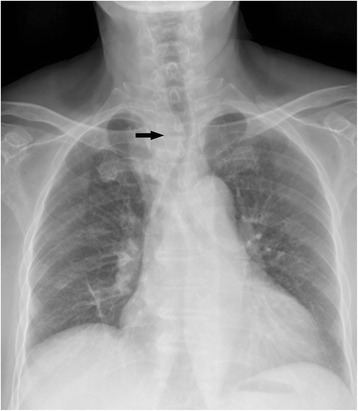
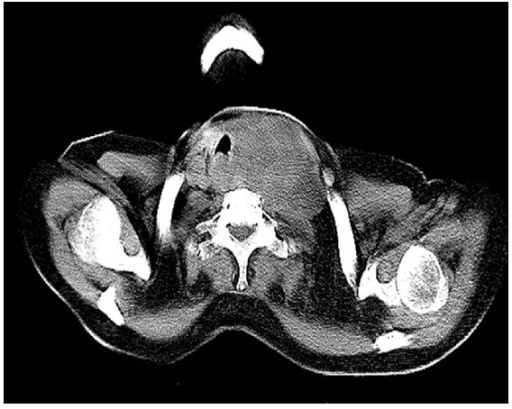
Masas relacionadas con la tiroides

  • Pueden ser:
    • Una glándula tiroides agrandada (bocio) o una masa tiroidea (nódulo benigno o tumor Tumor Inflammation maligno) que se extiende (desde el cuello) hacia el área intratorácica
    • Una tiroides ectópica
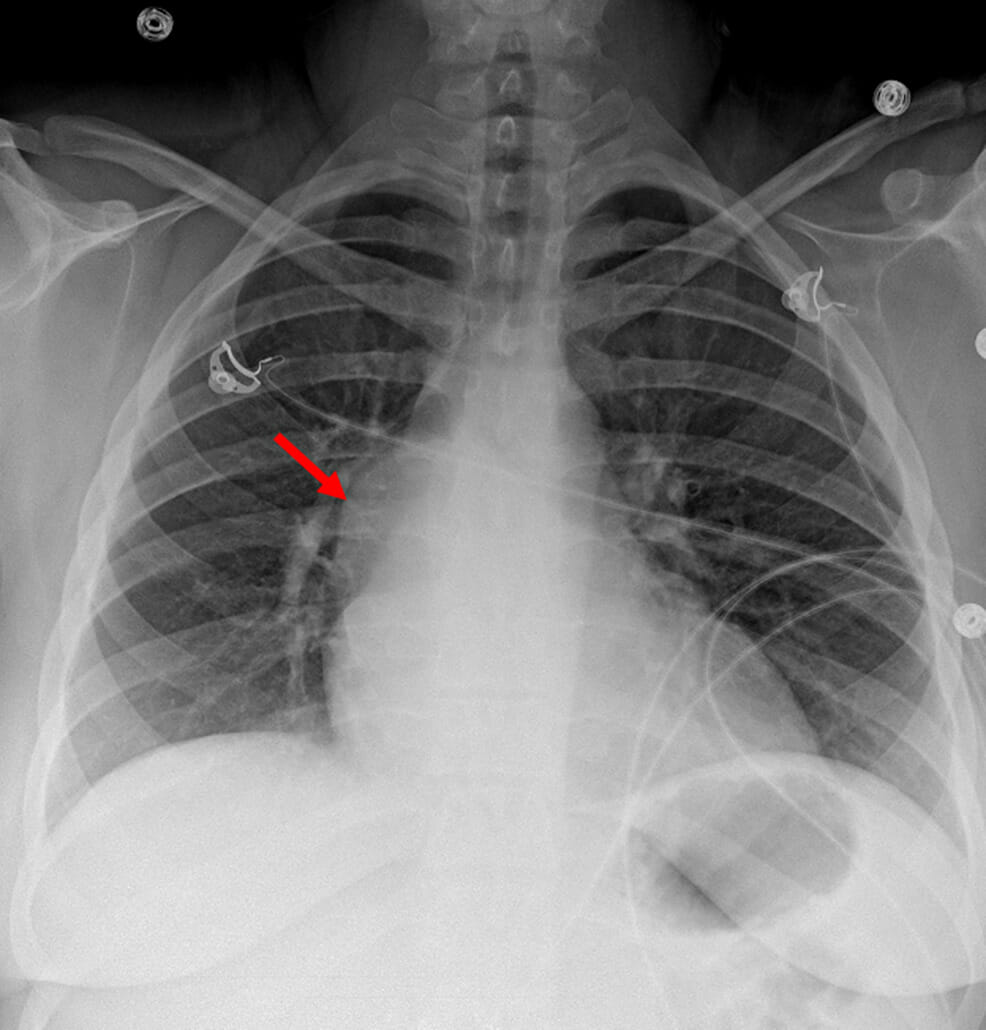
  • La mayoría de los LOS Neisseria bocios que se encuentran en EN Erythema nodosum is an immune-mediated panniculitis (inflammation of the subcutaneous fat) caused by a type IV (delayed-type) hypersensitivity reaction. It commonly manifests in young women as tender, erythematous nodules on the shins. Erythema Nodosum el mediastino son anteriores a los LOS Neisseria vasos braquiocefálicos.
  • Hallazgos radiográficos:
    • Opacificación en EN Erythema nodosum is an immune-mediated panniculitis (inflammation of the subcutaneous fat) caused by a type IV (delayed-type) hypersensitivity reaction. It commonly manifests in young women as tender, erythematous nodules on the shins. Erythema Nodosum el mediastino anterior
    • Mediastino ensanchado
    • +/- Efecto de masa: desviación traqueal hacia el lado opuesto
  • Hallazgos a la TC:
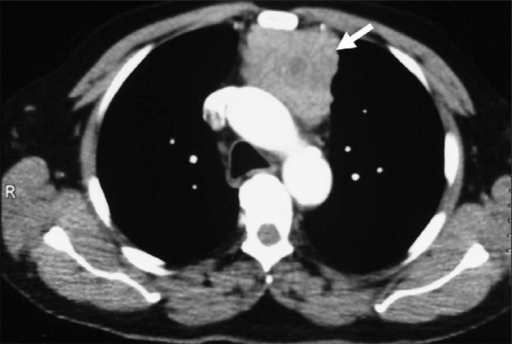
    • Masa mediastínica anterior
    • Bocios:
      • Densidad heterogénea
      • Realce marcado del contraste
    • Nódulos tiroideos:
      • Hallazgos incidentales comunes en EN Erythema nodosum is an immune-mediated panniculitis (inflammation of the subcutaneous fat) caused by a type IV (delayed-type) hypersensitivity reaction. It commonly manifests in young women as tender, erythematous nodules on the shins. Erythema Nodosum la TC
      • El American College of Radiology sugiere ultrasonido de seguimiento para nódulos incidentales: si > 1 cm en EN Erythema nodosum is an immune-mediated panniculitis (inflammation of the subcutaneous fat) caused by a type IV (delayed-type) hypersensitivity reaction. It commonly manifests in young women as tender, erythematous nodules on the shins. Erythema Nodosum personas de edad < 35 años, > 1,5 cm en EN Erythema nodosum is an immune-mediated panniculitis (inflammation of the subcutaneous fat) caused by a type IV (delayed-type) hypersensitivity reaction. It commonly manifests in young women as tender, erythematous nodules on the shins. Erythema Nodosum > 35 años
      • Características sugestivas de malignidad: márgenes mal definidos o irregulares, invasión de tejido y/o linfadenopatía

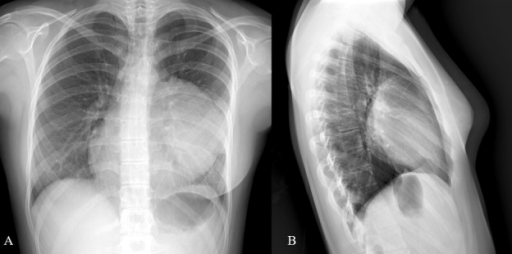
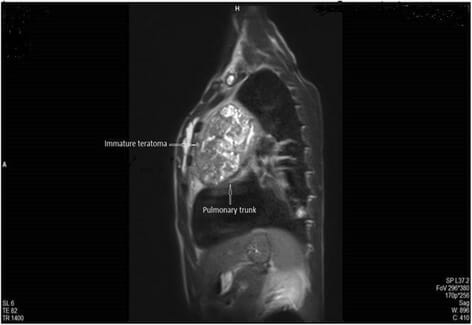
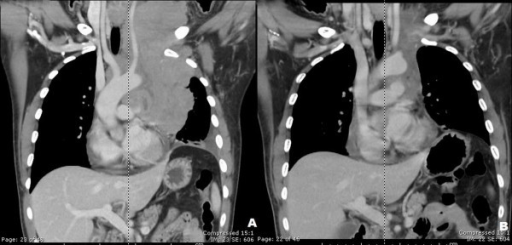
Teratoma Teratoma A true neoplasm composed of a number of different types of tissue, none of which is native to the area in which it occurs. It is composed of tissues that are derived from three germinal layers, the endoderm, mesoderm, and ectoderm. They are classified histologically as mature (benign) or immature (malignant). Imaging of the Mediastinum

  • Tumor Tumor Inflammation de células germinales que típicamente se presenta como una gran masa
  • 20% son malignos.
  • El mediastino anterior es el sitio extragonadal más frecuente.
  • Contenidos variables:
    • Niveles de grasa o grasa-líquido
    • Quistes
    • Calcificación
    • Tejido blando
  • Hallazgos radiográficos:
    • Opacificación en EN Erythema nodosum is an immune-mediated panniculitis (inflammation of the subcutaneous fat) caused by a type IV (delayed-type) hypersensitivity reaction. It commonly manifests in young women as tender, erythematous nodules on the shins. Erythema Nodosum el mediastino anterior
    • Mediastino ensanchado
    • +/- Efecto de masa (e.g., desviación traqueal hacia el lado opuesto)
    • +/- Calcificación y/o grasa
    • En EN Erythema nodosum is an immune-mediated panniculitis (inflammation of the subcutaneous fat) caused by a type IV (delayed-type) hypersensitivity reaction. It commonly manifests in young women as tender, erythematous nodules on the shins. Erythema Nodosum algunos, se ven dientes o huesos.
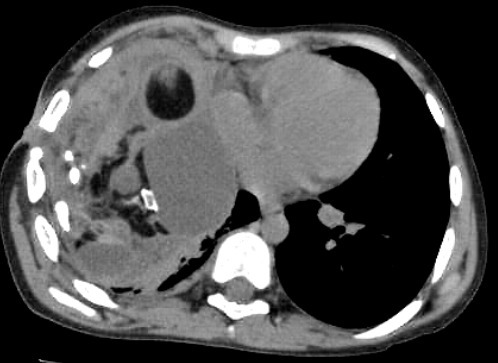
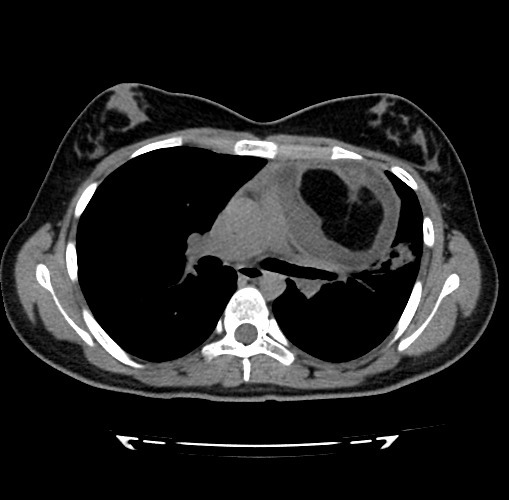
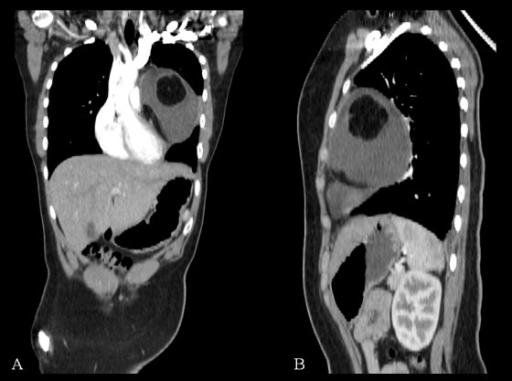
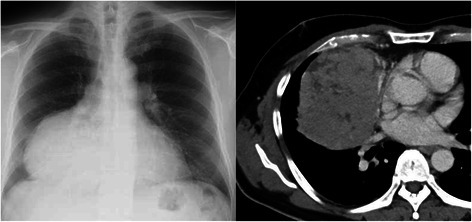
  • Hallazgos a la TC:
    • La TC es el examen radiológico de elección.
    • Masa mediastínica anterior con componentes mixtos de densidad relacionados con la multiplicidad de contenidos
    • Nivel grasa-líquido en EN Erythema nodosum is an immune-mediated panniculitis (inflammation of the subcutaneous fat) caused by a type IV (delayed-type) hypersensitivity reaction. It commonly manifests in young women as tender, erythematous nodules on the shins. Erythema Nodosum la masa: patognomónico
    • +/- Efecto de masa
    • Los LOS Neisseria teratomas Teratomas A true neoplasm composed of a number of different types of tissue, none of which is native to the area in which it occurs. It is composed of tissues that are derived from three germinal layers, the endoderm, mesoderm, and ectoderm. They are classified histologically as mature (benign) or immature (malignant). Ovarian Cancer benignos (maduros) están bien definidos.
    • Características de la malignidad:
      • Mal definido
      • Invasión
  • Hallazgos a la RM:
    • Masa mediastínica anterior
    • El nivel de líquido graso es diagnóstico.
      • La RM detecta la grasa macroscópica (como la TC), pero también detecta la grasa intracelular microscópica (no detectada por la TC).
      • La hiperintensidad T1/T2 y la saturación en EN Erythema nodosum is an immune-mediated panniculitis (inflammation of the subcutaneous fat) caused by a type IV (delayed-type) hypersensitivity reaction. It commonly manifests in young women as tender, erythematous nodules on the shins. Erythema Nodosum las secuencias de pulsos de RM con saturación de grasa confirman la grasa macroscópica.
    • La calcificación puede ser:
      • Como un borde
      • Focal
    • +/- Efecto de masa
    • +/- Tabiques

Timoma y carcinoma tímico

  • Tumores:
    • Timoma:
      • Tumor Tumor Inflammation primario más común en EN Erythema nodosum is an immune-mediated panniculitis (inflammation of the subcutaneous fat) caused by a type IV (delayed-type) hypersensitivity reaction. It commonly manifests in young women as tender, erythematous nodules on the shins. Erythema Nodosum el mediastino anterior
      • 20% de los LOS Neisseria tumores mediastínicos
    • Carcinomas tímicos: malignidad agresiva, que a menudo se presenta con invasión de estructuras en EN Erythema nodosum is an immune-mediated panniculitis (inflammation of the subcutaneous fat) caused by a type IV (delayed-type) hypersensitivity reaction. It commonly manifests in young women as tender, erythematous nodules on the shins. Erythema Nodosum el mediastino
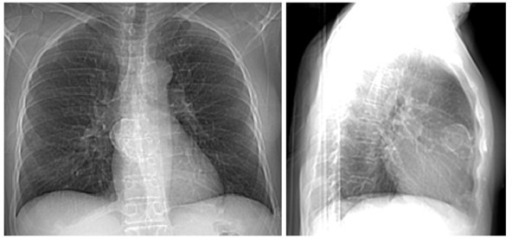
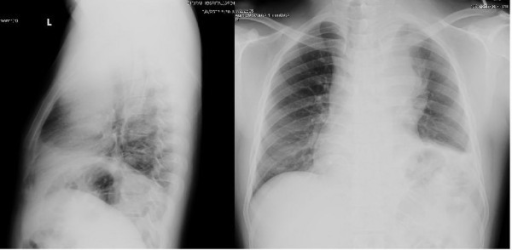
  • Hallazgos radiográficos:
    • Masa mediastínica anterior bien definida, vista como una densidad lobulada de partes blandas
    • Por lo general, un poco más sobresaliente en EN Erythema nodosum is an immune-mediated panniculitis (inflammation of the subcutaneous fat) caused by a type IV (delayed-type) hypersensitivity reaction. It commonly manifests in young women as tender, erythematous nodules on the shins. Erythema Nodosum 1 lado
    • Vista lateral: El espacio retroesternal está opacificado.
    • +/- Calcificación
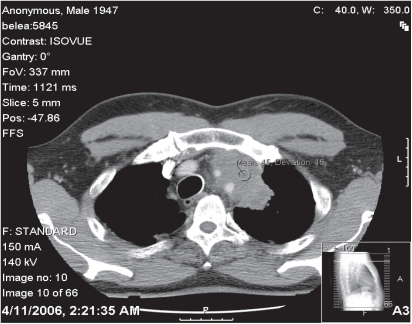
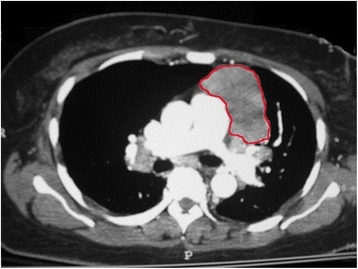
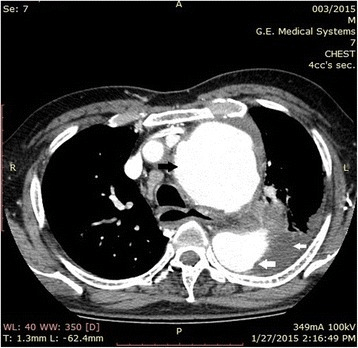
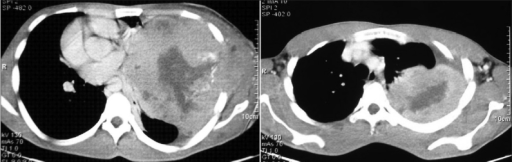
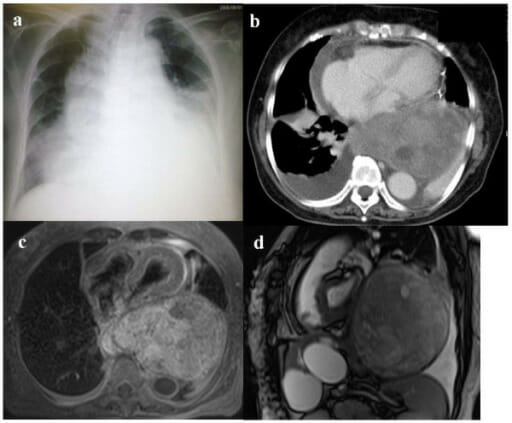
  • Hallazgos a la TC:
    • Timoma:
      • Masa encapsulada bien delimitada
      • A menudo con un contorno suave
      • De forma redonda u ovalada
      • Se realza con contraste
      • A menudo homogéneo, pero puede tener áreas focales de hemorragia, necrosis Necrosis The death of cells in an organ or tissue due to disease, injury or failure of the blood supply. Ischemic Cell Damage o formación de quistes.
      • +/- Calcificación
    • Carcinoma tímico:
      • Masa mediastínica anterior
      • Bordes irregulares
      • A menudo heterogénea, con componentes necróticos, quísticos o hemorrágicos
      • Realce heterogéneo
      • +/- Calcificaciones
      • +/- Invasión local o linfadenopatía
      • +/- Metástasis extratorácicas
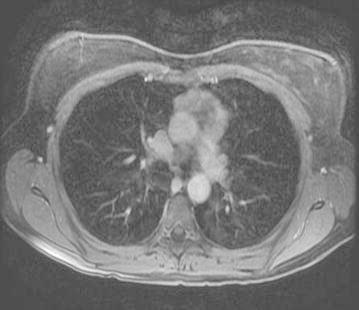
  • Hallazgos a la RM:
    • Timoma:
      • Masa bien definida en EN Erythema nodosum is an immune-mediated panniculitis (inflammation of the subcutaneous fat) caused by a type IV (delayed-type) hypersensitivity reaction. It commonly manifests in young women as tender, erythematous nodules on the shins. Erythema Nodosum el mediastino anterior
      • Forma ovalada/redonda
      • Generalmente homogéneo
      • Isointenso a levemente hiperintenso al AL Amyloidosis músculo en EN Erythema nodosum is an immune-mediated panniculitis (inflammation of the subcutaneous fat) caused by a type IV (delayed-type) hypersensitivity reaction. It commonly manifests in young women as tender, erythematous nodules on the shins. Erythema Nodosum imágenes T1
      • Típicamente levemente hiperintenso al AL Amyloidosis músculo en EN Erythema nodosum is an immune-mediated panniculitis (inflammation of the subcutaneous fat) caused by a type IV (delayed-type) hypersensitivity reaction. It commonly manifests in young women as tender, erythematous nodules on the shins. Erythema Nodosum imágenes T2
    • Carcinoma tímico:
      • Masa mediastínica anterior
      • Bordes irregulares
      • Hipo a isointenso en EN Erythema nodosum is an immune-mediated panniculitis (inflammation of the subcutaneous fat) caused by a type IV (delayed-type) hypersensitivity reaction. It commonly manifests in young women as tender, erythematous nodules on the shins. Erythema Nodosum imágenes potenciadas en EN Erythema nodosum is an immune-mediated panniculitis (inflammation of the subcutaneous fat) caused by a type IV (delayed-type) hypersensitivity reaction. It commonly manifests in young women as tender, erythematous nodules on the shins. Erythema Nodosum T1
      • Hiperintenso en EN Erythema nodosum is an immune-mediated panniculitis (inflammation of the subcutaneous fat) caused by a type IV (delayed-type) hypersensitivity reaction. It commonly manifests in young women as tender, erythematous nodules on the shins. Erythema Nodosum imágenes potenciadas en EN Erythema nodosum is an immune-mediated panniculitis (inflammation of the subcutaneous fat) caused by a type IV (delayed-type) hypersensitivity reaction. It commonly manifests in young women as tender, erythematous nodules on the shins. Erythema Nodosum T2
      • Heterogéneo
      • +/- Invasión local o linfadenopatía

Linfoma

  • Tipos que se encuentran comúnmente en EN Erythema nodosum is an immune-mediated panniculitis (inflammation of the subcutaneous fat) caused by a type IV (delayed-type) hypersensitivity reaction. It commonly manifests in young women as tender, erythematous nodules on the shins. Erythema Nodosum el mediastino:
    • Linfoma de Hodgkin esclerosante nodular
    • Linfoma primario de células B del mediastino
  • Hallazgos radiográficos:
    • Ubicación en EN Erythema nodosum is an immune-mediated panniculitis (inflammation of the subcutaneous fat) caused by a type IV (delayed-type) hypersensitivity reaction. It commonly manifests in young women as tender, erythematous nodules on the shins. Erythema Nodosum el mediastino anterior
    • Mediastino ensanchado
    • Espacio retroesternal oscurecido
  • Hallazgos a la TC:
    • Mediastino anterior (aunque se puede ver en EN Erythema nodosum is an immune-mediated panniculitis (inflammation of the subcutaneous fat) caused by a type IV (delayed-type) hypersensitivity reaction. It commonly manifests in young women as tender, erythematous nodules on the shins. Erythema Nodosum los LOS Neisseria otros compartimentos mediastínicos)
    • Contornos irregulares (a menudo con áreas de conglomerado que aparecen como una gran masa)
    • Homogéneo, con atenuación de tejidos blandos (pero puede ser heterogéneo si hay necrosis Necrosis The death of cells in an organ or tissue due to disease, injury or failure of the blood supply. Ischemic Cell Damage o hemorragia)
    • Realce leve a moderado
  • Hallazgos a la RM: varían con el tipo de linfoma

Quiste broncogénico

  • Gemación congénita anómala del intestino anterior
  • El mediastino medio es la ubicación más común.
  • Hallazgos radiográficos:
    • Densidad de tejido blando, masa(s) redonda u ovoide
    • +/- Nivel hidroaéreo
    • +/- Calcificación
  • Hallazgos a la TC:
    • Masa(s) bien definida(s) de forma ovalada/redonda
    • Bordes suaves
    • Atenuación variable Variable Variables represent information about something that can change. The design of the measurement scales, or of the methods for obtaining information, will determine the data gathered and the characteristics of that data. As a result, a variable can be qualitative or quantitative, and may be further classified into subgroups. Types of Variables debido a diferentes contenidos
    • Homogéneo
    • Sin realce
    • Sin invasión
  • Hallazgos a la RM:
    • Rara vez se necesita para la evaluación
    • Homogéneo
    • Variable Variable Variables represent information about something that can change. The design of the measurement scales, or of the methods for obtaining information, will determine the data gathered and the characteristics of that data. As a result, a variable can be qualitative or quantitative, and may be further classified into subgroups. Types of Variables T1, dependiente del contenido del quiste (baja intensidad en EN Erythema nodosum is an immune-mediated panniculitis (inflammation of the subcutaneous fat) caused by a type IV (delayed-type) hypersensitivity reaction. It commonly manifests in young women as tender, erythematous nodules on the shins. Erythema Nodosum líquido, alta intensidad en EN Erythema nodosum is an immune-mediated panniculitis (inflammation of the subcutaneous fat) caused by a type IV (delayed-type) hypersensitivity reaction. It commonly manifests in young women as tender, erythematous nodules on the shins. Erythema Nodosum contenido de proteína)
    • Hiperintenso en EN Erythema nodosum is an immune-mediated panniculitis (inflammation of the subcutaneous fat) caused by a type IV (delayed-type) hypersensitivity reaction. It commonly manifests in young women as tender, erythematous nodules on the shins. Erythema Nodosum T2
    • Sin realce
    • Sin invasión

Linfadenopatías

  • Las linfadenopatías son las masas más comunes del mediastino medio.
  • Ganglios linfáticos del mediastino medio:
    • Paratraqueales
    • Subcarinales: debajo de la bifurcación traqueal
    • Subaórticos
    • Traqueobronquiales (raíz pulmonar, hiliar)
  • Las causas incluyen linfoma, cáncer de pulmón y sarcoidosis Sarcoidosis Sarcoidosis is a multisystem inflammatory disease that causes noncaseating granulomas. The exact etiology is unknown. Sarcoidosis usually affects the lungs and thoracic lymph nodes, but it can also affect almost every system in the body, including the skin, heart, and eyes, most commonly. Sarcoidosis.
  • Hallazgos radiográficos:
    • Masa(s) mediastínica(s) media(s)
    • Bordes suaves
    • Pueden ser bilateral
    • +/- Separación de la carina en EN Erythema nodosum is an immune-mediated panniculitis (inflammation of the subcutaneous fat) caused by a type IV (delayed-type) hypersensitivity reaction. It commonly manifests in young women as tender, erythematous nodules on the shins. Erythema Nodosum la linfadenopatía subcarinal
  • Hallazgos a la TC: el ganglio linfático anormal tiene un diámetro de eje corto > 1 cm

Aneurisma aórtico

  • Un aneurisma de la aorta Aorta The main trunk of the systemic arteries. Mediastinum and Great Vessels: Anatomy torácica es la dilatación anormal de un segmento de la aorta Aorta The main trunk of the systemic arteries. Mediastinum and Great Vessels: Anatomy torácica y la mayoría afecta a la aorta Aorta The main trunk of the systemic arteries. Mediastinum and Great Vessels: Anatomy ascendente.
  • Hallazgos radiográficos:
  • Hallazgos a la TC:
    • La mejor modalidad (la RM es una opción, pero no está disponible en EN Erythema nodosum is an immune-mediated panniculitis (inflammation of the subcutaneous fat) caused by a type IV (delayed-type) hypersensitivity reaction. It commonly manifests in young women as tender, erythematous nodules on the shins. Erythema Nodosum muchos centros).
    • Detecta diámetro aórtico, anatomía de vasos, disección, ruptura, trombo
    • Muestra una aorta Aorta The main trunk of the systemic arteries. Mediastinum and Great Vessels: Anatomy dilatada.
    • +/- Defecto de llenado (que representa un trombo o disección)

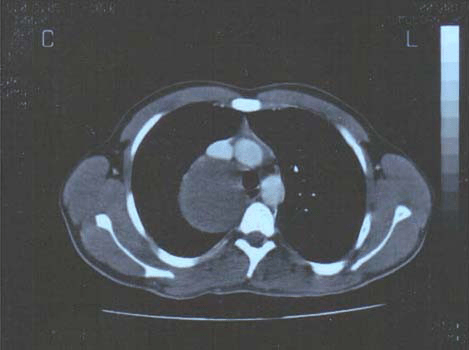
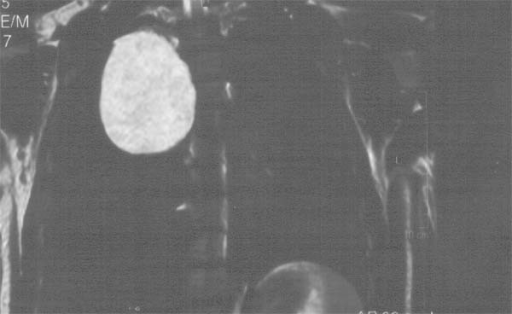
Schwanoma

  • Tumor Tumor Inflammation neurogénico mediastínico más frecuente
  • A menudo surge posteriormente, en EN Erythema nodosum is an immune-mediated panniculitis (inflammation of the subcutaneous fat) caused by a type IV (delayed-type) hypersensitivity reaction. It commonly manifests in young women as tender, erythematous nodules on the shins. Erythema Nodosum los LOS Neisseria agujeros neurales.
  • Hallazgos a la TC:
    • Situado en EN Erythema nodosum is an immune-mediated panniculitis (inflammation of the subcutaneous fat) caused by a type IV (delayed-type) hypersensitivity reaction. It commonly manifests in young women as tender, erythematous nodules on the shins. Erythema Nodosum el mediastino posterior
    • Configuración de “mancuerna” (que demuestra que el tumor Tumor Inflammation se “aprieta” a través de un agujero neural)
    • Heterogéneo
      • Cambios quísticos
      • Hemorragia
    • +/- Calcificaciones
    • Se realza con contraste
  • Hallazgos a la RM: hiperintensidad en EN Erythema nodosum is an immune-mediated panniculitis (inflammation of the subcutaneous fat) caused by a type IV (delayed-type) hypersensitivity reaction. It commonly manifests in young women as tender, erythematous nodules on the shins. Erythema Nodosum T2

Referencias

  1. Berry, M, & Bograd, A. (2021). Approach to the adult patient with a mediastinal mass. UpToDate. Retrieved Jan 16, 2022, from https://www.uptodate.com/contents/approach-to-the-adult-patient-with-a-mediastinal-mass#H4209347632
  2. Carolan, P. (2019) Pneumomediastinum workup. Medscape. Retrieved Jan 16, 2022, from https://emedicine.medscape.com/article/1003409-workup
  3. Chernoff, D, & Stark, P. (2021). Magnetic resonance imaging of the thorax. UpToDate. Retrieved Jan 16, 2022, from https://www.uptodate.com/contents/magnetic-resonance-imaging-of-the-thorax
  4. Duc, VT, Thuy, T, Bang, HT, & Vy, TT. (2020). Imaging findings of three cases of large mediastinal mature cystic teratoma. Radiology Case Reports, 15(7), 1058–1065. https://doi.org/10.1016/j.radcr.2020.05.011
  5. Foladi, N, Farzam, F, Rahil, N, et al. (2020). CT features of mature teratoma in the mediastinum of two young adults—A report of two cases. Egypt J Radiol Nucl Med 51, 234. https://doi.org/10.1186/s43055-020-00360-6
  6. Glazer, GM, Gross, BH, Quint, LE, Francis, IR, Bookstein, FL, & Orringer, MB. (1985). Normal mediastinal lymph nodes: Number and size according to American Thoracic Society mapping. AJR Am J Roentgenol. 1985 Feb;144(2):261-5. https://pubmed.ncbi.nlm.nih.gov/3871268/
  7. Gupta, N, Matta, EJ., & Oldham, SA. (2014). Cardiothoracic imaging. Elsayes, KM, & Oldham, SA. (Eds.), Introduction to Diagnostic Radiology. McGraw Hill. https://accessmedicine.mhmedical.com/content.aspx?bookid=1562&sectionid=95876454
  8. Kantoff, P. (2021) Extragonadal germ cell tumors involving the mediastinum and retroperitoneum. UpToDate. Retrieved Jan 16, 2022, from https://www.uptodate.com/contents/extragonadal-germ-cell-tumors-involving-the-mediastinum-and-retroperitoneum
  9. Kapoor, A, Singhal, MK, Narayan, S, Beniwal, S, & Kumar, HS. (2015). Mediastinal schwannoma: A clinical, pathologic, and imaging review. South Asian Journal of Cancer, 4(2), 104–105. https://doi.org/10.4103/2278-330X.155708
  10. Limaiem F, & Mlika M. (2021) Bronchogenic cyst. In: StatPearls [Internet]. Treasure Island (FL): StatPearls Publishing; 2022 Jan–. Available from https://www.ncbi.nlm.nih.gov/books/NBK536973/
  11. No, TH, Seol, SH, Seo, GW, Kim, DI, Yang, SY, Jeong, CH, Hwang, YH, & Kim, JY. (2015). Benign mature teratoma in anterior mediastinum. Journal of Clinical Medicine Research, 7(9), 726–728. https://doi.org/10.14740/jocmr2270w
  12. O’Leary, SM, Williams, PL, Williams, MP, Edwards, AJ, Roobottom, CA, Morgan-Hughes, GJ, & Manghat, NE. (2010). Imaging the pericardium: Appearances on ECG-gated 64-detector row cardiac computed tomography. The British Journal of Radiology, 83(987), 194–205. https://doi.org/10.1259/bjr/55699491
  13. Parekh, M, & Balasubramanya, R. (2021). Chest and mediastinal imaging. In: StatPearls [Internet]. Treasure Island (FL): StatPearls Publishing; 2022 Jan–. Available from https://www.ncbi.nlm.nih.gov/books/NBK559145/
  14. Weissleder, R, Wittenberg, J, Harisinghani, M, & Chen, JW. (2011). Chest imaging. Primer of Diagnostic Imaging (Fifth Edition), pp. 1–71, Mosby, ISBN 9780323065382. https://doi.org/10.1016/B978-0-323-06538-2.00001-9

¡Crea tu cuenta gratis o inicia una sesión para seguir leyendo!

Regístrate ahora y obtén acceso gratuito a Lecturio con páginas de concepto, videos médicos y cuestionarios para tu educación médica.

User Reviews

Que tengas una sesión de estudio alegre y navideña 🎁 Ahorra 50% en todos los planes >>

Details