Domina Conceptos Médicos

Estudia para la escuela de medicina y tus examenes con Lecturio.

Glándulas Salivales: Anatomía

Las glándulas salivales son glándulas exocrinas localizadas dentro y alrededor de la cavidad oral. Estas glándulas son responsables de secretar saliva Saliva The clear, viscous fluid secreted by the salivary glands and mucous glands of the mouth. It contains mucins, water, organic salts, and ptyalin. Salivary Glands: Anatomy en EN Erythema nodosum is an immune-mediated panniculitis (inflammation of the subcutaneous fat) caused by a type IV (delayed-type) hypersensitivity reaction. It commonly manifests in young women as tender, erythematous nodules on the shins. Erythema Nodosum la boca, lo que ayuda a la digestión. La saliva Saliva The clear, viscous fluid secreted by the salivary glands and mucous glands of the mouth. It contains mucins, water, organic salts, and ptyalin. Salivary Glands: Anatomy ayuda a mantener lubricada la mucosa oral y brinda protección antimicrobiana. Hay 3 glándulas salivales pares mayores: las glándulas sublinguales, submandibulares y parótidas. También hay cientos de glándulas salivales menores que se encuentran en EN Erythema nodosum is an immune-mediated panniculitis (inflammation of the subcutaneous fat) caused by a type IV (delayed-type) hypersensitivity reaction. It commonly manifests in young women as tender, erythematous nodules on the shins. Erythema Nodosum parches alrededor de la cavidad oral.

Last updated: Dec 15, 2025

Editorial responsibility: Stanley Oiseth, Lindsay Jones, Evelin Maza

Introducción

Los LOS Neisseria 3 pares de glándulas salivales mayores son las glándulas parótidas, submandibulares y sublinguales.

Desarrollo embrionario

  • Las glándulas parótidas surgen en EN Erythema nodosum is an immune-mediated panniculitis (inflammation of the subcutaneous fat) caused by a type IV (delayed-type) hypersensitivity reaction. It commonly manifests in young women as tender, erythematous nodules on the shins. Erythema Nodosum las semanas 5–6 a partir del ectodermo.
  • Las glándulas submandibulares surgen en EN Erythema nodosum is an immune-mediated panniculitis (inflammation of the subcutaneous fat) caused by a type IV (delayed-type) hypersensitivity reaction. It commonly manifests in young women as tender, erythematous nodules on the shins. Erythema Nodosum las semanas 6–7 a partir del endodermo.
  • Las glándulas sublinguales surgen en EN Erythema nodosum is an immune-mediated panniculitis (inflammation of the subcutaneous fat) caused by a type IV (delayed-type) hypersensitivity reaction. It commonly manifests in young women as tender, erythematous nodules on the shins. Erythema Nodosum las semanas 7–8 a partir del endodermo.
  • Las glándulas salivales menores intraorales se desarrollan durante el 3er mes desde el endodermo.

Función

Producción de saliva Saliva The clear, viscous fluid secreted by the salivary glands and mucous glands of the mouth. It contains mucins, water, organic salts, and ptyalin. Salivary Glands: Anatomy, que es importante en EN Erythema nodosum is an immune-mediated panniculitis (inflammation of the subcutaneous fat) caused by a type IV (delayed-type) hypersensitivity reaction. It commonly manifests in young women as tender, erythematous nodules on the shins. Erythema Nodosum:
  • Facilitar el inicio de la digestión
  • Lubricar y proteger la cavidad oral
  • Ejercer acción antimicrobiana
  • Mejorar el gusto

Morfología

  • Las glándulas salivales son glándulas exocrinas que secretan saliva Saliva The clear, viscous fluid secreted by the salivary glands and mucous glands of the mouth. It contains mucins, water, organic salts, and ptyalin. Salivary Glands: Anatomy hacia la cavidad oral a través de conductos.
  • Las glándulas, según su tamaño (la 1ra es la más grande) son:
    • Parótidas
    • Submandibulares
    • Sublinguales
    • Glándulas salivales menores
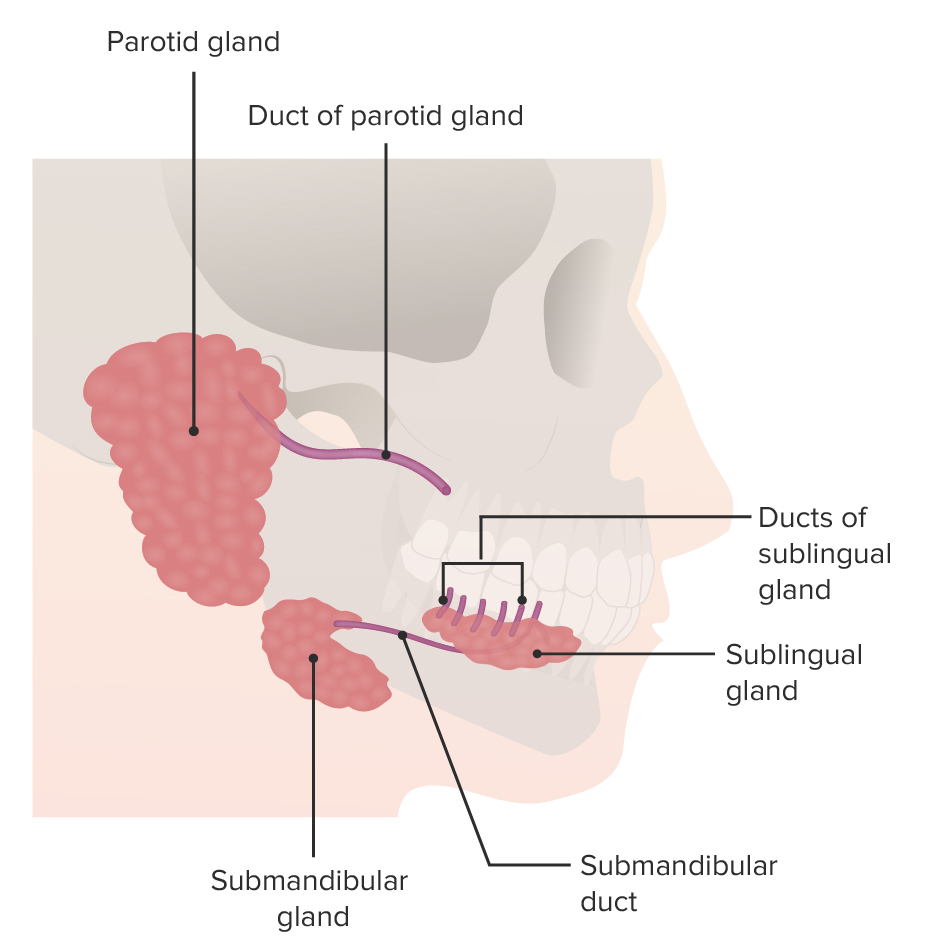
Descripción general de las glándulas salivales

Descripción general de las glándulas salivales y los puntos de referencia anatómicos circundantes

Imagen por Lecturio.
Histología

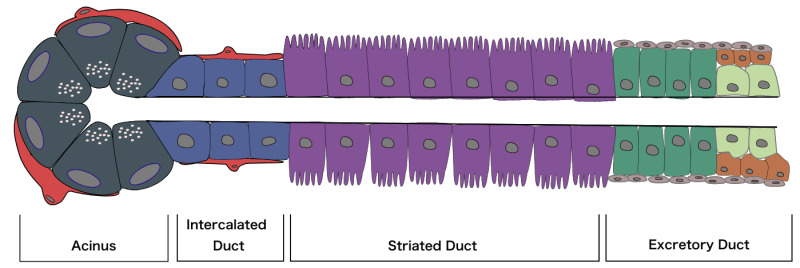
  • Las glándulas salivales están divididas por tabiques de tejido conectivo en EN Erythema nodosum is an immune-mediated panniculitis (inflammation of the subcutaneous fat) caused by a type IV (delayed-type) hypersensitivity reaction. It commonly manifests in young women as tender, erythematous nodules on the shins. Erythema Nodosum lóbulos, luego lobulillos y finalmente acinos (unidades secretoras redondas) con conductos.
  • La secreción de saliva Saliva The clear, viscous fluid secreted by the salivary glands and mucous glands of the mouth. It contains mucins, water, organic salts, and ptyalin. Salivary Glands: Anatomy ocurre en EN Erythema nodosum is an immune-mediated panniculitis (inflammation of the subcutaneous fat) caused by a type IV (delayed-type) hypersensitivity reaction. It commonly manifests in young women as tender, erythematous nodules on the shins. Erythema Nodosum el acino y en EN Erythema nodosum is an immune-mediated panniculitis (inflammation of the subcutaneous fat) caused by a type IV (delayed-type) hypersensitivity reaction. It commonly manifests in young women as tender, erythematous nodules on the shins. Erythema Nodosum la parte inicial del sistema de conductos.
  • Acinos:
    • Consisten en EN Erythema nodosum is an immune-mediated panniculitis (inflammation of the subcutaneous fat) caused by a type IV (delayed-type) hypersensitivity reaction. It commonly manifests in young women as tender, erythematous nodules on the shins. Erythema Nodosum:
      • Células luminales: recubren la luz y producen saliva Saliva The clear, viscous fluid secreted by the salivary glands and mucous glands of the mouth. It contains mucins, water, organic salts, and ptyalin. Salivary Glands: Anatomy
      • Células mioepiteliales: rodean las células luminales y se contraen con la estimulación para contraer los LOS Neisseria acinos
    • Las secreciones pueden ser serosas, mucinosas o mixtas.
      • Las secreciones serosas (acuosas) se producen principalmente a partir de las glándulas parótidas.
      • Las secreciones mucinosas se producen a partir de las glándulas menores.
      • Las secreciones mixtas se liberan de las glándulas sublinguales y submandibulares.
  • Los LOS Neisseria conductos salivales están revestidos por 3 tipos de células:
    • Células intercaladas:
      • Conectan los LOS Neisseria acinos al AL Amyloidosis resto de la glándula
      • No participan en EN Erythema nodosum is an immune-mediated panniculitis (inflammation of the subcutaneous fat) caused by a type IV (delayed-type) hypersensitivity reaction. It commonly manifests in young women as tender, erythematous nodules on the shins. Erythema Nodosum la modificación de electrolitos
    • Células estriadas:
      • Regulan el transporte de electrolitos
      • Reabsorción de sodio
    • Células del conducto excretor:
      • Continúan la reabsorción de sodio
      • Secretan potasio
Tabla: Características distintivas entre las glándulas salivales mayores
Parótida Submandibular Sublingual
Localización Anterior a la oreja Inferior y posterior a la mandíbula Inferior a la lengua
Desarrollo Ectodermo Endodermo Endodermo
Tamaño Más grande (15–30 g) Más pequeña (10–20 g) La más pequeña (3–4 g)
Forma Piramidal En EN Erythema nodosum is an immune-mediated panniculitis (inflammation of the subcutaneous fat) caused by a type IV (delayed-type) hypersensitivity reaction. It commonly manifests in young women as tender, erythematous nodules on the shins. Erythema Nodosum forma de J En EN Erythema nodosum is an immune-mediated panniculitis (inflammation of the subcutaneous fat) caused by a type IV (delayed-type) hypersensitivity reaction. It commonly manifests in young women as tender, erythematous nodules on the shins. Erythema Nodosum forma de almendra
Conducto y lugar de apertura Conducto de Stensen:
abre enfrente del
2do molar
maxilar
Conducto de Wharton:
abre en EN Erythema nodosum is an immune-mediated panniculitis (inflammation of the subcutaneous fat) caused by a type IV (delayed-type) hypersensitivity reaction. It commonly manifests in young women as tender, erythematous nodules on the shins. Erythema Nodosum la
papila sublingual
(lateral a cada lado del
frenillo de la lengua)
Serie de conductos:
piso de la
cavidad oral en EN Erythema nodosum is an immune-mediated panniculitis (inflammation of the subcutaneous fat) caused by a type IV (delayed-type) hypersensitivity reaction. It commonly manifests in young women as tender, erythematous nodules on the shins. Erythema Nodosum el
pliegue sublingual
Inervación Nervio petroso menor Cuerda del tímpano Cuerda del tímpano
Tipo de secreción Serosa Serosa y mucinosa Mucinosa (principalmente)
y serosa

Composición y Función de la Saliva

Descripción y producción

  • La saliva Saliva The clear, viscous fluid secreted by the salivary glands and mucous glands of the mouth. It contains mucins, water, organic salts, and ptyalin. Salivary Glands: Anatomy es una secreción exocrina mucoserosa clara que es fundamental para la preservación y el mantenimiento de la salud oral.
  • Producción: 0,5 a 1,5 Litros/día
  • Las contribuciones de las diferentes glándulas salivales durante el flujo sin estimulación son las siguientes:
    • 20% de las parótidas
    • 65% de las submandibulares
    • 7%–8% de las sublinguales
    • < 10% de las glándulas menores
  • Las parótidas aportan > 50% del flujo de saliva Saliva The clear, viscous fluid secreted by the salivary glands and mucous glands of the mouth. It contains mucins, water, organic salts, and ptyalin. Salivary Glands: Anatomy estimulado.

Composición

  • Agua: 99,5%
  • Electrolitos, incluidos Na+, K+, Ca CA Condylomata acuminata are a clinical manifestation of genital HPV infection. Condylomata acuminata are described as raised, pearly, flesh-colored, papular, cauliflower-like lesions seen in the anogenital region that may cause itching, pain, or bleeding. Condylomata Acuminata (Genital Warts)2+, Mg2+, bicarbonato (HCO3) y fosfatos
  • Inmunoglobulinas, proteínas, enzimas, mucinas, urea Urea A compound formed in the liver from ammonia produced by the deamination of amino acids. It is the principal end product of protein catabolism and constitutes about one half of the total urinary solids. Urea Cycle y amoniaco
  • pH pH The quantitative measurement of the acidity or basicity of a solution. Acid-Base Balance normal: 6,7–7,4, casi neutro

Flujo

  • Flujo normal de saliva Saliva The clear, viscous fluid secreted by the salivary glands and mucous glands of the mouth. It contains mucins, water, organic salts, and ptyalin. Salivary Glands: Anatomy sin estimulación: ≥ 0,1 mL/min.
  • Con la estimulación, ↑ volumen a 0,2 mL/min
  • Saliva Saliva The clear, viscous fluid secreted by the salivary glands and mucous glands of the mouth. It contains mucins, water, organic salts, and ptyalin. Salivary Glands: Anatomy:
    • Fluye desde los LOS Neisseria acinos hacia los LOS Neisseria conductos y finalmente hacia las aberturas ( en EN Erythema nodosum is an immune-mediated panniculitis (inflammation of the subcutaneous fat) caused by a type IV (delayed-type) hypersensitivity reaction. It commonly manifests in young women as tender, erythematous nodules on the shins. Erythema Nodosum la boca)
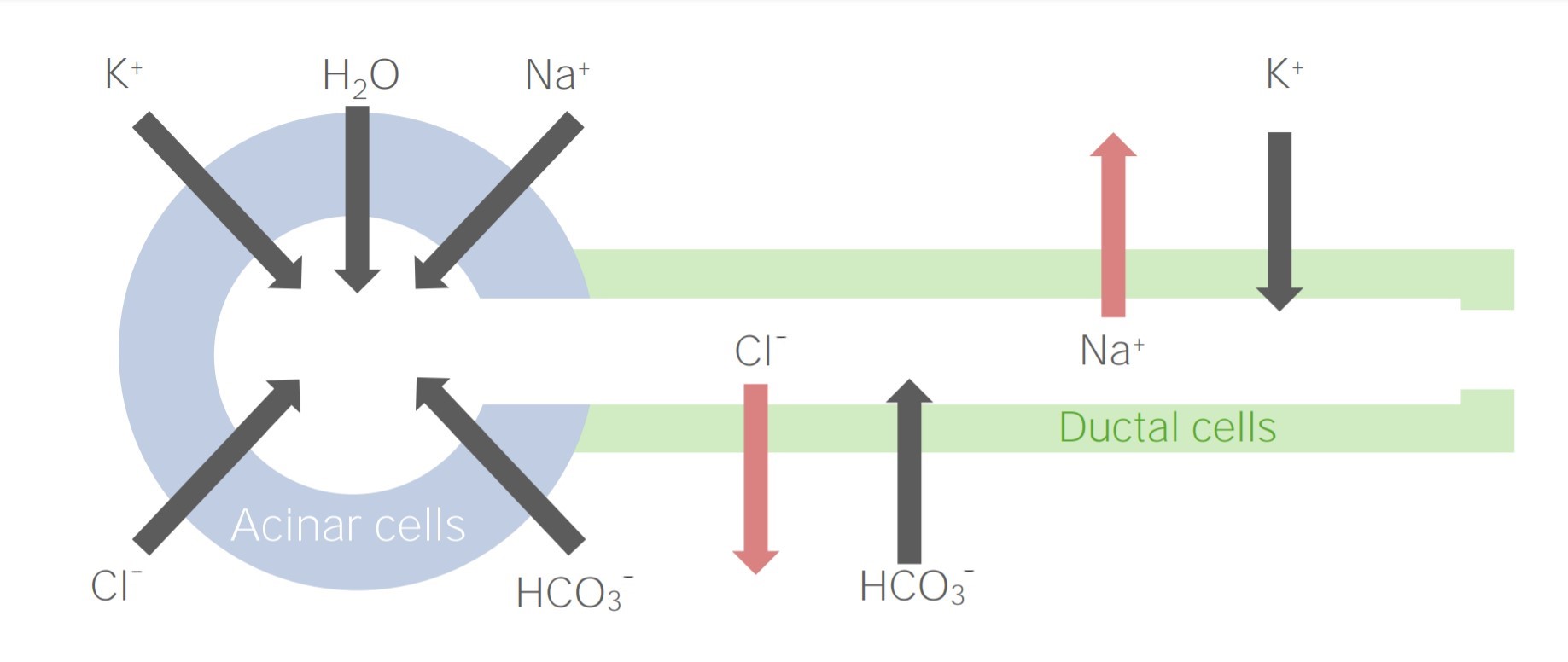
    • La composición se modifica a medida que fluye la saliva Saliva The clear, viscous fluid secreted by the salivary glands and mucous glands of the mouth. It contains mucins, water, organic salts, and ptyalin. Salivary Glands: Anatomy, añadiendo K+ y HCO3 y extrayendo Na+ y cloruro (Cl).
    • La extracción de cloruro de sodio (NaCl) hace HACE Altitude Sickness que la saliva Saliva The clear, viscous fluid secreted by the salivary glands and mucous glands of the mouth. It contains mucins, water, organic salts, and ptyalin. Salivary Glands: Anatomy sea generalmente hipotónica.
  • Controlado por un centro salival compuesto por núcleos en EN Erythema nodosum is an immune-mediated panniculitis (inflammation of the subcutaneous fat) caused by a type IV (delayed-type) hypersensitivity reaction. It commonly manifests in young women as tender, erythematous nodules on the shins. Erythema Nodosum la médula
  • Los LOS Neisseria diversos estímulos para la producción de saliva Saliva The clear, viscous fluid secreted by the salivary glands and mucous glands of the mouth. It contains mucins, water, organic salts, and ptyalin. Salivary Glands: Anatomy incluyen:
    • Factores mecánicos como la masticación (masticar)
    • Gustativos (e.g., alimentos ácidos)
    • Olfatorios
    • Factores psicológicos (e.g., dolor Dolor Inflammation)
    • Medicamentos
    • Enfermedades localizadas o sistémicas
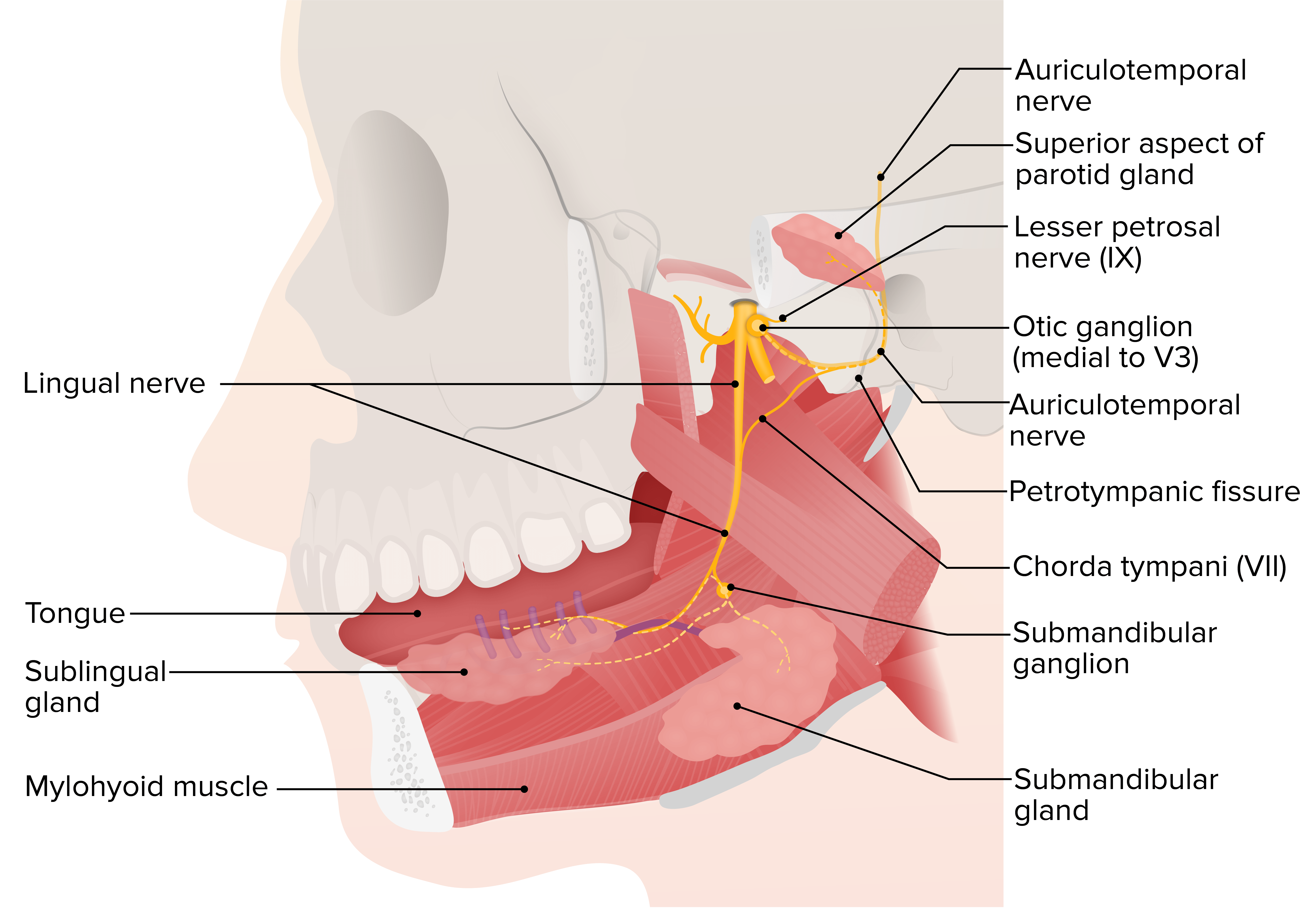
Movimiento de iones durante la producción de saliva.

Movimiento de iones durante la producción de saliva y su transporte a través del conducto salival

Imagen por Lecturio.
Función

  • Lubrica los LOS Neisseria alimentos, ayudando a la deglución
  • Inicia la digestión de carbohidratos y lípidos
  • Actividad antibacteriana a través de:
    • Inmunoglobulina A ( IgA IgA Represents 15-20% of the human serum immunoglobulins, mostly as the 4-chain polymer in humans or dimer in other mammals. Secretory iga is the main immunoglobulin in secretions. Immunoglobulins: Types and Functions) secretora: el componente inmunológico más grande de la saliva Saliva The clear, viscous fluid secreted by the salivary glands and mucous glands of the mouth. It contains mucins, water, organic salts, and ptyalin. Salivary Glands: Anatomy
    • Enzimas antibacterianas (e.g., lactoferrina)
    • Otras proteínas antibacterianas que causan aglutinación bacteriana
  • Protección de la mucosa oral y los LOS Neisseria dientes
  • Ayuda en EN Erythema nodosum is an immune-mediated panniculitis (inflammation of the subcutaneous fat) caused by a type IV (delayed-type) hypersensitivity reaction. It commonly manifests in young women as tender, erythematous nodules on the shins. Erythema Nodosum el sentido del gusto

Glándula Sublingual

  • La glándula salival mayor de menor tamaño
  • Localización: inferior a la lengua, lateral al AL Amyloidosis músculo geniogloso, superior a las glándulas submandibulares
  • Drenaje:
    • No tiene un solo conducto dominante, es drenada por 10 pequeños conductos, llamados conductos de Rivinus
    • Ocasionalmente, algunos conductos anteriores pueden unirse para formar un conducto común grande, llamado conducto de Bartholin (no relacionado con las glándulas de Bartholin).
    • El conducto de Bartholin generalmente se une al AL Amyloidosis conducto de Wharton (submandibular), que desemboca en EN Erythema nodosum is an immune-mediated panniculitis (inflammation of the subcutaneous fat) caused by a type IV (delayed-type) hypersensitivity reaction. It commonly manifests in young women as tender, erythematous nodules on the shins. Erythema Nodosum la carúncula sublingual.
    • Otros conductos sublinguales desembocan directamente en EN Erythema nodosum is an immune-mediated panniculitis (inflammation of the subcutaneous fat) caused by a type IV (delayed-type) hypersensitivity reaction. It commonly manifests in young women as tender, erythematous nodules on the shins. Erythema Nodosum el fondo de la cavidad oral.
  • Estructura:
    • Sin cápsula
    • Consiste principalmente en EN Erythema nodosum is an immune-mediated panniculitis (inflammation of the subcutaneous fat) caused by a type IV (delayed-type) hypersensitivity reaction. It commonly manifests in young women as tender, erythematous nodules on the shins. Erythema Nodosum acinos mucinosos, con muy pocos acinos serosos
  • Irrigación e inervación:
    • Irrigación: arterias sublinguales y submentonianas
    • Retorno venoso: vena sublingual
    • Drenaje linfático: ganglios linfáticos submandibulares
    • Inervación (similar a la glándula submandibular):
      • Nervio de la cuerda del tímpano, una rama del nervio facial
      • Sinapsis en EN Erythema nodosum is an immune-mediated panniculitis (inflammation of the subcutaneous fat) caused by a type IV (delayed-type) hypersensitivity reaction. It commonly manifests in young women as tender, erythematous nodules on the shins. Erythema Nodosum el ganglio submandibular
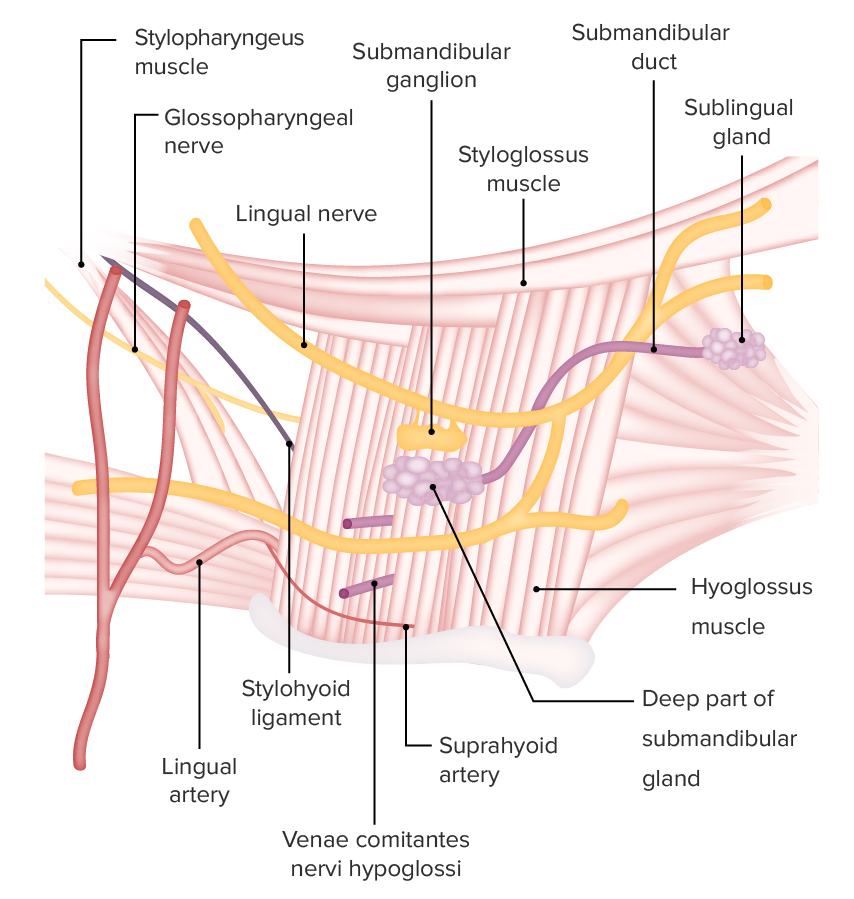
The sublingual and submandibular glands

Las glándulas sublinguales y submandibulares, con sus estructuras circundantes

Imagen por Lecturio.
Glándula Submandibular

Localización

  • Ocupa la mayor parte del triángulo submandibular
  • Los LOS Neisseria límites del triángulo son:
    • Superior: borde inferior de la mandíbula
    • Lateral: vientre posterior del músculo digástrico
    • Medial: vientre anterior del músculo digástrico
    • Suelo: milohioideo y hiogloso
    • Techo: piel, fascia Fascia Layers of connective tissue of variable thickness. The superficial fascia is found immediately below the skin; the deep fascia invests muscles, nerves, and other organs. Cellulitis, platisma

Estructura

  • Dividida en EN Erythema nodosum is an immune-mediated panniculitis (inflammation of the subcutaneous fat) caused by a type IV (delayed-type) hypersensitivity reaction. It commonly manifests in young women as tender, erythematous nodules on the shins. Erythema Nodosum lóbulos superficiales y profundos, que están separados por el músculo milohioideo
  • En EN Erythema nodosum is an immune-mediated panniculitis (inflammation of the subcutaneous fat) caused by a type IV (delayed-type) hypersensitivity reaction. It commonly manifests in young women as tender, erythematous nodules on the shins. Erythema Nodosum forma de J, con una parte de la glándula más grande y otra más pequeña:
    • Lóbulo superficial:
      • Más grande
      • Dentro de la parte anterior del triángulo
      • Fuera de la cavidad oral
    • Lóbulo profundo:
      • Más pequeño: se curva posteriormente, conectando a la porción superficial de la glándula (formando una “J”)
      • Ubicado en EN Erythema nodosum is an immune-mediated panniculitis (inflammation of the subcutaneous fat) caused by a type IV (delayed-type) hypersensitivity reaction. It commonly manifests in young women as tender, erythematous nodules on the shins. Erythema Nodosum el lado lateral del músculo hiogloso
      • Dentro de la cavidad oral
  • El conducto submandibular o de Wharton se vacía a ambos lados del frenillo en EN Erythema nodosum is an immune-mediated panniculitis (inflammation of the subcutaneous fat) caused by a type IV (delayed-type) hypersensitivity reaction. It commonly manifests in young women as tender, erythematous nodules on the shins. Erythema Nodosum la carúncula sublingual.
    • Antes de llegar a la abertura, el conducto se cruza con el nervio lingual.
    • El nervio craneal XII (nervio hipogloso) corre paralelo e inferior al AL Amyloidosis conducto de Wharton.
  • Consiste principalmente en EN Erythema nodosum is an immune-mediated panniculitis (inflammation of the subcutaneous fat) caused by a type IV (delayed-type) hypersensitivity reaction. It commonly manifests in young women as tender, erythematous nodules on the shins. Erythema Nodosum acinos serosos, con pocos acinos mucinosos

Irrigación e inervación

  • Irrigación: arterias sublinguales y submentonianas
  • Retorno venoso: vena facial común y vena sublingual
  • Drenaje linfático: ganglios submandibulares → ganglios cervicales superiores profundos
  • Inervación:
    • Parasimpática (secretomotora):
      • Cuerda del tímpano, una rama del nervio facial
      • Cuerpos de células parasimpáticas en EN Erythema nodosum is an immune-mediated panniculitis (inflammation of the subcutaneous fat) caused by a type IV (delayed-type) hypersensitivity reaction. It commonly manifests in young women as tender, erythematous nodules on the shins. Erythema Nodosum el ganglio submandibular
    • Simpática (vasoconstricción): del ganglio cervical superior
Glándula submandibular y relaciones espaciales

Glándula submandibular y estructuras de irrigación e inervación asociadas

Imagen por Lecturio.

Glándula Parótida

Localización

Localizada en EN Erythema nodosum is an immune-mediated panniculitis (inflammation of the subcutaneous fat) caused by a type IV (delayed-type) hypersensitivity reaction. It commonly manifests in young women as tender, erythematous nodules on the shins. Erythema Nodosum la fosa retromandibular, la glándula parótida:
  • Envuelve la rama mandibular
  • Cubre la porción posterior del músculo masetero
  • Se asienta por debajo del arco cigomático

Estructura

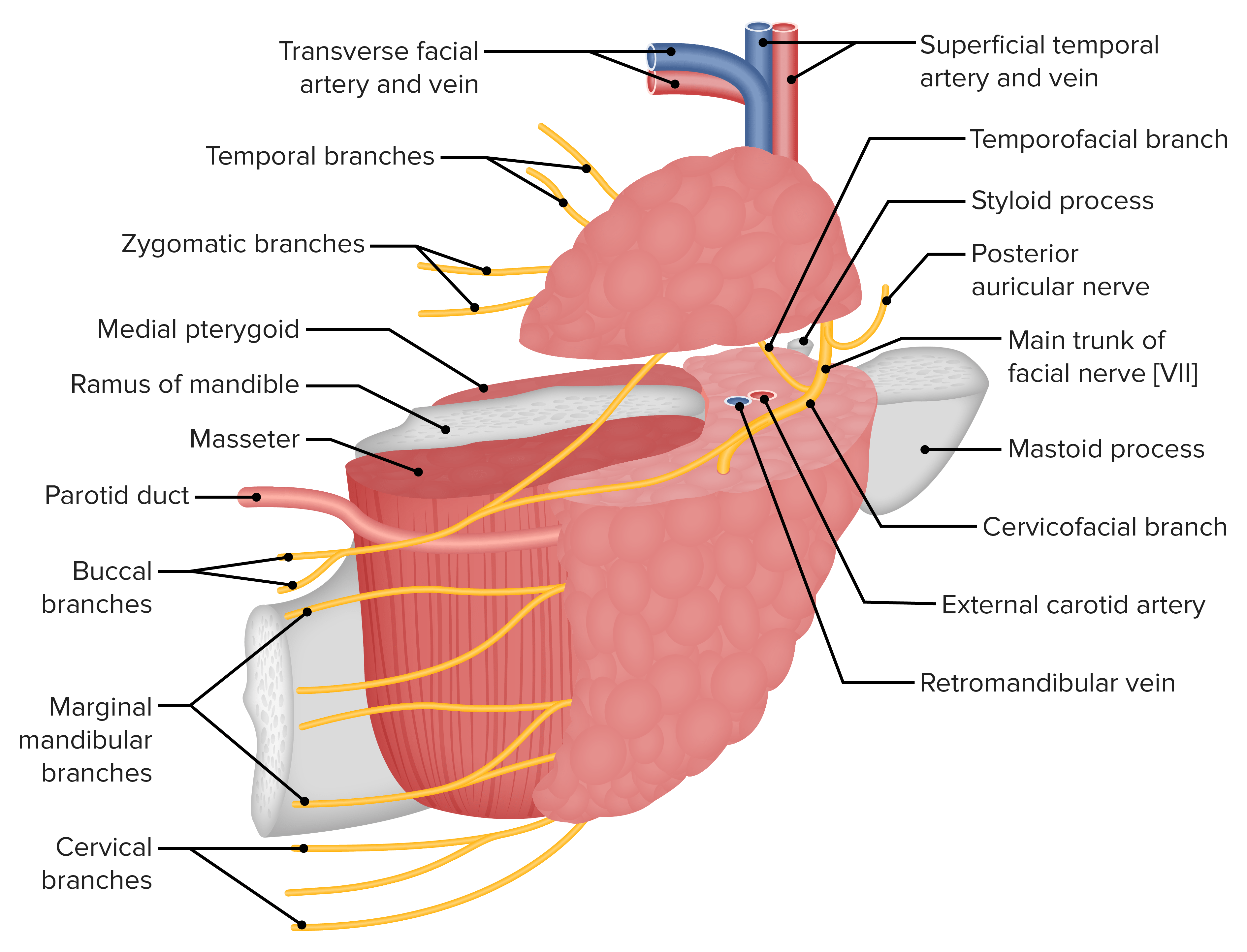
  • Tiene 2 lóbulos, un lóbulo superficial ancho y un lóbulo profundo más pequeño, con el nervio facial que corre entre ellos.
    • El lóbulo superficial es lateral al AL Amyloidosis nervio facial.
    • El lóbulo profundo es medial al AL Amyloidosis nervio facial.
  • El conducto principal, llamado conducto de Stensen, se encuentra enfrente del 2do molar maxilar y desemboca en EN Erythema nodosum is an immune-mediated panniculitis (inflammation of the subcutaneous fat) caused by a type IV (delayed-type) hypersensitivity reaction. It commonly manifests in young women as tender, erythematous nodules on the shins. Erythema Nodosum la cavidad oral.
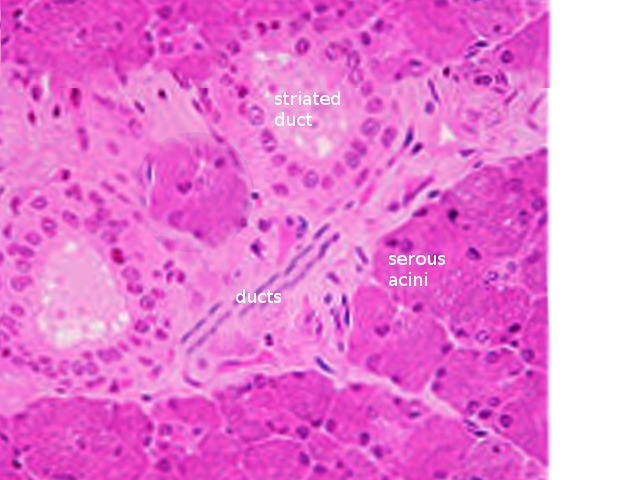
  • Consiste principalmente en EN Erythema nodosum is an immune-mediated panniculitis (inflammation of the subcutaneous fat) caused by a type IV (delayed-type) hypersensitivity reaction. It commonly manifests in young women as tender, erythematous nodules on the shins. Erythema Nodosum acinos serosos
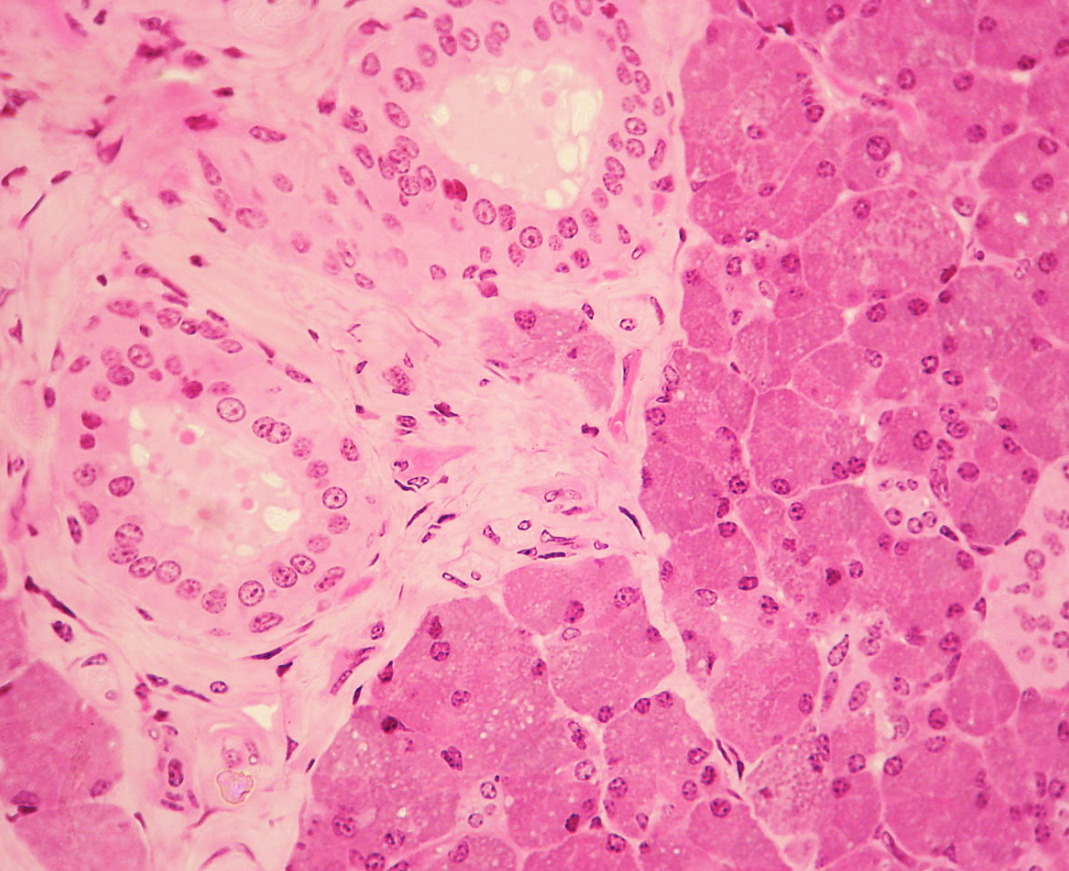
Histología de la glándula parótida

Histología de la glándula parótida (acinos serosos)

Imagen: “Histology of the parotid gland” por Wbensmith. Licencia: CC BY 3.0
Relaciones anatómicas

  • Posteriores:
    • Músculo esternocleidomastoideo
    • Proceso mastoideo
  • Anteriores:
    • Ángulo de la mandíbula
    • Masetero
    • Placa pterigoidea medial
  • Superiores: arco cigomático
  • Dentro de la glándula:
    • Nervio facial
    • Vena retromandibular
    • Arteria carótida externa
    • Arteria temporal superficial
    • Fibras del nervio auriculotemporal
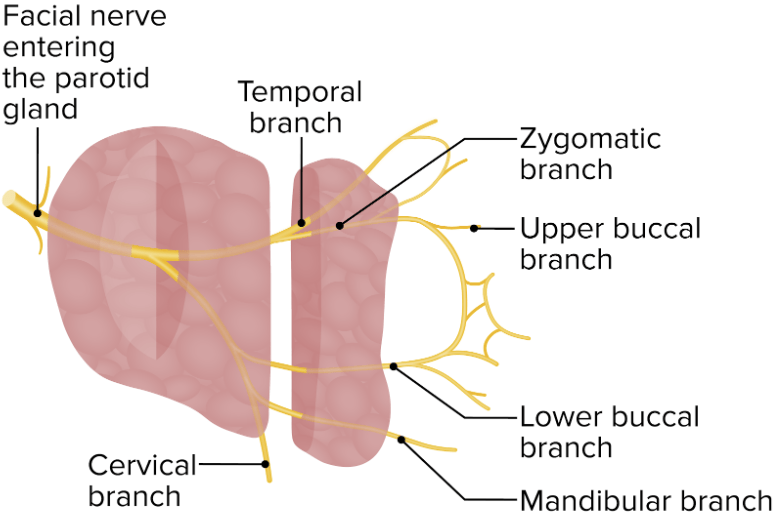
The facial nerve

El nervio facial y sus ramas atraviesan la glándula parótida.

Imagen por Lecturio.
Irrigación e inervación

  • Irrigación:
    • Arteria carótida externa y sus ramas terminales
    • Retorno venoso: vena retromandibular
    • El paquete vascular (arterias y venas) se encuentra medial al AL Amyloidosis nervio facial
  • Drenaje linfático: 2 capas ganglionares (ganglios extraglandulares e intraglandulares) que drenan hacia los LOS Neisseria sistemas linfáticos cervicales profundos y superficiales
  • Inervación:
    • Inervación parasimpática a través del nervio petroso menor (un componente del nervio glosofaríngeo (nervio craneal IX))
    • Los LOS Neisseria cuerpos celulares parasimpáticos se encuentran en EN Erythema nodosum is an immune-mediated panniculitis (inflammation of the subcutaneous fat) caused by a type IV (delayed-type) hypersensitivity reaction. It commonly manifests in young women as tender, erythematous nodules on the shins. Erythema Nodosum el ganglio ótico, con fibras postganglionares que se unen al AL Amyloidosis nervio auriculotemporal.
Parotid gland neurovasculature

El suministro vascular de la glándula parótida en relación con el nervio facial y sus ramas

Imagen por Lecturio.

Glándulas Salivales Menores

  • Hay cientos de glándulas menores.
  • La concentración más alta se observa en EN Erythema nodosum is an immune-mediated panniculitis (inflammation of the subcutaneous fat) caused by a type IV (delayed-type) hypersensitivity reaction. It commonly manifests in young women as tender, erythematous nodules on the shins. Erythema Nodosum la mucosa oral, mucosa labial, mucosa lingual, paladar blando/duro y piso de la boca.
  • Producen < 10% de la saliva Saliva The clear, viscous fluid secreted by the salivary glands and mucous glands of the mouth. It contains mucins, water, organic salts, and ptyalin. Salivary Glands: Anatomy, principalmente secreciones mucinosas

Relevancia Clínica

  • Enfermedades de las glándulas salivales: algunas afecciones se manifiestan como agrandamiento de las glándulas salivales con diversos grados de dolor Dolor Inflammation o malestar. Los LOS Neisseria factores clínicos específicos ayudan a diferenciar entre estas afecciones, como asimetría, presencia de dolor Dolor Inflammation, condiciones asociadas y factores de riesgo, y crecimiento o estabilidad. El diagnóstico suele ser clínico, aunque es posible que se necesite de imagenología y biopsia. El tratamiento varía según la enfermedad.
    • La sialadenosis Sialadenosis Sialadenosis is a chronic, bilateral, noninflammatory hypertrophy of the salivary glands. Diseases of the Salivary Glands es una hipertrofia crónica, bilateral y no inflamatoria de las glándulas salivales.
    • La sialadenitis Sialadenitis Inflammation of salivary tissue (salivary glands), usually due to infection or injuries. Diseases of the Salivary Glands es el resultado de una inflamación o infección de las glándulas.
    • La sialolitiasis se debe a la formación de cálculos en EN Erythema nodosum is an immune-mediated panniculitis (inflammation of the subcutaneous fat) caused by a type IV (delayed-type) hypersensitivity reaction. It commonly manifests in young women as tender, erythematous nodules on the shins. Erythema Nodosum las glándulas o conductos.
    • Las neoplasias de la glándula salival pueden ser benignas o malignas.
  • Paperas: típicamente una enfermedad de la niñez. Las paperas son causadas por un virus Virus Viruses are infectious, obligate intracellular parasites composed of a nucleic acid core surrounded by a protein capsid. Viruses can be either naked (non-enveloped) or enveloped. The classification of viruses is complex and based on many factors, including type and structure of the nucleoid and capsid, the presence of an envelope, the replication cycle, and the host range. Virology de ácido ribonucleico (ARN) de la familia Paramyxoviridae Paramyxoviridae A family of spherical viruses, of the order mononegavirales, somewhat larger than the orthomyxoviruses, and containing single-stranded RNA. Subfamilies include paramyxoviridae and pneumovirinae. Respiratory Syncytial Virus. La transmisión se realiza a través de gotitas respiratorias o por contacto directo. La afección se manifiesta inicialmente con fiebre, mialgias, cefalea, falta de apetito y malestar general, seguidos clásicamente de parotiditis. Las complicaciones incluyen meningitis Meningitis Meningitis is inflammation of the meninges, the protective membranes of the brain, and spinal cord. The causes of meningitis are varied, with the most common being bacterial or viral infection. The classic presentation of meningitis is a triad of fever, altered mental status, and nuchal rigidity. Meningitis, pancreatitis Pancreatitis Inflammation of the pancreas. Pancreatitis is classified as acute unless there are computed tomographic or endoscopic retrograde cholangiopancreatographic findings of chronic pancreatitis. The two most common forms of acute pancreatitis are alcoholic pancreatitis and gallstone pancreatitis. Acute Pancreatitis, sordera permanente e inflamación testicular, que puede resultar en EN Erythema nodosum is an immune-mediated panniculitis (inflammation of the subcutaneous fat) caused by a type IV (delayed-type) hypersensitivity reaction. It commonly manifests in young women as tender, erythematous nodules on the shins. Erythema Nodosum infertilidad. El tratamiento se realiza con cuidados de soporte. Las paperas se previenen mediante la vacunación.
  • Ránula: quiste de retención mucinosa de la glándula sublingual o glándulas salivales pequeñas presentes en EN Erythema nodosum is an immune-mediated panniculitis (inflammation of the subcutaneous fat) caused by a type IV (delayed-type) hypersensitivity reaction. It commonly manifests in young women as tender, erythematous nodules on the shins. Erythema Nodosum el piso de la boca. Una ránula es una inflamación benigna que es suave y azulada y se transilumina.
  • Síndrome de Sjögren: afección inflamatoria autoinmune en EN Erythema nodosum is an immune-mediated panniculitis (inflammation of the subcutaneous fat) caused by a type IV (delayed-type) hypersensitivity reaction. It commonly manifests in young women as tender, erythematous nodules on the shins. Erythema Nodosum la que los LOS Neisseria tejidos glandulares, como las glándulas salivales y lagrimales, son infiltrados por linfocitos, lo que provoca una disminución de la producción de lágrimas y saliva Saliva The clear, viscous fluid secreted by the salivary glands and mucous glands of the mouth. It contains mucins, water, organic salts, and ptyalin. Salivary Glands: Anatomy. Los LOS Neisseria síntomas incluyen sequedad de ojos y boca, acompañada de manifestaciones extraglandulares. El diagnóstico se realiza mediante los LOS Neisseria antecedentes y el examen clínico, estudios serológicos o biopsia de glándulas salivales. Se necesita un abordaje multidisciplinario para tratar a los LOS Neisseria pacientes.

Referencias

  1. Barrett, K.E., et al. (Ed.) (2017). Overview of gastrointestinal function & regulation. Chapter 25 of Ganong’s Medical Physiology Examination & Board Review. https://accessmedicine.mhmedical.com/content.aspx?bookid=2139&sectionid=160313408
  2. Chason, H.M., Downs, B.W. (2021). Anatomy, head and neck, parotid gland. StatPearls. https://www.ncbi.nlm.nih.gov/books/NBK534225/
  3. Del Vigna de Almeida, P., et al. (2008). Saliva composition and functions: a comprehensive review. J Contemp Dent Pract 9(3):72–80.
  4. Grewal, J.S., Jamal, Z., Ryan, J. (2020) Anatomy, Head and Neck, Submandibular Gland. StatPearls. https://www.ncbi.nlm.nih.gov/books/NBK542272/
  5. Grewal, J.S., et al. (2021) Anatomy, head and neck, sublingual gland. StatPearls. https://www.ncbi.nlm.nih.gov/books/NBK535426/
  6. Gupta, S., Ahuja, N.  (2019). Salivary glands. IntechOpen. https://www.intechopen.com/chapters/63843
  7. ​Humphrey, S. P., Williamson, R. T. (2001). A review of saliva: normal composition, flow, and function. Journal of Prosthetic Dentistry 85(2):162–169.
  8. Iorgulescu, G. (2009) Saliva between normal and pathological: important factors in determining systemic and oral health. Journal of Medicine and Life 2:303–307.
  9. Kessler, A. T., Bhatt, A. A. (2018). Review of the major and minor salivary glands, part 1: anatomy, infectious, and inflammatory processes. Journal of Clinical Imaging Science 8:47. https://doi.org/10.4103/jcis.JCIS_45_18
  10. Lars Eliasson, L.,  Carlén, A. (2010). An update on minor salivary gland secretions. Eur J Oral Sci 118:435–442. https://www.doi.org/10.1111/j.1600-0722.2010.00766.x
  11. Porcheri, C., Mitsiadis, T.A. (2019). Physiology, pathology and regeneration of salivary glands. Cells 8:976. http//:www.doi.org/10.3390/cells8090976
  12. Tanakchi, S., Aly, F.Z. (2021). Salivary glands: general anatomy & histology. Pathology Outlines. https://www.pathologyoutlines.com/topic/salivaryglandsnormalhistology.html

¡Crea tu cuenta gratis o inicia una sesión para seguir leyendo!

Regístrate ahora y obtén acceso gratuito a Lecturio con páginas de concepto, videos médicos y cuestionarios para tu educación médica.

User Reviews

Que tengas una sesión de estudio alegre y navideña 🎁 Ahorra 50% en todos los planes >>

Details