Domina Conceptos Médicos

Estudia para la escuela de medicina y tus examenes con Lecturio.

Foliculitis Infecciosa

La foliculitis infecciosa es una afección cutánea común caracterizada por la inflamación de los LOS Neisseria folículos pilosos causada por un agente infeccioso (bacteriano, fúngico, viral o parasitario). Staphylococcus aureus Staphylococcus aureus Potentially pathogenic bacteria found in nasal membranes, skin, hair follicles, and perineum of warm-blooded animals. They may cause a wide range of infections and intoxications. Brain Abscess es el agente causal más común. El diagnóstico es clínico y las presentaciones incluyen prurito, pústulas foliculares y pápulas eritematosas. El tratamiento es generalmente de soporte, pero en EN Erythema nodosum is an immune-mediated panniculitis (inflammation of the subcutaneous fat) caused by a type IV (delayed-type) hypersensitivity reaction. It commonly manifests in young women as tender, erythematous nodules on the shins. Erythema Nodosum casos graves puede ser necesaria la terapia con antibióticos tópicos u orales.

Last updated: Dec 15, 2025

Editorial responsibility: Stanley Oiseth, Lindsay Jones, Evelin Maza

Etiología y Factores de Riesgo

La foliculitis infecciosa ocurre debido a la inflamación de la porción superficial o profunda del folículo piloso, causada por un agente infeccioso (véase la tabla a continuación).

Tabla: Etiologías comunes, factores de riesgo asociados y ejemplos de patógenos de la foliculitis
Etiología Factores de riesgo Patógenos
Bacteriana
  • Portadores nasales de S. aureus S. aureus Potentially pathogenic bacteria found in nasal membranes, skin, hair follicles, and perineum of warm-blooded animals. They may cause a wide range of infections and intoxications. Staphylococcus
  • Hiperhidrosis
  • Enfermedades pruriginosas de la piel (e.g., eccema, psoriasis Psoriasis Psoriasis is a common T-cell-mediated inflammatory skin condition. The etiology is unknown, but is thought to be due to genetic inheritance and environmental triggers. There are 4 major subtypes, with the most common form being chronic plaque psoriasis. Psoriasis, dermatitis Dermatitis Any inflammation of the skin. Atopic Dermatitis (Eczema))
  • Uso prolongado de:
    • Corticosteroides tópicos
    • Terapia con antibióticos para el acné
  • Afeitado en EN Erythema nodosum is an immune-mediated panniculitis (inflammation of the subcutaneous fat) caused by a type IV (delayed-type) hypersensitivity reaction. It commonly manifests in young women as tender, erythematous nodules on the shins. Erythema Nodosum dirección contraria al AL Amyloidosis crecimiento del vello
  • Exposición a jacuzzis o piscinas climatizadas
Bacterias gram-positivas:
Staphylococcus aureus Staphylococcus aureus Potentially pathogenic bacteria found in nasal membranes, skin, hair follicles, and perineum of warm-blooded animals. They may cause a wide range of infections and intoxications. Brain Abscess (muy común), tanto sensible a la meticilina como resistente a la meticilina ( MRSA MRSA A strain of Staphylococcus aureus that is non-susceptible to the action of methicillin. The mechanism of resistance usually involves modification of normal or the presence of acquired penicillin binding proteins. Staphylococcus, por sus siglas en EN Erythema nodosum is an immune-mediated panniculitis (inflammation of the subcutaneous fat) caused by a type IV (delayed-type) hypersensitivity reaction. It commonly manifests in young women as tender, erythematous nodules on the shins. Erythema Nodosum inglés) (la foliculitis contribuye al AL Amyloidosis aumento de la prevalencia de infecciones por MRSA MRSA A strain of Staphylococcus aureus that is non-susceptible to the action of methicillin. The mechanism of resistance usually involves modification of normal or the presence of acquired penicillin binding proteins. Staphylococcus adquiridas en EN Erythema nodosum is an immune-mediated panniculitis (inflammation of the subcutaneous fat) caused by a type IV (delayed-type) hypersensitivity reaction. It commonly manifests in young women as tender, erythematous nodules on the shins. Erythema Nodosum la comunidad).
Bacterias gram-negativas (más comunes en el área inguinal):
  • Pseudomonas aeruginosa (“foliculitis del jacuzzi”)
  • Klebsiella Klebsiella Klebsiella are encapsulated gram-negative, lactose-fermenting bacilli. They form pink colonies on MacConkey agar due to lactose fermentation. The main virulence factor is a polysaccharide capsule. Klebsiella pneumoniae is the most important pathogenic species. Klebsiella
  • Proteus Proteus Proteus spp. are gram-negative, facultatively anaerobic bacilli. Different types of infection result from Proteus, but the urinary tract is the most common site. The majority of cases are caused by Proteus mirabilis (P. mirabilis). The bacteria are part of the normal intestinal flora and are also found in the environment. Proteus
Fúngica
  • Asociada con climas cálidos y húmedos
  • Inmunocompromiso
  • Más común en EN Erythema nodosum is an immune-mediated panniculitis (inflammation of the subcutaneous fat) caused by a type IV (delayed-type) hypersensitivity reaction. It commonly manifests in young women as tender, erythematous nodules on the shins. Erythema Nodosum hombres
  • Aumento de la sudoración y la producción de sebo
  • Uso de corticosteroides tópicos
  • Candida albicans Candida albicans A unicellular budding fungus which is the principal pathogenic species causing candidiasis (moniliasis). Candida/Candidiasis
  • Especies de Malassezia Malassezia Malassezia is a lipophilic yeast commonly found on the skin surfaces of many animals, including humans. In the presence of certain environments or triggers, this fungus can cause pathologic diseases ranging from superficial skin conditions (tinea versicolor and dermatitis) to invasive disease (e.g., Malassezia folliculitis, catheter-associated fungemia, meningitis, and urinary tract infections). Malassezia Fungi
  • Dermatofitos
Viral
  • Infección por varicela-zóster o virus Virus Viruses are infectious, obligate intracellular parasites composed of a nucleic acid core surrounded by a protein capsid. Viruses can be either naked (non-enveloped) or enveloped. The classification of viruses is complex and based on many factors, including type and structure of the nucleoid and capsid, the presence of an envelope, the replication cycle, and the host range. Virology del herpes
  • Inmunocompromiso
  • Virus Virus Viruses are infectious, obligate intracellular parasites composed of a nucleic acid core surrounded by a protein capsid. Viruses can be either naked (non-enveloped) or enveloped. The classification of viruses is complex and based on many factors, including type and structure of the nucleoid and capsid, the presence of an envelope, the replication cycle, and the host range. Virology del herpes
  • Molusco contagioso
Parasitaria Foliculitis por Demodex Demodex folliculorum Demodex Folliculorum Infectious Folliculitis, un ácaro parásito

Related videos

Presentación Clínica y Diagnóstico

Presentación clínica

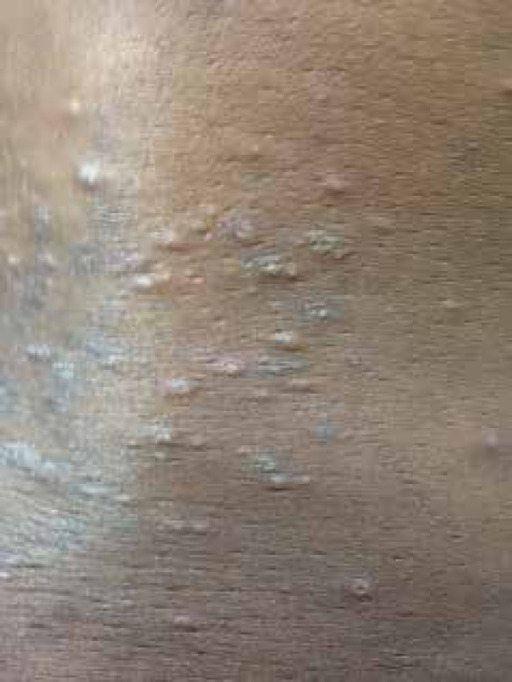
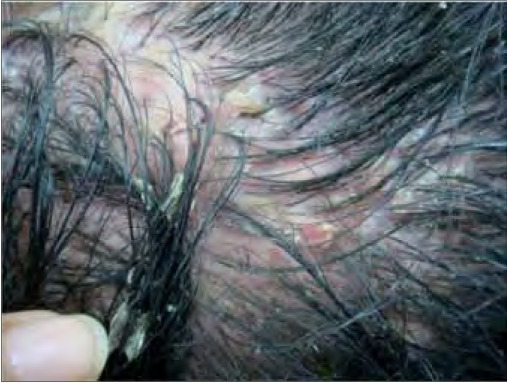
  • Las lesiones aparecen en EN Erythema nodosum is an immune-mediated panniculitis (inflammation of the subcutaneous fat) caused by a type IV (delayed-type) hypersensitivity reaction. It commonly manifests in young women as tender, erythematous nodules on the shins. Erythema Nodosum la piel con pelo en EN Erythema nodosum is an immune-mediated panniculitis (inflammation of the subcutaneous fat) caused by a type IV (delayed-type) hypersensitivity reaction. It commonly manifests in young women as tender, erythematous nodules on the shins. Erythema Nodosum cualquier parte del cuerpo
  • 2 tipos de foliculitis: superficial y profunda
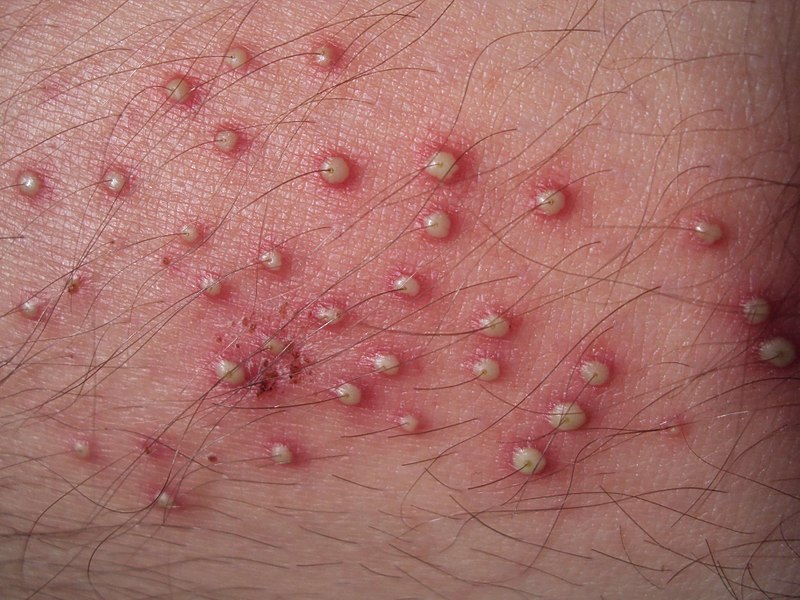
  • Superficial:
    • Prurito
    • Pústulas foliculares
    • Pápulas sensibles eritematosas
    • Cicatrización por erupciones de foliculitis previas o recurrentes
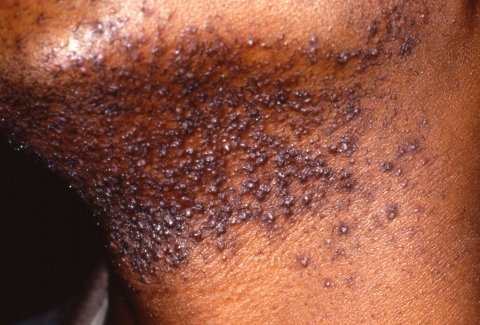
    • La pseudofoliculitis de la barba se presenta como pápulas y pústulas firmes, sensibles e hiperpigmentadas, más comúnmente en EN Erythema nodosum is an immune-mediated panniculitis (inflammation of the subcutaneous fat) caused by a type IV (delayed-type) hypersensitivity reaction. It commonly manifests in young women as tender, erythematous nodules on the shins. Erythema Nodosum el cuello y la cara en EN Erythema nodosum is an immune-mediated panniculitis (inflammation of the subcutaneous fat) caused by a type IV (delayed-type) hypersensitivity reaction. It commonly manifests in young women as tender, erythematous nodules on the shins. Erythema Nodosum los LOS Neisseria hombres y en EN Erythema nodosum is an immune-mediated panniculitis (inflammation of the subcutaneous fat) caused by a type IV (delayed-type) hypersensitivity reaction. It commonly manifests in young women as tender, erythematous nodules on the shins. Erythema Nodosum el área de la ingle en EN Erythema nodosum is an immune-mediated panniculitis (inflammation of the subcutaneous fat) caused by a type IV (delayed-type) hypersensitivity reaction. It commonly manifests in young women as tender, erythematous nodules on the shins. Erythema Nodosum las mujeres.
  • Profunda:
    • Forúnculo: un nódulo purulento que surge de la foliculitis que afecta las capas más profundas de la piel, incluido el tejido subcutáneo
    • Carbúnculo: la coalescencia de varios furúnculos en EN Erythema nodosum is an immune-mediated panniculitis (inflammation of the subcutaneous fat) caused by a type IV (delayed-type) hypersensitivity reaction. It commonly manifests in young women as tender, erythematous nodules on the shins. Erythema Nodosum una sola masa
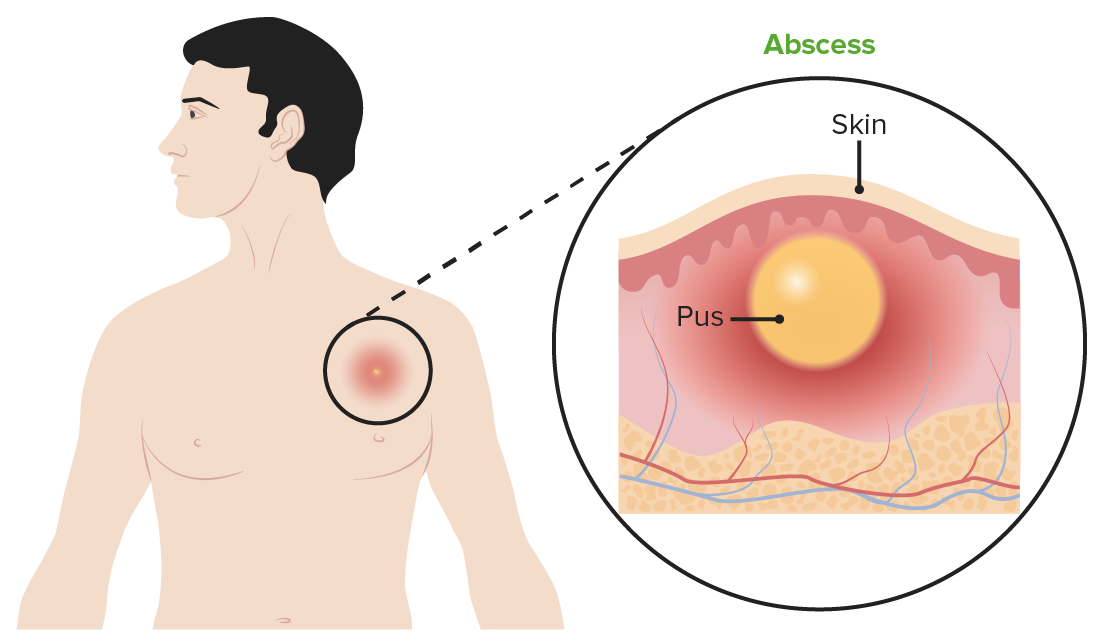
    • Los LOS Neisseria forúnculos y carbúnculos pueden provocar un absceso cutáneo.
      • Acumulación de pus y tejido necrótico en EN Erythema nodosum is an immune-mediated panniculitis (inflammation of the subcutaneous fat) caused by a type IV (delayed-type) hypersensitivity reaction. It commonly manifests in young women as tender, erythematous nodules on the shins. Erythema Nodosum la dermis Dermis A layer of vascularized connective tissue underneath the epidermis. The surface of the dermis contains innervated papillae. Embedded in or beneath the dermis are sweat glands; hair follicles; and sebaceous glands. Skin: Structure and Functions y capas más profundas de la piel
      • El tratamiento requiere incisión y drenaje.

Diagnóstico

  • Clínico, no se requieren pruebas de diagnóstico
  • Sin embargo, si el diagnóstico no está claro:
    • Tinción de Gram y cultivo del pus para identificar patógenos bacterianos
    • La preparación de KOH puede confirmar la foliculitis fúngica.
    • Se debe utilizar cultivo viral o reacción en EN Erythema nodosum is an immune-mediated panniculitis (inflammation of the subcutaneous fat) caused by a type IV (delayed-type) hypersensitivity reaction. It commonly manifests in young women as tender, erythematous nodules on the shins. Erythema Nodosum cadena de la polimerasa ( PCR PCR Polymerase chain reaction (PCR) is a technique that amplifies DNA fragments exponentially for analysis. The process is highly specific, allowing for the targeting of specific genomic sequences, even with minuscule sample amounts. The PCR cycles multiple times through 3 phases: denaturation of the template DNA, annealing of a specific primer to the individual DNA strands, and synthesis/elongation of new DNA molecules. Polymerase Chain Reaction (PCR), por sus siglas en EN Erythema nodosum is an immune-mediated panniculitis (inflammation of the subcutaneous fat) caused by a type IV (delayed-type) hypersensitivity reaction. It commonly manifests in young women as tender, erythematous nodules on the shins. Erythema Nodosum inglés) para confirmar la foliculitis por herpes, si se sospecha.

Tratamiento

El tratamiento consiste principalmente en EN Erythema nodosum is an immune-mediated panniculitis (inflammation of the subcutaneous fat) caused by a type IV (delayed-type) hypersensitivity reaction. It commonly manifests in young women as tender, erythematous nodules on the shins. Erythema Nodosum medidas de soporte:

La terapia con antibióticos es guiada por el organismo causante sospechado o conocido:

  • Bacterias gram-positivas
    • Casos leves: a menudo se resuelven espontáneamente; considere mupirocina tópica o clindamicina tópica
    • Casos graves: antibióticos orales (cefalexina, dicloxacilina)
    • Si es Staphylococcus aureus Staphylococcus aureus Potentially pathogenic bacteria found in nasal membranes, skin, hair follicles, and perineum of warm-blooded animals. They may cause a wide range of infections and intoxications. Brain Abscess resistente a la meticilina ( MRSA MRSA A strain of Staphylococcus aureus that is non-susceptible to the action of methicillin. The mechanism of resistance usually involves modification of normal or the presence of acquired penicillin binding proteins. Staphylococcus, por sus siglas en EN Erythema nodosum is an immune-mediated panniculitis (inflammation of the subcutaneous fat) caused by a type IV (delayed-type) hypersensitivity reaction. It commonly manifests in young women as tender, erythematous nodules on the shins. Erythema Nodosum inglés) positivo, ciclo de 7–10 días (ocasionalmente > 2 semanas) de trimetoprim/sulfametoxazol, clindamicina o doxiciclina por vía oral
  • Bacterias gram-negativas
    • Casos leves: a menudo se resuelven espontáneamente
    • Casos graves/paciente inmunocomprometido: antibióticos orales (ciprofloxacina oral o trimetoprim/sulfametoxazol)
  • Hongos: requiere terapia sistémica con agentes antifúngicos orales (itraconazol o fluconazol)
  • Viral: las infecciones por herpes pueden requerir aciclovir, famciclovir Famciclovir An aminopurine derivative and prodrug of penciclovir which is a competitive inhibitor of herpes simplex 2 DNA polymerase. It is used to treat herpes simplex virus infection. Antivirals for Herpes Virus o valaciclovir por vía oral.

Diagnóstico Diferencial

Las siguientes afecciones pueden confundirse con foliculitis infecciosa.

Predominantemente en EN Erythema nodosum is an immune-mediated panniculitis (inflammation of the subcutaneous fat) caused by a type IV (delayed-type) hypersensitivity reaction. It commonly manifests in young women as tender, erythematous nodules on the shins. Erythema Nodosum la cara y el cuero cabelludo

  • Acné vulgar: trastorno inflamatorio crónico de la unidad pilosebácea que es autolimitante. Los LOS Neisseria comedones Comedones Acne Vulgaris y la falta de prurito favorecen el acné vulgar sobre la foliculitis infecciosa.
  • Rosácea (tipo papulopustulosa): trastorno inflamatorio de la piel agravado por la luz solar o el alcohol; presenta pústulas, pápulas y vasos dilatados en EN Erythema nodosum is an immune-mediated panniculitis (inflammation of the subcutaneous fat) caused by a type IV (delayed-type) hypersensitivity reaction. It commonly manifests in young women as tender, erythematous nodules on the shins. Erythema Nodosum un fondo eritematoso
  • Acné queloideo de la nuca: una foliculitis cicatricial crónica que afecta principalmente a los LOS Neisseria hombres de ascendencia africana, con pápulas, pústulas y nódulos queloides en EN Erythema nodosum is an immune-mediated panniculitis (inflammation of the subcutaneous fat) caused by a type IV (delayed-type) hypersensitivity reaction. It commonly manifests in young women as tender, erythematous nodules on the shins. Erythema Nodosum la parte posterior del cuero cabelludo
  • Pseudofoliculitis de la barba (“erupción por afeitado”): inflamación causada por el vello que penetra en la piel interfolicular después del afeitado (“pelos encarnados”), especialmente en EN Erythema nodosum is an immune-mediated panniculitis (inflammation of the subcutaneous fat) caused by a type IV (delayed-type) hypersensitivity reaction. It commonly manifests in young women as tender, erythematous nodules on the shins. Erythema Nodosum personas de ascendencia africana; también puede ocurrir en EN Erythema nodosum is an immune-mediated panniculitis (inflammation of the subcutaneous fat) caused by a type IV (delayed-type) hypersensitivity reaction. It commonly manifests in young women as tender, erythematous nodules on the shins. Erythema Nodosum cualquier lugar donde se afeite o depile el vello, incluidas las axilas, el área púbica y las piernas
  • Dermatitis Dermatitis Any inflammation of the skin. Atopic Dermatitis (Eczema) perioral (periorificial): pequeñas pápulas eritematosas alrededor de la boca, nariz o áreas periorbitarias, más comúnmente en EN Erythema nodosum is an immune-mediated panniculitis (inflammation of the subcutaneous fat) caused by a type IV (delayed-type) hypersensitivity reaction. It commonly manifests in young women as tender, erythematous nodules on the shins. Erythema Nodosum mujeres jóvenes
  • Miliaria (“erupción por sudor”): se produce debido a la oclusión de los LOS Neisseria conductos sudoríparos ecrinos, con extravasación de sudor hacia la dermis Dermis A layer of vascularized connective tissue underneath the epidermis. The surface of the dermis contains innervated papillae. Embedded in or beneath the dermis are sweat glands; hair follicles; and sebaceous glands. Skin: Structure and Functions que causa inflamación; típicamente visto en EN Erythema nodosum is an immune-mediated panniculitis (inflammation of the subcutaneous fat) caused by a type IV (delayed-type) hypersensitivity reaction. It commonly manifests in young women as tender, erythematous nodules on the shins. Erythema Nodosum los LOS Neisseria pliegues de la piel del cuerpo o áreas ocluidas por la ropa u otros

Predominantemente en EN Erythema nodosum is an immune-mediated panniculitis (inflammation of the subcutaneous fat) caused by a type IV (delayed-type) hypersensitivity reaction. It commonly manifests in young women as tender, erythematous nodules on the shins. Erythema Nodosum el tronco o las extremidades

  • Foliculitis eosinofílica asociada al AL Amyloidosis VIH: se observa en EN Erythema nodosum is an immune-mediated panniculitis (inflammation of the subcutaneous fat) caused by a type IV (delayed-type) hypersensitivity reaction. It commonly manifests in young women as tender, erythematous nodules on the shins. Erythema Nodosum pacientes con enfermedad avanzada del VIH, que se presenta como prurito intenso y parches recurrentes de lesiones que provocan cicatrices e hiperpigmentación; su etiología es incierta, pero posiblemente está relacionada con una respuesta inmunitaria desregulada a un agente infeccioso
  • Foliculitis inducida por medicamentos: se observa ocasionalmente después de la administración sistémica de glucocorticoides, fenitoína, litio, isoniazida o ciclosporina
  • Queratosis pilaris: se presenta con pápulas foliculares queratósicas asintomáticas en EN Erythema nodosum is an immune-mediated panniculitis (inflammation of the subcutaneous fat) caused by a type IV (delayed-type) hypersensitivity reaction. It commonly manifests in young women as tender, erythematous nodules on the shins. Erythema Nodosum niños y adultos jóvenes
  • Prurigo: se refiere a pápulas o nódulos intensamente pruriginosos (“prurigo nodular“), a menudo sin causa conocida. El rascado o el frotamiento crónico pueden causar cambios permanentes en EN Erythema nodosum is an immune-mediated panniculitis (inflammation of the subcutaneous fat) caused by a type IV (delayed-type) hypersensitivity reaction. It commonly manifests in young women as tender, erythematous nodules on the shins. Erythema Nodosum la piel, como hiperqueratosis, hiperpigmentación y cicatrización. Los LOS Neisseria trastornos de piel y las afecciones de salud asociados incluyen dermatitis Dermatitis Any inflammation of the skin. Atopic Dermatitis (Eczema) atópica, penfigoide ampolloso, reacción alérgica a picaduras de insectos, deficiencia de hierro, enfermedad de la tiroides, infección por VIH, embarazo, insuficiencia renal crónica, diabetes Diabetes Diabetes mellitus (DM) is a metabolic disease characterized by hyperglycemia and dysfunction of the regulation of glucose metabolism by insulin. Type 1 DM is diagnosed mostly in children and young adults as the result of autoimmune destruction of β cells in the pancreas and the resulting lack of insulin. Type 2 DM has a significant association with obesity and is characterized by insulin resistance. Diabetes Mellitus y linfoma.
  • Foliculitis ocupacional: ocurre después de la exposición crónica a aceites (“foliculitis oleosa”), alquitrán de hulla, irritantes, toxinas o productos químicos (e.g., bifenilos policlorados, dioxinas, herbicidas). El alquitrán de hulla también se utiliza terapéuticamente para el eccema y la psoriasis Psoriasis Psoriasis is a common T-cell-mediated inflammatory skin condition. The etiology is unknown, but is thought to be due to genetic inheritance and environmental triggers. There are 4 major subtypes, with the most common form being chronic plaque psoriasis. Psoriasis.

Referencias

  1. Jackson, J. D. (2025). Infectious folliculitis. In T. Rosen (Ed.), UpToDate. Wolters Kluwer. Retrieved February 25, 2025, from https://www.uptodate.com/contents/infectious-folliculitis
  2. Oakley A. (2009). Prurigo. DermNet New Zealand (Supported by and contributed to by New Zealand Dermatologists on behalf of the New Zealand Dermatological Society Incorporated). https://dermnetnz.org/topics/prurigo/

¡Crea tu cuenta gratis o inicia una sesión para seguir leyendo!

Regístrate ahora y obtén acceso gratuito a Lecturio con páginas de concepto, videos médicos y cuestionarios para tu educación médica.

User Reviews

Details