Domina Conceptos Médicos

Estudia para la escuela de medicina y tus examenes con Lecturio.

Fiebre Tifoidea (Fiebre Entérica)

La fiebre tifoidea (o entérica) es una infección bacteriana sistémica grave causada clásicamente por el bacilo intracelular facultativo y Gram negativo Salmonella enterica Salmonella enterica A subgenus of Salmonella containing several medically important serotypes. The habitat for the majority of strains is warm-blooded animals. Salmonella serotipo Typhi ( S. Typhimurium S. typhimurium A serotype of Salmonella enterica that is a frequent agent of Salmonella gastroenteritis in humans. It also causes paratyphoid fever. Salmonella, antes S. typhi). S. enterica serotipo Paratyphi A, B o C puede causar un síndrome similar. Cada año se producen hasta 20 millones de nuevos casos de fiebre tifoidea en EN Erythema nodosum is an immune-mediated panniculitis (inflammation of the subcutaneous fat) caused by a type IV (delayed-type) hypersensitivity reaction. It commonly manifests in young women as tender, erythematous nodules on the shins. Erythema Nodosum todo el mundo, la mayoría en EN Erythema nodosum is an immune-mediated panniculitis (inflammation of the subcutaneous fat) caused by a type IV (delayed-type) hypersensitivity reaction. It commonly manifests in young women as tender, erythematous nodules on the shins. Erythema Nodosum zonas subdesarrolladas con saneamiento deficiente. La transmisión se produce por vía fecal-oral, y el ser humano es el único reservorio conocido. Las complicaciones de la fiebre tifoidea incluyen hemorragia intestinal, pericarditis Pericarditis Pericarditis is an inflammation of the pericardium, often with fluid accumulation. It can be caused by infection (often viral), myocardial infarction, drugs, malignancies, metabolic disorders, autoimmune disorders, or trauma. Acute, subacute, and chronic forms exist. Pericarditis, abscesos viscerales y septicemia. El tratamiento depende de los LOS Neisseria patrones de resistencia a los LOS Neisseria antimicrobianos, pero las opciones incluyen la azitromicina y las fluoroquinolonas. La prevención de la fiebre tifoidea pasa por la vacunación, la higiene de las manos y las prácticas seguras con el agua y los LOS Neisseria alimentos.

Last updated: Jan 24, 2023

Editorial responsibility: Stanley Oiseth, Lindsay Jones, Evelin Maza

Epidemiología y Etiología

Epidemiología

  • Es más frecuente en EN Erythema nodosum is an immune-mediated panniculitis (inflammation of the subcutaneous fat) caused by a type IV (delayed-type) hypersensitivity reaction. It commonly manifests in young women as tender, erythematous nodules on the shins. Erythema Nodosum zonas subdesarrolladas con un saneamiento deficiente
  • Estimaciones de la World Health Organization (WHO) (a nivel mundial):
    • Incidencia: 11–20 millones de casos/año
    • Muertes: 128 000–161 000 muertes/año
  • La incidencia en EN Erythema nodosum is an immune-mediated panniculitis (inflammation of the subcutaneous fat) caused by a type IV (delayed-type) hypersensitivity reaction. It commonly manifests in young women as tender, erythematous nodules on the shins. Erythema Nodosum los LOS Neisseria países desarrollados es baja y casi siempre está asociada a un viaje a una zona de alto riesgo (incidencia en EN Erythema nodosum is an immune-mediated panniculitis (inflammation of the subcutaneous fat) caused by a type IV (delayed-type) hypersensitivity reaction. It commonly manifests in young women as tender, erythematous nodules on the shins. Erythema Nodosum Estados Unidos: 200–300 casos/año).

Etiología

  • Agente causante: S. enterica serotipo Typhi o Salmonella Salmonella Salmonellae are gram-negative bacilli of the family Enterobacteriaceae. Salmonellae are flagellated, non-lactose-fermenting, and hydrogen sulfide-producing microbes. Salmonella enterica, the most common disease-causing species in humans, is further classified based on serotype as typhoidal (S. typhi and paratyphi) and nontyphoidal (S. enteritidis and typhimurium). Salmonella typhi
    • Bacilos móviles, encapsulados, Gram-negativos
    • Intracelular facultativo dentro de los LOS Neisseria macrófagos
    • Produce colonias negras en EN Erythema nodosum is an immune-mediated panniculitis (inflammation of the subcutaneous fat) caused by a type IV (delayed-type) hypersensitivity reaction. It commonly manifests in young women as tender, erythematous nodules on the shins. Erythema Nodosum agar Hektoen
    • Lábil al AL Amyloidosis ácido (requiere un inóculo elevado)
  • Dato para el examen: Aunque no se suele comprobar, los LOS Neisseria serotipos A, B y C de Salmonella paratyphi Salmonella paratyphi A serotype of Salmonella enterica which is an agent of paratyphoid fever in humans. Salmonella también pueden causar fiebre entérica (fiebre paratifoidea).

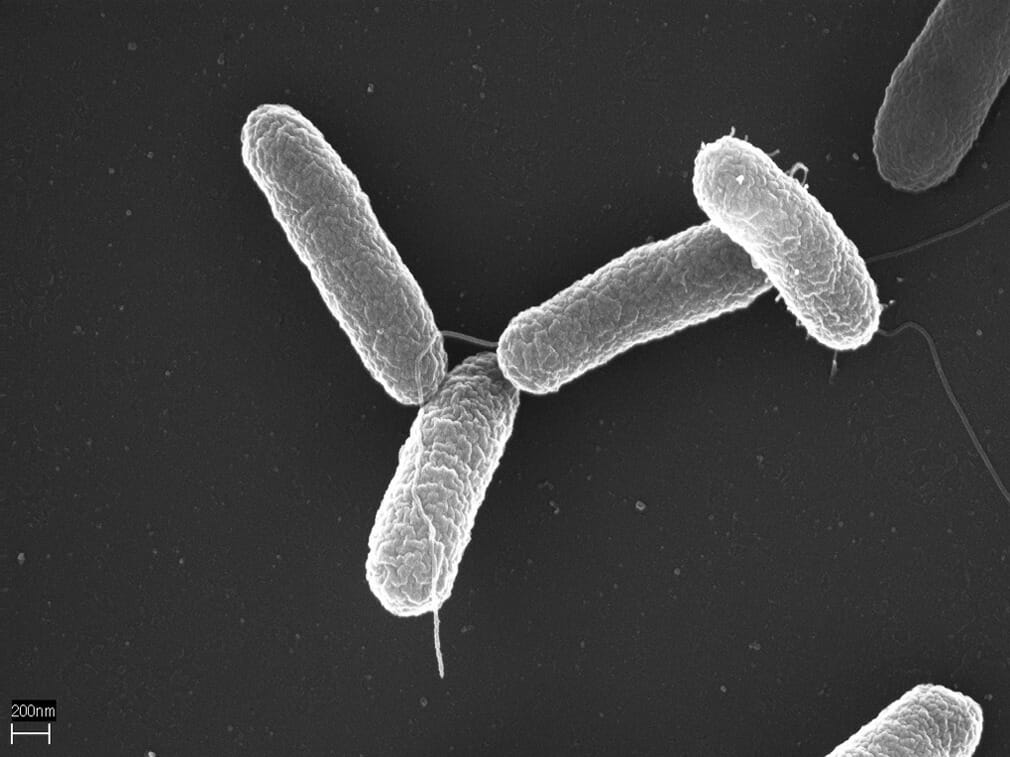
S. Typhimurium

Imagen: “Salmonella typhimurium“ por Volker Brinkmann, Max Planck Institute for Infection Biology, Berlin, Germany. Licencia: CC BY 2.5

Fisiopatología

Transmisión

  • Transmisión fecal-oral
    • Los LOS Neisseria humanos son el único reservorio.
    • Los LOS Neisseria portadores crónicos tienen colonización de la vesícula biliar (e.g., “María la tifoidea”).
  • La gravedad de la enfermedad depende de:
    • Especies infectantes (S. typhi versus S. paratyphi S. paratyphi A serotype of Salmonella enterica which is an agent of paratyphoid fever in humans. Salmonella)
    • Dosis infecciosa (se requiere un alto inóculo para sobrevivir exposición a los LOS Neisseria ácidos gástricos)

Patogénesis

Tras la ingesta de Salmonella Salmonella Salmonellae are gram-negative bacilli of the family Enterobacteriaceae. Salmonellae are flagellated, non-lactose-fermenting, and hydrogen sulfide-producing microbes. Salmonella enterica, the most common disease-causing species in humans, is further classified based on serotype as typhoidal (S. typhi and paratyphi) and nontyphoidal (S. enteritidis and typhimurium). Salmonella typhi:
  • Las bacterias deben sobrevivir a la exposición a los LOS Neisseria ácidos gástricos.
  • Las bacterias se adhieren e invaden las células M intestinales de las placas de Peyer.
  • Tras la invasión, las bacterias se replican en EN Erythema nodosum is an immune-mediated panniculitis (inflammation of the subcutaneous fat) caused by a type IV (delayed-type) hypersensitivity reaction. It commonly manifests in young women as tender, erythematous nodules on the shins. Erythema Nodosum los LOS Neisseria macrófagos de las placas de Peyer, los LOS Neisseria ganglios linfáticos mesentéricos y el bazo. Esto provoca una reacción inflamatoria con hipertrofia de las placas de Peyer y reclutamiento de células mononucleares y linfocitos.
  • Las bacterias se propagan de forma hematógena por el torrente sanguíneo y el sistema linfático, causando:
    • Infección localizada del tejido linfático y del intestino delgado
    • Bacteriemia
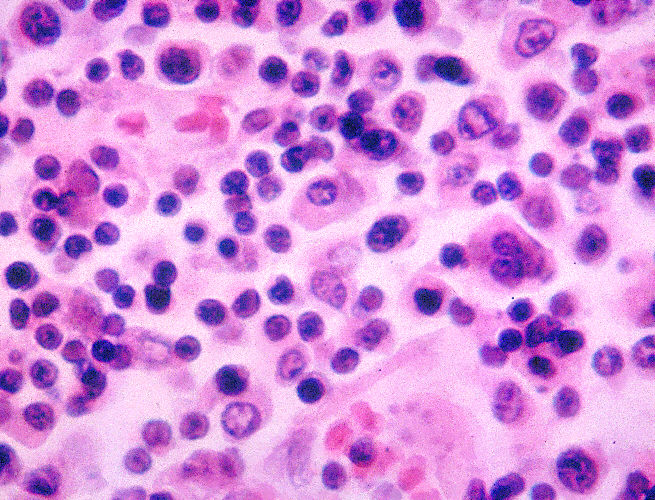
Fotomicrografía de Salmonella typhi

Esta fotomicrografía revela parte de la histopatología exhibida en un espécimen de tejido de ganglio linfático en un caso de fiebre tifoidea. Los macrófagos están presentes entre los linfocitos normales. Nota, invasión bacteriana de S. typhi en los macrófagos. Estos macrófagos también contienen eritrocitos y linfocitos degradados.

Imagen: “2213” por CDC/ Armed Forces Institute of Pathology, Charles N. Farmer. Licencia: Dominio Público
Presentación Clínica

La infección por S. typhi provoca fiebre tifoidea (o entérica). La fiebre tifoidea es una enfermedad sistémica grave asociada a fiebre y dolor Dolor Inflammation abdominal.

El periodo de incubación es de 5–21 días.

Progresión de tres fases o de una semana (si no se trata)
Curso clínico Resultados subjetivos
Semana 1 Bacteriemia
  • Fiebre que aumenta gradualmente
  • Bradicardia relativa
  • Disociación temperatura-pulso
  • Estreñimiento
Semana 2
  • Enfermedad que progresa
  • Los LOS Neisseria pacientes parecen estar gravemente enfermos
  • Fiebre persistente: durante > 3 días, que no responde a los LOS Neisseria antipiréticos
  • Dolor Dolor Inflammation abdominal
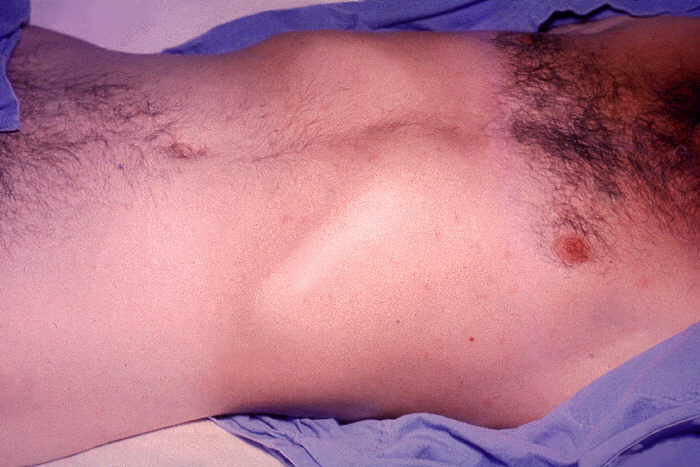
  • “Manchas rosas”: exantema pequeño, moteado, de color rosa, más comúnmente en EN Erythema nodosum is an immune-mediated panniculitis (inflammation of the subcutaneous fat) caused by a type IV (delayed-type) hypersensitivity reaction. It commonly manifests in young women as tender, erythematous nodules on the shins. Erythema Nodosum la parte inferior del pecho/abdomen
  • Diarrea o estreñimiento de color verde amarillento, “sopa de guisantes”.
  • Prostración
  • Lengua tifoidea: lengua recubierta de color grisáceo/amarillo con bordes eritematosos
Semana 3
  • Hiperplasia linfática ileocecal de las placas de Peyer
  • Bacteriemia secundaria
Características clínicas de la semana 2 más:
  • Hepatoesplenomegalia
  • Hemorragia intestinal
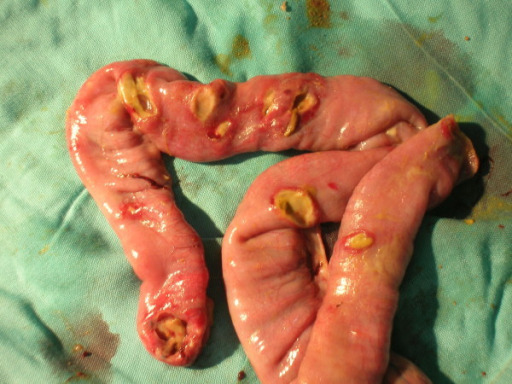
  • Posible perforación intestinal (usualmente el íleo) → peritonitis Peritonitis Inflammation of the peritoneum lining the abdominal cavity as the result of infectious, autoimmune, or chemical processes. Primary peritonitis is due to infection of the peritoneal cavity via hematogenous or lymphatic spread and without intra-abdominal source. Secondary peritonitis arises from the abdominal cavity itself through rupture or abscess of intra-abdominal organs. Penetrating Abdominal Injury
  • Alteración del estado mental (encefalopatía tifoidea)
  • Infecciones metastásicas (e.g., hueso/articulación, miocarditis, colecistitis) se ven más a menudo en EN Erythema nodosum is an immune-mediated panniculitis (inflammation of the subcutaneous fat) caused by a type IV (delayed-type) hypersensitivity reaction. It commonly manifests in young women as tender, erythematous nodules on the shins. Erythema Nodosum áreas endémicas

Diagnóstico

El diagnóstico depende de un alto grado de sospecha, ya que los LOS Neisseria cultivos suelen ser negativos, tardan muchos días y pueden no estar disponibles en EN Erythema nodosum is an immune-mediated panniculitis (inflammation of the subcutaneous fat) caused by a type IV (delayed-type) hypersensitivity reaction. It commonly manifests in young women as tender, erythematous nodules on the shins. Erythema Nodosum zonas con pocos recursos.

  • Confirmado por hemocultivos ycoprocultivo
    • Los LOS Neisseria hemocultivos serán positivos para las especies de Salmonella Salmonella Salmonellae are gram-negative bacilli of the family Enterobacteriaceae. Salmonellae are flagellated, non-lactose-fermenting, and hydrogen sulfide-producing microbes. Salmonella enterica, the most common disease-causing species in humans, is further classified based on serotype as typhoidal (S. typhi and paratyphi) and nontyphoidal (S. enteritidis and typhimurium). Salmonella en EN Erythema nodosum is an immune-mediated panniculitis (inflammation of the subcutaneous fat) caused by a type IV (delayed-type) hypersensitivity reaction. It commonly manifests in young women as tender, erythematous nodules on the shins. Erythema Nodosum el 50%70% de los LOS Neisseria casos.
    • Los LOS Neisseria coprocultivos serán positivos para las especies de Salmonella Salmonella Salmonellae are gram-negative bacilli of the family Enterobacteriaceae. Salmonellae are flagellated, non-lactose-fermenting, and hydrogen sulfide-producing microbes. Salmonella enterica, the most common disease-causing species in humans, is further classified based on serotype as typhoidal (S. typhi and paratyphi) and nontyphoidal (S. enteritidis and typhimurium). Salmonella en EN Erythema nodosum is an immune-mediated panniculitis (inflammation of the subcutaneous fat) caused by a type IV (delayed-type) hypersensitivity reaction. It commonly manifests in young women as tender, erythematous nodules on the shins. Erythema Nodosum el 30%40% de los LOS Neisseria casos.
  • Si existen otros factores de riesgo (e.g., un viaje reciente a una zona de alto riesgo), el diagnóstico clínico es posible basándose en EN Erythema nodosum is an immune-mediated panniculitis (inflammation of the subcutaneous fat) caused by a type IV (delayed-type) hypersensitivity reaction. It commonly manifests in young women as tender, erythematous nodules on the shins. Erythema Nodosum:
    • Fiebre prolongada (> 3 días)
    • Síntomas gastrointestinales
  • Cultivo de médula ósea:
    • La prueba diagnóstica más sensible (96%).
    • Raramente indicado, pero considerado el estándar de oro

Tratamiento y Prevención

Tratamiento

  • Tratamiento de primera línea: fluoroquinolonas (principalmente ciprofloxacina)
  • Si se sospecha resistencia a las fluoroquinolonas, azitromicina

Prevención

  • Hay dos vacunas disponibles para quienes viajen a zonas de alto riesgo:
    • Intramuscular, vacuna inactivada
      • Contiene polisacárido capsular
      • Debe tener > 2 años
    • Vacuna oral de patógenos vivos atenuados: debe tener > 6 años de edad
  • La higiene de las manos y la seguridad del agua y los LOS Neisseria alimentos también son fundamentales.
  • Toda persona infectada debe evitar preparar alimentos para los LOS Neisseria demás.

Complicaciones

Las complicaciones de la fiebre tifoidea suelen estar asociadas a la infección no tratada en EN Erythema nodosum is an immune-mediated panniculitis (inflammation of the subcutaneous fat) caused by a type IV (delayed-type) hypersensitivity reaction. It commonly manifests in young women as tender, erythematous nodules on the shins. Erythema Nodosum la 3ra fase (o semana) de la infección. Las complicaciones más comunes son:

  • Hemorragia digestiva
  • Perforación ileal
  • Pericarditis Pericarditis Pericarditis is an inflammation of the pericardium, often with fluid accumulation. It can be caused by infection (often viral), myocardial infarction, drugs, malignancies, metabolic disorders, autoimmune disorders, or trauma. Acute, subacute, and chronic forms exist. Pericarditis
  • Abscesos viscerales
  • Osteomielitis
  • Sepsis Sepsis Systemic inflammatory response syndrome with a proven or suspected infectious etiology. When sepsis is associated with organ dysfunction distant from the site of infection, it is called severe sepsis. When sepsis is accompanied by hypotension despite adequate fluid infusion, it is called septic shock. Sepsis and Septic Shock

Otra complicación, generalmente asociada a la infección asintomática, es el desarrollo de un estado de portador crónico:

  • Salmonella Salmonella Salmonellae are gram-negative bacilli of the family Enterobacteriaceae. Salmonellae are flagellated, non-lactose-fermenting, and hydrogen sulfide-producing microbes. Salmonella enterica, the most common disease-causing species in humans, is further classified based on serotype as typhoidal (S. typhi and paratyphi) and nontyphoidal (S. enteritidis and typhimurium). Salmonella positiva en EN Erythema nodosum is an immune-mediated panniculitis (inflammation of the subcutaneous fat) caused by a type IV (delayed-type) hypersensitivity reaction. It commonly manifests in young women as tender, erythematous nodules on the shins. Erythema Nodosum coprocultivo o cultivo de orina > 1 año después de la infección aguda
    • Más frecuente en EN Erythema nodosum is an immune-mediated panniculitis (inflammation of the subcutaneous fat) caused by a type IV (delayed-type) hypersensitivity reaction. It commonly manifests in young women as tender, erythematous nodules on the shins. Erythema Nodosum mujeres adultas y en EN Erythema nodosum is an immune-mediated panniculitis (inflammation of the subcutaneous fat) caused by a type IV (delayed-type) hypersensitivity reaction. It commonly manifests in young women as tender, erythematous nodules on the shins. Erythema Nodosum pacientes con colelitiasis u otras anomalías del tracto biliar
    • Ocurre hasta en EN Erythema nodosum is an immune-mediated panniculitis (inflammation of the subcutaneous fat) caused by a type IV (delayed-type) hypersensitivity reaction. It commonly manifests in young women as tender, erythematous nodules on the shins. Erythema Nodosum el 6% de los LOS Neisseria pacientes
    • Tratamiento: ciprofloxacina durante al AL Amyloidosis menos 1 mes
  • Se asocia con un mayor riesgo de carcinoma de la vesícula biliar
  • Los LOS Neisseria pacientes deben evitar trabajar en EN Erythema nodosum is an immune-mediated panniculitis (inflammation of the subcutaneous fat) caused by a type IV (delayed-type) hypersensitivity reaction. It commonly manifests in young women as tender, erythematous nodules on the shins. Erythema Nodosum la industria alimentaria

Diagnóstico Diferencial

  • Absceso hepático amebiano:
    • La manifestación extraintestinal más común de la amebiasis Amebiasis Amebiasis, or amoebic dysentery, is an infection caused by the parasite Entamoeba histolytica. Transmission is through the fecal-oral route or by consumption of contaminated food and water. Most patients infected with E. histolytica are asymptomatic, but about 10% may develop dysentery. Entamoeba spp./Amebiasis
    • Al AL Amyloidosis igual que la fiebre tifoidea, puede presentar manifestaciones pulmonares, cardíacas y del sistema nervioso central
    • Diferente patrón de fiebre
    • No hay erupción papular de color rosa
  • Apendicitis:
    • Al AL Amyloidosis igual que la fiebre tifoidea, puede presentarse con dolor Dolor Inflammation abdominal y fiebre
    • El dolor Dolor Inflammation abdominal se localiza en EN Erythema nodosum is an immune-mediated panniculitis (inflammation of the subcutaneous fat) caused by a type IV (delayed-type) hypersensitivity reaction. It commonly manifests in young women as tender, erythematous nodules on the shins. Erythema Nodosum el cuadrante inferior derecho
  • Toxoplasmosis Toxoplasmosis Toxoplasmosis is an infectious disease caused by Toxoplasma gondii, an obligate intracellular protozoan parasite. Felines are the definitive host, but transmission to humans can occur through contact with cat feces or the consumption of contaminated foods. The clinical presentation and complications depend on the host’s immune status. Toxoplasma/Toxoplasmosis:
    • Al AL Amyloidosis igual que la fiebre tifoidea, puede presentarse con cefalea, dolor Dolor Inflammation de garganta, malestar general, fiebre, hepatoesplenomegalia y síntomas neurológicos
    • Antecedente de exposición a los LOS Neisseria gatos
    • Los LOS Neisseria pacientes inmunocomprometidos presentarán abscesos cerebrales con múltiples lesiones anulares en EN Erythema nodosum is an immune-mediated panniculitis (inflammation of the subcutaneous fat) caused by a type IV (delayed-type) hypersensitivity reaction. It commonly manifests in young women as tender, erythematous nodules on the shins. Erythema Nodosum la resonancia magnética (RM).
  • Tuberculosis Tuberculosis Tuberculosis (TB) is an infectious disease caused by Mycobacterium tuberculosis complex bacteria. The bacteria usually attack the lungs but can also damage other parts of the body. Approximately 30% of people around the world are infected with this pathogen, with the majority harboring a latent infection. Tuberculosis spreads through the air when a person with active pulmonary infection coughs or sneezes. Tuberculosis:
    • Al AL Amyloidosis igual que la fiebre tifoidea, puede presentarse con dolor Dolor Inflammation abdominal, vómitos, diarrea, malestar general, fiebre y pérdida de peso
    • La infección suele localizarse en EN Erythema nodosum is an immune-mediated panniculitis (inflammation of the subcutaneous fat) caused by a type IV (delayed-type) hypersensitivity reaction. It commonly manifests in young women as tender, erythematous nodules on the shins. Erythema Nodosum los LOS Neisseria pulmones, con una radiografía de tórax que muestra cavitaciones y linfadenopatía mediastínica o hiliar.
  • Leishmaniasis Leishmaniasis Leishmania species are obligate intracellular parasites that are transmitted by an infected sandfly. The mildest form is cutaneous leishmaniasis (CL), characterized by painless skin ulcers. The mucocutaneous type involves more tissue destruction, causing deformities. Visceral leishmaniasis (VL), the most severe form, presents with hepatosplenomegaly, anemia, thrombocytopenia, and fever. Leishmania/Leishmaniasis:
    • Al AL Amyloidosis igual que la fiebre tifoidea, puede presentarse con hepatoesplenomegalia, fiebre, anemia Anemia Anemia is a condition in which individuals have low Hb levels, which can arise from various causes. Anemia is accompanied by a reduced number of RBCs and may manifest with fatigue, shortness of breath, pallor, and weakness. Subtypes are classified by the size of RBCs, chronicity, and etiology. Anemia: Overview and Types y anorexia Anorexia The lack or loss of appetite accompanied by an aversion to food and the inability to eat. It is the defining characteristic of the disorder anorexia nervosa. Anorexia Nervosa
    • Ulceraciones cutáneas o antecedente clínico de fiebre alta, hepatoesplenomegalia y pancitopenia con exposición a los LOS Neisseria insectos flebótomos
  • Brucelosis:
    • Al AL Amyloidosis igual que la fiebre tifoidea, puede presentarse con malestar general, fatiga, fiebre, cefalea, linfadenopatía y miocarditis
    • Antecedentes de ingestión de productos lácteos crudos o no pasteurizados o contacto directo con animales infectados (cabras, ovejas, cerdos, etc ETC The electron transport chain (ETC) sends electrons through a series of proteins, which generate an electrochemical proton gradient that produces energy in the form of adenosine triphosphate (ATP). Electron Transport Chain (ETC).)
  • Malaria Malaria Malaria is an infectious parasitic disease affecting humans and other animals. Most commonly transmitted via the bite of a female Anopheles mosquito infected with microorganisms of the Plasmodium genus. Patients present with fever, chills, myalgia, headache, and diaphoresis. Plasmodium/Malaria:
    • Al AL Amyloidosis igual que la fiebre tifoidea, puede presentarse con cefalea, malestar, dolor Dolor Inflammation abdominal, fiebre alta paroxística
    • Asociado con antecedentes de viajes a una región endémica
    • Frotis de sangre periférica que muestra esquizontes, anemia Anemia Anemia is a condition in which individuals have low Hb levels, which can arise from various causes. Anemia is accompanied by a reduced number of RBCs and may manifest with fatigue, shortness of breath, pallor, and weakness. Subtypes are classified by the size of RBCs, chronicity, and etiology. Anemia: Overview and Types hemolítica y trombocitopenia

Referncias

  1. Centers for Disease Control and Prevention. (2021). Travel-related infectious diseases: typhoid Typhoid Typhoid (or enteric) fever is a severe, systemic bacterial infection classically caused by the facultative intracellular and Gram-negative bacilli Salmonella enterica serotype Typhi (S. Typhimurium, formerly S. typhi). S. paratyphi serotypes A, B, or C can cause a similar syndrome. Enteric Fever (Typhoid Fever) & paratyphoid fever Fever Fever is defined as a measured body temperature of at least 38°C (100.4°F). Fever is caused by circulating endogenous and/or exogenous pyrogens that increase levels of prostaglandin E2 in the hypothalamus. Fever is commonly associated with chills, rigors, sweating, and flushing of the skin. Fever. Retrieved August 24, 2022, from https://wwwnc.cdc.gov/travel/yellowbook/2020/travel-related-infectious-diseases/typhoid-and-paratyphoid-fever
  2. Andrews, J., John, J., Charles, R. (2022) Enteric ( typhoid Typhoid Typhoid (or enteric) fever is a severe, systemic bacterial infection classically caused by the facultative intracellular and Gram-negative bacilli Salmonella enterica serotype Typhi (S. Typhimurium, formerly S. typhi). S. paratyphi serotypes A, B, or C can cause a similar syndrome. Enteric Fever (Typhoid Fever) and paratyphoid) fever Fever Fever is defined as a measured body temperature of at least 38°C (100.4°F). Fever is caused by circulating endogenous and/or exogenous pyrogens that increase levels of prostaglandin E2 in the hypothalamus. Fever is commonly associated with chills, rigors, sweating, and flushing of the skin. Fever: Epidemiology, clinical manifestations and diagnosis. UpToDate. Retrieved August 24, 2022, from https://www.uptodate.com/contents/enteric-typhoid-and-paratyphoid-fever-epidemiology-clinical-manifestations-and-diagnosis
  3. World Health Organization. (2022) Typhoid Typhoid Typhoid (or enteric) fever is a severe, systemic bacterial infection classically caused by the facultative intracellular and Gram-negative bacilli Salmonella enterica serotype Typhi (S. Typhimurium, formerly S. typhi). S. paratyphi serotypes A, B, or C can cause a similar syndrome. Enteric Fever (Typhoid Fever) fever Fever Fever is defined as a measured body temperature of at least 38°C (100.4°F). Fever is caused by circulating endogenous and/or exogenous pyrogens that increase levels of prostaglandin E2 in the hypothalamus. Fever is commonly associated with chills, rigors, sweating, and flushing of the skin. Fever. Retrieved August 24, 2022, from https://www.who.int/health-topics/ typhoid Typhoid Typhoid (or enteric) fever is a severe, systemic bacterial infection classically caused by the facultative intracellular and Gram-negative bacilli Salmonella enterica serotype Typhi (S. Typhimurium, formerly S. typhi). S. paratyphi serotypes A, B, or C can cause a similar syndrome. Enteric Fever (Typhoid Fever)#tab=tab_1
  4. Riedel, S., Hobden, J.A., Miller, S., et al AL Amyloidosis., eds. (2019). Enteric gram-negative rods ( enterobacteriaceae Enterobacteriaceae A family of gram-negative, facultatively anaerobic, rod-shaped bacteria that do not form endospores. Its organisms are distributed worldwide with some being saprophytes and others being plant and animal parasites. Many species are of considerable economic importance due to their pathogenic effects on agriculture and livestock. Cephalosporins). Chapter 15 of Jawetz, Melnick, & Adelberg’s Medical Microbiology, 28th ed. McGraw-Hill. https://accessmedicine.mhmedical.com/content.aspx?bookid=2629&sectionid=217770983
  5. Andrews, J., John, J., Charles, R. (2022). Enteric ( typhoid Typhoid Typhoid (or enteric) fever is a severe, systemic bacterial infection classically caused by the facultative intracellular and Gram-negative bacilli Salmonella enterica serotype Typhi (S. Typhimurium, formerly S. typhi). S. paratyphi serotypes A, B, or C can cause a similar syndrome. Enteric Fever (Typhoid Fever) and paratyphoid) fever Fever Fever is defined as a measured body temperature of at least 38°C (100.4°F). Fever is caused by circulating endogenous and/or exogenous pyrogens that increase levels of prostaglandin E2 in the hypothalamus. Fever is commonly associated with chills, rigors, sweating, and flushing of the skin. Fever: treatment and prevention. UpToDate. Retrieved August 24, 2022, from https://www.uptodate.com/contents/enteric-typhoid-and-paratyphoid-fever-treatment-and-prevention

¡Crea tu cuenta gratis o inicia una sesión para seguir leyendo!

Regístrate ahora y obtén acceso gratuito a Lecturio con páginas de concepto, videos médicos y cuestionarios para tu educación médica.

User Reviews

Que tengas una sesión de estudio alegre y navideña 🎁 Ahorra 50% en todos los planes >>

Details