Domina Conceptos Médicos

Estudia para la escuela de medicina y tus examenes con Lecturio.

Dermatofitos/Infecciones por Tiña

Las tiñas son un grupo de enfermedades causadas por hongos que infectan el tejido queratinizado (pelo, uñas y piel). Estas infecciones se denominan dermatomicosis y son causadas por los LOS Neisseria hongos dermatofitos. Existen aproximadamente 40 hongos dermatofitos que forman parte de 3 géneros, incluyendo Trichophyton Trichophyton A mitosporic fungal genus and an anamorphic form of arthroderma. Various species attack the skin, nails, and hair. Dermatophytes/Tinea Infections, Epidermophyton Epidermophyton A fungal genus which grows in the epidermis and is the cause of tinea. Dermatophytes/Tinea Infections y Microsporum Microsporum A mitosporic oxygenales fungal genus causing various diseases of the skin and hair. The species microsporum canis produces tinea capitis and tinea corporis, which usually are acquired from domestic cats and dogs. Teleomorphs includes arthroderma (nannizzia). Dermatophytes/Tinea Infections. Estas infecciones pueden afectar a cualquier parte del cuerpo, pero se producen con mayor frecuencia en EN Erythema nodosum is an immune-mediated panniculitis (inflammation of the subcutaneous fat) caused by a type IV (delayed-type) hypersensitivity reaction. It commonly manifests in young women as tender, erythematous nodules on the shins. Erythema Nodosum regiones cálidas y húmedas como la ingle y los LOS Neisseria pies. El diagnóstico es clínico con hallazgos cutáneos característicos, pero puede confirmarse mediante la microscopía de los LOS Neisseria raspados de piel. El tratamiento depende del lugar y la magnitud de la infección, pero suele comenzarse con antifúngicos tópicos como los LOS Neisseria medicamentos -azoles y la terbinafina, y hasta puede progresar a presentaciones orales de estos medicamentos si el tratamiento tópico falla.

Last updated: Feb 14, 2022

Editorial responsibility: Stanley Oiseth, Lindsay Jones, Evelin Maza

Descripción General

Características generales de los LOS Neisseria dermatofitos

Clasificación de las infecciones por tiña

Las infecciones por tiña se clasifican y denominan según la región del cuerpo afectada.

Patogénesis

Reservorios

  • Humanos
  • Animales
  • Tierra

Transmisión

  • Contacto directo con personas o animales infectados
  • Contacto indirecto a través de un fómite

Factores de riesgo del huésped

  • Caminar descalzo en EN Erythema nodosum is an immune-mediated panniculitis (inflammation of the subcutaneous fat) caused by a type IV (delayed-type) hypersensitivity reaction. It commonly manifests in young women as tender, erythematous nodules on the shins. Erythema Nodosum vestidores compartidos
  • Diabetes Diabetes Diabetes mellitus (DM) is a metabolic disease characterized by hyperglycemia and dysfunction of the regulation of glucose metabolism by insulin. Type 1 DM is diagnosed mostly in children and young adults as the result of autoimmune destruction of β cells in the pancreas and the resulting lack of insulin. Type 2 DM has a significant association with obesity and is characterized by insulin resistance. Diabetes Mellitus mellitus
  • Obesidad
  • Inmunodeficiencia
  • Sudoración profusa
  • Calzado oclusivo
  • Traumatismo
  • Afeitarse
  • Contacto con animales

Fisiopatología

  • Infectan tejidos humanos queratinizados (e.g., pelo, piel y uñas)
  • Poseen proteasas que permiten la penetración del estrato córneo
  • Suelen ser superficiales, afectando solo a la epidermis Epidermis The external, nonvascular layer of the skin. It is made up, from within outward, of five layers of epithelium: (1) basal layer (stratum basale epidermidis); (2) spinous layer (stratum spinosum epidermidis); (3) granular layer (stratum granulosum epidermidis); (4) clear layer (stratum lucidum epidermidis); and (5) horny layer (stratum corneum epidermidis). Skin: Structure and Functions, porque no pueden sobrevivir a la temperatura corporal normal de 37℃
  • Metabolizan la queratina como fuente de combustible

Presentación Clínica

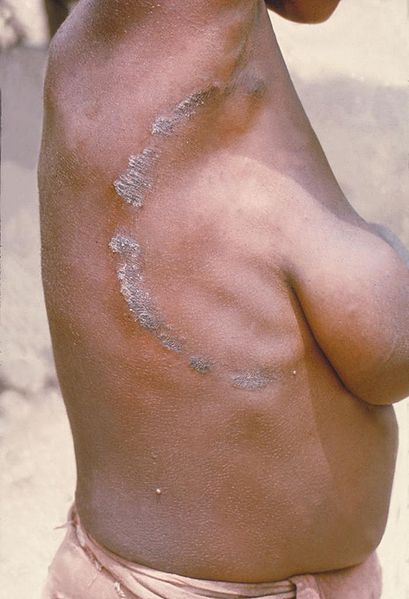
Los LOS Neisseria signos y síntomas son similares entre las infecciones por tiña, con algunas pequeñas diferencias según la región del cuerpo afectada. Las lesiones tienden a ser placas bien delimitadas, anulares y periféricas con un borde escamoso. También pueden estar asociadas a eritema y/o maceración.

Tabla: Comparación de las infecciones más comunes por dermatofitos
Nombre Región del cuerpo Etiología Epidemiología y factores de riesgo Características clínicas
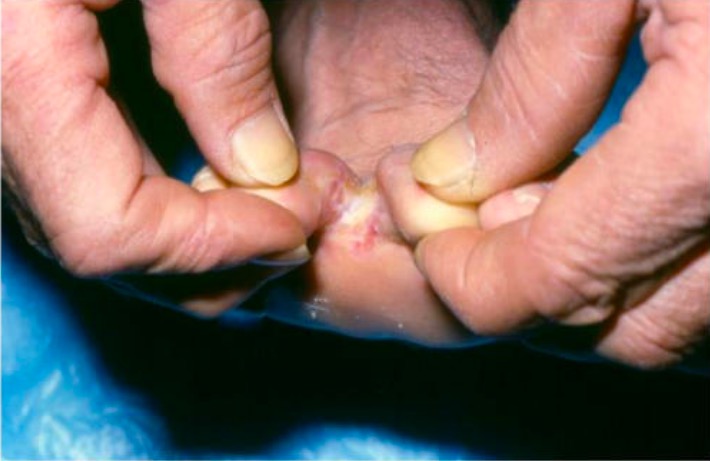
Tinea pedis (“pie de atleta”) Pies, espacios interdigitales de los LOS Neisseria dedos
  • Infecciones por tiña más frecuente
  • Adolescentes y adultos
  • ↑ Riesgo en EN Erythema nodosum is an immune-mediated panniculitis (inflammation of the subcutaneous fat) caused by a type IV (delayed-type) hypersensitivity reaction. It commonly manifests in young women as tender, erythematous nodules on the shins. Erythema Nodosum los LOS Neisseria vestuarios públicos
  • Interdigital: maceración pruriginosa y descamación
  • Hiperqueratósica: descamación difusa en distribución en “mocasín”
  • Lesiones vesiculobulosas (inflamatoria): erupción pruriginosa, eritematosa y bullosa en EN Erythema nodosum is an immune-mediated panniculitis (inflammation of the subcutaneous fat) caused by a type IV (delayed-type) hypersensitivity reaction. It commonly manifests in young women as tender, erythematous nodules on the shins. Erythema Nodosum los LOS Neisseria pies
Tinea corporis (“tiña corporal”) Tronco y extremidades (excluyendo manos y pies)
  • T. rubrum (más común)
  • T. tonsurans
  • Microsporum Microsporum A mitosporic oxygenales fungal genus causing various diseases of the skin and hair. The species microsporum canis produces tinea capitis and tinea corporis, which usually are acquired from domestic cats and dogs. Teleomorphs includes arthroderma (nannizzia). Dermatophytes/Tinea Infections canis
  • T. interdigitale
  • Contacto directo con una persona o animal infectado, generalmente un gato o un perro
  • Común entre los LOS Neisseria atletas
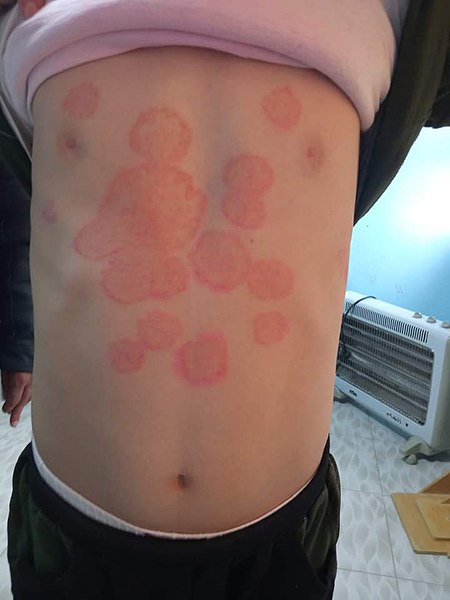
  • Placas pruriginosas, anulares, eritematosas o hiperpigmentadas con un aclaramiento central
  • Se extienden centrífugamente
  • Una afectación extensa puede ser indicativa de diabetes Diabetes Diabetes mellitus (DM) is a metabolic disease characterized by hyperglycemia and dysfunction of the regulation of glucose metabolism by insulin. Type 1 DM is diagnosed mostly in children and young adults as the result of autoimmune destruction of β cells in the pancreas and the resulting lack of insulin. Type 2 DM has a significant association with obesity and is characterized by insulin resistance. Diabetes Mellitus o infección por VIH.
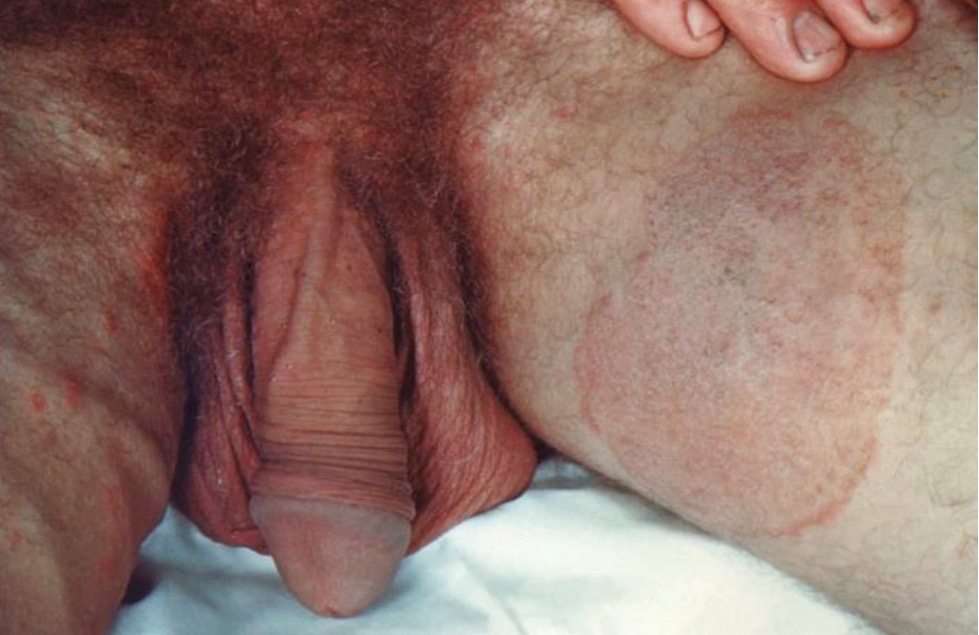
Tinea cruris (“tiña inguinal”) Ingle, pliegues inguinales
  • E. floccosum
  • T. rubrum
  • T. interdigitale
  • Hombres > mujeres
  • A menudo se propaga a partir de una tiña pedis preexistente
  • ↑ Riesgo con obesidad, diabetes Diabetes Diabetes mellitus (DM) is a metabolic disease characterized by hyperglycemia and dysfunction of the regulation of glucose metabolism by insulin. Type 1 DM is diagnosed mostly in children and young adults as the result of autoimmune destruction of β cells in the pancreas and the resulting lack of insulin. Type 2 DM has a significant association with obesity and is characterized by insulin resistance. Diabetes Mellitus, inmunodeficiencia, sudoración profusa
  • Afecta a los LOS Neisseria pliegues inguinales
  • Los LOS Neisseria parches eritematosos se extienden de forma centrífuga con aclaración parcial.
  • Pueden extenderse a la región perineal y perianal
  • Respeta la piel escrotal
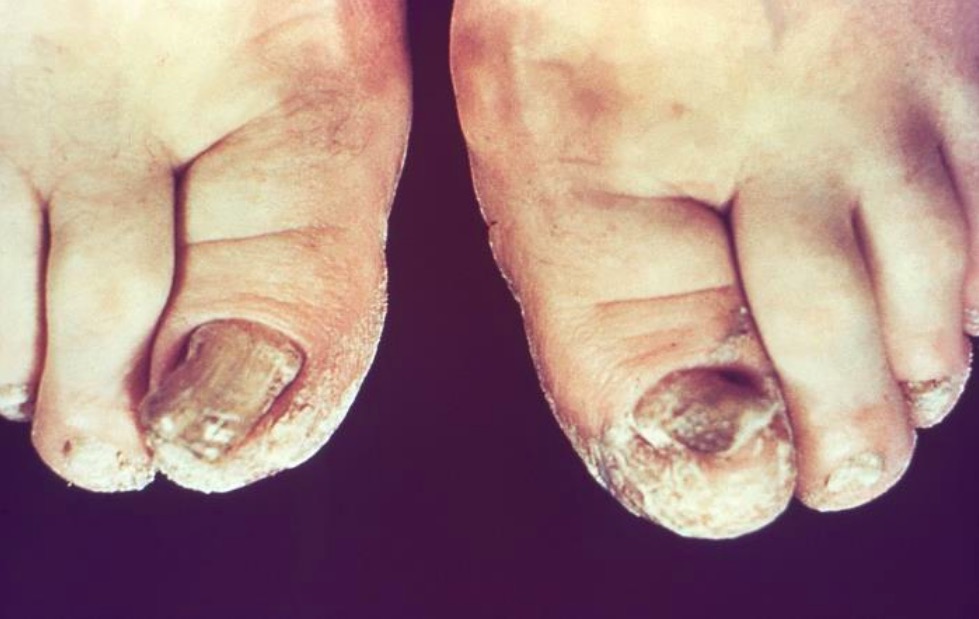
Tinea unguium Tinea unguium A fungal infection of the nail, usually caused by dermatophytes; yeasts; or nondermatophyte molds. Dermatophytes/Tinea Infections (onicomicosis) Uñas de las manos o de los LOS Neisseria pies T. rubrum
  • Contacto directo con dermatofitos
  • Lesión en EN Erythema nodosum is an immune-mediated panniculitis (inflammation of the subcutaneous fat) caused by a type IV (delayed-type) hypersensitivity reaction. It commonly manifests in young women as tender, erythematous nodules on the shins. Erythema Nodosum las uñas
  • ↑ Riesgo con infección por tinea pedis Tinea pedis Dermatological pruritic lesion in the feet, caused by Trichophyton rubrum, T. mentagrophytes, or Epidermophyton floccosum. Dermatophytes/Tinea Infections
  • Adultos > niños
  • Decoloración, hiperqueratosis, divisiones en EN Erythema nodosum is an immune-mediated panniculitis (inflammation of the subcutaneous fat) caused by a type IV (delayed-type) hypersensitivity reaction. It commonly manifests in young women as tender, erythematous nodules on the shins. Erythema Nodosum la uña
  • Restos subungueales
Tinea capitis Tinea capitis Ringworm of the scalp and associated hair mainly caused by species of Microsporum; Trichophyton; and Epidermophyton, which may occasionally involve the eyebrows and eyelashes. Dermatophytes/Tinea Infections Folículos pilosos y cuero cabelludo
  • T. tonsurans
  • T. violaceum
  • T. verrucosum
  • M. canis
  • Contacto directo con dermatofitos
  • Traumatismo por un objeto (i.e., un peine)
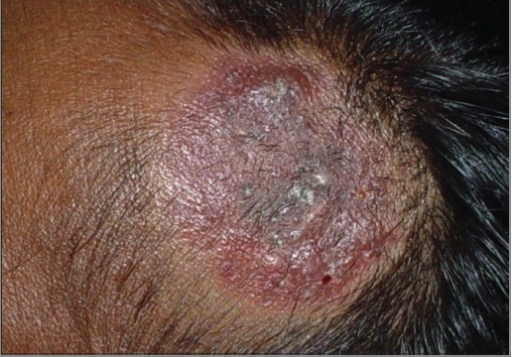
  • Placas escamosas con alopecia Alopecia Alopecia is the loss of hair in areas anywhere on the body where hair normally grows. Alopecia may be defined as scarring or non-scarring, localized or diffuse, congenital or acquired, reversible or permanent, or confined to the scalp or universal; however, alopecia is usually classified using the 1st 3 factors. Alopecia ± con puntos negros
  • Infección por Endothrix: esporas de hongos dentro del tallo del cabello
  • Infección por Ectothrix: esporas de hongos que rodean el tallo del cabello
  • Infección por Favus: esporas de hongos y bolsas de aire dentro del tallo del cabello
Granuloma de Majocchi (foliculitis fúngica) Folículos pilosos en EN Erythema nodosum is an immune-mediated panniculitis (inflammation of the subcutaneous fat) caused by a type IV (delayed-type) hypersensitivity reaction. It commonly manifests in young women as tender, erythematous nodules on the shins. Erythema Nodosum el cuerpo T. rubrum
  • Traumatismos en EN Erythema nodosum is an immune-mediated panniculitis (inflammation of the subcutaneous fat) caused by a type IV (delayed-type) hypersensitivity reaction. It commonly manifests in young women as tender, erythematous nodules on the shins. Erythema Nodosum la piel
  • Oclusión de los LOS Neisseria folículos pilosos
  • Zonas de afeitar
  • ↑ Riesgo con inmunosupresión y uso de corticosteroides
  • Pápulas perifoliculares localizadas
  • Eritema o hiperpigmentación
  • Pústulas
  • Abscesos o diseminación en EN Erythema nodosum is an immune-mediated panniculitis (inflammation of the subcutaneous fat) caused by a type IV (delayed-type) hypersensitivity reaction. It commonly manifests in young women as tender, erythematous nodules on the shins. Erythema Nodosum pacientes inmunocomprometidos
Tinea corporis

Tinea corporis, “tiña corporal” en un niño:
La infección se debe con mayor frecuencia al Trichophyton rubrum, que se presenta con placas circulares, eritematosas y pruriginosas, con escamas periféricas y un aclaramiento central.
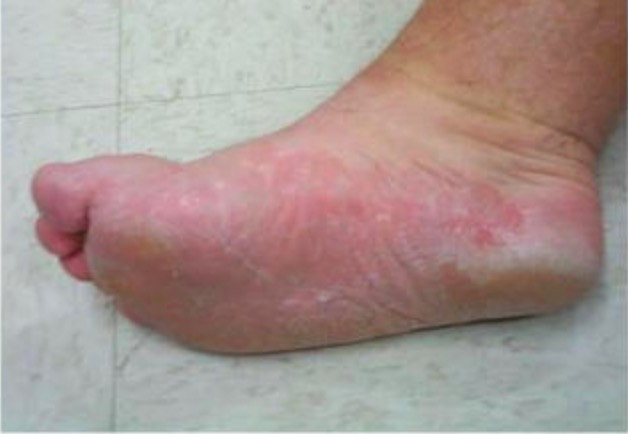
Imagen: “Tinea corporis” por Mohammad3021. Licencia: CC0

Diagnóstico y Tratamiento

Diagnóstico

  • El diagnóstico es principalmente clínico
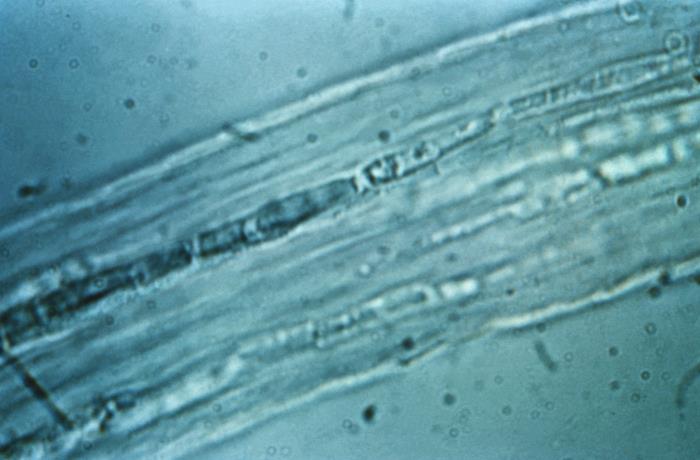
  • Se confirma mediante la preparación de KOH:
    • Las escamas periféricas de una lesión se raspan y se colocan en EN Erythema nodosum is an immune-mediated panniculitis (inflammation of the subcutaneous fat) caused by a type IV (delayed-type) hypersensitivity reaction. It commonly manifests in young women as tender, erythematous nodules on the shins. Erythema Nodosum un portaobjetos de vidrio.
    • Se aplica KOH a la escama.
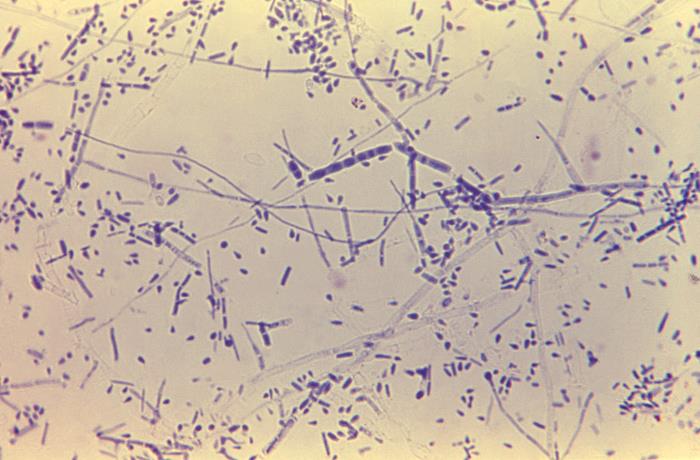
    • Los LOS Neisseria dermatofitos se identifican mediante la visualización de las hifas septadas.
  • Los LOS Neisseria cultivos fúngicos son una alternativa adicional para el diagnóstico definitivo.
  • La onicomicosis puede diagnosticarse mediante la tinción PAS de los LOS Neisseria recortes de uñas.
Trichophyton rubrum

Trichophyton rubrum: Esta ampliación de 475× de T. rubrum muestra macroconidias alargadas y agrupadas centralmente con septaciones. También hay muchos microconidios en forma de lágrima.

Imagen: “Trichophyton rubrum” por CDC/Dr. Lucille K. Georg. Licencia: Dominio Público
Tratamiento

Todas las variantes de la tiña se tratan con antifúngicos.

  • Tinea pedis Tinea pedis Dermatological pruritic lesion in the feet, caused by Trichophyton rubrum, T. mentagrophytes, or Epidermophyton floccosum. Dermatophytes/Tinea Infections:
    • Terbinafina tópica: La terbinafina es una alilamina y actúa inhibiendo la escualeno epoxidasa.
    • Terbinafina oral para casos recalcitrantes
  • Tinea corporis Tinea corporis Dermatophytes/Tinea Infections:
    • Azoles Azoles Azoles are a widely used class of antifungal medications inhibiting the production of ergosterol, a critical component in the fungal cell membrane. The 2 primary subclasses of azoles are the imidazoles, older agents typically only used for topical applications, and the triazoles, newer agents with a wide spectrum of uses. Azoles tópicos (e.g., ketoconazol) como terapia inicial ( los LOS Neisseria azoles Azoles Azoles are a widely used class of antifungal medications inhibiting the production of ergosterol, a critical component in the fungal cell membrane. The 2 primary subclasses of azoles are the imidazoles, older agents typically only used for topical applications, and the triazoles, newer agents with a wide spectrum of uses. Azoles actúan inhibiendo la síntesis del ergosterol Ergosterol A steroid occurring in fungi. Irradiation with ultraviolet rays results in formation of ergocalciferol (vitamin d2). Azoles → impiden la formación de la pared celular)
    • Azoles Azoles Azoles are a widely used class of antifungal medications inhibiting the production of ergosterol, a critical component in the fungal cell membrane. The 2 primary subclasses of azoles are the imidazoles, older agents typically only used for topical applications, and the triazoles, newer agents with a wide spectrum of uses. Azoles orales (e.g., fluconazol) para casos recalcitrantes
  • Tinea cruris Tinea cruris Fungal infection of the groin. The main causative fungus is Trichophyton. Dermatophytes/Tinea Infections: azoles Azoles Azoles are a widely used class of antifungal medications inhibiting the production of ergosterol, a critical component in the fungal cell membrane. The 2 primary subclasses of azoles are the imidazoles, older agents typically only used for topical applications, and the triazoles, newer agents with a wide spectrum of uses. Azoles tópicos
  • Tinea unguium Tinea unguium A fungal infection of the nail, usually caused by dermatophytes; yeasts; or nondermatophyte molds. Dermatophytes/Tinea Infections (onicomicosis):
    • Terbinafina oral
    • Fluconazol oral
  • Tinea capitis Tinea capitis Ringworm of the scalp and associated hair mainly caused by species of Microsporum; Trichophyton; and Epidermophyton, which may occasionally involve the eyebrows and eyelashes. Dermatophytes/Tinea Infections:
    • Terbinafina oral para especies de Trichophyton Trichophyton A mitosporic fungal genus and an anamorphic form of arthroderma. Various species attack the skin, nails, and hair. Dermatophytes/Tinea Infections
    • Griseofulvina oral (inhibe los LOS Neisseria microtúbulos) para las especies de Microsporum Microsporum A mitosporic oxygenales fungal genus causing various diseases of the skin and hair. The species microsporum canis produces tinea capitis and tinea corporis, which usually are acquired from domestic cats and dogs. Teleomorphs includes arthroderma (nannizzia). Dermatophytes/Tinea Infections
  • Granuloma de Majocchi: azoles Azoles Azoles are a widely used class of antifungal medications inhibiting the production of ergosterol, a critical component in the fungal cell membrane. The 2 primary subclasses of azoles are the imidazoles, older agents typically only used for topical applications, and the triazoles, newer agents with a wide spectrum of uses. Azoles orales

Related videos

Diagnóstico Diferencial

  • Eritrasma: infección bacteriana de la piel causada por Corynebacterium Corynebacterium Corynebacteria are gram-positive, club-shaped bacilli. Corynebacteria are commonly isolated on tellurite or Loeffler’s media and have characteristic metachromatic granules. The major pathogenic species is Corynebacterium diphtheriae, which causes a severe respiratory infection called diphtheria. Corynebacterium minutissimum. La presentación del eritrasma se caracteriza por regiones de piel escamosa, pruriginosa y con soluciones de continuidad. La infección se produce con mayor frecuencia en EN Erythema nodosum is an immune-mediated panniculitis (inflammation of the subcutaneous fat) caused by a type IV (delayed-type) hypersensitivity reaction. It commonly manifests in young women as tender, erythematous nodules on the shins. Erythema Nodosum los LOS Neisseria espacios entre los LOS Neisseria dedos de los LOS Neisseria pies, pero también puede presentarse en EN Erythema nodosum is an immune-mediated panniculitis (inflammation of the subcutaneous fat) caused by a type IV (delayed-type) hypersensitivity reaction. It commonly manifests in young women as tender, erythematous nodules on the shins. Erythema Nodosum zonas intertriginosas. Puede co-infectarse con Candida Candida Candida is a genus of dimorphic, opportunistic fungi. Candida albicans is part of the normal human flora and is the most common cause of candidiasis. The clinical presentation varies and can include localized mucocutaneous infections (e.g., oropharyngeal, esophageal, intertriginous, and vulvovaginal candidiasis) and invasive disease (e.g., candidemia, intraabdominal abscess, pericarditis, and meningitis). Candida/Candidiasis o dermatofitos, lo que dificulta el diagnóstico. Las áreas infectadas se observan de color rojo fluorescente bajo una lámpara de Wood. El tratamiento es con terapia antibiótica tópica.
  • Infección cutánea por cándida/intertrigo: infección e inflamación de las regiones intertriginosas, incluidos los LOS Neisseria pliegues del panículo abdominal. La infección cutánea por cándida puede ser fúngica o bacteriana y suele presentarse con manchas húmedas y eritematosas en EN Erythema nodosum is an immune-mediated panniculitis (inflammation of the subcutaneous fat) caused by a type IV (delayed-type) hypersensitivity reaction. It commonly manifests in young women as tender, erythematous nodules on the shins. Erythema Nodosum los LOS Neisseria pliegues de la piel. Esta condición puede llevar eventualmente a la ruptura de la piel. El diagnóstico es clínico y el tratamiento es con terapia antifúngica tópica.
  • Dermatitis Dermatitis Any inflammation of the skin. Atopic Dermatitis (Eczema) atópica/eccema: enfermedad inflamatoria de la piel que afecta con mayor frecuencia a los LOS Neisseria niños, pero que también puede presentarse en EN Erythema nodosum is an immune-mediated panniculitis (inflammation of the subcutaneous fat) caused by a type IV (delayed-type) hypersensitivity reaction. It commonly manifests in young women as tender, erythematous nodules on the shins. Erythema Nodosum los LOS Neisseria adultos. El eccema es una enfermedad crónica que se presenta con placas eritematosas, secas y con costra, que pueden ser intensamente pruriginosas. La dermatitis Dermatitis Any inflammation of the skin. Atopic Dermatitis (Eczema) afecta con mayor frecuencia a las superficies flexoras y se asocia a otros tipos de atopia, como el asma ASMA Autoimmune Hepatitis. El pilar del tratamiento es el cuidado suave de la piel y la aplicación de esteroides tópicos.
  • Dermatitis Dermatitis Any inflammation of the skin. Atopic Dermatitis (Eczema) de contacto: inflamación local de la piel que resulta del contacto directo con un irritante o alérgeno. Las etiologías de la dermatitis Dermatitis Any inflammation of the skin. Atopic Dermatitis (Eczema) de contacto incluyen la dermatitis Dermatitis Any inflammation of the skin. Atopic Dermatitis (Eczema) de contacto alérgica (reacción de hipersensibilidad retardada tipo IV) o la dermatitis Dermatitis Any inflammation of the skin. Atopic Dermatitis (Eczema) irritante, que resulta de la irritación mecánica o química de la piel. Las lesiones se presentan con eritema y edema Edema Edema is a condition in which excess serous fluid accumulates in the body cavity or interstitial space of connective tissues. Edema is a symptom observed in several medical conditions. It can be categorized into 2 types, namely, peripheral (in the extremities) and internal (in an organ or body cavity). Edema bien delimitados y pueden ser pruriginosas o desarrollar bullas con exudado. El tratamiento consiste en EN Erythema nodosum is an immune-mediated panniculitis (inflammation of the subcutaneous fat) caused by a type IV (delayed-type) hypersensitivity reaction. It commonly manifests in young women as tender, erythematous nodules on the shins. Erythema Nodosum evitar los LOS Neisseria factores desencadenantes y la aplicación de corticoides tópicos.
  • Psoriasis Psoriasis Psoriasis is a common T-cell-mediated inflammatory skin condition. The etiology is unknown, but is thought to be due to genetic inheritance and environmental triggers. There are 4 major subtypes, with the most common form being chronic plaque psoriasis. Psoriasis: enfermedad inflamatoria multisistémica que incluye hallazgos en EN Erythema nodosum is an immune-mediated panniculitis (inflammation of the subcutaneous fat) caused by a type IV (delayed-type) hypersensitivity reaction. It commonly manifests in young women as tender, erythematous nodules on the shins. Erythema Nodosum la piel. Existen varios subtipos de psoriasis Psoriasis Psoriasis is a common T-cell-mediated inflammatory skin condition. The etiology is unknown, but is thought to be due to genetic inheritance and environmental triggers. There are 4 major subtypes, with the most common form being chronic plaque psoriasis. Psoriasis. El subtipo más común, la psoriasis Psoriasis Psoriasis is a common T-cell-mediated inflammatory skin condition. The etiology is unknown, but is thought to be due to genetic inheritance and environmental triggers. There are 4 major subtypes, with the most common form being chronic plaque psoriasis. Psoriasis crónica en EN Erythema nodosum is an immune-mediated panniculitis (inflammation of the subcutaneous fat) caused by a type IV (delayed-type) hypersensitivity reaction. It commonly manifests in young women as tender, erythematous nodules on the shins. Erythema Nodosum placas, se presenta con placas escamosas y eritematosas que son intensamente pruriginosas. Estas placas afectan con mayor frecuencia a las superficies extensoras, lo que permite distinguirla de otros trastornos papuloescamosos. El tratamiento se centra en EN Erythema nodosum is an immune-mediated panniculitis (inflammation of the subcutaneous fat) caused by a type IV (delayed-type) hypersensitivity reaction. It commonly manifests in young women as tender, erythematous nodules on the shins. Erythema Nodosum el control de los LOS Neisseria síntomas.
  • Escabiosis: infección local de la piel causada por el ácaro Sarcoptes scabiei Sarcoptes scabiei A species of mite that causes scabies in humans and sarcoptic mange in other animals. Specific variants of s. Scabiei exist for humans and animals, but many have the ability to cross species and cause disease. Scabies. La presentación clínica de la escabiosis suele incluir pequeñas pápulas eritematosas que son muy pruriginosas y pueden tener una distribución lineal, lo que evidencia el movimiento de los LOS Neisseria ácaros por debajo de la piel. Los LOS Neisseria sitios comunes de infección son las extremidades, clásicamente las manos y las redes interdigitales. Las lesiones también pueden aparecer como parches eritematosos con costra. El diagnóstico se realiza clínicamente o con la detección de ácaros, huevos o heces en EN Erythema nodosum is an immune-mediated panniculitis (inflammation of the subcutaneous fat) caused by a type IV (delayed-type) hypersensitivity reaction. It commonly manifests in young women as tender, erythematous nodules on the shins. Erythema Nodosum la microscopía de raspados de piel. El tratamiento es con permetrina tópica.
  • Pitiriasis rosada: enfermedad de la piel que da lugar a manchas ovaladas de color salmón. Una mancha inicial “heraldo” es seguida por la aparición de múltiples manchas adicionales en EN Erythema nodosum is an immune-mediated panniculitis (inflammation of the subcutaneous fat) caused by a type IV (delayed-type) hypersensitivity reaction. It commonly manifests in young women as tender, erythematous nodules on the shins. Erythema Nodosum un plazo de 1–2 semanas después de la mancha inicial. La pitiriasis rosada puede estar asociada a un pródromo de malestar general, cefalea y faringitis. El curso de la enfermedad suele ser leve y autolimitado.
  • Dermatitis seborreica: trastorno cutáneo recidivante de patogénesis incierta que se presenta con escamas amarillentas sobre placas eritematosas bien delimitadas y pruriginosas. Estas lesiones se distribuyen en regiones del cuerpo con numerosas glándulas sebáceas, como el cuero cabelludo, la cara y el tórax. La dermatitis seborreica suele presentarse como caspa en los adultos y como “costra láctea” en EN Erythema nodosum is an immune-mediated panniculitis (inflammation of the subcutaneous fat) caused by a type IV (delayed-type) hypersensitivity reaction. It commonly manifests in young women as tender, erythematous nodules on the shins. Erythema Nodosum los LOS Neisseria bebés. Algunas pruebas sugieren que la proliferación de Malassezia Malassezia Malassezia is a lipophilic yeast commonly found on the skin surfaces of many animals, including humans. In the presence of certain environments or triggers, this fungus can cause pathologic diseases ranging from superficial skin conditions (tinea versicolor and dermatitis) to invasive disease (e.g., Malassezia folliculitis, catheter-associated fungemia, meningitis, and urinary tract infections). Malassezia Fungi puede ser la etiología. El tratamiento incluye antifúngicos tópicos y corticosteroides.
  • Lupus eritematoso cutáneo subagudo: forma de lupus cutáneo que no suele asociarse al AL Amyloidosis lupus eritematoso sistémico (LES). El lupus eritematoso cutáneo subagudo se presenta con placas anulares, eritematosas y escamosas que suelen aparecer en EN Erythema nodosum is an immune-mediated panniculitis (inflammation of the subcutaneous fat) caused by a type IV (delayed-type) hypersensitivity reaction. It commonly manifests in young women as tender, erythematous nodules on the shins. Erythema Nodosum la piel expuesta al AL Amyloidosis sol, incluyendo el cuello, el torso y las extremidades superiores. Contradictoriamente, las lesiones suelen respetar la cara. El lupus eritematoso cutáneo subagudo puede ser inducido por medicamentos, siendo los LOS Neisseria más comunes los LOS Neisseria antihipertensivos, los LOS Neisseria antihiperlipidémicos, los LOS Neisseria inhibidores de la bomba de protones, los LOS Neisseria antifúngicos y los LOS Neisseria inhibidores del factor de necrosis Necrosis The death of cells in an organ or tissue due to disease, injury or failure of the blood supply. Ischemic Cell Damage tumoral α.
  • Granuloma anular y eritema anular centrífugo: condiciones benignas e inflamatorias que se presentan con placas anulares eritematosas. El granuloma anular y el eritema anular centrífugo no suelen presentar escamas, lo que puede ser el factor que los LOS Neisseria distinga de las infecciones por tiña.

Referencias

  1. Mitchel TG. (2015). Medical mycology. In Brooks JE, et al. (Eds.), Jawetz, Melnick, & Adelberg’s Medical Microbiology, 27th ed. [VitalSource Bookshelf 9.4.3]. 
  2. Goldstein AO, Goldstein BG. (2021). Dermatophyte (tinea) infections. UpToDate. Retrieved April 29, 2021, from https://www.uptodate.com/contents/dermatophyte-tinea-infections
  3. Hawkins DM, Smidt, AC. (2014). Superficial fungal infections in children. Pediatric Clinics of North America 61:443–455. https://doi-org.online.uchc.edu/10.1016/j.pcl.2013.12.003
  4. Noble SL, Forbes RC, Stamm, PL. (1998). Diagnosis and management of common tinea infections. American Family Physician 58:163–178.
  5. Smith KJ, Neafie RC, Skelton HG, Barrett TL, Graham JF, Lupton GP.  (1991). Majocchi’s granuloma. Journal of Cutaneous Pathology 18:28. https://doi-org.online.uchc.edu/10.1111/j.1600-0560.1991.tb00598.x
  6. Merola JF. (2021). Overview of cutaneous lupus erythematosus. UpToDate. Retrieved May 1, 2021, from https://www.uptodate.com/contents/overview-of-cutaneous-lupus-erythematosus
  7. van Zuuren EJ, Fedorowicz Z, El-Gohary M. (2015). Evidence-based topical treatments for tinea cruris and tinea corporis: a summary of a Cochrane systematic review. British Journal of Dermatology 172:616–641. https://doi-org.online.uchc.edu/10.1111/bjd.13441
  8. Centers for Disease Control and Prevention. (2024, April 24). Ringworm and fungal nail infections basics. https://www.cdc.gov/ringworm/about/

¡Crea tu cuenta gratis o inicia una sesión para seguir leyendo!

Regístrate ahora y obtén acceso gratuito a Lecturio con páginas de concepto, videos médicos y cuestionarios para tu educación médica.

User Reviews

Que tengas una sesión de estudio alegre y navideña 🎁 Ahorra 50% en todos los planes >>

Details