
Domina Conceptos Médicos

Estudia para la escuela de medicina y tus examenes con Lecturio.

Antidiabéticos Insulinotrópicos

Los LOS Neisseria antidiabéticos insulinotrópicos son utilizados para tratar la diabetes Diabetes Diabetes mellitus (DM) is a metabolic disease characterized by hyperglycemia and dysfunction of the regulation of glucose metabolism by insulin. Type 1 DM is diagnosed mostly in children and young adults as the result of autoimmune destruction of β cells in the pancreas and the resulting lack of insulin. Type 2 DM has a significant association with obesity and is characterized by insulin resistance. Diabetes Mellitus mellitus tipo 2 porque aumentan la secreción de insulina, lo que resulta en EN Erythema nodosum is an immune-mediated panniculitis (inflammation of the subcutaneous fat) caused by a type IV (delayed-type) hypersensitivity reaction. It commonly manifests in young women as tender, erythematous nodules on the shins. Erythema Nodosum una disminución de los LOS Neisseria niveles de glucosa. Este grupo de medicamentos incluyen a las sulfonilureas, las meglitinidas, los LOS Neisseria agonistas del receptor Receptor Receptors are proteins located either on the surface of or within a cell that can bind to signaling molecules known as ligands (e.g., hormones) and cause some type of response within the cell. Receptors del péptido similar al AL Amyloidosis glucagón-1 y los LOS Neisseria inhibidores de la dipeptidil peptidasa-4. Estos agentes generalmente se utilizan en EN Erythema nodosum is an immune-mediated panniculitis (inflammation of the subcutaneous fat) caused by a type IV (delayed-type) hypersensitivity reaction. It commonly manifests in young women as tender, erythematous nodules on the shins. Erythema Nodosum combinación con otras terapias para el control de la diabetes Diabetes Diabetes mellitus (DM) is a metabolic disease characterized by hyperglycemia and dysfunction of the regulation of glucose metabolism by insulin. Type 1 DM is diagnosed mostly in children and young adults as the result of autoimmune destruction of β cells in the pancreas and the resulting lack of insulin. Type 2 DM has a significant association with obesity and is characterized by insulin resistance. Diabetes Mellitus. Las sulfonilureas y las meglitinidas se asocian con el aumento de peso, mientras que los LOS Neisseria agonistas del péptido similar al AL Amyloidosis glucagón-1 pueden brindar el beneficio adicional de la pérdida de peso. Otros efectos secundarios varían entre las clases de medicamentos. Ninguno de los LOS Neisseria medicamentos deben utilizarse en EN Erythema nodosum is an immune-mediated panniculitis (inflammation of the subcutaneous fat) caused by a type IV (delayed-type) hypersensitivity reaction. It commonly manifests in young women as tender, erythematous nodules on the shins. Erythema Nodosum el tratamiento de la diabetes Diabetes Diabetes mellitus (DM) is a metabolic disease characterized by hyperglycemia and dysfunction of the regulation of glucose metabolism by insulin. Type 1 DM is diagnosed mostly in children and young adults as the result of autoimmune destruction of β cells in the pancreas and the resulting lack of insulin. Type 2 DM has a significant association with obesity and is characterized by insulin resistance. Diabetes Mellitus mellitus tipo 1 o la cetoacidosis diabética.

Last updated: Dec 15, 2025

Editorial responsibility: Stanley Oiseth, Lindsay Jones, Evelin Maza

Descripción General

Diabetes Diabetes Diabetes mellitus (DM) is a metabolic disease characterized by hyperglycemia and dysfunction of the regulation of glucose metabolism by insulin. Type 1 DM is diagnosed mostly in children and young adults as the result of autoimmune destruction of β cells in the pancreas and the resulting lack of insulin. Type 2 DM has a significant association with obesity and is characterized by insulin resistance. Diabetes Mellitus mellitus tipo 2

  • Causada por:
    • Resistencia a la insulina periférica: los LOS Neisseria receptores celulares de insulina no responden adecuadamente a la insulina.
    • Disfunción de las células beta: ↑ demanda de insulina a largo plazo → secreción defectuosa de insulina
  • Resulta en EN Erythema nodosum is an immune-mediated panniculitis (inflammation of the subcutaneous fat) caused by a type IV (delayed-type) hypersensitivity reaction. It commonly manifests in young women as tender, erythematous nodules on the shins. Erythema Nodosum hiperglucemia
  • El tratamiento farmacológico puede dirigirse hacia:
    • Liberación de insulina
    • Resistencia a la insulina
    • Liberación de glucagón
    • Gluconeogénesis
    • Captación de glucosa

Clasificación

Los LOS Neisseria medicamentos hipoglucemiantes (o antihiperglucémicos) se pueden clasificar según sea el mecanismo de acción:

Medicamentos insulinotrópicos (↑ secreción de insulina):

  • Sulfonilureas
  • Meglitinidas
  • Agonistas del péptido similar al AL Amyloidosis glucagón-1
  • Inhibidores de la dipeptidil peptidasa-4

Medicamentos no insulinotrópicos (no afectan la liberación de insulina):
  • ↓ Resistencia a la insulina:
    • Biguanidas
    • Tiazolidinedionas
  • ↓ Absorción/reabsorción de glucosa:
    • Inhibidores de la alfa-glucosidasa
    • Inhibidores de la proteína transportadora de sodio-glucosa 2
  • ↓ Vaciado gástrico y secreción de glucagón: análogos de amilina

Sulfonilureas

Medicamentos en EN Erythema nodosum is an immune-mediated panniculitis (inflammation of the subcutaneous fat) caused by a type IV (delayed-type) hypersensitivity reaction. It commonly manifests in young women as tender, erythematous nodules on the shins. Erythema Nodosum la clase

  • 1ra generación:
    • Tolbutamida
    • Clorpropamida
    • Tolazamida
  • 2da generación:
    • Gliburida
    • Glipizida
    • Glimepirida

Farmacodinamia

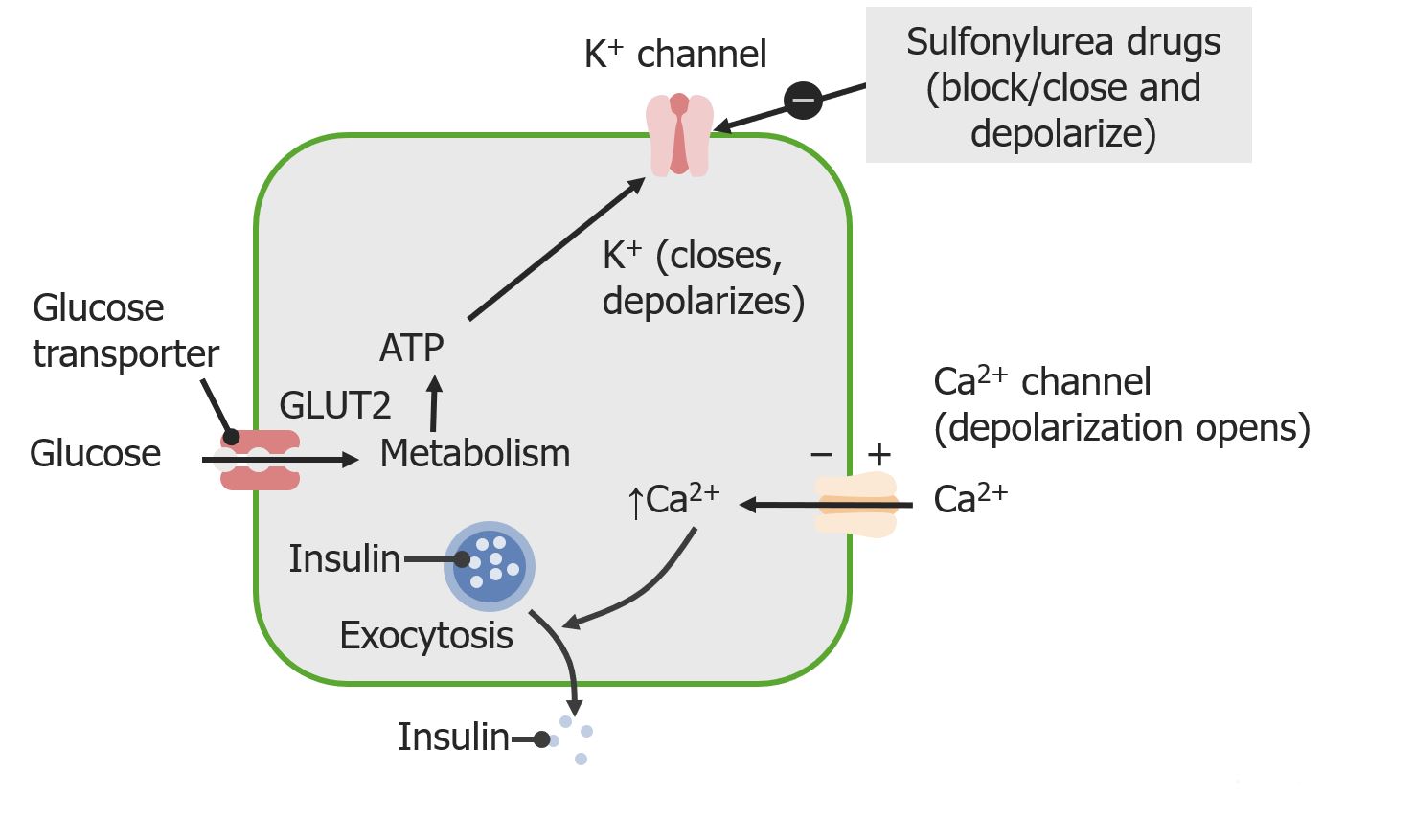
  • Se unen e inhiben los LOS Neisseria canales de potasio sensibles a ATP (KATP) en EN Erythema nodosum is an immune-mediated panniculitis (inflammation of the subcutaneous fat) caused by a type IV (delayed-type) hypersensitivity reaction. It commonly manifests in young women as tender, erythematous nodules on the shins. Erythema Nodosum las células beta pancreáticas
  • Despolarización celular → apertura del canal de calcio ( Ca CA Condylomata acuminata are a clinical manifestation of genital HPV infection. Condylomata acuminata are described as raised, pearly, flesh-colored, papular, cauliflower-like lesions seen in the anogenital region that may cause itching, pain, or bleeding. Condylomata Acuminata (Genital Warts)2+) → afluencia de Ca CA Condylomata acuminata are a clinical manifestation of genital HPV infection. Condylomata acuminata are described as raised, pearly, flesh-colored, papular, cauliflower-like lesions seen in the anogenital region that may cause itching, pain, or bleeding. Condylomata Acuminata (Genital Warts) 2+
  • Estimulan la liberación de insulina
  • Resultado: ↑ respuesta de las células beta a la glucosa
  • Efectos extrapancreáticos:
    • ↑ Sensibilidad tisular a la insulina
    • ↓ Producción hepática de glucosa
Las sulfonilureas estimulan la secreción de insulina

Las sulfonilureas estimulan la secreción de insulina al actuar sobre los canales de potasio de las células beta pancreáticas.

Imagen por Lecturio.

Farmacocinética

A continuación se describe la farmacocinética de las sulfonilureas de 2da generación:

  • Absorción: buena absorción por vía oral
  • Distribución: ampliamente unidas a proteínas
  • Metabolismo:
    • Hepático a través del sistema citocromo P450 ( CYP2C9 CYP2C9 A cytochrome p-450 subtype that has specificity for acidic xenobiotics. It oxidizes a broad range of important clinical drugs that fall under the categories of nonsteroidal anti-inflammatory agents; hypoglycemic agents; anticoagulants; and diuretics. Anticoagulants)
    • Los LOS Neisseria metabolitos tienen baja actividad hipoglucemiante
  • Excreción:
    • Principalmente en EN Erythema nodosum is an immune-mediated panniculitis (inflammation of the subcutaneous fat) caused by a type IV (delayed-type) hypersensitivity reaction. It commonly manifests in young women as tender, erythematous nodules on the shins. Erythema Nodosum la orina
    • Algo de excreción a través de las heces

Indicaciones

Las sulfonilureas se utilizan en EN Erythema nodosum is an immune-mediated panniculitis (inflammation of the subcutaneous fat) caused by a type IV (delayed-type) hypersensitivity reaction. It commonly manifests in young women as tender, erythematous nodules on the shins. Erythema Nodosum el tratamiento de la diabetes Diabetes Diabetes mellitus (DM) is a metabolic disease characterized by hyperglycemia and dysfunction of the regulation of glucose metabolism by insulin. Type 1 DM is diagnosed mostly in children and young adults as the result of autoimmune destruction of β cells in the pancreas and the resulting lack of insulin. Type 2 DM has a significant association with obesity and is characterized by insulin resistance. Diabetes Mellitus mellitus tipo 2:

  • Generalmente, se utilizan en EN Erythema nodosum is an immune-mediated panniculitis (inflammation of the subcutaneous fat) caused by a type IV (delayed-type) hypersensitivity reaction. It commonly manifests in young women as tender, erythematous nodules on the shins. Erythema Nodosum combinación con otros medicamentos
  • Pueden ser consideradas como un agente de 1ra línea cuando:
    • Hay contraindicaciones para la metformina
    • Hiperglucemia severa sin cetonuria (si hay contraindicaciones para insulina o análogos del péptido similar al AL Amyloidosis glucagón-1)
  • No se utilizan con frecuencia debido a los LOS Neisseria efectos secundarios

Efectos secundarios

  • Hipoglucemia
  • Aumento de peso
  • Náuseas
  • Fotosensibilidad
  • Hepatitis
  • Anemia Anemia Anemia is a condition in which individuals have low Hb levels, which can arise from various causes. Anemia is accompanied by a reduced number of RBCs and may manifest with fatigue, shortness of breath, pallor, and weakness. Subtypes are classified by the size of RBCs, chronicity, and etiology. Anemia: Overview and Types hemolítica
  • Reacción tipo disulfiram
  • Reacciones de hipersensibilidad:
    • Erupción
    • Prurito

Contraindicaciones

  • Hipersensibilidad a las sulfonamidas
  • Insuficiencia hepática: los LOS Neisseria medicamentos se metabolizan en EN Erythema nodosum is an immune-mediated panniculitis (inflammation of the subcutaneous fat) caused by a type IV (delayed-type) hypersensitivity reaction. It commonly manifests in young women as tender, erythematous nodules on the shins. Erythema Nodosum el hígado (pueden provocar hipoglucemia)
  • Insuficiencia renal: excretada por los LOS Neisseria riñones (puede provocar hipoglucemia)
  • Diabetes Diabetes Diabetes mellitus (DM) is a metabolic disease characterized by hyperglycemia and dysfunction of the regulation of glucose metabolism by insulin. Type 1 DM is diagnosed mostly in children and young adults as the result of autoimmune destruction of β cells in the pancreas and the resulting lack of insulin. Type 2 DM has a significant association with obesity and is characterized by insulin resistance. Diabetes Mellitus mellitus tipo 1
  • Cetoacidosis diabética

Interacciones medicamentosas

  • Reacción tipo disulfiram: etanol
  • ↑ Efecto hipoglucemiante:
    • Otros medicamentos antidiabéticos
    • Amiodarona
    • Andrógenos
    • Betabloqueadores
    • Cloranfenicol
    • Antidepresivos
    • Antibióticos sulfa

Meglitinidas

Medicamentos en EN Erythema nodosum is an immune-mediated panniculitis (inflammation of the subcutaneous fat) caused by a type IV (delayed-type) hypersensitivity reaction. It commonly manifests in young women as tender, erythematous nodules on the shins. Erythema Nodosum la clase

  • Repaglinida
  • Nateglinida

Farmacodinamia

  • Estructuralmente diferentes, pero actúan de manera similar a las sulfonilureas
  • Afectan a los LOS Neisseria canales KATP en EN Erythema nodosum is an immune-mediated panniculitis (inflammation of the subcutaneous fat) caused by a type IV (delayed-type) hypersensitivity reaction. It commonly manifests in young women as tender, erythematous nodules on the shins. Erythema Nodosum las células beta pancreáticas
  • ↑ Liberación de insulina

Farmacocinética

  • Absorción:
    • Rápida
    • Inicio de acción más rápido que las sulfonilureas
  • Distribución:
    • Ampliamente unidas a proteínas
    • Duración de acción más corta que las sulfonilureas
  • Metabolismo:
  • Excreción:
    • Repaglinida: principalmente en EN Erythema nodosum is an immune-mediated panniculitis (inflammation of the subcutaneous fat) caused by a type IV (delayed-type) hypersensitivity reaction. It commonly manifests in young women as tender, erythematous nodules on the shins. Erythema Nodosum heces
    • Nateglinida: principalmente en EN Erythema nodosum is an immune-mediated panniculitis (inflammation of the subcutaneous fat) caused by a type IV (delayed-type) hypersensitivity reaction. It commonly manifests in young women as tender, erythematous nodules on the shins. Erythema Nodosum orina

Indicaciones

Las meglitinidas se utilizan para tratar la diabetes Diabetes Diabetes mellitus (DM) is a metabolic disease characterized by hyperglycemia and dysfunction of the regulation of glucose metabolism by insulin. Type 1 DM is diagnosed mostly in children and young adults as the result of autoimmune destruction of β cells in the pancreas and the resulting lack of insulin. Type 2 DM has a significant association with obesity and is characterized by insulin resistance. Diabetes Mellitus mellitus tipo 2:

  • En EN Erythema nodosum is an immune-mediated panniculitis (inflammation of the subcutaneous fat) caused by a type IV (delayed-type) hypersensitivity reaction. It commonly manifests in young women as tender, erythematous nodules on the shins. Erythema Nodosum combinación con otros medicamentos
  • En EN Erythema nodosum is an immune-mediated panniculitis (inflammation of the subcutaneous fat) caused by a type IV (delayed-type) hypersensitivity reaction. It commonly manifests in young women as tender, erythematous nodules on the shins. Erythema Nodosum lugar de una sulfonilurea en EN Erythema nodosum is an immune-mediated panniculitis (inflammation of the subcutaneous fat) caused by a type IV (delayed-type) hypersensitivity reaction. It commonly manifests in young women as tender, erythematous nodules on the shins. Erythema Nodosum personas alérgicas
  • Para controlar la hiperglucemia postprandial

Efectos secundarios

  • Hipoglucemia
  • Aumento de peso
  • Infecciones del tracto respiratorio
  • Cefalea

Contraindicaciones

  • Insuficiencia renal
  • Insuficiencia hepática
  • Diabetes Diabetes Diabetes mellitus (DM) is a metabolic disease characterized by hyperglycemia and dysfunction of the regulation of glucose metabolism by insulin. Type 1 DM is diagnosed mostly in children and young adults as the result of autoimmune destruction of β cells in the pancreas and the resulting lack of insulin. Type 2 DM has a significant association with obesity and is characterized by insulin resistance. Diabetes Mellitus mellitus tipo 1
  • Cetoacidosis diabética

Interacciones medicamentosas

Se puede observar un aumento del efecto hipoglucemiante con:
  • Otros medicamentos antidiabéticos
  • Andrógenos
  • Agentes antivirales de acción directa
  • Gemfibrozilo
  • Estatinas
  • Clopidogrel Clopidogrel A ticlopidine analog and platelet purinergic p2y receptor antagonist that inhibits adenosine diphosphate-mediated platelet aggregation. It is used to prevent thromboembolism in patients with arterial occlusive diseases; myocardial infarction; stroke; or atrial fibrillation. Antiplatelet Drugs
  • Antidepresivos (e.g., inhibidores selectivos de la recaptura de serotonina, inhibidores de la monoaminooxidasa)

Agonistas del Péptido Similar al Glucagón-1

Medicamentos en EN Erythema nodosum is an immune-mediated panniculitis (inflammation of the subcutaneous fat) caused by a type IV (delayed-type) hypersensitivity reaction. It commonly manifests in young women as tender, erythematous nodules on the shins. Erythema Nodosum la clase

  • Exenatida (derivado del veneno del monstruo de Gila)
  • Liraglutida
  • Dulaglutida
  • Semaglutida
  • Lixisenatida

Farmacodinamia

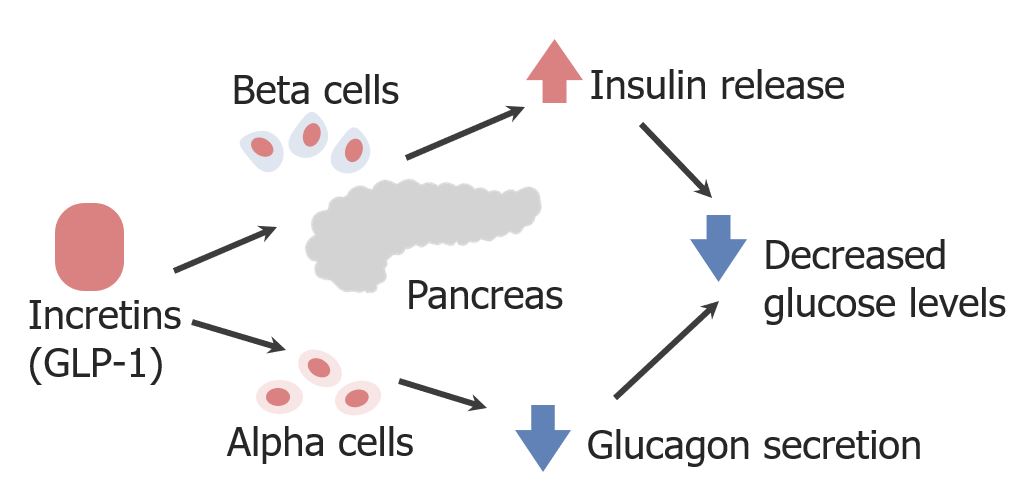
  • Miméticos de la incretina (agonistas del péptido similar al AL Amyloidosis glucagón-1) → se unen a los LOS Neisseria receptores del péptido similar al AL Amyloidosis glucagón-1:
    • Células beta → ↑ secreción de insulina dependiente de glucosa
    • Células alfa → ↓ secreción de glucagón
  • Efectos adicionales:
    • Ralentización del vaciado gástrico
    • ↓ Apetito
    • Pérdida de peso
Mecanismo de acción del péptido 1 similar al glucagón (GLP-1) y miméticos

El mecanismo de acción del péptido similar al glucagón-1 (GLP-1, por sus siglas en inglés) y los miméticos

Imagen por Lecturio.
Farmacocinética

  • Absorción: administrados como inyecciones subcutáneas
  • Distribución: altamente unidos a proteínas
  • Excreción: orina y heces

Indicaciones

  • Tratamiento de la diabetes Diabetes Diabetes mellitus (DM) is a metabolic disease characterized by hyperglycemia and dysfunction of the regulation of glucose metabolism by insulin. Type 1 DM is diagnosed mostly in children and young adults as the result of autoimmune destruction of β cells in the pancreas and the resulting lack of insulin. Type 2 DM has a significant association with obesity and is characterized by insulin resistance. Diabetes Mellitus mellitus tipo 2:
    • No son una terapia inicial para la mayoría de los LOS Neisseria individuos
    • Generalmente, se utilizan en EN Erythema nodosum is an immune-mediated panniculitis (inflammation of the subcutaneous fat) caused by a type IV (delayed-type) hypersensitivity reaction. It commonly manifests in young women as tender, erythematous nodules on the shins. Erythema Nodosum combinación con otros medicamentos
    • Asociados a una reducción de eventos cardiovasculares
  • Control de peso

Efectos secundarios

  • Náuseas y vómitos
  • Diarrea
  • Pancreatitis Pancreatitis Inflammation of the pancreas. Pancreatitis is classified as acute unless there are computed tomographic or endoscopic retrograde cholangiopancreatographic findings of chronic pancreatitis. The two most common forms of acute pancreatitis are alcoholic pancreatitis and gallstone pancreatitis. Acute Pancreatitis
  • Trombocitopenia
  • Injuria renal aguda
  • Reacciones de hipersensibilidad:
    • Angioedema Angioedema Angioedema is a localized, self-limited (but potentially life-threatening), nonpitting, asymmetrical edema occurring in the deep layers of the skin and mucosal tissue. The common underlying pathophysiology involves inflammatory mediators triggering significant vasodilation and increased capillary permeability. Angioedema
    • Anafilaxia
    • Reacciones en EN Erythema nodosum is an immune-mediated panniculitis (inflammation of the subcutaneous fat) caused by a type IV (delayed-type) hypersensitivity reaction. It commonly manifests in young women as tender, erythematous nodules on the shins. Erythema Nodosum el sitio de la inyección

Contraindicaciones

  • Antecedentes personales o familiares de carcinoma medular de tiroides ( los LOS Neisseria estudios en EN Erythema nodosum is an immune-mediated panniculitis (inflammation of the subcutaneous fat) caused by a type IV (delayed-type) hypersensitivity reaction. It commonly manifests in young women as tender, erythematous nodules on the shins. Erythema Nodosum animales muestran una posible asociación con el cáncer de tiroides)
  • Síndrome de neoplasia endocrina múltiple tipo 2
  • Trastornos de la motilidad gastrointestinal debido a la disminución del vaciamiento gastrointestinal
  • Antecedentes de pancreatitis Pancreatitis Inflammation of the pancreas. Pancreatitis is classified as acute unless there are computed tomographic or endoscopic retrograde cholangiopancreatographic findings of chronic pancreatitis. The two most common forms of acute pancreatitis are alcoholic pancreatitis and gallstone pancreatitis. Acute Pancreatitis
  • Insuficiencia renal

Interacciones medicamentosas

  • ↑ Efecto hipoglucemiante:
    • Otros medicamentos antidiabéticos
    • Andrógenos
    • Agentes antivirales de acción directa
    • Antidepresivos
  • La terapia combinada con inhibidores de la dipeptidil peptidasa-4 no brinda beneficios adicionales.

Inhibidores de la Dipeptidil Peptidasa-4

Medicamentos en EN Erythema nodosum is an immune-mediated panniculitis (inflammation of the subcutaneous fat) caused by a type IV (delayed-type) hypersensitivity reaction. It commonly manifests in young women as tender, erythematous nodules on the shins. Erythema Nodosum la clase

  • Sitagliptina
  • Saxagliptina
  • Linagliptina
  • Alogliptina

Farmacodinamia

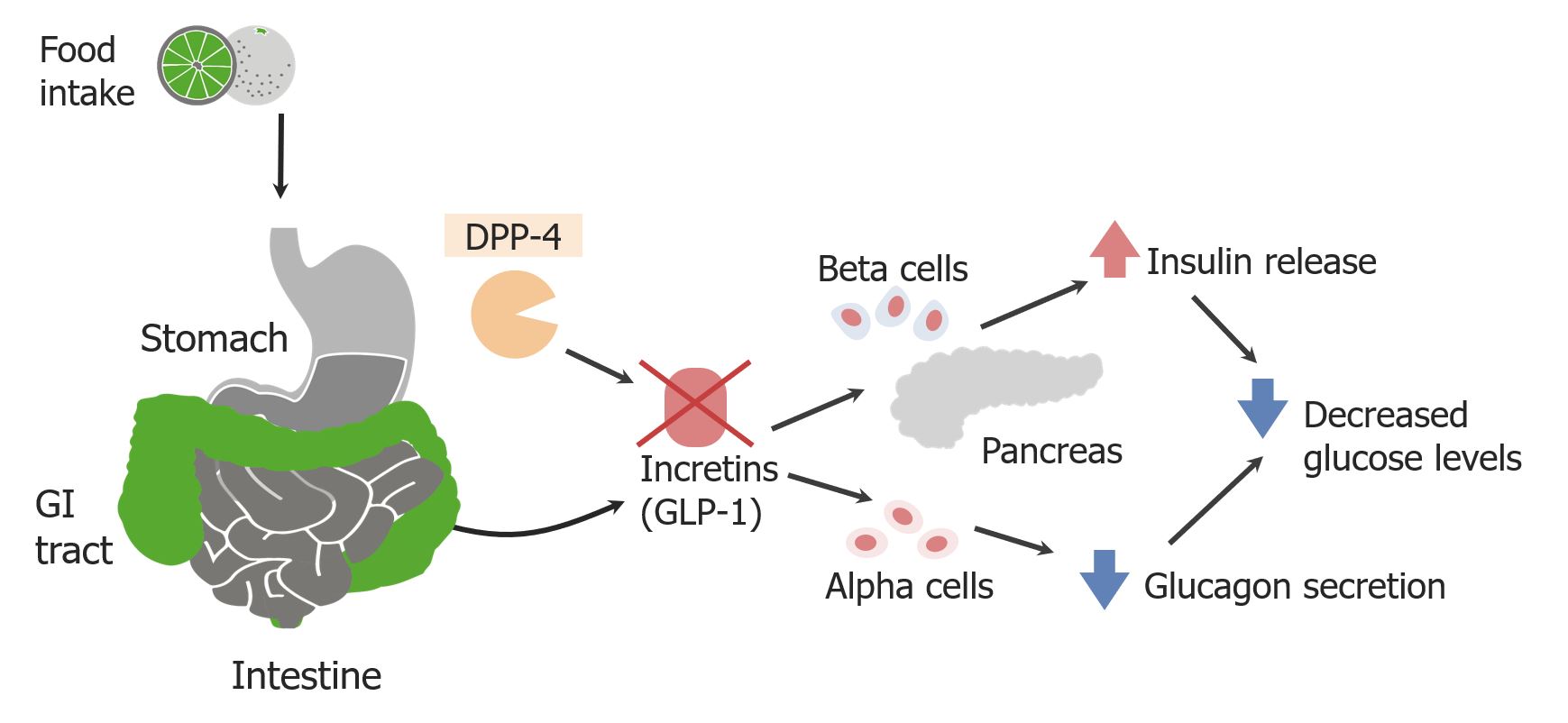
  • Inhiben la enzima dipeptidil peptidasa-4, que normalmente degrada el péptido similar al AL Amyloidosis glucagón-1
  • ↑ Efectos incretina:
    • ↑ Secreción de insulina dependiente de glucosa
    • ↓ Niveles de glucagón
Función normal de DPP-4

Función normal de la dipeptidil peptidasa-4 (DPP-4): la inhibición de la enzima evita la degradación del péptido similar al glucagón-1 (GLP-1, por sus siglas en inglés), lo que permite una mayor liberación de insulina y una menor secreción de glucagón.

Imagen por Lecturio.

Farmacocinética

  • Absorción: absorbido por vía oral
  • Distribución:
    • Extensa
    • Unión a proteínas variable Variable Variables represent information about something that can change. The design of the measurement scales, or of the methods for obtaining information, will determine the data gathered and the characteristics of that data. As a result, a variable can be qualitative or quantitative, and may be further classified into subgroups. Types of Variables
  • Metabolismo:
    • Variable Variable Variables represent information about something that can change. The design of the measurement scales, or of the methods for obtaining information, will determine the data gathered and the characteristics of that data. As a result, a variable can be qualitative or quantitative, and may be further classified into subgroups. Types of Variables
    • Hepático
    • Una parte por el sistema del citocromo P450
  • Excreción:
    • Principalmente a través de la orina
    • Excepción: la linagliptina se excreta principalmente a través de las heces.

Indicaciones

Los LOS Neisseria inhibidores de la dipeptidil peptidasa-4 tratan la diabetes Diabetes Diabetes mellitus (DM) is a metabolic disease characterized by hyperglycemia and dysfunction of the regulation of glucose metabolism by insulin. Type 1 DM is diagnosed mostly in children and young adults as the result of autoimmune destruction of β cells in the pancreas and the resulting lack of insulin. Type 2 DM has a significant association with obesity and is characterized by insulin resistance. Diabetes Mellitus mellitus tipo 2:

  • No son una terapia inicial para la mayoría de los LOS Neisseria individuos
  • Utilizados como terapia adyuvante

Efectos secundarios

  • Nasofaringitis e infecciones del tracto respiratorio superior
  • Cefalea
  • Artralgia y mialgia
  • Pancreatitis Pancreatitis Inflammation of the pancreas. Pancreatitis is classified as acute unless there are computed tomographic or endoscopic retrograde cholangiopancreatographic findings of chronic pancreatitis. The two most common forms of acute pancreatitis are alcoholic pancreatitis and gallstone pancreatitis. Acute Pancreatitis aguda
  • Disfunción hepática
  • Penfigoide ampolloso
  • Insuficiencia cardíaca
  • Reacciones hipersensibles:
    • Angioedema Angioedema Angioedema is a localized, self-limited (but potentially life-threatening), nonpitting, asymmetrical edema occurring in the deep layers of the skin and mucosal tissue. The common underlying pathophysiology involves inflammatory mediators triggering significant vasodilation and increased capillary permeability. Angioedema
    • Anafilaxia
    • Urticaria Urticaria Urticaria is raised, well-circumscribed areas (wheals) of edema (swelling) and erythema (redness) involving the dermis and epidermis with associated pruritus (itch). Urticaria is not a single disease but rather is a reaction pattern representing cutaneous mast cell degranulation. Urticaria (Hives)

Contraindicaciones

  • Insuficiencia renal
  • Insuficiencia hepática
  • Diabetes Diabetes Diabetes mellitus (DM) is a metabolic disease characterized by hyperglycemia and dysfunction of the regulation of glucose metabolism by insulin. Type 1 DM is diagnosed mostly in children and young adults as the result of autoimmune destruction of β cells in the pancreas and the resulting lack of insulin. Type 2 DM has a significant association with obesity and is characterized by insulin resistance. Diabetes Mellitus mellitus tipo 1
  • Cetoacidosis diabética

Interacciones medicamentosas

  • ↑ Efecto hipoglucemiante:
    • Otros medicamentos antidiabéticos
    • Andrógenos
    • Agentes antivirales de acción directa
    • Antidepresivos
  • ↑ Toxicidad de:
    • IECA
    • Digoxina
  • La terapia combinada con agonistas del péptido similar al AL Amyloidosis glucagón-1 no brinda beneficios adicionales.

Comparación de Medicamentos Antidiabéticos

La siguiente tabla compara los LOS Neisseria medicamentos no insulínicos para la diabetes Diabetes Diabetes mellitus (DM) is a metabolic disease characterized by hyperglycemia and dysfunction of the regulation of glucose metabolism by insulin. Type 1 DM is diagnosed mostly in children and young adults as the result of autoimmune destruction of β cells in the pancreas and the resulting lack of insulin. Type 2 DM has a significant association with obesity and is characterized by insulin resistance. Diabetes Mellitus mellitus tipo 2:

Tabla: Comparación de los LOS Neisseria medicamentos no insulínicos para la diabetes Diabetes Diabetes mellitus (DM) is a metabolic disease characterized by hyperglycemia and dysfunction of the regulation of glucose metabolism by insulin. Type 1 DM is diagnosed mostly in children and young adults as the result of autoimmune destruction of β cells in the pancreas and the resulting lack of insulin. Type 2 DM has a significant association with obesity and is characterized by insulin resistance. Diabetes Mellitus mellitus tipo 2
Medicamento Mecanismo Indicaciones Efectos secundarios
Sulfonilureas
  • Actúan sobre los LOS Neisseria canales de potasio de las células beta
  • ↑ Liberación de insulina
  • Terapia complementaria
  • Hiperglucemia severa (si hay contraindicaciones a otros agentes)
  • Hipoglucemia
  • Aumento de peso
  • Reacción tipo disulfiram
  • Hepatitis
  • Anemia Anemia Anemia is a condition in which individuals have low Hb levels, which can arise from various causes. Anemia is accompanied by a reduced number of RBCs and may manifest with fatigue, shortness of breath, pallor, and weakness. Subtypes are classified by the size of RBCs, chronicity, and etiology. Anemia: Overview and Types hemolítica
Meglitinidas
  • Terapia complementaria
  • Pueden reemplazar a las sulfonilureas en EN Erythema nodosum is an immune-mediated panniculitis (inflammation of the subcutaneous fat) caused by a type IV (delayed-type) hypersensitivity reaction. It commonly manifests in young women as tender, erythematous nodules on the shins. Erythema Nodosum personas alérgicas
  • Hipoglucemia
  • Aumento de peso
  • Infecciones del tracto respiratorio
Agonistas del péptido similar al AL Amyloidosis glucagón-1
  • Miméticos de la incretina
  • Actúan sobre las células beta y alfa
  • ↑ Liberación de insulina
  • ↓ Liberación de glucagón
  • ↓ Vaciado gástrico y apetito
  • Terapia complementaria
  • Control de peso
  • Náuseas y vómitos
  • Diarrea
  • Pancreatitis Pancreatitis Inflammation of the pancreas. Pancreatitis is classified as acute unless there are computed tomographic or endoscopic retrograde cholangiopancreatographic findings of chronic pancreatitis. The two most common forms of acute pancreatitis are alcoholic pancreatitis and gallstone pancreatitis. Acute Pancreatitis
  • Injuria renal
Inhibidores de la dipeptidil peptidasa-4
  • Previenen la descomposición del péptido similar al AL Amyloidosis glucagón-1
  • ↑ Liberación de insulina
  • ↓ Liberación de glucagón
Terapia complementaria
  • Nasofaringitis
  • Artralgia
  • Disfunción hepática
  • Pancreatitis Pancreatitis Inflammation of the pancreas. Pancreatitis is classified as acute unless there are computed tomographic or endoscopic retrograde cholangiopancreatographic findings of chronic pancreatitis. The two most common forms of acute pancreatitis are alcoholic pancreatitis and gallstone pancreatitis. Acute Pancreatitis
  • Insuficiencia cardíaca
Biguanidas
  • ↓ Resistencia a la insulina
  • ↓ Gluconeogénesis
  • Medicamento de elección
  • Pueden utilizarse como monoterapia
  • Síntomas gastrointestinales
  • Acidosis Acidosis A pathologic condition of acid accumulation or depletion of base in the body. The two main types are respiratory acidosis and metabolic acidosis, due to metabolic acid build up. Respiratory Acidosis láctica
  • Deficiencia de vitamina B 12
Tiazolidinedionas
  • Activación del receptor Receptor Receptors are proteins located either on the surface of or within a cell that can bind to signaling molecules known as ligands (e.g., hormones) and cause some type of response within the cell. Receptors activado por el proliferador de peroxisomas
  • ↑ Transcripción de genes Genes A category of nucleic acid sequences that function as units of heredity and which code for the basic instructions for the development, reproduction, and maintenance of organisms. DNA Types and Structure para la utilización de lípidos y glucosa
  • ↓ Resistencia a la insulina
  • Terapia complementaria
  • Pioglitazona: esteatohepatitis no alcohólica concurrente
  • Aumento de peso/retención de líquidos
  • Eventos cardiovasculares
  • Hepatotoxicidad
  • Osteoporosis Osteoporosis Osteoporosis refers to a decrease in bone mass and density leading to an increased number of fractures. There are 2 forms of osteoporosis: primary, which is commonly postmenopausal or senile; and secondary, which is a manifestation of immobilization, underlying medical disorders, or long-term use of certain medications. Osteoporosis
Inhibidores de alfa-glucosidasa
  • Inhiben la conversión de carbohidratos a monosacáridos
  • Absorción lenta de glucosa
  • ↓ Excursión de glucosa postprandial
  • Se pueden utilizar como monoterapia (no como 1ra línea)
  • Terapia complementaria
  • Síntomas gastrointestinales
  • ↑ Pruebas de función hepática
Inhibidores del cotransportador de sodio-glucosa 2
  • Inhiben la reabsorción de glucosa en EN Erythema nodosum is an immune-mediated panniculitis (inflammation of the subcutaneous fat) caused by a type IV (delayed-type) hypersensitivity reaction. It commonly manifests in young women as tender, erythematous nodules on the shins. Erythema Nodosum el túbulo renal proximal
  • ↑ Excreción urinaria de glucosa
  • Terapia complementaria
  • Beneficio cardiovascular y renal
  • Infecciones genitourinarias
  • Cetoacidosis diabética
  • Depleción de volumen
Análogos de la amilina
  • Enlentecimiento del vaciado gástrico
  • ↑ Saciedad
  • ↓ Secreción postprandial de glucagón
  • Se utilizan en EN Erythema nodosum is an immune-mediated panniculitis (inflammation of the subcutaneous fat) caused by a type IV (delayed-type) hypersensitivity reaction. It commonly manifests in young women as tender, erythematous nodules on the shins. Erythema Nodosum la diabetes Diabetes Diabetes mellitus (DM) is a metabolic disease characterized by hyperglycemia and dysfunction of the regulation of glucose metabolism by insulin. Type 1 DM is diagnosed mostly in children and young adults as the result of autoimmune destruction of β cells in the pancreas and the resulting lack of insulin. Type 2 DM has a significant association with obesity and is characterized by insulin resistance. Diabetes Mellitus tipo 1 y 2
  • Se deben utilizar junto con insulina prandial
  • Náuseas
  • Hipoglucemia

Los LOS Neisseria efectos de los LOS Neisseria medicamentos para la diabetes Diabetes Diabetes mellitus (DM) is a metabolic disease characterized by hyperglycemia and dysfunction of the regulation of glucose metabolism by insulin. Type 1 DM is diagnosed mostly in children and young adults as the result of autoimmune destruction of β cells in the pancreas and the resulting lack of insulin. Type 2 DM has a significant association with obesity and is characterized by insulin resistance. Diabetes Mellitus sobre el peso pueden ser un factor importante en EN Erythema nodosum is an immune-mediated panniculitis (inflammation of the subcutaneous fat) caused by a type IV (delayed-type) hypersensitivity reaction. It commonly manifests in young women as tender, erythematous nodules on the shins. Erythema Nodosum la elección de la terapia de un individuo:

  • Pérdida de peso:
    • Miméticos del péptido similar al AL Amyloidosis glucagón-1
    • Inhibidores de la proteína transportadora de sodio-glucosa 2
  • Peso neutral:
    • Inhibidores de alfa-glucosidasa
    • Inhibidores de la dipeptidil peptidasa-4
  • Aumento de peso:
    • Insulina
    • Sulfonilureas
    • Tiazolidinedionas
    • Meglitinidas

Referencias

  1. Nolte Kennedy, M.S. (2012). Pancreatic hormones & antidiabetic drugs. In Katzung, B. G., Masters, S. B., & Trevor, A. J. (Eds.), Basic & Clinical Pharmacology, 12th edition, pp. 743–765. McGraw-Hill Education. https://pharmacomedicale.org/images/cnpm/CNPM_2016/katzung-pharmacology.pdf
  2. Dungan, K., and DeSantis, A. (2021). Dipeptidyl peptidase 4 (DPP-4) inhibitors for the treatment of type 2 diabetes mellitus. In Mulder, J.E. (Ed.), UpToDate. Retrieved September 12, 2021, from https://www.uptodate.com/contents/dipeptidyl-peptidase-4-dpp-4-inhibitors-for-the-treatment-of-type-2-diabetes-mellitus
  3. Dungan, K., and DeSantis, A. (2021). Glucagon-like peptide 1 receptor agonists for the treatment of type 2 diabetes mellitus. In Mulder, J.E. (Ed.), UpToDate. Retrieved September 12, 2021, from https://www.uptodate.com/contents/glucagon-like-peptide-1-receptor-agonists-for-the-treatment-of-type-2-diabetes-mellitus
  4. Wexler, D. (2020). Sulfonylureas and meglitinides in the treatment of type 2 diabetes mellitus. In Mulder, J.E. (Ed.), UpToDate. Retrieved September 10, 2021, from https://www.uptodate.com/contents/sulfonylureas-and-meglitinides-in-the-treatment-of-type-2-diabetes-mellitus
  5. Feingold, K.R. (2020). Oral and injectable (non-insulin) pharmacological agents for type 2 diabetes. In Feingold, K.R., Anawalt, B., Boyce, A., et al. (Eds.), Endotext. MDText.com, Inc. https://www.ncbi.nlm.nih.gov/books/NBK279141/

¡Crea tu cuenta gratis o inicia una sesión para seguir leyendo!

Regístrate ahora y obtén acceso gratuito a Lecturio con páginas de concepto, videos médicos y cuestionarios para tu educación médica.

User Reviews

Que tengas una sesión de estudio alegre y navideña 🎁 Ahorra 50% en todos los planes >>

Details