



Insuficiência Ovárica Primária

A insuficiência ovárica primária (IOP) é uma patologia que resulta da depleção ou disfunção dos folículos no ovário, levando à cessação da ovulação e da menstruação antes dos 40 anos. Esta doença é predominantemente idiopática, mas também pode ocorrer em associação com defeitos cromossómicos e genéticos, incluindo a síndrome de Turner (cariótipo 45, X) e a pré-mutação FMR1. As doentes apresentam sinais e sintomas de menopausa antes dos 40 anos, incluindo oligomenorreia ou amenorreia, secura vaginal (muitas vezes causando dispareunia) e infertilidade. Os principais achados laboratoriais são a elevação da hormona folículo-estimulante ( FSH FSH A major gonadotropin secreted by the adenohypophysis. Follicle-stimulating hormone stimulates gametogenesis and the supporting cells such as the ovarian granulosa cells, the testicular sertoli cells, and leydig cells. Fsh consists of two noncovalently linked subunits, alpha and beta. Within a species, the alpha subunit is common in the three pituitary glycoprotein hormones (TSH, LH, and FSH), but the beta subunit is unique and confers its biological specificity. Menstrual Cycle, pela sigla em inglês) e níveis baixos de estrogénio. Após o diagnóstico de IOP estar estabelecido, as doentes devem ser rastreadas com a pesquisa de anticorpos autoimunes contra a suprarrenal, um cariótipo, pesquisa da pré-mutação FMR1 e realização de uma DEXA DEXA Osteoporosis para avaliação de base. O tratamento inclui a terapêutica de reposição hormonal (TRH), abordagem às questões da fertilidade, conforme desejado, e suporte psicológico.

Last updated: Dec 15, 2025

Editorial responsibility: Stanley Oiseth, Lindsay Jones, Evelin Maza

Definição e Epidemiologia

Definição

A insuficiência ovárica primária (IOP) é uma patologia que resulta da depleção ou disfunção dos folículos no ovário, levando à cessação da ovulação e da menstruação. Esta patologia acompanha-se de níveis elevados de FSH FSH A major gonadotropin secreted by the adenohypophysis. Follicle-stimulating hormone stimulates gametogenesis and the supporting cells such as the ovarian granulosa cells, the testicular sertoli cells, and leydig cells. Fsh consists of two noncovalently linked subunits, alpha and beta. Within a species, the alpha subunit is common in the three pituitary glycoprotein hormones (TSH, LH, and FSH), but the beta subunit is unique and confers its biological specificity. Menstrual Cycle antes dos 40 anos.

Epidemiologia

  • Incidência:
    • 1:100 mulheres com 40 anos
    • 1:250 mulheres com 35 anos
  • 90% dos casos são idiopáticos.
  • 10%–15% das mulheres têm uma familiar em primeiro grau afetada.
  • Patologias associadas:
    • Doenças autoimunes:
      • Insuficiência da suprarrenal/doença de Addison
      • Hipotiroidismo
      • Hipoparatiroidismo
      • Artrite reumatoide
      • Lúpus eritematoso sistémico
    • Alterações cromossómicas e genéticas:
      • Síndrome de Turner
      • Pré-mutação FMR1 do X frágil
    • Outras patologias:
      • Miastenia gravis
      • Síndrome do olho seco

Fisiopatologia

Fisiologia normal do eixo hipotálamo-hipófise-ovário (HPO, pela sigla em inglês)

Hipotálamo:

  • Secreção pulsátil da hormona libertadora de gonadotrofinas (GnRH, pela sigla em inglês)
  • Afetado pelo stress e desnutrição (perturbações alimentares, exercício físico excessivo)

Hipófise:

  • A secreção pulsátil de GnRH estimula a hipófise a libertar gonadotrofinas:
    • FSH FSH A major gonadotropin secreted by the adenohypophysis. Follicle-stimulating hormone stimulates gametogenesis and the supporting cells such as the ovarian granulosa cells, the testicular sertoli cells, and leydig cells. Fsh consists of two noncovalently linked subunits, alpha and beta. Within a species, the alpha subunit is common in the three pituitary glycoprotein hormones (TSH, LH, and FSH), but the beta subunit is unique and confers its biological specificity. Menstrual Cycle
    • Hormona luteinizante ( LH LH A major gonadotropin secreted by the adenohypophysis. Luteinizing hormone regulates steroid production by the interstitial cells of the testis and the ovary. The preovulatory luteinizing hormone surge in females induces ovulation, and subsequent luteinization of the follicle. Luteinizing hormone consists of two noncovalently linked subunits, alpha and beta. Within a species, the alpha subunit is common in the three pituitary glycoprotein hormones (TSH, LH, and FSH), but the beta subunit is unique and confers its biological specificity. Menstrual Cycle, pela sigla em inglês)
  • A FSH FSH A major gonadotropin secreted by the adenohypophysis. Follicle-stimulating hormone stimulates gametogenesis and the supporting cells such as the ovarian granulosa cells, the testicular sertoli cells, and leydig cells. Fsh consists of two noncovalently linked subunits, alpha and beta. Within a species, the alpha subunit is common in the three pituitary glycoprotein hormones (TSH, LH, and FSH), but the beta subunit is unique and confers its biological specificity. Menstrual Cycle estimula a/o:
    • Maturação dos folículos ováricos e dos seus oócitos
    • Desenvolvimento folicular para a secreção de estrogénio
  • A LH LH A major gonadotropin secreted by the adenohypophysis. Luteinizing hormone regulates steroid production by the interstitial cells of the testis and the ovary. The preovulatory luteinizing hormone surge in females induces ovulation, and subsequent luteinization of the follicle. Luteinizing hormone consists of two noncovalently linked subunits, alpha and beta. Within a species, the alpha subunit is common in the three pituitary glycoprotein hormones (TSH, LH, and FSH), but the beta subunit is unique and confers its biological specificity. Menstrual Cycle estimula a:
    • Produção de testosterona (um precursor do estrogénio)
    • Ovulação, com um pico de LH LH A major gonadotropin secreted by the adenohypophysis. Luteinizing hormone regulates steroid production by the interstitial cells of the testis and the ovary. The preovulatory luteinizing hormone surge in females induces ovulation, and subsequent luteinization of the follicle. Luteinizing hormone consists of two noncovalently linked subunits, alpha and beta. Within a species, the alpha subunit is common in the three pituitary glycoprotein hormones (TSH, LH, and FSH), but the beta subunit is unique and confers its biological specificity. Menstrual Cycle a meio do ciclo
  • As gonadotrofinas são inibidas pelo estrogénio.

Ovário:

  • Produz os esteróides sexuais sob a influência da FSH FSH A major gonadotropin secreted by the adenohypophysis. Follicle-stimulating hormone stimulates gametogenesis and the supporting cells such as the ovarian granulosa cells, the testicular sertoli cells, and leydig cells. Fsh consists of two noncovalently linked subunits, alpha and beta. Within a species, the alpha subunit is common in the three pituitary glycoprotein hormones (TSH, LH, and FSH), but the beta subunit is unique and confers its biological specificity. Menstrual Cycle e LH LH A major gonadotropin secreted by the adenohypophysis. Luteinizing hormone regulates steroid production by the interstitial cells of the testis and the ovary. The preovulatory luteinizing hormone surge in females induces ovulation, and subsequent luteinization of the follicle. Luteinizing hormone consists of two noncovalently linked subunits, alpha and beta. Within a species, the alpha subunit is common in the three pituitary glycoprotein hormones (TSH, LH, and FSH), but the beta subunit is unique and confers its biological specificity. Menstrual Cycle
  • O estrogénio estimula a/o:
    • Proliferação endometrial
    • Lubrificação vaginal
    • Crescimento ósseo
  • A progesterona tem ação na:
    • Maturação do endométrio
    • Prevenção da hiperplasia endometrial
    • O término da produção de progesterona desencadeia a hemorragia de privação (menstruação).

Relevância clínica do funcionamento do eixo HPO em mulheres jovens:

  • Fertilidade
  • Função sexual
  • Prevenção da osteoporose
  • ↓ Risco de doença cardiovascular

Fisiopatologia da IOP

  • A IOP ocorre quando:
    • Número de oócitos viáveis remanescentes ↓ gravemente
    • Outra disfunção ovárica → ausência de ovulação regular Regular Insulin
  • ↓ Ovulação → ↓ fertilidade
  • ↓ Estrogénio e progesterona ováricos:
    • Ausência de estimulação endometrial → ausência de menstruação
    • Sintomas de menopausa:
    • ↓ Estrogénio → ↓ inibição da hipófise → FSH FSH A major gonadotropin secreted by the adenohypophysis. Follicle-stimulating hormone stimulates gametogenesis and the supporting cells such as the ovarian granulosa cells, the testicular sertoli cells, and leydig cells. Fsh consists of two noncovalently linked subunits, alpha and beta. Within a species, the alpha subunit is common in the three pituitary glycoprotein hormones (TSH, LH, and FSH), but the beta subunit is unique and confers its biological specificity. Menstrual Cycle

Etiologia

A insuficiência ovárica primária pode ser causada por defeitos cromossómicos e genéticos, um processo autoimune ou toxinas ováricas; no entanto, na grande maioria dos casos, não se identifica uma causa evidente.

Causas genéticas e cromossómicas

  • Síndrome de Turner:
    • Ausência do 2º cromossoma X (cariótipo 45,X), importante para o desenvolvimento das gónadas
    • Devido à presença de células germinativas anormais, a atresia Atresia Hypoplastic Left Heart Syndrome (HLHS) dos oócitos é acelerada
    • A apresentação clínica é variável pela existência de mosaicismo
  • Pré-mutações do gene Gene A category of nucleic acid sequences that function as units of heredity and which code for the basic instructions for the development, reproduction, and maintenance of organisms. Basic Terms of Genetics FMR1:
    • Corresponde ao gene Gene A category of nucleic acid sequences that function as units of heredity and which code for the basic instructions for the development, reproduction, and maintenance of organisms. Basic Terms of Genetics que causa a síndrome do X frágil ( FXS FXS Fragile X syndrome (FXS), also known as martin-bell syndrome, is a genetic condition with X-linked inheritance. Both boys and girls may be affected, but the severity is much worse in boys. Characteristic features include a long face, prominent forehead and chin, large ears, flat feet, and large testes post-puberty for boys. Fragile X Syndrome, pela sigla em inglês)
    • Pré-mutações: 55–200 repetições CGG
    • O mecanismo de associação com IOP é desconhecido.
  • Outras doenças genéticas:
    • Disgenesia gonadal 46,XX
    • Translocações ou deleções que envolvem o cromossoma X
    • Mutações do recetor de FSH FSH A major gonadotropin secreted by the adenohypophysis. Follicle-stimulating hormone stimulates gametogenesis and the supporting cells such as the ovarian granulosa cells, the testicular sertoli cells, and leydig cells. Fsh consists of two noncovalently linked subunits, alpha and beta. Within a species, the alpha subunit is common in the three pituitary glycoprotein hormones (TSH, LH, and FSH), but the beta subunit is unique and confers its biological specificity. Menstrual Cycle ou LH LH A major gonadotropin secreted by the adenohypophysis. Luteinizing hormone regulates steroid production by the interstitial cells of the testis and the ovary. The preovulatory luteinizing hormone surge in females induces ovulation, and subsequent luteinization of the follicle. Luteinizing hormone consists of two noncovalently linked subunits, alpha and beta. Within a species, the alpha subunit is common in the three pituitary glycoprotein hormones (TSH, LH, and FSH), but the beta subunit is unique and confers its biological specificity. Menstrual Cycle (por exemplo, síndrome de Savage)
    • Galactosemia Galactosemia Galactosemia is a disorder caused by defects in galactose metabolism. Galactosemia is an inherited, autosomal-recessive condition, which results in inadequate galactose processing and high blood levels of monosaccharide. The rare disorder often presents in infants with symptoms of lethargy, nausea, vomiting, diarrhea, and jaundice. Galactosemia

Causas autoimunes

  • Ooforite autoimune:
    • Infiltração linfocítica nas células da teca → inflamação → disfunção folicular
    • Os folículos primordiais não são afetados.
    • Quase sempre associada a anticorpos contra a suprarrenal → insuficiência da suprarrenal
  • Síndromes poliglandulares autoimunes (tipos I e II): síndromes associadas a autoanticorpos contra múltiplos órgãos endócrinos e outros

Toxinas ováricas

  • Quimioterapia
  • Radiação
  • Toxinas ambientais

Apresentação Clínica

À apresentação, as principais queixas são geralmente a oligomenorreia ou amenorreia (primária ou secundária). A gravidez deve ser sempre excluída em primeiro lugar, mesmo em doentes que negam relações sexuais.
  • Alterações do ciclo menstrual:
    • Amenorreia primária: a doente nunca teve um ciclo menstrual.
    • Amenorreia secundária:
      • Ausência de menstruação durante 3 meses com uma história pregressa de ciclos regulares
      • Ausência de menstruação durante 6 months com uma história pregressa de ciclos irregulares
      • Ausência de menstruação durante 3 períodos correspondentes a ciclos típicos da doente
    • Oligomenorreia: ↓ frequência da menstruação (ciclos > 35 dias)
  • Sinais e sintomas de défice estrogénico:
    • Sintomas vasomotores:
    • Distúrbios do sono
    • Secura vaginal (atrofia) → relação sexual dolorosa (dispareunia)
    • Perturbações do humor Humor Defense Mechanisms (especialmente irritabilidade)
  • Infertilidade
  • Sintomas de patologias associadas:
    • Sinais da síndrome de Turner:
      • Baixa estatura
      • Tórax em escudo com os mamilos muito afastados
      • Implantação baixa do cabelo
    • Sinais e sintomas de doenças da tiroide:
      • Aumento de volume da tiroide
      • Mudança dos hábitos intestinais (obstipação/diarreia)
    • Sinais de insuficiência da suprarrenal:
      • Hipotensão
      • Vitiligo Vitiligo Vitiligo is the most common depigmenting disorder and is caused by the destruction of melanocytes. Patients present with hypo- or depigmented macules or patches which often occur on the face, hands, knees, and/or genitalia. Vitiligo
      • Perda de pelos púbicos e axilares
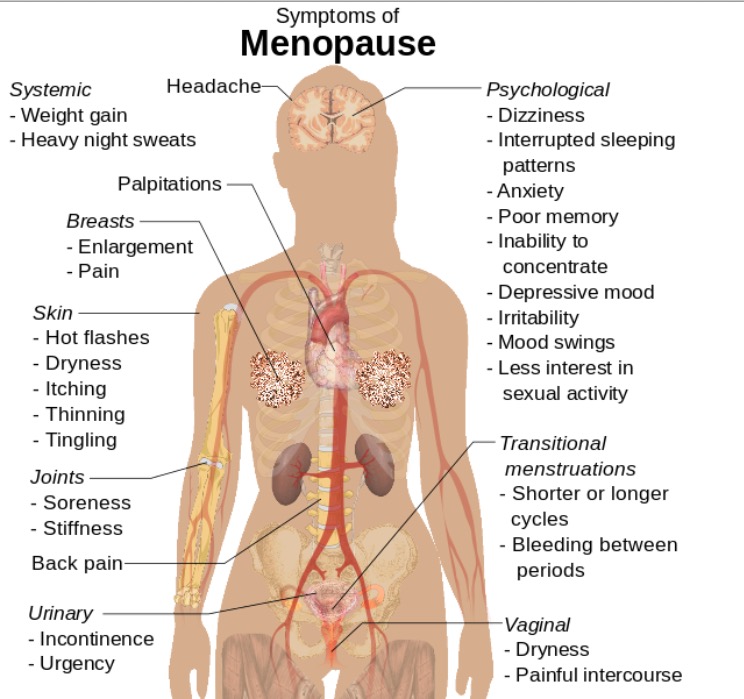
Sintomas da menopausa

Sintomas da menopausa que também são observados na IOP

Imagem: “Symptoms of menopause” por Mikael Häggström. Licença: CC0
Diagnóstico

Critérios de diagnóstico (são necessários os 3)

  • < 40 anos
  • Oligomenorreia ou amenorreia durante, pelo menos, 4 meses
  • FSH FSH A major gonadotropin secreted by the adenohypophysis. Follicle-stimulating hormone stimulates gametogenesis and the supporting cells such as the ovarian granulosa cells, the testicular sertoli cells, and leydig cells. Fsh consists of two noncovalently linked subunits, alpha and beta. Within a species, the alpha subunit is common in the three pituitary glycoprotein hormones (TSH, LH, and FSH), but the beta subunit is unique and confers its biological specificity. Menstrual Cycle
    • Necessita de 2 medições com níveis ↑ com > 1 mês de intervalo
    • Nas doentes que menstruam, deve ser medida no dia 3 do ciclo

Avaliação laboratorial e imagiológica inicial

  • Níveis hormonais:
    • FSH FSH A major gonadotropin secreted by the adenohypophysis. Follicle-stimulating hormone stimulates gametogenesis and the supporting cells such as the ovarian granulosa cells, the testicular sertoli cells, and leydig cells. Fsh consists of two noncovalently linked subunits, alpha and beta. Within a species, the alpha subunit is common in the three pituitary glycoprotein hormones (TSH, LH, and FSH), but the beta subunit is unique and confers its biological specificity. Menstrual Cycle
    • Estradiol Estradiol The 17-beta-isomer of estradiol, an aromatized C18 steroid with hydroxyl group at 3-beta- and 17-beta-position. Estradiol-17-beta is the most potent form of mammalian estrogenic steroids. Noncontraceptive Estrogen and Progestins
    • ↓ Hormona anti-Mülleriana ( AMH AMH A glycoprotein that causes regression of mullerian ducts. It is produced by sertoli cells of the testes. In the absence of this hormone, the mullerian ducts develop into structures of the female reproductive tract. In males, defects of this hormone result in persistent mullerian duct, a form of male pseudohermaphroditism. Primary Amenorrhea, pela sigla em inglês): teste da reserva ovárica
  • Excluir outras causas de irregularidades menstruais:
    • Teste de gravidez
    • Hormona estimuladora da tiroide
    • Prolactina
  • Ecografia pélvica:
    • Avaliar o número de folículos presentes.
    • Procurar por sinais que sugiram outras causas de alterações menstruais (por exemplo, ovários de aparência poliquística, anomalias müllerianas).
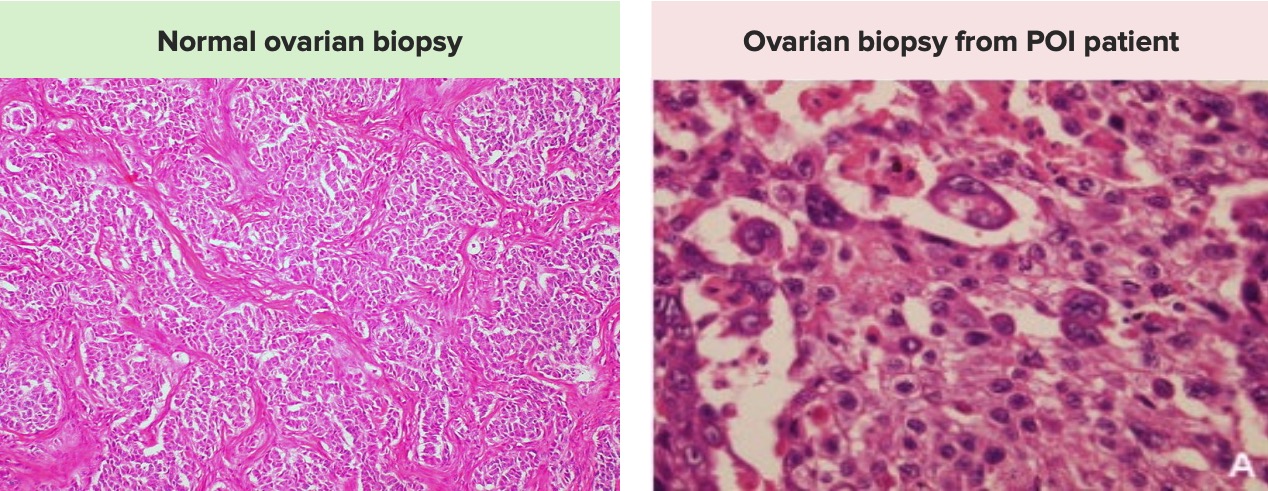
Histologia normal vs células tumorais do ovário

Imagens histológicas que demonstram a diferença entre uma biópsia ovárica normal à esquerda, com um número normal de folículos, e uma biópsia ovárica de uma doente com IOP à direita, onde se observa uma diminuição significativa do número de folículos e oócitos ováricos.
É de salientar que as biópsias ováricas não são tipicamente obtidas para fins diagnósticos.

Imagem à esquerda: “Granulosa Cell Tumor of the Ovary” por Ed Uthman. Licença: CC BY 2.0
Imagem à direita: “Histological analysis” por Department of Neuroscience and Biomedical Technologies, University of Milan-Bicocca, via Cadore 48, 20052, Monza, Italy. Licença: CC BY 2.0, editada por Lecturio.

Avaliações de follow-up, após o diagnóstico de IOP

  • Cariótipo: procurar a síndrome de Turner
  • Ratreio da pré-mutação FMR1
  • Anticorpos contra a suprarrenal (anticorpos 21-hidroxilase): Procurar por insuficiência da suprarrenal.
  • Exame DEXA DEXA Osteoporosis: Avaliar a densidade óssea basal.

Tratamento e Complicações

Terapêutica de reposição hormonal

A terapêutica de reposição hormonal (TRH) serve para prevenir a osteoporose e doenças cardiovasculares. Os regimes terapêuticos devem incluir estrogénio e progestagénios.
  • Deve realizar-se uma substituição fisiológica da hormona, com o intuito de imitar o ciclo natural:
    • Estradiol Estradiol The 17-beta-isomer of estradiol, an aromatized C18 steroid with hydroxyl group at 3-beta- and 17-beta-position. Estradiol-17-beta is the most potent form of mammalian estrogenic steroids. Noncontraceptive Estrogen and Progestins:
      • Administrado continuamente
      • A via transdérmica tem um risco menor que a oral
    • Progestagénios:
      • Administrado ciclicamente (por exemplo, realizado durante 2 semanas, pausa de 2 semanas)
      • Progesterona micronizada (fisiológica)
      • Acetato de medroxiprogesterona (sintético)
  • Se a doente deseja realizar contraceção: pílulas anticoncecionais orais combinadas (OCPs, pela sigla em inglês)

Tratamento de outros problemas associados e potenciais complicações

  • Assistência à fertilidade (se desejada)
  • Aconselhamento/apoio emocional
  • Rastrear e tratar complicações:
    • Insuficiência da suprarrenal
    • Hipotiroidismo autoimune
    • Osteoporose
    • Doença cardiovascular

Diagnóstico Diferencial

  • Síndrome do ovário poliquístico (SOP): Corresponde a uma síndrome de anovulação crónica, que se apresenta clinicamente com ciclos menstruais irregulares e infrequentes, bem como com sinais de hiperandrogenismo. Associa-se à síndrome metabólica, sobretudo com a resistência à insulina. As doentes, normalmente, são obesas. Geralmente, apresentam níveis elevados de LH LH A major gonadotropin secreted by the adenohypophysis. Luteinizing hormone regulates steroid production by the interstitial cells of the testis and the ovary. The preovulatory luteinizing hormone surge in females induces ovulation, and subsequent luteinization of the follicle. Luteinizing hormone consists of two noncovalently linked subunits, alpha and beta. Within a species, the alpha subunit is common in the three pituitary glycoprotein hormones (TSH, LH, and FSH), but the beta subunit is unique and confers its biological specificity. Menstrual Cycle e androgénio com FSH FSH A major gonadotropin secreted by the adenohypophysis. Follicle-stimulating hormone stimulates gametogenesis and the supporting cells such as the ovarian granulosa cells, the testicular sertoli cells, and leydig cells. Fsh consists of two noncovalently linked subunits, alpha and beta. Within a species, the alpha subunit is common in the three pituitary glycoprotein hormones (TSH, LH, and FSH), but the beta subunit is unique and confers its biological specificity. Menstrual Cycle normal. Na ecografia podem visualizar-se ovários de aparência poliquística. Tipicamente, o tratamento passa pela prescrição de OCPs e abordagem às questões da fertilidade.
  • Amenorreia hipotalâmica funcional: patologia com hipogonadismo hipotalâmico causado pela inibição de todo o eixo HPO. Geralmente causada por stress ou subnutrição (por exemplo, perturbações do comportamento alimentar, exercício físico excessivo). Pode apresentar-se de forma semelhante à IOP, no entanto, na amenorreia hipotalâmica funcional a FSH FSH A major gonadotropin secreted by the adenohypophysis. Follicle-stimulating hormone stimulates gametogenesis and the supporting cells such as the ovarian granulosa cells, the testicular sertoli cells, and leydig cells. Fsh consists of two noncovalently linked subunits, alpha and beta. Within a species, the alpha subunit is common in the three pituitary glycoprotein hormones (TSH, LH, and FSH), but the beta subunit is unique and confers its biological specificity. Menstrual Cycle está diminuída, enquanto na IOP está elevada. O tratamento envolve a abordagem do problema subjacente, geralmente com psicoterapia e/ou melhoria dos hábitos nutricionais e de exercício.
  • Candro do ovário: pode levar a uma alteração da função ovárica normal, causando amenorreia. Os tumores do estroma dos cordões sexuais podem secretar estrogénio ou andrógenos, o que leva a perturbações na ovulação. A ecografia pélvica faz o diagnóstico; o tratamento inicial geralmente é cirúrgico. Na presença de folículos viáveis remanescentes, pode ser retomada a ovulação após o tratamento.
  • Insuficiência da suprarrenal/doença de Addison: perda da função da suprarrenal, o que resulta na diminuição da produção de mineralocorticoides, glucocorticoides e esteroides sexuais, particularmente os androgénios. Os doentes apresentam-se frequentemente com choque por perda salina e hipotensão. Aproximadamente, 25% das mulheres têm amenorreia; estas mulheres podem não ter pelos púbicos e axilares, devido à baixa produção de androgénios pela suprarrenal. O tratamento é complexo, mas envolve esteroides e o controlo de fluidos e eletrólitos.
  • Hipotiroidismo: défice de hormona tiroideia. Esta patologia pode apresentar-se com oligomenorreia ou amenorreia, afetando negativamente a fertilidade. Estes efeitos devem-se provavelmente às semelhanças estruturais entre a hormona estimuladora da tiroide com a FSH FSH A major gonadotropin secreted by the adenohypophysis. Follicle-stimulating hormone stimulates gametogenesis and the supporting cells such as the ovarian granulosa cells, the testicular sertoli cells, and leydig cells. Fsh consists of two noncovalently linked subunits, alpha and beta. Within a species, the alpha subunit is common in the three pituitary glycoprotein hormones (TSH, LH, and FSH), but the beta subunit is unique and confers its biological specificity. Menstrual Cycle e LH LH A major gonadotropin secreted by the adenohypophysis. Luteinizing hormone regulates steroid production by the interstitial cells of the testis and the ovary. The preovulatory luteinizing hormone surge in females induces ovulation, and subsequent luteinization of the follicle. Luteinizing hormone consists of two noncovalently linked subunits, alpha and beta. Within a species, the alpha subunit is common in the three pituitary glycoprotein hormones (TSH, LH, and FSH), but the beta subunit is unique and confers its biological specificity. Menstrual Cycle, bem como à diminuição nos níveis da globulina de ligação às hormonas sexuais ( SHBG SHBG A glycoprotein migrating as a beta-globulin. Its molecular weight, 52, 000 or 95, 000-115, 000, indicates that it exists as a dimer. The protein binds testosterone, dihydrotestosterone, and estradiol in the plasma. Sex hormone-binding protein has the same amino acid sequence as androgen-binding protein. They differ by their sites of synthesis and post-translational oligosaccharide modifications. Gonadal Hormones, pela sigla em inglês). Outros sintomas incluem a queda de cabelo, pele seca, unhas quebradiças, edema Edema Edema is a condition in which excess serous fluid accumulates in the body cavity or interstitial space of connective tissues. Edema is a symptom observed in several medical conditions. It can be categorized into 2 types, namely, peripheral (in the extremities) and internal (in an organ or body cavity). Edema periorbital Periorbital Orbital and Preseptal Cellulitis, obstipação e fadiga. Devido aos níveis baixos de tiroxina, a hormona estimuladora da tiroide está elevada. O tratamento é feito com levotiroxina.
  • Hiperprolactinemia: patologia onde os níveis elevados de prolactina inibem a secreção pulsátil de GnRH, que diminui a FSH FSH A major gonadotropin secreted by the adenohypophysis. Follicle-stimulating hormone stimulates gametogenesis and the supporting cells such as the ovarian granulosa cells, the testicular sertoli cells, and leydig cells. Fsh consists of two noncovalently linked subunits, alpha and beta. Within a species, the alpha subunit is common in the three pituitary glycoprotein hormones (TSH, LH, and FSH), but the beta subunit is unique and confers its biological specificity. Menstrual Cycle, suprimindo o desenvolvimento folicular. Além das alterações menstruais, as doentes podem apresentar secreções mamilares ou galactorreia. As causas mais MAIS Androgen Insensitivity Syndrome comuns incluem medicamentos que aumentam a prolactina e os adenomas hipofisários. O tratamento dos adenomas é com agonistas da dopamina, que diminuem a prolactina.

Referências

  1. Welt, C. K. (2025). Clinical manifestations and diagnosis of primary ovarian insufficiency (premature ovarian failure). UpToDate. Retrieved November 15, 2025, from https://www.uptodate.com/contents/clinical-manifestations-and-diagnosis-of-primary-ovarian-insufficiency-premature-ovarian-failure
  2. Welt, C. K. (2023). Pathogenesis and causes of spontaneous primary ovarian insufficiency (premature ovarian failure). In Martin, K. A. (Ed.), UpToDate. Retrieved November 15, 2025, from https://www.uptodate.com/contents/pathogenesis-and-causes-of-spontaneous-primary-ovarian-insufficiency-premature-ovarian-failure
  3. Welt, C. K. (2024). Management of primary ovarian insufficiency (premature ovarian failure). UpToDate. Retrieved November 15, 2025, from https://www.uptodate.com/contents/management-of-primary-ovarian-insufficiency-premature-ovarian-failure
  4. Pellegrini, V.A. (2024). Ovarian insufficiency. In Lucidi, R.S. (Ed.) Medscape. Retrieved November 15, 2025, from https://emedicine.medscape.com/article/271046-overview

Crie sua conta gratuita ou faça login para continuar lendo!

Cadastre-se agora e tenha acesso grátis ao Lecturio, com páginas de conceitos, vídeos de medicina e questões para sua educação médica.

Aprende mais com a Lecturio:

Multiple devices displaying human anatomy and health education content.

Complementa o teu estudo da faculdade com o companheiro de estudo tudo-em-um da Lecturio, através de métodos de ensino baseados em evidência.

Estuda onde quiseres

Two iPhones display medical education apps, one showing anatomy, the other Bookmatcher.

A Lecturio Medical complementa o teu estudo através de métodos de ensino baseados em evidência, vídeos de palestras, perguntas e muito mais – tudo combinado num só lugar e fácil de usar.

User Reviews

Have a holly, jolly study session 🎁 Save 50% on all plans now >>

Que tengas una sesión de estudio alegre y navideña 🎁 Ahorra 50% en todos los planes >>

Details