
Domina Conceptos Médicos

Estudia para la escuela de medicina y tus examenes con Lecturio.

Yersinia spp./Yersiniosis

Yersinia Yersinia Yersinia is a genus of bacteria characterized as gram-negative bacilli that are facultative anaerobic with bipolar staining. There are 2 enteropathogenic species that cause yersiniosis, Y. enterocolitica and Y. pseudotuberculosis. Infections are manifested as pseudoappendicitis or mesenteric lymphadenitis, and enterocolitis. Yersinia spp./Yersiniosis es un género de bacterias caracterizadas como bacilos gramnegativos que son anaeróbicos facultativos con tinción bipolar Bipolar Nervous System: Histology. Hay 2 especies enteropatógenas que causan yersiniosis Yersiniosis Yersinia is a genus of bacteria characterized as gram-negative bacilli that are facultative anaerobic with bipolar staining. There are 2 enteropathogenic species that cause yersiniosis, Y. enterocolitica and Y. pseudotuberculosis. Infections are manifested as pseudoappendicitis or mesenteric lymphadenitis, and enterocolitis. Yersinia spp./Yersiniosis, Y. enterocolitica Y. enterocolitica A species of the genus yersinia, isolated from both man and animal. It is a frequent cause of bacterial gastroenteritis in children. Yersinia spp./Yersiniosis y Y. pseudotuberculosis. Las infecciones se manifiestan como pseudoapendicitis o linfadenitis mesentérica y enterocolitis Enterocolitis Inflammation of the mucosa of both the small intestine and the large intestine. Etiology includes ischemia, infections, allergic, and immune responses. Yersinia spp./Yersiniosis. La bacteria Bacteria Bacteria are prokaryotic single-celled microorganisms that are metabolically active and divide by binary fission. Some of these organisms play a significant role in the pathogenesis of diseases. Bacteriology se transmite a través del consumo de alimentos o agua contaminados. Las manifestaciones incluyen fiebre, dolor Dolor Inflammation abdominal y/o diarrea. La enfermedad gastrointestinal suele ser autolimitada. Los LOS Neisseria antibióticos se administran para infecciones graves y en EN Erythema nodosum is an immune-mediated panniculitis (inflammation of the subcutaneous fat) caused by a type IV (delayed-type) hypersensitivity reaction. It commonly manifests in young women as tender, erythematous nodules on the shins. Erythema Nodosum pacientes inmunocomprometidos.

Last updated: Dec 15, 2025
Editorial responsibility: Stanley Oiseth, Lindsay Jones, Evelin Maza

Clasificación

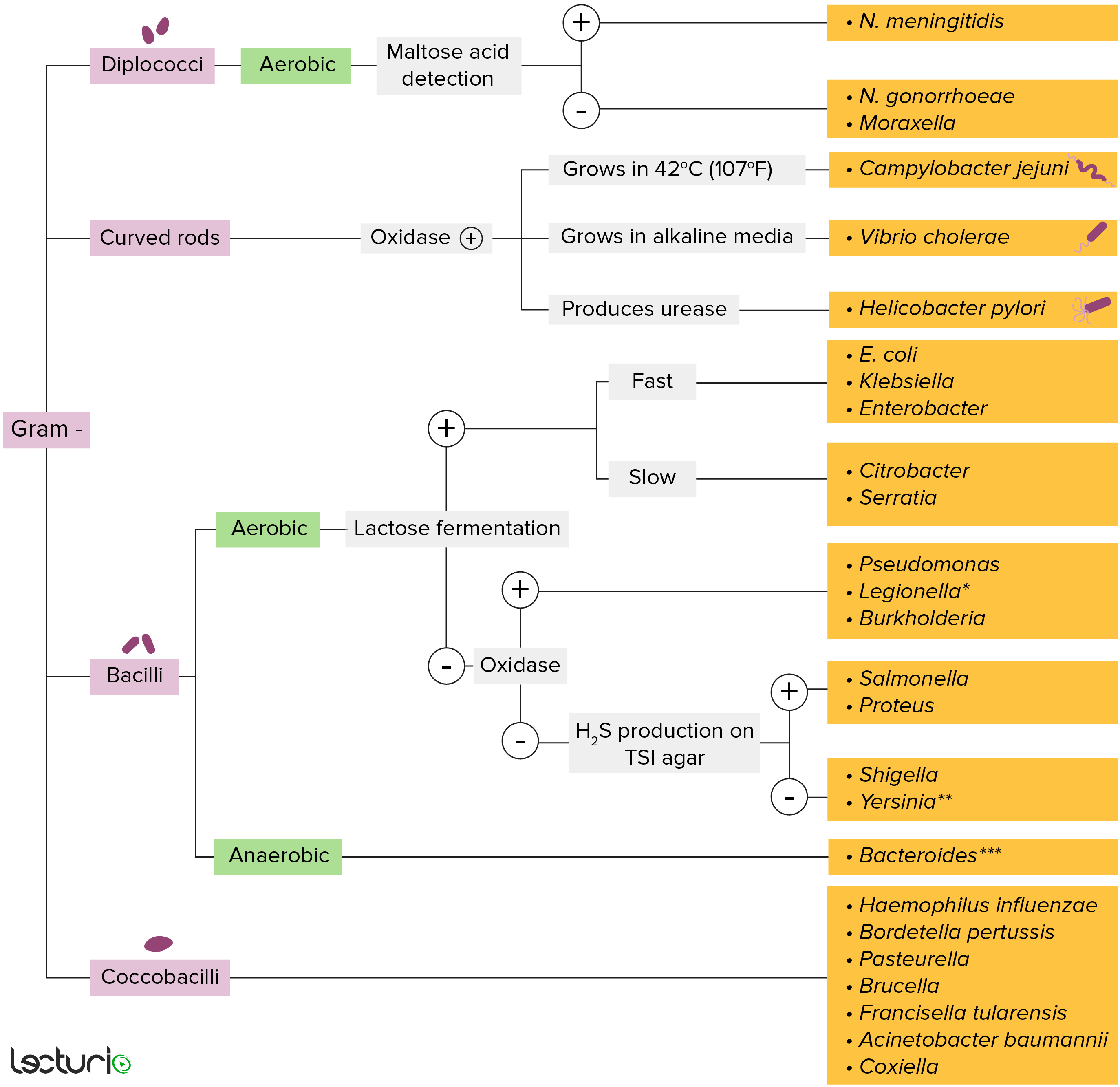
Diagrama de flujo de clasificación de bacterias gram negativas

Bacterias gram-negativas:
La mayoría de las bacterias se pueden clasificar de acuerdo con un procedimiento de laboratorio llamado tinción de Gram.
Las bacterias con paredes celulares que tienen una capa delgada de peptidoglicano no retienen la tinción de cristal violeta utilizada en la tinción de Gram. Sin embargo, estas bacterias retienen la contratinción de safranina y, por lo tanto, aparecen de pintadas de color rojo rosado, lo que las convierte en gram negativas. Estas bacterias pueden clasificarse además según su morfología (diplococos, bastoncillos curvos, bacilos y cocobacilos) y su capacidad para crecer en presencia de oxígeno (aeróbicos frente a anaeróbicos). Las bacterias se pueden identificar de manera más estrecha cultivándolas en medios específicos (agar triple azúcar en hierro (TSI, por sus siglas en inglés)) donde se pueden identificar sus enzimas (ureasa, oxidasa) y se puede probar su capacidad para fermentar lactosa.
* Se tiñe mal en la tinción de Gram
** Baston pleomórfico/cocobacilo
*** Requiere medios de transporte especiales

Imagen por Lecturio.

Características Generales

Características básicas de Yersinia Yersinia Yersinia is a genus of bacteria characterized as gram-negative bacilli that are facultative anaerobic with bipolar staining. There are 2 enteropathogenic species that cause yersiniosis, Y. enterocolitica and Y. pseudotuberculosis. Infections are manifested as pseudoappendicitis or mesenteric lymphadenitis, and enterocolitis. Yersinia spp./Yersiniosis spp.

  • Estructura: bacilos/bastones
  • Tinción de Gram: gram-negativo
  • Otra(s) tincion(es):
    • Tinción como las de Wright, Giemsa y Wayson
    • Tinción bipolar Bipolar Nervous System: Histology (mantiene la tinción en EN Erythema nodosum is an immune-mediated panniculitis (inflammation of the subcutaneous fat) caused by a type IV (delayed-type) hypersensitivity reaction. It commonly manifests in young women as tender, erythematous nodules on the shins. Erythema Nodosum los LOS Neisseria extremos de las células) o apariencia de “alfiler de seguridad”
  • Formación de esporas: no formadoras de esporas
  • Invasión y replicación en EN Erythema nodosum is an immune-mediated panniculitis (inflammation of the subcutaneous fat) caused by a type IV (delayed-type) hypersensitivity reaction. It commonly manifests in young women as tender, erythematous nodules on the shins. Erythema Nodosum relación con la(s) célula(s) huésped(es): intracelular facultativo
  • Requerimiento de oxígeno: aerobio, anaerobio facultativo
  • Enzimas/pruebas bioquímicas:
    • Oxidasa negativa
    • Lactosa negativa

Especies clínicamente relevantes y enfermedades

Yersinia Yersinia Yersinia is a genus of bacteria characterized as gram-negative bacilli that are facultative anaerobic with bipolar staining. There are 2 enteropathogenic species that cause yersiniosis, Y. enterocolitica and Y. pseudotuberculosis. Infections are manifested as pseudoappendicitis or mesenteric lymphadenitis, and enterocolitis. Yersinia spp./Yersiniosis causa enfermedad en EN Erythema nodosum is an immune-mediated panniculitis (inflammation of the subcutaneous fat) caused by a type IV (delayed-type) hypersensitivity reaction. It commonly manifests in young women as tender, erythematous nodules on the shins. Erythema Nodosum animales; los LOS Neisseria seres humanos suelen ser huéspedes incidentales. Tres especies son patógenas para los LOS Neisseria humanos:
  • Yersinia Yersinia Yersinia is a genus of bacteria characterized as gram-negative bacilli that are facultative anaerobic with bipolar staining. There are 2 enteropathogenic species that cause yersiniosis, Y. enterocolitica and Y. pseudotuberculosis. Infections are manifested as pseudoappendicitis or mesenteric lymphadenitis, and enterocolitis. Yersinia spp./Yersiniosis enteropatógena que causa yersiniosis Yersiniosis Yersinia is a genus of bacteria characterized as gram-negative bacilli that are facultative anaerobic with bipolar staining. There are 2 enteropathogenic species that cause yersiniosis, Y. enterocolitica and Y. pseudotuberculosis. Infections are manifested as pseudoappendicitis or mesenteric lymphadenitis, and enterocolitis. Yersinia spp./Yersiniosis (enfermedad diarreica):
  • Y. pestis (no enteropatógeno pero causa la peste); discutido por separado)
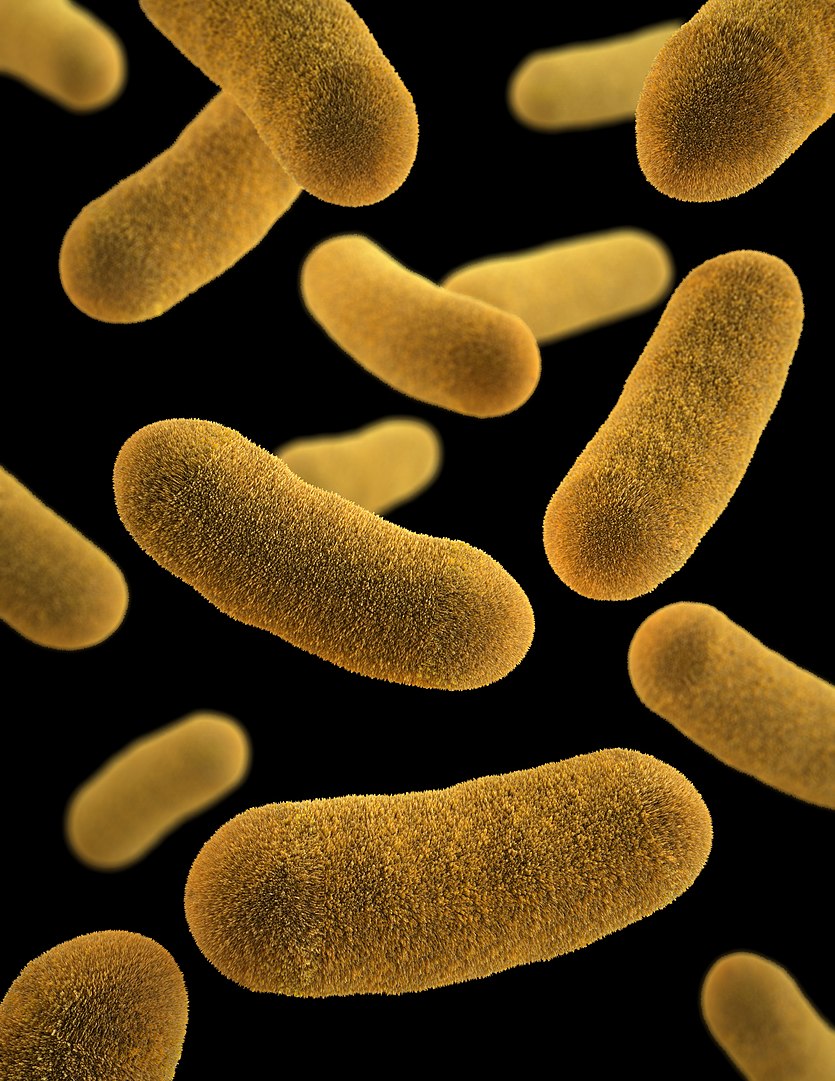
Imagen 3D generada por computadora de Yersinia enterocolita

Imagen tridimensional (3D) generada por computadora de Y. enterocolitica de forma oblonga

Imagen: “3D computer generated image of Yersinia enterocolita” por Jennifer Oosthuizen. Licencia: Dominio Público.
Epidemiología

  • Yersiniosis Yersiniosis Yersinia is a genus of bacteria characterized as gram-negative bacilli that are facultative anaerobic with bipolar staining. There are 2 enteropathogenic species that cause yersiniosis, Y. enterocolitica and Y. pseudotuberculosis. Infections are manifested as pseudoappendicitis or mesenteric lymphadenitis, and enterocolitis. Yersinia spp./Yersiniosis: principalmente debido a Y. enterocolitica Y. enterocolitica A species of the genus yersinia, isolated from both man and animal. It is a frequent cause of bacterial gastroenteritis in children. Yersinia spp./Yersiniosis
  • Incidencia generalmente más alta entre los LOS Neisseria niños
  • La diarrea es a menudo la presentación de infecciones que afectan a niños < 4 años de edad.

Related videos

Patogénesis

Reservorio y transmisión

  • Reservorio: ganado, roedores, animales domésticos
  • Transmisión:
    • Por consumo de alimentos o agua contaminados (carne de cerdo, leche o productos lácteos)
    • Hemoderivados

Factores virulentos

  • Endotoxina de lipopolisacárido: conduce a toxicidad sistémica en EN Erythema nodosum is an immune-mediated panniculitis (inflammation of the subcutaneous fat) caused by a type IV (delayed-type) hypersensitivity reaction. It commonly manifests in young women as tender, erythematous nodules on the shins. Erythema Nodosum la bacteriemia
  • Sistema de secreción tipo III:
    • Inyecta proteínas de la membrana externa de Yersinia Yersinia Yersinia is a genus of bacteria characterized as gram-negative bacilli that are facultative anaerobic with bipolar staining. There are 2 enteropathogenic species that cause yersiniosis, Y. enterocolitica and Y. pseudotuberculosis. Infections are manifested as pseudoappendicitis or mesenteric lymphadenitis, and enterocolitis. Yersinia spp./Yersiniosis (Yops, por sus siglas en EN Erythema nodosum is an immune-mediated panniculitis (inflammation of the subcutaneous fat) caused by a type IV (delayed-type) hypersensitivity reaction. It commonly manifests in young women as tender, erythematous nodules on the shins. Erythema Nodosum inglés) en EN Erythema nodosum is an immune-mediated panniculitis (inflammation of the subcutaneous fat) caused by a type IV (delayed-type) hypersensitivity reaction. It commonly manifests in young women as tender, erythematous nodules on the shins. Erythema Nodosum la célula huésped
    • Los LOS Neisseria yops desencadenan eventos citotóxicos e inhiben la fagocitosis, así como las vías bioquímicas.
  • Isla de alta patogenicidad:
    • Codifica para un sideróforo eliminador de hierro, yersiniabactina
    • La yersiniabactina proporciona a la bacteria Bacteria Bacteria are prokaryotic single-celled microorganisms that are metabolically active and divide by binary fission. Some of these organisms play a significant role in the pathogenesis of diseases. Bacteriology la capacidad de tomar las moléculas de hierro necesarias para su crecimiento y diseminación.
  • Regulación de la virulencia por temperatura y calcio:
    • La expresión de los LOS Neisseria factores de virulencia de Yersinia Yersinia Yersinia is a genus of bacteria characterized as gram-negative bacilli that are facultative anaerobic with bipolar staining. There are 2 enteropathogenic species that cause yersiniosis, Y. enterocolitica and Y. pseudotuberculosis. Infections are manifested as pseudoappendicitis or mesenteric lymphadenitis, and enterocolitis. Yersinia spp./Yersiniosis se ve VE Ventilation: Mechanics of Breathing afectada por la temperatura y el calcio libre.
    • Fisiológicamente, la temperatura del huésped mamífero es diferente a la de un insecto.
    • Asimismo, la concentración de calcio es diferente intracelularmente de los LOS Neisseria fluidos extracelulares.
    • Yersinia Yersinia Yersinia is a genus of bacteria characterized as gram-negative bacilli that are facultative anaerobic with bipolar staining. There are 2 enteropathogenic species that cause yersiniosis, Y. enterocolitica and Y. pseudotuberculosis. Infections are manifested as pseudoappendicitis or mesenteric lymphadenitis, and enterocolitis. Yersinia spp./Yersiniosis: capaz de ajustar los LOS Neisseria factores de virulencia en EN Erythema nodosum is an immune-mediated panniculitis (inflammation of the subcutaneous fat) caused by a type IV (delayed-type) hypersensitivity reaction. It commonly manifests in young women as tender, erythematous nodules on the shins. Erythema Nodosum función de las acciones anteriores, con el ciclo de vida continuando en EN Erythema nodosum is an immune-mediated panniculitis (inflammation of the subcutaneous fat) caused by a type IV (delayed-type) hypersensitivity reaction. It commonly manifests in young women as tender, erythematous nodules on the shins. Erythema Nodosum el medio ambiente o el huésped
  • Yersinia Yersinia Yersinia is a genus of bacteria characterized as gram-negative bacilli that are facultative anaerobic with bipolar staining. There are 2 enteropathogenic species that cause yersiniosis, Y. enterocolitica and Y. pseudotuberculosis. Infections are manifested as pseudoappendicitis or mesenteric lymphadenitis, and enterocolitis. Yersinia spp./Yersiniosis enteropatógena: tiene invasina, que se une a la superficie de las células huésped

Proceso de la enfermedad

  • El organismo en EN Erythema nodosum is an immune-mediated panniculitis (inflammation of the subcutaneous fat) caused by a type IV (delayed-type) hypersensitivity reaction. It commonly manifests in young women as tender, erythematous nodules on the shins. Erythema Nodosum los LOS Neisseria alimentos contaminados ingresa al AL Amyloidosis huésped e invade las células M de las placas de Peyer intestinales.
  • La invasión es facilitada por factores de virulencia.
  • Localiza y forma microabscesos en EN Erythema nodosum is an immune-mediated panniculitis (inflammation of the subcutaneous fat) caused by a type IV (delayed-type) hypersensitivity reaction. It commonly manifests in young women as tender, erythematous nodules on the shins. Erythema Nodosum el tejido linfoide intestinal y en EN Erythema nodosum is an immune-mediated panniculitis (inflammation of the subcutaneous fat) caused by a type IV (delayed-type) hypersensitivity reaction. It commonly manifests in young women as tender, erythematous nodules on the shins. Erythema Nodosum los LOS Neisseria ganglios linfáticos mesentéricos regionales
  • Infección intestinal → diarrea ( yersiniosis Yersiniosis Yersinia is a genus of bacteria characterized as gram-negative bacilli that are facultative anaerobic with bipolar staining. There are 2 enteropathogenic species that cause yersiniosis, Y. enterocolitica and Y. pseudotuberculosis. Infections are manifested as pseudoappendicitis or mesenteric lymphadenitis, and enterocolitis. Yersinia spp./Yersiniosis), dolor Dolor Inflammation abdominal, fiebre

Presentación Clínica

Enterocolitis Enterocolitis Inflammation of the mucosa of both the small intestine and the large intestine. Etiology includes ischemia, infections, allergic, and immune responses. Yersinia spp./Yersiniosis

  • Más común en EN Erythema nodosum is an immune-mediated panniculitis (inflammation of the subcutaneous fat) caused by a type IV (delayed-type) hypersensitivity reaction. It commonly manifests in young women as tender, erythematous nodules on the shins. Erythema Nodosum niños más pequeños
  • Incubación: 3 días
  • Duración: 1–2 semanas
  • Signos y síntomas:
    • Diarrea acuosa a sanguinolenta
    • Fiebre
    • Náuseas, vómitos
    • La faringitis puede acompañar a la enfermedad.
  • El curso es más largo que la mayoría de las formas de diarrea infecciosa.
  • La septicemia puede ocurrir en EN Erythema nodosum is an immune-mediated panniculitis (inflammation of the subcutaneous fat) caused by a type IV (delayed-type) hypersensitivity reaction. It commonly manifests in young women as tender, erythematous nodules on the shins. Erythema Nodosum:
    • Pacientes inmunocomprometidos (e.g., pacientes con síndrome de inmunodeficiencia adquirida (SIDA))
    • Aquellos con sobrecarga de hierro o hemocromatosis.
    • Edad avanzada o infantes
    • Enfermedades hepáticas
    • Malignidad
    • Diabetes Diabetes Diabetes mellitus (DM) is a metabolic disease characterized by hyperglycemia and dysfunction of the regulation of glucose metabolism by insulin. Type 1 DM is diagnosed mostly in children and young adults as the result of autoimmune destruction of β cells in the pancreas and the resulting lack of insulin. Type 2 DM has a significant association with obesity and is characterized by insulin resistance. Diabetes Mellitus

Pseudoapendicitis

  • También llamada linfadenitis mesentérica aguda
  • En EN Erythema nodosum is an immune-mediated panniculitis (inflammation of the subcutaneous fat) caused by a type IV (delayed-type) hypersensitivity reaction. It commonly manifests in young women as tender, erythematous nodules on the shins. Erythema Nodosum niños mayores y adultos jóvenes
  • Signos y síntomas:
    • Vómitos, +/- diarrea leve
    • Dolor Dolor Inflammation abdominal en EN Erythema nodosum is an immune-mediated panniculitis (inflammation of the subcutaneous fat) caused by a type IV (delayed-type) hypersensitivity reaction. It commonly manifests in young women as tender, erythematous nodules on the shins. Erythema Nodosum cuadrante inferior derecho
    • Fiebre, leucocitosis
    • En EN Erythema nodosum is an immune-mediated panniculitis (inflammation of the subcutaneous fat) caused by a type IV (delayed-type) hypersensitivity reaction. It commonly manifests in young women as tender, erythematous nodules on the shins. Erythema Nodosum la cirugía, el apéndice suele ser normal pero se nota una inflamación visible alrededor de:
      • Íleon terminal
      • Ganglios linfáticos mesentéricos

Secuelas postinfecciosas

  • Ocurren en EN Erythema nodosum is an immune-mediated panniculitis (inflammation of the subcutaneous fat) caused by a type IV (delayed-type) hypersensitivity reaction. It commonly manifests in young women as tender, erythematous nodules on the shins. Erythema Nodosum pacientes con fenotipo HLA-B27
  • Más común:
    • Eritema nodoso
    • Artritis reactiva (dentro de 2–4 semanas de una infección anterior)

Septicemia relacionada con transfusiones

  • Y. enterocolitica Y. enterocolitica A species of the genus yersinia, isolated from both man and animal. It is a frequent cause of bacterial gastroenteritis in children. Yersinia spp./Yersiniosis en EN Erythema nodosum is an immune-mediated panniculitis (inflammation of the subcutaneous fat) caused by a type IV (delayed-type) hypersensitivity reaction. It commonly manifests in young women as tender, erythematous nodules on the shins. Erythema Nodosum eritrocitos de un donante asintomático
  • El organismo puede multiplicarse a niveles tóxicos en EN Erythema nodosum is an immune-mediated panniculitis (inflammation of the subcutaneous fat) caused by a type IV (delayed-type) hypersensitivity reaction. It commonly manifests in young women as tender, erythematous nodules on the shins. Erythema Nodosum sangre refrigerada.

Diagnóstico

Herramientas diagnosticas

  • Muestra(s) que se pueden utilizar:
    • Heces (preferidas en EN Erythema nodosum is an immune-mediated panniculitis (inflammation of the subcutaneous fat) caused by a type IV (delayed-type) hypersensitivity reaction. It commonly manifests in young women as tender, erythematous nodules on the shins. Erythema Nodosum presentación gastrointestinal)
    • Exudados faríngeos
    • Líquido peritoneal o sangre
    • Ganglios linfáticos mesentéricos/espécimen quirúrgico si se realiza exploración quirúrgica
  • Frotis y cultivo:
    • Tinción bipolar Bipolar Nervous System: Histology (forma de alfiler de seguridad) en EN Erythema nodosum is an immune-mediated panniculitis (inflammation of the subcutaneous fat) caused by a type IV (delayed-type) hypersensitivity reaction. It commonly manifests in young women as tender, erythematous nodules on the shins. Erythema Nodosum las tinciones de Wright, Giemsa o Wayson
    • Tinciones de anticuerpos fluorescentes dirigidas al AL Amyloidosis antígeno capsular F1
    • Muestra cultivada en EN Erythema nodosum is an immune-mediated panniculitis (inflammation of the subcutaneous fat) caused by a type IV (delayed-type) hypersensitivity reaction. It commonly manifests in young women as tender, erythematous nodules on the shins. Erythema Nodosum agar sangre, placas de agar MacConkey y caldo de infusión de cerebro y corazón
    • Medio de cultivo específico para Yersinia Yersinia Yersinia is a genus of bacteria characterized as gram-negative bacilli that are facultative anaerobic with bipolar staining. There are 2 enteropathogenic species that cause yersiniosis, Y. enterocolitica and Y. pseudotuberculosis. Infections are manifested as pseudoappendicitis or mesenteric lymphadenitis, and enterocolitis. Yersinia spp./Yersiniosis: agar cefsulodina, irgasan Irgasan Yersinia spp./Yersiniosis, novobiocina
  • Serología: título de anticuerpos 1:16 o superior ( en EN Erythema nodosum is an immune-mediated panniculitis (inflammation of the subcutaneous fat) caused by a type IV (delayed-type) hypersensitivity reaction. It commonly manifests in young women as tender, erythematous nodules on the shins. Erythema Nodosum un paciente no vacunado)
  • Reacción en EN Erythema nodosum is an immune-mediated panniculitis (inflammation of the subcutaneous fat) caused by a type IV (delayed-type) hypersensitivity reaction. It commonly manifests in young women as tender, erythematous nodules on the shins. Erythema Nodosum cadena de la polimerasa específica ( PCR PCR Polymerase chain reaction (PCR) is a technique that amplifies DNA fragments exponentially for analysis. The process is highly specific, allowing for the targeting of specific genomic sequences, even with minuscule sample amounts. The PCR cycles multiple times through 3 phases: denaturation of the template DNA, annealing of a specific primer to the individual DNA strands, and synthesis/elongation of new DNA molecules. Polymerase Chain Reaction (PCR))
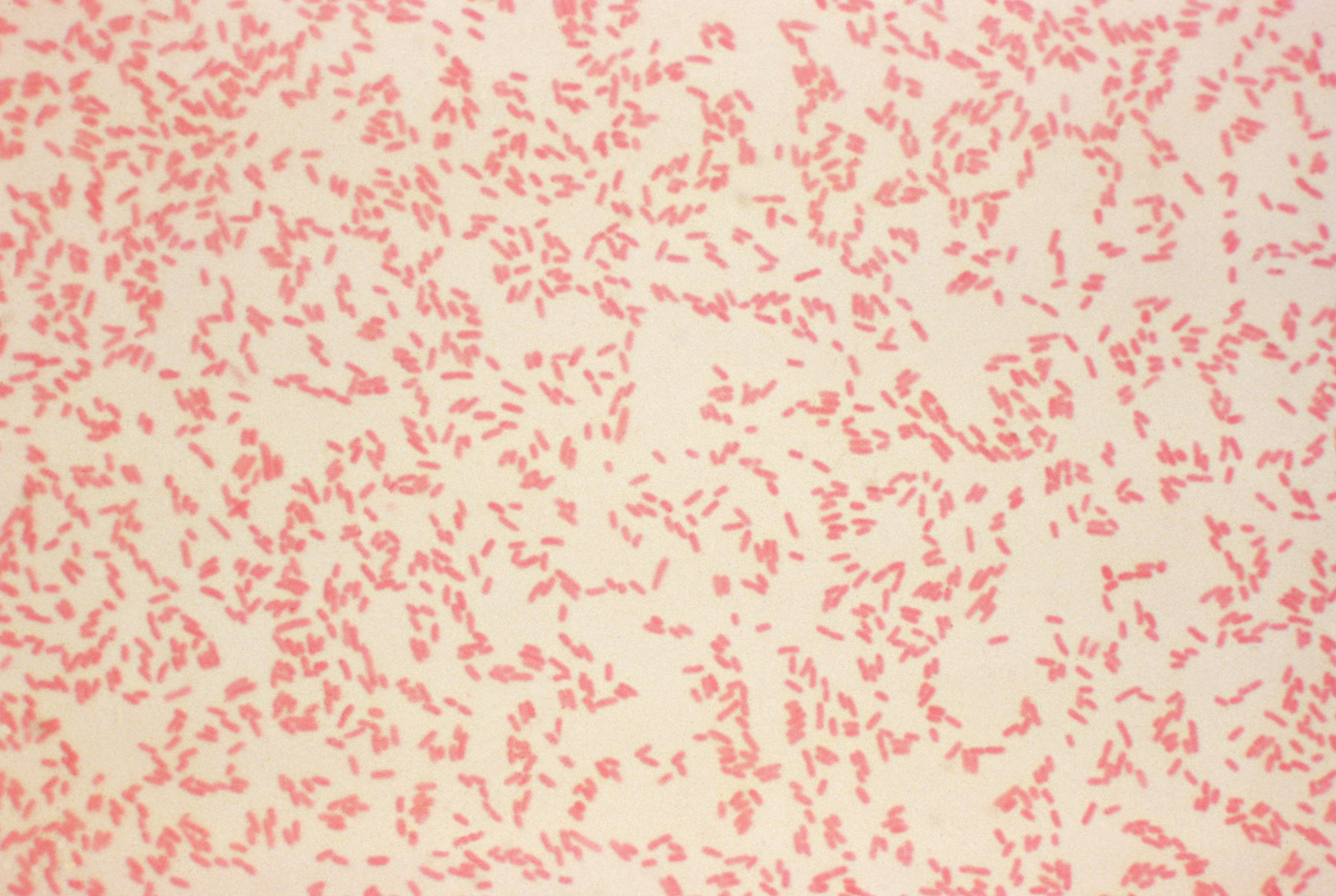
Yersinia enterocolitica gramo

Yersinia enterocolitica: microfotografía de un cultivo teñido con Gram que revela la presencia de numerosas bacterias gramnegativas Y. enterocolitica

Imagen: “Yersinia enterocolitica gram” por CDC. Licencia: Dominio Público.

Tratamiento

Tratamiento

  • La diarrea suele ser autolimitada.
  • Reposición de líquidos y electrolitos
  • Si es necesario en EN Erythema nodosum is an immune-mediated panniculitis (inflammation of the subcutaneous fat) caused by a type IV (delayed-type) hypersensitivity reaction. It commonly manifests in young women as tender, erythematous nodules on the shins. Erythema Nodosum infecciones invasivas o pacientes inmunocomprometidos, opciones de antibióticos:
    • Ciprofloxacina (preferida)
    • Trimetoprim-sulfametoxazol
    • Doxiciclina
  • Antibióticos para la septicemia:
    • Cefalosporina de tercera generación (ceftriaxona) + gentamicina
    • Alternativa: ciprofloxacino
  • Exploración quirúrgica: linfadenitis mesentérica aguda versus apendicitis (si no se puede descartar abdomen agudo)

Prevención

  • Precauciones sanitarias
  • Evitar el consumo de carnes crudas o poco cocidas.
  • Tratamiento de rutina del agua municipal
  • Análisis de concentrados de eritrocitos para detectar endotoxinas (para reducir la septicemia asociada a transfusiones)

Diagnóstico Diferencial

  • Apendicitis: inflamación aguda del apéndice vermiforme. Las características incluyen dolor Dolor Inflammation abdominal periumbilical que migra al AL Amyloidosis cuadrante inferior derecho, fiebre, anorexia Anorexia The lack or loss of appetite accompanied by an aversion to food and the inability to eat. It is the defining characteristic of the disorder anorexia nervosa. Anorexia Nervosa, náuseas y vómitos. El diagnóstico se puede establecer clínicamente y por imagenología (tomografía computarizada). El tratamiento estándar es la apendicectomía.
  • Ántrax: una infección causada por Bacillus anthracis Bacillus anthracis A species of bacteria that causes anthrax in humans and animals. Anthrax. En EN Erythema nodosum is an immune-mediated panniculitis (inflammation of the subcutaneous fat) caused by a type IV (delayed-type) hypersensitivity reaction. It commonly manifests in young women as tender, erythematous nodules on the shins. Erythema Nodosum el ántrax gastrointestinal se observan diarrea sanguinolenta, dolor Dolor Inflammation abdominal y vómitos. El ántrax también puede presentarse como una enfermedad cutánea (ampollas, úlceras con escara negra) e inhalatoria (disnea). Los LOS Neisseria antecedentes, la PCR PCR Polymerase chain reaction (PCR) is a technique that amplifies DNA fragments exponentially for analysis. The process is highly specific, allowing for the targeting of specific genomic sequences, even with minuscule sample amounts. The PCR cycles multiple times through 3 phases: denaturation of the template DNA, annealing of a specific primer to the individual DNA strands, and synthesis/elongation of new DNA molecules. Polymerase Chain Reaction (PCR) y el cultivo ayudan al AL Amyloidosis diagnóstico. Se administra tratamiento antimicrobiano y antitoxina para el ántrax sistémico.
  • Otras colitis Colitis Inflammation of the colon section of the large intestine, usually with symptoms such as diarrhea (often with blood and mucus), abdominal pain, and fever. Pseudomembranous Colitis infecciosas: se presenta con fiebre de inicio agudo y diarrea. Otros patógenos entéricos causantes incluyen Salmonella Salmonella Salmonellae are gram-negative bacilli of the family Enterobacteriaceae. Salmonellae are flagellated, non-lactose-fermenting, and hydrogen sulfide-producing microbes. Salmonella enterica, the most common disease-causing species in humans, is further classified based on serotype as typhoidal (S. typhi and paratyphi) and nontyphoidal (S. enteritidis and typhimurium). Salmonella, Campylobacter Campylobacter Campylobacter (“curved bacteria”) is a genus of thermophilic, S-shaped, gram-negative bacilli. There are many species of Campylobacter, with C. jejuni and C. coli most commonly implicated in human disease. Campylobacter, E. coli (O157:H7), Shigella Shigella Shigella is a genus of gram-negative, non-lactose-fermenting facultative intracellular bacilli. Infection spreads most commonly via person-to-person contact or through contaminated food and water. Humans are the only known reservoir. Shigella y Clostridioides difficile, que pueden confirmarse con cultivos de heces y PCR PCR Polymerase chain reaction (PCR) is a technique that amplifies DNA fragments exponentially for analysis. The process is highly specific, allowing for the targeting of specific genomic sequences, even with minuscule sample amounts. The PCR cycles multiple times through 3 phases: denaturation of the template DNA, annealing of a specific primer to the individual DNA strands, and synthesis/elongation of new DNA molecules. Polymerase Chain Reaction (PCR). El curso puede ser autolimitado o requerir tratamiento antibiótico.

Referencias

  1. Prentice, M.B. (2018). Plague and other yersinia infections. In Jameson J, et al. (Ed.) Harrison’s Principles of Internal Medicine, 20th ed. McGraw-Hill.
  2. Riedel S, Hobden J.A., Miller S, et al. (Eds.) (2019). Yersinia and pasteurella. In Jawetz, Melnick, & Adelberg’s Medical Microbiology, 28th ed. McGraw-Hill.
  3. Ryan, K.J. (Ed.). (2017). Enterobacteriaceae. In Sherris Medical Microbiology, 7th ed. McGraw-Hill. 
  4. Tauxe, R. V. (2025). Yersiniosis: Infection due to Yersinia enterocolitica and Yersinia pseudotuberculosis. UpToDate. Retrieved March 28, 2025, from uptodate.com/contents/yersiniosis-infection-due-to-yersinia-enterocolitica-and-yersinia-pseudotuberculosis
  5. Stout, J. (2024). Epidemiology, microbiology and pathogenesis of plague (Yersinia pestis infection). UpToDate. Retrieved March 28, 2025, from https://www.uptodate.com/contents/epidemiology-microbiology-and-pathogenesis-of-plague-yersinia-pestis-infection

¡Crea tu cuenta gratis o inicia una sesión para seguir leyendo!

Regístrate ahora y obtén acceso gratuito a Lecturio con páginas de concepto, videos médicos y cuestionarios para tu educación médica.

User Reviews

Que tengas una sesión de estudio alegre y navideña 🎁 Ahorra 50% en todos los planes >>

Details