Domina Conceptos Médicos

Estudia para la escuela de medicina y tus examenes con Lecturio.

Urticaria (Habones)

La urticaria Urticaria Urticaria is raised, well-circumscribed areas (wheals) of edema (swelling) and erythema (redness) involving the dermis and epidermis with associated pruritus (itch). Urticaria is not a single disease but rather is a reaction pattern representing cutaneous mast cell degranulation. Urticaria (Hives) consiste en EN Erythema nodosum is an immune-mediated panniculitis (inflammation of the subcutaneous fat) caused by a type IV (delayed-type) hypersensitivity reaction. It commonly manifests in young women as tender, erythematous nodules on the shins. Erythema Nodosum áreas elevadas y bien circunscritas (habones) de edema Edema Edema is a condition in which excess serous fluid accumulates in the body cavity or interstitial space of connective tissues. Edema is a symptom observed in several medical conditions. It can be categorized into 2 types, namely, peripheral (in the extremities) and internal (in an organ or body cavity). Edema (inflamación) y eritema (enrojecimiento) que afectan a la dermis Dermis A layer of vascularized connective tissue underneath the epidermis. The surface of the dermis contains innervated papillae. Embedded in or beneath the dermis are sweat glands; hair follicles; and sebaceous glands. Skin: Structure and Functions y la epidermis Epidermis The external, nonvascular layer of the skin. It is made up, from within outward, of five layers of epithelium: (1) basal layer (stratum basale epidermidis); (2) spinous layer (stratum spinosum epidermidis); (3) granular layer (stratum granulosum epidermidis); (4) clear layer (stratum lucidum epidermidis); and (5) horny layer (stratum corneum epidermidis). Skin: Structure and Functions con prurito (picor) asociado. La urticaria Urticaria Urticaria is raised, well-circumscribed areas (wheals) of edema (swelling) and erythema (redness) involving the dermis and epidermis with associated pruritus (itch). Urticaria is not a single disease but rather is a reaction pattern representing cutaneous mast cell degranulation. Urticaria (Hives) no es una enfermedad única, sino que es un patrón de reacción que representa la degranulación de los LOS Neisseria mastocitos cutáneos, dando lugar a la liberación de histamina y otras sustancias vasoactivas por parte de los LOS Neisseria mastocitos y basófilos de la dermis Dermis A layer of vascularized connective tissue underneath the epidermis. The surface of the dermis contains innervated papillae. Embedded in or beneath the dermis are sweat glands; hair follicles; and sebaceous glands. Skin: Structure and Functions, lo que provoca extravasación de plasma Plasma The residual portion of blood that is left after removal of blood cells by centrifugation without prior blood coagulation. Transfusion Products en EN Erythema nodosum is an immune-mediated panniculitis (inflammation of the subcutaneous fat) caused by a type IV (delayed-type) hypersensitivity reaction. It commonly manifests in young women as tender, erythematous nodules on the shins. Erythema Nodosum la dermis Dermis A layer of vascularized connective tissue underneath the epidermis. The surface of the dermis contains innervated papillae. Embedded in or beneath the dermis are sweat glands; hair follicles; and sebaceous glands. Skin: Structure and Functions. La urticaria Urticaria Urticaria is raised, well-circumscribed areas (wheals) of edema (swelling) and erythema (redness) involving the dermis and epidermis with associated pruritus (itch). Urticaria is not a single disease but rather is a reaction pattern representing cutaneous mast cell degranulation. Urticaria (Hives) puede estar causada por un sinfín de acontecimientos, como por ejemplo, reacciones alérgicas, infecciones, exposición y muchos otros. El diagnóstico se realiza clínicamente. Los LOS Neisseria antagonistas H1 se utilizan como tratamiento de 1ra línea.

Last updated: Apr 19, 2022

Editorial responsibility: Stanley Oiseth, Lindsay Jones, Evelin Maza

Descripción General

Definición

La urticaria Urticaria Urticaria is raised, well-circumscribed areas (wheals) of edema (swelling) and erythema (redness) involving the dermis and epidermis with associated pruritus (itch). Urticaria is not a single disease but rather is a reaction pattern representing cutaneous mast cell degranulation. Urticaria (Hives) es una reacción vascular de la piel que se manifiesta con la aparición transitoria de manchas ligeramente elevadas (ronchas) más rojas o pálidas que la piel adyacente, que suelen estar acompañadas de un importante picor.

Epidemiología

  • La urticaria Urticaria Urticaria is raised, well-circumscribed areas (wheals) of edema (swelling) and erythema (redness) involving the dermis and epidermis with associated pruritus (itch). Urticaria is not a single disease but rather is a reaction pattern representing cutaneous mast cell degranulation. Urticaria (Hives) es el trastorno dermatológico más frecuente que se observa en EN Erythema nodosum is an immune-mediated panniculitis (inflammation of the subcutaneous fat) caused by a type IV (delayed-type) hypersensitivity reaction. It commonly manifests in young women as tender, erythematous nodules on the shins. Erythema Nodosum las salas de emergencia.
  • Alrededor del 15%–20% de la población general experimenta urticaria Urticaria Urticaria is raised, well-circumscribed areas (wheals) of edema (swelling) and erythema (redness) involving the dermis and epidermis with associated pruritus (itch). Urticaria is not a single disease but rather is a reaction pattern representing cutaneous mast cell degranulation. Urticaria (Hives) aguda a lo largo de su vida.
  • Incidencia de la urticaria Urticaria Urticaria is raised, well-circumscribed areas (wheals) of edema (swelling) and erythema (redness) involving the dermis and epidermis with associated pruritus (itch). Urticaria is not a single disease but rather is a reaction pattern representing cutaneous mast cell degranulation. Urticaria (Hives) crónica a lo largo de la vida: 2%–3%.
  • La urticaria Urticaria Urticaria is raised, well-circumscribed areas (wheals) of edema (swelling) and erythema (redness) involving the dermis and epidermis with associated pruritus (itch). Urticaria is not a single disease but rather is a reaction pattern representing cutaneous mast cell degranulation. Urticaria (Hives) puede aparecer en EN Erythema nodosum is an immune-mediated panniculitis (inflammation of the subcutaneous fat) caused by a type IV (delayed-type) hypersensitivity reaction. It commonly manifests in young women as tender, erythematous nodules on the shins. Erythema Nodosum cualquier grupo de edad.
  • Categorías:
    • Urticaria Urticaria Urticaria is raised, well-circumscribed areas (wheals) of edema (swelling) and erythema (redness) involving the dermis and epidermis with associated pruritus (itch). Urticaria is not a single disease but rather is a reaction pattern representing cutaneous mast cell degranulation. Urticaria (Hives) aguda:
      • Duración < 6 semanas
      • Similar para hombres y mujeres
    • Urticaria Urticaria Urticaria is raised, well-circumscribed areas (wheals) of edema (swelling) and erythema (redness) involving the dermis and epidermis with associated pruritus (itch). Urticaria is not a single disease but rather is a reaction pattern representing cutaneous mast cell degranulation. Urticaria (Hives) crónica:
      • Signos y síntomas que aparecen 2–3 días a la semana
      • Duración > 6 semanas
      • Más frecuente en EN Erythema nodosum is an immune-mediated panniculitis (inflammation of the subcutaneous fat) caused by a type IV (delayed-type) hypersensitivity reaction. It commonly manifests in young women as tender, erythematous nodules on the shins. Erythema Nodosum las mujeres (60%)
      • La urticaria Urticaria Urticaria is raised, well-circumscribed areas (wheals) of edema (swelling) and erythema (redness) involving the dermis and epidermis with associated pruritus (itch). Urticaria is not a single disease but rather is a reaction pattern representing cutaneous mast cell degranulation. Urticaria (Hives) crónica es más frecuente entre los LOS Neisseria 40 y los LOS Neisseria 60 años de edad.

Etiología

Las urticarias mediadas por IgE IgE An immunoglobulin associated with mast cells. Overexpression has been associated with allergic hypersensitivity. Immunoglobulins: Types and Functions (hipersensibilidad de tipo I, liberación de histamina de los LOS Neisseria mastocitos) suelen deberse a la exposición a ciertos alérgenos:

  • Alimentos: pescado, marisco, huevos, frutos secos, cacahuetes, leche, soja
  • Medicamentos: penicilinas, cefalosporinas
  • Veneno de insectos: picaduras de abejas
  • Alérgenos inhalados: ácaros, polen, moho, caspa de animales
  • Productos sanguíneos
  • Látex
  • Presión, frío o calor Calor Inflammation en EN Erythema nodosum is an immune-mediated panniculitis (inflammation of the subcutaneous fat) caused by a type IV (delayed-type) hypersensitivity reaction. It commonly manifests in young women as tender, erythematous nodules on the shins. Erythema Nodosum la piel
  • Estrés emocional
  • Ejercicio
  • Se produce entre minutos y 2 horas después de la exposición

Urticaria Urticaria Urticaria is raised, well-circumscribed areas (wheals) of edema (swelling) and erythema (redness) involving the dermis and epidermis with associated pruritus (itch). Urticaria is not a single disease but rather is a reaction pattern representing cutaneous mast cell degranulation. Urticaria (Hives) no mediada por IgE IgE An immunoglobulin associated with mast cells. Overexpression has been associated with allergic hypersensitivity. Immunoglobulins: Types and Functions (liberación de histamina secundaria):

  • Narcóticos
  • Relajantes musculares:
    • Atracurio
    • Vecuronio
    • Succinilcolina
    • Curare
  • Vancomicina
  • Medios de radiocontraste
  • Pseudoalérgenos (ciertos alimentos):
    • Tomates
    • Fresas
  • AINE
  • Reacciones mediadas por complejos autoinmunes (hipersensibilidad de tipo III)

Urticarias físicas:

  • Se presentan como formas agudas y crónicas
  • Los LOS Neisseria habones se desarrollan en EN Erythema nodosum is an immune-mediated panniculitis (inflammation of the subcutaneous fat) caused by a type IV (delayed-type) hypersensitivity reaction. It commonly manifests in young women as tender, erythematous nodules on the shins. Erythema Nodosum cuestión de minutos tras la exposición a factores físicos:
    • Temperatura fría
    • Calor Calor Inflammation
    • Vibración ( urticaria Urticaria Urticaria is raised, well-circumscribed areas (wheals) of edema (swelling) and erythema (redness) involving the dermis and epidermis with associated pruritus (itch). Urticaria is not a single disease but rather is a reaction pattern representing cutaneous mast cell degranulation. Urticaria (Hives) vibratoria)
    • Presión ( urticaria Urticaria Urticaria is raised, well-circumscribed areas (wheals) of edema (swelling) and erythema (redness) involving the dermis and epidermis with associated pruritus (itch). Urticaria is not a single disease but rather is a reaction pattern representing cutaneous mast cell degranulation. Urticaria (Hives) por presión)
    • Agua ( urticaria Urticaria Urticaria is raised, well-circumscribed areas (wheals) of edema (swelling) and erythema (redness) involving the dermis and epidermis with associated pruritus (itch). Urticaria is not a single disease but rather is a reaction pattern representing cutaneous mast cell degranulation. Urticaria (Hives) acuagénica)
    • Luz solar ( urticaria Urticaria Urticaria is raised, well-circumscribed areas (wheals) of edema (swelling) and erythema (redness) involving the dermis and epidermis with associated pruritus (itch). Urticaria is not a single disease but rather is a reaction pattern representing cutaneous mast cell degranulation. Urticaria (Hives) solar)

Fisiopatología

Patogénesis

  • La urticaria Urticaria Urticaria is raised, well-circumscribed areas (wheals) of edema (swelling) and erythema (redness) involving the dermis and epidermis with associated pruritus (itch). Urticaria is not a single disease but rather is a reaction pattern representing cutaneous mast cell degranulation. Urticaria (Hives) está mediada por los LOS Neisseria mastocitos cutáneos.
  • Estos mastocitos liberan múltiples mediadores (histamina y otras sustancias) en EN Erythema nodosum is an immune-mediated panniculitis (inflammation of the subcutaneous fat) caused by a type IV (delayed-type) hypersensitivity reaction. It commonly manifests in young women as tender, erythematous nodules on the shins. Erythema Nodosum la dermis Dermis A layer of vascularized connective tissue underneath the epidermis. The surface of the dermis contains innervated papillae. Embedded in or beneath the dermis are sweat glands; hair follicles; and sebaceous glands. Skin: Structure and Functions superficial.
  • Cuando los LOS Neisseria mastocitos liberan mediadores vasoactivos en EN Erythema nodosum is an immune-mediated panniculitis (inflammation of the subcutaneous fat) caused by a type IV (delayed-type) hypersensitivity reaction. It commonly manifests in young women as tender, erythematous nodules on the shins. Erythema Nodosum la dermis Dermis A layer of vascularized connective tissue underneath the epidermis. The surface of the dermis contains innervated papillae. Embedded in or beneath the dermis are sweat glands; hair follicles; and sebaceous glands. Skin: Structure and Functions más profunda y en EN Erythema nodosum is an immune-mediated panniculitis (inflammation of the subcutaneous fat) caused by a type IV (delayed-type) hypersensitivity reaction. It commonly manifests in young women as tender, erythematous nodules on the shins. Erythema Nodosum los LOS Neisseria tejidos subcutáneos, se produce un angioedema Angioedema Angioedema is a localized, self-limited (but potentially life-threatening), nonpitting, asymmetrical edema occurring in the deep layers of the skin and mucosal tissue. The common underlying pathophysiology involves inflammatory mediators triggering significant vasodilation and increased capillary permeability. Angioedema.
  • El angioedema Angioedema Angioedema is a localized, self-limited (but potentially life-threatening), nonpitting, asymmetrical edema occurring in the deep layers of the skin and mucosal tissue. The common underlying pathophysiology involves inflammatory mediators triggering significant vasodilation and increased capillary permeability. Angioedema que acompaña a la urticaria Urticaria Urticaria is raised, well-circumscribed areas (wheals) of edema (swelling) and erythema (redness) involving the dermis and epidermis with associated pruritus (itch). Urticaria is not a single disease but rather is a reaction pattern representing cutaneous mast cell degranulation. Urticaria (Hives) suele afectar a la cara, los LOS Neisseria labios, las extremidades y los LOS Neisseria genitales.

Urticarias alérgicas mediadas por IgE IgE An immunoglobulin associated with mast cells. Overexpression has been associated with allergic hypersensitivity. Immunoglobulins: Types and Functions

  • Generalmente relacionado con un alérgeno exógeno (reacción de hipersensibilidad de tipo I) o una infección aguda
  • Suele ser de inicio agudo:
    • Desarrollo inmediato ( en EN Erythema nodosum is an immune-mediated panniculitis (inflammation of the subcutaneous fat) caused by a type IV (delayed-type) hypersensitivity reaction. It commonly manifests in young women as tender, erythematous nodules on the shins. Erythema Nodosum cuestión de minutos) de una lesión edematosa y eritematosa
    • Evoluciona y se disipa en EN Erythema nodosum is an immune-mediated panniculitis (inflammation of the subcutaneous fat) caused by a type IV (delayed-type) hypersensitivity reaction. It commonly manifests in young women as tender, erythematous nodules on the shins. Erythema Nodosum < 24 horas
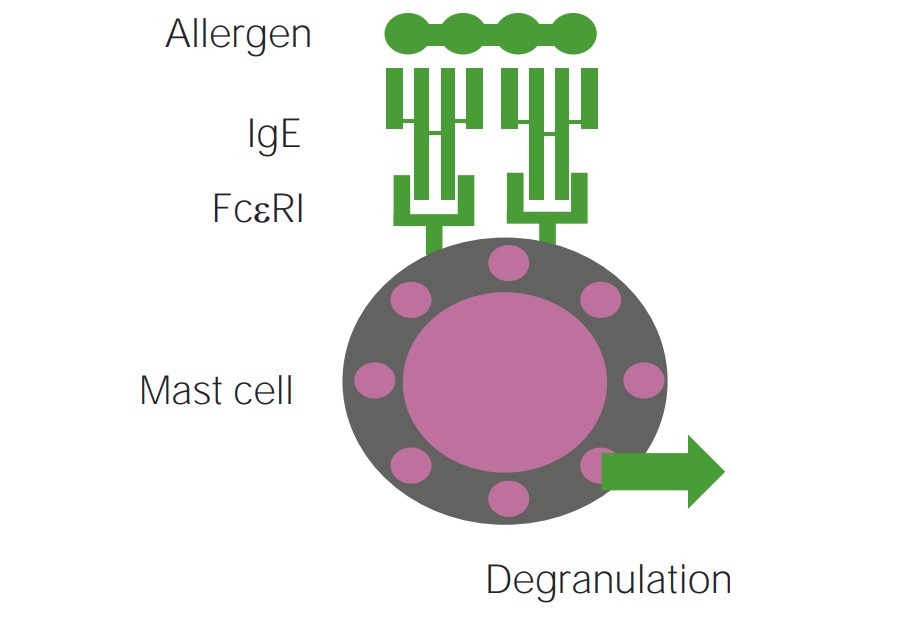
  • Los LOS Neisseria alérgenos se unen a los LOS Neisseria anticuerpos IgE IgE An immunoglobulin associated with mast cells. Overexpression has been associated with allergic hypersensitivity. Immunoglobulins: Types and Functions en EN Erythema nodosum is an immune-mediated panniculitis (inflammation of the subcutaneous fat) caused by a type IV (delayed-type) hypersensitivity reaction. It commonly manifests in young women as tender, erythematous nodules on the shins. Erythema Nodosum los LOS Neisseria receptores Fc Fc Crystallizable fragments composed of the carboxy-terminal halves of both immunoglobulin heavy chains linked to each other by disulfide bonds. Fc fragments contain the carboxy-terminal parts of the heavy chain constant regions that are responsible for the effector functions of an immunoglobulin (complement fixation, binding to the cell membrane via fc receptors, and placental transport). This fragment can be obtained by digestion of immunoglobulins with the proteolytic enzyme papain. Immunoglobulins: Types and Functions de los LOS Neisseria mastocitos → liberación de sustancias vasoactivas con extravasación de plasma Plasma The residual portion of blood that is left after removal of blood cells by centrifugation without prior blood coagulation. Transfusion Products a la dermis Dermis A layer of vascularized connective tissue underneath the epidermis. The surface of the dermis contains innervated papillae. Embedded in or beneath the dermis are sweat glands; hair follicles; and sebaceous glands. Skin: Structure and Functions
  • Histamina:
    • Sustancia vasoactiva más importante
    • Estimulación de los LOS Neisseria receptores H1:
      • Sitios endoteliales y de músculo liso
      • Aumento de la permeabilidad capilar
    • Estimulación de los LOS Neisseria receptores H2:
      • Dilatación de arteriolas y vénulas
      • Extravasación de líquido en EN Erythema nodosum is an immune-mediated panniculitis (inflammation of the subcutaneous fat) caused by a type IV (delayed-type) hypersensitivity reaction. It commonly manifests in young women as tender, erythematous nodules on the shins. Erythema Nodosum la dermis Dermis A layer of vascularized connective tissue underneath the epidermis. The surface of the dermis contains innervated papillae. Embedded in or beneath the dermis are sweat glands; hair follicles; and sebaceous glands. Skin: Structure and Functions
  • Otras sustancias vasoactivas:
    • Bradicinina
    • Leucotrieno C4
    • Prostaglandina D2
Mecanismo de la reacción de hipersensibilidad de tipo 1 implicada en las urticarias mediadas por IgE

Mecanismo de la reacción de hipersensibilidad de tipo 1 implicada en las urticarias mediadas por IgE (degranulación de mastocitos mediada por IgE)

Imagen por Lecturio.
Urticaria Urticaria Urticaria is raised, well-circumscribed areas (wheals) of edema (swelling) and erythema (redness) involving the dermis and epidermis with associated pruritus (itch). Urticaria is not a single disease but rather is a reaction pattern representing cutaneous mast cell degranulation. Urticaria (Hives) no alérgica

  • Liberación de histamina no mediada por IgE IgE An immunoglobulin associated with mast cells. Overexpression has been associated with allergic hypersensitivity. Immunoglobulins: Types and Functions: secundaria a la exposición a sustancias específicas
  • Es más probable que se asocie a trastornos autoinmunes

Presentación Clínica

Inicio

  • Aguda:
    • Se desarrolla entre minutos y 2 horas después de la exposición
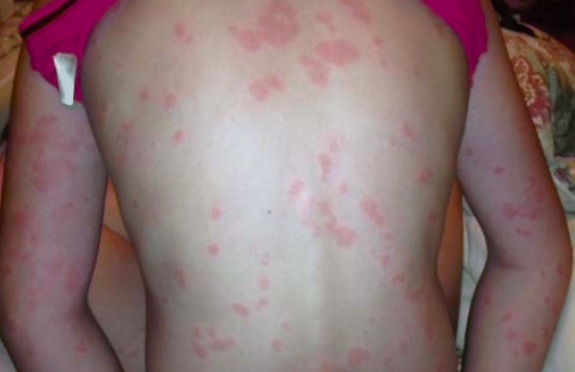
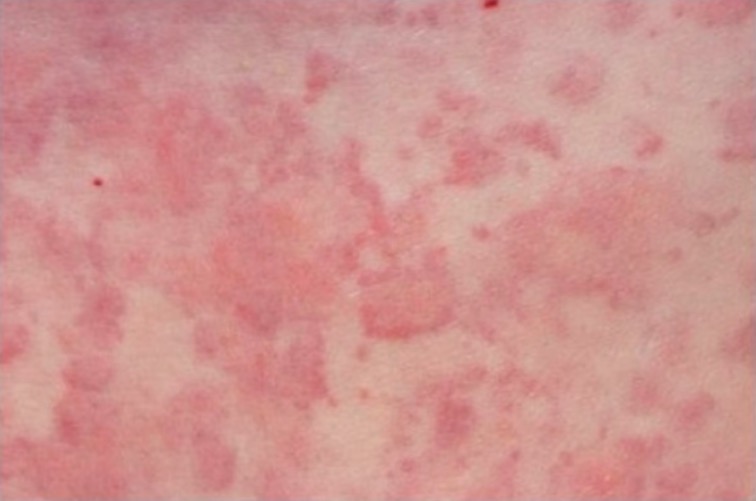
    • Formación de ronchas edematosas y eritematosas:
      • Palidez central con un halo rojo circundante
      • Lesiones únicas o múltiples
      • Tamaño y forma variables
      • Normalmente, se tornan blancos con la presión
    • Es frecuente el prurito (grave).
    • Duración < 6 semanas
  • Crónica:
    • Duración > 6 semanas
    • 2 o más episodios por semana
    • El aspecto es idéntico al AL Amyloidosis de la forma aguda.
    • El prurito, a veces severo, es común.
    • Muchos desencadenantes potenciales
    • Etiología idiopática común

Observaciones clínicas

  • Los LOS Neisseria habones se exhiben clásicamente:
    • Edema Edema Edema is a condition in which excess serous fluid accumulates in the body cavity or interstitial space of connective tissues. Edema is a symptom observed in several medical conditions. It can be categorized into 2 types, namely, peripheral (in the extremities) and internal (in an organ or body cavity). Edema
    • Eritema
    • Bordes bien delimitados
    • Palidez central
    • Halo rojo circundante
    • Puede ser localizado o generalizado
  • Los LOS Neisseria habones se disipan rápidamente (< 24 horas).
  • Prurito: síntoma asociado más frecuente
  • El angioedema Angioedema Angioedema is a localized, self-limited (but potentially life-threatening), nonpitting, asymmetrical edema occurring in the deep layers of the skin and mucosal tissue. The common underlying pathophysiology involves inflammatory mediators triggering significant vasodilation and increased capillary permeability. Angioedema está presente de forma simultánea en EN Erythema nodosum is an immune-mediated panniculitis (inflammation of the subcutaneous fat) caused by a type IV (delayed-type) hypersensitivity reaction. It commonly manifests in young women as tender, erythematous nodules on the shins. Erythema Nodosum la mitad de los LOS Neisseria pacientes con urticaria Urticaria Urticaria is raised, well-circumscribed areas (wheals) of edema (swelling) and erythema (redness) involving the dermis and epidermis with associated pruritus (itch). Urticaria is not a single disease but rather is a reaction pattern representing cutaneous mast cell degranulation. Urticaria (Hives).

Diagnóstico

Antecedentes

  • Los LOS Neisseria habones:
    • Inicio rápido
    • Se disipan rápidamente (< 24 horas)
    • Normalmente no es doloroso
  • Prurito
  • Duración:
    • Aguda: < 6 semanas
    • Crónica:
      • > 6 semanas
      • Varios episodios por semana
  • Antecedentes de exposición a agentes desencadenantes:
    • Alimentos
    • Medicamentos
    • Picaduras de insectos
    • Infecciones (de las vías respiratorias superiores)
    • Productos sanguíneos
    • Látex
    • Presión sobre la piel
    • Estrés emocional
    • Ejercicio
    • Medios de radiocontraste
  • Enfermedad autoinmune comórbida
  • Antecedentes familiares:
    • Enfermedad autoinmune
    • Urticaria Urticaria Urticaria is raised, well-circumscribed areas (wheals) of edema (swelling) and erythema (redness) involving the dermis and epidermis with associated pruritus (itch). Urticaria is not a single disease but rather is a reaction pattern representing cutaneous mast cell degranulation. Urticaria (Hives)

Examen físico

  • Los LOS Neisseria habones pueden o no estar presentes al AL Amyloidosis momento del examen físico.
  • Aparición de habones en EN Erythema nodosum is an immune-mediated panniculitis (inflammation of the subcutaneous fat) caused by a type IV (delayed-type) hypersensitivity reaction. It commonly manifests in young women as tender, erythematous nodules on the shins. Erythema Nodosum la piel:
    • Palidez central
    • Halo rojo circundante
    • Edema Edema Edema is a condition in which excess serous fluid accumulates in the body cavity or interstitial space of connective tissues. Edema is a symptom observed in several medical conditions. It can be categorized into 2 types, namely, peripheral (in the extremities) and internal (in an organ or body cavity). Edema
    • Eritema
    • Bordes bien delimitados
    • Lesiones únicas o múltiples
    • Tamaño y forma variables
    • El habón palidece con la presión.

Pruebas de estimulación

Las pruebas de estimulación pueden utilizarse para inducir síntomas de urticaria Urticaria Urticaria is raised, well-circumscribed areas (wheals) of edema (swelling) and erythema (redness) involving the dermis and epidermis with associated pruritus (itch). Urticaria is not a single disease but rather is a reaction pattern representing cutaneous mast cell degranulation. Urticaria (Hives) física.

  • Presión:
    • Golpear la piel con un objeto romo; desarrollo de habones en EN Erythema nodosum is an immune-mediated panniculitis (inflammation of the subcutaneous fat) caused by a type IV (delayed-type) hypersensitivity reaction. It commonly manifests in young women as tender, erythematous nodules on the shins. Erythema Nodosum pocos minutos (dermografismo)
  • Presión retardada:
    • Aplicación de presión sostenida con peso colgante o dermógrafo calibrado a 100 g/mm².
    • Desarrollo de urticaria Urticaria Urticaria is raised, well-circumscribed areas (wheals) of edema (swelling) and erythema (redness) involving the dermis and epidermis with associated pruritus (itch). Urticaria is not a single disease but rather is a reaction pattern representing cutaneous mast cell degranulation. Urticaria (Hives) en EN Erythema nodosum is an immune-mediated panniculitis (inflammation of the subcutaneous fat) caused by a type IV (delayed-type) hypersensitivity reaction. It commonly manifests in young women as tender, erythematous nodules on the shins. Erythema Nodosum 24 horas
  • Temperatura:
    • Aumentar la temperatura corporal en EN Erythema nodosum is an immune-mediated panniculitis (inflammation of the subcutaneous fat) caused by a type IV (delayed-type) hypersensitivity reaction. It commonly manifests in young women as tender, erythematous nodules on the shins. Erythema Nodosum 1,0 °C.
    • Desarrollo rápido de habones
  • Temperatura de la superficie:
    • Frío: Aplique una bolsa con hielo durante un máximo de 20 minutos.
    • Calentar: Aplicar un objeto calentado durante 2–5 minutos.
  • Solar: desarrollo de habones a los LOS Neisseria pocos minutos de exposición al AL Amyloidosis sol
  • Agua: Aplicar agua sobre la piel.
  • Vibración: Aplicar un vórtice de laboratorio en EN Erythema nodosum is an immune-mediated panniculitis (inflammation of the subcutaneous fat) caused by a type IV (delayed-type) hypersensitivity reaction. It commonly manifests in young women as tender, erythematous nodules on the shins. Erythema Nodosum el antebrazo durante 1–5 minutos.

Estudios de laboratorio

  • Más comúnmente realizados si el paciente presenta urticaria Urticaria Urticaria is raised, well-circumscribed areas (wheals) of edema (swelling) and erythema (redness) involving the dermis and epidermis with associated pruritus (itch). Urticaria is not a single disease but rather is a reaction pattern representing cutaneous mast cell degranulation. Urticaria (Hives) crónica
  • Suele hacerse para evaluar el proceso de la enfermedad subyacente:
    • Hemograma completo
    • VES
    • PCR PCR Polymerase chain reaction (PCR) is a technique that amplifies DNA fragments exponentially for analysis. The process is highly specific, allowing for the targeting of specific genomic sequences, even with minuscule sample amounts. The PCR cycles multiple times through 3 phases: denaturation of the template DNA, annealing of a specific primer to the individual DNA strands, and synthesis/elongation of new DNA molecules. Polymerase Chain Reaction (PCR)
    • Pruebas de función tiroidea
    • ANAs
    • Crioglobulinas séricas ( urticaria Urticaria Urticaria is raised, well-circumscribed areas (wheals) of edema (swelling) and erythema (redness) involving the dermis and epidermis with associated pruritus (itch). Urticaria is not a single disease but rather is a reaction pattern representing cutaneous mast cell degranulation. Urticaria (Hives) por frío)
    • Evaluación de la alergia
    • Anticuerpos anti-IgE, anti-FcεRI y prueba cutánea con suero autólogo para diagnosticar urticaria Urticaria Urticaria is raised, well-circumscribed areas (wheals) of edema (swelling) and erythema (redness) involving the dermis and epidermis with associated pruritus (itch). Urticaria is not a single disease but rather is a reaction pattern representing cutaneous mast cell degranulation. Urticaria (Hives) autoinmune
    • Biopsia en EN Erythema nodosum is an immune-mediated panniculitis (inflammation of the subcutaneous fat) caused by a type IV (delayed-type) hypersensitivity reaction. It commonly manifests in young women as tender, erythematous nodules on the shins. Erythema Nodosum sacabocados (sospecha de vasculitis Vasculitis Inflammation of any one of the blood vessels, including the arteries; veins; and rest of the vasculature system in the body. Systemic Lupus Erythematosus urticarial)

Tratamiento

Medidas de soporte/profilácticas

  • Aproximadamente ⅔ de las urticarias agudas de aparición nueva se resuelven espontáneamente y no requieren medicación.
  • Evitar los LOS Neisseria desencadenantes
  • Aplicación de hidratación refrescante tópica para reducir el picor
  • Exposición controlada y repetida a factores físicos para inducir la tolerancia

Medicamentos

  • Antagonistas H1:
    • No sedantes:
      • Tratamiento de 1ra línea
      • Loratadina
    • Moderadamente sedante:
      • Tratamiento de 2da línea: cetirizina
    • Sedante:
      • Antihistamínicos de 1ra generación
      • Difenhidramina
  • Glucocorticoides:
    • Angioedema Angioedema Angioedema is a localized, self-limited (but potentially life-threatening), nonpitting, asymmetrical edema occurring in the deep layers of the skin and mucosal tissue. The common underlying pathophysiology involves inflammatory mediators triggering significant vasodilation and increased capillary permeability. Angioedema prominente o síntomas persistentes a pesar de los LOS Neisseria antihistamínicos
    • Prednisona
    • Prednisolona
  • Antagonistas de los LOS Neisseria receptores de leucotrienos:
  • Omalizumab Omalizumab An anti-ige, recombinant, humanized monoclonal antibody which specifically binds to the c epsilon3 domain of immunoglobulin e, the site of high-affinity ige receptor binding. It inhibits the binding of ige to mast cells and basophils to reduce the severity of the allergic response and is used in the management of persistent allergic asthma. Asthma Drugs: anticuerpo monoclonal contra la IgE IgE An immunoglobulin associated with mast cells. Overexpression has been associated with allergic hypersensitivity. Immunoglobulins: Types and Functions
  • Medicamentos inmunosupresores:
    • Ciclosporina
    • Micofenolato mofetilo
  • Agentes antiinflamatorios:
    • Dapsona
    • Sulfasalazina
    • Hidroxicloroquina

Asociación con anafilaxia

Si se asocia con anafilaxia:

  • Es necesario el tratamiento de emergencia
  • Protección de la vía aérea (intubación/traqueostomía)
  • Epinefrina

Diagnóstico Diferencial

  • Dermatitis Dermatitis Any inflammation of the skin. Atopic Dermatitis (Eczema) atópica ( eczema Eczema Atopic dermatitis, also known as eczema, is a chronic, relapsing, pruritic, inflammatory skin disease that occurs more frequently in children, although adults can also be affected. The condition is often associated with elevated serum levels of IgE and a personal or family history of atopy. Skin dryness, erythema, oozing, crusting, and lichenification are present. Atopic Dermatitis (Eczema)): trastorno cutáneo con manchas eritematosas intensamente pruriginosas con pápulas y algo de descamación, con un curso más prolongado: La dermatitis Dermatitis Any inflammation of the skin. Atopic Dermatitis (Eczema) atópica suele estar asociada a niveles séricos elevados de IgE IgE An immunoglobulin associated with mast cells. Overexpression has been associated with allergic hypersensitivity. Immunoglobulins: Types and Functions y a antecedentes personales o familiares de atopia. Aparece con mayor frecuencia en EN Erythema nodosum is an immune-mediated panniculitis (inflammation of the subcutaneous fat) caused by a type IV (delayed-type) hypersensitivity reaction. It commonly manifests in young women as tender, erythematous nodules on the shins. Erythema Nodosum los LOS Neisseria niños. El tratamiento incluye evitar los LOS Neisseria factores desencadenantes y el uso de emolientes y humectantes, agentes antiinflamatorios tópicos, antihistamínicos y esteroides tópicos.
  • Dermatitis Dermatitis Any inflammation of the skin. Atopic Dermatitis (Eczema) de contacto: una dermatitis Dermatitis Any inflammation of the skin. Atopic Dermatitis (Eczema) eritematosa y papular, a menudo con vesículas. Se produce por exposición directa de la piel a un agente irritante con efecto citotóxico directo. El diagnóstico se hace HACE Altitude Sickness con anamnesis y examen físico. El tratamiento incluye evitar los LOS Neisseria irritantes ofensivos y adoptar medidas de protección, así como el empleo de emolientes y humectantes. Los LOS Neisseria esteroides tópicos son la intervención de primera línea.
  • Penfigoide ampolloso: enfermedad autoinmune ampollosa. Autoanticuerpos atacan los LOS Neisseria hemidesmosomas que conectan los LOS Neisseria queratinocitos epidérmicos con la membrana basal. Esto da lugar a ampollas grandes y tensas subepidérmicas. El diagnóstico se realiza con biopsia y tinción inmunofluorescente para identificar y localizar los LOS Neisseria anticuerpos. El tratamiento implica inmunosupresión con corticosteroides y otros agentes inmunomoduladores ahorradores de esteroides.
  • Exantemas virales: generalmente no son pruriginosos y suelen consistir en EN Erythema nodosum is an immune-mediated panniculitis (inflammation of the subcutaneous fat) caused by a type IV (delayed-type) hypersensitivity reaction. It commonly manifests in young women as tender, erythematous nodules on the shins. Erythema Nodosum erupciones maculopapulares eritematosas que persisten durante días: Suele haber fiebre. Las máculas son relativamente fijas, con la aparición de nuevas lesiones a medida que se resuelven las más antiguas. Más común en EN Erythema nodosum is an immune-mediated panniculitis (inflammation of the subcutaneous fat) caused by a type IV (delayed-type) hypersensitivity reaction. It commonly manifests in young women as tender, erythematous nodules on the shins. Erythema Nodosum los LOS Neisseria niños. Diagnosticado clínicamente. El tratamiento es sintomático.
  • Eritema multiforme menor: Síndrome caracterizado por máculas eritematosas y lesiones vesiculobullosas con aspecto de diana: estas lesiones pueden ser dolorosas o pruriginosas y tienen una distribución simétrica en EN Erythema nodosum is an immune-mediated panniculitis (inflammation of the subcutaneous fat) caused by a type IV (delayed-type) hypersensitivity reaction. It commonly manifests in young women as tender, erythematous nodules on the shins. Erythema Nodosum las superficies extensoras de las extremidades, especialmente en EN Erythema nodosum is an immune-mediated panniculitis (inflammation of the subcutaneous fat) caused by a type IV (delayed-type) hypersensitivity reaction. It commonly manifests in young women as tender, erythematous nodules on the shins. Erythema Nodosum las palmas y las plantas, y duran días, pudiendo acompañarse de fiebre y malestar. El curso clínico suele ser autolimitado sin secuelas significativas. El diagnóstico se realiza clínicamente, y a veces se requiere una biopsia de piel. El tratamiento suele ser sintomático.

Referencias

  1. Asero R. (2020). New-onset urticaria. In Saini S, Callen J. (Eds.), UpToDate. Retrieved March 14, 2021, from https://www.uptodate.com/contents/new-onset-urticaria-hives
  2. Khan D. (2020). Chronic spontaneous urticaria: standard management and patient education. In Saini S, Callen J. (Eds.), UpToDate. Retrieved March 14, 2021, from https://www.uptodate.com/contents/chronic-spontaneous-urticaria-standard-management-and-patient-education
  3. Saini S. (2021). Chronic spontaneous urticaria: clinical manifestations, diagnosis, pathogenesis, and natural history. In Callen J. (Ed.), UpToDate. Retrieved March 14, 2021, from https://www.uptodate.com/contents/chronic-spontaneous-urticaria-clinical-manifestations-diagnosis-pathogenesis-and-natural-history
  4. Wong H. (2020). Urticaria. In Elston D. (Ed.), Medscape. Retrieved March 14, 2021, from https://reference.medscape.com/article/762917-overview
  5. Schwartz R. (2021). Cholinergic urticaria. In Elston D. (Ed.), Medscape. Retrieved March 14, 2021, from https://reference.medscape.com/article/1049978-overview
  6. Diakow, M., (2018). Chronic Urticaria. In James, W. (Ed.), Medscape. Retrieved March 14, 2021, from https://reference.medscape.com/article/1050052-overview
  7. Frigas E, Park MA. (2009). Acute urticaria and angioedema: diagnostic and treatment considerations. Am J Clin Dermatol 10(4):239–50.

¡Crea tu cuenta gratis o inicia una sesión para seguir leyendo!

Regístrate ahora y obtén acceso gratuito a Lecturio con páginas de concepto, videos médicos y cuestionarios para tu educación médica.

User Reviews

Que tengas una sesión de estudio alegre y navideña 🎁 Ahorra 50% en todos los planes >>

Details