Domina Conceptos Médicos

Estudia para la escuela de medicina y tus examenes con Lecturio.

Síndrome IPEX

El síndrome IPEX (inmunodesregulación, poliendocrinopatía, enteropatía, ligada al AL Amyloidosis cromosoma X) es una deficiencia congénita poco común de células T asociada a la disfunción del factor de transcripción FOXP3. Este factor regula el desarrollo de una línea de células T reguladoras y las disfunciones suelen resultar en EN Erythema nodosum is an immune-mediated panniculitis (inflammation of the subcutaneous fat) caused by a type IV (delayed-type) hypersensitivity reaction. It commonly manifests in young women as tender, erythematous nodules on the shins. Erythema Nodosum autoinmunidad. La enfermedad se manifiesta como enteropatía autoinmune, dermatitis Dermatitis Any inflammation of the skin. Atopic Dermatitis (Eczema) eczematosa, distrofia ungueal, endocrinopatías autoinmunes y afecciones cutáneas autoinmunes. La única forma de tratamiento del IPEX es el trasplante de médula ósea.

Last updated: Dec 15, 2025

Editorial responsibility: Stanley Oiseth, Lindsay Jones, Evelin Maza

Epidemiología y Etiología

Epidemiología

  • Ocurre en EN Erythema nodosum is an immune-mediated panniculitis (inflammation of the subcutaneous fat) caused by a type IV (delayed-type) hypersensitivity reaction. It commonly manifests in young women as tender, erythematous nodules on the shins. Erythema Nodosum 1 de cada 1,6 millones de personas
  • Se han descrito menos de 300 casos del síndrome IPEX (immunodesregulación, poliendocrinopatía, enteropatía, ligada al AL Amyloidosis cromosoma X)

Etiología

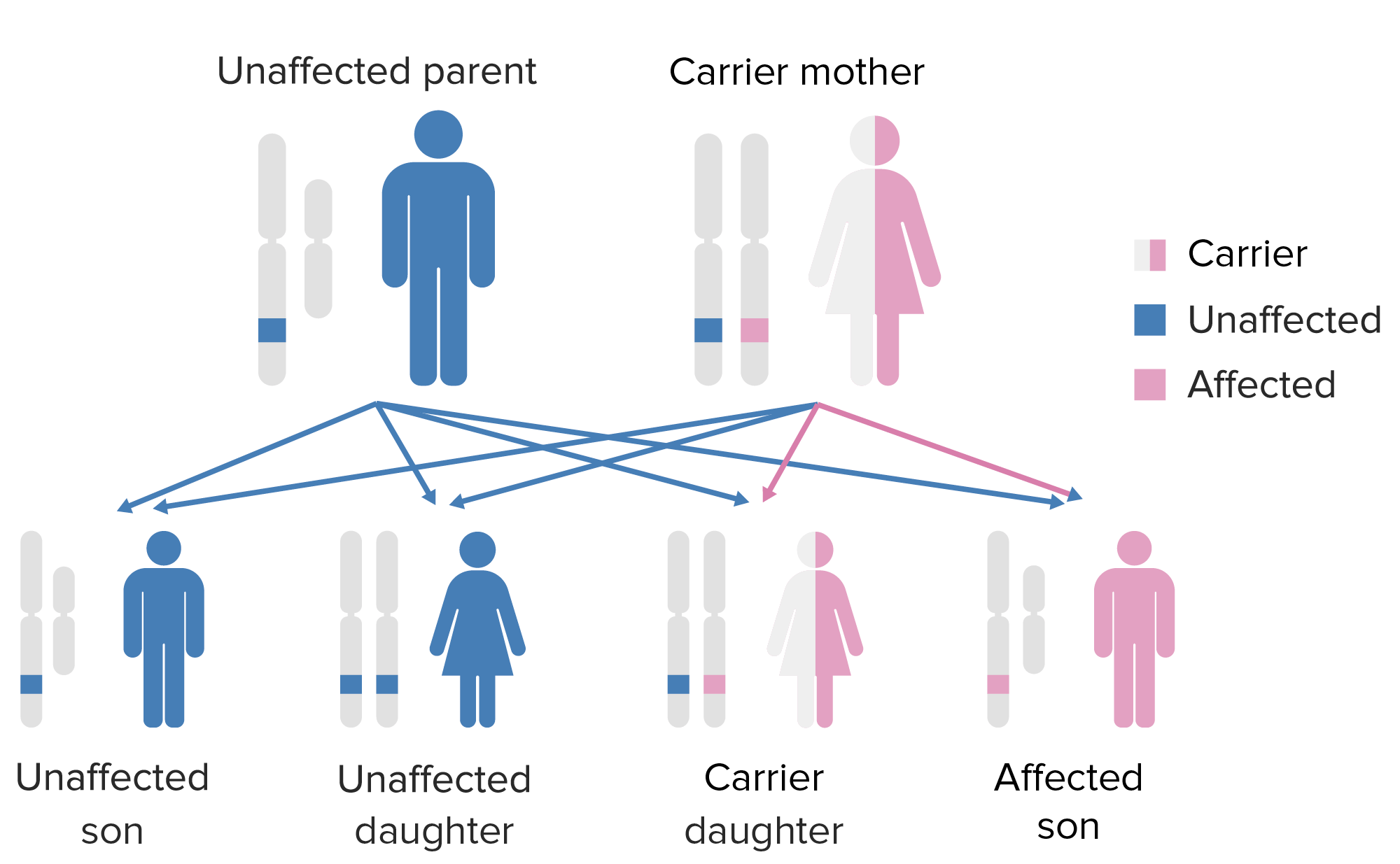
  • Tiene un patrón de herencia recesivo ligado al AL Amyloidosis cromosoma X, por lo que afecta principalmente a los LOS Neisseria hombres
  • Causada por una mutación en EN Erythema nodosum is an immune-mediated panniculitis (inflammation of the subcutaneous fat) caused by a type IV (delayed-type) hypersensitivity reaction. It commonly manifests in young women as tender, erythematous nodules on the shins. Erythema Nodosum el gen que codifica el factor de transcripción FOXP3, localizado en EN Erythema nodosum is an immune-mediated panniculitis (inflammation of the subcutaneous fat) caused by a type IV (delayed-type) hypersensitivity reaction. It commonly manifests in young women as tender, erythematous nodules on the shins. Erythema Nodosum Xp11.23-Xq13.3
X-linked recessive inheritance

El patrón de herencia de la agammaglobulinemia ligada al cromosoma X. Obsérvese que la madre debe aportar el gen X defectuoso al hijo varón para que éste exprese este fenotipo. Imagen por Lecturio.

Fisiopatología

  • La mutación provoca una activación disfuncional de las células T reguladoras hacia los LOS Neisseria tejidos del huésped (autoinmunidad).
  • Las alteraciones de la vía reguladora de FOXP3 pueden dar lugar a enfermedades autoinmunes específicas a órganos que afectan a la piel, el tracto gastrointestinal y las glándulas endocrinas.
  • También se asocia a la pérdida de células reguladoras T CD4+ CD25+, que están relacionadas con la autoinmunidad

Presentación Clínica

Los LOS Neisseria signos de autoinmunidad sistémica comienzan a presentarse en EN Erythema nodosum is an immune-mediated panniculitis (inflammation of the subcutaneous fat) caused by a type IV (delayed-type) hypersensitivity reaction. It commonly manifests in young women as tender, erythematous nodules on the shins. Erythema Nodosum el 1er año de vida.

  • Presentación clásica con tríada:
    1. Enteropatía:
      • Diarrea crónica (primer síntoma más común)
      • Alergias alimentarias severas o infecciones
      • Hepatitis autoinmune
    2. Endocrinopatía:
      • Hiper o hipotiroidismo
      • Tiroiditis
      • Diabetes Diabetes Diabetes mellitus (DM) is a metabolic disease characterized by hyperglycemia and dysfunction of the regulation of glucose metabolism by insulin. Type 1 DM is diagnosed mostly in children and young adults as the result of autoimmune destruction of β cells in the pancreas and the resulting lack of insulin. Type 2 DM has a significant association with obesity and is characterized by insulin resistance. Diabetes Mellitus mellitus de tipo 1
      • Deficiencia atípica de la hormona del crecimiento
      • Hipoadrenalismo
    3. Dermatitis Dermatitis Any inflammation of the skin. Atopic Dermatitis (Eczema):
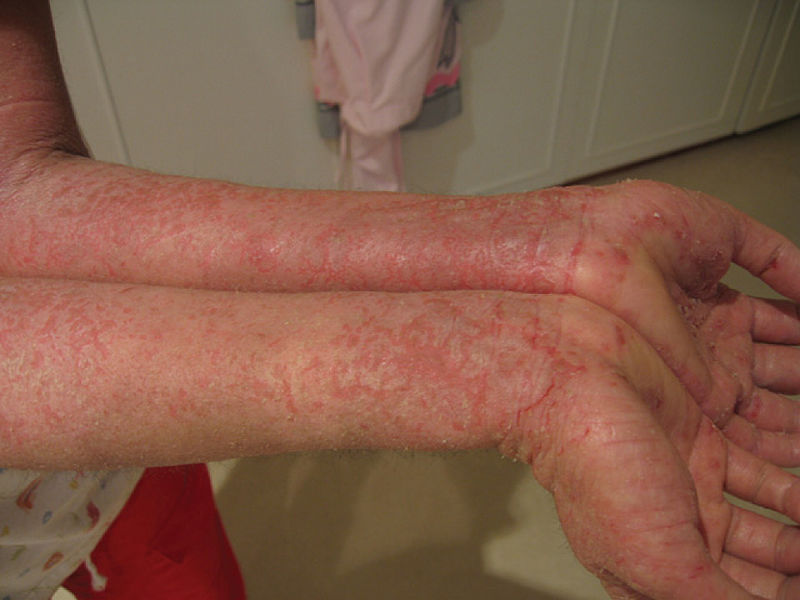
      • Eczema Eczema Atopic dermatitis, also known as eczema, is a chronic, relapsing, pruritic, inflammatory skin disease that occurs more frequently in children, although adults can also be affected. The condition is often associated with elevated serum levels of IgE and a personal or family history of atopy. Skin dryness, erythema, oozing, crusting, and lichenification are present. Atopic Dermatitis (Eczema) o dermatitis Dermatitis Any inflammation of the skin. Atopic Dermatitis (Eczema) eczematosa
      • Distrofia ungueal
  • Otros síntomas son:
    • Linfadenopatía
    • Citopenias
    • Mayor susceptibilidad y respuestas exageradas a infecciones
    • Enfermedad renal
    • Síndrome de dificultad respiratoria agudo
    • Pérdida de peso
    • Alopecia Alopecia Alopecia is the loss of hair in areas anywhere on the body where hair normally grows. Alopecia may be defined as scarring or non-scarring, localized or diffuse, congenital or acquired, reversible or permanent, or confined to the scalp or universal; however, alopecia is usually classified using the 1st 3 factors. Alopecia
    • Esplenomegalia
    • Artritis
    • Fallo en EN Erythema nodosum is an immune-mediated panniculitis (inflammation of the subcutaneous fat) caused by a type IV (delayed-type) hypersensitivity reaction. It commonly manifests in young women as tender, erythematous nodules on the shins. Erythema Nodosum el desarrollo
  • Brotes de enfermedad o “flares” son un empeoramiento repentino de los LOS Neisseria síntomas autoinmunes o alérgicos y pueden ser provocados por infecciones, vacunas o reacciones alérgicas a los LOS Neisseria alimentos.

Diagnóstico y Tratamiento

Diagnóstico

Las pruebas diagnósticas del síndrome IPEX siguen criterios sistemáticos coherentes con:

  • Examen clínico: una tríada clásica de autoinmunidad en EN Erythema nodosum is an immune-mediated panniculitis (inflammation of the subcutaneous fat) caused by a type IV (delayed-type) hypersensitivity reaction. It commonly manifests in young women as tender, erythematous nodules on the shins. Erythema Nodosum un bebé o niño varón ( dermatitis Dermatitis Any inflammation of the skin. Atopic Dermatitis (Eczema), enteropatía y trastorno tiroideo o diabetes Diabetes Diabetes mellitus (DM) is a metabolic disease characterized by hyperglycemia and dysfunction of the regulation of glucose metabolism by insulin. Type 1 DM is diagnosed mostly in children and young adults as the result of autoimmune destruction of β cells in the pancreas and the resulting lack of insulin. Type 2 DM has a significant association with obesity and is characterized by insulin resistance. Diabetes Mellitus insulinodependiente)
  • Antecedentes familiares: la mayoría de las mutaciones son familiares; los LOS Neisseria casos esporádicos son poco comunes
  • Pruebas genéticas: variante patogénica hemizigótica en EN Erythema nodosum is an immune-mediated panniculitis (inflammation of the subcutaneous fat) caused by a type IV (delayed-type) hypersensitivity reaction. It commonly manifests in young women as tender, erythematous nodules on the shins. Erythema Nodosum FOXP3
  • Hallazgos de laboratorio: reducción severa/ausencia de células T reguladoras CD4+ CD25+.

Tratamiento

Se utilizan numerosos medicamentos y su administración depende de las manifestaciones de cada paciente:

  • Brotes agudos de enfermedad:
    • Glucocorticosteroides intravenosos en EN Erythema nodosum is an immune-mediated panniculitis (inflammation of the subcutaneous fat) caused by a type IV (delayed-type) hypersensitivity reaction. It commonly manifests in young women as tender, erythematous nodules on the shins. Erythema Nodosum dosis altas: tratamiento de primera línea
    • Puede ser necesaria la reanimación con líquidos.
    • Nutrición parenteral total: proporciona nutrición y descanso intestinal en EN Erythema nodosum is an immune-mediated panniculitis (inflammation of the subcutaneous fat) caused by a type IV (delayed-type) hypersensitivity reaction. It commonly manifests in young women as tender, erythematous nodules on the shins. Erythema Nodosum casos de diarrea severa y desnutrición
    • Reintroducción gradual de la leche materna o fórmula altamente hidrolizada
  • Tratamiento a largo plazo:
    • Ciclosporina A, sirolimus Sirolimus A macrolide compound obtained from streptomyces hygroscopicus that acts by selectively blocking the transcriptional activation of cytokines thereby inhibiting cytokine production. It is bioactive only when bound to immunophilins. Sirolimus is a potent immunosuppressant and possesses both antifungal and antineoplastic properties. Immunosuppressants (preferido) o FK506: Inmunosupresión dirigida a células T
    • Evitar los LOS Neisseria alérgenos alimentarios y las vacunas.
    • Trasplante de células hematopoyéticas: única cura posible para el síndrome IPEX
    • Tratamiento estándar para la diabetes Diabetes Diabetes mellitus (DM) is a metabolic disease characterized by hyperglycemia and dysfunction of the regulation of glucose metabolism by insulin. Type 1 DM is diagnosed mostly in children and young adults as the result of autoimmune destruction of β cells in the pancreas and the resulting lack of insulin. Type 2 DM has a significant association with obesity and is characterized by insulin resistance. Diabetes Mellitus mellitus y la enfermedad tiroidea autoinmune (e.g., suplementos de insulina y hormonas tiroideas)
    • Factor estimulante de colonias de granulocitos y terapia antibiótica profiláctica para tratar la neutropenia Neutropenia Neutrophils are an important component of the immune system and play a significant role in the eradication of infections. Low numbers of circulating neutrophils, referred to as neutropenia, predispose the body to recurrent infections or sepsis, though patients can also be asymptomatic. Neutropenia autoinmune asociada
    • Esteroides tópicos y agentes antiinflamatorios: para tratar el eczema Eczema Atopic dermatitis, also known as eczema, is a chronic, relapsing, pruritic, inflammatory skin disease that occurs more frequently in children, although adults can also be affected. The condition is often associated with elevated serum levels of IgE and a personal or family history of atopy. Skin dryness, erythema, oozing, crusting, and lichenification are present. Atopic Dermatitis (Eczema)

Diagnóstico Diferencial

Las siguientes condiciones son diagnósticos diferenciales para el síndrome IPEX:

  • Síndrome de Wiskott-Aldrich: un trastorno mixto ligado al AL Amyloidosis cromosoma X de deficiencia de células B y T. El síndrome es causado por una mutación del gen WAS que provoca una alteración del citoesqueleto de actina, de la fagocitosis y de la quimiotaxis, una alteración del desarrollo de las plaquetas y, en EN Erythema nodosum is an immune-mediated panniculitis (inflammation of the subcutaneous fat) caused by a type IV (delayed-type) hypersensitivity reaction. It commonly manifests in young women as tender, erythematous nodules on the shins. Erythema Nodosum general, una pérdida de las respuestas humoral y celular. Se presenta como eczema Eczema Atopic dermatitis, also known as eczema, is a chronic, relapsing, pruritic, inflammatory skin disease that occurs more frequently in children, although adults can also be affected. The condition is often associated with elevated serum levels of IgE and a personal or family history of atopy. Skin dryness, erythema, oozing, crusting, and lichenification are present. Atopic Dermatitis (Eczema), trastornos hemorrágicos, infecciones oportunistas recurrentes y autoinmunidad.
  • Síndrome de Omenn: forma autosómica recesiva de inmunodeficiencia combinada severa causada por mutaciones en EN Erythema nodosum is an immune-mediated panniculitis (inflammation of the subcutaneous fat) caused by a type IV (delayed-type) hypersensitivity reaction. It commonly manifests in young women as tender, erythematous nodules on the shins. Erythema Nodosum los LOS Neisseria genes Genes A category of nucleic acid sequences that function as units of heredity and which code for the basic instructions for the development, reproduction, and maintenance of organisms. DNA Types and Structure RAG1 RAG1 Immunoglobulins: Types and Functions o RAG2 RAG2 Immunoglobulins: Types and Functions. Presenta diarrea crónica, eritrodermia, descamación, alopecia Alopecia Alopecia is the loss of hair in areas anywhere on the body where hair normally grows. Alopecia may be defined as scarring or non-scarring, localized or diffuse, congenital or acquired, reversible or permanent, or confined to the scalp or universal; however, alopecia is usually classified using the 1st 3 factors. Alopecia, retraso en EN Erythema nodosum is an immune-mediated panniculitis (inflammation of the subcutaneous fat) caused by a type IV (delayed-type) hypersensitivity reaction. It commonly manifests in young women as tender, erythematous nodules on the shins. Erythema Nodosum el desarrollo, linfadenopatía, hepatoesplenomegalia, infecciones fúngicas, bacterianas y víricas recurrentes y niveles elevados de eosinófilos e IgE IgE An immunoglobulin associated with mast cells. Overexpression has been associated with allergic hypersensitivity. Immunoglobulins: Types and Functions sérica.
  • Diabetes Diabetes Diabetes mellitus (DM) is a metabolic disease characterized by hyperglycemia and dysfunction of the regulation of glucose metabolism by insulin. Type 1 DM is diagnosed mostly in children and young adults as the result of autoimmune destruction of β cells in the pancreas and the resulting lack of insulin. Type 2 DM has a significant association with obesity and is characterized by insulin resistance. Diabetes Mellitus neonatal transitoria: forma de diabetes Diabetes Diabetes mellitus (DM) is a metabolic disease characterized by hyperglycemia and dysfunction of the regulation of glucose metabolism by insulin. Type 1 DM is diagnosed mostly in children and young adults as the result of autoimmune destruction of β cells in the pancreas and the resulting lack of insulin. Type 2 DM has a significant association with obesity and is characterized by insulin resistance. Diabetes Mellitus que se presenta en EN Erythema nodosum is an immune-mediated panniculitis (inflammation of the subcutaneous fat) caused by a type IV (delayed-type) hypersensitivity reaction. It commonly manifests in young women as tender, erythematous nodules on the shins. Erythema Nodosum las primeras semanas de vida, pero que es transitoria. Suele estar causada por genes Genes A category of nucleic acid sequences that function as units of heredity and which code for the basic instructions for the development, reproduction, and maintenance of organisms. DNA Types and Structure disfuncionales en EN Erythema nodosum is an immune-mediated panniculitis (inflammation of the subcutaneous fat) caused by a type IV (delayed-type) hypersensitivity reaction. It commonly manifests in young women as tender, erythematous nodules on the shins. Erythema Nodosum el cromosoma 6. Los LOS Neisseria bebés afectados entran en EN Erythema nodosum is an immune-mediated panniculitis (inflammation of the subcutaneous fat) caused by a type IV (delayed-type) hypersensitivity reaction. It commonly manifests in young women as tender, erythematous nodules on the shins. Erythema Nodosum remisión en EN Erythema nodosum is an immune-mediated panniculitis (inflammation of the subcutaneous fat) caused by a type IV (delayed-type) hypersensitivity reaction. It commonly manifests in young women as tender, erythematous nodules on the shins. Erythema Nodosum pocos meses, aunque sigue existiendo la posibilidad de recaer en EN Erythema nodosum is an immune-mediated panniculitis (inflammation of the subcutaneous fat) caused by a type IV (delayed-type) hypersensitivity reaction. It commonly manifests in young women as tender, erythematous nodules on the shins. Erythema Nodosum una diabetes Diabetes Diabetes mellitus (DM) is a metabolic disease characterized by hyperglycemia and dysfunction of the regulation of glucose metabolism by insulin. Type 1 DM is diagnosed mostly in children and young adults as the result of autoimmune destruction of β cells in the pancreas and the resulting lack of insulin. Type 2 DM has a significant association with obesity and is characterized by insulin resistance. Diabetes Mellitus permanente en EN Erythema nodosum is an immune-mediated panniculitis (inflammation of the subcutaneous fat) caused by a type IV (delayed-type) hypersensitivity reaction. It commonly manifests in young women as tender, erythematous nodules on the shins. Erythema Nodosum la adolescencia o la edad adulta. Se presenta como hiperglucemia, deshidratación y retraso en EN Erythema nodosum is an immune-mediated panniculitis (inflammation of the subcutaneous fat) caused by a type IV (delayed-type) hypersensitivity reaction. It commonly manifests in young women as tender, erythematous nodules on the shins. Erythema Nodosum el crecimiento en EN Erythema nodosum is an immune-mediated panniculitis (inflammation of the subcutaneous fat) caused by a type IV (delayed-type) hypersensitivity reaction. It commonly manifests in young women as tender, erythematous nodules on the shins. Erythema Nodosum la infancia.
  • Inmunodeficiencia combinada severa: la forma más grave de inmunodeficiencia primaria. Es un trastorno genético que implica una respuesta defectuosa de los LOS Neisseria anticuerpos debido a la implicación directa de los LOS Neisseria linfocitos B o a la activación inadecuada de los LOS Neisseria linfocitos B, debido a la falta de funcionamiento de las células T colaboradoras. Se presenta como infecciones oportunistas graves y recurrentes y se diagnostica mediante PCR PCR Polymerase chain reaction (PCR) is a technique that amplifies DNA fragments exponentially for analysis. The process is highly specific, allowing for the targeting of specific genomic sequences, even with minuscule sample amounts. The PCR cycles multiple times through 3 phases: denaturation of the template DNA, annealing of a specific primer to the individual DNA strands, and synthesis/elongation of new DNA molecules. Polymerase Chain Reaction (PCR) cuantitativa y citometría de flujo.
  • Trombocitopenia ligada al AL Amyloidosis cromosoma X: trastorno hemorrágico que afecta a los LOS Neisseria varones debido a su patrón de herencia recesivo ligado al AL Amyloidosis cromosoma X. Se caracteriza por niveles bajos de plaquetas y se presenta con hemorragias que se producen de forma espontánea o tras un traumatismo menor.
  • Hipoplasia o agenesia pancreática: el subdesarrollo congénito o la ausencia total de desarrollo embrionario del páncreas. El páncreas es de origen endodérmico y se desarrolla normalmente a partir del intestino anterior. Puede presentarse de forma asintomática o con hiperglucemia, dolor Dolor Inflammation abdominal, diabetes Diabetes Diabetes mellitus (DM) is a metabolic disease characterized by hyperglycemia and dysfunction of the regulation of glucose metabolism by insulin. Type 1 DM is diagnosed mostly in children and young adults as the result of autoimmune destruction of β cells in the pancreas and the resulting lack of insulin. Type 2 DM has a significant association with obesity and is characterized by insulin resistance. Diabetes Mellitus mellitus, obstrucción de la vía biliar o signos de pancreatitis Pancreatitis Inflammation of the pancreas. Pancreatitis is classified as acute unless there are computed tomographic or endoscopic retrograde cholangiopancreatographic findings of chronic pancreatitis. The two most common forms of acute pancreatitis are alcoholic pancreatitis and gallstone pancreatitis. Acute Pancreatitis.

Referencias

  1. Bacchetta, R. et al. (2024). “IPEX syndrome from diagnosis to cure, learning along the way.” Journal of Allergy and Clinical Immunology, 153(2), 595-605.
  2. Spahich, N. (2023). “The Future of Gene Therapy for a Rare Pediatric Autoimmune Disease.” The Scientist Magazine.
  3. Malhis, L., et al. (2023). “A case report of IPEX syndrome in Palestine: detailed family identification and breadth of disorders with the same defect.” Frontiers in Pediatrics.
  4. Braskett, M. J., & Chatila, T. (2022). IPEX: Immune dysregulation, polyendocrinopathy, enteropathy, X-linked. UpToDate. Retrieved on November 18, 2024, from https://www.uptodate.com/contents/ipex-immune-dysregulation-polyendocrinopathy-enteropathy-x-linked
  5. Aytekin G, Vaqar S. (2023). X-Linked Immunodeficiency. StatPearls [Internet]. Retrieved on November 18, 2024, from https://www.ncbi.nlm.nih.gov/books/NBK562182/
  6. Banks T, Gada S.M., & Mikita C.P. (2019). Immunodysregulation polyendocrinopathy enteropathy X-linked syndrome (IPEX) treatment & management. eMedicine. Retrieved on November 18, 2024, from https://emedicine.medscape.com/article/1663259-treatment#showall

¡Crea tu cuenta gratis o inicia una sesión para seguir leyendo!

Regístrate ahora y obtén acceso gratuito a Lecturio con páginas de concepto, videos médicos y cuestionarios para tu educación médica.

User Reviews

Que tengas una sesión de estudio alegre y navideña 🎁 Ahorra 50% en todos los planes >>

Details