Domina Conceptos Médicos

Estudia para la escuela de medicina y tus examenes con Lecturio.

Síndrome de Cowden

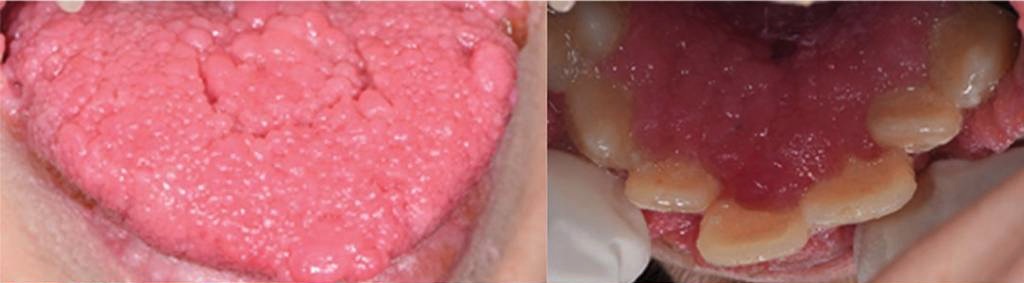
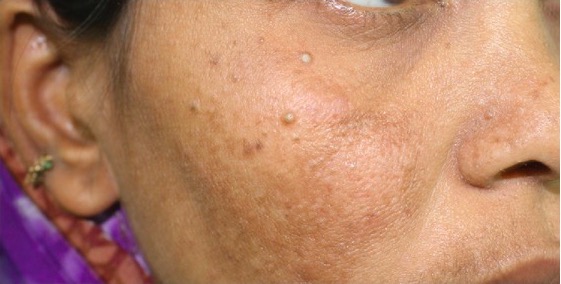
El síndrome de Cowden, también conocido como síndrome de hamartoma Hamartoma A focal malformation resembling a neoplasm, composed of an overgrowth of mature cells and tissues that normally occur in the affected area. Colorectal Cancer múltiple, es una condición hereditaria autosómica dominante que se presenta con múltiples crecimientos no cancerosos en EN Erythema nodosum is an immune-mediated panniculitis (inflammation of the subcutaneous fat) caused by a type IV (delayed-type) hypersensitivity reaction. It commonly manifests in young women as tender, erythematous nodules on the shins. Erythema Nodosum varias partes del cuerpo. El síndrome se clasifica como un síndrome de tumor Tumor Inflammation hamartoma Hamartoma A focal malformation resembling a neoplasm, composed of an overgrowth of mature cells and tissues that normally occur in the affected area. Colorectal Cancer homólogo de la fosfatasa y tensina (PTEN, por sus siglas en EN Erythema nodosum is an immune-mediated panniculitis (inflammation of the subcutaneous fat) caused by a type IV (delayed-type) hypersensitivity reaction. It commonly manifests in young women as tender, erythematous nodules on the shins. Erythema Nodosum inglés) causado por mutaciones en EN Erythema nodosum is an immune-mediated panniculitis (inflammation of the subcutaneous fat) caused by a type IV (delayed-type) hypersensitivity reaction. It commonly manifests in young women as tender, erythematous nodules on the shins. Erythema Nodosum el gen PTEN. Los LOS Neisseria pacientes suelen tener macrocefalia, triquilemomas (tumores del folículo piloso) y pápulas papilomatosas en EN Erythema nodosum is an immune-mediated panniculitis (inflammation of the subcutaneous fat) caused by a type IV (delayed-type) hypersensitivity reaction. It commonly manifests in young women as tender, erythematous nodules on the shins. Erythema Nodosum la boca. El síndrome de Cowden se asocia con un mayor riesgo de desarrollar cáncer de mama, tiroides, colon Colon The large intestines constitute the last portion of the digestive system. The large intestine consists of the cecum, appendix, colon (with ascending, transverse, descending, and sigmoid segments), rectum, and anal canal. The primary function of the colon is to remove water and compact the stool prior to expulsion from the body via the rectum and anal canal. Colon, Cecum, and Appendix: Anatomy y endometrio. El tratamiento incluye vigilancia de tumores asociados y cirugías profilácticas.

Last updated: Dec 15, 2025

Editorial responsibility: Stanley Oiseth, Lindsay Jones, Evelin Maza

Descripción General

Definición

El síndrome de Cowden es una genodermatosis autosómica dominante causada por una mutación en EN Erythema nodosum is an immune-mediated panniculitis (inflammation of the subcutaneous fat) caused by a type IV (delayed-type) hypersensitivity reaction. It commonly manifests in young women as tender, erythematous nodules on the shins. Erythema Nodosum el gen PTEN y se caracteriza por múltiples hamartomas benignos en EN Erythema nodosum is an immune-mediated panniculitis (inflammation of the subcutaneous fat) caused by a type IV (delayed-type) hypersensitivity reaction. It commonly manifests in young women as tender, erythematous nodules on the shins. Erythema Nodosum cualquier localización del cuerpo, lesiones mucocutáneas y macrocefalia.
Epidemiología

  • 1 de cada 200 000 personas se ven afectadas.
  • Fenotipo más común del espectro de mutación del gen PTEN
  • Algunos estudios sugieren que las mujeres se ven afectadas con mayor frecuencia.
  • La mayoría de los LOS Neisseria pacientes son blancos.

Etiología

  • Mutaciones autosómicas dominantes heredadas en EN Erythema nodosum is an immune-mediated panniculitis (inflammation of the subcutaneous fat) caused by a type IV (delayed-type) hypersensitivity reaction. It commonly manifests in young women as tender, erythematous nodules on the shins. Erythema Nodosum un gen supresor de tumores
  • La mutación está en EN Erythema nodosum is an immune-mediated panniculitis (inflammation of the subcutaneous fat) caused by a type IV (delayed-type) hypersensitivity reaction. It commonly manifests in young women as tender, erythematous nodules on the shins. Erythema Nodosum el gen PTEN en EN Erythema nodosum is an immune-mediated panniculitis (inflammation of the subcutaneous fat) caused by a type IV (delayed-type) hypersensitivity reaction. It commonly manifests in young women as tender, erythematous nodules on the shins. Erythema Nodosum el brazo 10q23.
  • El producto proteico de PTEN es una fosfatasa lipídica que elimina los LOS Neisseria grupos fosfato de las moléculas de señalización.
  • Cuando el PTEN está mutado, el regulador negativo se ve VE Ventilation: Mechanics of Breathing afectado y las células pueden proliferar.

Fisiopatología

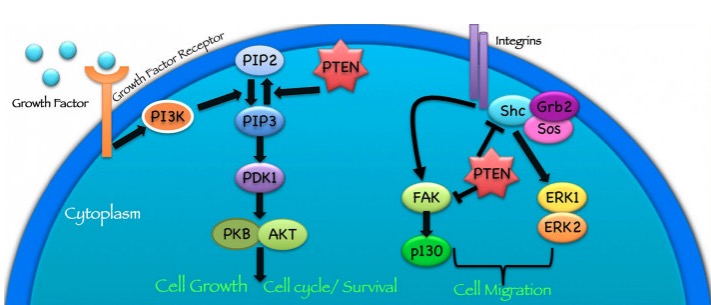
  • La proteína PTEN:
    • Promueve la muerte celular al AL Amyloidosis restringir las señales de crecimiento y supervivencia, lo que permite una muerte celular normal
    • Controla negativamente la vía para regular Regular Insulin el crecimiento y la supervivencia celular (vía de la fosfatidilinositol-3-quinasa (PI3K, por sus siglas en EN Erythema nodosum is an immune-mediated panniculitis (inflammation of the subcutaneous fat) caused by a type IV (delayed-type) hypersensitivity reaction. It commonly manifests in young women as tender, erythematous nodules on the shins. Erythema Nodosum inglés)/AKT/diana de la rapamicina en EN Erythema nodosum is an immune-mediated panniculitis (inflammation of the subcutaneous fat) caused by a type IV (delayed-type) hypersensitivity reaction. It commonly manifests in young women as tender, erythematous nodules on the shins. Erythema Nodosum mamíferos ( mTOR mTOR Peutz-Jeghers Syndrome, por sus siglas en EN Erythema nodosum is an immune-mediated panniculitis (inflammation of the subcutaneous fat) caused by a type IV (delayed-type) hypersensitivity reaction. It commonly manifests in young women as tender, erythematous nodules on the shins. Erythema Nodosum inglés))
  • El gen PTEN se pierde por una mutación de “segundo golpe” → PTEN no se expresa
  • Se pierde la regulación a la baja normal de la vía mTOR mTOR Peutz-Jeghers Syndrome → se pierde el control de la apoptosis Apoptosis A regulated cell death mechanism characterized by distinctive morphologic changes in the nucleus and cytoplasm, including the endonucleolytic cleavage of genomic DNA, at regularly spaced, internucleosomal sites, I.e., DNA fragmentation. It is genetically-programmed and serves as a balance to mitosis in regulating the size of animal tissues and in mediating pathologic processes associated with tumor growth. Ischemic Cell Damage → se produce una proliferación celular excesiva → crecimientos hamartomatosos → se desarrollan neoplasias
Fisiopatología de la proteína PTEN del síndrome de Cowden

Función de la proteína PTEN:
La proteína PTEN funciona de diferentes maneras para suprimir la formación y propagación de tumores.
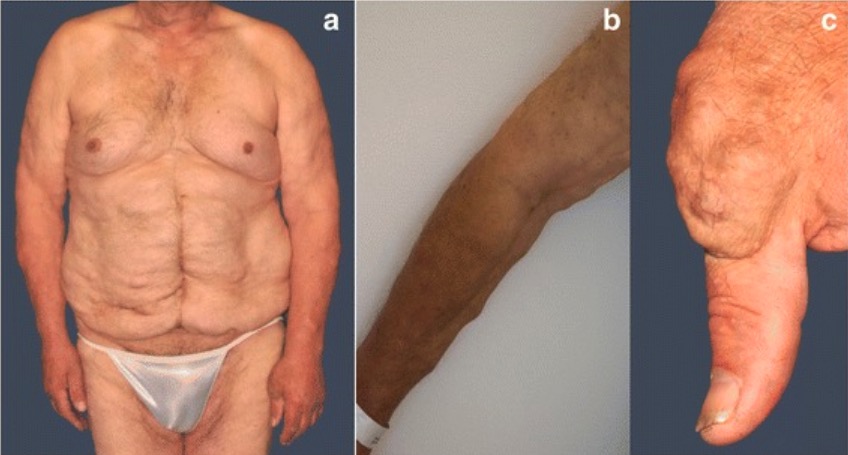
Imagen: “PTEN protein” por Front Oncol Feb 2015. doi: 10.3389/fonc.2015.00024. Licencia: CC BY 4.0

Presentación Clínica

Antecedentes

  • Por lo general, se presenta cuando los LOS Neisseria individuos se encuentran en EN Erythema nodosum is an immune-mediated panniculitis (inflammation of the subcutaneous fat) caused by a type IV (delayed-type) hypersensitivity reaction. It commonly manifests in young women as tender, erythematous nodules on the shins. Erythema Nodosum su 2da década de vida.
  • En EN Erythema nodosum is an immune-mediated panniculitis (inflammation of the subcutaneous fat) caused by a type IV (delayed-type) hypersensitivity reaction. It commonly manifests in young women as tender, erythematous nodules on the shins. Erythema Nodosum un principio, los LOS Neisseria pacientes refieren la aparición de lesiones en EN Erythema nodosum is an immune-mediated panniculitis (inflammation of the subcutaneous fat) caused by a type IV (delayed-type) hypersensitivity reaction. It commonly manifests in young women as tender, erythematous nodules on the shins. Erythema Nodosum piel y mucosas.
  • Las mujeres pueden quejarse de anormalidades menstruales debido a leiomiomas uterinos.
  • Los LOS Neisseria pólipos hamartomatosos en EN Erythema nodosum is an immune-mediated panniculitis (inflammation of the subcutaneous fat) caused by a type IV (delayed-type) hypersensitivity reaction. It commonly manifests in young women as tender, erythematous nodules on the shins. Erythema Nodosum el tracto gastrointestinal pueden causar dolor Dolor Inflammation y hemorragia.

Hallazgos

  • Cabeza: macrocefalia
  • Cavidad oral: papilomas
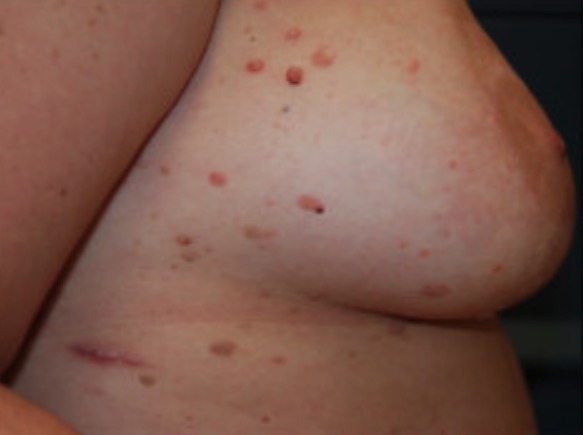
  • Piel: triquilemoma (pápulas verrugosas de color marrón amarillento), múltiples queratosis seborreicas
  • Tejidos blandos: hamartomas, lipomas o angiolipomas
  • Cuello: bocio, cáncer de tiroides
  • Mamas (tanto en EN Erythema nodosum is an immune-mediated panniculitis (inflammation of the subcutaneous fat) caused by a type IV (delayed-type) hypersensitivity reaction. It commonly manifests in young women as tender, erythematous nodules on the shins. Erythema Nodosum mujeres como en EN Erythema nodosum is an immune-mediated panniculitis (inflammation of the subcutaneous fat) caused by a type IV (delayed-type) hypersensitivity reaction. It commonly manifests in young women as tender, erythematous nodules on the shins. Erythema Nodosum hombres):
    • Masas mamarias
    • Cáncer de mama (cáncer más común en EN Erythema nodosum is an immune-mediated panniculitis (inflammation of the subcutaneous fat) caused by a type IV (delayed-type) hypersensitivity reaction. It commonly manifests in young women as tender, erythematous nodules on the shins. Erythema Nodosum el síndrome de Cowden)
  • Gastrointestinal: hemoccult (prueba de sangre oculta en EN Erythema nodosum is an immune-mediated panniculitis (inflammation of the subcutaneous fat) caused by a type IV (delayed-type) hypersensitivity reaction. It commonly manifests in young women as tender, erythematous nodules on the shins. Erythema Nodosum heces) positiva debido a pólipos colónicos o cáncer colorrectal
  • Genitourinario: fibromas, cáncer endometrial

Diagnóstico

Criterios diagnósticos

  • Uno de los LOS Neisseria siguientes cumple el diagnóstico operacional en EN Erythema nodosum is an immune-mediated panniculitis (inflammation of the subcutaneous fat) caused by a type IV (delayed-type) hypersensitivity reaction. It commonly manifests in young women as tender, erythematous nodules on the shins. Erythema Nodosum un individuo:
    • ≥ 3 criterios mayores (uno debe ser macrocefalia, enfermedad de Lhermitte-Duclos o hamartomas gastrointestinales)
    • 2 criterios mayores y 3 criterios menores
  • Uno de los LOS Neisseria siguientes cumple el diagnóstico operacional en EN Erythema nodosum is an immune-mediated panniculitis (inflammation of the subcutaneous fat) caused by a type IV (delayed-type) hypersensitivity reaction. It commonly manifests in young women as tender, erythematous nodules on the shins. Erythema Nodosum una familia (con 1 individuo que cumple los LOS Neisseria criterios del síndrome de hamartoma Hamartoma A focal malformation resembling a neoplasm, composed of an overgrowth of mature cells and tissues that normally occur in the affected area. Colorectal Cancer PTEN o tiene una mutación PTEN):
    • 2 criterios mayores
    • 1 criterio mayor y 2 criterios menores
    • 3 criterios menores
  • Criterios mayores:
    • Macrocefalia
    • Cáncer de tiroides (folicular)
    • Cáncer de mama
    • Cáncer endometrial
    • Enfermedad de Lhermitte-Duclos en EN Erythema nodosum is an immune-mediated panniculitis (inflammation of the subcutaneous fat) caused by a type IV (delayed-type) hypersensitivity reaction. It commonly manifests in young women as tender, erythematous nodules on the shins. Erythema Nodosum adultos (crecimientos hamartomatosos en EN Erythema nodosum is an immune-mediated panniculitis (inflammation of the subcutaneous fat) caused by a type IV (delayed-type) hypersensitivity reaction. It commonly manifests in young women as tender, erythematous nodules on the shins. Erythema Nodosum el cerebelo)
    • Hamartomas gastrointestinales o ganglioneuromas
    • Pigmentación macular del glande del pene
    • Múltiples lesiones mucocutáneas (e.g., al AL Amyloidosis menos un triquilemoma probado por biopsia)
  • Criterios menores:
    • Trastorno del espectro autista
    • Cáncer de colon Colon The large intestines constitute the last portion of the digestive system. The large intestine consists of the cecum, appendix, colon (with ascending, transverse, descending, and sigmoid segments), rectum, and anal canal. The primary function of the colon is to remove water and compact the stool prior to expulsion from the body via the rectum and anal canal. Colon, Cecum, and Appendix: Anatomy
    • Acantosis glucogénica del esófago (elevaciones gris-blancas de la mucosa)
    • Discapacidad intelectual
    • Lipomas
    • Carcinoma de células renales
    • Cáncer de tiroides (variante folicular de la papilar o papilar)
    • Lipomatosis testicular
    • Adenoma tiroideo o bocio
    • Anomalías vasculares (incluye anomalías venosas intracraneales)

Pruebas de laboratorio y procedimientos

Las pruebas de laboratorio están dirigidas por la presentación clínica, y el síndrome de Cowden puede presentarse con anemia Anemia Anemia is a condition in which individuals have low Hb levels, which can arise from various causes. Anemia is accompanied by a reduced number of RBCs and may manifest with fatigue, shortness of breath, pallor, and weakness. Subtypes are classified by the size of RBCs, chronicity, and etiology. Anemia: Overview and Types (por pérdidas gastrointestinales), enfermedad renal, enfermedad tiroidea y lesiones cutáneas.

  • Hemograma
  • Pruebas de función tiroidea (TSH, T4 T4 The major hormone derived from the thyroid gland. Thyroxine is synthesized via the iodination of tyrosines (monoiodotyrosine) and the coupling of iodotyrosines (diiodotyrosine) in the thyroglobulin. Thyroxine is released from thyroglobulin by proteolysis and secreted into the blood. Thyroxine is peripherally deiodinated to form triiodothyronine which exerts a broad spectrum of stimulatory effects on cell metabolism. Thyroid Hormones libre)
  • Química sanguínea
  • Prueba de sangre oculta en EN Erythema nodosum is an immune-mediated panniculitis (inflammation of the subcutaneous fat) caused by a type IV (delayed-type) hypersensitivity reaction. It commonly manifests in young women as tender, erythematous nodules on the shins. Erythema Nodosum heces
  • Análisis de orina
  • Pruebas de mutación del gen PTEN
  • Biopsia de piel (y otros tipos de cirugía)
  • Colonoscopia
  • Endoscopia superior

Diagnóstico por imagen

Basado en EN Erythema nodosum is an immune-mediated panniculitis (inflammation of the subcutaneous fat) caused by a type IV (delayed-type) hypersensitivity reaction. It commonly manifests in young women as tender, erythematous nodules on the shins. Erythema Nodosum el motivo de consulta, los LOS Neisseria estudios de imagen pueden incluir:
  • TC abdominal
  • RM abdominal
  • Ultrasonido de útero para leiomiomas
  • Mamografía y RM de la mama
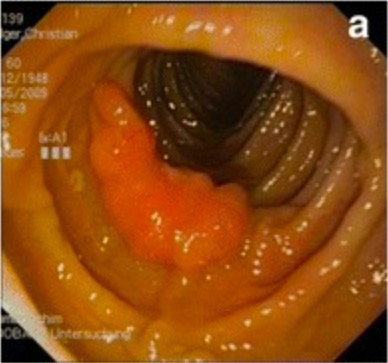
Colonoscopia que muestra tumor del colon descendente

Hamartoma de colon descendente en paciente con síndrome de Cowden

Imagen: “Preoperative colonoscopic views” por Pistorius et al. Licencia: CC BY 4.0, recortada por Lecturio.

Tratamiento

Vigilancia

  • El tratamiento se centra en EN Erythema nodosum is an immune-mediated panniculitis (inflammation of the subcutaneous fat) caused by a type IV (delayed-type) hypersensitivity reaction. It commonly manifests in young women as tender, erythematous nodules on the shins. Erythema Nodosum el tamizaje frecuente del cáncer.
  • Educación sobre los LOS Neisseria signos y síntomas del cáncer (e.g., sangrado uterino anormal como manifestación de cáncer endometrial)
  • Autoexámenes mamarios mensuales para mujeres
  • Examen clínico de las mamas cada 6 a 12 meses a la edad de 25 años o antes, dependiendo de los LOS Neisseria antecedentes familiares de cáncer de mama
  • Anamnesis y exámenes físicos anuales incluyendo:
    • Ultrasonido de tiroides (a partir de los LOS Neisseria 7 años)
    • Revisiones de piel
    • Tamizaje de función renal (considerar ultrasonido renal anual a partir de los LOS Neisseria 40 años)
  • Colonoscopia a partir de los LOS Neisseria 35 años:
    • Colonoscopia cada 5 años
    • Más frecuentemente si se presentan síntomas o pólipos
  • Mamografía y RM de la mama anualmente, a partir de los LOS Neisseria 30 a 35 años para las mujeres (o 5 a 10 años antes del diagnóstico de cáncer de mama más temprano en EN Erythema nodosum is an immune-mediated panniculitis (inflammation of the subcutaneous fat) caused by a type IV (delayed-type) hypersensitivity reaction. It commonly manifests in young women as tender, erythematous nodules on the shins. Erythema Nodosum la familia)

Tratamiento

  • Las lesiones benignas y malignas se tratan según las pautas habituales.
  • Se recomienda la resección de pólipos gastrointestinales
  • Las opciones de cirugías profilácticas se discuten con el individuo afectado:
    • Considerar la histerectomía cuando se haya paridad satisfecha
    • Considerar la mastectomía
  • Asesoramiento genético (y considerar la realización de pruebas) para los LOS Neisseria familiares

Complicaciones

  • Neoplasias:
    • Piel ( en EN Erythema nodosum is an immune-mediated panniculitis (inflammation of the subcutaneous fat) caused by a type IV (delayed-type) hypersensitivity reaction. It commonly manifests in young women as tender, erythematous nodules on the shins. Erythema Nodosum el 90%–100% de los LOS Neisseria casos)
    • Mama ( en EN Erythema nodosum is an immune-mediated panniculitis (inflammation of the subcutaneous fat) caused by a type IV (delayed-type) hypersensitivity reaction. It commonly manifests in young women as tender, erythematous nodules on the shins. Erythema Nodosum hasta el 50% de las mujeres)
    • Mucosa
    • Tracto gastrointestinal
    • Huesos
    • SNC
    • Ojos
    • Tracto genitourinario (útero, vejiga)
    • Tiroides ( en EN Erythema nodosum is an immune-mediated panniculitis (inflammation of the subcutaneous fat) caused by a type IV (delayed-type) hypersensitivity reaction. It commonly manifests in young women as tender, erythematous nodules on the shins. Erythema Nodosum el 66% de los LOS Neisseria casos)
  • Pólipos gastrointestinales
  • Tumores y trastornos de la tiroides

Pronóstico

  • Los LOS Neisseria pacientes pueden tener una esperanza de vida cercana a lo normal.
  • El tamizaje frecuente del cáncer y el diagnóstico oportuno mejoran los LOS Neisseria resultados.
  • La morbilidad y la mortalidad se asocian con ↑ frecuencia de tumores malignos
  • Los LOS Neisseria tumores benignos pueden causar una morbilidad significativa.
  • Al AL Amyloidosis menos el 40% de los LOS Neisseria pacientes tienen como mínimo 1 tumor Tumor Inflammation primario maligno.

Diagnóstico Diferencial

  • Cáncer de colon Colon The large intestines constitute the last portion of the digestive system. The large intestine consists of the cecum, appendix, colon (with ascending, transverse, descending, and sigmoid segments), rectum, and anal canal. The primary function of the colon is to remove water and compact the stool prior to expulsion from the body via the rectum and anal canal. Colon, Cecum, and Appendix: Anatomy hereditario no polipósico ( HNPCC HNPCC Lynch syndrome, also called hereditary non-polyposis colorectal cancer (HNPCC), is the most common inherited colon cancer syndrome, and carries a significantly increased risk for endometrial cancer and other malignancies. Lynch syndrome has an autosomal dominant inheritance pattern involving pathogenic variants in one of the mismatch repair (MMR) genes or epithelial cell adhesion molecule (EpCAM). Lynch syndrome): también conocido como síndrome de Lynch, un trastorno autosómico dominante causado por mutaciones en EN Erythema nodosum is an immune-mediated panniculitis (inflammation of the subcutaneous fat) caused by a type IV (delayed-type) hypersensitivity reaction. It commonly manifests in young women as tender, erythematous nodules on the shins. Erythema Nodosum los LOS Neisseria genes Genes A category of nucleic acid sequences that function as units of heredity and which code for the basic instructions for the development, reproduction, and maintenance of organisms. DNA Types and Structure reparadores de desajustes ( MMR MMR A DNA repair pathway involved in correction of errors introduced during DNA replication when an incorrect base, which cannot form hydrogen bonds with the corresponding base in the parent strand, is incorporated into the daughter strand. Excinucleases recognize the base pair mismatch and cause a segment of polynucleotide chain to be excised from the daughter strand, thereby removing the mismatched base. Lynch syndrome), que en EN Erythema nodosum is an immune-mediated panniculitis (inflammation of the subcutaneous fat) caused by a type IV (delayed-type) hypersensitivity reaction. It commonly manifests in young women as tender, erythematous nodules on the shins. Erythema Nodosum última instancia conduce al AL Amyloidosis desarrollo de cáncer colorrectal en EN Erythema nodosum is an immune-mediated panniculitis (inflammation of the subcutaneous fat) caused by a type IV (delayed-type) hypersensitivity reaction. It commonly manifests in young women as tender, erythematous nodules on the shins. Erythema Nodosum familiares de 1er grado. El tratamiento se basa en EN Erythema nodosum is an immune-mediated panniculitis (inflammation of the subcutaneous fat) caused by a type IV (delayed-type) hypersensitivity reaction. It commonly manifests in young women as tender, erythematous nodules on the shins. Erythema Nodosum la colectomía profiláctica y en EN Erythema nodosum is an immune-mediated panniculitis (inflammation of the subcutaneous fat) caused by a type IV (delayed-type) hypersensitivity reaction. It commonly manifests in young women as tender, erythematous nodules on the shins. Erythema Nodosum la endoscopia frecuente para la vigilancia.
  • Poliposis juvenil: una condición autosómica dominante caracterizada por el crecimiento de pólipos hamartomatosos (tipo juvenil) en EN Erythema nodosum is an immune-mediated panniculitis (inflammation of the subcutaneous fat) caused by a type IV (delayed-type) hypersensitivity reaction. It commonly manifests in young women as tender, erythematous nodules on the shins. Erythema Nodosum el colon Colon The large intestines constitute the last portion of the digestive system. The large intestine consists of the cecum, appendix, colon (with ascending, transverse, descending, and sigmoid segments), rectum, and anal canal. The primary function of the colon is to remove water and compact the stool prior to expulsion from the body via the rectum and anal canal. Colon, Cecum, and Appendix: Anatomy. La condición se asocia comúnmente con mutaciones en EN Erythema nodosum is an immune-mediated panniculitis (inflammation of the subcutaneous fat) caused by a type IV (delayed-type) hypersensitivity reaction. It commonly manifests in young women as tender, erythematous nodules on the shins. Erythema Nodosum los LOS Neisseria genes Genes A category of nucleic acid sequences that function as units of heredity and which code for the basic instructions for the development, reproduction, and maintenance of organisms. DNA Types and Structure SMAD4 y BMPR1A BMPR1A A subtype of bone morphogenetic protein receptors with high affinity for bone morphogenetic proteins. They can interact with and undergo phosphorylation by type II bone morphogenetic protein receptors. They signal primarily through receptor-regulated SMAD proteins. Familial Juvenile Polyposis. El diagnóstico se realiza visualizando >5 pólipos en EN Erythema nodosum is an immune-mediated panniculitis (inflammation of the subcutaneous fat) caused by a type IV (delayed-type) hypersensitivity reaction. It commonly manifests in young women as tender, erythematous nodules on the shins. Erythema Nodosum la colonoscopia, pólipos juveniles en EN Erythema nodosum is an immune-mediated panniculitis (inflammation of the subcutaneous fat) caused by a type IV (delayed-type) hypersensitivity reaction. It commonly manifests in young women as tender, erythematous nodules on the shins. Erythema Nodosum otras áreas del tracto gastrointestinal o cualquier número de pólipos más antecedentes familiares positivos. El tratamiento incluye evaluaciones, polipectomía y colectomía en EN Erythema nodosum is an immune-mediated panniculitis (inflammation of the subcutaneous fat) caused by a type IV (delayed-type) hypersensitivity reaction. It commonly manifests in young women as tender, erythematous nodules on the shins. Erythema Nodosum casos de neoplasia gastrointestinal sintomática, aumento de pólipos y cáncer colorrectal confirmado.
  • Cáncer colorrectal (CCR): la segunda causa principal de muertes relacionadas con el cáncer en EN Erythema nodosum is an immune-mediated panniculitis (inflammation of the subcutaneous fat) caused by a type IV (delayed-type) hypersensitivity reaction. It commonly manifests in young women as tender, erythematous nodules on the shins. Erythema Nodosum los LOS Neisseria Estados Unidos. El cáncer colorrectal es una enfermedad heterogénea, derivada de anomalías genéticas y epigenéticas, con influencia de factores ambientales. Casi todos los LOS Neisseria casos de CCR son adenocarcinoma. La mayoría de los LOS Neisseria casos son asintomáticos, por lo que el tamizaje es importante. El diagnóstico es por colonoscopia. El tratamiento es principalmente quirúrgico.
  • Cáncer de tiroides: malignidad de las células de la glándula tiroides, que puede surgir de las células foliculares de la tiroides o de las células C productoras de calcitonina. La exposición a la radiación ionizante y la deficiencia de yodo también se consideran factores de riesgo. El diagnóstico se realiza con pruebas de función tiroidea, imagenología (ultrasonido) y biopsia. El tratamiento es principalmente quirúrgico.
  • Leiomiomas uterinos: también conocidos como fibromas uterinos; son tumores benignos que surgen de las células del músculo liso en EN Erythema nodosum is an immune-mediated panniculitis (inflammation of the subcutaneous fat) caused by a type IV (delayed-type) hypersensitivity reaction. It commonly manifests in young women as tender, erythematous nodules on the shins. Erythema Nodosum el miometrio uterino. Los LOS Neisseria leiomiomas uterinos se presentan con hemorragia anormal y dolor Dolor Inflammation pélvico. Los LOS Neisseria fibromas son masas hipoecoicas, bien delimitadas y redondas en EN Erythema nodosum is an immune-mediated panniculitis (inflammation of the subcutaneous fat) caused by a type IV (delayed-type) hypersensitivity reaction. It commonly manifests in young women as tender, erythematous nodules on the shins. Erythema Nodosum el ultrasonido pélvico. Según los LOS Neisseria síntomas y las preferencias de la paciente, el tratamiento de los LOS Neisseria leiomiomas puede incluir la resección quirúrgica u opciones médicas para reducir el sangrado o el volumen.

Referencias

  1. Kumar V, Abbas A, Aster J, Perkins J. (2018). Robbins basic pathology. Philadelphia, Pennsylvania: Elsevier.
  2. Patraquim, C., Fernandes, V., Martins, S., Antunes, A., Marques, O., Carvalho, J. L., Correia-Pinto, J., Meireles, C., & Ferreira, A. M. (2017). A pediatric case of Cowden syndrome with Graves’ disease. Case Reports in Pediatrics, 2017, Article 2750523. https://doi.org/10.1155/2017/2750523
  3. Garofola C, Jamal Z, Gross GP. (2023). Cowden disease. StatPearls. Treasure Island (FL): StatPearls Publishing. Retrieved April 15, 2025, from http://www.ncbi.nlm.nih.gov/books/NBK525984/
  4. Stanich PP. (2025) PTEN hamartoma tumor syndromes, including Cowden syndrome. UpToDate. Retrieved April 15, 2025, from https://www.uptodate.com/contents/pten-hamartoma-tumor-syndromes-including-cowden-syndrome
  5. Ni, Y., He, X., Chen, J., Moline, J., Mester, J., Orloff, M. S., Ringel, M. D., & Eng, C. (2012). Germline SDHx variants modify breast and thyroid cancer risks in Cowden and Cowden-like syndrome via FAD/NAD-dependent destabilization of p53. Human Molecular Genetics, 21(2), 300–310. https://doi.org/10.1093/hmg/ddr459
  6. Orloff, M. S., He, X., Peterson, C., Chen, F., Chen, J.-L., Mester, J. L., & Eng, C. (2013). Germline PIK3CA and AKT1 mutations in Cowden and Cowden-like syndromes. American Journal of Human Genetics, 92(1), 76–80. https://doi.org/10.1016/j.ajhg.2012.10.021
  7. Fiala, K. (2023). Cowden Disease (Multiple Hamartoma Syndrome) Treatment & Management. Retrieved April 15, 2025, from https://emedicine.medscape.com/article/1093383treatment#d8

¡Crea tu cuenta gratis o inicia una sesión para seguir leyendo!

Regístrate ahora y obtén acceso gratuito a Lecturio con páginas de concepto, videos médicos y cuestionarios para tu educación médica.

User Reviews

Que tengas una sesión de estudio alegre y navideña 🎁 Ahorra 50% en todos los planes >>

Details