Domina Conceptos Médicos

Estudia para la escuela de medicina y tus examenes con Lecturio.

Schwannoma

Los LOS Neisseria schwannomas (también conocidos como neurilemomas) son tumores benignos de la vaina nerviosa del sistema nervioso periférico (SNP), que surgen de las células de Schwann, las cuales recubren los LOS Neisseria nervios periféricos. Los LOS Neisseria schwannomas son los LOS Neisseria tumores más comunes en EN Erythema nodosum is an immune-mediated panniculitis (inflammation of the subcutaneous fat) caused by a type IV (delayed-type) hypersensitivity reaction. It commonly manifests in young women as tender, erythematous nodules on the shins. Erythema Nodosum el SNP. Aunque los LOS Neisseria schwannomas son típicamente esporádicos, pueden estar asociados a la neurofibromatosis tipo II y a la schwannomatosis. La presentación clínica de los LOS Neisseria schwannomas depende de su localización específica, pero los LOS Neisseria signos y síntomas generales incluyen una masa palpable en EN Erythema nodosum is an immune-mediated panniculitis (inflammation of the subcutaneous fat) caused by a type IV (delayed-type) hypersensitivity reaction. It commonly manifests in young women as tender, erythematous nodules on the shins. Erythema Nodosum la piel, dolor Dolor Inflammation y/o parestesias debido a la compresión del nervio. El diagnóstico se establece principalmente por estudios de imagenología (RM o TC) y el tratamiento suele ser la resección quirúrgica.

Last updated: Dec 15, 2025

Editorial responsibility: Stanley Oiseth, Lindsay Jones, Evelin Maza

Descripción General

Definición

Los LOS Neisseria schwannomas son tumores benignos y encapsulados de la vaina nerviosa del sistema nervioso periférico, que surgen de las células de Schwann.

  • Las células de Schwann son un tipo de célula glial que se encuentra en EN Erythema nodosum is an immune-mediated panniculitis (inflammation of the subcutaneous fat) caused by a type IV (delayed-type) hypersensitivity reaction. It commonly manifests in young women as tender, erythematous nodules on the shins. Erythema Nodosum el sistema nervioso periférico:
    • Envuelven a las fibras nerviosas
    • Producen la vaina de mielina de los LOS Neisseria nervios periféricos
    • Ayudan a la regeneración de las fibras nerviosas dañadas
  • Los LOS Neisseria schwannomas están encapsulados con sus células de origen.
  • La transformación a una neoplasia maligna es rara pero posible.

Clasificación de los LOS Neisseria tumores del sistema nervioso

Tabla: Clasificación de los LOS Neisseria tumores del sistema nervioso
Categorías Tumores específicos
Tumores neuroepiteliales en EN Erythema nodosum is an immune-mediated panniculitis (inflammation of the subcutaneous fat) caused by a type IV (delayed-type) hypersensitivity reaction. It commonly manifests in young women as tender, erythematous nodules on the shins. Erythema Nodosum el SNC
  • Astrocitomas, incluido el glioblastoma multiforme Glioblastoma multiforme Glioblastoma multiforme is a high-grade astrocytoma, an aggressive brain tumor arising from astrocytes, with an unknown cause and a poorly understood link to risk factors. There are two main types: primary, a more aggressive form seen more commonly in older patients, and secondary, developing from lower-grade astrocytomas and seen more commonly in younger patients. Glioblastoma Multiforme
  • Oligodendroglioma Oligodendroglioma Oligodendrogliomas are malignant CNS tumors arising from neural glial cell precursors. Oligodendrogliomas often arise in the frontal lobes of the brain and have a generally favorable prognosis when compared to other gliomas. Oligodendrogliomas are the 3rd most common CNS tumor. The most frequent presenting symptom is a seizure. Oligodendroglioma
  • Ependimoma y tumores del plexo coroideo
  • Meduloblastomas (tumores embrionarios)
Tumores meníngeos
  • Meningiomas
  • Hemangioblastomas Hemangioblastomas A benign tumor of the nervous system that may occur sporadically or in association with von Hippel-Lindau disease. It accounts for approximately 2% of intracranial tumors, arising most frequently in the cerebellar hemispheres and vermis. Histologically, the tumors are composed of multiple capillary and sinusoidal channels lined with endothelial cells and clusters of lipid-laden pseudoxanthoma cells. Usually solitary, these tumors can be multiple and may also occur in the brain stem, spinal cord, retina, and supratentorial compartment. Cerebellar hemangioblastomas usually present in the third decade with intracranial hypertension, and ataxia. Von Hippel-Lindau Disease
Tumores de la región selar
  • Craneofaringioma
  • Adenoma hipofisario
  • Pinealoma/pinealoblastoma
Linfoma primario del SNC Linfoma primario del SNC
Metástasis al AL Amyloidosis cerebro (5 veces más común que los LOS Neisseria tumores cerebrales primarios) Más comúnmente surgen de:
  • Carcinomas de pulmón, mama y células renales
  • Melanoma Melanoma Melanoma is a malignant tumor arising from melanocytes, the melanin-producing cells of the epidermis. These tumors are most common in fair-skinned individuals with a history of excessive sun exposure and sunburns. Melanoma
Tumores periféricos
  • Schwannomas, incluido el neurinoma del acústico
  • Neuroblastoma Neuroblastoma Neuroblastoma is a malignancy that arises from the neural crest cell derivatives along the sympathetic chain (neuroblasts) and is most commonly located in the adrenal medulla. The tumor often presents in childhood with a flank mass that crosses the midline. Neuroblastoma

Epidemiología

  • Es el tumor Tumor Inflammation más común del sistema nervioso periférico
  • Prevalencia:
    • ~8% de todos los LOS Neisseria tumores intracraneales
    • 95% son esporádicos y típicamente unilaterales
  • Incidencia: ~1,0 por 100.000 personas-año en EN Erythema nodosum is an immune-mediated panniculitis (inflammation of the subcutaneous fat) caused by a type IV (delayed-type) hypersensitivity reaction. It commonly manifests in young women as tender, erythematous nodules on the shins. Erythema Nodosum Estados Unidos
  • Edad de máxima incidencia: de 20 a 60 años
  • No hay predilección por la raza, la etnia o el sexo
  • ~60% de los LOS Neisseria schwannomas benignos son vestibulares

Etiología

  • La causa es desconocida.
  • Algunos casos se asocian a:
    • Neurofibromatosis tipo II
    • Schwannomatosis
    • Complejo de Carney (trastorno caracterizado por tumores múltiples)

Fisiopatología

  • Gen NF2 NF2 Neurofibromatosis type 2 is a neurocutaneous disorder that can arise from mutations in the NF2 gene located in chromosome 22 and may be inherited in an autosomal dominant fashion or occur from de novo mutations. The main clinical features are bilateral vestibular schwannomas, intracranial/spinal meningioma, and intramedullary and extramedullary spinal tumors. Neurofibromatosis Type 2 en EN Erythema nodosum is an immune-mediated panniculitis (inflammation of the subcutaneous fat) caused by a type IV (delayed-type) hypersensitivity reaction. It commonly manifests in young women as tender, erythematous nodules on the shins. Erythema Nodosum el cromosoma 22:
    • Parece desempeñar un papel esencial en EN Erythema nodosum is an immune-mediated panniculitis (inflammation of the subcutaneous fat) caused by a type IV (delayed-type) hypersensitivity reaction. It commonly manifests in young women as tender, erythematous nodules on the shins. Erythema Nodosum el desarrollo del schwannoma Schwannoma Schwannomas (also known as neurilemmomas) are benign nerve sheath tumors in the peripheral nervous system (PNS), arising from Schwann cells that encase the peripheral nerves. Schwannomas are the most common tumors in the PNS. Schwannoma esporádico y sindrómico
    • Codifica para la proteína merlina (también conocida como schwannomina)
    • La proteína Merlina: es una proteína supresora de tumores que participa en EN Erythema nodosum is an immune-mediated panniculitis (inflammation of the subcutaneous fat) caused by a type IV (delayed-type) hypersensitivity reaction. It commonly manifests in young women as tender, erythematous nodules on the shins. Erythema Nodosum la organización del citoesqueleto
    • Mutaciones en EN Erythema nodosum is an immune-mediated panniculitis (inflammation of the subcutaneous fat) caused by a type IV (delayed-type) hypersensitivity reaction. It commonly manifests in young women as tender, erythematous nodules on the shins. Erythema Nodosum el gen NF2 NF2 Neurofibromatosis type 2 is a neurocutaneous disorder that can arise from mutations in the NF2 gene located in chromosome 22 and may be inherited in an autosomal dominant fashion or occur from de novo mutations. The main clinical features are bilateral vestibular schwannomas, intracranial/spinal meningioma, and intramedullary and extramedullary spinal tumors. Neurofibromatosis Type 2 → ↓ en EN Erythema nodosum is an immune-mediated panniculitis (inflammation of the subcutaneous fat) caused by a type IV (delayed-type) hypersensitivity reaction. It commonly manifests in young women as tender, erythematous nodules on the shins. Erythema Nodosum la formación de merlina
    • La inactivación de ambos alelos del NF2 NF2 Neurofibromatosis type 2 is a neurocutaneous disorder that can arise from mutations in the NF2 gene located in chromosome 22 and may be inherited in an autosomal dominant fashion or occur from de novo mutations. The main clinical features are bilateral vestibular schwannomas, intracranial/spinal meningioma, and intramedullary and extramedullary spinal tumors. Neurofibromatosis Type 2 es observable en EN Erythema nodosum is an immune-mediated panniculitis (inflammation of the subcutaneous fat) caused by a type IV (delayed-type) hypersensitivity reaction. It commonly manifests in young women as tender, erythematous nodules on the shins. Erythema Nodosum la mayoría de los LOS Neisseria casos de schwannoma Schwannoma Schwannomas (also known as neurilemmomas) are benign nerve sheath tumors in the peripheral nervous system (PNS), arising from Schwann cells that encase the peripheral nerves. Schwannomas are the most common tumors in the PNS. Schwannoma.
  • Complejo de Carney: pérdida de la expresión de PRKAR1A PRKAR1A Schwannoma (que codifica una subunidad reguladora de la proteína quinasa A)
  • La mayoría de los LOS Neisseria casos surgen de forma esporádica y con una lesión única: Las lesiones múltiples son más comunes cuando están asociadas a una condición genética.

Clasificación

Los LOS Neisseria schwannomas pueden clasificarse en EN Erythema nodosum is an immune-mediated panniculitis (inflammation of the subcutaneous fat) caused by a type IV (delayed-type) hypersensitivity reaction. It commonly manifests in young women as tender, erythematous nodules on the shins. Erythema Nodosum 1 de los LOS Neisseria 4 tipos primarios según su histología.

Tabla: Clasificación de los LOS Neisseria schwannomas
Tipo de schwannoma Schwannoma Schwannomas (also known as neurilemmomas) are benign nerve sheath tumors in the peripheral nervous system (PNS), arising from Schwann cells that encase the peripheral nerves. Schwannomas are the most common tumors in the PNS. Schwannoma Puntos clave
Schwannoma Schwannoma Schwannomas (also known as neurilemmomas) are benign nerve sheath tumors in the peripheral nervous system (PNS), arising from Schwann cells that encase the peripheral nerves. Schwannomas are the most common tumors in the PNS. Schwannoma clásico
  • Tipo más común
  • Encapsulados, tumores benignos
Schwannoma Schwannoma Schwannomas (also known as neurilemmomas) are benign nerve sheath tumors in the peripheral nervous system (PNS), arising from Schwann cells that encase the peripheral nerves. Schwannomas are the most common tumors in the PNS. Schwannoma celular
  • ↑ Celularidad y actividad mitótica
  • Sin potencial maligno
  • La recurrencia es mayor que en EN Erythema nodosum is an immune-mediated panniculitis (inflammation of the subcutaneous fat) caused by a type IV (delayed-type) hypersensitivity reaction. It commonly manifests in young women as tender, erythematous nodules on the shins. Erythema Nodosum el schwannoma Schwannoma Schwannomas (also known as neurilemmomas) are benign nerve sheath tumors in the peripheral nervous system (PNS), arising from Schwann cells that encase the peripheral nerves. Schwannomas are the most common tumors in the PNS. Schwannoma clásico.
  • Se encuentra principalmente en EN Erythema nodosum is an immune-mediated panniculitis (inflammation of the subcutaneous fat) caused by a type IV (delayed-type) hypersensitivity reaction. It commonly manifests in young women as tender, erythematous nodules on the shins. Erythema Nodosum la región paravertebral
Schwannoma Schwannoma Schwannomas (also known as neurilemmomas) are benign nerve sheath tumors in the peripheral nervous system (PNS), arising from Schwann cells that encase the peripheral nerves. Schwannomas are the most common tumors in the PNS. Schwannoma plexiforme
  • Agregación de schwannomas múltiples
  • Se forma a lo largo de un plexo nervioso (e.g., plexo braquial, plexo lumbosacro)
  • Puede asociarse a la neurofibromatosis tipo II y a la schwannomatosis
  • Alta tasa de recurrencia local
  • Sin potencial maligno
Schwannoma Schwannoma Schwannomas (also known as neurilemmomas) are benign nerve sheath tumors in the peripheral nervous system (PNS), arising from Schwann cells that encase the peripheral nerves. Schwannomas are the most common tumors in the PNS. Schwannoma melanótico
  • Potencial maligno
  • Raros, surgen alrededor de las raíces de los LOS Neisseria nervios espinales
  • Puede producir pigmentación con melanina A

Presentación Clínica

Localizaciones

Aparte de los LOS Neisseria neurinomas del acústico (que surgen del 8vo nervio craneal), los LOS Neisseria schwannomas pueden formarse en EN Erythema nodosum is an immune-mediated panniculitis (inflammation of the subcutaneous fat) caused by a type IV (delayed-type) hypersensitivity reaction. It commonly manifests in young women as tender, erythematous nodules on the shins. Erythema Nodosum diversas partes de todo el cuerpo:

  • Más comúnmente en EN Erythema nodosum is an immune-mediated panniculitis (inflammation of the subcutaneous fat) caused by a type IV (delayed-type) hypersensitivity reaction. It commonly manifests in young women as tender, erythematous nodules on the shins. Erythema Nodosum las extremidades superiores
  • Otros lugares comunes:
    • Cabeza
    • Tronco
    • Superficies flexoras de las extremidades inferiores
  • Lugares menos comunes/raros:
    • Raíces espinales
    • Mediastino posterior
    • Retroperitoneo
    • Hueso
    • Tracto gastrointestinal
    • Hígado y páncreas
    • Tiroides y glándulas suprarrenales

Desarrollo de los LOS Neisseria síntomas

  • Los LOS Neisseria signos y síntomas del schwannoma Schwannoma Schwannomas (also known as neurilemmomas) are benign nerve sheath tumors in the peripheral nervous system (PNS), arising from Schwann cells that encase the peripheral nerves. Schwannomas are the most common tumors in the PNS. Schwannoma dependen de la localización específica del tumor Tumor Inflammation.
  • Los LOS Neisseria síntomas se desarrollan debido a la compresión local del nervio adyacente.
  • Los LOS Neisseria schwannomas suelen crecer lentamente y pueden existir durante años sin síntomas; la mayoría son asintomáticos.
  • El tiempo promedio desde el inicio de los LOS Neisseria síntomas hasta el diagnóstico es de 5,5 años.

Signos y síntomas

Cuando los LOS Neisseria síntomas se presentan, pueden incluir:

  • Masa circular palpable en EN Erythema nodosum is an immune-mediated panniculitis (inflammation of the subcutaneous fat) caused by a type IV (delayed-type) hypersensitivity reaction. It commonly manifests in young women as tender, erythematous nodules on the shins. Erythema Nodosum la piel
  • Sensibilidad a la palpación
  • Parestesias debido a la compresión del nervio
  • Debilidad y/o pérdida sensorial a lo largo de la distribución del nervio periférico afectado:
    • Dolor Dolor Inflammation radicular por pinzamiento del nervio espinal o del plexo
    • Schwannomas del nervio ciático: pueden presentarse de forma similar a la hernia Hernia Protrusion of tissue, structure, or part of an organ through the bone, muscular tissue, or the membrane by which it is normally contained. Hernia may involve tissues such as the abdominal wall or the respiratory diaphragm. Hernias may be internal, external, congenital, or acquired. Abdominal Hernias discal con síntomas radiculares en EN Erythema nodosum is an immune-mediated panniculitis (inflammation of the subcutaneous fat) caused by a type IV (delayed-type) hypersensitivity reaction. It commonly manifests in young women as tender, erythematous nodules on the shins. Erythema Nodosum la espalda baja y en EN Erythema nodosum is an immune-mediated panniculitis (inflammation of the subcutaneous fat) caused by a type IV (delayed-type) hypersensitivity reaction. It commonly manifests in young women as tender, erythematous nodules on the shins. Erythema Nodosum las extremidades inferiores
    • Afectación de la raíz nerviosa en EN Erythema nodosum is an immune-mediated panniculitis (inflammation of the subcutaneous fat) caused by a type IV (delayed-type) hypersensitivity reaction. It commonly manifests in young women as tender, erythematous nodules on the shins. Erythema Nodosum C7: puede producir un síndrome de la salida torácica
    • Tobillo: síntomas del túnel tarsiano
    • Muñeca: síntomas del túnel carpiano
    • Afectación del trigémino: provoca entumecimiento o dolor Dolor Inflammation en EN Erythema nodosum is an immune-mediated panniculitis (inflammation of the subcutaneous fat) caused by a type IV (delayed-type) hypersensitivity reaction. It commonly manifests in young women as tender, erythematous nodules on the shins. Erythema Nodosum la distribución del nervio trigémino
  • Los LOS Neisseria neurinomas del acústico se presentan con:
    • Disminución de la audición
    • Tinnitus Tinnitus A nonspecific symptom of hearing disorder characterized by the sensation of buzzing, ringing, clicking, pulsations, and other noises in the ear. Objective tinnitus refers to noises generated from within the ear or adjacent structures that can be heard by other individuals. The term subjective tinnitus is used when the sound is audible only to the affected individual. Tinnitus may occur as a manifestation of cochlear diseases; vestibulocochlear nerve diseases; intracranial hypertension; craniocerebral trauma; and other conditions. Cranial Nerve Palsies
    • Alteraciones en EN Erythema nodosum is an immune-mediated panniculitis (inflammation of the subcutaneous fat) caused by a type IV (delayed-type) hypersensitivity reaction. It commonly manifests in young women as tender, erythematous nodules on the shins. Erythema Nodosum el equilibrio

Diagnóstico

Tras los LOS Neisseria antecedentes clínicos y un examen sugestivos, el diagnóstico se establece principalmente mediante imagenología y puede confirmarse con una biopsia.
Imagenología

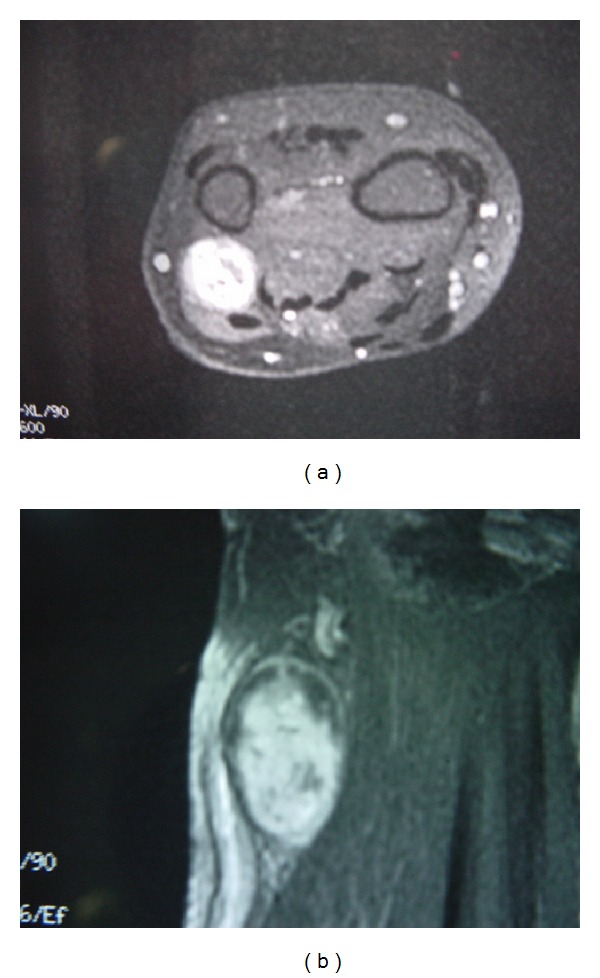
  • RM:
    • Imagenologia de elección
    • Masa ovalada o redonda que se realza uniformemente con el contraste de gadolinio
    • RM ponderada en EN Erythema nodosum is an immune-mediated panniculitis (inflammation of the subcutaneous fat) caused by a type IV (delayed-type) hypersensitivity reaction. It commonly manifests in young women as tender, erythematous nodules on the shins. Erythema Nodosum T1: isodensa (o hipodensa) al AL Amyloidosis músculo
    • RM ponderada en EN Erythema nodosum is an immune-mediated panniculitis (inflammation of the subcutaneous fat) caused by a type IV (delayed-type) hypersensitivity reaction. It commonly manifests in young women as tender, erythematous nodules on the shins. Erythema Nodosum T2: hiperdensa al AL Amyloidosis músculo
    • Puede haber el signo de la diana:
      • Zona de hipodensidad central con una hiperintensidad periférica en EN Erythema nodosum is an immune-mediated panniculitis (inflammation of the subcutaneous fat) caused by a type IV (delayed-type) hypersensitivity reaction. It commonly manifests in young women as tender, erythematous nodules on the shins. Erythema Nodosum señal T2
      • Signo más específico de un tumor Tumor Inflammation de la vaina del nervio periférico
      • No es específico para el schwannoma Schwannoma Schwannomas (also known as neurilemmomas) are benign nerve sheath tumors in the peripheral nervous system (PNS), arising from Schwann cells that encase the peripheral nerves. Schwannomas are the most common tumors in the PNS. Schwannoma
  • TC:
  • Ultrasonido:
    • Puede detectar schwannomas debajo de la piel
    • Útil durante la cirugía
RM que muestra un schwannoma

RM que muestra un schwannoma que afecta a la rama cutánea dorsal del nervio cubital

Imagen: “Schwannoma in the upper limbs” por Tang CY, Fung B, Fok M, Zhu J Licencia: CC BY 3.0

Biopsia e histopatología

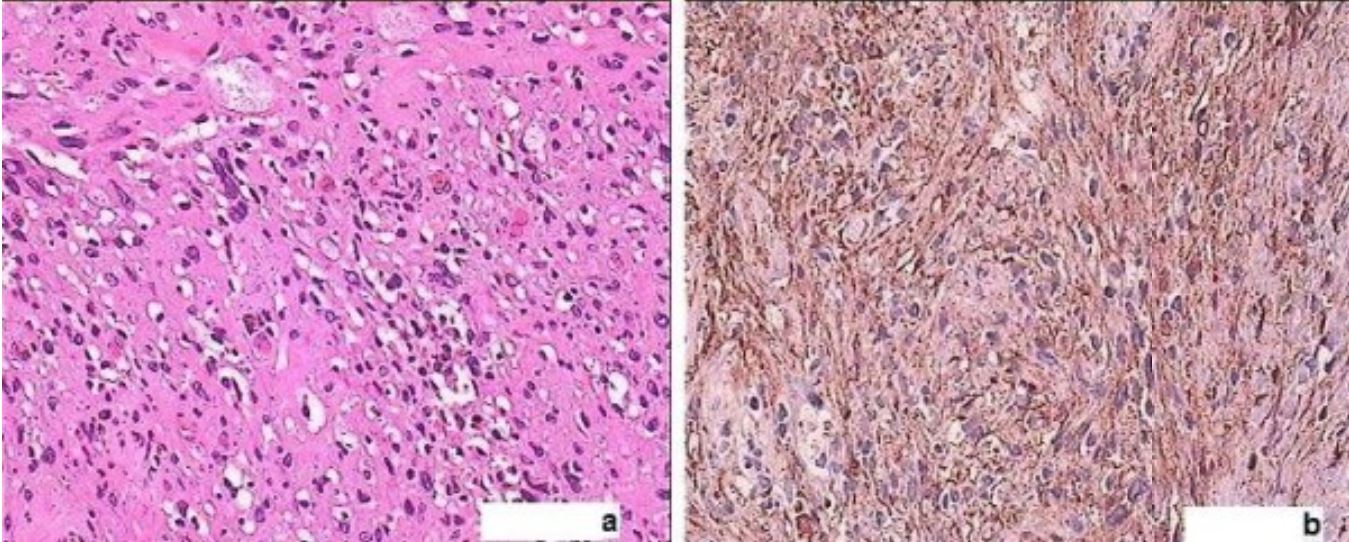
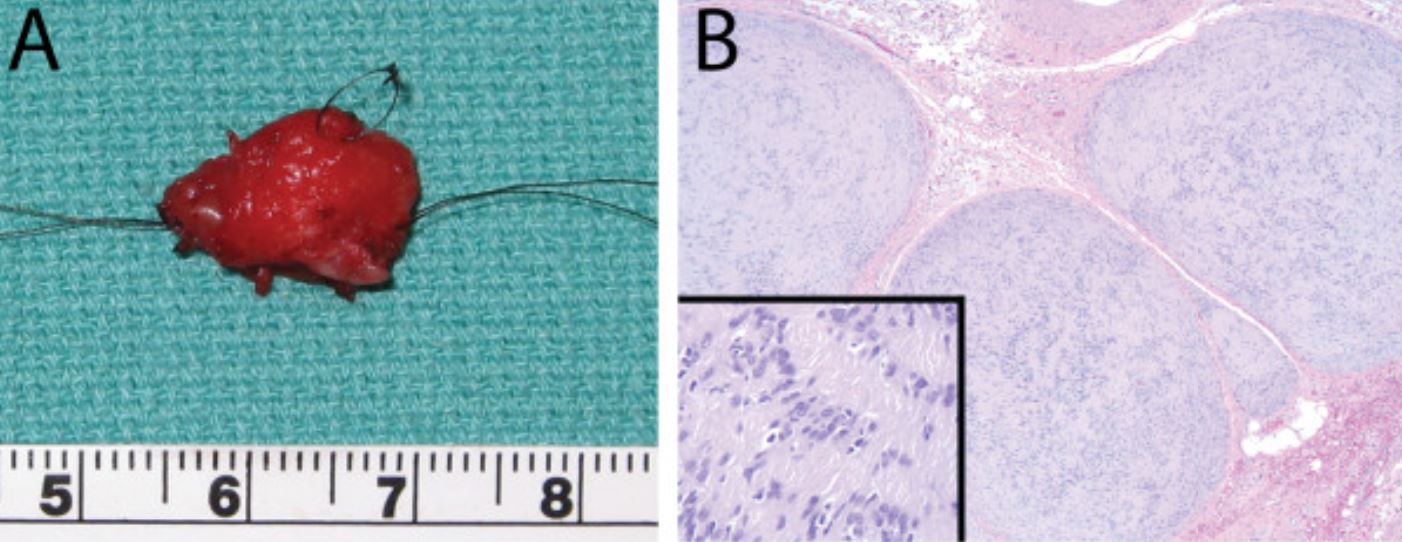
Schwannomas clásicos:

  • Rodeado por una cápsula fibrosa bien definida
  • Contiene 2 áreas histológicas distintas:
    • Área de Antoni A:
      • Área hipercelular densa
      • Células fusiformes predominantemente benignas en EN Erythema nodosum is an immune-mediated panniculitis (inflammation of the subcutaneous fat) caused by a type IV (delayed-type) hypersensitivity reaction. It commonly manifests in young women as tender, erythematous nodules on the shins. Erythema Nodosum haces de intersección
      • Puede empalizar alrededor de las zonas eosinófilas (cuerpos de Verocay)
      • Positivo para la tinción de la proteína S100 S100 A family of highly acidic calcium-binding proteins found in large concentration in the brain and believed to be glial in origin. They are also found in other organs in the body. They have in common the ef-hand motif (ef hand motifs) found on a number of calcium binding proteins. The name of this family derives from the property of being soluble in a 100% saturated ammonium sulfate solution. Acoustic Neuroma
    • Área de Antoni B:
      • Zona muy poco densa, hipocelular, mixoide
      • Fondo de tejido conectivo hialino (de aspecto mixomatoso).
  • Cambios degenerativos en EN Erythema nodosum is an immune-mediated panniculitis (inflammation of the subcutaneous fat) caused by a type IV (delayed-type) hypersensitivity reaction. It commonly manifests in young women as tender, erythematous nodules on the shins. Erythema Nodosum los LOS Neisseria schwannomas de larga duración (a veces denominados “antiguos”):
    • Marcado pleomorfismo nuclear
    • Quistes degenerativos
    • Signos de hemorragia y calcificaciones remotas
    • Hialinización de los LOS Neisseria vasos sanguíneos

Características distintivas de otros tipos:
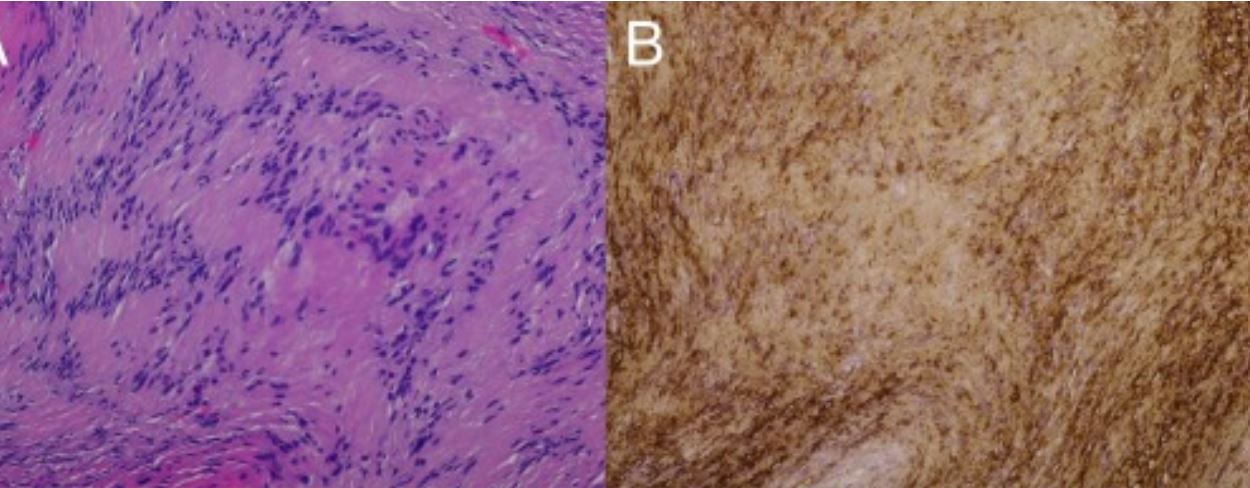
  • Schwannomas celulares:
    • Con predominio de área de Antoni A sin cuerpos de Verocay
    • ↑ Celularidad y actividad mitótica
    • Puede ser localmente destructivo
    • Tendrá una tinción positiva para la proteína S100 S100 A family of highly acidic calcium-binding proteins found in large concentration in the brain and believed to be glial in origin. They are also found in other organs in the body. They have in common the ef-hand motif (ef hand motifs) found on a number of calcium binding proteins. The name of this family derives from the property of being soluble in a 100% saturated ammonium sulfate solution. Acoustic Neuroma
  • Schwannomas plexiformes:
    • Agrupaciones de múltiples schwannomas: patrón de crecimiento plexiforme que involucra múltiples fascículos
    • Menos circunscrito y puede incluso carecer de cápsula
    • Con predominio de área de Antoni A
    • ↑ Celularidad y actividad mitótica
  • Schwannomas melanóticos:
    • Muestra una densa pigmentación de melanina
    • Puede teñirse positivamente para:
      • Melan-A
      • Proteína ácida fibrilar glial (la cual es más comúnmente observada en EN Erythema nodosum is an immune-mediated panniculitis (inflammation of the subcutaneous fat) caused by a type IV (delayed-type) hypersensitivity reaction. It commonly manifests in young women as tender, erythematous nodules on the shins. Erythema Nodosum astrocitomas)
      • Proteínas de los LOS Neisseria neurofilamentos

Clasificación

Los LOS Neisseria schwannomas se suelen clasificar según el sistema de Enneking de lesiones benignas. Existen 3 grados y la mayoría de los LOS Neisseria schwannomas son lesiones de grado II o III.

  • Grado I: lesiones inactivas
  • Grado II: no es destructivo ni agresivo localmente, pero puede provocar la deformación de los LOS Neisseria tejidos circundantes
  • Grado III: localmente agresivo y puede invadir los LOS Neisseria tejidos locales pero no es metastásico

Tratamiento

Casos asintomáticos

  • Observación y seguimiento
  • Considerar una biopsia.

Casos sintomáticos

El tratamiento es recomendando para los LOS Neisseria pacientes con déficits funcionales y/o dolor Dolor Inflammation debido a la compresión del nervio.

  • Escisión quirúrgica (pilar del tratamiento):
  • Radioterapia:
    • Puede considerarse, especialmente en EN Erythema nodosum is an immune-mediated panniculitis (inflammation of the subcutaneous fat) caused by a type IV (delayed-type) hypersensitivity reaction. It commonly manifests in young women as tender, erythematous nodules on the shins. Erythema Nodosum pacientes con neurinomas del acústico o en EN Erythema nodosum is an immune-mediated panniculitis (inflammation of the subcutaneous fat) caused by a type IV (delayed-type) hypersensitivity reaction. It commonly manifests in young women as tender, erythematous nodules on the shins. Erythema Nodosum tumores cerca de vasos sanguíneos o nervios vitales
    • Normalmente no es necesario debido al AL Amyloidosis bajo riesgo de metástasis y recurrencia

Diagnóstico Diferencial

  • Neurofibroma Neurofibroma A moderately firm, benign, encapsulated tumor resulting from proliferation of schwann cells and fibroblasts that includes portions of nerve fibers. The tumors usually develop along peripheral or cranial nerves and are a central feature of neurofibromatosis 1, where they may occur intracranially or involve spinal roots. Pathologic features include fusiform enlargement of the involved nerve. Microscopic examination reveals a disorganized and loose cellular pattern with elongated nuclei intermixed with fibrous strands. Neurofibromatosis Type 1: otro tumor Tumor Inflammation benigno del sistema nervioso periférico, que surge de una mezcla de células de Schwann, células perineurales, fibras nerviosas, estroma mixoide y fibroblastos. Los LOS Neisseria neurofibromas pueden surgir de forma esporádica o en EN Erythema nodosum is an immune-mediated panniculitis (inflammation of the subcutaneous fat) caused by a type IV (delayed-type) hypersensitivity reaction. It commonly manifests in young women as tender, erythematous nodules on the shins. Erythema Nodosum asociación con la neurofibromatosis tipo I. Los LOS Neisseria neurofibromas se presentan como una masa circular palpable en EN Erythema nodosum is an immune-mediated panniculitis (inflammation of the subcutaneous fat) caused by a type IV (delayed-type) hypersensitivity reaction. It commonly manifests in young women as tender, erythematous nodules on the shins. Erythema Nodosum la piel acompañada de dolor Dolor Inflammation, parestesia y sangrado. El diagnóstico se realiza mediante imagenología y biopsia y el tratamiento es la observación o en EN Erythema nodosum is an immune-mediated panniculitis (inflammation of the subcutaneous fat) caused by a type IV (delayed-type) hypersensitivity reaction. It commonly manifests in young women as tender, erythematous nodules on the shins. Erythema Nodosum pacientes sintomáticos, la resección quirúrgica.
  • Tumor Tumor Inflammation maligno de la vaina del nervio periférico: también denominados schwannomas malignos, son sarcomas altamente malignos y localmente invasivos. Estos tumores no proceden de schwannomas benignos, sino que surgen de mutaciones de novo o de la degeneración de neurofibromas plexiformes. Los LOS Neisseria tumores malignos de la vaina del nervio periférico están fuertemente asociados a la neurofibromatosis tipo I y a mutaciones en EN Erythema nodosum is an immune-mediated panniculitis (inflammation of the subcutaneous fat) caused by a type IV (delayed-type) hypersensitivity reaction. It commonly manifests in young women as tender, erythematous nodules on the shins. Erythema Nodosum el gen NF1 NF1 Neurofibromatosis type 1 (NF1), also known as phakomatosis, is a neurocutaneous disorder that is most commonly of autosomal dominant inheritance due to mutations in the NF1 gene. Neurofibromatosis type 1 presents a range of clinical manifestations with the most prominent features being various pigmented skin lesions called café au lait macules (CALMs), neurofibromas, freckling of the inguinal and axillary regions, and iris hamartomas. Neurofibromatosis Type 1. Estos tumores pueden parecer similares a los LOS Neisseria schwannomas celulares o plexiformes, pero los LOS Neisseria MPNST generalmente no expresan la proteína S100 S100 A family of highly acidic calcium-binding proteins found in large concentration in the brain and believed to be glial in origin. They are also found in other organs in the body. They have in common the ef-hand motif (ef hand motifs) found on a number of calcium binding proteins. The name of this family derives from the property of being soluble in a 100% saturated ammonium sulfate solution. Acoustic Neuroma.
  • Perineurioma: tumores benignos del sistema nervioso periferico que surgen de las células perineurales. Los LOS Neisseria perineuriomas son más comúnmente esporádicos y se presentan con masas cutáneas palpables a lo largo de los LOS Neisseria grandes nervios, dolor Dolor Inflammation y parestesias. Al AL Amyloidosis igual que en EN Erythema nodosum is an immune-mediated panniculitis (inflammation of the subcutaneous fat) caused by a type IV (delayed-type) hypersensitivity reaction. It commonly manifests in young women as tender, erythematous nodules on the shins. Erythema Nodosum el caso de los LOS Neisseria schwannomas, el diagnóstico se realiza mediante imagenología y biopsia y el tratamiento es la resección quirúrgica en EN Erythema nodosum is an immune-mediated panniculitis (inflammation of the subcutaneous fat) caused by a type IV (delayed-type) hypersensitivity reaction. It commonly manifests in young women as tender, erythematous nodules on the shins. Erythema Nodosum pacientes sintomáticos.
  • Ganglioneuroma: son tumores grandes, encapsulados y de crecimiento lento, que surgen de las células ganglionares simpáticas. Los LOS Neisseria ganglioneuromas pueden aparecer en EN Erythema nodosum is an immune-mediated panniculitis (inflammation of the subcutaneous fat) caused by a type IV (delayed-type) hypersensitivity reaction. It commonly manifests in young women as tender, erythematous nodules on the shins. Erythema Nodosum cualquier lugar de la cadena simpática. La presentación clínica depende de su localización específica, las localizaciones comunes incluyen el mediastino, el retroperitoneo y las glándulas suprarrenales y los LOS Neisseria síntomas se deben al AL Amyloidosis efecto de masa (e.g., estreñimiento, dolor Dolor Inflammation radicular). El diagnóstico se realiza mediante imagenología y biopsia y el tratamiento es la resección quirúrgica.
  • Quiste ganglionar: tumores quísticos benignos llenos de un líquido mucinoso y gelatinoso que surgen de una herniación del tejido conectivo asociado a las articulaciones o tendones cercanos. Los LOS Neisseria quistes ganglionares se forman principalmente en EN Erythema nodosum is an immune-mediated panniculitis (inflammation of the subcutaneous fat) caused by a type IV (delayed-type) hypersensitivity reaction. It commonly manifests in young women as tender, erythematous nodules on the shins. Erythema Nodosum el dorso de la muñeca y su presentación está relacionada con la presión sobre los LOS Neisseria nervios circundantes, por consiguiente causa dolor Dolor Inflammation, entumecimiento y debilidad. El diagnóstico se realiza mediante los LOS Neisseria antecedentes clínicos y los LOS Neisseria resultados de la exploración física, así como mediante radiografías simples, RM o ultrasonidos. El tratamiento sintomático es con aspiración o cirugía (abierta o artroscópica).
  • Lipoma Lipoma A lipoma is a benign neoplasm of fat cells (adipocytes) and the most common soft tissue tumor in adults. The etiology is unknown, but obesity is a predisposing factor; genetics also play a role, with multiple lipomas occurring in various inherited disorders. Lipoma: tumores benignos de la grasa subcutánea que pueden aparecer en EN Erythema nodosum is an immune-mediated panniculitis (inflammation of the subcutaneous fat) caused by a type IV (delayed-type) hypersensitivity reaction. It commonly manifests in young women as tender, erythematous nodules on the shins. Erythema Nodosum cualquier parte del cuerpo. Los LOS Neisseria lipomas suelen ser nódulos blandos e indoloros. El diagnóstico suele ser clínico, aunque el ultrasonido puede ayudar a distinguir un lipoma Lipoma A lipoma is a benign neoplasm of fat cells (adipocytes) and the most common soft tissue tumor in adults. The etiology is unknown, but obesity is a predisposing factor; genetics also play a role, with multiple lipomas occurring in various inherited disorders. Lipoma de las estructuras quísticas. El tratamiento es la observación o la escisión quirúrgica.

Referencias

  1. Gilchrist, JM, Donahue, JE. (2025). Peripheral nerve tumors. UpToDate. Retrieved May 29, 2025, from https://www.uptodate.com/contents/peripheral-nerve-tumors
  2. Laufer, I, Bilsky, M. (2025). Intradural nerve sheath tumors. UpToDate. Retrieved May 29, 2025, from https://www.uptodate.com/contents/intradural-nerve-sheath-tumors
  3. Dickey, ID. (2024). Neurilemmoma (Schwannoma): Practice essentials, etiology, epidemiology. Medscape. Retrieved May 29, 2025, from https://emedicine.medscape.com/article/1256405-overview
  4. Davis, D. D., & Kane, S. M. (2025). Neurilemmoma. In StatPearls. StatPearls Publishing. Retrieved May 29, 2025, from https://pubmed.ncbi.nlm.nih.gov/32809662/
  5. Sheikh, MM, De Jesus, O. (2023). Schwannoma. StatPearls. Retrieved May 29, 2025, from https://www.statpearls.com/articlelibrary/viewarticle/28766/

¡Crea tu cuenta gratis o inicia una sesión para seguir leyendo!

Regístrate ahora y obtén acceso gratuito a Lecturio con páginas de concepto, videos médicos y cuestionarios para tu educación médica.

User Reviews

Que tengas una sesión de estudio alegre y navideña 🎁 Ahorra 50% en todos los planes >>

Details