
Domina Conceptos Médicos

Estudia para la escuela de medicina y tus examenes con Lecturio.

Parvovirus B19

El eritroparvovirus 1 de primates (generalmente denominado parvovirus B19, virus B19 o, a veces, eritrovirus B19) se encuentra entre los virus de ADN más pequeños. El parvovirus B19 pertenece a la familia Parvoviridae y al género Erythroparvovirus. En los seres humanos inmunocompetentes, el parvovirus B19 provoca clásicamente el eritema infeccioso (5ta enfermedad) o "síndrome de mejilla abofeteada". Otras manifestaciones varían con el estado inmunológico y hematológico del huésped debido al AL Amyloidosis tropismo viral por los LOS Neisseria precursores eritrocitarios. El diagnóstico es principalmente clínico y el tratamiento es generalmente de soporte.

Last updated: Dec 29, 2025
Editorial responsibility: Stanley Oiseth, Lindsay Jones, Evelin Maza

Clasificación

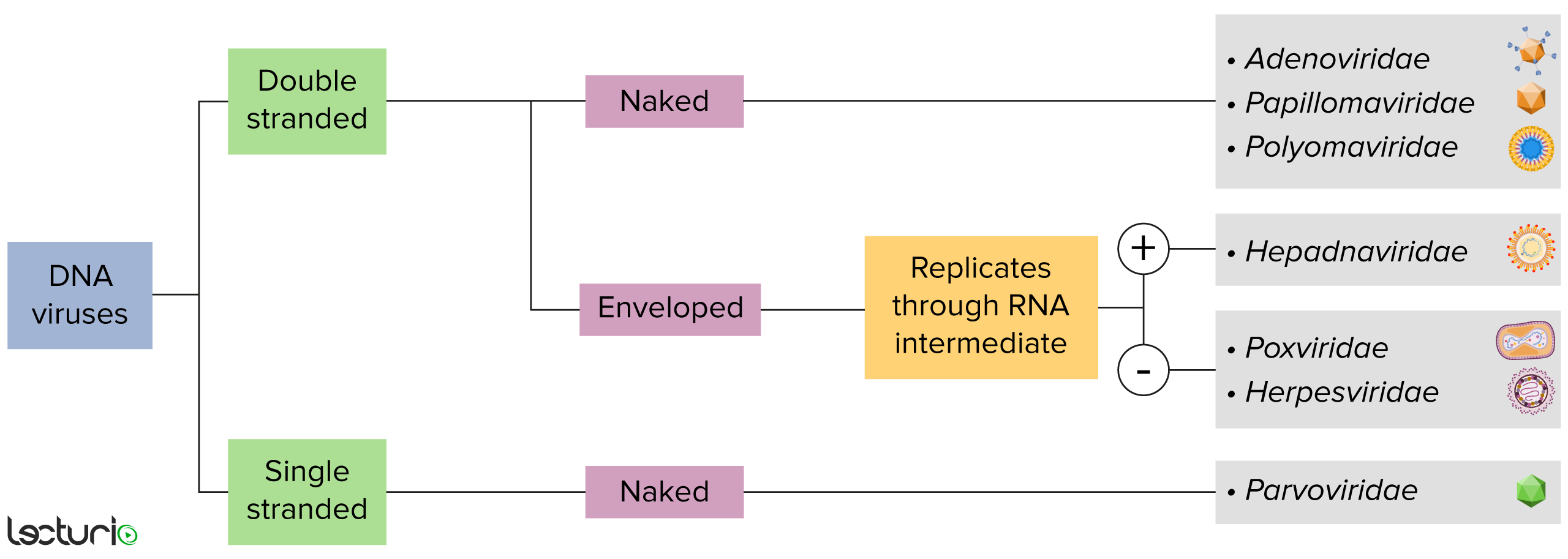
Diagrama de flujo de la clasificación de los virus del ADN

Identificación de virus de ADN:
Los virus pueden clasificarse de muchas maneras. Sin embargo, la mayoría de los virus tienen un genoma formado por ADN o ARN. Los virus con un genoma de ADN pueden caracterizarse además como monocatenario o bicatenario. Los virus “envueltos” están cubiertos por una fina capa de membrana celular, que generalmente es tomado de la célula huésped. Sin embargo, si la capa está ausente, los virus se denominan “desnudos”. Algunos virus con envoltura traducen el ADN en ARN antes de incorporarse al genoma de la célula huésped.
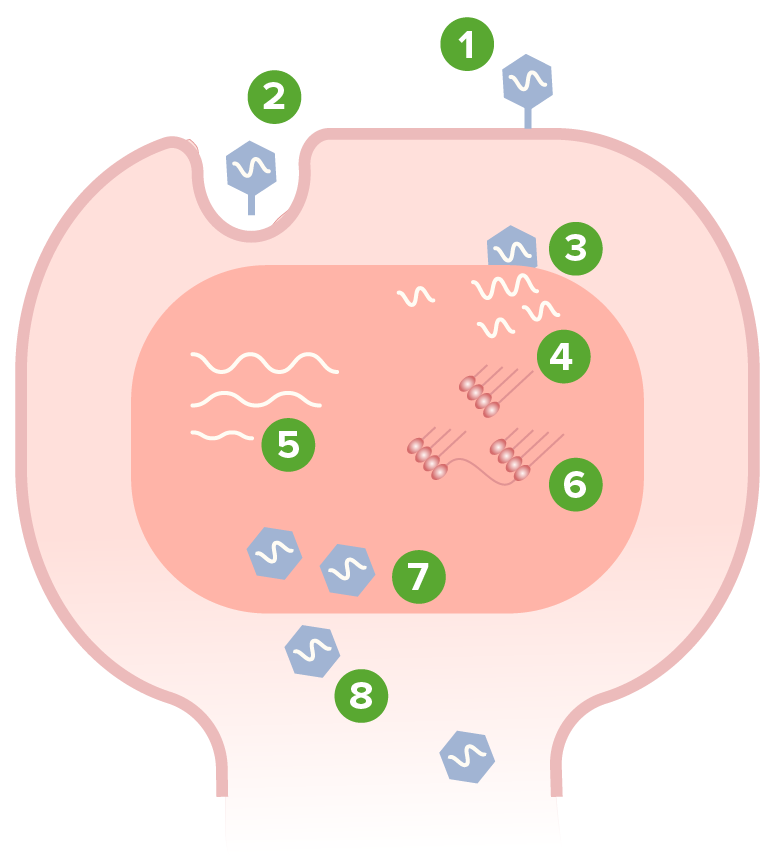
Imagen por Lecturio. Licencia: CC BY-NC-SA 4.0

Características Generales

Estructura

  • Familia Parvoviridae Parvoviridae A family of very small DNA viruses containing a single molecule of single-stranded DNA and consisting of two subfamilies: parvovirinae and densovirinae. They infect both vertebrates and invertebrates. Parvovirus B19
  • Género Erythroparvovirus Erythroparvovirus Parvovirus B19
  • No envuelto, cápside icosaédrica y genoma de ADN monocatenario lineal
  • Muy pequeño: aproximadamente 22–24 nm de diámetro

Características básicas

  • Descubierto en EN Erythema nodosum is an immune-mediated panniculitis (inflammation of the subcutaneous fat) caused by a type IV (delayed-type) hypersensitivity reaction. It commonly manifests in young women as tender, erythematous nodules on the shins. Erythema Nodosum 1974
  • Dificultad para propagar el virus Virus Viruses are infectious, obligate intracellular parasites composed of a nucleic acid core surrounded by a protein capsid. Viruses can be either naked (non-enveloped) or enveloped. The classification of viruses is complex and based on many factors, including type and structure of the nucleoid and capsid, the presence of an envelope, the replication cycle, and the host range. Virology en EN Erythema nodosum is an immune-mediated panniculitis (inflammation of the subcutaneous fat) caused by a type IV (delayed-type) hypersensitivity reaction. It commonly manifests in young women as tender, erythematous nodules on the shins. Erythema Nodosum cultivos celulares estándar
  • Tropismo único por las células progenitoras eritroides humanas

Epidemiología y Patogénesis

Epidemiología

  • La infección se produce a todas las edades, pero es más frecuente en EN Erythema nodosum is an immune-mediated panniculitis (inflammation of the subcutaneous fat) caused by a type IV (delayed-type) hypersensitivity reaction. It commonly manifests in young women as tender, erythematous nodules on the shins. Erythema Nodosum niños de 3–15 años.
  • Los LOS Neisseria brotes suelen producirse en EN Erythema nodosum is an immune-mediated panniculitis (inflammation of the subcutaneous fat) caused by a type IV (delayed-type) hypersensitivity reaction. It commonly manifests in young women as tender, erythematous nodules on the shins. Erythema Nodosum escuelas y guarderías, y son más frecuentes entre finales de invierno y principios de verano.
  • El 90% de los LOS Neisseria pacientes ≥ 60 años son seropositivos.

Patogénesis

  • Reservorios:
    • Los LOS Neisseria parvovirus suelen causar enfermedad en EN Erythema nodosum is an immune-mediated panniculitis (inflammation of the subcutaneous fat) caused by a type IV (delayed-type) hypersensitivity reaction. It commonly manifests in young women as tender, erythematous nodules on the shins. Erythema Nodosum animales e insectos.
    • El B19 es el principal patógeno del parvovirus humano.
  • Transmisión:
    • Gotículas respiratorias infectadas
    • Transmisión por sangre
    • El riesgo de ataque secundario para los LOS Neisseria miembros del hogar expuestos es del 50% y para los LOS Neisseria contactos en EN Erythema nodosum is an immune-mediated panniculitis (inflammation of the subcutaneous fat) caused by a type IV (delayed-type) hypersensitivity reaction. It commonly manifests in young women as tender, erythematous nodules on the shins. Erythema Nodosum el aula del 25%.
  • Ciclo de vida del B19: el virus Virus Viruses are infectious, obligate intracellular parasites composed of a nucleic acid core surrounded by a protein capsid. Viruses can be either naked (non-enveloped) or enveloped. The classification of viruses is complex and based on many factors, including type and structure of the nucleoid and capsid, the presence of an envelope, the replication cycle, and the host range. Virology se une a los LOS Neisseria receptores de la célula huésped → endocitosis → translocación del genoma al AL Amyloidosis núcleo del huésped → replicación del ADN → transcripción del ARN → ensamblaje de la cápside y empaquetamiento del genoma → lisis celular con liberación de viriones maduros
Patogénesis del parvovirus humano B19

Patogénesis del parvovirus humano B19 (ciclo de replicación):
1. El virus se une a la célula huésped.
2. Penetración/endocitosis
3. Desprendimiento de la cápside viral
4. Replicación del ADN
5. Transcripción del ADN en ARN
6. Traducción del ARN a proteínas
7. Ensamblaje en unidades virales
8. Lisis celular
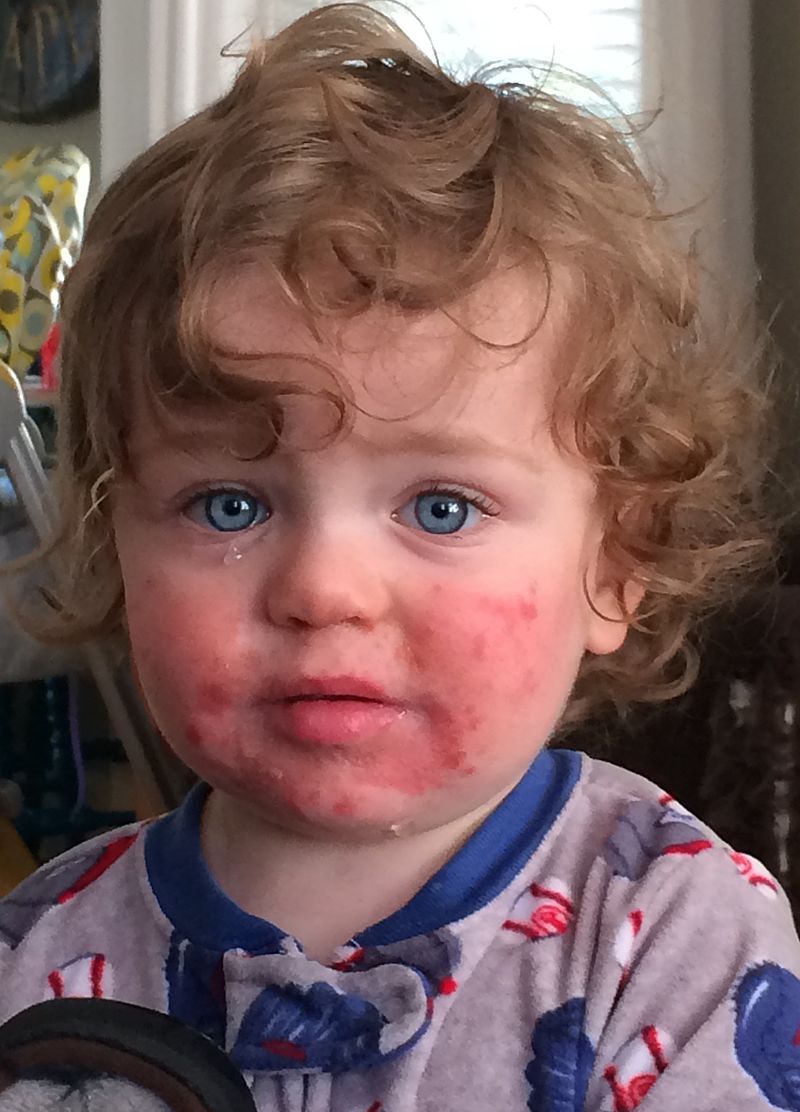
Imagen por Lecturio. Licencia: CC BY-NC-SA 4.0

Fisiopatología

  • Infección inicial con B19 en EN Erythema nodosum is an immune-mediated panniculitis (inflammation of the subcutaneous fat) caused by a type IV (delayed-type) hypersensitivity reaction. It commonly manifests in young women as tender, erythematous nodules on the shins. Erythema Nodosum el lugar de entrada (generalmente el tracto respiratorio superior) → se extiende a las células precursoras eritroides de rápida división en EN Erythema nodosum is an immune-mediated panniculitis (inflammation of the subcutaneous fat) caused by a type IV (delayed-type) hypersensitivity reaction. It commonly manifests in young women as tender, erythematous nodules on the shins. Erythema Nodosum la médula ósea, que expresan un antígeno sanguíneo P
  • Una vez dentro de la célula huésped, el ADN viral entra en EN Erythema nodosum is an immune-mediated panniculitis (inflammation of the subcutaneous fat) caused by a type IV (delayed-type) hypersensitivity reaction. It commonly manifests in young women as tender, erythematous nodules on the shins. Erythema Nodosum el núcleo → el virus Virus Viruses are infectious, obligate intracellular parasites composed of a nucleic acid core surrounded by a protein capsid. Viruses can be either naked (non-enveloped) or enveloped. The classification of viruses is complex and based on many factors, including type and structure of the nucleoid and capsid, the presence of an envelope, the replication cycle, and the host range. Virology es citotóxico para las células → ↓ eritrogénesis:
    • El B19 requiere el receptor Receptor Receptors are proteins located either on the surface of or within a cell that can bind to signaling molecules known as ligands (e.g., hormones) and cause some type of response within the cell. Receptors del antígeno sanguíneo P para entrar en EN Erythema nodosum is an immune-mediated panniculitis (inflammation of the subcutaneous fat) caused by a type IV (delayed-type) hypersensitivity reaction. It commonly manifests in young women as tender, erythematous nodules on the shins. Erythema Nodosum la célula.
    • Pocos individuos que carecen de antígeno P son inmunes.

Enfermedades Causadas por el Parvovirus B19

Pacientes sanos

  • Eritema infeccioso (5ta enfermedad): enfermedad bifásica que se presenta principalmente en EN Erythema nodosum is an immune-mediated panniculitis (inflammation of the subcutaneous fat) caused by a type IV (delayed-type) hypersensitivity reaction. It commonly manifests in young women as tender, erythematous nodules on the shins. Erythema Nodosum niños
    • Fase inicial:
      • Reflejo de la infección lítica
      • Marcada por síntomas inespecíficos similares a los LOS Neisseria de la gripe
      • ↓ Niveles de hemoglobina
    • Fase inmunomediada:
      • Comienza 2–3 semanas después
      • Se caracteriza por erupción y artralgia: la “erupción de mejilla abofeteada” aparece primero en EN Erythema nodosum is an immune-mediated panniculitis (inflammation of the subcutaneous fat) caused by a type IV (delayed-type) hypersensitivity reaction. It commonly manifests in young women as tender, erythematous nodules on the shins. Erythema Nodosum la cara → se extiende a los LOS Neisseria brazos y las piernas
    • El diagnóstico generalmente se basa en EN Erythema nodosum is an immune-mediated panniculitis (inflammation of the subcutaneous fat) caused by a type IV (delayed-type) hypersensitivity reaction. It commonly manifests in young women as tender, erythematous nodules on the shins. Erythema Nodosum la presentación clínica; si el diagnóstico no está claro, puede ser necesario realizar pruebas de anticuerpos IgG IgG The major immunoglobulin isotype class in normal human serum. There are several isotype subclasses of igg, for example, igg1, igg2a, and igg2b. Hypersensitivity Pneumonitis e IgM IgM A class of immunoglobulin bearing mu chains (immunoglobulin mu-chains). Igm can fix complement. The name comes from its high molecular weight and originally being called a macroglobulin. Immunoglobulins: Types and Functions mediante ensayo inmunoabsorbente ligado a enzimas ( ELISA ELISA An immunoassay utilizing an antibody labeled with an enzyme marker such as horseradish peroxidase. While either the enzyme or the antibody is bound to an immunosorbent substrate, they both retain their biologic activity; the change in enzyme activity as a result of the enzyme-antibody-antigen reaction is proportional to the concentration of the antigen and can be measured spectrophotometrically or with the naked eye. Many variations of the method have been developed. St. Louis Encephalitis Virus, por sus siglas en EN Erythema nodosum is an immune-mediated panniculitis (inflammation of the subcutaneous fat) caused by a type IV (delayed-type) hypersensitivity reaction. It commonly manifests in young women as tender, erythematous nodules on the shins. Erythema Nodosum inglés).
    • Tratamiento: enfermedad autolimitante que solo requiere tratamiento de soporte
  • El síndrome de poliartropatía en EN Erythema nodosum is an immune-mediated panniculitis (inflammation of the subcutaneous fat) caused by a type IV (delayed-type) hypersensitivity reaction. It commonly manifests in young women as tender, erythematous nodules on the shins. Erythema Nodosum adultos puede no ir precedido por una erupción.
    • Dolor Dolor Inflammation articular agudo y simétrico
    • Generalmente afecta pies, rodillas, manos y muñecas
    • No hay daños articulares duraderos
    • Enfermedad autolimitante; se resuelve en EN Erythema nodosum is an immune-mediated panniculitis (inflammation of the subcutaneous fat) caused by a type IV (delayed-type) hypersensitivity reaction. It commonly manifests in young women as tender, erythematous nodules on the shins. Erythema Nodosum 3 semanas
    • Tratamiento: analgesia Analgesia Methods of pain relief that may be used with or in place of analgesics. Anesthesiology: History and Basic Concepts sintomática (AINE) para las articulaciones dolorosas y cuidados de soporte
Quinta enfermedad

“Erupción de mejilla abofeteada”:
También llamada eritema infeccioso, esta erupción característica se observa en las infecciones por parvovirus B19, o 5ta enfermedad, en individuos inmunocompetentes. La erupción maculopapular es eritematosa y pruriginosa; comienza con una distribución malar y a menudo se extiende a las extremidades.

Imagen: “Slapped cheek” por Sandyjameslord. Licencia: CC BY-SA 4.0 es

Pacientes inmunocomprometidos

Aplasia Aplasia Cranial Nerve Palsies pura de eritrocitos:

  • No se pueden eliminar las infecciones por parvovirus B19 Parvovirus B19 Primate erythroparvovirus 1 (generally referred to as parvovirus B19, B19 virus, or sometimes erythrovirus B19) ranks among the smallest DNA viruses. Parvovirus B19 is of the family Parvoviridae and genus Erythrovirus. In immunocompetent humans, parvovirus B19 classically results in erythema infectiosum (5th disease) or “slapped cheek syndrome.” Parvovirus B19 → conduce a aplasia Aplasia Cranial Nerve Palsies de los LOS Neisseria eritrocitos y sus precursores
  • Puede no tener los LOS Neisseria signos clásicos de infección
  • Causa anemia Anemia Anemia is a condition in which individuals have low Hb levels, which can arise from various causes. Anemia is accompanied by a reduced number of RBCs and may manifest with fatigue, shortness of breath, pallor, and weakness. Subtypes are classified by the size of RBCs, chronicity, and etiology. Anemia: Overview and Types crónica
  • Puede ser potencialmente mortal
  • Diagnóstico: la reacción en EN Erythema nodosum is an immune-mediated panniculitis (inflammation of the subcutaneous fat) caused by a type IV (delayed-type) hypersensitivity reaction. It commonly manifests in young women as tender, erythematous nodules on the shins. Erythema Nodosum cadena de la polimerasa ( PCR PCR Polymerase chain reaction (PCR) is a technique that amplifies DNA fragments exponentially for analysis. The process is highly specific, allowing for the targeting of specific genomic sequences, even with minuscule sample amounts. The PCR cycles multiple times through 3 phases: denaturation of the template DNA, annealing of a specific primer to the individual DNA strands, and synthesis/elongation of new DNA molecules. Polymerase Chain Reaction (PCR), por sus siglas en EN Erythema nodosum is an immune-mediated panniculitis (inflammation of the subcutaneous fat) caused by a type IV (delayed-type) hypersensitivity reaction. It commonly manifests in young women as tender, erythematous nodules on the shins. Erythema Nodosum inglés) para el parvovirus B19 Parvovirus B19 Primate erythroparvovirus 1 (generally referred to as parvovirus B19, B19 virus, or sometimes erythrovirus B19) ranks among the smallest DNA viruses. Parvovirus B19 is of the family Parvoviridae and genus Erythrovirus. In immunocompetent humans, parvovirus B19 classically results in erythema infectiosum (5th disease) or “slapped cheek syndrome.” Parvovirus B19 detecta la infección.
  • Tratamiento:
    • Dirigido a reducir la inmunosupresión si es posible (e.g., reducir la dosis de quimioterapia)
    • Tratamiento con inmunoglobulina intravenosa
    • En EN Erythema nodosum is an immune-mediated panniculitis (inflammation of the subcutaneous fat) caused by a type IV (delayed-type) hypersensitivity reaction. It commonly manifests in young women as tender, erythematous nodules on the shins. Erythema Nodosum casos graves, trasplante de médula ósea

Pacientes con hemoglobinopatías

En EN Erythema nodosum is an immune-mediated panniculitis (inflammation of the subcutaneous fat) caused by a type IV (delayed-type) hypersensitivity reaction. It commonly manifests in young women as tender, erythematous nodules on the shins. Erythema Nodosum las personas con hemoglobinopatías (e.g., enfermedad de células falciformes) puede producirse una crisis aplásica transitoria:
  • La reticulocitopenia transitoria (7–10 días) conduce a ↓ niveles de hemoglobina.
  • Los LOS Neisseria síntomas incluyen:
  • Anemia Anemia Anemia is a condition in which individuals have low Hb levels, which can arise from various causes. Anemia is accompanied by a reduced number of RBCs and may manifest with fatigue, shortness of breath, pallor, and weakness. Subtypes are classified by the size of RBCs, chronicity, and etiology. Anemia: Overview and Types
  • Generalmente se resuelve en EN Erythema nodosum is an immune-mediated panniculitis (inflammation of the subcutaneous fat) caused by a type IV (delayed-type) hypersensitivity reaction. It commonly manifests in young women as tender, erythematous nodules on the shins. Erythema Nodosum semanas
  • Tratamiento: transfusión para hemoglobina < 6 g/dl con pocos reticulocitos
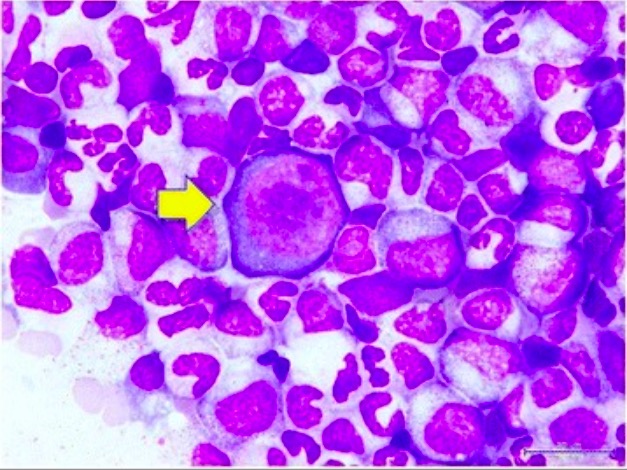
Pronormoblasto gigante en la médula ósea

Histología de la médula ósea durante la crisis aplásica transitoria en la infección por parvovirus B19:
La imagen muestra la citología de la médula ósea. La flecha amarilla indica un pronormoblasto gigante.

Imagen: “Cytology of bone marrow” por Department of Internal Medicine, Feng Yuan Hospital, No. 100, Ankang Road, Fengyuan District, Taichung City, 420, Taiwan. Licencia: CC BY 4.0

Mujeres embarazadas

  • Hidropesía fetal:
    • Se define como una acumulación anormal de líquido en EN Erythema nodosum is an immune-mediated panniculitis (inflammation of the subcutaneous fat) caused by a type IV (delayed-type) hypersensitivity reaction. It commonly manifests in young women as tender, erythematous nodules on the shins. Erythema Nodosum los LOS Neisseria tejidos blandos del feto
    • Se cree que se debe a una anemia Anemia Anemia is a condition in which individuals have low Hb levels, which can arise from various causes. Anemia is accompanied by a reduced number of RBCs and may manifest with fatigue, shortness of breath, pallor, and weakness. Subtypes are classified by the size of RBCs, chronicity, and etiology. Anemia: Overview and Types aguda causada por el virus Virus Viruses are infectious, obligate intracellular parasites composed of a nucleic acid core surrounded by a protein capsid. Viruses can be either naked (non-enveloped) or enveloped. The classification of viruses is complex and based on many factors, including type and structure of the nucleoid and capsid, the presence of an envelope, the replication cycle, and the host range. Virology: la disminución del número de eritrocitos y el aumento de la necesidad de volumen circulante conducen a la retención de líquidos.
    • Se asocia con riesgo aumentado de muerte fetal
    • Tratamiento:
      • Transfusión intrauterina
      • Tratamiento con inmunoglobulina intravenosa
      • Intubación postnatal/soporte ventilatorio y tratamiento con líquidos
  • Muerte fetal in utero:
    • Riesgo ↑ cuanto más temprano se contraiga la infección durante la gestación.
    • El sistema inmunitario fetal inmaduro es menos capaz de luchar contra las infecciones.
  • Anemia Anemia Anemia is a condition in which individuals have low Hb levels, which can arise from various causes. Anemia is accompanied by a reduced number of RBCs and may manifest with fatigue, shortness of breath, pallor, and weakness. Subtypes are classified by the size of RBCs, chronicity, and etiology. Anemia: Overview and Types congénita:
    • El recambio fetal de eritrocitos es más rápido que en EN Erythema nodosum is an immune-mediated panniculitis (inflammation of the subcutaneous fat) caused by a type IV (delayed-type) hypersensitivity reaction. It commonly manifests in young women as tender, erythematous nodules on the shins. Erythema Nodosum la vida postnatal.
    • Hace HACE Altitude Sickness que el feto sea más susceptible a anemia Anemia Anemia is a condition in which individuals have low Hb levels, which can arise from various causes. Anemia is accompanied by a reduced number of RBCs and may manifest with fatigue, shortness of breath, pallor, and weakness. Subtypes are classified by the size of RBCs, chronicity, and etiology. Anemia: Overview and Types
  • La afectación por parvovirus generalmente se identifica mediante pruebas de anticuerpos IgG IgG The major immunoglobulin isotype class in normal human serum. There are several isotype subclasses of igg, for example, igg1, igg2a, and igg2b. Hypersensitivity Pneumonitis e IgM IgM A class of immunoglobulin bearing mu chains (immunoglobulin mu-chains). Igm can fix complement. The name comes from its high molecular weight and originally being called a macroglobulin. Immunoglobulins: Types and Functions por ELISA ELISA An immunoassay utilizing an antibody labeled with an enzyme marker such as horseradish peroxidase. While either the enzyme or the antibody is bound to an immunosorbent substrate, they both retain their biologic activity; the change in enzyme activity as a result of the enzyme-antibody-antigen reaction is proportional to the concentration of the antigen and can be measured spectrophotometrically or with the naked eye. Many variations of the method have been developed. St. Louis Encephalitis Virus.

Comparación de las Erupciones Infantiles más Comunes

Tabla: Comparación de las erupciones infantiles más comunes
Número Otros nombres de la enfermedad Etiología Síntomas Descripción de la erupción
1ra enfermedad
  • Sarampión
  • Sarampión de 14 días
  • Morbilli Morbilli Measles (also known as rubeola) is caused by a single-stranded, linear, negative-sense RNA virus of the family Paramyxoviridae. It is highly contagious and spreads by respiratory droplets or direct-contact transmission from an infected person. Typically a disease of childhood, measles classically starts with cough, coryza, and conjunctivitis, followed by a maculopapular rash. Measles Virus
Virus Virus Viruses are infectious, obligate intracellular parasites composed of a nucleic acid core surrounded by a protein capsid. Viruses can be either naked (non-enveloped) or enveloped. The classification of viruses is complex and based on many factors, including type and structure of the nucleoid and capsid, the presence of an envelope, the replication cycle, and the host range. Virology del sarampión
  • Tos TOS Thoracic outlet syndrome (TOS) is a broad term used for a spectrum of syndromes related to the general region of the thoracic outlet, which involves the compression or irritation of elements of the brachial plexus, subclavian artery, or subclavian vein. Thoracic Outlet Syndrome, coriza, conjuntivitis
  • Manchas de Koplik (manchas blanco-azuladas con un halo rojo) en EN Erythema nodosum is an immune-mediated panniculitis (inflammation of the subcutaneous fat) caused by a type IV (delayed-type) hypersensitivity reaction. It commonly manifests in young women as tender, erythematous nodules on the shins. Erythema Nodosum la membrana bucal
  • Erupción
La erupción maculopapular Maculopapular Dermatologic Examination comienza en EN Erythema nodosum is an immune-mediated panniculitis (inflammation of the subcutaneous fat) caused by a type IV (delayed-type) hypersensitivity reaction. It commonly manifests in young women as tender, erythematous nodules on the shins. Erythema Nodosum la cara y detrás de las orejas → se extiende al AL Amyloidosis tronco/extremidades
2da enfermedad
  • Fiebre escarlata
  • Escarlatina
Streptococcus Streptococcus Streptococcus is one of the two medically important genera of gram-positive cocci, the other being Staphylococcus. Streptococci are identified as different species on blood agar on the basis of their hemolytic pattern and sensitivity to optochin and bacitracin. There are many pathogenic species of streptococci, including S. pyogenes, S. agalactiae, S. pneumoniae, and the viridans streptococci. Streptococcus pyogenes
  • Lengua de fresa: membrana blanca recubierta a través de la cual sobresalen papilas edematizadas y rojas
  • Erupción
  • Pequeñas protuberancias rojas con sensación de papel de lija que comienzan en EN Erythema nodosum is an immune-mediated panniculitis (inflammation of the subcutaneous fat) caused by a type IV (delayed-type) hypersensitivity reaction. It commonly manifests in young women as tender, erythematous nodules on the shins. Erythema Nodosum el cuello y la ingle → se extienden
  • Zonas oscuras e hiperpigmentadas, especialmente en EN Erythema nodosum is an immune-mediated panniculitis (inflammation of the subcutaneous fat) caused by a type IV (delayed-type) hypersensitivity reaction. It commonly manifests in young women as tender, erythematous nodules on the shins. Erythema Nodosum los LOS Neisseria pliegues de la piel llamados líneas de Pastia
3ra enfermedad
  • Rubéola
  • Sarampión alemán
  • Sarampión de 3 días
Virus Virus Viruses are infectious, obligate intracellular parasites composed of a nucleic acid core surrounded by a protein capsid. Viruses can be either naked (non-enveloped) or enveloped. The classification of viruses is complex and based on many factors, including type and structure of the nucleoid and capsid, the presence of an envelope, the replication cycle, and the host range. Virology de la rubéola
  • Manchas de Forscheimer: pueden verse máculas rojas puntiformes y petequias sobre el paladar blando/úvula.
  • Linfadenopatía sensible generalizada
  • Erupción
Máculas discretas en EN Erythema nodosum is an immune-mediated panniculitis (inflammation of the subcutaneous fat) caused by a type IV (delayed-type) hypersensitivity reaction. It commonly manifests in young women as tender, erythematous nodules on the shins. Erythema Nodosum la cara → se extienden al AL Amyloidosis cuello, tronco y extremidades
4ta enfermedad
  • Enfermedad de Filatow-Dukes
  • Síndrome de la piel escaldada estafilocócica
  • Enfermedad de Ritter
  • Existencia controvertida
  • Debido a cepas de Staphylococcus aureus Staphylococcus aureus Potentially pathogenic bacteria found in nasal membranes, skin, hair follicles, and perineum of warm-blooded animals. They may cause a wide range of infections and intoxications. Brain Abscess que producen una toxina epidermolítica (exfoliativa)
Erupción
  • Comienza con una erupción roja difusa
  • Signo de Nikolsky: al AL Amyloidosis tocar y mover el dedo sobre las lesiones de la piel mientras se aplica presión, se produce la descamación de la piel.
  • Bullas llenas de líquido o ampollas cutáneas → se rompen y descaman
5ta enfermedad
  • Eritema infeccioso
Parvovirus (eritrovirus) B19 Erupción
  • Eritema facial (“erupción en mejilla abofeteada”) que consiste en EN Erythema nodosum is an immune-mediated panniculitis (inflammation of the subcutaneous fat) caused by a type IV (delayed-type) hypersensitivity reaction. It commonly manifests in young women as tender, erythematous nodules on the shins. Erythema Nodosum pápulas rojas en EN Erythema nodosum is an immune-mediated panniculitis (inflammation of the subcutaneous fat) caused by a type IV (delayed-type) hypersensitivity reaction. It commonly manifests in young women as tender, erythematous nodules on the shins. Erythema Nodosum las mejillas
  • El patrón del eritema es único → comienza en EN Erythema nodosum is an immune-mediated panniculitis (inflammation of the subcutaneous fat) caused by a type IV (delayed-type) hypersensitivity reaction. It commonly manifests in young women as tender, erythematous nodules on the shins. Erythema Nodosum las extremidades y se extiende al AL Amyloidosis tronco/glúteos
6ta enfermedad Herpesvirus humano 6B o herpesvirus humano 7
  • Fiebre alta de aparición repentina
  • Erupción
  • La erupción comienza cuando la fiebre se resuelve (el término exantema súbito describe la “sorpresa” de la erupción tras la caída de la fiebre).
  • Numerosas máculas de color rosa pálido, en EN Erythema nodosum is an immune-mediated panniculitis (inflammation of the subcutaneous fat) caused by a type IV (delayed-type) hypersensitivity reaction. It commonly manifests in young women as tender, erythematous nodules on the shins. Erythema Nodosum forma de almendra, en EN Erythema nodosum is an immune-mediated panniculitis (inflammation of the subcutaneous fat) caused by a type IV (delayed-type) hypersensitivity reaction. It commonly manifests in young women as tender, erythematous nodules on the shins. Erythema Nodosum el tronco y el cuello

Referencias

  1. Cherry, J.D., Schulte, D. J. Human Parvovirus B19. Feigin RD, Cherry JD, Demmler-Harrison GJ, Kaplan SL, eds. Feigin & Cherry’s Textbook of Pediatric Infectious Diseases. 6th ed. Philadelphia, PA: Saunders Elsevier; 2009. Vol 2: 1902-1920.
  2. Cennimo, D. (2024). Parvovirus B19 Infection Differential Diagnoses. Emedicine. Retrieved December 29, 2025, from: https://emedicine.medscape.com/article/961063-differential
  3. Jordan, J. (2025). Clinical manifestations and diagnosis of parvovirus B19 infection. UpToDate. Retrieved December 29, 2025, from: https://www.uptodate.com/contents/clinical-manifestations-and-diagnosis-of-parvovirus-b19-infection
  4. Jordan, J. (2024). Treatment and prevention of parvovirus B19 infection. UpToDate. Retrieved December 29, 2025, from https://www.uptodate.com/contents/treatment-and-prevention-of-parvovirus-b19-infection

¡Crea tu cuenta gratis o inicia una sesión para seguir leyendo!

Regístrate ahora y obtén acceso gratuito a Lecturio con páginas de concepto, videos médicos y cuestionarios para tu educación médica.

User Reviews

Que tengas una sesión de estudio alegre y navideña 🎁 Ahorra 50% en todos los planes >>

Details