Domina Conceptos Médicos

Estudia para la escuela de medicina y tus examenes con Lecturio.

Obstrucción del Tracto Urinario

La obstrucción del tracto urinario se refiere al AL Amyloidosis bloqueo del tracto urinario, que puede ocurrir en EN Erythema nodosum is an immune-mediated panniculitis (inflammation of the subcutaneous fat) caused by a type IV (delayed-type) hypersensitivity reaction. It commonly manifests in young women as tender, erythematous nodules on the shins. Erythema Nodosum cualquier parte del tracto urinario. La obstrucción del tracto urinario puede ser aguda o crónica, parcial o completa, y unilateral o bilateral. La obstrucción del tracto urinario puede causar una enfermedad renal aguda o crónica. La etiología de una obstrucción del tracto urinario puede ser congénita, adquirida y/o funcional. Además, la causa puede ser intrínseca (e.g., cálculos renales, carcinoma de células transicionales, coágulos de sangre) o extrínseca (e.g., leiomiomas uterinos). La presentación clínica depende de la localización, el grado y la gravedad de la obstrucción. Los LOS Neisseria signos y síntomas pueden incluir dolor Dolor Inflammation, cambios en EN Erythema nodosum is an immune-mediated panniculitis (inflammation of the subcutaneous fat) caused by a type IV (delayed-type) hypersensitivity reaction. It commonly manifests in young women as tender, erythematous nodules on the shins. Erythema Nodosum la diuresis, hipertensión, hematuria Hematuria Presence of blood in the urine. Renal Cell Carcinoma y aumento de la creatinina sérica. El diagnóstico se realiza mediante la imagenología, siendo el ultrasonido la modalidad inicial preferida. La base del tratamiento es aliviar la causa de la obstrucción con una sonda de nefrostomía, un stent ureteral o la cateterización. El pronóstico de la función renal tras el alivio de la obstrucción del tracto urinario depende de la gravedad y la duración de la obstrucción.

Last updated: Dec 15, 2025

Editorial responsibility: Stanley Oiseth, Lindsay Jones, Evelin Maza

Descripción General

Epidemiología

  • No hay datos epidemiológicos específicos
  • Más común de lo que se espera en EN Erythema nodosum is an immune-mediated panniculitis (inflammation of the subcutaneous fat) caused by a type IV (delayed-type) hypersensitivity reaction. It commonly manifests in young women as tender, erythematous nodules on the shins. Erythema Nodosum general
  • Causa poco frecuente de insuficiencia renal aguda (IRA)
  • Más frecuente en EN Erythema nodosum is an immune-mediated panniculitis (inflammation of the subcutaneous fat) caused by a type IV (delayed-type) hypersensitivity reaction. It commonly manifests in young women as tender, erythematous nodules on the shins. Erythema Nodosum niños que en EN Erythema nodosum is an immune-mediated panniculitis (inflammation of the subcutaneous fat) caused by a type IV (delayed-type) hypersensitivity reaction. It commonly manifests in young women as tender, erythematous nodules on the shins. Erythema Nodosum adultos, en EN Erythema nodosum is an immune-mediated panniculitis (inflammation of the subcutaneous fat) caused by a type IV (delayed-type) hypersensitivity reaction. It commonly manifests in young women as tender, erythematous nodules on the shins. Erythema Nodosum pacientes que presentan síntomas del tracto urinario o insuficiencia renal (debido a anomalías congénitas)
  • Más común en EN Erythema nodosum is an immune-mediated panniculitis (inflammation of the subcutaneous fat) caused by a type IV (delayed-type) hypersensitivity reaction. It commonly manifests in young women as tender, erythematous nodules on the shins. Erythema Nodosum hombres que en EN Erythema nodosum is an immune-mediated panniculitis (inflammation of the subcutaneous fat) caused by a type IV (delayed-type) hypersensitivity reaction. It commonly manifests in young women as tender, erythematous nodules on the shins. Erythema Nodosum mujeres (especialmente debido a la hiperplasia prostática benigna (HPB) a medida que los LOS Neisseria hombres envejecen)
  • Causa más frecuente de IRA en EN Erythema nodosum is an immune-mediated panniculitis (inflammation of the subcutaneous fat) caused by a type IV (delayed-type) hypersensitivity reaction. It commonly manifests in young women as tender, erythematous nodules on the shins. Erythema Nodosum el ámbito ambulatorio que en EN Erythema nodosum is an immune-mediated panniculitis (inflammation of the subcutaneous fat) caused by a type IV (delayed-type) hypersensitivity reaction. It commonly manifests in young women as tender, erythematous nodules on the shins. Erythema Nodosum el hospitalario

Etiología

La etiología puede ser congénita, adquirida o funcional. La obstrucción del tracto urinario puede producirse en EN Erythema nodosum is an immune-mediated panniculitis (inflammation of the subcutaneous fat) caused by a type IV (delayed-type) hypersensitivity reaction. It commonly manifests in young women as tender, erythematous nodules on the shins. Erythema Nodosum cualquier parte del tracto urinario:

  • La obstrucción dentro del riñón provoca la dilatación de los LOS Neisseria cálices específicos afectados o caliectasia.
  • La obstrucción de la pelvis Pelvis The pelvis consists of the bony pelvic girdle, the muscular and ligamentous pelvic floor, and the pelvic cavity, which contains viscera, vessels, and multiple nerves and muscles. The pelvic girdle, composed of 2 “hip” bones and the sacrum, is a ring-like bony structure of the axial skeleton that links the vertebral column with the lower extremities. Pelvis: Anatomy renal o distal a la misma provoca caliectasia difusa o hidronefrosis.
Tabla: Etiologías de la obstrucción del tracto urinario
Renal Entrada de la vejiga Salida de la vejiga Uretra
Defectos congénitos
  • Poliquistosis renal
  • Quiste peripélvico
  • Estrechamiento u obstrucción de la unión ureteropélvica
  • Reflujo vesicoureteral
  • Ureterocele Ureterocele A cystic dilatation of the end of a ureter as it enters into the urinary bladder. It is characterized by the ballooning of the ureteral orifice into the lumen of the bladder and may obstruct urine flow. Urinary Tract Obstruction
  • Uréter retrocavo
  • Obstrucción del cuello vesical
  • Ureterocele Ureterocele A cystic dilatation of the end of a ureter as it enters into the urinary bladder. It is characterized by the ballooning of the ureteral orifice into the lumen of the bladder and may obstruct urine flow. Urinary Tract Obstruction
  • Válvulas uretrales posteriores
  • Válvulas uretrales anteriores
  • Estenosis
  • Fimosis
  • Estenosis meatal
Defectos intrínsecos adquiridos
  • Cálculos
  • Inflamación
  • Infección
  • Traumatismo
  • Desprendimiento papilar
  • Tumor Tumor Inflammation
  • Coágulos
  • Hiperplasia prostática benigna
  • Cáncer de próstata o de vejiga
  • Cálculos
  • Nefropatía diabética
  • Enfermedad de la médula espinal
Defectos extrínsecos adquiridos
  • Útero grávido
  • Fibrosis Fibrosis Any pathological condition where fibrous connective tissue invades any organ, usually as a consequence of inflammation or other injury. Bronchiolitis Obliterans retroperitoneal Retroperitoneal Peritoneum: Anatomy
  • Aneurisma aórtico
  • Leiomiomas uterinos
  • Carcinoma de útero, próstata, vejiga, colon Colon The large intestines constitute the last portion of the digestive system. The large intestine consists of the cecum, appendix, colon (with ascending, transverse, descending, and sigmoid segments), rectum, and anal canal. The primary function of the colon is to remove water and compact the stool prior to expulsion from the body via the rectum and anal canal. Colon, Cecum, and Appendix: Anatomy o recto
  • Linfoma
  • Enfermedad inflamatoria pélvica
  • Endometriosis Endometriosis Endometriosis is a common disease in which patients have endometrial tissue implanted outside of the uterus. Endometrial implants can occur anywhere in the pelvis, including the ovaries, the broad and uterosacral ligaments, the pelvic peritoneum, and the urinary and gastrointestinal tracts. Endometriosis
  • Ligadura quirúrgica accidental
  • Carcinoma de cuello uterino
  • Carcinoma de colon Colon The large intestines constitute the last portion of the digestive system. The large intestine consists of the cecum, appendix, colon (with ascending, transverse, descending, and sigmoid segments), rectum, and anal canal. The primary function of the colon is to remove water and compact the stool prior to expulsion from the body via the rectum and anal canal. Colon, Cecum, and Appendix: Anatomy
  • Traumatismo
  • Defectos funcionales
    • Vejiga neurogénica
    • Medicamentos anticolinérgicos
    • Agonistas α-adrenérgicos
    • Nefropatía diabética
    • Disinergia detrusor-esfínter
    • Vaciado disfuncional
    • Pseudosinergia del esfínter externo
    • Esclerosis múltiple
    • Enfermedad de Parkinson

    Fisiopatología

    • La obstrucción induce la apoptosis Apoptosis A regulated cell death mechanism characterized by distinctive morphologic changes in the nucleus and cytoplasm, including the endonucleolytic cleavage of genomic DNA, at regularly spaced, internucleosomal sites, I.e., DNA fragmentation. It is genetically-programmed and serves as a balance to mitosis in regulating the size of animal tissues and in mediating pathologic processes associated with tumor growth. Ischemic Cell Damage de las células tubulares renales: las células glomerulares son resistentes a la apoptosis Apoptosis A regulated cell death mechanism characterized by distinctive morphologic changes in the nucleus and cytoplasm, including the endonucleolytic cleavage of genomic DNA, at regularly spaced, internucleosomal sites, I.e., DNA fragmentation. It is genetically-programmed and serves as a balance to mitosis in regulating the size of animal tissues and in mediating pathologic processes associated with tumor growth. Ischemic Cell Damage por obstrucción.
    • La apoptosis Apoptosis A regulated cell death mechanism characterized by distinctive morphologic changes in the nucleus and cytoplasm, including the endonucleolytic cleavage of genomic DNA, at regularly spaced, internucleosomal sites, I.e., DNA fragmentation. It is genetically-programmed and serves as a balance to mitosis in regulating the size of animal tissues and in mediating pathologic processes associated with tumor growth. Ischemic Cell Damage de las células tubulares renales está mediada por las caspasas (generadas por la liberación de citoquinas y respuestas inflamatorias)
    • Los LOS Neisseria procesos obstructivos prolongados inducen fibrosis Fibrosis Any pathological condition where fibrous connective tissue invades any organ, usually as a consequence of inflammation or other injury. Bronchiolitis Obliterans tubulointersticial e inflamación: acumulan matriz extracelular y promueven la fibrosis Fibrosis Any pathological condition where fibrous connective tissue invades any organ, usually as a consequence of inflammation or other injury. Bronchiolitis Obliterans
    • Diuresis postobstructiva:
      • Fenómeno fisiológico observado tras la liberación aguda de la obstrucción bilateral
      • El flujo de orina aumenta 3–10 veces.
      • Posibles mecanismos:
        • Reabsorción de sodio alterada por el daño tubular
        • Deterioro de la capacidad de concentración de la orina
        • Diuresis de solutos con excreción de la urea Urea A compound formed in the liver from ammonia produced by the deamination of amino acids. It is the principal end product of protein catabolism and constitutes about one half of the total urinary solids. Urea Cycle retenida
        • Aumento del péptido natriurético circulante
    Tabla: Efectos de la obstrucción del tracto urinario en EN Erythema nodosum is an immune-mediated panniculitis (inflammation of the subcutaneous fat) caused by a type IV (delayed-type) hypersensitivity reaction. It commonly manifests in young women as tender, erythematous nodules on the shins. Erythema Nodosum la filtración glomerular y el flujo sanguíneo renal
    Efectos hemodinámicos Efectos en EN Erythema nodosum is an immune-mediated panniculitis (inflammation of the subcutaneous fat) caused by a type IV (delayed-type) hypersensitivity reaction. It commonly manifests in young women as tender, erythematous nodules on the shins. Erythema Nodosum los LOS Neisseria túbulos
    Obstrucción aguda
    • ↑ Flujo sanguíneo renal
    • ↓ TFG
    • ↓ Flujo sanguíneo medular
    • ↑ Prostaglandinas vasodilatadoras y óxido nítrico
    • ↑ Presiones ureterales y tubulares
    • ↑ Reabsorción de urea Urea A compound formed in the liver from ammonia produced by the deamination of amino acids. It is the principal end product of protein catabolism and constitutes about one half of the total urinary solids. Urea Cycle, agua y sodio
    Obstrucción crónica
    • ↓ Flujo sanguíneo renal
    • ↓↓ TFG
    • ↑ Producción de renina-angiotensina
    • ↑ Prostaglandinas vasoconstrictoras
    • ↓ Osmolaridad medular
    • ↓ Capacidad de concentración
    • ↓ Funciones de transporte de sodio, potasio, hidrógeno
    • Daño estructural
    • Atrofia parenquimatosa
    Liberación de la obstrucción Lento ↑ en EN Erythema nodosum is an immune-mediated panniculitis (inflammation of the subcutaneous fat) caused by a type IV (delayed-type) hypersensitivity reaction. It commonly manifests in young women as tender, erythematous nodules on the shins. Erythema Nodosum la TFG, que es variable Variable Variables represent information about something that can change. The design of the measurement scales, or of the methods for obtaining information, will determine the data gathered and the characteristics of that data. As a result, a variable can be qualitative or quantitative, and may be further classified into subgroups. Types of Variables.
    • Están presentes péptidos natriuréticos.
    • ↓ Presión tubular
    • ↓ Carga de solutos por nefrona (e.g., urea Urea A compound formed in the liver from ammonia produced by the deamination of amino acids. It is the principal end product of protein catabolism and constitutes about one half of the total urinary solids. Urea Cycle, cloruro de sodio)

    Presentación Clínica

    La presentación clínica depende de la localización, el grado y la rapidez con que se desarrolle la obstrucción.

    Los LOS Neisseria síntomas pueden incluir:

    • Dolor Dolor Inflammation:
      • A menudo ausente
      • Si está presente, suele ser el resultado de una distensión vesical, una infección secundaria o un cálculo/masa que obstruye
      • Asociado a la velocidad de desarrollo de la distensión
      • A menudo afecta el costado o a la región suprapúbica
    • Cambio en EN Erythema nodosum is an immune-mediated panniculitis (inflammation of the subcutaneous fat) caused by a type IV (delayed-type) hypersensitivity reaction. It commonly manifests in young women as tender, erythematous nodules on the shins. Erythema Nodosum la producción de orina:
      • Azotemia Azotemia A biochemical abnormality referring to an elevation of blood urea nitrogen and creatinine. Azotemia can be produced by kidney diseases or other extrarenal disorders. When azotemia becomes associated with a constellation of clinical signs, it is termed uremia. Acute Kidney Injury
      • Poliuria
      • Nocturia Nocturia Frequent urination at night that interrupts sleep. It is often associated with outflow obstruction, diabetes mellitus, or bladder inflammation (cystitis). Arginine Vasopressin Disorders (Diabetes Insipidus)
    • Hipertensión
    • Hematuria Hematuria Presence of blood in the urine. Renal Cell Carcinoma

    Hallazgos clásicos de laboratorio:

    • Creatinina sérica elevada
    • Análisis de orina con eritrocitos o leucocitos
    • Acidosis Acidosis A pathologic condition of acid accumulation or depletion of base in the body. The two main types are respiratory acidosis and metabolic acidosis, due to metabolic acid build up. Respiratory Acidosis tubular renal hiperpotasémica:
      • Se encuentra sobre todo en EN Erythema nodosum is an immune-mediated panniculitis (inflammation of the subcutaneous fat) caused by a type IV (delayed-type) hypersensitivity reaction. It commonly manifests in young women as tender, erythematous nodules on the shins. Erythema Nodosum pacientes con obstrucción crónica
      • Probablemente debido a la resistencia a los LOS Neisseria mineralocorticoides que afecta a la reabsorción distal de sodio

    Diagnóstico

    • Realizar una toma detallada de antecedentes y examen físico:
      • Investigar cualquier antecedente de cirugía genitourinaria.
      • Palpar en EN Erythema nodosum is an immune-mediated panniculitis (inflammation of the subcutaneous fat) caused by a type IV (delayed-type) hypersensitivity reaction. It commonly manifests in young women as tender, erythematous nodules on the shins. Erythema Nodosum búsqueda de sensibilidad en EN Erythema nodosum is an immune-mediated panniculitis (inflammation of the subcutaneous fat) caused by a type IV (delayed-type) hypersensitivity reaction. It commonly manifests in young women as tender, erythematous nodules on the shins. Erythema Nodosum el ángulo costovertebral.
      • Examen abdominal general para evaluar la presencia de sensibilidad suprapúbica
    • Análisis de orina y urocultivo:
      • Hematuria Hematuria Presence of blood in the urine. Renal Cell Carcinoma:
        • Macroscópica
        • Microscópica con > 3 eritrocitos por campo de alto poder
      • Piuria: leucocitos en EN Erythema nodosum is an immune-mediated panniculitis (inflammation of the subcutaneous fat) caused by a type IV (delayed-type) hypersensitivity reaction. It commonly manifests in young women as tender, erythematous nodules on the shins. Erythema Nodosum la orina
      • Bacteriuria Bacteriuria The presence of bacteria in the urine which is normally bacteria-free. These bacteria are from the urinary tract and are not contaminants of the surrounding tissues. Bacteriuria can be symptomatic or asymptomatic. Significant bacteriuria is an indicator of urinary tract infection. Urinary Tract Infections (UTIs) in Children: pueden observarse bacterias en EN Erythema nodosum is an immune-mediated panniculitis (inflammation of the subcutaneous fat) caused by a type IV (delayed-type) hypersensitivity reaction. It commonly manifests in young women as tender, erythematous nodules on the shins. Erythema Nodosum la muestra de orina
    • Laboratorios: pueden revelar ↑ creatinina
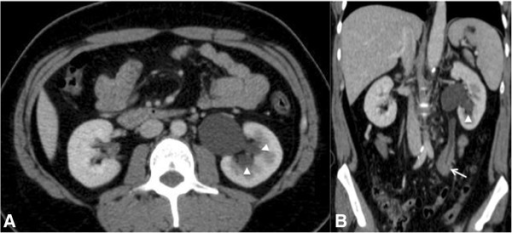
    • El estándar de oro es la imagenología:
      • El hallazgo característico es la dilatación del sistema colector en EN Erythema nodosum is an immune-mediated panniculitis (inflammation of the subcutaneous fat) caused by a type IV (delayed-type) hypersensitivity reaction. It commonly manifests in young women as tender, erythematous nodules on the shins. Erythema Nodosum 1 o ambos riñones.
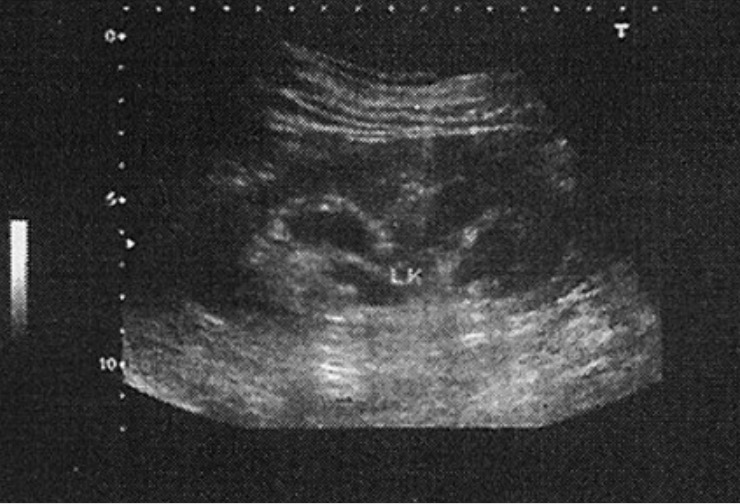
      • El ultrasonido es la modalidad de imagenología preferida:
        • Su ventaja es la ausencia de radiaciones ionizantes
        • Económico
        • Identifica la hidronefrosis, pero no es una prueba funcional
      • TC:
        • Proporciona mejor información anatómica
        • Capacidad de obtener imágenes contrastadas con fases nefrográficas y excretoras
        • Las fases excretoras permiten obtener imágenes contrastadas tardías para identificar el nivel de obstrucción
        • Los LOS Neisseria riesgos incluyen: nefropatía por contraste y exposición a la radiación ionizante
      • Puede utilizar la cistouretrografía miccional para diagnosticar el reflujo vesicoureteral o las obstrucciones del cuello de la vejiga y de la uretra
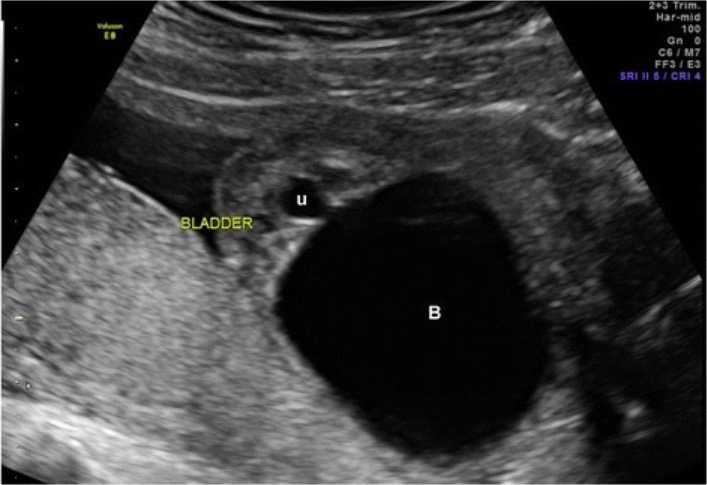
    Ecografía de la obstrucción fetal de la vejiga

    Ultrasonido fetal que revela una obstrucción del tracto urinario con el clásico signo del ojo de la cerradura (B: vejiga, U: uretra)

    Imagen: “Ultrasound of fetal bladder obstruction” por St. David’s Women’s Center of Texas, Austin Maternal-Fetal Medicine, 12200 Renfert Way, G-3, Austin, Austin, TX 78758 USA. Licencia: CC BY 4.0
    Tratamiento

    Tratamiento

    La base del tratamiento es aliviar la causa de la obstrucción.

    • La obstrucción del tracto urinario complicada por una infección requiere un alivio inmediato de la obstrucción para prevenir sepsis Sepsis Systemic inflammatory response syndrome with a proven or suspected infectious etiology. When sepsis is associated with organ dysfunction distant from the site of infection, it is called severe sepsis. When sepsis is accompanied by hypotension despite adequate fluid infusion, it is called septic shock. Sepsis and Septic Shock y daño renal.
    • El drenaje puede lograrse mediante sonda de nefrostomía, ureterostomía, colocación de un stent ureteral o cateterismo vesical.
    • La descompresión del sistema urinario se combina con antibióticos para la obstrucción con sepsis Sepsis Systemic inflammatory response syndrome with a proven or suspected infectious etiology. When sepsis is associated with organ dysfunction distant from the site of infection, it is called severe sepsis. When sepsis is accompanied by hypotension despite adequate fluid infusion, it is called septic shock. Sepsis and Septic Shock.
    • La hiperplasia prostática benigna puede tratarse con bloqueadores α-adrenérgicos o inhibidores de la 5α-reductasa. Cuando se asocia a una infección grave y a una obstrucción de la salida de la vejiga, está indicada la cateterización uretral.

    Pronóstico

    Tras resolver la obstrucción:

    • El pronóstico renal depende de:
      • Si se ha HA Hemolytic anemia (HA) is the term given to a large group of anemias that are caused by the premature destruction/hemolysis of circulating red blood cells (RBCs). Hemolysis can occur within (intravascular hemolysis) or outside the blood vessels (extravascular hemolysis). Hemolytic Anemia producido un daño renal irreversible
      • La gravedad y duración de la obstrucción
    • La mayor parte de la recuperación funcional se observa a los LOS Neisseria 7–10 días
    • Algunos pacientes con insuficiencia renal grave pueden necesitar diálisis.

    Obstrucción no resuelta:

    • La evolución clínica depende de si la obstrucción es completa, parcial o bilateral.
    • La obstrucción completa que se complica con una infección puede conducir a la destrucción renal completa en EN Erythema nodosum is an immune-mediated panniculitis (inflammation of the subcutaneous fat) caused by a type IV (delayed-type) hypersensitivity reaction. It commonly manifests in young women as tender, erythematous nodules on the shins. Erythema Nodosum cuestión de días.
    • Se puede observar una recuperación parcial de la función renal después de 1–2 semanas de una obstrucción completa.
    • Después de 8 semanas de obstrucción completa, la recuperación es poco probable.

    Referencias

    1. Dmochowski R. R. Bladder outlet obstruction: etiology and evaluation. Reviews in Urology. 2005; 7 (Supplement 6): S3–S13.
    2. Kumar V, Abbas AK, Aster JC. (2015). Robbins & Cotran Pathologic Basis of Disease. Philadelphia, PA: Elsevier Saunders; 2015.
    3. MedlinePlus. (2024). Hydronephrosis of one kidney. Retrieved March 25, 2025, from https://medlineplus.gov/ency/article/000506.htm
    4. Preminger GM. (2024). Urinary Tract Obstruction. Merck Manual Consumer Version. Retrieved March 25, 2025, from https://www.merckmanuals.com/home/kidney-and-urinary-tract-disorders/obstruction-of-the-urinary-tract/urinary-tract-obstruction 
    5. Seifter JL. (2018). Urinary tract obstruction. Jameson J, & Fauci AS, & Kasper DL, & Hauser SL, & Longo DL, & Loscalzo J (Eds.), Harrison’s Principles of Internal Medicine, 20e. McGraw-Hill. https://accessmedicine-mhmedical-com.aucmed.idm.oclc.org/content.aspx?bookid=2129&sectionid=192281753
    6. Zeidel, M. L., & O’Neill, W. C. (2025). Clinical manifestations and diagnosis of urinary tract obstruction (UTO) and hydronephrosis. UpToDate. Retrieved March 25, 2025, from https://www.uptodate.com/contents/clinical-manifestations-and-diagnosis-of-urinary-tract-obstruction-and-hydronephrosis
    7. Gu, B., Reiter, J. P., Schwinn, D. A., Smith, M. P., Korstanje, C., Thor, K. B., & Dolber, P. C. (2004). Effects of alpha 1-adrenergic receptor subtype selective antagonists on lower urinary tract function in rats with bladder outlet obstruction. Journal of Urology, 172(2), 758-762. https://doi.org/10.1097/01.ju.0000131609.96301.e6 

    ¡Crea tu cuenta gratis o inicia una sesión para seguir leyendo!

    Regístrate ahora y obtén acceso gratuito a Lecturio con páginas de concepto, videos médicos y cuestionarios para tu educación médica.

    User Reviews

    Que tengas una sesión de estudio alegre y navideña 🎁 Ahorra 50% en todos los planes >>

    Details