Domina Conceptos Médicos

Estudia para la escuela de medicina y tus examenes con Lecturio.

Neumoconiosis

La neumoconiosis es una enfermedad ocupacional que resulta de la inhalación y el depósito de polvos minerales y otras partículas inorgánicas en EN Erythema nodosum is an immune-mediated panniculitis (inflammation of the subcutaneous fat) caused by a type IV (delayed-type) hypersensitivity reaction. It commonly manifests in young women as tender, erythematous nodules on the shins. Erythema Nodosum el pulmón. Se puede clasificar según el tipo de partícula causante implicada o por el tipo de respuesta provocada. El carbón, el sílice, el asbesto y el talco son los LOS Neisseria tipos fibrogénicos clásicos, mientras que el berilio provoca una respuesta granulomatosa y el cobalto se asocia a la neumonía de células gigantes. El hierro, el estaño y el bario se consideran tipos de partículas benignas o inertes porque no provocan el mismo tipo de reacciones que las demás. Tras la exposición a los LOS Neisseria tipos de partículas fibrogénicas, los LOS Neisseria macrófagos y los LOS Neisseria fibroblastos se activan dentro del parénquima pulmonar, lo que conduce a la inflamación crónica y a la fibrosis Fibrosis Any pathological condition where fibrous connective tissue invades any organ, usually as a consequence of inflammation or other injury. Bronchiolitis Obliterans, que puede progresar hasta la insuficiencia respiratoria y la muerte. Los LOS Neisseria antecedentes laborales y las radiografías de tórax son los LOS Neisseria pilares del diagnóstico y la estadificación. El tratamiento es principalmente sintomático.

Last updated: Dec 15, 2025

Editorial responsibility: Stanley Oiseth, Lindsay Jones, Evelin Maza

Epidemiología y Etiología

Definición y tipos

La neumoconiosis es el término clásico utilizado para describir la reacción pulmonar no neoplásica a la inhalación crónica de polvos minerales encontrados en el lugar de trabajo. Algunos expertos en pulmones consideran que el término “neumoconiosis” debería incluir también las enfermedades inducidas por humos y vapores químicos, pero esta práctica no está muy extendida y no se utilizará aquí.

Las causas más comunes:

  • Silicosis Silicosis A form of pneumoconiosis resulting from inhalation of dust containing crystalline form of silicon dioxide, usually in the form of quartz. Amorphous silica is relatively nontoxic. Pneumoconiosis: causada por el polvo de sílice cristalina (< 5 micras)
  • Asbestosis Asbestosis A form of pneumoconiosis caused by inhalation of asbestos fibers which elicit potent inflammatory responses in the parenchyma of the lung. The disease is characterized by interstitial fibrosis of the lung, varying from scattered sites to extensive scarring of the alveolar interstitium. Pneumoconiosis: causada por fibras de asbesto (silicatos hidratados cristalinos) < 10 micras
  • Neumoconiosis de los LOS Neisseria mineros del carbón o antracosis: causada por el polvo del carbón
  • Beriliosis: también llamada enfermedad crónica del berilio, causada por el berilio (metal alcalinotérreo, más ligero que el aluminio, más fuerte que el acero)

Causas menos comunes, que no se describirán más en EN Erythema nodosum is an immune-mediated panniculitis (inflammation of the subcutaneous fat) caused by a type IV (delayed-type) hypersensitivity reaction. It commonly manifests in young women as tender, erythematous nodules on the shins. Erythema Nodosum esta monografía:

  • Siderosis: causada por el óxido de hierro, vista en EN Erythema nodosum is an immune-mediated panniculitis (inflammation of the subcutaneous fat) caused by a type IV (delayed-type) hypersensitivity reaction. It commonly manifests in young women as tender, erythematous nodules on the shins. Erythema Nodosum soldadores
  • Estañosis: causado por el óxido de estaño, afecta a los LOS Neisseria trabajadores que lo extraen
  • Baritosis: causada por el sulfato de bario, afecta a los LOS Neisseria trabajadores que lo extraen
  • Neumoconiosis por metales duros:
    • Ocasionada por el cobalto con o sin carburo de tungsteno
    • Afecta a los LOS Neisseria trabajadores que lo procesan y a los LOS Neisseria pulidores de diamantes
  • Talcosis:
    • Causada por el polvo de talco, que se compone de silicato de magnesio cristalino e hidrófilo
    • Afecta a los LOS Neisseria trabajadores de las industrias que fabrican o procesan cerámica, papel, plásticos, caucho, pintura y cosméticos

Epidemiología

  • Silicosis Silicosis A form of pneumoconiosis resulting from inhalation of dust containing crystalline form of silicon dioxide, usually in the form of quartz. Amorphous silica is relatively nontoxic. Pneumoconiosis:
    • La forma más común de enfermedad pulmonar ocupacional
    • Actualmente, > 2 millones de trabajadores están expuestos al AL Amyloidosis polvo de sílice en EN Erythema nodosum is an immune-mediated panniculitis (inflammation of the subcutaneous fat) caused by a type IV (delayed-type) hypersensitivity reaction. It commonly manifests in young women as tender, erythematous nodules on the shins. Erythema Nodosum todo el mundo.
    • En EN Erythema nodosum is an immune-mediated panniculitis (inflammation of the subcutaneous fat) caused by a type IV (delayed-type) hypersensitivity reaction. It commonly manifests in young women as tender, erythematous nodules on the shins. Erythema Nodosum 2016, el Global Burden of Disease Study estimó 10 400 muertes al AL Amyloidosis año, y 210 000 años de vida perdidos debido a la silicosis Silicosis A form of pneumoconiosis resulting from inhalation of dust containing crystalline form of silicon dioxide, usually in the form of quartz. Amorphous silica is relatively nontoxic. Pneumoconiosis.
    • La incidencia y la mortalidad han disminuido en EN Erythema nodosum is an immune-mediated panniculitis (inflammation of the subcutaneous fat) caused by a type IV (delayed-type) hypersensitivity reaction. It commonly manifests in young women as tender, erythematous nodules on the shins. Erythema Nodosum las últimas décadas gracias a la mejora de la protección y la normativa en EN Erythema nodosum is an immune-mediated panniculitis (inflammation of the subcutaneous fat) caused by a type IV (delayed-type) hypersensitivity reaction. It commonly manifests in young women as tender, erythematous nodules on the shins. Erythema Nodosum el lugar de trabajo.
  • Asbestosis Asbestosis A form of pneumoconiosis caused by inhalation of asbestos fibers which elicit potent inflammatory responses in the parenchyma of the lung. The disease is characterized by interstitial fibrosis of the lung, varying from scattered sites to extensive scarring of the alveolar interstitium. Pneumoconiosis:
    • 150 000 casos y 3 600 muertes en EN Erythema nodosum is an immune-mediated panniculitis (inflammation of the subcutaneous fat) caused by a type IV (delayed-type) hypersensitivity reaction. It commonly manifests in young women as tender, erythematous nodules on the shins. Erythema Nodosum 2015
    • La exposición ha HA Hemolytic anemia (HA) is the term given to a large group of anemias that are caused by the premature destruction/hemolysis of circulating red blood cells (RBCs). Hemolysis can occur within (intravascular hemolysis) or outside the blood vessels (extravascular hemolysis). Hemolytic Anemia disminuido en EN Erythema nodosum is an immune-mediated panniculitis (inflammation of the subcutaneous fat) caused by a type IV (delayed-type) hypersensitivity reaction. It commonly manifests in young women as tender, erythematous nodules on the shins. Erythema Nodosum gran medida gracias a la aplicación de normas y reglamentos medioambientales.
    • El asbesto es el carcinógeno más frecuente.
  • Neumoconiosis de los LOS Neisseria mineros del carbón:
    • Enfermedad común entre los LOS Neisseria mineros del carbón
    • Prevalencia estimada del 30%.
  • Beriliosis:
    • Forma rara de neumoconiosis
    • La prevalencia global entre los LOS Neisseria trabajadores expuestos oscila entre el 1%5%.

Factores de riesgo

  • Silicosis Silicosis A form of pneumoconiosis resulting from inhalation of dust containing crystalline form of silicon dioxide, usually in the form of quartz. Amorphous silica is relatively nontoxic. Pneumoconiosis:
    • Ocupacionales: trabajadores de la minería, pulido con arena, canteras, cerámica y fundición; y en EN Erythema nodosum is an immune-mediated panniculitis (inflammation of the subcutaneous fat) caused by a type IV (delayed-type) hypersensitivity reaction. It commonly manifests in young women as tender, erythematous nodules on the shins. Erythema Nodosum la molienda, corte de piedra, fibra de vidrio y fabricación de vidrio
  • Asbestosis Asbestosis A form of pneumoconiosis caused by inhalation of asbestos fibers which elicit potent inflammatory responses in the parenchyma of the lung. The disease is characterized by interstitial fibrosis of the lung, varying from scattered sites to extensive scarring of the alveolar interstitium. Pneumoconiosis:
    • Ocupacionales: construcción naval, techado, fontanería y demolición
    • No ocupacionales: familiares de trabajadores expuestos, fuentes geológicas, tabaquismo (acelera la progresión de la enfermedad)
  • Neumoconiosis de los LOS Neisseria mineros del carbón: trabajos en EN Erythema nodosum is an immune-mediated panniculitis (inflammation of the subcutaneous fat) caused by a type IV (delayed-type) hypersensitivity reaction. It commonly manifests in young women as tender, erythematous nodules on the shins. Erythema Nodosum mina de carbón
  • Beriliosis:
    • Ocupacionales: industrias aeroespacial, cerámica y metalúrgica; reparación de aparatos electrónicos; joyeros y dentistas
    • No ocupacionales: familiares de los LOS Neisseria trabajadores, o aquellos que viven a 5 millas o menos de una instalación de fabricación de berilio

Related videos

Fisiopatología

  1. Las fibras tóxicas inhaladas no pueden ser metabolizadas por el organismo y se acumulan en EN Erythema nodosum is an immune-mediated panniculitis (inflammation of the subcutaneous fat) caused by a type IV (delayed-type) hypersensitivity reaction. It commonly manifests in young women as tender, erythematous nodules on the shins. Erythema Nodosum los LOS Neisseria conductos alveolares.
    • Las partículas más peligrosas miden de 1 a 5 µm, ya que son capaces de ser transportadas hasta las pequeñas vías respiratorias terminales y los LOS Neisseria sacos aéreos y depositarse allí, provocando inflamación y fibrosis Fibrosis Any pathological condition where fibrous connective tissue invades any organ, usually as a consequence of inflammation or other injury. Bronchiolitis Obliterans.
    • El asbesto se presenta en EN Erythema nodosum is an immune-mediated panniculitis (inflammation of the subcutaneous fat) caused by a type IV (delayed-type) hypersensitivity reaction. It commonly manifests in young women as tender, erythematous nodules on the shins. Erythema Nodosum dos formas geométricas distintas, en EN Erythema nodosum is an immune-mediated panniculitis (inflammation of the subcutaneous fat) caused by a type IV (delayed-type) hypersensitivity reaction. It commonly manifests in young women as tender, erythematous nodules on the shins. Erythema Nodosum un 90% como formas serpentinas rizadas como los LOS Neisseria crisotilos y en EN Erythema nodosum is an immune-mediated panniculitis (inflammation of the subcutaneous fat) caused by a type IV (delayed-type) hypersensitivity reaction. It commonly manifests in young women as tender, erythematous nodules on the shins. Erythema Nodosum un 10% anfíboles con forma de aguja.
    • Las fibras de asbesto anfíboles son más patógenas (especialmente para el desarrollo del mesotelioma) que los LOS Neisseria crisotilos porque pueden viajar más lejos y penetrar más profundamente en EN Erythema nodosum is an immune-mediated panniculitis (inflammation of the subcutaneous fat) caused by a type IV (delayed-type) hypersensitivity reaction. It commonly manifests in young women as tender, erythematous nodules on the shins. Erythema Nodosum los LOS Neisseria tejidos.
  2. Las fibras son engullidas por los LOS Neisseria macrófagos, que sufren una lisis y liberan citoquinas.
  3. Las citoquinas inducen una reacción inflamatoria, produciendo la obstrucción de las vías respiratorias y estimulando los LOS Neisseria fibroblastos.
  4. La cicatrización fibrótica provoca el engrosamiento de las vías respiratorias, la reducción de la elasticidad y el deterioro del intercambio de gases.

Patogénesis específica de la fibra:

  • Fibrosis Fibrosis Any pathological condition where fibrous connective tissue invades any organ, usually as a consequence of inflammation or other injury. Bronchiolitis Obliterans masiva progresiva
    • Puede ocurrir tanto en EN Erythema nodosum is an immune-mediated panniculitis (inflammation of the subcutaneous fat) caused by a type IV (delayed-type) hypersensitivity reaction. It commonly manifests in young women as tender, erythematous nodules on the shins. Erythema Nodosum la silicosis Silicosis A form of pneumoconiosis resulting from inhalation of dust containing crystalline form of silicon dioxide, usually in the form of quartz. Amorphous silica is relatively nontoxic. Pneumoconiosis como en EN Erythema nodosum is an immune-mediated panniculitis (inflammation of the subcutaneous fat) caused by a type IV (delayed-type) hypersensitivity reaction. It commonly manifests in young women as tender, erythematous nodules on the shins. Erythema Nodosum la neumoconiosis del minero de carbón
    • Representa una evolución de la forma simple de neumoconiosis con nódulos pequeños a la forma complicada cuando los LOS Neisseria nódulos se unen para formar nódulos más grandes que pueden evolucionar a la fibrosis Fibrosis Any pathological condition where fibrous connective tissue invades any organ, usually as a consequence of inflammation or other injury. Bronchiolitis Obliterans masiva progresiva
  • La asbestosis Asbestosis A form of pneumoconiosis caused by inhalation of asbestos fibers which elicit potent inflammatory responses in the parenchyma of the lung. The disease is characterized by interstitial fibrosis of the lung, varying from scattered sites to extensive scarring of the alveolar interstitium. Pneumoconiosis afecta en EN Erythema nodosum is an immune-mediated panniculitis (inflammation of the subcutaneous fat) caused by a type IV (delayed-type) hypersensitivity reaction. It commonly manifests in young women as tender, erythematous nodules on the shins. Erythema Nodosum primer lugar a los LOS Neisseria lóbulos inferiores y a la pleura Pleura The pleura is a serous membrane that lines the walls of the thoracic cavity and the surface of the lungs. This structure of mesodermal origin covers both lungs, the mediastinum, the thoracic surface of the diaphragm, and the inner part of the thoracic cage. The pleura is divided into a visceral pleura and parietal pleura. Pleura: Anatomy (inusual en EN Erythema nodosum is an immune-mediated panniculitis (inflammation of the subcutaneous fat) caused by a type IV (delayed-type) hypersensitivity reaction. It commonly manifests in young women as tender, erythematous nodules on the shins. Erythema Nodosum otros trastornos pulmonares intersticiales)
  • La silicosis Silicosis A form of pneumoconiosis resulting from inhalation of dust containing crystalline form of silicon dioxide, usually in the form of quartz. Amorphous silica is relatively nontoxic. Pneumoconiosis, la neumoconiosis del minero de carbón y la beriliosis afectan primero a los LOS Neisseria lóbulos superiores.
  • La beriliosis conduce al AL Amyloidosis desarrollo de granulomas Granulomas A relatively small nodular inflammatory lesion containing grouped mononuclear phagocytes, caused by infectious and noninfectious agents. Sarcoidosis no caseificantes (reacción de hipersensibilidad retardada)
    • El contacto directo con los LOS Neisseria humos o polvos de berilio puede dañar las zonas del cuerpo expuestas, como los LOS Neisseria ojos o la piel, y puede producirse una sensibilización

Factores de progresión de la enfermedad:

  • Tamaño, tipo y reactividad fisicoquímica de las fibras inhaladas
  • Duración de la exposición (la enfermedad puede seguir progresando incluso después de que finalice la exposición)
  • Intensidad de la exposición (relación dosis-respuesta)
  • La susceptibilidad genética del individuo es probable, ya que solamente un pequeño porcentaje de personas expuestas desarrollan enfermedades respiratorias por exposición laboral: Las mutaciones del gen HLA-DPB1 conllevan a una mayor susceptibilidad al AL Amyloidosis berilio.
  • Hábitos de fumar y exposición a otras toxinas/contaminantes

Presentación Clínica

Signos y síntomas generales

  • Disnea de esfuerzo progresiva
  • Tos TOS Thoracic outlet syndrome (TOS) is a broad term used for a spectrum of syndromes related to the general region of the thoracic outlet, which involves the compression or irritation of elements of the brachial plexus, subclavian artery, or subclavian vein. Thoracic Outlet Syndrome seca
    • Puede ser productiva por la mañana, con esputo entre claro y blanco, o amarillo y purulento, en EN Erythema nodosum is an immune-mediated panniculitis (inflammation of the subcutaneous fat) caused by a type IV (delayed-type) hypersensitivity reaction. It commonly manifests in young women as tender, erythematous nodules on the shins. Erythema Nodosum caso de neumonía bacteriana concomitante
    • Rara en EN Erythema nodosum is an immune-mediated panniculitis (inflammation of the subcutaneous fat) caused by a type IV (delayed-type) hypersensitivity reaction. It commonly manifests in young women as tender, erythematous nodules on the shins. Erythema Nodosum caso de asbestosis Asbestosis A form of pneumoconiosis caused by inhalation of asbestos fibers which elicit potent inflammatory responses in the parenchyma of the lung. The disease is characterized by interstitial fibrosis of the lung, varying from scattered sites to extensive scarring of the alveolar interstitium. Pneumoconiosis en EN Erythema nodosum is an immune-mediated panniculitis (inflammation of the subcutaneous fat) caused by a type IV (delayed-type) hypersensitivity reaction. It commonly manifests in young women as tender, erythematous nodules on the shins. Erythema Nodosum ausencia de tabaquismo concomitante
  • Estertores o crepitantes inspiratorios
  • Dedos hipocráticos o en EN Erythema nodosum is an immune-mediated panniculitis (inflammation of the subcutaneous fat) caused by a type IV (delayed-type) hypersensitivity reaction. It commonly manifests in young women as tender, erythematous nodules on the shins. Erythema Nodosum palillo de tambor en EN Erythema nodosum is an immune-mediated panniculitis (inflammation of the subcutaneous fat) caused by a type IV (delayed-type) hypersensitivity reaction. It commonly manifests in young women as tender, erythematous nodules on the shins. Erythema Nodosum la enfermedad avanzada
  • La beriliosis también se presenta con menos frecuencia con fiebre, dolor Dolor Inflammation torácico, artralgias, pérdida de peso y nódulos en EN Erythema nodosum is an immune-mediated panniculitis (inflammation of the subcutaneous fat) caused by a type IV (delayed-type) hypersensitivity reaction. It commonly manifests in young women as tender, erythematous nodules on the shins. Erythema Nodosum las zonas de piel expuesta.

Inicio

La aparición depende de la intensidad y la duración de la exposición y del tipo de polvo inhalado.

  • La silicosis Silicosis A form of pneumoconiosis resulting from inhalation of dust containing crystalline form of silicon dioxide, usually in the form of quartz. Amorphous silica is relatively nontoxic. Pneumoconiosis suele presentarse después de > 10 años de exposición, pero puede manifestarse tras varios meses de exposición diaria intensa.
  • La asbestosis Asbestosis A form of pneumoconiosis caused by inhalation of asbestos fibers which elicit potent inflammatory responses in the parenchyma of the lung. The disease is characterized by interstitial fibrosis of the lung, varying from scattered sites to extensive scarring of the alveolar interstitium. Pneumoconiosis se presenta después de > 20 años de exposición.
  • La neumoconiosis del minero de carbón se presenta tras una exposición prolongada (> 10 años).
  • La beriliosis se presenta entre semanas y décadas después de la exposición inicial. La tasa de progresión de la sensibilización a la enfermedad puede variar del 6%8%.

Complicaciones

  • Tuberculosis Tuberculosis Tuberculosis (TB) is an infectious disease caused by Mycobacterium tuberculosis complex bacteria. The bacteria usually attack the lungs but can also damage other parts of the body. Approximately 30% of people around the world are infected with this pathogen, with the majority harboring a latent infection. Tuberculosis spreads through the air when a person with active pulmonary infection coughs or sneezes. Tuberculosis (mayor riesgo en EN Erythema nodosum is an immune-mediated panniculitis (inflammation of the subcutaneous fat) caused by a type IV (delayed-type) hypersensitivity reaction. It commonly manifests in young women as tender, erythematous nodules on the shins. Erythema Nodosum la silicosis Silicosis A form of pneumoconiosis resulting from inhalation of dust containing crystalline form of silicon dioxide, usually in the form of quartz. Amorphous silica is relatively nontoxic. Pneumoconiosis)
  • Carcinoma broncogénico (complicación neoplásica más frecuente)
    • Se desarrolla > 15 años después de la exposición
    • Una mayor cantidad de exposición se asocia a un mayor riesgo de cáncer de pulmón
  • Mesotelioma (especialmente con la asbestosis Asbestosis A form of pneumoconiosis caused by inhalation of asbestos fibers which elicit potent inflammatory responses in the parenchyma of the lung. The disease is characterized by interstitial fibrosis of the lung, varying from scattered sites to extensive scarring of the alveolar interstitium. Pneumoconiosis)
    • Puede desarrollarse tan pronto como 12 años después de una exposición intensa al AL Amyloidosis asbesto o más tarde, hasta 40 años después de la exposición
  • Hipertensión pulmonar, cor pulmonale Cor Pulmonale Cor pulmonale is right ventricular (RV) dysfunction caused by lung disease that results in pulmonary artery hypertension. The most common cause of cor pulmonale is chronic obstructive pulmonary disease. Dyspnea is the usual presenting symptom. Cor Pulmonale, insuficiencia respiratoria e insuficiencia cardíaca derecha
  • Síndrome de Caplan (un tipo de neumoconiosis con nódulos intrapulmonares en EN Erythema nodosum is an immune-mediated panniculitis (inflammation of the subcutaneous fat) caused by a type IV (delayed-type) hypersensitivity reaction. It commonly manifests in young women as tender, erythematous nodules on the shins. Erythema Nodosum combinación con artritis reumatoide)

Diagnóstico

El diagnóstico de enfermedad pulmonar ocupacional se basa en EN Erythema nodosum is an immune-mediated panniculitis (inflammation of the subcutaneous fat) caused by a type IV (delayed-type) hypersensitivity reaction. It commonly manifests in young women as tender, erythematous nodules on the shins. Erythema Nodosum 4 criterios esenciales:

  1. Antecedente documentado de exposición a un agente tóxico conocido
  2. Un período de latencia típico entre la exposición y los LOS Neisseria síntomas
  3. Características clínico-radiológicas compatibles con las características conocidas de la enfermedad
  4. Exclusión de cualquier otra enfermedad que pudiera explicar los LOS Neisseria hallazgos

Radiografía de tórax

Silicosis Silicosis A form of pneumoconiosis resulting from inhalation of dust containing crystalline form of silicon dioxide, usually in the form of quartz. Amorphous silica is relatively nontoxic. Pneumoconiosis Asbestosis Asbestosis A form of pneumoconiosis caused by inhalation of asbestos fibers which elicit potent inflammatory responses in the parenchyma of the lung. The disease is characterized by interstitial fibrosis of the lung, varying from scattered sites to extensive scarring of the alveolar interstitium. Pneumoconiosis Neumoconiosis del minero de carbón Beriliosis
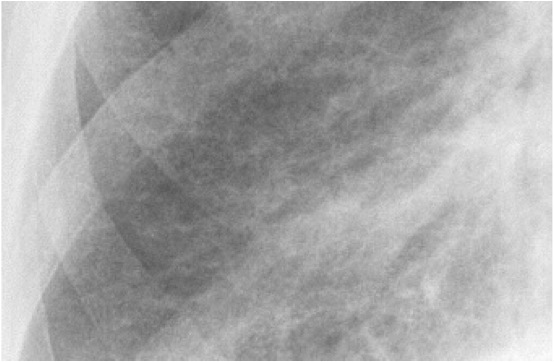
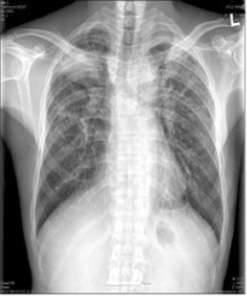
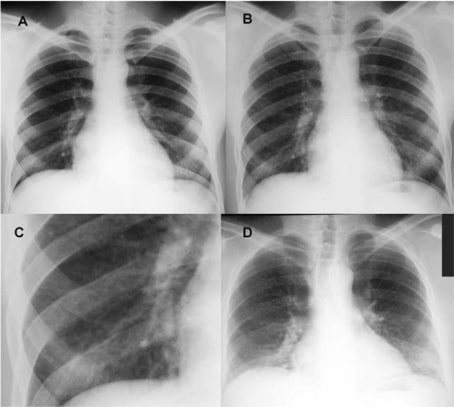
  • Múltiples nódulos pequeños, generalmente en EN Erythema nodosum is an immune-mediated panniculitis (inflammation of the subcutaneous fat) caused by a type IV (delayed-type) hypersensitivity reaction. It commonly manifests in young women as tender, erythematous nodules on the shins. Erythema Nodosum los LOS Neisseria lóbulos superiores
  • Opacidades difusas en EN Erythema nodosum is an immune-mediated panniculitis (inflammation of the subcutaneous fat) caused by a type IV (delayed-type) hypersensitivity reaction. It commonly manifests in young women as tender, erythematous nodules on the shins. Erythema Nodosum vidrio deslustrado en EN Erythema nodosum is an immune-mediated panniculitis (inflammation of the subcutaneous fat) caused by a type IV (delayed-type) hypersensitivity reaction. It commonly manifests in young women as tender, erythematous nodules on the shins. Erythema Nodosum las regiones perihilar y basilar
  • Calcificaciones en “cáscara de huevo” en EN Erythema nodosum is an immune-mediated panniculitis (inflammation of the subcutaneous fat) caused by a type IV (delayed-type) hypersensitivity reaction. It commonly manifests in young women as tender, erythematous nodules on the shins. Erythema Nodosum los LOS Neisseria senos de ganglios linfáticos hiliares marginales (también se pueden ver en EN Erythema nodosum is an immune-mediated panniculitis (inflammation of the subcutaneous fat) caused by a type IV (delayed-type) hypersensitivity reaction. It commonly manifests in young women as tender, erythematous nodules on the shins. Erythema Nodosum la neumoconiosis del minero de carbón, la sarcoidosis Sarcoidosis Sarcoidosis is a multisystem inflammatory disease that causes noncaseating granulomas. The exact etiology is unknown. Sarcoidosis usually affects the lungs and thoracic lymph nodes, but it can also affect almost every system in the body, including the skin, heart, and eyes, most commonly. Sarcoidosis y el linfoma tratado)
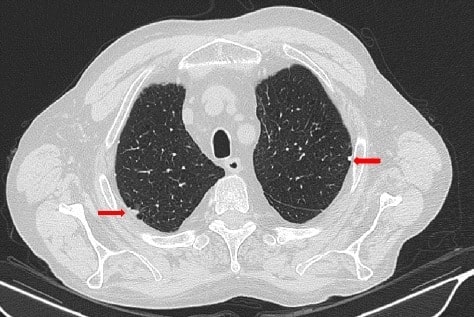
  • Placas supradiafragmáticas y pleurales calcificadas de color “blanco marfil”
  • Fibrosis Fibrosis Any pathological condition where fibrous connective tissue invades any organ, usually as a consequence of inflammation or other injury. Bronchiolitis Obliterans intersticial en EN Erythema nodosum is an immune-mediated panniculitis (inflammation of the subcutaneous fat) caused by a type IV (delayed-type) hypersensitivity reaction. It commonly manifests in young women as tender, erythematous nodules on the shins. Erythema Nodosum forma de estrías lineales o cambios en EN Erythema nodosum is an immune-mediated panniculitis (inflammation of the subcutaneous fat) caused by a type IV (delayed-type) hypersensitivity reaction. It commonly manifests in young women as tender, erythematous nodules on the shins. Erythema Nodosum forma de panal
  • Neumoconiosis del minero de carbón simple: nódulos pulmonares de < 1 cm de diámetro en EN Erythema nodosum is an immune-mediated panniculitis (inflammation of the subcutaneous fat) caused by a type IV (delayed-type) hypersensitivity reaction. It commonly manifests in young women as tender, erythematous nodules on the shins. Erythema Nodosum los LOS Neisseria lóbulos pulmonares superiores
  • Enfermedad progresiva (complicada): múltiples nódulos pequeños y 1 nódulo grande (> 1 cm)
  • Resultados tempranos: normales
  • Hallazgos posteriores: fibrosis Fibrosis Any pathological condition where fibrous connective tissue invades any organ, usually as a consequence of inflammation or other injury. Bronchiolitis Obliterans intersticial, irregularidades pleurales, opacidades en EN Erythema nodosum is an immune-mediated panniculitis (inflammation of the subcutaneous fat) caused by a type IV (delayed-type) hypersensitivity reaction. It commonly manifests in young women as tender, erythematous nodules on the shins. Erythema Nodosum vidrio esmerilado y linfadenopatía hiliar

Pruebas de función pulmonar

La mayoría de los LOS Neisseria casos de neumoconiosis muestran un patrón de enfermedad pulmonar restrictiva en EN Erythema nodosum is an immune-mediated panniculitis (inflammation of the subcutaneous fat) caused by a type IV (delayed-type) hypersensitivity reaction. It commonly manifests in young women as tender, erythematous nodules on the shins. Erythema Nodosum la espirometría.
  • ↓ capacidad vital funcional (CVF) y capacidad pulmonar total
  • ↓ capacidad de difusión (DLCO)
  • Relación volumen espiratorio forzado en EN Erythema nodosum is an immune-mediated panniculitis (inflammation of the subcutaneous fat) caused by a type IV (delayed-type) hypersensitivity reaction. It commonly manifests in young women as tender, erythematous nodules on the shins. Erythema Nodosum 1 segundo (VEF1)/CVF normal (puede estar disminuida si el paciente es también fumador = enfermedad pulmonar restrictiva y obstructiva mixta)

Pruebas de laboratorio

  • Generalmente no es útil para confirmar el diagnóstico pero puede excluir complicaciones infecciosas
  • Prueba de proliferación de linfocitos de berilio (BePLT, por sus siglas en EN Erythema nodosum is an immune-mediated panniculitis (inflammation of the subcutaneous fat) caused by a type IV (delayed-type) hypersensitivity reaction. It commonly manifests in young women as tender, erythematous nodules on the shins. Erythema Nodosum inglés): prueba de elección para diagnosticar la sensibilización al AL Amyloidosis berilio o la beriliosis
    • Células mononucleares del paciente (de la sangre u obtenidas por lavado broncoalveolar) expuestas a diferentes concentraciones de sales de berilio
    • El aumento de la proliferación de linfocitos es un resultado positivo.

Pruebas de confirmación

  • Tomografía computarizada de alta resolución
  • Broncoscopia con lavado broncoalveolar: para excluir infecciones o malignidad
  • Biopsia transtorácica guiada por imágenes de video o abierta:
    • Estándar de oro para el diagnóstico, pero rara vez es necesario; debe limitarse a excluir la malignidad o cuando no hay antecedentes conocidos de exposición a polvo mineral
    • La silicosis Silicosis A form of pneumoconiosis resulting from inhalation of dust containing crystalline form of silicon dioxide, usually in the form of quartz. Amorphous silica is relatively nontoxic. Pneumoconiosis muestra nódulos con partículas de sílice generalmente en EN Erythema nodosum is an immune-mediated panniculitis (inflammation of the subcutaneous fat) caused by a type IV (delayed-type) hypersensitivity reaction. It commonly manifests in young women as tender, erythematous nodules on the shins. Erythema Nodosum una región central hialinizada rodeada de fibras de colágeno concéntricas.
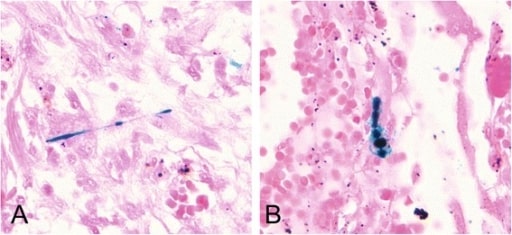
    • La asbestosis Asbestosis A form of pneumoconiosis caused by inhalation of asbestos fibers which elicit potent inflammatory responses in the parenchyma of the lung. The disease is characterized by interstitial fibrosis of the lung, varying from scattered sites to extensive scarring of the alveolar interstitium. Pneumoconiosis podrían mostrar raramente cuerpos de asbesto que se tiñen positivamente con el azul de Prusia y aparecen como varillas fusiformes con forma de mancuerna y de color marrón dorado.
    • La neumoconiosis de los LOS Neisseria mineros del carbón muestra agregaciones nodulares de 1-2 mm MM Multiple myeloma (MM) is a malignant condition of plasma cells (activated B lymphocytes) primarily seen in the elderly. Monoclonal proliferation of plasma cells results in cytokine-driven osteoclastic activity and excessive secretion of IgG antibodies. Multiple Myeloma de antracótico macrófago apoyado por una fina red de colágeno en EN Erythema nodosum is an immune-mediated panniculitis (inflammation of the subcutaneous fat) caused by a type IV (delayed-type) hypersensitivity reaction. It commonly manifests in young women as tender, erythematous nodules on the shins. Erythema Nodosum las regiones superiores de los LOS Neisseria pulmones alrededor de los LOS Neisseria bronquiolos respiratorios.
    • La beriliosis muestra granulomas Granulomas A relatively small nodular inflammatory lesion containing grouped mononuclear phagocytes, caused by infectious and noninfectious agents. Sarcoidosis no caseificantes y/o infiltrados intersticiales de células mononucleares.

Tratamiento

  • No existe un tratamiento definitivo para la neumoconiosis, independientemente del estadio clínico.
  • Se recomienda el cese inmediato de la exposición, así como el abandono del hábito tabáquico, de ser el caso.
    • Detener la exposición puede no detener la progresión de la enfermedad.
  • El tratamiento es en EN Erythema nodosum is an immune-mediated panniculitis (inflammation of the subcutaneous fat) caused by a type IV (delayed-type) hypersensitivity reaction. It commonly manifests in young women as tender, erythematous nodules on the shins. Erythema Nodosum gran medida de soporte y se centra en EN Erythema nodosum is an immune-mediated panniculitis (inflammation of the subcutaneous fat) caused by a type IV (delayed-type) hypersensitivity reaction. It commonly manifests in young women as tender, erythematous nodules on the shins. Erythema Nodosum la prevención de la progresión y las complicaciones.
    • Vacunación profiláctica contra la influenza Influenza Influenza viruses are members of the Orthomyxoviridae family and the causative organisms of influenza, a highly contagious febrile respiratory disease. There are 3 primary influenza viruses (A, B, and C) and various subtypes, which are classified based on their virulent surface antigens, hemagglutinin (HA) and neuraminidase (NA). Influenza typically presents with a fever, myalgia, headache, and symptoms of an upper respiratory infection. Influenza Viruses/Influenza y la neumonía neumocócica
    • Si hay evidencia de enfermedad obstructiva subyacente, puede administrarse terapia broncodilatadora.
    • La oxigenoterapia suele ser necesaria para aliviar la disnea.
    • El tratamiento sistémico temprano con glucocorticoides orales puede aliviar los LOS Neisseria síntomas, mejorar el aspecto de los LOS Neisseria pulmones en EN Erythema nodosum is an immune-mediated panniculitis (inflammation of the subcutaneous fat) caused by a type IV (delayed-type) hypersensitivity reaction. It commonly manifests in young women as tender, erythematous nodules on the shins. Erythema Nodosum las imágenes y normalizar las puntuaciones en EN Erythema nodosum is an immune-mediated panniculitis (inflammation of the subcutaneous fat) caused by a type IV (delayed-type) hypersensitivity reaction. It commonly manifests in young women as tender, erythematous nodules on the shins. Erythema Nodosum las pruebas de función pulmonar.
    • Inmunosupresores, (e.g., metotrexato, azatioprina) son una opción para los LOS Neisseria pacientes que son refractarios a los LOS Neisseria glucocorticoides, o aquellos que experimentan efectos adversos.
  • Se ha HA Hemolytic anemia (HA) is the term given to a large group of anemias that are caused by the premature destruction/hemolysis of circulating red blood cells (RBCs). Hemolysis can occur within (intravascular hemolysis) or outside the blood vessels (extravascular hemolysis). Hemolytic Anemia realizado un trasplante de pulmón para la neumoconiosis avanzada con insuficiencia respiratoria, pero falta evidencia sobre los LOS Neisseria resultados de los LOS Neisseria pacientes.
  • La rehabilitación pulmonar puede mejorar la calidad de vida; incluye educación del paciente, entrenamiento en EN Erythema nodosum is an immune-mediated panniculitis (inflammation of the subcutaneous fat) caused by a type IV (delayed-type) hypersensitivity reaction. It commonly manifests in young women as tender, erythematous nodules on the shins. Erythema Nodosum ejercicio/respiración, asesoramiento nutricional y apoyo psicosocial.

Diagnóstico Diferencial

El diagnóstico diferencial de las neumoconiosis causadas por polvos minerales incluye las siguientes afecciones:

  • Fibrosis Fibrosis Any pathological condition where fibrous connective tissue invades any organ, usually as a consequence of inflammation or other injury. Bronchiolitis Obliterans pulmonar idiopática: es la enfermedad pulmonar intersticial más común, caracterizada por una fibrosis Fibrosis Any pathological condition where fibrous connective tissue invades any organ, usually as a consequence of inflammation or other injury. Bronchiolitis Obliterans pulmonar irreversible y un deterioro de la función pulmonar. Presenta disnea de esfuerzo, tos TOS Thoracic outlet syndrome (TOS) is a broad term used for a spectrum of syndromes related to the general region of the thoracic outlet, which involves the compression or irritation of elements of the brachial plexus, subclavian artery, or subclavian vein. Thoracic Outlet Syndrome seca persistente y fatiga
  • Neumonitis por hipersensibilidad: enfermedad pulmonar caracterizada por una respuesta inflamatoria mediada por inmunidad en EN Erythema nodosum is an immune-mediated panniculitis (inflammation of the subcutaneous fat) caused by a type IV (delayed-type) hypersensitivity reaction. It commonly manifests in young women as tender, erythematous nodules on the shins. Erythema Nodosum las vías respiratorias pequeñas como resultado de la exposición a antígenos inhalados
  • Sarcoidosis Sarcoidosis Sarcoidosis is a multisystem inflammatory disease that causes noncaseating granulomas. The exact etiology is unknown. Sarcoidosis usually affects the lungs and thoracic lymph nodes, but it can also affect almost every system in the body, including the skin, heart, and eyes, most commonly. Sarcoidosis: enfermedad inflamatoria crónica caracterizada por la formación de granulomas Granulomas A relatively small nodular inflammatory lesion containing grouped mononuclear phagocytes, caused by infectious and noninfectious agents. Sarcoidosis no caseificantes, normalmente en EN Erythema nodosum is an immune-mediated panniculitis (inflammation of the subcutaneous fat) caused by a type IV (delayed-type) hypersensitivity reaction. It commonly manifests in young women as tender, erythematous nodules on the shins. Erythema Nodosum los LOS Neisseria pulmones y, con menor frecuencia, en EN Erythema nodosum is an immune-mediated panniculitis (inflammation of the subcutaneous fat) caused by a type IV (delayed-type) hypersensitivity reaction. It commonly manifests in young women as tender, erythematous nodules on the shins. Erythema Nodosum el hígado, los LOS Neisseria ojos y la piel.
  • Tuberculosis Tuberculosis Tuberculosis (TB) is an infectious disease caused by Mycobacterium tuberculosis complex bacteria. The bacteria usually attack the lungs but can also damage other parts of the body. Approximately 30% of people around the world are infected with this pathogen, with the majority harboring a latent infection. Tuberculosis spreads through the air when a person with active pulmonary infection coughs or sneezes. Tuberculosis: enfermedad causada por Mycobacterium tuberculosis Mycobacterium tuberculosis Tuberculosis (TB) is an infectious disease caused by Mycobacterium tuberculosis complex bacteria. The bacteria usually attack the lungs but can also damage other parts of the body. Approximately 30% of people around the world are infected with this pathogen, with the majority harboring a latent infection. Tuberculosis spreads through the air when a person with active pulmonary infection coughs or sneezes. Tuberculosis. La bacteria Bacteria Bacteria are prokaryotic single-celled microorganisms that are metabolically active and divide by binary fission. Some of these organisms play a significant role in the pathogenesis of diseases. Bacteriology suele atacar los LOS Neisseria pulmones, pero también puede dañar otras partes del cuerpo.

Referencias

  1. Stark, P. Imaging of occupational lung diseases. UpToDate Evidence-Based Medicine. Retrieved August 13, 2020, from https://www.uptodate.com/contents/imaging-of-occupational-lung-diseases?search=pneumoconiosis&source=search_result&selectedTitle=1~125&usage_type=default&display_rank=1#H365264570
  2. Rose, C. Silicosis. UpToDate Evidence-Based Medicine. Retrieved August 13, 2020, from https://www.uptodate.com/contents/silicosis?search=pneumoconiosis&source=search_result&selectedTitle=2~125&usage_type=default&display_rank=2
  3. King, T.E. Asbestos-related pleuropulmonary disease. UpToDate Evidence-Based Medicine. Retrieved August 13, 2020, from https://www.uptodate.com/contents/asbestos-related-pleuropulmonary-disease?search=pneumoconiosis&source=search_result&selectedTitle=3~125&usage_type=default&display_rank=3
  4. Hu, C. X., Chen, W. H., He at al. (2019). Lung transplantation in China between 2015 and 2018. Chinese medical journal, 132(23), 2783–2789. https://doi.org/10.1097/CM9.0000000000000543

¡Crea tu cuenta gratis o inicia una sesión para seguir leyendo!

Regístrate ahora y obtén acceso gratuito a Lecturio con páginas de concepto, videos médicos y cuestionarios para tu educación médica.

User Reviews

Que tengas una sesión de estudio alegre y navideña 🎁 Ahorra 50% en todos los planes >>

Details