
Los LOS Neisseria agentes antiplaquetarios son medicamentos que inhiben la agregación plaquetaria, un paso crítico en EN Erythema nodosum is an immune-mediated panniculitis (inflammation of the subcutaneous fat) caused by a type IV (delayed-type) hypersensitivity reaction. It commonly manifests in young women as tender, erythematous nodules on the shins. Erythema Nodosum la formación del tapón plaquetario inicial. La agregación plaquetaria anormal o inapropiada es un paso clave en EN Erythema nodosum is an immune-mediated panniculitis (inflammation of the subcutaneous fat) caused by a type IV (delayed-type) hypersensitivity reaction. It commonly manifests in young women as tender, erythematous nodules on the shins. Erythema Nodosum la fisiopatología de los LOS Neisseria eventos isquémicos arteriales. Las categorías principales de agentes antiplaquetarios incluyen aspirina, inhibidores de difosfato de adenosina, inhibidores de la captación de fosfodiesterasa/adenosina e inhibidores de la glucoproteína IIb/IIIa. Las indicaciones comunes para los LOS Neisseria agentes antiplaquetarios incluyen el tratamiento y la prevención de la cardiopatía isquémica y el accidente cerebrovascular, la enfermedad arterial periférica y otras afecciones asociadas con un alto riesgo de trombosis arterial.
Last updated: Dec 15, 2025
Los LOS Neisseria medicamentos antiplaquetarios son medicamentos que inhiben la agregación plaquetaria, un paso crítico en EN Erythema nodosum is an immune-mediated panniculitis (inflammation of the subcutaneous fat) caused by a type IV (delayed-type) hypersensitivity reaction. It commonly manifests in young women as tender, erythematous nodules on the shins. Erythema Nodosum la formación del tapón plaquetario inicial.
Los LOS Neisseria antiplaquetarios se utilizan en EN Erythema nodosum is an immune-mediated panniculitis (inflammation of the subcutaneous fat) caused by a type IV (delayed-type) hypersensitivity reaction. It commonly manifests in young women as tender, erythematous nodules on the shins. Erythema Nodosum el tratamiento y/o prevención de la trombosis arterial. Las indicaciones comunes incluyen:
Existen varias clases principales de agentes antiplaquetarios:
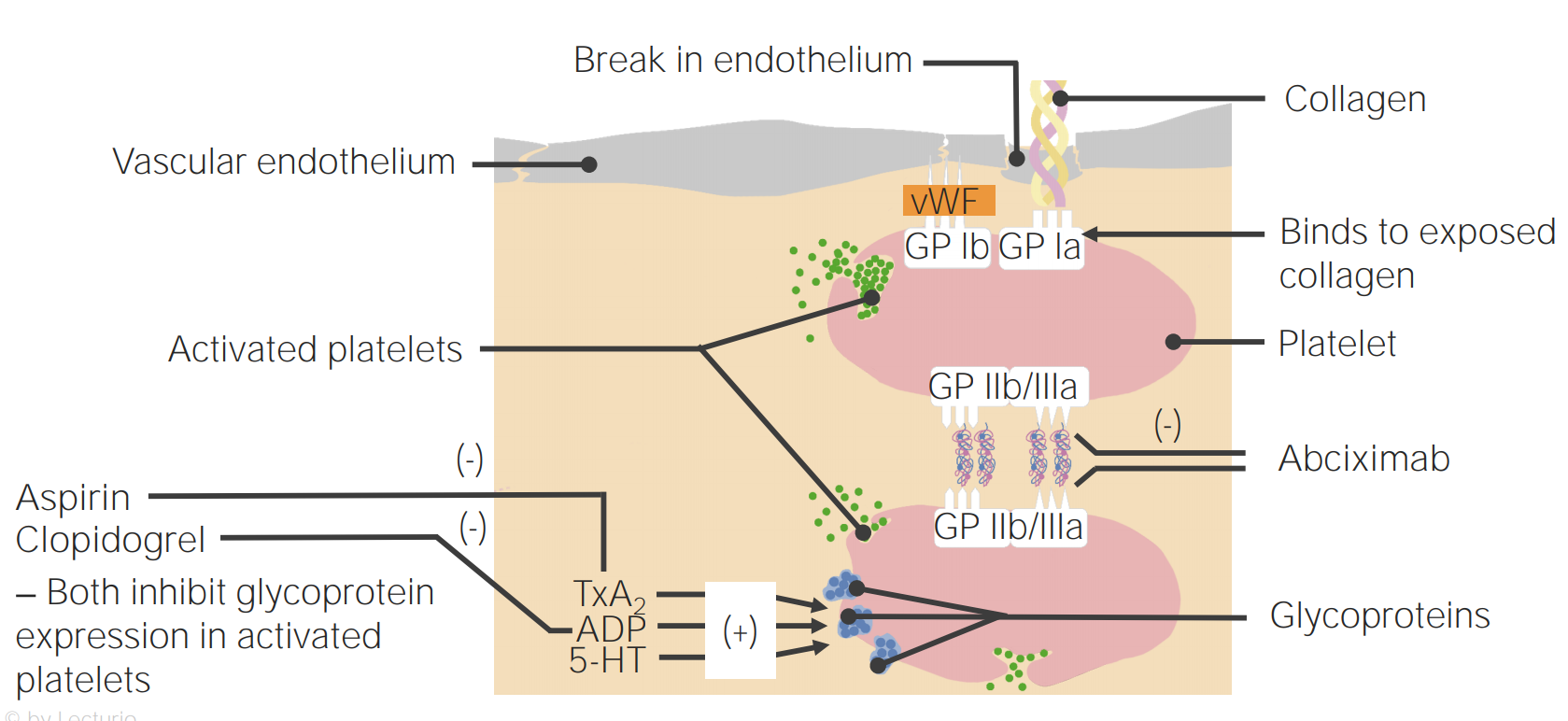
Mecanismos de acción de los agentes antiplaquetarios
5-HT: 5-hidroxitriptamina
TxA 2 : tromboxano A 2
vWF: factor de von Willebrand
Después de que ocurre la lesión endotelial, la exposición de la sangre a los LOS Neisseria componentes subendoteliales desencadena la formación del tapón plaquetario. Este proceso se conoce como hemostasia primaria. (La formación del coágulo de fibrina a través de la cascada de coagulación es la hemostasia secundaria).
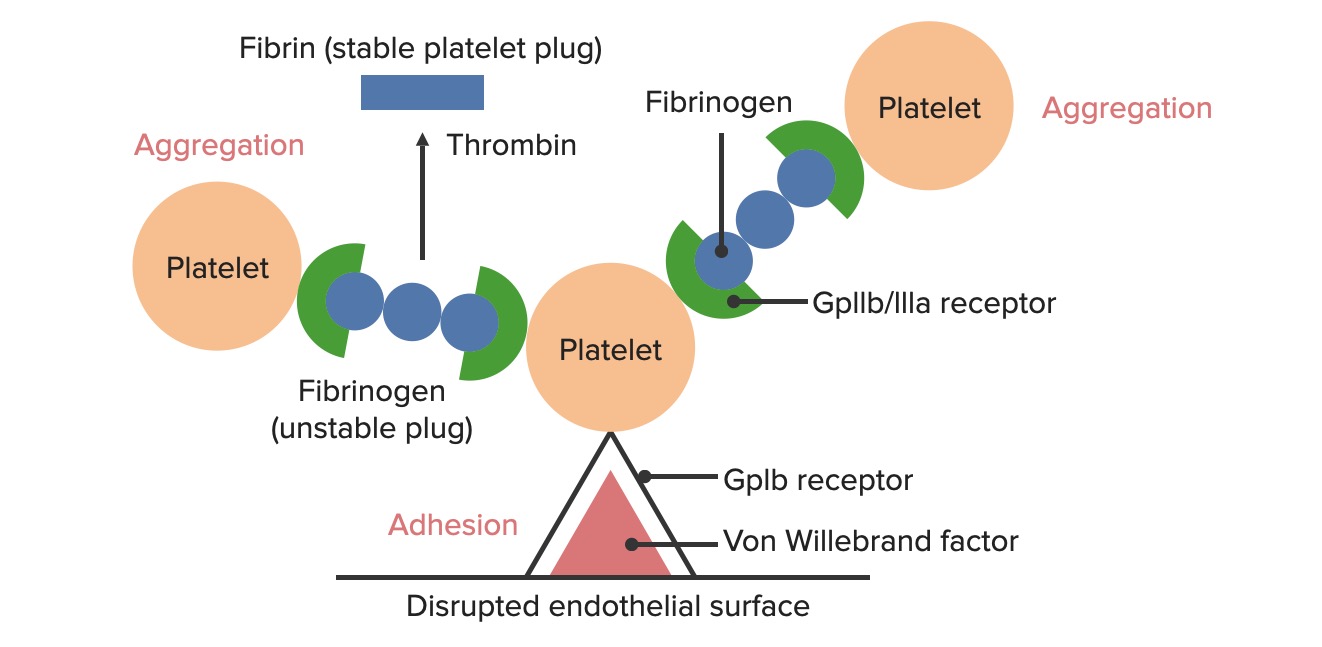
Formación del tapón hemostático temporal:
La superficie endotelial rota expone el factor de von Willebrand a la sangre. Las plaquetas se unen al factor de von Willebrand a través de sus receptores GpIb y se activan. La activación de las plaquetas hace que segreguen difosfato de adenosina, lo que estimula la expresión de los receptores GpIIb/IIIa en las plaquetas. Los receptores GpIIb/IIIa se unen al fibrinógeno, que puede unirse a una plaqueta en cada extremo, lo que hace que las plaquetas se agreguen. A medida que se unen más plaquetas entre sí, se genera el tapón plaquetario. Mientras que se activa la cascada de coagulación, la trombina convierte el fibrinógeno, el cual es débil, en fibrina que es más fuerte, creando así un coágulo mucho más estable.
La exposición de la sangre a los LOS Neisseria componentes subendoteliales en EN Erythema nodosum is an immune-mediated panniculitis (inflammation of the subcutaneous fat) caused by a type IV (delayed-type) hypersensitivity reaction. It commonly manifests in young women as tender, erythematous nodules on the shins. Erythema Nodosum el sitio de la lesión hace HACE Altitude Sickness que las plaquetas se adhieran a ese sitio.
Las plaquetas activadas mejoran aún más la adhesión y agregación plaquetaria y estimulan la secreción de los LOS Neisseria gránulos plaquetarios.
Las plaquetas contienen gránulos, cada uno de los LOS Neisseria cuales libera una serie de sustancias diferentes cuando se activan las plaquetas. Las funciones de las sustancias secretadas incluyen:
| Mecanismo de acción |
|
|---|---|
| Efectos fisiológicos |
|
| Absorción |
|
| Distribución |
|
| Metabolismo |
|
| Eliminación |
|
| Indicaciones específicas |
|
| Contraindicaciones específicas | Niños menores de 16 años (riesgo de síndrome de Reye si el niño desarrolla una infección viral) |
| Complicaciones / efectos secundarios |
|
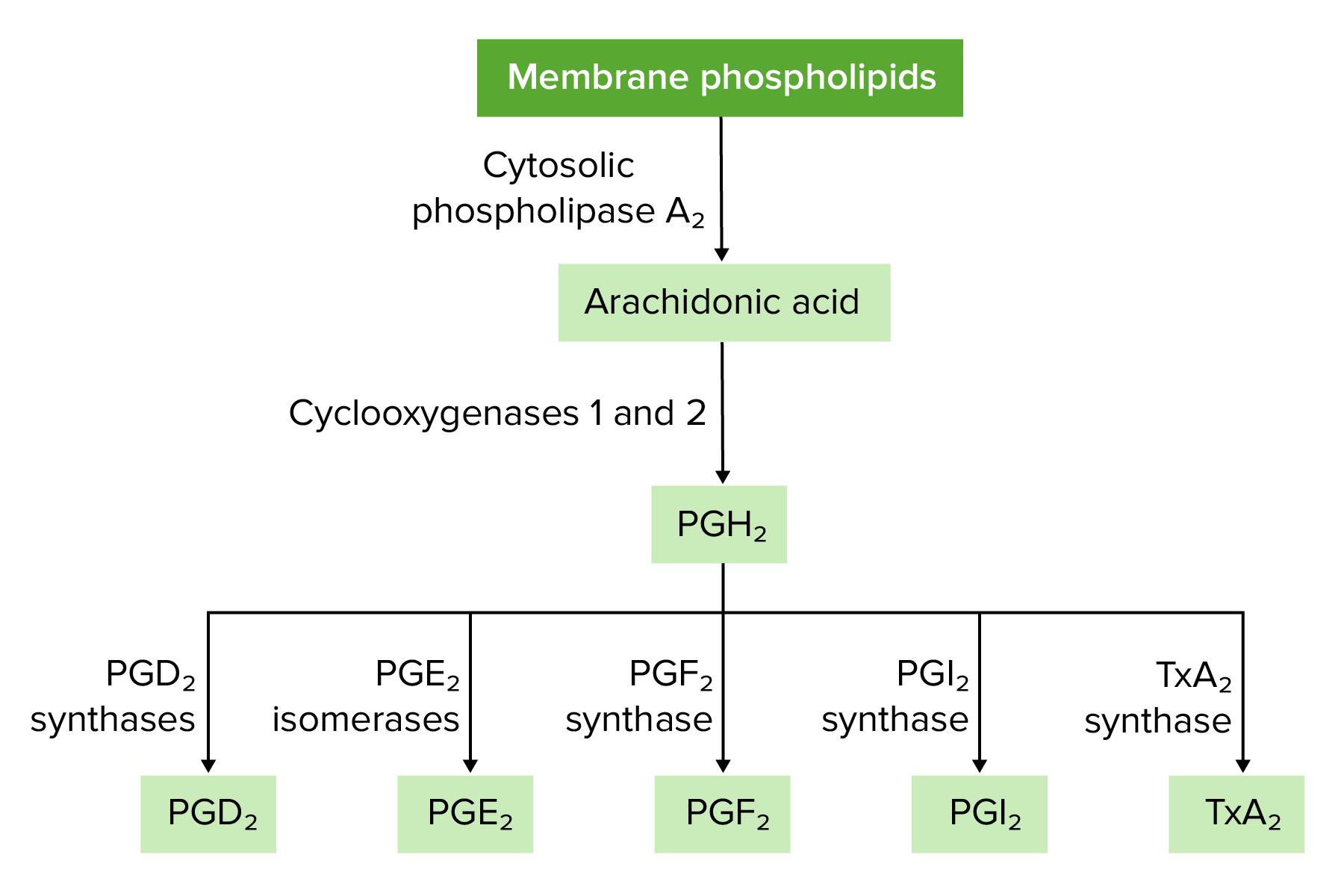
Descripción general de la síntesis de prostaglandinas y tromboxanos
PG: prostaglandina
| Medicamentos |
|
|---|---|
| Mecanismo de acción |
|
| Efectos fisiológicos |
|
| Indicaciones específicas |
|
| Contraindicaciones específicas | Prasugrel Prasugrel A piperazine derivative and platelet aggregation inhibitor that is used to prevent thrombosis in patients with acute coronary syndrome; unstable angina and myocardial infarction, as well as in those undergoing percutaneous coronary interventions. Antiplatelet Drugs: antecedentes de ictus isquémico o AIT AIT Type I Hypersensitivity Reaction |
| Complicaciones |
|
| Medicamento | Clopidogrel Clopidogrel A ticlopidine analog and platelet purinergic p2y receptor antagonist that inhibits adenosine diphosphate-mediated platelet aggregation. It is used to prevent thromboembolism in patients with arterial occlusive diseases; myocardial infarction; stroke; or atrial fibrillation. Antiplatelet Drugs ( Plavix Plavix A ticlopidine analog and platelet purinergic p2y receptor antagonist that inhibits adenosine diphosphate-mediated platelet aggregation. It is used to prevent thromboembolism in patients with arterial occlusive diseases; myocardial infarction; stroke; or atrial fibrillation. Antiplatelet Drugs®) | Prasugrel Prasugrel A piperazine derivative and platelet aggregation inhibitor that is used to prevent thrombosis in patients with acute coronary syndrome; unstable angina and myocardial infarction, as well as in those undergoing percutaneous coronary interventions. Antiplatelet Drugs ( Effient Effient An adenosine triphosphate analogue and reversible p2y12 purinoceptor antagonist that inhibits adp-mediated platelet aggregation. It is used for the prevention of thromboembolism by patients with acute coronary syndrome or a history of myocardial infarction. Antiplatelet Drugs®) | Ticagrelor Ticagrelor An adenosine triphosphate analogue and reversible p2y12 purinoceptor antagonist that inhibits adp-mediated platelet aggregation. It is used for the prevention of thromboembolism by patients with acute coronary syndrome or a history of myocardial infarction. Antiplatelet Drugs |
|---|---|---|---|
| Absorción |
|
|
|
| Distribución | Altamente unido a proteínas (98%) |
|
|
| Metabolismo |
Metabolismo hepático a través de:
|
Se hidroliza en EN Erythema nodosum is an immune-mediated panniculitis (inflammation of the subcutaneous fat) caused by a type IV (delayed-type) hypersensitivity reaction. It commonly manifests in young women as tender, erythematous nodules on the shins. Erythema Nodosum los LOS Neisseria intestinos y en EN Erythema nodosum is an immune-mediated panniculitis (inflammation of the subcutaneous fat) caused by a type IV (delayed-type) hypersensitivity reaction. It commonly manifests in young women as tender, erythematous nodules on the shins. Erythema Nodosum el suero a un intermediario inactivo de tiolactona, que luego es convertido en EN Erythema nodosum is an immune-mediated panniculitis (inflammation of the subcutaneous fat) caused by a type IV (delayed-type) hypersensitivity reaction. It commonly manifests in young women as tender, erythematous nodules on the shins. Erythema Nodosum un metabolito activo a través de la oxidación del CYP3A4 CYP3A4 Class 3 Antiarrhythmic Drugs (Potassium Channel Blockers) y CYP2B6 | Metabolismo hepático a un metabolito activo a través del CYP3A4 CYP3A4 Class 3 Antiarrhythmic Drugs (Potassium Channel Blockers) |
| Eliminación |
|
|
|
| Medicamentos | Dipiridamol (Persantine®) | Cilostazol Cilostazol A quinoline and tetrazole derivative that acts as a phosphodiesterase type 3 inhibitor, with anti-platelet and vasodilating activity. It is used in the treatment of peripheral vascular diseases; ischemic heart disease; and in the prevention of stroke. Phosphodiesterase Inhibitors |
|---|---|---|
| Mecanismo de acción |
Mecanismo de acción doble:
|
|
| Efectos fisiológicos |
|
|
| Absorción |
|
|
| Distribución |
|
Unión a proteínas: 95% |
| Metabolismo |
|
|
| Eliminación |
|
|
| Indicaciones específicas |
|
Claudicación intermitente |
| Contraindicaciones específicas |
|
Insuficiencia cardiaca |
| Complicaciones |
|
Puede inducir taquicardia, taquiarritmias y/o hipotensión |
| Efectos secundarios |
|
|
Los LOS Neisseria 2 inhibidores primarios de la GPIIb/IIIa son el eptifibatide Eptifibatide Cyclic peptide that acts as a platelet glycoprotein iib-iiia antagonist, reversibly inhibiting the binding of fibrinogen; von Willebrand factor; and other adhesive molecules to the gpiib-iiia receptors of platelets. It is used in the management of unstable angina and in patients undergoing coronary angioplasty and stenting procedures. Antiplatelet Drugs ( Integrilin Integrilin Cyclic peptide that acts as a platelet glycoprotein iib-iiia antagonist, reversibly inhibiting the binding of fibrinogen; von Willebrand factor; and other adhesive molecules to the gpiib-iiia receptors of platelets. It is used in the management of unstable angina and in patients undergoing coronary angioplasty and stenting procedures. Antiplatelet Drugs®) y tirofibán ( Aggrastat Aggrastat Tyrosine analog and platelet glycoprotein gpiib-iiia complex antagonist that inhibits platelet aggregation and is used in the treatment of acute coronary syndrome. Antiplatelet Drugs®). El abciximab es un anticuerpo monoclonal que también se encuentra en EN Erythema nodosum is an immune-mediated panniculitis (inflammation of the subcutaneous fat) caused by a type IV (delayed-type) hypersensitivity reaction. It commonly manifests in young women as tender, erythematous nodules on the shins. Erythema Nodosum esta categoría; sin embargo, ya no está disponible en EN Erythema nodosum is an immune-mediated panniculitis (inflammation of the subcutaneous fat) caused by a type IV (delayed-type) hypersensitivity reaction. It commonly manifests in young women as tender, erythematous nodules on the shins. Erythema Nodosum los LOS Neisseria Estados Unidos.
| Medicamentos | Eptifibatida ( Integrilin Integrilin Cyclic peptide that acts as a platelet glycoprotein iib-iiia antagonist, reversibly inhibiting the binding of fibrinogen; von Willebrand factor; and other adhesive molecules to the gpiib-iiia receptors of platelets. It is used in the management of unstable angina and in patients undergoing coronary angioplasty and stenting procedures. Antiplatelet Drugs®) | Tirofibán ( Aggrastat Aggrastat Tyrosine analog and platelet glycoprotein gpiib-iiia complex antagonist that inhibits platelet aggregation and is used in the treatment of acute coronary syndrome. Antiplatelet Drugs®) |
|---|---|---|
| Mecanismo de acción | Se unen e inhiben reversiblemente el receptor Receptor Receptors are proteins located either on the surface of or within a cell that can bind to signaling molecules known as ligands (e.g., hormones) and cause some type of response within the cell. Receptors GPIIb/IIIa | |
| Efectos fisiológicos | Evitan que los LOS Neisseria receptores GPIIb/IIIa se unan al AL Amyloidosis fibrinógeno y, por lo tanto, evitan la agregación plaquetaria. | |
| Absorción |
|
|
| Distribución |
|
|
| Metabolismo | Insignificante | |
| Eliminación |
|
|
| Indicaciones específicas |
|
|
| Contraindicaciones específicas | Trombocitopenia grave | |
| Complicaciones |
|
|
Algunos de los LOS Neisseria usos terapéuticos más comunes de los LOS Neisseria agentes antiplaquetarios incluyen: