Domina Conceptos Médicos

Estudia para la escuela de medicina y tus examenes con Lecturio.

Lipomas

Un lipoma Lipoma A lipoma is a benign neoplasm of fat cells (adipocytes) and the most common soft tissue tumor in adults. The etiology is unknown, but obesity is a predisposing factor; genetics also play a role, with multiple lipomas occurring in various inherited disorders. Lipoma es una neoplasia benigna de células grasas (adipocitos) y el tumor Tumor Inflammation de tejidos blandos más común en EN Erythema nodosum is an immune-mediated panniculitis (inflammation of the subcutaneous fat) caused by a type IV (delayed-type) hypersensitivity reaction. It commonly manifests in young women as tender, erythematous nodules on the shins. Erythema Nodosum adultos. La etiología es desconocida, pero la obesidad es un factor predisponente; la genética también juega un papel, con la aparición de múltiples lipomas en EN Erythema nodosum is an immune-mediated panniculitis (inflammation of the subcutaneous fat) caused by a type IV (delayed-type) hypersensitivity reaction. It commonly manifests in young women as tender, erythematous nodules on the shins. Erythema Nodosum varios trastornos hereditarios. Los LOS Neisseria lipomas pueden surgir en EN Erythema nodosum is an immune-mediated panniculitis (inflammation of the subcutaneous fat) caused by a type IV (delayed-type) hypersensitivity reaction. It commonly manifests in young women as tender, erythematous nodules on the shins. Erythema Nodosum cualquier sitio con tejido adiposo (incluido el tracto gastrointestinal, la cavidad torácica, el retroperitoneo y las glándulas), pero son más comunes en EN Erythema nodosum is an immune-mediated panniculitis (inflammation of the subcutaneous fat) caused by a type IV (delayed-type) hypersensitivity reaction. It commonly manifests in young women as tender, erythematous nodules on the shins. Erythema Nodosum los LOS Neisseria tejidos subcutáneos del tronco o las extremidades proximales. El tratamiento no es necesario en EN Erythema nodosum is an immune-mediated panniculitis (inflammation of the subcutaneous fat) caused by a type IV (delayed-type) hypersensitivity reaction. It commonly manifests in young women as tender, erythematous nodules on the shins. Erythema Nodosum caso de lipomas pequeños asintomáticos. La escisión quirúrgica es el tratamiento si existe un problema estético, funcional o de diagnóstico.

Last updated: Dec 15, 2025

Editorial responsibility: Stanley Oiseth, Lindsay Jones, Evelin Maza

Descripción General

Definición

El lipoma Lipoma A lipoma is a benign neoplasm of fat cells (adipocytes) and the most common soft tissue tumor in adults. The etiology is unknown, but obesity is a predisposing factor; genetics also play a role, with multiple lipomas occurring in various inherited disorders. Lipoma es una neoplasia benigna de las células grasas (adipocitos).

Epidemiología

  • El tumor Tumor Inflammation benigno de tejidos blandos más frecuente
  • Edad: en EN Erythema nodosum is an immune-mediated panniculitis (inflammation of the subcutaneous fat) caused by a type IV (delayed-type) hypersensitivity reaction. It commonly manifests in young women as tender, erythematous nodules on the shins. Erythema Nodosum su mayoría adultos, edad > 40 años; raro en EN Erythema nodosum is an immune-mediated panniculitis (inflammation of the subcutaneous fat) caused by a type IV (delayed-type) hypersensitivity reaction. It commonly manifests in young women as tender, erythematous nodules on the shins. Erythema Nodosum niños
  • Incidencia ligeramente mayor en EN Erythema nodosum is an immune-mediated panniculitis (inflammation of the subcutaneous fat) caused by a type IV (delayed-type) hypersensitivity reaction. It commonly manifests in young women as tender, erythematous nodules on the shins. Erythema Nodosum hombres que en EN Erythema nodosum is an immune-mediated panniculitis (inflammation of the subcutaneous fat) caused by a type IV (delayed-type) hypersensitivity reaction. It commonly manifests in young women as tender, erythematous nodules on the shins. Erythema Nodosum mujeres
  • Asociados con hiperlipidemia, diabetes Diabetes Diabetes mellitus (DM) is a metabolic disease characterized by hyperglycemia and dysfunction of the regulation of glucose metabolism by insulin. Type 1 DM is diagnosed mostly in children and young adults as the result of autoimmune destruction of β cells in the pancreas and the resulting lack of insulin. Type 2 DM has a significant association with obesity and is characterized by insulin resistance. Diabetes Mellitus mellitus tipo 2 y obesidad
  • Sin preferencia de etnia
  • Los LOS Neisseria lipomas múltiples representan el 5% de los LOS Neisseria casos:
    • A menudo familiar
    • A menudo asociado con trastornos genéticos.

Etiología

  • Desconocida para la mayoría de los LOS Neisseria lipomas
  • Genética en EN Erythema nodosum is an immune-mediated panniculitis (inflammation of the subcutaneous fat) caused by a type IV (delayed-type) hypersensitivity reaction. It commonly manifests in young women as tender, erythematous nodules on the shins. Erythema Nodosum algunos casos:
    • Lipomas solitarios: defecto del gen de fusión HMGA2-LPP en EN Erythema nodosum is an immune-mediated panniculitis (inflammation of the subcutaneous fat) caused by a type IV (delayed-type) hypersensitivity reaction. It commonly manifests in young women as tender, erythematous nodules on the shins. Erythema Nodosum el cromosoma 12
    • Algunos están asociados con síndromes genéticos:
      • Lipomatosis múltiple familiar
      • Adiposis dolorosa Adiposis dolorosa A rare disease characterized by multiple tumor-like fatty deposits that press on nerves in various sites causing pain and weakness. Often these lipoma-like structures are located on the trunk and limbs but not on the face and hands. Lipoma
      • Neurofibromatosis
      • Neoplasia endocrina múltiple
      • Síndrome de Gardner
      • Enfermedad de Madelung
      • Síndrome de Bannayan-Riley-Ruvalcaba
  • Factores ambientales:
    • Obesidad (definitivo)
    • Posibles factores:
      • Diabetes Diabetes Diabetes mellitus (DM) is a metabolic disease characterized by hyperglycemia and dysfunction of the regulation of glucose metabolism by insulin. Type 1 DM is diagnosed mostly in children and young adults as the result of autoimmune destruction of β cells in the pancreas and the resulting lack of insulin. Type 2 DM has a significant association with obesity and is characterized by insulin resistance. Diabetes Mellitus y otros trastornos endocrinos
      • Trauma
      • Radiación
      • Terapia con corticosteroides

Fisiopatología y Presentación Clínica

Fisiopatología

Sitios anatómicos:

  • Neoplasia benigna compuesta de células adiposas maduras
  • Pueden surgir en EN Erythema nodosum is an immune-mediated panniculitis (inflammation of the subcutaneous fat) caused by a type IV (delayed-type) hypersensitivity reaction. It commonly manifests in young women as tender, erythematous nodules on the shins. Erythema Nodosum cualquier sitio donde exista tejido adiposo:
    • La mayoría surgen en EN Erythema nodosum is an immune-mediated panniculitis (inflammation of the subcutaneous fat) caused by a type IV (delayed-type) hypersensitivity reaction. It commonly manifests in young women as tender, erythematous nodules on the shins. Erythema Nodosum el tejido subcutáneo, en EN Erythema nodosum is an immune-mediated panniculitis (inflammation of the subcutaneous fat) caused by a type IV (delayed-type) hypersensitivity reaction. It commonly manifests in young women as tender, erythematous nodules on the shins. Erythema Nodosum el tronco o las extremidades superiores.
    • Sitios gastrointestinales submucosos, desde el esófago hasta el intestino grueso
    • Sitios menos comunes:
      • Retroperitoneal Retroperitoneal Peritoneum: Anatomy
      • Intraglandular
      • Intramuscular
      • Lipoma Lipoma A lipoma is a benign neoplasm of fat cells (adipocytes) and the most common soft tissue tumor in adults. The etiology is unknown, but obesity is a predisposing factor; genetics also play a role, with multiple lipomas occurring in various inherited disorders. Lipoma parósteo

Morfología:

  • Tamaño:
    • Usualmente 2–3 cm
    • Varían entre < 1 cm hasta > 10 cm, especialmente si se encuentra en EN Erythema nodosum is an immune-mediated panniculitis (inflammation of the subcutaneous fat) caused by a type IV (delayed-type) hypersensitivity reaction. It commonly manifests in young women as tender, erythematous nodules on the shins. Erythema Nodosum tejidos más profundos
  • La presentación única es la más común, pero puede ser múltiple
  • Suave, cauchoso
  • Móvil (no adherido a los LOS Neisseria tejidos circundantes)
  • Redondo, ovalado o multilobulado
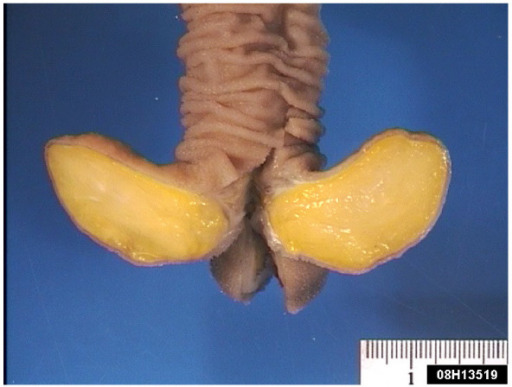
  • Grasa homogénea de color amarillo brillante con una fina cápsula fibrosa (lesiones superficiales) y trabéculas
  • Superficie de corte grasosa

Histología:

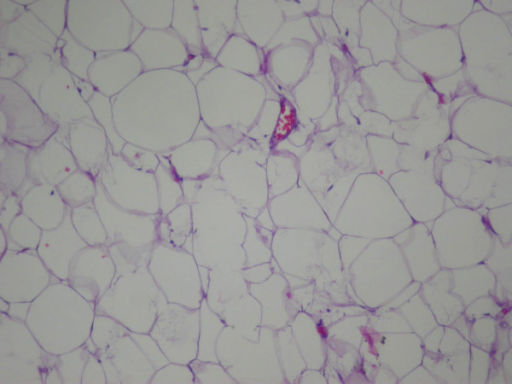
  • Tejido adiposo maduro, con adipocitos sin atipia, pero con una variación de 2–5 veces en EN Erythema nodosum is an immune-mediated panniculitis (inflammation of the subcutaneous fat) caused by a type IV (delayed-type) hypersensitivity reaction. It commonly manifests in young women as tender, erythematous nodules on the shins. Erythema Nodosum el tamaño de las células
  • Arquitectura lobulillar con septos delgados
  • Sin figuras mitóticas
  • Vascularidad escasa
  • Cápsula fibrosa delgada
  • Necrosis Necrosis The death of cells in an organ or tissue due to disease, injury or failure of the blood supply. Ischemic Cell Damage grasa:
    • Más probable en EN Erythema nodosum is an immune-mediated panniculitis (inflammation of the subcutaneous fat) caused by a type IV (delayed-type) hypersensitivity reaction. It commonly manifests in young women as tender, erythematous nodules on the shins. Erythema Nodosum lipomas más grandes
    • Focal, con histiocitos +/- calcificación
  • Algunas variantes histológicas:
    • Angiolipoma Angiolipoma A benign neoplasm composed of a mixture of adipose tissue and blood vessels. Cowden Syndrome:
      • Tumor Tumor Inflammation subcutáneo pequeño, bien delimitado
      • Células adiposas maduras, vasos capilares con trombos de fibrina
      • El angiolipoma Angiolipoma A benign neoplasm composed of a mixture of adipose tissue and blood vessels. Cowden Syndrome es 1 de los LOS Neisseria 5 tumores cutáneos dolorosos más comunes. ( Los LOS Neisseria otros 4 son: neuroma (traumático), tumor Tumor Inflammation glómico, espiradenoma ecrino y leiomioma (vascular), creando la mnemotecnia “ÁNGEL”).
    • Fibrolipoma Fibrolipoma Lipoma
    • Lipoma Lipoma A lipoma is a benign neoplasm of fat cells (adipocytes) and the most common soft tissue tumor in adults. The etiology is unknown, but obesity is a predisposing factor; genetics also play a role, with multiple lipomas occurring in various inherited disorders. Lipoma condroide
    • Lipoma Lipoma A lipoma is a benign neoplasm of fat cells (adipocytes) and the most common soft tissue tumor in adults. The etiology is unknown, but obesity is a predisposing factor; genetics also play a role, with multiple lipomas occurring in various inherited disorders. Lipoma osificante

Presentación Clínica

  • Lipomas subcutáneos (más comunes):
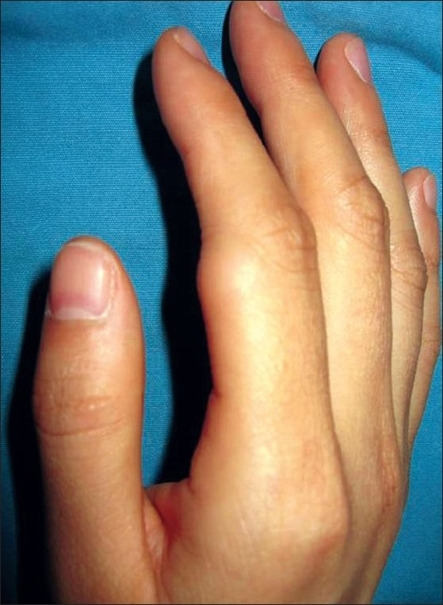
    • Masa blanda y móvil de 2–3 cm (puede ser > 10 cm), generalmente en EN Erythema nodosum is an immune-mediated panniculitis (inflammation of the subcutaneous fat) caused by a type IV (delayed-type) hypersensitivity reaction. It commonly manifests in young women as tender, erythematous nodules on the shins. Erythema Nodosum el tronco o las extremidades superiores
    • Usualmente solitario
    • Indoloro
    • Sin cambios en EN Erythema nodosum is an immune-mediated panniculitis (inflammation of the subcutaneous fat) caused by a type IV (delayed-type) hypersensitivity reaction. It commonly manifests in young women as tender, erythematous nodules on the shins. Erythema Nodosum la piel suprayacente
    • Puede aparecer en EN Erythema nodosum is an immune-mediated panniculitis (inflammation of the subcutaneous fat) caused by a type IV (delayed-type) hypersensitivity reaction. It commonly manifests in young women as tender, erythematous nodules on the shins. Erythema Nodosum cualquier parte del cuerpo
  • Lipomas gastrointestinales:
    • Obstrucción intestinal o intususcepción (náuseas/vómitos, dolor Dolor Inflammation abdominal)
    • Hemorragia gastrointestinal (por ulceración de la mucosa)
  • Otros sitios, e.g., retroperitoneo, cavidades corporales: efectos de compresión en EN Erythema nodosum is an immune-mediated panniculitis (inflammation of the subcutaneous fat) caused by a type IV (delayed-type) hypersensitivity reaction. It commonly manifests in young women as tender, erythematous nodules on the shins. Erythema Nodosum órganos adyacentes

Diagnóstico y Tratamiento

Diagnóstico

Antecedentes clínicos:

  • Una masa de crecimiento lento (generalmente indolora) en EN Erythema nodosum is an immune-mediated panniculitis (inflammation of the subcutaneous fat) caused by a type IV (delayed-type) hypersensitivity reaction. It commonly manifests in young women as tender, erythematous nodules on the shins. Erythema Nodosum caso de los LOS Neisseria lipomas subcutáneos
  • Para otros tipos de lipomas reportados, los LOS Neisseria síntomas dependen del sitio.
  • Antecedentes familiares/trastornos genéticos

Examen físico:

  • Nódulo blando, cauchoso y móvil
  • “Signo de deslizamiento”: El tumor Tumor Inflammation se deslizará por debajo de los LOS Neisseria dedos.
  • Los LOS Neisseria lipomas más profundos o intramusculares pueden presentarse como hinchazón.

Imagenología:

  • No se requiere para la mayoría de los LOS Neisseria lipomas subcutáneos
  • Ultrasonido:
    • Se puede utilizar para lesiones subcutáneas con apariencia atípica
    • Para lesiones profundas de tejidos blandos o retroperitoneales
  • Tomografía computarizada (TC):
    • Densidad < 50 unidades Hounsfield es indicativa de un tumor Tumor Inflammation de grasa
    • Sin embargo, no puede distinguir de manera confiable el lipoma Lipoma A lipoma is a benign neoplasm of fat cells (adipocytes) and the most common soft tissue tumor in adults. The etiology is unknown, but obesity is a predisposing factor; genetics also play a role, with multiple lipomas occurring in various inherited disorders. Lipoma del liposarcoma.
  • Resonancia magnética (RM): tampoco puede descartar malignidad de manera confiable

Endoscopia y ultrasonido endoscópico:

  • Del esófago al AL Amyloidosis colon Colon The large intestines constitute the last portion of the digestive system. The large intestine consists of the cecum, appendix, colon (with ascending, transverse, descending, and sigmoid segments), rectum, and anal canal. The primary function of the colon is to remove water and compact the stool prior to expulsion from the body via the rectum and anal canal. Colon, Cecum, and Appendix: Anatomy
  • Aparecen como nódulos submucosos redondos y lisos
  • Posible ulceración de la mucosa si es grande
  • El ultrasonido endoscópico puede ayudar a confirmar el diagnóstico de un lipoma Lipoma A lipoma is a benign neoplasm of fat cells (adipocytes) and the most common soft tissue tumor in adults. The etiology is unknown, but obesity is a predisposing factor; genetics also play a role, with multiple lipomas occurring in various inherited disorders. Lipoma.

Biopsia:

  • Si el diagnóstico es incierto y se sospecha malignidad
  • Biopsia con aguja gruesa (para lesiones profundas/retroperitoneales)
  • La biopsia incisional es una opción para lesiones grandes de tejidos blandos.
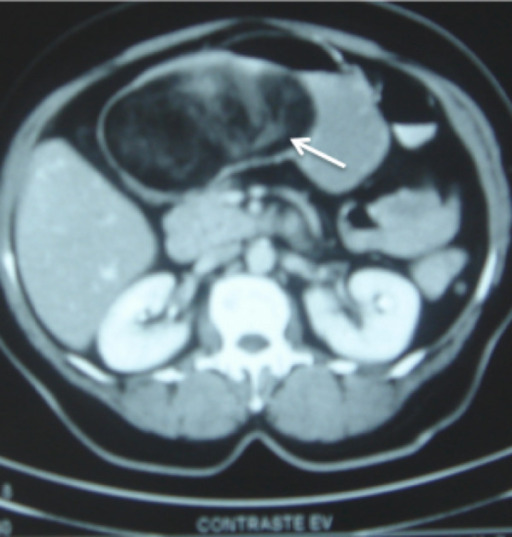
Lipoma gástrico submucoso grande

Un lipoma gástrico submucoso grande (12 x 8 x 6 cm) (flecha)
Parte del medio de contraste se ha filtrado hacia el lipoma a través de áreas ulceradas focales en la mucosa suprayacente, y se puede ver penetrando en el centro desde la superficie.

Imagen: “Gastric lipoma presenting as a giant bulging mass in an oligosymptomatic patient: a case report” por Neto FA, Ferreira MC, Bertoncello LC, Neto AA, de Aveiro WC, Bento CA, Cecchino GN, Rocha MA. Licencia: CC BY 2.0.
Tratamiento

Tratamiento expectante: adecuado para lipomas pequeños (< 5 cm) asintomáticos subcutáneos

Extirpación quirúrgica:

  • Lipomas subcutáneos:
    • Indicaciones:
    • La escisión debe involucrar la cápsula fibrosa para reducir la recurrencia.
  • Lipomas gastrointestinales:
    • Resección quirúrgica si es sintomática/obstructiva
    • La extracción endoscópica puede ser factible si es pequeña.
  • Otros sitios (retroperitoneo, intraglandular):
    • La resección suele ser necesaria si se trata de malignidad
    • Siempre es necesario si es sintomático
    • Biopsia antes de la resección, si es factible.

Complicaciones de la cirugía:

  • Cicatrización
  • Formación de seroma
  • Formación de hematomas
  • Infección
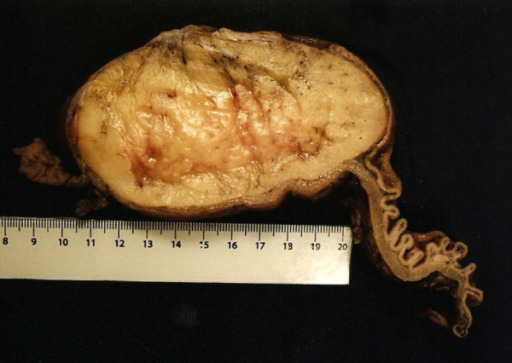
Lipoma gástrico submucoso

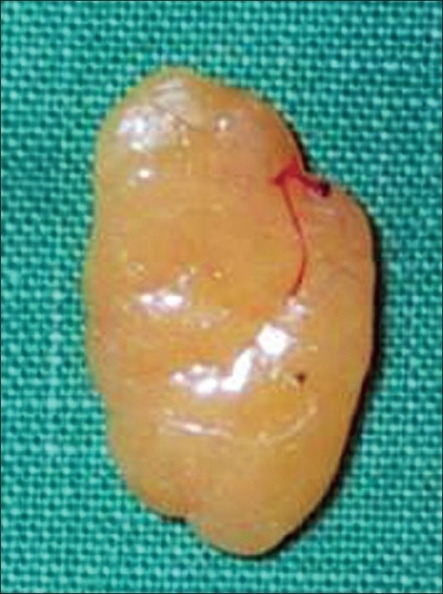
Lipoma gástrico submucoso (muestra quirúrgica)
Obsérvese la pared engrosada de la pared gástrica proximal en el lado derecho y la mucosa gástrica suprayacente focalmente ulcerada atenuada.

Imagen: “Gastric lipoma presenting as a giant bulging mass in an oligosymptomatic patient: a case report” por Neto FA, Ferreira MC, Bertoncello LC, Neto AA, de Aveiro WC, Bento CA, Cecchino GN, Rocha MA. Licencia: CC BY 2.0.

Diagnóstico Diferencial

Lesiones subcutáneas

  • Quistes llenos de queratina: quistes benignos revestidos por células epidérmicas y llenos de queratina. También llamados por el nombre inapropiado “quistes sebáceos”. Dos tipos:
    • Quiste de inclusión epidérmico: formado por la invaginación y expansión quística de la epidermis Epidermis The external, nonvascular layer of the skin. It is made up, from within outward, of five layers of epithelium: (1) basal layer (stratum basale epidermidis); (2) spinous layer (stratum spinosum epidermidis); (3) granular layer (stratum granulosum epidermidis); (4) clear layer (stratum lucidum epidermidis); and (5) horny layer (stratum corneum epidermidis). Skin: Structure and Functions. Se encuentra comúnmente en EN Erythema nodosum is an immune-mediated panniculitis (inflammation of the subcutaneous fat) caused by a type IV (delayed-type) hypersensitivity reaction. It commonly manifests in young women as tender, erythematous nodules on the shins. Erythema Nodosum la cabeza, la cara o el cuello. Son firmes y tienen un punto central; propenso a la ruptura.
    • Quiste tricolémico (quiste pilar): se origina en EN Erythema nodosum is an immune-mediated panniculitis (inflammation of the subcutaneous fat) caused by a type IV (delayed-type) hypersensitivity reaction. It commonly manifests in young women as tender, erythematous nodules on the shins. Erythema Nodosum la vaina externa de la raíz del cabello. El noventa por ciento ocurre en EN Erythema nodosum is an immune-mediated panniculitis (inflammation of the subcutaneous fat) caused by a type IV (delayed-type) hypersensitivity reaction. It commonly manifests in young women as tender, erythematous nodules on the shins. Erythema Nodosum el cuero cabelludo o el escroto. Suelen tener un patrón de herencia autosómico dominante. Por lo general, es firme con una pared quística gruesa.
  • Absceso: quiste lleno de pus con pared fibrótica; indurada, fija y eritematosa; puede ser infeccioso (bacteriano o fúngico) o estéril (si se inyecta un medicamento o una sustancia irritante en EN Erythema nodosum is an immune-mediated panniculitis (inflammation of the subcutaneous fat) caused by a type IV (delayed-type) hypersensitivity reaction. It commonly manifests in young women as tender, erythematous nodules on the shins. Erythema Nodosum la piel, lo que provoca una inflamación aséptica y la formación de un absceso).
  • Liposarcoma bien diferenciado (“ tumor Tumor Inflammation lipomatoso atípico”): principalmente en EN Erythema nodosum is an immune-mediated panniculitis (inflammation of the subcutaneous fat) caused by a type IV (delayed-type) hypersensitivity reaction. It commonly manifests in young women as tender, erythematous nodules on the shins. Erythema Nodosum la parte profunda del muslo o retroperitoneo; multilobulado, con áreas focales firmes. Células fusiformes atípicas presentes; sobreexpresa MDM2 (que bloquea la función supresora de tumores p53). El liposarcoma bien diferenciado tiende a recidivar si no se reseca por completo. No haga metástasis si no se produce la desdiferenciación en EN Erythema nodosum is an immune-mediated panniculitis (inflammation of the subcutaneous fat) caused by a type IV (delayed-type) hypersensitivity reaction. It commonly manifests in young women as tender, erythematous nodules on the shins. Erythema Nodosum elementos de mayor grado.
  • Pseudolipoma: tensión sobre el tejido adiposo subcutáneo por bandas fibrosas adyacentes, que puede ser postraumática o relacionada con cáncer de mama escirro.

Lesiones profundas

  • Liposarcoma: una neoplasia maligna de adipocitos; generalmente surge de novo (no de un lipoma Lipoma A lipoma is a benign neoplasm of fat cells (adipocytes) and the most common soft tissue tumor in adults. The etiology is unknown, but obesity is a predisposing factor; genetics also play a role, with multiple lipomas occurring in various inherited disorders. Lipoma). A menudo intramuscular o retroperitoneal Retroperitoneal Peritoneum: Anatomy. Aparece heterogéneo en EN Erythema nodosum is an immune-mediated panniculitis (inflammation of the subcutaneous fat) caused by a type IV (delayed-type) hypersensitivity reaction. It commonly manifests in young women as tender, erythematous nodules on the shins. Erythema Nodosum la imagenologia. Se necesita biopsia para confirmación.
  • Hibernoma: un tumor Tumor Inflammation benigno que surge de la grasa parda; más comúnmente en EN Erythema nodosum is an immune-mediated panniculitis (inflammation of the subcutaneous fat) caused by a type IV (delayed-type) hypersensitivity reaction. It commonly manifests in young women as tender, erythematous nodules on the shins. Erythema Nodosum el área interescapular, pero también en EN Erythema nodosum is an immune-mediated panniculitis (inflammation of the subcutaneous fat) caused by a type IV (delayed-type) hypersensitivity reaction. It commonly manifests in young women as tender, erythematous nodules on the shins. Erythema Nodosum el cuello, las axilas, los LOS Neisseria muslos o las áreas intratorácicas. Los LOS Neisseria hibernomas tienen mayor vascularización y densidad en EN Erythema nodosum is an immune-mediated panniculitis (inflammation of the subcutaneous fat) caused by a type IV (delayed-type) hypersensitivity reaction. It commonly manifests in young women as tender, erythematous nodules on the shins. Erythema Nodosum comparación con los LOS Neisseria lipomas.
  • Hamartoma Hamartoma A focal malformation resembling a neoplasm, composed of an overgrowth of mature cells and tissues that normally occur in the affected area. Colorectal Cancer mamario: una proliferación benigna de tejido fibroso, glandular y graso rodeado por una cápsula fibrosa delgada.
  • Tumores de la submucosa gastrointestinal: incluyen leiomiomas, tumores de células granulares, tumores del estroma gastrointestinal, lesiones metastásicas y otros. Se diagnostica por endoscopia, ultrasonido endoscópico y biopsia.
  • Lipoma Lipoma A lipoma is a benign neoplasm of fat cells (adipocytes) and the most common soft tissue tumor in adults. The etiology is unknown, but obesity is a predisposing factor; genetics also play a role, with multiple lipomas occurring in various inherited disorders. Lipoma” del cordón espermático: no es un verdadero lipoma Lipoma A lipoma is a benign neoplasm of fat cells (adipocytes) and the most common soft tissue tumor in adults. The etiology is unknown, but obesity is a predisposing factor; genetics also play a role, with multiple lipomas occurring in various inherited disorders. Lipoma (i.e., una neoplasia benigna de tejido adiposo), sino que es solo tejido adiposo preperitoneal, maduro, benigno, que ha HA Hemolytic anemia (HA) is the term given to a large group of anemias that are caused by the premature destruction/hemolysis of circulating red blood cells (RBCs). Hemolysis can occur within (intravascular hemolysis) or outside the blood vessels (extravascular hemolysis). Hemolytic Anemia accedido al AL Amyloidosis cordón espermático.

Related videos

Referencias

  1. Nickloes, T. A. (2024). Lipomas. In J. Geibel (Ed.), Medscape. https://emedicine.medscape.com/article/191233-overview
  2. Kim, K.S., & Yang, H.S. (2014). Unusual locations of lipoma: Differential diagnosis of head and neck mass. Australian Family Physician, 43(12), 867–870.  https://www.racgp.org.au/afp/2014/december/unusual-locations-of-lipoma-differential-diagnosis-of-head-and-neck-mass/#5
  3. Lipoma (2020). In Kumar, V., Abbas, A. K., Aster, J.C., (Eds.). Robbins & Cotran Pathologic Basis of Disease. (10th ed., p. 1209). Elsevier, Inc.
  4. Fairweather, M., & Raut, C.P. (2019). To Biopsy, or Not to Biopsy [a suspected retroperitoneal sarcoma]: Is There Really a Question?. Ann Surg Oncol 26, 4182–4184. https://doi.org/10.1245/s10434-019-07723-y
  5. Rotunda, A. M., Ablon, G., & Kolodney, M. S. (2005). Lipomas treated with subcutaneous deoxycholate injections. Journal of the American Academy of Dermatology, 53(6), 973–978. https://doi.org/10.1016/j.jaad.2005.07.068
  6. Kolb, L., Yarrarapu, S. N. S., Ameer, M. A., & Rosario-Collazo, J. A. (2023). Lipoma. In StatPearls. StatPearls Publishing. Retrieved April 12, 2025, from https://www.ncbi.nlm.nih.gov/books/NBK507906/

¡Crea tu cuenta gratis o inicia una sesión para seguir leyendo!

Regístrate ahora y obtén acceso gratuito a Lecturio con páginas de concepto, videos médicos y cuestionarios para tu educación médica.

User Reviews

Que tengas una sesión de estudio alegre y navideña 🎁 Ahorra 50% en todos los planes >>

Details