Domina Conceptos Médicos

Estudia para la escuela de medicina y tus examenes con Lecturio.

Intoxicación Por Insecticidas

Los LOS Neisseria insecticidas son sustancias químicas que se utilizan para matar o controlar los LOS Neisseria insectos, mejorar el rendimiento de los LOS Neisseria cultivos y prevenir enfermedades. La exposición humana a los LOS Neisseria insecticidas puede ser por contacto directo, inhalación o ingestión. Entre los LOS Neisseria insecticidas importantes que pueden afectar al AL Amyloidosis ser humano se encuentran los LOS Neisseria organoclorados (diclorodifeniltricloroetano ( DDT DDT A polychlorinated pesticide that is resistant to destruction by light and oxidation. Its unusual stability has resulted in difficulties in residue removal from water, soil, and foodstuffs. This substance may reasonably be anticipated to be a carcinogen: fourth annual report on carcinogens. Insecticide Poisoning)), los LOS Neisseria organofosforados (malatión y paratión) y los LOS Neisseria carbamatos (carbaril, propoxur, aldicarb y metomil). Debido a los LOS Neisseria efectos adversos a largo plazo del DDT DDT A polychlorinated pesticide that is resistant to destruction by light and oxidation. Its unusual stability has resulted in difficulties in residue removal from water, soil, and foodstuffs. This substance may reasonably be anticipated to be a carcinogen: fourth annual report on carcinogens. Insecticide Poisoning sobre la fauna y el medio ambiente, actualmente no se utiliza en EN Erythema nodosum is an immune-mediated panniculitis (inflammation of the subcutaneous fat) caused by a type IV (delayed-type) hypersensitivity reaction. It commonly manifests in young women as tender, erythematous nodules on the shins. Erythema Nodosum muchas zonas. Sin embargo, sigue utilizándose en EN Erythema nodosum is an immune-mediated panniculitis (inflammation of the subcutaneous fat) caused by a type IV (delayed-type) hypersensitivity reaction. It commonly manifests in young women as tender, erythematous nodules on the shins. Erythema Nodosum zonas con altas tasas de infección por malaria Malaria Malaria is an infectious parasitic disease affecting humans and other animals. Most commonly transmitted via the bite of a female Anopheles mosquito infected with microorganisms of the Plasmodium genus. Patients present with fever, chills, myalgia, headache, and diaphoresis. Plasmodium/Malaria. La sustancia química produce neurotoxicidad y alteraciones endocrinas. Los LOS Neisseria organofosforados y los LOS Neisseria carbamatos producen efectos colinérgicos, dado su mecanismo de acción similar de inhibición de la acetilcolinesterasa. Sin embargo, los LOS Neisseria organofosforados se unen a la enzima de forma irreversible, mientras que los LOS Neisseria carbamatos la inhiben durante < 48 horas. El diagnóstico se basa en EN Erythema nodosum is an immune-mediated panniculitis (inflammation of the subcutaneous fat) caused by a type IV (delayed-type) hypersensitivity reaction. It commonly manifests in young women as tender, erythematous nodules on the shins. Erythema Nodosum los LOS Neisseria antecedentes y hallazgos clínicos, con pruebas disponibles para su confirmación. El tratamiento incluye la descontaminación, los LOS Neisseria cuidados de apoyo y el control de los LOS Neisseria síntomas. Para el toxidrome Toxidrome A toxidrome describes a group of signs, symptoms, and/or characteristic effects associated with exposure to a particular substance or class of substances. General Principles of Toxidromes colinérgico, se administra atropina y pralidoxima para revertir los LOS Neisseria efectos del exceso colinérgico.

Last updated: Dec 15, 2025

Editorial responsibility: Stanley Oiseth, Lindsay Jones, Evelin Maza

Definición

Los LOS Neisseria insecticidas son sustancias que se utilizan para matar a los LOS Neisseria insectos o evitar que estos tengan comportamientos destructivos.

  • Los LOS Neisseria insecticidas se clasifican como plaguicidas, definidos por la U.S. Environmental Protection Agency (EPA) como cualquier sustancia destinada a prevenir, destruir o repeler cualquier plaga.
  • El término “plaguicidas” también se aplica a los LOS Neisseria fungicidas, rodenticidas, bactericidas y herbicidas.
  • Los LOS Neisseria insecticidas actúan interfiriendo con los LOS Neisseria mecanismos biológicos de los LOS Neisseria insectos.
  • Muchos organismos comparten mecanismos biológicos similares, por lo que los LOS Neisseria efectos de los LOS Neisseria plaguicidas suelen ser inespecíficos según el tipo de organismo.

Diclorodifeniltricloroetano (DDT)

Etiología

Diclorodifeniltricloroetano:

  • Comúnmente conocido como DDT DDT A polychlorinated pesticide that is resistant to destruction by light and oxidation. Its unusual stability has resulted in difficulties in residue removal from water, soil, and foodstuffs. This substance may reasonably be anticipated to be a carcinogen: fourth annual report on carcinogens. Insecticide Poisoning
  • Organoclorado incoloro, insípido y cristalino
  • Usos:
    • Tratar la propagación de la malaria Malaria Malaria is an infectious parasitic disease affecting humans and other animals. Most commonly transmitted via the bite of a female Anopheles mosquito infected with microorganisms of the Plasmodium genus. Patients present with fever, chills, myalgia, headache, and diaphoresis. Plasmodium/Malaria, la fiebre amarilla y las enfermedades transmitidas por insectos que se comportan como vectores
    • Controlar los LOS Neisseria insectos en EN Erythema nodosum is an immune-mediated panniculitis (inflammation of the subcutaneous fat) caused by a type IV (delayed-type) hypersensitivity reaction. It commonly manifests in young women as tender, erythematous nodules on the shins. Erythema Nodosum la producción agrícola y ganadera y en EN Erythema nodosum is an immune-mediated panniculitis (inflammation of the subcutaneous fat) caused by a type IV (delayed-type) hypersensitivity reaction. It commonly manifests in young women as tender, erythematous nodules on the shins. Erythema Nodosum los LOS Neisseria edificios
  • Fue el primero de los LOS Neisseria insecticidas sintéticos modernos en EN Erythema nodosum is an immune-mediated panniculitis (inflammation of the subcutaneous fat) caused by a type IV (delayed-type) hypersensitivity reaction. It commonly manifests in young women as tender, erythematous nodules on the shins. Erythema Nodosum la década de 1940, pero la EPA suspendió su uso en EN Erythema nodosum is an immune-mediated panniculitis (inflammation of the subcutaneous fat) caused by a type IV (delayed-type) hypersensitivity reaction. It commonly manifests in young women as tender, erythematous nodules on the shins. Erythema Nodosum 1972 debido a sus efectos adversos sobre la fauna y el medio ambiente
  • Se sigue utilizando en EN Erythema nodosum is an immune-mediated panniculitis (inflammation of the subcutaneous fat) caused by a type IV (delayed-type) hypersensitivity reaction. It commonly manifests in young women as tender, erythematous nodules on the shins. Erythema Nodosum lugares donde la malaria Malaria Malaria is an infectious parasitic disease affecting humans and other animals. Most commonly transmitted via the bite of a female Anopheles mosquito infected with microorganisms of the Plasmodium genus. Patients present with fever, chills, myalgia, headache, and diaphoresis. Plasmodium/Malaria sigue siendo un problema sanitario importante con una alta mortalidad
  • Producto químico muy persistente:
    • Vida media en EN Erythema nodosum is an immune-mediated panniculitis (inflammation of the subcutaneous fat) caused by a type IV (delayed-type) hypersensitivity reaction. It commonly manifests in young women as tender, erythematous nodules on the shins. Erythema Nodosum el suelo: 2-15 años
    • Vida media en EN Erythema nodosum is an immune-mediated panniculitis (inflammation of the subcutaneous fat) caused by a type IV (delayed-type) hypersensitivity reaction. It commonly manifests in young women as tender, erythematous nodules on the shins. Erythema Nodosum humanos: 3-6 años
Etiología de la intoxicación por insecticidas

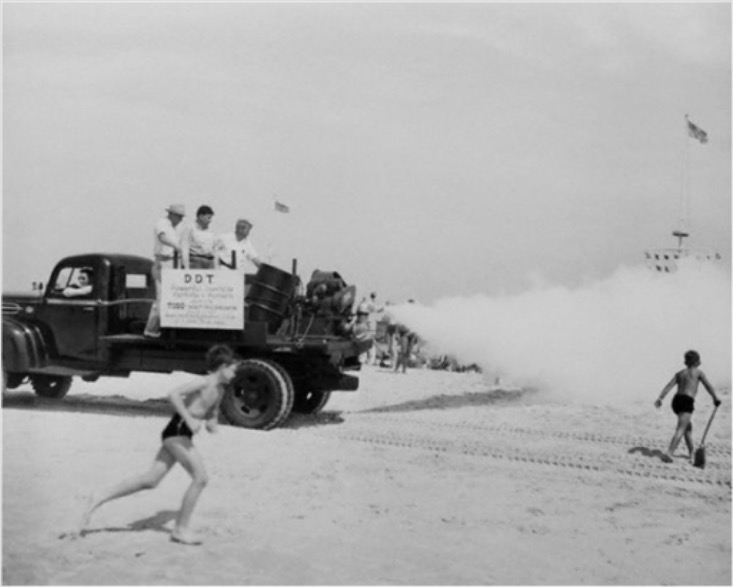
Pulverización de diclorodifeniltricloroetano (DDT):
Este producto químico fue ampliamente utilizado como insecticida, con el producto químico rociado como se muestra en la imagen (Jones Beach, Nueva York). La EPA dejó de utilizar el DDT en 1972 debido a sus efectos adversos sobre la fauna y el medio ambiente.

Imagen: “Fogger truck sprays Jones Beach” por Department of Epidemiology, University of North Carolina, Chapel Hill, NC, USA. Licencia: CC BY 2.0

Patogénesis

  • Exposición al AL Amyloidosis DDT DDT A polychlorinated pesticide that is resistant to destruction by light and oxidation. Its unusual stability has resulted in difficulties in residue removal from water, soil, and foodstuffs. This substance may reasonably be anticipated to be a carcinogen: fourth annual report on carcinogens. Insecticide Poisoning:
    • Los LOS Neisseria seres humanos están expuestos generalmente a través de la ingestión de carne, pescado y productos lácteos.
    • También se puede absorber por contacto directo e inhalación
  • El DDT DDT A polychlorinated pesticide that is resistant to destruction by light and oxidation. Its unusual stability has resulted in difficulties in residue removal from water, soil, and foodstuffs. This substance may reasonably be anticipated to be a carcinogen: fourth annual report on carcinogens. Insecticide Poisoning se convierte en EN Erythema nodosum is an immune-mediated panniculitis (inflammation of the subcutaneous fat) caused by a type IV (delayed-type) hypersensitivity reaction. It commonly manifests in young women as tender, erythematous nodules on the shins. Erythema Nodosum metabolitos, incluido el diclorodifenilicloroetano (DDE) → El DDT DDT A polychlorinated pesticide that is resistant to destruction by light and oxidation. Its unusual stability has resulted in difficulties in residue removal from water, soil, and foodstuffs. This substance may reasonably be anticipated to be a carcinogen: fourth annual report on carcinogens. Insecticide Poisoning y el DDE se almacenan en EN Erythema nodosum is an immune-mediated panniculitis (inflammation of the subcutaneous fat) caused by a type IV (delayed-type) hypersensitivity reaction. It commonly manifests in young women as tender, erythematous nodules on the shins. Erythema Nodosum los LOS Neisseria tejidos adiposos
  • Efectos:
    • En EN Erythema nodosum is an immune-mediated panniculitis (inflammation of the subcutaneous fat) caused by a type IV (delayed-type) hypersensitivity reaction. It commonly manifests in young women as tender, erythematous nodules on the shins. Erythema Nodosum los LOS Neisseria animales de laboratorio se han observado asociaciones entre el DDT DDT A polychlorinated pesticide that is resistant to destruction by light and oxidation. Its unusual stability has resulted in difficulties in residue removal from water, soil, and foodstuffs. This substance may reasonably be anticipated to be a carcinogen: fourth annual report on carcinogens. Insecticide Poisoning y el desarrollo de tumores, pero no hay evidencia clara de que cause cáncer en EN Erythema nodosum is an immune-mediated panniculitis (inflammation of the subcutaneous fat) caused by a type IV (delayed-type) hypersensitivity reaction. It commonly manifests in young women as tender, erythematous nodules on the shins. Erythema Nodosum los LOS Neisseria seres humanos.
    • El estrés oxidativo podría ser un factor clave en EN Erythema nodosum is an immune-mediated panniculitis (inflammation of the subcutaneous fat) caused by a type IV (delayed-type) hypersensitivity reaction. It commonly manifests in young women as tender, erythematous nodules on the shins. Erythema Nodosum la hepatocarcinogénesis.
    • Produce neurotoxicidad al AL Amyloidosis causar retrasos en EN Erythema nodosum is an immune-mediated panniculitis (inflammation of the subcutaneous fat) caused by a type IV (delayed-type) hypersensitivity reaction. It commonly manifests in young women as tender, erythematous nodules on the shins. Erythema Nodosum el cierre del canal de Na+
  • Se considera un producto químico disruptor endocrino, que causa toxicidad reproductiva al AL Amyloidosis afectar a la actividad estrogénica

Presentación clínica

  • Neurotoxicidad:
    • Parestesias alrededor de la boca
    • Mareo
    • Confusión
    • Incoordinación/ ataxia Ataxia Impairment of the ability to perform smoothly coordinated voluntary movements. This condition may affect the limbs, trunk, eyes, pharynx, larynx, and other structures. Ataxia may result from impaired sensory or motor function. Sensory ataxia may result from posterior column injury or peripheral nerve diseases. Motor ataxia may be associated with cerebellar diseases; cerebral cortex diseases; thalamic diseases; basal ganglia diseases; injury to the red nucleus; and other conditions. Ataxia-telangiectasia
    • Temblores
    • Convulsiones
  • Náuseas/vómitos
  • Letargo
  • Puede estar relacionado con la hepatotoxicidad y la carcinogenicidad (crónica)

Diagnóstico y tratamiento

  • El diagnóstico es clínico y se basa principalmente en EN Erythema nodosum is an immune-mediated panniculitis (inflammation of the subcutaneous fat) caused by a type IV (delayed-type) hypersensitivity reaction. It commonly manifests in young women as tender, erythematous nodules on the shins. Erythema Nodosum los LOS Neisseria antecedentes de exposición y en EN Erythema nodosum is an immune-mediated panniculitis (inflammation of the subcutaneous fat) caused by a type IV (delayed-type) hypersensitivity reaction. It commonly manifests in young women as tender, erythematous nodules on the shins. Erythema Nodosum los LOS Neisseria síntomas.
  • Los LOS Neisseria niveles pueden medirse en EN Erythema nodosum is an immune-mediated panniculitis (inflammation of the subcutaneous fat) caused by a type IV (delayed-type) hypersensitivity reaction. It commonly manifests in young women as tender, erythematous nodules on the shins. Erythema Nodosum sangre, orina, semen, grasa y leche materna.
  • Tratamiento:
    • Descontaminación
    • Los LOS Neisseria cuidados de soporte, observación y tratamiento/alivio sintomático son los LOS Neisseria pilares de la terapia.
    • No hay antídoto

Intoxicación por Organofosforados

Etiología

Organofosfatos:

  • Inhibidores irreversibles de la colinesterasa
  • Ejemplos de productos químicos organofosforados :
    • Insecticidas: malatión, paratión, diazinón, fentión, diclorvos, clorpirifos, etión
    • Herbicidas: tribufos (DEF), merphos
    • Gases nerviosos: somán, sarín, tabún, VX
    • Agentes oftálmicos: ecotiofato, isoflurofato
    • Antihelmínticos: triclorfón
    • Producto químico industrial (plastificante): fosfato de tricresilo

Fisiopatología

  • Inhiben la enzima colinesterasa en EN Erythema nodosum is an immune-mediated panniculitis (inflammation of the subcutaneous fat) caused by a type IV (delayed-type) hypersensitivity reaction. It commonly manifests in young women as tender, erythematous nodules on the shins. Erythema Nodosum la hendidura sináptica
  • Fosforilación irreversible de la acetilcolinesterasa (AChE, por sus siglas en EN Erythema nodosum is an immune-mediated panniculitis (inflammation of the subcutaneous fat) caused by a type IV (delayed-type) hypersensitivity reaction. It commonly manifests in young women as tender, erythematous nodules on the shins. Erythema Nodosum inglés) por inhibición de la enzima AChE, presente en EN Erythema nodosum is an immune-mediated panniculitis (inflammation of the subcutaneous fat) caused by a type IV (delayed-type) hypersensitivity reaction. It commonly manifests in young women as tender, erythematous nodules on the shins. Erythema Nodosum:
    • Ganglios parasimpáticos y simpáticos
    • Uniones terminales muscarínicas parasimpáticas
    • Fibras simpáticas localizadas en EN Erythema nodosum is an immune-mediated panniculitis (inflammation of the subcutaneous fat) caused by a type IV (delayed-type) hypersensitivity reaction. It commonly manifests in young women as tender, erythematous nodules on the shins. Erythema Nodosum las glándulas sudoríparas
    • Receptores nicotínicos en EN Erythema nodosum is an immune-mediated panniculitis (inflammation of the subcutaneous fat) caused by a type IV (delayed-type) hypersensitivity reaction. It commonly manifests in young women as tender, erythematous nodules on the shins. Erythema Nodosum la unión neuromuscular esquelética
  • La persistencia de niveles ↑ de acetilcolina debido a la inhibición de la AChE conduce a una señalización ↑ de neurotransmisores.
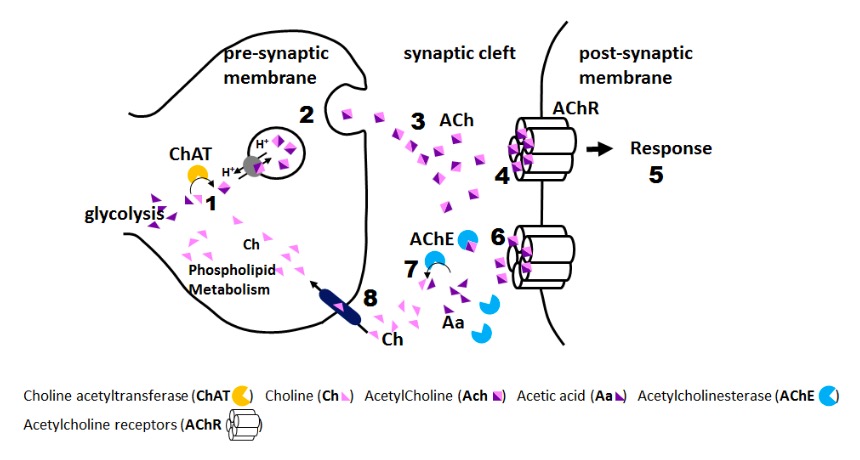
Efecto plaguicida:herbicida (organofosforado)

Efecto plaguicida/herbicida (organofosforado):
1: Acumulación de plaguicidas en la hendidura sináptica
2: Inhibición de la acetilcolinesterasa por los plaguicidas
3: Activación constante de los receptores de acetilcolina

Imagen: “Pesticide:herbicide effect (organophosphate)” por Rafael Vargas-Bernal et al. Licencia: CC BY 3.0

Presentación clínica

  • Se presenta como un toxidromo colinérgico
  • Pupilas puntiformes
  • Sudoración, salivación
  • Broncoconstricción
  • Vómitos
  • Diarrea
  • Estimulación del SNC y luego depresión
  • Fasciculaciones musculares, debilidad, parálisis
  • Muerte por insuficiencia respiratoria

Diagnóstico

  • Diagnóstico clínico principalmente basado en EN Erythema nodosum is an immune-mediated panniculitis (inflammation of the subcutaneous fat) caused by a type IV (delayed-type) hypersensitivity reaction. It commonly manifests in young women as tender, erythematous nodules on the shins. Erythema Nodosum los LOS Neisseria antecedentes y examinación del paciente.
  • Algunos agentes organofosforados tienen un distintivo olor a petróleo o a ajo.
  • La confirmación puede realizarse mediante la medición de la actividad de la colinesterasa:
    • Se pueden utilizar los LOS Neisseria niveles de AChE en EN Erythema nodosum is an immune-mediated panniculitis (inflammation of the subcutaneous fat) caused by a type IV (delayed-type) hypersensitivity reaction. It commonly manifests in young women as tender, erythematous nodules on the shins. Erythema Nodosum los LOS Neisseria eritrocitos y de colinesterasa plasmática (PChE) o butirilcolinesterasa (BuChE).
    • La AChE del eritrocito se correlaciona con el grado de toxicidad.

Tratamiento

  • Evaluación de la vía aérea, la respiración y la circulación (ABC, por sus siglas en EN Erythema nodosum is an immune-mediated panniculitis (inflammation of the subcutaneous fat) caused by a type IV (delayed-type) hypersensitivity reaction. It commonly manifests in young women as tender, erythematous nodules on the shins. Erythema Nodosum inglés)
  • Descontaminación:
    • Quitarse la ropa, regar o lavar las zonas expuestas
    • Carbón activado ( CA CA Condylomata acuminata are a clinical manifestation of genital HPV infection. Condylomata acuminata are described as raised, pearly, flesh-colored, papular, cauliflower-like lesions seen in the anogenital region that may cause itching, pain, or bleeding. Condylomata Acuminata (Genital Warts); en EN Erythema nodosum is an immune-mediated panniculitis (inflammation of the subcutaneous fat) caused by a type IV (delayed-type) hypersensitivity reaction. It commonly manifests in young women as tender, erythematous nodules on the shins. Erythema Nodosum la hora siguiente a la ingestión)
    • EPP: Utilizar guantes y batas de neopreno, ya que los LOS Neisseria hidrocarburos pueden penetrar en EN Erythema nodosum is an immune-mediated panniculitis (inflammation of the subcutaneous fat) caused by a type IV (delayed-type) hypersensitivity reaction. It commonly manifests in young women as tender, erythematous nodules on the shins. Erythema Nodosum sustancias no polares como el látex y el vinilo.
    • Máscaras de cartucho de carbón para la protección respiratoria
    • Lavar los LOS Neisseria ojos de los LOS Neisseria pacientes que han tenido una exposición ocular.
  • Cuidados de soporte:
    • Líquidos intravenosos
    • Intubación:
      • Evitar la succinilcolina porque es metabolizada por la AChE.
      • Puede ser necesario en EN Erythema nodosum is an immune-mediated panniculitis (inflammation of the subcutaneous fat) caused by a type IV (delayed-type) hypersensitivity reaction. It commonly manifests in young women as tender, erythematous nodules on the shins. Erythema Nodosum casos de dificultad respiratoria por laringoespasmo, broncoespasmo, broncorrea o convulsiones
  • Convulsiones: Dar benzodiacepinas.
  • Terapia de antídotos:
    • Atropina:
      • Se une a los LOS Neisseria receptores muscarínicos, bloqueándolos temporalmente y reduciendo los LOS Neisseria efectos colinérgicos
      • Dosificación ajustada a la eliminación de las secreciones respiratorias y al AL Amyloidosis cese de la broncoconstricción
    • Pralidoxima (2-PAM):
      • Eficaz tanto en EN Erythema nodosum is an immune-mediated panniculitis (inflammation of the subcutaneous fat) caused by a type IV (delayed-type) hypersensitivity reaction. It commonly manifests in young women as tender, erythematous nodules on the shins. Erythema Nodosum los LOS Neisseria efectos muscarínicos como en EN Erythema nodosum is an immune-mediated panniculitis (inflammation of the subcutaneous fat) caused by a type IV (delayed-type) hypersensitivity reaction. It commonly manifests in young women as tender, erythematous nodules on the shins. Erythema Nodosum los LOS Neisseria nicotínicos
      • Reactiva la AChE, pero tiene un efecto inhibidor transitorio sobre la enzima, por lo que debe administrarse junto con la atropina

Mnemotecnia

SLUDGE BBB BBB Specialized non-fenestrated tightly-joined endothelial cells with tight junctions that form a transport barrier for certain substances between the cerebral capillaries and the brain tissue. Nervous System: Histology ( en EN Erythema nodosum is an immune-mediated panniculitis (inflammation of the subcutaneous fat) caused by a type IV (delayed-type) hypersensitivity reaction. It commonly manifests in young women as tender, erythematous nodules on the shins. Erythema Nodosum inglés) (efectos muscarínicos):

  • S – Salivation (salivación)
  • L – Lacrimation (el lagrimeo es la característica principal)
  • U – Urination (orina)
  • D Defecation Defecation The normal process of elimination of fecal material from the rectum. Gastrointestinal Motility (diarrea)
  • G – GI cramping (colicos gastrointestinales)
  • E – Emesis (vómitos)
  • B Bronchospasm Bronchospasm Asthma Drugs (Broncoespasmo)
  • B – Bronchorrhea (Broncorrea)
  • B Bradycardia Bradycardia Bradyarrhythmia is a rhythm in which the heart rate is less than 60/min. Bradyarrhythmia can be physiologic, without symptoms or hemodynamic change. Pathologic bradyarrhythmia results in reduced cardiac output and hemodynamic instability causing syncope, dizziness, or dyspnea. Bradyarrhythmias (Bradicardia)

DUMBELS ( en EN Erythema nodosum is an immune-mediated panniculitis (inflammation of the subcutaneous fat) caused by a type IV (delayed-type) hypersensitivity reaction. It commonly manifests in young women as tender, erythematous nodules on the shins. Erythema Nodosum inglés) (efectos muscarínicos):

Intoxicación por Carbamatos

Etiología

Carbamatos:

  • Derivados del ácido carbámico
  • De estructura y mecanismo similares a los LOS Neisseria organofosforados (que son derivados del ácido fosfórico)
  • Incluye compuestos como el carbaril, el metomil y el carbofurano
  • El carbaril es el segundo insecticida más detectado en EN Erythema nodosum is an immune-mediated panniculitis (inflammation of the subcutaneous fat) caused by a type IV (delayed-type) hypersensitivity reaction. It commonly manifests in young women as tender, erythematous nodules on the shins. Erythema Nodosum las aguas superficiales de Estados Unidos:
    • Baja toxicidad para los LOS Neisseria mamíferos
    • Corta vida media en EN Erythema nodosum is an immune-mediated panniculitis (inflammation of the subcutaneous fat) caused by a type IV (delayed-type) hypersensitivity reaction. It commonly manifests in young women as tender, erythematous nodules on the shins. Erythema Nodosum el medio ambiente
    • Eficaz contra 160 insectos dañinos

Fisiopatología

  • Exposiciones tóxicas: dérmica, inhalatoria y gastrointestinal
  • Aunque los LOS Neisseria carbamatos tienen un mecanismo de acción similar al AL Amyloidosis de los LOS Neisseria organofosforados, se unen a la AChE de forma reversible.
  • Presentación toxicológica similar a las intoxicaciones por organofosforados, pero a menudo con una duración de < 24 horas
  • Mecanismo:
    • Inhibe la enzima AChE por carbamilación de la AChE en EN Erythema nodosum is an immune-mediated panniculitis (inflammation of the subcutaneous fat) caused by a type IV (delayed-type) hypersensitivity reaction. It commonly manifests in young women as tender, erythematous nodules on the shins. Erythema Nodosum las sinapsis neuronales y en EN Erythema nodosum is an immune-mediated panniculitis (inflammation of the subcutaneous fat) caused by a type IV (delayed-type) hypersensitivity reaction. It commonly manifests in young women as tender, erythematous nodules on the shins. Erythema Nodosum las uniones neuromusculares → sobreestimulación del sistema nervioso
    • Los LOS Neisseria enlaces de carbamato acaban hidrolizándose en EN Erythema nodosum is an immune-mediated panniculitis (inflammation of the subcutaneous fat) caused by a type IV (delayed-type) hypersensitivity reaction. It commonly manifests in young women as tender, erythematous nodules on the shins. Erythema Nodosum 24–48 horas → la AChE se descompone en EN Erythema nodosum is an immune-mediated panniculitis (inflammation of the subcutaneous fat) caused by a type IV (delayed-type) hypersensitivity reaction. It commonly manifests in young women as tender, erythematous nodules on the shins. Erythema Nodosum ácido acético + colina → cese de la señalización del neurotransmisor

Presentación clínica

  • Se presenta como un toxidrome Toxidrome A toxidrome describes a group of signs, symptoms, and/or characteristic effects associated with exposure to a particular substance or class of substances. General Principles of Toxidromes colinérgico (mnemotecnia similar a los LOS Neisseria organofosforados)
  • Pupilas puntiformes
  • Sudoración, salivación
  • Broncoconstricción
  • Vómitos
  • Diarrea
  • Estimulación del SNC y luego depresión
  • Fasciculaciones musculares, debilidad, parálisis
  • Muerte por insuficiencia respiratoria

Diagnóstico y tratamiento

  • El diagnóstico es clínico y se basa en EN Erythema nodosum is an immune-mediated panniculitis (inflammation of the subcutaneous fat) caused by a type IV (delayed-type) hypersensitivity reaction. It commonly manifests in young women as tender, erythematous nodules on the shins. Erythema Nodosum los LOS Neisseria síntomas y antecedentes de exposición.
  • Se pueden hacer pruebas de laboratorio, pero no hay que retrasar los LOS Neisseria tratamientos que pueden salvar la vida mientras se esperan los LOS Neisseria resultados.
  • La confirmación puede hacerse mediante la medición de la actividad de la colinesterasa:
    • Niveles de BuChE y AChE en EN Erythema nodosum is an immune-mediated panniculitis (inflammation of the subcutaneous fat) caused by a type IV (delayed-type) hypersensitivity reaction. It commonly manifests in young women as tender, erythematous nodules on the shins. Erythema Nodosum el eritrocito
    • La AChE de los LOS Neisseria eritrocitos vuelve rápidamente a la normalidad en EN Erythema nodosum is an immune-mediated panniculitis (inflammation of the subcutaneous fat) caused by a type IV (delayed-type) hypersensitivity reaction. It commonly manifests in young women as tender, erythematous nodules on the shins. Erythema Nodosum la intoxicación por carbamato.
  • Tratamiento:
    • Los LOS Neisseria pacientes que se encuentren asintomáticos 12 horas después de la exposición pueden ser dados de alta.
    • Hospitalizar a todos los LOS Neisseria pacientes sintomáticos durante al AL Amyloidosis menos 48 horas en EN Erythema nodosum is an immune-mediated panniculitis (inflammation of the subcutaneous fat) caused by a type IV (delayed-type) hypersensitivity reaction. It commonly manifests in young women as tender, erythematous nodules on the shins. Erythema Nodosum un entorno de alta gravedad.
    • Descontaminación (similar al AL Amyloidosis tratamiento de la intoxicación por organofosforados)
    • La atropina y las benzodiacepinas son los LOS Neisseria principales tratamientos médicos.
    • La intubación puede ser necesaria en EN Erythema nodosum is an immune-mediated panniculitis (inflammation of the subcutaneous fat) caused by a type IV (delayed-type) hypersensitivity reaction. It commonly manifests in young women as tender, erythematous nodules on the shins. Erythema Nodosum casos de dificultad respiratoria debido a laringoespasmo, broncoespasmo, broncorrea o convulsiones.
    • La pralidoxima puede utilizarse en EN Erythema nodosum is an immune-mediated panniculitis (inflammation of the subcutaneous fat) caused by a type IV (delayed-type) hypersensitivity reaction. It commonly manifests in young women as tender, erythematous nodules on the shins. Erythema Nodosum la intoxicación por carbamato, pero no en EN Erythema nodosum is an immune-mediated panniculitis (inflammation of the subcutaneous fat) caused by a type IV (delayed-type) hypersensitivity reaction. It commonly manifests in young women as tender, erythematous nodules on the shins. Erythema Nodosum la intoxicación por carbaril (asociada a malos resultados).

Relevancia Clínica

  • Ingestión cáustica: las sustancias ácidas o alcalinas dañan gravemente los LOS Neisseria tejidos si se ingieren. La ingestión de álcali suele dañar el esófago. Los LOS Neisseria ácidos causan lesiones gástricas más graves. En EN Erythema nodosum is an immune-mediated panniculitis (inflammation of the subcutaneous fat) caused by a type IV (delayed-type) hypersensitivity reaction. It commonly manifests in young women as tender, erythematous nodules on the shins. Erythema Nodosum grandes cantidades y altas concentraciones, la ingestión de cáusticos también provoca lesiones graves como shock Shock Shock is a life-threatening condition associated with impaired circulation that results in tissue hypoxia. The different types of shock are based on the underlying cause: distributive (↑ cardiac output (CO), ↓ systemic vascular resistance (SVR)), cardiogenic (↓ CO, ↑ SVR), hypovolemic (↓ CO, ↑ SVR), obstructive (↓ CO), and mixed. Types of Shock, rigidez abdominal, dificultad respiratoria y/o alteración del estado mental. El diagnóstico se realiza mediante pruebas de laboratorio, imagenología abdominal y torácicas, y endoscopia. El tratamiento implica la estabilización del paciente, la descontaminación y la terapia de soporte. Las lesiones graves pueden requerir cirugía.
  • Herbicidas: sustancias químicas utilizadas para matar o controlar el crecimiento de plantas no deseadas. Entre los LOS Neisseria herbicidas importantes que pueden afectar a los LOS Neisseria seres humanos se encuentran el paraquat Paraquat A poisonous bipyridylium compound used as contact herbicide. Contact with concentrated solutions causes irritation of the skin, cracking and shedding of the nails, and delayed healing of cuts and wounds. Herbicide Poisoning, el agente naranja, el glifosato y los LOS Neisseria organofosforados. Los LOS Neisseria distintos tipos de herbicidas dan lugar a diferentes manifestaciones clínicas y tienen diversos niveles de toxicidad. La exposición puede ser dérmica o por inhalación o ingestión. El tratamiento consiste en EN Erythema nodosum is an immune-mediated panniculitis (inflammation of the subcutaneous fat) caused by a type IV (delayed-type) hypersensitivity reaction. It commonly manifests in young women as tender, erythematous nodules on the shins. Erythema Nodosum estabilizar al AL Amyloidosis paciente y descontaminarlo. La toxicidad de los LOS Neisseria organofosforados tiene un antídoto. El tratamiento gira en EN Erythema nodosum is an immune-mediated panniculitis (inflammation of the subcutaneous fat) caused by a type IV (delayed-type) hypersensitivity reaction. It commonly manifests in young women as tender, erythematous nodules on the shins. Erythema Nodosum torno a los LOS Neisseria cuidados de soporte que dependen del sistema orgánico afectado.
  • Toxidrome Toxidrome A toxidrome describes a group of signs, symptoms, and/or characteristic effects associated with exposure to a particular substance or class of substances. General Principles of Toxidromes: conjunto de signos y síntomas clínicos asociados a una ingestión o exposición tóxica. Existen 5 toxidromes Toxidromes A toxidrome is a group of clinical signs and symptoms associated with a toxic ingestion or exposure. There are 5 traditional toxidromes: anticholinergic, cholinergic, opioid, sympathomimetic, and sedative-hypnotic. General Principles of Toxidromes tradicionales: anticolinérgico, colinérgico, opioide, simpaticomimético y sedante-hipnótico. Los LOS Neisseria toxidromes Toxidromes A toxidrome is a group of clinical signs and symptoms associated with a toxic ingestion or exposure. There are 5 traditional toxidromes: anticholinergic, cholinergic, opioid, sympathomimetic, and sedative-hypnotic. General Principles of Toxidromes suelen surgir por la ingestión de cantidades excesivas, la acumulación de medicamentos con niveles séricos elevados resultantes, reacciones adversas a los LOS Neisseria medicamentos o interacciones entre ≥ 2 medicamentos. El diagnóstico se realiza por medio de los LOS Neisseria hallazgos clínicos basados en EN Erythema nodosum is an immune-mediated panniculitis (inflammation of the subcutaneous fat) caused by a type IV (delayed-type) hypersensitivity reaction. It commonly manifests in young women as tender, erythematous nodules on the shins. Erythema Nodosum antecedentes de medicamentos y exposición, y en EN Erythema nodosum is an immune-mediated panniculitis (inflammation of the subcutaneous fat) caused by a type IV (delayed-type) hypersensitivity reaction. It commonly manifests in young women as tender, erythematous nodules on the shins. Erythema Nodosum la exploración física.

Referencias

  1. Agency for Toxic Substances and Disease Registry. (2024, December 6). Agency for Toxic Substances and Disease Registry | ATSDR – CDC. Retrieved March 10, 2025, from https://www.atsdr.cdc.gov/
  2. Bird, S. (2024). Organophosphate and carbamate poisoning. UpToDate. Retrieved March 10, 2025, from https://www.uptodate.com/contents/organophosphate-and-carbamate-poisoning
  3. Goldman, R., Wylie, B. (2024). Occupational and environmental risks to reproduction in females: specific exposures and impact. UpToDate. Retrieved March 10, 2025, from https://www.uptodate.com/contents/occupational-and-environmental-risks-to-reproduction-in-females-specific-exposures-and-impact
  4. Gupta, R, Parmar, M. (2023). Pralidoxime. StatPearls. Retrieved March 10, 2025, from https://www.ncbi.nlm.nih.gov/books/NBK558908/
  5. Harada, T, Takeda, M., Kojima S. (2016). Toxicity and carcinogenicity of dichlorodiphenyltrichloroethane (DDT). Toxicol Res 32:21–33. https://www.ncbi.nlm.nih.gov/pmc/articles/PMC4780236/
  6. Wong, M. (2024). Organochlorine pesticide toxicity. Emedicine. Retrieved March 10, 2025, from https://emedicine.medscape.com/article/815051-overview
  7. WHO. (2008.) World malaria report 2008 Global malaria program. World Health Organization. https://www.who.int/publications-detail-redirect/9789241563697

¡Crea tu cuenta gratis o inicia una sesión para seguir leyendo!

Regístrate ahora y obtén acceso gratuito a Lecturio con páginas de concepto, videos médicos y cuestionarios para tu educación médica.

User Reviews

Que tengas una sesión de estudio alegre y navideña 🎁 Ahorra 50% en todos los planes >>

Details