Domina Conceptos Médicos

Estudia para la escuela de medicina y tus examenes con Lecturio.

Disfagia

La disfagia es la sensación subjetiva de dificultad para tragar. Los LOS Neisseria síntomas pueden variar desde una incapacidad total para tragar hasta la sensación de que los LOS Neisseria sólidos o líquidos se “atascan”. La disfagia se clasifica como orofaríngea o esofágica, y la disfagia esofágica tiene 2 subtipos: funcional y mecánica. Las causas comunes de disfagia funcional incluyen acalasia, esclerodermia y espasmo esofágico difuso. Las causas mecánicas de disfagia incluyen anillos esofágicos, membranas, estenosis y cáncer. La disfagia orofaríngea puede deberse a anomalías estructurales o a una función y coordinación neuromuscular anormales. El estudio diagnóstico depende de los LOS Neisseria síntomas que presente el paciente, pero puede incluir manometría, esofagograma con bario o visualización directa con laringoscopia o endoscopia esofágica. El tratamiento varía según la causa subyacente.

Last updated: Dec 15, 2025

Editorial responsibility: Stanley Oiseth, Lindsay Jones, Evelin Maza

Descripción General

Definición

La disfagia es una condición en EN Erythema nodosum is an immune-mediated panniculitis (inflammation of the subcutaneous fat) caused by a type IV (delayed-type) hypersensitivity reaction. It commonly manifests in young women as tender, erythematous nodules on the shins. Erythema Nodosum la que hay una interrupción del proceso de deglución, lo que generalmente interfiere con la capacidad de comer y beber.

Fisiología normal

La deglución consta de 3 fases:

  1. Fase oral preparatoria y de transporte:
    • Control voluntario de la masticación
    • El bolo alimenticio se mastica y se dirige a la parte posterior de la lengua.
  2. Fase faríngea:
    • Respuesta de deglución involuntaria
    • El bolo alimenticio avanza a través de la faringe.
  3. Fase esofágica:
    • Peristaltismo esofágico involuntario
    • El bolo alimenticio avanza a través del esófago.
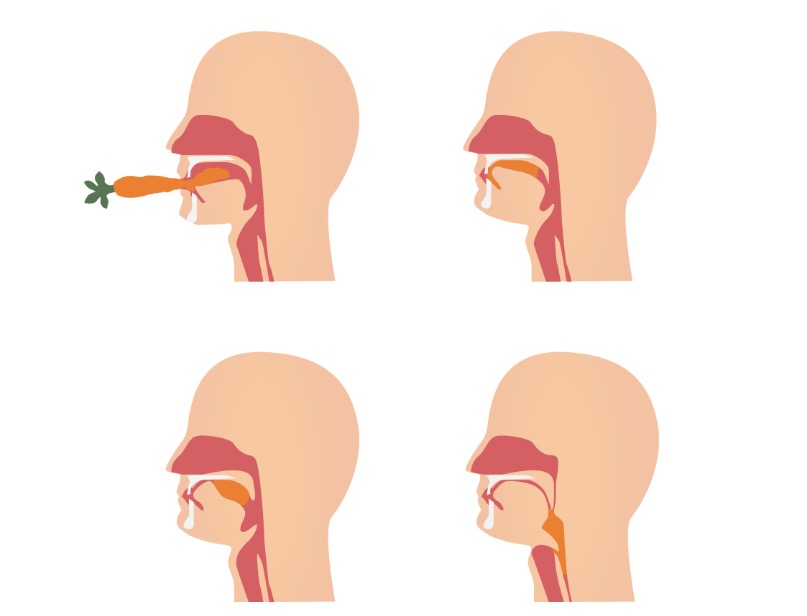
Movimiento de los alimentos a través de las fases oral y faríngea

Movimiento de un bolo alimenticio a través de las fases oral y faríngea de la deglución

Imagen por Lecturio.

Clasificación

Hay 2 categorías de disfagia:

  • Disfagia orofaríngea:
    • Dificultad para iniciar una deglución debido a un trastorno en EN Erythema nodosum is an immune-mediated panniculitis (inflammation of the subcutaneous fat) caused by a type IV (delayed-type) hypersensitivity reaction. It commonly manifests in young women as tender, erythematous nodules on the shins. Erythema Nodosum la fase oral o faríngea
    • Los LOS Neisseria pacientes tienen dificultad para transferir alimentos desde la boca a través de la faringe.
  • Disfagia esofágica:
    • Trastorno en EN Erythema nodosum is an immune-mediated panniculitis (inflammation of the subcutaneous fat) caused by a type IV (delayed-type) hypersensitivity reaction. It commonly manifests in young women as tender, erythematous nodules on the shins. Erythema Nodosum la fase esofágica de la deglución
    • Dificultad para tragar que se presenta varios segundos después de iniciar la deglución
    • Puede ir acompañado de la sensación de que la comida se “atasca”
    • Dividido en EN Erythema nodosum is an immune-mediated panniculitis (inflammation of the subcutaneous fat) caused by a type IV (delayed-type) hypersensitivity reaction. It commonly manifests in young women as tender, erythematous nodules on the shins. Erythema Nodosum 2 subcategorías:
      • Trastornos funcionales y de la motilidad
      • Trastornos mecánicos y obstructivos.

Related videos

Disfagia Orofaríngea

Epidemiología

  • Prevalencia en EN Erythema nodosum is an immune-mediated panniculitis (inflammation of the subcutaneous fat) caused by a type IV (delayed-type) hypersensitivity reaction. It commonly manifests in young women as tender, erythematous nodules on the shins. Erythema Nodosum ≥ 65 años:
    • 14%–33% en EN Erythema nodosum is an immune-mediated panniculitis (inflammation of the subcutaneous fat) caused by a type IV (delayed-type) hypersensitivity reaction. It commonly manifests in young women as tender, erythematous nodules on the shins. Erythema Nodosum la comunidad
    • Aproximadamente el 40% en EN Erythema nodosum is an immune-mediated panniculitis (inflammation of the subcutaneous fat) caused by a type IV (delayed-type) hypersensitivity reaction. It commonly manifests in young women as tender, erythematous nodules on the shins. Erythema Nodosum pacientes hospitalizados
  • Ocurre en EN Erythema nodosum is an immune-mediated panniculitis (inflammation of the subcutaneous fat) caused by a type IV (delayed-type) hypersensitivity reaction. It commonly manifests in young women as tender, erythematous nodules on the shins. Erythema Nodosum un-tercio de los LOS Neisseria pacientes con enfermedad de Parkinson

Etiología

  • Trastornos de la fase oral:
    • Mala dentición
    • Disminución de la producción de glándulas salivales:
      • Síndrome de Sjogren
      • De la radiación de la cabeza y el cuello
      • Medicamentos (anticolinérgicos, antihistamínicos)
    • Alteraciones en EN Erythema nodosum is an immune-mediated panniculitis (inflammation of the subcutaneous fat) caused by a type IV (delayed-type) hypersensitivity reaction. It commonly manifests in young women as tender, erythematous nodules on the shins. Erythema Nodosum la mucosa orofaríngea:
      • Mucositis Mucositis Stomatitis is a general term referring to inflammation of the mucous membranes of the mouth, which may include sores. Stomatitis can be caused by infections, autoimmune disorders, allergic reactions, or exposure to irritants. The typical presentation may be either solitary or a group of painful oral lesions. Stomatitis
      • Úlceras aftosas
      • Lesiones herpéticas
      • Traumatismo
    • Interrupción en EN Erythema nodosum is an immune-mediated panniculitis (inflammation of the subcutaneous fat) caused by a type IV (delayed-type) hypersensitivity reaction. It commonly manifests in young women as tender, erythematous nodules on the shins. Erythema Nodosum la respuesta neuromuscular:
      • Accidente cerebrovascular
      • Enfermedad de Parkinson en EN Erythema nodosum is an immune-mediated panniculitis (inflammation of the subcutaneous fat) caused by a type IV (delayed-type) hypersensitivity reaction. It commonly manifests in young women as tender, erythematous nodules on the shins. Erythema Nodosum etapa tardía
      • Miastenia gravis
  • Trastornos de la fase faríngea:
    • Anormalidades estructurales dentro de la orofaringe:
      • Malignidad (más común)
      • Barra cricofaríngea
      • Divertículo faringoesofágico (divertículo de Zenker)
    • Alteraciones en EN Erythema nodosum is an immune-mediated panniculitis (inflammation of the subcutaneous fat) caused by a type IV (delayed-type) hypersensitivity reaction. It commonly manifests in young women as tender, erythematous nodules on the shins. Erythema Nodosum la coordinación de la respuesta de deglución involuntaria:
      • Accidente cerebrovascular
      • Esclerosis lateral amiotrófica
      • Miastenia gravis
      • Polio y síndrome post-polio
      • Enfermedad de Parkinson
      • Esclerosis múltiple
      • Distrofia muscular
      • Dermatomiositis

Presentación clínica

  • Síntomas:
    • Sensación de una obstrucción en EN Erythema nodosum is an immune-mediated panniculitis (inflammation of the subcutaneous fat) caused by a type IV (delayed-type) hypersensitivity reaction. It commonly manifests in young women as tender, erythematous nodules on the shins. Erythema Nodosum el cuello.
    • Tos TOS Thoracic outlet syndrome (TOS) is a broad term used for a spectrum of syndromes related to the general region of the thoracic outlet, which involves the compression or irritation of elements of the brachial plexus, subclavian artery, or subclavian vein. Thoracic Outlet Syndrome
    • Asfixia
    • Babeo
    • Regurgitación al AL Amyloidosis tragar sólidos y líquidos
  • Antecedentes relevantes y síntomas asociados:
    • Neumonía por aspiración recurrente
    • Sugerencias de malignidad:
      • Pérdida de peso
      • Abuso de alcohol o tabaco
      • Sangre en EN Erythema nodosum is an immune-mediated panniculitis (inflammation of the subcutaneous fat) caused by a type IV (delayed-type) hypersensitivity reaction. It commonly manifests in young women as tender, erythematous nodules on the shins. Erythema Nodosum la boca
      • Otalgia Otalgia Acute Otitis Media
    • Producción salival inadecuada:
      • Boca u ojos secos
      • Radioterapia
    • Disfunción neuromuscular:
      • Tos TOS Thoracic outlet syndrome (TOS) is a broad term used for a spectrum of syndromes related to the general region of the thoracic outlet, which involves the compression or irritation of elements of the brachial plexus, subclavian artery, or subclavian vein. Thoracic Outlet Syndrome débil
      • Disartria, afonía o habla nasal
      • Incoordinación
      • Disfonía
    • Anomalías estructurales:
      • Halitosis Halitosis An offensive, foul breath odor resulting from a variety of causes such as poor oral hygiene, dental or oral infections, or the ingestion of certain foods. Oral Cancer (divertículo de Zenker)
      • Plenitud en EN Erythema nodosum is an immune-mediated panniculitis (inflammation of the subcutaneous fat) caused by a type IV (delayed-type) hypersensitivity reaction. It commonly manifests in young women as tender, erythematous nodules on the shins. Erythema Nodosum el cuello
  • Examen físico:
    • Anomalías de la cabeza y el cuello para buscar:
      • Linfadenopatía
      • Mala dentición
      • Masas
      • Debilidad de los LOS Neisseria músculos faciales
    • Anomalías neurológicas para evaluar:
      • Nervios craneales sensoriales (V, IX, X)
      • Nervios craneales motores (V, VII, IX, X, XII)
      • Pérdida del reflejo nauseoso
      • Disminución de la fuerza muscular de la cabeza/cuello
      • Rigidez de rueda dentada
      • Marcha arrastrando los LOS Neisseria pies

Diagnóstico

  • Con base en EN Erythema nodosum is an immune-mediated panniculitis (inflammation of the subcutaneous fat) caused by a type IV (delayed-type) hypersensitivity reaction. It commonly manifests in young women as tender, erythematous nodules on the shins. Erythema Nodosum los LOS Neisseria antecedentes y los LOS Neisseria síntomas del paciente, se debe iniciar un estudio adecuado para diagnosticar una etiología subyacente (e.g., enfermedad de Sjogren, dermatomiositis, accidente cerebrovascular, miastenia gravis, enfermedad de Parkinson).
  • A continuación, los LOS Neisseria siguientes se utilizan para determinar la gravedad y el mecanismo de la disfunción de la deglución:
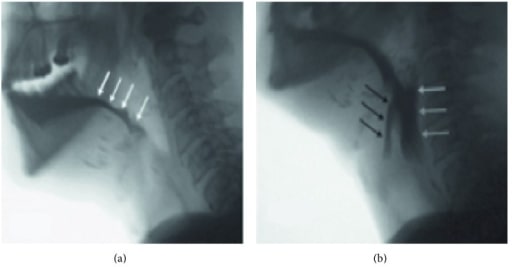
    • Videofluoroscopia con trago de bario modificado:
      • Puede probar los LOS Neisseria efectos de diferentes consistencias de bario
      • Analiza el movimiento de las estructuras anatómicas
      • Detecta la disfunción orofaríngea y determina la gravedad
      • Evalúa por aspiración
    • Manometría: evalúa la presión con contracción faríngea y en EN Erythema nodosum is an immune-mediated panniculitis (inflammation of the subcutaneous fat) caused by a type IV (delayed-type) hypersensitivity reaction. It commonly manifests in young women as tender, erythematous nodules on the shins. Erythema Nodosum el esfínter esofágico superior (función del esfínter esofágico superior)
  • Si no se sospecha o encuentra ningún proceso sistémico como etiología:
    • Laringoscopia nasofaríngea:
      • Puede evaluar una lesión estructural (tumores, divertículo de Zenker)
      • Visualiza la orofaringe, la hipofaringe y la laringe
    • Evaluación endoscópica con fibra óptica de la deglución (FEES, por sus siglas en EN Erythema nodosum is an immune-mediated panniculitis (inflammation of the subcutaneous fat) caused by a type IV (delayed-type) hypersensitivity reaction. It commonly manifests in young women as tender, erythematous nodules on the shins. Erythema Nodosum inglés):
      • Similar a la laringoscopia nasofaríngea, pero también puede evaluar la función
      • Visualiza directamente los LOS Neisseria alimentos y los LOS Neisseria líquidos a medida que se tragan
      • También se pueden realizar pruebas sensoriales.

Tratamiento

El tratamiento se guía por la evaluación diagnóstica y se enfoca en EN Erythema nodosum is an immune-mediated panniculitis (inflammation of the subcutaneous fat) caused by a type IV (delayed-type) hypersensitivity reaction. It commonly manifests in young women as tender, erythematous nodules on the shins. Erythema Nodosum mejorar el paso de alimentos y prevenir la aspiración:

  • Tratamiento de cualquier trastorno subyacente.
  • Rehabilitación de la deglución:
    • Ejercicios motores
    • Colocación de la cabeza al AL Amyloidosis comer
  • Modificaciones dietéticas:
    • Líquidos espesos
    • Bocados más pequeños de comida
    • Alternancia de sólidos y líquidos al AL Amyloidosis comer
  • Suplementación nutricional
  • Puede ser necesario considerar la nutrición enteral para la disfunción grave y el riesgo de aspiración.
  • Cirugía (divertículo de Zenker)

Disfagia Esofágica: Trastornos Funcionales y de la Motilidad

Los LOS Neisseria trastornos esofágicos funcionales y de la motilidad ocurren típicamente debido a una patología de los LOS Neisseria músculos del esófago, lo que provoca una interrupción en EN Erythema nodosum is an immune-mediated panniculitis (inflammation of the subcutaneous fat) caused by a type IV (delayed-type) hypersensitivity reaction. It commonly manifests in young women as tender, erythematous nodules on the shins. Erythema Nodosum el peristaltismo. Todos los LOS Neisseria trastornos funcionales y de la motilidad presentan disfagia con líquidos y sólidos al AL Amyloidosis inicio.
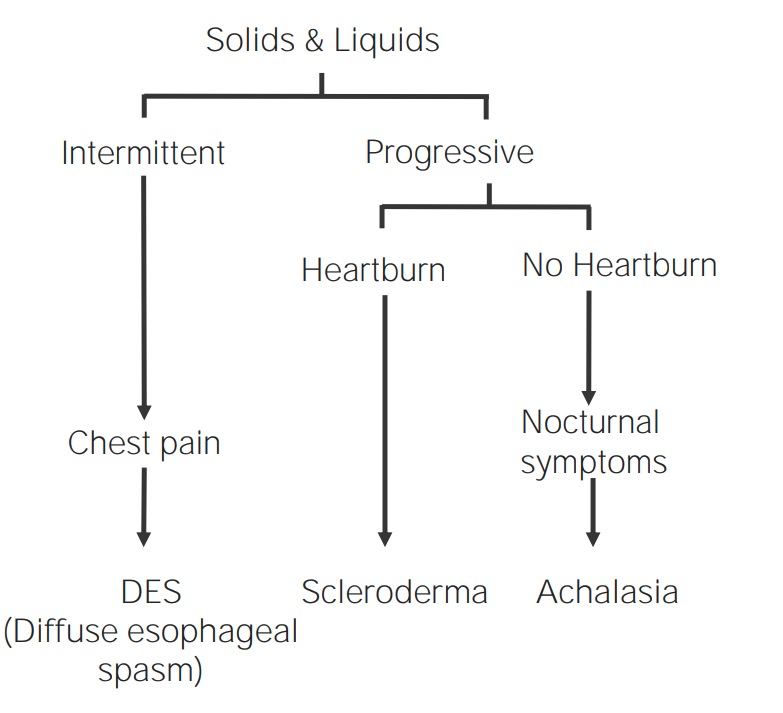
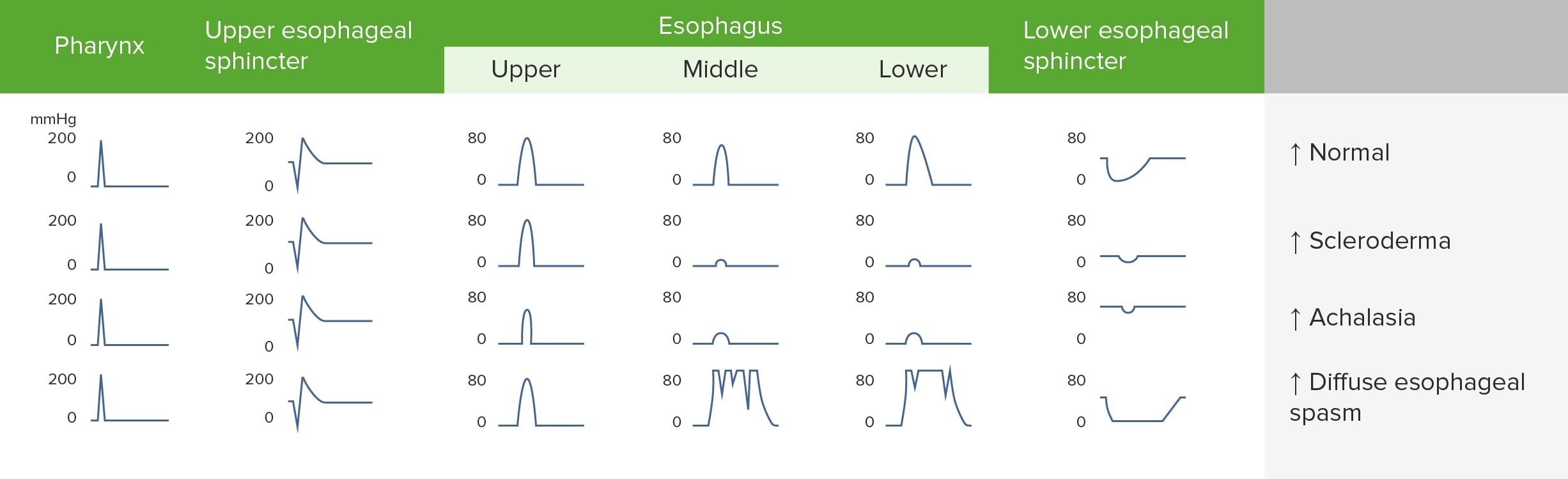
Descripción general de los trastornos funcionales y de la motilidad

Descripción general de los trastornos funcionales y de la motilidad

Imagen por Lecturio.

Espasmo esofágico difuso

Un trastorno de la motilidad esofágica caracterizado por contracciones hiperdinámicas y no propulsoras:
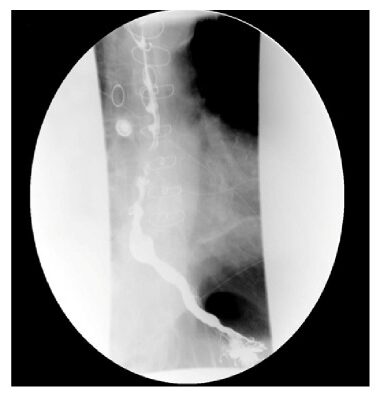
  • Etiología: idiopática
  • Fisiopatología:
    • No completamente entendida
    • Deterioro de la inervación inhibidora de los LOS Neisseria músculos del esófago y ↓ síntesis de óxido nítrico endógeno → contracciones frecuentes, de alta presión, no peristálticas que ocurren espontáneamente con peristaltismo normal
  • Presentación clínica:
    • Puede ser asintomático
    • Disfagia intermitente no progresiva
    • Dolor Dolor Inflammation torácico no cardíaco
    • Puede agravarse con líquidos fríos o calientes.
    • Algunos pacientes pueden tener enfermedad por reflujo gastroesofágico (ERGE) asociada.
  • Diagnóstico:
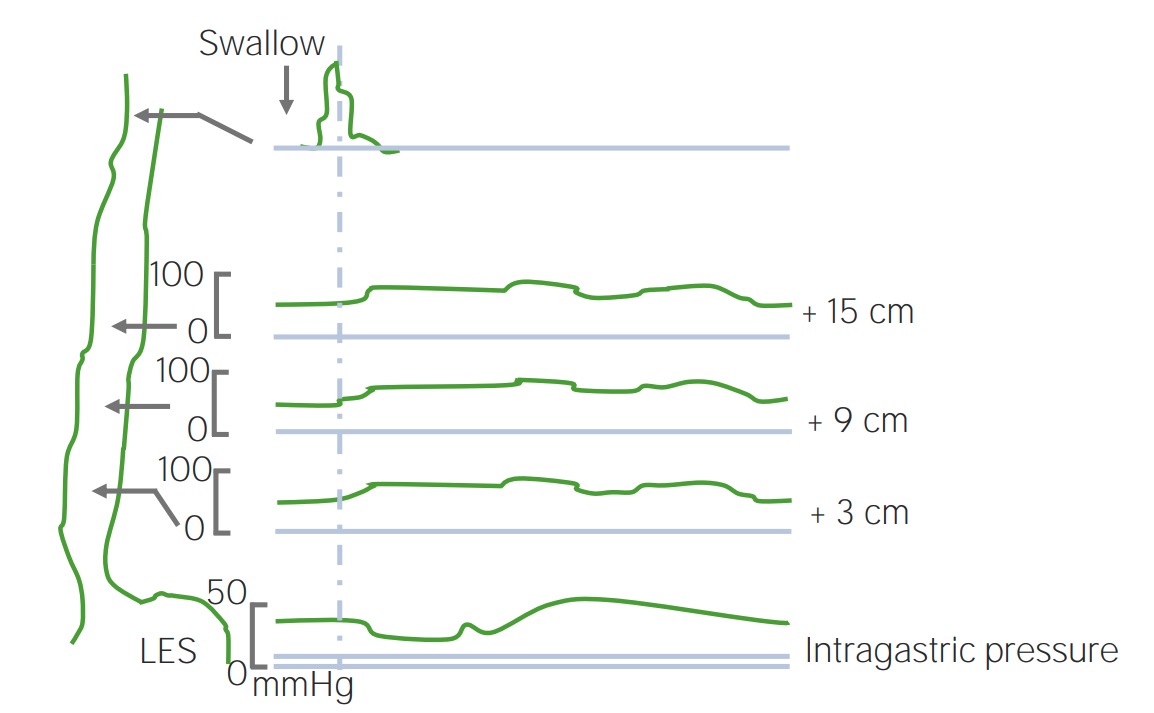
    • Manometría: diagnóstico establecido por la presencia de contracciones prematuras (≥ 20 % de contracciones prematuras según los LOS Neisseria criterios de clasificación de Chicago)
    • Esofagograma de bario: contracciones severas no peristálticas con un patrón de “sacacorchos”
  • Tratamiento:
    • El objetivo de la terapia es el alivio sintomático.
    • Aceite de menta para relajar el músculo liso esofágico
    • Bloqueadores de los LOS Neisseria canales de calcio
    • Inhibidores de la bomba de protones (IBP) para los LOS Neisseria síntomas de ERGE
    • Inyección de toxina botulínica en EN Erythema nodosum is an immune-mediated panniculitis (inflammation of the subcutaneous fat) caused by a type IV (delayed-type) hypersensitivity reaction. It commonly manifests in young women as tender, erythematous nodules on the shins. Erythema Nodosum el esfínter esofágico inferior para casos refractarios

Esclerodermia

La esclerodermia es un trastorno autoinmune que puede causar atrofia y esclerosis del esófago distal, lo que resulta en una disminución (o ausencia) del peristaltismo y la presión del esfínter esofágico inferior.
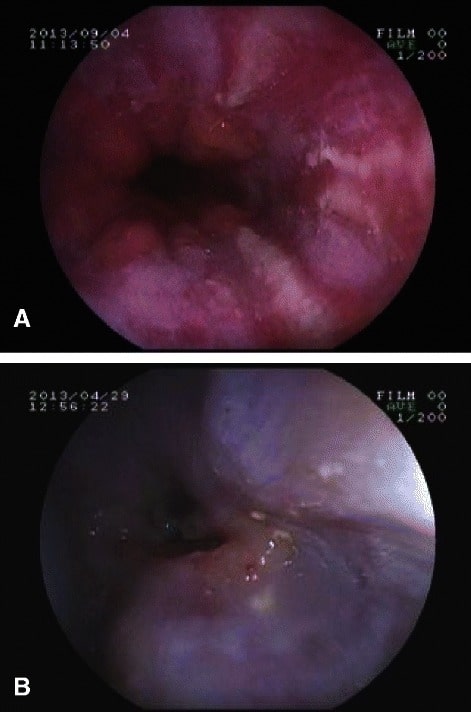
  • Fisiopatología:
    • Atrofia y fibrosis Fibrosis Any pathological condition where fibrous connective tissue invades any organ, usually as a consequence of inflammation or other injury. Bronchiolitis Obliterans del músculo liso en EN Erythema nodosum is an immune-mediated panniculitis (inflammation of the subcutaneous fat) caused by a type IV (delayed-type) hypersensitivity reaction. It commonly manifests in young women as tender, erythematous nodules on the shins. Erythema Nodosum los LOS Neisseria dos-tercios distales del esófago → ↓ peristaltismo y pérdida del tono del esfínter esofágico inferior
    • Pueden desarrollarse ERGE, esófago de Barrett, esofagitis por reflujo y estenosis posteriores.
  • Presentación clínica:
    • Reflujo ácido
    • Posibles síntomas sistémicos asociados:
      • Engrosamiento cutáneo, esclerodactilia, calcinosis Calcinosis Pathologic deposition of calcium salts in tissues. Scleroderma, telangiectasias Telangiectasias Ataxia-telangiectasia
      • Fenómeno de Raynaud
      • Enfermedad pulmonar intersticial o fibrosis Fibrosis Any pathological condition where fibrous connective tissue invades any organ, usually as a consequence of inflammation or other injury. Bronchiolitis Obliterans
      • Hipertensión pulmonar, pericarditis Pericarditis Pericarditis is an inflammation of the pericardium, often with fluid accumulation. It can be caused by infection (often viral), myocardial infarction, drugs, malignancies, metabolic disorders, autoimmune disorders, or trauma. Acute, subacute, and chronic forms exist. Pericarditis
      • Enfermedad renal
  • Diagnóstico:
    • El diagnóstico de la esclerodermia se basa en EN Erythema nodosum is an immune-mediated panniculitis (inflammation of the subcutaneous fat) caused by a type IV (delayed-type) hypersensitivity reaction. It commonly manifests in young women as tender, erythematous nodules on the shins. Erythema Nodosum las características clínicas y la detección de anticuerpos anti-Scl-70 (anti-topoisomerasa), anticentrómero o anti-ARN polimerasa III.
    • Manometría: ↓ tono de esfínter esofágico inferior y ausencia de peristaltismo en EN Erythema nodosum is an immune-mediated panniculitis (inflammation of the subcutaneous fat) caused by a type IV (delayed-type) hypersensitivity reaction. It commonly manifests in young women as tender, erythematous nodules on the shins. Erythema Nodosum el cuerpo del esófago
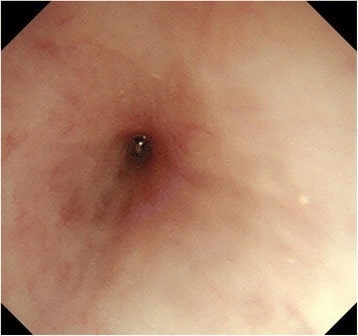
    • Endoscopia: esofagitis por reflujo, esófago de Barrett o estenosis esofágica
  • Tratamiento:
    • IBP
    • Dilatación endoscópica para estenosis
    • Gastroplastia o funduplicatura por ERGE refractaria

Acalasia

Un trastorno neurogénico de la motilidad esofágica que resulta en EN Erythema nodosum is an immune-mediated panniculitis (inflammation of the subcutaneous fat) caused by a type IV (delayed-type) hypersensitivity reaction. It commonly manifests in young women as tender, erythematous nodules on the shins. Erythema Nodosum una alteración de la relajación del esfínter esofágico inferior y una disminución del peristaltismo:
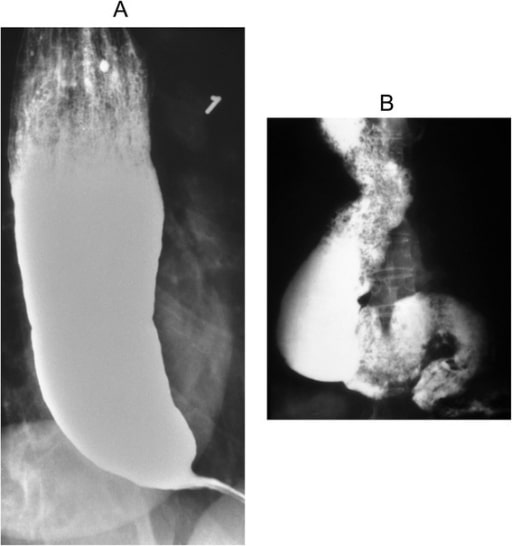
  • Etiología:
    • Primaria: idiopática (más común)
    • Secundaria: por malignidad o enfermedad de Chagas
  • Fisiopatología:
    • Degeneración de las células ganglionares en EN Erythema nodosum is an immune-mediated panniculitis (inflammation of the subcutaneous fat) caused by a type IV (delayed-type) hypersensitivity reaction. It commonly manifests in young women as tender, erythematous nodules on the shins. Erythema Nodosum el plexo de Auerbach → falta de relajación del músculo liso en EN Erythema nodosum is an immune-mediated panniculitis (inflammation of the subcutaneous fat) caused by a type IV (delayed-type) hypersensitivity reaction. It commonly manifests in young women as tender, erythematous nodules on the shins. Erythema Nodosum el esfínter esofágico inferior → pérdida progresiva de la función peristáltica en EN Erythema nodosum is an immune-mediated panniculitis (inflammation of the subcutaneous fat) caused by a type IV (delayed-type) hypersensitivity reaction. It commonly manifests in young women as tender, erythematous nodules on the shins. Erythema Nodosum el esófago distal
    • ↑ Presión del esfínter esofágico inferior → obstrucción y dilatación esofágica secundaria → retención de alimentos y líquidos en EN Erythema nodosum is an immune-mediated panniculitis (inflammation of the subcutaneous fat) caused by a type IV (delayed-type) hypersensitivity reaction. It commonly manifests in young women as tender, erythematous nodules on the shins. Erythema Nodosum el esófago
  • Presentación clínica:
    • Regurgitación de comida o saliva Saliva The clear, viscous fluid secreted by the salivary glands and mucous glands of the mouth. It contains mucins, water, organic salts, and ptyalin. Salivary Glands: Anatomy no digerida, particularmente por la noche
    • Los LOS Neisseria síntomas de disfagia son progresivos e insidiosos.
    • Pérdida de peso
  • Diagnóstico:
    • Manometría esofágica (prueba preferida): relajación incompleta del esfínter esofágico inferior, ↑ presión del esfínter esofágico inferior en EN Erythema nodosum is an immune-mediated panniculitis (inflammation of the subcutaneous fat) caused by a type IV (delayed-type) hypersensitivity reaction. It commonly manifests in young women as tender, erythematous nodules on the shins. Erythema Nodosum reposo y aperistalsis de los LOS Neisseria dos-tercios distales del esófago
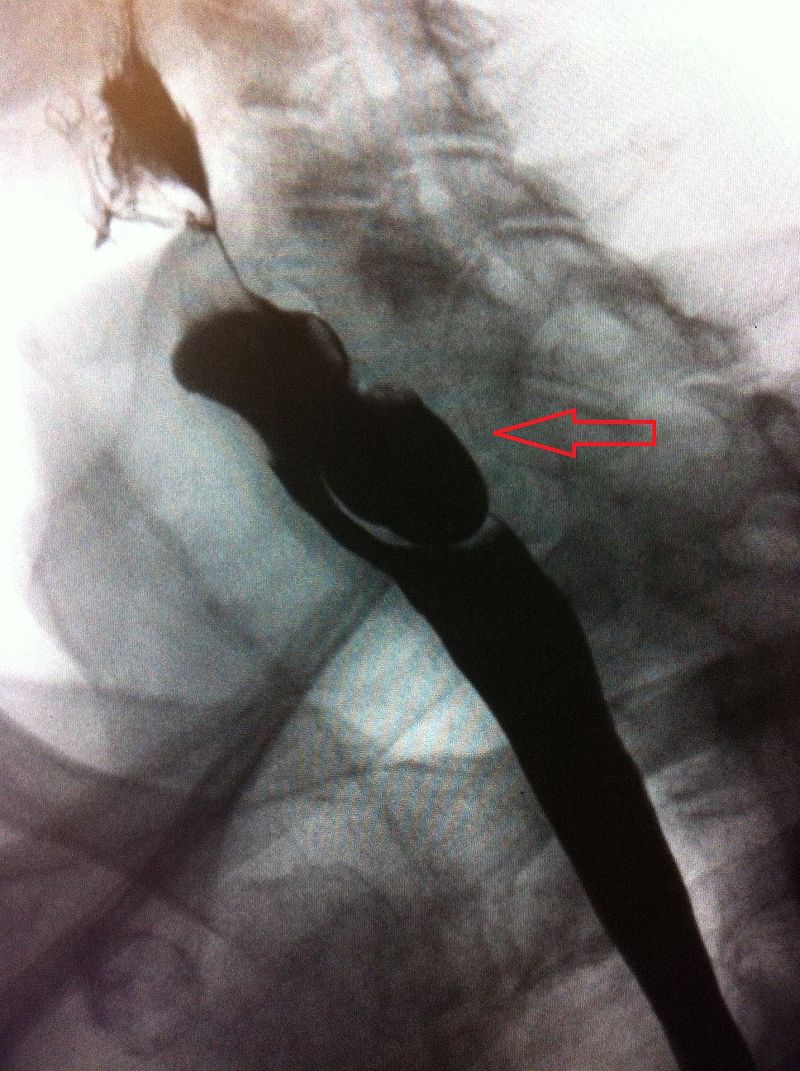
    • Esofagograma con bario: hallazgos sugestivos de esófago en EN Erythema nodosum is an immune-mediated panniculitis (inflammation of the subcutaneous fat) caused by a type IV (delayed-type) hypersensitivity reaction. It commonly manifests in young women as tender, erythematous nodules on the shins. Erythema Nodosum “pico de pájaro”
    • Endoscopia con biopsia: descartar causas secundarias, como malignidad y enfermedad de Chagas.
  • Tratamiento:
    • El tratamiento está dirigido a ↓ la presión del esfínter esofágico inferior.
    • Estiramiento mecánico de las fibras musculares:
      • Dilatación neumática con balón
      • Miotomía quirúrgica
    • Reducción química de la presión del esfínter esofágico inferior:
      • Inyección de toxina botulínica en EN Erythema nodosum is an immune-mediated panniculitis (inflammation of the subcutaneous fat) caused by a type IV (delayed-type) hypersensitivity reaction. It commonly manifests in young women as tender, erythematous nodules on the shins. Erythema Nodosum el esfínter esofágico inferior
      • Nitratos orales
      • Bloqueadores de los LOS Neisseria canales de calcio

Disfagia Esofágica: Trastornos Mecánicos y Obstructivos

Los LOS Neisseria trastornos mecánicos y obstructivos esofágicos ocurren típicamente debido a la obstrucción de la luz esofágica. Todos los LOS Neisseria trastornos mecánicos y obstructivos presentan disfagia con sólidos con progresión a líquidos.
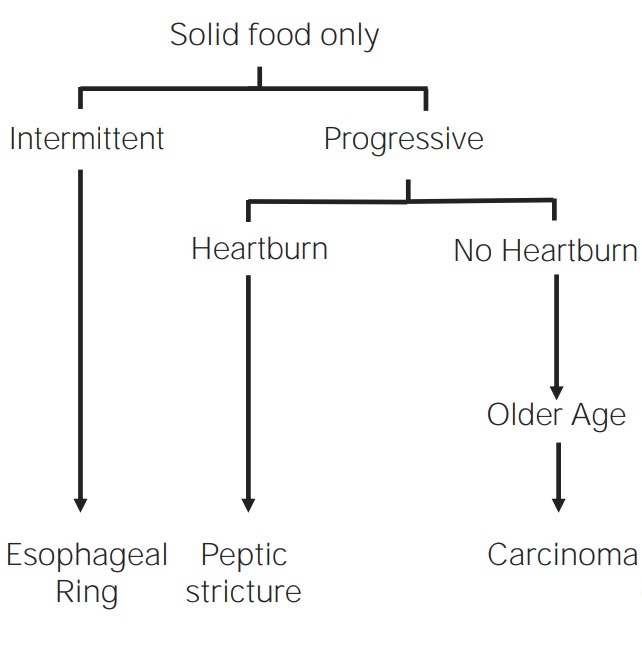
Descripción general de los trastornos mecánicos y obstructivos

Descripción general de los trastornos mecánicos y obstructivos

Imagen por Lecturio.

Anillos y membranas esofágicas

Los LOS Neisseria anillos y las membranas son estenosis mucosas delgadas que ocluyen parcialmente la luz esofágica:
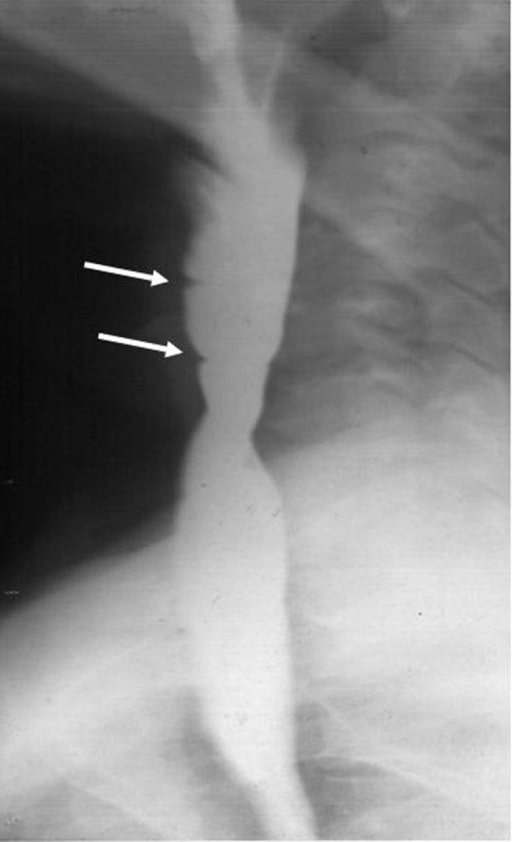
  • Definiciones:
    • Anillo esofágico:
      • Tejido concéntrico que sobresale en EN Erythema nodosum is an immune-mediated panniculitis (inflammation of the subcutaneous fat) caused by a type IV (delayed-type) hypersensitivity reaction. It commonly manifests in young women as tender, erythematous nodules on the shins. Erythema Nodosum la luz esofágica
      • Más comúnmente en EN Erythema nodosum is an immune-mediated panniculitis (inflammation of the subcutaneous fat) caused by a type IV (delayed-type) hypersensitivity reaction. It commonly manifests in young women as tender, erythematous nodules on the shins. Erythema Nodosum el esófago distal
      • Por lo general, mucosa, pero puede deberse a hipertrofia del músculo liso
    • Membrana esofágica:
      • Membranas excéntricas que sobresalen en EN Erythema nodosum is an immune-mediated panniculitis (inflammation of the subcutaneous fat) caused by a type IV (delayed-type) hypersensitivity reaction. It commonly manifests in young women as tender, erythematous nodules on the shins. Erythema Nodosum la luz esofágica
      • Ocurre más comúnmente en EN Erythema nodosum is an immune-mediated panniculitis (inflammation of the subcutaneous fat) caused by a type IV (delayed-type) hypersensitivity reaction. It commonly manifests in young women as tender, erythematous nodules on the shins. Erythema Nodosum la cara anterior del esófago proximal
  • Fisiopatología:
    • Se desconoce la etiología.
    • Los LOS Neisseria anillos pueden deberse a daño crónico por ERGE.
  • Presentación clínica:
    • Generalmente asintomático
    • La disfagia es intermitente.
  • Diagnóstico:
    • Esofagograma de bario: los LOS Neisseria anillos y las membranas aparecen como un estrechamiento delgado, circunferencial o excéntrico en EN Erythema nodosum is an immune-mediated panniculitis (inflammation of the subcutaneous fat) caused by a type IV (delayed-type) hypersensitivity reaction. It commonly manifests in young women as tender, erythematous nodules on the shins. Erythema Nodosum el esófago.
  • Condiciones específicas:
    • Anillo Schatzki:
      • Asociado con ERGE, esofagitis eosinofílica y hernia Hernia Protrusion of tissue, structure, or part of an organ through the bone, muscular tissue, or the membrane by which it is normally contained. Hernia may involve tissues such as the abdominal wall or the respiratory diaphragm. Hernias may be internal, external, congenital, or acquired. Abdominal Hernias de hiato
      • Situado en EN Erythema nodosum is an immune-mediated panniculitis (inflammation of the subcutaneous fat) caused by a type IV (delayed-type) hypersensitivity reaction. It commonly manifests in young women as tender, erythematous nodules on the shins. Erythema Nodosum el esófago distal (proximal al AL Amyloidosis esfínter esofágico inferior)
      • Más común en EN Erythema nodosum is an immune-mediated panniculitis (inflammation of the subcutaneous fat) caused by a type IV (delayed-type) hypersensitivity reaction. It commonly manifests in young women as tender, erythematous nodules on the shins. Erythema Nodosum pacientes > 40 años de edad
      • Tratamiento: dilatación esofágica e IBP
    • Síndrome de Plummer-Vinson:
      • Tríada clínica: anemia Anemia Anemia is a condition in which individuals have low Hb levels, which can arise from various causes. Anemia is accompanied by a reduced number of RBCs and may manifest with fatigue, shortness of breath, pallor, and weakness. Subtypes are classified by the size of RBCs, chronicity, and etiology. Anemia: Overview and Types por deficiencia de hierro, disfagia y membranas esofágicas cervicales
      • Más común en EN Erythema nodosum is an immune-mediated panniculitis (inflammation of the subcutaneous fat) caused by a type IV (delayed-type) hypersensitivity reaction. It commonly manifests in young women as tender, erythematous nodules on the shins. Erythema Nodosum mujeres de mediana edad.
      • Asociado con un mayor riesgo de carcinoma de células escamosas de esófago
      • Tratamiento: suplementos de hierro y dilatación esofágica (para obstrucción significativa)

Estenosis esofágicas (pépticas)

Una estenosis esofágica es un estrechamiento anormal de la luz esofágica:
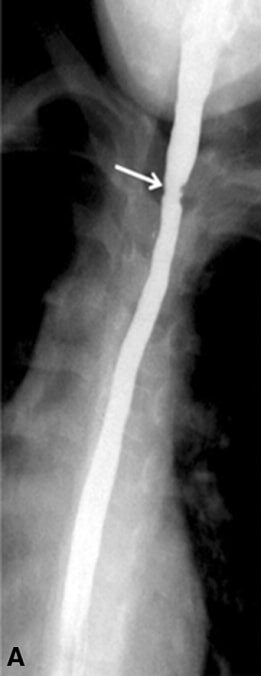
  • Etiología:
    • Inflamación crónica por ERGE de larga data
    • Daño directo causado por la ingestión de agentes ácidos o alcalinos
  • Fisiopatología:
    • Cicatrización circunferencial → reducción de la luz del esófago → disfagia progresiva de sólidos
    • A menudo se localiza en EN Erythema nodosum is an immune-mediated panniculitis (inflammation of the subcutaneous fat) caused by a type IV (delayed-type) hypersensitivity reaction. It commonly manifests in young women as tender, erythematous nodules on the shins. Erythema Nodosum el esófago distal
  • Presentación clínica:
    • La disfagia es gradualmente progresiva.
    • Antecedentes de ERGE
    • Antecedentes remotos de ingestión de agentes ácidos o alcalinos
    • Puede estar asociado con la pérdida de peso.
  • Diagnóstico:
    • Esofagograma de bario: puede establecer la ubicación, la longitud y el número de estenosis
    • Confirmado con endoscopia y biopsia (para descartar cáncer)
  • Tratamiento:
    • IBP en EN Erythema nodosum is an immune-mediated panniculitis (inflammation of the subcutaneous fat) caused by a type IV (delayed-type) hypersensitivity reaction. It commonly manifests in young women as tender, erythematous nodules on the shins. Erythema Nodosum dosis altas
    • Dilatación esofágica periódica

Cáncer de esófago

  • Etiología:
    • Carcinoma de células escamosas: cáncer de los LOS Neisseria 2/3 superiores del esófago, comúnmente visto en EN Erythema nodosum is an immune-mediated panniculitis (inflammation of the subcutaneous fat) caused by a type IV (delayed-type) hypersensitivity reaction. It commonly manifests in young women as tender, erythematous nodules on the shins. Erythema Nodosum:
      • Fumadores
      • Consumo de alcohol
      • Acalasia
    • Adenocarcinoma: cáncer del esófago distal, comúnmente visto en EN Erythema nodosum is an immune-mediated panniculitis (inflammation of the subcutaneous fat) caused by a type IV (delayed-type) hypersensitivity reaction. It commonly manifests in young women as tender, erythematous nodules on the shins. Erythema Nodosum pacientes mayores con esófago de Barrett
  • Fisiopatología: crecimiento excesivo del cáncer → reducción de la luz del esófago → disfagia progresiva
  • Presentación clínica:
    • Disfagia progresiva
    • Odinofagia ( dolor Dolor Inflammation al AL Amyloidosis tragar) en EN Erythema nodosum is an immune-mediated panniculitis (inflammation of the subcutaneous fat) caused by a type IV (delayed-type) hypersensitivity reaction. It commonly manifests in young women as tender, erythematous nodules on the shins. Erythema Nodosum el 20% de los LOS Neisseria pacientes
    • Pérdida de peso (caquexia)
    • Anemia Anemia Anemia is a condition in which individuals have low Hb levels, which can arise from various causes. Anemia is accompanied by a reduced number of RBCs and may manifest with fatigue, shortness of breath, pallor, and weakness. Subtypes are classified by the size of RBCs, chronicity, and etiology. Anemia: Overview and Types por deficiencia de hierro (por pérdida crónica de hemorragia digestiva superior)
    • Se puede observar tos TOS Thoracic outlet syndrome (TOS) is a broad term used for a spectrum of syndromes related to the general region of the thoracic outlet, which involves the compression or irritation of elements of the brachial plexus, subclavian artery, or subclavian vein. Thoracic Outlet Syndrome y disfonía debido a la diseminación local del tumor Tumor Inflammation.
  • Diagnóstico:
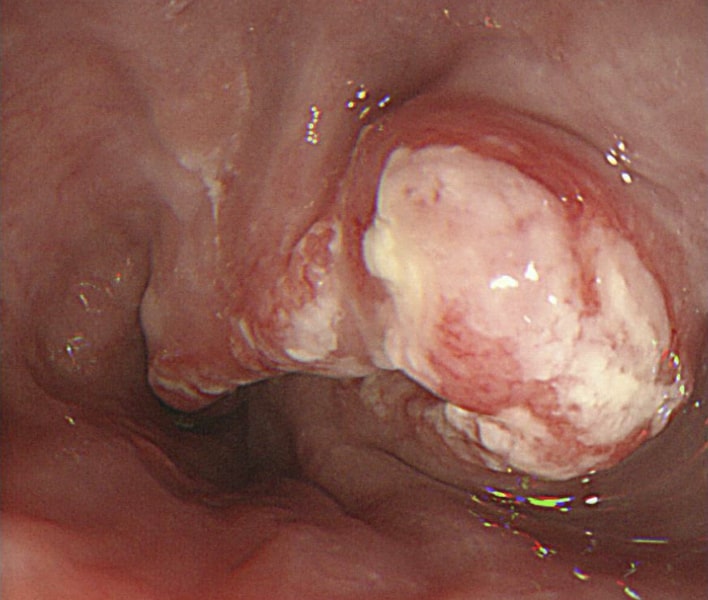
    • Endoscopia con biopsia: para el diagnóstico definitivo
    • Esofagograma con bario: lesión en EN Erythema nodosum is an immune-mediated panniculitis (inflammation of the subcutaneous fat) caused by a type IV (delayed-type) hypersensitivity reaction. It commonly manifests in young women as tender, erythematous nodules on the shins. Erythema Nodosum “núcleo de manzana”
  • Tratamiento:
    • Estadificación:
      • Tomografía por emisión de positrones ( PET PET An imaging technique that combines a positron-emission tomography (PET) scanner and a ct X ray scanner. This establishes a precise anatomic localization in the same session. Nuclear Imaging, por sus siglas en EN Erythema nodosum is an immune-mediated panniculitis (inflammation of the subcutaneous fat) caused by a type IV (delayed-type) hypersensitivity reaction. It commonly manifests in young women as tender, erythematous nodules on the shins. Erythema Nodosum inglés)
      • Tomografía computarizada (TC)
    • La resección es la única terapia curativa.
    • Quimiorradiación
    • Tratamientos paliativos para la enfermedad avanzada

Referencias

  1. Lynch, K.L. (2024). Dysphagia. [online] MSD Manual Professional Version. Retrieved April 23, 2025, from https://www.msdmanuals.com/professional/gastrointestinal-disorders/esophageal-and-swallowing-disorders/dysphagia
  2. Lynch, K.L. (2024). Overview of esophageal and swallowing disorders. [online] MSD Manual Professional Version. Retrieved April 23, 2025, from https://www.msdmanuals.com/professional/gastrointestinal-disorders/esophageal-and-swallowing-disorders/overview-of-esophageal-and-swallowing-disorders
  3. Lynch, K.L. (2024). Diffuse esophageal spasm. [online] MSD Manual Professional Version. Retrieved April 23, 2025, from https://www.msdmanuals.com/professional/gastrointestinal-disorders/esophageal-and-swallowing-disorders/diffuse-esophageal-spasm
  4. Lynch, K.L. (2024). Achalasia. [online] MSD Manual Professional Version. Retrieved April 23, 2025, from https://www.msdmanuals.com/professional/gastrointestinal-disorders/esophageal-and-swallowing-disorders/achalasia
  5. Nevares, A.M. (2024). Systemic sclerosis. [online] MSD Manual Professional Version. Retrieved April 23, 2025, from https://www.msdmanuals.com/professional/musculoskeletal-and-connective-tissue-disorders/autoimmune-rheumatic-disorders/systemic-sclerosis
  6. Fass, R. (2024). Approach to the evaluation of dysphagia. In Robson, K.M. (Ed.), Uptodate. Retrieved April 23, 2025, from https://www.uptodate.com/contents/approach-to-the-evaluation-of-dysphagia-in-adults
  7. Lembo, A.J. (2025). Oropharyngeal dysphagia: Etiology and pathogenesis. In Robson, K.M. (Ed.), Uptodate. Retrieved April 23, 2025, from https://www.uptodate.com/contents/oropharyngeal-dysphagia-etiology-and-pathogenesis
  8. Lembo, A.J. (2025). Oropharyngeal dysphagia: Clinical features, diagnosis, and management. In Robson, K.M. (Ed.), Uptodate. Retrieved April 23, 2025, from https://www.uptodate.com/contents/oropharyngeal-dysphagia-clinical-features-diagnosis-and-management
  9. Pandolfino, J. E. (2025). Distal esophageal spasm and hypercontractile esophagus. UpToDate. In N. J. Talley (Ed.), K. M. Robson (Deputy Ed.). Retrieved April 23, 2025, from https://www.uptodate.com/contents/distal-esophageal-spasm-and-hypercontractile-esophagus
  10. Ergun, G.A., & Kahrilas, P.J. (2024). Esophageal rings and webs. In Grover, S. (Ed.), Uptodate. Retrieved April 23, 2025, from https://www.uptodate.com/contents/esophageal-rings-and-webs
  11. Paik, N.J., & Dawodu, S.T. (2024). Dysphagia. In Moberg-Wolff, E.A. (Ed.), Medscape. Retrieved April 23, 2025, from https://emedicine.medscape.com/article/2212409-overview
  12. Rohof, W. O. A., & Bredenoord, A. J. (2017). Chicago Classification of Esophageal Motility Disorders: Lessons learned. Current Gastroenterology Reports, 19(8), Article 37. https://doi.org/10.1007/s11894-017-0576-7

¡Crea tu cuenta gratis o inicia una sesión para seguir leyendo!

Regístrate ahora y obtén acceso gratuito a Lecturio con páginas de concepto, videos médicos y cuestionarios para tu educación médica.

User Reviews

Que tengas una sesión de estudio alegre y navideña 🎁 Ahorra 50% en todos los planes >>

Details