Domina Conceptos Médicos

Estudia para la escuela de medicina y tus examenes con Lecturio.

Cataratas en Niños

La catarata es una afección que se define como una nubosidad indolora del cristalino. Las cataratas provocan una alteración de la visión, ya que el cristalino proporciona parte del poder de refracción del ojo. Esta afección es una de las causas más comunes de ceguera pediátrica. Las cataratas pueden estar presentes desde el nacimiento (congénitas) o desarrollarse después de la infancia (adquiridas). Las mutaciones genéticas, las enfermedades sistémicas, los LOS Neisseria traumatismos y los LOS Neisseria medicamentos pueden provocar el desarrollo de cataratas. Los LOS Neisseria niños presentan un reflejo rojo anormal, leucocoria o disminución de la agudeza visual. Un examen oftalmológico revela la morfología y la localización de la catarata. El tratamiento depende de la edad de presentación y los LOS Neisseria defectos visuales. Cuando la opacidad es de cierto tamaño o está causando problemas de visión, estrabismo y nistagmo, se recomienda la cirugía de cataratas.

Last updated: May 3, 2022

Editorial responsibility: Stanley Oiseth, Lindsay Jones, Evelin Maza

Descripción General

Definición

La catarata es una opacidad indolora del cristalino que interrumpe la luz que se proyecta sobre la retina Retina The ten-layered nervous tissue membrane of the eye. It is continuous with the optic nerve and receives images of external objects and transmits visual impulses to the brain. Its outer surface is in contact with the choroid and the inner surface with the vitreous body. The outermost layer is pigmented, whereas the inner nine layers are transparent. Eye: Anatomy, lo que provoca una nubosidad en EN Erythema nodosum is an immune-mediated panniculitis (inflammation of the subcutaneous fat) caused by a type IV (delayed-type) hypersensitivity reaction. It commonly manifests in young women as tender, erythematous nodules on the shins. Erythema Nodosum la visión. Las cataratas pueden causar ceguera parcial o total.

Epidemiología

  • Prevalencia:
    • 1–15 por cada 10 000 niños
    • Más alta en EN Erythema nodosum is an immune-mediated panniculitis (inflammation of the subcutaneous fat) caused by a type IV (delayed-type) hypersensitivity reaction. It commonly manifests in young women as tender, erythematous nodules on the shins. Erythema Nodosum los LOS Neisseria países de bajos ingresos
  • Alrededor del 15% de la ceguera pediátrica se debe a las cataratas.
  • ⅓ son casos hereditarios, otro ⅓ se debe a enfermedades sistémicas y el resto son idiopáticos.

Anatomía

Cristalino:

  • Parte de los LOS Neisseria medios de refracción del ojo
  • Estructura transparente hecha de fibras
    • Fibras del cristalino:
      • Corteza: parte exterior; formada por fibras más jóvenes
      • Núcleo: parte profunda; formada por fibras más antiguas
    • Epitelio del cristalino: entre las fibras y la cápsula anterior
    • Cápsula del cristalino: capa más externa (anterior y posterior)
  • Esencial para el correcto desarrollo visual (que se produce desde el nacimiento hasta los LOS Neisseria 8 años de edad)
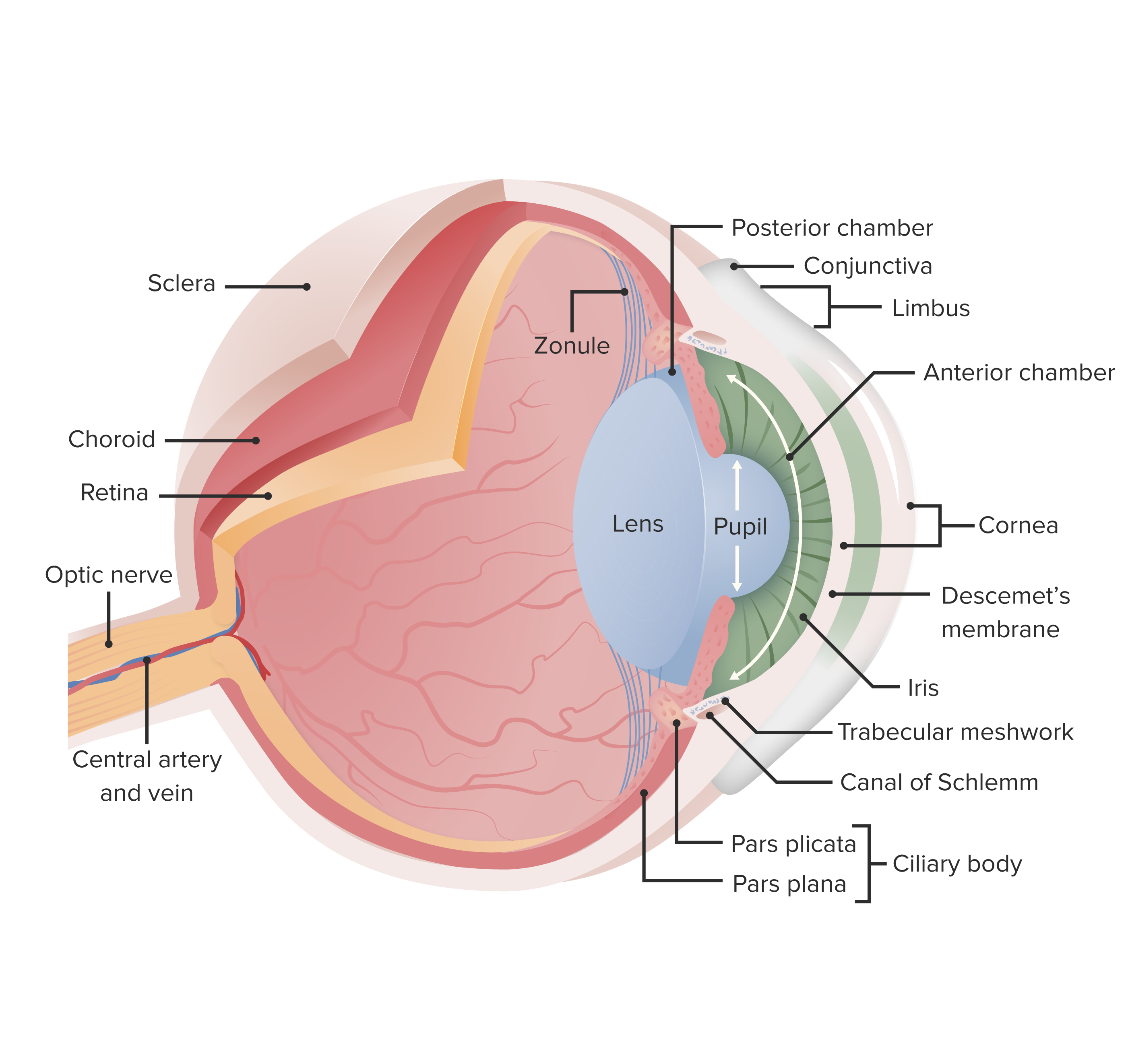
Esquema de la anatomía esencial del ojo

Esta imagen muestra la anatomía esencial del ojo. En las cataratas, se produce una nubosidad del cristalino, que opacifica la luz cuando se proyecta a la retina; esto provoca una reducción de la visión, sobre todo por la noche, cuando los niveles de luz son bajos.

Imagen por Lecturio.
Etiología y Fisiopatología

Cataratas por edad de aparición

  • Congénita/infantil
    • Inicio al AL Amyloidosis nacer
    • El reconocimiento de la catarata a una edad más avanzada no excluye su aparición congénita.
  • Adquirida/juvenil
    • Inicio en EN Erythema nodosum is an immune-mediated panniculitis (inflammation of the subcutaneous fat) caused by a type IV (delayed-type) hypersensitivity reaction. It commonly manifests in young women as tender, erythematous nodules on the shins. Erythema Nodosum la infancia (después de la primera infancia)

Cataratas por etiología

  • Genética:
    • Mutaciones en los genes que codifican la estructura del cristalino
    • La mayoría son autosómicas dominantes.
  • Asociada a enfermedades:
    • Afecciones oculares:
      • Uveítis
      • Retinopatía del prematuro
      • Vasculatura fetal persistente
    • Trastornos del metabolismo de la galactosa
      • Galactosemia clásica (catarata en “gotas de aceite”) y deficiencia de galactocinasa
      • La galactosa es procesada por la aldosa reductasa a galactitol en EN Erythema nodosum is an immune-mediated panniculitis (inflammation of the subcutaneous fat) caused by a type IV (delayed-type) hypersensitivity reaction. It commonly manifests in young women as tender, erythematous nodules on the shins. Erythema Nodosum el cristalino.
      • ↑ galactosa → ↑ galactitol → ↑ osmolaridad y acumulación de líquido en EN Erythema nodosum is an immune-mediated panniculitis (inflammation of the subcutaneous fat) caused by a type IV (delayed-type) hypersensitivity reaction. It commonly manifests in young women as tender, erythematous nodules on the shins. Erythema Nodosum el cristalino → cataratas
    • Síndromes dermatológicos
      • Ictiosis congénita
      • Displasia ectodérmica
    • Enfermedad endocrina:
      • Diabetes Diabetes Diabetes mellitus (DM) is a metabolic disease characterized by hyperglycemia and dysfunction of the regulation of glucose metabolism by insulin. Type 1 DM is diagnosed mostly in children and young adults as the result of autoimmune destruction of β cells in the pancreas and the resulting lack of insulin. Type 2 DM has a significant association with obesity and is characterized by insulin resistance. Diabetes Mellitus mellitus
      • Hipoparatiroidismo
    • Anomalías cromosómicas:
      • Trisomías: 13, 18 y 21
      • Síndrome de Turner
    • Infección intrauterina:
      • TORCH (Toxoplasma, Otros agentes, Rubéola, Citomegalovirus, Herpes simple)
      • Otros: sífilis, varicela zoster, parvovirus B19 Parvovirus B19 Primate erythroparvovirus 1 (generally referred to as parvovirus B19, B19 virus, or sometimes erythrovirus B19) ranks among the smallest DNA viruses. Parvovirus B19 is of the family Parvoviridae and genus Erythrovirus. In immunocompetent humans, parvovirus B19 classically results in erythema infectiosum (5th disease) or “slapped cheek syndrome.” Parvovirus B19
    • Otros síndromes:
      • Síndrome de Marfan
      • Síndrome de Alport
      • Neurofibromatosis tipo 2
      • Distrofia miotónica
  • Iatrogénica:
    • Corticosteroides (sistémicos)
    • Radiación:
      • Dosis mínima que puede producir cataratas: 500 rad
      • Radiación craneal: se requiere un protector ocular y los LOS Neisseria niños deben someterse a un examen ocular anual
    • Vitrectomía: los LOS Neisseria niños que se han sometido a este procedimiento tienen un riesgo de, principalmente, catarata subcapsular posterior.
    • Tratamiento con láser: cuando se utiliza para la retinopatía del prematuro, la lesión térmica aumenta el riesgo de cataratas.
  • Traumatismo ocular:
    • Traumatismo directo (perforación o lesión contundente)
      • Más común en EN Erythema nodosum is an immune-mediated panniculitis (inflammation of the subcutaneous fat) caused by a type IV (delayed-type) hypersensitivity reaction. It commonly manifests in young women as tender, erythematous nodules on the shins. Erythema Nodosum los LOS Neisseria niños
      • Durante el juego o la actividad deportiva
    • Descarga eléctrica
      • Exposición a la corriente de alto voltaje/rayos
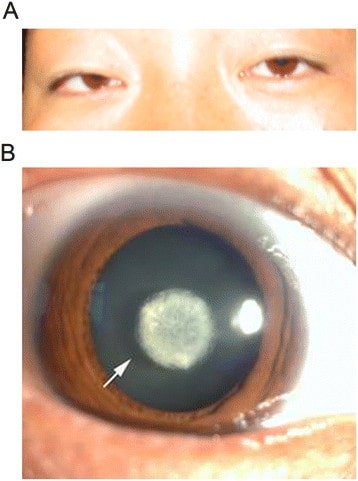
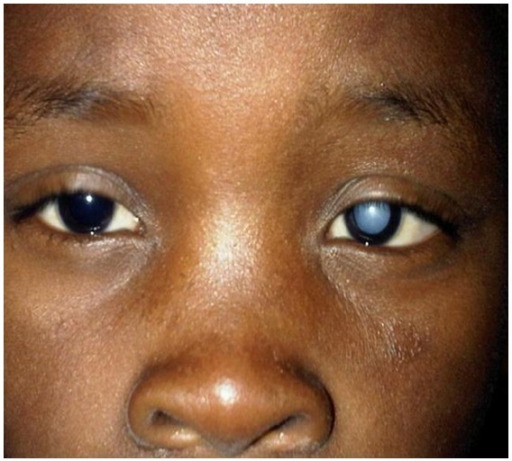
A dense left cataract

Niño que desarrolló una catarata en el ojo izquierdo tras sufrir una lesión por rayo

Imagen: “A dense left cataract” por Division of Ophthalmology, Red Cross War Memorial Children’s Hospital and the University of Cape Town, Klipfontein Road, Rondebosch, Cape Town 7700, South Africa. Licencia: CC BY 3.0
Presentación Clínica

  • Molestias referidas por padres:
    • El niño no sigue objetos cerca de la cara
    • No establece contacto visual (e.g., es incapaz de reconocer a su madre)
    • Ve la televisión a corta distancia
  • Características clínicas:
    • Reflejo rojo asimétrico: se observa en el examen y en las fotografías antiguas
    • Leucocoria
      • Reflejo pupilar blanco
      • La pupila es “blanca” en EN Erythema nodosum is an immune-mediated panniculitis (inflammation of the subcutaneous fat) caused by a type IV (delayed-type) hypersensitivity reaction. It commonly manifests in young women as tender, erythematous nodules on the shins. Erythema Nodosum vez de negra
    • Disminución de la visión y retraso en EN Erythema nodosum is an immune-mediated panniculitis (inflammation of the subcutaneous fat) caused by a type IV (delayed-type) hypersensitivity reaction. It commonly manifests in young women as tender, erythematous nodules on the shins. Erythema Nodosum el desarrollo
      • El niño no tiene el comportamiento visual habitual esperado a su edad.
      • Dificultad de aprendizaje (el niño no puede leer la pizarra)
    • Nistagmo
      • Pobre pronóstico visual
      • Se desarrolla a los LOS Neisseria 2–3 meses en EN Erythema nodosum is an immune-mediated panniculitis (inflammation of the subcutaneous fat) caused by a type IV (delayed-type) hypersensitivity reaction. It commonly manifests in young women as tender, erythematous nodules on the shins. Erythema Nodosum las cataratas congénitas
    • Estrabismo
      • Alineación anormal de los LOS Neisseria ojos; ojos desviados
      • Asociado a un mal resultado visual
    • Fotofobia: dispersión de la luz por la catarata
    • Otras características: los LOS Neisseria síntomas extraoculares dependen de la presencia de una enfermedad o síndrome sistémico.

Diagnóstico

Evaluación inicial

  • Antecedentes: revisar los LOS Neisseria factores de riesgo del paciente y su familia
  • Evaluación del riesgo visual en EN Erythema nodosum is an immune-mediated panniculitis (inflammation of the subcutaneous fat) caused by a type IV (delayed-type) hypersensitivity reaction. It commonly manifests in young women as tender, erythematous nodules on the shins. Erythema Nodosum todas las visitas de control
  • Tamizaje de la vista si hay factores de riesgo (antecedentes familiares de cataratas congénitas, retinoblastoma Retinoblastoma Retinoblastoma is a rare tumor but the most common primary intraocular malignancy of childhood. It is believed that the condition arises from a neuronal progenitor cell. Retinoblastoma can be heritable or non-heritable. Retinoblastoma, trastornos metabólicos o genéticos)
  • Reflejo rojo: método más sensible para detectar la catarata
  • Agudeza visual:
    • Fotocélula o autorefractor a partir de los LOS Neisseria 12 meses de edad
    • Utilizar herramientas de evaluación visual adecuadas a la edad:
      • Fijar y seguir (hasta los LOS Neisseria 3 años de edad)
      • Prueba de Cover
      • Tabla de Snellen u otro optotipo
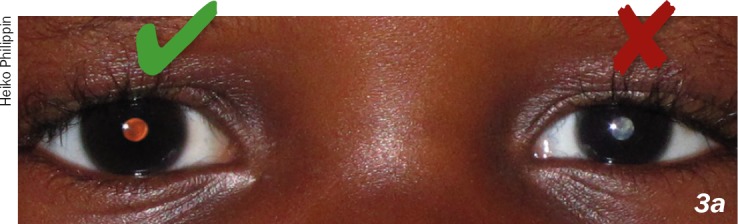
Eye reflex cataract in child

El reflejo rojo es un reflejo rojo-anaranjado de la parte posterior del ojo. La ausencia de este color es anormal y podría indicar una afección grave. El niño de esta imagen tiene una catarata en el ojo izquierdo.

Imagen: “How to test for the red reflex” por US National Library of Medicine. Licencia: CC BY 2.0
Examen oftalmológico

  • Examen del fondo de ojo y examen con lámpara de hendidura
  • Realizado por un oftalmólogo pediátrico (puede requerir sedación)
  • Diferentes partes del cristalino afectadas
  • La morfología y la localización pueden dar pistas sobre la patología subyacente:
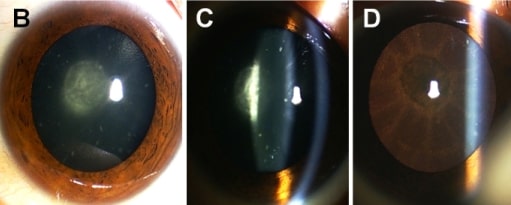
    • Difusa/total (todo el cristalino): después de un traumatismo
    • Anterior: polar anterior (a menudo hereditaria, especialmente si es bilateral)
    • Central: nuclear fetal (parte más central del cristalino); asociada a la microftalmia
    • Posterior:
      • Posterior subcapsular (zona anterior a la cápsula): generalmente, es una catarata adquirida (glucocorticoide, radiación, lesión)
      • Posterior: vasculatura fetal persistente (la irrigación sanguínea al AL Amyloidosis cristalino no desapareció antes del nacimiento)

Otras pruebas

  • Ultrasonido ocular: ocasionalmente necesario para comprobar el segmento posterior del ojo
  • Si está indicado:
    • Metabólico: análisis de sangre y orina para detectar trastornos específicos
    • Titulaciones para TORCH por sospecha de infección congénita
    • Pruebas genéticas

Tratamiento

Consideraciones

  • Edad:
    • El aumento de la edad implica una mayor demanda visual.
    • Aparición más temprana de la catarata y opacificación más densa: ↑ riesgo de ambliopía
    • Catarata congénita unilateral: la edad óptima de la cirugía es para las 4–6 semanas.
    • Cataratas congénitas bilaterales: la edad óptima de la cirugía es para las 8 semanas (como máximo, con 1 semana de diferencia).
  • Función visual y desarrollo:
    • Los LOS Neisseria cambios de refracción se producen a medida que el niño crece.
    • Una vez que se retira el cristalino, se produce la pérdida de la acomodación.
    • Si no se coloca un lente intraocular: se necesitan bifocales para optimizar la visión de cerca y de lejos

Tratamiento conservador

  • Indicaciones:
    • Agudeza visual superior a 20/50
    • Opacidad < 3 mm de diámetro o de densidad parcial
    • No hay problemas de comportamiento visual
  • Componentes del tratamiento:
    • Errores de refracción: uso de lentes de contacto o gafas correctoras.
    • Terapia oclusiva: parchear el ojo con una mejor visión
    • Monitorización de la progresión

Extracción de cataratas

  • Debe ser realizada por un oftalmólogo pediátrico con experiencia
  • Indicaciones:
    • Opacidad de > 3 mm
    • Agudeza visual reducida (20/50 o peor)
    • Disminución de la calidad de vida por discapacidad visual
    • Aparición de estrabismo o nistagmo
  • El procedimiento implica:
    • Extracción del cristalino
    • Vitrectomía anterior y capsulectomía posterior (con o sin colocación de lente intraocular)
    • El lente intraocular no se recomienda en EN Erythema nodosum is an immune-mediated panniculitis (inflammation of the subcutaneous fat) caused by a type IV (delayed-type) hypersensitivity reaction. It commonly manifests in young women as tender, erythematous nodules on the shins. Erythema Nodosum niños < 1 año de edad
  • Complicaciones de la cirugía:
    • Catarata secundaria
    • Glaucoma Glaucoma Glaucoma is an optic neuropathy characterized by typical visual field defects and optic nerve atrophy seen as optic disc cupping on examination. The acute form of glaucoma is a medical emergency. Glaucoma is often, but not always, caused by increased intraocular pressure (IOP). Glaucoma
    • Estrabismo
    • Malposición del lente intraocular
    • Desprendimiento de retina Retina The ten-layered nervous tissue membrane of the eye. It is continuous with the optic nerve and receives images of external objects and transmits visual impulses to the brain. Its outer surface is in contact with the choroid and the inner surface with the vitreous body. The outermost layer is pigmented, whereas the inner nine layers are transparent. Eye: Anatomy
    • Endoftalmitis (infección dentro del ojo; poco frecuente)

Diagnóstico Diferencial

  • Uveítis: inflamación aguda de la úvea (capa media del globo ocular) y del cuerpo ciliar. La uveítis puede ser causada por infecciones ( toxoplasmosis Toxoplasmosis Toxoplasmosis is an infectious disease caused by Toxoplasma gondii, an obligate intracellular protozoan parasite. Felines are the definitive host, but transmission to humans can occur through contact with cat feces or the consumption of contaminated foods. The clinical presentation and complications depend on the host’s immune status. Toxoplasma/Toxoplasmosis, toxocariasis Toxocariasis Toxocariasis is caused by the nematodes Toxocara canis and T. cati. These species frequently infect dogs and cats and are most commonly transmitted to humans via accidental ingestion of eggs through the fecal-oral route. Toxocara are not able to complete their life cycle in humans, but they do migrate to organs (including the liver, lungs, heart, brain, and eyes), where they cause inflammation and tissue damage. Toxocariasis) o puede estar relacionada con una enfermedad inflamatoria sistémica (artritis reumatoide). Los LOS Neisseria síntomas incluyen visión borrosa, ojo rojo con dolor Dolor Inflammation (uveítis anterior) o sin dolor Dolor Inflammation (uveítis intermedia y posterior), y miodesopsias (uveítis intermedia).
  • Retinoblastoma Retinoblastoma Retinoblastoma is a rare tumor but the most common primary intraocular malignancy of childhood. It is believed that the condition arises from a neuronal progenitor cell. Retinoblastoma can be heritable or non-heritable. Retinoblastoma: es la neoplasia intraocular más frecuente en EN Erythema nodosum is an immune-mediated panniculitis (inflammation of the subcutaneous fat) caused by a type IV (delayed-type) hypersensitivity reaction. It commonly manifests in young women as tender, erythematous nodules on the shins. Erythema Nodosum la niñez y generalmente se diagnostica antes de los LOS Neisseria 5 años. El retinoblastoma Retinoblastoma Retinoblastoma is a rare tumor but the most common primary intraocular malignancy of childhood. It is believed that the condition arises from a neuronal progenitor cell. Retinoblastoma can be heritable or non-heritable. Retinoblastoma se presenta frecuentemente como un reflejo blanco anormal de la retina Retina The ten-layered nervous tissue membrane of the eye. It is continuous with the optic nerve and receives images of external objects and transmits visual impulses to the brain. Its outer surface is in contact with the choroid and the inner surface with the vitreous body. The outermost layer is pigmented, whereas the inner nine layers are transparent. Eye: Anatomy, llamado leucocoria. Otras características son el ojo rojo, el estrabismo y el nistagmo. El examen oftalmoscópico revela una masa retiniana. Para el diagnóstico puede utilizarse imagenología adicional, como el ultrasonido ocular.
  • Desprendimiento de retina Retina The ten-layered nervous tissue membrane of the eye. It is continuous with the optic nerve and receives images of external objects and transmits visual impulses to the brain. Its outer surface is in contact with the choroid and the inner surface with the vitreous body. The outermost layer is pigmented, whereas the inner nine layers are transparent. Eye: Anatomy:separación de la retina Retina The ten-layered nervous tissue membrane of the eye. It is continuous with the optic nerve and receives images of external objects and transmits visual impulses to the brain. Its outer surface is in contact with the choroid and the inner surface with the vitreous body. The outermost layer is pigmented, whereas the inner nine layers are transparent. Eye: Anatomy del epitelio pigmentario de la retina Retina The ten-layered nervous tissue membrane of the eye. It is continuous with the optic nerve and receives images of external objects and transmits visual impulses to the brain. Its outer surface is in contact with the choroid and the inner surface with the vitreous body. The outermost layer is pigmented, whereas the inner nine layers are transparent. Eye: Anatomy que provoca un rápido daño de los LOS Neisseria fotorreceptores. En EN Erythema nodosum is an immune-mediated panniculitis (inflammation of the subcutaneous fat) caused by a type IV (delayed-type) hypersensitivity reaction. It commonly manifests in young women as tender, erythematous nodules on the shins. Erythema Nodosum los LOS Neisseria niños, esto puede deberse a un traumatismo, a la retinopatía del prematuro o a síndromes de displasia de la retina Retina The ten-layered nervous tissue membrane of the eye. It is continuous with the optic nerve and receives images of external objects and transmits visual impulses to the brain. Its outer surface is in contact with the choroid and the inner surface with the vitreous body. The outermost layer is pigmented, whereas the inner nine layers are transparent. Eye: Anatomy. La retinopatía del prematuro provoca leucocoria en EN Erythema nodosum is an immune-mediated panniculitis (inflammation of the subcutaneous fat) caused by a type IV (delayed-type) hypersensitivity reaction. It commonly manifests in young women as tender, erythematous nodules on the shins. Erythema Nodosum el marco de un desprendimiento de retina Retina The ten-layered nervous tissue membrane of the eye. It is continuous with the optic nerve and receives images of external objects and transmits visual impulses to the brain. Its outer surface is in contact with the choroid and the inner surface with the vitreous body. The outermost layer is pigmented, whereas the inner nine layers are transparent. Eye: Anatomy.
  • Coloboma Coloboma Congenital anomaly in which some of the structures of the eye are absent due to incomplete fusion of the fetal intraocular fissure during gestation. Esophageal Atresia and Tracheoesophageal Fistula del disco óptico: anomalía congénita debida a un defecto que se produce en EN Erythema nodosum is an immune-mediated panniculitis (inflammation of the subcutaneous fat) caused by a type IV (delayed-type) hypersensitivity reaction. It commonly manifests in young women as tender, erythematous nodules on the shins. Erythema Nodosum el desarrollo embrionario del nervio óptico. La afección tiene un componente hereditario. El coloboma Coloboma Congenital anomaly in which some of the structures of the eye are absent due to incomplete fusion of the fetal intraocular fissure during gestation. Esophageal Atresia and Tracheoesophageal Fistula del disco óptico aparece como un disco óptico hueco y puede presentarse como leucocoria en EN Erythema nodosum is an immune-mediated panniculitis (inflammation of the subcutaneous fat) caused by a type IV (delayed-type) hypersensitivity reaction. It commonly manifests in young women as tender, erythematous nodules on the shins. Erythema Nodosum el examen físico.
  • Retinopatía del prematuro: vascularización anormal de la retina Retina The ten-layered nervous tissue membrane of the eye. It is continuous with the optic nerve and receives images of external objects and transmits visual impulses to the brain. Its outer surface is in contact with the choroid and the inner surface with the vitreous body. The outermost layer is pigmented, whereas the inner nine layers are transparent. Eye: Anatomy que se produce en EN Erythema nodosum is an immune-mediated panniculitis (inflammation of the subcutaneous fat) caused by a type IV (delayed-type) hypersensitivity reaction. It commonly manifests in young women as tender, erythematous nodules on the shins. Erythema Nodosum los LOS Neisseria prematuros. Se cree que las lesiones por hipotensión o hiper/hipoxia contribuyen a la interrupción del crecimiento normal de los LOS Neisseria vasos de la retina Retina The ten-layered nervous tissue membrane of the eye. It is continuous with the optic nerve and receives images of external objects and transmits visual impulses to the brain. Its outer surface is in contact with the choroid and the inner surface with the vitreous body. The outermost layer is pigmented, whereas the inner nine layers are transparent. Eye: Anatomy. Se produce una neovascularización que puede causar fibrosis Fibrosis Any pathological condition where fibrous connective tissue invades any organ, usually as a consequence of inflammation or other injury. Bronchiolitis Obliterans y desprendimiento de retina Retina The ten-layered nervous tissue membrane of the eye. It is continuous with the optic nerve and receives images of external objects and transmits visual impulses to the brain. Its outer surface is in contact with the choroid and the inner surface with the vitreous body. The outermost layer is pigmented, whereas the inner nine layers are transparent. Eye: Anatomy. La leucocoria se observa en EN Erythema nodosum is an immune-mediated panniculitis (inflammation of the subcutaneous fat) caused by a type IV (delayed-type) hypersensitivity reaction. It commonly manifests in young women as tender, erythematous nodules on the shins. Erythema Nodosum los LOS Neisseria últimos estadios de la retinopatia del prematuro.

Referencias

  1. Khokhar, S., Pillay, P, Dhull, C., Agarwal, E.Mahabir, M., Aggarwal, P. (2017) Pediatric Cataract. Indian J Ophthalmol 65:1340-9. http://www.ijo.in/text.asp?2017/65/12/1340/219834
  2. Javadi, M. (2009). Pediatric cataract Surgery.J Ophthalmic Vis Res. 4(4): 199–200.   https://www.ncbi.nlm.nih.gov/pmc/articles/PMC3498856/
  3. McCreery, K., Paysse, E., Armsby, C. (2020). Cataract in children. UpToDate. Retrieved 13 Sept 2020, from https://www.uptodate.com/contents/cataract-in-children
  4. Nizami, A., Gulani, A. (2020) Cataract. Retrieved 12 Sept 2020, fromhttps://www.ncbi.nlm.nih.gov/books/NBK539699/
  5. Pollreisz, A., Schmidth-Erfurth, U. (2010). Diabetic Cataract-Pathogenesis, Epidemiology and Treatment. J Ophthalmol. https://pubmed.ncbi.nlm.nih.gov/20634936/
  6. Wallace, D. et al. (2017). Pediatric Eye Evaluations PPP-2017. American Association of Ophthalmology. https://www.aao.org/preferred-practice-pattern/pediatric-eye-evaluations-ppp-2017
  7. Wilson, M. (2015). Pediatric cataracts: Overview. https://www.aao.org/disease-review/pediatric-cataracts-overview

¡Crea tu cuenta gratis o inicia una sesión para seguir leyendo!

Regístrate ahora y obtén acceso gratuito a Lecturio con páginas de concepto, videos médicos y cuestionarios para tu educación médica.

User Reviews

Que tengas una sesión de estudio alegre y navideña 🎁 Ahorra 50% en todos los planes >>

Details