
Domina Conceptos Médicos

Estudia para la escuela de medicina y tus examenes con Lecturio.

Bacteroides

Bacteroides Bacteroides Bacteroides is a genus of opportunistic, anaerobic, gram-negative bacilli. Bacteroides fragilis is the most common species involved in human disease and is part of the normal flora of the large intestine. Bacteroides es un género de bacilos gram-negativos, anaerobios, oportunistas. Bacteroides fragilis Bacteroides fragilis Gram-negative bacteria occurring in the lower intestinal tracts of man and other animals. It is the most common species of anaerobic bacteria isolated from human soft tissue infections. Bacteroides es la especie más común implicada en EN Erythema nodosum is an immune-mediated panniculitis (inflammation of the subcutaneous fat) caused by a type IV (delayed-type) hypersensitivity reaction. It commonly manifests in young women as tender, erythematous nodules on the shins. Erythema Nodosum enfermedades humanas y forma parte de la flora normal del intestino grueso. La infección ocurre más comúnmente cuando la pared del colon Colon The large intestines constitute the last portion of the digestive system. The large intestine consists of the cecum, appendix, colon (with ascending, transverse, descending, and sigmoid segments), rectum, and anal canal. The primary function of the colon is to remove water and compact the stool prior to expulsion from the body via the rectum and anal canal. Colon, Cecum, and Appendix: Anatomy se ve VE Ventilation: Mechanics of Breathing afectada y las bacterias ingresan a la cavidad peritoneal, lo que puede causar infecciones intraabdominales y formación de abscesos intraabdominales. El tratamiento involucra antibióticos y drenaje de abscesos.

Last updated: Dec 15, 2025
Editorial responsibility: Stanley Oiseth, Lindsay Jones, Evelin Maza

Clasificación

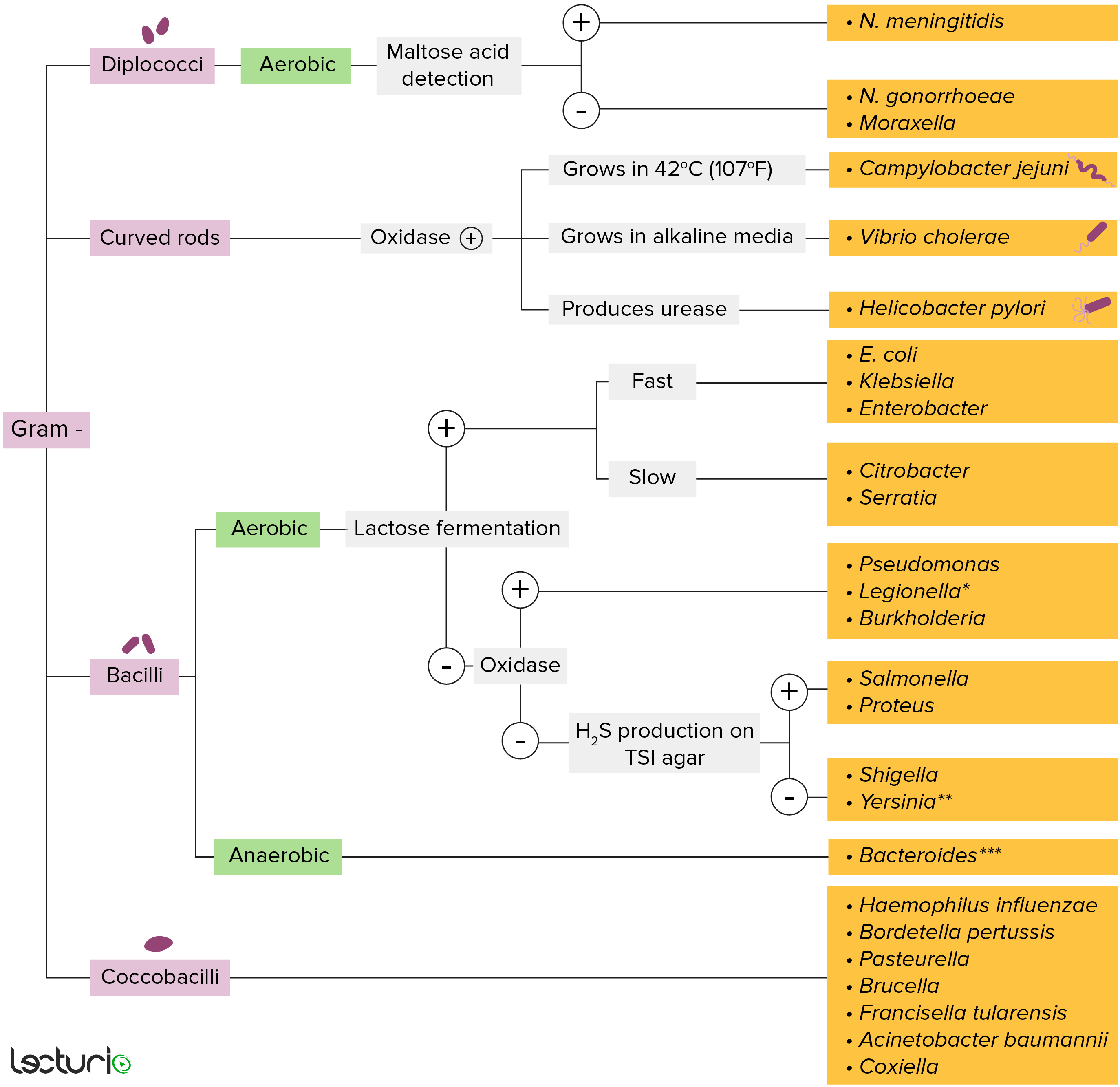
Diagrama de flujo de clasificación de bacterias gram negativas

Bacterias gram-negativas:
La mayoría de las bacterias se pueden clasificar de acuerdo a un procedimiento de laboratorio llamado tinción de Gram.
Las bacterias con paredes celulares que tienen una capa delgada de peptidoglicano no retienen la tinción de cristal violeta utilizada en la tinción de Gram. Sin embargo, estas bacterias retienen la contratinción de safranina y, por lo tanto, adoptan un color rojo-rosado en la tinción, lo que las hace gram-negativas. Estas bacterias pueden clasificarse además según su morfología (diplococos, bastones curvos, bacilos y cocobacilos) y su capacidad para crecer en presencia de oxígeno (aeróbicos versus anaeróbicos). Las bacterias se pueden identificar de manera más profunda cultivándolas en medios específicos (agar hierro triple azúcar) donde se pueden identificar sus enzimas (ureasa, oxidasa) y se puede probar su capacidad para fermentar lactosa.
* Se tiñe mal en la tinción de Gram
** Bastón/cocobacilo pleomórfico
*** Requiere medios de transporte especiales
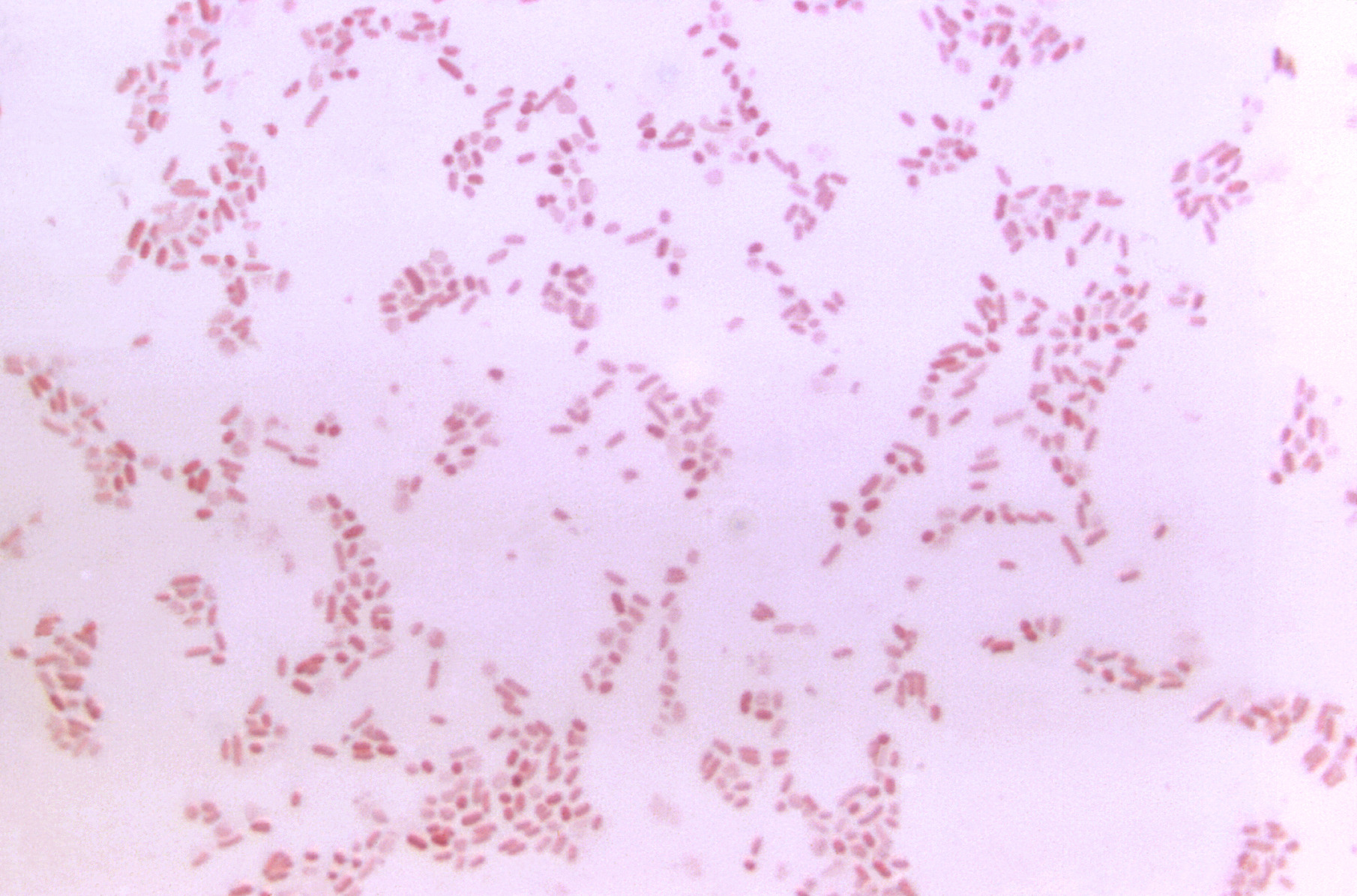
Imagen por Lecturio. Licencia: CC BY-NC-SA 4.0

Características Generales

Características básicas

  • Bacilos gram-negativos
  • Pleomórficos: lucen como bastones rectos o cocobacilos
  • 0,5–0,8 μm de diámetro y 1,5–4,5 μm de largo
  • Anaerobios, aunque toleran la exposición al AL Amyloidosis oxígeno
  • Encapsulados
  • Fermentan carbohidratos:
    • Incluidos polisacáridos vegetales complejos no digeribles para el huésped
    • Permite una relación comensal/simbiótica entre la bacteria Bacteria Bacteria are prokaryotic single-celled microorganisms that are metabolically active and divide by binary fission. Some of these organisms play a significant role in the pathogenesis of diseases. Bacteriology y el huésped
  • Parte de la flora bacteriana autóctona de las superficies mucosas, pero son patógenos oportunistas
Micrografía de Bacteroides

Micrografía de Bacteroides
La microfotografía muestra la bacteria gram-negativa Bacteroides fragilis.

Imagen: “3084” por CDC/ Dr. VR Dowell, Jr. Licencia: Dominio Público.

Factores de virulencia

  • Adherencia al AL Amyloidosis tejido del huésped:
    • Fimbrias: proyecciones largas parecidas a cabellos
    • Lipopolisacárido:
      • Débilmente endotóxico
      • El papel principal es la adherencia a las superficies mucosas
  • Protección contra la respuesta inmunitaria del huésped:
    • Superóxido dismutasa y catalasa:
      • Neutraliza los LOS Neisseria radicales de oxígeno creados por el sistema inmunológico
      • Clave para la patogénesis en EN Erythema nodosum is an immune-mediated panniculitis (inflammation of the subcutaneous fat) caused by a type IV (delayed-type) hypersensitivity reaction. It commonly manifests in young women as tender, erythematous nodules on the shins. Erythema Nodosum áreas del cuerpo que no están libres de oxígeno
    • Cápsula:
      • Protege de la fagocitosis mediada por el complemento
      • Promueve la formación de abscesos
      • Los LOS Neisseria polisacáridos de la cápsula se pueden alterar para evadir la respuesta inmunitaria del huésped.
    • Transposones conjugativos: ayuda en EN Erythema nodosum is an immune-mediated panniculitis (inflammation of the subcutaneous fat) caused by a type IV (delayed-type) hypersensitivity reaction. It commonly manifests in young women as tender, erythematous nodules on the shins. Erythema Nodosum la transferencia de genes Genes A category of nucleic acid sequences that function as units of heredity and which code for the basic instructions for the development, reproduction, and maintenance of organisms. DNA Types and Structure de resistencia a los LOS Neisseria antibióticos
  • Destrucción del tejido del huésped:
    • Hialuronidasa y condroitina sulfatasa:
      • Destruye las enzimas del borde en EN Erythema nodosum is an immune-mediated panniculitis (inflammation of the subcutaneous fat) caused by a type IV (delayed-type) hypersensitivity reaction. It commonly manifests in young women as tender, erythematous nodules on the shins. Erythema Nodosum cepillo en EN Erythema nodosum is an immune-mediated panniculitis (inflammation of the subcutaneous fat) caused by a type IV (delayed-type) hypersensitivity reaction. It commonly manifests in young women as tender, erythematous nodules on the shins. Erythema Nodosum el intestino
      • Hace HACE Altitude Sickness que sea más difícil para el huésped absorber los LOS Neisseria nutrientes
      • Más nutrientes disponibles para las bacterias
    • Enterotoxina:
      • Destruye las uniones estrechas en EN Erythema nodosum is an immune-mediated panniculitis (inflammation of the subcutaneous fat) caused by a type IV (delayed-type) hypersensitivity reaction. It commonly manifests in young women as tender, erythematous nodules on the shins. Erythema Nodosum el epitelio intestinal
      • Conduce a la diarrea
    • Neuraminidasa: escinde los LOS Neisseria polisacáridos, liberando glucosa para las bacterias

Related videos

Patogénesis

Reservorio

Transmisión e infección

La transmisión y la infección por la translocación de bacterias de las superficies mucosas a otros tejidos pueden deberse a:
  • Traumatismo cerrado
  • Enfermedad intestinal
  • Heridas penetrantes
  • Cirugía abdominal
  • Apéndice perforado
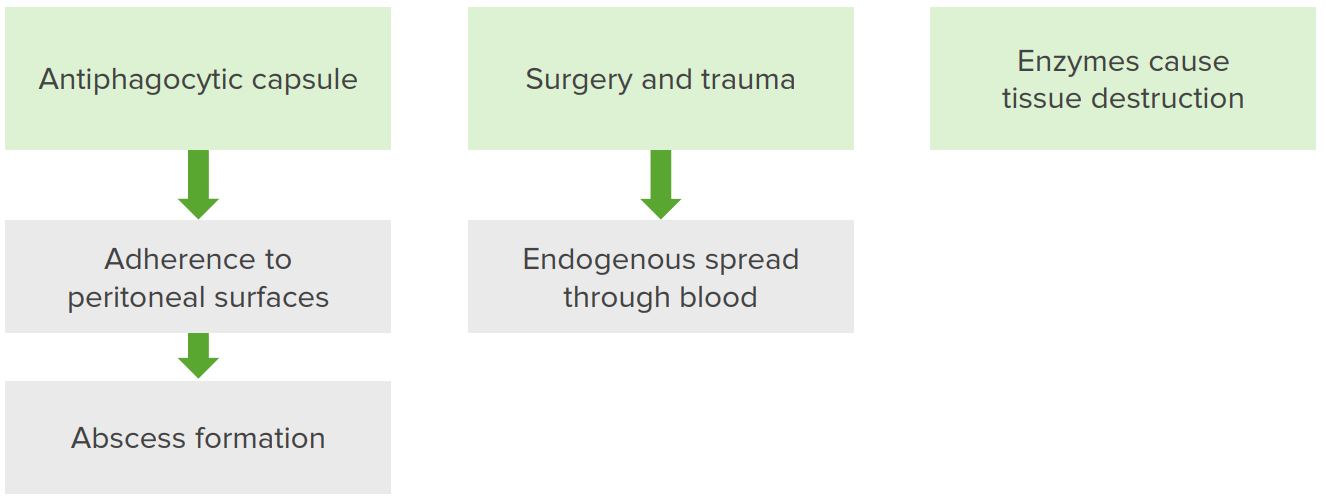
Patogenia de Bacteroides fragilis

Patogénesis de Bacteroides fragilis
El patógeno contiene una cápsula antifagocítica que se adhiere a la superficie peritoneal. Esto resulta en la formación de abscesos. La cirugía y el traumatismo acentúan el problema, ya que rompen el absceso, lo que permite la propagación endógena del organismo hacia el torrente sanguíneo. Cuando esto ocurre, el patógeno libera enzimas degradantes que destruyen las células del huésped.

Imagen por Lecturio. Licencia: CC BY-NC-SA 4.0

Enfermedades Causadas por Bacteroides fragilis

Bacteroides fragilis Bacteroides fragilis Gram-negative bacteria occurring in the lower intestinal tracts of man and other animals. It is the most common species of anaerobic bacteria isolated from human soft tissue infections. Bacteroides (B. fragilis) se encuentra naturalmente en EN Erythema nodosum is an immune-mediated panniculitis (inflammation of the subcutaneous fat) caused by a type IV (delayed-type) hypersensitivity reaction. It commonly manifests in young women as tender, erythematous nodules on the shins. Erythema Nodosum el intestino grueso como parte de la flora natural. B. fragilis es un patógeno oportunista que rara vez infecta el sistema gastrointestinal y que con mayor frecuencia causa enfermedades cuando las bacterias escapan del intestino grueso.

Afección Características Tipo de infección
Intraabdominal Infección intraabdominal
  • Forma más común de infección
  • Tiene lugar cuando la pared intestinal es afectada
  • Infección polimicrobiana
  • Suele observarse con la formación de abscesos
  • Generalmente, la causa de la perforación no es la bacteria Bacteria Bacteria are prokaryotic single-celled microorganisms that are metabolically active and divide by binary fission. Some of these organisms play a significant role in the pathogenesis of diseases. Bacteriology (puede ser una cirugía, un traumatismo o un cáncer).
Apendicitis perforada
  • Rotura espontánea del apéndice debido a una infección
  • Infección polimicrobiana
Gastrointestinal Diarrea inflamatoria
  • Vista solo con tipos de Bacteroides Bacteroides Bacteroides is a genus of opportunistic, anaerobic, gram-negative bacilli. Bacteroides fragilis is the most common species involved in human disease and is part of the normal flora of the large intestine. Bacteroides que secretan enterotoxinas
  • Destruye las uniones estrechas en EN Erythema nodosum is an immune-mediated panniculitis (inflammation of the subcutaneous fat) caused by a type IV (delayed-type) hypersensitivity reaction. It commonly manifests in young women as tender, erythematous nodules on the shins. Erythema Nodosum el epitelio intestinal
  • Conduce a la pérdida de agua en EN Erythema nodosum is an immune-mediated panniculitis (inflammation of the subcutaneous fat) caused by a type IV (delayed-type) hypersensitivity reaction. It commonly manifests in young women as tender, erythematous nodules on the shins. Erythema Nodosum las heces y diarrea
Ginecológica Infecciones pélvicas
  • Infección mucopurulenta del cuello uterino o del útero
  • Rara
  • Se observa con el absceso concomitante de la glándula de Bartholin generalmente
Abscesos ováricos y de las trompas de Falopio
  • Rara, ya que generalmente los LOS Neisseria Bacteroides Bacteroides Bacteroides is a genus of opportunistic, anaerobic, gram-negative bacilli. Bacteroides fragilis is the most common species involved in human disease and is part of the normal flora of the large intestine. Bacteroides no forman parte de la flora genitourinaria normal
Piel y tejidos blandos Infección de pie diabético
  • La mala circulación periférica y la disminución de la sensibilidad de las extremidades ponen a los LOS Neisseria pacientes con diabetes Diabetes Diabetes mellitus (DM) is a metabolic disease characterized by hyperglycemia and dysfunction of the regulation of glucose metabolism by insulin. Type 1 DM is diagnosed mostly in children and young adults as the result of autoimmune destruction of β cells in the pancreas and the resulting lack of insulin. Type 2 DM has a significant association with obesity and is characterized by insulin resistance. Diabetes Mellitus en EN Erythema nodosum is an immune-mediated panniculitis (inflammation of the subcutaneous fat) caused by a type IV (delayed-type) hypersensitivity reaction. It commonly manifests in young women as tender, erythematous nodules on the shins. Erythema Nodosum riesgo de desarrollar heridas infectadas en EN Erythema nodosum is an immune-mediated panniculitis (inflammation of the subcutaneous fat) caused by a type IV (delayed-type) hypersensitivity reaction. It commonly manifests in young women as tender, erythematous nodules on the shins. Erythema Nodosum sus pies.
  • Infecciones polimicrobianas que favorecen a los LOS Neisseria agentes anaerobios
Infecciones por mordedura de animales
  • Bacteroides Bacteroides Bacteroides is a genus of opportunistic, anaerobic, gram-negative bacilli. Bacteroides fragilis is the most common species involved in human disease and is part of the normal flora of the large intestine. Bacteroides rara vez se encuentra en EN Erythema nodosum is an immune-mediated panniculitis (inflammation of the subcutaneous fat) caused by a type IV (delayed-type) hypersensitivity reaction. It commonly manifests in young women as tender, erythematous nodules on the shins. Erythema Nodosum infecciones por mordeduras humanas, pero se ha HA Hemolytic anemia (HA) is the term given to a large group of anemias that are caused by the premature destruction/hemolysis of circulating red blood cells (RBCs). Hemolysis can occur within (intravascular hemolysis) or outside the blood vessels (extravascular hemolysis). Hemolytic Anemia visto en EN Erythema nodosum is an immune-mediated panniculitis (inflammation of the subcutaneous fat) caused by a type IV (delayed-type) hypersensitivity reaction. It commonly manifests in young women as tender, erythematous nodules on the shins. Erythema Nodosum mordeduras de perros.
Cerebral Meningitis Meningitis Meningitis is inflammation of the meninges, the protective membranes of the brain, and spinal cord. The causes of meningitis are varied, with the most common being bacterial or viral infection. The classic presentation of meningitis is a triad of fever, altered mental status, and nuchal rigidity. Meningitis y absceso cerebral
  • Raramente vista en EN Erythema nodosum is an immune-mediated panniculitis (inflammation of the subcutaneous fat) caused by a type IV (delayed-type) hypersensitivity reaction. It commonly manifests in young women as tender, erythematous nodules on the shins. Erythema Nodosum pacientes sanos
  • Comúnmente vista cuando hay una comunicación entre el cerebro y el peritoneo (i.e., una derivación ventriculoperitoneal)
Diseminada Bacteriemia
  • Diseminación del patógeno a través del torrente sanguíneo
  • Común en EN Erythema nodosum is an immune-mediated panniculitis (inflammation of the subcutaneous fat) caused by a type IV (delayed-type) hypersensitivity reaction. It commonly manifests in young women as tender, erythematous nodules on the shins. Erythema Nodosum los LOS Neisseria ancianos
  • Vista en EN Erythema nodosum is an immune-mediated panniculitis (inflammation of the subcutaneous fat) caused by a type IV (delayed-type) hypersensitivity reaction. It commonly manifests in young women as tender, erythematous nodules on the shins. Erythema Nodosum pacientes que están inmunocomprometidos y tienen una mucosa gastrointestinal comprometida
  • Rara en EN Erythema nodosum is an immune-mediated panniculitis (inflammation of the subcutaneous fat) caused by a type IV (delayed-type) hypersensitivity reaction. It commonly manifests in young women as tender, erythematous nodules on the shins. Erythema Nodosum niños

Diagnóstico y Tratamiento

Diagnóstico

  • Antecedentes:
    • Factores predisponentes:
      • Cirugía abdominal reciente
      • Traumatismo
      • Malignidad
      • Inmunocompromiso
    • Antecedentes conocidos de infecciones por Bacteroides Bacteroides Bacteroides is a genus of opportunistic, anaerobic, gram-negative bacilli. Bacteroides fragilis is the most common species involved in human disease and is part of the normal flora of the large intestine. Bacteroides
  • Examen físico:
    • Presencia de abscesos piógenos
    • El mal olor a menudo se asocia con infecciones por anaerobios.
  • Pruebas de laboratorio:
    • Se deben utilizar muestras del tejido apropiado para cultivar Bacteroides Bacteroides Bacteroides is a genus of opportunistic, anaerobic, gram-negative bacilli. Bacteroides fragilis is the most common species involved in human disease and is part of the normal flora of the large intestine. Bacteroides:
      • Hemocultivos y aspirados con aguja fina de material infeccioso
      • Requiere un ambiente anaeróbico para propagarse
    • Características del laboratorio definitorias:
      • Aislado como agente único, pero generalmente visto con otros anaerobios
      • Gram –
      • Crece en EN Erythema nodosum is an immune-mediated panniculitis (inflammation of the subcutaneous fat) caused by a type IV (delayed-type) hypersensitivity reaction. It commonly manifests in young women as tender, erythematous nodules on the shins. Erythema Nodosum agar sangre y agar Bacteroides Bacteroides Bacteroides is a genus of opportunistic, anaerobic, gram-negative bacilli. Bacteroides fragilis is the most common species involved in human disease and is part of the normal flora of the large intestine. Bacteroides-bilis-esculina
      • Resistente a kanamicina, vancomicina y colistina
      • Crece en EN Erythema nodosum is an immune-mediated panniculitis (inflammation of the subcutaneous fat) caused by a type IV (delayed-type) hypersensitivity reaction. It commonly manifests in young women as tender, erythematous nodules on the shins. Erythema Nodosum bilis al AL Amyloidosis 20%
      • Productor de catalasa
      • Variablemente indol positivo

Tratamiento

  • Prevención:
    • Antibióticos profilácticos planificados para cirugías abdominales
    • Terapia con antibióticos si se sospecha contaminación del colon Colon The large intestines constitute the last portion of the digestive system. The large intestine consists of the cecum, appendix, colon (with ascending, transverse, descending, and sigmoid segments), rectum, and anal canal. The primary function of the colon is to remove water and compact the stool prior to expulsion from the body via the rectum and anal canal. Colon, Cecum, and Appendix: Anatomy
  • Tratamiento:
    • Cuando están presentes, el drenaje de los LOS Neisseria abscesos es la principal forma de tratamiento
    • Dada la naturaleza polimicrobiana de la mayoría de las infecciones intraabdominales, la terapia con antibióticos debe dirigirse tanto a los LOS Neisseria organismos aeróbicos (p. ej., enterobacterias) como anaeróbicos (p. ej., B. fragilis):
      • El metronidazol es un antibiótico clave para las infecciones anaeróbicas, incluida la causada por B. fragilis.
      • Antibióticos efectivos incluyen: piperacilina/ tazobactam Tazobactam A penicillanic acid and sulfone derivative and potent beta-lactamase inhibitor that enhances the activity of other anti-bacterial agents against beta-lactamase producing bacteria. Cephalosporins, meropenem Meropenem A thienamycin derivative antibacterial agent that is more stable to renal dehydropeptidase I than imipenem, but does not need to be given with an enzyme inhibitor such as cilastatin. It is used in the treatment of bacterial infections, including infections in immunocompromised patients. Carbapenems and Aztreonam
      • Resistente a la penicilina debido a la producción de beta-lactamasa
      • Moxifloxacina utilizada anteriormente; ahora, la resistencia es reportada en EN Erythema nodosum is an immune-mediated panniculitis (inflammation of the subcutaneous fat) caused by a type IV (delayed-type) hypersensitivity reaction. It commonly manifests in young women as tender, erythematous nodules on the shins. Erythema Nodosum hasta el 57% de los LOS Neisseria casos

Referencias

  1. Wexler, H.M. (2007). Bacteroides: The good, the bad, and the nitty-gritty. Clinical microbiology reviews, 20(4), 593–621. https://doi.org/10.1128/CMR.00008-07
  2. Takesue, Y., Kusachi, S., et al. (2018). Antimicrobial susceptibility of common pathogens isolated from postoperative intra-abdominal infections in Japan. J Infect Chemother, 24(5), 330–340. https://doi.org/10.1016/j.jiac.2018.02.011
  3. Snydman, D.R., Jacobus, N.V., et al. (2010). Lessons learned from the anaerobe survey: Historical perspective and review of the most recent data (2005–2007). Clin Infect Dis. 50 Suppl(1), S26–33. https://doi.org/10.1086/647940
  4. Elsaghir, H., & Reddivari, A. K. R. (2023). Bacteroides Fragilis. StatPearls [Internet]. NCBI Bookshelf. Retrieved March 26, 2025, from https://www.ncbi.nlm.nih.gov/books/NBK553032/
  5. Patrick, S. (2022). A tale of two habitats: Bacteroides fragilis, a lethal pathogen and resident in the human gastrointestinal microbiome. Microbiology, 168(4). https://doi.org/10.1099/mic.0.001156

¡Crea tu cuenta gratis o inicia una sesión para seguir leyendo!

Regístrate ahora y obtén acceso gratuito a Lecturio con páginas de concepto, videos médicos y cuestionarios para tu educación médica.

User Reviews

Details