Domina Conceptos Médicos

Estudia para la escuela de medicina y tus examenes con Lecturio.

Asma en Niños

El asma ASMA Autoimmune Hepatitis es una afección inflamatoria crónica que provoca una obstrucción intermitente de las vías respiratorias, sibilancias, tos TOS Thoracic outlet syndrome (TOS) is a broad term used for a spectrum of syndromes related to the general region of the thoracic outlet, which involves the compression or irritation of elements of the brachial plexus, subclavian artery, or subclavian vein. Thoracic Outlet Syndrome y disnea. La genética y los LOS Neisseria factores ambientales desempeñan un papel importante en EN Erythema nodosum is an immune-mediated panniculitis (inflammation of the subcutaneous fat) caused by a type IV (delayed-type) hypersensitivity reaction. It commonly manifests in young women as tender, erythematous nodules on the shins. Erythema Nodosum la etiología. El diagnóstico de asma ASMA Autoimmune Hepatitis en EN Erythema nodosum is an immune-mediated panniculitis (inflammation of the subcutaneous fat) caused by a type IV (delayed-type) hypersensitivity reaction. It commonly manifests in young women as tender, erythematous nodules on the shins. Erythema Nodosum los LOS Neisseria niños suele implicar una toma cuidadosa de los LOS Neisseria antecedentes, un examen físico, pruebas de función pulmonar y estudios radiológicos para descartar otras afecciones. El objetivo es minimizar los LOS Neisseria síntomas, las exacerbaciones y la morbilidad funcional y psicológica. El tratamiento incluye el alivio clínico y la farmacoterapia a largo plazo.

Last updated: Dec 15, 2025

Editorial responsibility: Stanley Oiseth, Lindsay Jones, Evelin Maza

Introducción y Epidemiología

Definición

El asma ASMA Autoimmune Hepatitis se define como la obstrucción episódica de las vías respiratorias pulmonares resultante de una afección inflamatoria crónica.
Clasificación

  • Basada en EN Erythema nodosum is an immune-mediated panniculitis (inflammation of the subcutaneous fat) caused by a type IV (delayed-type) hypersensitivity reaction. It commonly manifests in young women as tender, erythematous nodules on the shins. Erythema Nodosum la evolución natural de la enfermedad:
    • Sibilancias recurrentes: causadas por infecciones virales; generalmente se resuelven antes de que los LOS Neisseria pacientes estén en EN Erythema nodosum is an immune-mediated panniculitis (inflammation of the subcutaneous fat) caused by a type IV (delayed-type) hypersensitivity reaction. It commonly manifests in young women as tender, erythematous nodules on the shins. Erythema Nodosum edad escolar
    • Asma ASMA Autoimmune Hepatitis crónica: asociada a alergias; generalmente persiste en EN Erythema nodosum is an immune-mediated panniculitis (inflammation of the subcutaneous fat) caused by a type IV (delayed-type) hypersensitivity reaction. It commonly manifests in young women as tender, erythematous nodules on the shins. Erythema Nodosum la adultez
    • Asma ASMA Autoimmune Hepatitis con disminución de la función pulmonar: asociada a hiperinsuflación en EN Erythema nodosum is an immune-mediated panniculitis (inflammation of the subcutaneous fat) caused by a type IV (delayed-type) hypersensitivity reaction. It commonly manifests in young women as tender, erythematous nodules on the shins. Erythema Nodosum la infancia y al AL Amyloidosis sexo masculino
  • Basada en EN Erythema nodosum is an immune-mediated panniculitis (inflammation of the subcutaneous fat) caused by a type IV (delayed-type) hypersensitivity reaction. It commonly manifests in young women as tender, erythematous nodules on the shins. Erythema Nodosum la gravedad de la enfermedad antes de iniciar tratamiento médico para el asma ASMA Autoimmune Hepatitis (véase la Tabla 1):
    • Intermitente
    • Persistente:
      • Leve
      • Moderada
      • Severa
  • Basada en EN Erythema nodosum is an immune-mediated panniculitis (inflammation of the subcutaneous fat) caused by a type IV (delayed-type) hypersensitivity reaction. It commonly manifests in young women as tender, erythematous nodules on the shins. Erythema Nodosum la respuesta al AL Amyloidosis tratamiento (véase la Tabla 2):
    • Bien controlada
    • Mal controlada
    • Muy mal controlada

Epidemiología

  • Es la enfermedad crónica más frecuente en EN Erythema nodosum is an immune-mediated panniculitis (inflammation of the subcutaneous fat) caused by a type IV (delayed-type) hypersensitivity reaction. It commonly manifests in young women as tender, erythematous nodules on the shins. Erythema Nodosum la infancia en EN Erythema nodosum is an immune-mediated panniculitis (inflammation of the subcutaneous fat) caused by a type IV (delayed-type) hypersensitivity reaction. It commonly manifests in young women as tender, erythematous nodules on the shins. Erythema Nodosum los LOS Neisseria países desarrollados
  • Prevalencia en EN Erythema nodosum is an immune-mediated panniculitis (inflammation of the subcutaneous fat) caused by a type IV (delayed-type) hypersensitivity reaction. It commonly manifests in young women as tender, erythematous nodules on the shins. Erythema Nodosum Estados Unidos (0–17 años): aproximadamente el 6,5%
  • Está entre las causas más comunes de las visitas a salas de emergencia pediátricas, hospitalizaciones y días perdidos de escuela
  • El 80% de los LOS Neisseria pacientes asmáticos presentan el inicio de la enfermedad antes de los LOS Neisseria 6 años de edad, pero solo una minoría tiene asma ASMA Autoimmune Hepatitis persistente más adelante.

Etiología y Fisiopatología

Etiología

  • El asma ASMA Autoimmune Hepatitis es causada por una combinación de factores genéticos y ambientales
  • Factores genéticos: > 100 asociaciones con genes Genes A category of nucleic acid sequences that function as units of heredity and which code for the basic instructions for the development, reproduction, and maintenance of organisms. DNA Types and Structure (sin monogenicidad)
  • Factores ambientales asociados al AL Amyloidosis asma ASMA Autoimmune Hepatitis:
    • Sibilancias recurrentes en EN Erythema nodosum is an immune-mediated panniculitis (inflammation of the subcutaneous fat) caused by a type IV (delayed-type) hypersensitivity reaction. It commonly manifests in young women as tender, erythematous nodules on the shins. Erythema Nodosum la infancia: virus Virus Viruses are infectious, obligate intracellular parasites composed of a nucleic acid core surrounded by a protein capsid. Viruses can be either naked (non-enveloped) or enveloped. The classification of viruses is complex and based on many factors, including type and structure of the nucleoid and capsid, the presence of an envelope, the replication cycle, and the host range. Virology respiratorios comunes como rinovirus, virus Virus Viruses are infectious, obligate intracellular parasites composed of a nucleic acid core surrounded by a protein capsid. Viruses can be either naked (non-enveloped) or enveloped. The classification of viruses is complex and based on many factors, including type and structure of the nucleoid and capsid, the presence of an envelope, the replication cycle, and the host range. Virology sincitial respiratorio, adenovirus Adenovirus Adenovirus (member of the family Adenoviridae) is a nonenveloped, double-stranded DNA virus. Adenovirus is transmitted in a variety of ways, and it can have various presentations based on the site of entry. Presentation can include febrile pharyngitis, conjunctivitis, acute respiratory disease, atypical pneumonia, and gastroenteritis. Adenovirus, virus Virus Viruses are infectious, obligate intracellular parasites composed of a nucleic acid core surrounded by a protein capsid. Viruses can be either naked (non-enveloped) or enveloped. The classification of viruses is complex and based on many factors, including type and structure of the nucleoid and capsid, the presence of an envelope, the replication cycle, and the host range. Virology de la influenza Influenza Influenza viruses are members of the Orthomyxoviridae family and the causative organisms of influenza, a highly contagious febrile respiratory disease. There are 3 primary influenza viruses (A, B, and C) and various subtypes, which are classified based on their virulent surface antigens, hemagglutinin (HA) and neuraminidase (NA). Influenza typically presents with a fever, myalgia, headache, and symptoms of an upper respiratory infection. Influenza Viruses/Influenza, virus Virus Viruses are infectious, obligate intracellular parasites composed of a nucleic acid core surrounded by a protein capsid. Viruses can be either naked (non-enveloped) or enveloped. The classification of viruses is complex and based on many factors, including type and structure of the nucleoid and capsid, the presence of an envelope, the replication cycle, and the host range. Virology de la parainfluenza y metapneumovirus humano
    • Los LOS Neisseria alérgenos caseros pueden iniciar la inflamación de las vías respiratorias en EN Erythema nodosum is an immune-mediated panniculitis (inflammation of the subcutaneous fat) caused by a type IV (delayed-type) hypersensitivity reaction. It commonly manifests in young women as tender, erythematous nodules on the shins. Erythema Nodosum niños susceptibles.
  • Factores de riesgo de asma ASMA Autoimmune Hepatitis persistente en EN Erythema nodosum is an immune-mediated panniculitis (inflammation of the subcutaneous fat) caused by a type IV (delayed-type) hypersensitivity reaction. It commonly manifests in young women as tender, erythematous nodules on the shins. Erythema Nodosum la infancia temprana:
    • Asma ASMA Autoimmune Hepatitis en EN Erythema nodosum is an immune-mediated panniculitis (inflammation of the subcutaneous fat) caused by a type IV (delayed-type) hypersensitivity reaction. It commonly manifests in young women as tender, erythematous nodules on the shins. Erythema Nodosum los LOS Neisseria padres
    • Alergia, incluyendo dermatitis Dermatitis Any inflammation of the skin. Atopic Dermatitis (Eczema) atópica, rinitis alérgica y alergia alimentaria
    • Infección grave de las vías respiratorias inferiores, como neumonía o bronquiolitis
    • Sibilancias (no como resultado de resfriados)
    • Sexo masculino
    • Bajo peso al AL Amyloidosis nacer
    • Tabaquismo pasivo
  • Desencadenantes del asma ASMA Autoimmune Hepatitis:
    • Alérgenos:
      • Ácaros del polvo
      • Caspa de animales
      • Mohos
      • Cucarachas
      • Polen estacional
      • Mohos estacionales
    • Contaminantes del aire:
      • Humo de tabaco ambiental
      • Ozono
      • Dióxido de nitrógeno
      • Polvo
      • Dióxido de azufre
    • Olores fuertes como los LOS Neisseria perfumes
    • Ocupacionales/de estilo de vida:
      • Granjas y graneros
      • Vapores de pintura
      • Aire frío y seco
      • Ejercicio físico
      • Estrés emocional
      • Hiperventilación
    • Afecciones comórbidas:
      • Rinitis
      • Sinusitis Sinusitis Sinusitis refers to inflammation of the mucosal lining of the paranasal sinuses. The condition usually occurs concurrently with inflammation of the nasal mucosa (rhinitis), a condition known as rhinosinusitis. Acute sinusitis is due to an upper respiratory infection caused by a viral, bacterial, or fungal agent. Sinusitis
      • Reflujo gastroesofágico
    • Medicamentos:
      • Betabloqueadores
      • Aspirina y antiinflamatorios no esteroideos

Fisiopatología

  • Las complejas interacciones entre los LOS Neisseria 2 componentes siguientes conducen a la obstrucción de las vías respiratorias:
    • Aumento del tono del músculo liso
    • Inflamación de las vías respiratorias, edema Edema Edema is a condition in which excess serous fluid accumulates in the body cavity or interstitial space of connective tissues. Edema is a symptom observed in several medical conditions. It can be categorized into 2 types, namely, peripheral (in the extremities) and internal (in an organ or body cavity). Edema y exudado con eosinófilos y otras células inflamatorias como neutrófilos, monocitos, linfocitos, mastocitos y basófilos
  • La inflamación está mediada por los LOS Neisseria linfocitos T colaboradores que producen citocinas proinflamatorias (interleucina 4 (IL-4), IL-5 e IL-13) y quimiocinas.
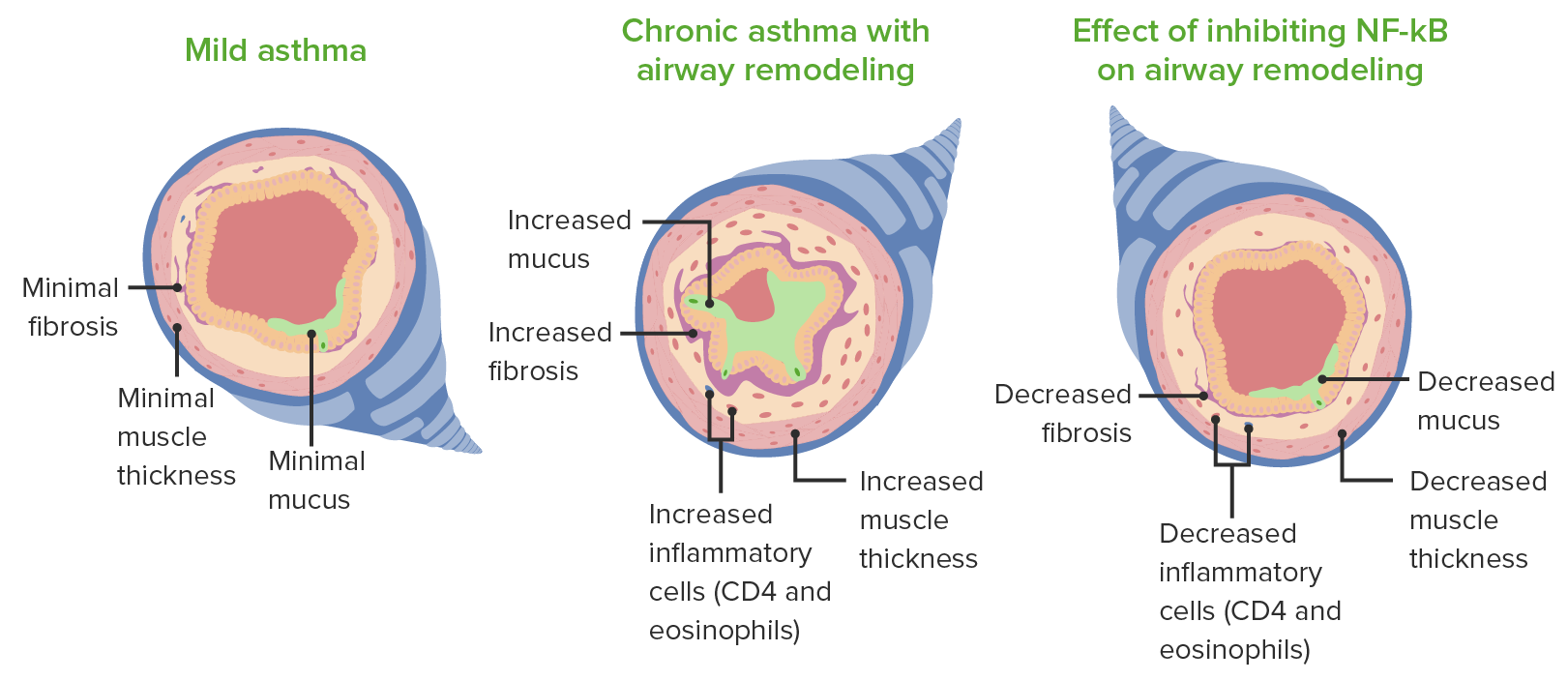
  • La exposición a los LOS Neisseria desencadenantes y la falta de una terapia adecuada inducen además una combinación de lo siguiente (véase la imagen siguiente)
    • Inflamación
    • Respuesta de hipersensibilidad de las vías respiratorias
    • Engrosamiento de la membrana basal
    • Depósito de colágeno subepitelial y fibrosis Fibrosis Any pathological condition where fibrous connective tissue invades any organ, usually as a consequence of inflammation or other injury. Bronchiolitis Obliterans
    • Hipertrofia del músculo liso
    • Hipersecreción de moco
Remodelación y cambios patológicos observados en el asma

Remodelación y cambios patológicos observados en el asma.

Imagen por Lecturio.
Presentación Clínica

Antecedentes de asma ASMA Autoimmune Hepatitis crónica

  • Síntomas más comunes: tos TOS Thoracic outlet syndrome (TOS) is a broad term used for a spectrum of syndromes related to the general region of the thoracic outlet, which involves the compression or irritation of elements of the brachial plexus, subclavian artery, or subclavian vein. Thoracic Outlet Syndrome seca intermitente y sibilancias espiratorias
  • Otros síntomas:
    • Dificultad para respirar
    • Sensación opresiva en EN Erythema nodosum is an immune-mediated panniculitis (inflammation of the subcutaneous fat) caused by a type IV (delayed-type) hypersensitivity reaction. It commonly manifests in young women as tender, erythematous nodules on the shins. Erythema Nodosum el tórax
    • Dolor Dolor Inflammation torácico
    • Restricciones de actividad autoimpuestas
    • Fatiga generalizada (posiblemente por la mala calidad del sueño)
    • Actividad física limitada
    • Empeoramiento de los LOS Neisseria síntomas por la noche o con los LOS Neisseria desencadenantes (véase arriba)
    • Mejoría de los LOS Neisseria síntomas con medicamentos para el asma ASMA Autoimmune Hepatitis
    • Dermatitis Dermatitis Any inflammation of the skin. Atopic Dermatitis (Eczema) atópica

Signos físicos durante las exacerbaciones del asma ASMA Autoimmune Hepatitis

  • Espiración prolongada con sibilancias
  • Disminución de los LOS Neisseria ruidos respiratorios periféricos
  • Pueden escucharse roncus o crepitantes ocasionales debido a un exceso de producción de moco
  • Crepitantes segmentarios + disminución de los LOS Neisseria ruidos respiratorios pueden indicar atelectasia inducida por el asma ASMA Autoimmune Hepatitis o neumonía lobar
  • Flujo espiratorio máximo en EN Erythema nodosum is an immune-mediated panniculitis (inflammation of the subcutaneous fat) caused by a type IV (delayed-type) hypersensitivity reaction. It commonly manifests in young women as tender, erythematous nodules on the shins. Erythema Nodosum casos leves a moderados > 40%–70%
  • Exacerbaciones severas:
    • Dificultad respiratoria
    • Retracciones supraesternales e intercostales y aleteo nasal
    • Sibilancias espiratorias e inspiratorias
    • Disminución marcada de los LOS Neisseria sonidos respiratorios
    • Flujo espiratorio máximo < 40%
  • Signos de paro respiratorio inminente:
    • Somnolencia o confusión
    • Movimiento toracoabdominal paradójico
    • Bradicardia
    • Ausencia de sibilancias
    • Flujo espiratorio máximo < 25% (puede no ser necesario para la evaluación)

Diagnóstico

  • El diagnóstico de asma ASMA Autoimmune Hepatitis en EN Erythema nodosum is an immune-mediated panniculitis (inflammation of the subcutaneous fat) caused by a type IV (delayed-type) hypersensitivity reaction. It commonly manifests in young women as tender, erythematous nodules on the shins. Erythema Nodosum los LOS Neisseria niños suele implicar una combinación de toma cuidadosa de los LOS Neisseria antecedentes, examen físico, pruebas de función pulmonar (generalmente factibles en EN Erythema nodosum is an immune-mediated panniculitis (inflammation of the subcutaneous fat) caused by a type IV (delayed-type) hypersensitivity reaction. It commonly manifests in young women as tender, erythematous nodules on the shins. Erythema Nodosum niños > 6 años) y estudios radiológicos para descartar otras afecciones.
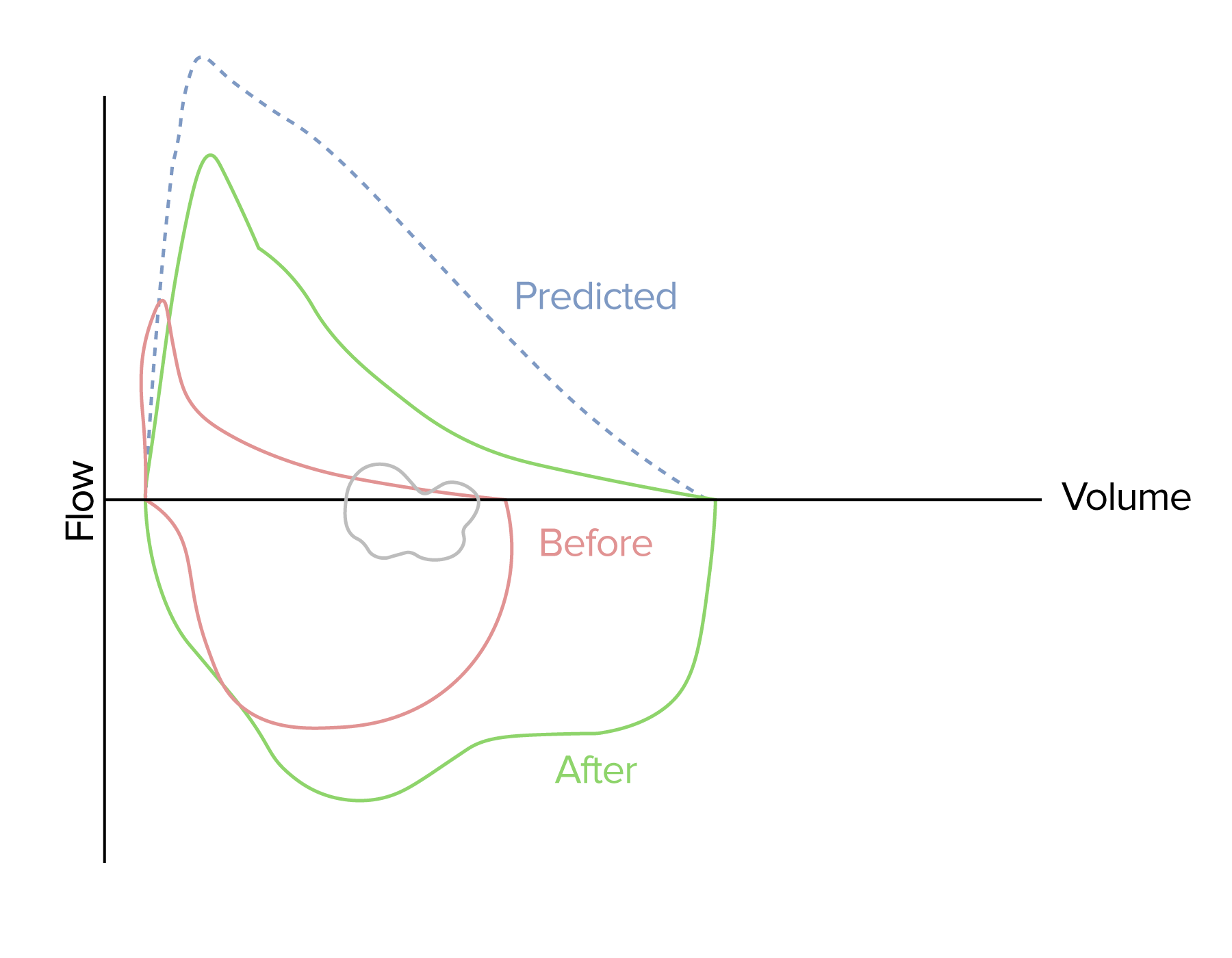
  • Hallazgos de espirometría consistentes con asma ASMA Autoimmune Hepatitis:
    • Bajo volumen espiratorio forzado en EN Erythema nodosum is an immune-mediated panniculitis (inflammation of the subcutaneous fat) caused by a type IV (delayed-type) hypersensitivity reaction. It commonly manifests in young women as tender, erythematous nodules on the shins. Erythema Nodosum 1 segundo (VEF1) en EN Erythema nodosum is an immune-mediated panniculitis (inflammation of the subcutaneous fat) caused by a type IV (delayed-type) hypersensitivity reaction. It commonly manifests in young women as tender, erythematous nodules on the shins. Erythema Nodosum relación con el valor pronosticado
    • VEF1:CVF (capacidad vital forzada) < 0,80
  • Principales criterios de laboratorio consistentes con asma ASMA Autoimmune Hepatitis:
    • Reversibilidad en EN Erythema nodosum is an immune-mediated panniculitis (inflammation of the subcutaneous fat) caused by a type IV (delayed-type) hypersensitivity reaction. It commonly manifests in young women as tender, erythematous nodules on the shins. Erythema Nodosum el VEF1 con agonistas beta inhalados en EN Erythema nodosum is an immune-mediated panniculitis (inflammation of the subcutaneous fat) caused by a type IV (delayed-type) hypersensitivity reaction. It commonly manifests in young women as tender, erythematous nodules on the shins. Erythema Nodosum ≥ 12% o ≥ 200 mL
    • Empeoramiento del VEF1 con ejercicio en EN Erythema nodosum is an immune-mediated panniculitis (inflammation of the subcutaneous fat) caused by a type IV (delayed-type) hypersensitivity reaction. It commonly manifests in young women as tender, erythematous nodules on the shins. Erythema Nodosum ≥ 15%
    • Variación del flujo máximo (véase la Imagen 3) o del VEF1 de un día a otro o de mañana a tarde en EN Erythema nodosum is an immune-mediated panniculitis (inflammation of the subcutaneous fat) caused by a type IV (delayed-type) hypersensitivity reaction. It commonly manifests in young women as tender, erythematous nodules on the shins. Erythema Nodosum ≥ 20%
  • Radiografía de tórax:
    • Típicamente normal en EN Erythema nodosum is an immune-mediated panniculitis (inflammation of the subcutaneous fat) caused by a type IV (delayed-type) hypersensitivity reaction. It commonly manifests in young women as tender, erythematous nodules on the shins. Erythema Nodosum el asma ASMA Autoimmune Hepatitis
    • Puede mostrar hiperinsuflación con aplanamiento de los LOS Neisseria diafragmas durante las exacerbaciones o el asma ASMA Autoimmune Hepatitis crónica grave
    • Ayuda a descartar otros diagnósticos como la neumonía por aspiración
    • Ayuda a investigar complicaciones como la atelectasia y el neumotórax durante las exacerbaciones del asma ASMA Autoimmune Hepatitis
  • Tomografía computarizada de tórax: delimita mejor las comorbilidades, el diagnóstico diferencial y las complicaciones
  • Pruebas de punción cutánea para la sensibilización a los LOS Neisseria alérgenos
  • Pruebas genéticas: solo para la exclusión de enfermedades pulmonares obstructivas monogénicas que podrían diagnosticarse erróneamente como asma ASMA Autoimmune Hepatitis ( fibrosis Fibrosis Any pathological condition where fibrous connective tissue invades any organ, usually as a consequence of inflammation or other injury. Bronchiolitis Obliterans quística, discinesia ciliar primaria), especialmente en EN Erythema nodosum is an immune-mediated panniculitis (inflammation of the subcutaneous fat) caused by a type IV (delayed-type) hypersensitivity reaction. It commonly manifests in young women as tender, erythematous nodules on the shins. Erythema Nodosum pacientes con bronquitis recurrente y/o tos TOS Thoracic outlet syndrome (TOS) is a broad term used for a spectrum of syndromes related to the general region of the thoracic outlet, which involves the compression or irritation of elements of the brachial plexus, subclavian artery, or subclavian vein. Thoracic Outlet Syndrome productiva crónica

Tratamiento

El objetivo del tratamiento es prevenir/minimizar los LOS Neisseria síntomas, las exacerbaciones y la morbilidad funcional y psicológica para proporcionar un estilo de vida saludable adecuado a la edad del niño.

El tratamiento del asma ASMA Autoimmune Hepatitis tiene 4 componentes:

  1. Evaluación y monitoreo continuos (inicialmente cada 2–6 semanas, posteriormente cada 1–6 meses) realizados mediante una evaluación de deterioro y riesgo:
    • Deterioro: frecuencia e intensidad de los LOS Neisseria síntomas y limitaciones funcionales resultantes
    • Riesgo: probabilidad de exacerbaciones, efectos adversos de la medicación y deterioro a largo plazo de la función pulmonar
  2. Educación para el auto-cuidado del asma ASMA Autoimmune Hepatitis (incluye el aprovechamiento de enfermeros, farmacéuticos, clínicas, escuelas, etc ETC The electron transport chain (ETC) sends electrons through a series of proteins, which generate an electrochemical proton gradient that produces energy in the form of adenosine triphosphate (ATP). Electron Transport Chain (ETC)., en EN Erythema nodosum is an immune-mediated panniculitis (inflammation of the subcutaneous fat) caused by a type IV (delayed-type) hypersensitivity reaction. It commonly manifests in young women as tender, erythematous nodules on the shins. Erythema Nodosum el proceso de educación):
    • Ayudar a los LOS Neisseria pacientes a reconocer su propio nivel de control y los LOS Neisseria signos de progresión de la enfermedad mediante la monitorización del flujo máximo y/o de los LOS Neisseria síntomas
    • Educar a los LOS Neisseria pacientes sobre el control ambiental, evitar los LOS Neisseria desencadenantes y el humo del tabaco, el uso correcto y la adherencia a los LOS Neisseria medicamentos, y la diferencia entre los LOS Neisseria medicamentos de larga duración y los LOS Neisseria de acción rápida
  3. Identificación y tratamiento de los LOS Neisseria factores agravantes y las comorbilidades:
    • Identificación de alérgenos mediante pruebas cutáneas y asesoramiento sobre estrategias de prevención
    • Las comorbilidades pueden incluir aspergilosis broncopulmonar, enfermedad por reflujo gastroesofágico, obesidad, apnea obstructiva del sueño, rinitis, sinusitis Sinusitis Sinusitis refers to inflammation of the mucosal lining of the paranasal sinuses. The condition usually occurs concurrently with inflammation of the nasal mucosa (rhinitis), a condition known as rhinosinusitis. Acute sinusitis is due to an upper respiratory infection caused by a viral, bacterial, or fungal agent. Sinusitis, depresión, estrés y niveles bajos de vitamina D.
    • Vacunación contra la influenza Influenza Influenza viruses are members of the Orthomyxoviridae family and the causative organisms of influenza, a highly contagious febrile respiratory disease. There are 3 primary influenza viruses (A, B, and C) and various subtypes, which are classified based on their virulent surface antigens, hemagglutinin (HA) and neuraminidase (NA). Influenza typically presents with a fever, myalgia, headache, and symptoms of an upper respiratory infection. Influenza Viruses/Influenza en EN Erythema nodosum is an immune-mediated panniculitis (inflammation of the subcutaneous fat) caused by a type IV (delayed-type) hypersensitivity reaction. It commonly manifests in young women as tender, erythematous nodules on the shins. Erythema Nodosum todos los LOS Neisseria niños con > 6 meses con asma ASMA Autoimmune Hepatitis
  4. Selección adecuada de los LOS Neisseria medicamentos:
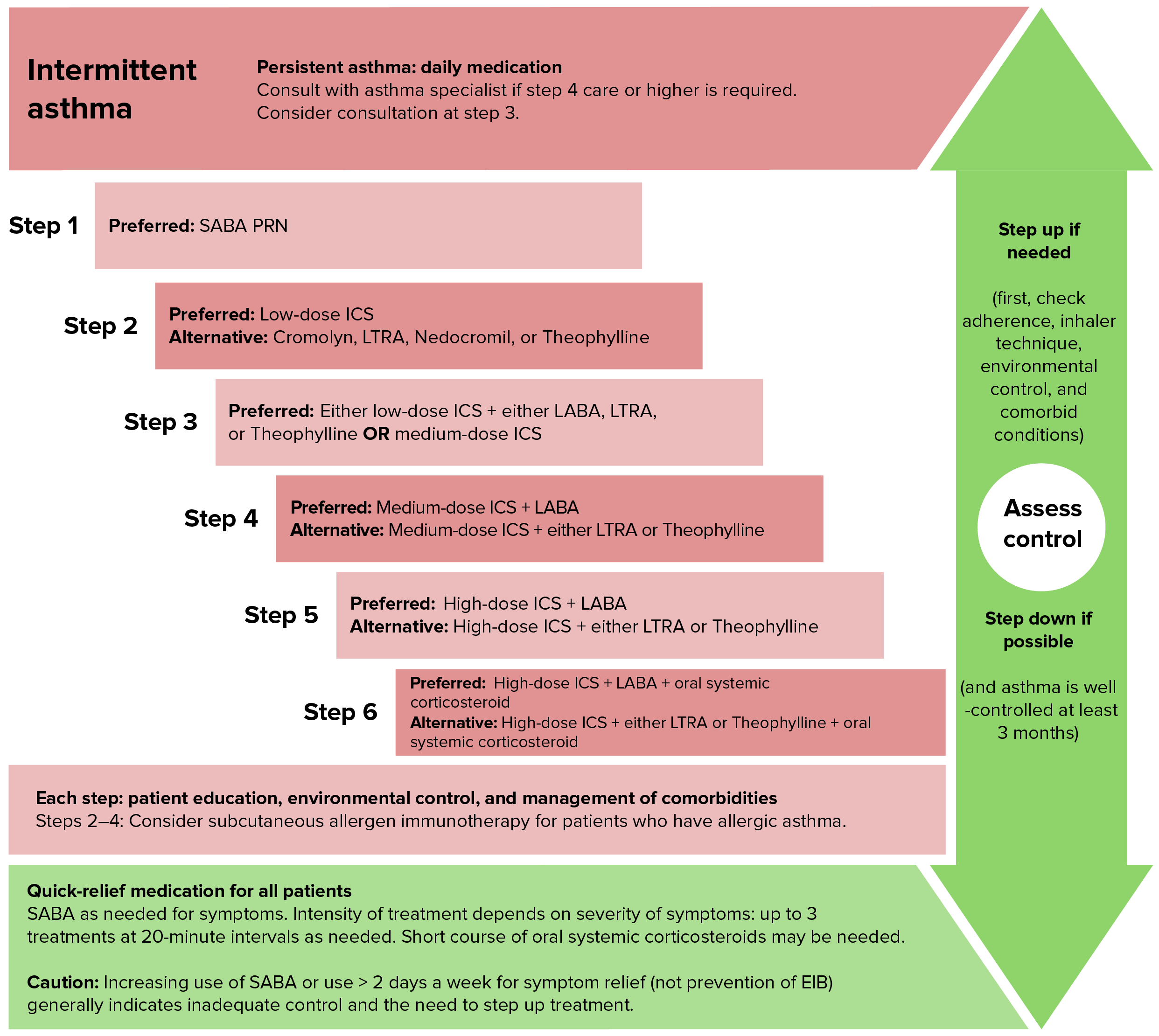
    • Se recomienda un abordaje escalonado en EN Erythema nodosum is an immune-mediated panniculitis (inflammation of the subcutaneous fat) caused by a type IV (delayed-type) hypersensitivity reaction. It commonly manifests in young women as tender, erythematous nodules on the shins. Erythema Nodosum la farmacoterapia para controlar el deterioro y el riesgo. Una vez controlado, se aplica un abordaje descendente para mantener el control en EN Erythema nodosum is an immune-mediated panniculitis (inflammation of the subcutaneous fat) caused by a type IV (delayed-type) hypersensitivity reaction. It commonly manifests in young women as tender, erythematous nodules on the shins. Erythema Nodosum la cantidad mínima de medicación (véase la Tabla 1 y la imagen de abajo).
    • Antes de cada escalón: evaluación de la adherencia, técnica adecuada de inhalación y control ambiental para evitar los LOS Neisseria desencadenantes/alérgenos
    • Los LOS Neisseria inhaladores se administran mejor con un dispositivo espaciador para maximizar la eficacia.
    • Los LOS Neisseria medicamentos para el asma ASMA Autoimmune Hepatitis se utilizan para alivio y control.
    • Medicamentos para el alivio:
      • Agonistas beta 2 de acción corta (e.g., albuterol Albuterol A short-acting beta-2 adrenergic agonist that is primarily used as a bronchodilator agent to treat asthma. Sympathomimetic Drugs)
      • Corticosteroides sistémicos
      • Antagonista muscarínico de acción corta (e.g., ipratropio)
    • Medicamentos para el control:
      • Corticosteroides inhalados
      • Agonistas beta 2 de acción prolongada (e.g., formoterol Formoterol Asthma Drugs, salmeterol Salmeterol Asthma Drugs)
      • Teofilina
      • Modificadores de leucotrienos
      • Anticuerpo anti-inmunoglobulina E ( IgE IgE An immunoglobulin associated with mast cells. Overexpression has been associated with allergic hypersensitivity. Immunoglobulins: Types and Functions) ( omalizumab Omalizumab An anti-ige, recombinant, humanized monoclonal antibody which specifically binds to the c epsilon3 domain of immunoglobulin e, the site of high-affinity ige receptor binding. It inhibits the binding of ige to mast cells and basophils to reduce the severity of the allergic response and is used in the management of persistent allergic asthma. Asthma Drugs)
      • Anticuerpos monoclonales contra la IL-5 ( mepolizumab Mepolizumab Asthma Drugs, benralizumab Benralizumab Asthma Drugs)
      • Anticuerpo monoclonal del receptor Receptor Receptors are proteins located either on the surface of or within a cell that can bind to signaling molecules known as ligands (e.g., hormones) and cause some type of response within the cell. Receptors de IL-4 alfa ( dupilumab Dupilumab Asthma Drugs)
      • Cromolín o nedocromil Nedocromil A pyranoquinolone derivative that inhibits activation of inflammatory cells which are associated with asthma, including eosinophils; neutrophils; macrophages; mast cells; monocytes; and platelets. Asthma Drugs inhalado (no disponible en EN Erythema nodosum is an immune-mediated panniculitis (inflammation of the subcutaneous fat) caused by a type IV (delayed-type) hypersensitivity reaction. It commonly manifests in young women as tender, erythematous nodules on the shins. Erythema Nodosum Estados Unidos)
Tabla 1: Clasificación del asma ASMA Autoimmune Hepatitis en EN Erythema nodosum is an immune-mediated panniculitis (inflammation of the subcutaneous fat) caused by a type IV (delayed-type) hypersensitivity reaction. It commonly manifests in young women as tender, erythematous nodules on the shins. Erythema Nodosum función de la gravedad de la enfermedad mientras no se emplean los LOS Neisseria medicamentos para el asma ASMA Autoimmune Hepatitis y la acción recomendada para el tratamiento
Componente de gravedad Clasificación de la gravedad del asma ASMA Autoimmune Hepatitis
Intermitente Persistente
Leve Moderada Severa
Síntomas ≤ 2 días/semana > 2 días/semana Diario A lo largo del día
Uso de agonistas beta 2 de acción corta ≤ 2 días/semana > 2 días/semana Diario Varias veces al AL Amyloidosis día
Despertares nocturnos ≤ 2/mes 3–4/mes ≥ 1/semana Cada noche
Limitación de la actividad Ninguna Menor Cierto grado Extrema
Función pulmonar (solo en EN Erythema nodosum is an immune-mediated panniculitis (inflammation of the subcutaneous fat) caused by a type IV (delayed-type) hypersensitivity reaction. It commonly manifests in young women as tender, erythematous nodules on the shins. Erythema Nodosum niños > 5 años)
  • VEF1 normal entre exacerbaciones
  • VEF1 ≥ 80%
  • VEF1/CVF > 85%
  • VEF1 60%–80%
  • VEF1/CVF > 80%
  • VEF1 60%–80%
  • VEF1/CVF 75%–80%
  • VEF1 < 60%
  • VEF1/CVF < 75%
Exacerbación que requiere el uso de corticosteroides orales 0–1 veces/año ≥ 2 veces/año
Acción recomendada para el tratamiento Paso 1 Paso 2 Paso 3 + dosis media de corticosteroides inhalados Paso 3 + dosis media de corticosteroides inhalados, o Paso 4 o 5
Considerar un curso corto de corticosteroides orales.
En EN Erythema nodosum is an immune-mediated panniculitis (inflammation of the subcutaneous fat) caused by a type IV (delayed-type) hypersensitivity reaction. It commonly manifests in young women as tender, erythematous nodules on the shins. Erythema Nodosum 2–6 semanas, evaluar como control y ajustar la dosis.
Tabla 2: Clasificación del control del asma ASMA Autoimmune Hepatitis
Componente de control Bien controlada Mal controlada Muy mal controlada
Síntomas ≤ 2 días/semana > 2 días/semana o varias veces en EN Erythema nodosum is an immune-mediated panniculitis (inflammation of the subcutaneous fat) caused by a type IV (delayed-type) hypersensitivity reaction. It commonly manifests in young women as tender, erythematous nodules on the shins. Erythema Nodosum ≤ 2 días/semana A lo largo del día
Uso de agonistas beta 2 de acción corta ≤ 2 días/semana > 2 días/semana o varias veces en EN Erythema nodosum is an immune-mediated panniculitis (inflammation of the subcutaneous fat) caused by a type IV (delayed-type) hypersensitivity reaction. It commonly manifests in young women as tender, erythematous nodules on the shins. Erythema Nodosum ≤ 2 días/semana Varias veces al AL Amyloidosis día
Síntomas ≤ 2 días/semana > 2 días/semana A lo largo del día
Despertares nocturnos ≤ 1/mes ≥ 2/mes ≥ 2/semana
Limitación de la actividad Ninguna Cierto grado Extrema
Función pulmonar
VEF1 > 80% 60%–80% < 60%
VEF1/CVF > 80% 75%–80% < 75%
Exacerbación que requiere el uso de corticosteroides orales 0–1/año ≥ 2/año
Manejo del asma en los niños

Abordaje de escalera ascendente en el tratamiento del asma en niños de 5–11 años. Obsérvese que en los niños no se utilizan inicialmente broncodilatadores de acción prolongada y que el objetivo es disponer de dosis más bajas de corticosteroides inhalados.

Imagen por Lecturio.

Exacerbación Aguda del Asma

Definición

La exacerbación aguda del asma ASMA Autoimmune Hepatitis es el empeoramiento progresivo agudo o subagudo de la inflamación y la obstrucción de las vías respiratorias en EN Erythema nodosum is an immune-mediated panniculitis (inflammation of the subcutaneous fat) caused by a type IV (delayed-type) hypersensitivity reaction. It commonly manifests in young women as tender, erythematous nodules on the shins. Erythema Nodosum un paciente asmático.

Características generales

  • A menudo ocurre por la noche, durante el sueño
  • La disminución/ausencia de la respuesta a los LOS Neisseria agonistas beta 2 de acción corta puede dar lugar a un círculo vicioso de derivación y mayor broncoconstricción, lo que conduce a la hipoxemia.
  • Las exacerbaciones deben ser evaluadas inmediatamente en EN Erythema nodosum is an immune-mediated panniculitis (inflammation of the subcutaneous fat) caused by a type IV (delayed-type) hypersensitivity reaction. It commonly manifests in young women as tender, erythematous nodules on the shins. Erythema Nodosum cuanto a su gravedad (véase la Tabla 3).

Tratamiento de las exacerbaciones agudas

  • En EN Erythema nodosum is an immune-mediated panniculitis (inflammation of the subcutaneous fat) caused by a type IV (delayed-type) hypersensitivity reaction. It commonly manifests in young women as tender, erythematous nodules on the shins. Erythema Nodosum casa:
    Los LOS Neisseria padres/tutores deben tener un plan de acción por escrito y actuar con prontitud para evitar un mayor empeoramiento de los LOS Neisseria síntomas:
    • Repetir agonistas beta 2 de acción corta 3 veces en EN Erythema nodosum is an immune-mediated panniculitis (inflammation of the subcutaneous fat) caused by a type IV (delayed-type) hypersensitivity reaction. It commonly manifests in young women as tender, erythematous nodules on the shins. Erythema Nodosum 1 hora (respuesta adecuada: resolución de los LOS Neisseria síntomas en EN Erythema nodosum is an immune-mediated panniculitis (inflammation of the subcutaneous fat) caused by a type IV (delayed-type) hypersensitivity reaction. It commonly manifests in young women as tender, erythematous nodules on the shins. Erythema Nodosum 1 hora y un flujo espiratorio máximo > 80%).
    • Contactar al AL Amyloidosis médico si se producen nuevas exacerbaciones en EN Erythema nodosum is an immune-mediated panniculitis (inflammation of the subcutaneous fat) caused by a type IV (delayed-type) hypersensitivity reaction. It commonly manifests in young women as tender, erythematous nodules on the shins. Erythema Nodosum las siguientes 24–48 horas.
    • Usar un curso corto de corticosteroides orales y contactar al AL Amyloidosis médico si la respuesta es parcial.
    • Llamar al AL Amyloidosis 911 si hay algún signo de síntomas graves y persistentes.
    • El uso de autoinyectores de epinefrina en EN Erythema nodosum is an immune-mediated panniculitis (inflammation of the subcutaneous fat) caused by a type IV (delayed-type) hypersensitivity reaction. It commonly manifests in young women as tender, erythematous nodules on the shins. Erythema Nodosum el domicilio y la oxigenoterapia portátil pueden estar indicados en EN Erythema nodosum is an immune-mediated panniculitis (inflammation of the subcutaneous fat) caused by a type IV (delayed-type) hypersensitivity reaction. It commonly manifests in young women as tender, erythematous nodules on the shins. Erythema Nodosum casos extremos.
  • Salas de emergencias:
    • Objetivos:
      • Corregir la hipoxemia con oxigenoterapia
      • Reversión rápida de la obstrucción del flujo aéreo con dosis repetidas de agonistas beta 2 de acción corta y uso temprano de corticosteroides sistémicos + antagonista muscarínico de acción corta (ipratropio inhalado)
      • Considerar los LOS Neisseria tratamientos complementarios, como el sulfato de magnesio intravenoso o el heliox, en EN Erythema nodosum is an immune-mediated panniculitis (inflammation of the subcutaneous fat) caused by a type IV (delayed-type) hypersensitivity reaction. It commonly manifests in young women as tender, erythematous nodules on the shins. Erythema Nodosum las exacerbaciones graves que no responden al AL Amyloidosis tratamiento.
      • Prevenir la recurrencia mediante la intensificación de la terapia ± la terapia sistémica de corticosteroides a corto plazo.
    • Requisitos para pacientes con síntomas graves persistentes y necesidades de oxígeno de alto flujo:
      • Evaluación de laboratorio con hemograma, panel metabólico completo y gasometría arterial
      • Radiografía de tórax
      • Monitoreo de la deshidratación
    • Los LOS Neisseria pacientes con cualquier signo de insuficiencia respiratoria inminente requieren intubación endotraqueal e ingreso en EN Erythema nodosum is an immune-mediated panniculitis (inflammation of the subcutaneous fat) caused by a type IV (delayed-type) hypersensitivity reaction. It commonly manifests in young women as tender, erythematous nodules on the shins. Erythema Nodosum una unidad de cuidados intensivos pediátricos.
Tabla 3: Evaluación de la gravedad — Características clínicas durante las exacerbaciones del asma ASMA Autoimmune Hepatitis en EN Erythema nodosum is an immune-mediated panniculitis (inflammation of the subcutaneous fat) caused by a type IV (delayed-type) hypersensitivity reaction. It commonly manifests in young women as tender, erythematous nodules on the shins. Erythema Nodosum función de la gravedad
Leve Moderada Severa Paro respiratorio inminente
Nivel de alerta Normal Generalmente agitado Agitado Somnoliento o confundido
Frecuencia respiratoria (respiraciones/minuto) Aumentada Aumentada > 30 Movimiento toracoabdominal paradójico o frecuencia respiratoria normal-baja
Pulso (latidos/minuto) < 100 100–120 > 120 Bradicardia
Sibilancias Solo al AL Amyloidosis final de la espiración A lo largo de la espiración Durante la inhalación y la espiración Ausentes
Relación inspiración/espiración (normalmente 2:1) Relación inspiratoria/espiratoria de 1:1 Relación inspiratoria/espiratoria de 1:2 < 1:2 N/A
Uso de musculatura accesoria Ninguno Común Presente Presente, pero en EN Erythema nodosum is an immune-mediated panniculitis (inflammation of the subcutaneous fat) caused by a type IV (delayed-type) hypersensitivity reaction. It commonly manifests in young women as tender, erythematous nodules on the shins. Erythema Nodosum disminución
Saturación de O2 > 95% 90%–95% < 90% ± cianosis < 90% ± cianosis
PCO2 (mm Hg) < 42 < 42 < 42 < 42
Flujo espiratorio máximo ≥ 70% 40%–69% 25%–39% ≤ 25%

Diagnóstico Diferencial

  • Rinosinusitis: difícil de diagnosticar en EN Erythema nodosum is an immune-mediated panniculitis (inflammation of the subcutaneous fat) caused by a type IV (delayed-type) hypersensitivity reaction. It commonly manifests in young women as tender, erythematous nodules on the shins. Erythema Nodosum niños pequeños debido a la ausencia de presión o sensibilidad localizada en EN Erythema nodosum is an immune-mediated panniculitis (inflammation of the subcutaneous fat) caused by a type IV (delayed-type) hypersensitivity reaction. It commonly manifests in young women as tender, erythematous nodules on the shins. Erythema Nodosum los LOS Neisseria senos; puede ser una afección comórbida
  • Reflujo gastroesofágico: puede presentarse con tos TOS Thoracic outlet syndrome (TOS) is a broad term used for a spectrum of syndromes related to the general region of the thoracic outlet, which involves the compression or irritation of elements of the brachial plexus, subclavian artery, or subclavian vein. Thoracic Outlet Syndrome intermitente y sibilancias; puede ser una afección comórbida
  • Niños pequeños:
    • Aspiraciones recurrentes
    • Traqueobroncomalacia
    • Aspiración de cuerpo extraño
    • Displasia broncopulmonar
    • Fibrosis Fibrosis Any pathological condition where fibrous connective tissue invades any organ, usually as a consequence of inflammation or other injury. Bronchiolitis Obliterans quística
    • Discinesia ciliar primaria
  • Niños mayores y adolescentes:
    • Disfunción de las cuerdas vocales: puede presentarse con sibilancias diurnas y estridor con tos TOS Thoracic outlet syndrome (TOS) is a broad term used for a spectrum of syndromes related to the general region of the thoracic outlet, which involves the compression or irritation of elements of the brachial plexus, subclavian artery, or subclavian vein. Thoracic Outlet Syndrome debido al AL Amyloidosis cierre involuntario de las cuerdas vocales; la espirometría y la rinolaringoscopia flexible pueden confirmar el diagnóstico
    • Neumonitis por hipersensibilidad en EN Erythema nodosum is an immune-mediated panniculitis (inflammation of the subcutaneous fat) caused by a type IV (delayed-type) hypersensitivity reaction. It commonly manifests in young women as tender, erythematous nodules on the shins. Erythema Nodosum las granjas o en EN Erythema nodosum is an immune-mediated panniculitis (inflammation of the subcutaneous fat) caused by a type IV (delayed-type) hypersensitivity reaction. It commonly manifests in young women as tender, erythematous nodules on the shins. Erythema Nodosum los LOS Neisseria hogares de los LOS Neisseria propietarios de aves
    • Las infestaciones parasitarias o la tuberculosis Tuberculosis Tuberculosis (TB) is an infectious disease caused by Mycobacterium tuberculosis complex bacteria. The bacteria usually attack the lungs but can also damage other parts of the body. Approximately 30% of people around the world are infected with this pathogen, with the majority harboring a latent infection. Tuberculosis spreads through the air when a person with active pulmonary infection coughs or sneezes. Tuberculosis son más frecuentes en EN Erythema nodosum is an immune-mediated panniculitis (inflammation of the subcutaneous fat) caused by a type IV (delayed-type) hypersensitivity reaction. It commonly manifests in young women as tender, erythematous nodules on the shins. Erythema Nodosum los LOS Neisseria países rurales en EN Erythema nodosum is an immune-mediated panniculitis (inflammation of the subcutaneous fat) caused by a type IV (delayed-type) hypersensitivity reaction. It commonly manifests in young women as tender, erythematous nodules on the shins. Erythema Nodosum desarrollo
    • Enfermedades pulmonares crónicas, muchas de las cuales pueden causar dedos en EN Erythema nodosum is an immune-mediated panniculitis (inflammation of the subcutaneous fat) caused by a type IV (delayed-type) hypersensitivity reaction. It commonly manifests in young women as tender, erythematous nodules on the shins. Erythema Nodosum palillo de tambor (ausentes en EN Erythema nodosum is an immune-mediated panniculitis (inflammation of the subcutaneous fat) caused by a type IV (delayed-type) hypersensitivity reaction. It commonly manifests in young women as tender, erythematous nodules on the shins. Erythema Nodosum el asma ASMA Autoimmune Hepatitis)

Referencias

  1. Centers for Disease Control and Prevention. (2024). Most recent asthma data. Retrieved October 10, 2025, from https://www.cdc.gov/asthma-data/about/most-recent-asthma-data.html
  2. National Asthma Education and Prevention Program. (2012). Asthma care quick reference: Diagnosing and managing asthma. U.S. Department of Health and Human Services, National Institutes of Health, National Heart, Lung, and Blood Institute. Retrieved October 10, 2025, from https://www.nhlbi.nih.gov/files/docs/guidelines/asthma_qrg.pdf
  3. Martin, J., Townshend, J., & Brodlie, M. (2022). Diagnosis and management of asthma in children. BMJ Paediatrics Open, 6(1), Article e001277. https://doi.org/10.1136/bmjpo-2021-001277. Retrieved October 10, 2025, from https://pmc.ncbi.nlm.nih.gov/articles/PMC9045042/
  4. Lizzo, J. M., Goldin, J., & Cortes, S. (2024). Pediatric asthma. In StatPearls. StatPearls Publishing. Retrieved October 10, 2025, from https://www.ncbi.nlm.nih.gov/books/NBK551631/ 
  5. Papadopoulos, N. G., Custovic, A., Deschildre, A., Mathioudakis, A. G., Phipatanakul, W., Wong, G., Xepapadaki, P., Agache, I., Bacharier, L., Bonini, S., Bush, A., Fleming, L., Grigg, J., Hamelmann, E., Ozdogan, S., Stenberg, H., Szefler, S. J., & Bachert, C. (2024). Type 2 inflammation and asthma in children: A narrative review. The Journal of Allergy and Clinical Immunology: In Practice, 12(9), 2310-2324. https://doi.org/10.1016/j.jaip.2024.06.010

¡Crea tu cuenta gratis o inicia una sesión para seguir leyendo!

Regístrate ahora y obtén acceso gratuito a Lecturio con páginas de concepto, videos médicos y cuestionarios para tu educación médica.

User Reviews

Que tengas una sesión de estudio alegre y navideña 🎁 Ahorra 50% en todos los planes >>

Details