
Domina Conceptos Médicos

Estudia para la escuela de medicina y tus examenes con Lecturio.

Antivirales para el Virus del Herpes

Los LOS Neisseria agentes antivirales contra los LOS Neisseria herpesvirus humanos (HHVs, por sus siglas en EN Erythema nodosum is an immune-mediated panniculitis (inflammation of the subcutaneous fat) caused by a type IV (delayed-type) hypersensitivity reaction. It commonly manifests in young women as tender, erythematous nodules on the shins. Erythema Nodosum inglés) incluyen aciclovir, cidofovir Cidofovir An acyclic nucleoside phosphonate that acts as a competitive inhibitor of viral DNA polymerases. It is used in the treatment of retinitis caused by cytomegalovirus infections and may also be useful for treating herpesvirus infections. Antivirals for Herpes Virus y foscarnet Foscarnet An antiviral agent used in the treatment of cytomegalovirus retinitis. Foscarnet also shows activity against human herpesviruses and HIV. Antivirals for Herpes Virus. Los LOS Neisseria herpesvirus humanos son virus Virus Viruses are infectious, obligate intracellular parasites composed of a nucleic acid core surrounded by a protein capsid. Viruses can be either naked (non-enveloped) or enveloped. The classification of viruses is complex and based on many factors, including type and structure of the nucleoid and capsid, the presence of an envelope, the replication cycle, and the host range. Virology de ADN de la familia Herpesviridae Herpesviridae A family of enveloped, linear, double-stranded DNA viruses infecting a wide variety of animals. Subfamilies, based on biological characteristics, include: alphaherpesvirinae; betaherpesvirinae; and gammaherpesvirinae. Herpes Simplex Virus 1 and 2 . El virus Virus Viruses are infectious, obligate intracellular parasites composed of a nucleic acid core surrounded by a protein capsid. Viruses can be either naked (non-enveloped) or enveloped. The classification of viruses is complex and based on many factors, including type and structure of the nucleoid and capsid, the presence of an envelope, the replication cycle, and the host range. Virology del herpes simple ( HSV HSV Herpes simplex virus (HSV) is a double-stranded DNA virus belonging to the family Herpesviridae. Herpes simplex virus commonly causes recurrent infections involving the skin and mucosal surfaces, including the mouth, lips, eyes, and genitals. Herpes Simplex Virus 1 and 2, por sus siglas en EN Erythema nodosum is an immune-mediated panniculitis (inflammation of the subcutaneous fat) caused by a type IV (delayed-type) hypersensitivity reaction. It commonly manifests in young women as tender, erythematous nodules on the shins. Erythema Nodosum inglés), el virus Virus Viruses are infectious, obligate intracellular parasites composed of a nucleic acid core surrounded by a protein capsid. Viruses can be either naked (non-enveloped) or enveloped. The classification of viruses is complex and based on many factors, including type and structure of the nucleoid and capsid, the presence of an envelope, the replication cycle, and the host range. Virology de la varicela-zoster (VZV, por sus siglas en EN Erythema nodosum is an immune-mediated panniculitis (inflammation of the subcutaneous fat) caused by a type IV (delayed-type) hypersensitivity reaction. It commonly manifests in young women as tender, erythematous nodules on the shins. Erythema Nodosum inglés), el citomegalovirus (CMV), el virus Virus Viruses are infectious, obligate intracellular parasites composed of a nucleic acid core surrounded by a protein capsid. Viruses can be either naked (non-enveloped) or enveloped. The classification of viruses is complex and based on many factors, including type and structure of the nucleoid and capsid, the presence of an envelope, the replication cycle, and the host range. Virology de Epstein-Barr ( EBV EBV Epstein-barr virus (EBV) is a linear, double-stranded DNA virus belonging to the herpesviridae family. This highly prevalent virus is mostly transmitted through contact with oropharyngeal secretions from an infected individual. The virus can infect epithelial cells and B lymphocytes, where it can undergo lytic replication or latency. Epstein-Barr Virus, por sus siglas en EN Erythema nodosum is an immune-mediated panniculitis (inflammation of the subcutaneous fat) caused by a type IV (delayed-type) hypersensitivity reaction. It commonly manifests in young women as tender, erythematous nodules on the shins. Erythema Nodosum inglés) y el herpesvirus humano tipo 8 (HHV-8, por sus siglas en EN Erythema nodosum is an immune-mediated panniculitis (inflammation of the subcutaneous fat) caused by a type IV (delayed-type) hypersensitivity reaction. It commonly manifests in young women as tender, erythematous nodules on the shins. Erythema Nodosum inglés) pertenecen a la familia Herpesviridae Herpesviridae A family of enveloped, linear, double-stranded DNA viruses infecting a wide variety of animals. Subfamilies, based on biological characteristics, include: alphaherpesvirinae; betaherpesvirinae; and gammaherpesvirinae. Herpes Simplex Virus 1 and 2. Los LOS Neisseria antivirales contra esta familia generalmente actúan mediante la inhibición de la ADN polimerasa. El aciclovir (el análogo de nucleósido prototípico) requiere quinasa viral para la fosforilación a fin de convertirse en EN Erythema nodosum is an immune-mediated panniculitis (inflammation of the subcutaneous fat) caused by a type IV (delayed-type) hypersensitivity reaction. It commonly manifests in young women as tender, erythematous nodules on the shins. Erythema Nodosum un trifosfato, que se incorpora en EN Erythema nodosum is an immune-mediated panniculitis (inflammation of the subcutaneous fat) caused by a type IV (delayed-type) hypersensitivity reaction. It commonly manifests in young women as tender, erythematous nodules on the shins. Erythema Nodosum el ADN viral. El cidofovir Cidofovir An acyclic nucleoside phosphonate that acts as a competitive inhibitor of viral DNA polymerases. It is used in the treatment of retinitis caused by cytomegalovirus infections and may also be useful for treating herpesvirus infections. Antivirals for Herpes Virus requiere la fosforilación por parte de la cinasa celular del huésped, lo que permite que el cidofovir Cidofovir An acyclic nucleoside phosphonate that acts as a competitive inhibitor of viral DNA polymerases. It is used in the treatment of retinitis caused by cytomegalovirus infections and may also be useful for treating herpesvirus infections. Antivirals for Herpes Virus tenga actividad contra los LOS Neisseria virus Virus Viruses are infectious, obligate intracellular parasites composed of a nucleic acid core surrounded by a protein capsid. Viruses can be either naked (non-enveloped) or enveloped. The classification of viruses is complex and based on many factors, including type and structure of the nucleoid and capsid, the presence of an envelope, the replication cycle, and the host range. Virology mutados y se vuelva deficiente en EN Erythema nodosum is an immune-mediated panniculitis (inflammation of the subcutaneous fat) caused by a type IV (delayed-type) hypersensitivity reaction. It commonly manifests in young women as tender, erythematous nodules on the shins. Erythema Nodosum la cinasa viral. Foscarnet Foscarnet An antiviral agent used in the treatment of cytomegalovirus retinitis. Foscarnet also shows activity against human herpesviruses and HIV. Antivirals for Herpes Virus (un análogo de pirofosfato) no requiere fosforilación. La nefrotoxicidad es un efecto secundario compartido entre los LOS Neisseria medicamentos. El aciclovir también puede causar nefropatía cristalina obstructiva y el foscarnet Foscarnet An antiviral agent used in the treatment of cytomegalovirus retinitis. Foscarnet also shows activity against human herpesviruses and HIV. Antivirals for Herpes Virus conlleva un riesgo de anomalías electrolíticas y convulsiones. El efecto nefrotóxico del cidofovir Cidofovir An acyclic nucleoside phosphonate that acts as a competitive inhibitor of viral DNA polymerases. It is used in the treatment of retinitis caused by cytomegalovirus infections and may also be useful for treating herpesvirus infections. Antivirals for Herpes Virus puede reducirse con solución salina intravenosa y probenecid Probenecid The prototypical uricosuric agent. It inhibits the renal excretion of organic anions and reduces tubular reabsorption of urate. Probenecid has also been used to treat patients with renal impairment, and, because it reduces the renal tubular excretion of other drugs, has been used as an adjunct to antibacterial therapy. Gout Drugs.

Last updated: Dec 15, 2025
Editorial responsibility: Stanley Oiseth, Lindsay Jones, Evelin Maza

Descripción General

Herpesvirus humanos

  • Virus Virus Viruses are infectious, obligate intracellular parasites composed of a nucleic acid core surrounded by a protein capsid. Viruses can be either naked (non-enveloped) or enveloped. The classification of viruses is complex and based on many factors, including type and structure of the nucleoid and capsid, the presence of an envelope, the replication cycle, and the host range. Virology de ADN (un proceso de infección similar):
    • Los LOS Neisseria virus Virus Viruses are infectious, obligate intracellular parasites composed of a nucleic acid core surrounded by a protein capsid. Viruses can be either naked (non-enveloped) or enveloped. The classification of viruses is complex and based on many factors, including type and structure of the nucleoid and capsid, the presence of an envelope, the replication cycle, and the host range. Virology entran en EN Erythema nodosum is an immune-mediated panniculitis (inflammation of the subcutaneous fat) caused by a type IV (delayed-type) hypersensitivity reaction. It commonly manifests in young women as tender, erythematous nodules on the shins. Erythema Nodosum el núcleo de la célula huésped.
    • El ADN viral se transcribe en EN Erythema nodosum is an immune-mediated panniculitis (inflammation of the subcutaneous fat) caused by a type IV (delayed-type) hypersensitivity reaction. It commonly manifests in young women as tender, erythematous nodules on the shins. Erythema Nodosum ARNm a través de la polimerasa de la célula huésped.
    • Posteriormente, el ARNm se traduce en EN Erythema nodosum is an immune-mediated panniculitis (inflammation of the subcutaneous fat) caused by a type IV (delayed-type) hypersensitivity reaction. It commonly manifests in young women as tender, erythematous nodules on the shins. Erythema Nodosum proteínas específicas del virus Virus Viruses are infectious, obligate intracellular parasites composed of a nucleic acid core surrounded by a protein capsid. Viruses can be either naked (non-enveloped) or enveloped. The classification of viruses is complex and based on many factors, including type and structure of the nucleoid and capsid, the presence of an envelope, the replication cycle, and the host range. Virology.
  • Familia Herpesviridae Herpesviridae A family of enveloped, linear, double-stranded DNA viruses infecting a wide variety of animals. Subfamilies, based on biological characteristics, include: alphaherpesvirinae; betaherpesvirinae; and gammaherpesvirinae. Herpes Simplex Virus 1 and 2 :
    • Subfamilia: Alphaherpesvirinae Alphaherpesvirinae A subfamily of herpesviridae characterized by a short replication cycle. The genera include: simplexvirus; varicellovirus; marek’s disease-like viruses; and iltovirus. Antivirals for Herpes Virus :
      • Virus Virus Viruses are infectious, obligate intracellular parasites composed of a nucleic acid core surrounded by a protein capsid. Viruses can be either naked (non-enveloped) or enveloped. The classification of viruses is complex and based on many factors, including type and structure of the nucleoid and capsid, the presence of an envelope, the replication cycle, and the host range. Virology herpes simple HSV-1 y HSV-2 (lesiones mucocutáneas y genitales)
      • Virus Virus Viruses are infectious, obligate intracellular parasites composed of a nucleic acid core surrounded by a protein capsid. Viruses can be either naked (non-enveloped) or enveloped. The classification of viruses is complex and based on many factors, including type and structure of the nucleoid and capsid, the presence of an envelope, the replication cycle, and the host range. Virology de la varicela-zoster (VZV) (varicela)
    • Subfamilia: Betaherpesvirinae Betaherpesvirinae A subfamily of herpesviridae characterized by a relatively long replication cycle. Genera include: cytomegalovirus; muromegalovirus; and roseolovirus. Cytomegalovirus :
      • Citomegalovirus (CMV)
      • HHV-6 HHV-6 Human herpesvirus (HHV)-6 and HHV-7 are similar double-stranded DNA viruses belonging to the Herpesviridae family. Human herpesviruses are ubiquitous and infections are commonly contracted during childhood. Human Herpesvirus 6 and 7 y HHV-7 HHV-7 Human herpesvirus (HHV)-6 and HHV-7 are similar double-stranded DNA viruses belonging to the Herpesviridae family. Human herpesviruses are ubiquitous and infections are commonly contracted during childhood. Human Herpesvirus 6 and 7 (roséola)
    • Subfamilia: Gammaherpesvirinae Gammaherpesvirinae A subfamily of herpesviridae characterized by variable reproductive cycles. The genera include: lymphocryptovirus and rhadinovirus. Epstein-Barr Virus :
      • Virus Virus Viruses are infectious, obligate intracellular parasites composed of a nucleic acid core surrounded by a protein capsid. Viruses can be either naked (non-enveloped) or enveloped. The classification of viruses is complex and based on many factors, including type and structure of the nucleoid and capsid, the presence of an envelope, the replication cycle, and the host range. Virology de Epstein-Barr ( EBV EBV Epstein-barr virus (EBV) is a linear, double-stranded DNA virus belonging to the herpesviridae family. This highly prevalent virus is mostly transmitted through contact with oropharyngeal secretions from an infected individual. The virus can infect epithelial cells and B lymphocytes, where it can undergo lytic replication or latency. Epstein-Barr Virus) (HHV-4; linfoma de Burkitt y mononucleosis Mononucleosis Infectious mononucleosis (IM), also known as “the kissing disease,” is a highly contagious viral infection caused by the Epstein-Barr virus. Its common name is derived from its main method of transmission: the spread of infected saliva via kissing. Clinical manifestations of IM include fever, tonsillar pharyngitis, and lymphadenopathy. Mononucleosis infecciosa)
      • HHV-8 (sarcoma de Kaposi Kaposi A multicentric, malignant neoplastic vascular proliferation characterized by the development of bluish-red cutaneous nodules, usually on the lower extremities, most often on the toes or feet, and slowly increasing in size and number and spreading to more proximal areas. The tumors have endothelium-lined channels and vascular spaces admixed with variably sized aggregates of spindle-shaped cells, and often remain confined to the skin and subcutaneous tissue, but widespread visceral involvement may occur. Hhv-8 is the suspected cause. There is also a high incidence in AIDS patients. AIDS-defining Conditions)

Medicamentos antiherpéticos

  • Síntesis de ácido nucleico viral diana mediante la inhibición de la ADN polimerasa
  • Grupos de medicamentos:
    • Análogos de nucleósidos:
    • Análogo de nucleótido de citidina: cidofovir Cidofovir An acyclic nucleoside phosphonate that acts as a competitive inhibitor of viral DNA polymerases. It is used in the treatment of retinitis caused by cytomegalovirus infections and may also be useful for treating herpesvirus infections. Antivirals for Herpes Virus
    • Análogo de pirofosfato: foscarnet Foscarnet An antiviral agent used in the treatment of cytomegalovirus retinitis. Foscarnet also shows activity against human herpesviruses and HIV. Antivirals for Herpes Virus
Antivirales para Herpesvirus

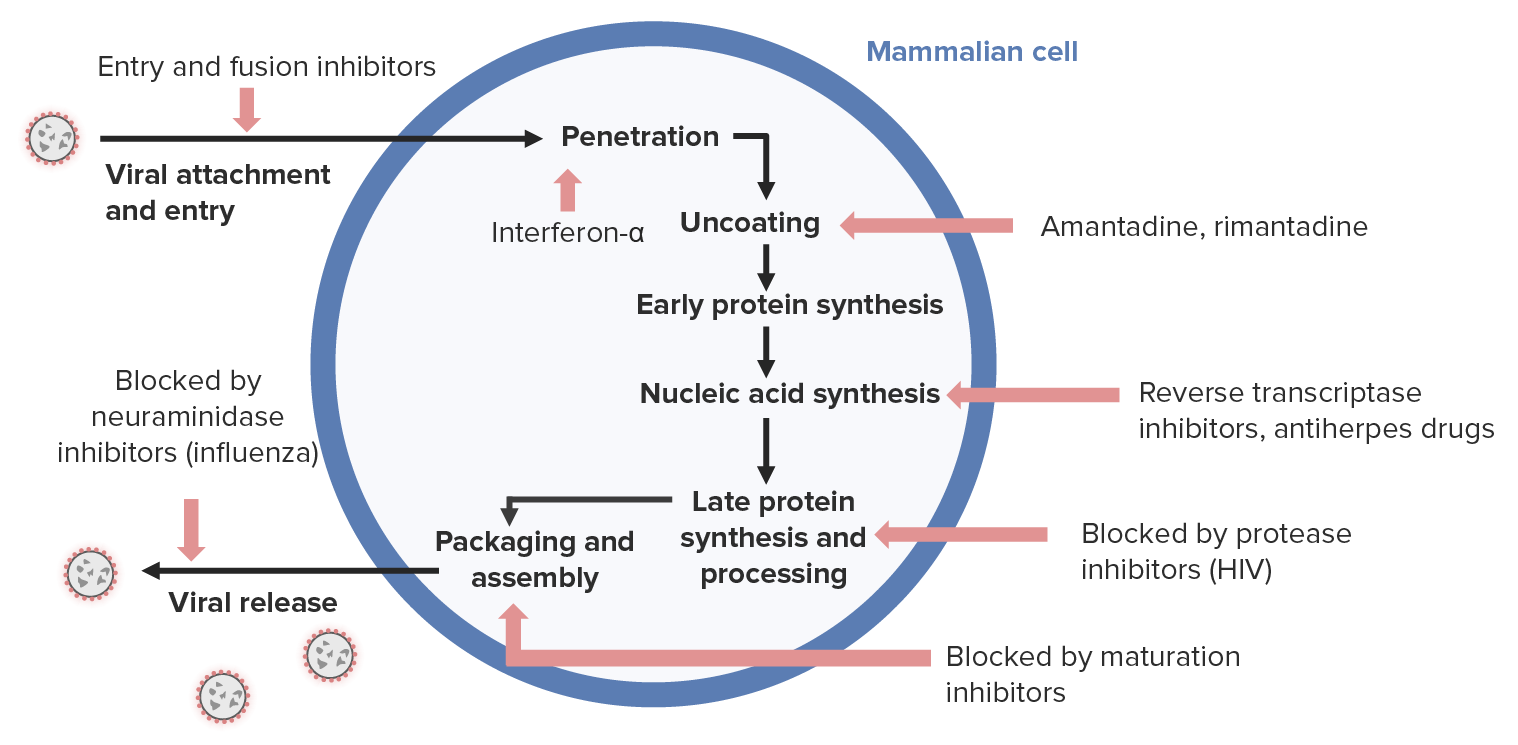
Mecanismo de acción de medicamentos antivirales:
Los antivirales para los herpesvirus (lado derecho) generalmente inhiben la síntesis de ácidos nucleicos.
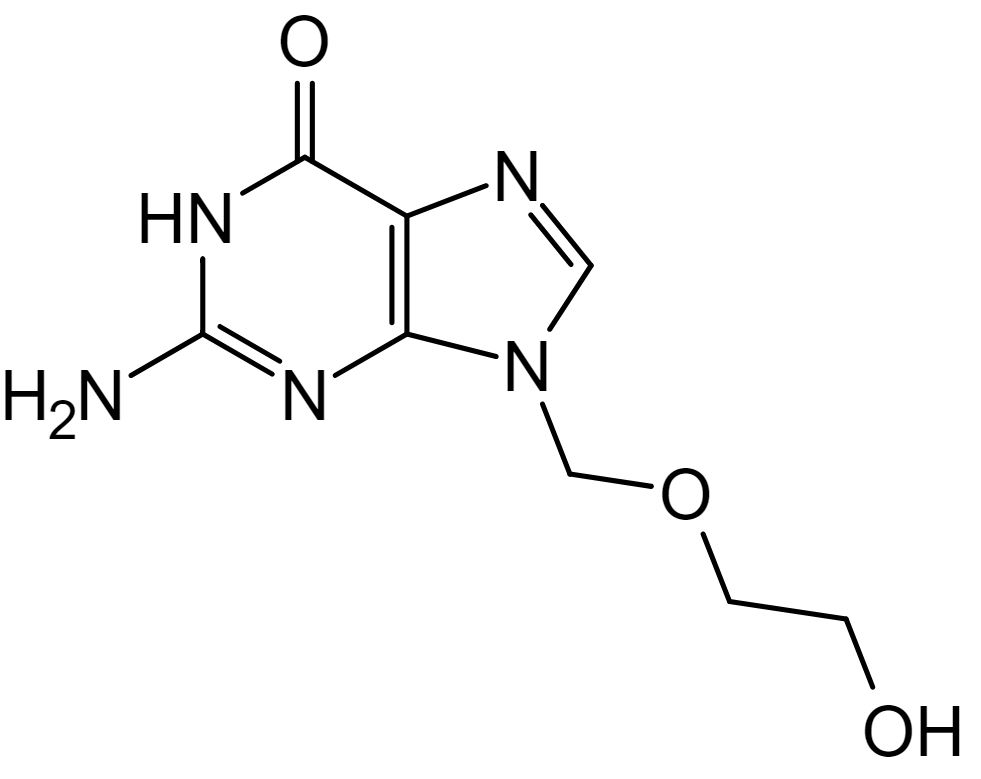
Imagen por Lecturio.

Análogos de Nucleósidos

Estructura química

  • Aciclovir: un análogo de nucleósido de guanosina acíclico (medicamento prototípico del grupo)
  • ​​Valaciclovir: Éster L-valil del profármaco aciclovir
  • Penciclovir Penciclovir Antivirals for Herpes Virus , famciclovir Famciclovir An aminopurine derivative and prodrug of penciclovir which is a competitive inhibitor of herpes simplex 2 DNA polymerase. It is used to treat herpes simplex virus infection. Antivirals for Herpes Virus y ganciclovir Ganciclovir An acyclovir analog that is a potent inhibitor of the herpesvirus family including cytomegalovirus. Ganciclovir is used to treat complications from aids-associated cytomegalovirus infections. Antivirals for Herpes Virus son medicamentos relacionados.

Farmacodinamia

Aciclovir:

  • La fosforilación secuencial de la cinasa viral (e.g., dependiente de la timidina cinasa) del huésped convierten el medicamento en EN Erythema nodosum is an immune-mediated panniculitis (inflammation of the subcutaneous fat) caused by a type IV (delayed-type) hypersensitivity reaction. It commonly manifests in young women as tender, erythematous nodules on the shins. Erythema Nodosum un resto monofosfato y luego en EN Erythema nodosum is an immune-mediated panniculitis (inflammation of the subcutaneous fat) caused by a type IV (delayed-type) hypersensitivity reaction. It commonly manifests in young women as tender, erythematous nodules on the shins. Erythema Nodosum trifosfato.
  • Dado que el paso inicial requiere de una quinasa viral, solo las células infectadas se ven afectadas
  • Estos pasos permiten que el medicamento se convierta en EN Erythema nodosum is an immune-mediated panniculitis (inflammation of the subcutaneous fat) caused by a type IV (delayed-type) hypersensitivity reaction. It commonly manifests in young women as tender, erythematous nodules on the shins. Erythema Nodosum un inhibidor de trifosfato de la ADN polimerasa.
  • Inhibe la síntesis de ADN viral:
    • El trifosfato compite con el trifosfato de desoxiguanosina por la ADN polimerasa viral
    • El trifosfato se incorpora al AL Amyloidosis ADN viral
    • La terminación de la cadena se produce debido a la falta de un grupo 3′-hidroxilo y evita la unión de los LOS Neisseria nucleósidos
  • Mecanismo de resistencia:
    • Cambio en EN Erythema nodosum is an immune-mediated panniculitis (inflammation of the subcutaneous fat) caused by a type IV (delayed-type) hypersensitivity reaction. It commonly manifests in young women as tender, erythematous nodules on the shins. Erythema Nodosum la ADN polimerasa viral
    • Ausencia o deterioro de timidina cinasa (causada por mutaciones virales)
Pharmacodynamics

Mecanismo de acción del aciclovir:
1) El aciclovir sufre una fosforilación secuencial, facilitada por la timidina quinasa del herpesvirus y las quinasas del huésped. Dado que la timidina quinasa viral es necesaria para la fosforilación del aciclovir, solo las células infectadas por el virus se ven afectadas por el medicamento.
2) Las enzimas del huésped convierten el monofosfato en trifosfato de aciclovir, que posteriormente compite con el trifosfato de desguanosina (dGTP) por la ADN polimerasa viral.
3) El aciclovir se añade a la hebra en crecimiento durante la replicación viral en lugar del guanosintrifosfato (GTP), lo que detiene la replicación viral al detener la elongación de la molécula de ADN.

Imagen por Lecturio.

Farmacocinética

  • Absorción:
    • Aciclovir:
      • Disponible de forma oral, intravenosa y tópica
      • Mala biodisponibilidad oral (10%–30%)
    • Valaciclovir: mayor biodisponibilidad
    • Penciclovir Penciclovir Antivirals for Herpes Virus: tópico
  • Distribución:
    • Alta tasa de distribución (incluyendo LCR)
    • Buena penetración de tejidos y fluidos
    • Se requieren múltiples dosis por día debido a la corta vida media
  • Metabolismo: mínimamente metabolizado (> 80% excretado sin cambios)
  • Excreción:
    • Renal a través de filtración glomerular y la secreción tubular
    • Es necesario modificar la dosis en EN Erythema nodosum is an immune-mediated panniculitis (inflammation of the subcutaneous fat) caused by a type IV (delayed-type) hypersensitivity reaction. It commonly manifests in young women as tender, erythematous nodules on the shins. Erythema Nodosum caso de insuficiencia renal
    • La vida media de eliminación varía entre 2 y 4 horas

Indicaciones

Aciclovir (y otros medicamentos relacionados):

  • HSV HSV Herpes simplex virus (HSV) is a double-stranded DNA virus belonging to the family Herpesviridae. Herpes simplex virus commonly causes recurrent infections involving the skin and mucosal surfaces, including the mouth, lips, eyes, and genitals. Herpes Simplex Virus 1 and 2
  • VZV
  • Prevención de los LOS Neisseria virus Virus Viruses are infectious, obligate intracellular parasites composed of a nucleic acid core surrounded by a protein capsid. Viruses can be either naked (non-enveloped) or enveloped. The classification of viruses is complex and based on many factors, including type and structure of the nucleoid and capsid, the presence of an envelope, the replication cycle, and the host range. Virology del herpes en EN Erythema nodosum is an immune-mediated panniculitis (inflammation of the subcutaneous fat) caused by a type IV (delayed-type) hypersensitivity reaction. It commonly manifests in young women as tender, erythematous nodules on the shins. Erythema Nodosum pacientes inmunodeprimidos
  • Usos fuera de indicación: Parálisis de Bell y prevención de CMV en EN Erythema nodosum is an immune-mediated panniculitis (inflammation of the subcutaneous fat) caused by a type IV (delayed-type) hypersensitivity reaction. It commonly manifests in young women as tender, erythematous nodules on the shins. Erythema Nodosum pacientes con trasplante de células madre hematopoyéticas de bajo riesgo

Eventos secundarios y contraindicaciones

Aciclovir:

  • Eventos secundarios notables:
    • Lesión renal aguda:
      • Uropatía obstructiva (formación de cristales de aciclovir)
      • Nefritis intersticial
    • Neurotoxicidad:
      • Confusión, agitación y alucinaciones
      • Mioclonía y temblor
    • Púrpura trombocitopénica trombótica y síndrome urémico hemolítico
  • Contraindicaciones: hipersensibilidad al AL Amyloidosis aciclovir

Comparación de los LOS Neisseria análogos de nucleósidos

Tabla: Comparación de los LOS Neisseria análogos de nucleósidos contra los LOS Neisseria herpesvirus
Medicamento Características y mecanismo de acción Farmacocinética Indicación aprobada Efectos secundarios de los LOS Neisseria medicamentos
Aciclovir
  • Análogo de nucleósido
  • Inhibidor de la polimerasa
Mala biodisponibilidad oral
  • Virus Virus Viruses are infectious, obligate intracellular parasites composed of a nucleic acid core surrounded by a protein capsid. Viruses can be either naked (non-enveloped) or enveloped. The classification of viruses is complex and based on many factors, including type and structure of the nucleoid and capsid, the presence of an envelope, the replication cycle, and the host range. Virology del herpes simple ( HSV HSV Herpes simplex virus (HSV) is a double-stranded DNA virus belonging to the family Herpesviridae. Herpes simplex virus commonly causes recurrent infections involving the skin and mucosal surfaces, including the mouth, lips, eyes, and genitals. Herpes Simplex Virus 1 and 2)-1
  • HSV-2
  • Virus Virus Viruses are infectious, obligate intracellular parasites composed of a nucleic acid core surrounded by a protein capsid. Viruses can be either naked (non-enveloped) or enveloped. The classification of viruses is complex and based on many factors, including type and structure of the nucleoid and capsid, the presence of an envelope, the replication cycle, and the host range. Virology de la varicela zóster (VZV)
  • Lesión renal aguda
  • Neurotoxicidad
  • Microangiopatía trombótica
Valaciclovir
  • Análogo de nucleósido
  • Profármaco del aciclovir
  • Inhibidor de la polimerasa
Buena biodisponibilidad oral
Penciclovir Penciclovir Antivirals for Herpes Virus
  • Análogo de nucleósido
  • Inhibidor de la polimerasa con un grupo 3′-hidroxilo (no es obligadamente un finalizador de cadena)
Tópica HSV HSV Herpes simplex virus (HSV) is a double-stranded DNA virus belonging to the family Herpesviridae. Herpes simplex virus commonly causes recurrent infections involving the skin and mucosal surfaces, including the mouth, lips, eyes, and genitals. Herpes Simplex Virus 1 and 2 (herpes labial) Efectos secundarios leves
Famciclovir Famciclovir An aminopurine derivative and prodrug of penciclovir which is a competitive inhibitor of herpes simplex 2 DNA polymerase. It is used to treat herpes simplex virus infection. Antivirals for Herpes Virus Mejor biodisponibilidad oral que penciclovir Penciclovir Antivirals for Herpes Virus
  • HSV HSV Herpes simplex virus (HSV) is a double-stranded DNA virus belonging to the family Herpesviridae. Herpes simplex virus commonly causes recurrent infections involving the skin and mucosal surfaces, including the mouth, lips, eyes, and genitals. Herpes Simplex Virus 1 and 2
  • Herpes zóster
  • Cefalea
  • Náuseas, diarrea
Ganciclovir Ganciclovir An acyclovir analog that is a potent inhibitor of the herpesvirus family including cytomegalovirus. Ganciclovir is used to treat complications from aids-associated cytomegalovirus infections. Antivirals for Herpes Virus
  • Análogo de nucleósido
  • Fosforilación catalizada por la proteína quinasa fosfotransferasa UL97 del virus Virus Viruses are infectious, obligate intracellular parasites composed of a nucleic acid core surrounded by a protein capsid. Viruses can be either naked (non-enveloped) or enveloped. The classification of viruses is complex and based on many factors, including type and structure of the nucleoid and capsid, the presence of an envelope, the replication cycle, and the host range. Virology
  • Inhibidor de la polimerasa
  • Intravenosa
  • Mala biodisponibilidad oral
Infecciones por citomegalovirus (CMV)
  • Toxicidad hematológica (↓ plaquetas, leucopenia)
  • Nefrotoxicidad
  • En EN Erythema nodosum is an immune-mediated panniculitis (inflammation of the subcutaneous fat) caused by a type IV (delayed-type) hypersensitivity reaction. It commonly manifests in young women as tender, erythematous nodules on the shins. Erythema Nodosum estudios con animales, se asocia con defectos de nacimiento, ↓ espermatogénesis y carcinogénesis
Valganciclovir
  • Análogo de nucleósido
  • Fosforilación catalizada por la proteína quinasa fosfotransferasa UL97 del virus Virus Viruses are infectious, obligate intracellular parasites composed of a nucleic acid core surrounded by a protein capsid. Viruses can be either naked (non-enveloped) or enveloped. The classification of viruses is complex and based on many factors, including type and structure of the nucleoid and capsid, the presence of an envelope, the replication cycle, and the host range. Virology
  • Profármaco del ganciclovir Ganciclovir An acyclovir analog that is a potent inhibitor of the herpesvirus family including cytomegalovirus. Ganciclovir is used to treat complications from aids-associated cytomegalovirus infections. Antivirals for Herpes Virus
  • inhibidor de la polimerasa
Mejor biodisponibilidad oral que ganciclovir Ganciclovir An acyclovir analog that is a potent inhibitor of the herpesvirus family including cytomegalovirus. Ganciclovir is used to treat complications from aids-associated cytomegalovirus infections. Antivirals for Herpes Virus

Cidofovir

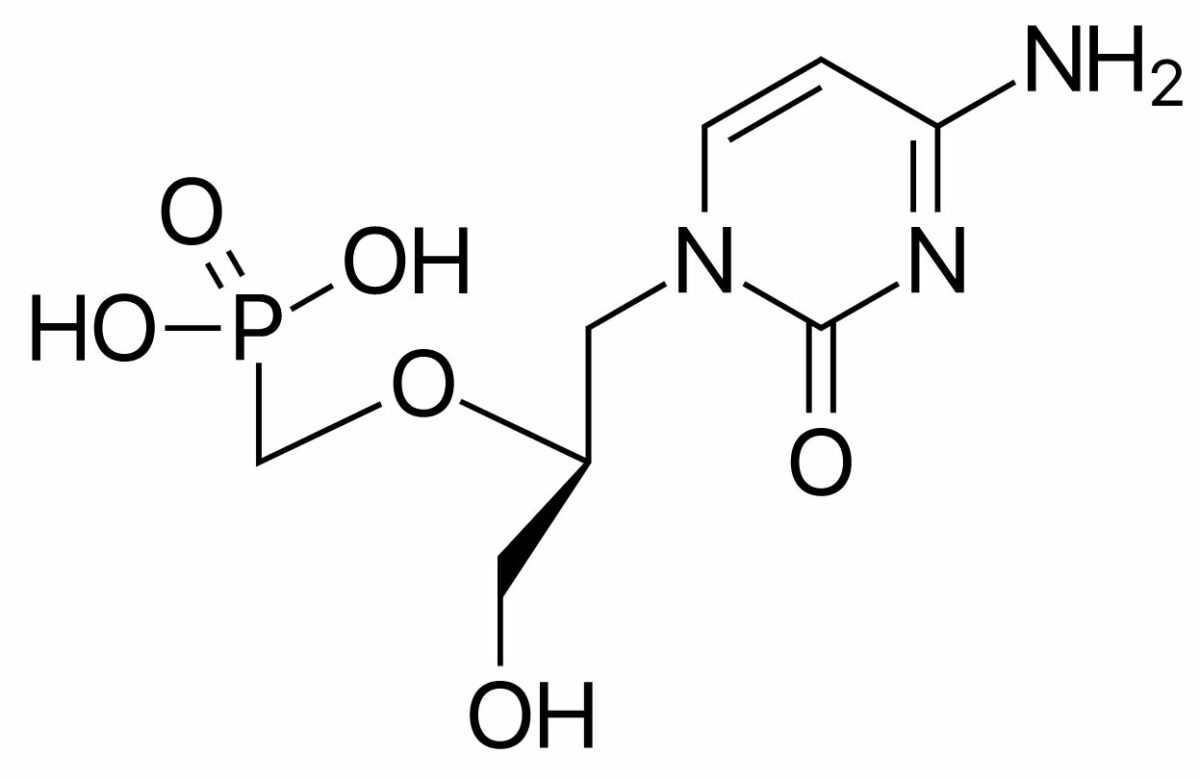
Estructura química

El cidofovir Cidofovir An acyclic nucleoside phosphonate that acts as a competitive inhibitor of viral DNA polymerases. It is used in the treatment of retinitis caused by cytomegalovirus infections and may also be useful for treating herpesvirus infections. Antivirals for Herpes Virus es un análogo de nucleótido de citidina.
Farmacodinamia

  • Se dirige a la replicación viral al AL Amyloidosis inhibir la ADN polimerasa viral:
    • A diferencia de los LOS Neisseria análogos de nucleósidos, el cidofovir Cidofovir An acyclic nucleoside phosphonate that acts as a competitive inhibitor of viral DNA polymerases. It is used in the treatment of retinitis caused by cytomegalovirus infections and may also be useful for treating herpesvirus infections. Antivirals for Herpes Virus es fosforilado por enzimas celulares (quinasas del huésped), no virales.
    • Compite con el trifosfato de desoxicitidina para su incorporación al AL Amyloidosis ADN viral mediante la ADN polimerasa viral.
    • La interrupción del alargamiento adicional de la cadena se produce cuando se incorpora el medicamento
  • El cidofovir Cidofovir An acyclic nucleoside phosphonate that acts as a competitive inhibitor of viral DNA polymerases. It is used in the treatment of retinitis caused by cytomegalovirus infections and may also be useful for treating herpesvirus infections. Antivirals for Herpes Virus tiene actividad contra virus Virus Viruses are infectious, obligate intracellular parasites composed of a nucleic acid core surrounded by a protein capsid. Viruses can be either naked (non-enveloped) or enveloped. The classification of viruses is complex and based on many factors, including type and structure of the nucleoid and capsid, the presence of an envelope, the replication cycle, and the host range. Virology deficientes en EN Erythema nodosum is an immune-mediated panniculitis (inflammation of the subcutaneous fat) caused by a type IV (delayed-type) hypersensitivity reaction. It commonly manifests in young women as tender, erythematous nodules on the shins. Erythema Nodosum timidina quinasa o alterados porque no se requieren enzimas virales.
  • Mecanismo de resistencia: mutación en EN Erythema nodosum is an immune-mediated panniculitis (inflammation of the subcutaneous fat) caused by a type IV (delayed-type) hypersensitivity reaction. It commonly manifests in young women as tender, erythematous nodules on the shins. Erythema Nodosum la ADN polimerasa viral

Farmacocinética

  • Absorción:
    • Administración intravenosa
    • Baja biodisponibilidad oral
  • Distribución:
    • Baja penetración en EN Erythema nodosum is an immune-mediated panniculitis (inflammation of the subcutaneous fat) caused by a type IV (delayed-type) hypersensitivity reaction. It commonly manifests in young women as tender, erythematous nodules on the shins. Erythema Nodosum el LCR
    • El metabolito activo (difosfato de cidofovir Cidofovir An acyclic nucleoside phosphonate that acts as a competitive inhibitor of viral DNA polymerases. It is used in the treatment of retinitis caused by cytomegalovirus infections and may also be useful for treating herpesvirus infections. Antivirals for Herpes Virus) se elimina lentamente → vida media intracelular prolongada
  • Metabolismo: La mayor parte del medicamento se excreta sin cambios en EN Erythema nodosum is an immune-mediated panniculitis (inflammation of the subcutaneous fat) caused by a type IV (delayed-type) hypersensitivity reaction. It commonly manifests in young women as tender, erythematous nodules on the shins. Erythema Nodosum la orina.
  • Excreción:
    • Renal
    • Filtración glomerular y secreción tubular

Indicaciones

  • Retinitis por CMV ( en EN Erythema nodosum is an immune-mediated panniculitis (inflammation of the subcutaneous fat) caused by a type IV (delayed-type) hypersensitivity reaction. It commonly manifests in young women as tender, erythematous nodules on the shins. Erythema Nodosum el SIDA)
  • Actividad contra:
    • Herpesvirus
    • Adenovirus Adenovirus Adenovirus (member of the family Adenoviridae) is a nonenveloped, double-stranded DNA virus. Adenovirus is transmitted in a variety of ways, and it can have various presentations based on the site of entry. Presentation can include febrile pharyngitis, conjunctivitis, acute respiratory disease, atypical pneumonia, and gastroenteritis. Adenovirus
    • Poliomavirus (nefropatía por virus Virus Viruses are infectious, obligate intracellular parasites composed of a nucleic acid core surrounded by a protein capsid. Viruses can be either naked (non-enveloped) or enveloped. The classification of viruses is complex and based on many factors, including type and structure of the nucleoid and capsid, the presence of an envelope, the replication cycle, and the host range. Virology BK)
    • Virus Virus Viruses are infectious, obligate intracellular parasites composed of a nucleic acid core surrounded by a protein capsid. Viruses can be either naked (non-enveloped) or enveloped. The classification of viruses is complex and based on many factors, including type and structure of the nucleoid and capsid, the presence of an envelope, the replication cycle, and the host range. Virology del papiloma (e.g., verrugas, molusco contagioso)
    • Virus Virus Viruses are infectious, obligate intracellular parasites composed of a nucleic acid core surrounded by a protein capsid. Viruses can be either naked (non-enveloped) or enveloped. The classification of viruses is complex and based on many factors, including type and structure of the nucleoid and capsid, the presence of an envelope, the replication cycle, and the host range. Virology de la viruela
  • Activo frente a virus Virus Viruses are infectious, obligate intracellular parasites composed of a nucleic acid core surrounded by a protein capsid. Viruses can be either naked (non-enveloped) or enveloped. The classification of viruses is complex and based on many factors, including type and structure of the nucleoid and capsid, the presence of an envelope, the replication cycle, and the host range. Virology mutantes resistentes a aciclovir y ganciclovir Ganciclovir An acyclovir analog that is a potent inhibitor of the herpesvirus family including cytomegalovirus. Ganciclovir is used to treat complications from aids-associated cytomegalovirus infections. Antivirals for Herpes Virus:
    • HSV HSV Herpes simplex virus (HSV) is a double-stranded DNA virus belonging to the family Herpesviridae. Herpes simplex virus commonly causes recurrent infections involving the skin and mucosal surfaces, including the mouth, lips, eyes, and genitals. Herpes Simplex Virus 1 and 2 timidina quinasa (TK, por sus siglas en EN Erythema nodosum is an immune-mediated panniculitis (inflammation of the subcutaneous fat) caused by a type IV (delayed-type) hypersensitivity reaction. It commonly manifests in young women as tender, erythematous nodules on the shins. Erythema Nodosum inglés)-negativo
    • CMV UL97 fosfotransferasa negativa

Efectos secundarios y contraindicaciones

  • Efectos secundarios:
    • Nefrotoxicidad:
      • Efecto secundario más importante
      • Disminuye cuando se administra junto con solución salina intravenosa y probenecid Probenecid The prototypical uricosuric agent. It inhibits the renal excretion of organic anions and reduces tubular reabsorption of urate. Probenecid has also been used to treat patients with renal impairment, and, because it reduces the renal tubular excretion of other drugs, has been used as an adjunct to antibacterial therapy. Gout Drugs (bloquea la secreción tubular renal activa)
    • Náuseas, vómitos
    • Neutropenia Neutropenia Neutrophils are an important component of the immune system and play a significant role in the eradication of infections. Low numbers of circulating neutrophils, referred to as neutropenia, predispose the body to recurrent infections or sepsis, though patients can also be asymptomatic. Neutropenia
    • Iritis Iritis Inflammation of the iris characterized by circumcorneal injection, aqueous flare, keratotic precipitates, and constricted and sluggish pupil along with discoloration of the iris. Leprosy aguda e hipotonía ocular
    • En EN Erythema nodosum is an immune-mediated panniculitis (inflammation of the subcutaneous fat) caused by a type IV (delayed-type) hypersensitivity reaction. It commonly manifests in young women as tender, erythematous nodules on the shins. Erythema Nodosum estudios con animales: hipospermia, carcinogénesis y teratogénesis
  • Contraindicaciones:
    • Proteinuria Proteinuria The presence of proteins in the urine, an indicator of kidney diseases. Nephrotic Syndrome in Children ≥ 2+ o proteína en EN Erythema nodosum is an immune-mediated panniculitis (inflammation of the subcutaneous fat) caused by a type IV (delayed-type) hypersensitivity reaction. It commonly manifests in young women as tender, erythematous nodules on the shins. Erythema Nodosum orina ≥ 100 mg/dL
    • Creatinina sérica basal > 1,5 mg/dL

Foscarnet

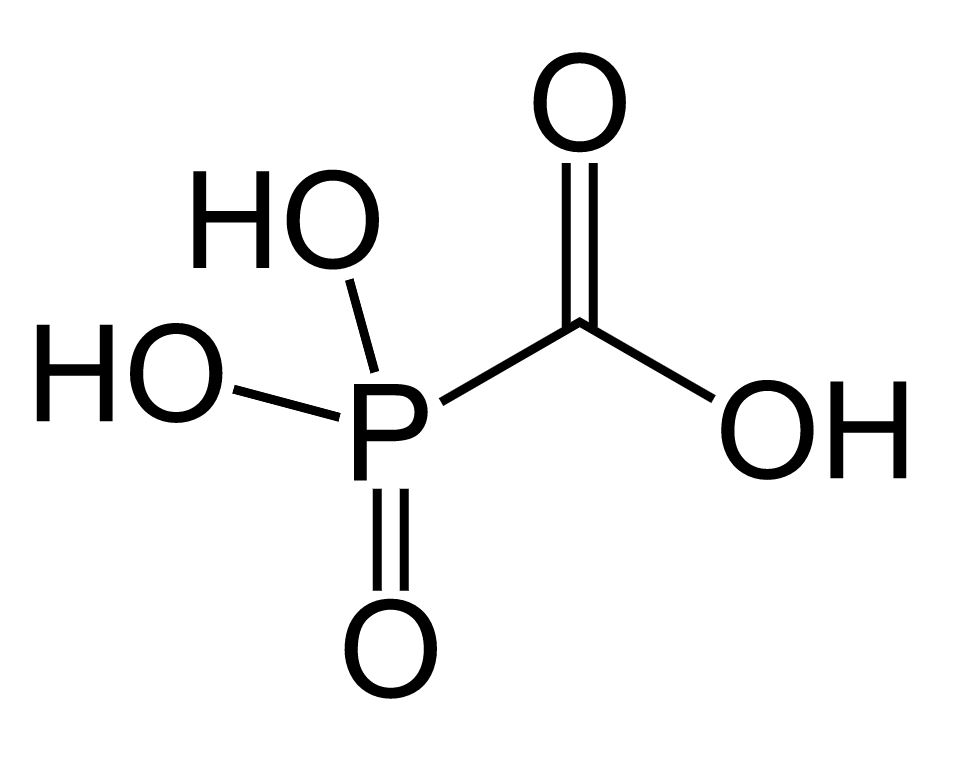
Estructura química

Foscarnet Foscarnet An antiviral agent used in the treatment of cytomegalovirus retinitis. Foscarnet also shows activity against human herpesviruses and HIV. Antivirals for Herpes Virus es un análogo de pirofosfato.
Farmacodinamia

  • Inhibe la síntesis de ácidos nucleicos virales:
    • No se requiere fosforilación intracelular para la actividad antiviral Antiviral Antivirals for Hepatitis B
    • Se une reversiblemente al AL Amyloidosis sitio de unión de pirofosfato de la ADN polimerasa viral (o transcriptasa inversa)
    • Inhibe la escisión del pirofosfato de los LOS Neisseria trifosfatos de desoxinucleótidos → detiene el alargamiento de la cadena de ADN
  • Mecanismo de resistencia: mutaciones puntuales en EN Erythema nodosum is an immune-mediated panniculitis (inflammation of the subcutaneous fat) caused by a type IV (delayed-type) hypersensitivity reaction. It commonly manifests in young women as tender, erythematous nodules on the shins. Erythema Nodosum la ADN polimerasa viral

Farmacocinética

  • Absorción:
    • Mala biodisponibilidad oral
    • Forma intravenosa
  • Distribución:
  • Metabolismo: mínimamente metabolizado
  • Excreción:
    • Secreción tubular y filtración glomerular
    • Aproximadamente el 20% de foscarnet Foscarnet An antiviral agent used in the treatment of cytomegalovirus retinitis. Foscarnet also shows activity against human herpesviruses and HIV. Antivirals for Herpes Virus puede ser absorbido por los LOS Neisseria huesos
    • Disminución de la excreción en EN Erythema nodosum is an immune-mediated panniculitis (inflammation of the subcutaneous fat) caused by a type IV (delayed-type) hypersensitivity reaction. It commonly manifests in young women as tender, erythematous nodules on the shins. Erythema Nodosum pacientes con enfermedad renal

Indicaciones

  • Infecciones por CMV resistentes a ganciclovir Ganciclovir An acyclovir analog that is a potent inhibitor of the herpesvirus family including cytomegalovirus. Ganciclovir is used to treat complications from aids-associated cytomegalovirus infections. Antivirals for Herpes Virus (SIDA o receptores de trasplantes)
  • Infecciones mucocutáneas por HSV HSV Herpes simplex virus (HSV) is a double-stranded DNA virus belonging to the family Herpesviridae. Herpes simplex virus commonly causes recurrent infections involving the skin and mucosal surfaces, including the mouth, lips, eyes, and genitals. Herpes Simplex Virus 1 and 2 resistentes a aciclovir

Efectos secundarios y contraindicaciones

  • Efectos secundarios:
    • Nefrotoxicidad (reducida por solución salina intravenosa)
    • Hipocalcemia, hipomagnesemia e hipopotasemia
    • Formación de úlceras en EN Erythema nodosum is an immune-mediated panniculitis (inflammation of the subcutaneous fat) caused by a type IV (delayed-type) hypersensitivity reaction. It commonly manifests in young women as tender, erythematous nodules on the shins. Erythema Nodosum los LOS Neisseria genitales
    • Neurológicos:
      • Convulsiones
      • Parestesia
      • Irritabilidad
      • Cefalea
      • Alucinaciones
    • Prolongación del QT
  • Contraindicaciones: hipersensibilidad al AL Amyloidosis foscarnet Foscarnet An antiviral agent used in the treatment of cytomegalovirus retinitis. Foscarnet also shows activity against human herpesviruses and HIV. Antivirals for Herpes Virus

Agentes no Sistémicos

Docosanol

  • Un alcohol alifático saturado de 22 carbonos
  • Inhibe la fusión entre la membrana plasmática de la célula huésped y la envoltura del HSV HSV Herpes simplex virus (HSV) is a double-stranded DNA virus belonging to the family Herpesviridae. Herpes simplex virus commonly causes recurrent infections involving the skin and mucosal surfaces, including the mouth, lips, eyes, and genitals. Herpes Simplex Virus 1 and 2 → evita la entrada del virus Virus Viruses are infectious, obligate intracellular parasites composed of a nucleic acid core surrounded by a protein capsid. Viruses can be either naked (non-enveloped) or enveloped. The classification of viruses is complex and based on many factors, including type and structure of the nucleoid and capsid, the presence of an envelope, the replication cycle, and the host range. Virology en EN Erythema nodosum is an immune-mediated panniculitis (inflammation of the subcutaneous fat) caused by a type IV (delayed-type) hypersensitivity reaction. It commonly manifests in young women as tender, erythematous nodules on the shins. Erythema Nodosum las células
  • Crema tópica de docosanol al AL Amyloidosis 10%:
    • Venta libre
    • Reduce el tiempo de cicatrización si se aplica dentro de las 12 horas posteriores al AL Amyloidosis inicio de los LOS Neisseria síntomas prodrómicos

Trifluridina

  • Trifluorotimidina
  • Mecanismo de acción:
    • Inhibición de la síntesis de ADN viral ( HSV HSV Herpes simplex virus (HSV) is a double-stranded DNA virus belonging to the family Herpesviridae. Herpes simplex virus commonly causes recurrent infections involving the skin and mucosal surfaces, including the mouth, lips, eyes, and genitals. Herpes Simplex Virus 1 and 2 1 y 2, CMV)
    • Sufre fosforilación intracelular por las enzimas de la célula huésped → compite con el trifosfato de timidina por la incorporación de la ADN polimerasa viral
  • Solución al AL Amyloidosis 1%:
    • Tratamiento de la queratoconjuntivitis y la queratitis epitelial recurrente por HSV HSV Herpes simplex virus (HSV) is a double-stranded DNA virus belonging to the family Herpesviridae. Herpes simplex virus commonly causes recurrent infections involving the skin and mucosal surfaces, including the mouth, lips, eyes, and genitals. Herpes Simplex Virus 1 and 2 1 o 2
    • Usos fuera de indicación: aplicación tópica para infecciones por HSV HSV Herpes simplex virus (HSV) is a double-stranded DNA virus belonging to the family Herpesviridae. Herpes simplex virus commonly causes recurrent infections involving the skin and mucosal surfaces, including the mouth, lips, eyes, and genitals. Herpes Simplex Virus 1 and 2 resistente a aciclovir

Comparación de Medicamentos Antiherpéticos

Tabla: Comparación de medicamentos antiherpéticos
Medicamento antiviral Antiviral Antivirals for Hepatitis B Mecanismo de acción Indicaciones Principales efectos secundarios
Aciclovir (análogo de nucleósido) Inhibidor de la polimerasa que requiere fosforilación por cinasa viral
  • HSV-1
  • HSV-2
  • VZV
Lesión renal aguda (nefropatía obstructiva)
Cidofovir Cidofovir An acyclic nucleoside phosphonate that acts as a competitive inhibitor of viral DNA polymerases. It is used in the treatment of retinitis caused by cytomegalovirus infections and may also be useful for treating herpesvirus infections. Antivirals for Herpes Virus (análogo de nucleótido) Inhibidor de la polimerasa que requiere fosforilación por la cinasa del huésped (no la cinasa viral) Aprobado para retinitis por CMV con actividad contra otros virus Virus Viruses are infectious, obligate intracellular parasites composed of a nucleic acid core surrounded by a protein capsid. Viruses can be either naked (non-enveloped) or enveloped. The classification of viruses is complex and based on many factors, including type and structure of the nucleoid and capsid, the presence of an envelope, the replication cycle, and the host range. Virology* Nefrotoxicidad (riesgo disminuido por solución salina IV y probenecid Probenecid The prototypical uricosuric agent. It inhibits the renal excretion of organic anions and reduces tubular reabsorption of urate. Probenecid has also been used to treat patients with renal impairment, and, because it reduces the renal tubular excretion of other drugs, has been used as an adjunct to antibacterial therapy. Gout Drugs)
Foscarnet Foscarnet An antiviral agent used in the treatment of cytomegalovirus retinitis. Foscarnet also shows activity against human herpesviruses and HIV. Antivirals for Herpes Virus (análogo de pirofosfato) Inhibidor de la polimerasa que no requiere fosforilación Resistente a CMV y HSV HSV Herpes simplex virus (HSV) is a double-stranded DNA virus belonging to the family Herpesviridae. Herpes simplex virus commonly causes recurrent infections involving the skin and mucosal surfaces, including the mouth, lips, eyes, and genitals. Herpes Simplex Virus 1 and 2
  • Nefrotoxicidad
  • Anomalías electrolíticas
  • Convulsiones
*Herpesvirus, adenovirus, poliomavirus, papilomavirus, poxvirus, HSV negativo para TK, CMV negativo para fosfotransferasa UL97

Referencias

  1. Acosta, E.P. (2017). Antiviral agents (nonretroviral). In Brunton L.L., & Hilal-Dandan R., & Knollmann B.C.(Eds.), Goodman & Gilman’s: The Pharmacological Basis of Therapeutics, 13e. McGraw-Hill. https://accessmedicine.mhmedical.com/content.aspx?bookid=2189&sectionid=172486085
  2. National Institute of Diabetes and Digestive and Kidney Diseases. (2016). Acyclovir. LiverTox: Clinical and Research Information on Drug-Induced Liver Injury. https://www.ncbi.nlm.nih.gov/books/NBK548548/
  3. Rodriguez, M., Zachary, K.C. (2024). Foscarnet: An Overview. UpToDate. Retrieved November 11, 2025, from https://www.uptodate.com/contents/foscarnet-an-overview
  4. Rodriguez, M., Zachary, K. (2025). Cidofovir: an overview. UpToDate. Retrieved November 11, 2025, from https://www.uptodate.com/contents/cidofovir-an-overview
  5. Ryan, K. J. (Ed.). (2017). Sherris Medical Microbiology. Seventh edition, McGraw-Hill.
  6. Safrin, S. (2021). Antiviral agents. In Katzung B.G., & Vanderah T.W.(Eds.), Basic & Clinical Pharmacology, 15e. McGraw-Hill. https://accessmedicine.mhmedical.com/content.aspx?bookid=2988&sectionid=250602382
  7. Salvaggio, M., Gnann, J. (2017). Drugs for Herpesvirus Infections. In Cohen, J., Powderly, W., Opal, S.(Eds), Infectious Diseases (Fourth Edition, pp.1309-1317), Elsevier. https://doi.org/10.1016/B978-0-7020-6285-8.00153-2
  8. Zachary, K. (2025). Famciclovir: an overview. UpToDate. Retrieved November 11, 2025, from https://www.uptodate.com/contents/famciclovir-an-overview
  9. Zachary, K. (2024). Ganciclovir and valganciclovir: an overview. UpToDate. Retrieved November 11, 2025, from https://www.uptodate.com/contents/ganciclovir-and-valganciclovir-an-overview

¡Crea tu cuenta gratis o inicia una sesión para seguir leyendo!

Regístrate ahora y obtén acceso gratuito a Lecturio con páginas de concepto, videos médicos y cuestionarios para tu educación médica.

User Reviews

Que tengas una sesión de estudio alegre y navideña 🎁 Ahorra 50% en todos los planes >>

Details