



O vírus da hepatite E ( HEV HEV The hepatitis E virus (HEV) is a small nonenveloped virus that contains linear, single-stranded, positive-sense RNA, making it similar to norovirus. Transmission of HEV is via the fecal-oral route and is clinically similar to that of hepatitis A. However, unlike hepatitis A, hepatitis E is quite severe, especially in pregnant women, and may cause fulminant hepatitis. Hepatitis E Virus, pela sigla em inglês) é um pequeno vírus, sem envelope Envelope Bilayer lipid membrane acquired by viral particles during viral morphogenesis. Although the lipids of the viral envelope are host derived, various virus-encoded integral membrane proteins, i.e. Viral envelope proteins are incorporated there. Virology, que contém RNA RNA A polynucleotide consisting essentially of chains with a repeating backbone of phosphate and ribose units to which nitrogenous bases are attached. RNA is unique among biological macromolecules in that it can encode genetic information, serve as an abundant structural component of cells, and also possesses catalytic activity. RNA Types and Structure linear, de cadeia simples e de sentido positivo, tornando-o semelhante ao norovírus. A transmissão do HEV HEV The hepatitis E virus (HEV) is a small nonenveloped virus that contains linear, single-stranded, positive-sense RNA, making it similar to norovirus. Transmission of HEV is via the fecal-oral route and is clinically similar to that of hepatitis A. However, unlike hepatitis A, hepatitis E is quite severe, especially in pregnant women, and may cause fulminant hepatitis. Hepatitis E Virus é por via fecal-oral e é clinicamente semelhante à da hepatite A. No entanto, ao contrário da hepatite A, a hepatite E é bastante grave, especialmente em mulheres grávidas, e pode causar hepatite fulminante juntamente com encefalopatia hepática durante um período de aproximadamente 8 semanas. O tratamento é principalmente preventivo e consiste em evitar água potável contaminada, bom saneamento e higiene pessoal adequada.
Last updated: Dec 15, 2025
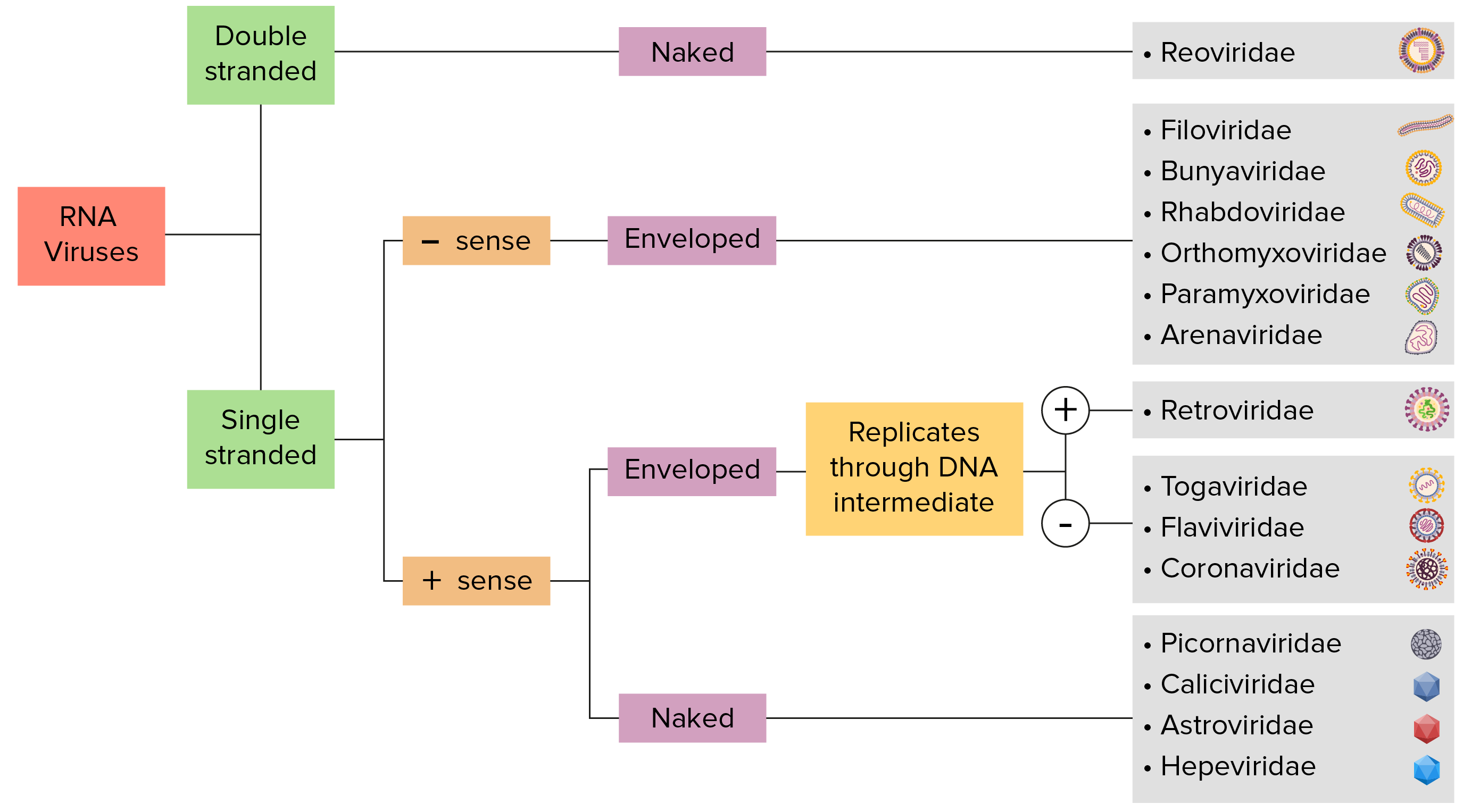
Identificação do vírus RNA:
Os vírus podem ser classificados de várias maneiras. A maioria dos vírus, no entanto, terá um genoma formado por DNA ou RNA. Os vírus de genoma de RNA podem ser ainda caracterizados por um RNA de cadeia simples ou dupla. Os vírus “envelopados” são cobertos por uma fina camada de membrana celular (geralmente retirada da célula hospedeira). Se a camada estiver ausente, os vírus são chamados de vírus “nus”. Os vírus com genomas de cadeia simples são vírus de “sentido positivo” se o genoma for usado diretamente como RNA mensageiro (mRNA), que é traduzido em proteínas. Os vírus de “sentido negativo” usam a RNA polimerase dependente de RNA, uma enzima viral, para transcrever o seu genoma em RNA mensageiro.
Replicação primária:
Tabela: Comparação dos vírus da hepatite A–E

Anticorpos anti-HBc: anticorpos core anti-hepatite B
Anticorpos anti-HBs: anticorpos de superfície anti-hepatite B
HBcAg: antigénio core da hepatite B
HBsAg: antigénio de superfície da hepatite B
HBV: vírus da hepatite B
HCC: carcinoma hepatocelular
HCV: vírus da hepatite C
HDV: vírus da hepatite D
(pelas siglas em inglês)