



Testes de Função Hepática

Os testes Testes Gonadal Hormones de função hepática, também conhecidos como painéis de função hepática, são uma das análises sanguíneas de rastreio mais MAIS Androgen Insensitivity Syndrome frequentemente realizadas. Estes testes Testes Gonadal Hormones também são usados para detetar, avaliar e monitorizar doenças hepáticas agudas e crónicas. Os testes Testes Gonadal Hormones de função hepática avaliam os níveis de várias proteínas e enzimas hepáticas para determinar o estado da atividade metabólica do fígado, homeostase, metabolismo da bílis e capacidade de síntese de proteínas. O painel hepático standard inclui os níveis de proteínas totais, bilirrubina, albumina, ALT ALT An enzyme that catalyzes the conversion of l-alanine and 2-oxoglutarate to pyruvate and l-glutamate. Liver Function Tests, AST AST Enzymes of the transferase class that catalyze the conversion of l-aspartate and 2-ketoglutarate to oxaloacetate and l-glutamate. Liver Function Tests, rácio AST AST Enzymes of the transferase class that catalyze the conversion of l-aspartate and 2-ketoglutarate to oxaloacetate and l-glutamate. Liver Function Tests/ ALT ALT An enzyme that catalyzes the conversion of l-alanine and 2-oxoglutarate to pyruvate and l-glutamate. Liver Function Tests e fosfatase alcalina ( ALP ALP An enzyme that catalyzes the conversion of an orthophosphoric monoester and water to an alcohol and orthophosphate. Osteosarcoma, pela sigla em inglês). Nota: Os valores laboratoriais apresentados nesta página devem ser vistos como um exemplo. Os intervalos podem variar consoante as unidades de medida, reagentes, técnicas ou instrumentos utilizados.

Last updated: Dec 15, 2025
Editorial responsibility: Stanley Oiseth, Lindsay Jones, Evelin Maza

Introdução

Anatomia hepatobiliar

  • Fígado:
    • Maior órgão sólido do corpo humano
    • Encontrado no QSD do abdómen
    • As suas funções incluem desintoxicação, metabolismo (hidratos de carbono, proteínas e lípidos), armazenamento de nutrientes e produção de proteínas.
  • Vesícula biliar e vias biliares:
    • Saco em forma de pêra
    • Funciona como o órgão de armazenamento da bílis e a rede de ductos que transportam a bílis da vesícula biliar para o intestino para excreção
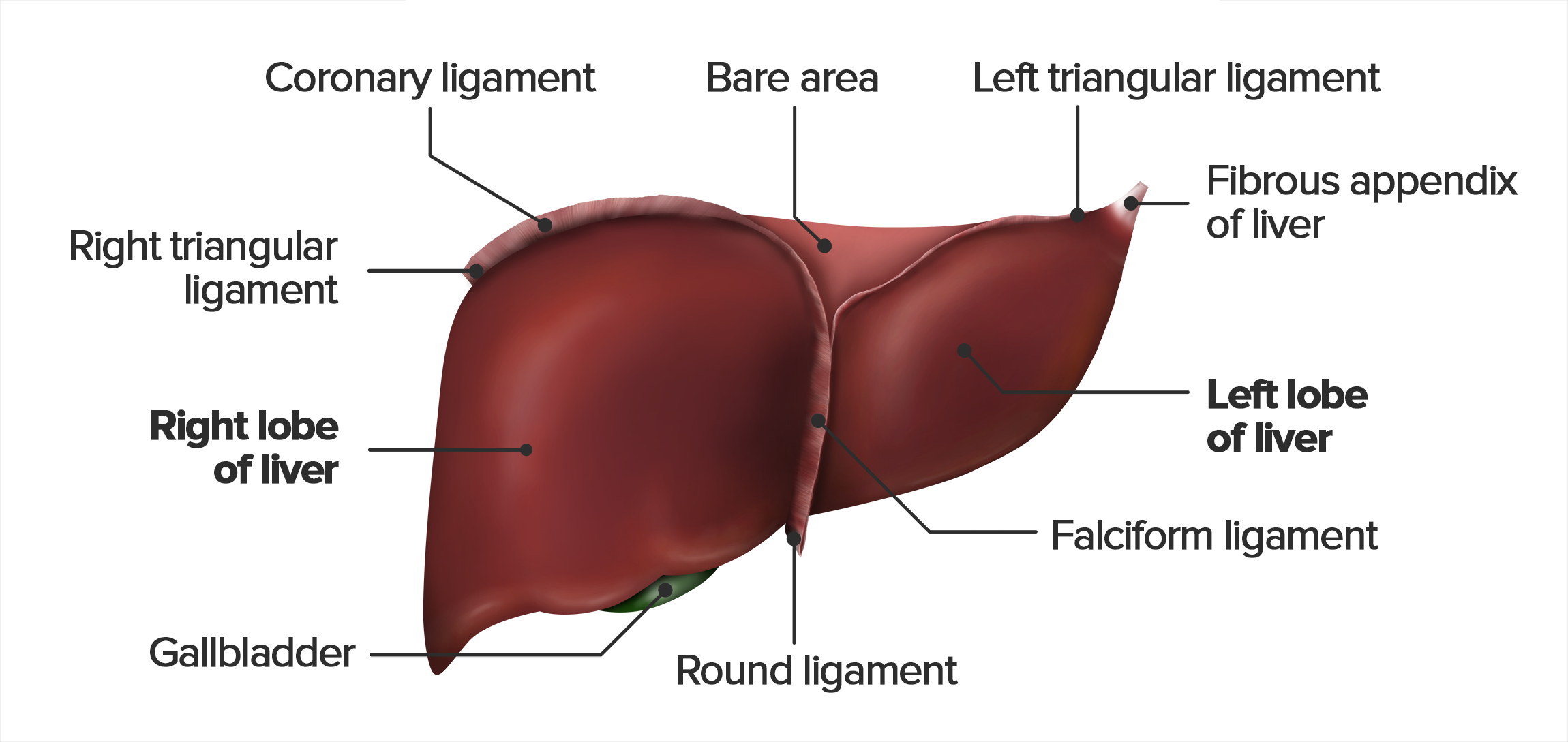
Vista anterior do fígado

Vista da superfície diafragmática do fígado.

Imagem por Lecturio. Licença: CC BY-NC-SA 4.0

Fisiologia hepatobiliar

  • As principais funções do fígado são:
    • Produção de bílis
      • Ajuda a excretar resíduos metabólicos
      • Auxilia na absorção e digestão de lípidos
    • Armazenamento e/ou metabolismo de vitaminas lipossolúveis
    • Metabolismo de fármacos
    • Metabolismo da bilirrubina
      • Heme → biliverdina → bilirrubina não conjugada
      • O fígado conjuga a bilirrubina, que é então secretada na bílis.
    • Função imunológica: eliminação de microrganismos e endotoxinas do sangue portal
    • Síntese proteica
  • Podem ser avaliadas várias proteínas hepáticas individualmente, mas o painel de função hepática standard avalia o seguinte:
    • Proteínas totais
    • Bilirrubina
    • Albumina
    • ALT ALT An enzyme that catalyzes the conversion of l-alanine and 2-oxoglutarate to pyruvate and l-glutamate. Liver Function Tests
    • AST AST Enzymes of the transferase class that catalyze the conversion of l-aspartate and 2-ketoglutarate to oxaloacetate and l-glutamate. Liver Function Tests
    • Rácio AST AST Enzymes of the transferase class that catalyze the conversion of l-aspartate and 2-ketoglutarate to oxaloacetate and l-glutamate. Liver Function Tests/ ALT ALT An enzyme that catalyzes the conversion of l-alanine and 2-oxoglutarate to pyruvate and l-glutamate. Liver Function Tests
    • Fosfatase Alcalina ( ALP ALP An enzyme that catalyzes the conversion of an orthophosphoric monoester and water to an alcohol and orthophosphate. Osteosarcoma)
  • As proteínas hepáticas podem ser agrupadas pelo tipo de disfunção hepática que medem:
    • Parâmetros de dano hepático: ALT ALT An enzyme that catalyzes the conversion of l-alanine and 2-oxoglutarate to pyruvate and l-glutamate. Liver Function Tests, AST AST Enzymes of the transferase class that catalyze the conversion of l-aspartate and 2-ketoglutarate to oxaloacetate and l-glutamate. Liver Function Tests, rácio AST AST Enzymes of the transferase class that catalyze the conversion of l-aspartate and 2-ketoglutarate to oxaloacetate and l-glutamate. Liver Function Tests/ ALT ALT An enzyme that catalyzes the conversion of l-alanine and 2-oxoglutarate to pyruvate and l-glutamate. Liver Function Tests e glutamato desidrogenase ( GLDH GLDH An enzyme that catalyzes the conversion of l-glutamate and water to 2-oxoglutarate and NH3 in the presence of NAD+. Liver Function Tests, pela sigla em inglês)
    • Parâmetros de doença biliar: gama-glutamil transpeptidase ( GGTP GGTP An enzyme, sometimes called ggt, with a key role in the synthesis and degradation of glutathione; (GSH, a tripeptide that protects cells from many toxins). It catalyzes the transfer of the gamma-glutamyl moiety to an acceptor amino acid. Liver Function Tests, pela sigla em inglês), ALP ALP An enzyme that catalyzes the conversion of an orthophosphoric monoester and water to an alcohol and orthophosphate. Osteosarcoma e bilirrubina
    • Parâmetros de síntese hepática: albumina, colinesterase, TP (tempo de protrombina)
Tabela: Padrões enzimáticos na doença hepática
Doença hepática ALT ALT An enzyme that catalyzes the conversion of l-alanine and 2-oxoglutarate to pyruvate and l-glutamate. Liver Function Tests e AST AST Enzymes of the transferase class that catalyze the conversion of l-aspartate and 2-ketoglutarate to oxaloacetate and l-glutamate. Liver Function Tests ALP ALP An enzyme that catalyzes the conversion of an orthophosphoric monoester and water to an alcohol and orthophosphate. Osteosarcoma Bilirrubina GGTP GGTP An enzyme, sometimes called ggt, with a key role in the synthesis and degradation of glutathione; (GSH, a tripeptide that protects cells from many toxins). It catalyzes the transfer of the gamma-glutamyl moiety to an acceptor amino acid. Liver Function Tests TP
Lesão hepática aguda (por exemplo, hepatite viral) ↑↑↑
> 10 vezes o valor normal
Geralmente ALT ALT An enzyme that catalyzes the conversion of l-alanine and 2-oxoglutarate to pyruvate and l-glutamate. Liver Function Tests > AST AST Enzymes of the transferase class that catalyze the conversion of l-aspartate and 2-ketoglutarate to oxaloacetate and l-glutamate. Liver Function Tests
Normal ou ↑ Normal ou ↑ Normal
Lesão hepática crónica (por exemplo, esteatose hepática) ↑↑ Normal ou ↑ Normal ou ↑ Normal
Doença hepática alcoólica (ALD, pela sigla em inglês)
AST AST Enzymes of the transferase class that catalyze the conversion of l-aspartate and 2-ketoglutarate to oxaloacetate and l-glutamate. Liver Function Tests/ ALT ALT An enzyme that catalyzes the conversion of l-alanine and 2-oxoglutarate to pyruvate and l-glutamate. Liver Function Tests > 2
Normal ou ↑ Normal ou ↑ ↑↑ Normal
Colestase ↑↑
> 4 vezes
↑↑ ↑↑ Normal
Cirrose
AST AST Enzymes of the transferase class that catalyze the conversion of l-aspartate and 2-ketoglutarate to oxaloacetate and l-glutamate. Liver Function Tests > ALT ALT An enzyme that catalyzes the conversion of l-alanine and 2-oxoglutarate to pyruvate and l-glutamate. Liver Function Tests
Normal ou ↑ ↑ Em estadios avançados Prolongado
Cancro de fígado Normal ou ↑ ↑↑ Normal ou ↑ Normal ou ↑ Prolongado
Hepatite autoimune ↑↑
ALT ALT An enzyme that catalyzes the conversion of l-alanine and 2-oxoglutarate to pyruvate and l-glutamate. Liver Function Tests > AST AST Enzymes of the transferase class that catalyze the conversion of l-aspartate and 2-ketoglutarate to oxaloacetate and l-glutamate. Liver Function Tests
Normal ou ↑ Normal
Lesão isquémica/choque hepático ↑↑↑ Normal ou ↑ Prolongado

Parâmetros de Dano Hepático

Quando os hepatócitos estão danificados, libertam as suas enzimas na circulação. A magnitude da disfunção dos níveis enzimáticos reflete a gravidade do dano hepático.

Tabela: Parâmetros de lesão hepática
Parâmetro Intervalo normal Função Causas de elevação
ALT ALT An enzyme that catalyzes the conversion of l-alanine and 2-oxoglutarate to pyruvate and l-glutamate. Liver Function Tests 8–20 U/L
  • Produzido no fígado
  • Marcador específico de lesão hepática
  • Envolvido no metabolismo de aminoácidos, catalisa a transferência de um grupo amina entre glutamato e alanina
  • Todos os tipos de lesão hepática
  • Quando apenas AST AST Enzymes of the transferase class that catalyze the conversion of l-aspartate and 2-ketoglutarate to oxaloacetate and l-glutamate. Liver Function Tests está alterado:
    • Lesão muscular
    • EAM

> 1000 U/L:
  • Hepatotoxicidade induzida por fármacos
  • Hepatite isquémica
  • Hepatite viral aguda
AST AST Enzymes of the transferase class that catalyze the conversion of l-aspartate and 2-ketoglutarate to oxaloacetate and l-glutamate. Liver Function Tests 8–20 U/L
  • Envolvido no metabolismo de aminoácidos, catalisa a transferência de um grupo amina entre o glutamato e o aspartato
  • Também presente no coração, músculo e rins
GLDH GLDH An enzyme that catalyzes the conversion of l-glutamate and water to 2-oxoglutarate and NH3 in the presence of NAD+. Liver Function Tests 1–10 U/L
  • Produzido na mitocôndria
  • Converte glutamato em α-cetoglutarato, libertando amónia no ciclo da ureia
  • Elevado quando a necrose dos hepatócitos é o evento predominante
  • Hepatite grave
  • Toxinas
  • Isquemia hepática
Rácio AST AST Enzymes of the transferase class that catalyze the conversion of l-aspartate and 2-ketoglutarate to oxaloacetate and l-glutamate. Liver Function Tests/ ALT ALT An enzyme that catalyzes the conversion of l-alanine and 2-oxoglutarate to pyruvate and l-glutamate. Liver Function Tests Aproximadamente 0.8 Usado para diferenciar as causas de lesão hepatocelular
  • Na maioria das doenças hepáticas, ALT ALT An enzyme that catalyzes the conversion of l-alanine and 2-oxoglutarate to pyruvate and l-glutamate. Liver Function Tests > AST AST Enzymes of the transferase class that catalyze the conversion of l-aspartate and 2-ketoglutarate to oxaloacetate and l-glutamate. Liver Function Tests, com rácio < 1
  • Em ALID AST AST Enzymes of the transferase class that catalyze the conversion of l-aspartate and 2-ketoglutarate to oxaloacetate and l-glutamate. Liver Function Tests > ALT ALT An enzyme that catalyzes the conversion of l-alanine and 2-oxoglutarate to pyruvate and l-glutamate. Liver Function Tests, com rácio > 2
  • AST AST Enzymes of the transferase class that catalyze the conversion of l-aspartate and 2-ketoglutarate to oxaloacetate and l-glutamate. Liver Function Tests > ALT ALT An enzyme that catalyzes the conversion of l-alanine and 2-oxoglutarate to pyruvate and l-glutamate. Liver Function Tests na doença hepática não alcoólica sugere cirrose

Parâmetros da Doença Biliar

  • Doença biliar: patologia que afeta os ductos biliares intra e extra-hepáticos e a vesícula biliar
  • Colestase: falha na excreção de bilirrubina conjugada para o duodeno
Tabela: Parâmetros de doença biliar
Parâmetro Intervalo normal Função Causas de elevação
GGTP GGTP An enzyme, sometimes called ggt, with a key role in the synthesis and degradation of glutathione; (GSH, a tripeptide that protects cells from many toxins). It catalyzes the transfer of the gamma-glutamyl moiety to an acceptor amino acid. Liver Function Tests 9–48 U/L
  • Envolvida no transporte de aminoácidos e metabolismo da glutationa
  • Presente também no rim, pâncreas e intestino
  • Perturbação do abuso de álcool ( AUD AUD Alcohol is one of the most commonly used addictive substances in the world. Alcohol use disorder (AUD) is defined as pathologic consumption of alcohol leading to impaired daily functioning. Acute alcohol intoxication presents with impairment in speech and motor functions and can be managed in most cases with supportive care. Alcohol Use Disorder, pela sigla em inglês)
  • Colestase
ALP ALP An enzyme that catalyzes the conversion of an orthophosphoric monoester and water to an alcohol and orthophosphate. Osteosarcoma 44–147 UI/L Responsável pela desfosforilação de vários compostos
  • 3º trimestre de gravidez
  • Colestase
  • Doença óssea:
    • Metástases esqueléticas
    • Osteomalácia
    • Cicatrização de fraturas
Bilirrubina Total 0.1–1 mg/dL Pigmento amarelo produzido durante a destruição das hemácias via catabolismo do grupo heme Elevada em várias doenças do fígado, vesícula biliar, árvore biliar ou hemácias (por exemplo, hemólise)
Direto 0.0–0.3 mg/dL Conjugada com ácido glucurónico, solúvel em água Geralmente associada a causas de colestase obstrutiva
Indireto Geralmente medida como a diferença entre a bilirrubina total e direta Não conjugada com ácido glucurónico, lipossolúvel
  • Síndromes hereditárias de defeitos na conjugação da bilirrubina
  • Hemólise de hemácias

Parâmetros de Síntese Hepática

  • O fígado é responsável pela produção de muitas proteínas e enzimas.
  • A lesão hepatocelular pode reduzir a capacidade de síntese.
Tabela: Parâmetros de síntese hepática
Parâmetro Intervalo normal Função Causas de elevação
Albumina 3.5–5.5 g/dL
  • Proteína sérica principal
  • Determina a pressão oncótica intravascular
  • Transporte intravascular de substâncias (fármacos, hormonas, bilirrubina)
  • Elevada na desidratação
  • Diminuída na doença hepática avançada (por exemplo, cirrose) ou perda urinária de proteínas (por exemplo, síndrome nefrótica)
Colinesterase 8–18 U/mL
  • Decompõem os ésteres de colina (importantes para o metabolismo de muitos fármacos, incluindo anestésicos)
  • Produzida apenas pelo fígado
  • Elevada na doença de Alzheimer, diabetes Diabetes Diabetes mellitus (DM) is a metabolic disease characterized by hyperglycemia and dysfunction of the regulation of glucose metabolism by insulin. Type 1 DM is diagnosed mostly in children and young adults as the result of autoimmune destruction of β cells in the pancreas and the resulting lack of insulin. Type 2 DM has a significant association with obesity and is characterized by insulin resistance. Diabetes Mellitus tipo 2, doença cardíaca coronária (CHD, pela sigla em inglês)
  • Diminuída na doença hepática avançada (por exemplo, cirrose) e desnutrição
  • Inibida no envenenamento por pesticidas organofosforados
TP 9.5–13.5 segundos
  • Mede a capacidade do fígado de sintetizar fibrinogénio e fatores de coagulação II, VII, IX e X
  • Avalia a eficiência das vias extrínseca e comum da cascata de coagulação
    Prolongado em:
  • Deficiência de vitamina K
  • Doença hepática (por exemplo, cirrose), que impede a produção de fator de coagulação
  • Sobredosagem de Varfarina
  • CID
  • Deficiência hereditária de fator de coagulação (por exemplo, hemofilia)

Relevância Clínica

Doenças hepáticas

  • Neoplasias:
    • Tumores benignos do fígado: hemangiomas cavernosos, adenomas hepatocelulares e hiperplasia nodular focal (FNH, pela sigla em inglês)
    • Cancro do fígado: carcinoma hepatocelular ( HCC HCC Hepatocellular carcinoma (HCC) typically arises in a chronically diseased or cirrhotic liver and is the most common primary liver cancer. Diagnosis may include ultrasound, CT, MRI, biopsy (if inconclusive imaging), and/or biomarkers. Hepatocellular Carcinoma (HCC) and Liver Metastases, pela sigla em inglês); colangiocarcinoma intra-hepático; hepatoblastoma Hepatoblastoma A malignant neoplasm occurring in young children, primarily in the liver, composed of tissue resembling embryonal or fetal hepatic epithelium, or mixed epithelial and mesenchymal tissues. Rare Malignant Liver Tumors; angiossarcoma; hemangioendotelioma; metástases hepáticas de malignidades GI, mama e pulmão; e tumores hepáticos raros (carcinossarcomas, teratomas Teratomas A true neoplasm composed of a number of different types of tissue, none of which is native to the area in which it occurs. It is composed of tissues that are derived from three germinal layers, the endoderm, mesoderm, and ectoderm. They are classified histologically as mature (benign) or immature (malignant). Ovarian Cancer, tumores do saco vitelino, tumores carcinoides e linfomas)
  • Infeções:
    • Abcesso hepático piogénico: acumulação de pus que se forma no fígado devido a uma infeção bacteriana, fúngica ou parasitária. Doentes com abcesso hepático piogénico devem ser submetidos à drenagem do abcesso e receber antibióticos sistémicos.
    • Hepatite viral: causada principalmente pelos vírus da hepatite A, B, C, D e E, resultando em inflamação direcionada ao fígado. Os doentes desenvolvem sintomas inespecíficos, como náuseas, vómitos, anorexia Anorexia The lack or loss of appetite accompanied by an aversion to food and the inability to eat. It is the defining characteristic of the disorder anorexia nervosa. Anorexia Nervosa e dor abdominal.
  • Doenças inflamatórias:
    • Doença hepática alcoólica: doença progressiva caracterizada por inflamação e lesão hepática devido ao abuso excessivo de álcool a longo prazo. Os doentes classicamente apresentam aumento das enzimas hepáticas, com AST AST Enzymes of the transferase class that catalyze the conversion of l-aspartate and 2-ketoglutarate to oxaloacetate and l-glutamate. Liver Function Tests mais MAIS Androgen Insensitivity Syndrome elevada do que ALT ALT An enzyme that catalyzes the conversion of l-alanine and 2-oxoglutarate to pyruvate and l-glutamate. Liver Function Tests.
    • Esteatose hepática não alcoólica (NAFLD, pela sigla em inglês): caracterizada pela acumulação excessiva de gordura no fígado sem ingestão excessiva de álcool. A gravidade da condição varia desde assintomática a esteato-hepatite não alcoólica (NASH, pela sigla em inglês) caracterizada por lesão hepática progressiva.
    • Hepatite autoimune ( AIH AIH Autoimmune hepatitis (AIH) is a rare form of chronic liver disease in which the immune system attacks the liver causing inflammation. It predominantly affects women. Clinical presentation ranges from asymptomatic cases to patients that present with symptoms of acute liver failure (jaundice, right upper quadrant pain). Autoimmune Hepatitis, pela sigla em inglês): processo inflamatório progressivo que leva à hepatite crónica ou cirrose. A hepatite autoimune é caracterizada pela presença de autoanticorpos circulantes e altas concentrações de globulina sérica.
    • Síndrome de Fitz-Hugh-Curtis: caracterizada pela inflamação da cápsula hepática que ocorre em mulheres como complicação da doença inflamatória pélvica ( PID PID Pelvic inflammatory disease (PID) is defined as a polymicrobial infection of the upper female reproductive system. The disease can affect the uterus, fallopian tubes, ovaries, and adjacent structures. Pelvic inflammatory disease is closely linked with sexually transmitted diseases, most commonly caused by Chlamydia trachomatis, Neisseria gonorrhoeae, and gardnerella vaginalis. Pelvic Inflammatory Disease, pela sigla em inglês).
  • Hereditárias:
    • Hemocromatose: doença genética autossómica recessiva devido a uma mutação do gene Gene A category of nucleic acid sequences that function as units of heredity and which code for the basic instructions for the development, reproduction, and maintenance of organisms. Basic Terms of Genetics HFE, quen resulta em aumento da absorção intestinal de ferro. Os doentes apresentam hepatomegalia, cirrose, pele bronzeada, diabetes Diabetes Diabetes mellitus (DM) is a metabolic disease characterized by hyperglycemia and dysfunction of the regulation of glucose metabolism by insulin. Type 1 DM is diagnosed mostly in children and young adults as the result of autoimmune destruction of β cells in the pancreas and the resulting lack of insulin. Type 2 DM has a significant association with obesity and is characterized by insulin resistance. Diabetes Mellitus, artralgia e cardiomiopatia (CM, pela sigla em inglês).
    • Doença de Wilson: doença metabólica autossómica recessiva no qual há alteração na excreção de cobre, o que leva à acumulação de cobre no fígado.
    • Síndrome de Dubin-Johnson: doença autossómica recessiva rara com níveis elevados de bilirrubina conjugada que levam a um depósito de pigmento semelhante à melanina no fígado, o que causa o que é conhecido como “fígado preto”. Clinicamente, a síndrome de Dubin-Johnson apresenta icterícia devido aos níveis elevados de bilirrubina conjugada.
  • Miscelânea:
    • Hipertensão portal: devido à pressão elevada na veia porta. A hipertensão portal é mais MAIS Androgen Insensitivity Syndrome frequentemente causada por cirrose, schistosomíase, trombose da veia porta ou outras anomalias vasculares hepáticas. A condição está raramente associada à hipertensão pulmonar ( PH pH The quantitative measurement of the acidity or basicity of a solution. Acid-Base Balance, pela sigla em inglês).
    • Cirrose: condição causada por lesão hepática crónica. A cirrose pode ser a consequência de uma infinidade de insultos crónicos ao fígado. A doença hepática alcoólica é uma das principais causas. A cirrose é caracterizada por necrose do parênquima hepático, que acaba por levar à fibrose e insuficiência hepática.
    • Síndrome de Budd-Chiari: condição rara resultante de obstrução da veia hepática que leva a hepatomegalia, ascite e desconforto abdominal.

Doenças biliares

  • Litíase biliar: presença de cálculos na vesícula biliar.
  • Colecistite: condição caracterizada por inflamação da vesícula biliar, geralmente devido a infeção bacteriana que leva à obstrução do ducto quístico. Os doentes apresentam dor intensa no quadrante superior direito.
  • Colangite: infeção do trato biliar, geralmente devido ao fluxo ascendente de bactérias, facilitado pela estase biliar. A colangite pode levar a estenoses, estase biliar adicional e coledocolitíase recorrente.
  • Cirrose biliar primária ( PBC PBC Primary biliary cholangitis (PBC) is a chronic disease resulting in autoimmune destruction of the intrahepatic bile ducts. The typical presentation is that of a middle-aged woman with pruritus, fatigue, and right upper quadrant abdominal pain. Elevated liver enzymes and antimitochondrial antibodies (AMAs) establish the diagnosis. Primary Biliary Cholangitis, pela sigla em inglês): também conhecida como colangite biliar primária, a PBC PBC Primary biliary cholangitis (PBC) is a chronic disease resulting in autoimmune destruction of the intrahepatic bile ducts. The typical presentation is that of a middle-aged woman with pruritus, fatigue, and right upper quadrant abdominal pain. Elevated liver enzymes and antimitochondrial antibodies (AMAs) establish the diagnosis. Primary Biliary Cholangitis é uma doença autoimune progressiva crónica caracterizada pela destruição dos ductos biliares intra-hepáticos, o que leva a colestase, cirrose e insuficiência hepática.
  • Colangite esclerosante primária ( PSC PSC Primary sclerosing cholangitis (PSC) is an inflammatory disease that causes fibrosis and strictures of the bile ducts. The exact etiology is unknown, but there is a strong association with IBD. Patients typically present with an insidious onset of fatigue, pruritus, and jaundice, which can progress to cirrhosis and complications related to biliary obstruction. Primary Sclerosing Cholangitis, pela sigla em inglês): inflamação crónica progressiva dos ductos biliares que leva a fibrose e estenose, sem causa conhecida. A colangite esclerosante primária está significativamente associada à doença inflamatória intestinal (IBD, pela sigla em inglês).

Referências

  1. Giannini, EG, Testa, R, & Savarino V. (2005). Liver enzyme alteration: A guide for clinicians. CMAJ, 172(3),367–79. https://pubmed.ncbi.nlm.nih.gov/15684121/
  2. Hall, P, & Cash, J. (2012). What is the real function of the liver “function” tests? The Ulster Medical Journal, 81(1),30–36. https://pubmed.ncbi.nlm.nih.gov/23536736/
  3. Hoekstra, LT, et al. (2013). Physiological and biochemical basis of clinical liver function tests: A review. Annals of Surgery,  257(1),27–36. https://pubmed.ncbi.nlm.nih.gov/22836216/
  4. Kalra, A, Yetiskul, E., Wehrle, CJ, et al. Physiology, liver. [Updated 2020 May 24]. In: StatPearls [Internet]. Treasure Island (FL): StatPearls Publishing; 2021 Jan–.
  5. Lindenmeyer, CC. (2019). Laboratory tests of the liver and gallbladder. MDS Manual. Merck & Co., Inc., Kenilworth, NJ, USA. Retrieved May 27, 2021 from: https://www.msdmanuals.com/professional/hepatic-and-biliary-disorders

Crie sua conta gratuita ou faça login para continuar lendo!

Cadastre-se agora e tenha acesso grátis ao Lecturio, com páginas de conceitos, vídeos de medicina e questões para sua educação médica.

Aprende mais com a Lecturio:

Multiple devices displaying human anatomy and health education content.

Complementa o teu estudo da faculdade com o companheiro de estudo tudo-em-um da Lecturio, através de métodos de ensino baseados em evidência.

Estuda onde quiseres

Two iPhones display medical education apps, one showing anatomy, the other Bookmatcher.

A Lecturio Medical complementa o teu estudo através de métodos de ensino baseados em evidência, vídeos de palestras, perguntas e muito mais – tudo combinado num só lugar e fácil de usar.

User Reviews

Have a holly, jolly study session 🎁 Save 50% on all plans now >>

Que tengas una sesión de estudio alegre y navideña 🎁 Ahorra 50% en todos los planes >>

Details