


Descolamento da Retina

O descolamento da retina Retina The ten-layered nervous tissue membrane of the eye. It is continuous with the optic nerve and receives images of external objects and transmits visual impulses to the brain. Its outer surface is in contact with the choroid and the inner surface with the vitreous body. The outermost layer is pigmented, whereas the inner nine layers are transparent. Eye: Anatomy consiste na separação da retina Retina The ten-layered nervous tissue membrane of the eye. It is continuous with the optic nerve and receives images of external objects and transmits visual impulses to the brain. Its outer surface is in contact with the choroid and the inner surface with the vitreous body. The outermost layer is pigmented, whereas the inner nine layers are transparent. Eye: Anatomy neurossensorial do epitélio pigmentar da retina Retina The ten-layered nervous tissue membrane of the eye. It is continuous with the optic nerve and receives images of external objects and transmits visual impulses to the brain. Its outer surface is in contact with the choroid and the inner surface with the vitreous body. The outermost layer is pigmented, whereas the inner nine layers are transparent. Eye: Anatomy e da coroide. O descolamento de retina Retina The ten-layered nervous tissue membrane of the eye. It is continuous with the optic nerve and receives images of external objects and transmits visual impulses to the brain. Its outer surface is in contact with the choroid and the inner surface with the vitreous body. The outermost layer is pigmented, whereas the inner nine layers are transparent. Eye: Anatomy regmatogénico, o tipo mais MAIS Androgen Insensitivity Syndrome comum, decorre de uma rotura na retina Retina The ten-layered nervous tissue membrane of the eye. It is continuous with the optic nerve and receives images of external objects and transmits visual impulses to the brain. Its outer surface is in contact with the choroid and the inner surface with the vitreous body. The outermost layer is pigmented, whereas the inner nine layers are transparent. Eye: Anatomy, que permite a acumulação de líquido no espaço sub-retiniano. Na presença de uma retina Retina The ten-layered nervous tissue membrane of the eye. It is continuous with the optic nerve and receives images of external objects and transmits visual impulses to the brain. Its outer surface is in contact with the choroid and the inner surface with the vitreous body. The outermost layer is pigmented, whereas the inner nine layers are transparent. Eye: Anatomy intacta, o descolamento ocorre quando o vítreo puxa a retina Retina The ten-layered nervous tissue membrane of the eye. It is continuous with the optic nerve and receives images of external objects and transmits visual impulses to the brain. Its outer surface is in contact with the choroid and the inner surface with the vitreous body. The outermost layer is pigmented, whereas the inner nine layers are transparent. Eye: Anatomy (tração) ou quando uma doença subjacente leva ao aumento do extravazamento de fluido (exsudativo). Os sintomas como fotopsia, moscas volantes e defeitos visuais podem apresentar-se em horas ou gradualmente ao longo de semanas. O descolamento da retina Retina The ten-layered nervous tissue membrane of the eye. It is continuous with the optic nerve and receives images of external objects and transmits visual impulses to the brain. Its outer surface is in contact with the choroid and the inner surface with the vitreous body. The outermost layer is pigmented, whereas the inner nine layers are transparent. Eye: Anatomy com perda visual é uma emergência. Assim que ocorre o descolamento macular, o prognóstico visual é mau. O descolamento regmatogénico da retina Retina The ten-layered nervous tissue membrane of the eye. It is continuous with the optic nerve and receives images of external objects and transmits visual impulses to the brain. Its outer surface is in contact with the choroid and the inner surface with the vitreous body. The outermost layer is pigmented, whereas the inner nine layers are transparent. Eye: Anatomy sintomático com acuidade visual central intacta implica uma cirurgia de urgência. Nos descolamentos não regmatogénicos da retina Retina The ten-layered nervous tissue membrane of the eye. It is continuous with the optic nerve and receives images of external objects and transmits visual impulses to the brain. Its outer surface is in contact with the choroid and the inner surface with the vitreous body. The outermost layer is pigmented, whereas the inner nine layers are transparent. Eye: Anatomy, o tratamento deve ser dirigido ao processo patológico primário.

Last updated: Dec 15, 2025

Editorial responsibility: Stanley Oiseth, Lindsay Jones, Evelin Maza

Descrição Geral

Definição

O descolamento de retina Retina The ten-layered nervous tissue membrane of the eye. It is continuous with the optic nerve and receives images of external objects and transmits visual impulses to the brain. Its outer surface is in contact with the choroid and the inner surface with the vitreous body. The outermost layer is pigmented, whereas the inner nine layers are transparent. Eye: Anatomy consiste na separação da retina Retina The ten-layered nervous tissue membrane of the eye. It is continuous with the optic nerve and receives images of external objects and transmits visual impulses to the brain. Its outer surface is in contact with the choroid and the inner surface with the vitreous body. The outermost layer is pigmented, whereas the inner nine layers are transparent. Eye: Anatomy do epitélio pigmentar da retina Retina The ten-layered nervous tissue membrane of the eye. It is continuous with the optic nerve and receives images of external objects and transmits visual impulses to the brain. Its outer surface is in contact with the choroid and the inner surface with the vitreous body. The outermost layer is pigmented, whereas the inner nine layers are transparent. Eye: Anatomy e da coroide subjacentes.

Anatomia

Retina Retina The ten-layered nervous tissue membrane of the eye. It is continuous with the optic nerve and receives images of external objects and transmits visual impulses to the brain. Its outer surface is in contact with the choroid and the inner surface with the vitreous body. The outermost layer is pigmented, whereas the inner nine layers are transparent. Eye: Anatomy:
  • Camada mais MAIS Androgen Insensitivity Syndrome interna, que contém fotorrecetores que convertem os estímulos luminosos em impulsos nervosos
    • Bastonetes: visão a preto e branco (funcionam em ambientes de luminosidade reduzida)
    • Cones: visão a cores (funcionam em ambientes de luminosidade intensa)
  • Retina Retina The ten-layered nervous tissue membrane of the eye. It is continuous with the optic nerve and receives images of external objects and transmits visual impulses to the brain. Its outer surface is in contact with the choroid and the inner surface with the vitreous body. The outermost layer is pigmented, whereas the inner nine layers are transparent. Eye: Anatomy óptica
    • Camada neuronal ou neurossensorial
      • Contém as células fotorrecetoras
      • Termina anteriormente ao longo da ora serrata
    • Camada externa de células pigmentadas ou epitélio pigmentar da retina Retina The ten-layered nervous tissue membrane of the eye. It is continuous with the optic nerve and receives images of external objects and transmits visual impulses to the brain. Its outer surface is in contact with the choroid and the inner surface with the vitreous body. The outermost layer is pigmented, whereas the inner nine layers are transparent. Eye: Anatomy (EPR)
      • Sobrejacente à coroide
      • Camada única de células que contêm melanina e absorvem a luz, reduzindo a dispersão da mesma dentro do olho
  • Retina Retina The ten-layered nervous tissue membrane of the eye. It is continuous with the optic nerve and receives images of external objects and transmits visual impulses to the brain. Its outer surface is in contact with the choroid and the inner surface with the vitreous body. The outermost layer is pigmented, whereas the inner nine layers are transparent. Eye: Anatomy não visual: extensão da camada de células pigmentares anteriormente sobre o corpo ciliar e a superfície posterior da íris.
  • Mácula
    • Centro da retina Retina The ten-layered nervous tissue membrane of the eye. It is continuous with the optic nerve and receives images of external objects and transmits visual impulses to the brain. Its outer surface is in contact with the choroid and the inner surface with the vitreous body. The outermost layer is pigmented, whereas the inner nine layers are transparent. Eye: Anatomy
    • Contém a fóvea, região com a densidade máxima de cones
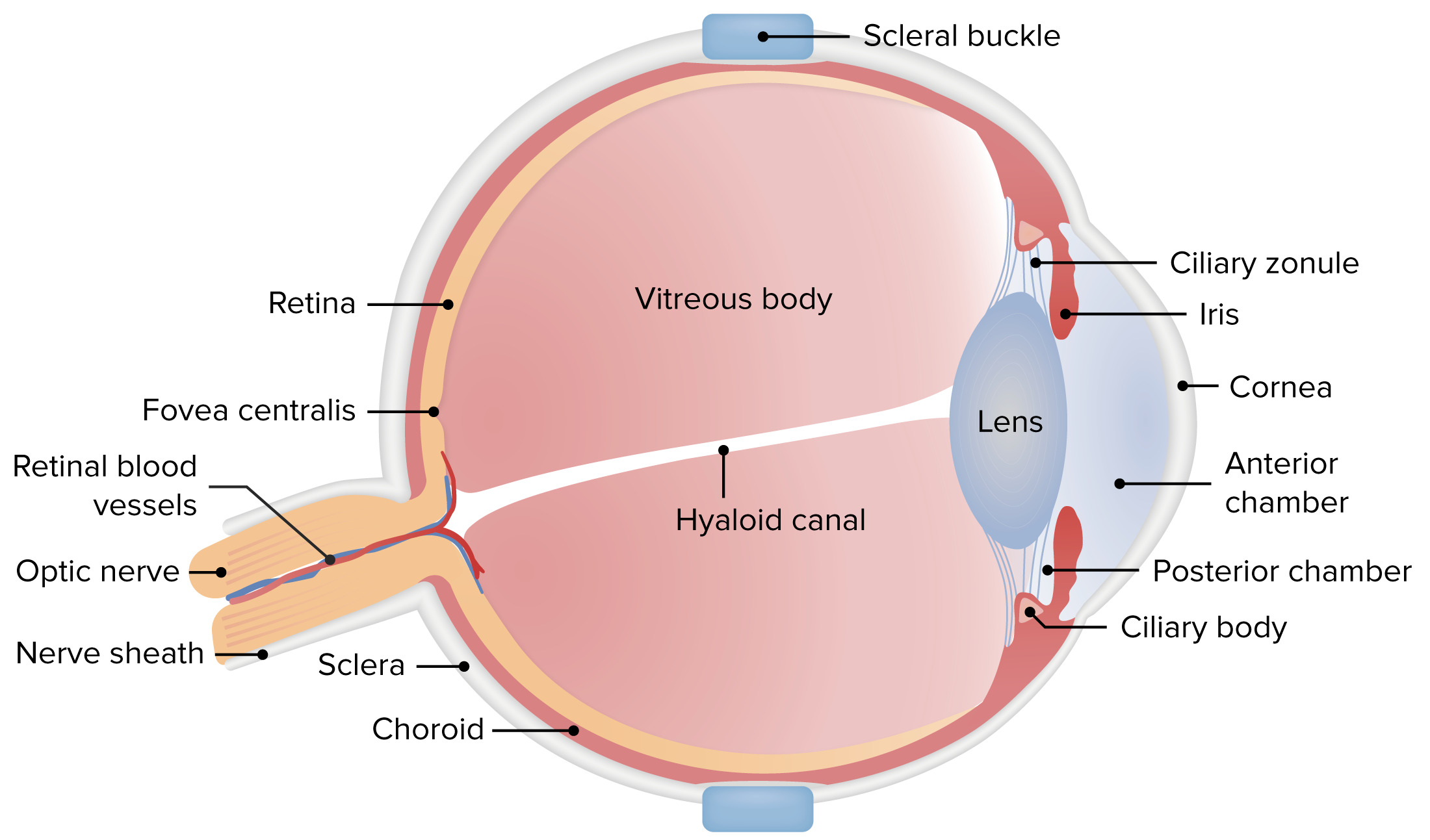
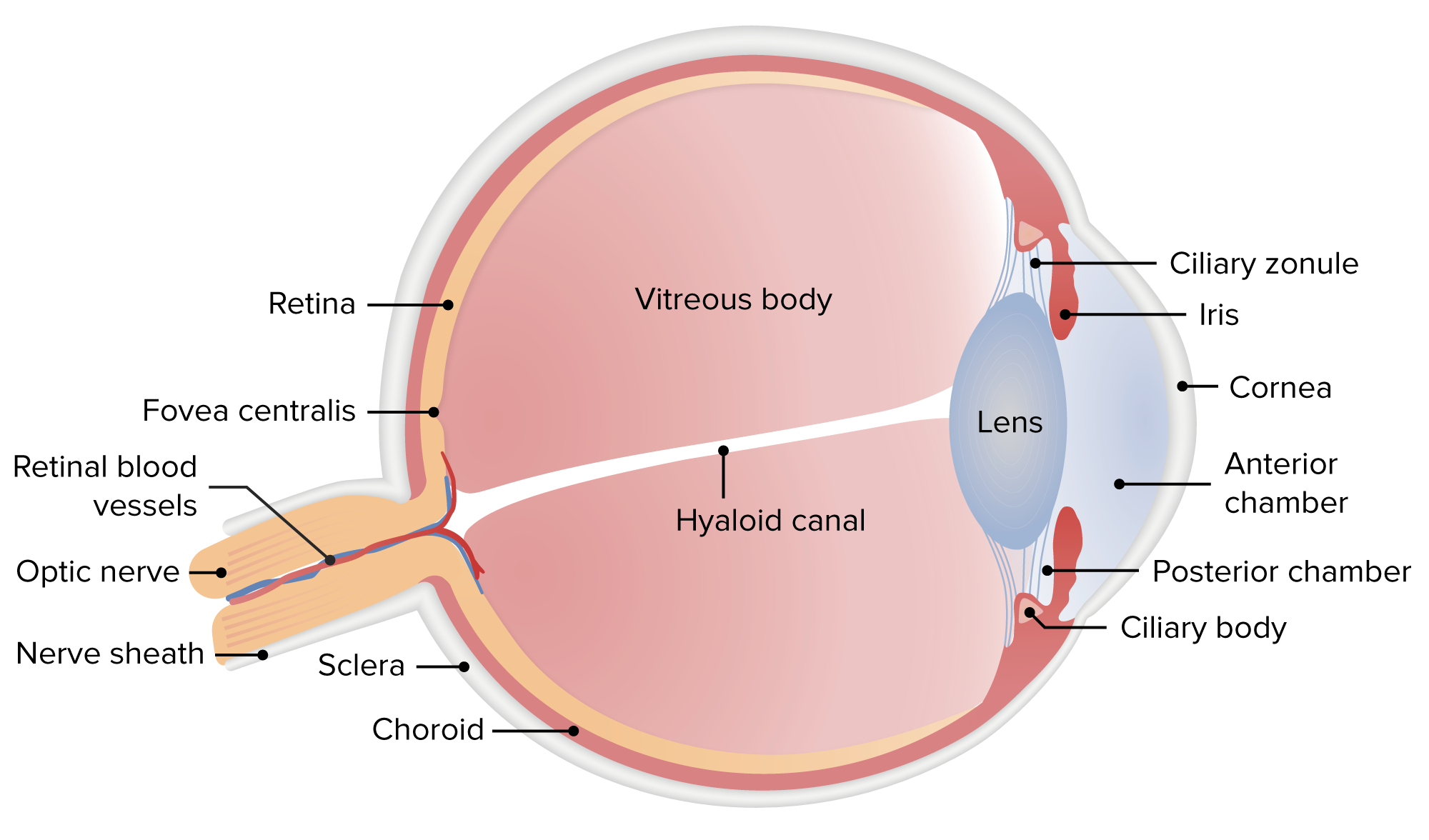
Anatomia do olho

Anatomia do olho humano

Imagem de Lecturio.
Componentes úvea e estrutura geral do olho

Esquerda: componentes das camadas mais interna, neuronal e sensorial do olho
Direita: estrutura geral do olho
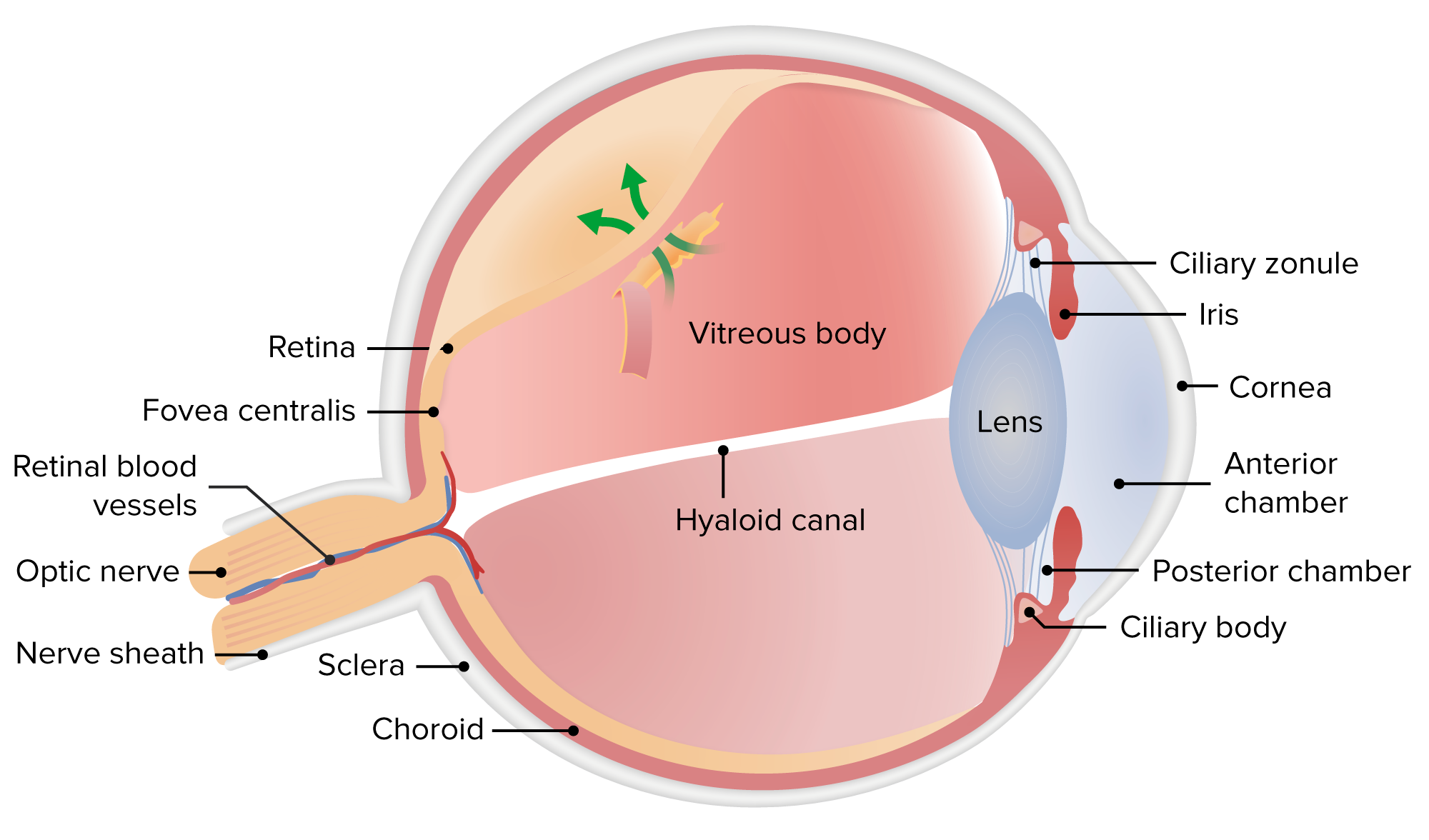
Imagem de Lecturio.

Epidemiologia

  • Incidência: 1 em 10.000
  • Homens > mulheres
  • Risco aumentado no Sudeste Asiático (relacionado com o maior risco de miopia)

Related videos

Categorias e Fatores de Risco

Descolamento regmatogénico da retina Retina The ten-layered nervous tissue membrane of the eye. It is continuous with the optic nerve and receives images of external objects and transmits visual impulses to the brain. Its outer surface is in contact with the choroid and the inner surface with the vitreous body. The outermost layer is pigmented, whereas the inner nine layers are transparent. Eye: Anatomy

  • Mais MAIS Androgen Insensitivity Syndrome comum
  • Rasgo, rotura ou buraco na retina Retina The ten-layered nervous tissue membrane of the eye. It is continuous with the optic nerve and receives images of external objects and transmits visual impulses to the brain. Its outer surface is in contact with the choroid and the inner surface with the vitreous body. The outermost layer is pigmented, whereas the inner nine layers are transparent. Eye: Anatomy.
  • Fatores de risco:
    • Descolamento posterior do vítreo
    • Degeneração em treliça ou diminuição anormal da espessura da retina Retina The ten-layered nervous tissue membrane of the eye. It is continuous with the optic nerve and receives images of external objects and transmits visual impulses to the brain. Its outer surface is in contact with the choroid and the inner surface with the vitreous body. The outermost layer is pigmented, whereas the inner nine layers are transparent. Eye: Anatomy
    • Miopia patológica
    • Baías da ora fechadas
    • Pregas meridionais
    • Cirurgia de catarata
    • Trauma
    • Descolamento prévio da retina Retina The ten-layered nervous tissue membrane of the eye. It is continuous with the optic nerve and receives images of external objects and transmits visual impulses to the brain. Its outer surface is in contact with the choroid and the inner surface with the vitreous body. The outermost layer is pigmented, whereas the inner nine layers are transparent. Eye: Anatomy do olho contralateral
    • Síndrome de Marfan
    • Retinite por citomegalovírus (CMV)
    • Retinosquise
    • História familiar de descolamento da retina Retina The ten-layered nervous tissue membrane of the eye. It is continuous with the optic nerve and receives images of external objects and transmits visual impulses to the brain. Its outer surface is in contact with the choroid and the inner surface with the vitreous body. The outermost layer is pigmented, whereas the inner nine layers are transparent. Eye: Anatomy

Descolamento não regmatogénico da retina Retina The ten-layered nervous tissue membrane of the eye. It is continuous with the optic nerve and receives images of external objects and transmits visual impulses to the brain. Its outer surface is in contact with the choroid and the inner surface with the vitreous body. The outermost layer is pigmented, whereas the inner nine layers are transparent. Eye: Anatomy

  • Não implica uma rotura na retina Retina The ten-layered nervous tissue membrane of the eye. It is continuous with the optic nerve and receives images of external objects and transmits visual impulses to the brain. Its outer surface is in contact with the choroid and the inner surface with the vitreous body. The outermost layer is pigmented, whereas the inner nine layers are transparent. Eye: Anatomy neurossensorial
  • Tipos:
    • Descolamento da retina Retina The ten-layered nervous tissue membrane of the eye. It is continuous with the optic nerve and receives images of external objects and transmits visual impulses to the brain. Its outer surface is in contact with the choroid and the inner surface with the vitreous body. The outermost layer is pigmented, whereas the inner nine layers are transparent. Eye: Anatomy por tração: envolve membranas proliferativas na retina Retina The ten-layered nervous tissue membrane of the eye. It is continuous with the optic nerve and receives images of external objects and transmits visual impulses to the brain. Its outer surface is in contact with the choroid and the inner surface with the vitreous body. The outermost layer is pigmented, whereas the inner nine layers are transparent. Eye: Anatomy ou no vítreo
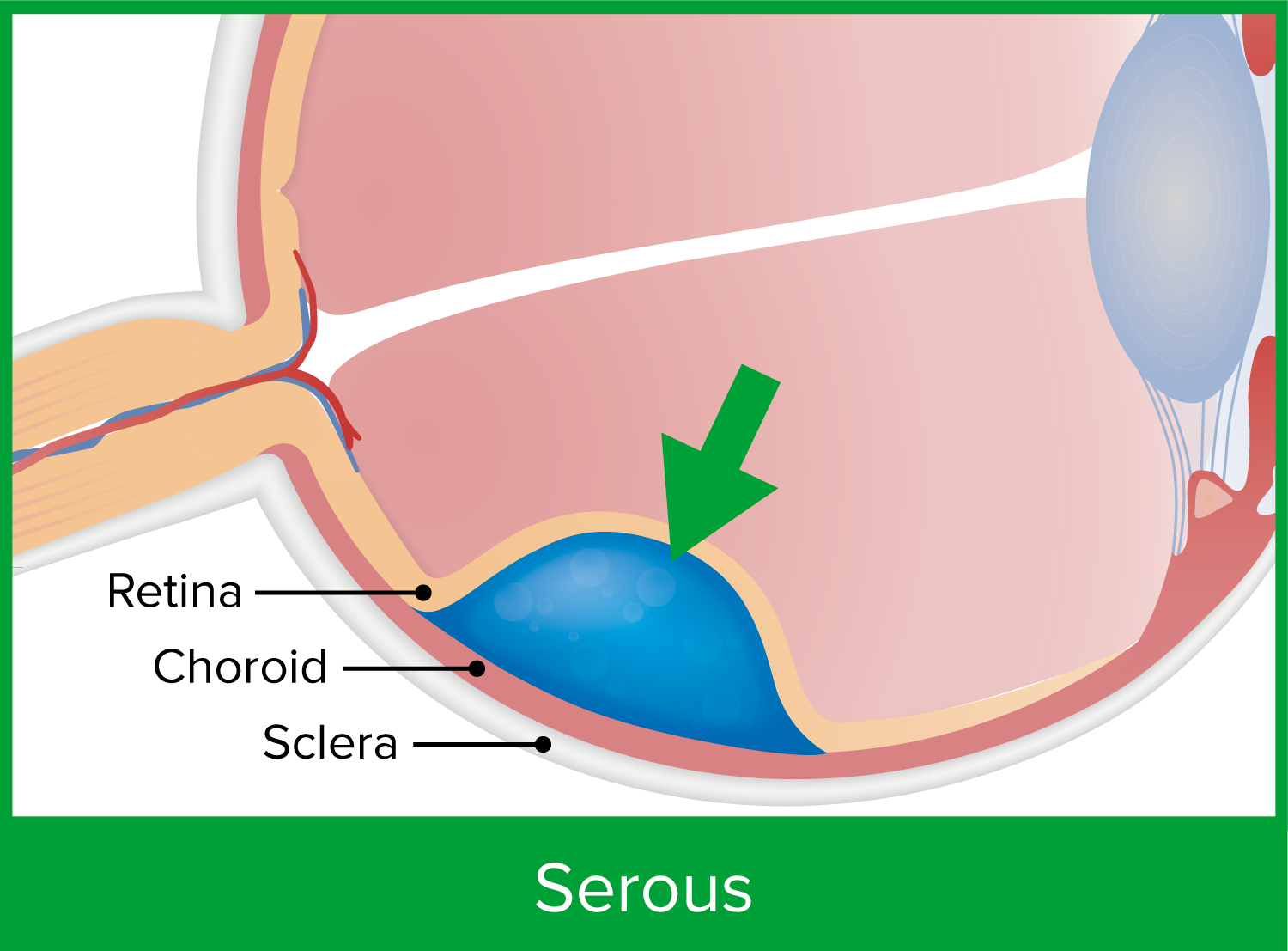
    • Descolamento da retina Retina The ten-layered nervous tissue membrane of the eye. It is continuous with the optic nerve and receives images of external objects and transmits visual impulses to the brain. Its outer surface is in contact with the choroid and the inner surface with the vitreous body. The outermost layer is pigmented, whereas the inner nine layers are transparent. Eye: Anatomy exsudativo (seroso): resulta da entrada de fluido no espaço sub-retiniano
  • Fatores de risco para o descolamento da retina Retina The ten-layered nervous tissue membrane of the eye. It is continuous with the optic nerve and receives images of external objects and transmits visual impulses to the brain. Its outer surface is in contact with the choroid and the inner surface with the vitreous body. The outermost layer is pigmented, whereas the inner nine layers are transparent. Eye: Anatomy por tração:
    • Retinopatia diabética proliferativa (complicações da diabetes Diabetes Diabetes mellitus (DM) is a metabolic disease characterized by hyperglycemia and dysfunction of the regulation of glucose metabolism by insulin. Type 1 DM is diagnosed mostly in children and young adults as the result of autoimmune destruction of β cells in the pancreas and the resulting lack of insulin. Type 2 DM has a significant association with obesity and is characterized by insulin resistance. Diabetes Mellitus)
    • Retinopatia da prematuridade
    • Lesão ocular penetrante
    • Hemoglobinopatias falciformes ( anemia Anemia Anemia is a condition in which individuals have low Hb levels, which can arise from various causes. Anemia is accompanied by a reduced number of RBCs and may manifest with fatigue, shortness of breath, pallor, and weakness. Subtypes are classified by the size of RBCs, chronicity, and etiology. Anemia: Overview and Types falciforme)
    • Oclusão venosa na retina Retina The ten-layered nervous tissue membrane of the eye. It is continuous with the optic nerve and receives images of external objects and transmits visual impulses to the brain. Its outer surface is in contact with the choroid and the inner surface with the vitreous body. The outermost layer is pigmented, whereas the inner nine layers are transparent. Eye: Anatomy
    • Trauma
  • Fatores de risco para o descolamento da retina Retina The ten-layered nervous tissue membrane of the eye. It is continuous with the optic nerve and receives images of external objects and transmits visual impulses to the brain. Its outer surface is in contact with the choroid and the inner surface with the vitreous body. The outermost layer is pigmented, whereas the inner nine layers are transparent. Eye: Anatomy exsudativo:
    • Tumores:
      • Tumores oculares primários
      • Metástases oculares
    • Doenças oculares:
      • Oftalmia simpática
      • Coriorretinopatia serosa central
      • Vasculopatia polipoidal da coroide
      • Fosseta do nervo óptico
      • Necrose aguda da retina Retina The ten-layered nervous tissue membrane of the eye. It is continuous with the optic nerve and receives images of external objects and transmits visual impulses to the brain. Its outer surface is in contact with the choroid and the inner surface with the vitreous body. The outermost layer is pigmented, whereas the inner nine layers are transparent. Eye: Anatomy
      • Doença de Coats
    • Doenças ou condições sistémicas:
      • Sarcoidose
      • Sífilis
      • Toxoplasmose
      • Tuberculose
      • Tratamento com corticoides
      • Síndrome de Vogt-Koyanagi-Harada
      • Pré-eclâmpsia, eclâmpsia, hipertensão não controlada
      • Transplante de órgão

Fisiopatologia

Precursores do descolamento da retina Retina The ten-layered nervous tissue membrane of the eye. It is continuous with the optic nerve and receives images of external objects and transmits visual impulses to the brain. Its outer surface is in contact with the choroid and the inner surface with the vitreous body. The outermost layer is pigmented, whereas the inner nine layers are transparent. Eye: Anatomy

  • Descolamento posterior do vítreo
    • O corpo vítreo encolhe lentamente (degeneração vítrea) e repuxa as fibras que ligam o vítreo à retina Retina The ten-layered nervous tissue membrane of the eye. It is continuous with the optic nerve and receives images of external objects and transmits visual impulses to the brain. Its outer surface is in contact with the choroid and the inner surface with the vitreous body. The outermost layer is pigmented, whereas the inner nine layers are transparent. Eye: Anatomy.
    • Mais MAIS Androgen Insensitivity Syndrome comum em doentes com > 70 anos
    • Também ocorre na miopia, bem como no trauma e inflamação ocular.
    • Leva a:
      • Descolamento regmatogénico ao causar um rasgo ou buraco na retina Retina The ten-layered nervous tissue membrane of the eye. It is continuous with the optic nerve and receives images of external objects and transmits visual impulses to the brain. Its outer surface is in contact with the choroid and the inner surface with the vitreous body. The outermost layer is pigmented, whereas the inner nine layers are transparent. Eye: Anatomy
      • Descolamento por tração quando o vítreo apresenta uma adesão forte à retina Retina The ten-layered nervous tissue membrane of the eye. It is continuous with the optic nerve and receives images of external objects and transmits visual impulses to the brain. Its outer surface is in contact with the choroid and the inner surface with the vitreous body. The outermost layer is pigmented, whereas the inner nine layers are transparent. Eye: Anatomy
  • Rotura retiniana
    • Descontinuidade na retina Retina The ten-layered nervous tissue membrane of the eye. It is continuous with the optic nerve and receives images of external objects and transmits visual impulses to the brain. Its outer surface is in contact with the choroid and the inner surface with the vitreous body. The outermost layer is pigmented, whereas the inner nine layers are transparent. Eye: Anatomy neurossensorial
    • Apresenta-se como um buraco (redondo) ou rasgo (em forma de ferradura) na retina Retina The ten-layered nervous tissue membrane of the eye. It is continuous with the optic nerve and receives images of external objects and transmits visual impulses to the brain. Its outer surface is in contact with the choroid and the inner surface with the vitreous body. The outermost layer is pigmented, whereas the inner nine layers are transparent. Eye: Anatomy
    • Permite a passagem e acumulação de fluido vítreo no espaço sub-retiniano
    • Associada ao descolamento regmatogénico da retina Retina The ten-layered nervous tissue membrane of the eye. It is continuous with the optic nerve and receives images of external objects and transmits visual impulses to the brain. Its outer surface is in contact with the choroid and the inner surface with the vitreous body. The outermost layer is pigmented, whereas the inner nine layers are transparent. Eye: Anatomy
Descolamento da retina

Esta imagem mostra uma rotura da retina (rasgo) que permite a entrada do fluido no espaço sub-retiniano.

Imagem de Lecturio.
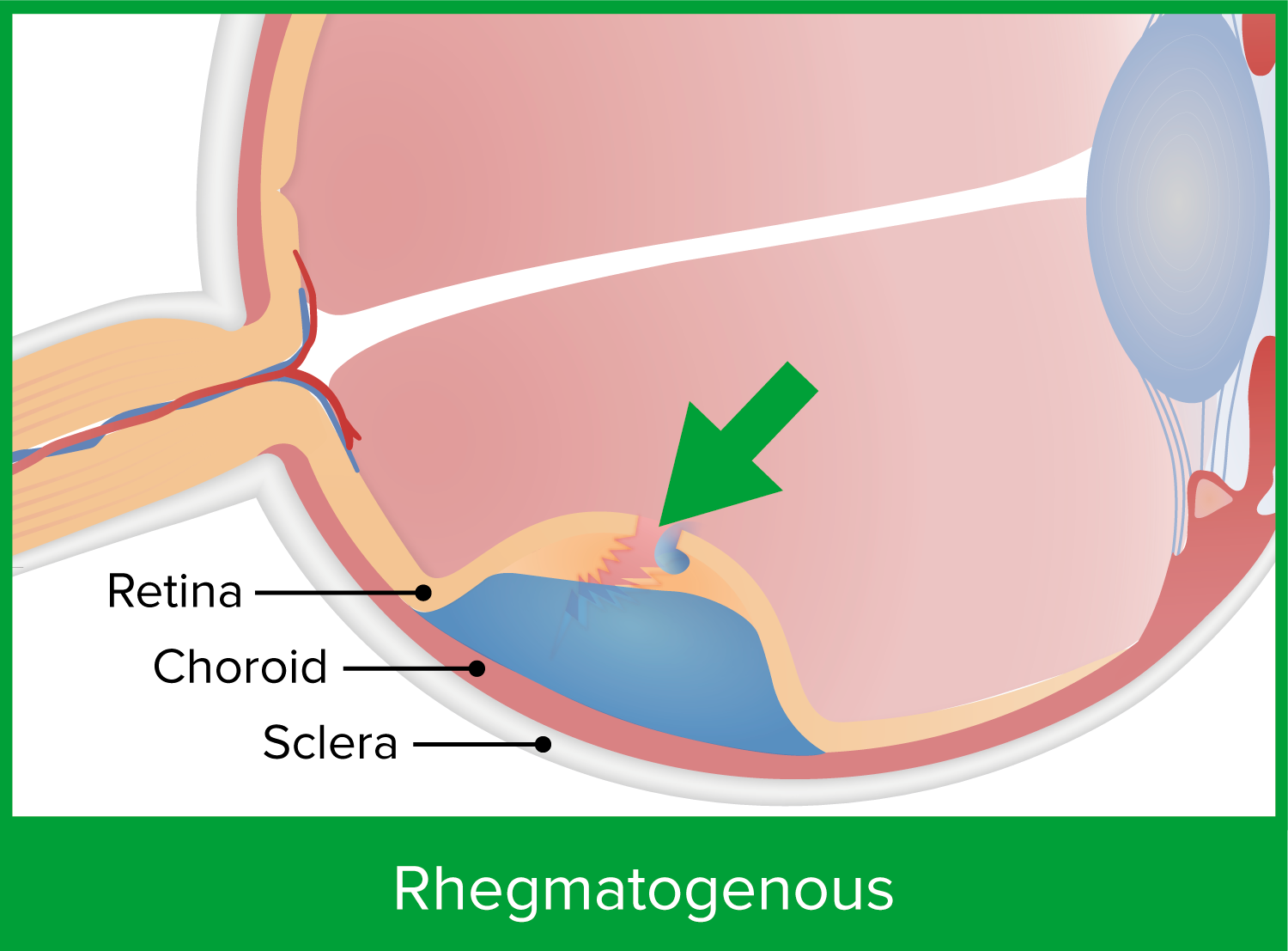
Descolamento regmatogénico da retina Retina The ten-layered nervous tissue membrane of the eye. It is continuous with the optic nerve and receives images of external objects and transmits visual impulses to the brain. Its outer surface is in contact with the choroid and the inner surface with the vitreous body. The outermost layer is pigmented, whereas the inner nine layers are transparent. Eye: Anatomy

  • Os buracos ou rasgos na retina Retina The ten-layered nervous tissue membrane of the eye. It is continuous with the optic nerve and receives images of external objects and transmits visual impulses to the brain. Its outer surface is in contact with the choroid and the inner surface with the vitreous body. The outermost layer is pigmented, whereas the inner nine layers are transparent. Eye: Anatomy permitem a entrada de fluido no espaço sub-retiniano, que leva à separação da retina Retina The ten-layered nervous tissue membrane of the eye. It is continuous with the optic nerve and receives images of external objects and transmits visual impulses to the brain. Its outer surface is in contact with the choroid and the inner surface with the vitreous body. The outermost layer is pigmented, whereas the inner nine layers are transparent. Eye: Anatomy neuronal do EPR.
  • O descolamento pode ocorrer em horas ou demorar meses.

Descolamento não regmatogénico da retina Retina The ten-layered nervous tissue membrane of the eye. It is continuous with the optic nerve and receives images of external objects and transmits visual impulses to the brain. Its outer surface is in contact with the choroid and the inner surface with the vitreous body. The outermost layer is pigmented, whereas the inner nine layers are transparent. Eye: Anatomy

  • Descolamento tracional da retina Retina The ten-layered nervous tissue membrane of the eye. It is continuous with the optic nerve and receives images of external objects and transmits visual impulses to the brain. Its outer surface is in contact with the choroid and the inner surface with the vitreous body. The outermost layer is pigmented, whereas the inner nine layers are transparent. Eye: Anatomy:
    • As membranas proliferativas puxam a retina Retina The ten-layered nervous tissue membrane of the eye. It is continuous with the optic nerve and receives images of external objects and transmits visual impulses to the brain. Its outer surface is in contact with the choroid and the inner surface with the vitreous body. The outermost layer is pigmented, whereas the inner nine layers are transparent. Eye: Anatomy neurossensorial, separando-a do epitélio pigmentar da retina Retina The ten-layered nervous tissue membrane of the eye. It is continuous with the optic nerve and receives images of external objects and transmits visual impulses to the brain. Its outer surface is in contact with the choroid and the inner surface with the vitreous body. The outermost layer is pigmented, whereas the inner nine layers are transparent. Eye: Anatomy.
    • Associado a doenças que levam à neovascularização (por exemplo, diabetes Diabetes Diabetes mellitus (DM) is a metabolic disease characterized by hyperglycemia and dysfunction of the regulation of glucose metabolism by insulin. Type 1 DM is diagnosed mostly in children and young adults as the result of autoimmune destruction of β cells in the pancreas and the resulting lack of insulin. Type 2 DM has a significant association with obesity and is characterized by insulin resistance. Diabetes Mellitus mellitus, retinopatia da prematuridade)
  • Descolamento exsudativo da retina Retina The ten-layered nervous tissue membrane of the eye. It is continuous with the optic nerve and receives images of external objects and transmits visual impulses to the brain. Its outer surface is in contact with the choroid and the inner surface with the vitreous body. The outermost layer is pigmented, whereas the inner nine layers are transparent. Eye: Anatomy:
    • Disfunção da saída do líquido do vítreo para a coroide ou alteração da permeabilidade vascular na região afetada → acumulação de líquido seroso ou hemorrágico
    • Causado por:
      • Fatores hidrostáticos (por exemplo, hipertensão aguda grave)
      • Inflamação (por exemplo, uveíte sarcoide)
      • Lesão ou neoplasia de grandes dimensões que causa derrames

Sequelas do descolamento da retina Retina The ten-layered nervous tissue membrane of the eye. It is continuous with the optic nerve and receives images of external objects and transmits visual impulses to the brain. Its outer surface is in contact with the choroid and the inner surface with the vitreous body. The outermost layer is pigmented, whereas the inner nine layers are transparent. Eye: Anatomy

  • Separação da retina Retina The ten-layered nervous tissue membrane of the eye. It is continuous with the optic nerve and receives images of external objects and transmits visual impulses to the brain. Its outer surface is in contact with the choroid and the inner surface with the vitreous body. The outermost layer is pigmented, whereas the inner nine layers are transparent. Eye: Anatomy da coroide → perda da irrigação sanguínea → isquemia → degeneração rápida e progressiva dos fotorrecetores
  • Quando a retina Retina The ten-layered nervous tissue membrane of the eye. It is continuous with the optic nerve and receives images of external objects and transmits visual impulses to the brain. Its outer surface is in contact with the choroid and the inner surface with the vitreous body. The outermost layer is pigmented, whereas the inner nine layers are transparent. Eye: Anatomy central está envolvida → perda de visão

Apresentação Clínica

Sintomas iniciais

  • Fotopsia:
    • Flashes de luz, por vezes associados ao movimento dos olhos
    • Efeito da despolarização mecânica dos axónios na camada de fibras nervosas da retina Retina The ten-layered nervous tissue membrane of the eye. It is continuous with the optic nerve and receives images of external objects and transmits visual impulses to the brain. Its outer surface is in contact with the choroid and the inner surface with the vitreous body. The outermost layer is pigmented, whereas the inner nine layers are transparent. Eye: Anatomy, provocada pela tração vitreorretiniana
    • Geralmente não ocorre no descolamento exsudativo da retina Retina The ten-layered nervous tissue membrane of the eye. It is continuous with the optic nerve and receives images of external objects and transmits visual impulses to the brain. Its outer surface is in contact with the choroid and the inner surface with the vitreous body. The outermost layer is pigmented, whereas the inner nine layers are transparent. Eye: Anatomy
  • Moscas volantes (“floaters” em inglês):
    • Quando a retina Retina The ten-layered nervous tissue membrane of the eye. It is continuous with the optic nerve and receives images of external objects and transmits visual impulses to the brain. Its outer surface is in contact with the choroid and the inner surface with the vitreous body. The outermost layer is pigmented, whereas the inner nine layers are transparent. Eye: Anatomy rasga, as células do EPR e sangue vão para a cavidade vítrea → “ floaters Floaters Chorioretinitis
    • Quando o vítreo se desprende do anel em redor do nervo óptico → grande mosca volante circular ou anel de Weiss
    • A separação da retina Retina The ten-layered nervous tissue membrane of the eye. It is continuous with the optic nerve and receives images of external objects and transmits visual impulses to the brain. Its outer surface is in contact with the choroid and the inner surface with the vitreous body. The outermost layer is pigmented, whereas the inner nine layers are transparent. Eye: Anatomy rompe um vaso sanguíneo e leva à hemorragia vítrea → “chuva de manchas pretas”
    • Depois das manchas pretas aparecerem, formam-se coágulos irregulares → “teias de aranha”

Progressão para descolamento da retina Retina The ten-layered nervous tissue membrane of the eye. It is continuous with the optic nerve and receives images of external objects and transmits visual impulses to the brain. Its outer surface is in contact with the choroid and the inner surface with the vitreous body. The outermost layer is pigmented, whereas the inner nine layers are transparent. Eye: Anatomy

  • Início:
    • Pequenas lesões retinianas: progridem lentamente (semanas a meses)
    • Rasgos grandes: progridem em dias
    • Descolamento não regmatogénico: leva semanas a meses
  • Descolamento localizado ou periférico:
    • Geralmente começa na periferia
    • Defeito do campo visual em cortina ou tipo sombra fraca
  • Descolamento extenso ou descolamento macular:
    • Perda súbita e indolor da visão (em “cortina descendente”): é uma emergência!
    • Descolamento que envolve a mácula: ↑ risco de perda visual permanente
    • Defeito pupilar aferente relativo (DPAR); indicativo de morte dos fotorrecetores
Tabela: Visão geral dos sintomas e respetivas causas
Sintoma Causa
Fotopsia Tração vitreorretiniana
Moscas volantes Células vítreas, sangue
Defeito do campo visual Descolamento periférico
Visão turva ou perda da visão central Descolamento macular

Diagnóstico

Avaliação inicial

  • História clínica
  • Teste da acuidade visual
  • Teste dos campos visuais por confrontação, que auxilia na localização da lesão
  • Reflexos pupilares (avaliar a presença de DPAR)

Exame oftalmológico

  • Avaliar ambos os olhos: o descolamento da retina Retina The ten-layered nervous tissue membrane of the eye. It is continuous with the optic nerve and receives images of external objects and transmits visual impulses to the brain. Its outer surface is in contact with the choroid and the inner surface with the vitreous body. The outermost layer is pigmented, whereas the inner nine layers are transparent. Eye: Anatomy aumenta o risco no olho adelfo
  • Fundoscopia com pupila dilatada e biomicroscopia com lâmpada de fenda
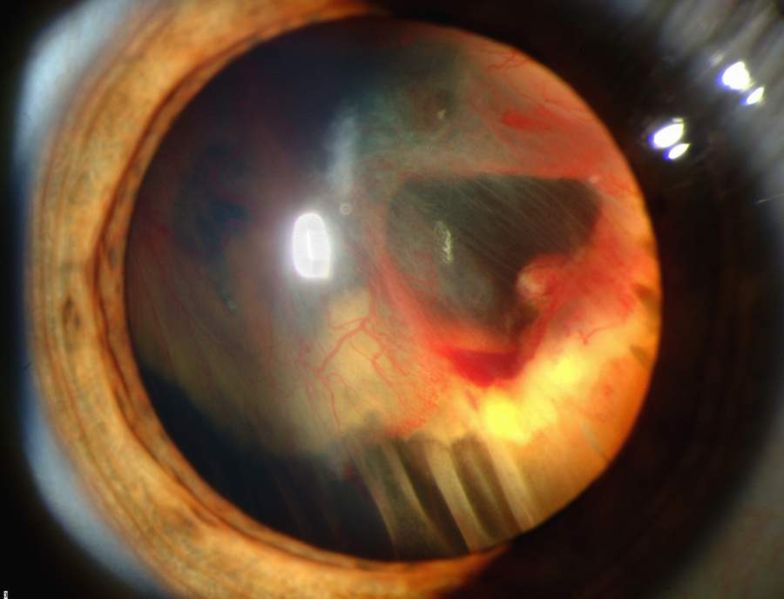
    • Fundoscopia: os rasgos na retina Retina The ten-layered nervous tissue membrane of the eye. It is continuous with the optic nerve and receives images of external objects and transmits visual impulses to the brain. Its outer surface is in contact with the choroid and the inner surface with the vitreous body. The outermost layer is pigmented, whereas the inner nine layers are transparent. Eye: Anatomy e/ou os descolamentos óbvios são visíveis como uma retina Retina The ten-layered nervous tissue membrane of the eye. It is continuous with the optic nerve and receives images of external objects and transmits visual impulses to the brain. Its outer surface is in contact with the choroid and the inner surface with the vitreous body. The outermost layer is pigmented, whereas the inner nine layers are transparent. Eye: Anatomy cinzenta e elevada que ondula
    • Avaliação do segmento anterior: pode mostrar células vítreas pigmentadas ou “pó de tabaco” (células do epitélio pigmentar da retina Retina The ten-layered nervous tissue membrane of the eye. It is continuous with the optic nerve and receives images of external objects and transmits visual impulses to the brain. Its outer surface is in contact with the choroid and the inner surface with the vitreous body. The outermost layer is pigmented, whereas the inner nine layers are transparent. Eye: Anatomy que flutuam livremente)
  • Ecografia oftálmica modo B:
    • Usada nos casos em que o exame oftalmológico não é diagnóstico
    • Deteta a presença de descolamento quando há hemorragia vítrea densa (que impede uma boa observação fundoscópica da retina Retina The ten-layered nervous tissue membrane of the eye. It is continuous with the optic nerve and receives images of external objects and transmits visual impulses to the brain. Its outer surface is in contact with the choroid and the inner surface with the vitreous body. The outermost layer is pigmented, whereas the inner nine layers are transparent. Eye: Anatomy)

Tratamento

Procedimentos

  • Retinopexia a laser (fotocoagulação): utilização do laser para induzir uma maior adesão coriorretiniana
  • Criorretinopexia: crioterapia aplicada com o objetivo de produzir cicatrizes e adesão retiniana
  • Retinopexia pneumática: procedimento realizado no consultório que consiste na criorretinopexia e na injeção de uma bolha de gás intravítreo para tamponar a área afetada.
  • Fivela escleral (introflexão escleral):
    • Estrutura de silicone flexível suturada à esclera para causar uma deformação (indentação da esclera para o interior do olho)
    • Traz a retina Retina The ten-layered nervous tissue membrane of the eye. It is continuous with the optic nerve and receives images of external objects and transmits visual impulses to the brain. Its outer surface is in contact with the choroid and the inner surface with the vitreous body. The outermost layer is pigmented, whereas the inner nine layers are transparent. Eye: Anatomy descolada para uma posição mais MAIS Androgen Insensitivity Syndrome próxima da parede do olho, reduz a tração vítreo-retiniana interna e encerra as roturas da retina Retina The ten-layered nervous tissue membrane of the eye. It is continuous with the optic nerve and receives images of external objects and transmits visual impulses to the brain. Its outer surface is in contact with the choroid and the inner surface with the vitreous body. The outermost layer is pigmented, whereas the inner nine layers are transparent. Eye: Anatomy.
  • Vitrectomia: remoção do corpo vítreo e utilização de óleo de silicone ou de uma bolha de ar AR Aortic regurgitation (AR) is a cardiac condition characterized by the backflow of blood from the aorta to the left ventricle during diastole. Aortic regurgitation is associated with an abnormal aortic valve and/or aortic root stemming from multiple causes, commonly rheumatic heart disease as well as congenital and degenerative valvular disorders. Aortic Regurgitation para o substituir.

Considerações da abordagem

  • Prevenção:
    • Óculos de proteção, especialmente nos desportos de contacto
    • Diagnóstico precoce do descolamento posterior do vítreo e, quando indicado, realização de vitrectomia
    • Tratamento das roturas ou buracos na retina Retina The ten-layered nervous tissue membrane of the eye. It is continuous with the optic nerve and receives images of external objects and transmits visual impulses to the brain. Its outer surface is in contact with the choroid and the inner surface with the vitreous body. The outermost layer is pigmented, whereas the inner nine layers are transparent. Eye: Anatomy para prevenir o descolamento da retina Retina The ten-layered nervous tissue membrane of the eye. It is continuous with the optic nerve and receives images of external objects and transmits visual impulses to the brain. Its outer surface is in contact with the choroid and the inner surface with the vitreous body. The outermost layer is pigmented, whereas the inner nine layers are transparent. Eye: Anatomy: retinopexia a laser ou criorretinopexia
  • Descolamento macular: implica um mau prognóstico visual
  • Complicações da reparação do descolamento da retina Retina The ten-layered nervous tissue membrane of the eye. It is continuous with the optic nerve and receives images of external objects and transmits visual impulses to the brain. Its outer surface is in contact with the choroid and the inner surface with the vitreous body. The outermost layer is pigmented, whereas the inner nine layers are transparent. Eye: Anatomy:

Tratamento do descolamento regmatogénico da retina Retina The ten-layered nervous tissue membrane of the eye. It is continuous with the optic nerve and receives images of external objects and transmits visual impulses to the brain. Its outer surface is in contact with the choroid and the inner surface with the vitreous body. The outermost layer is pigmented, whereas the inner nine layers are transparent. Eye: Anatomy

  • Sintomático:
    • Para aqueles com acuidade visual central preservada: Realizar o tratamento dentro de 24 horas (para evitar a progressão para um descolamento macular).
    • Pequeno descolamento: retinopexia a laser ou criorretinopexia
    • Opções para um descolamento de grandes dimensões:
      • Retinopexia pneumática
      • Colocação da fivela escleral
      • Vitrectomia
  • Assintomático:
    • Lesões pequenas: considerar laser ou criorretinopexia
    • Opções nas lesões grandes:
      • Retinopexia a laser ou criorretinopexia
      • Fivela escleral
      • Vitrectomia
Fivela escleral

Esta imagem ilustra a introflexão escleral, a colocação de uma estrutura em silicone flexível suturada à esclera. A fivela escleral empurra a esclera para dentro, mantendo assim as estruturas separadas mais próximas e permitindo que a retina se fixe novamente.

Imagem de Lecturio.

Tratamento do descolamento não regmatogénico da retina Retina The ten-layered nervous tissue membrane of the eye. It is continuous with the optic nerve and receives images of external objects and transmits visual impulses to the brain. Its outer surface is in contact with the choroid and the inner surface with the vitreous body. The outermost layer is pigmented, whereas the inner nine layers are transparent. Eye: Anatomy

  • Tracional:
    • Tratar a doença subjacente (por exemplo, a retinopatia diabética)
    • Remoção das forças de tração por vitrectomia (pode ser combinada com a introflexão escleral)
  • Exsudativo:
    • Tratar a doença subjacente.
    • As neoplasias podem exigir enucleação.

Diagnóstico Diferencial

  • Oclusão da artéria central da retina Retina The ten-layered nervous tissue membrane of the eye. It is continuous with the optic nerve and receives images of external objects and transmits visual impulses to the brain. Its outer surface is in contact with the choroid and the inner surface with the vitreous body. The outermost layer is pigmented, whereas the inner nine layers are transparent. Eye: Anatomy: oclusão da artéria central da retina Retina The ten-layered nervous tissue membrane of the eye. It is continuous with the optic nerve and receives images of external objects and transmits visual impulses to the brain. Its outer surface is in contact with the choroid and the inner surface with the vitreous body. The outermost layer is pigmented, whereas the inner nine layers are transparent. Eye: Anatomy, a principal irrigação do nervo óptico, por um êmbolo ou ateroma. Os doentes apresentam geralmente uma perda visual monocular súbita e indolor. Os achados fundoscópicos incluem o clareamento da retina Retina The ten-layered nervous tissue membrane of the eye. It is continuous with the optic nerve and receives images of external objects and transmits visual impulses to the brain. Its outer surface is in contact with the choroid and the inner surface with the vitreous body. The outermost layer is pigmented, whereas the inner nine layers are transparent. Eye: Anatomy com uma mancha “vermelho-cereja”. A oclusão da artéria central da retina Retina The ten-layered nervous tissue membrane of the eye. It is continuous with the optic nerve and receives images of external objects and transmits visual impulses to the brain. Its outer surface is in contact with the choroid and the inner surface with the vitreous body. The outermost layer is pigmented, whereas the inner nine layers are transparent. Eye: Anatomy é uma emergência médica e a recuperação visual depende da avaliação e tratamento imediatos.
  • Retinosquise: divisão da retina Retina The ten-layered nervous tissue membrane of the eye. It is continuous with the optic nerve and receives images of external objects and transmits visual impulses to the brain. Its outer surface is in contact with the choroid and the inner surface with the vitreous body. The outermost layer is pigmented, whereas the inner nine layers are transparent. Eye: Anatomy (geralmente na camada plexiforme externa) com o desenvolvimento de 2 camadas principais. A forma congénita (o tipo juvenil, recessivo ligado ao X) afeta mais MAIS Androgen Insensitivity Syndrome os homens que as mulheres, enquanto que na retinosquise adquirida ou senil, tanto os homens como as mulheres com idade > 50 anos são afetados. A acuidade visual reduzida é a apresentação habitual da retinosquise congénita. Os doentes com a patologia adquirida são geralmente assintomáticos. Pode levar ao descolamento da retina Retina The ten-layered nervous tissue membrane of the eye. It is continuous with the optic nerve and receives images of external objects and transmits visual impulses to the brain. Its outer surface is in contact with the choroid and the inner surface with the vitreous body. The outermost layer is pigmented, whereas the inner nine layers are transparent. Eye: Anatomy, que é tratado cirurgicamente.
  • Derrame na coroide: acumulação anormal de líquido no espaço supracoroide (entre a coroide e a esclera). O derrame coroidal pode resultar de uma cirurgia de glaucoma Glaucoma Glaucoma is an optic neuropathy characterized by typical visual field defects and optic nerve atrophy seen as optic disc cupping on examination. The acute form of glaucoma is a medical emergency. Glaucoma is often, but not always, caused by increased intraocular pressure (IOP). Glaucoma ou de trauma, infeções e neoplasias. Os doentes podem ser assintomáticos quando o derrame é pequeno; no entanto, em derrames maiores ocorrem alterações refrativas, diminuição da visão e dor. A ecografia oftálmica ajuda a diferenciar o descolamento da retina Retina The ten-layered nervous tissue membrane of the eye. It is continuous with the optic nerve and receives images of external objects and transmits visual impulses to the brain. Its outer surface is in contact with the choroid and the inner surface with the vitreous body. The outermost layer is pigmented, whereas the inner nine layers are transparent. Eye: Anatomy do derrame coroidal. Dependendo da patologia subjacente, o tratamento varia desde a vigilância até à drenagem cirúrgica.
  • Massa da coroide: pode resultar de um nevo benigno a lesões malignas como melanomas. A coroide possui uma irrigação vascular abundante, tornando-se um local comum de metastização de neoplasias. A apresentação pode variar desde casos assintomáticos a visão turva. A ecografia ajuda a diferenciar as várias lesões oculares. O tratamento deve ser dirigido à etiologia da massa.
  • Hemorragia supracoroidal: sangramento entre a coroide e a esclera. Esta condição é rara, mas pode resultar de uma cirurgia intraocular. Os fatores de risco incluem a diabetes Diabetes Diabetes mellitus (DM) is a metabolic disease characterized by hyperglycemia and dysfunction of the regulation of glucose metabolism by insulin. Type 1 DM is diagnosed mostly in children and young adults as the result of autoimmune destruction of β cells in the pancreas and the resulting lack of insulin. Type 2 DM has a significant association with obesity and is characterized by insulin resistance. Diabetes Mellitus, a hipertensão não controlada e os fármacos anticoagulantes ou antiagregantes plaquetários. A hemorragia supracoroidal pode ocorrer no intra ou no pós-operatório. Os sintomas incluem cdefaleias, náuseas, dor ocular e diminuição da acuidade visual. A ecografia deteta a extensão e a localização da hemorragia. O tratamento visa a redução da pressão intraocular com o controlo da dor e da hemorragia.

Referências

  1. Arroyo, J., Gardiner, M. Givens, J. (2024) Retinal detachment. UpToDate. Retrieved on August 4, 2025, from https://www.uptodate.com/contents/retinal-detachment
  2. Blair, K., Czyz, C. (2024) Retinal detachment. StatPearls. Retrieved on August 4, 2025, from https://www.ncbi.nlm.nih.gov/books/NBK551502/#_article-28444_s8_
  3. Andya, H. K. (2024, July 12). Retinal detachment. Medscape. Retrieved on August 4, 2025, from https://emedicine.medscape.com/article/798501-overview

Crie sua conta gratuita ou faça login para continuar lendo!

Cadastre-se agora e tenha acesso grátis ao Lecturio, com páginas de conceitos, vídeos de medicina e questões para sua educação médica.

Aprende mais com a Lecturio:

Multiple devices displaying human anatomy and health education content.

Complementa o teu estudo da faculdade com o companheiro de estudo tudo-em-um da Lecturio, através de métodos de ensino baseados em evidência.

Estuda onde quiseres

Two iPhones display medical education apps, one showing anatomy, the other Bookmatcher.

A Lecturio Medical complementa o teu estudo através de métodos de ensino baseados em evidência, vídeos de palestras, perguntas e muito mais – tudo combinado num só lugar e fácil de usar.

User Reviews

Have a holly, jolly study session 🎁 Save 50% on all plans now >>

Que tengas una sesión de estudio alegre y navideña 🎁 Ahorra 50% en todos los planes >>

Details