


Agentes Antimicobacterianos

Os agentes antimicobacterianos representam um grupo diverso de compostos que têm atividade contra infeções por micobactérias, incluindo tuberculose, hanseníase (lepra) e doença do complexo Mycobacterium avium Mycobacterium avium A bacterium causing tuberculosis in domestic fowl and other birds. In pigs, it may cause localized and sometimes disseminated disease. The organism occurs occasionally in sheep and cattle. It should be distinguished from the m. avium complex, which infects primarily humans. Mycobacterium (MAC). Os agentes de 1ª linha para a tuberculose são a rifampicina, a isoniazida, a pirazinamida e o etambutol. Os fármacos variam nos seus mecanismos de ação: a rifampicina inibe a síntese de RNA RNA A polynucleotide consisting essentially of chains with a repeating backbone of phosphate and ribose units to which nitrogenous bases are attached. RNA is unique among biological macromolecules in that it can encode genetic information, serve as an abundant structural component of cells, and also possesses catalytic activity. RNA Types and Structure, a isoniazida inibe a síntese de ácido micólico, a pirazinamida atua no transporte pela membrana e na síntese de proteínas e o etambutol impede a síntese da parede celular. A monoterapia não está recomendada devido ao risco aumentado de resistência aos fármacos. O tratamento com múltiplos fármacos demora vários meses e requer monitorização da espectoração. Já na hanseníase, infeção causada pelo Mycobacterium leprae Mycobacterium leprae A species of gram-positive, aerobic bacteria that causes leprosy in man. Its organisms are generally arranged in clumps, rounded masses, or in groups of bacilli side by side. Mycobacterium, também se usa a rifampicina, com a dapsona. A forma lepromatosa requer um terceiro agente (clofazimina). As infeções pulmonares com MAC são tratadas com macrólidos (azitromicina), rifampicina e etambutol.

Last updated: Dec 15, 2025

Editorial responsibility: Stanley Oiseth, Lindsay Jones, Evelin Maza

Descrição Geral

Definição

Os agentes antimicobacterianos representam um grupo diverso de compostos usados contra infeções por micobactérias (por exemplo, TB TB Tuberculosis (TB) is an infectious disease caused by Mycobacterium tuberculosis complex bacteria. The bacteria usually attack the lungs but can also damage other parts of the body. Approximately 30% of people around the world are infected with this pathogen, with the majority harboring a latent infection. Tuberculosis spreads through the air when a person with active pulmonary infection coughs or sneezes. Tuberculosis, lepra, complexo Mycobacterium avium Mycobacterium avium A bacterium causing tuberculosis in domestic fowl and other birds. In pigs, it may cause localized and sometimes disseminated disease. The organism occurs occasionally in sheep and cattle. It should be distinguished from the m. avium complex, which infects primarily humans. Mycobacterium).

Agentes antimicobacterianos

Tabela: Esquemas de tratamento para infeções por micobactérias
Bactérias Regime de tratamento * Profilaxia
Mycobacterium tuberculosis Mycobacterium tuberculosis Tuberculosis (TB) is an infectious disease caused by Mycobacterium tuberculosis complex bacteria. The bacteria usually attack the lungs but can also damage other parts of the body. Approximately 30% of people around the world are infected with this pathogen, with the majority harboring a latent infection. Tuberculosis spreads through the air when a person with active pulmonary infection coughs or sneezes. Tuberculosis
  • RIPE: Rifampicina (RIF), Isoniazida (hidrazida de ácido isonicotínico (INH)), Piranazinamida ( PZA PZA A pyrazine that is used therapeutically as an antitubercular agent. Antimycobacterial Drugs), Etambutol (EMB)
  • Regime de 3 a 4 fármacos (para reduzir a resistência)
Isoniazida
M. leprae
  • Dapsona + rifampicina (para a forma tuberculoide)
  • Adicionar clofazimina na forma lepromatosa
Nenhuma
As espécies predominantes do complexo M. avium (MAC) dentro do complexo incluem:
  • M. avium
  • M. intracellulare
  • M. chimaera
  • Doença pulmonar por MAC: macrólidos (azitromicina ou claritromicina) + rifamicina (por exemplo, rifampicina) + EMB
  • Se não for tolerado: regime de 2 fármacos
  • Se doença cavitária: adicionar aminoglicosídeo parentérico
Azitromicina ou rifabutina
* Agentes de 1ª linha

Rifampicina

Descrição e farmacodinâmica

  • Rifamicina usada mais MAIS Androgen Insensitivity Syndrome frequentemente (rifamicinas também incluem rifabutina e rifapentina)
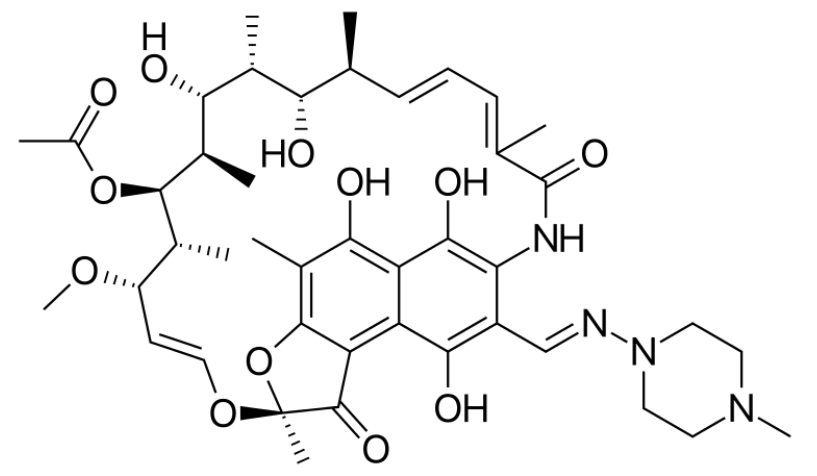
  • Antibiótico macrocíclico
  • resistência se usado sozinho
  • Aumenta o citocromo P450 (leva a ↓ biodisponibilidade de fármacos coadministrados)
  • Fluidos corporais de laranja a laranja-avermelhado (por exemplo, urina, suor, lágrimas, saliva Saliva The clear, viscous fluid secreted by the salivary glands and mucous glands of the mouth. It contains mucins, water, organic salts, and ptyalin. Salivary Glands: Anatomy)
  • Mecanismo de ação: inibe a enzima RNA RNA A polynucleotide consisting essentially of chains with a repeating backbone of phosphate and ribose units to which nitrogenous bases are attached. RNA is unique among biological macromolecules in that it can encode genetic information, serve as an abundant structural component of cells, and also possesses catalytic activity. RNA Types and Structure polimerase dependente de DNA DNA A deoxyribonucleotide polymer that is the primary genetic material of all cells. Eukaryotic and prokaryotic organisms normally contain DNA in a double-stranded state, yet several important biological processes transiently involve single-stranded regions. DNA, which consists of a polysugar-phosphate backbone possessing projections of purines (adenine and guanine) and pyrimidines (thymine and cytosine), forms a double helix that is held together by hydrogen bonds between these purines and pyrimidines (adenine to thymine and guanine to cytosine). DNA Types and Structure, bloqueando a síntese de mRNA mRNA RNA sequences that serve as templates for protein synthesis. Bacterial mRNAs are generally primary transcripts in that they do not require post-transcriptional processing. Eukaryotic mRNA is synthesized in the nucleus and must be exported to the cytoplasm for translation. Most eukaryotic mRNAs have a sequence of polyadenylic acid at the 3′ end, referred to as the poly(a) tail. The function of this tail is not known for certain, but it may play a role in the export of mature mRNA from the nucleus as well as in helping stabilize some mRNA molecules by retarding their degradation in the cytoplasm. RNA Types and Structure
Estrutura química da rifampicina

Fórmula esquelética da rifampicina

Imagem: “Skeletal formula of rifampin” por Vaccinationist. Licença: Public Domain
Farmacocinética

  • Absorção: reduzida pelos alimentos (tomar com o estômago vazio)
  • Distribuição: lipofílica, amplamente distribuída em todos os tecidos e fluidos (incluindo LCR)
  • Metabolismo: hepático (é necessário usar com precaução na doença hepática)
  • Eliminação: principalmente excretado na bílis/fezes, algum na urina urina (≤ 30%)

Interações farmacológicas

  • Aumenta o citocromo P450 (↓ níveis de outros fármacos)
  • As interações incluem:
    • Varfarina
    • Contracetivos orais ou outros anticoncecionais hormonais
    • Glucocorticoides
    • Ciclosporina
    • Inibidores da HMG-CoA redutase (estatinas)
    • Macrólidos, antifúngicos azólicos
    • Fenitoína
    • Levotiroxina
    • Sulfonilureias
    • Antirretrovirais

Efeitos adversos e contraindicações

  • Efeitos adversos:
    • Hepático: ↑ enzimas hepáticas (hepatotoxicidade), especialmente nos que têm risco aumentado (por exemplo, indivíduos com alcoolismo, indivíduos que fazem outros fármacos hepatotóxicos)
    • Rash Rash Rocky Mountain Spotted Fever
    • Coloração laranja/vermelha das secreções corporais
    • Anemia Anemia Anemia is a condition in which individuals have low Hb levels, which can arise from various causes. Anemia is accompanied by a reduced number of RBCs and may manifest with fatigue, shortness of breath, pallor, and weakness. Subtypes are classified by the size of RBCs, chronicity, and etiology. Anemia: Overview and Types hemolítica, neutropenia Neutropenia Neutrophils are an important component of the immune system and play a significant role in the eradication of infections. Low numbers of circulating neutrophils, referred to as neutropenia, predispose the body to recurrent infections or sepsis, though patients can also be asymptomatic. Neutropenia, trombocitopenia
    • Nefrite
    • Síndrome semelhante à gripe
  • Contraindicações:
    • Hipersensibilidade ou reação grave anterior à rifampicina
    • Usar com precaução na doença hepática
    • Uso concomitante com inibidores de protease Protease Enzyme of the human immunodeficiency virus that is required for post-translational cleavage of gag and gag-pol precursor polyproteins into functional products needed for viral assembly. HIV protease is an aspartic protease encoded by the amino terminus of the pol gene. HIV Infection and AIDS (↑ hepatotoxicidade)

Mecanismo de resistência

  • Mutações no gene Gene A category of nucleic acid sequences that function as units of heredity and which code for the basic instructions for the development, reproduction, and maintenance of organisms. Basic Terms of Genetics rpoB (codifica a cadeia beta da polimerase de RNA RNA A polynucleotide consisting essentially of chains with a repeating backbone of phosphate and ribose units to which nitrogenous bases are attached. RNA is unique among biological macromolecules in that it can encode genetic information, serve as an abundant structural component of cells, and also possesses catalytic activity. RNA Types and Structure micobacteriana)
  • Efeito da mutação: redução da ligação ao fármaco

Isoniazida

Descrição e farmacodinâmica

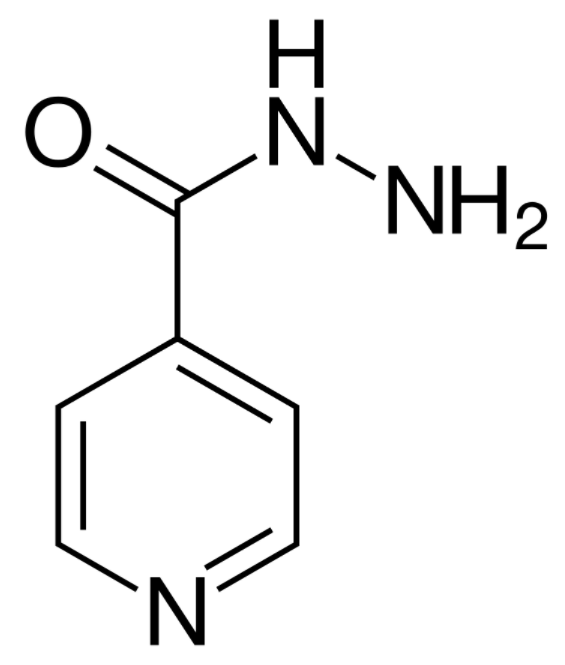
  • Também conhecida como hidrazida de ácido isonicotínico
  • Bactericida
  • Um pró-fármaco ativado por M. tuberculosis Tuberculosis Tuberculosis (TB) is an infectious disease caused by Mycobacterium tuberculosis complex bacteria. The bacteria usually attack the lungs but can also damage other parts of the body. Approximately 30% of people around the world are infected with this pathogen, with the majority harboring a latent infection. Tuberculosis spreads through the air when a person with active pulmonary infection coughs or sneezes. Tuberculosis catalase-peroxidase (codificado por KatG) → N-acetil INH (metabolito principal)
  • Profilaxia contra a tuberculose
  • Monoterapia para a tuberculose latente
  • Mecanismo de ação: inibe a síntese de ácido micólico (afeta a parede celular micobacteriana)
Estrutura química da isoniazida

Fórmula esquelética de isoniazida (hidrazida de ácido isonicotínico (INH))

Imagem: “Skeletal formula of isoniazid” por Fvasconcellos. Licença: Public Domain
Farmacocinética

  • Absorção: bem absorvida por via oral, mas pode ser reduzida ou atrasada pelos alimentos
  • Distribuição: amplamente distribuída por todo o corpo
  • Metabolismo (metabolismo hepático via acetilação determinado geneticamente)
    • 50% dos caucasianos e negros → acetiladores rápidos (exibem picos menores de concentrações séricas)
    • 80%–90% dos asiáticos e das regiões do Alasca e do Ártico → acetiladores rápidos
  • Eliminação: renal (até 96% excretado inalterado)

Interações farmacológicas

  • A inibição do sistema enzimático hepático do citocromo P (CYP) pela INH leva a interações farmacológicas (↑ concentração de outros fármacos).
  • Inclui (mas não limitado a):
    • Carbamazepina
    • Fenitoína
    • Teofilina

Efeitos adversos e contraindicações

  • Efeitos adversos (“INH Injures Nerves and Hepatocytes” (lesa nervos e hepatócitos)):
    • Hepático: ↑ enzimas hepáticas (hepatotoxicidade)
    • Neurológicos:
      • Neuropatia periférica, ataxia Ataxia Impairment of the ability to perform smoothly coordinated voluntary movements. This condition may affect the limbs, trunk, eyes, pharynx, larynx, and other structures. Ataxia may result from impaired sensory or motor function. Sensory ataxia may result from posterior column injury or peripheral nerve diseases. Motor ataxia may be associated with cerebellar diseases; cerebral cortex diseases; thalamic diseases; basal ganglia diseases; injury to the red nucleus; and other conditions. Ataxia-telangiectasia, parestesias (depleta a vitamina B6, pelo que é necessário suplementação)
      • Cefaleias
      • Depressão e disforia
      • Convulsões e psicose
    • Hematológica: anemia Anemia Anemia is a condition in which individuals have low Hb levels, which can arise from various causes. Anemia is accompanied by a reduced number of RBCs and may manifest with fatigue, shortness of breath, pallor, and weakness. Subtypes are classified by the size of RBCs, chronicity, and etiology. Anemia: Overview and Types hemolítica (desencadeada por INH na deficiência de glicose-6-fosfato desidrogenase)
    • Imunológico: síndrome semelhante à gripe, lúpus eritematoso sistémico induzido por fármacos
    • Rash Rash Rocky Mountain Spotted Fever
  • Contraindicações:
    • Hipersensibilidade ou reação grave anterior à INH
    • Usar com precaução na doença hepática

Mecanismo de resistência

  • Mutação de inhA (proteína envolvida na síntese da parede celular micobacteriana)
  • Mutação de KatG (atividade enzimática com regulação negativa)

Pirazinamida

Descrição e farmacodinâmica

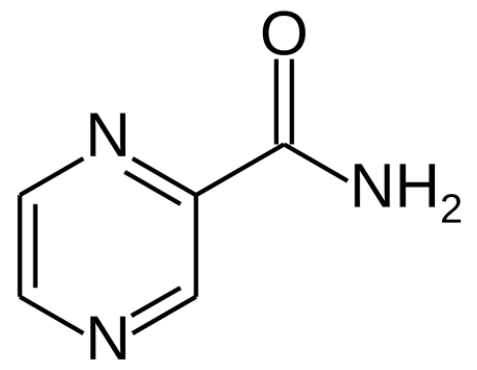
  • Pirazina sintética análoga da nicotinamida
  • Metabolizada em ácido pirazinoico (POA), a forma ativa da pirazinamida, através da ação da pirazinamidase de M. tuberculosis Tuberculosis Tuberculosis (TB) is an infectious disease caused by Mycobacterium tuberculosis complex bacteria. The bacteria usually attack the lungs but can also damage other parts of the body. Approximately 30% of people around the world are infected with this pathogen, with the majority harboring a latent infection. Tuberculosis spreads through the air when a person with active pulmonary infection coughs or sneezes. Tuberculosis
  • ↑ Atividade em pH pH The quantitative measurement of the acidity or basicity of a solution. Acid-Base Balance ácido
  • Mecanismo de ação:
    • O mecanismo exato é incerto.
    • Provavelmente envolve POA (inicialmente excretado da célula), que então é protonado
    • O POA protonado difunde-se de volta para a célula, acidificando o ambiente intracelular e inibindo o transporte da membrana e a síntese de proteínas.
Estrutura química dos agentes antimicobacterianos da pirazinamida

Estrutura da pirazinamida

Imagem: “Structure of pyrazinamide” por Fvasconcellos. Licença: Public Domain
Farmacocinética

  • Absorção: absorção rápida, com biodisponibilidade oral de aproximadamente 90%
  • Distribuição: amplamente distribuída em tecidos e fluidos, incluindo o LCR
  • Metabolismo: metabolismo hepático para metabolitos ativos e inativos
  • Eliminação: excretado por via renal; os metabolitos acumulam-se na disfunção renal (requer ajuste de dose)

Interações farmacológicas

  • Rifampicina: ↑ risco de hepatotoxicidade (pode ser fatal)
  • Ciclosporina: ↓ concentrações séricas de ciclosporina

Efeitos adversos e contraindicações

  • Efeitos adversos:
    • Hepático: ↑ enzimas hepáticas (hepatotoxicidade)
    • Hiperuricemia (o metabolito da pirazinamida inibe a eliminação do ácido úrico)
    • Poliartralgia de Nongouty
    • Distúrbios GI
    • Trombocitopenia, anemia Anemia Anemia is a condition in which individuals have low Hb levels, which can arise from various causes. Anemia is accompanied by a reduced number of RBCs and may manifest with fatigue, shortness of breath, pallor, and weakness. Subtypes are classified by the size of RBCs, chronicity, and etiology. Anemia: Overview and Types sideroblástica
    • Erupção cutânea, fotossensibilidade
  • Contraindicações:
    • Hipersensibilidade à pirazinamida
    • Gota aguda
    • Lesão hepática grave
    • Não é segura na gravidez

Mecanismo de resistência

  • Mutação da pncA (codifica pirazinamidase) → M. tuberculosis Tuberculosis Tuberculosis (TB) is an infectious disease caused by Mycobacterium tuberculosis complex bacteria. The bacteria usually attack the lungs but can also damage other parts of the body. Approximately 30% of people around the world are infected with this pathogen, with the majority harboring a latent infection. Tuberculosis spreads through the air when a person with active pulmonary infection coughs or sneezes. Tuberculosis produz pirazinamidase com afinidade reduzida para pirazinamida.
  • Efeito: ↓ conversão para POA → sem efeito na síntese da parede celular

Etambutol

Descrição e farmacodinâmica

  • Bacteriostático
  • Atividade contra diferentes espécies de micobactérias, mas sem nenhum efeito noutros géneros
  • Mecanismo de ação:
    • Inibe a arabinosiltransferase, uma enzima codificada pelos genes Genes A category of nucleic acid sequences that function as units of heredity and which code for the basic instructions for the development, reproduction, and maintenance of organisms. DNA Types and Structure embB
    • A arabinosiltransferase polimeriza a arabinose Arabinose Antimycobacterial Drugs (necessária na síntese de arabinogalactana na parede celular)
    • Efeito: interrupção da síntese da parede celular micobacteriana
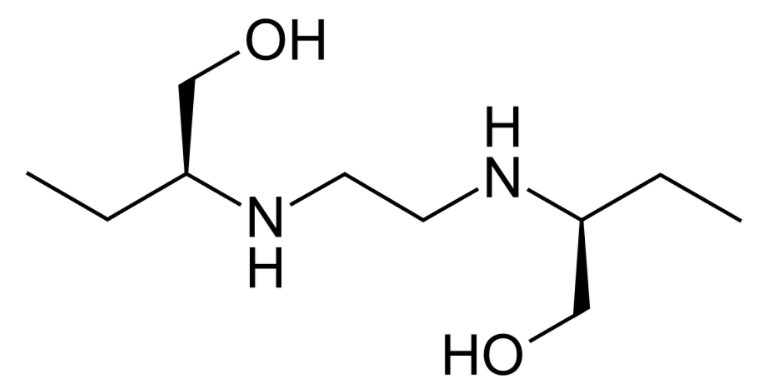
Estrutura química do etambutanol

Estrutura do etambutol

Imagem: “Structure of ethambutol” por Fvasconcellos. Licença: Public Domain

Farmacocinética

  • Absorção: aproximadamente 80% absorvido se administração oral
  • Distribuição: amplamente na maioria dos tecidos e fluidos, mas não no LCR
  • Metabolismo: metabolismo hepático parcial
  • Eliminação: a maioria (até 80%) é excretada por via renal

Interações farmacológicas

Hidróxido de alumínio ↓ absorção de fármacos

Efeitos adversos e contraindicações

  • Efeitos adversos:
    • Neuropatia óptica (“Eye-thambutol”) observada frequentemente como:
      • Uma alteração na acuidade visual
      • Daltonismo vermelho-verde
    • Hepatotoxicidade
    • GI (náuseas, vómitos, dor abdominal)
    • Hematológico ( neutropenia Neutropenia Neutrophils are an important component of the immune system and play a significant role in the eradication of infections. Low numbers of circulating neutrophils, referred to as neutropenia, predispose the body to recurrent infections or sepsis, though patients can also be asymptomatic. Neutropenia, trombocitopenia)
    • Cefaleias, tonturas, confusão
    • Neurite periférica
  • Contraindicações:
    • Hipersensibilidade ao etambutol
    • Neurite óptica

Mecanismo de resistência

  • Mutações envolvendo os genes Genes A category of nucleic acid sequences that function as units of heredity and which code for the basic instructions for the development, reproduction, and maintenance of organisms. DNA Types and Structure embB
  • Efeito: ↑ a produção de arabinosiltransferase causa vários graus de resistência.

Outros Agentes Anti-TB

São usados outros agentes dependendo das condições subjacentes e da presença de Mycobacterium Mycobacterium Mycobacterium is a genus of the family Mycobacteriaceae in the phylum Actinobacteria. Mycobacteria comprise more than 150 species of facultative intracellular bacilli that are mostly obligate aerobes. Mycobacteria are responsible for multiple human infections including serious diseases, such as tuberculosis (M. tuberculosis), leprosy (M. leprae), and M. avium complex infections. Mycobacterium multirresistente.
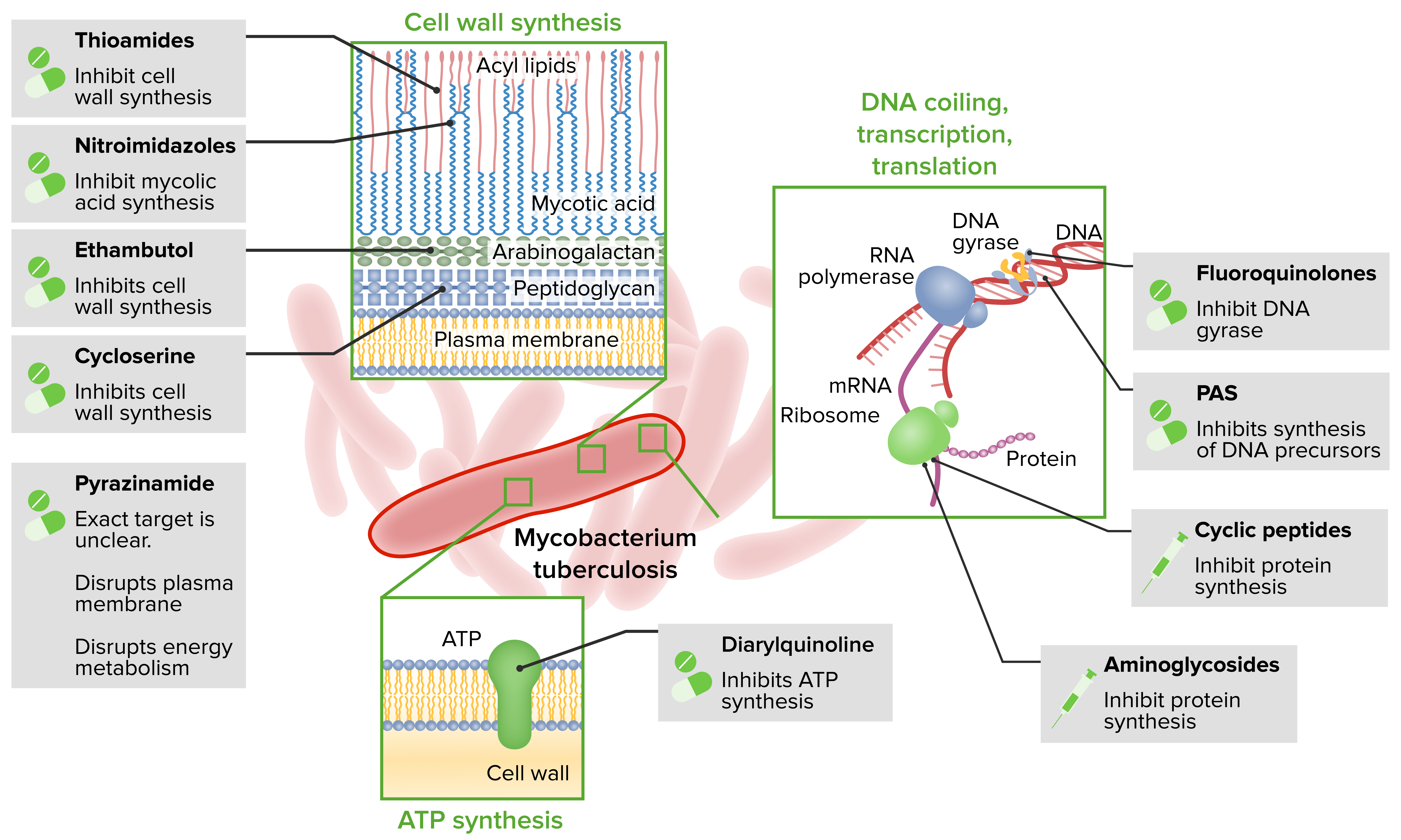
  • Aminoglicosídeos:
    • Estreptomicina e amicacina
    • Bactericida
    • Mecanismo: inibe a tradução pela ligação da subunidade ribossómica 30S
    • Efeitos adversos:
      • Nefrotoxicidade → acumulação de aminoglicosídeos no córtex renal
      • Ototoxicidade (pode ser irreversível; em mulheres grávidas, pode causar surdez permanente na criança)
      • Bloqueio neuromuscular (raro)
  • Bedaquilina:
    • Parte do regime de BPaL (bedaquilina + pretomanida + linezolida) (tuberculose pulmonar extensivamente resistente a fármacos [XDR-TB] ou TB TB Tuberculosis (TB) is an infectious disease caused by Mycobacterium tuberculosis complex bacteria. The bacteria usually attack the lungs but can also damage other parts of the body. Approximately 30% of people around the world are infected with this pathogen, with the majority harboring a latent infection. Tuberculosis spreads through the air when a person with active pulmonary infection coughs or sneezes. Tuberculosis multirresistente [MDR-TB]): bedaquilina + pretomanida + linezolida
    • Classificada como uma diarilquinolina
    • Bactericida
    • Mecanismo: inibe a ATP sintase micobacteriana
    • Efeito adverso: prolongamento do intervalo QT
  • Nitroimidazois bicíclicos:
    • Pretomanida:
      • Parte do regime BPaL (XDR-TB pulmonar ou MDR-TB)
      • Mecanismo: inibição da síntese da parede celular (bloqueia a oxidação de hidroximicolato a cetomicolato)
    • Delamanida: inibe a síntese de ácido micólico (para MDR-TB aprovado na Europa, ainda não nos Estados Unidos)
  • Clofazimina:
    • Para a tuberculose resistente a fármacos
    • Requer aprovação da FDA para uso de anti-TB
    • Disponível em regiões onde a clofazimina é usada para a hanseníase
    • Efeitos adversos: distúrbios gastrointestinais
  • Cicloserina:
    • Para a tuberculose resistente a fármacos
    • Mecanismo: bloqueia a produção de peptidoglicanos, interrompendo assim a síntese da parede celular micobacteriana
    • Efeitos adversos: sintomas neuropsiquiátricos
  • Etionamida:
    • Para a tuberculose resistente a fármacos
    • Análogo estrutural da INH
    • Um pró-fármaco
    • Mecanismo: inibe a síntese de ácido micólico (semelhante à INH)
    • Efeitos adversos: distúrbios gastrointestinais, úlcera péptica
  • Fluoroquinolonas:
    • Levofloxacina e moxifloxacina (maior atividade in vitro do que a ciprofloxacina)
    • Bactericida
    • Mecanismo: inibe a girase do DNA DNA A deoxyribonucleotide polymer that is the primary genetic material of all cells. Eukaryotic and prokaryotic organisms normally contain DNA in a double-stranded state, yet several important biological processes transiently involve single-stranded regions. DNA, which consists of a polysugar-phosphate backbone possessing projections of purines (adenine and guanine) and pyrimidines (thymine and cytosine), forms a double helix that is held together by hydrogen bonds between these purines and pyrimidines (adenine to thymine and guanine to cytosine). DNA Types and Structure bacteriano e interromper a replicação do DNA DNA A deoxyribonucleotide polymer that is the primary genetic material of all cells. Eukaryotic and prokaryotic organisms normally contain DNA in a double-stranded state, yet several important biological processes transiently involve single-stranded regions. DNA, which consists of a polysugar-phosphate backbone possessing projections of purines (adenine and guanine) and pyrimidines (thymine and cytosine), forms a double helix that is held together by hydrogen bonds between these purines and pyrimidines (adenine to thymine and guanine to cytosine). DNA Types and Structure
  • Oxazolidinonas:
    • Parte do regime BPaL (XDR-TB pulmonar ou MDR-TB)
    • Mecanismo:
      • Liga-se ao rRNA rRNA The most abundant form of RNA. Together with proteins, it forms the ribosomes, playing a structural role and also a role in ribosomal binding of mRNA and tRNAs. Individual chains are conventionally designated by their sedimentation coefficients. In eukaryotes, four large chains exist, synthesized in the nucleolus and constituting about 50% of the ribosome. RNA Types and Structure 23S bacteriano da subunidade 50S
      • Bloqueia a formação do complexo de iniciação 70S → impede a tradução
    • Efeitos adversos: supressão da medula óssea, neuropatia, sintomas gastrointestinais e/ou retinite
  • Ácido para-aminossalicílico (PAS):
    • Bacteriostático
    • Eficácia limitada contra TB TB Tuberculosis (TB) is an infectious disease caused by Mycobacterium tuberculosis complex bacteria. The bacteria usually attack the lungs but can also damage other parts of the body. Approximately 30% of people around the world are infected with this pathogen, with the majority harboring a latent infection. Tuberculosis spreads through the air when a person with active pulmonary infection coughs or sneezes. Tuberculosis
    • Mecanismo: interrompe a síntese de folato
    • Efeitos adversos:
      • Efeitos adversos GI
      • Com etionamida → hipotiroidismo
  • Rifabutina:
    • Uma rifamicina, como rifampicina
    • Menos interações farmacológicas do que a rifampicina, pois é um indutor menos potente do sistema enzimático do citocromo P450
    • Preferida no HIV HIV Anti-HIV Drugs
  • Informações adicionais: canamicina (um aminoglicosídeo) e capreomicina (um peptídeo cíclico):
    • Já não são recomendadas para tratamento anti-TB
    • Ambos os fármacos foram associadas a piores resultados.
Antimycobacterial drugs

Agentes e mecanismos anti-tuberculose
PAS: Ácido para-aminosalicílico

Imagem por Lecturio.

Agentes contra Mycobacterium leprae e Complexo Mycobacterium avium

Agentes contra Mycobacterium leprae Mycobacterium leprae A species of gram-positive, aerobic bacteria that causes leprosy in man. Its organisms are generally arranged in clumps, rounded masses, or in groups of bacilli side by side. Mycobacterium

  • Regime de 1ª linha:
    • Dapsona + rifampicina durante 12 meses para a hanseníase tuberculoide
    • Dapsona + rifampicina + clofazimina durante 24 meses para a hanseníase lepromatosa
  • Fármacos:
    • Dapsona:
      • Agente com atividade antibacteriana, antifúngica e antiprotozoária
      • Mecanismo de ação: inibe a dihidropteroato sintase bacteriana na via do folato → ↓ síntese de ácido nucleico
      • Efeitos adversos: hemólise (especialmente em doses > 200 mg/dia), metemoglobinemia
    • Rifampicina (ver fármacos anti-TB)
    • Clofazimina (ver fármacos anti-TB)

Agentes contra o complexo Mycobacterium avium Mycobacterium avium A bacterium causing tuberculosis in domestic fowl and other birds. In pigs, it may cause localized and sometimes disseminated disease. The organism occurs occasionally in sheep and cattle. It should be distinguished from the m. avium complex, which infects primarily humans. Mycobacterium

  • Para doença pulmonar MAC, usa-se um esquema de associação de 3 fármacos:
    • Azitromicina:
      • Macrólidos (inibem a síntese de proteínas bacterianas ao ligar-se reversivelmente à subunidade ribossómica 50S)
      • Efeitos adversos: hepatotoxicidade, prolongamento do intervalo QT
    • Rifampicina
    • Etambutol
  • Para a doença cavitária, adiciona-se estreptomicina parentérica ou amicacina (aminoglicosídeos) como um 4º agente (nas primeiras 8–12 semanas).

Referências

  1. Drew, R., Sterling, T. (2025). Antituberculous drugs: an overview. UpToDate. Retrieved October 17, 2025, from https://www.uptodate.com/contents/antituberculous-drugs-an-overview
  2. Drew, R. (2025). Rifamycins (rifampin, rifabutin, rifapentine). UpToDate. Retrieved October 17, 2025, from https://www.uptodate.com/contents/rifamycins-rifampin-rifabutin-rifapentine
  3. Drew, R. (2025). Isoniazid: an overview. UpToDate. Retrieved October 17, 2025, from https://www.uptodate.com/contents/isoniazid-an-overview
  4. Drew, R. (2025). Ethambutol: an overview. UpToDate. Retrieved October 17, 2025, from https://www.uptodate.com/contents/ethambutol-an-overview
  5. Drew, R. (2025). Pyrazinamide: an overview. UpToDate. Retrieved October 17, 2025, from https://www.uptodate.com/contents/pyrazinamide-an-overview
  6. Gumbo, T. (2017). Chemotherapy of tuberculosis, mycobacterium avium complex disease, and leprosy. Chapter 60 of Brunton, L.L., Hilal-Dandan, R., Knollmann, B.C. (Eds.), Goodman & Gilman’s: The Pharmacological Basis of Therapeutics, 13th ed. McGraw-Hill. https://accessmedicine.mhmedical.com/content.aspx?bookid=2189&sectionid=172485532
  7. National Institute of Diabetes and Digestive and Kidney Diseases. (2018). Rifampin LiverTox: clinical and Research Information on drug-induced liver injury. https://www.ncbi.nlm.nih.gov/books/NBK548314/
  8. Schluger, N. (2025). Epidemiology and molecular mechanisms of drug-resistant tuberculosis. UpToDate. Retrieved October 17, 2025, from https://www.uptodate.com/contents/epidemiology-and-molecular-mechanisms-of-drug-resistant-tuberculosis
  9. Soeroto, A.,  Darmawan, G., Supriyadi, R., Bhaskara, P., Santoso, P., Alisjahbana, B., Parwati, I. (2019). Comparison of serum potassium, magnesium, and calcium levels between kanamycin and capreomycin-based regimen-treated multidrug-resistant tuberculosis patients in Bandung (CEASE MDR-TB): a retrospective cohort study. International Journal of Microbiology 2019, Article ID 5065847. https://doi.org/10.1155/2019/5065847

Crie sua conta gratuita ou faça login para continuar lendo!

Cadastre-se agora e tenha acesso grátis ao Lecturio, com páginas de conceitos, vídeos de medicina e questões para sua educação médica.

Aprende mais com a Lecturio:

Multiple devices displaying human anatomy and health education content.

Complementa o teu estudo da faculdade com o companheiro de estudo tudo-em-um da Lecturio, através de métodos de ensino baseados em evidência.

Estuda onde quiseres

Two iPhones display medical education apps, one showing anatomy, the other Bookmatcher.

A Lecturio Medical complementa o teu estudo através de métodos de ensino baseados em evidência, vídeos de palestras, perguntas e muito mais – tudo combinado num só lugar e fácil de usar.

User Reviews

Have a holly, jolly study session 🎁 Save 50% on all plans now >>

Que tengas una sesión de estudio alegre y navideña 🎁 Ahorra 50% en todos los planes >>

Details