Domina Conceptos Médicos

Estudia para la escuela de medicina y tus examenes con Lecturio.

Síndromes Mielodisplásicos

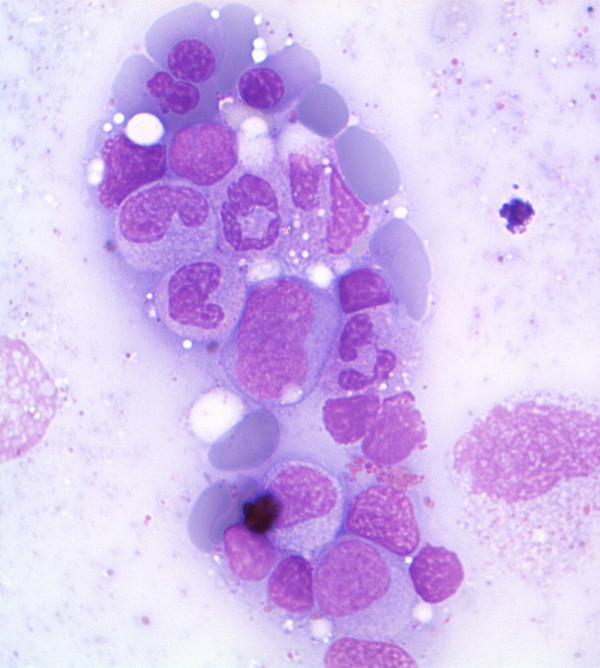
Los LOS Neisseria síndromes mielodisplásicos son un grupo de neoplasias clonales con defectos de maduración caracterizados por displasia, citopenia y precursores de médula ósea inmaduros. Pueden ser idiopáticos o secundarios a diversas exposiciones dañinas, como quimioterapia citotóxica, radiación ionizante o toxinas ambientales. La mediana de edad de los LOS Neisseria pacientes es de 70 años. La presentación incluye síntomas de anemia Anemia Anemia is a condition in which individuals have low Hb levels, which can arise from various causes. Anemia is accompanied by a reduced number of RBCs and may manifest with fatigue, shortness of breath, pallor, and weakness. Subtypes are classified by the size of RBCs, chronicity, and etiology. Anemia: Overview and Types (fatiga), neutropenia Neutropenia Neutrophils are an important component of the immune system and play a significant role in the eradication of infections. Low numbers of circulating neutrophils, referred to as neutropenia, predispose the body to recurrent infections or sepsis, though patients can also be asymptomatic. Neutropenia (infección) o trombocitopenia (sangrado). El diagnóstico se basa en EN Erythema nodosum is an immune-mediated panniculitis (inflammation of the subcutaneous fat) caused by a type IV (delayed-type) hypersensitivity reaction. It commonly manifests in young women as tender, erythematous nodules on the shins. Erythema Nodosum la evaluación de la médula ósea, que revela citopenia, displasia en EN Erythema nodosum is an immune-mediated panniculitis (inflammation of the subcutaneous fat) caused by a type IV (delayed-type) hypersensitivity reaction. It commonly manifests in young women as tender, erythematous nodules on the shins. Erythema Nodosum al AL Amyloidosis menos 1 linaje y células blásticas en EN Erythema nodosum is an immune-mediated panniculitis (inflammation of the subcutaneous fat) caused by a type IV (delayed-type) hypersensitivity reaction. It commonly manifests in young women as tender, erythematous nodules on the shins. Erythema Nodosum < 20% de la celularidad de la médula ósea. Se requieren estudios citogenéticos y moleculares para la clasificación, el pronóstico y las decisiones relacionadas con el tratamiento. Existe un mayor riesgo acumulativo de transformación a leucemia mieloide aguda y varía según el subtipo de síndrome mielodisplásico. El tratamiento incluye medidas de soporte, uso de factores de crecimiento hematopoyéticos, terapia inmunosupresora y trasplante alogénico de células hematopoyéticas.

Last updated: Dec 15, 2025

Editorial responsibility: Stanley Oiseth, Lindsay Jones, Evelin Maza

Descripción General

Definición

Los síndromes mielodisplásicos son enfermedades clonales de la médula ósea caracterizadas por la presencia de precursores displásicos, inmaduros de la médula ósea y citopenias periféricas. La Organización Mundial de la Salud (OMS) publicó una actualización en 2022 en la que renombró los síndromes mielodisplásicos como “Neoplasias mielodisplásicas”.

Epidemiología

  • La incidencia aumenta significativamente con la edad.
  • Edad mediana de presentación: aproximadamente 70 años
  • Incidencia anual en EN Erythema nodosum is an immune-mediated panniculitis (inflammation of the subcutaneous fat) caused by a type IV (delayed-type) hypersensitivity reaction. It commonly manifests in young women as tender, erythematous nodules on the shins. Erythema Nodosum los LOS Neisseria Estados Unidos:
    • 1–5 casos por 100 000
    • Individuos > 70 años: 20 casos por 100 000
  • Hombres > mujeres

Etiología

  • Primarios o idiopáticos
  • Secundarios (exposición a fuentes que conducen a daño cromosómico):
    • Tratamiento postcanceroso con agentes alquilantes (con o sin radioterapia)
    • Tratamiento previo con inhibidores de la topoisomerasa II (antraciclina o etopósido)
    • Exposición previa a ciertos químicos:
      • Benceno
      • Insecticidas, herbicidas, fungicidas
      • Tabaco
    • Anomalías genéticas hereditarias (e.g., trisomía 21, trisomía 8, anemia Anemia Anemia is a condition in which individuals have low Hb levels, which can arise from various causes. Anemia is accompanied by a reduced number of RBCs and may manifest with fatigue, shortness of breath, pallor, and weakness. Subtypes are classified by the size of RBCs, chronicity, and etiology. Anemia: Overview and Types de Fanconi, ataxia Ataxia Impairment of the ability to perform smoothly coordinated voluntary movements. This condition may affect the limbs, trunk, eyes, pharynx, larynx, and other structures. Ataxia may result from impaired sensory or motor function. Sensory ataxia may result from posterior column injury or peripheral nerve diseases. Motor ataxia may be associated with cerebellar diseases; cerebral cortex diseases; thalamic diseases; basal ganglia diseases; injury to the red nucleus; and other conditions. Ataxia-telangiectasia telangiectasia Telangiectasia Permanent dilation of preexisting blood vessels creating small focal red lesions, most commonly in the skin or mucous membranes. It is characterized by the prominence of skin blood vessels, such as vascular spiders. Chronic Venous Insufficiency)
    • Hematopoyesis clonal de potencial indeterminado
    • Condiciones hematológicas (e.g., anemia Anemia Anemia is a condition in which individuals have low Hb levels, which can arise from various causes. Anemia is accompanied by a reduced number of RBCs and may manifest with fatigue, shortness of breath, pallor, and weakness. Subtypes are classified by the size of RBCs, chronicity, and etiology. Anemia: Overview and Types aplásica, policitemia vera, hemoglobinuria Hemoglobinuria The presence of free hemoglobin in the urine, indicating hemolysis of erythrocytes within the vascular system. After saturating the hemoglobin-binding proteins (haptoglobins), free hemoglobin begins to appear in the urine. Transfusion Reactions paroxística nocturna, neutropenia Neutropenia Neutrophils are an important component of the immune system and play a significant role in the eradication of infections. Low numbers of circulating neutrophils, referred to as neutropenia, predispose the body to recurrent infections or sepsis, though patients can also be asymptomatic. Neutropenia congénita)
    • Predisposición familiar (trastornos plaquetarios congénitos)

Fisiopatología

La mayoría de los LOS Neisseria síndromes mielodisplásicos se atribuyen a deleciones y translocaciones cromosómicas o mutaciones genéticas.
  • Anomalías cromosómicas:
    • Deleción del cromosoma 5 (del(5q)):
      • Más común (15% de los LOS Neisseria casos)
      • Mujeres > hombres
      • Anemia Anemia Anemia is a condition in which individuals have low Hb levels, which can arise from various causes. Anemia is accompanied by a reduced number of RBCs and may manifest with fatigue, shortness of breath, pallor, and weakness. Subtypes are classified by the size of RBCs, chronicity, and etiology. Anemia: Overview and Types con plaquetas normales o ↑
    • Compromiso del cromosoma 7:
      • Monosomía 7 (-7) o deleción del cromosoma 7 (del(7q)) brazo largo:
      • 10% de los LOS Neisseria pacientes con síndromes mielodisplásicos de novo
    • Trisomía 8: < 10% de los LOS Neisseria pacientes
    • Deleción del cromosoma 20 (del(20q)): < 5% de los LOS Neisseria casos
    • Pérdida del cromosoma Y
  • Mutaciones genéticas:
    • Los LOS Neisseria genes Genes A category of nucleic acid sequences that function as units of heredity and which code for the basic instructions for the development, reproduction, and maintenance of organisms. DNA Types and Structure afectados están involucrados en EN Erythema nodosum is an immune-mediated panniculitis (inflammation of the subcutaneous fat) caused by a type IV (delayed-type) hypersensitivity reaction. It commonly manifests in young women as tender, erythematous nodules on the shins. Erythema Nodosum:
      • Empalme de ARN mensajero (ARNm)
      • Metilación del ADN
      • Modificación de la cromatina
      • Factores de transcripción (mutación de pérdida de función de RUNX1)
    • Mutación de pérdida de función en EN Erythema nodosum is an immune-mediated panniculitis (inflammation of the subcutaneous fat) caused by a type IV (delayed-type) hypersensitivity reaction. It commonly manifests in young women as tender, erythematous nodules on the shins. Erythema Nodosum TP53 (< 10% de los LOS Neisseria casos)

Presentación Clínica

  • Anemia Anemia Anemia is a condition in which individuals have low Hb levels, which can arise from various causes. Anemia is accompanied by a reduced number of RBCs and may manifest with fatigue, shortness of breath, pallor, and weakness. Subtypes are classified by the size of RBCs, chronicity, and etiology. Anemia: Overview and Types (más común):
    • Fatiga
    • Disnea
    • Taquicardia o signos de insuficiencia cardíaca
  • Leucopenia (↓ leucocitos, disfunción de leucocitos):
    • Fiebre
    • Infección bacteriana recurrente (la piel es la más afectada)
  • Trombocitopenia:
    • Se forman moretones con facilidad
    • Gingivorragia
    • Petequias
  • Síntomas de enfermedad autoinmune: aproximadamente el 25% de los LOS Neisseria pacientes (e.g., artritis reumatoide, psoriasis Psoriasis Psoriasis is a common T-cell-mediated inflammatory skin condition. The etiology is unknown, but is thought to be due to genetic inheritance and environmental triggers. There are 4 major subtypes, with the most common form being chronic plaque psoriasis. Psoriasis)
  • Talasemia α adquirida (debido a la presencia anormal de hemoglobina H)
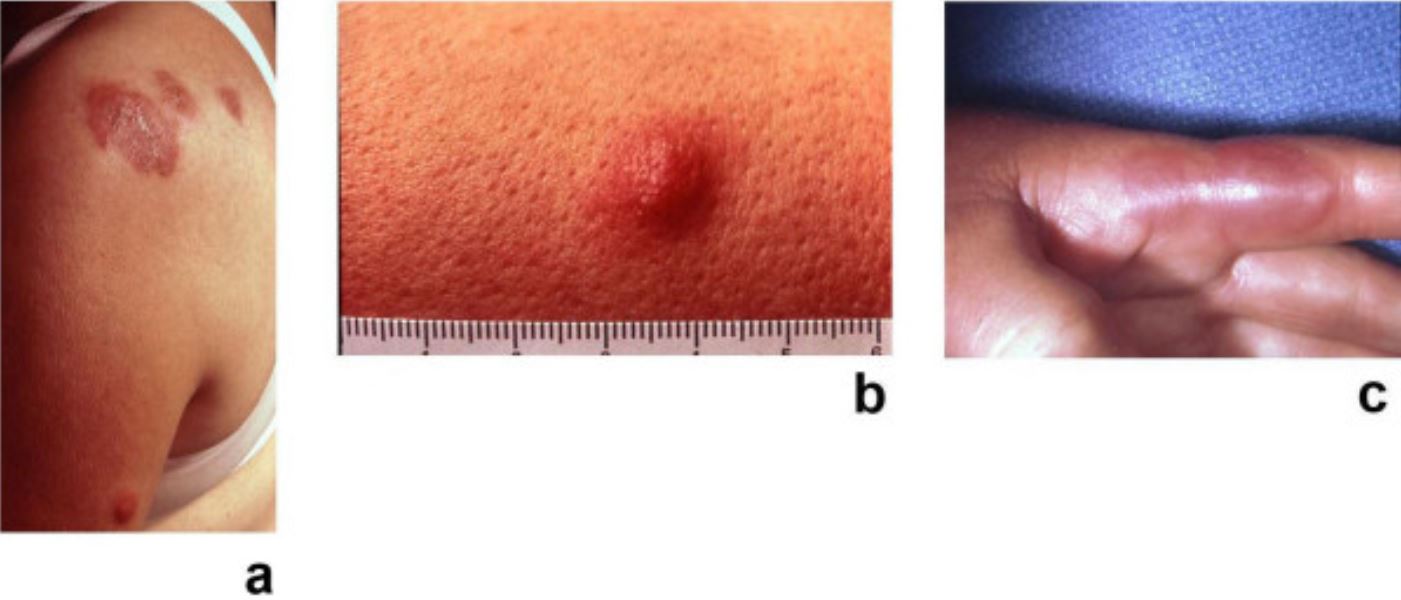
  • Enfermedad de la piel: síndrome de Sweet (dermatosis neutrofílica febril aguda)
Síndrome de Sweet

Síndrome de Sweet: placas dolorosas, eritematosas, seudovasculares de dermatosis neutrofílica febril aguda

Imagen: “Sweet’s syndrome–a comprehensive review of an acute febrile neutrophilic dermatosis” por Cohen PR. Licencia: CC BY 2.0
Diagnóstico

Características diagnósticas

  • Citopenia en EN Erythema nodosum is an immune-mediated panniculitis (inflammation of the subcutaneous fat) caused by a type IV (delayed-type) hypersensitivity reaction. It commonly manifests in young women as tender, erythematous nodules on the shins. Erythema Nodosum al AL Amyloidosis menos 1 linaje sanguíneo
  • ≥ 10% de células nucleadas con displasia (diferenciación desordenada) en EN Erythema nodosum is an immune-mediated panniculitis (inflammation of the subcutaneous fat) caused by a type IV (delayed-type) hypersensitivity reaction. It commonly manifests in young women as tender, erythematous nodules on the shins. Erythema Nodosum al AL Amyloidosis menos 1 linaje
  • < 20% de blastos en EN Erythema nodosum is an immune-mediated panniculitis (inflammation of the subcutaneous fat) caused by a type IV (delayed-type) hypersensitivity reaction. It commonly manifests in young women as tender, erythematous nodules on the shins. Erythema Nodosum sangre y médula ósea
  • Hallazgos citogenéticos o moleculares característicos
  • No hay evidencia de una causa alternativa

Evaluación diagnóstica

  • Antecedentes clínicos:
    • Consumo de alcohol y drogas
    • Medicamentos
    • Exposición a productos químicos tóxicos
    • Quimioterapia previa o exposición a la radiación
  • Hemograma completo:
    • Anemia Anemia Anemia is a condition in which individuals have low Hb levels, which can arise from various causes. Anemia is accompanied by a reduced number of RBCs and may manifest with fatigue, shortness of breath, pallor, and weakness. Subtypes are classified by the size of RBCs, chronicity, and etiology. Anemia: Overview and Types macrocítica: ↑ volumen corpuscular medio, ↓ hemoglobina
    • Trombocitopenia: ↓ plaquetas
    • Leucopenia: ↓ leucocitos
    • Neutrófilos inmaduros circulantes: mielocitos, promielocitos, mieloblastos
  • Frotis de sangre periférica:
    • Eritrocitos: macrócitos, sideroblastos anillados, células de forma irregular
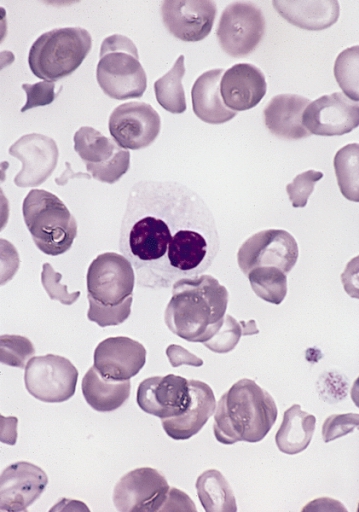
    • Leucocitos: displásicos, neutrófilos hiposegmentados (anomalía pseudo–Pelger-Huët)
    • Plaquetas: trombocitopenia
  • Biopsia de médula ósea (Wright-Giemsa y tinciones de hierro):
    • Médula ósea hipercelular
    • Células displásicas en EN Erythema nodosum is an immune-mediated panniculitis (inflammation of the subcutaneous fat) caused by a type IV (delayed-type) hypersensitivity reaction. It commonly manifests in young women as tender, erythematous nodules on the shins. Erythema Nodosum 1 o más linajes
    • Aumento de mieloblastos (< 20% para diferenciar de leucemia mieloide aguda)
    • Sideroblastos anillados
    • Mielofibrosis de varios grados.
  • Cariotipo de médula ósea
  • Análisis citogenético:
    • Estudios de micromatrices de genes Genes A category of nucleic acid sequences that function as units of heredity and which code for the basic instructions for the development, reproduction, and maintenance of organisms. DNA Types and Structure para anomalías genómicas
    • Estudio de hibridación fluorescente in situ ( FISH FISH A type of in situ hybridization in which target sequences are stained with fluorescent dye so their location and size can be determined using fluorescence microscopy. This staining is sufficiently distinct that the hybridization signal can be seen both in metaphase spreads and in interphase nuclei. Chromosome Testing, por sus siglas en EN Erythema nodosum is an immune-mediated panniculitis (inflammation of the subcutaneous fat) caused by a type IV (delayed-type) hypersensitivity reaction. It commonly manifests in young women as tender, erythematous nodules on the shins. Erythema Nodosum inglés) para anomalías cromosómicas
    • PCR PCR Polymerase chain reaction (PCR) is a technique that amplifies DNA fragments exponentially for analysis. The process is highly specific, allowing for the targeting of specific genomic sequences, even with minuscule sample amounts. The PCR cycles multiple times through 3 phases: denaturation of the template DNA, annealing of a specific primer to the individual DNA strands, and synthesis/elongation of new DNA molecules. Polymerase Chain Reaction (PCR) para reordenamientos genéticos

Clasificación

Después de confirmar el diagnóstico de neoplasia mielodisplásica, los LOS Neisseria pacientes se clasifican según la quinta edición de la clasificación de tumores hematolinfoides de la Organización Mundial de la Salud (OMS), publicada en EN Erythema nodosum is an immune-mediated panniculitis (inflammation of the subcutaneous fat) caused by a type IV (delayed-type) hypersensitivity reaction. It commonly manifests in young women as tender, erythematous nodules on the shins. Erythema Nodosum 2022.

La clasificación se basa en EN Erythema nodosum is an immune-mediated panniculitis (inflammation of the subcutaneous fat) caused by a type IV (delayed-type) hypersensitivity reaction. It commonly manifests in young women as tender, erythematous nodules on the shins. Erythema Nodosum:

  • Linaje(s) displásico(s): el número de linajes hematopoyéticos afectados por displasia.
  • Número de citopenias:
    • Anemia Anemia Anemia is a condition in which individuals have low Hb levels, which can arise from various causes. Anemia is accompanied by a reduced number of RBCs and may manifest with fatigue, shortness of breath, pallor, and weakness. Subtypes are classified by the size of RBCs, chronicity, and etiology. Anemia: Overview and Types: hemoglobina < 10 g/dL
    • Leucopenia: recuento absoluto de neutrófilos < 1,8 × 10⁹/L
    • Trombocitopenia: recuento de plaquetas < 100 × 10⁹/L
  • Porcentaje de blastos en EN Erythema nodosum is an immune-mediated panniculitis (inflammation of the subcutaneous fat) caused by a type IV (delayed-type) hypersensitivity reaction. It commonly manifests in young women as tender, erythematous nodules on the shins. Erythema Nodosum sangre y médula ósea
  • Porcentaje de sideroblastos en EN Erythema nodosum is an immune-mediated panniculitis (inflammation of the subcutaneous fat) caused by a type IV (delayed-type) hypersensitivity reaction. It commonly manifests in young women as tender, erythematous nodules on the shins. Erythema Nodosum anillo
  • Hallazgos citogenéticos (p. ej., del(5q) aislado)
  • Hallazgos moleculares (p. ej., SF3B1, TP53, ASXL1)

Tipos:

  • < 5 % de blastos en EN Erythema nodosum is an immune-mediated panniculitis (inflammation of the subcutaneous fat) caused by a type IV (delayed-type) hypersensitivity reaction. It commonly manifests in young women as tender, erythematous nodules on the shins. Erythema Nodosum la médula ósea y < 2 % en EN Erythema nodosum is an immune-mediated panniculitis (inflammation of the subcutaneous fat) caused by a type IV (delayed-type) hypersensitivity reaction. It commonly manifests in young women as tender, erythematous nodules on the shins. Erythema Nodosum la sangre
    • SMD con bajo recuento de blastos (SMD-LB): displasia en EN Erythema nodosum is an immune-mediated panniculitis (inflammation of the subcutaneous fat) caused by a type IV (delayed-type) hypersensitivity reaction. It commonly manifests in young women as tender, erythematous nodules on the shins. Erythema Nodosum uno o más linajes, sin anomalías genéticas significativas. Opcionalmente, se puede especificar la displasia de un solo linaje o de múltiples linajes.
    • SMD con bajo recuento de blastos y mutación en SF3B1 (anteriormente conocido como “SMD con sideroblastos en anillo”
    • SMD con bajo recuento de blastos y sideroblastos en EN Erythema nodosum is an immune-mediated panniculitis (inflammation of the subcutaneous fat) caused by a type IV (delayed-type) hypersensitivity reaction. It commonly manifests in young women as tender, erythematous nodules on the shins. Erythema Nodosum anillo: sideroblastos en EN Erythema nodosum is an immune-mediated panniculitis (inflammation of the subcutaneous fat) caused by a type IV (delayed-type) hypersensitivity reaction. It commonly manifests in young women as tender, erythematous nodules on the shins. Erythema Nodosum anillo ≥ 15 %, SF3B1 de tipo silvestre
    • SMD con bajo recuento de blastos y del(5q) aislada: deleción del cromosoma 5q sin otras anomalías significativas
    • SMD hipoplásico: hipocelularidad de la médula ósea <30% (ajustada por edad), cumple criterios para otros SMD con bajo recuento de blastos
    • SMD con fibrosis Fibrosis Any pathological condition where fibrous connective tissue invades any organ, usually as a consequence of inflammation or other injury. Bronchiolitis Obliterans: fibrosis Fibrosis Any pathological condition where fibrous connective tissue invades any organ, usually as a consequence of inflammation or other injury. Bronchiolitis Obliterans de médula ósea grado 2-3, cumple criterios para otros SMD
    • SMD con inactivación bialélica de TP53: mutación multihit de TP53
  • 5%–19% blastos en EN Erythema nodosum is an immune-mediated panniculitis (inflammation of the subcutaneous fat) caused by a type IV (delayed-type) hypersensitivity reaction. It commonly manifests in young women as tender, erythematous nodules on the shins. Erythema Nodosum la médula ósea o 2-19% en EN Erythema nodosum is an immune-mediated panniculitis (inflammation of the subcutaneous fat) caused by a type IV (delayed-type) hypersensitivity reaction. It commonly manifests in young women as tender, erythematous nodules on the shins. Erythema Nodosum la sangre:
    • MDS MDS Myelodysplastic syndromes (MDS) are a group of clonal neoplasms with maturation defects characterized by dysplasia, cytopenia, and immature bone marrow precursors. Myelodysplastic syndromes can be idiopathic, or secondary to various injurious exposures such as cytotoxic chemotherapy, ionizing radiation, or environmental toxins. Myelodysplastic Syndromes con aumento de blastos-1 (MDS-IB1): 5-9% de blastos en EN Erythema nodosum is an immune-mediated panniculitis (inflammation of the subcutaneous fat) caused by a type IV (delayed-type) hypersensitivity reaction. It commonly manifests in young women as tender, erythematous nodules on the shins. Erythema Nodosum la médula ósea o 2-4% en EN Erythema nodosum is an immune-mediated panniculitis (inflammation of the subcutaneous fat) caused by a type IV (delayed-type) hypersensitivity reaction. It commonly manifests in young women as tender, erythematous nodules on the shins. Erythema Nodosum la sangre
    • MDS MDS Myelodysplastic syndromes (MDS) are a group of clonal neoplasms with maturation defects characterized by dysplasia, cytopenia, and immature bone marrow precursors. Myelodysplastic syndromes can be idiopathic, or secondary to various injurious exposures such as cytotoxic chemotherapy, ionizing radiation, or environmental toxins. Myelodysplastic Syndromes con aumento de blastos-2 (MDS-IB2): 10-19% de blastos en EN Erythema nodosum is an immune-mediated panniculitis (inflammation of the subcutaneous fat) caused by a type IV (delayed-type) hypersensitivity reaction. It commonly manifests in young women as tender, erythematous nodules on the shins. Erythema Nodosum la médula ósea o 5-19% en EN Erythema nodosum is an immune-mediated panniculitis (inflammation of the subcutaneous fat) caused by a type IV (delayed-type) hypersensitivity reaction. It commonly manifests in young women as tender, erythematous nodules on the shins. Erythema Nodosum la sangre
  • MDS MDS Myelodysplastic syndromes (MDS) are a group of clonal neoplasms with maturation defects characterized by dysplasia, cytopenia, and immature bone marrow precursors. Myelodysplastic syndromes can be idiopathic, or secondary to various injurious exposures such as cytotoxic chemotherapy, ionizing radiation, or environmental toxins. Myelodysplastic Syndromes, NOS (no especificado de otra manera): casos que no cumplen los LOS Neisseria criterios para ningún otro tipo

Tratamiento

Enfoque del tratamiento

  • Depende de la presentación clínica y las comorbilidades
  • Determinar el estrato de riesgo (menor riesgo frente a mayor riesgo) en EN Erythema nodosum is an immune-mediated panniculitis (inflammation of the subcutaneous fat) caused by a type IV (delayed-type) hypersensitivity reaction. It commonly manifests in young women as tender, erythematous nodules on the shins. Erythema Nodosum función de las variables pronósticas con mayor riesgo para lo siguiente:
    • Blastos en EN Erythema nodosum is an immune-mediated panniculitis (inflammation of the subcutaneous fat) caused by a type IV (delayed-type) hypersensitivity reaction. It commonly manifests in young women as tender, erythematous nodules on the shins. Erythema Nodosum médula ósea: > 5%
    • Citopenias: 2 o 3
    • Citogenética: ciertas mutaciones (e.g., -7 o del(7q)) tienen un peor pronóstico.
    • Grupo de mayor riesgo:
      • El pronóstico es peor.
      • Mayor incidencia de transformación a leucemia mieloide aguda
  • Determinar la aptitud fisiológica:
    • Presencia de enfermedades comórbidas
    • Pruebas de rendimiento físico: capacidad para realizar actividades de la vida diaria
    • Cognición
  • Determinar los LOS Neisseria objetivos de tratamiento:
    • La cura rara vez es factible.
    • Discuta las preferencias y valores personales de cada paciente.
    • Objetivos:
      • ↓ Síntomas y brindar comodidad.
      • Prolongar la supervivencia.
      • Mejorar la calidad de vida.
      • Minimizar la toxicidad relacionada con la terapia.

Opciones de tratamiento

  • Observación: pacientes de bajo riesgo, asintomáticos
  • Terapia de baja intensidad:
    • Factores estimulantes de la eritropoyesis/mielopoyesis (e.g., eritropoyetina)
    • Del(5q): lenalidomida
    • Transfusión de eritrocitos/plaquetas según sea necesario
    • Agentes hipometilantes (e.g., azacitidina, decitabina)
  • Terapia de alta intensidad:
    • Quimioterapia (e.g., citarabina + antraciclina)
    • Trasplante alogénico de células hematopoyéticas para pacientes jóvenes y médicamente aptos
    • Terapia dirigida para mutaciones específicas

Diagnóstico Diferencial

  • Citopenias aisladas: defectos en EN Erythema nodosum is an immune-mediated panniculitis (inflammation of the subcutaneous fat) caused by a type IV (delayed-type) hypersensitivity reaction. It commonly manifests in young women as tender, erythematous nodules on the shins. Erythema Nodosum una línea celular ( anemia Anemia Anemia is a condition in which individuals have low Hb levels, which can arise from various causes. Anemia is accompanied by a reduced number of RBCs and may manifest with fatigue, shortness of breath, pallor, and weakness. Subtypes are classified by the size of RBCs, chronicity, and etiology. Anemia: Overview and Types aislada, leucopenia o trombocitopenia). La evaluación requiere antecedentes clínicos detallados: prácticas dietéticas (e.g., folato, vitamina B12 y/o deficiencia de cobre), viajes (e.g., infección parasitaria adquirida), pérdida crónica de sangre, medicamentos, consumo de alcohol, exposiciones tóxicas, cronicidad de la citopenia, antecedentes familiares y trastornos gastrointestinales, autoinmunitarios o neoplásicos. En EN Erythema nodosum is an immune-mediated panniculitis (inflammation of the subcutaneous fat) caused by a type IV (delayed-type) hypersensitivity reaction. It commonly manifests in young women as tender, erythematous nodules on the shins. Erythema Nodosum la mayoría de los LOS Neisseria casos, el diagnóstico se establece con los LOS Neisseria antecedentes, el frotis periférico y la biopsia de médula ósea (si es necesario).
  • Mielofibrosis primaria: una neoplasia mieloproliferativa crónica caracterizada por fibrosis Fibrosis Any pathological condition where fibrous connective tissue invades any organ, usually as a consequence of inflammation or other injury. Bronchiolitis Obliterans de la médula ósea y hematopoyesis extramedular en EN Erythema nodosum is an immune-mediated panniculitis (inflammation of the subcutaneous fat) caused by a type IV (delayed-type) hypersensitivity reaction. It commonly manifests in young women as tender, erythematous nodules on the shins. Erythema Nodosum el bazo y el hígado. La anormalidad proviene de mutaciones genéticas de células madre hematopoyéticas (JAK2, CALR, o mutación MPL). Los LOS Neisseria hallazgos clínicos son fatiga, esplenomegalia, hepatomegalia y anemia Anemia Anemia is a condition in which individuals have low Hb levels, which can arise from various causes. Anemia is accompanied by a reduced number of RBCs and may manifest with fatigue, shortness of breath, pallor, and weakness. Subtypes are classified by the size of RBCs, chronicity, and etiology. Anemia: Overview and Types. El frotis periférico muestra leucoeritroblastosis y contiene precursores de leucocitos, eritrocitos, eritrocitos nucleados y células en EN Erythema nodosum is an immune-mediated panniculitis (inflammation of the subcutaneous fat) caused by a type IV (delayed-type) hypersensitivity reaction. It commonly manifests in young women as tender, erythematous nodules on the shins. Erythema Nodosum forma de lágrima. El diagnóstico se realiza mediante examen de médula ósea y pruebas moleculares. El tratamiento incluye trasplante alogénico de células hematopoyéticas y medicamentos ( ruxolitinib Ruxolitinib Targeted and Other Nontraditional Antineoplastic Therapy y fedratinib).
  • Leucemia mieloide aguda (LMA): la proliferación maligna e incontrolada de precursores mieloides, que da como resultado citopenias y un aumento en EN Erythema nodosum is an immune-mediated panniculitis (inflammation of the subcutaneous fat) caused by a type IV (delayed-type) hypersensitivity reaction. It commonly manifests in young women as tender, erythematous nodules on the shins. Erythema Nodosum el número (>20%) de mielocitos inmaduros (i.e., blastos) en EN Erythema nodosum is an immune-mediated panniculitis (inflammation of the subcutaneous fat) caused by a type IV (delayed-type) hypersensitivity reaction. It commonly manifests in young women as tender, erythematous nodules on the shins. Erythema Nodosum la circulación periférica y la médula ósea. El hallazgo de bastones de Auer (inclusiones lineales en EN Erythema nodosum is an immune-mediated panniculitis (inflammation of the subcutaneous fat) caused by a type IV (delayed-type) hypersensitivity reaction. It commonly manifests in young women as tender, erythematous nodules on the shins. Erythema Nodosum el citoplasma de las células blásticas) es patognomónico de LMA. Las células leucémicas pueden infiltrarse en EN Erythema nodosum is an immune-mediated panniculitis (inflammation of the subcutaneous fat) caused by a type IV (delayed-type) hypersensitivity reaction. It commonly manifests in young women as tender, erythematous nodules on the shins. Erythema Nodosum varios órganos, causando organomegalia y secuelas neurológicas. Los LOS Neisseria pacientes con síndromes mielodisplásicos tienen un alto riesgo de transformación a LMA.
  • Leucemia mielomonocítica crónica: una neoplasia mielodisplásica/mieloproliferativa rara con aumento de la producción de células monocíticas maduras y, a veces, neutrófilos displásicos. La leucemia mielomonocítica crónica a menudo se acompaña de síntomas constitucionales, esplenomegalia, anemia Anemia Anemia is a condition in which individuals have low Hb levels, which can arise from various causes. Anemia is accompanied by a reduced number of RBCs and may manifest with fatigue, shortness of breath, pallor, and weakness. Subtypes are classified by the size of RBCs, chronicity, and etiology. Anemia: Overview and Types y/o trombocitopenia. La morfología de la médula ósea muestra displasia prominente en EN Erythema nodosum is an immune-mediated panniculitis (inflammation of the subcutaneous fat) caused by a type IV (delayed-type) hypersensitivity reaction. It commonly manifests in young women as tender, erythematous nodules on the shins. Erythema Nodosum al AL Amyloidosis menos 2 de los LOS Neisseria 3 linajes mieloides. El tratamiento consiste en EN Erythema nodosum is an immune-mediated panniculitis (inflammation of the subcutaneous fat) caused by a type IV (delayed-type) hypersensitivity reaction. It commonly manifests in young women as tender, erythematous nodules on the shins. Erythema Nodosum medidas de soporte, hidroxiurea, un agente hipometilante y trasplante alogénico de células hematopoyéticas.

Referencias

  1. Zhang, Y., et al. (2022). Comparison of the revised 4th (2016) and 5th (2022) editions of the World Health Organization classification of myelodysplastic neoplasms. Leukemia, 36(12), 2875–2882. https://doi.org/10.1038/s41375-022-01718-7
  2. Fontana, D., Elli, E. M., Pagni, F., & Piazza, R. (2023). Myelodysplastic syndromes/myeloproliferative overlap neoplasms and differential diagnosis in the WHO and ICC 2022 era: A focused review. Cancers, 15(12), 3175. https://doi.org/10.3390/cancers15123175
  3. Aster, J. C., & Stone, R. M. (2024). Clinical manifestations, diagnosis, and classification of myelodysplastic syndromes (MDS). UpToDate. Retrieved October 20, 2025, from https://www.uptodate.com/contents/clinical-manifestations-diagnosis-and-classification-of-myelodysplastic-syndromes-mds
  4. Besa, E.C. (2024). Myelodysplastic Syndrome (MDS). Medscape. Retrieved October 20, 2025, from https://reference.medscape.com/article/207347-overview
  5. Negrin, R. S., & Platzbecker, U. (2025). Myelodysplastic syndromes/neoplasms (MDS): Treatment of higher-risk MDS. UpToDate. Retrieved October 20, 2025, from https://www.uptodate.com/contents/myelodysplastic-syndromes-neoplasms-mds-treatment-of-higher-risk-mds
  6. Sekeres, M. A., & Platzbecker, U. (2024). Myelodysplastic syndromes/neoplasms (MDS): Overview of diagnosis and management. UpToDate. Retrieved October 20, 2025, from https://www.uptodate.com/contents/myelodysplastic-syndromes-neoplasms-mds-overview-of-diagnosis-and-management
  7. Hasserjian, R.P. (2019). Myelodysplastic Syndrome Updated. Pathobiology. 86(1),7–13. https://doi.org/10.1159/000489702

¡Crea tu cuenta gratis o inicia una sesión para seguir leyendo!

Regístrate ahora y obtén acceso gratuito a Lecturio con páginas de concepto, videos médicos y cuestionarios para tu educación médica.

User Reviews

Que tengas una sesión de estudio alegre y navideña 🎁 Ahorra 50% en todos los planes >>

Details