Domina Conceptos Médicos

Estudia para la escuela de medicina y tus examenes con Lecturio.

Síndrome del Túnel Carpiano

El síndrome del túnel carpiano es un complejo de signos y síntomas causados por la compresión del nervio mediano cuando cruza el túnel carpiano. La presentación clínica es dolor Dolor Inflammation y parestesia de los LOS Neisseria dermatomas inervados por el nervio mediano, así como debilidad y atrofia de los LOS Neisseria miotomas del nervio. Los LOS Neisseria factores de riesgo que causan una predisposición al AL Amyloidosis síndrome del túnel carpiano incluyen la obesidad, el sexo femenino, el embarazo, la diabetes Diabetes Diabetes mellitus (DM) is a metabolic disease characterized by hyperglycemia and dysfunction of the regulation of glucose metabolism by insulin. Type 1 DM is diagnosed mostly in children and young adults as the result of autoimmune destruction of β cells in the pancreas and the resulting lack of insulin. Type 2 DM has a significant association with obesity and is characterized by insulin resistance. Diabetes Mellitus, las afecciones inflamatorias, la predisposición genética y los LOS Neisseria factores ocupacionales. Se puede hacer un diagnóstico clínico con base en EN Erythema nodosum is an immune-mediated panniculitis (inflammation of the subcutaneous fat) caused by a type IV (delayed-type) hypersensitivity reaction. It commonly manifests in young women as tender, erythematous nodules on the shins. Erythema Nodosum los LOS Neisseria antecedentes y el examen físico y confirmarlo mediante pruebas de electrodiagnóstico. El tratamiento conservador incluye entablillado y fisioterapia de la muñeca; los LOS Neisseria casos más severos pueden requerir de corrección quirúrgica.

Last updated: Dec 15, 2025

Editorial responsibility: Stanley Oiseth, Lindsay Jones, Evelin Maza

Descripción General

Anatomía

  • El nervio mediano emerge del plexo braquial con contribuciones de las raíces nerviosas C6, C7, C8 y T1.
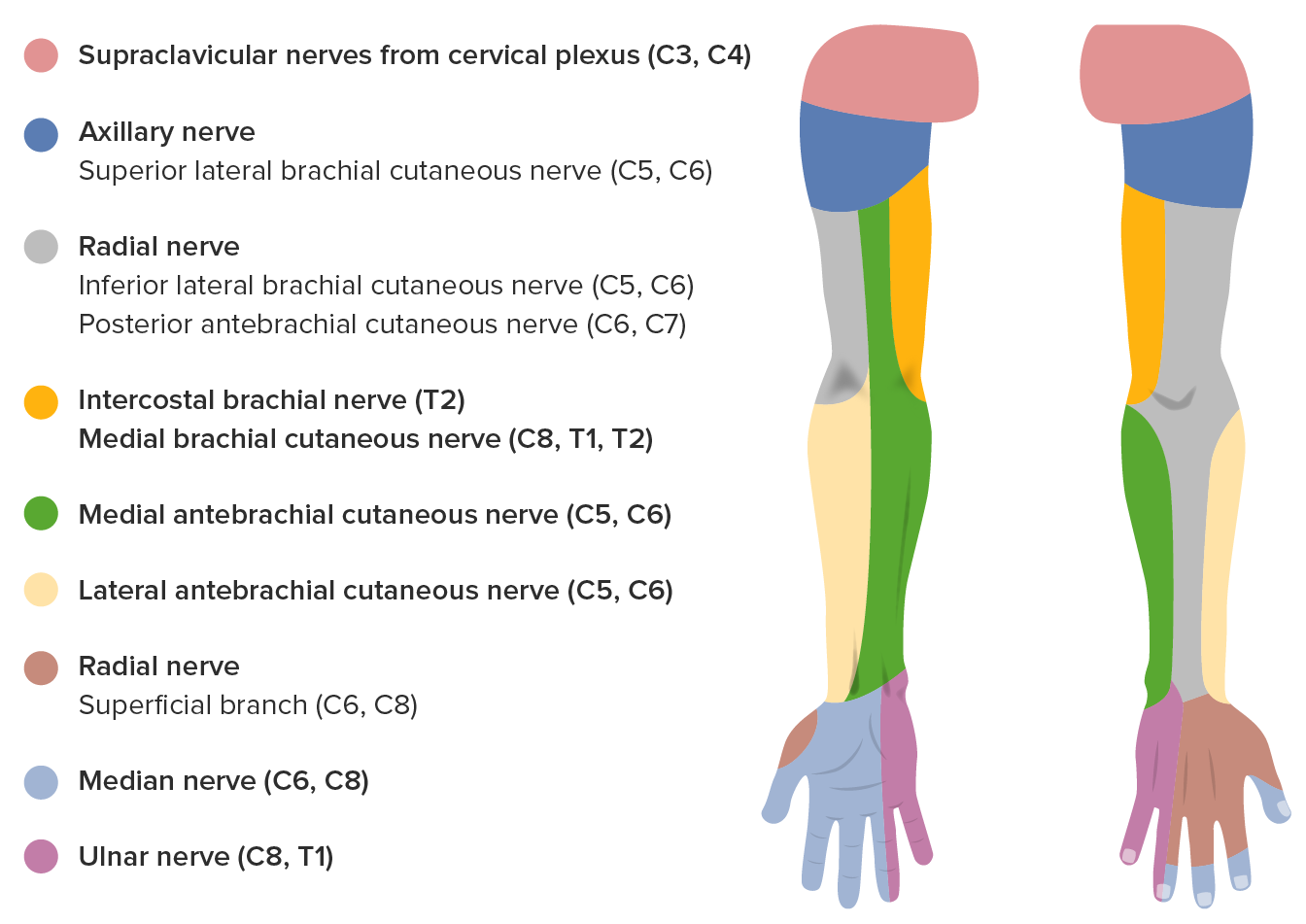
  • Las raíces C6 y C7 inervan las fibras sensitivas medianas, que a su vez dan sensibilidad a la eminencia tenar y a los LOS Neisseria 1os 3½ dedos y medio de la mano.
  • Las raíces C8 y T1 proporcionan fibras motoras a la musculatura del antebrazo y la mano inervadas por el nervio mediano.
  • A medida que el nervio mediano pasa a través de la fosa antecubital, se encuentra medial a la arteria braquial en EN Erythema nodosum is an immune-mediated panniculitis (inflammation of the subcutaneous fat) caused by a type IV (delayed-type) hypersensitivity reaction. It commonly manifests in young women as tender, erythematous nodules on the shins. Erythema Nodosum lo profundo del antebrazo.
  • En EN Erythema nodosum is an immune-mediated panniculitis (inflammation of the subcutaneous fat) caused by a type IV (delayed-type) hypersensitivity reaction. It commonly manifests in young women as tender, erythematous nodules on the shins. Erythema Nodosum la porción superior del antebrazo, el nervio mediano inerva:
    • Pronador redondo
    • Flexor radial del carpo
    • Palmar largo
    • Flexor superficial de los LOS Neisseria dedos
  • El nervio mediano luego emite una rama periférica, formando el nervio interóseo anterior.
  • El nervio interóseo anterior inerva:
    • Pronador cuadrado (proximal a la muñeca)
    • Flexor largo del pulgar
    • Músculos flexores profundos (mitad lateral, asociada con los LOS Neisseria dedos 2do y 3ro)
  • El nervio mediano discurre de manera paralela al AL Amyloidosis nervio interóseo anterior en EN Erythema nodosum is an immune-mediated panniculitis (inflammation of the subcutaneous fat) caused by a type IV (delayed-type) hypersensitivity reaction. It commonly manifests in young women as tender, erythematous nodules on the shins. Erythema Nodosum el antebrazo.
  • Proximal a la muñeca, la rama cutánea sensitiva del nervio mediano se ramifica para proporcionar sensibilidad a la mitad lateral de la palma.
  • Debido a que la rama palmar del nervio mediano pasa por encima y no a través del túnel carpiano, los LOS Neisseria cambios sensitivos sobre la eminencia tenar no se observan típicamente con el síndrome del túnel carpiano (STC).
  • El túnel carpiano está formado por el ligamento transverso del carpo (retináculo flexor) en EN Erythema nodosum is an immune-mediated panniculitis (inflammation of the subcutaneous fat) caused by a type IV (delayed-type) hypersensitivity reaction. It commonly manifests in young women as tender, erythematous nodules on the shins. Erythema Nodosum la parte superior y los LOS Neisseria huesos del carpo en EN Erythema nodosum is an immune-mediated panniculitis (inflammation of the subcutaneous fat) caused by a type IV (delayed-type) hypersensitivity reaction. It commonly manifests in young women as tender, erythematous nodules on the shins. Erythema Nodosum la parte inferior.
  • El nervio mediano propiamente dicho y los LOS Neisseria 9 tendones flexores de la musculatura del antebrazo pasan por este túnel
  • Al AL Amyloidosis salir del túnel carpiano, el nervio mediano proporciona inervación sensitiva y motora a la mano
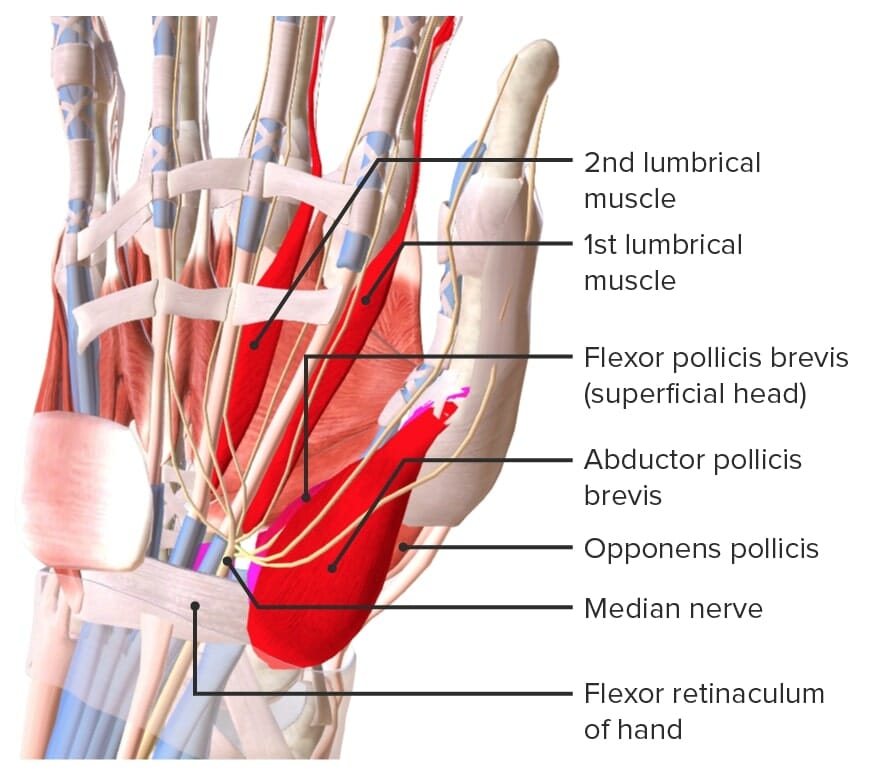
  • Los LOS Neisseria músculos de la mano inervados por el nervio mediano:
    • Abductor corto del pulgar
    • Flexor corto del pulgar (cabeza superficial)
    • Músculo oponente del pulgar
    • 1er y 2do lumbrical

Mnemotécnia:

Los músculos de la mano inervados por el nervio mediano, usando el acrónimo “Meat-LOAF” ( en EN Erythema nodosum is an immune-mediated panniculitis (inflammation of the subcutaneous fat) caused by a type IV (delayed-type) hypersensitivity reaction. It commonly manifests in young women as tender, erythematous nodules on the shins. Erythema Nodosum inglés,) son:
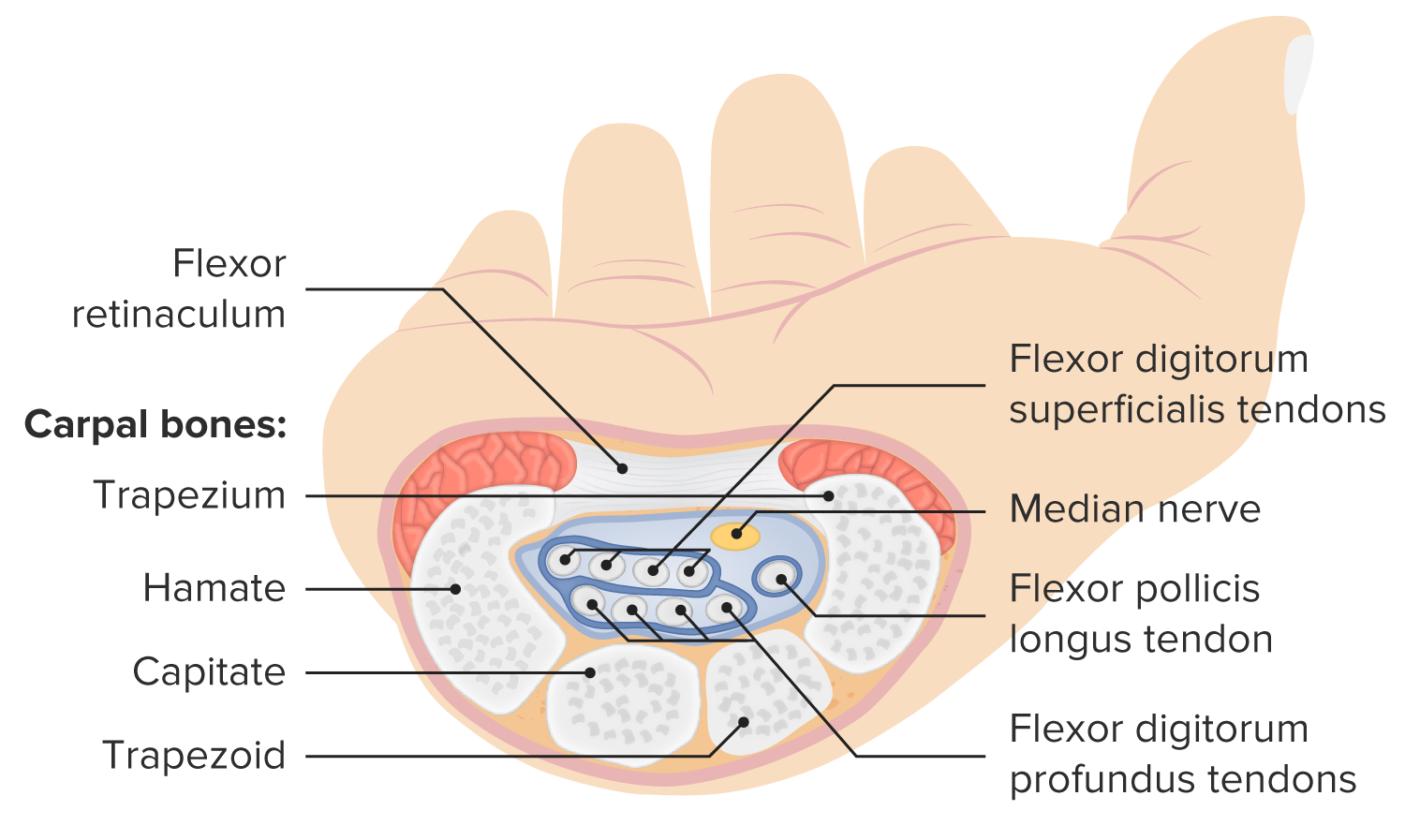
Estructura y contenido del túnel carpiano

Estructura y contenido del túnel carpiano

Imagen por Lecturio.

Epidemiología

  • Trastorno común entre los LOS Neisseria adultos.
  • Prevalencia en EN Erythema nodosum is an immune-mediated panniculitis (inflammation of the subcutaneous fat) caused by a type IV (delayed-type) hypersensitivity reaction. It commonly manifests in young women as tender, erythematous nodules on the shins. Erythema Nodosum la población general: 1 %–5%.
  • Mujer > hombre en EN Erythema nodosum is an immune-mediated panniculitis (inflammation of the subcutaneous fat) caused by a type IV (delayed-type) hypersensitivity reaction. It commonly manifests in young women as tender, erythematous nodules on the shins. Erythema Nodosum proporción 3:1
  • Prevalencia más alta en EN Erythema nodosum is an immune-mediated panniculitis (inflammation of the subcutaneous fat) caused by a type IV (delayed-type) hypersensitivity reaction. It commonly manifests in young women as tender, erythematous nodules on the shins. Erythema Nodosum mujeres obesas
  • Prevalencia más baja en EN Erythema nodosum is an immune-mediated panniculitis (inflammation of the subcutaneous fat) caused by a type IV (delayed-type) hypersensitivity reaction. It commonly manifests in young women as tender, erythematous nodules on the shins. Erythema Nodosum hombres delgados y de talla media

Factores de riesgo

  • Obesidad
  • Sexo femenino
  • Embarazo
  • Diabetes Diabetes Diabetes mellitus (DM) is a metabolic disease characterized by hyperglycemia and dysfunction of the regulation of glucose metabolism by insulin. Type 1 DM is diagnosed mostly in children and young adults as the result of autoimmune destruction of β cells in the pancreas and the resulting lack of insulin. Type 2 DM has a significant association with obesity and is characterized by insulin resistance. Diabetes Mellitus
  • Artritis reumatoide
  • Artrosis de la mano
  • Hipotiroidismo
  • Trastornos del tejido conectivo
  • Mononeuropatía preexistente del nervio mediano
  • Predisposición genética
  • Uso de inhibidores de la aromatasa
  • Factores de riesgo ocupacionales:
    • Uso repetitivo o forzado de la mano y la muñeca
    • Uso de herramientas vibratorias
    • Presión sostenida en EN Erythema nodosum is an immune-mediated panniculitis (inflammation of the subcutaneous fat) caused by a type IV (delayed-type) hypersensitivity reaction. It commonly manifests in young women as tender, erythematous nodules on the shins. Erythema Nodosum la muñeca o la palma
    • Extensión y flexión prolongada de la muñeca
    • Trabajo manual a temperaturas frías
  • Trauma

Fisiopatología

La fisiopatología del estrechamiento del túnel carpiano y la disfunción del nervio mediano son multifactoriales.

  • Estrechamiento del túnel carpiano:
    • Espacio anatómico congénitamente pequeño
    • Masas que invaden el espacio anatómico:
      • Quistes
      • Neoplasias
      • Arteria mediana persistente
    • Edema Edema Edema is a condition in which excess serous fluid accumulates in the body cavity or interstitial space of connective tissues. Edema is a symptom observed in several medical conditions. It can be categorized into 2 types, namely, peripheral (in the extremities) and internal (in an organ or body cavity). Edema o inflamación por enfermedades sistémicas:
      • Diabetes Diabetes Diabetes mellitus (DM) is a metabolic disease characterized by hyperglycemia and dysfunction of the regulation of glucose metabolism by insulin. Type 1 DM is diagnosed mostly in children and young adults as the result of autoimmune destruction of β cells in the pancreas and the resulting lack of insulin. Type 2 DM has a significant association with obesity and is characterized by insulin resistance. Diabetes Mellitus
      • Osteoartritis
      • Artritis reumatoide
    • Inflamación/engrosamiento de los LOS Neisseria tendones flexores que pasan por el túnel carpiano a lo largo del nervio mediano
    • Fibrosis Fibrosis Any pathological condition where fibrous connective tissue invades any organ, usually as a consequence of inflammation or other injury. Bronchiolitis Obliterans no inflamatoria que afecta el tejido conectivo subsinovial que rodea los LOS Neisseria tendones flexores
  • Compresión mecánica del nervio mediano:
    • El aumento de la presión en EN Erythema nodosum is an immune-mediated panniculitis (inflammation of the subcutaneous fat) caused by a type IV (delayed-type) hypersensitivity reaction. It commonly manifests in young women as tender, erythematous nodules on the shins. Erythema Nodosum el túnel carpiano puede causar:
      • Lesión nerviosa directa
      • Alteraciones en EN Erythema nodosum is an immune-mediated panniculitis (inflammation of the subcutaneous fat) caused by a type IV (delayed-type) hypersensitivity reaction. It commonly manifests in young women as tender, erythematous nodules on the shins. Erythema Nodosum el transporte axonal
      • Compresión de los LOS Neisseria vasos en EN Erythema nodosum is an immune-mediated panniculitis (inflammation of the subcutaneous fat) caused by a type IV (delayed-type) hypersensitivity reaction. It commonly manifests in young women as tender, erythematous nodules on the shins. Erythema Nodosum el perineuro → isquemia del nervio mediano
    • Anomalías posturales de las extremidades superiores
  • El nervio mediano desarrolla una deformidad en EN Erythema nodosum is an immune-mediated panniculitis (inflammation of the subcutaneous fat) caused by a type IV (delayed-type) hypersensitivity reaction. It commonly manifests in young women as tender, erythematous nodules on the shins. Erythema Nodosum “reloj de arena” dentro del túnel carpiano debido a:
    • Edema Edema Edema is a condition in which excess serous fluid accumulates in the body cavity or interstitial space of connective tissues. Edema is a symptom observed in several medical conditions. It can be categorized into 2 types, namely, peripheral (in the extremities) and internal (in an organ or body cavity). Edema y engrosamiento de las paredes de los LOS Neisseria vasos dentro del endoneuro y perineuro
    • Fibrosis Fibrosis Any pathological condition where fibrous connective tissue invades any organ, usually as a consequence of inflammation or other injury. Bronchiolitis Obliterans sinovial no inflamatoria y proliferación vascular
    • Fibrosis Fibrosis Any pathological condition where fibrous connective tissue invades any organ, usually as a consequence of inflammation or other injury. Bronchiolitis Obliterans
    • Adelgazamiento de la vaina de mielina
    • Degeneración y regeneración de las fibras nerviosas
  • La proliferación vascular y la fibrosis Fibrosis Any pathological condition where fibrous connective tissue invades any organ, usually as a consequence of inflammation or other injury. Bronchiolitis Obliterans se asocian con un aumento de la prostaglandina E2 y la expresión del factor de crecimiento endotelial vascular

Presentación Clínica

  • Síntomas comunes:
    • Dolor Dolor Inflammation/malestar en EN Erythema nodosum is an immune-mediated panniculitis (inflammation of the subcutaneous fat) caused by a type IV (delayed-type) hypersensitivity reaction. It commonly manifests in young women as tender, erythematous nodules on the shins. Erythema Nodosum la mano, la muñeca y el antebrazo
    • Parestesia en EN Erythema nodosum is an immune-mediated panniculitis (inflammation of the subcutaneous fat) caused by a type IV (delayed-type) hypersensitivity reaction. It commonly manifests in young women as tender, erythematous nodules on the shins. Erythema Nodosum la distribución del nervio mediano de la(s) mano(s) afectada(s) (e.g., pesadez, hormigueo, sensación de pinchazos alfilerazos)
    • Debilidad subjetiva o torpeza de la mano.
    • Aparición de cualquiera de estos síntomas en EN Erythema nodosum is an immune-mediated panniculitis (inflammation of the subcutaneous fat) caused by a type IV (delayed-type) hypersensitivity reaction. It commonly manifests in young women as tender, erythematous nodules on the shins. Erythema Nodosum la distribución del nervio mediano
  • Signos comunes:
    • Déficit sensitivos en EN Erythema nodosum is an immune-mediated panniculitis (inflammation of the subcutaneous fat) caused by a type IV (delayed-type) hypersensitivity reaction. It commonly manifests in young women as tender, erythematous nodules on the shins. Erythema Nodosum la distribución del nervio mediano de la(s) mano(s) afectada(s)
    • Debilidad objetiva o torpeza de la mano
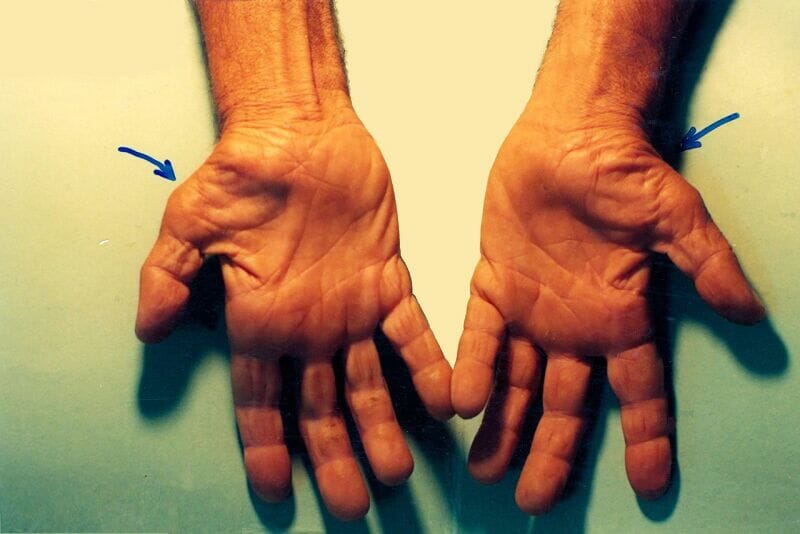
    • Atrofia del músculo tenar
  • Factores desencadenantes:
    • Dormir:
      • Postura en EN Erythema nodosum is an immune-mediated panniculitis (inflammation of the subcutaneous fat) caused by a type IV (delayed-type) hypersensitivity reaction. It commonly manifests in young women as tender, erythematous nodules on the shins. Erythema Nodosum flexión de la muñeca
      • Inmovilidad relativa/postura prona de la muñeca (i.e., disminución de la perfusión)
    • Posición sostenida de las manos o brazos
    • Acciones repetitivas de la mano o la muñeca
  • Factores que disminuyen los LOS Neisseria síntomas:
    • Cambios en EN Erythema nodosum is an immune-mediated panniculitis (inflammation of the subcutaneous fat) caused by a type IV (delayed-type) hypersensitivity reaction. It commonly manifests in young women as tender, erythematous nodules on the shins. Erythema Nodosum la postura de la mano/muñeca (extensión de la muñeca)
    • Sacudir la mano (i.e., mejora de la perfusión)

Diagnóstico

El síndrome del túnel carpiano es un diagnóstico clínico. Una combinación de hallazgos clínicos en EN Erythema nodosum is an immune-mediated panniculitis (inflammation of the subcutaneous fat) caused by a type IV (delayed-type) hypersensitivity reaction. It commonly manifests in young women as tender, erythematous nodules on the shins. Erythema Nodosum combinación con pruebas de electrodiagnóstico confirmatorias para mayor precisión en EN Erythema nodosum is an immune-mediated panniculitis (inflammation of the subcutaneous fat) caused by a type IV (delayed-type) hypersensitivity reaction. It commonly manifests in young women as tender, erythematous nodules on the shins. Erythema Nodosum el diagnóstico.
Examinación

  • Pueden estar presentes déficits sensitivos y motores objetivos (la ausencia no descarta el diagnóstico)
  • Los LOS Neisseria déficits sensitivos ocurren de manera tardía en EN Erythema nodosum is an immune-mediated panniculitis (inflammation of the subcutaneous fat) caused by a type IV (delayed-type) hypersensitivity reaction. It commonly manifests in young women as tender, erythematous nodules on the shins. Erythema Nodosum el curso del síndrome del túnel carpiano:
    • Afectan los LOS Neisseria dedos inervados por el nervio mediano
    • Respetan la eminencia tenar
  • La debilidad objetiva ocurre en EN Erythema nodosum is an immune-mediated panniculitis (inflammation of the subcutaneous fat) caused by a type IV (delayed-type) hypersensitivity reaction. It commonly manifests in young women as tender, erythematous nodules on the shins. Erythema Nodosum el STC avanzado:
    • Limitada a los LOS Neisseria músculos de la eminencia tenar
    • Causa debilidad de la abducción y oposición del pulgar
  • Puede haber atrofia de la eminencia tenar.

Maniobras de provocación

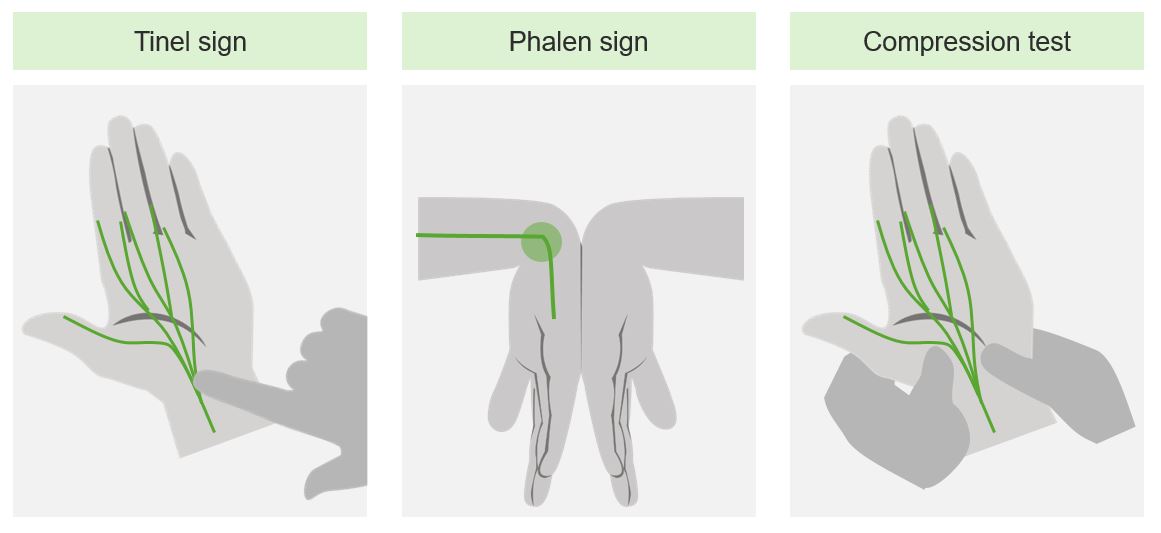
  • Maniobra de Phalen:
    • Cara dorsal de la mano presionada contra la otra mano, en EN Erythema nodosum is an immune-mediated panniculitis (inflammation of the subcutaneous fat) caused by a type IV (delayed-type) hypersensitivity reaction. It commonly manifests in young women as tender, erythematous nodules on the shins. Erythema Nodosum la misma posición, con las muñecas en EN Erythema nodosum is an immune-mediated panniculitis (inflammation of the subcutaneous fat) caused by a type IV (delayed-type) hypersensitivity reaction. It commonly manifests in young women as tender, erythematous nodules on the shins. Erythema Nodosum flexión completa y los LOS Neisseria codos flexionados
    • Un signo positivo se define como dolor Dolor Inflammation y/o parestesia en EN Erythema nodosum is an immune-mediated panniculitis (inflammation of the subcutaneous fat) caused by a type IV (delayed-type) hypersensitivity reaction. It commonly manifests in young women as tender, erythematous nodules on the shins. Erythema Nodosum los LOS Neisseria dedos inervados por el nervio mediano con 1 minuto de flexión de la muñeca.
  • Prueba de Tinel:
    • Percusión firme sobre el trayecto del nervio mediano proximal o encima del túnel carpiano
    • Una prueba positiva se define como dolor Dolor Inflammation y/o parestesia en EN Erythema nodosum is an immune-mediated panniculitis (inflammation of the subcutaneous fat) caused by a type IV (delayed-type) hypersensitivity reaction. It commonly manifests in young women as tender, erythematous nodules on the shins. Erythema Nodosum los LOS Neisseria dedos inervados por el nervio mediano a la percusión sobre el mismo nervio.
  • Compresión manual del carpo:
    • Aplicar presión sobre el ligamento transverso del carpo
    • Se considera positivo si se observa dolor Dolor Inflammation y/o parestesia en EN Erythema nodosum is an immune-mediated panniculitis (inflammation of the subcutaneous fat) caused by a type IV (delayed-type) hypersensitivity reaction. It commonly manifests in young women as tender, erythematous nodules on the shins. Erythema Nodosum los LOS Neisseria dedos inervados por el nervio mediano dentro de los LOS Neisseria 30 segundos posteriores a la compresión.
  • Prueba de elevación de la mano:
    • Levantar las manos por encima de la cabeza durante 1 minuto
    • Se considera positivo si se observa dolor Dolor Inflammation y/o parestesia en EN Erythema nodosum is an immune-mediated panniculitis (inflammation of the subcutaneous fat) caused by a type IV (delayed-type) hypersensitivity reaction. It commonly manifests in young women as tender, erythematous nodules on the shins. Erythema Nodosum los LOS Neisseria dedos inervados por el nervio medial dentro de los LOS Neisseria 30 segundos posteriores a la elevación
Pruebas para el síndrome del túnel carpiano

Maniobras de provocación para la evaluación clínica del síndrome del túnel carpiano

Imagen por Lecturio.
Pruebas de electrodiagnóstico

  • Velocidad de conducción nerviosa:
    • Implica la medición de la velocidad de conducción a través del túnel carpiano y la determinación de la amplitud de las respuestas sensitivas y motoras
    • La compresión del nervio causa daño a la vaina de mielina que se manifiesta como retraso en EN Erythema nodosum is an immune-mediated panniculitis (inflammation of the subcutaneous fat) caused by a type IV (delayed-type) hypersensitivity reaction. It commonly manifests in young women as tender, erythematous nodules on the shins. Erythema Nodosum las latencias distales y velocidades de conducción más lentas.
    • La compresión sostenida o severa conduce a la pérdida axonal que da como resultado la reducción de la amplitud del potencial de acción del nervio mediano
    • Es el estándar de oro para el diagnóstico; altamente sensible y específico
  • Electromiografía:
    • Útil para excluir otras patologías
    • Útil para evaluar la gravedad del síndrome del túnel carpiano si se considera la descompresión quirúrgica

Imagenología

La imagenología es útil si se sospecha una anomalía estructural.

  • La ecografía neuromuscular muestra un aumento significativo del área transversal del nervio mediano.
  • La resonancia magnética se reserva solo para casos inusuales para descartar lesiones por alguna masa

Clasificación/estadificación

Clasificación clínica de la gravedad del síndrome del túnel carpiano:

  • Leve:
    • Entumecimiento, hormigueo o malestar en EN Erythema nodosum is an immune-mediated panniculitis (inflammation of the subcutaneous fat) caused by a type IV (delayed-type) hypersensitivity reaction. It commonly manifests in young women as tender, erythematous nodules on the shins. Erythema Nodosum la distribución del nervio mediano
    • Sin pérdida o debilidad sensorial
    • Sin interrupción del sueño
    • Sin dificultades funcionales de la mano.
    • Sin interferencia con las actividades de la vida diaria
  • Moderado:
    • Pérdida sensitiva en EN Erythema nodosum is an immune-mediated panniculitis (inflammation of the subcutaneous fat) caused by a type IV (delayed-type) hypersensitivity reaction. It commonly manifests in young women as tender, erythematous nodules on the shins. Erythema Nodosum la distribución del nervio mediano
    • Los LOS Neisseria síntomas nocturnos ocasionalmente interrumpen el sueño
    • Los LOS Neisseria síntomas pueden interferir levemente con la función de la mano.
    • Sin interferencia con las actividades de la vida diaria
  • Severo:
    • Debilidad en EN Erythema nodosum is an immune-mediated panniculitis (inflammation of the subcutaneous fat) caused by a type IV (delayed-type) hypersensitivity reaction. It commonly manifests in young women as tender, erythematous nodules on the shins. Erythema Nodosum la distribución del nervio mediano
    • Los LOS Neisseria síntomas nocturnos interrumpen rutinariamente el sueño.
    • Los LOS Neisseria síntomas son incapacitantes e impiden realizar ≥ 1 de las actividades de la vida diaria.

Clasificación electrodiagnóstica de la gravedad del síndrome del túnel carpiano:

  • Leve:
    • Latencias sensitivas prolongadas con estudios motores normales
    • Sin evidencia de pérdida axonal
  • Moderado:
    • Latencias sensitivas anormales del nervio mediano
    • Prolongación relativa o absoluta de la latencia motora distal del nervio mediano
    • Sin evidencia de pérdida axonal
  • Severo: Evidencia de pérdida axonal

Tratamiento

El tratamiento se basa en EN Erythema nodosum is an immune-mediated panniculitis (inflammation of the subcutaneous fat) caused by a type IV (delayed-type) hypersensitivity reaction. It commonly manifests in young women as tender, erythematous nodules on the shins. Erythema Nodosum la agudeza y la gravedad de los LOS Neisseria síntomas clínicos y en EN Erythema nodosum is an immune-mediated panniculitis (inflammation of the subcutaneous fat) caused by a type IV (delayed-type) hypersensitivity reaction. It commonly manifests in young women as tender, erythematous nodules on the shins. Erythema Nodosum el grado de lesión neurogénica evaluada mediante los LOS Neisseria estudios de electrodiagnóstico.

Opciones de tratamiento no quirúrgico

Para los LOS Neisseria pacientes con síndrome del túnel carpiano de leve a moderado, la tasa de resultados exitosos es del 20%–93%. Las opciones terapéuticas incluyen:

  • Entablillado de muñeca
  • Inyección de glucocorticoides
  • Glucocorticoides orales
  • Inyección de dextrosa perineural
  • Yoga
  • Movilización del hueso del carpo (fisioterapia o terapia de manipulativa)
  • Terapia de ultrasonido terapéutico
  • AINEs

Descompresión quirúrgica

  • Las indicaciones incluyen:
    • Síndrome del túnel carpiano leve que no responde a las medidas conservadoras
    • Síndrome del túnel carpiano de moderado a severo asociado con pérdida axonal o denervación
  • Técnica de liberación del túnel carpiano abierto
  • Técnica endoscópica de liberación del túnel carpiano
  • Técnica de liberación del túnel carpiano mínimamente invasiva guiada por ultrasonido

Pronóstico

  • Los LOS Neisseria síntomas en EN Erythema nodosum is an immune-mediated panniculitis (inflammation of the subcutaneous fat) caused by a type IV (delayed-type) hypersensitivity reaction. It commonly manifests in young women as tender, erythematous nodules on the shins. Erythema Nodosum pacientes no tratados con compresión mínima o leve tienden a empeorar en EN Erythema nodosum is an immune-mediated panniculitis (inflammation of the subcutaneous fat) caused by a type IV (delayed-type) hypersensitivity reaction. It commonly manifests in young women as tender, erythematous nodules on the shins. Erythema Nodosum 10 a 15 meses
  • Factores predictores de la progresión:
    • Prueba de Phalen positiva
    • Enfermedad bilateral
  • El tratamiento con entablillado o descompresión quirúrgica puede conducir a una mejoría completa o notable al AL Amyloidosis cabo de 1 año en EN Erythema nodosum is an immune-mediated panniculitis (inflammation of the subcutaneous fat) caused by a type IV (delayed-type) hypersensitivity reaction. It commonly manifests in young women as tender, erythematous nodules on the shins. Erythema Nodosum el 70%–90% de los LOS Neisseria pacientes

Diagnóstico Diferencial

  • Radiculopatía cervical: La afectación de la raíz nerviosa C6 o C7 puede presentarse con dolor Dolor Inflammation en EN Erythema nodosum is an immune-mediated panniculitis (inflammation of the subcutaneous fat) caused by a type IV (delayed-type) hypersensitivity reaction. It commonly manifests in young women as tender, erythematous nodules on the shins. Erythema Nodosum el brazo y parestesia similar a la del síndrome del túnel carpiano. Típicamente, también existe la presencia de dolor Dolor Inflammation cervical exacerbado con el movimiento del cuello; la radiación de dolor Dolor Inflammation va VA Ventilation: Mechanics of Breathing desde el cuello hasta el hombro y el brazo; reducción en EN Erythema nodosum is an immune-mediated panniculitis (inflammation of the subcutaneous fat) caused by a type IV (delayed-type) hypersensitivity reaction. It commonly manifests in young women as tender, erythematous nodules on the shins. Erythema Nodosum los LOS Neisseria reflejos; debilidad de los LOS Neisseria músculos proximales del brazo que implican la flexión y extensión del codo y la pronación del brazo; y pérdida sensitiva en EN Erythema nodosum is an immune-mediated panniculitis (inflammation of the subcutaneous fat) caused by a type IV (delayed-type) hypersensitivity reaction. It commonly manifests in young women as tender, erythematous nodules on the shins. Erythema Nodosum la palma o el antebrazo fuera de la región de las anomalías sensitivas causadas por el síndrome del túnel carpiano.
  • Plexopatía braquial: Se manifiesta con afectación predominante de un nervio individual del plexo braquial, como el nervio axilar, torácico largo, interóseo anterior, radial, mediano o musculocutáneo. Sin embargo, los LOS Neisseria hallazgos del examen físico en EN Erythema nodosum is an immune-mediated panniculitis (inflammation of the subcutaneous fat) caused by a type IV (delayed-type) hypersensitivity reaction. It commonly manifests in young women as tender, erythematous nodules on the shins. Erythema Nodosum la plexopatía braquial revelan debilidad, pérdida sensitiva o disminución de los LOS Neisseria reflejos fuera de la distribución del nervio mediano y generalmente involucran > 1 fibra de la raíz nerviosa espinal.
  • Neuropatía mediana: Ocurre en EN Erythema nodosum is an immune-mediated panniculitis (inflammation of the subcutaneous fat) caused by a type IV (delayed-type) hypersensitivity reaction. It commonly manifests in young women as tender, erythematous nodules on the shins. Erythema Nodosum el antebrazo proximal donde el nervio pasa a través del músculo pronador redondo. La presentación clínica de la neuropatía mediana puede incluir dolor Dolor Inflammation en EN Erythema nodosum is an immune-mediated panniculitis (inflammation of the subcutaneous fat) caused by a type IV (delayed-type) hypersensitivity reaction. It commonly manifests in young women as tender, erythematous nodules on the shins. Erythema Nodosum el antebrazo y pérdida sensitiva que afecta a toda la parte lateral de la palma de la mano. Los LOS Neisseria hallazgos clínicos incluyen pérdida sensitiva sobre la eminencia tenar (que se conserva en EN Erythema nodosum is an immune-mediated panniculitis (inflammation of the subcutaneous fat) caused by a type IV (delayed-type) hypersensitivity reaction. It commonly manifests in young women as tender, erythematous nodules on the shins. Erythema Nodosum el síndrome del túnel carpiano) y debilidad en EN Erythema nodosum is an immune-mediated panniculitis (inflammation of the subcutaneous fat) caused by a type IV (delayed-type) hypersensitivity reaction. It commonly manifests in young women as tender, erythematous nodules on the shins. Erythema Nodosum la flexión del pulgar, la flexión de la muñeca y la pronación del brazo (que son músculos inervados por el nervio mediano proximales al AL Amyloidosis túnel carpiano). Se requieren electromiografías o estudios de conducción nerviosa para localizar el sitio exacto de la compresión.
  • Enfermedades de la motoneurona (e.g., Esclerosis lateral amiotrófica [ELA]): Se presenta con afectación asimétrica de la mano que afecta predominantemente a los LOS Neisseria músculos intrínsecos tenares de la mano. La ausencia de síntomas sensitivos argumentan en EN Erythema nodosum is an immune-mediated panniculitis (inflammation of the subcutaneous fat) caused by a type IV (delayed-type) hypersensitivity reaction. It commonly manifests in young women as tender, erythematous nodules on the shins. Erythema Nodosum contra del STC. La ELA nunca se presenta con la debilidad de un solo músculo.

Referencias

  1. American Academy of Orthopaedic Surgeons. (2024, May 18). Management of carpal tunnel syndrome. https://www.aaos.org/globalassets/quality-and-practice-resources/carpal-tunnel/carpal-tunnel-2024/cts-cpg.pdf
  2. Kothari, M. J. (2024). Carpal tunnel syndrome: Pathophysiology and risk factors. In J. M. Shefner (Ed.), UpToDate. UpToDate, Inc. Retrieved March 25, 2025, from https://www.uptodate.com/contents/carpal-tunnel-syndrome-etiology-and-epidemiology
  3. Kothari, M.J. (2024). Carpal tunnel syndrome: Clinical manifestations and diagnosis. In J. M. Shefner (Ed.), UpToDate. Retrieved March 25, 2025, from https://www.uptodate.com/contents/carpal-tunnel-syndrome-clinical-manifestations-and-diagnosis
  4. Kothari MJ. (2025). Carpal tunnel syndrome: Treatment and prognosis. Retrieved March 25, 2025, from https://www.uptodate.com/contents/carpal-tunnel-syndrome-treatment-and-prognosis
  5. Hunter AA, et al. (2025). Surgery for carpal tunnel syndrome. Retrieved March 25, 2025, from https://www.uptodate.com/contents/surgery-for-carpal-tunnel-syndrome
  6. Steinberg D. (2024). Carpal tunnel syndrome. MSD Manual Professional Version. Retrieved March 25, 2025, from https://www.msdmanuals.com/professional/musculoskeletal-and-connective-tissue-disorders/hand-disorders/carpal-tunnel-syndrome
  7. Ashworth NL. (2024). Carpal tunnel syndrome. Retrieved March 24, 2025, from https://emedicine.medscape.com/article/327330

¡Crea tu cuenta gratis o inicia una sesión para seguir leyendo!

Regístrate ahora y obtén acceso gratuito a Lecturio con páginas de concepto, videos médicos y cuestionarios para tu educación médica.

User Reviews

Details