
Domina Conceptos Médicos

Estudia para la escuela de medicina y tus examenes con Lecturio.

Síndrome de Liddle

El síndrome de Liddle, un tipo de pseudohiperaldosteronismo, es una causa rara de hipertensión secundaria. El síndrome de Liddle es el resultado de mutaciones autosómicas dominantes en los genes que codifican las subunidades del canal de sodio epitelial (ENaC, por sus siglas en inglés), también conocido como "canal de sodio del túbulo colector" o "canal de sodio sensible a la amilorida". La actividad del ENaC ENaC Sodium channels found on salt-reabsorbing epithelial cells that line the distal nephron; the distal colon; salivary ducts; sweat glands; and the lung. They are amiloride-sensitive and play a critical role in the control of sodium balance, blood volume, and blood pressure. Liddle Syndrome aumenta, lo que provoca la retención de sodio y agua. El síndrome de Liddle se presenta con la tríada clásica de hipertensión resistente a una edad temprana, hipopotasemia y alcalosis metabólica, que imita los LOS Neisseria síntomas del aldosteronismo primario; sin embargo, este síndrome se asocia con niveles bajos de aldosterona en EN Erythema nodosum is an immune-mediated panniculitis (inflammation of the subcutaneous fat) caused by a type IV (delayed-type) hypersensitivity reaction. It commonly manifests in young women as tender, erythematous nodules on the shins. Erythema Nodosum plasma Plasma The residual portion of blood that is left after removal of blood cells by centrifugation without prior blood coagulation. Transfusion Products. El diagnóstico se basa en EN Erythema nodosum is an immune-mediated panniculitis (inflammation of the subcutaneous fat) caused by a type IV (delayed-type) hypersensitivity reaction. It commonly manifests in young women as tender, erythematous nodules on the shins. Erythema Nodosum los LOS Neisseria antecedentes y la exploración física, los LOS Neisseria análisis de sangre y orina y las pruebas genéticas. El tratamiento consiste en EN Erythema nodosum is an immune-mediated panniculitis (inflammation of the subcutaneous fat) caused by a type IV (delayed-type) hypersensitivity reaction. It commonly manifests in young women as tender, erythematous nodules on the shins. Erythema Nodosum utilizar diuréticos ahorradores de potasio y restringir el sodio en EN Erythema nodosum is an immune-mediated panniculitis (inflammation of the subcutaneous fat) caused by a type IV (delayed-type) hypersensitivity reaction. It commonly manifests in young women as tender, erythematous nodules on the shins. Erythema Nodosum la dieta. El retraso en EN Erythema nodosum is an immune-mediated panniculitis (inflammation of the subcutaneous fat) caused by a type IV (delayed-type) hypersensitivity reaction. It commonly manifests in young women as tender, erythematous nodules on the shins. Erythema Nodosum el tratamiento puede provocar graves complicaciones cardiovasculares y renales. El pronóstico es bueno si el síndrome de Liddle se trata a tiempo.

Last updated: Dec 21, 2022

Editorial responsibility: Stanley Oiseth, Lindsay Jones, Evelin Maza

Descripción General

Definición

El síndrome de Liddle es un raro trastorno genético autosómico dominante asociado a un aumento anormal de la función de los LOS Neisseria canales de sodio epiteliales. El síndrome se caracteriza clínicamente por hipertensión, baja actividad de la renina plasmática, alcalosis metabólica, hipopotasemia y bajo nivel de aldosterona.

Epidemiología

  • Trastorno extremadamente raro registrado en EN Erythema nodosum is an immune-mediated panniculitis (inflammation of the subcutaneous fat) caused by a type IV (delayed-type) hypersensitivity reaction. It commonly manifests in young women as tender, erythematous nodules on the shins. Erythema Nodosum < 80 familias
  • Se desconoce la prevalencia global de la población.
  • Puede permanecer asintomático hasta los LOS Neisseria 40 años, pero el síndrome de Liddle también puede diagnosticarse a partir de los LOS Neisseria 12 años en EN Erythema nodosum is an immune-mediated panniculitis (inflammation of the subcutaneous fat) caused by a type IV (delayed-type) hypersensitivity reaction. It commonly manifests in young women as tender, erythematous nodules on the shins. Erythema Nodosum una mayoría de casos.
  • A menudo no se diagnostica

Etiología

Una mutación genética de ganancia de función autosómica dominante cambia la estructura de una subunidad de los LOS Neisseria canales de sodio epiteliales ( ENaC ENaC Sodium channels found on salt-reabsorbing epithelial cells that line the distal nephron; the distal colon; salivary ducts; sweat glands; and the lung. They are amiloride-sensitive and play a critical role in the control of sodium balance, blood volume, and blood pressure. Liddle Syndrome, por sus siglas en EN Erythema nodosum is an immune-mediated panniculitis (inflammation of the subcutaneous fat) caused by a type IV (delayed-type) hypersensitivity reaction. It commonly manifests in young women as tender, erythematous nodules on the shins. Erythema Nodosum inglés) y también afectan a la región de la proteína implicada en EN Erythema nodosum is an immune-mediated panniculitis (inflammation of the subcutaneous fat) caused by a type IV (delayed-type) hypersensitivity reaction. It commonly manifests in young women as tender, erythematous nodules on the shins. Erythema Nodosum la señalización para su descomposición, lo que es normalmente controlado por la aldosterona.
  • SCNN1A: codifica la subunidad alfa del ENaC ENaC Sodium channels found on salt-reabsorbing epithelial cells that line the distal nephron; the distal colon; salivary ducts; sweat glands; and the lung. They are amiloride-sensitive and play a critical role in the control of sodium balance, blood volume, and blood pressure. Liddle Syndrome
  • SCNN1B: codifica la subunidad beta del ENaC ENaC Sodium channels found on salt-reabsorbing epithelial cells that line the distal nephron; the distal colon; salivary ducts; sweat glands; and the lung. They are amiloride-sensitive and play a critical role in the control of sodium balance, blood volume, and blood pressure. Liddle Syndrome
  • SCNN1G: codifica la subunidad gamma del ENaC ENaC Sodium channels found on salt-reabsorbing epithelial cells that line the distal nephron; the distal colon; salivary ducts; sweat glands; and the lung. They are amiloride-sensitive and play a critical role in the control of sodium balance, blood volume, and blood pressure. Liddle Syndrome
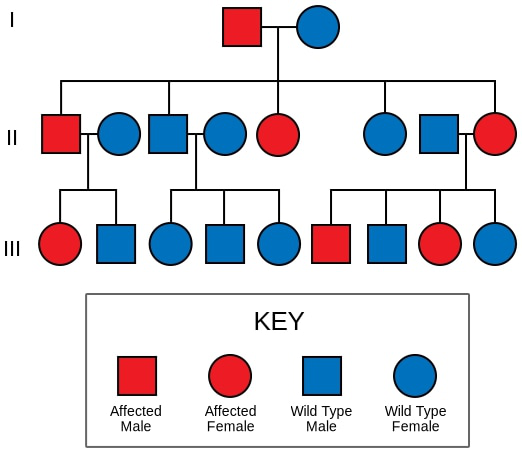
Patrón de herencia del síndrome de Liddle

Patrón de herencia autosómico dominante del síndrome de Liddle

Imagen: “Liddle” por Dra marina. Licencia: CC0 1.0
Fisiopatología

  • La mutación se produce en EN Erythema nodosum is an immune-mediated panniculitis (inflammation of the subcutaneous fat) caused by a type IV (delayed-type) hypersensitivity reaction. It commonly manifests in young women as tender, erythematous nodules on the shins. Erythema Nodosum los LOS Neisseria genes Genes A category of nucleic acid sequences that function as units of heredity and which code for the basic instructions for the development, reproduction, and maintenance of organisms. DNA Types and Structure SCNN1A, SCNN1B y SCNN1G que codifican las subunidades alfa, beta y gamma del ENaC ENaC Sodium channels found on salt-reabsorbing epithelial cells that line the distal nephron; the distal colon; salivary ducts; sweat glands; and the lung. They are amiloride-sensitive and play a critical role in the control of sodium balance, blood volume, and blood pressure. Liddle Syndrome.
    • Normalmente localizados en EN Erythema nodosum is an immune-mediated panniculitis (inflammation of the subcutaneous fat) caused by a type IV (delayed-type) hypersensitivity reaction. It commonly manifests in young women as tender, erythematous nodules on the shins. Erythema Nodosum la superficie de las células epiteliales de:
      • Riñón
      • Pulmones
      • Colon Colon The large intestines constitute the last portion of the digestive system. The large intestine consists of the cecum, appendix, colon (with ascending, transverse, descending, and sigmoid segments), rectum, and anal canal. The primary function of the colon is to remove water and compact the stool prior to expulsion from the body via the rectum and anal canal. Colon, Cecum, and Appendix: Anatomy
      • Glándulas sudoríparas
    • Función normal de los LOS Neisseria canales de sodio: reabsorción de sodio
  • La desregulación de los LOS Neisseria ENaC ENaC Sodium channels found on salt-reabsorbing epithelial cells that line the distal nephron; the distal colon; salivary ducts; sweat glands; and the lung. They are amiloride-sensitive and play a critical role in the control of sodium balance, blood volume, and blood pressure. Liddle Syndrome se produce debido a cambios estructurales en EN Erythema nodosum is an immune-mediated panniculitis (inflammation of the subcutaneous fat) caused by a type IV (delayed-type) hypersensitivity reaction. It commonly manifests in young women as tender, erythematous nodules on the shins. Erythema Nodosum las respectivas subunidades:
    • Localización de los LOS Neisseria canales ENaC ENaC Sodium channels found on salt-reabsorbing epithelial cells that line the distal nephron; the distal colon; salivary ducts; sweat glands; and the lung. They are amiloride-sensitive and play a critical role in the control of sodium balance, blood volume, and blood pressure. Liddle Syndrome: superficie de las células epiteliales de los LOS Neisseria riñones, los LOS Neisseria pulmones y las glándulas sudoríparas
    • Función de los LOS Neisseria canales: transporte de sodio hacia el interior de las células, reabsorción de sodio en EN Erythema nodosum is an immune-mediated panniculitis (inflammation of the subcutaneous fat) caused by a type IV (delayed-type) hypersensitivity reaction. It commonly manifests in young women as tender, erythematous nodules on the shins. Erythema Nodosum los LOS Neisseria túbulos renales distales
  • Cambio de dominio en EN Erythema nodosum is an immune-mediated panniculitis (inflammation of the subcutaneous fat) caused by a type IV (delayed-type) hypersensitivity reaction. It commonly manifests in young women as tender, erythematous nodules on the shins. Erythema Nodosum el canal → ↓ internalización y degradación de los LOS Neisseria canales ENaC ENaC Sodium channels found on salt-reabsorbing epithelial cells that line the distal nephron; the distal colon; salivary ducts; sweat glands; and the lung. They are amiloride-sensitive and play a critical role in the control of sodium balance, blood volume, and blood pressure. Liddle Syndrome (por la vía de la ubiquitina-proteasoma).
  • Incapacidad para degradar los LOS Neisseria canales → ↑ presencia del canal en EN Erythema nodosum is an immune-mediated panniculitis (inflammation of the subcutaneous fat) caused by a type IV (delayed-type) hypersensitivity reaction. It commonly manifests in young women as tender, erythematous nodules on the shins. Erythema Nodosum el conducto colector → ↑ reabsorción de Na, lo que da lugar a:
    • ↑ Reabsorción de agua e hipertensión.
    • ↑ Actividad de la Na/K ATPasa → ↑ afluencia y secreción de K celular a través de los LOS Neisseria canales de K apicales.
  • La aldosterona se encarga de controlar el número de canales de Na. Esta capacidad se pierde en EN Erythema nodosum is an immune-mediated panniculitis (inflammation of the subcutaneous fat) caused by a type IV (delayed-type) hypersensitivity reaction. It commonly manifests in young women as tender, erythematous nodules on the shins. Erythema Nodosum el síndrome de Liddle → ↓ en EN Erythema nodosum is an immune-mediated panniculitis (inflammation of the subcutaneous fat) caused by a type IV (delayed-type) hypersensitivity reaction. It commonly manifests in young women as tender, erythematous nodules on the shins. Erythema Nodosum degradación de los LOS Neisseria canales → estado similar a hiperaldosteronismo
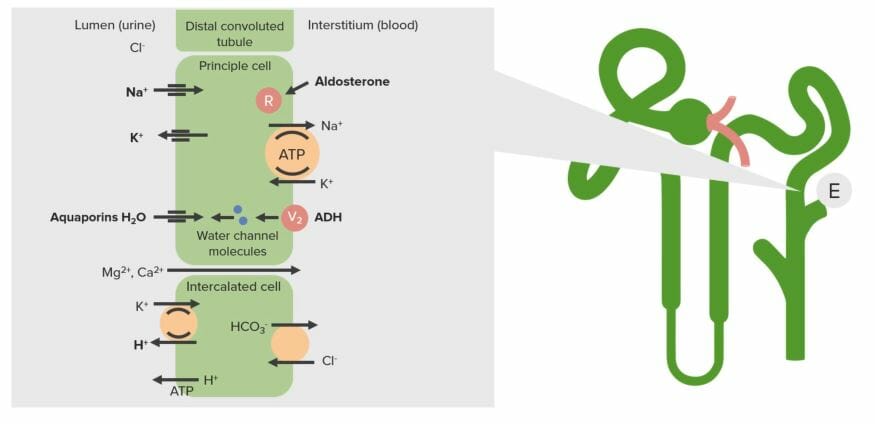
Transport system of the renal collecting duct

El sistema de transporte del conducto colector renal (E):
En el síndrome de Liddle, un aumento de los canales de sodio en la superficie apical (lado del lumen) da lugar a una mayor reabsorción de sodio. Este sodio es transportado de vuelta a la sangre a través de la Na+/K+ ATPasa en el lado basolateral, lo que resulta en un aumento del potasio intracelular. Este potasio se secreta a través de los canales de potasio de la superficie apical.

Imagen por Lecturio.

Presentación Clínica y Diagnóstico

Presentación clínica

El síndrome de Liddle es raro y tiene una presentación similar a la de muchos síndromes asociados al AL Amyloidosis exceso de mineralocorticoides. Por lo tanto, el síndrome es a menudo mal diagnosticado o no se detecta.

La tríada clásica de la presentación incluye:

  1. Hipertensión:
    • Inicio temprano
    • De larga duración
    • Frecuentemente es grave o resistente
    • Características asociadas:
      • Cefaleas intermitentes
      • Fatiga
      • Mareo
      • Cambios en EN Erythema nodosum is an immune-mediated panniculitis (inflammation of the subcutaneous fat) caused by a type IV (delayed-type) hypersensitivity reaction. It commonly manifests in young women as tender, erythematous nodules on the shins. Erythema Nodosum la visión
  2. Síntomas de hipopotasemia:
    • Debilidad
    • Fatiga
    • Palpitaciones
    • Mialgia
    • Estreñimiento
    • Intolerancia al AL Amyloidosis ejercicio
  3. Alcalosis metabólica

Diagnóstico

El diagnóstico preliminar del síndrome de Liddle se basa principalmente en EN Erythema nodosum is an immune-mediated panniculitis (inflammation of the subcutaneous fat) caused by a type IV (delayed-type) hypersensitivity reaction. It commonly manifests in young women as tender, erythematous nodules on the shins. Erythema Nodosum la sospecha resultante de la presentación clínica. También es importante tener en EN Erythema nodosum is an immune-mediated panniculitis (inflammation of the subcutaneous fat) caused by a type IV (delayed-type) hypersensitivity reaction. It commonly manifests in young women as tender, erythematous nodules on the shins. Erythema Nodosum cuenta:

  • Antecedentes familiares de hipertensión de inicio temprano con o sin hipopotasemia
  • Descartar otras causas de hipertensión, hipopotasemia y alcalosis metabólica.

Resultados de laboratorio:

  • ↓ Renina plasmática
  • ↓ Aldosterona plasmática
  • ↓ Aldosterona urinaria
  • ↓ Sodio urinario
  • Electrolitos séricos:
    • ↑ Na
    • ↓ K
    • ↑ HCO3

Debe considerarse la realización de pruebas genéticas en EN Erythema nodosum is an immune-mediated panniculitis (inflammation of the subcutaneous fat) caused by a type IV (delayed-type) hypersensitivity reaction. It commonly manifests in young women as tender, erythematous nodules on the shins. Erythema Nodosum pacientes con antecedentes familiares y sospecha de síndrome de Liddle.

Tratamiento

Tratamiento

El diagnóstico precoz del síndrome de Liddle conduce a la resolución o al AL Amyloidosis control del trastorno, lo que permite al AL Amyloidosis paciente llevar una vida normal.

  • Diuréticos ahorradores de potasio:
    • Actúan bloqueando la actividad de los LOS Neisseria ENaC ENaC Sodium channels found on salt-reabsorbing epithelial cells that line the distal nephron; the distal colon; salivary ducts; sweat glands; and the lung. They are amiloride-sensitive and play a critical role in the control of sodium balance, blood volume, and blood pressure. Liddle Syndrome:
      • Amilorida
      • Triamtereno
    • Tratar la hipertensión mientras se resuelve la hipopotasemia y la alcalosis metabólica
  • Restricción de sal: < 2 g de sodio/día
  • Las terapias hipertensivas convencionales son ineficaces.
  • El trasplante renal resuelve el trastorno por completo.

Complicaciones

Debido a su rara ocurrencia y a los LOS Neisseria síntomas similares a los LOS Neisseria de otros trastornos asociados al AL Amyloidosis exceso de mineralocorticoides, el síndrome de Liddle suele diagnosticarse erróneamente, lo que puede provocar un aumento de la aparición de complicaciones:

  • Hipertensión refractaria
  • Hipertrofia ventricular izquierda
  • Retinopatía hipertensiva
  • Nefroesclerosis
  • Isquemia cerebral que provoca accidentes cerebrovasculares
  • Enfermedad renal crónica
  • Encefalopatía hipertensiva
  • Edema Edema Edema is a condition in which excess serous fluid accumulates in the body cavity or interstitial space of connective tissues. Edema is a symptom observed in several medical conditions. It can be categorized into 2 types, namely, peripheral (in the extremities) and internal (in an organ or body cavity). Edema pulmonar

Pronóstico

  • El diagnóstico y el tratamiento temprano son clave para el pronóstico del síndrome de Liddle.
  • Tratamiento adecuado → buen pronóstico
  • Retraso en EN Erythema nodosum is an immune-mediated panniculitis (inflammation of the subcutaneous fat) caused by a type IV (delayed-type) hypersensitivity reaction. It commonly manifests in young women as tender, erythematous nodules on the shins. Erythema Nodosum la detección → retraso en EN Erythema nodosum is an immune-mediated panniculitis (inflammation of the subcutaneous fat) caused by a type IV (delayed-type) hypersensitivity reaction. It commonly manifests in young women as tender, erythematous nodules on the shins. Erythema Nodosum la terapia → manifestaciones de complicaciones cardiovasculares y renales importantes

Diagnóstico Diferencial

  • Hiperaldosteronismo primario: también conocido como síndrome de Conn. El hiperaldosteronismo primario se caracteriza por la producción excesiva de aldosterona, que da lugar a niveles bajos de renina. El hiperaldosteronismo primario está causado por una hiperplasia suprarrenal primaria o un adenoma suprarrenal y se presenta con hipertensión, debilidad muscular, espasmos musculares, poliuria y cefaleas. El diagnóstico se basa en EN Erythema nodosum is an immune-mediated panniculitis (inflammation of the subcutaneous fat) caused by a type IV (delayed-type) hypersensitivity reaction. It commonly manifests in young women as tender, erythematous nodules on the shins. Erythema Nodosum la historia clínica, la exploración física y las pruebas de laboratorio. El tratamiento incluye la suprarrenalectomía y la terapia con espironolactona.
  • Exceso aparente de mineralocorticoides: raro trastorno autosómico recesivo que se presenta con hipertensión, hipopotasemia, alcalosis metabólica y renina plasmática baja. El diagnóstico se realiza mediante el cálculo de la relación entre el cortisol Cortisol Glucocorticoids urinario libre y la cortisona urinaria libre, que es mayor en EN Erythema nodosum is an immune-mediated panniculitis (inflammation of the subcutaneous fat) caused by a type IV (delayed-type) hypersensitivity reaction. It commonly manifests in young women as tender, erythematous nodules on the shins. Erythema Nodosum los LOS Neisseria individuos afectados. El tratamiento incluye antagonistas de la aldosterona, como la espironolactona, y el trasplante renal.
  • Resistencia a los LOS Neisseria glucocorticoides: enfermedad familiar caracterizada por la reducción de los LOS Neisseria efectos del cortisol Cortisol Glucocorticoids debido a un defecto del receptor Receptor Receptors are proteins located either on the surface of or within a cell that can bind to signaling molecules known as ligands (e.g., hormones) and cause some type of response within the cell. Receptors de glucocorticoides contrarrestado por la hiperactividad del eje hipotálamo-hipófisis-suprarrenal. Los LOS Neisseria individuos afectados presentan signos de sobreproducción suprarrenal de mineralocorticoides: hipertensión, alcalosis hipopotasémica, hirsutismo en EN Erythema nodosum is an immune-mediated panniculitis (inflammation of the subcutaneous fat) caused by a type IV (delayed-type) hypersensitivity reaction. It commonly manifests in young women as tender, erythematous nodules on the shins. Erythema Nodosum las mujeres, calvicie de patrón masculino e irregularidades menstruales. El diagnóstico se basa en EN Erythema nodosum is an immune-mediated panniculitis (inflammation of the subcutaneous fat) caused by a type IV (delayed-type) hypersensitivity reaction. It commonly manifests in young women as tender, erythematous nodules on the shins. Erythema Nodosum los LOS Neisseria niveles elevados de cortisol Cortisol Glucocorticoids y en EN Erythema nodosum is an immune-mediated panniculitis (inflammation of the subcutaneous fat) caused by a type IV (delayed-type) hypersensitivity reaction. It commonly manifests in young women as tender, erythematous nodules on the shins. Erythema Nodosum los LOS Neisseria niveles de la hormona adrenocorticotrópica (ACTH, por sus siglas en EN Erythema nodosum is an immune-mediated panniculitis (inflammation of the subcutaneous fat) caused by a type IV (delayed-type) hypersensitivity reaction. It commonly manifests in young women as tender, erythematous nodules on the shins. Erythema Nodosum inglés), que son de normales a elevados. El tratamiento consiste en EN Erythema nodosum is an immune-mediated panniculitis (inflammation of the subcutaneous fat) caused by a type IV (delayed-type) hypersensitivity reaction. It commonly manifests in young women as tender, erythematous nodules on the shins. Erythema Nodosum utilizar glucocorticoides sintéticos ahorradores de mineralocorticoides para suprimir la secreción de ACTH.
  • Hipertensión renovascular: condición causada por estrechamiento u oclusión de las arterias renales y/o sus ramas, a menudo debido a aterosclerosis o displasia fibromuscular. La presentación clínica de la hipertensión renovascular incluye hipertensión, disfunción renal y edema Edema Edema is a condition in which excess serous fluid accumulates in the body cavity or interstitial space of connective tissues. Edema is a symptom observed in several medical conditions. It can be categorized into 2 types, namely, peripheral (in the extremities) and internal (in an organ or body cavity). Edema pulmonar causados por la activación del sistema renina-angiotensina-aldosterona. El diagnóstico se basa en EN Erythema nodosum is an immune-mediated panniculitis (inflammation of the subcutaneous fat) caused by a type IV (delayed-type) hypersensitivity reaction. It commonly manifests in young women as tender, erythematous nodules on the shins. Erythema Nodosum las imágenes renales, como el ultrasonido dúplex. El tratamiento se realiza por medio de una intervención quirúrgica.

Referencias

  1. Young, W.F. (2019). Genetic disorders of the collecting tubule sodium channel: Liddle’s syndrome and pseudohypoaldosteronism type 1. UpToDate. Retrieved June 7, 2021, from https://www.uptodate.com/contents/genetic-disorders-of-the-collecting-tubule-sodium-channel-liddles-syndrome-and-pseudohypoaldosteronism-type-1
  2. Liddle syndrome. (2016). Genetic and Rare Diseases Information Center. Retrieved June 7, 2021, from https://rarediseases.info.nih.gov/diseases/7381/liddle-syndrome
  3. Enslow, B.T., et al. (2019). Liddle’s syndrome mechanisms, diagnosis, and management. Integrated Blood Pressure Control 12:13–22.
  4. Hechanova, L.A. (2020). Liddle syndrome. MSD Manual Professional Version. https://www.msdmanuals.com/en-in/professional/genitourinary-disorders/renal-transport-abnormalities/liddle-syndrome
  5. Mubarik, A. et al. (2020). Liddle syndrome. Stat Pearls. https://www.statpearls.com/ArticleLibrary/viewarticle/42871

¡Crea tu cuenta gratis o inicia una sesión para seguir leyendo!

Regístrate ahora y obtén acceso gratuito a Lecturio con páginas de concepto, videos médicos y cuestionarios para tu educación médica.

User Reviews

Que tengas una sesión de estudio alegre y navideña 🎁 Ahorra 50% en todos los planes >>

Details