Domina Conceptos Médicos

Estudia para la escuela de medicina y tus examenes con Lecturio.

Porfirias

Las porfirias son un grupo de trastornos metabólicos causados por una alteración en EN Erythema nodosum is an immune-mediated panniculitis (inflammation of the subcutaneous fat) caused by a type IV (delayed-type) hypersensitivity reaction. It commonly manifests in young women as tender, erythematous nodules on the shins. Erythema Nodosum la síntesis del hemo. En EN Erythema nodosum is an immune-mediated panniculitis (inflammation of the subcutaneous fat) caused by a type IV (delayed-type) hypersensitivity reaction. It commonly manifests in young women as tender, erythematous nodules on the shins. Erythema Nodosum la mayoría de los LOS Neisseria casos, la porfiria es causada por un defecto enzimático hereditario. Los LOS Neisseria patrones de la enfermedad difieren según la enzima afectada, y las variantes de porfiria pueden diferenciarse clínicamente entre formas agudas y no agudas. Los LOS Neisseria pacientes con porfiria presentan erupciones cutáneas por fotosensibilidad y, a veces, síntomas sistémicos como dolor Dolor Inflammation abdominal y neuropatía. Las porfirias se tratan evitando los LOS Neisseria desencadenantes, como la exposición al AL Amyloidosis sol y el consumo de alcohol. Cuando ocurren brotes, la terapia se dirige hacia el alivio sintomático.

Last updated: Apr 24, 2025

Editorial responsibility: Stanley Oiseth, Lindsay Jones, Evelin Maza

Definición y Epidemiología

Definición

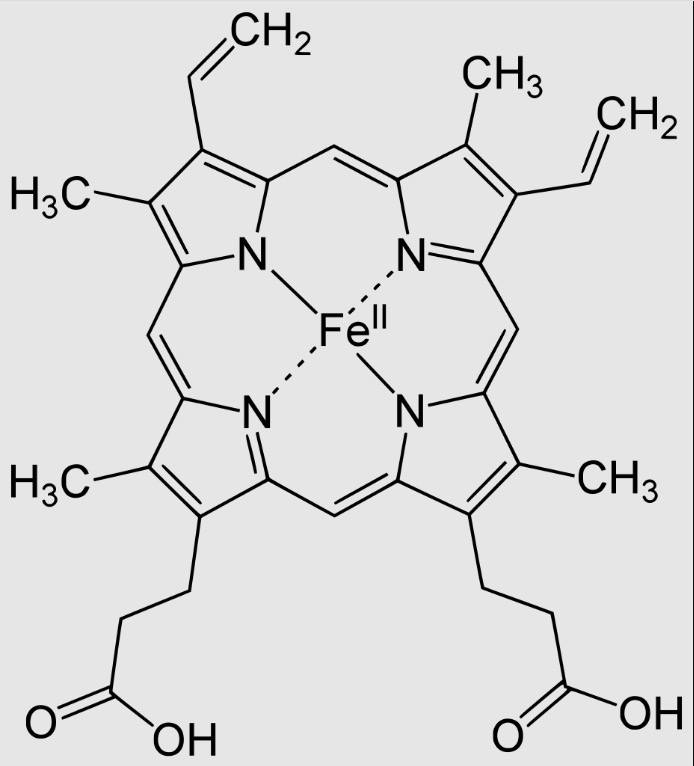
Las porfirias son trastornos metabólicos raros causados por deficiencias en EN Erythema nodosum is an immune-mediated panniculitis (inflammation of the subcutaneous fat) caused by a type IV (delayed-type) hypersensitivity reaction. It commonly manifests in young women as tender, erythematous nodules on the shins. Erythema Nodosum la síntesis de hemo.

  • Caracterizadas por una acumulación de sustancias llamadas porfirinas
  • Los LOS Neisseria tipos de porfiria se diferencian por el tipo de porfirina que se acumula en EN Erythema nodosum is an immune-mediated panniculitis (inflammation of the subcutaneous fat) caused by a type IV (delayed-type) hypersensitivity reaction. It commonly manifests in young women as tender, erythematous nodules on the shins. Erythema Nodosum la sangre, orina o heces.
  • Pueden afectar la piel, hígado y sistema nervioso

Epidemiología

  • Incidencia: aproximadamente 5 casos por 100 000 habitantes
  • El tipo más común es la porfiria cutánea tardía.
  • El 2do tipo más común es la porfiria intermitente aguda.

Fisiopatología

Las porfirias se deben a defectos enzimáticos en EN Erythema nodosum is an immune-mediated panniculitis (inflammation of the subcutaneous fat) caused by a type IV (delayed-type) hypersensitivity reaction. It commonly manifests in young women as tender, erythematous nodules on the shins. Erythema Nodosum la biosíntesis del hemo:
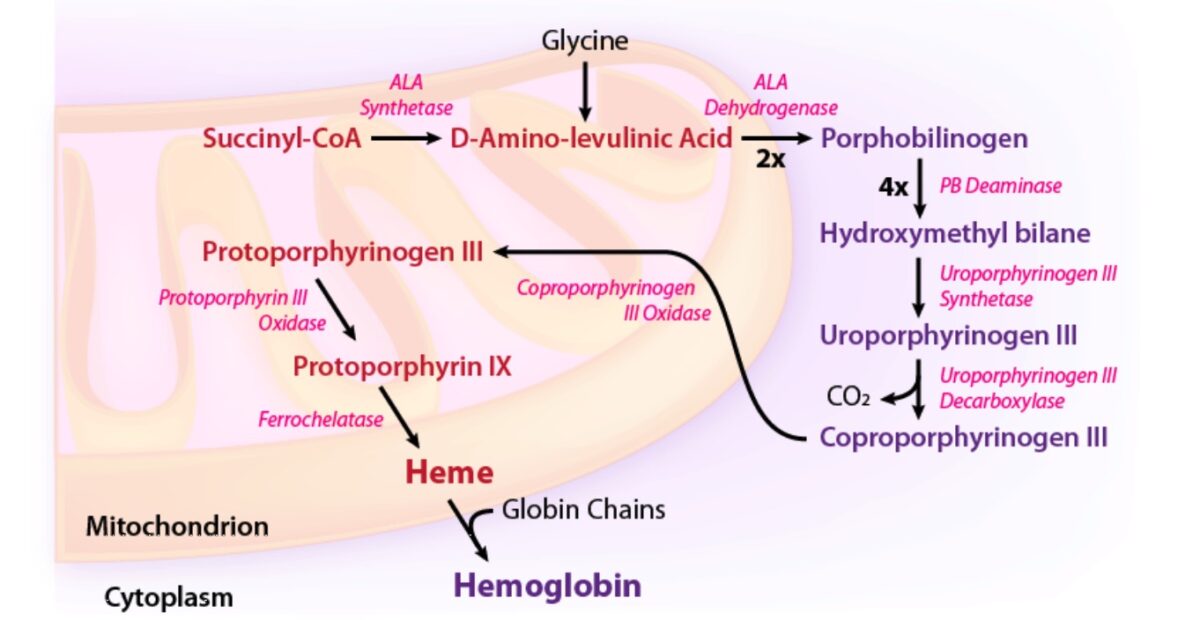
  • El hemo se produce en EN Erythema nodosum is an immune-mediated panniculitis (inflammation of the subcutaneous fat) caused by a type IV (delayed-type) hypersensitivity reaction. It commonly manifests in young women as tender, erythematous nodules on the shins. Erythema Nodosum el hígado y la médula ósea.
  • Implica 8 pasos enzimáticos, comenzando con glicina
  • La ausencia o disfunción de esas ESAs Hematopoietic Growth Factors enzimas conduce a la acumulación de precursores de hemo.
  • El exceso de precursores se acumula en EN Erythema nodosum is an immune-mediated panniculitis (inflammation of the subcutaneous fat) caused by a type IV (delayed-type) hypersensitivity reaction. It commonly manifests in young women as tender, erythematous nodules on the shins. Erythema Nodosum los LOS Neisseria tejidos, dando lugar a síntomas clínicos.
Tabla: Porfirias y su enzima defectuosa asociada
Tipo de porfiria Enzima defectuosa
Porfiria cutánea tardía Uroporfirinógeno III descarboxilasa
Porfiria aguda intermitente Porfobilinógeno desaminasa
Protoporfiria ligada al AL Amyloidosis cromosoma X Ácido δ-aminolevulínico sintasa 2
Porfiria eritropoyética congénita Uroporfirinógeno III sintasa
Coproporfiria hereditaria Coproporfirinógeno oxidasa
Porfiria variegata Protoporfirinógeno oxidasa
Protoporfiria eritropoyética Ferroquelatasa

Más comúnmente, las porfirias se deben a un defecto enzimático heredado dentro de la ruta de biosíntesis del hemo. Rara vez se pueden adquirir más adelante en EN Erythema nodosum is an immune-mediated panniculitis (inflammation of the subcutaneous fat) caused by a type IV (delayed-type) hypersensitivity reaction. It commonly manifests in young women as tender, erythematous nodules on the shins. Erythema Nodosum la vida:

  • Abuso de alcohol
  • Infecciones (e.g., hepatitis C Hepatitis C Hepatitis C is an infection of the liver caused by the hepatitis C virus (HCV). The infection can be transmitted through infectious blood or body fluids and may be transmitted during childbirth or through IV drug use or sexual intercourse. Hepatitis C virus can cause both acute and chronic hepatitis, ranging from a mild to a serious, lifelong illness including liver cirrhosis and hepatocellular carcinoma (HCC). Hepatitis C Virus y virus Virus Viruses are infectious, obligate intracellular parasites composed of a nucleic acid core surrounded by a protein capsid. Viruses can be either naked (non-enveloped) or enveloped. The classification of viruses is complex and based on many factors, including type and structure of the nucleoid and capsid, the presence of an envelope, the replication cycle, and the host range. Virology de inmunodeficiencia humana/síndrome de inmunodeficiencia adquirida (VIH/SIDA))
  • Aumento de los LOS Neisseria niveles de estrógeno

Presentación Clínica

La presentación clínica depende del patrón de afectación de órganos.
  • Porfiria crónica → aumento de las manifestaciones cutáneas (e.g., ampollas y erosiones)
  • Porfiria aguda → hallazgos sistémicos (e.g., dolor Dolor Inflammation abdominal, elevación de enzimas hepáticas)
  • Formas más comunes:
    • Porfiria cutánea tardía
    • Porfiria aguda intermitente
    • Protoporfiria eritropoyética:
      • Porfiria eritropoyética congénita (autosómica recesiva)
      • Protoporfiria eritropoyética (autosómica dominante)

Porfiria cutánea tardía

  • Tipo más común
  • Causada por un defecto en EN Erythema nodosum is an immune-mediated panniculitis (inflammation of the subcutaneous fat) caused by a type IV (delayed-type) hypersensitivity reaction. It commonly manifests in young women as tender, erythematous nodules on the shins. Erythema Nodosum la uroporfirinógeno III descarboxilasa
  • Puede heredarse de manera autosómica dominante o adquirirse más adelante en EN Erythema nodosum is an immune-mediated panniculitis (inflammation of the subcutaneous fat) caused by a type IV (delayed-type) hypersensitivity reaction. It commonly manifests in young women as tender, erythematous nodules on the shins. Erythema Nodosum la vida
  • La forma adquirida puede ser desencadenada por:
    • Abuso de alcohol
    • Estrógenos exógenos
    • Infección (a menudo hepatitis C Hepatitis C Hepatitis C is an infection of the liver caused by the hepatitis C virus (HCV). The infection can be transmitted through infectious blood or body fluids and may be transmitted during childbirth or through IV drug use or sexual intercourse. Hepatitis C virus can cause both acute and chronic hepatitis, ranging from a mild to a serious, lifelong illness including liver cirrhosis and hepatocellular carcinoma (HCC). Hepatitis C Virus)
  • Conduce a la acumulación de uroporfirinógeno III
  • Los LOS Neisseria síntomas incluyen:
    • Fotosensibilidad de la piel
    • Lesiones ampollares en EN Erythema nodosum is an immune-mediated panniculitis (inflammation of the subcutaneous fat) caused by a type IV (delayed-type) hypersensitivity reaction. It commonly manifests in young women as tender, erythematous nodules on the shins. Erythema Nodosum la piel
    • Cicatrices en EN Erythema nodosum is an immune-mediated panniculitis (inflammation of the subcutaneous fat) caused by a type IV (delayed-type) hypersensitivity reaction. It commonly manifests in young women as tender, erythematous nodules on the shins. Erythema Nodosum cara y dorso de manos
    • Hipertricosis
    • Hiperpigmentación
  • Los LOS Neisseria depósitos de porfirina causan daño hepático progresivo:
    • Enzimas de función hepática elevadas
    • Los LOS Neisseria nódulos hepáticos se pueden detectar en EN Erythema nodosum is an immune-mediated panniculitis (inflammation of the subcutaneous fat) caused by a type IV (delayed-type) hypersensitivity reaction. It commonly manifests in young women as tender, erythematous nodules on the shins. Erythema Nodosum un ultrasonido.
  • Los LOS Neisseria pacientes tendrán orina de color oscuro debido a las uroporfirinas elevadas.
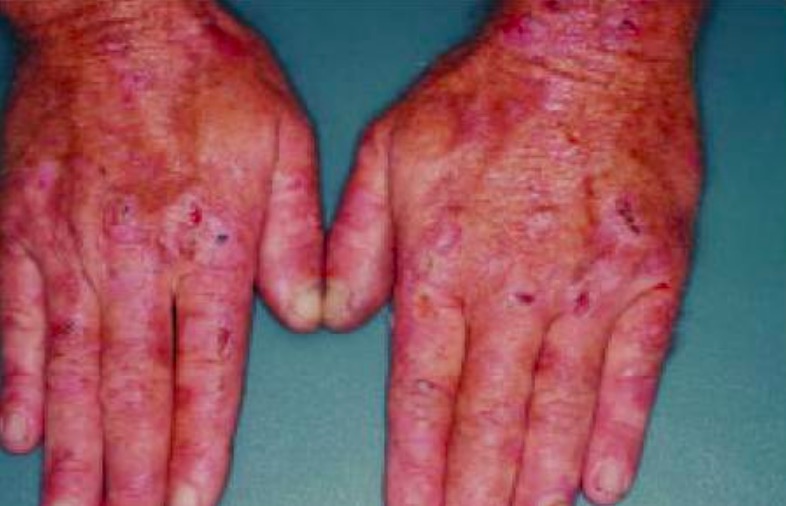
Erosiones, costras y ampollas son evidentes en las manos de este paciente con PCT

Erosiones, costras y ampollas son evidentes en las manos de este paciente con porfiria cutánea tardía.

Imagen: “Erosions, crust, and blisters are evident on the hands of this patient with porphyria cutanea tarda” por Department of Internal Medicine, Minia University, Minia, Egypt. Licencia: CC BY 2.5
Porfiria aguda intermitente

  • 2da porfiria más común
  • Pico de incidencia: 3ra década de la vida
  • La porfobilinógeno desaminasa es la enzima afectada. Aumento de los LOS Neisseria intermediarios precedentes en EN Erythema nodosum is an immune-mediated panniculitis (inflammation of the subcutaneous fat) caused by a type IV (delayed-type) hypersensitivity reaction. It commonly manifests in young women as tender, erythematous nodules on the shins. Erythema Nodosum la vía metabólica:
    • Porfobilinógeno
    • Ácido δ-aminolevulínico
  • Los LOS Neisseria síntomas incluyen:
    • Dolor Dolor Inflammation abdominal tipo cólico
    • Anomalías neurológicas
    • Desorientación

Porfiria eritropoyética congénita

  • Causada por un defecto en EN Erythema nodosum is an immune-mediated panniculitis (inflammation of the subcutaneous fat) caused by a type IV (delayed-type) hypersensitivity reaction. It commonly manifests in young women as tender, erythematous nodules on the shins. Erythema Nodosum la uroporfirinógeno III sintasa
  • Los LOS Neisseria síntomas incluyen:
    • Fotosensibilidad de la piel: formación de ampollas
    • Eritrodoncia (dientes rojos)
    • Dolor Dolor Inflammation abdominal tipo cólico
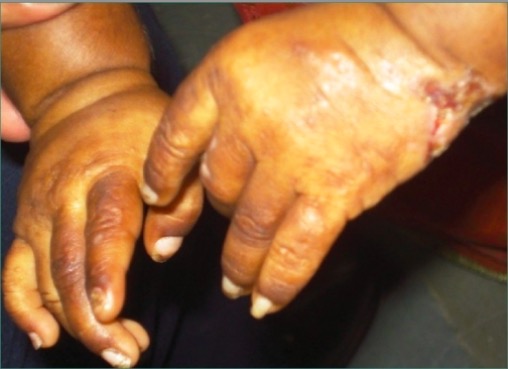
Eritrodoncia en porfiria eritropoyética congénita

Fotografía que muestra la presencia de lesiones y cicatrices en ambas manos de un paciente con porfiria eritropoyética congénita

Imagen: “Erythrodontia in congenital erythropoietic porphyria” por Department of Oral Pathology and Microbiology, Kamineni Institute of Dental Sciences, Narketpalli, Andhra Pradesh, India. Licencia: CC BY 2.0

Diagnóstico

El diagnóstico de porfirias generalmente se realiza mediante análisis de sangre especializados.

  • Si se sospecha, se puede detectar con análisis de orina y sangre:
    • La orina tendría niveles elevados de porfobilinógeno.
      • Porfobilinógeno es 1 de los LOS Neisseria 1ras sustancias en EN Erythema nodosum is an immune-mediated panniculitis (inflammation of the subcutaneous fat) caused by a type IV (delayed-type) hypersensitivity reaction. It commonly manifests in young women as tender, erythematous nodules on the shins. Erythema Nodosum la vía de síntesis de porfirina.
      • Otras porfirinas urinarias también pueden estar elevadas.
    • Las porfirinas séricas estarán elevadas.
  • Decoloración de la orina cuando se deja reposar (de amarillo a rojo oscuro)
  • Porfobilinógeno también puede ser detectado en EN Erythema nodosum is an immune-mediated panniculitis (inflammation of the subcutaneous fat) caused by a type IV (delayed-type) hypersensitivity reaction. It commonly manifests in young women as tender, erythematous nodules on the shins. Erythema Nodosum heces
  • Para confirmar el diagnóstico, mida la función de la enzima defectuosa sospechada.

Tratamiento

No existe una cura conocida para la porfiria.

  • Prevenir los LOS Neisseria brotes evitando estrictamente los LOS Neisseria desencadenantes (e.g., alcohol, luz solar).
  • Tratamiento sintomático cuando se producen brotes:
    • Flebotomía para eliminar porfirinas
    • Tratamiento del dolor Dolor Inflammation → antiinflamatorios no esteroideos (AINE), opioides
    • Vómitos → antieméticos
    • Taquicardia → betabloqueadores
    • Convulsiones → antiepilépticos
  • Crisis aguda: hemina intravenosa → disminuye la biosíntesis de hemo

Related videos

Diagnóstico Diferencial

  • Envenenamiento por plomo: conduce a una disminución de la síntesis de hemoglobina. Los LOS Neisseria síntomas del envenenamiento por plomo incluyen náuseas, vómitos, cefalea, encefalopatía y neuropatía periférica. El tratamiento está dirigido a disminuir los LOS Neisseria niveles de plomo con quelación.
  • Anemia Anemia Anemia is a condition in which individuals have low Hb levels, which can arise from various causes. Anemia is accompanied by a reduced number of RBCs and may manifest with fatigue, shortness of breath, pallor, and weakness. Subtypes are classified by the size of RBCs, chronicity, and etiology. Anemia: Overview and Types aguda: afección en EN Erythema nodosum is an immune-mediated panniculitis (inflammation of the subcutaneous fat) caused by a type IV (delayed-type) hypersensitivity reaction. It commonly manifests in young women as tender, erythematous nodules on the shins. Erythema Nodosum la cual los LOS Neisseria individuos tienen niveles bajos de hemoglobina. Los LOS Neisseria síntomas incluyen fatiga, dificultad para respirar, palidez y debilidad. La anemia Anemia Anemia is a condition in which individuals have low Hb levels, which can arise from various causes. Anemia is accompanied by a reduced number of RBCs and may manifest with fatigue, shortness of breath, pallor, and weakness. Subtypes are classified by the size of RBCs, chronicity, and etiology. Anemia: Overview and Types puede ocurrir debido a la pérdida de sangre, la disminución de la producción de eritrocitos, como en EN Erythema nodosum is an immune-mediated panniculitis (inflammation of the subcutaneous fat) caused by a type IV (delayed-type) hypersensitivity reaction. It commonly manifests in young women as tender, erythematous nodules on the shins. Erythema Nodosum la deficiencia de hierro, o el aumento de la destrucción de eritrocitos, como en EN Erythema nodosum is an immune-mediated panniculitis (inflammation of the subcutaneous fat) caused by a type IV (delayed-type) hypersensitivity reaction. It commonly manifests in young women as tender, erythematous nodules on the shins. Erythema Nodosum la hemólisis. El tratamiento está dirigido a mejorar los LOS Neisseria niveles de hemoglobina y tratar las afecciones subyacentes.
  • Hepatitis B Hepatitis B Hepatitis B virus (HBV) is a partially double-stranded DNA virus, which belongs to the Orthohepadnavirus genus and the Hepadnaviridae family. Most individuals with acute HBV infection are asymptomatic or have mild, self-limiting symptoms. Chronic infection can be asymptomatic or create hepatic inflammation, leading to liver cirrhosis and hepatocellular carcinoma (HCC). Hepatitis B Virus y C: infecciones virales del hígado que causan inflamación y daño de los LOS Neisseria hepatocitos. La presentación de estas 2 infecciones depende de si la infección es aguda o crónica, y es específica del tipo de hepatitis presente. El diagnóstico se establece mediante la detección de anticuerpos o antígenos virales en EN Erythema nodosum is an immune-mediated panniculitis (inflammation of the subcutaneous fat) caused by a type IV (delayed-type) hypersensitivity reaction. It commonly manifests in young women as tender, erythematous nodules on the shins. Erythema Nodosum el suero.
  • Linfoma de Hodgkin: malignidad de los LOS Neisseria linfocitos B que se origina en EN Erythema nodosum is an immune-mediated panniculitis (inflammation of the subcutaneous fat) caused by a type IV (delayed-type) hypersensitivity reaction. It commonly manifests in young women as tender, erythematous nodules on the shins. Erythema Nodosum los LOS Neisseria ganglios linfáticos. La enfermedad se presenta más comúnmente con linfadenopatía (cuello más comúnmente afectado), sudores nocturnos, pérdida de peso, fiebre y, en EN Erythema nodosum is an immune-mediated panniculitis (inflammation of the subcutaneous fat) caused by a type IV (delayed-type) hypersensitivity reaction. It commonly manifests in young women as tender, erythematous nodules on the shins. Erythema Nodosum ocasiones, esplenomegalia y hepatomegalia. El linfoma de Hodgkin se trata con quimioterapia y radioterapia.
  • Leucemia linfoblástica aguda: malignidad hematológica que comienza en EN Erythema nodosum is an immune-mediated panniculitis (inflammation of the subcutaneous fat) caused by a type IV (delayed-type) hypersensitivity reaction. It commonly manifests in young women as tender, erythematous nodules on the shins. Erythema Nodosum la médula ósea. Los LOS Neisseria pacientes se presentan con fatiga, palidez, sangrado, fiebre e infección relacionada con la anemia Anemia Anemia is a condition in which individuals have low Hb levels, which can arise from various causes. Anemia is accompanied by a reduced number of RBCs and may manifest with fatigue, shortness of breath, pallor, and weakness. Subtypes are classified by the size of RBCs, chronicity, and etiology. Anemia: Overview and Types, trombocitopenia y falta de leucocitos funcionales que se observan en EN Erythema nodosum is an immune-mediated panniculitis (inflammation of the subcutaneous fat) caused by a type IV (delayed-type) hypersensitivity reaction. It commonly manifests in young women as tender, erythematous nodules on the shins. Erythema Nodosum la leucemia aguda. El diagnóstico se realiza con frotis de sangre periférica y biopsia de médula ósea.

Referencias

  1. Aarsand, A. K., Petersen, P. H., & Sandberg, S. (2025). Practical recommendations for biochemical and genetic diagnosis of the porphyrias. Liver International, 45(3), e16012. https://doi.org/10.1111/liv.16012
  2. Badminton, M. N., Whatley, S. D., & Elder, G. H. (2024). From chemistry to genomics: A concise history of the porphyrias. Liver International, 44(9), 2144-2155. https://doi.org/10.1111/liv.15960
  3. Balogun, O., & Nejak-Bowen, K. (2024). Understanding hepatic porphyrias: Symptoms, treatments, and unmet needs. Seminars in Liver Disease, 44(2), 209-225. https://doi.org/10.1055/s-0044-1787076
  4. Balwani, M., Wang, B., Anderson, K. E., & Desnick, R. J. (2025). Case-based discussion of the acute hepatic porphyrias: Updates on pathogenesis, diagnosis and management. Liver International, 45(3), e15924. https://doi.org/10.1111/liv.15924
  5. Dickey, A. K., Gill, A. J., & Bloomer, J. R. (2024). Update on the porphyrias. Annual Review of Medicine, 75(1), 321-335. https://doi.org/10.1146/annurev-med-042921-123602
  6. Jericó, D., Enríquez de Salamanca, R., & Elder, G. H. (2024). Exploring current and emerging therapies for porphyrias. Liver International, 44(9), 2174-2190. https://doi.org/10.1111/liv.15979
  7. Moghe, A., McGuire, B. M., & Levy, C. (2024). Acute hepatic porphyrias—A guide for hepatologists. Hepatology. Advance online publication. https://doi.org/10.1097/HEP.0000000000000880
  8. UpToDate. (2025). Porphyrias: Overview of classification and evaluation. https://www.uptodate.com/contents/porphyrias-overview-of-classification-and-evaluation

¡Crea tu cuenta gratis o inicia una sesión para seguir leyendo!

Regístrate ahora y obtén acceso gratuito a Lecturio con páginas de concepto, videos médicos y cuestionarios para tu educación médica.

User Reviews

Que tengas una sesión de estudio alegre y navideña 🎁 Ahorra 50% en todos los planes >>

Details