Domina Conceptos Médicos

Estudia para la escuela de medicina y tus examenes con Lecturio.

Polihidramnios

El polihidramnios es un exceso patológico de líquido amniótico. Las causas más comunes de polihidramnios son las anomalías fetales, la diabetes Diabetes Diabetes mellitus (DM) is a metabolic disease characterized by hyperglycemia and dysfunction of the regulation of glucose metabolism by insulin. Type 1 DM is diagnosed mostly in children and young adults as the result of autoimmune destruction of β cells in the pancreas and the resulting lack of insulin. Type 2 DM has a significant association with obesity and is characterized by insulin resistance. Diabetes Mellitus gestacional, las gestaciones múltiples y las infecciones congénitas. Las pacientes suelen ser asintomáticas, pero pueden presentar un tamaño uterino aumentado para la edad gestacional, disnea, edema Edema Edema is a condition in which excess serous fluid accumulates in the body cavity or interstitial space of connective tissues. Edema is a symptom observed in several medical conditions. It can be categorized into 2 types, namely, peripheral (in the extremities) and internal (in an organ or body cavity). Edema de las extremidades o contracciones uterinas. El diagnóstico se basa en EN Erythema nodosum is an immune-mediated panniculitis (inflammation of the subcutaneous fat) caused by a type IV (delayed-type) hypersensitivity reaction. It commonly manifests in young women as tender, erythematous nodules on the shins. Erythema Nodosum los LOS Neisseria hallazgos por ultrasonido que muestran un índice de líquido amniótico excesivo ≥24 cm o una bolsa única más profunda ≥8 cm. Se asocia a una importante morbilidad y mortalidad neonatal y materna. Los LOS Neisseria casos leves pueden resolverse espontáneamente. El manejo de los LOS Neisseria casos moderados a graves puede incluir la monitorización fetal, la amniorreducción, la administración de medicamentos como los LOS Neisseria AINE (e.g., indometacina) y la inducción del parto.

Last updated: Dec 15, 2025

Editorial responsibility: Stanley Oiseth, Lindsay Jones, Evelin Maza

Descripción General

Definición

El polihidramnios es un nivel anormalmente alto de líquido amniótico en EN Erythema nodosum is an immune-mediated panniculitis (inflammation of the subcutaneous fat) caused by a type IV (delayed-type) hypersensitivity reaction. It commonly manifests in young women as tender, erythematous nodules on the shins. Erythema Nodosum el saco amniótico.

Epidemiología

  • Rango de incidencia: 0,2–1,6%
  • A menudo se identifica de forma incidental durante el 3er trimestre.
  • El polihidramnios es idiopático en EN Erythema nodosum is an immune-mediated panniculitis (inflammation of the subcutaneous fat) caused by a type IV (delayed-type) hypersensitivity reaction. It commonly manifests in young women as tender, erythematous nodules on the shins. Erythema Nodosum 60%–70% de los LOS Neisseria casos.
  • El 20% de los LOS Neisseria casos se debe a anomalías congénitas.

Etiología

  • Idiopático
  • Anomalías fetales (comúnmente anomalías que interfieren con la deglución y/o la absorción de líquidos):
  • Anomalías cromosómicas fetales:
    • Trisomía 18
    • Trisomía 21
  • Anemia Anemia Anemia is a condition in which individuals have low Hb levels, which can arise from various causes. Anemia is accompanied by a reduced number of RBCs and may manifest with fatigue, shortness of breath, pallor, and weakness. Subtypes are classified by the size of RBCs, chronicity, and etiology. Anemia: Overview and Types fetal:
    • Aloinmunización
    • Infección congénita (e.g., parvovirus)
    • Hemorragia fetomaterna
  • Hidropesía fetal
  • Síndrome de transfusión gemelo a gemelo
  • Diabetes Diabetes Diabetes mellitus (DM) is a metabolic disease characterized by hyperglycemia and dysfunction of the regulation of glucose metabolism by insulin. Type 1 DM is diagnosed mostly in children and young adults as the result of autoimmune destruction of β cells in the pancreas and the resulting lack of insulin. Type 2 DM has a significant association with obesity and is characterized by insulin resistance. Diabetes Mellitus gestacional
  • Uremia Uremia A clinical syndrome associated with the retention of renal waste products or uremic toxins in the blood. It is usually the result of renal insufficiency. Most uremic toxins are end products of protein or nitrogen catabolism, such as urea or creatinine. Severe uremia can lead to multiple organ dysfunctions with a constellation of symptoms. Acute Kidney Injury materna
  • Hipercalcemia materna
  • Tumores fetales y placentarios
  • Infecciones intraparto (e.g., infecciones por toxoplasmosis Toxoplasmosis Toxoplasmosis is an infectious disease caused by Toxoplasma gondii, an obligate intracellular protozoan parasite. Felines are the definitive host, but transmission to humans can occur through contact with cat feces or the consumption of contaminated foods. The clinical presentation and complications depend on the host’s immune status. Toxoplasma/Toxoplasmosis, otros agentes, rubéola, citomegalovirus y herpes simple (TORCH))
  • Ingesta materna de litio

Fisiopatología

Condiciones fisiológicas normales:

  • El líquido amniótico se deriva de la micción fetal.
  • La absorción de líquidos se produce a través de la deglución fetal.
  • Se desarrolla el equilibrio (i.e., un volumen estable de líquido amniótico) entre la producción y la excreción de líquido amniótico.

Dos causas principales de polihidramnios:
  1. Aumento de la micción fetal:
    • Gasto cardíaco elevado ( anemia Anemia Anemia is a condition in which individuals have low Hb levels, which can arise from various causes. Anemia is accompanied by a reduced number of RBCs and may manifest with fatigue, shortness of breath, pallor, and weakness. Subtypes are classified by the size of RBCs, chronicity, and etiology. Anemia: Overview and Types fetal)
    • Sobrecarga de volumen (síndrome de transfusión gemelo a gemelo)
    • Diuresis osmótica ( diabetes Diabetes Diabetes mellitus (DM) is a metabolic disease characterized by hyperglycemia and dysfunction of the regulation of glucose metabolism by insulin. Type 1 DM is diagnosed mostly in children and young adults as the result of autoimmune destruction of β cells in the pancreas and the resulting lack of insulin. Type 2 DM has a significant association with obesity and is characterized by insulin resistance. Diabetes Mellitus materna, uremia Uremia A clinical syndrome associated with the retention of renal waste products or uremic toxins in the blood. It is usually the result of renal insufficiency. Most uremic toxins are end products of protein or nitrogen catabolism, such as urea or creatinine. Severe uremia can lead to multiple organ dysfunctions with a constellation of symptoms. Acute Kidney Injury materna)
  2. Disminución de la deglución/absorción fetal del líquido amniótico

Presentación Clínica

  • La mayoría de las pacientes con polihidramnios son asintomáticas, siendo un hallazgo incidental en EN Erythema nodosum is an immune-mediated panniculitis (inflammation of the subcutaneous fat) caused by a type IV (delayed-type) hypersensitivity reaction. It commonly manifests in young women as tender, erythematous nodules on the shins. Erythema Nodosum el ultrasonido.
  • Hallazgo más común: tamaño uterino mayor de lo esperado para la edad gestacional
  • Las pacientes sintomáticas pueden tener:
    • Disnea
    • Edema Edema Edema is a condition in which excess serous fluid accumulates in the body cavity or interstitial space of connective tissues. Edema is a symptom observed in several medical conditions. It can be categorized into 2 types, namely, peripheral (in the extremities) and internal (in an organ or body cavity). Edema de las extremidades
    • Estreñimiento
    • Dolor Dolor Inflammation abdominal
    • Tensión de la pared abdominal
    • Abdomen de crecimiento rápido
    • Disminución del movimiento fetal
  • El bebé a menudo está en EN Erythema nodosum is an immune-mediated panniculitis (inflammation of the subcutaneous fat) caused by a type IV (delayed-type) hypersensitivity reaction. It commonly manifests in young women as tender, erythematous nodules on the shins. Erythema Nodosum presentación podálica.

Diagnóstico

Antecedentes

  • A menudo poco útil
  • Centrarse en EN Erythema nodosum is an immune-mediated panniculitis (inflammation of the subcutaneous fat) caused by a type IV (delayed-type) hypersensitivity reaction. It commonly manifests in young women as tender, erythematous nodules on the shins. Erythema Nodosum la presencia de factores de riesgo (e.g., diabetes Diabetes Diabetes mellitus (DM) is a metabolic disease characterized by hyperglycemia and dysfunction of the regulation of glucose metabolism by insulin. Type 1 DM is diagnosed mostly in children and young adults as the result of autoimmune destruction of β cells in the pancreas and the resulting lack of insulin. Type 2 DM has a significant association with obesity and is characterized by insulin resistance. Diabetes Mellitus, enfermedades genéticas).
  • Preguntar sobre la percepción materna de movimientos fetales (a menudo disminuida).

Examen físico

  • Evaluaciones:
    • Tamaño y tensión abdominal
    • Edema Edema Edema is a condition in which excess serous fluid accumulates in the body cavity or interstitial space of connective tissues. Edema is a symptom observed in several medical conditions. It can be categorized into 2 types, namely, peripheral (in the extremities) and internal (in an organ or body cavity). Edema de extremidades inferiores
  • Medición de la altura uterina:
    • Utilice una cinta métrica flexible.
    • Mida desde la sínfisis púbica hasta la parte superior del fondo.
    • Mida en EN Erythema nodosum is an immune-mediated panniculitis (inflammation of the subcutaneous fat) caused by a type IV (delayed-type) hypersensitivity reaction. It commonly manifests in young women as tender, erythematous nodules on the shins. Erythema Nodosum centímetros.
    • La edad gestacional en EN Erythema nodosum is an immune-mediated panniculitis (inflammation of the subcutaneous fat) caused by a type IV (delayed-type) hypersensitivity reaction. It commonly manifests in young women as tender, erythematous nodules on the shins. Erythema Nodosum semanas debe ser aproximadamente igual a la altura del fondo uterino (e.g., un feto con 25 semanas de edad gestacional debe tener una altura uterina de aproximadamente 25 cm).
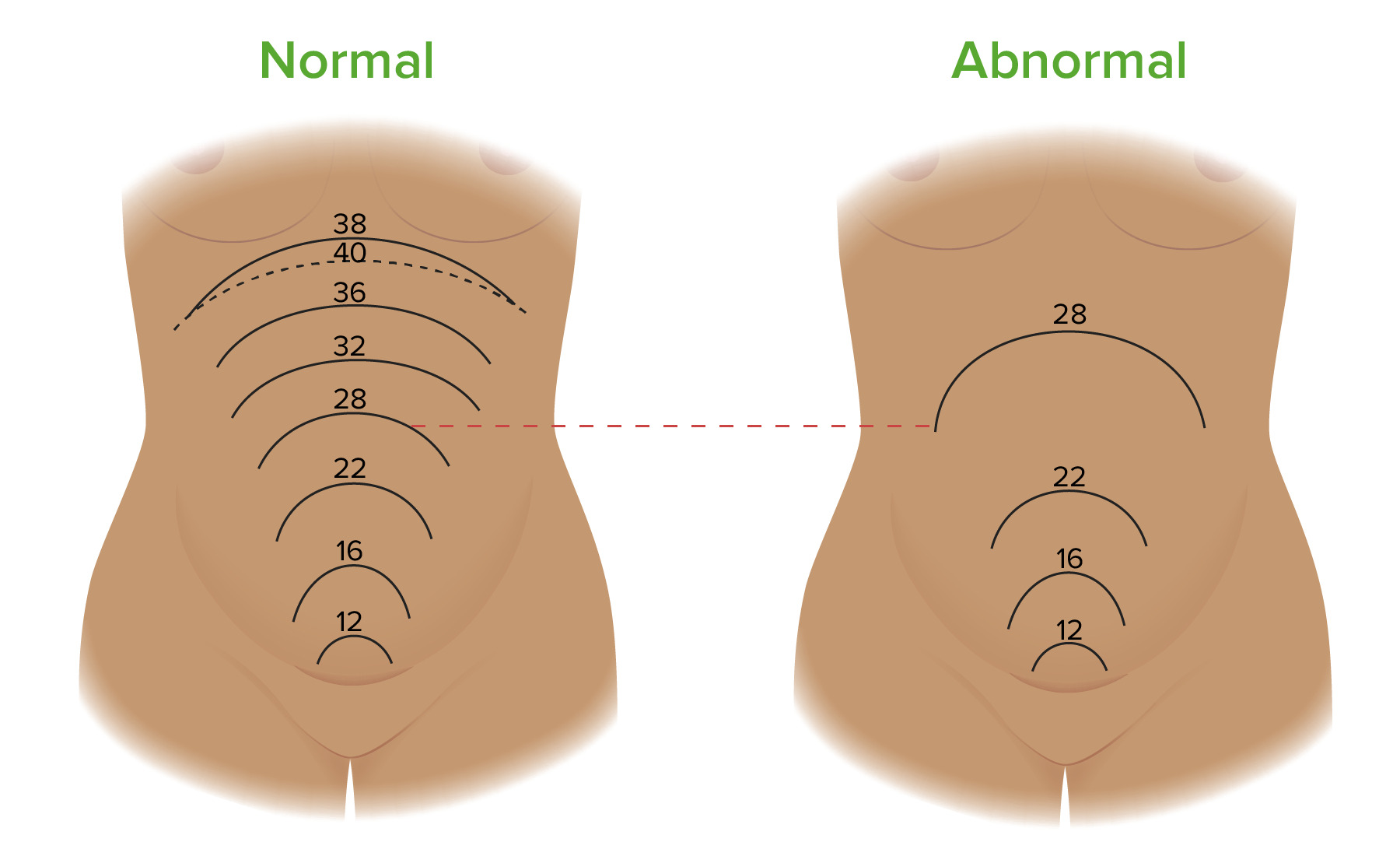
    • Una altura uterina > 3 cm por encima de la edad gestacional en EN Erythema nodosum is an immune-mediated panniculitis (inflammation of the subcutaneous fat) caused by a type IV (delayed-type) hypersensitivity reaction. It commonly manifests in young women as tender, erythematous nodules on the shins. Erythema Nodosum semanas es sospechosa de polihidramnios
Medición de la altura del fondo

Alturas del fondo uterino a lo largo del embarazo en casos normales (izquierda) y en embarazos complicados por polihidramnios (derecha). La altura uterina es la longitud entre la sínfisis del pubis y la parte superior del fondo uterino. La altura uterina medida en centímetros debe ser aproximadamente igual a la edad gestacional del feto en semanas. Por ejemplo, a las 28 semanas, la altura uterina debe medir ~ 28 cm. Una discrepancia de > 3 cm es sospechosa de polihidramnios. La imagen de la izquierda muestra dónde se encuentra el fondo del útero a diferentes edades gestacionales a lo largo de un embarazo normal. La imagen de la derecha muestra la posible progresión del crecimiento del fondo uterino en un embarazo complicado por polihidramnios. Obsérvese cómo la altura uterina a las 28 semanas es significativamente mayor en el embarazo complicado por polihidramnios en comparación con un embarazo normal.

Imagen por Lecturio.

Evaluación del líquido amniótico

  • Con ultrasonido:
    • Dividir el útero en EN Erythema nodosum is an immune-mediated panniculitis (inflammation of the subcutaneous fat) caused by a type IV (delayed-type) hypersensitivity reaction. It commonly manifests in young women as tender, erythematous nodules on the shins. Erythema Nodosum 4 cuadrantes.
    • Medir el bolsillo vertical máximo de líquido en EN Erythema nodosum is an immune-mediated panniculitis (inflammation of the subcutaneous fat) caused by a type IV (delayed-type) hypersensitivity reaction. It commonly manifests in young women as tender, erythematous nodules on the shins. Erythema Nodosum cada cuadrante que tenga al AL Amyloidosis menos 1 cm de ancho y esté libre de cordón umbilical o partes fetales.
    • Índice de líquido amniótico (ILA):
      • Una suma del bolsillo amniótico más profundo en EN Erythema nodosum is an immune-mediated panniculitis (inflammation of the subcutaneous fat) caused by a type IV (delayed-type) hypersensitivity reaction. It commonly manifests in young women as tender, erythematous nodules on the shins. Erythema Nodosum cada uno de los LOS Neisseria 4 cuadrantes
      • Los LOS Neisseria valores entre 6–23 cm son normales.
      • Polihidramnios= ILA ≥ 24 cm
    • Máxima columna vertical:
      • Profundidad de la bolsa de líquido más profunda
      • Los LOS Neisseria valores entre 2–8 cm son normales.
      • Polihidramnios= máxima columna vertical ≥ 8 cm
  • Considerar la amniocentesis Amniocentesis Percutaneous transabdominal puncture of the uterus during pregnancy to obtain amniotic fluid. It is commonly used for fetal karyotype determination in order to diagnose abnormal fetal conditions. Polyhydramnios:
    • Técnica de dilución de colorante:
      • Se inyecta un volumen conocido de colorante (e.g., 2 mL de aminohipurato sódico al AL Amyloidosis 20%) en EN Erythema nodosum is an immune-mediated panniculitis (inflammation of the subcutaneous fat) caused by a type IV (delayed-type) hypersensitivity reaction. It commonly manifests in young women as tender, erythematous nodules on the shins. Erythema Nodosum la cavidad amniótica a través de una aguja estéril bajo control por ultrasonido.
      • ~ 20 minutos después, se extrae un pequeño volumen de líquido amniótico y se mide la concentración de colorante → permite calcular el volumen total de líquido amniótico
      • Estándar de oro para medir el líquido amniótico
      • Rara vez se realiza
  • También puede utilizarse para:
    • Cariotipo fetal para la trisomía 21, 13 y 18
    • PCR PCR Polymerase chain reaction (PCR) is a technique that amplifies DNA fragments exponentially for analysis. The process is highly specific, allowing for the targeting of specific genomic sequences, even with minuscule sample amounts. The PCR cycles multiple times through 3 phases: denaturation of the template DNA, annealing of a specific primer to the individual DNA strands, and synthesis/elongation of new DNA molecules. Polymerase Chain Reaction (PCR) para la detección de infecciones congénitas

Otras pruebas diagnósticas

  • Otras pruebas por ultrasonido:
    • Tamizaje de órganos fetales
    • Medición de la velocidad sistólica máxima de la arteria cerebral media:
      • Medida por ultrasonido
      • Un valor ↑ indica anemia Anemia Anemia is a condition in which individuals have low Hb levels, which can arise from various causes. Anemia is accompanied by a reduced number of RBCs and may manifest with fatigue, shortness of breath, pallor, and weakness. Subtypes are classified by the size of RBCs, chronicity, and etiology. Anemia: Overview and Types fetal (el feto dirige preferentemente más sangre al AL Amyloidosis cerebro)
  • Tamizaje de diabetes Diabetes Diabetes mellitus (DM) is a metabolic disease characterized by hyperglycemia and dysfunction of the regulation of glucose metabolism by insulin. Type 1 DM is diagnosed mostly in children and young adults as the result of autoimmune destruction of β cells in the pancreas and the resulting lack of insulin. Type 2 DM has a significant association with obesity and is characterized by insulin resistance. Diabetes Mellitus: Prueba de tolerancia a la glucosa
  • Tamizaje de infecciones congénitas:
    • Infecciones por TORCH ( toxoplasmosis Toxoplasmosis Toxoplasmosis is an infectious disease caused by Toxoplasma gondii, an obligate intracellular protozoan parasite. Felines are the definitive host, but transmission to humans can occur through contact with cat feces or the consumption of contaminated foods. The clinical presentation and complications depend on the host’s immune status. Toxoplasma/Toxoplasmosis, otros agentes, rubéola, citomegalovirus y herpes simple)
    • VIH
    • Hepatitis
  • Tamuzaje para aloinmunización (i.e., formación de anticuerpos maternos a la sangre fetal):
    • Tipaje materno
    • Factor Rhesus
    • Detección de anticuerpos (Kell, Duffy, D y C)
    • Prueba de Kleihauer-Betke: evalúa la hemorragia fetomaterna
  • Niveles de litio
  • Hemoglobina de Bart (relevante en EN Erythema nodosum is an immune-mediated panniculitis (inflammation of the subcutaneous fat) caused by a type IV (delayed-type) hypersensitivity reaction. It commonly manifests in young women as tender, erythematous nodules on the shins. Erythema Nodosum descendientes asiáticos): puede ser heterocigoto para α-talasemia
Tabla: Clasificación de polihidramnios leve, moderado y severo
Clasificación de polihidramnios Índice de líquido amniótico Bolsillo vertical máximo
Leve 24–29,9 cm 8–11,9 cm
Moderado 30–34,9 cm 12–15,9 cm
Severo ≥ 35 cm ≥ 16 cm
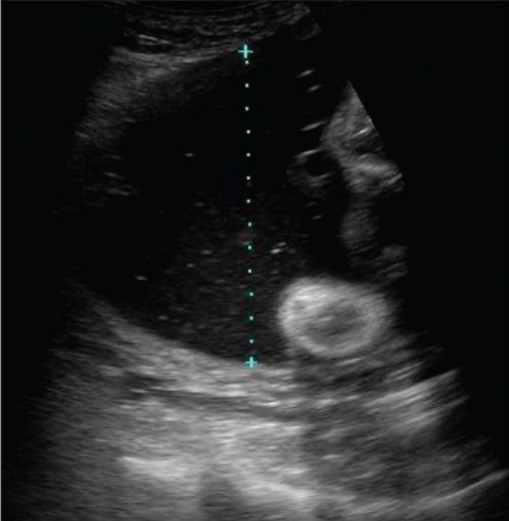
Entorno fetal: medición de una sola bolsa vertical de líquido

La foto muestra la medición de un bolsillo vertical de líquido amniótico, que se utiliza en la evaluación del volumen de líquido amniótico. Si este fuera el bolsillo de líquido más profundo presente, se conocería como bolsillo vertical máximo; los valores ≥ 8 cm se clasifican como polihidramnios.


Imagen: “Demonstration of the technique to measure a single vertical pocket of liquor” por Kinare A. Licencia: CC BY 2.0

Tratamiento

Cuidado prenatal

  • El tratamiento depende de la gravedad del polihidramnios.
    • No se requiere tratamiento para las formas leves de polihidramnios.
    • Formas moderadas-graves: Los LOS Neisseria expertos de Estados Unidos recomiendan la realización de pruebas de vigilancia fetal prenatal.
  • Se recomienda asesoría.
  • Se realizan ultrasonidos seriados para evaluar el crecimiento fetal y el índice de líquido amniótico.
  • El polihidramnios grave/sintomático se trata con:
    • Amnioreducción:
      • Un tipo de amniocentesis Amniocentesis Percutaneous transabdominal puncture of the uterus during pregnancy to obtain amniotic fluid. It is commonly used for fetal karyotype determination in order to diagnose abnormal fetal conditions. Polyhydramnios terapéutica (remoción del líquido amniótico a través de una aguja delgada bajo guía por ultrasonido)
      • Alta incidencia de reacumulación de líquido
    • Inhibidores de la prostaglandina sintetasa (casi siempre indometacina):
      • Inhiben las contracciones del parto prematuro
      • Estimulación de la secreción de ADH fetal → ↓ del flujo sanguíneo renal → ↓ diuresis
      • Se debe usar con precaución en EN Erythema nodosum is an immune-mediated panniculitis (inflammation of the subcutaneous fat) caused by a type IV (delayed-type) hypersensitivity reaction. It commonly manifests in young women as tender, erythematous nodules on the shins. Erythema Nodosum periodos cortos (<48–72 horas)
      • Normalmente se evita después de las 32 semanas de gestación debido al AL Amyloidosis riesgo de cierre prematuro del conducto arterioso y efectos renales fetales.
  • Asesoramiento genético
  • Transfusión de sangre intrauterina ( anemia Anemia Anemia is a condition in which individuals have low Hb levels, which can arise from various causes. Anemia is accompanied by a reduced number of RBCs and may manifest with fatigue, shortness of breath, pallor, and weakness. Subtypes are classified by the size of RBCs, chronicity, and etiology. Anemia: Overview and Types fetal)
  • Fotocoagulación con láser (síndrome de transfusión gemelo a gemelo)

Parto

  • El momento del parto se basa en EN Erythema nodosum is an immune-mediated panniculitis (inflammation of the subcutaneous fat) caused by a type IV (delayed-type) hypersensitivity reaction. It commonly manifests in young women as tender, erythematous nodules on the shins. Erythema Nodosum:
    • Etiología subyacente
    • Complicaciones
  • Para los LOS Neisseria casos idiopáticos/no complicados, se recomienda generalmente la inducción del trabajo de parto entre las 39 y 40 semanas de edad gestacional.
  • Para los LOS Neisseria casos graves/sintomáticos, se recomienda la inducción del trabajo de parto:
    • De forma individual/caso por caso
    • Generalmente, a las 37 semanas
    • Posiblemente a partir de las 34 semanas, dependiendo del escenario clínico
  • Se recomienda monitorización fetal continua.
  • Se utilizan esteroides para mejorar la madurez pulmonar fetal si se anticipa un parto pretérmino.

Complicaciones

  • Trabajo de parto pretérmino
  • Rotura prematura de membranas
  • Hemorragia postparto
  • Malposición fetal
  • Prolapso del cordón umbilical
  • Muerte fetal

Diagnóstico Diferencial

  • Preeclampsia Preeclampsia A complication of pregnancy, characterized by a complex of symptoms including maternal hypertension and proteinuria with or without pathological edema. Symptoms may range between mild and severe. Pre-eclampsia usually occurs after the 20th week of gestation, but may develop before this time in the presence of trophoblastic disease. Hypertensive Pregnancy Disorders: una afección caracterizada por hipertensión de inicio reciente después de las 20 semanas de gestación y proteinuria Proteinuria The presence of proteins in the urine, an indicator of kidney diseases. Nephrotic Syndrome in Children o signos de daño en EN Erythema nodosum is an immune-mediated panniculitis (inflammation of the subcutaneous fat) caused by a type IV (delayed-type) hypersensitivity reaction. It commonly manifests in young women as tender, erythematous nodules on the shins. Erythema Nodosum órganos diana. Las pacientes presentan anomalías visuales, cefalea, dificultad para respirar y/o dolor Dolor Inflammation epigástrico. El tratamiento incluye la administración de antihipertensivos y posiblemente la inducción del trabajo de parto.
  • Desprendimiento de placenta Placenta A highly vascularized mammalian fetal-maternal organ and major site of transport of oxygen, nutrients, and fetal waste products. It includes a fetal portion (chorionic villi) derived from trophoblasts and a maternal portion (decidua) derived from the uterine endometrium. The placenta produces an array of steroid, protein and peptide hormones (placental hormones). Placenta, Umbilical Cord, and Amniotic Cavity: la placenta Placenta A highly vascularized mammalian fetal-maternal organ and major site of transport of oxygen, nutrients, and fetal waste products. It includes a fetal portion (chorionic villi) derived from trophoblasts and a maternal portion (decidua) derived from the uterine endometrium. The placenta produces an array of steroid, protein and peptide hormones (placental hormones). Placenta, Umbilical Cord, and Amniotic Cavity se separa prematuramente del revestimiento interno del útero. El desprendimiento de placenta Placenta A highly vascularized mammalian fetal-maternal organ and major site of transport of oxygen, nutrients, and fetal waste products. It includes a fetal portion (chorionic villi) derived from trophoblasts and a maternal portion (decidua) derived from the uterine endometrium. The placenta produces an array of steroid, protein and peptide hormones (placental hormones). Placenta, Umbilical Cord, and Amniotic Cavity es una complicación peligrosa del embarazo. Las pacientes a menudo presentan hemorragia vaginal dolorosa, contracciones uterinas, dolor Dolor Inflammation abdominal o de espalda y parto pretérmino. El manejo depende del tamaño/estabilidad del desprendimiento, la edad gestacional, el estado hemodinámico de la madre y el feto y la edad gestacional. Incluye el ingreso de la paciente en EN Erythema nodosum is an immune-mediated panniculitis (inflammation of the subcutaneous fat) caused by a type IV (delayed-type) hypersensitivity reaction. It commonly manifests in young women as tender, erythematous nodules on the shins. Erythema Nodosum el hospital y el posible parto.
  • Insuficiencia cardíaca: es una afección en EN Erythema nodosum is an immune-mediated panniculitis (inflammation of the subcutaneous fat) caused by a type IV (delayed-type) hypersensitivity reaction. It commonly manifests in young women as tender, erythematous nodules on the shins. Erythema Nodosum la que el corazón es incapaz de bombear suficiente sangre para satisfacer las necesidades metabólicas del organismo. Aunque es poco frecuente en EN Erythema nodosum is an immune-mediated panniculitis (inflammation of the subcutaneous fat) caused by a type IV (delayed-type) hypersensitivity reaction. It commonly manifests in young women as tender, erythematous nodules on the shins. Erythema Nodosum el embarazo, la insuficiencia cardíaca es posible y se presenta de forma similar al AL Amyloidosis polihidramnios: disnea de esfuerzo, dolor Dolor Inflammation torácico, disnea paroxística nocturna, distensión abdominal por ascitis y/o hepatomegalia. El diagnóstico es por ecocardiografía. En EN Erythema nodosum is an immune-mediated panniculitis (inflammation of the subcutaneous fat) caused by a type IV (delayed-type) hypersensitivity reaction. It commonly manifests in young women as tender, erythematous nodules on the shins. Erythema Nodosum la insuficiencia cardíaca, la altura uterina será normal con distensión abdominal debida a la ascitis. El tratamiento incluye la restricción de sodio, la administración de diuréticos, agentes inotrópicos y vasodilatadores.

Referencias

  1. Hamza, A., Herr, D., Solomayer, E. F., & Meyberg-Solomayer, G. (2013). Polyhydramnios: Causes, Diagnosis and Therapy. Geburtshilfe und Frauenheilkunde, 73(12), 1241–1246.
  2. Carter, B. (2024). Polyhydramnios and oligohydramnios. Medscape. Retrieved on April 6, 2025, from https://reference.medscape.com/article/975821-overview
  3. Gica, N., Iliescu, et al. (2019). Differential Diagnosis of Polyhydramnios in a Patient with Gestational Diabetes and Structurally Abnormal Fetus. Maedica, 14(3), 301–304.
  4. Tashfeen, K., & Hamdi, I. M. (2013). Polyhydramnios as a predictor of adverse pregnancy outcomes. Sultan Qaboos University Medical Journal, 13(1), 57–62.
  5. Rajiah, P. (2019). Polyhydramnios Imaging. Emedicine. Retrieved April 6, 2025, from https://emedicine.medscape.com/article/404856-overview
  6. Beloosesky, R. and Ross, M. (2024, May 2). Polyhydramnios: Etiology, diagnosis, and management. UpToDate. Retrieved on April 6, 2025, from https://www.uptodate.com/contents/polyhydramnios-etiology-diagnosis-and-management
  7. Beloosesky, R., Ross, M. G., & Simpson, L. L. (2024). Polyhydramnios: Etiology, diagnosis, and management in singleton gestations. UpToDate. Retrieved on April 6, 2025, from https://pmc.ncbi.nlm.nih.gov/articles/PMC141198/.
  8. Dulary, A. T. (2024). Polyhydramnios (Hydramnios). MSD Manual Professional Edition. Retrieved on April 6, 2025, from https://www.msdmanuals.com/professional/gynecology-and-obstetrics/antenatal-complications/polyhydramnios
  9. Beaute, J. I., & Friedman, K. G. (2018). Indomethacin induced ductus arteriosus closure in midgestation fetus. Clinical Case Reports, 6(3), 506–508. https://doi.org/10.1002/ccr3.1385

¡Crea tu cuenta gratis o inicia una sesión para seguir leyendo!

Regístrate ahora y obtén acceso gratuito a Lecturio con páginas de concepto, videos médicos y cuestionarios para tu educación médica.

User Reviews

Que tengas una sesión de estudio alegre y navideña 🎁 Ahorra 50% en todos los planes >>

Details