Domina Conceptos Médicos

Estudia para la escuela de medicina y tus examenes con Lecturio.

Placenta, Cordón Umbilical y Cavidad Amniótica

Durante el embarazo, el desarrollo y crecimiento del feto son sostenidos completamente por la madre hasta el nacimiento. La placenta Placenta A highly vascularized mammalian fetal-maternal organ and major site of transport of oxygen, nutrients, and fetal waste products. It includes a fetal portion (chorionic villi) derived from trophoblasts and a maternal portion (decidua) derived from the uterine endometrium. The placenta produces an array of steroid, protein and peptide hormones (placental hormones). Placenta, Umbilical Cord, and Amniotic Cavity consta de un lado fetal y otro materno, y proporciona una comunicación vascular entre la madre y el feto. Esta comunicación permite a la madre aportar nutrientes al AL Amyloidosis feto y permite eliminar los LOS Neisseria productos de desecho de la sangre fetal. La placenta Placenta A highly vascularized mammalian fetal-maternal organ and major site of transport of oxygen, nutrients, and fetal waste products. It includes a fetal portion (chorionic villi) derived from trophoblasts and a maternal portion (decidua) derived from the uterine endometrium. The placenta produces an array of steroid, protein and peptide hormones (placental hormones). Placenta, Umbilical Cord, and Amniotic Cavity también se denomina “pulmón fetal” porque permite el intercambio de gases entre la circulación materna y fetal. Las enfermedades o defectos de la placenta Placenta A highly vascularized mammalian fetal-maternal organ and major site of transport of oxygen, nutrients, and fetal waste products. It includes a fetal portion (chorionic villi) derived from trophoblasts and a maternal portion (decidua) derived from the uterine endometrium. The placenta produces an array of steroid, protein and peptide hormones (placental hormones). Placenta, Umbilical Cord, and Amniotic Cavity suelen tener complicaciones graves e incluso mortales.

Last updated: Mar 1, 2022

Editorial responsibility: Stanley Oiseth, Lindsay Jones, Evelin Maza

Estructura, Circulación y Función de la Placenta

Estructura de la placenta Placenta A highly vascularized mammalian fetal-maternal organ and major site of transport of oxygen, nutrients, and fetal waste products. It includes a fetal portion (chorionic villi) derived from trophoblasts and a maternal portion (decidua) derived from the uterine endometrium. The placenta produces an array of steroid, protein and peptide hormones (placental hormones). Placenta, Umbilical Cord, and Amniotic Cavity

La placenta Placenta A highly vascularized mammalian fetal-maternal organ and major site of transport of oxygen, nutrients, and fetal waste products. It includes a fetal portion (chorionic villi) derived from trophoblasts and a maternal portion (decidua) derived from the uterine endometrium. The placenta produces an array of steroid, protein and peptide hormones (placental hormones). Placenta, Umbilical Cord, and Amniotic Cavity tiene un aspecto similar al AL Amyloidosis de una panqueca, con dos lados:
  • Placenta Placenta A highly vascularized mammalian fetal-maternal organ and major site of transport of oxygen, nutrients, and fetal waste products. It includes a fetal portion (chorionic villi) derived from trophoblasts and a maternal portion (decidua) derived from the uterine endometrium. The placenta produces an array of steroid, protein and peptide hormones (placental hormones). Placenta, Umbilical Cord, and Amniotic Cavity:
    • Placa basal (lado materno):
      • Dividida en EN Erythema nodosum is an immune-mediated panniculitis (inflammation of the subcutaneous fat) caused by a type IV (delayed-type) hypersensitivity reaction. It commonly manifests in young women as tender, erythematous nodules on the shins. Erythema Nodosum lóbulos
      • Separados por tabiques
    • Placa coriónica (lado fetal):
      • Contiene vellosidades coriónicas ramificadas, proporcionando una superficie masiva para el intercambio
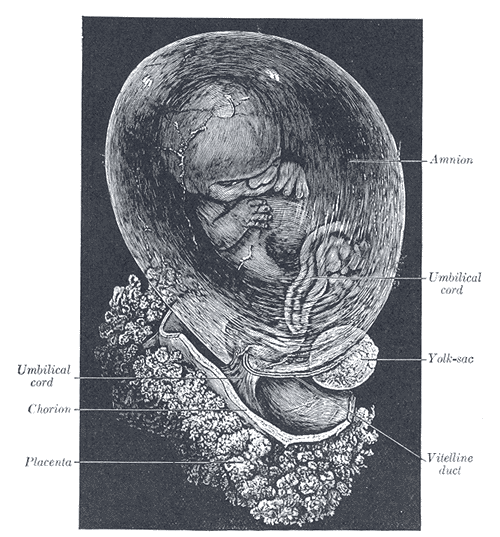
      • El cordón umbilical sale del lado fetal de la placenta Placenta A highly vascularized mammalian fetal-maternal organ and major site of transport of oxygen, nutrients, and fetal waste products. It includes a fetal portion (chorionic villi) derived from trophoblasts and a maternal portion (decidua) derived from the uterine endometrium. The placenta produces an array of steroid, protein and peptide hormones (placental hormones). Placenta, Umbilical Cord, and Amniotic Cavity.
  • Membranas ( al AL Amyloidosis momento del parto se han fusionado en EN Erythema nodosum is an immune-mediated panniculitis (inflammation of the subcutaneous fat) caused by a type IV (delayed-type) hypersensitivity reaction. It commonly manifests in young women as tender, erythematous nodules on the shins. Erythema Nodosum una sola membrana):
    • Amnios
    • Corion
  • Cordón umbilical:
    • 2 arterias: llevan la sangre fetal desoxigenada a la placenta Placenta A highly vascularized mammalian fetal-maternal organ and major site of transport of oxygen, nutrients, and fetal waste products. It includes a fetal portion (chorionic villi) derived from trophoblasts and a maternal portion (decidua) derived from the uterine endometrium. The placenta produces an array of steroid, protein and peptide hormones (placental hormones). Placenta, Umbilical Cord, and Amniotic Cavity
    • 1 vena: lleva la sangre oxigenada al AL Amyloidosis feto
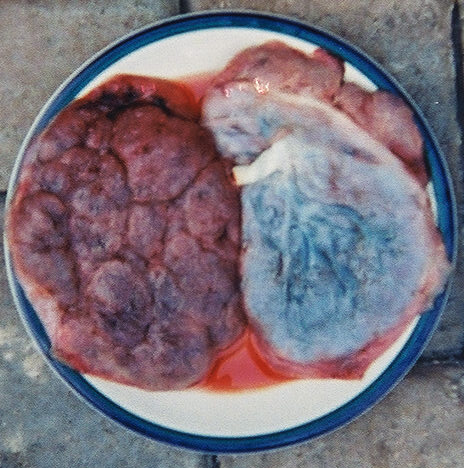
Placenta lado materno y fetal

2 placentas:
Izquierda: Lado materno
Derecha: Lado fetal
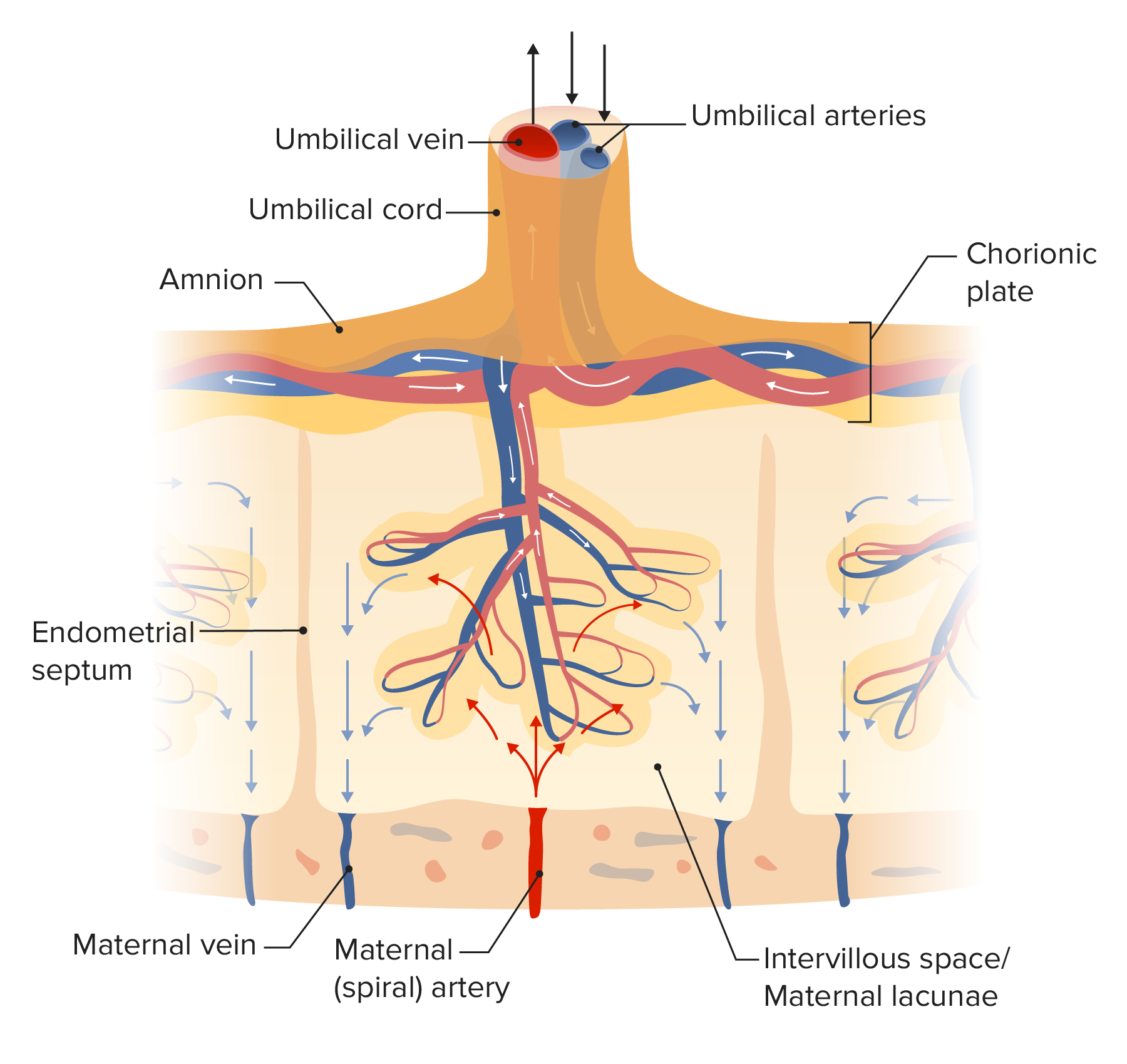
Imagen: “PlacentaPair” por Albert Cahalan. Licencia: Dominio Público

Circulación placentaria

  • Las vellosidades coriónicas proporcionan una gran superficie para el intercambio materno–fetal.
  • Las arterias espirales (maternas) llenan los LOS Neisseria espacios intervellosos de la capa basal de la decidua del endometrio:
    • Aportan sangre oxigenada para el feto
    • Estas arterias espirales se “rompen” y se convierten en EN Erythema nodosum is an immune-mediated panniculitis (inflammation of the subcutaneous fat) caused by a type IV (delayed-type) hypersensitivity reaction. It commonly manifests in young women as tender, erythematous nodules on the shins. Erythema Nodosum grandes espacios llamados lagunas, que:
      • Son zonas de muy baja resistencia
      • No tienen la capacidad de regular Regular Insulin el flujo sanguíneo a través del órgano
  • 2 arterias umbilicales llevan la sangre desoxigenada del feto a las vellosidades coriónicas de la placenta Placenta A highly vascularized mammalian fetal-maternal organ and major site of transport of oxygen, nutrients, and fetal waste products. It includes a fetal portion (chorionic villi) derived from trophoblasts and a maternal portion (decidua) derived from the uterine endometrium. The placenta produces an array of steroid, protein and peptide hormones (placental hormones). Placenta, Umbilical Cord, and Amniotic Cavity
  • El intercambio de gases y moléculas se produce entre la sangre fetal en EN Erythema nodosum is an immune-mediated panniculitis (inflammation of the subcutaneous fat) caused by a type IV (delayed-type) hypersensitivity reaction. It commonly manifests in young women as tender, erythematous nodules on the shins. Erythema Nodosum las vellosidades coriónicas y la sangre materna en EN Erythema nodosum is an immune-mediated panniculitis (inflammation of the subcutaneous fat) caused by a type IV (delayed-type) hypersensitivity reaction. It commonly manifests in young women as tender, erythematous nodules on the shins. Erythema Nodosum las lagunas, a través de la barrera placentaria (véase más abajo las capas).
  • 1 vena umbilical transporta la sangre oxigenada al AL Amyloidosis feto.
  • Las venas maternas llevan la sangre desoxigenada de vuelta a la circulación materna.
  • La sangre materna y la del feto nunca entran en EN Erythema nodosum is an immune-mediated panniculitis (inflammation of the subcutaneous fat) caused by a type IV (delayed-type) hypersensitivity reaction. It commonly manifests in young women as tender, erythematous nodules on the shins. Erythema Nodosum contacto directo.
  • La hemoglobina fetal tiene ↑ afinidad por el oxígeno en EN Erythema nodosum is an immune-mediated panniculitis (inflammation of the subcutaneous fat) caused by a type IV (delayed-type) hypersensitivity reaction. It commonly manifests in young women as tender, erythematous nodules on the shins. Erythema Nodosum comparación con la hemoglobina materna → hace HACE Altitude Sickness que el O2 pase de los LOS Neisseria eritrocitos maternos a los LOS Neisseria fetales.
Circulación placentaria

Diagrama de la circulación placentaria

Imagen por Lecturio. Licencia: CC BY-NC-SA 4.0

Barrera placentaria

La barrera placentaria es una membrana selectivamente permeable que separa la sangre materna de la fetal. La barrera se compone de las siguientes capas:
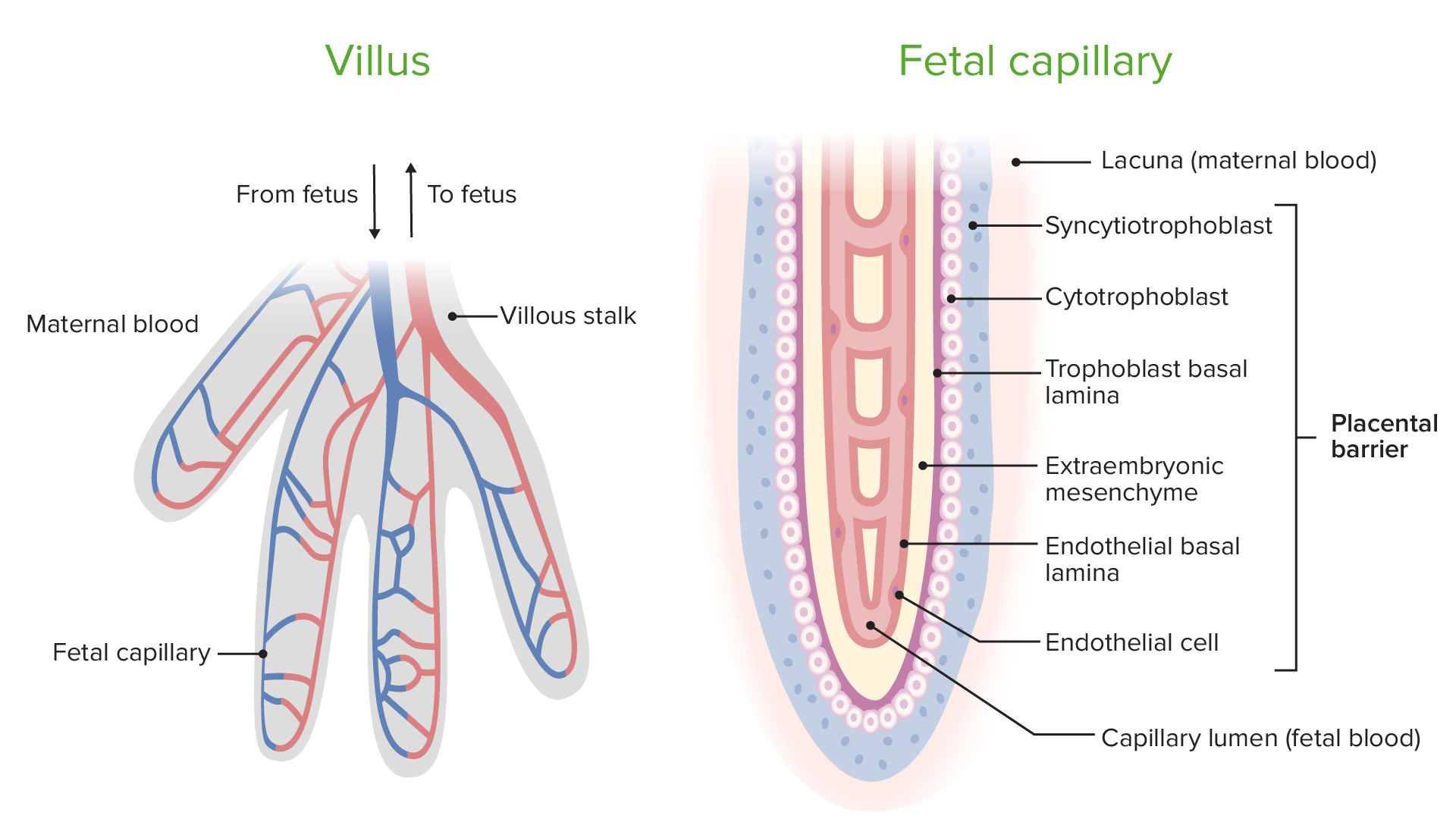
  • Lagunas maternas que contienen sangre materna que fluye libremente
  • Sincitiotrofoblasto
  • Citotrofoblasto (posteriormente se fusiona con el sincitiotrofoblasto)
  • Lámina basal del trofoblasto (posteriormente se fusiona con la de las vellosidades)
  • Mesénquima extraembrionario
  • Lámina basal de las células endoteliales de los LOS Neisseria vasos en EN Erythema nodosum is an immune-mediated panniculitis (inflammation of the subcutaneous fat) caused by a type IV (delayed-type) hypersensitivity reaction. It commonly manifests in young women as tender, erythematous nodules on the shins. Erythema Nodosum las vellosidades coriónicas terciarias
  • Células endoteliales vasculares fetales
La barrera placentaria

La circulación dentro de las vellosidades coriónicas y los componentes de la barrera placentaria

Imagen por Lecturio. Licencia: CC BY-NC-SA 4.0

Funciones de la placenta Placenta A highly vascularized mammalian fetal-maternal organ and major site of transport of oxygen, nutrients, and fetal waste products. It includes a fetal portion (chorionic villi) derived from trophoblasts and a maternal portion (decidua) derived from the uterine endometrium. The placenta produces an array of steroid, protein and peptide hormones (placental hormones). Placenta, Umbilical Cord, and Amniotic Cavity

La tabla enumera las numerosas funciones críticas de la placenta Placenta A highly vascularized mammalian fetal-maternal organ and major site of transport of oxygen, nutrients, and fetal waste products. It includes a fetal portion (chorionic villi) derived from trophoblasts and a maternal portion (decidua) derived from the uterine endometrium. The placenta produces an array of steroid, protein and peptide hormones (placental hormones). Placenta, Umbilical Cord, and Amniotic Cavity para el feto.

Tabla: Funciones de la placenta Placenta A highly vascularized mammalian fetal-maternal organ and major site of transport of oxygen, nutrients, and fetal waste products. It includes a fetal portion (chorionic villi) derived from trophoblasts and a maternal portion (decidua) derived from the uterine endometrium. The placenta produces an array of steroid, protein and peptide hormones (placental hormones). Placenta, Umbilical Cord, and Amniotic Cavity
Funciones principales Detalles importantes
Intercambio de gases
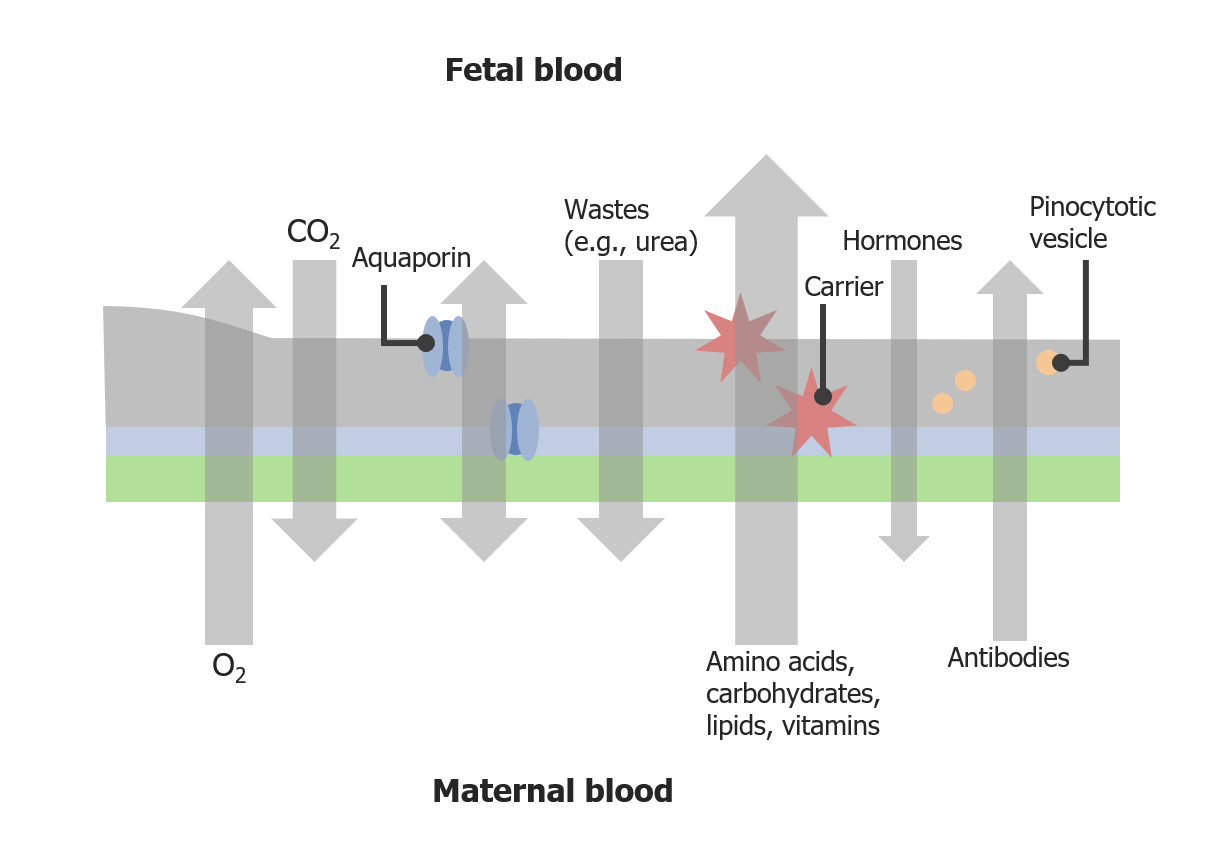
  • Intercambio de oxígeno-dióxido de carbono (O2–CO2)
  • Se produce por difusión simple
Intercambio de nutrientes
  • Proporciona los LOS Neisseria materiales necesarios para el desarrollo y crecimiento del feto
  • Mecanismos de intercambio:
    • Agua y sodio por difusión simple
    • Glucosa por difusión facilitada
    • Moléculas grandes (e.g., lipoproteinas de baja densidad (LDL, por sus siglas en EN Erythema nodosum is an immune-mediated panniculitis (inflammation of the subcutaneous fat) caused by a type IV (delayed-type) hypersensitivity reaction. It commonly manifests in young women as tender, erythematous nodules on the shins. Erythema Nodosum inglés), péptidos, anticuerpos) por endocitosis mediada por receptor Receptor Receptors are proteins located either on the surface of or within a cell that can bind to signaling molecules known as ligands (e.g., hormones) and cause some type of response within the cell. Receptors
    • Aminoácidos por transporte activo secundario
Eliminación de productos de desecho
  • Los LOS Neisseria productos de desecho (e.g., urea Urea A compound formed in the liver from ammonia produced by the deamination of amino acids. It is the principal end product of protein catabolism and constitutes about one half of the total urinary solids. Urea Cycle y CO2) se transportan de vuelta a la madre.
  • Se produce por difusión simple
Secreción hormonal
  • Gonadotropina coriónica humana (hCG, por sus siglas en EN Erythema nodosum is an immune-mediated panniculitis (inflammation of the subcutaneous fat) caused by a type IV (delayed-type) hypersensitivity reaction. It commonly manifests in young women as tender, erythematous nodules on the shins. Erythema Nodosum inglés): mantiene la actividad del cuerpo lúteo necesaria para la continuación del embarazo
  • Hormona de crecimiento humano
  • Lactógeno placentario humano: estimula la producción de insulina materna para ↑ la glucosa disponible para el feto
  • Tirotropina coriónica
  • Hormona liberadora de corticotropina coriónica
  • Progesterona: mantiene el embarazo, evita la menstruación
  • Estrógenos
  • Glucocorticoides
Funciones metabólicas
  • Síntesis de glucógeno
  • Síntesis del colesterol
  • Metabolismo de las proteínas
Rechazo del sistema inmunitario Creación de un sitio inmunológicamente privilegiado
Transporte a través del diagrama de la barrera placentaria

Transporte a través de la barrera placentaria

Imagen por Lecturio. Licencia: CC BY-NC-SA 4.0

Desarrollo Placentario

Pasos en EN Erythema nodosum is an immune-mediated panniculitis (inflammation of the subcutaneous fat) caused by a type IV (delayed-type) hypersensitivity reaction. It commonly manifests in young women as tender, erythematous nodules on the shins. Erythema Nodosum el desarrollo placentario:
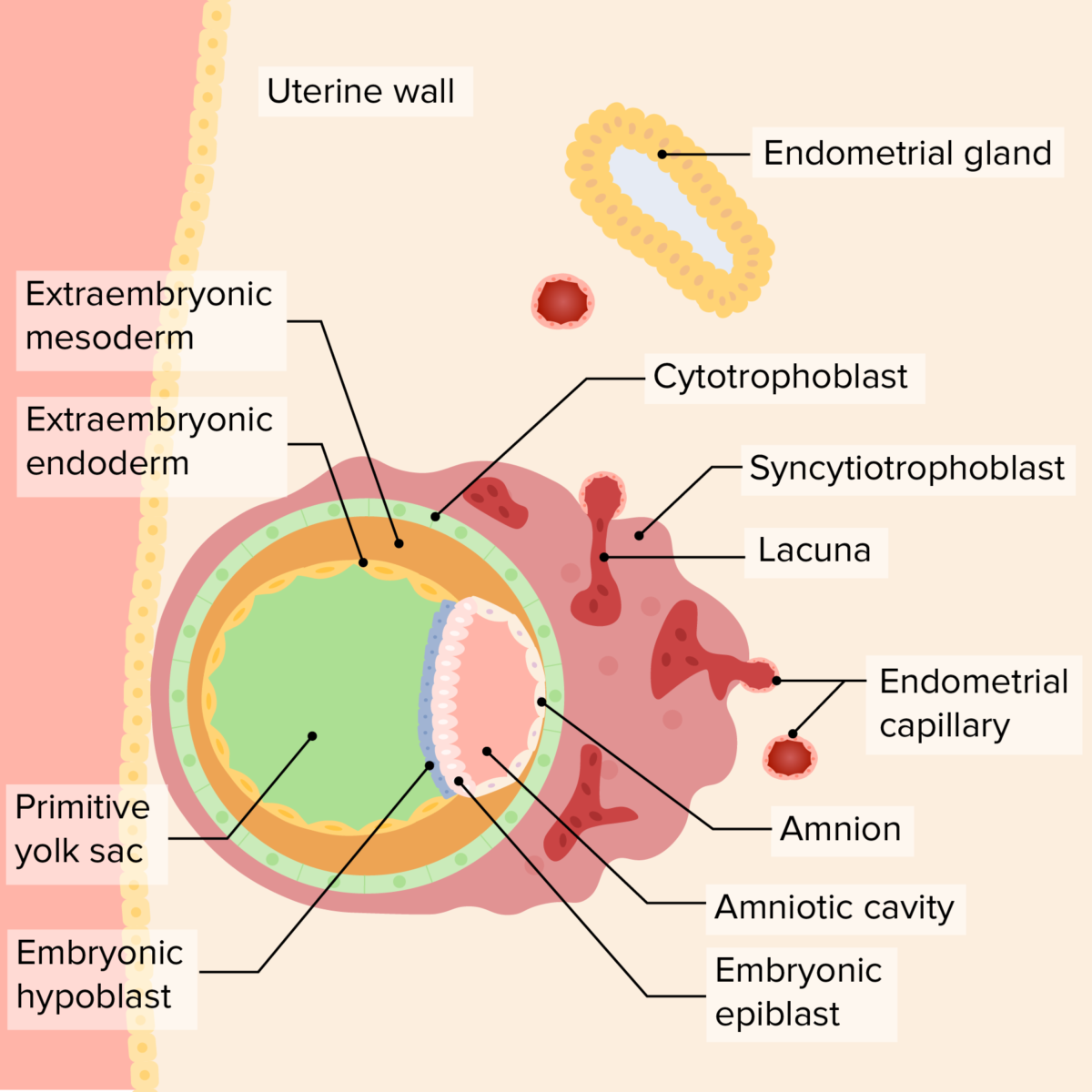
  • La implantación comienza 7–9 días después de la fecundación.
  • Células fetales implicadas en EN Erythema nodosum is an immune-mediated panniculitis (inflammation of the subcutaneous fat) caused by a type IV (delayed-type) hypersensitivity reaction. It commonly manifests in young women as tender, erythematous nodules on the shins. Erythema Nodosum la formación de la placenta Placenta A highly vascularized mammalian fetal-maternal organ and major site of transport of oxygen, nutrients, and fetal waste products. It includes a fetal portion (chorionic villi) derived from trophoblasts and a maternal portion (decidua) derived from the uterine endometrium. The placenta produces an array of steroid, protein and peptide hormones (placental hormones). Placenta, Umbilical Cord, and Amniotic Cavity:
    • Citotrofoblasto: capa externa de células del blastocisto
    • Sincitiotrofoblasto:
      • Capa externa de células del blastocisto en EN Erythema nodosum is an immune-mediated panniculitis (inflammation of the subcutaneous fat) caused by a type IV (delayed-type) hypersensitivity reaction. It commonly manifests in young women as tender, erythematous nodules on the shins. Erythema Nodosum contacto con la pared uterina
      • Invadir la pared uterina
      • Han perdido sus membranas externas y son simplemente “núcleos” que flotan en EN Erythema nodosum is an immune-mediated panniculitis (inflammation of the subcutaneous fat) caused by a type IV (delayed-type) hypersensitivity reaction. It commonly manifests in young women as tender, erythematous nodules on the shins. Erythema Nodosum el citoplasma, comiendo su camino en EN Erythema nodosum is an immune-mediated panniculitis (inflammation of the subcutaneous fat) caused by a type IV (delayed-type) hypersensitivity reaction. It commonly manifests in young women as tender, erythematous nodules on the shins. Erythema Nodosum la pared uterina
  • Las vellosidades trofoblásticas comienzan a formarse a partir de invaginaciones del citotrofoblasto en EN Erythema nodosum is an immune-mediated panniculitis (inflammation of the subcutaneous fat) caused by a type IV (delayed-type) hypersensitivity reaction. It commonly manifests in young women as tender, erythematous nodules on the shins. Erythema Nodosum el espacio creado por el sincitiotrofoblasto.
  • En EN Erythema nodosum is an immune-mediated panniculitis (inflammation of the subcutaneous fat) caused by a type IV (delayed-type) hypersensitivity reaction. It commonly manifests in young women as tender, erythematous nodules on the shins. Erythema Nodosum el lado materno, las lagunas se crean a partir de la ruptura de los LOS Neisseria vasos sanguíneos maternos en EN Erythema nodosum is an immune-mediated panniculitis (inflammation of the subcutaneous fat) caused by a type IV (delayed-type) hypersensitivity reaction. It commonly manifests in young women as tender, erythematous nodules on the shins. Erythema Nodosum la capa basal de la decidua del endometrio:
    • Engullido por el sincitiotrofoblasto
    • Llena los LOS Neisseria espacios que rodean las vellosidades coriónicas con sangre materna
  • Las vellosidades trofoblásticas comienzan a crear una estructura ramificada en EN Erythema nodosum is an immune-mediated panniculitis (inflammation of the subcutaneous fat) caused by a type IV (delayed-type) hypersensitivity reaction. It commonly manifests in young women as tender, erythematous nodules on the shins. Erythema Nodosum forma de árbol para el intercambio de nutrientes y gases:
    • Vellosidades coriónicas primarias: se forman a partir de la invaginación de células citotrofoblásticas en EN Erythema nodosum is an immune-mediated panniculitis (inflammation of the subcutaneous fat) caused by a type IV (delayed-type) hypersensitivity reaction. It commonly manifests in young women as tender, erythematous nodules on the shins. Erythema Nodosum la laguna materna
    • El mesénquima extraembrionario invade el núcleo de las vellosidades primarias, creando vellosidades secundarias.
    • Los LOS Neisseria vasos sanguíneos se diferencian dentro de las vellosidades secundarias, creando vellosidades terciarias.
  • Estos vasos acaban conectándose a los LOS Neisseria vasos umbilicales del feto, formando posteriormente el cordón umbilical.
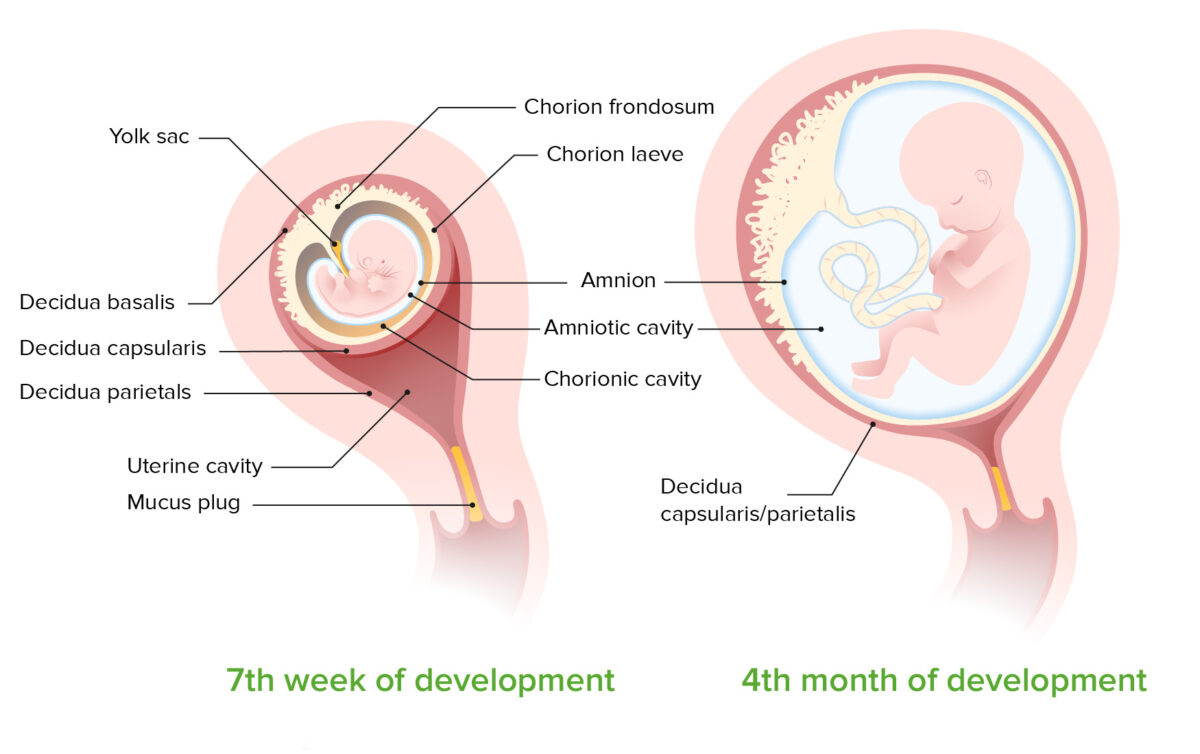
  • Las vellosidades se concentran cada vez más frente a la cavidad endometrial, formando el corion frondoso.

Cordón Umbilical

Definición

El cordón umbilical conecta al AL Amyloidosis feto con la placenta Placenta A highly vascularized mammalian fetal-maternal organ and major site of transport of oxygen, nutrients, and fetal waste products. It includes a fetal portion (chorionic villi) derived from trophoblasts and a maternal portion (decidua) derived from the uterine endometrium. The placenta produces an array of steroid, protein and peptide hormones (placental hormones). Placenta, Umbilical Cord, and Amniotic Cavity. El cordón contiene 2 arterias y 1 vena y se extiende desde el ombligo del feto hasta la superficie fetal de la placenta Placenta A highly vascularized mammalian fetal-maternal organ and major site of transport of oxygen, nutrients, and fetal waste products. It includes a fetal portion (chorionic villi) derived from trophoblasts and a maternal portion (decidua) derived from the uterine endometrium. The placenta produces an array of steroid, protein and peptide hormones (placental hormones). Placenta, Umbilical Cord, and Amniotic Cavity.
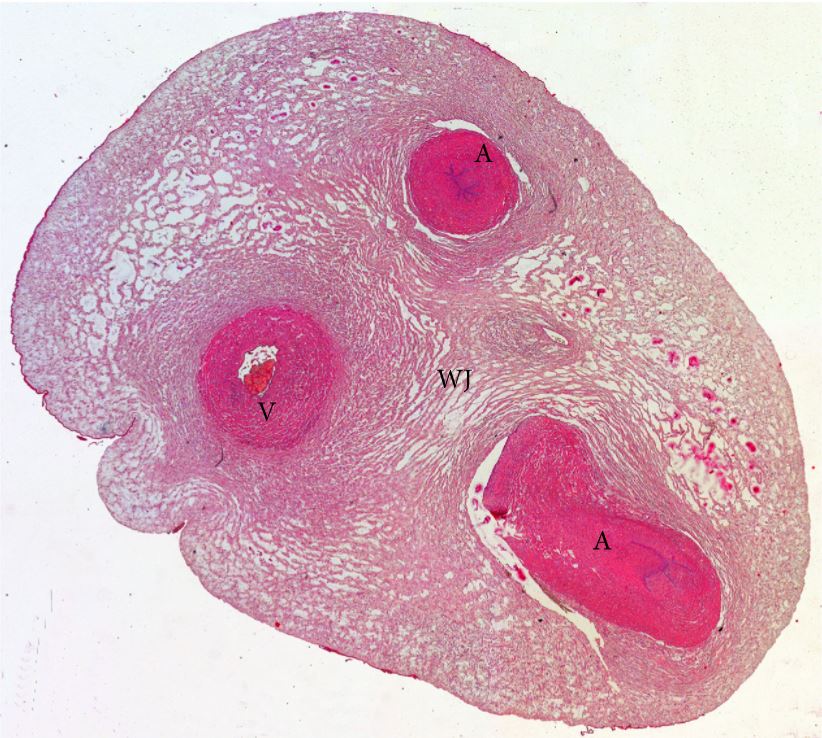
Estructura del cordón umbilical

  • Vasos:
    • Contiene 2 arterias y 1 vena
    • Los LOS Neisseria vasos están rodeados por una sustancia protectora llamada gelatina de Wharton.
    • Contados por evaluación por ultrasonido, con los LOS Neisseria 3 vasos vistos en EN Erythema nodosum is an immune-mediated panniculitis (inflammation of the subcutaneous fat) caused by a type IV (delayed-type) hypersensitivity reaction. It commonly manifests in young women as tender, erythematous nodules on the shins. Erythema Nodosum el 1er trimestre
    • Enrollamiento: La vena y las arterias se enrollan en EN Erythema nodosum is an immune-mediated panniculitis (inflammation of the subcutaneous fat) caused by a type IV (delayed-type) hypersensitivity reaction. It commonly manifests in young women as tender, erythematous nodules on the shins. Erythema Nodosum espiral una sobre otra.
  • Flujo sanguíneo:
    • La vena umbilical irriga sangre oxigenada al AL Amyloidosis feto.
    • Las arterias umbilicales sacan la sangre desoxigenada del feto.
  • Longitud del cordón:
    • Promedio: 40–70 cm
    • Depende del volumen de líquido amniótico y la movilidad del feto.
  • Inserción en EN Erythema nodosum is an immune-mediated panniculitis (inflammation of the subcutaneous fat) caused by a type IV (delayed-type) hypersensitivity reaction. It commonly manifests in young women as tender, erythematous nodules on the shins. Erythema Nodosum la placenta Placenta A highly vascularized mammalian fetal-maternal organ and major site of transport of oxygen, nutrients, and fetal waste products. It includes a fetal portion (chorionic villi) derived from trophoblasts and a maternal portion (decidua) derived from the uterine endometrium. The placenta produces an array of steroid, protein and peptide hormones (placental hormones). Placenta, Umbilical Cord, and Amniotic Cavity:
    • Normal: inserción central
    • Variantes:
      • Excéntrico, marginal: el cordón se inserta en EN Erythema nodosum is an immune-mediated panniculitis (inflammation of the subcutaneous fat) caused by a type IV (delayed-type) hypersensitivity reaction. It commonly manifests in young women as tender, erythematous nodules on the shins. Erythema Nodosum el borde de la placenta Placenta A highly vascularized mammalian fetal-maternal organ and major site of transport of oxygen, nutrients, and fetal waste products. It includes a fetal portion (chorionic villi) derived from trophoblasts and a maternal portion (decidua) derived from the uterine endometrium. The placenta produces an array of steroid, protein and peptide hormones (placental hormones). Placenta, Umbilical Cord, and Amniotic Cavity.
      • Velamentosa: se produce cuando la última porción del cordón umbilical carece de la gelatina protectora de Wharton, dejando los LOS Neisseria vasos umbilicales expuestos
    • Importancia clínica de una inserción anómala: puede aumentar el riesgo de complicaciones durante el trabajo de parto y/o el parto, como la rotura del cordón umbilical y/o hemorragia prenatal
Sección transversal del cordón umbilical humano

Sección transversal del cordón umbilical humano
A: Arteria
V: Vena
WJ: Gelatina de Wharton

Imagen: “Cross-section of the human umbilical cord” por Irina Arutyunyan, et al. Licencia: CC BY 4.0, recortado por Lecturio.

Cavidad Amniótica

La cavidad amniótica es una cavidad llena de líquido que envuelve al AL Amyloidosis embrión/feto en EN Erythema nodosum is an immune-mediated panniculitis (inflammation of the subcutaneous fat) caused by a type IV (delayed-type) hypersensitivity reaction. It commonly manifests in young women as tender, erythematous nodules on the shins. Erythema Nodosum desarrollo; el líquido se llama líquido amniótico.
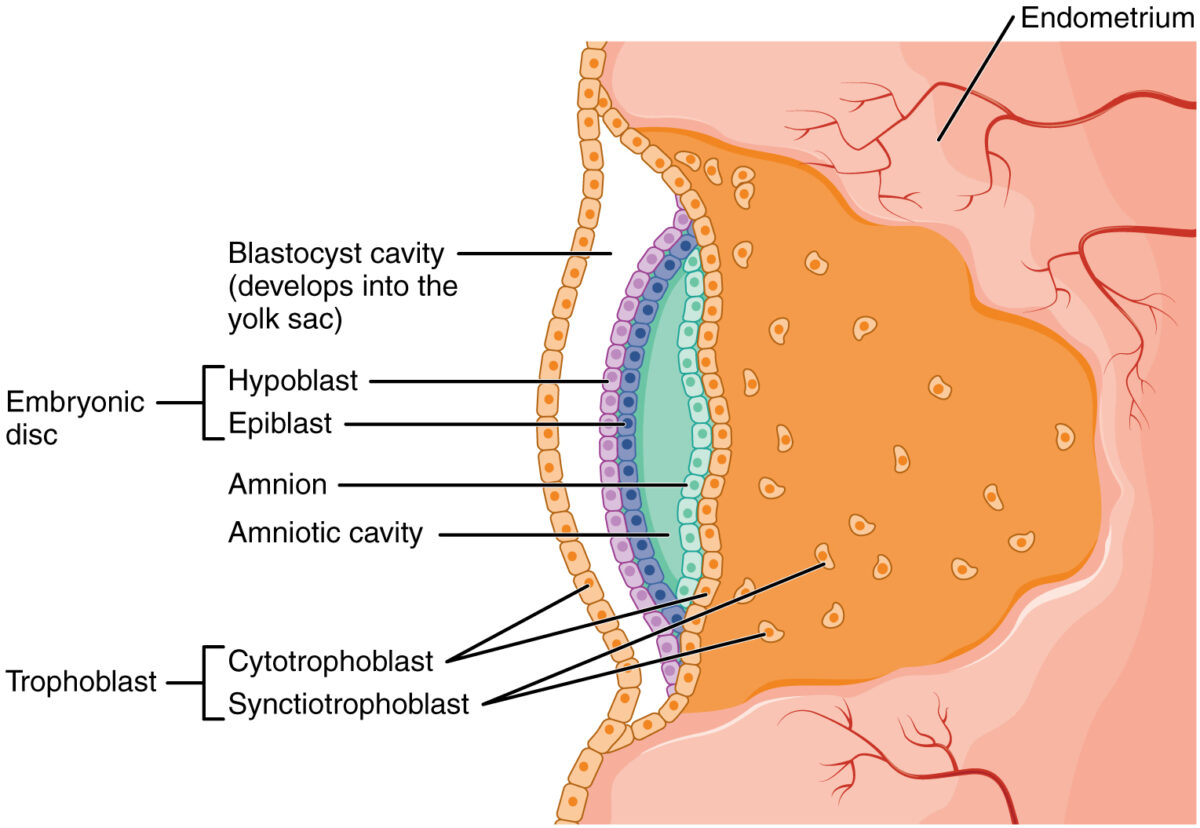
  • Desarrollo: la cavidad amniótica aparece el día 8 de la gestación al AL Amyloidosis acumularse líquido amniótico entre las células del epiblasto y el trofoblasto.
  • Amnios:
    • Una membrana avascular Avascular Corneal Abrasions, Erosion, and Ulcers, dura pero flexible
    • 1 de las 2 membranas fetales primarias (junto con el corion; estas 2 capas acaban fusionándose)
    • Se desarrolla a partir de una capa de células del epiblasto ( en EN Erythema nodosum is an immune-mediated panniculitis (inflammation of the subcutaneous fat) caused by a type IV (delayed-type) hypersensitivity reaction. It commonly manifests in young women as tender, erythematous nodules on the shins. Erythema Nodosum el disco embrionario bilaminar)
  • Funciones del amnios:
    • Participa en EN Erythema nodosum is an immune-mediated panniculitis (inflammation of the subcutaneous fat) caused by a type IV (delayed-type) hypersensitivity reaction. It commonly manifests in young women as tender, erythematous nodules on the shins. Erythema Nodosum el transporte de solutos y agua necesario para la homeostasis Homeostasis The processes whereby the internal environment of an organism tends to remain balanced and stable. Cell Injury and Death del líquido amniótico
    • Produce compuestos bioactivos
  • Líquido amniótico:
    • Líquido que rodea al AL Amyloidosis embrión y al AL Amyloidosis feto durante su desarrollo
    • A medida que el feto crece, “crea” líquido amniótico a través de la orina y lo “recicla” continuamente al AL Amyloidosis tragarlo.
    • Los LOS Neisseria defectos congénitos de la deglución y/o del sistema renal/urinario pueden provocar anomalías en EN Erythema nodosum is an immune-mediated panniculitis (inflammation of the subcutaneous fat) caused by a type IV (delayed-type) hypersensitivity reaction. It commonly manifests in young women as tender, erythematous nodules on the shins. Erythema Nodosum el volumen del líquido amniótico.
  • Funciones de la cavidad amniótica:
    • Protege al AL Amyloidosis feto contra los LOS Neisseria traumatismos
    • Protege el cordón umbilical contra la compresión
    • Reserva de nutrientes para el feto
    • Proporciona un espacio adecuado para el crecimiento y el desarrollo normal del feto (especialmente las extremidades y los LOS Neisseria pulmones)

Placenta y Parto

  • La expulsión de la placenta Placenta A highly vascularized mammalian fetal-maternal organ and major site of transport of oxygen, nutrients, and fetal waste products. It includes a fetal portion (chorionic villi) derived from trophoblasts and a maternal portion (decidua) derived from the uterine endometrium. The placenta produces an array of steroid, protein and peptide hormones (placental hormones). Placenta, Umbilical Cord, and Amniotic Cavity constituye la 3ra fase del parto.
  • Al AL Amyloidosis nacer el recién nacido, la cavidad uterina sufre una contracción que provoca la separación de la placenta Placenta A highly vascularized mammalian fetal-maternal organ and major site of transport of oxygen, nutrients, and fetal waste products. It includes a fetal portion (chorionic villi) derived from trophoblasts and a maternal portion (decidua) derived from the uterine endometrium. The placenta produces an array of steroid, protein and peptide hormones (placental hormones). Placenta, Umbilical Cord, and Amniotic Cavity.
  • Al AL Amyloidosis comenzar la separación, se forma un hematoma Hematoma A collection of blood outside the blood vessels. Hematoma can be localized in an organ, space, or tissue. Intussusception entre la decidua uterina y la placenta Placenta A highly vascularized mammalian fetal-maternal organ and major site of transport of oxygen, nutrients, and fetal waste products. It includes a fetal portion (chorionic villi) derived from trophoblasts and a maternal portion (decidua) derived from the uterine endometrium. The placenta produces an array of steroid, protein and peptide hormones (placental hormones). Placenta, Umbilical Cord, and Amniotic Cavity → la desprende de la pared uterina
  • Una vez que está completamente suelta, la placenta Placenta A highly vascularized mammalian fetal-maternal organ and major site of transport of oxygen, nutrients, and fetal waste products. It includes a fetal portion (chorionic villi) derived from trophoblasts and a maternal portion (decidua) derived from the uterine endometrium. The placenta produces an array of steroid, protein and peptide hormones (placental hormones). Placenta, Umbilical Cord, and Amniotic Cavity se extrae a través del canal del parto, lo que puede ocurrir por:
    • Manejo pasivo: Las contracciones uterinas naturales expulsan la placenta Placenta A highly vascularized mammalian fetal-maternal organ and major site of transport of oxygen, nutrients, and fetal waste products. It includes a fetal portion (chorionic villi) derived from trophoblasts and a maternal portion (decidua) derived from the uterine endometrium. The placenta produces an array of steroid, protein and peptide hormones (placental hormones). Placenta, Umbilical Cord, and Amniotic Cavity.
    • Manejo activo: el proveedor aplica una suave tracción hacia abajo en EN Erythema nodosum is an immune-mediated panniculitis (inflammation of the subcutaneous fat) caused by a type IV (delayed-type) hypersensitivity reaction. It commonly manifests in young women as tender, erythematous nodules on the shins. Erythema Nodosum el cordón umbilical pinzado mientras proporciona una contratracción con una firme presión suprapúbica:
      • Evitar la presión del fondo uterino hacia abajo durante el parto de la placenta Placenta A highly vascularized mammalian fetal-maternal organ and major site of transport of oxygen, nutrients, and fetal waste products. It includes a fetal portion (chorionic villi) derived from trophoblasts and a maternal portion (decidua) derived from the uterine endometrium. The placenta produces an array of steroid, protein and peptide hormones (placental hormones). Placenta, Umbilical Cord, and Amniotic Cavity, que puede provocar inversiones uterinas.
      • Una suave tracción hacia abajo evita el desgarro del cordón umbilical.
      • Se suele recomendar el manejo activo para reducir el riesgo de hemorragia.
  • Señales de que la placenta Placenta A highly vascularized mammalian fetal-maternal organ and major site of transport of oxygen, nutrients, and fetal waste products. It includes a fetal portion (chorionic villi) derived from trophoblasts and a maternal portion (decidua) derived from the uterine endometrium. The placenta produces an array of steroid, protein and peptide hormones (placental hormones). Placenta, Umbilical Cord, and Amniotic Cavity está lista para ser expulsada:
    • Alargamiento del cordón umbilical
    • Brote de sangre
    • El útero se vuelve más globular.
Entrega de la placenta

Extracción de la placenta mediante una suave tracción hacia abajo del cordón umbilical y una contratracción del útero:
Obsérvese que el cordón umbilical no está pinzado en este ejemplo.
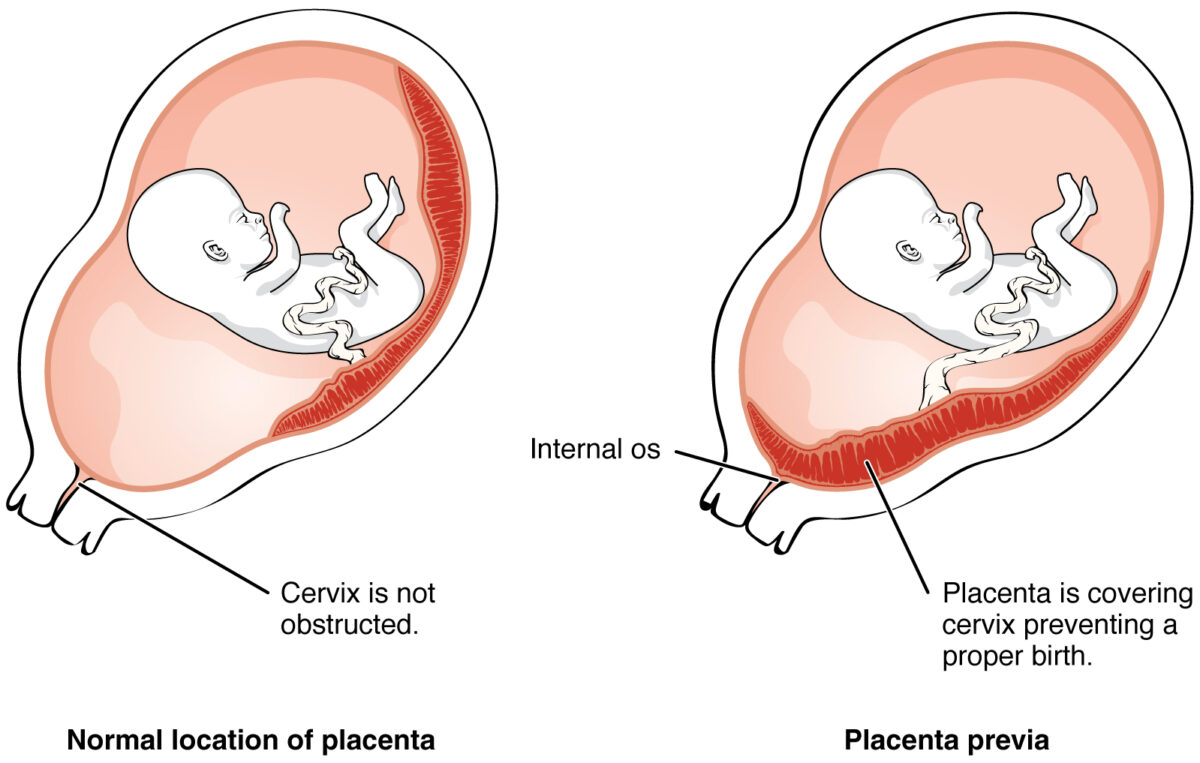
Imagen por Lecturio. Licencia: CC BY-NC-SA 4.0

Relevancia Clínica

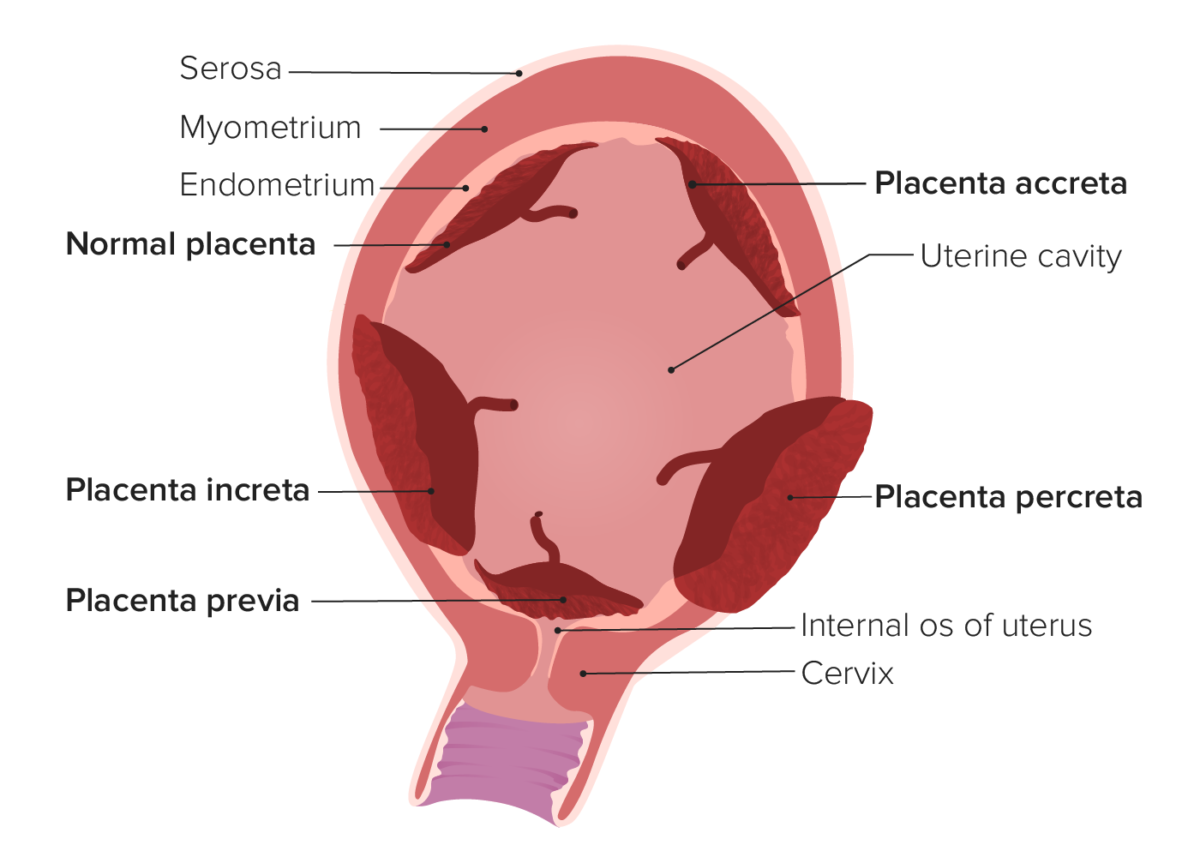
  • Placenta previa Placenta Previa Abnormal placentation in which the placenta implants in the lower segment of the uterus (the zone of dilation) and may cover part or all of the opening of the cervix. It is often associated with serious antepartum bleeding and premature labor. Placental Abnormalities: fijación anormal de la placenta Placenta A highly vascularized mammalian fetal-maternal organ and major site of transport of oxygen, nutrients, and fetal waste products. It includes a fetal portion (chorionic villi) derived from trophoblasts and a maternal portion (decidua) derived from the uterine endometrium. The placenta produces an array of steroid, protein and peptide hormones (placental hormones). Placenta, Umbilical Cord, and Amniotic Cavity en EN Erythema nodosum is an immune-mediated panniculitis (inflammation of the subcutaneous fat) caused by a type IV (delayed-type) hypersensitivity reaction. It commonly manifests in young women as tender, erythematous nodules on the shins. Erythema Nodosum el segmento inferior del útero, que puede obstruir (parcial o totalmente) el orificio cervical interno. La dilatación cervical puede provocar una hemorragia materna y fetal. La placenta previa Placenta Previa Abnormal placentation in which the placenta implants in the lower segment of the uterus (the zone of dilation) and may cover part or all of the opening of the cervix. It is often associated with serious antepartum bleeding and premature labor. Placental Abnormalities se presenta clásicamente como una hemorragia vaginal indolora de color rojo brillante y se diagnostica mediante un ultrasonido. Las pacientes son tratadas con reposo pélvico (evitando los LOS Neisseria exámenes de tacto (vaginal o rectal) y las relaciones sexuales) y se les practica un parto por cesárea antes del inicio del trabajo de parto (o de forma urgente si hay una hemorragia clínica).
  • Vasa previa Vasa previa Pregnancy complication where fetal blood vessels, normally inside the umbilical cord, are left unprotected and cross fetal membranes. It is associated with antepartum bleeding and fetal death and stillbirth due to exsanguination. Antepartum Hemorrhage: situación en EN Erythema nodosum is an immune-mediated panniculitis (inflammation of the subcutaneous fat) caused by a type IV (delayed-type) hypersensitivity reaction. It commonly manifests in young women as tender, erythematous nodules on the shins. Erythema Nodosum la que los LOS Neisseria vasos del cordón umbilical atraviesan el orificio cervical interno. A menudo, estos vasos no están rodeados por la gelatina de Wharton protectora (inserción velamentosa del cordón) y pueden romperse con facilidad, provocando una hemorragia materna y fetal. La vasa previa Vasa previa Pregnancy complication where fetal blood vessels, normally inside the umbilical cord, are left unprotected and cross fetal membranes. It is associated with antepartum bleeding and fetal death and stillbirth due to exsanguination. Antepartum Hemorrhage se diagnostica con un ultrasonido. La posibilidad de que se produzcan vasa previa Vasa previa Pregnancy complication where fetal blood vessels, normally inside the umbilical cord, are left unprotected and cross fetal membranes. It is associated with antepartum bleeding and fetal death and stillbirth due to exsanguination. Antepartum Hemorrhage (y/o placenta previa Placenta Previa Abnormal placentation in which the placenta implants in the lower segment of the uterus (the zone of dilation) and may cover part or all of the opening of the cervix. It is often associated with serious antepartum bleeding and premature labor. Placental Abnormalities) es la razón principal por la que es imprescindible conocer la ubicación de la placenta Placenta A highly vascularized mammalian fetal-maternal organ and major site of transport of oxygen, nutrients, and fetal waste products. It includes a fetal portion (chorionic villi) derived from trophoblasts and a maternal portion (decidua) derived from the uterine endometrium. The placenta produces an array of steroid, protein and peptide hormones (placental hormones). Placenta, Umbilical Cord, and Amniotic Cavity antes de realizar un examen cervical con tacto (vaginal o rectal). Estos lactantes deben nacer por cesárea antes del inicio del parto.
  • Placenta Placenta A highly vascularized mammalian fetal-maternal organ and major site of transport of oxygen, nutrients, and fetal waste products. It includes a fetal portion (chorionic villi) derived from trophoblasts and a maternal portion (decidua) derived from the uterine endometrium. The placenta produces an array of steroid, protein and peptide hormones (placental hormones). Placenta, Umbilical Cord, and Amniotic Cavity acreta, placenta Placenta A highly vascularized mammalian fetal-maternal organ and major site of transport of oxygen, nutrients, and fetal waste products. It includes a fetal portion (chorionic villi) derived from trophoblasts and a maternal portion (decidua) derived from the uterine endometrium. The placenta produces an array of steroid, protein and peptide hormones (placental hormones). Placenta, Umbilical Cord, and Amniotic Cavity increta y placenta Placenta A highly vascularized mammalian fetal-maternal organ and major site of transport of oxygen, nutrients, and fetal waste products. It includes a fetal portion (chorionic villi) derived from trophoblasts and a maternal portion (decidua) derived from the uterine endometrium. The placenta produces an array of steroid, protein and peptide hormones (placental hormones). Placenta, Umbilical Cord, and Amniotic Cavity percreta: implantación anormal de la placenta Placenta A highly vascularized mammalian fetal-maternal organ and major site of transport of oxygen, nutrients, and fetal waste products. It includes a fetal portion (chorionic villi) derived from trophoblasts and a maternal portion (decidua) derived from the uterine endometrium. The placenta produces an array of steroid, protein and peptide hormones (placental hormones). Placenta, Umbilical Cord, and Amniotic Cavity en EN Erythema nodosum is an immune-mediated panniculitis (inflammation of the subcutaneous fat) caused by a type IV (delayed-type) hypersensitivity reaction. It commonly manifests in young women as tender, erythematous nodules on the shins. Erythema Nodosum la pared uterina. En EN Erythema nodosum is an immune-mediated panniculitis (inflammation of the subcutaneous fat) caused by a type IV (delayed-type) hypersensitivity reaction. It commonly manifests in young women as tender, erythematous nodules on the shins. Erythema Nodosum la placenta Placenta A highly vascularized mammalian fetal-maternal organ and major site of transport of oxygen, nutrients, and fetal waste products. It includes a fetal portion (chorionic villi) derived from trophoblasts and a maternal portion (decidua) derived from the uterine endometrium. The placenta produces an array of steroid, protein and peptide hormones (placental hormones). Placenta, Umbilical Cord, and Amniotic Cavity acreta, las vellosidades invaden el miometrio. En EN Erythema nodosum is an immune-mediated panniculitis (inflammation of the subcutaneous fat) caused by a type IV (delayed-type) hypersensitivity reaction. It commonly manifests in young women as tender, erythematous nodules on the shins. Erythema Nodosum la placenta Placenta A highly vascularized mammalian fetal-maternal organ and major site of transport of oxygen, nutrients, and fetal waste products. It includes a fetal portion (chorionic villi) derived from trophoblasts and a maternal portion (decidua) derived from the uterine endometrium. The placenta produces an array of steroid, protein and peptide hormones (placental hormones). Placenta, Umbilical Cord, and Amniotic Cavity increta, las vellosidades penetran más profundamente en EN Erythema nodosum is an immune-mediated panniculitis (inflammation of the subcutaneous fat) caused by a type IV (delayed-type) hypersensitivity reaction. It commonly manifests in young women as tender, erythematous nodules on the shins. Erythema Nodosum el miometrio. En EN Erythema nodosum is an immune-mediated panniculitis (inflammation of the subcutaneous fat) caused by a type IV (delayed-type) hypersensitivity reaction. It commonly manifests in young women as tender, erythematous nodules on the shins. Erythema Nodosum la placenta Placenta A highly vascularized mammalian fetal-maternal organ and major site of transport of oxygen, nutrients, and fetal waste products. It includes a fetal portion (chorionic villi) derived from trophoblasts and a maternal portion (decidua) derived from the uterine endometrium. The placenta produces an array of steroid, protein and peptide hormones (placental hormones). Placenta, Umbilical Cord, and Amniotic Cavity percreta, las vellosidades alcanzan la serosa uterina y/o invaden otros órganos. Estas afecciones se diagnostican mediante ultrasonido. Las mujeres con estas afecciones dan a luz mediante una cesárea planificada, a menudo con histerectomía concurrente (especialmente en EN Erythema nodosum is an immune-mediated panniculitis (inflammation of the subcutaneous fat) caused by a type IV (delayed-type) hypersensitivity reaction. It commonly manifests in young women as tender, erythematous nodules on the shins. Erythema Nodosum los LOS Neisseria casos de increta y percreta, porque puede ser imposible la extracción completa de la placenta Placenta A highly vascularized mammalian fetal-maternal organ and major site of transport of oxygen, nutrients, and fetal waste products. It includes a fetal portion (chorionic villi) derived from trophoblasts and a maternal portion (decidua) derived from the uterine endometrium. The placenta produces an array of steroid, protein and peptide hormones (placental hormones). Placenta, Umbilical Cord, and Amniotic Cavity y, por tanto, el cese de la hemorragia).
  • Desprendimiento de la placenta Placenta A highly vascularized mammalian fetal-maternal organ and major site of transport of oxygen, nutrients, and fetal waste products. It includes a fetal portion (chorionic villi) derived from trophoblasts and a maternal portion (decidua) derived from the uterine endometrium. The placenta produces an array of steroid, protein and peptide hormones (placental hormones). Placenta, Umbilical Cord, and Amniotic Cavity: separación prematura (parcial o completa) de la placenta Placenta A highly vascularized mammalian fetal-maternal organ and major site of transport of oxygen, nutrients, and fetal waste products. It includes a fetal portion (chorionic villi) derived from trophoblasts and a maternal portion (decidua) derived from the uterine endometrium. The placenta produces an array of steroid, protein and peptide hormones (placental hormones). Placenta, Umbilical Cord, and Amniotic Cavity de la pared uterina antes del parto. El desprendimiento es principalmente un diagnóstico clínico basado en EN Erythema nodosum is an immune-mediated panniculitis (inflammation of the subcutaneous fat) caused by a type IV (delayed-type) hypersensitivity reaction. It commonly manifests in young women as tender, erythematous nodules on the shins. Erythema Nodosum una presentación con contracciones dolorosas con o sin hemorragia (buscar antecedentes de traumatismo u otros factores de riesgo) con hallazgos característicos en EN Erythema nodosum is an immune-mediated panniculitis (inflammation of the subcutaneous fat) caused by a type IV (delayed-type) hypersensitivity reaction. It commonly manifests in young women as tender, erythematous nodules on the shins. Erythema Nodosum la monitorización fetal y la tocometría. Los LOS Neisseria desprendimientos grandes pueden verse en EN Erythema nodosum is an immune-mediated panniculitis (inflammation of the subcutaneous fat) caused by a type IV (delayed-type) hypersensitivity reaction. It commonly manifests in young women as tender, erythematous nodules on the shins. Erythema Nodosum el ultrasonido, pero los LOS Neisseria más pequeños a menudo no. El tratamiento depende de la edad gestacional y del tamaño del desprendimiento; los LOS Neisseria desprendimientos importantes requieren un parto inmediato.
  • Quistes hidatiformes: espectro de trastornos placentarios derivados de un crecimiento trofoblástico anormal de la placenta Placenta A highly vascularized mammalian fetal-maternal organ and major site of transport of oxygen, nutrients, and fetal waste products. It includes a fetal portion (chorionic villi) derived from trophoblasts and a maternal portion (decidua) derived from the uterine endometrium. The placenta produces an array of steroid, protein and peptide hormones (placental hormones). Placenta, Umbilical Cord, and Amniotic Cavity. Los LOS Neisseria quistes hidatiformes abarcan desde embarazos molares benignos hasta afecciones neoplásicas descubiertas después del parto, como el coriocarcinoma. El diagnóstico se confirma por los LOS Neisseria niveles elevados de β-hCG en EN Erythema nodosum is an immune-mediated panniculitis (inflammation of the subcutaneous fat) caused by a type IV (delayed-type) hypersensitivity reaction. It commonly manifests in young women as tender, erythematous nodules on the shins. Erythema Nodosum suero y los LOS Neisseria hallazgos de ultrasonido característicos. El tratamiento se realiza principalmente mediante dilatación y legrado y/o con metotrexato.
  • Polihidramnios: exceso de líquido amniótico, diagnosticado por ultrasonido. El polihidramnios puede provocar un mayor riesgo de parto prematuro, rotura prematura de membranas, prolapso del cordón umbilical (cuando se rompen las membranas), desprendimiento de la placenta Placenta A highly vascularized mammalian fetal-maternal organ and major site of transport of oxygen, nutrients, and fetal waste products. It includes a fetal portion (chorionic villi) derived from trophoblasts and a maternal portion (decidua) derived from the uterine endometrium. The placenta produces an array of steroid, protein and peptide hormones (placental hormones). Placenta, Umbilical Cord, and Amniotic Cavity y mala presentación del feto (e.g., glúteos o pies hacia abajo). La mayoría de los LOS Neisseria casos leves son idiopáticos o están asociados a la diabetes Diabetes Diabetes mellitus (DM) is a metabolic disease characterized by hyperglycemia and dysfunction of the regulation of glucose metabolism by insulin. Type 1 DM is diagnosed mostly in children and young adults as the result of autoimmune destruction of β cells in the pancreas and the resulting lack of insulin. Type 2 DM has a significant association with obesity and is characterized by insulin resistance. Diabetes Mellitus materna; sin embargo, otras causas pueden ser la obstrucción en EN Erythema nodosum is an immune-mediated panniculitis (inflammation of the subcutaneous fat) caused by a type IV (delayed-type) hypersensitivity reaction. It commonly manifests in young women as tender, erythematous nodules on the shins. Erythema Nodosum el tracto gastrointestinal del feto (e.g., atresia Atresia Hypoplastic Left Heart Syndrome (HLHS) esofágica), trastornos neuromusculares que afectan a la deglución, aneuploidía o estados de alto gasto cardíaco (e.g., derivación arteriovenosa).
  • Oligohidramnios: niveles bajos de líquido amniótico, diagnosticados mediante ultrasonido. Las causas del oligohidramnios incluyen la insuficiencia uteroplacentaria (e.g., preeclampsia Preeclampsia A complication of pregnancy, characterized by a complex of symptoms including maternal hypertension and proteinuria with or without pathological edema. Symptoms may range between mild and severe. Pre-eclampsia usually occurs after the 20th week of gestation, but may develop before this time in the presence of trophoblastic disease. Hypertensive Pregnancy Disorders), medicamentos (e.g., inhibidores de la enzima convertidora de angiotensina (IECA)), trombosis placentaria, restricción del crecimiento fetal y las anomalías congénitas asociadas a la producción de orina. Muchos casos se deben a una mala circulación a través de la placenta Placenta A highly vascularized mammalian fetal-maternal organ and major site of transport of oxygen, nutrients, and fetal waste products. It includes a fetal portion (chorionic villi) derived from trophoblasts and a maternal portion (decidua) derived from the uterine endometrium. The placenta produces an array of steroid, protein and peptide hormones (placental hormones). Placenta, Umbilical Cord, and Amniotic Cavity, lo que aumenta el riesgo de un mal desarrollo pulmonar, cerebral y musculoesquelético del feto, un parto prematuro y otras complicaciones del embarazo.

Referencias

  1. Cunningham, F. G., Leveno, K. J., Bloom, S. L., Dashe, J. S., Hoffman, B. L., Casey, B. M., Spong, C. Y. (2018). Physiology of labor. In: Williams Obstetrics, 25th ed. New York: McGraw-Hill Education.
  2. Cunningham, F. G., Leveno, K. J., Bloom, S. L., Dashe, J. S., Hoffman, B. L., Casey, B. M., Spong, C. Y. (2018). Implantation and placental development. In: Williams Obstetrics, 25th ed. New York: McGraw-Hill Education.
  3. Cunningham, F. G., Leveno, K. J., Bloom, S. L., Dashe, J. S., Hoffman, B. L., Casey, B. M., & Spong, C. Y. (2018). Placental abnormalities. In: Williams Obstetrics, 25th ed. New York: McGraw-Hill Education.
  4. Kibble, J. D., Halsey, C. R. (2015). Reproductive physiology. In: Medical physiology: the big picture. New York: McGraw-Hill Education.
  5. Paulsen, D. F. (2010). Female reproductive system. Chapter 23 of Histology & Cell Biology: Examination & Board Review, 5th ed. New York: McGraw-Hill.
  6. Flick, A. A., Kahn, D. A. (2013). Maternal physiology during pregnancy & fetal & early neonatal physiology. Chapter 8 of DeCherney, A. H., Nathan, L., Laufer, N., Roman, A. S. (Eds.), Current Diagnosis & Treatment: Obstetrics & Gynecology, 11th ed. New York: McGraw-Hill.
  7. Schoenwolf, G. C., et al. (2015). Second week: Becoming bilaminar and fully implanting. In: Schoenwolf, G. C., et al. (Eds.), Larsen’s Human Embryology. Philadelphia: Elsevier, Saunders, pp 43–56.
  8. Ross, M.G., Beall, M.H. (2021). Physiology of amniotic fluid volume regulation. Retrieved July, 5, 2021, from https://www.uptodate.com/contents/physiology-of-amniotic-fluid-volume-regulation

¡Crea tu cuenta gratis o inicia una sesión para seguir leyendo!

Regístrate ahora y obtén acceso gratuito a Lecturio con páginas de concepto, videos médicos y cuestionarios para tu educación médica.

User Reviews

Que tengas una sesión de estudio alegre y navideña 🎁 Ahorra 50% en todos los planes >>

Details