
El pian, el bejel Bejel Yaws, bejel, and pinta are endemic, nonvenereal treponematoses. The causative organisms are Treponema pallidum pertenue (yaws), T. pallidum endemicum (bejel), and T. carateum (pinta). These treponematoses are generally transmitted by direct skin-to-skin contact with infected skin lesions. Yaws, Bejel, and Pinta y la pinta Pinta An infectious disease of the skin caused by treponema carateum that occurs only in the Western hemisphere. Age of onset is between 10 and 20 years of age. This condition is characterized by marked changes in the skin color and is believed to be transmitted by direct person-to-person contact. Yaws, Bejel, and Pinta son treponematosis endémicas no venéreas. Los LOS Neisseria organismos causales son Treponema pallidum Treponema pallidum The causative agent of venereal and non-venereal syphilis as well as yaws. Treponema subespecie pertenue (pian), T. pallidum subespecie endemicum ( bejel Bejel Yaws, bejel, and pinta are endemic, nonvenereal treponematoses. The causative organisms are Treponema pallidum pertenue (yaws), T. pallidum endemicum (bejel), and T. carateum (pinta). These treponematoses are generally transmitted by direct skin-to-skin contact with infected skin lesions. Yaws, Bejel, and Pinta) y T. carateum T. carateum Treponema ( pinta Pinta An infectious disease of the skin caused by treponema carateum that occurs only in the Western hemisphere. Age of onset is between 10 and 20 years of age. This condition is characterized by marked changes in the skin color and is believed to be transmitted by direct person-to-person contact. Yaws, Bejel, and Pinta). Estas treponematosis generalmente se transmiten por contacto directo de piel con piel con lesiones cutáneas infectadas. El pian y el bejel Bejel Yaws, bejel, and pinta are endemic, nonvenereal treponematoses. The causative organisms are Treponema pallidum pertenue (yaws), T. pallidum endemicum (bejel), and T. carateum (pinta). These treponematoses are generally transmitted by direct skin-to-skin contact with infected skin lesions. Yaws, Bejel, and Pinta afectan a la piel y a los LOS Neisseria huesos, lo que produce placas y nódulos cutáneos y lesiones óseas destructivas. La pinta Pinta An infectious disease of the skin caused by treponema carateum that occurs only in the Western hemisphere. Age of onset is between 10 and 20 years of age. This condition is characterized by marked changes in the skin color and is believed to be transmitted by direct person-to-person contact. Yaws, Bejel, and Pinta afecta solo la piel. El diagnóstico se realiza con una combinación de serología, características clínicas, demográficas y distribución geográfica. El tratamiento incluye penicilina G benzatínica intramuscular o azitromicina oral.
Last updated: Dec 15, 2025
Pian (más común):
Bejel Bejel Yaws, bejel, and pinta are endemic, nonvenereal treponematoses. The causative organisms are Treponema pallidum pertenue (yaws), T. pallidum endemicum (bejel), and T. carateum (pinta). These treponematoses are generally transmitted by direct skin-to-skin contact with infected skin lesions. Yaws, Bejel, and Pinta:
Pinta Pinta An infectious disease of the skin caused by treponema carateum that occurs only in the Western hemisphere. Age of onset is between 10 and 20 years of age. This condition is characterized by marked changes in the skin color and is believed to be transmitted by direct person-to-person contact. Yaws, Bejel, and Pinta:
Los LOS Neisseria humanos son el único reservorio.
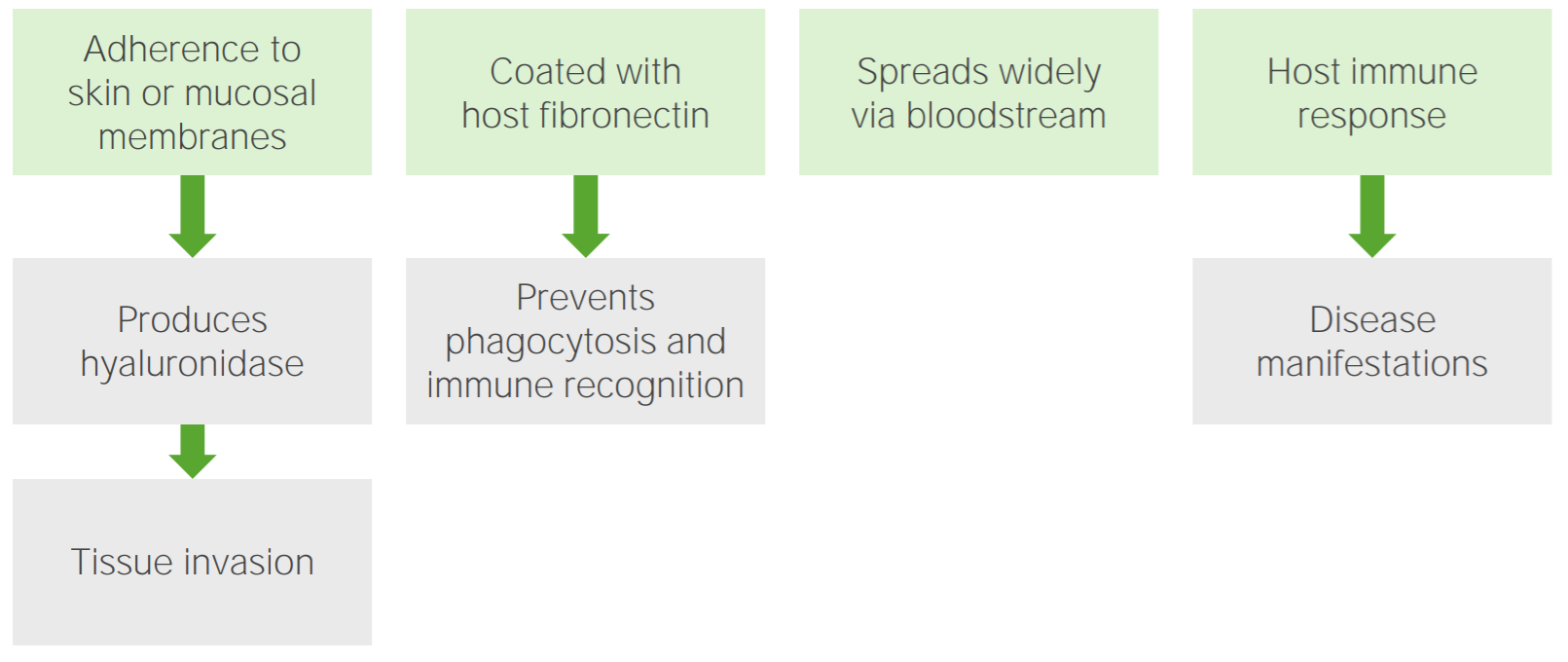
Patogenia de las infecciones por Treponema:
El patógeno se adhiere a la piel o las membranas mucosas, lo que lleva a la producción de hialuronidasa, que permite la invasión de tejidos. El patógeno se recubre a sí mismo con la fibronectina del huésped, lo que evita su fagocitosis y reconocimiento por parte del sistema inmunitario. En consecuencia, el patógeno se disemina a través del torrente sanguíneo. En última instancia, se produce una respuesta inmunitaria del huésped, que provoca las manifestaciones de la enfermedad.
Fase primaria:
Fase secundaria:
Fase terciaria:
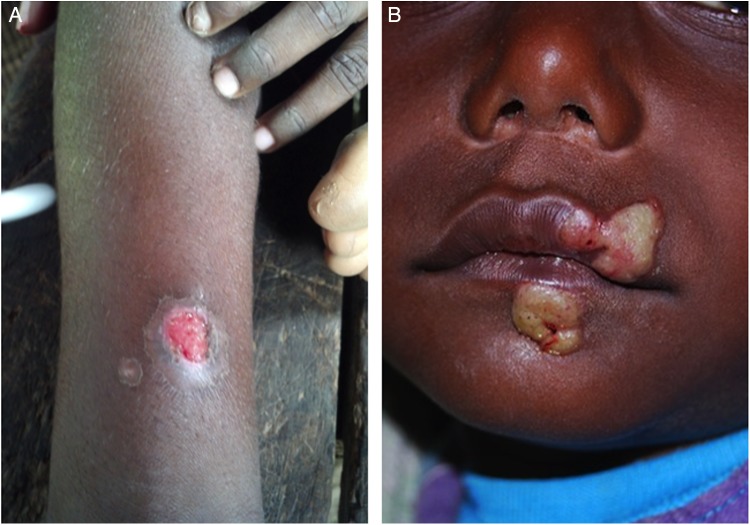
Lesiones cutáneas del pian primario:
A: úlcera típica del pian primario
B: papiloma del pian primario
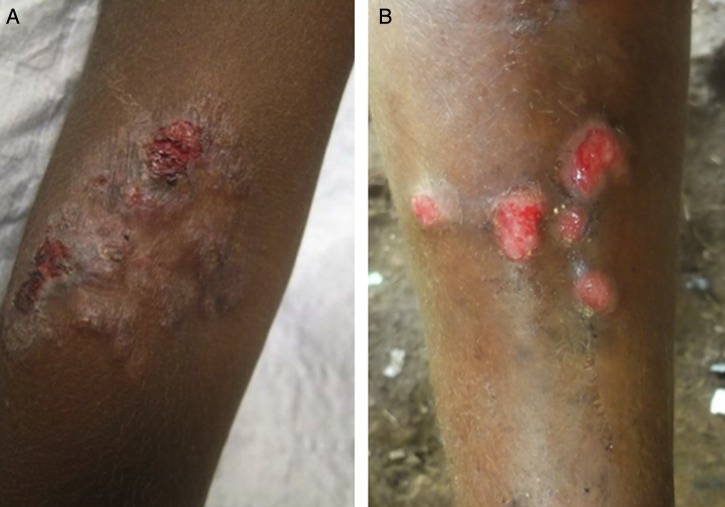
Lesiones cutáneas del pian secundario:
A: lesión maculopapular costrosa del pian secundario.
B: úlceras múltiples del pian secundaria
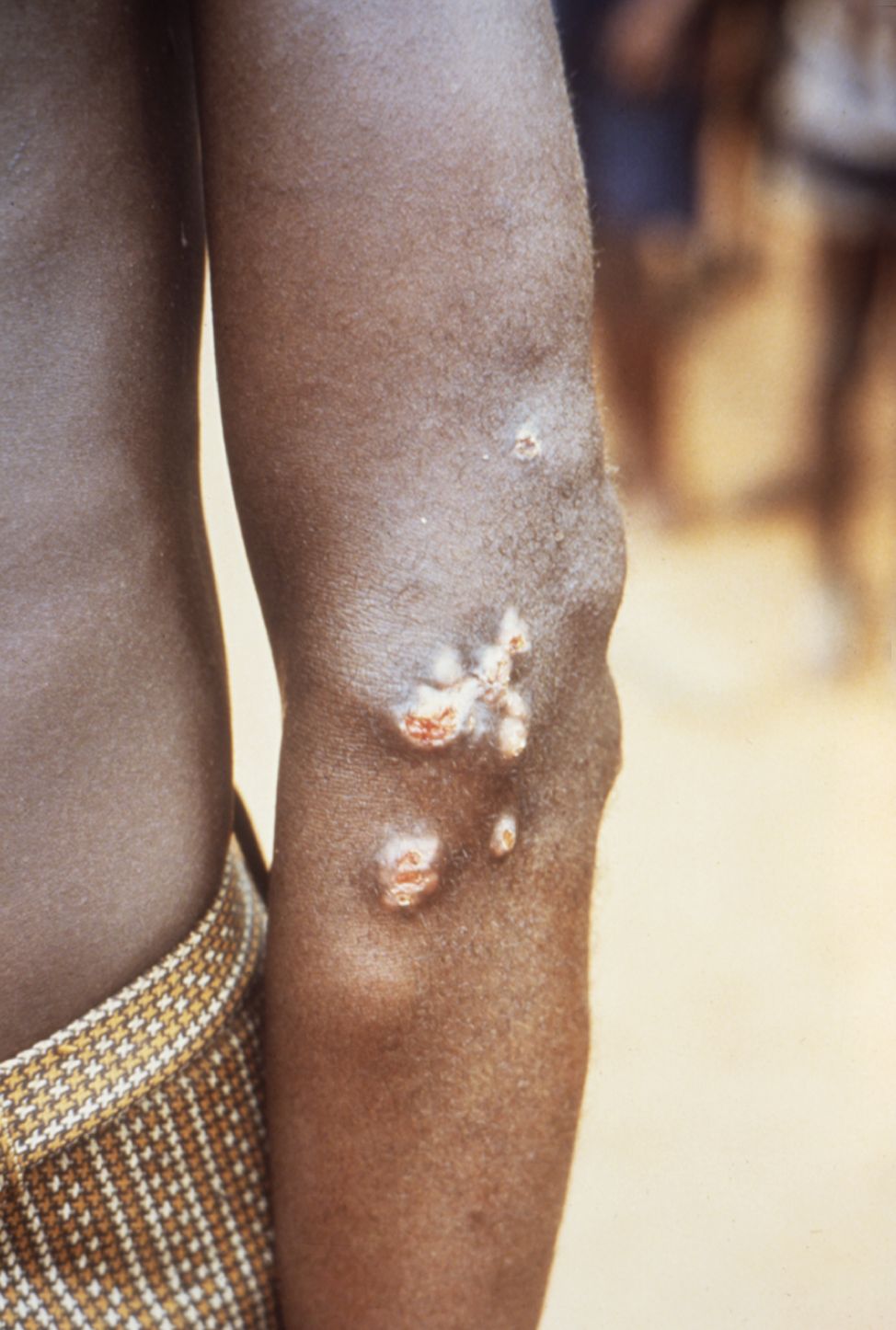
Manifestación cutánea del pian:
Lesiones cutáneas y nódulos yuxtaarticulares en el codo como resultado de una infección por Treponema pallidum pertenue
Fase primaria:
Fase secundaria:
Fase terciaria:
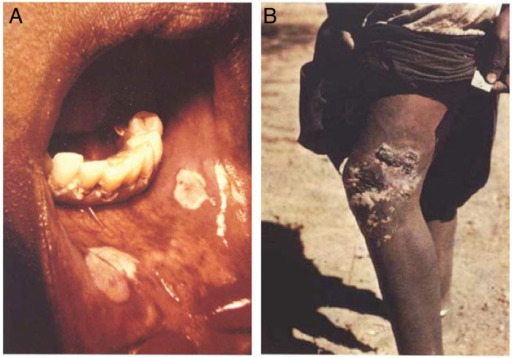
Lesiones mucocutáneas de bejel
A: una lesión oral de bejel primario resultante de una infección por Treponema pallidum endemicum
B: lesión cutánea crónica de bejel secundario
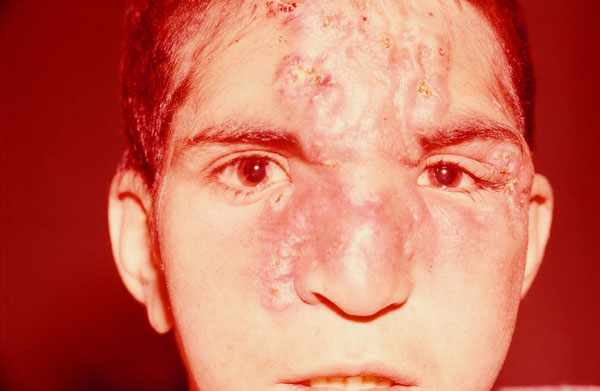
Lesiones gomatosas de bejel en estadio tardío (infección por Treponema pallidum endemicum)
Imagen: “Infiltration of skin due to endemic syphilis” por Alireza Abdolrasouli, Adam Croucher, Yahya Hemmati, and David Mabey. Licencia: Dominio PúblicoFase primaria:
Fase secundaria:
Fase terciaria o tardía:
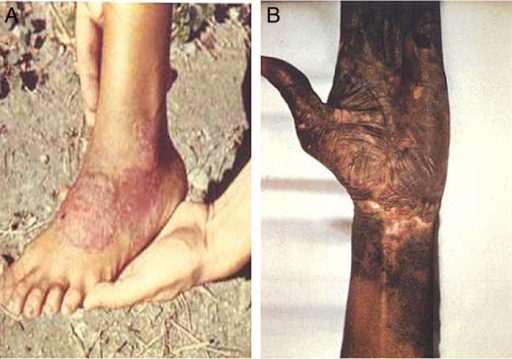
Lesiones cutáneas de pinta (infección por Treponema carateum)
A: placa eritematosa de la pinta temprana
B: decoloración cutánea de la pinta tardía
Debido a que estas especies treponémicas son morfológicamente indistinguibles, el diagnóstico se basa en EN Erythema nodosum is an immune-mediated panniculitis (inflammation of the subcutaneous fat) caused by a type IV (delayed-type) hypersensitivity reaction. It commonly manifests in young women as tender, erythematous nodules on the shins. Erythema Nodosum la combinación de datos demográficos, región geográfica, presentación clínica y hallazgos de laboratorio.
Serología:
Métodos directos:
El tratamiento es el mismo para todas estas infecciones. Las opciones incluyen: