
Domina Conceptos Médicos

Estudia para la escuela de medicina y tus examenes con Lecturio.

Pertusis (Tosferina)

La tos TOS Thoracic outlet syndrome (TOS) is a broad term used for a spectrum of syndromes related to the general region of the thoracic outlet, which involves the compression or irritation of elements of the brachial plexus, subclavian artery, or subclavian vein. Thoracic Outlet Syndrome ferina es una infección bacteriana de las vías respiratorias, altamente contagiosa y potencialmente mortal, causada por Bordetella pertussis Bordetella pertussis A species of gram-negative, aerobic bacteria that is the causative agent of whooping cough. Its cells are minute coccobacilli that are surrounded by a slime sheath. Bordetella. La enfermedad tiene 3 fases clínicas, la segunda y la tercera de las cuales se caracterizan por una tos TOS Thoracic outlet syndrome (TOS) is a broad term used for a spectrum of syndromes related to the general region of the thoracic outlet, which involves the compression or irritation of elements of the brachial plexus, subclavian artery, or subclavian vein. Thoracic Outlet Syndrome paroxística intensa, una inspiración violenta y vómitos después de la tos TOS Thoracic outlet syndrome (TOS) is a broad term used for a spectrum of syndromes related to the general region of the thoracic outlet, which involves the compression or irritation of elements of the brachial plexus, subclavian artery, or subclavian vein. Thoracic Outlet Syndrome. La tos TOS Thoracic outlet syndrome (TOS) is a broad term used for a spectrum of syndromes related to the general region of the thoracic outlet, which involves the compression or irritation of elements of the brachial plexus, subclavian artery, or subclavian vein. Thoracic Outlet Syndrome ferina puede prevenirse con una vacuna que se administra como parte de la mayoría de las vacunas rutinarias y que suele comenzar a la edad de 6 semanas. El diagnóstico se basa en EN Erythema nodosum is an immune-mediated panniculitis (inflammation of the subcutaneous fat) caused by a type IV (delayed-type) hypersensitivity reaction. It commonly manifests in young women as tender, erythematous nodules on the shins. Erythema Nodosum los LOS Neisseria antecedentes y se confirma con la detección del organismo mediante cultivo o reacción en EN Erythema nodosum is an immune-mediated panniculitis (inflammation of the subcutaneous fat) caused by a type IV (delayed-type) hypersensitivity reaction. It commonly manifests in young women as tender, erythematous nodules on the shins. Erythema Nodosum cadena de la polimerasa. Si se sospecha de tos TOS Thoracic outlet syndrome (TOS) is a broad term used for a spectrum of syndromes related to the general region of the thoracic outlet, which involves the compression or irritation of elements of the brachial plexus, subclavian artery, or subclavian vein. Thoracic Outlet Syndrome ferina, debe iniciarse inmediatamente una terapia antibiótica con macrólidos, aunque esté pendiente la confirmación del laboratorio.

Last updated: Dec 15, 2025

Editorial responsibility: Stanley Oiseth, Lindsay Jones, Evelin Maza

Descripción General

Epidemiología

  • Incidencia mundial: 24 millones de casos al AL Amyloidosis año
  • Muertes en EN Erythema nodosum is an immune-mediated panniculitis (inflammation of the subcutaneous fat) caused by a type IV (delayed-type) hypersensitivity reaction. It commonly manifests in young women as tender, erythematous nodules on the shins. Erythema Nodosum el mundo: aproximadamente 161 000 al AL Amyloidosis año
  • Incidencia en EN Erythema nodosum is an immune-mediated panniculitis (inflammation of the subcutaneous fat) caused by a type IV (delayed-type) hypersensitivity reaction. It commonly manifests in young women as tender, erythematous nodules on the shins. Erythema Nodosum Estados Unidos: aproximadamente 3,000 casos en EN Erythema nodosum is an immune-mediated panniculitis (inflammation of the subcutaneous fat) caused by a type IV (delayed-type) hypersensitivity reaction. It commonly manifests in young women as tender, erythematous nodules on the shins. Erythema Nodosum el 2022
  • Más común en EN Erythema nodosum is an immune-mediated panniculitis (inflammation of the subcutaneous fat) caused by a type IV (delayed-type) hypersensitivity reaction. It commonly manifests in young women as tender, erythematous nodules on the shins. Erythema Nodosum los LOS Neisseria países en EN Erythema nodosum is an immune-mediated panniculitis (inflammation of the subcutaneous fat) caused by a type IV (delayed-type) hypersensitivity reaction. It commonly manifests in young women as tender, erythematous nodules on the shins. Erythema Nodosum vías de desarrollo, con la tasa de mortalidad más alta en EN Erythema nodosum is an immune-mediated panniculitis (inflammation of the subcutaneous fat) caused by a type IV (delayed-type) hypersensitivity reaction. It commonly manifests in young women as tender, erythematous nodules on the shins. Erythema Nodosum los LOS Neisseria bebés
  • Es común y más grave en EN Erythema nodosum is an immune-mediated panniculitis (inflammation of the subcutaneous fat) caused by a type IV (delayed-type) hypersensitivity reaction. It commonly manifests in young women as tender, erythematous nodules on the shins. Erythema Nodosum los LOS Neisseria bebés de < 1 año de edad (usualmente no hay o hay escasa inmunidad pasiva materna, a menos que la madre haya recibido una vacuna de refuerzo de DTaP DTaP Combined vaccines consisting of diphtheria toxoid; tetanus toxoid; and an acellular form of pertussis vaccine. At least five different purified antigens of b. Pertussis have been used in various combinations in these vaccines. Bordetella al AL Amyloidosis principio del tercer trimestre)
  • Cada vez más frecuente en EN Erythema nodosum is an immune-mediated panniculitis (inflammation of the subcutaneous fat) caused by a type IV (delayed-type) hypersensitivity reaction. It commonly manifests in young women as tender, erythematous nodules on the shins. Erythema Nodosum adolescentes, ya que la inmunidad protectora de la vacunación disminuye después de los LOS Neisseria 4-12 años

Etiología

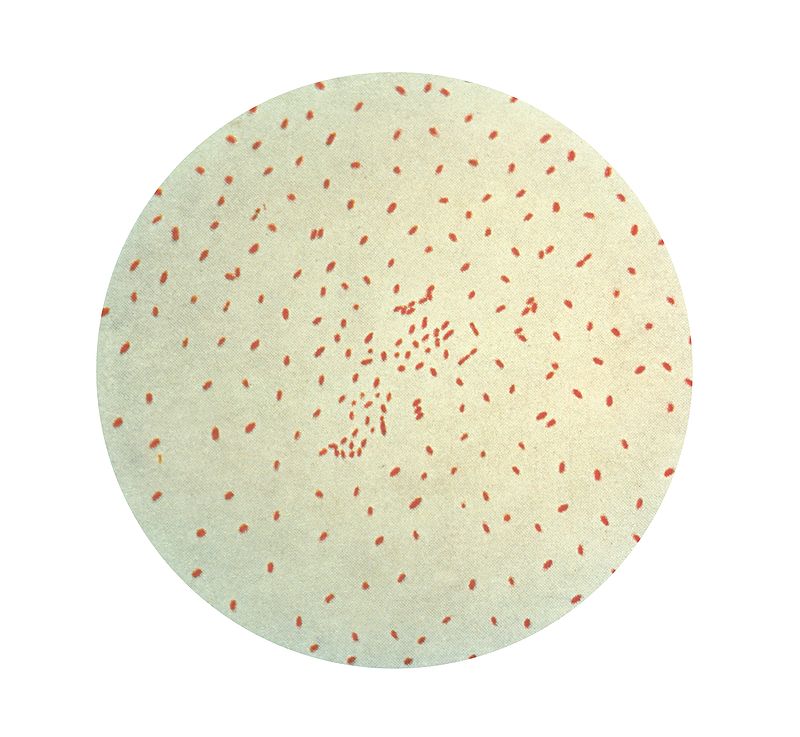
  • Infección por la bacteria Bacteria Bacteria are prokaryotic single-celled microorganisms that are metabolically active and divide by binary fission. Some of these organisms play a significant role in the pathogenesis of diseases. Bacteriology Bordetella pertussis Bordetella pertussis A species of gram-negative, aerobic bacteria that is the causative agent of whooping cough. Its cells are minute coccobacilli that are surrounded by a slime sheath. Bordetella (un cocobacilo gramnegativo)
  • La transmisión se produce a través de:
    • Gotitas en EN Erythema nodosum is an immune-mediated panniculitis (inflammation of the subcutaneous fat) caused by a type IV (delayed-type) hypersensitivity reaction. It commonly manifests in young women as tender, erythematous nodules on the shins. Erythema Nodosum el aire ( al AL Amyloidosis toser, estornudar o hablar)
    • Contacto directo con las secreciones orales o nasales de un individuo infectado.
  • Alta infectividad durante aproximadamente 3 semanas después del inicio de la tos TOS Thoracic outlet syndrome (TOS) is a broad term used for a spectrum of syndromes related to the general region of the thoracic outlet, which involves the compression or irritation of elements of the brachial plexus, subclavian artery, or subclavian vein. Thoracic Outlet Syndrome si no se trata (solo 5 días con tratamiento)
  • Periodo de incubación: 7-10 días ( en EN Erythema nodosum is an immune-mediated panniculitis (inflammation of the subcutaneous fat) caused by a type IV (delayed-type) hypersensitivity reaction. It commonly manifests in young women as tender, erythematous nodules on the shins. Erythema Nodosum promedio)

Factores de riesgo

Las personas que corren el riesgo de contraer la tosferina y/o la enfermedad grave son las siguientes:
  • Personas no vacunadas
  • Los LOS Neisseria bebés (especialmente los LOS Neisseria de menos de 4 meses)
  • Las mujeres embarazadas
  • Personas con inmunodeficiencia
  • Personas con enfermedades respiratorias subyacentes (e.g., EPOC)
  • Adultos mayores (> 65 años)
  • Los LOS Neisseria que cuidan de bebés

Fisiopatología

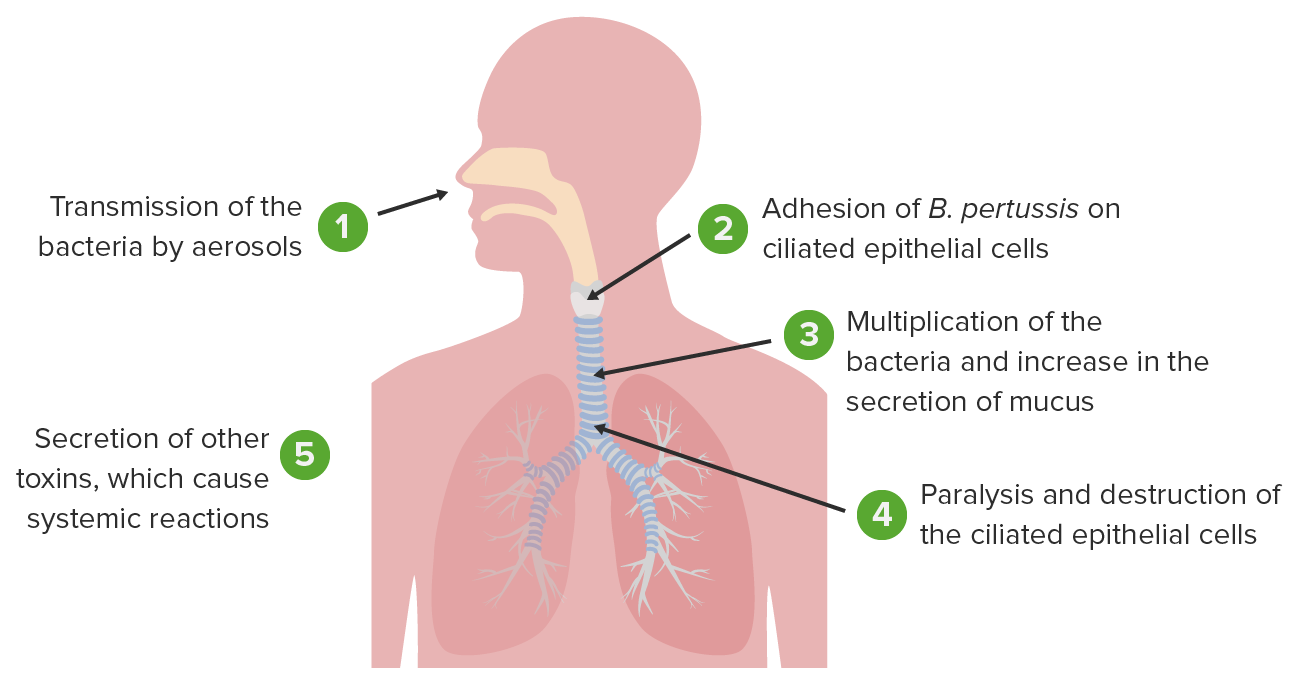
  • Infección a través de inhalación de gotas de aire que contienen B. pertussis B. pertussis A species of gram-negative, aerobic bacteria that is the causative agent of whooping cough. Its cells are minute coccobacilli that are surrounded by a slime sheath. Bordetella
  • Las bacterias se adhieren (mediante adhesinas) al AL Amyloidosis epitelio ciliado de la nasofaringe y proliferan allí.
    • Factores de virulencia (e.g., citotoxina traqueal, toxina dermonecrótica, adenilato ciclasa) → daño tisular
    • Inflamación y destrucción de los LOS Neisseria cilios → inhibición del elevador mucociliar (puede extenderse al AL Amyloidosis árbol bronquial y a los LOS Neisseria pulmones en EN Erythema nodosum is an immune-mediated panniculitis (inflammation of the subcutaneous fat) caused by a type IV (delayed-type) hypersensitivity reaction. It commonly manifests in young women as tender, erythematous nodules on the shins. Erythema Nodosum casos graves)
    • Secreción de exudado inflamatorio en EN Erythema nodosum is an immune-mediated panniculitis (inflammation of the subcutaneous fat) caused by a type IV (delayed-type) hypersensitivity reaction. It commonly manifests in young women as tender, erythematous nodules on the shins. Erythema Nodosum las vías respiratorias
    • Deterioro de la eliminación de mucosidad y residuos de la vía respiratoria → microaspiración, lo que provoca:
      • Tos TOS Thoracic outlet syndrome (TOS) is a broad term used for a spectrum of syndromes related to the general region of the thoracic outlet, which involves the compression or irritation of elements of the brachial plexus, subclavian artery, or subclavian vein. Thoracic Outlet Syndrome
      • Mayor riesgo de infecciones secundarias (e.g., neumonía)
  • Se han encontrado organismos en EN Erythema nodosum is an immune-mediated panniculitis (inflammation of the subcutaneous fat) caused by a type IV (delayed-type) hypersensitivity reaction. It commonly manifests in young women as tender, erythematous nodules on the shins. Erythema Nodosum los LOS Neisseria macrófagos alveolares, así como en EN Erythema nodosum is an immune-mediated panniculitis (inflammation of the subcutaneous fat) caused by a type IV (delayed-type) hypersensitivity reaction. It commonly manifests in young women as tender, erythematous nodules on the shins. Erythema Nodosum las células epiteliales respiratorias ciliadas de las vías respiratorias inferiores, lo que puede explicar la prolongada duración de la tos TOS Thoracic outlet syndrome (TOS) is a broad term used for a spectrum of syndromes related to the general region of the thoracic outlet, which involves the compression or irritation of elements of the brachial plexus, subclavian artery, or subclavian vein. Thoracic Outlet Syndrome.
  • La toxina de la tos TOS Thoracic outlet syndrome (TOS) is a broad term used for a spectrum of syndromes related to the general region of the thoracic outlet, which involves the compression or irritation of elements of the brachial plexus, subclavian artery, or subclavian vein. Thoracic Outlet Syndrome ferina produce la mayoría de las manifestaciones sistémicas asociadas a la tos TOS Thoracic outlet syndrome (TOS) is a broad term used for a spectrum of syndromes related to the general region of the thoracic outlet, which involves the compression or irritation of elements of the brachial plexus, subclavian artery, or subclavian vein. Thoracic Outlet Syndrome ferina (e.g., linfocitosis, hipertensión pulmonar).
Bordetella pertussis que causa la tos ferina

Fisiopatología de la Bordetella pertussis causante de la tos ferina

Imagen por Lecturio.
Presentación Clínica

Primera etapa: catarral

  • Dura 1-2 semanas
  • Presenta síntomas inespecíficos de una infección del tracto respiratorio superior:
    • Tos TOS Thoracic outlet syndrome (TOS) is a broad term used for a spectrum of syndromes related to the general region of the thoracic outlet, which involves the compression or irritation of elements of the brachial plexus, subclavian artery, or subclavian vein. Thoracic Outlet Syndrome leve
    • Coriza (i.e., secreción nasal)
    • Estornudos
    • Conjuntivitis
    • Fiebre de bajo grado (poco común)

Segunda etapa: paroxística

  • Dura 2-8 semanas
  • Se presenta con paroxismos característicos de tos intensa, seguidos de un sonido inspiratorio “chillón”:
    • Ocurre con frecuencia por la noche
    • La tos TOS Thoracic outlet syndrome (TOS) is a broad term used for a spectrum of syndromes related to the general region of the thoracic outlet, which involves the compression or irritation of elements of the brachial plexus, subclavian artery, or subclavian vein. Thoracic Outlet Syndrome se produce con mayor frecuencia en EN Erythema nodosum is an immune-mediated panniculitis (inflammation of the subcutaneous fat) caused by a type IV (delayed-type) hypersensitivity reaction. It commonly manifests in young women as tender, erythematous nodules on the shins. Erythema Nodosum niños mayores y niños pequeños.
    • Algunos bebés (< 6 meses de edad) pueden presentar periodos de asfixia o apnea debido a la incapacidad de sus músculos respiratorios para producir una tos TOS Thoracic outlet syndrome (TOS) is a broad term used for a spectrum of syndromes related to the general region of the thoracic outlet, which involves the compression or irritation of elements of the brachial plexus, subclavian artery, or subclavian vein. Thoracic Outlet Syndrome fuerte.
  • Pueden producirse vómitos posteriores a la tos TOS Thoracic outlet syndrome (TOS) is a broad term used for a spectrum of syndromes related to the general region of the thoracic outlet, which involves the compression or irritation of elements of the brachial plexus, subclavian artery, or subclavian vein. Thoracic Outlet Syndrome, dificultad para respirar (disnea) y cianosis

Tercera etapa: convaleciente

  • Dura una media de 4 semanas, pero puede prolongarse durante meses
  • Se caracteriza por la reducción progresiva de todos los LOS Neisseria síntomas

Diagnóstico

  • El diagnóstico se sospecha fuertemente con la historia clínica, pero requiere confirmación de laboratorio.
  • Antecedentes: posible contacto con otros casos de “tos ferina” y vacunación (como la vacuna no proporciona una protección total, hay que tener en EN Erythema nodosum is an immune-mediated panniculitis (inflammation of the subcutaneous fat) caused by a type IV (delayed-type) hypersensitivity reaction. It commonly manifests in young women as tender, erythematous nodules on the shins. Erythema Nodosum cuenta la tos TOS Thoracic outlet syndrome (TOS) is a broad term used for a spectrum of syndromes related to the general region of the thoracic outlet, which involves the compression or irritation of elements of the brachial plexus, subclavian artery, or subclavian vein. Thoracic Outlet Syndrome ferina incluso en EN Erythema nodosum is an immune-mediated panniculitis (inflammation of the subcutaneous fat) caused by a type IV (delayed-type) hypersensitivity reaction. It commonly manifests in young women as tender, erythematous nodules on the shins. Erythema Nodosum los LOS Neisseria niños vacunados).
  • Estudios de laboratorio:
    • Hisopado nasofaríngeo → cultivo (estándar de oro) o reacción en EN Erythema nodosum is an immune-mediated panniculitis (inflammation of the subcutaneous fat) caused by a type IV (delayed-type) hypersensitivity reaction. It commonly manifests in young women as tender, erythematous nodules on the shins. Erythema Nodosum cadena de polimerasa
      • Solo es fiable durante las primeras 2-3 semanas de la infección
    • El hemograma completo muestra una linfocitosis inespecífica.
    • Pruebas serológicas:
      • Pueden utilizarse hasta varias semanas después de la aparición de los LOS Neisseria síntomas.
      • Un aumento de 2 veces en EN Erythema nodosum is an immune-mediated panniculitis (inflammation of the subcutaneous fat) caused by a type IV (delayed-type) hypersensitivity reaction. It commonly manifests in young women as tender, erythematous nodules on the shins. Erythema Nodosum el título de anticuerpos contra la tosferina es diagnóstico.
    • El hemograma muestra linfocitosis inespecífica
Tinción de Gram de la bacteria Bordetella pertussis

Tinción de Gram de la bacteria Bordetella pertussis

Image: “Gram stain of the bacteria Bordetella pertussis” por CDC/Public Health Image Library. Licencia: Dominio Público

Tratamiento y Prevención

Cuidados de soporte

  • Puede ser necesaria la hospitalización de los LOS Neisseria bebés y niños que presentan apnea y dificultad respiratoria.
  • La administración de oxígeno puede ser necesaria en EN Erythema nodosum is an immune-mediated panniculitis (inflammation of the subcutaneous fat) caused by a type IV (delayed-type) hypersensitivity reaction. It commonly manifests in young women as tender, erythematous nodules on the shins. Erythema Nodosum casos graves.
  • La terapia antitusiva no ha HA Hemolytic anemia (HA) is the term given to a large group of anemias that are caused by the premature destruction/hemolysis of circulating red blood cells (RBCs). Hemolysis can occur within (intravascular hemolysis) or outside the blood vessels (extravascular hemolysis). Hemolytic Anemia demostrado ser eficaz.

Terapia médica

Si la historia clínica apoya firmemente el diagnóstico de tosferina, se sugiere encarecidamente iniciar la terapia antibiótica mientras se esperan los LOS Neisseria resultados de las pruebas.

  • Macrólidos (e.g., azitromicina, claritromicina, eritromicina)
    • Tratamiento de elección
    • Reducen la propagación de la tos TOS Thoracic outlet syndrome (TOS) is a broad term used for a spectrum of syndromes related to the general region of the thoracic outlet, which involves the compression or irritation of elements of the brachial plexus, subclavian artery, or subclavian vein. Thoracic Outlet Syndrome ferina, pero no afectan al AL Amyloidosis curso clínico
    • Azitromicina como primera opción para lactantes < 1 mes de edad y para embarazadas
  • El trimetoprim-sulfametoxazol puede utilizarse si existe una contraindicación al AL Amyloidosis tratamiento con macrólidos.

Prevención y profilaxis

  • Inmunización activa mediante la administración de los LOS Neisseria toxoides de difteria-tétanos y la vacuna acelular contra la tos TOS Thoracic outlet syndrome (TOS) is a broad term used for a spectrum of syndromes related to the general region of the thoracic outlet, which involves the compression or irritation of elements of the brachial plexus, subclavian artery, or subclavian vein. Thoracic Outlet Syndrome ferina ( DTaP DTaP Combined vaccines consisting of diphtheria toxoid; tetanus toxoid; and an acellular form of pertussis vaccine. At least five different purified antigens of b. Pertussis have been used in various combinations in these vaccines. Bordetella)
    • Solo 80%–90% efectividad
    • 5 dosis en EN Erythema nodosum is an immune-mediated panniculitis (inflammation of the subcutaneous fat) caused by a type IV (delayed-type) hypersensitivity reaction. It commonly manifests in young women as tender, erythematous nodules on the shins. Erythema Nodosum total (a los LOS Neisseria 2, 4, 6 y 18 meses; y 5 años)
    • Vacuna de refuerzo necesaria a los LOS Neisseria 11-18 años (10 años después de la última dosis) o en EN Erythema nodosum is an immune-mediated panniculitis (inflammation of the subcutaneous fat) caused by a type IV (delayed-type) hypersensitivity reaction. It commonly manifests in young women as tender, erythematous nodules on the shins. Erythema Nodosum mujeres embarazadas ( en EN Erythema nodosum is an immune-mediated panniculitis (inflammation of the subcutaneous fat) caused by a type IV (delayed-type) hypersensitivity reaction. It commonly manifests in young women as tender, erythematous nodules on the shins. Erythema Nodosum el tercer trimestre) con la vacuna del toxoide tetánico, toxoide diftérico reducido y tos TOS Thoracic outlet syndrome (TOS) is a broad term used for a spectrum of syndromes related to the general region of the thoracic outlet, which involves the compression or irritation of elements of the brachial plexus, subclavian artery, or subclavian vein. Thoracic Outlet Syndrome ferina acelular ( DTaP DTaP Combined vaccines consisting of diphtheria toxoid; tetanus toxoid; and an acellular form of pertussis vaccine. At least five different purified antigens of b. Pertussis have been used in various combinations in these vaccines. Bordetella)
  • Profilaxis posterior a la exposición:
    • Aunque estén vacunados, los LOS Neisseria contactos cercanos también deben ser tratados, especialmente si tienen un alto riesgo de padecer una enfermedad grave.
    • Los LOS Neisseria antibióticos utilizados son los LOS Neisseria mismos que los LOS Neisseria de la infección documentada.

Diagnóstico Diferencial

  • Bronquitis aguda: infección del tracto respiratorio inferior que provoca la inflamación del árbol traqueobronquial. La mayoría de los LOS Neisseria casos son virales, y las infecciones bacterianas suelen estar causadas por bacterias atípicas. Los LOS Neisseria individuos presentan tos TOS Thoracic outlet syndrome (TOS) is a broad term used for a spectrum of syndromes related to the general region of the thoracic outlet, which involves the compression or irritation of elements of the brachial plexus, subclavian artery, or subclavian vein. Thoracic Outlet Syndrome, que puede ser productiva y suele durar entre 1 y 3 semanas. También puede haber fiebre y otros síntomas de las vías respiratorias superiores. El diagnóstico es clínico, aunque puede hacerse una radiografía de tórax para descartar una neumonía. El tratamiento es de soporte, y los LOS Neisseria antibióticos no están indicados en EN Erythema nodosum is an immune-mediated panniculitis (inflammation of the subcutaneous fat) caused by a type IV (delayed-type) hypersensitivity reaction. It commonly manifests in young women as tender, erythematous nodules on the shins. Erythema Nodosum adultos por lo demás sanos.
  • Neumonía: infección respiratoria caracterizada por la inflamación del espacio alveolar y/o del tejido intersticial de los LOS Neisseria pulmones. Las causas incluyen la infección por bacterias, virus Virus Viruses are infectious, obligate intracellular parasites composed of a nucleic acid core surrounded by a protein capsid. Viruses can be either naked (non-enveloped) or enveloped. The classification of viruses is complex and based on many factors, including type and structure of the nucleoid and capsid, the presence of an envelope, the replication cycle, and the host range. Virology u hongos. Los LOS Neisseria síntomas pueden incluir fiebre, tos TOS Thoracic outlet syndrome (TOS) is a broad term used for a spectrum of syndromes related to the general region of the thoracic outlet, which involves the compression or irritation of elements of the brachial plexus, subclavian artery, or subclavian vein. Thoracic Outlet Syndrome, disnea y dolor Dolor Inflammation torácico pleurítico. La radiografía de tórax suele mostrar infiltrados y/o consolidación en EN Erythema nodosum is an immune-mediated panniculitis (inflammation of the subcutaneous fat) caused by a type IV (delayed-type) hypersensitivity reaction. It commonly manifests in young women as tender, erythematous nodules on the shins. Erythema Nodosum los LOS Neisseria pulmones. El tratamiento consiste en EN Erythema nodosum is an immune-mediated panniculitis (inflammation of the subcutaneous fat) caused by a type IV (delayed-type) hypersensitivity reaction. It commonly manifests in young women as tender, erythematous nodules on the shins. Erythema Nodosum la administración de antibióticos empíricos, que pueden adaptarse si se identifica el organismo causante.
  • Crup: también conocido como laringotraqueobronquitis, es una enfermedad causada generalmente por una infección viral o, raramente, bacteriana que provoca una inflamación grave de la tráquea. Suele presentarse en niños menores de 3 años. Los individuos desarrollan una tos ronca, “como de foca”, y un estridor inspiratorio. El crup se suele diagnosticar clínicamente o con la ayuda de imágenes de rayos X (signo del campanario). El tratamiento consiste en EN Erythema nodosum is an immune-mediated panniculitis (inflammation of the subcutaneous fat) caused by a type IV (delayed-type) hypersensitivity reaction. It commonly manifests in young women as tender, erythematous nodules on the shins. Erythema Nodosum corticoides y epinefrina racémica nebulizada.
  • Aspiración de cuerpo extraño: la aspiración de un objeto que se aloja en EN Erythema nodosum is an immune-mediated panniculitis (inflammation of the subcutaneous fat) caused by a type IV (delayed-type) hypersensitivity reaction. It commonly manifests in young women as tender, erythematous nodules on the shins. Erythema Nodosum la laringe, la tráquea o los LOS Neisseria bronquios. La aspiración de un cuerpo extraño es una urgencia potencialmente mortal que suele producirse en EN Erythema nodosum is an immune-mediated panniculitis (inflammation of the subcutaneous fat) caused by a type IV (delayed-type) hypersensitivity reaction. It commonly manifests in young women as tender, erythematous nodules on the shins. Erythema Nodosum niños menores de 3 años. Los LOS Neisseria individuos pueden presentar un cuadro de asfixia, que puede consistir en EN Erythema nodosum is an immune-mediated panniculitis (inflammation of the subcutaneous fat) caused by a type IV (delayed-type) hypersensitivity reaction. It commonly manifests in young women as tender, erythematous nodules on the shins. Erythema Nodosum tos TOS Thoracic outlet syndrome (TOS) is a broad term used for a spectrum of syndromes related to the general region of the thoracic outlet, which involves the compression or irritation of elements of the brachial plexus, subclavian artery, or subclavian vein. Thoracic Outlet Syndrome, sibilancias, estridor y/o dificultad respiratoria. Los LOS Neisseria cuerpos extraños rara vez se ven en EN Erythema nodosum is an immune-mediated panniculitis (inflammation of the subcutaneous fat) caused by a type IV (delayed-type) hypersensitivity reaction. It commonly manifests in young women as tender, erythematous nodules on the shins. Erythema Nodosum las radiografías, por lo que deben utilizarse otros métodos de imagen (e.g., TC, broncoscopia). La extracción inmediata del objeto es el tratamiento definitivo.

References:

  1. Mandell, L.A., et al AL Amyloidosis. (2007). Infectious Diseases Society of America/American Thoracic Society consensus guidelines on the management of community-acquired pneumonia Community-Acquired Pneumonia Pneumonia in Children in adults. Clinical Infectious Diseases 44:S27–S72. https://www.thoracic.org/statements/resources/tb-opi/idsaats-cap.pdf
  2. Morbidity Morbidity The proportion of patients with a particular disease during a given year per given unit of population. Measures of Health Status and Mortality Mortality All deaths reported in a given population. Measures of Health Status Weekly Report. (2005). Recommended antimicrobial agents for the treatment and postexposure prophylaxis Prophylaxis Cephalosporins of pertussis Pertussis Pertussis, or whooping cough, is a potentially life-threatening highly contagious bacterial infection of the respiratory tract caused by Bordetella pertussis. The disease has 3 clinical stages, the second and third of which are characterized by an intense paroxysmal cough, an inspiratory whoop, and post-tussive vomiting. Pertussis (Whooping Cough). Centers for Disease Control and Prevention. Retrieved November 19, 2024, from https://www.cdc.gov/mmwr/preview/mmwrhtml/rr5414a1.htm
  3. Centers for Disease Control and Prevention. (2024). Pertussis Pertussis Pertussis, or whooping cough, is a potentially life-threatening highly contagious bacterial infection of the respiratory tract caused by Bordetella pertussis. The disease has 3 clinical stages, the second and third of which are characterized by an intense paroxysmal cough, an inspiratory whoop, and post-tussive vomiting. Pertussis (Whooping Cough) ( Whooping Cough Whooping cough Pertussis, or whooping cough, is a potentially life-threatening highly contagious bacterial infection of the respiratory tract caused by Bordetella pertussis. The disease has 3 clinical stages, the second and third of which are characterized by an intense paroxysmal cough, an inspiratory whoop, and post-tussive vomiting. Pertussis (Whooping Cough)) Cases by Year. Retrieved November 19, 2024, from https://www.cdc.gov/pertussis/php/surveillance/pertussis-cases-by-year.html
  4. Centers for Disease Control and Prevention. (2024). Appendix Appendix A worm-like blind tube extension from the cecum. Colon, Cecum, and Appendix: Anatomy A: Type and duration of precautions recommended for selected infections Infections Invasion of the host organism by microorganisms or their toxins or by parasites that can cause pathological conditions or diseases. Chronic Granulomatous Disease and conditions. In Guideline for isolation precautions: Preventing transmission of infectious agents in healthcare settings (2007). U.S. Department of Health and Human Services. Retrieved November 19, 2024, from https://www.cdc.gov/infection-control/hcp/isolation-precautions/appendix-a-type-duration.html
  5. Centers for Disease Control and Prevention. (2019). Pertussis Pertussis Pertussis, or whooping cough, is a potentially life-threatening highly contagious bacterial infection of the respiratory tract caused by Bordetella pertussis. The disease has 3 clinical stages, the second and third of which are characterized by an intense paroxysmal cough, an inspiratory whoop, and post-tussive vomiting. Pertussis (Whooping Cough) ( whooping cough Whooping cough Pertussis, or whooping cough, is a potentially life-threatening highly contagious bacterial infection of the respiratory tract caused by Bordetella pertussis. The disease has 3 clinical stages, the second and third of which are characterized by an intense paroxysmal cough, an inspiratory whoop, and post-tussive vomiting. Pertussis (Whooping Cough)): treatment. Retrieved November 19, 2024, from https://www.cdc.gov/pertussis/hcp/clinical-care/?CDC_AAref_Val=https://www.cdc.gov/pertussis/clinical/treatment.html
  6. Centers for Disease Control and Prevention. (2024). Vaccinating pregnant patients Patients Individuals participating in the health care system for the purpose of receiving therapeutic, diagnostic, or preventive procedures. Clinician–Patient Relationship. U.S. Department of Health and Human Services. Retrieved November 19, 2024, from https://www.cdc.gov/pertussis/hcp/vaccine-recommendations/vaccinating-pregnant-patients.html
  7. Centers for Disease Control and Prevention. Pertussis Pertussis Pertussis, or whooping cough, is a potentially life-threatening highly contagious bacterial infection of the respiratory tract caused by Bordetella pertussis. The disease has 3 clinical stages, the second and third of which are characterized by an intense paroxysmal cough, an inspiratory whoop, and post-tussive vomiting. Pertussis (Whooping Cough) ( Whooping Cough Whooping cough Pertussis, or whooping cough, is a potentially life-threatening highly contagious bacterial infection of the respiratory tract caused by Bordetella pertussis. The disease has 3 clinical stages, the second and third of which are characterized by an intense paroxysmal cough, an inspiratory whoop, and post-tussive vomiting. Pertussis (Whooping Cough)) Surveillance Surveillance Developmental Milestones and Normal Growth (2024). Retrieved November 19, 2024, from https://www.cdc.gov/pertussis/php/surveillance/index.html
  8. Bush, L.M., Vazquez-Pertejo, M.T. (2022). Pertussis Pertussis Pertussis, or whooping cough, is a potentially life-threatening highly contagious bacterial infection of the respiratory tract caused by Bordetella pertussis. The disease has 3 clinical stages, the second and third of which are characterized by an intense paroxysmal cough, an inspiratory whoop, and post-tussive vomiting. Pertussis (Whooping Cough). MSD Manual Professional Version. Retrieved November 19, 2024, from https://www.msdmanuals.com/professional/infectious-diseases/gram-negative-bacilli/pertussis
  9. Yeh, S., Mink, C.M. (2024). Pertussis Pertussis Pertussis, or whooping cough, is a potentially life-threatening highly contagious bacterial infection of the respiratory tract caused by Bordetella pertussis. The disease has 3 clinical stages, the second and third of which are characterized by an intense paroxysmal cough, an inspiratory whoop, and post-tussive vomiting. Pertussis (Whooping Cough) infection in infants and children: clinical features and diagnosis. UpToDate. Retrieved November 18, 2024, from https://www.uptodate.com/contents/pertussis-infection-in-infants-and-children-clinical-features-and-diagnosis
  10. Yeh, S. (2024). Pertussis Pertussis Pertussis, or whooping cough, is a potentially life-threatening highly contagious bacterial infection of the respiratory tract caused by Bordetella pertussis. The disease has 3 clinical stages, the second and third of which are characterized by an intense paroxysmal cough, an inspiratory whoop, and post-tussive vomiting. Pertussis (Whooping Cough) infection in infants and children: treatment and prevention. UpToDate. Retrieved November 18, 2024, from https://www.uptodate.com/contents/pertussis-infection-in-infants-and-children-treatment-and-prevention
  11. Cornia, P., Lipsky, B.A. (2024). Pertussis Pertussis Pertussis, or whooping cough, is a potentially life-threatening highly contagious bacterial infection of the respiratory tract caused by Bordetella pertussis. The disease has 3 clinical stages, the second and third of which are characterized by an intense paroxysmal cough, an inspiratory whoop, and post-tussive vomiting. Pertussis (Whooping Cough) infection in adolescents and adults: clinical manifestations and diagnosis. UpToDate. Retrieved November 18, 2024, from https://www.uptodate.com/contents/pertussis-infection-in-adolescents-and-adults-clinical-manifestations-and-diagnosis
  12. Cornia, P., Lipsky, B.A. (2024). Pertussis Pertussis Pertussis, or whooping cough, is a potentially life-threatening highly contagious bacterial infection of the respiratory tract caused by Bordetella pertussis. The disease has 3 clinical stages, the second and third of which are characterized by an intense paroxysmal cough, an inspiratory whoop, and post-tussive vomiting. Pertussis (Whooping Cough) infection in adolescents and adults: treatment and prevention. UpToDate. Retrieved November 18, 2024, from https://www.uptodate.com/contents/pertussis-infection-in-adolescents-and-adults-treatment-and-prevention

¡Crea tu cuenta gratis o inicia una sesión para seguir leyendo!

Regístrate ahora y obtén acceso gratuito a Lecturio con páginas de concepto, videos médicos y cuestionarios para tu educación médica.

User Reviews

Que tengas una sesión de estudio alegre y navideña 🎁 Ahorra 50% en todos los planes >>

Details