Domina Conceptos Médicos

Estudia para la escuela de medicina y tus examenes con Lecturio.

Mycobacterium

Mycobacterium Mycobacterium Mycobacterium is a genus of the family Mycobacteriaceae in the phylum Actinobacteria. Mycobacteria comprise more than 150 species of facultative intracellular bacilli that are mostly obligate aerobes. Mycobacteria are responsible for multiple human infections including serious diseases, such as tuberculosis (M. tuberculosis), leprosy (M. leprae), and M. avium complex infections. Mycobacterium es un género de la familia Mycobacteriaceae Mycobacteriaceae A family of gram-positive bacteria found in soil and dairy products and as parasites on animals and man. Several are important pathogens. Mycobacterium en EN Erythema nodosum is an immune-mediated panniculitis (inflammation of the subcutaneous fat) caused by a type IV (delayed-type) hypersensitivity reaction. It commonly manifests in young women as tender, erythematous nodules on the shins. Erythema Nodosum el filo Actinobacteria Actinobacteria Class of bacteria with diverse morphological properties. Strains of actinobacteria show greater than 80% 16s rDNA/rRNA sequence similarity among each other and also the presence of certain signature nucleotides. Mycobacterium. Las micobacterias comprenden más de 150 especies de bacilos intracelulares facultativos que en EN Erythema nodosum is an immune-mediated panniculitis (inflammation of the subcutaneous fat) caused by a type IV (delayed-type) hypersensitivity reaction. It commonly manifests in young women as tender, erythematous nodules on the shins. Erythema Nodosum su mayoría son aerobios obligados. Las micobacterias son responsables de múltiples infecciones humanas, incluidas enfermedades graves, como la tuberculosis Tuberculosis Tuberculosis (TB) is an infectious disease caused by Mycobacterium tuberculosis complex bacteria. The bacteria usually attack the lungs but can also damage other parts of the body. Approximately 30% of people around the world are infected with this pathogen, with the majority harboring a latent infection. Tuberculosis spreads through the air when a person with active pulmonary infection coughs or sneezes. Tuberculosis (M. tuberculosis Tuberculosis Tuberculosis (TB) is an infectious disease caused by Mycobacterium tuberculosis complex bacteria. The bacteria usually attack the lungs but can also damage other parts of the body. Approximately 30% of people around the world are infected with this pathogen, with the majority harboring a latent infection. Tuberculosis spreads through the air when a person with active pulmonary infection coughs or sneezes. Tuberculosis), la lepra (M. leprae) y las infecciones por el complejo M. avium. Si bien los LOS Neisseria pulmones son el sitio más común de infección, las micobacterias pueden colonizar e infectar otros sistemas, incluyendo ganglios linfáticos, piel, senos paranasales, ojos, oídos, huesos, SNC y tracto urinario.

Last updated: Mar 7, 2022

Editorial responsibility: Stanley Oiseth, Lindsay Jones, Evelin Maza

Características Generales

Características básicas

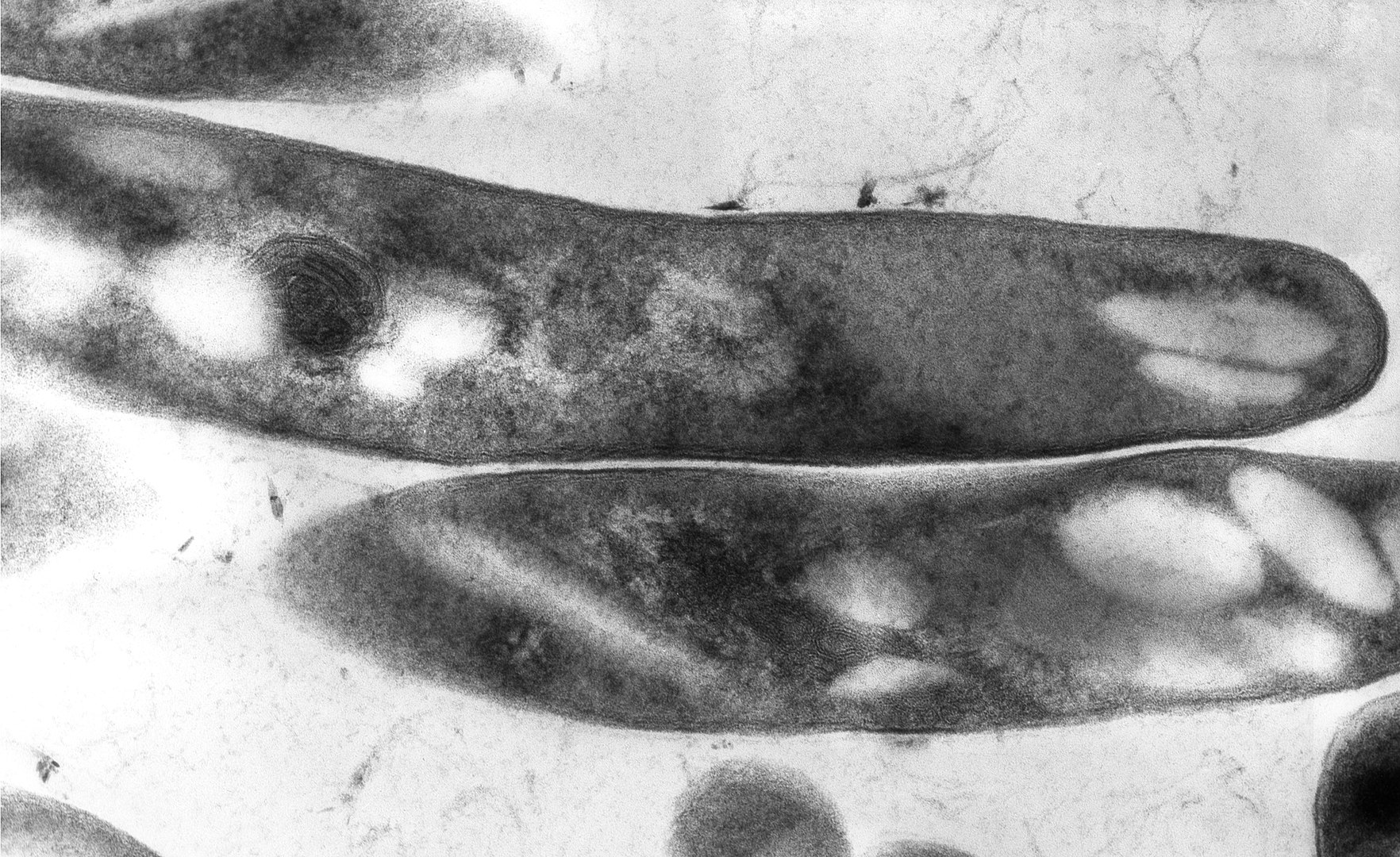
Morfología y propiedades:

  • Bacilos rectos o ligeramente curvados
  • Crecimiento:
    • Bacilos de crecimiento lento
    • La mayoría de las especies se pueden cultivar en EN Erythema nodosum is an immune-mediated panniculitis (inflammation of the subcutaneous fat) caused by a type IV (delayed-type) hypersensitivity reaction. It commonly manifests in young women as tender, erythematous nodules on the shins. Erythema Nodosum sustratos simples usando aminoácidos y glicerol.
    • La mayoría de las especies crecen en EN Erythema nodosum is an immune-mediated panniculitis (inflammation of the subcutaneous fat) caused by a type IV (delayed-type) hypersensitivity reaction. It commonly manifests in young women as tender, erythematous nodules on the shins. Erythema Nodosum agar sangre.
  • Bacilos inmóviles, no formadores de esporas
  • Aerobios obligados (algunos son microaerofílicos)
  • Catalasa positiva
  • Bacilos intracelulares facultativos
  • Tienen una pared celular característica (envoltura) que les confiere varias propiedades únicas:
    • Presencia de una capa cerosa hidrófoba compuesta por ácidos micólicos
    • Unido a una capa de peptidoglicano por un polisacárido arabinogalactano
    • ↓ Permeabilidad a muchos medicamentos y bombas de eflujo
    • Las micobacterias pueden invadir las células huésped sin presentar signos clínicos.

Propiedades de tinción:

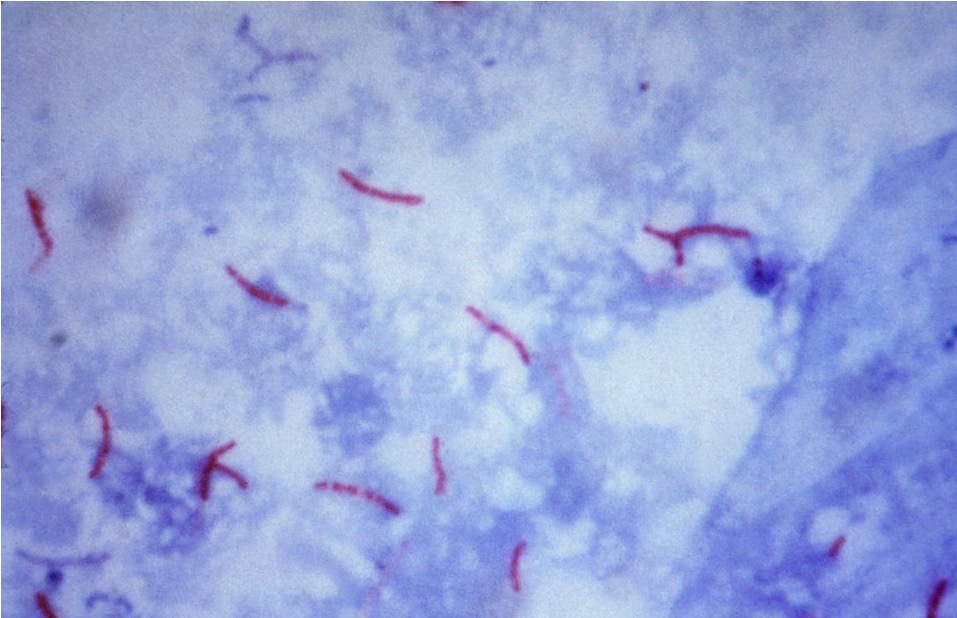
  • Bacilos ácido-alcohol resistentes:
    • Propiedad conferida por el ácido micólico
    • No destiñe con alcohol ácido después de haber sido teñido con colorantes de anilina.
  • Tinción de Gram:
    • Generalmente no puede penetrar la pared celular cerosa del complejo Mycobacterium tuberculosis Mycobacterium tuberculosis Tuberculosis (TB) is an infectious disease caused by Mycobacterium tuberculosis complex bacteria. The bacteria usually attack the lungs but can also damage other parts of the body. Approximately 30% of people around the world are infected with this pathogen, with the majority harboring a latent infection. Tuberculosis spreads through the air when a person with active pulmonary infection coughs or sneezes. Tuberculosis
    • Lo más común es que no se tiñan o tengan resultados variables.

Clasificación

  • Filo: Actinobacteria Actinobacteria Class of bacteria with diverse morphological properties. Strains of actinobacteria show greater than 80% 16s rDNA/rRNA sequence similarity among each other and also the presence of certain signature nucleotides. Mycobacterium
  • Familia: Mycobacteriaceae Mycobacteriaceae A family of gram-positive bacteria found in soil and dairy products and as parasites on animals and man. Several are important pathogens. Mycobacterium
  • Género: Mycobacterium Mycobacterium Mycobacterium is a genus of the family Mycobacteriaceae in the phylum Actinobacteria. Mycobacteria comprise more than 150 species of facultative intracellular bacilli that are mostly obligate aerobes. Mycobacteria are responsible for multiple human infections including serious diseases, such as tuberculosis (M. tuberculosis), leprosy (M. leprae), and M. avium complex infections. Mycobacterium (compuesto por > 150 especies)

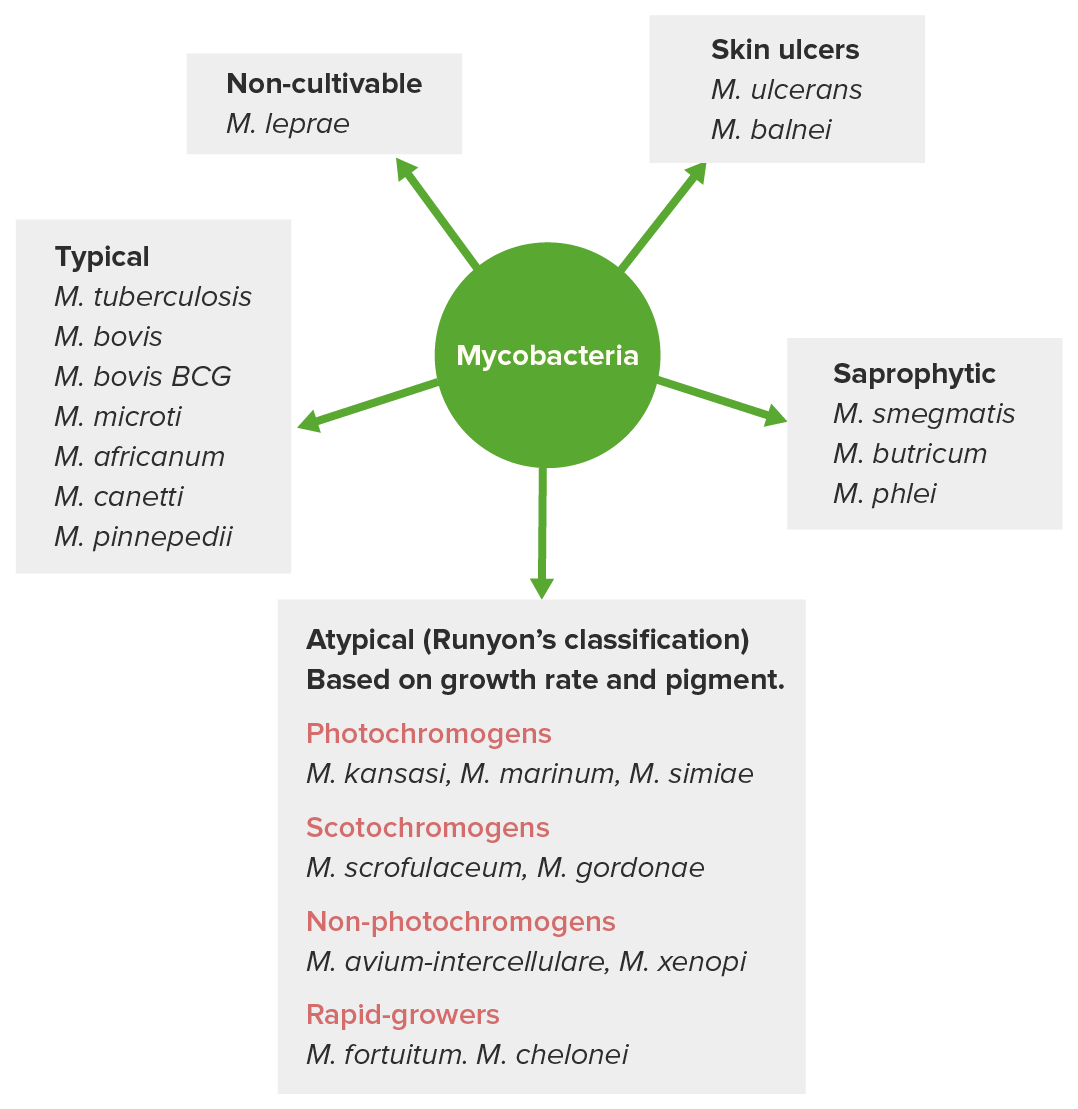
Micobacterias:

  • Micobacterias típicas: especies del complejo Mycobacterium tuberculosis Mycobacterium tuberculosis Tuberculosis (TB) is an infectious disease caused by Mycobacterium tuberculosis complex bacteria. The bacteria usually attack the lungs but can also damage other parts of the body. Approximately 30% of people around the world are infected with this pathogen, with the majority harboring a latent infection. Tuberculosis spreads through the air when a person with active pulmonary infection coughs or sneezes. Tuberculosis:
    • M. tuberculosis Tuberculosis Tuberculosis (TB) is an infectious disease caused by Mycobacterium tuberculosis complex bacteria. The bacteria usually attack the lungs but can also damage other parts of the body. Approximately 30% of people around the world are infected with this pathogen, with the majority harboring a latent infection. Tuberculosis spreads through the air when a person with active pulmonary infection coughs or sneezes. Tuberculosis (más importante)
    • M. bovis
    • M. africanum
    • M.microti
    • M. canetti
  • Micobacterias no tuberculosas atípicas:
    • Clasificadas según el sistema Runyon
    • La clasificación se basa en EN Erythema nodosum is an immune-mediated panniculitis (inflammation of the subcutaneous fat) caused by a type IV (delayed-type) hypersensitivity reaction. It commonly manifests in young women as tender, erythematous nodules on the shins. Erythema Nodosum la tasa de crecimiento y la producción de pigmento.
    • Los LOS Neisseria grupos Ⅰ–Ⅲ son de crecimiento lento (> 7 días) y el grupo Ⅳ se considera de crecimiento rápido (< 7 días):
      • Grupo I: Los LOS Neisseria fotocromógenos producen pigmento en EN Erythema nodosum is an immune-mediated panniculitis (inflammation of the subcutaneous fat) caused by a type IV (delayed-type) hypersensitivity reaction. It commonly manifests in young women as tender, erythematous nodules on the shins. Erythema Nodosum presencia de luz.
      • Grupo II: Los LOS Neisseria escotocromógenos producen pigmento en EN Erythema nodosum is an immune-mediated panniculitis (inflammation of the subcutaneous fat) caused by a type IV (delayed-type) hypersensitivity reaction. It commonly manifests in young women as tender, erythematous nodules on the shins. Erythema Nodosum ausencia de luz.
      • Grupo III: Los LOS Neisseria no fotocromógenos carecen de pigmento (incluye el complejo de bacterias Mycobacterium avium Mycobacterium avium A bacterium causing tuberculosis in domestic fowl and other birds. In pigs, it may cause localized and sometimes disseminated disease. The organism occurs occasionally in sheep and cattle. It should be distinguished from the m. avium complex, which infects primarily humans. Mycobacterium).
      • Grupo IV: producen colonias maduras en EN Erythema nodosum is an immune-mediated panniculitis (inflammation of the subcutaneous fat) caused by a type IV (delayed-type) hypersensitivity reaction. It commonly manifests in young women as tender, erythematous nodules on the shins. Erythema Nodosum medios de cultivo en EN Erythema nodosum is an immune-mediated panniculitis (inflammation of the subcutaneous fat) caused by a type IV (delayed-type) hypersensitivity reaction. It commonly manifests in young women as tender, erythematous nodules on the shins. Erythema Nodosum < 7 días
  • No cultivable: complejo M. leprae (M. leprae y M. lepromatosis)
  • Saprófitos
  • Tipos de úlcera cutánea
Diagrama de clasificación de micobacterias

Clasificación de las micobacterias

Imagen por Lecturio. Licencia: CC BY-NC-SA 4.0
Especies patógenas más importantes:

  • El complejo Mycobacterium tuberculosis Mycobacterium tuberculosis Tuberculosis (TB) is an infectious disease caused by Mycobacterium tuberculosis complex bacteria. The bacteria usually attack the lungs but can also damage other parts of the body. Approximately 30% of people around the world are infected with this pathogen, with the majority harboring a latent infection. Tuberculosis spreads through the air when a person with active pulmonary infection coughs or sneezes. Tuberculosis causa la tuberculosis Tuberculosis Tuberculosis (TB) is an infectious disease caused by Mycobacterium tuberculosis complex bacteria. The bacteria usually attack the lungs but can also damage other parts of the body. Approximately 30% of people around the world are infected with this pathogen, with the majority harboring a latent infection. Tuberculosis spreads through the air when a person with active pulmonary infection coughs or sneezes. Tuberculosis ( TB TB Tuberculosis (TB) is an infectious disease caused by Mycobacterium tuberculosis complex bacteria. The bacteria usually attack the lungs but can also damage other parts of the body. Approximately 30% of people around the world are infected with this pathogen, with the majority harboring a latent infection. Tuberculosis spreads through the air when a person with active pulmonary infection coughs or sneezes. Tuberculosis).
  • El complejo M. leprae causa la lepra.
  • M. avium y M. intracellulare (conocidos en EN Erythema nodosum is an immune-mediated panniculitis (inflammation of the subcutaneous fat) caused by a type IV (delayed-type) hypersensitivity reaction. It commonly manifests in young women as tender, erythematous nodules on the shins. Erythema Nodosum conjunto como complejo M. avium (MAC)) causan:
    • Infecciones pulmonares similares a la TB TB Tuberculosis (TB) is an infectious disease caused by Mycobacterium tuberculosis complex bacteria. The bacteria usually attack the lungs but can also damage other parts of the body. Approximately 30% of people around the world are infected with this pathogen, with the majority harboring a latent infection. Tuberculosis spreads through the air when a person with active pulmonary infection coughs or sneezes. Tuberculosis
    • Infecciones diseminadas en EN Erythema nodosum is an immune-mediated panniculitis (inflammation of the subcutaneous fat) caused by a type IV (delayed-type) hypersensitivity reaction. It commonly manifests in young women as tender, erythematous nodules on the shins. Erythema Nodosum individuos inmunocomprometidos

Related videos

Patogénesis

Reservorios

  • M. tuberculosis Tuberculosis Tuberculosis (TB) is an infectious disease caused by Mycobacterium tuberculosis complex bacteria. The bacteria usually attack the lungs but can also damage other parts of the body. Approximately 30% of people around the world are infected with this pathogen, with the majority harboring a latent infection. Tuberculosis spreads through the air when a person with active pulmonary infection coughs or sneezes. Tuberculosis: los LOS Neisseria humanos son el único reservorio natural.
  • Reservorio natural de M. leprae: armadillos
  • M. avium y M. intracellulare se encuentran en EN Erythema nodosum is an immune-mediated panniculitis (inflammation of the subcutaneous fat) caused by a type IV (delayed-type) hypersensitivity reaction. It commonly manifests in young women as tender, erythematous nodules on the shins. Erythema Nodosum el agua y el suelo.

Transmisión

  • Transmisión de M. tuberculosis Tuberculosis Tuberculosis (TB) is an infectious disease caused by Mycobacterium tuberculosis complex bacteria. The bacteria usually attack the lungs but can also damage other parts of the body. Approximately 30% of people around the world are infected with this pathogen, with the majority harboring a latent infection. Tuberculosis spreads through the air when a person with active pulmonary infection coughs or sneezes. Tuberculosis: gotículas respiratorias de pacientes con enfermedad activa
  • Transmisión de M. leprae:
    • Contacto directo con lesiones
    • Inhalación de gotas infecciosas
  • Transmisión del complejo M. avium:
    • Inhalación hacia tracto respiratorio
    • Ingestión hacia el tracto gastrointestinal

Virulencia

  • Envoltura celular:
    • Constituyente mayoritario: ácido micólico
    • El ácido micólico se une a los LOS Neisseria glicolípidos.
    • Los LOS Neisseria glicolípidos son responsables de la “formación del cordón” en EN Erythema nodosum is an immune-mediated panniculitis (inflammation of the subcutaneous fat) caused by a type IV (delayed-type) hypersensitivity reaction. It commonly manifests in young women as tender, erythematous nodules on the shins. Erythema Nodosum el microscopio (corresponde macroscópicamente a la formación de granulomas Granulomas A relatively small nodular inflammatory lesion containing grouped mononuclear phagocytes, caused by infectious and noninfectious agents. Sarcoidosis).
  • Catalasa-peroxidasa: resiste la respuesta oxidativa de la célula huésped
  • Sulfatidas y dimicolato de trehalosa: desencadenan la toxicidad
  • Lipoarabinomanano: induce citoquinas

Factores de riesgo del huésped

  • Ancianos
  • Niños
  • Pacientes inmunocomprometidos
  • Pacientes internados
  • Uso de drogas intravenosas
  • VIH u otras inmunodeficiencias
  • Viajar a regiones de alto riesgo

Fisiopatología general de las micobacterias

  • En EN Erythema nodosum is an immune-mediated panniculitis (inflammation of the subcutaneous fat) caused by a type IV (delayed-type) hypersensitivity reaction. It commonly manifests in young women as tender, erythematous nodules on the shins. Erythema Nodosum humanos, las infecciones por micobacterias pueden afectar múltiples sitios anatómicos.
  • Las bacterias entran a través de la piel y las barreras mucosas.
  • Las infecciones pulmonares y cutáneas son las más comunes.
  • Las infecciones por micobacterias no tuberculosas ocurren con mayor frecuencia en EN Erythema nodosum is an immune-mediated panniculitis (inflammation of the subcutaneous fat) caused by a type IV (delayed-type) hypersensitivity reaction. It commonly manifests in young women as tender, erythematous nodules on the shins. Erythema Nodosum huéspedes inmunocomprometidos como infecciones oportunistas.
  • Las micobacterias pueden colonizar a sus huéspedes y causar infecciones latentes sin signos clínicos evidentes.

Complejo M. tuberculosis

Epidemiología

  • Las bacterias del complejo Mycobacterium tuberculosis Mycobacterium tuberculosis Tuberculosis (TB) is an infectious disease caused by Mycobacterium tuberculosis complex bacteria. The bacteria usually attack the lungs but can also damage other parts of the body. Approximately 30% of people around the world are infected with this pathogen, with the majority harboring a latent infection. Tuberculosis spreads through the air when a person with active pulmonary infection coughs or sneezes. Tuberculosis causan la TB TB Tuberculosis (TB) is an infectious disease caused by Mycobacterium tuberculosis complex bacteria. The bacteria usually attack the lungs but can also damage other parts of the body. Approximately 30% of people around the world are infected with this pathogen, with the majority harboring a latent infection. Tuberculosis spreads through the air when a person with active pulmonary infection coughs or sneezes. Tuberculosis.
  • La TB TB Tuberculosis (TB) is an infectious disease caused by Mycobacterium tuberculosis complex bacteria. The bacteria usually attack the lungs but can also damage other parts of the body. Approximately 30% of people around the world are infected with this pathogen, with the majority harboring a latent infection. Tuberculosis spreads through the air when a person with active pulmonary infection coughs or sneezes. Tuberculosis es una enfermedad transmitida por el aire que afecta los LOS Neisseria pulmones y, a veces, otros órganos.
  • Causa 1,4 millones de muertes al AL Amyloidosis año a nivel mundial
  • El 30% de la población mundial está infectada.
  • El 10% de las personas infectadas desarrollarán una enfermedad activa.
  • Principal causa de muerte de pacientes con VIH

Fisiopatología

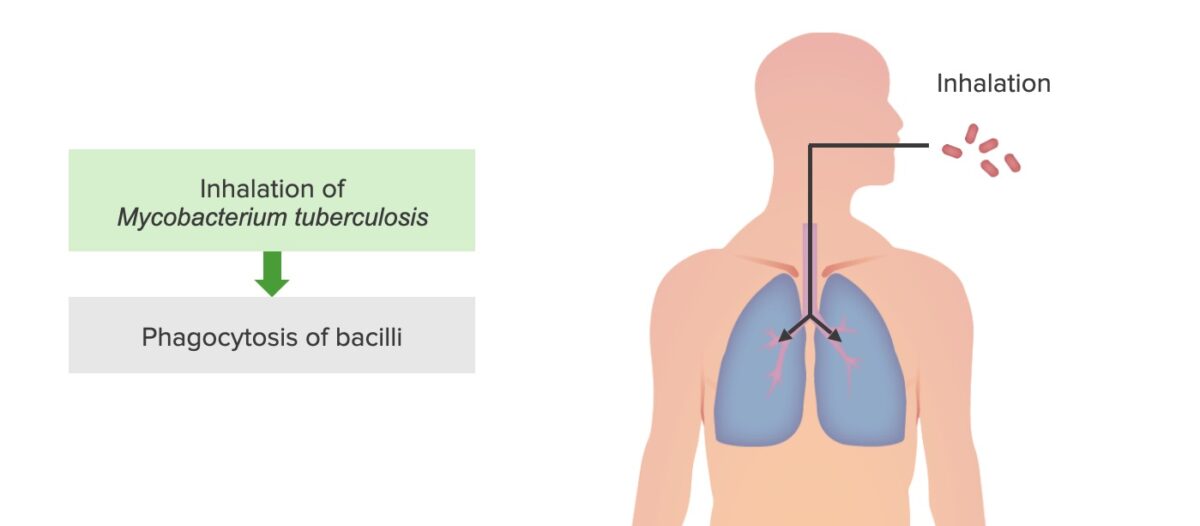
  • El 1er paso es la inhalación de gotículas en EN Erythema nodosum is an immune-mediated panniculitis (inflammation of the subcutaneous fat) caused by a type IV (delayed-type) hypersensitivity reaction. It commonly manifests in young women as tender, erythematous nodules on the shins. Erythema Nodosum aerosol.
  • La deposición en EN Erythema nodosum is an immune-mediated panniculitis (inflammation of the subcutaneous fat) caused by a type IV (delayed-type) hypersensitivity reaction. It commonly manifests in young women as tender, erythematous nodules on the shins. Erythema Nodosum los LOS Neisseria pulmones conduce a 3 resultados posibles:
    • Eliminación de las bacterias
    • Enfermedad primaria activa:
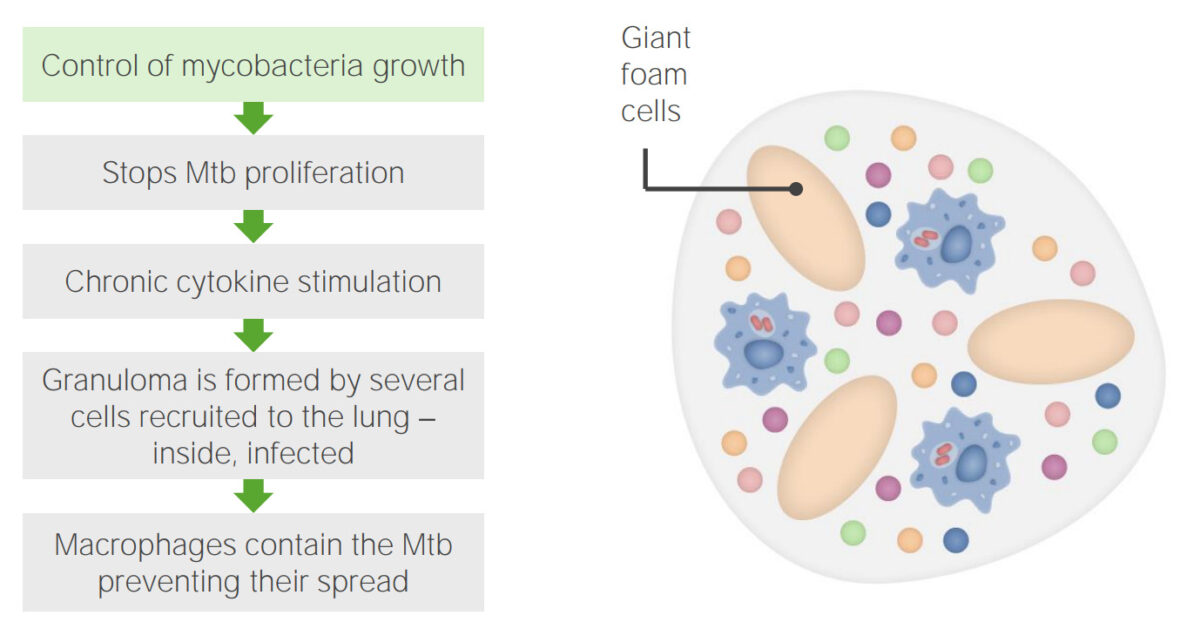
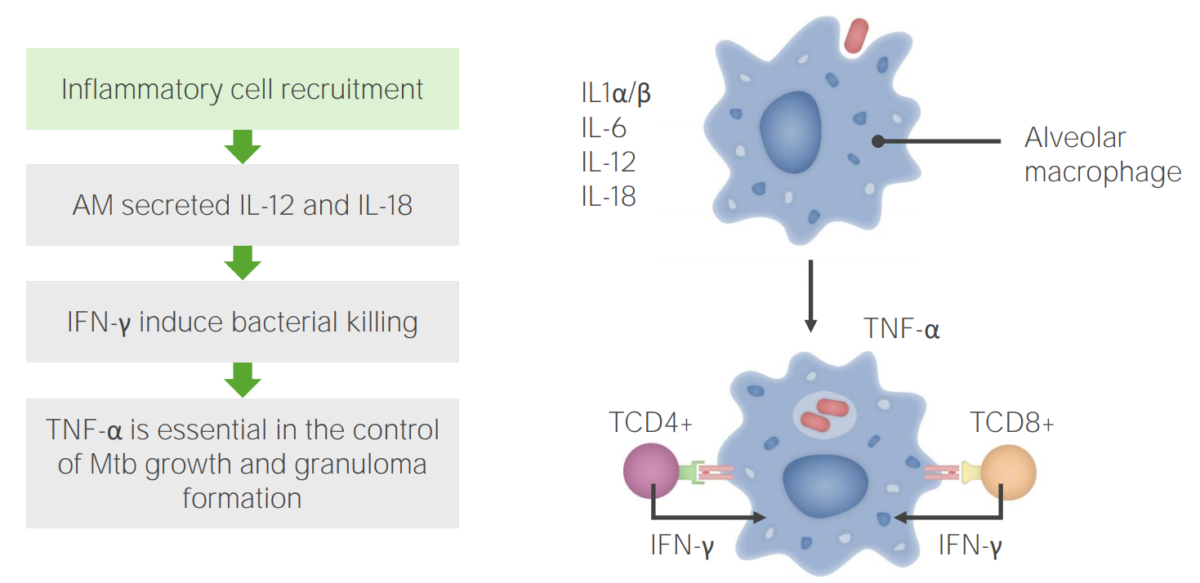
      • Proliferación de bacterias dentro de los LOS Neisseria macrófagos alveolares
      • Las citoquinas producidas por los LOS Neisseria macrófagos (IL-12 e IL-18) atraen a otras células fagocíticas.
      • Se forma un tubérculo (estructura granulomatosa) (promovido por el factor de necrosis Necrosis The death of cells in an organ or tissue due to disease, injury or failure of the blood supply. Ischemic Cell Damage tumoral alfa (TNF-ɑ, por sus siglas en EN Erythema nodosum is an immune-mediated panniculitis (inflammation of the subcutaneous fat) caused by a type IV (delayed-type) hypersensitivity reaction. It commonly manifests in young women as tender, erythematous nodules on the shins. Erythema Nodosum inglés))
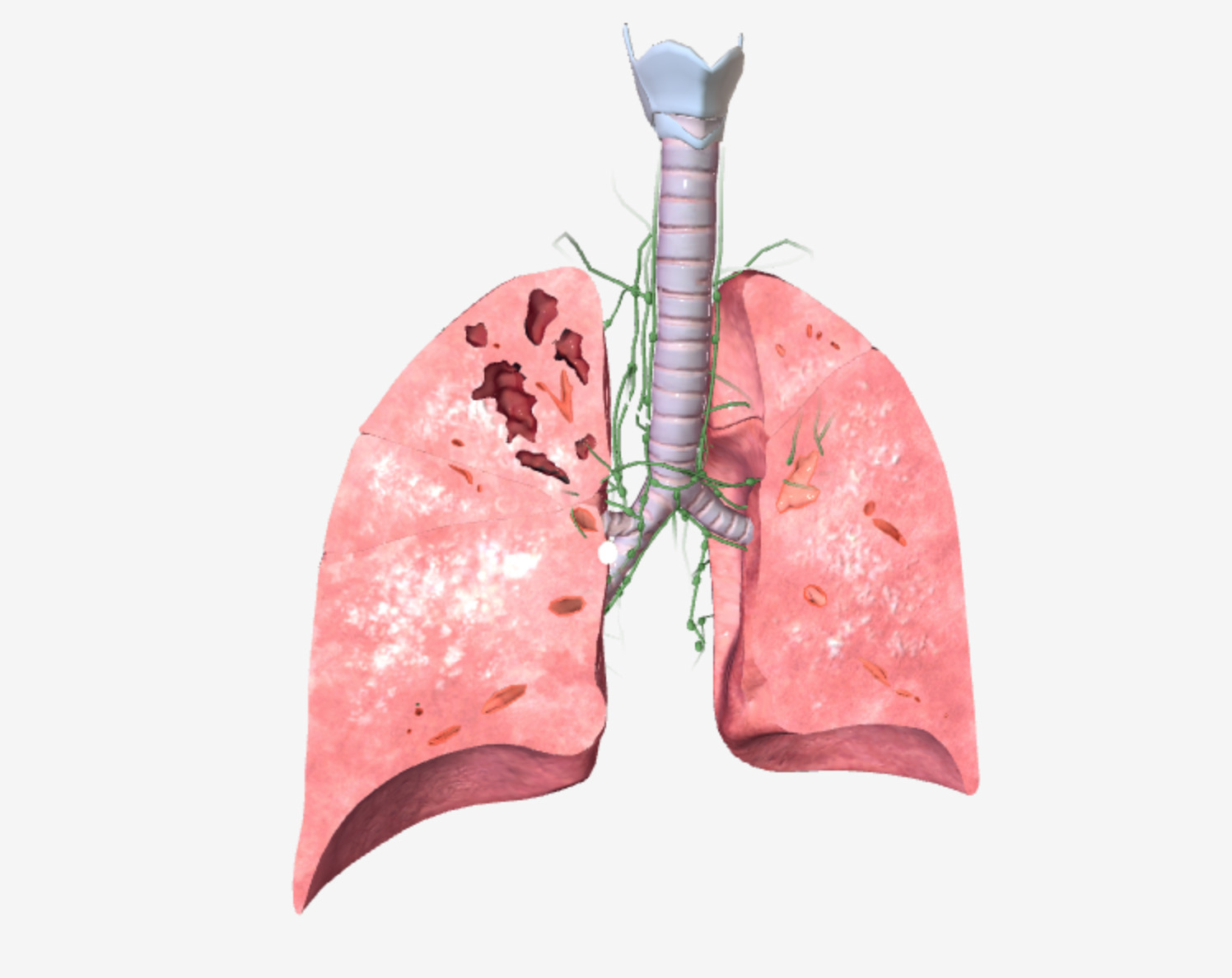
      • El tubérculo se expande hacia el parénquima pulmonar → complejo de Ghon
      • Luego, las bacterias pueden propagarse a los LOS Neisseria ganglios linfáticos de drenaje → linfadenopatía
      • Complejo de Ghon + linfadenopatía/calcificación → Complejo de Ranke
      • Si las células inmunitarias no controlan la propagación, puede producirse bacteriemia con afectación de otros órganos → TB TB Tuberculosis (TB) is an infectious disease caused by Mycobacterium tuberculosis complex bacteria. The bacteria usually attack the lungs but can also damage other parts of the body. Approximately 30% of people around the world are infected with this pathogen, with the majority harboring a latent infection. Tuberculosis spreads through the air when a person with active pulmonary infection coughs or sneezes. Tuberculosis miliar
      • Cuando las bacterias erosionan las vías respiratorias ( granulomas Granulomas A relatively small nodular inflammatory lesion containing grouped mononuclear phagocytes, caused by infectious and noninfectious agents. Sarcoidosis caseificantes), el paciente se vuelve contagioso.
      • La infección puede progresar a una etapa crónica con episodios de curación y posterior cicatrización de las lesiones.
      • La erradicación espontánea es rara.
  • Infección latente (enfermedad clínica (secundaria) puede ocurrir muchos años después):
    • Riesgo de por vida de reactivación: 5%–10%
    • La inmunosupresión es un factor de reactivación.

Presentación clínica

  • Las manifestaciones pulmonares asociadas con síntomas sistémicos son más comunes en EN Erythema nodosum is an immune-mediated panniculitis (inflammation of the subcutaneous fat) caused by a type IV (delayed-type) hypersensitivity reaction. It commonly manifests in young women as tender, erythematous nodules on the shins. Erythema Nodosum la TB TB Tuberculosis (TB) is an infectious disease caused by Mycobacterium tuberculosis complex bacteria. The bacteria usually attack the lungs but can also damage other parts of the body. Approximately 30% of people around the world are infected with this pathogen, with the majority harboring a latent infection. Tuberculosis spreads through the air when a person with active pulmonary infection coughs or sneezes. Tuberculosis primaria y secundaria.
  • La TB TB Tuberculosis (TB) is an infectious disease caused by Mycobacterium tuberculosis complex bacteria. The bacteria usually attack the lungs but can also damage other parts of the body. Approximately 30% of people around the world are infected with this pathogen, with the majority harboring a latent infection. Tuberculosis spreads through the air when a person with active pulmonary infection coughs or sneezes. Tuberculosis miliar (diseminada) ocurre en EN Erythema nodosum is an immune-mediated panniculitis (inflammation of the subcutaneous fat) caused by a type IV (delayed-type) hypersensitivity reaction. It commonly manifests in young women as tender, erythematous nodules on the shins. Erythema Nodosum 15%–20% de los LOS Neisseria casos (generalmente en EN Erythema nodosum is an immune-mediated panniculitis (inflammation of the subcutaneous fat) caused by a type IV (delayed-type) hypersensitivity reaction. It commonly manifests in young women as tender, erythematous nodules on the shins. Erythema Nodosum niños o personas inmunocomprometidas).
Tabla: Manifestaciones de la infección por el complejo Mycobacterium tuberculosis Mycobacterium tuberculosis Tuberculosis (TB) is an infectious disease caused by Mycobacterium tuberculosis complex bacteria. The bacteria usually attack the lungs but can also damage other parts of the body. Approximately 30% of people around the world are infected with this pathogen, with the majority harboring a latent infection. Tuberculosis spreads through the air when a person with active pulmonary infection coughs or sneezes. Tuberculosis
TB TB Tuberculosis (TB) is an infectious disease caused by Mycobacterium tuberculosis complex bacteria. The bacteria usually attack the lungs but can also damage other parts of the body. Approximately 30% of people around the world are infected with this pathogen, with the majority harboring a latent infection. Tuberculosis spreads through the air when a person with active pulmonary infection coughs or sneezes. Tuberculosis primaria TB TB Tuberculosis (TB) is an infectious disease caused by Mycobacterium tuberculosis complex bacteria. The bacteria usually attack the lungs but can also damage other parts of the body. Approximately 30% of people around the world are infected with this pathogen, with the majority harboring a latent infection. Tuberculosis spreads through the air when a person with active pulmonary infection coughs or sneezes. Tuberculosis secundaria TB TB Tuberculosis (TB) is an infectious disease caused by Mycobacterium tuberculosis complex bacteria. The bacteria usually attack the lungs but can also damage other parts of the body. Approximately 30% of people around the world are infected with this pathogen, with the majority harboring a latent infection. Tuberculosis spreads through the air when a person with active pulmonary infection coughs or sneezes. Tuberculosis extrapulmonar (miliar)
Presentación Dentro de los LOS Neisseria 2 años de la infección, en EN Erythema nodosum is an immune-mediated panniculitis (inflammation of the subcutaneous fat) caused by a type IV (delayed-type) hypersensitivity reaction. It commonly manifests in young women as tender, erythematous nodules on the shins. Erythema Nodosum 5%–10% de los LOS Neisseria casos Reactivación de la infección en EN Erythema nodosum is an immune-mediated panniculitis (inflammation of the subcutaneous fat) caused by a type IV (delayed-type) hypersensitivity reaction. It commonly manifests in young women as tender, erythematous nodules on the shins. Erythema Nodosum pacientes inmunocomprometidos Individuos inmunocomprometidos
Localización
  • Lóbulos medios e inferiores
  • Necrosis Necrosis The death of cells in an organ or tissue due to disease, injury or failure of the blood supply. Ischemic Cell Damage subpleural
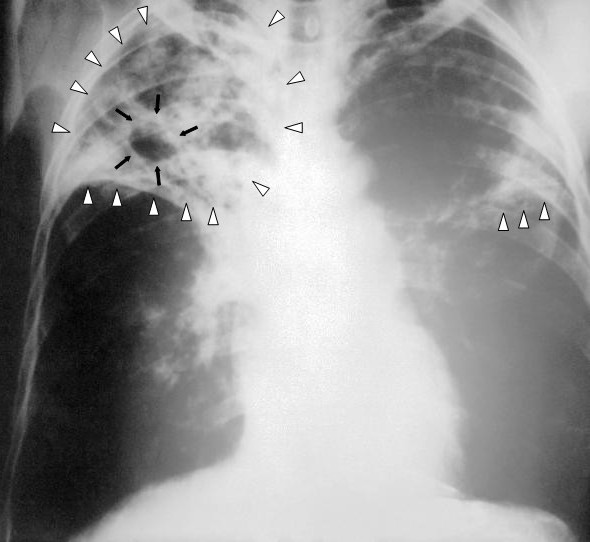
    • Lesiones cavitarias en EN Erythema nodosum is an immune-mediated panniculitis (inflammation of the subcutaneous fat) caused by a type IV (delayed-type) hypersensitivity reaction. It commonly manifests in young women as tender, erythematous nodules on the shins. Erythema Nodosum lóbulos superiores de pulmón
    • Puede ocurrir diseminación miliar en EN Erythema nodosum is an immune-mediated panniculitis (inflammation of the subcutaneous fat) caused by a type IV (delayed-type) hypersensitivity reaction. It commonly manifests in young women as tender, erythematous nodules on the shins. Erythema Nodosum los LOS Neisseria pulmones.
      • Ganglio linfático
      • Pleura Pleura The pleura is a serous membrane that lines the walls of the thoracic cavity and the surface of the lungs. This structure of mesodermal origin covers both lungs, the mediastinum, the thoracic surface of the diaphragm, and the inner part of the thoracic cage. The pleura is divided into a visceral pleura and parietal pleura. Pleura: Anatomy
      • Tracto genitourinario
      • SNC
      • Riñón
        Síntomas
        • Malestar
        • Pérdida de peso
        • Tos TOS Thoracic outlet syndrome (TOS) is a broad term used for a spectrum of syndromes related to the general region of the thoracic outlet, which involves the compression or irritation of elements of the brachial plexus, subclavian artery, or subclavian vein. Thoracic Outlet Syndrome
        • Sudoración nocturna
        • Hemoptisis
          Recurrencia de síntomas
          • Signos no específicos
          • Vísceras agrandadas
          • Lesiones cutáneas
          • Disfunción multiorgánica

            SNC: sistema nervioso central
            TB: tuberculosis

            Identificación

            Esputo:

            • 3 muestras, al AL Amyloidosis menos 1 en EN Erythema nodosum is an immune-mediated panniculitis (inflammation of the subcutaneous fat) caused by a type IV (delayed-type) hypersensitivity reaction. It commonly manifests in young women as tender, erythematous nodules on the shins. Erythema Nodosum la madrugada
            • Frotis para bacilos ácido-alcohol resistentes
            • Cultivo de micobacterias
            • Prueba de amplificación de ácido nuclear

            Cultivo de micobacterias en EN Erythema nodosum is an immune-mediated panniculitis (inflammation of the subcutaneous fat) caused by a type IV (delayed-type) hypersensitivity reaction. It commonly manifests in young women as tender, erythematous nodules on the shins. Erythema Nodosum sangre u orina: en EN Erythema nodosum is an immune-mediated panniculitis (inflammation of the subcutaneous fat) caused by a type IV (delayed-type) hypersensitivity reaction. It commonly manifests in young women as tender, erythematous nodules on the shins. Erythema Nodosum pacientes con VIH o inmunocomprometidos

            Prueba cutánea de la tuberculina (PPD (derivado de proteína purificada) o prueba de Mantoux):

            • Inyección intradérmica del antígeno tuberculina
            • Puede detectar infección activa o latente
            • Se mide el área de induración después de 48–72 horas; positivo si:
              • > 5 mm en EN Erythema nodosum is an immune-mediated panniculitis (inflammation of the subcutaneous fat) caused by a type IV (delayed-type) hypersensitivity reaction. It commonly manifests in young women as tender, erythematous nodules on the shins. Erythema Nodosum pacientes con VIH o inmunosuprimidos, o contacto reciente con un individuo con TB TB Tuberculosis (TB) is an infectious disease caused by Mycobacterium tuberculosis complex bacteria. The bacteria usually attack the lungs but can also damage other parts of the body. Approximately 30% of people around the world are infected with this pathogen, with the majority harboring a latent infection. Tuberculosis spreads through the air when a person with active pulmonary infection coughs or sneezes. Tuberculosis
              • > 10 mm en EN Erythema nodosum is an immune-mediated panniculitis (inflammation of the subcutaneous fat) caused by a type IV (delayed-type) hypersensitivity reaction. It commonly manifests in young women as tender, erythematous nodules on the shins. Erythema Nodosum pacientes de países de alto riesgo, usuarios de drogas intravenosas, personal médico y de laboratorio
              • > 15 mm en EN Erythema nodosum is an immune-mediated panniculitis (inflammation of the subcutaneous fat) caused by a type IV (delayed-type) hypersensitivity reaction. It commonly manifests in young women as tender, erythematous nodules on the shins. Erythema Nodosum pacientes sin factores de riesgo conocidos de TB TB Tuberculosis (TB) is an infectious disease caused by Mycobacterium tuberculosis complex bacteria. The bacteria usually attack the lungs but can also damage other parts of the body. Approximately 30% of people around the world are infected with this pathogen, with the majority harboring a latent infection. Tuberculosis spreads through the air when a person with active pulmonary infection coughs or sneezes. Tuberculosis

            Ensayo de liberación de interferón-γ: sin distinción entre TB TB Tuberculosis (TB) is an infectious disease caused by Mycobacterium tuberculosis complex bacteria. The bacteria usually attack the lungs but can also damage other parts of the body. Approximately 30% of people around the world are infected with this pathogen, with the majority harboring a latent infection. Tuberculosis spreads through the air when a person with active pulmonary infection coughs or sneezes. Tuberculosis activa e inactiva
            Complejo M. leprae

            Epidemiología

            • Las bacterias del complejo M. leprae causan la lepra.
            • La prevalencia es de < 1 en EN Erythema nodosum is an immune-mediated panniculitis (inflammation of the subcutaneous fat) caused by a type IV (delayed-type) hypersensitivity reaction. It commonly manifests in young women as tender, erythematous nodules on the shins. Erythema Nodosum 10 000.
            • Mayor incidencia en EN Erythema nodosum is an immune-mediated panniculitis (inflammation of the subcutaneous fat) caused by a type IV (delayed-type) hypersensitivity reaction. It commonly manifests in young women as tender, erythematous nodules on the shins. Erythema Nodosum India, Brasil, Indonesia, Bangladesh y Nigeria
            • Factores de riesgo para adquirirla:
              • Contacto cercano con pacientes con lepra.
              • Exposición a armadillos (reservorio natural de M. leprae)
              • Ancianos
              • Factores genéticos
              • Inmunosupresión

            Fisiopatología

            • Las bacterias se inhalan o se transmiten a través del contacto directo con la piel.
            • Las bacterias son captadas por los LOS Neisseria macrófagos alveolares y diseminadas por la sangre.
            • M. leprae se propaga a los LOS Neisseria nervios y la piel, donde prolifera (especialmente en EN Erythema nodosum is an immune-mediated panniculitis (inflammation of the subcutaneous fat) caused by a type IV (delayed-type) hypersensitivity reaction. It commonly manifests in young women as tender, erythematous nodules on the shins. Erythema Nodosum las células de Schwann).
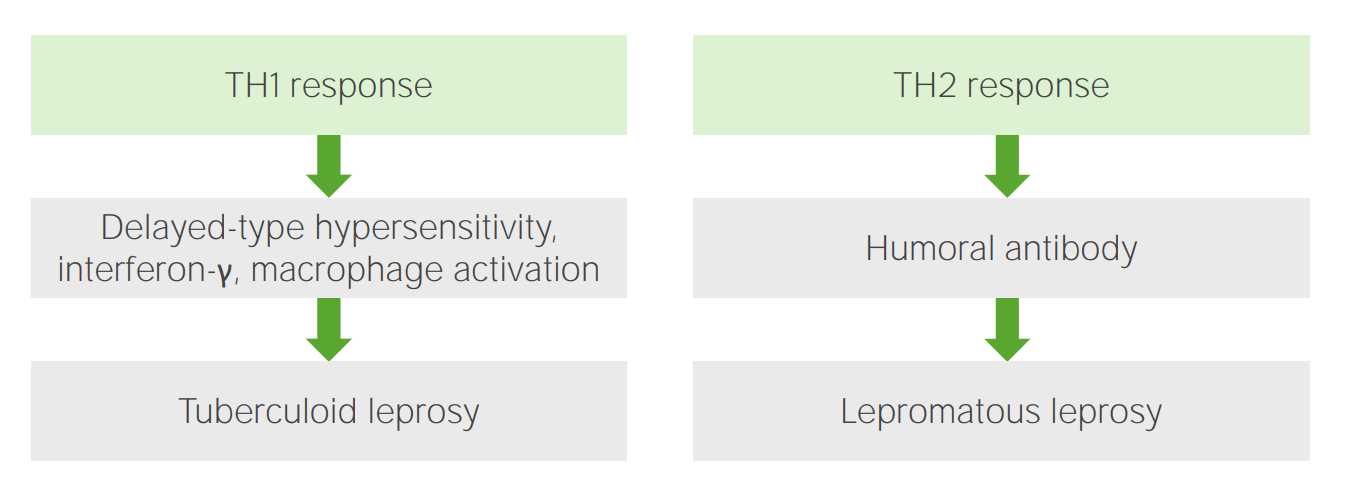
            • La lepra puede manifestarse de diferentes formas y refleja el espectro de la respuesta inmunitaria del huésped.
            • Clasificación de la lepra de Ridley-Jopling:
              • Tuberculoide
              • Tuberculoide limítrofe
              • Límite medio
              • Lepromatoso limítrofe
              • Lepromatoso
              • Indeterminado
            • Las formas tuberculoide y lepromatosa se encuentran en EN Erythema nodosum is an immune-mediated panniculitis (inflammation of the subcutaneous fat) caused by a type IV (delayed-type) hypersensitivity reaction. It commonly manifests in young women as tender, erythematous nodules on the shins. Erythema Nodosum los LOS Neisseria 2 extremos del espectro:
              • Lepra tuberculoide:
                • Buena respuesta inmunitaria celular (respuesta TH1 Th1 A subset of helper-inducer T-lymphocytes which synthesize and secrete interleukin-2; interferon-gamma; and interleukin-12. Due to their ability to kill antigen-presenting cells and their lymphokine-mediated effector activity, th1 cells are associated with vigorous delayed-type hypersensitivity reactions. T cells: Types and Functions)
                • Hipersensibilidad retardada con interferón-γ y activación de macrófagos
                • Afecta la piel (localizada) y los LOS Neisseria nervios periféricos
              • Lepra lepromatosa:
                • Respuesta inmunitaria celular mínima
                • Respuesta humoral (anticuerpos) (activada por células TH2 Th2 A subset of helper-inducer T-lymphocytes which synthesize and secrete the interleukins il-4; il-5; il-6; and il-10. These cytokines influence b-cell development and antibody production as well as augmenting humoral responses. T cells: Types and Functions)
                • Afectación extensa de la piel
                • La afectación nerviosa tiende a ser simétrica
            Respuesta inmune a la lepra

            Respuesta inmunitaria a la lepra

            Imagen por Lecturio. Licencia: CC BY-NC-SA 4.0

            Presentación clínica

            • Parches cutáneos hipopigmentados o rojizos asociados con pérdida de sensibilidad
            • Parestesia
            • Heridas indoloras en EN Erythema nodosum is an immune-mediated panniculitis (inflammation of the subcutaneous fat) caused by a type IV (delayed-type) hypersensitivity reaction. It commonly manifests in young women as tender, erythematous nodules on the shins. Erythema Nodosum las extremidades
            • Bultos faciales o en EN Erythema nodosum is an immune-mediated panniculitis (inflammation of the subcutaneous fat) caused by a type IV (delayed-type) hypersensitivity reaction. It commonly manifests in young women as tender, erythematous nodules on the shins. Erythema Nodosum las orejas
            • Nervios periféricos agrandados y sensibles
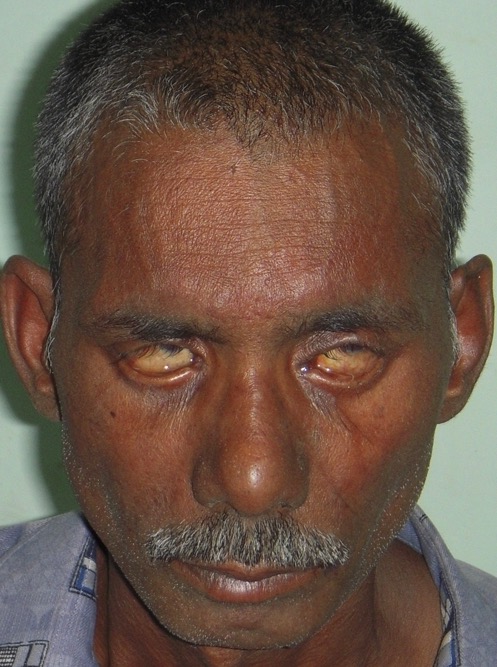
            • Lesión oftálmica (abrasiones/ulceraciones corneales, lagoftalmos)
            • Los LOS Neisseria hallazgos tardíos pueden incluir parálisis facial, nariz colapsada, dedos en EN Erythema nodosum is an immune-mediated panniculitis (inflammation of the subcutaneous fat) caused by a type IV (delayed-type) hypersensitivity reaction. It commonly manifests in young women as tender, erythematous nodules on the shins. Erythema Nodosum forma de garras, pie caído, falta de pestañas/cejas.
            • Pueden ocurrir reacciones inmunológicas (complicaciones inflamatorias sistémicas).
            Tabla: Espectro clínico de la lepra
            Tuberculoide Lepromatosa
            Presentación Individuos inmunocompetentes Individuos inmunodeprimidos
            Localización Piel y nervios Piel y nervios
            Síntomas
            • Daño temprano a los LOS Neisseria nervios periféricos
            • Pérdida sensorial completa
            • Agrandamiento visible del nervio
            • Autoamputación de dígitos
            • Erupción: algunas placas atróficas hipopigmentadas con centros planos y bordes delimitados elevados
              • Daño nervioso difuso tardío, pérdida sensorial irregular
              • Sin agrandamiento del nervio
              • Erupción: muchas máculas, pápulas o nódulos con daño al AL Amyloidosis cartílago de la nariz, hueso, testículos; facies “leonina”

                Identificación

                El organismo se identifica mediante biopsia de piel:
                • Examen histopatológico
                • Reacción en EN Erythema nodosum is an immune-mediated panniculitis (inflammation of the subcutaneous fat) caused by a type IV (delayed-type) hypersensitivity reaction. It commonly manifests in young women as tender, erythematous nodules on the shins. Erythema Nodosum cadena de la polimerasa ( PCR PCR Polymerase chain reaction (PCR) is a technique that amplifies DNA fragments exponentially for analysis. The process is highly specific, allowing for the targeting of specific genomic sequences, even with minuscule sample amounts. The PCR cycles multiple times through 3 phases: denaturation of the template DNA, annealing of a specific primer to the individual DNA strands, and synthesis/elongation of new DNA molecules. Polymerase Chain Reaction (PCR), por sus siglas en EN Erythema nodosum is an immune-mediated panniculitis (inflammation of the subcutaneous fat) caused by a type IV (delayed-type) hypersensitivity reaction. It commonly manifests in young women as tender, erythematous nodules on the shins. Erythema Nodosum inglés)

                Related videos

                Complejo M. avium

                Epidemiología

                • Más comúnmente adquirido del entorno (fuentes de agua)
                • Sin transmisión documentada de persona a persona
                • Afecta comúnmente a personas con enfermedad pulmonar preexistente y pacientes inmunocomprometidos (SIDA)

                Fisiopatología

                • Generalmente se presenta como infección pulmonar en EN Erythema nodosum is an immune-mediated panniculitis (inflammation of the subcutaneous fat) caused by a type IV (delayed-type) hypersensitivity reaction. It commonly manifests in young women as tender, erythematous nodules on the shins. Erythema Nodosum individuos inmunocompetentes
                • Puede presentarse como enfermedad diseminada o linfadenitis localizada en EN Erythema nodosum is an immune-mediated panniculitis (inflammation of the subcutaneous fat) caused by a type IV (delayed-type) hypersensitivity reaction. It commonly manifests in young women as tender, erythematous nodules on the shins. Erythema Nodosum pacientes con SIDA:
                  • El riesgo aumenta a medida que el recuento de CD4 cae por debajo de 50
                  • La infección por el complejo M. avium es una de las condiciones definitorias del SIDA.
                  • Las bacterias del complejo M. avium ingresan a través de la mucosa gastrointestinal y son fagocitadas por macrófagos en EN Erythema nodosum is an immune-mediated panniculitis (inflammation of the subcutaneous fat) caused by a type IV (delayed-type) hypersensitivity reaction. It commonly manifests in young women as tender, erythematous nodules on the shins. Erythema Nodosum la lámina propia.
                  • El drenaje linfático transporta las micobacterias a los LOS Neisseria ganglios linfáticos abdominales desde donde pueden ingresar al AL Amyloidosis torrente sanguíneo.
                  • La diseminación puede ocurrir a muchos sitios: bazo, médula ósea e hígado son los LOS Neisseria más comunes
                  • La mayoría de los LOS Neisseria signos y síntomas se deben a la producción de citoquinas.
                  • Rara vez es causa directa de muerte pero ↑ el riesgo de sobreinfección
                  • Linfadenitis localizada:
                    • Generalmente después del inicio de la terapia antirretroviral
                    • Resultado del síndrome inflamatorio de reconstitución inmune
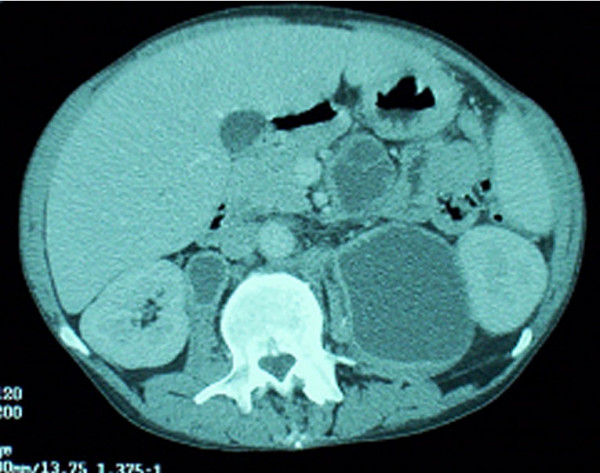
                TC abdominal que prueba infección por MAC

                Infección por el complejo M. avium: TC abdominal que muestra múltiples ganglios linfáticos intraabdominales con abscesos

                Imagen:Mycobacterium avium complex immune reconstitution inflammatory syndrome: long term outcomes” por Riddell J, Kaul DR, Karakousis PC, Gallant JE, Mitty J, Kazanjian PH. Licencia: CC BY 2.0

                Presentación clínica

                • Pacientes inmunocompetentes:
                  • Hombres mayores con enfermedad pulmonar obstructiva crónica:
                    • Tos TOS Thoracic outlet syndrome (TOS) is a broad term used for a spectrum of syndromes related to the general region of the thoracic outlet, which involves the compression or irritation of elements of the brachial plexus, subclavian artery, or subclavian vein. Thoracic Outlet Syndrome, fiebre, infiltrados/cavidades en EN Erythema nodosum is an immune-mediated panniculitis (inflammation of the subcutaneous fat) caused by a type IV (delayed-type) hypersensitivity reaction. It commonly manifests in young women as tender, erythematous nodules on the shins. Erythema Nodosum el lóbulo superior
                    • Se parece a la tuberculosis Tuberculosis Tuberculosis (TB) is an infectious disease caused by Mycobacterium tuberculosis complex bacteria. The bacteria usually attack the lungs but can also damage other parts of the body. Approximately 30% of people around the world are infected with this pathogen, with the majority harboring a latent infection. Tuberculosis spreads through the air when a person with active pulmonary infection coughs or sneezes. Tuberculosis, pero menos grave
                  • Mujeres >50 años de edad sin antecedentes preexistentes: a menudo se presenta como bronquiectasias
                • Individuos con SIDA:
                  • Infección diseminada:
                  • Linfadenitis:
                    • Agrandamiento localizado de los LOS Neisseria ganglios linfáticos (abdominal, mediastínico, cervical)
                    • Fiebre

                Identificación

                • Hemocultivo de micobacterias
                • Histopatología y cultivo de los LOS Neisseria sitios involucrados (médula ósea, ganglios linfáticos)

                Referencias

                1. Alia, E. (2019). Atypical Mycobacterial Diseases. Emedicine. Retrieved February 21, 2021, from https://emedicine.medscape.com/article/220455-overview#a4
                2. Fordham von Reyn, C. (2020). Vaccines for prevention of tuberculosis. Retrieved January 14, 2021, from https://www.uptodate.com/contents/vaccines-for-prevention-of-tuberculosis
                3. Griffith, D.E. (2020). Overview of nontuberculous mycobacterial infections. Retrieved March 1, 2021, from https://www.uptodate.com/contents/overview-of-nontuberculous-mycobacterial-infections
                4. Pozniak, A. (2019). Clinical manifestations and complications of pulmonary tuberculosis. Retrieved January 13, 2021, from https://www.uptodate.com/contents/clinical-manifestations-and-complications-of-pulmonary-tuberculosis
                5. Riley, L.W. (2019). Tuberculosis: Natural history, microbiology, and pathogenesis. Retrieved January 13, 2021, from https://www.uptodate.com/contents/tuberculosis-natural-history-microbiology-and-pathogenesis
                6. Scollard, D., Stryjewska, B., Dacso, M. (2020). Leprosy: Epidemiology, microbiology, clinical manifestations, and diagnosis. Retrieved March 1, 2021, from https://www.uptodate.com/contents/leprosy-epidemiology-microbiology-clinical-manifestations-and-diagnosis
                7. Smith, D. (2020). Leprosy. Emedicine. Retrieved February 22, 2021, from https://emedicine.medscape.com/article/220455-overview#a4
                8. Sterling, T. (2020). Treatment of drug-susceptible pulmonary tuberculosis in HIV-uninfected adults. Retrieved January 14, 2021, from https://www.uptodate.com/contents/treatment-of-drug-susceptible-pulmonary-tuberculosis-in-hiv-uninfected-adults
                9. Centers for Disease Control and Prevention. (2024). Tuberculosis (TB). Retrieved June 17, 2025, from https://www.cdc.gov/tb/

                ¡Crea tu cuenta gratis o inicia una sesión para seguir leyendo!

                Regístrate ahora y obtén acceso gratuito a Lecturio con páginas de concepto, videos médicos y cuestionarios para tu educación médica.

                User Reviews

                Que tengas una sesión de estudio alegre y navideña 🎁 Ahorra 50% en todos los planes >>

                Details