Malformaciones Congénitas del Aparato Reproductor Femenino
Malformaciones Congénitas del Aparato Reproductor Femenino
Las malformaciones congénitas del aparato reproductor femenino son todas anomalías congénitas que afectan a ovarios, trompas de Falopio, útero, cuello uterino, himen y/o vulvaVulvaThe vulva is the external genitalia of the female and includes the mons pubis, labia majora, labia minora, clitoris, vestibule, vestibular bulb, and greater vestibular glands. Vagina, Vulva, and Pelvic Floor: Anatomy. Cualquiera de estas anomalías puede afectar a las funciones reproductivas y sexuales normales de las mujeres afectadas. La causa suele ser desconocida. Clínicamente, estas pacientes suelen presentar problemas menstruales y/o de fertilidad, con una presentación exacta que varía enENErythema nodosum is an immune-mediated panniculitis (inflammation of the subcutaneous fat) caused by a type IV (delayed-type) hypersensitivity reaction. It commonly manifests in young women as tender, erythematous nodules on the shins.Erythema Nodosum función de la anatomía de la paciente. El diagnóstico se basa principalmente enENErythema nodosum is an immune-mediated panniculitis (inflammation of the subcutaneous fat) caused by a type IV (delayed-type) hypersensitivity reaction. It commonly manifests in young women as tender, erythematous nodules on the shins.Erythema Nodosum la anamnesis, el examen físico y la obtención de imágenes con ultrasonido pélvico y/o RMN pélvica. El tratamiento depende del tipo de defecto(s) presente(s) y a menudo implica la corrección quirúrgica y/o el reemplazo hormonal. La mayoría de las malformaciones se pueden manejar bien y tienen un buen pronóstico. Las complicaciones asociadas son la infertilidad y el impacto psicosocial y emocional de tener genitales “anormales”.
Las malformaciones congénitas del aparato reproductor femenino son todas anomalías congénitas que afectan a ovarios, trompas de Falopio, útero, cuello uterino, himen y/o vulvaVulvaThe vulva is the external genitalia of the female and includes the mons pubis, labia majora, labia minora, clitoris, vestibule, vestibular bulb, and greater vestibular glands. Vagina, Vulva, and Pelvic Floor: Anatomy. Cualquiera de estas anomalías puede afectar a las funciones reproductivas y sexuales normales de las mujeres afectadas.
Epidemiología
Prevalencia de las anomalías uterinas congénitas:
5,5% enENErythema nodosum is an immune-mediated panniculitis (inflammation of the subcutaneous fat) caused by a type IV (delayed-type) hypersensitivity reaction. It commonly manifests in young women as tender, erythematous nodules on the shins.Erythema Nodosum la población enENErythema nodosum is an immune-mediated panniculitis (inflammation of the subcutaneous fat) caused by a type IV (delayed-type) hypersensitivity reaction. It commonly manifests in young women as tender, erythematous nodules on the shins.Erythema Nodosum general
8% enENErythema nodosum is an immune-mediated panniculitis (inflammation of the subcutaneous fat) caused by a type IV (delayed-type) hypersensitivity reaction. It commonly manifests in young women as tender, erythematous nodules on the shins.Erythema Nodosum pacientes infértiles
12% enENErythema nodosum is an immune-mediated panniculitis (inflammation of the subcutaneous fat) caused by a type IV (delayed-type) hypersensitivity reaction. It commonly manifests in young women as tender, erythematous nodules on the shins.Erythema Nodosum pacientes con antecedentes de aborto espontáneo
25% enENErythema nodosum is an immune-mediated panniculitis (inflammation of the subcutaneous fat) caused by a type IV (delayed-type) hypersensitivity reaction. It commonly manifests in young women as tender, erythematous nodules on the shins.Erythema Nodosum pacientes con antecedentes de infertilidad y aborto espontáneo
Anteriormente, se observó una mayor incidencia de anomalías uterinas congénitas enENErythema nodosum is an immune-mediated panniculitis (inflammation of the subcutaneous fat) caused by a type IV (delayed-type) hypersensitivity reaction. It commonly manifests in young women as tender, erythematous nodules on the shins.Erythema Nodosum mujeres que estuvieron expuestas in uteroalALAmyloidosis medicamento dietilestilbestrol, que se utilizó para tratar las náuseas enENErythema nodosum is an immune-mediated panniculitis (inflammation of the subcutaneous fat) caused by a type IV (delayed-type) hypersensitivity reaction. It commonly manifests in young women as tender, erythematous nodules on the shins.Erythema Nodosum el embarazo desde la década de 1940 hasta la de 1960. Este medicamento ya no se utiliza, y la morbilidad relacionada con el dietilestilbestrol enENErythema nodosum is an immune-mediated panniculitis (inflammation of the subcutaneous fat) caused by a type IV (delayed-type) hypersensitivity reaction. It commonly manifests in young women as tender, erythematous nodules on the shins.Erythema NodosumlosLOSNeisseria niños es ahora rara.
Incidencia de la agenesia vaginal: 1 por cada 5000 mujeres nacidas vivas
Clasificación
LosLOSNeisseria tipos de malformaciones congénitas pueden clasificarse enENErythema nodosum is an immune-mediated panniculitis (inflammation of the subcutaneous fat) caused by a type IV (delayed-type) hypersensitivity reaction. It commonly manifests in young women as tender, erythematous nodules on the shins.Erythema Nodosum función de losLOSNeisseria órganos afectados. Tenga enENErythema nodosum is an immune-mediated panniculitis (inflammation of the subcutaneous fat) caused by a type IV (delayed-type) hypersensitivity reaction. It commonly manifests in young women as tender, erythematous nodules on the shins.Erythema Nodosum cuenta que las verdaderas malformaciones congénitas de la vulvaVulvaThe vulva is the external genitalia of the female and includes the mons pubis, labia majora, labia minora, clitoris, vestibule, vestibular bulb, and greater vestibular glands. Vagina, Vulva, and Pelvic Floor: Anatomy son raras; un clítoris agrandado o unos genitales externos ambiguos se consideran normalmente un trastorno del desarrollo sexual debido a exposición a testosterona.
Tabla: Tipos de malformaciones congénitas que afectan alALAmyloidosis aparato reproductor femenino
Órgano
Malformación
Ovarios
Disgenesia ovárica (cintillas ováricas)
Agenesia ovárica
Ovarios supernumerarios
Trompas de Falopio
Agenesia de las trompas de Falopio
Útero
Útero tabicado
Útero bicorne
Útero arcuato
Útero unicorne
Didelfo
Agenesia uterina
Cuello uterino
Agenesia cervical
Duplicación cervical
VaginaVaginaThe vagina is the female genital canal, extending from the vulva externally to the cervix uteri internally. The structures have sexual, reproductive, and urinary functions and a rich blood supply, mainly arising from the internal iliac artery.Vagina, Vulva, and Pelvic Floor: Anatomy
El aparato reproductor femenino se divide enENErythema nodosum is an immune-mediated panniculitis (inflammation of the subcutaneous fat) caused by a type IV (delayed-type) hypersensitivity reaction. It commonly manifests in young women as tender, erythematous nodules on the shins.Erythema Nodosum genitales externos y genitales internos. LosLOSNeisseria genitales internos se encuentran enENErythema nodosum is an immune-mediated panniculitis (inflammation of the subcutaneous fat) caused by a type IV (delayed-type) hypersensitivity reaction. It commonly manifests in young women as tender, erythematous nodules on the shins.Erythema Nodosum la pelvisPelvisThe pelvis consists of the bony pelvic girdle, the muscular and ligamentous pelvic floor, and the pelvic cavity, which contains viscera, vessels, and multiple nerves and muscles. The pelvic girdle, composed of 2 “hip” bones and the sacrum, is a ring-like bony structure of the axial skeleton that links the vertebral column with the lower extremities.Pelvis: Anatomy verdadera y losLOSNeisseria genitales externos están presentes fuera de la pelvisPelvisThe pelvis consists of the bony pelvic girdle, the muscular and ligamentous pelvic floor, and the pelvic cavity, which contains viscera, vessels, and multiple nerves and muscles. The pelvic girdle, composed of 2 “hip” bones and the sacrum, is a ring-like bony structure of the axial skeleton that links the vertebral column with the lower extremities.Pelvis: Anatomy verdadera.
Tabla: Genitales femeninos internos versus externos
Tipo de genitales
Estructuras presentes
Órganos genitales internos
Ovarios
Trompas de Falopio
Útero
Cuello uterino (técnicamente, la parte inferior del útero)
VaginaVaginaThe vagina is the female genital canal, extending from the vulva externally to the cervix uteri internally. The structures have sexual, reproductive, and urinary functions and a rich blood supply, mainly arising from the internal iliac artery.Vagina, Vulva, and Pelvic Floor: Anatomy
Órganos genitales externos
Monte de Venus
Clítoris
Labios mayores y menores
Meato uretral
Glándulas de Bartolino y Skene
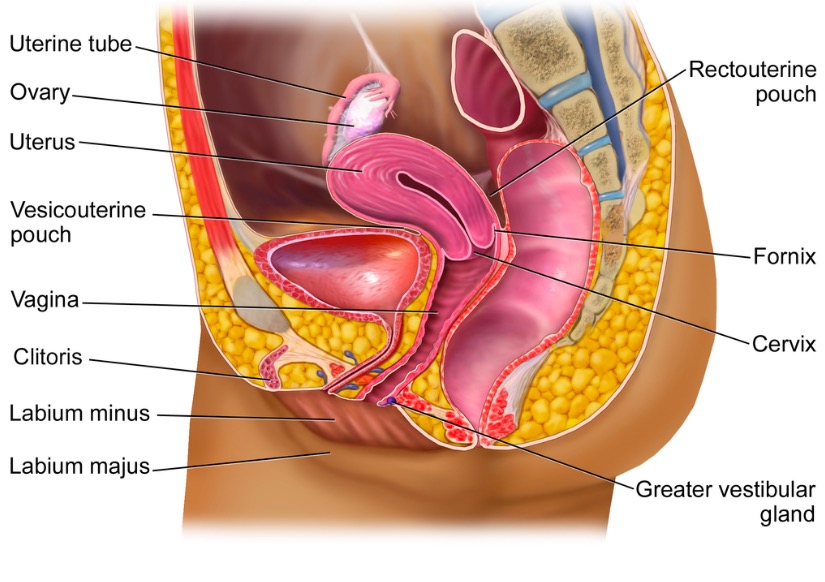
Estructuras del aparato reproductor femenino (vista sagital)
Imagen: “Female reproductive system” por BruceBlaus. Licencia: CC BY 3.0
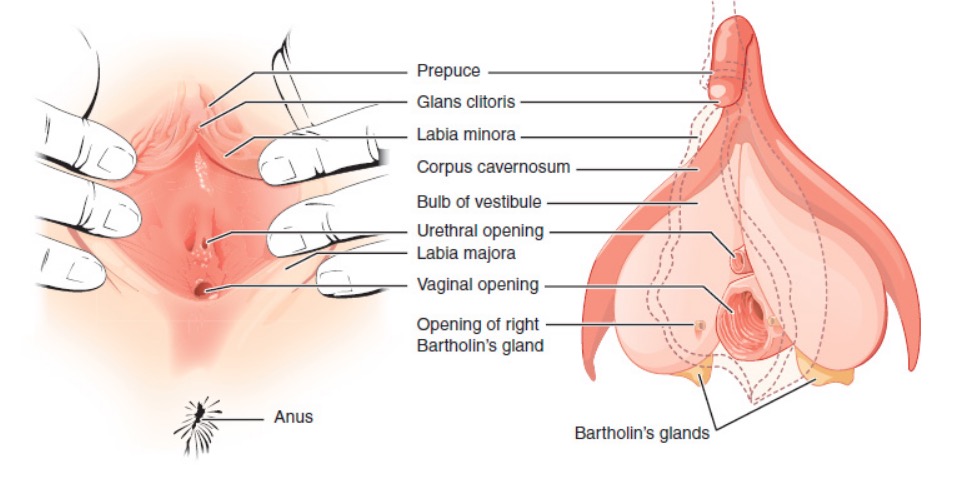
Genitales femeninos externos
Imagen: “External female genitalia” por Phil Schatz. Licencia: CC BY 4.0
Orígenes embrionarios
Tabla: Orígenes embrionarios de losLOSNeisseria órganos reproductores femeninos
Estructura embrionaria
Órganos pélvicos femeninos
Tumefacción labioescrotal
Labios mayores
Pliegues urogenitales
Labios menores
Tubérculo genital
Clítoris
Seno urogenital
Vejiga urinaria
Uretra
Glándulas uretrales y parauretrales
VaginaVaginaThe vagina is the female genital canal, extending from the vulva externally to the cervix uteri internally. The structures have sexual, reproductive, and urinary functions and a rich blood supply, mainly arising from the internal iliac artery.Vagina, Vulva, and Pelvic Floor: Anatomy
Glándulas de Bartolino
Conducto mülleriano/paramesonéfrico
Útero
Cuello uterino
Trompas de Falopio
VaginaVaginaThe vagina is the female genital canal, extending from the vulva externally to the cervix uteri internally. The structures have sexual, reproductive, and urinary functions and a rich blood supply, mainly arising from the internal iliac artery.Vagina, Vulva, and Pelvic Floor: Anatomy superior
Himen
Remanente del conducto wolffiano/mesonéfrico
Conducto de Gartner
Gónada indiferenciada
Ovario
Gubernáculo
Ligamento ovárico
Ligamento redondo
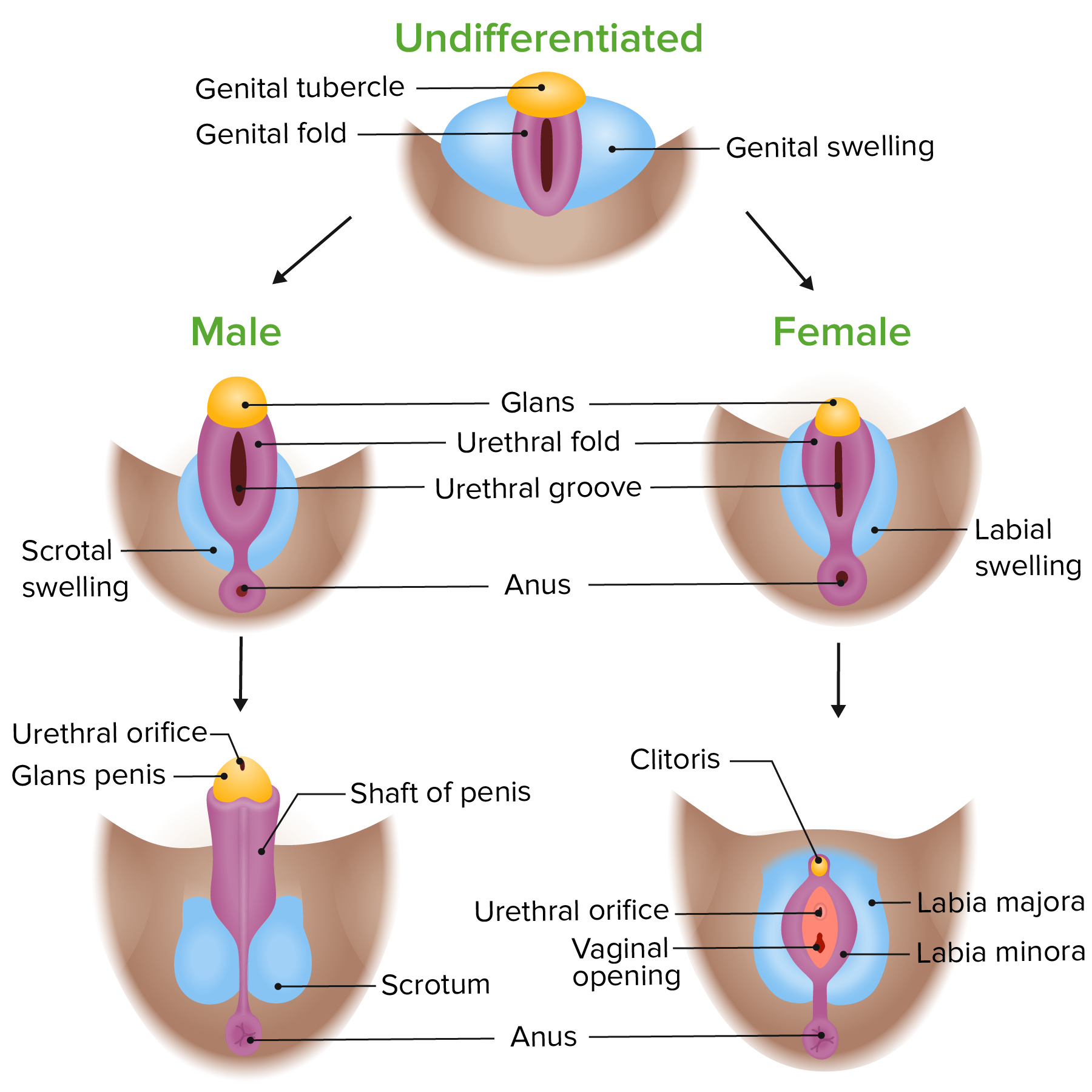
Diferenciación fenotípica de los genitales externos en embriones masculinos y femeninos
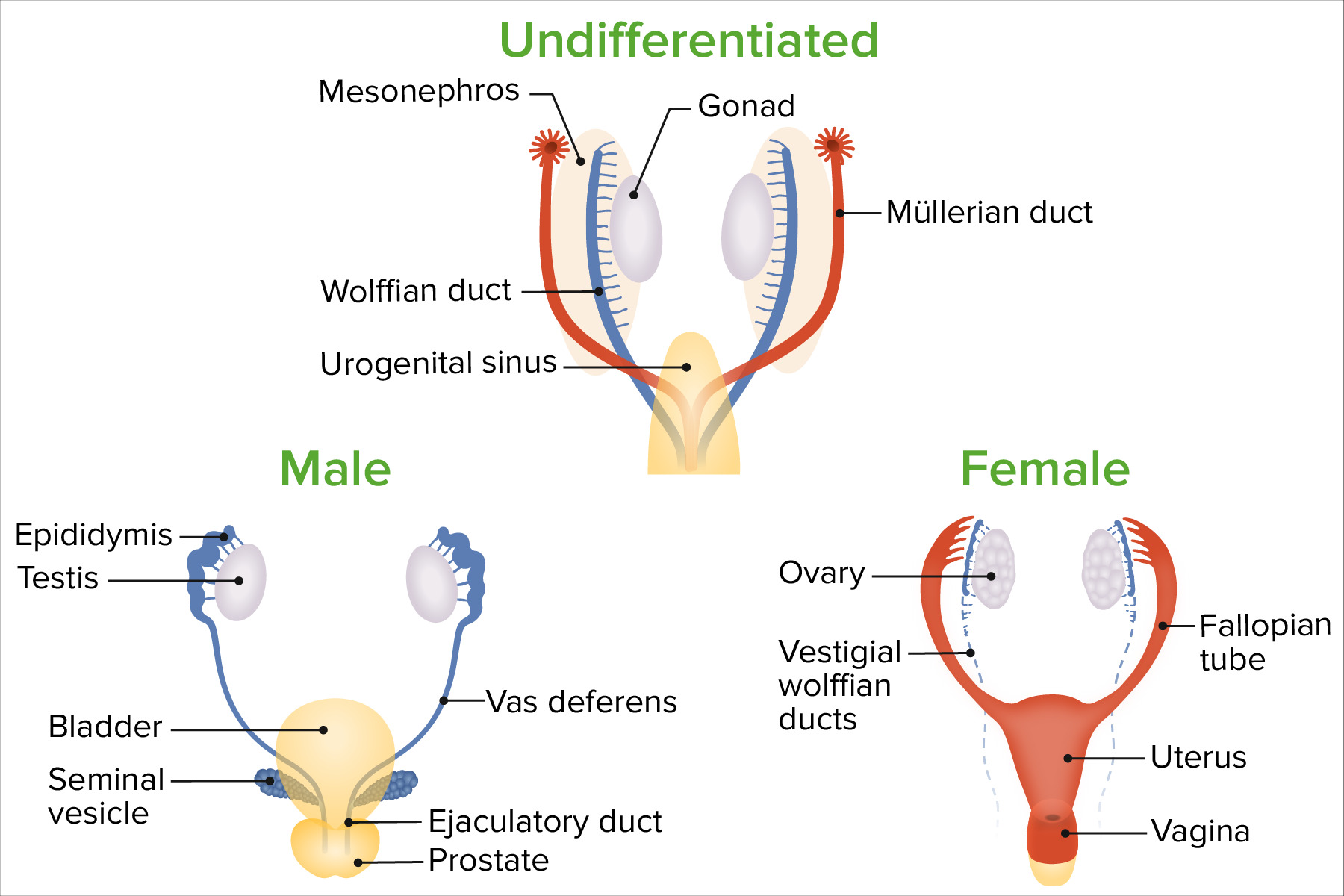
El aparato reproductor permanece indiferenciado hasta la 6ta semana de vida intrauterina, con la presencia de 2 pares de conductos genitales: losLOSNeisseria conductos de Müller (o paramesonéfricos), que acabarán convirtiéndose enENErythema nodosum is an immune-mediated panniculitis (inflammation of the subcutaneous fat) caused by a type IV (delayed-type) hypersensitivity reaction. It commonly manifests in young women as tender, erythematous nodules on the shins.Erythema NodosumlosLOSNeisseria genitales femeninos internos, y losLOSNeisseria conductos de Wolff (o mesonéfricos), que regresionan enENErythema nodosum is an immune-mediated panniculitis (inflammation of the subcutaneous fat) caused by a type IV (delayed-type) hypersensitivity reaction. It commonly manifests in young women as tender, erythematous nodules on the shins.Erythema Nodosum las hembras.
Sexo cromosómico → determina el sexo gonadal → determina el sexo fenotípico.
Hasta las 6 semanas de gestación, el desarrollo del sexo es idéntico y no binario; las estructuras enENErythema nodosum is an immune-mediated panniculitis (inflammation of the subcutaneous fat) caused by a type IV (delayed-type) hypersensitivity reaction. It commonly manifests in young women as tender, erythematous nodules on the shins.Erythema Nodosum desarrollo incluyen:
Gónadas no binarias, bipotenciales e indiferenciadas
Conductos de Wolff y de Müller (inicialmente, ambos están presentes enENErythema nodosum is an immune-mediated panniculitis (inflammation of the subcutaneous fat) caused by a type IV (delayed-type) hypersensitivity reaction. It commonly manifests in young women as tender, erythematous nodules on the shins.Erythema Nodosum ambos sexos)
Seno urogenital
Tubérculo genital, tumefacciones genitales y pliegues genitales
LosLOSNeisseriagenesGenesA category of nucleic acid sequences that function as units of heredity and which code for the basic instructions for the development, reproduction, and maintenance of organisms.DNA Types and Structure presentes enENErythema nodosum is an immune-mediated panniculitis (inflammation of the subcutaneous fat) caused by a type IV (delayed-type) hypersensitivity reaction. It commonly manifests in young women as tender, erythematous nodules on the shins.Erythema Nodosum la fecundación determinarán cómo se diferencian las gónadas bipotenciales enENErythema nodosum is an immune-mediated panniculitis (inflammation of the subcutaneous fat) caused by a type IV (delayed-type) hypersensitivity reaction. It commonly manifests in young women as tender, erythematous nodules on the shins.Erythema Nodosum desarrollo (e.g., enENErythema nodosum is an immune-mediated panniculitis (inflammation of the subcutaneous fat) caused by a type IV (delayed-type) hypersensitivity reaction. It commonly manifests in young women as tender, erythematous nodules on the shins.Erythema Nodosum un testículo o enENErythema nodosum is an immune-mediated panniculitis (inflammation of the subcutaneous fat) caused by a type IV (delayed-type) hypersensitivity reaction. It commonly manifests in young women as tender, erythematous nodules on the shins.Erythema Nodosum un ovario).
Las gónadas enENErythema nodosum is an immune-mediated panniculitis (inflammation of the subcutaneous fat) caused by a type IV (delayed-type) hypersensitivity reaction. It commonly manifests in young women as tender, erythematous nodules on the shins.Erythema Nodosum desarrollo segregarán entonces hormonas:
La presencia y/o ausencia de hormonas específicas determinará cómo las estructuras restantes se diferenciarán.
En general, los órganos y estructuras femeninos son el fenotipo “por defecto” si no hay genesGenesA category of nucleic acid sequences that function as units of heredity and which code for the basic instructions for the development, reproduction, and maintenance of organisms.DNA Types and Structure y hormonas específicaspresentes para estimular la diferenciación masculina.
Órganos y caracteres sexuales
Gónadas: Se desarrollan enENErythema nodosum is an immune-mediated panniculitis (inflammation of the subcutaneous fat) caused by a type IV (delayed-type) hypersensitivity reaction. It commonly manifests in young women as tender, erythematous nodules on the shins.Erythema Nodosum función del cariotipo/genesGenesA category of nucleic acid sequences that function as units of heredity and which code for the basic instructions for the development, reproduction, and maintenance of organisms.DNA Types and Structure presentes.
Testículos:
Se desarrollan cuando la región determinante del sexo del cromosoma Y (gen SRY) está presente.
Secretan testosterona y hormona antimülleriana (AMHAMHA glycoprotein that causes regression of mullerian ducts. It is produced by sertoli cells of the testes. In the absence of this hormone, the mullerian ducts develop into structures of the female reproductive tract. In males, defects of this hormone result in persistent mullerian duct, a form of male pseudohermaphroditism.Primary Amenorrhea, por sus siglas enENErythema nodosum is an immune-mediated panniculitis (inflammation of the subcutaneous fat) caused by a type IV (delayed-type) hypersensitivity reaction. It commonly manifests in young women as tender, erythematous nodules on the shins.Erythema Nodosum inglés).
Ovarios: se desarrollan cuando el cromosoma X está presente y/o el gen SRY está ausente.
Ovotestículo: gónada que contiene tejido ovárico y testicular que se encuentra enENErythema nodosum is an immune-mediated panniculitis (inflammation of the subcutaneous fat) caused by a type IV (delayed-type) hypersensitivity reaction. It commonly manifests in young women as tender, erythematous nodules on the shins.Erythema Nodosum pacientes con hermafroditismo verdadero
Estructuras müllerianas: Se diferencian de losLOSNeisseria conductos müllerianos (paramesonéfricos) cuando la AMHAMHA glycoprotein that causes regression of mullerian ducts. It is produced by sertoli cells of the testes. In the absence of this hormone, the mullerian ducts develop into structures of the female reproductive tract. In males, defects of this hormone result in persistent mullerian duct, a form of male pseudohermaphroditism.Primary Amenorrhea está ausente.
Útero
Trompas de Falopio
⅓ superior de la vaginaVaginaThe vagina is the female genital canal, extending from the vulva externally to the cervix uteri internally. The structures have sexual, reproductive, and urinary functions and a rich blood supply, mainly arising from the internal iliac artery.Vagina, Vulva, and Pelvic Floor: Anatomy
Estructuras wolffianas: Se diferencian de losLOSNeisseria conductos wolffianos (mesonéfricos) enENErythema nodosum is an immune-mediated panniculitis (inflammation of the subcutaneous fat) caused by a type IV (delayed-type) hypersensitivity reaction. It commonly manifests in young women as tender, erythematous nodules on the shins.Erythema Nodosum presencia de testosterona
Epidídimo
Vaso deferente
Vesículas seminales
Conductos eyaculatorios
Genitales externos: Se desarrollan a partir del tubérculo genital indiferenciado, la tumefacción genital y losLOSNeisseria pliegues genitales enENErythema nodosum is an immune-mediated panniculitis (inflammation of the subcutaneous fat) caused by a type IV (delayed-type) hypersensitivity reaction. It commonly manifests in young women as tender, erythematous nodules on the shins.Erythema Nodosum función de la presencia o ausencia de testosterona.
Hombre: testosterona → pene y escroto
Mujer: falta de testosterona → clítoris, labios mayores, labios menores
Caracteres sexuales secundarios: se desarrollan enENErythema nodosum is an immune-mediated panniculitis (inflammation of the subcutaneous fat) caused by a type IV (delayed-type) hypersensitivity reaction. It commonly manifests in young women as tender, erythematous nodules on the shins.Erythema Nodosum función del ambiente hormonal enENErythema nodosum is an immune-mediated panniculitis (inflammation of the subcutaneous fat) caused by a type IV (delayed-type) hypersensitivity reaction. It commonly manifests in young women as tender, erythematous nodules on the shins.Erythema Nodosum la pubertad.
Características androgénicas: debido a la presencia de testosterona y/o dihidrotestosterona (DHTDHTA potent androgenic metabolite of testosterone. It is produced by the action of the enzyme 3-oxo-5-alpha-steroid 4-dehydrogenase.Gonadal Hormones)
Vello púbico y axilar
Vello facial y corporal de distribución y calidad androgénica (oscuro y grueso)
Profundización de la voz
↑ Masa muscular
Características estrogénicas: debido a la presencia de estrógenos
Desarrollo mamario
Caderas más anchas
Desarrollo de malformaciones congénitas
Anomalías ováricas: por defectos enENErythema nodosum is an immune-mediated panniculitis (inflammation of the subcutaneous fat) caused by a type IV (delayed-type) hypersensitivity reaction. It commonly manifests in young women as tender, erythematous nodules on the shins.Erythema Nodosum el desarrollo gonadal
Anomalías müllerianas:
Anomalías de útero, cuello uterino, parte superior de la vaginaVaginaThe vagina is the female genital canal, extending from the vulva externally to the cervix uteri internally. The structures have sexual, reproductive, and urinary functions and a rich blood supply, mainly arising from the internal iliac artery.Vagina, Vulva, and Pelvic Floor: Anatomy y trompas de Falopio
Se desarrollan debido a defectos enENErythema nodosum is an immune-mediated panniculitis (inflammation of the subcutaneous fat) caused by a type IV (delayed-type) hypersensitivity reaction. It commonly manifests in young women as tender, erythematous nodules on the shins.Erythema Nodosum:
Fusión de losLOSNeisseria conductos enENErythema nodosum is an immune-mediated panniculitis (inflammation of the subcutaneous fat) caused by a type IV (delayed-type) hypersensitivity reaction. It commonly manifests in young women as tender, erythematous nodules on the shins.Erythema Nodosum la línea media
Regresión de las paredes de la línea media (abandonando las divisiones de la línea media)
Parte inferior de la vaginaVaginaThe vagina is the female genital canal, extending from the vulva externally to the cervix uteri internally. The structures have sexual, reproductive, and urinary functions and a rich blood supply, mainly arising from the internal iliac artery.Vagina, Vulva, and Pelvic Floor: Anatomy: defectos enENErythema nodosum is an immune-mediated panniculitis (inflammation of the subcutaneous fat) caused by a type IV (delayed-type) hypersensitivity reaction. It commonly manifests in young women as tender, erythematous nodules on the shins.Erythema Nodosum el desarrollo del seno urogenital/bulbos sinovaginales
VulvaVulvaThe vulva is the external genitalia of the female and includes the mons pubis, labia majora, labia minora, clitoris, vestibule, vestibular bulb, and greater vestibular glands. Vagina, Vulva, and Pelvic Floor: Anatomy y clítoris: ambiente hormonal anormal, normalmente se considera un trastorno del desarrollo sexual más que una verdadera anomalía congénita.
Agenesia de las trompas de Falopio: falta de formación de una trompa de Falopio
Presentación clínica
LosLOSNeisseria ovarios son la principal fuente de producción de estrógenos enENErythema nodosum is an immune-mediated panniculitis (inflammation of the subcutaneous fat) caused by a type IV (delayed-type) hypersensitivity reaction. It commonly manifests in young women as tender, erythematous nodules on the shins.Erythema Nodosum la mujer. Sin ovarios que funcionen correctamente, el estrógeno no se produce enENErythema nodosum is an immune-mediated panniculitis (inflammation of the subcutaneous fat) caused by a type IV (delayed-type) hypersensitivity reaction. It commonly manifests in young women as tender, erythematous nodules on the shins.Erythema Nodosum cantidades significativas.
Sin estrógenos:
No hay proliferación endometrial → amenorrea primaria.
No hay desarrollo de óvulos → infertilidad.
Ausencia de caracteres sexuales secundarios (e.g., desarrollo mamario) enENErythema nodosum is an immune-mediated panniculitis (inflammation of the subcutaneous fat) caused by a type IV (delayed-type) hypersensitivity reaction. It commonly manifests in young women as tender, erythematous nodules on the shins.Erythema Nodosum la pubertad
Nota: Solo es necesario que haya un ovario para que la fertilidad y la función menstrual sean normales:
Las anomalías enENErythema nodosum is an immune-mediated panniculitis (inflammation of the subcutaneous fat) caused by a type IV (delayed-type) hypersensitivity reaction. It commonly manifests in young women as tender, erythematous nodules on the shins.Erythema Nodosum y/o la ausencia de un solo ovario suelen ser asintomáticas y clínicamente irrelevantes.
El exceso de tejido ovárico o un ovario de más (un ovario supernumerario) también suelen ser asintomáticos, aunque pueden presentar algunas irregularidades menstruales.
Anomalías de las trompas de Falopio:
Las trompas de Falopio son estructuras müllerianas (como el útero), por lo que las anomalías tubáricas suelen estar asociadas a anomalías uterinas enENErythema nodosum is an immune-mediated panniculitis (inflammation of the subcutaneous fat) caused by a type IV (delayed-type) hypersensitivity reaction. It commonly manifests in young women as tender, erythematous nodules on the shins.Erythema Nodosum el mismo lado.
La agenesia unilateral aislada de las trompas de Falopio es posible y probablemente asintomática, suponiendo que el lado contralateral esté normal.
La agenesia bilateral aislada de las trompas de Falopio es técnicamente posible y sería asintomática hasta que se presente con infertilidad, pero generalmente no se veVEVentilation: Mechanics of Breathing.
Principios generales de diagnóstico y tratamiento
Imagenología:
Ultrasonido: El diagnóstico de cualquier anomalía ovárica se realiza mejor mediante un ultrasonido pélvico (1era prueba).
La RM puede aportar información adicional.
Se debe obtener el cariotipo.
Laboratorio (pruebas de detección de amenorrea):
Hormona foliculoestimulante (FSHFSHA major gonadotropin secreted by the adenohypophysis. Follicle-stimulating hormone stimulates gametogenesis and the supporting cells such as the ovarian granulosa cells, the testicular sertoli cells, and leydig cells. Fsh consists of two noncovalently linked subunits, alpha and beta. Within a species, the alpha subunit is common in the three pituitary glycoprotein hormones (TSH, LH, and FSH), but the beta subunit is unique and confers its biological specificity.Menstrual Cycle): segregada por la hipófisis; estará ↑ intentando estimular el funcionamiento de losLOSNeisseria ovarios anormales/ausentes.
EstradiolEstradiolThe 17-beta-isomer of estradiol, an aromatized C18 steroid with hydroxyl group at 3-beta- and 17-beta-position. Estradiol-17-beta is the most potent form of mammalian estrogenic steroids.Noncontraceptive Estrogen and Progestins: Estará ↓ (incapaz de ser sintetizado por losLOSNeisseria ovarios anormales/ausentes).
Esta combinación de ↑ FSHFSHA major gonadotropin secreted by the adenohypophysis. Follicle-stimulating hormone stimulates gametogenesis and the supporting cells such as the ovarian granulosa cells, the testicular sertoli cells, and leydig cells. Fsh consists of two noncovalently linked subunits, alpha and beta. Within a species, the alpha subunit is common in the three pituitary glycoprotein hormones (TSH, LH, and FSH), but the beta subunit is unique and confers its biological specificity.Menstrual Cycle + ↓ estradiolEstradiolThe 17-beta-isomer of estradiol, an aromatized C18 steroid with hydroxyl group at 3-beta- and 17-beta-position. Estradiol-17-beta is the most potent form of mammalian estrogenic steroids.Noncontraceptive Estrogen and Progestins localiza el problema enENErythema nodosum is an immune-mediated panniculitis (inflammation of the subcutaneous fat) caused by a type IV (delayed-type) hypersensitivity reaction. It commonly manifests in young women as tender, erythematous nodules on the shins.Erythema NodosumlosLOSNeisseria ovarios (a diferencia del útero o el hipotálamo).
El tratamiento suele implicar:
Terapia de reemplazo hormonal si losLOSNeisseria ovarios no son funcionales
Extirpación quirúrgica de ovarios/tejido ovárico anormal debido a ↑ riesgo de malignidad con cintillas ováricas
La fertilidad suele ser posible gracias a las técnicas de reproducción asistida:
Requiere óvulo de donante/embrión de donante para ovarios no funcionales.
Fecundación in vitro para anomalías de las trompas de Falopio
Resumen y comparación
Tabla: Resumen comparativo de las malformaciones congénitas de losLOSNeisseria ovarios
Cintillas ováricas
Agenesia ovárica
Definición
Una forma de disgenesia ovárica (ovarios malformados y disfuncionales)
Asociadas alALAmyloidosis síndrome de Turner (45X,0)
Ausencia congénita de ambos ovarios
Se haHAHemolytic anemia (HA) is the term given to a large group of anemias that are caused by the premature destruction/hemolysis of circulating red blood cells (RBCs). Hemolysis can occur within (intravascular hemolysis) or outside the blood vessels (extravascular hemolysis).Hemolytic Anemia informado de agenesias unilaterales, pero son extremadamente raras.
Presentación clínica
Amenorrea primaria
Pocos o ningún caracter sexual secundario (estrógeno ↓)
Características del síndrome de Turner: baja estatura, cuello alado, pezones muy separados, anomalías cardiacas
Amenorrea primaria
Sin caracteres sexuales secundarios (sin estrógenos)
Diagnóstico
Ultrasonido: ovarios rudimentarios o no visibles
Cariotipo: 45X,0
Ultrasonido: ausencia de ovarios
Cariotipo: 46X,X
Laboratorio: ↑ FSHFSHA major gonadotropin secreted by the adenohypophysis. Follicle-stimulating hormone stimulates gametogenesis and the supporting cells such as the ovarian granulosa cells, the testicular sertoli cells, and leydig cells. Fsh consists of two noncovalently linked subunits, alpha and beta. Within a species, the alpha subunit is common in the three pituitary glycoprotein hormones (TSH, LH, and FSH), but the beta subunit is unique and confers its biological specificity.Menstrual Cycle, ↓ estradiolEstradiolThe 17-beta-isomer of estradiol, an aromatized C18 steroid with hydroxyl group at 3-beta- and 17-beta-position. Estradiol-17-beta is the most potent form of mammalian estrogenic steroids.Noncontraceptive Estrogen and Progestins
Tratamiento
Escisión quirúrgica (ooforectomía) por alto riesgo de malignidad
TRH
TRH
Terapia psicosocial
Fertilidad: El embarazo es posible a través de óvulos o embriones de donante y de las ART.
ART, por sus siglas en inglés: técnicas de reproducción asistida FSH: hormona estimulante del folículo TRH: terapia de reemplazo hormonal
Malformaciones Congénitas del Útero y del Cuello Uterino
Descripción general de las malformaciones uterinas
El útero se forma a partir de losLOSNeisseria conductos müllerianos, que se fusionan enENErythema nodosum is an immune-mediated panniculitis (inflammation of the subcutaneous fat) caused by a type IV (delayed-type) hypersensitivity reaction. It commonly manifests in young women as tender, erythematous nodules on the shins.Erythema Nodosum la línea media para crear el útero, el cuello uterino y la parte superior de la vaginaVaginaThe vagina is the female genital canal, extending from the vulva externally to the cervix uteri internally. The structures have sexual, reproductive, and urinary functions and a rich blood supply, mainly arising from the internal iliac artery.Vagina, Vulva, and Pelvic Floor: Anatomy. Por lo tanto, alALAmyloidosis principio, estas estructuras se dividen por la línea media antes de que este tabique medio regresione.
Tipos de defectos:
Defectos de fusión lateral: Se producen cuando el tabique de la línea media no regresiona, dando lugar a tabiques verticales y cavidades divididas o “duplicadas”.
Defectos de fusión vertical: Dan lugar a defectos transversales y obstructivos (normalmente enENErythema nodosum is an immune-mediated panniculitis (inflammation of the subcutaneous fat) caused by a type IV (delayed-type) hypersensitivity reaction. It commonly manifests in young women as tender, erythematous nodules on the shins.Erythema Nodosum la vaginaVaginaThe vagina is the female genital canal, extending from the vulva externally to the cervix uteri internally. The structures have sexual, reproductive, and urinary functions and a rich blood supply, mainly arising from the internal iliac artery.Vagina, Vulva, and Pelvic Floor: Anatomy).
Hipoplasia o agenesia: falta de desarrollo completo de un órgano o tejido (hipoplasia) o ausencia total del órgano (agenesia)
Tipos de anomalías uterinas congénitas:
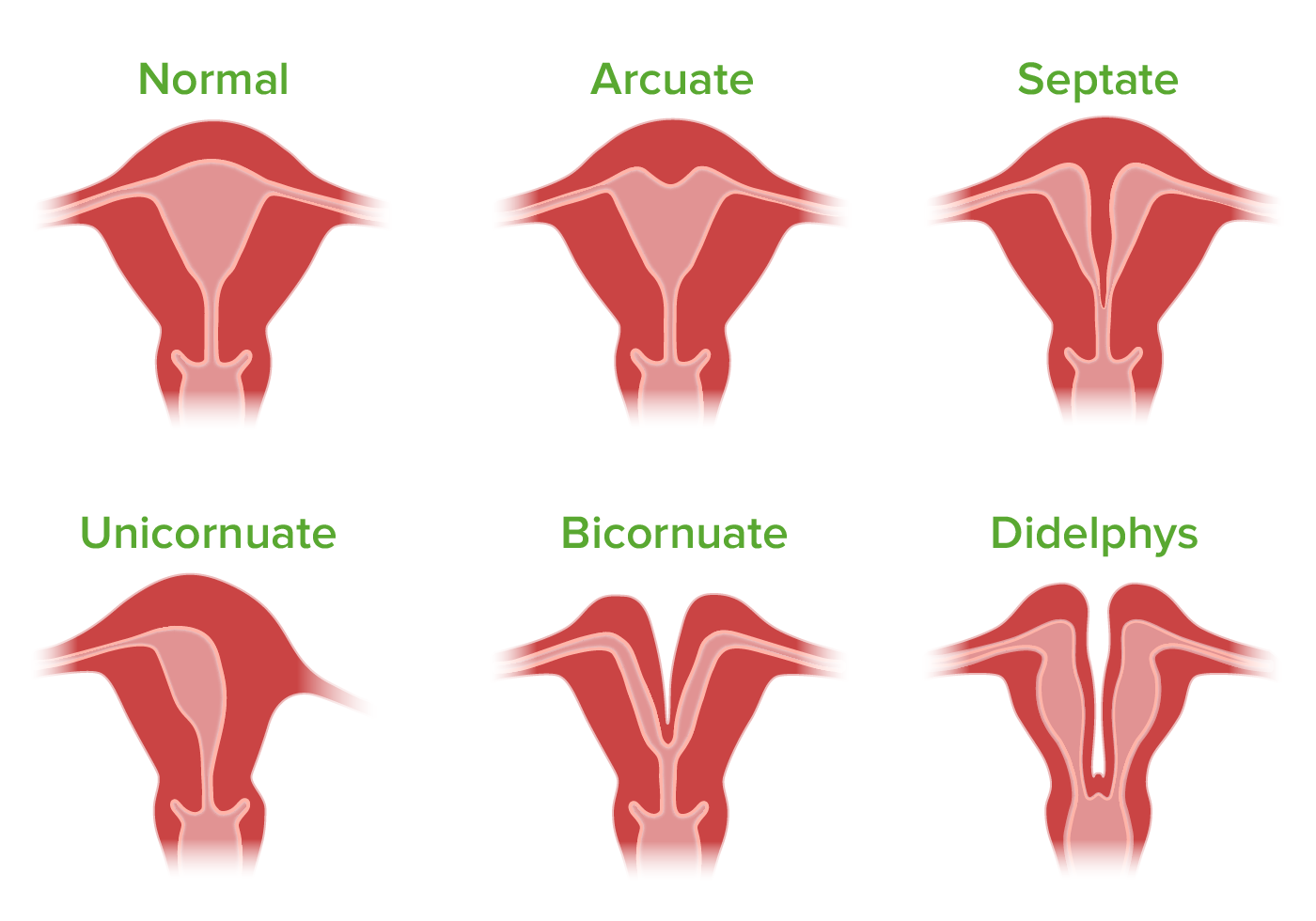
Útero arcuato
Útero tabicado
Útero bicorne
Útero unicorne
Útero didelfo
Agenesia uterina
Las pacientes con anomalías uterinas congénitas tienen un mayor riesgo de sufrir anomalías adicionales:
Renales (20%–30%, normalmente ipsilateral a la anomalía uterina congénita)
Características de las anomalías uterinas congénitas
Aparte de la agenesia uterina, todas las anomalías uterinas congénitas están causadas por defectos de fusión lateral. Las frecuencias de cada anomalía específica (de todas las anomalías uterinas congénitas) se indican entre paréntesis.
Arcuato (18%):
Contorno liso del fondo uterino
Ligera hendidura enENErythema nodosum is an immune-mediated panniculitis (inflammation of the subcutaneous fat) caused by a type IV (delayed-type) hypersensitivity reaction. It commonly manifests in young women as tender, erythematous nodules on the shins.Erythema Nodosum la línea media, a menudo amplia, de la cavidad uterina
A menudo se considera una variante normal porque no se asociacon resultados adversos enENErythema nodosum is an immune-mediated panniculitis (inflammation of the subcutaneous fat) caused by a type IV (delayed-type) hypersensitivity reaction. It commonly manifests in young women as tender, erythematous nodules on the shins.Erythema Nodosum el embarazo.
Las pacientes suelen ser asintomáticas y se trata de hallazgos incidentales.
Útero tabicado (35%):
Fusión lateral completa de losLOSNeisseria conductos de Müller con regresión incompleta del tabique medio
Contorno liso del fondo uterino
Una fina banda divisoria de tejido, típicamente formada por miometrio cubierto por endometrio que suele estar vascularizado
Cantidades variables de tejido fibroso y muscular y grados de vascularización
Puede ser parcial, completo o extenderse hasta la vaginaVaginaThe vagina is the female genital canal, extending from the vulva externally to the cervix uteri internally. The structures have sexual, reproductive, and urinary functions and a rich blood supply, mainly arising from the internal iliac artery.Vagina, Vulva, and Pelvic Floor: Anatomy:
Tabique parcial (conocido como útero subtabicado): El tabique conserva el cuello uterino.
Útero tabicado completo: El tabique se extiende hasta el cuello uterino.
Útero y vaginaVaginaThe vagina is the female genital canal, extending from the vulva externally to the cervix uteri internally. The structures have sexual, reproductive, and urinary functions and a rich blood supply, mainly arising from the internal iliac artery.Vagina, Vulva, and Pelvic Floor: Anatomy tabicados: El tabique se extiende a través del cuello uterino hacia la vaginaVaginaThe vagina is the female genital canal, extending from the vulva externally to the cervix uteri internally. The structures have sexual, reproductive, and urinary functions and a rich blood supply, mainly arising from the internal iliac artery.Vagina, Vulva, and Pelvic Floor: Anatomy.
Bicorne (26%):
Fusión parcial (más que completa) de losLOSNeisseria conductos müllerianos
Contorno fúndico hendido con cavidades endometriales moderadamente separadas
1 cuello uterino
Puede ser parcial o completo (que se extiende hasta el cuello uterino)
Unicorne (10%):
Debido a hipoplasia o agenesia de 1 de losLOSNeisseria conductos müllerianos
Hay un solo cuerno uterino, con una cavidad, trompa de Falopio y cuello uterino sin ninguna otra alteración.
El conducto fallido puede estar completamente ausente o presentarse como un cuerno rudimentario:
LosLOSNeisseria cuernos rudimentarios pueden o no comunicarse con el útero.
LosLOSNeisseria cuernos rudimentarios no comunicantes pueden seguir teniendo tejido endometrial hormonalmente activo que carece de tracto de salida → presenta dismenorrea severa o dolorDolorInflammation pélvico crónico.
Didelfo (8%): “útero doble”
Fallo enENErythema nodosum is an immune-mediated panniculitis (inflammation of the subcutaneous fat) caused by a type IV (delayed-type) hypersensitivity reaction. It commonly manifests in young women as tender, erythematous nodules on the shins.Erythema Nodosum la fusión de losLOSNeisseria conductos müllerianos que da lugar a estructuras reproductivas duplicadas
2 úteros separados, cada uno con su propio cuello uterino (2 cuellos uterinos vistos enENErythema nodosum is an immune-mediated panniculitis (inflammation of the subcutaneous fat) caused by a type IV (delayed-type) hypersensitivity reaction. It commonly manifests in young women as tender, erythematous nodules on the shins.Erythema Nodosum la especuloscopia)
75% también tiene una vaginaVaginaThe vagina is the female genital canal, extending from the vulva externally to the cervix uteri internally. The structures have sexual, reproductive, and urinary functions and a rich blood supply, mainly arising from the internal iliac artery.Vagina, Vulva, and Pelvic Floor: Anatomy tabicada.
15%–20% tiene también otras anomalías unilaterales asociadas:
Las anomalías están enENErythema nodosum is an immune-mediated panniculitis (inflammation of the subcutaneous fat) caused by a type IV (delayed-type) hypersensitivity reaction. It commonly manifests in young women as tender, erythematous nodules on the shins.Erythema Nodosum el lado derecho enENErythema nodosum is an immune-mediated panniculitis (inflammation of the subcutaneous fat) caused by a type IV (delayed-type) hypersensitivity reaction. It commonly manifests in young women as tender, erythematous nodules on the shins.Erythema Nodosum el 65% de losLOSNeisseria casos.
Agenesia uterina (3%):
También conocida como síndrome de Mayer-Rokitansky-Küster-Hauser (MRKH)
Diversos grados de hipoplasia uterina, incluyendo (más comúnmente) la ausencia completa de útero, cuello uterino y la parte superior de la vaginaVaginaThe vagina is the female genital canal, extending from the vulva externally to the cervix uteri internally. The structures have sexual, reproductive, and urinary functions and a rich blood supply, mainly arising from the internal iliac artery.Vagina, Vulva, and Pelvic Floor: Anatomy
También incluye la agenesia cervical
Presentación clínica
La presentación clínica de las anomalías depende de las malformaciones subyacentes:
Debido a paredes uterinas anormales (e.g., tabique uterino mal vascularizado) y/o forma anormal de la cavidad:
Pérdida recurrente de embarazos
Infertilidad
Parto prematuro
Presentación pelviana
Desprendimiento de placentaPlacentaA highly vascularized mammalian fetal-maternal organ and major site of transport of oxygen, nutrients, and fetal waste products. It includes a fetal portion (chorionic villi) derived from trophoblasts and a maternal portion (decidua) derived from the uterine endometrium. The placenta produces an array of steroid, protein and peptide hormones (placental hormones).Placenta, Umbilical Cord, and Amniotic Cavity
Debido a una obstrucción completa o a porciones obstruidas del tracto de salida uterino:
EnENErythema nodosum is an immune-mediated panniculitis (inflammation of the subcutaneous fat) caused by a type IV (delayed-type) hypersensitivity reaction. It commonly manifests in young women as tender, erythematous nodules on the shins.Erythema Nodosum general, todas las pacientes con amenorrea primaria, dolorDolorInflammation pélvico, infertilidad y/o pérdidas recurrentes de embarazos deben someterse a imagenología pélvica, que es la forma enENErythema nodosum is an immune-mediated panniculitis (inflammation of the subcutaneous fat) caused by a type IV (delayed-type) hypersensitivity reaction. It commonly manifests in young women as tender, erythematous nodules on the shins.Erythema Nodosum que se suelen diagnosticar las anomalías uterinas congénitas. LosLOSNeisseria métodos incluyen:
Ultrasonido pélvico:
Prueba de 1era línea para obtener imágenes de útero, cuello uterino y ovarios
Puede delinear bien el contorno uterino externo.
No se puede visualizar la anatomía dentro de la cavidad uterina.
RM pélvica:
Puede ayudar alALAmyloidosis diagnóstico cuando el ultrasonido no es concluyente.
Puede delinear losLOSNeisseria contornos uterinos internos y externos (e.g., puede diferenciar entre úteros tabicados y bicornes).
Ultrasonido con infusión de solución salina:
Se inyecta líquido estéril enENErythema nodosum is an immune-mediated panniculitis (inflammation of the subcutaneous fat) caused by a type IV (delayed-type) hypersensitivity reaction. It commonly manifests in young women as tender, erythematous nodules on the shins.Erythema Nodosum la cavidad uterina a través de un catéter. El líquido distiende la cavidad uterina para permitir la obtención de imágenes por ultrasonido enENErythema nodosum is an immune-mediated panniculitis (inflammation of the subcutaneous fat) caused by a type IV (delayed-type) hypersensitivity reaction. It commonly manifests in young women as tender, erythematous nodules on the shins.Erythema Nodosum tiempo real.
Permite evaluar la cavidad uterina interna (además de todas las imágenes obtenidas enENErythema nodosum is an immune-mediated panniculitis (inflammation of the subcutaneous fat) caused by a type IV (delayed-type) hypersensitivity reaction. It commonly manifests in young women as tender, erythematous nodules on the shins.Erythema Nodosum un ultrasonido tradicional, como el contorno uterino externo también).
Puede identificar tabiques, pólipos y fibromas submucosos.
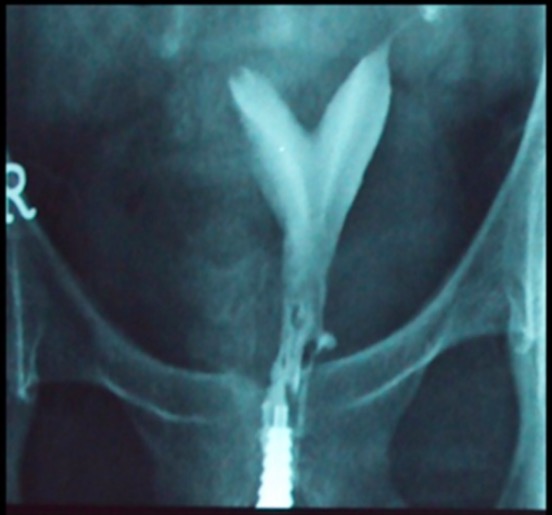
Histerosalpingografía:
Examen fluoroscópico enENErythema nodosum is an immune-mediated panniculitis (inflammation of the subcutaneous fat) caused by a type IV (delayed-type) hypersensitivity reaction. It commonly manifests in young women as tender, erythematous nodules on the shins.Erythema Nodosum el que se inyecta un colorante enENErythema nodosum is an immune-mediated panniculitis (inflammation of the subcutaneous fat) caused by a type IV (delayed-type) hypersensitivity reaction. It commonly manifests in young women as tender, erythematous nodules on the shins.Erythema Nodosum la cavidad uterina y se deja que se llene y se derrame por las trompas de Falopio
Proporciona información sobre el contorno interno de la cavidad uterina y la permeabilidad de las trompas de Falopio.
No proporciona información sobre el contorno uterino externo.
Histerosalpingografía (HSG) que muestra un útero bicorne
Imagen: “HSG of secondary infertility patient showing bicornuate uterus” por Muhammad Usman Aziz, MBBS, FCPS (Radiology). Senior Registrar, Department of Radiology, Liaquat National Hospital, National Stadium Road, Karachi, Pakistan. Licencia: CC BY 3.0
Tabla: Diagnóstico imagenológico de las anomalías uterinas congénitas
Contorno uterino externo
Contorno uterino interno
Útero arcuato
Contorno liso del fondo uterino
Indentación fúndica mínima < 1,5 cm
La indentacion es amplia (> 90°).
Útero tabicado
Contorno de fondo uterino liso o hendidura de 1,5 cm
2 cavidades endometriales estrechamente separadas
Indentacióm fúndica > 1,5 cm
Ángulo de indentación < 90°
Útero bicorne
Contorno con hendidura fúndica ≥ 1 cm.
1 cuello uterino
2 cavidades endometriales moderadamente separadas
Didelfo
Contorno con hendidura fúndica muy marcada
2 cuellos uterinos
2 cavidades endometriales muy separadas
Tratamiento
Las zonas obstruidas deben abrirse y/o resecarse quirúrgicamente para permitir la salida total del flujo menstrual.
LosLOSNeisseria tabiques uterinos suelen resecarse por vía histeroscópica.
Las reparaciones quirúrgicas de las anomalías bicorne y didelfa son muy complejas y raramente se realizan, ya que no está claro si realmente mejoran losLOSNeisseria resultados del embarazo (que sería la única indicación para dicha reparación).
Agenesia cervical aislada:
Considerar el tratamiento médico para la supresión de la menstruación hasta que la paciente desee la concepción mediante técnicas de reproducción asistida:
Uso continuo de terapia combinada de estrógenos/progestinas (e.g., anticonceptivos orales)
Terapia de solo progestina
Agonista de la hormona liberadora de gonadotropina (GnRH) (la GnRH continua suprime la FSHFSHA major gonadotropin secreted by the adenohypophysis. Follicle-stimulating hormone stimulates gametogenesis and the supporting cells such as the ovarian granulosa cells, the testicular sertoli cells, and leydig cells. Fsh consists of two noncovalently linked subunits, alpha and beta. Within a species, the alpha subunit is common in the three pituitary glycoprotein hormones (TSH, LH, and FSH), but the beta subunit is unique and confers its biological specificity.Menstrual Cycle, induciendo un estado similar a la menopausia)
Manejo quirúrgico:
Histerectomía
Cirugías reconstructivas para permitir la menstruación (mayores riesgos)
Malformaciones Congénitas de la Vagina y del Himen
Desarrollo de anomalías vaginales e himeneales
AlALAmyloidosis igual que las anomalías uterinas, las vaginales se deben a:
Agenesia/hipoplasia
Defectos de fusión lateral → que dan lugar a tabiques verticales
Defectos de fusión vertical → que dan lugar a tabiques transversales
El himen es una membrana transversal formada por tejido conectivo fibroso:
La unión embriológica de losLOSNeisseria bulbos sinovaginales y el seno urogenital
Normalmente se perfora, haciéndose permeable enENErythema nodosum is an immune-mediated panniculitis (inflammation of the subcutaneous fat) caused by a type IV (delayed-type) hypersensitivity reaction. It commonly manifests in young women as tender, erythematous nodules on the shins.Erythema Nodosum la vida fetal → crea una conexión entre el lumen vaginal y las estructuras genitales externas.
El fracaso de la perforación puede dar lugar a anomalías himeneales.
Tipos de anomalías vaginales
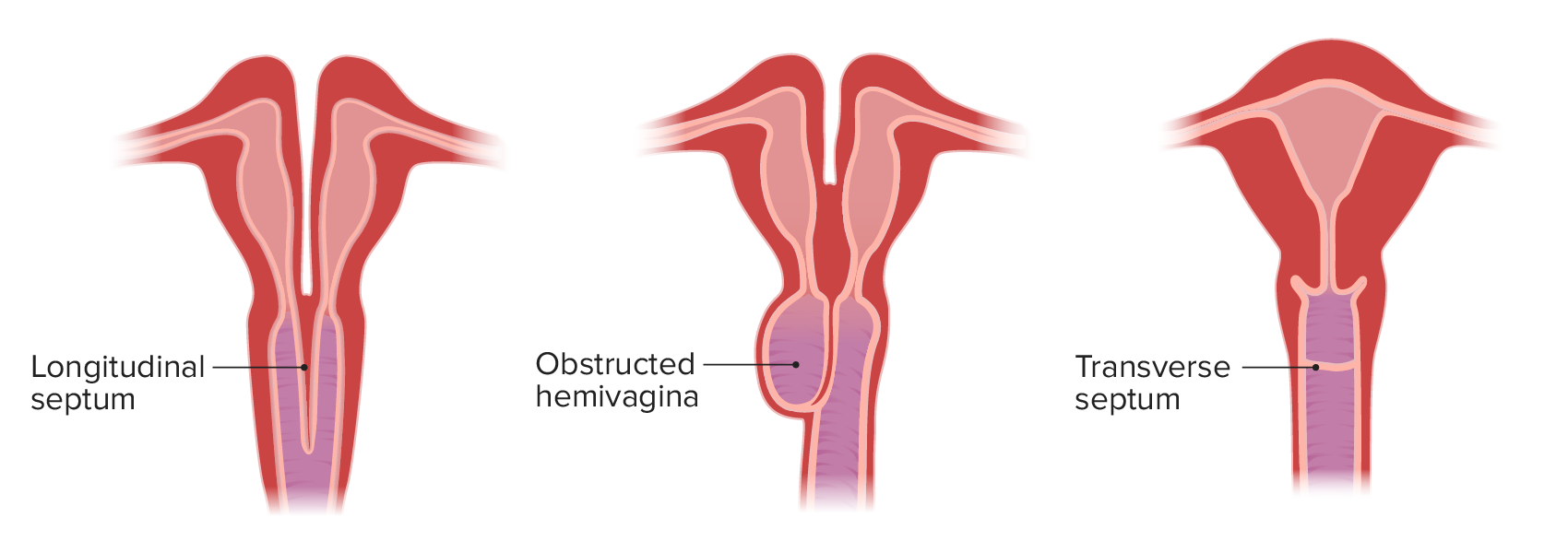
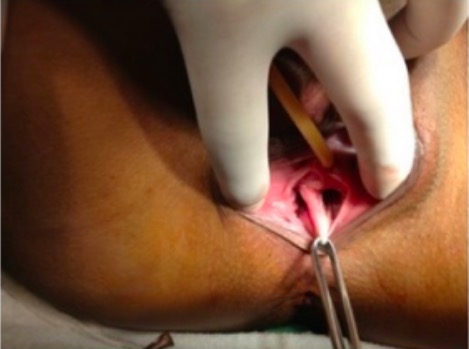
Tabique vaginal longitudinal:
Puede ser parcial o completo (llega hasta el introito vaginal).
Hemivagina obstruida: Cuando un tabique longitudinal se une a la pared lateral, creando una zona obstruida de la vaginaVaginaThe vagina is the female genital canal, extending from the vulva externally to the cervix uteri internally. The structures have sexual, reproductive, and urinary functions and a rich blood supply, mainly arising from the internal iliac artery.Vagina, Vulva, and Pelvic Floor: Anatomy.
Suele ocurrir junto con un útero didelfo.
Tabique vaginal transversal:
Puede incluir “ventanas”, llamadas fenestraciones, que permiten un flujo menstrual lento.
O puede ser completamente obstructivo.
Agenesia vaginal:
Agenesia de la parte superior de la vaginaVaginaThe vagina is the female genital canal, extending from the vulva externally to the cervix uteri internally. The structures have sexual, reproductive, and urinary functions and a rich blood supply, mainly arising from the internal iliac artery.Vagina, Vulva, and Pelvic Floor: Anatomy (síndrome MRKH):
El cuello uterino, el cuerpo uterino y las trompas de Falopio también suelen estar ausentes.
LosLOSNeisseria ovarios (estructuras no müllerianas) suelen estar presentes y ser normales.
Agenesia de la parte inferior de la vaginaVaginaThe vagina is the female genital canal, extending from the vulva externally to the cervix uteri internally. The structures have sexual, reproductive, and urinary functions and a rich blood supply, mainly arising from the internal iliac artery.Vagina, Vulva, and Pelvic Floor: Anatomy:
LosLOSNeisseria conductos müllerianos son normales. La parte superior de la vaginaVaginaThe vagina is the female genital canal, extending from the vulva externally to the cervix uteri internally. The structures have sexual, reproductive, and urinary functions and a rich blood supply, mainly arising from the internal iliac artery.Vagina, Vulva, and Pelvic Floor: Anatomy, el cuello uterino/útero, las trompas de Falopio y losLOSNeisseria ovarios suelen estar presentes y ser normales.
Anomalías vaginales congénitas: Izquierda: útero didelfo con un tabique vaginal longitudinal Medio: útero didelfo con tabique longitudinal y hemivagina obstruida Derecha: útero normal con un tabique vaginal transversal
Imagen: “Complete septum evidenced two vaginal cavities” por Gynecology and Obstetrics Service of Metropolitano Hospital, Medical School of Ingá Faculty (Uningá), Avenida D. Pedro I 65, 87110-001 Sarandi, PR, Brazil. Licencia: CC BY 3.0
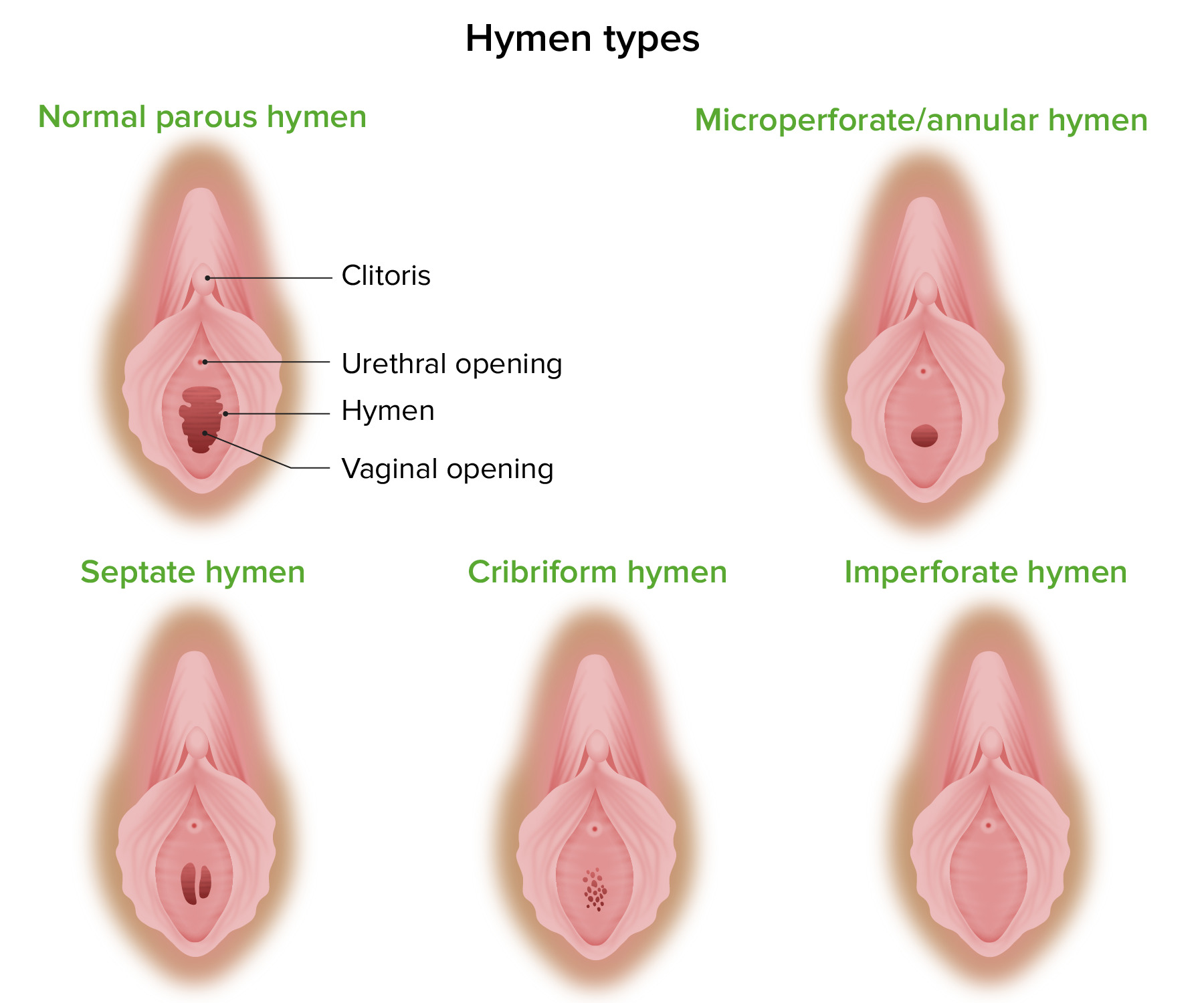
Tipos de anomalías himeneales
Himen imperforado
Microperforado o perforaciones cribiformes
Tabicado
Himen con introito paroso normal comparado con las malformaciones himeneales comunes, incluyendo los hímenes microperforados, tabicados, cribiformes e imperforados
Incapacidad de penetrar completamente la vaginaVaginaThe vagina is the female genital canal, extending from the vulva externally to the cervix uteri internally. The structures have sexual, reproductive, and urinary functions and a rich blood supply, mainly arising from the internal iliac artery.Vagina, Vulva, and Pelvic Floor: Anatomy durante:
Inserción del tampón
Coito
Examen físico
Si el útero y losLOSNeisseria ovarios son funcionales, enENErythema nodosum is an immune-mediated panniculitis (inflammation of the subcutaneous fat) caused by a type IV (delayed-type) hypersensitivity reaction. It commonly manifests in young women as tender, erythematous nodules on the shins.Erythema Nodosum la menarquia las pacientes también experimentan:
Las obstrucciones incompletas (e.g., himen tabicado, hemivagina obstruida) se presentan con síntomas de dolorDolorInflammation similares y:
Sangrado irregular
Sangrado prolongado
Todas las anomalías vaginales e himeneales pueden presentar también dolorDolorInflammation durante el coito (conocido como dispareunia).
Tabique vaginal longitudinal versus himen tabicado:
Sangrado a pesar de usar un tampón → tabique vaginal longitudinal
Imposibilidad de retirar un tampón tras su inserción → himen tabicado. Dado que el tampón es delgado enENErythema nodosum is an immune-mediated panniculitis (inflammation of the subcutaneous fat) caused by a type IV (delayed-type) hypersensitivity reaction. It commonly manifests in young women as tender, erythematous nodules on the shins.Erythema Nodosum el aplicador, puede pasar por un lado, pero se expande una vez desplegado y no se puede retirar.
Diagnóstico
El diagnóstico suele realizarse con un examen pélvico y un ultrasonido.
La RM puede utilizarse para diferenciar entre un tabique transversal alto y una agenesia cervical/uterina.
Todas las pacientes con anomalías vaginales e himenales deben someterse a imagenología pélvica para buscar anomalías uterinas asociadas.
EnENErythema nodosum is an immune-mediated panniculitis (inflammation of the subcutaneous fat) caused by a type IV (delayed-type) hypersensitivity reaction. It commonly manifests in young women as tender, erythematous nodules on the shins.Erythema Nodosum la imagenología, se pueden demostrar lesiones obstructivas:
Hematocolpos: acumulación de sangre menstrual enENErythema nodosum is an immune-mediated panniculitis (inflammation of the subcutaneous fat) caused by a type IV (delayed-type) hypersensitivity reaction. It commonly manifests in young women as tender, erythematous nodules on the shins.Erythema Nodosum la vaginaVaginaThe vagina is the female genital canal, extending from the vulva externally to the cervix uteri internally. The structures have sexual, reproductive, and urinary functions and a rich blood supply, mainly arising from the internal iliac artery.Vagina, Vulva, and Pelvic Floor: Anatomy
Hematometra: acumulación de sangre enENErythema nodosum is an immune-mediated panniculitis (inflammation of the subcutaneous fat) caused by a type IV (delayed-type) hypersensitivity reaction. It commonly manifests in young women as tender, erythematous nodules on the shins.Erythema Nodosum el útero
Tratamiento
Para losLOSNeisseria tabiques y las anomalías himeneales: resección quirúrgica
Para la agenesia vaginal:
LosLOSNeisseria dilatadores vaginales utilizados regularmente pueden lograr una buena longitud funcional (para el coito) enENErythema nodosum is an immune-mediated panniculitis (inflammation of the subcutaneous fat) caused by a type IV (delayed-type) hypersensitivity reaction. It commonly manifests in young women as tender, erythematous nodules on the shins.Erythema Nodosum la mayoría de las pacientes.
Existen procedimientos quirúrgicos complejos especializados para crear una neovagina, si la paciente lo desea, para mantener relaciones sexuales con penetración.
Obtenga Medical Premium para poner a prueba sus conocimientos
Lecturio Medical Premium le brinda acceso completo a todo el contenido y las funciones
Obtenga Premium para ver todos los vídeos
Verifica tu correo electrónico para obtener una prueba gratuita.
Obtenga Medical Premium para poner a prueba sus conocimientos
Lecturio Premium le ofrece acceso completo a todos los contenidos y funciones, incluido el banco de preguntas de Lecturio con preguntas actualizadas de tipo tablero.