Domina Conceptos Médicos

Estudia para la escuela de medicina y tus examenes con Lecturio.

Leucemia Mieloide Crónica

La leucemia mieloide crónica es una proliferación maligna de la línea celular granulocítica caracterizada por una diferenciación bastante normal. La anomalía genética subyacente es el cromosoma Filadelfia, un cromosoma 22 abreviado, que resulta de una translocación recíproca (9;22)(q34;q11). El cromosoma contiene el gen de fusión BCR-ABL1 (de ABL1 en EN Erythema nodosum is an immune-mediated panniculitis (inflammation of the subcutaneous fat) caused by a type IV (delayed-type) hypersensitivity reaction. It commonly manifests in young women as tender, erythematous nodules on the shins. Erythema Nodosum el cromosoma 9 y BCR BCR Lymphocytes: Histology en EN Erythema nodosum is an immune-mediated panniculitis (inflammation of the subcutaneous fat) caused by a type IV (delayed-type) hypersensitivity reaction. It commonly manifests in young women as tender, erythematous nodules on the shins. Erythema Nodosum el cromosoma 22), que induce la activación constitutiva de la tirosina quinasa y, en EN Erythema nodosum is an immune-mediated panniculitis (inflammation of the subcutaneous fat) caused by a type IV (delayed-type) hypersensitivity reaction. It commonly manifests in young women as tender, erythematous nodules on the shins. Erythema Nodosum consecuencia, la producción descontrolada de granulocitos. Los LOS Neisseria pacientes con leucemia mieloide crónica pueden ser asintomáticos o tener síntomas constitucionales, dolor Dolor Inflammation esternal y esplenomegalia. Los LOS Neisseria estudios de laboratorio muestran leucocitosis y un frotis de sangre periférica muestra un mayor número de células inmaduras. La demostración de la translocación Filadelfia utilizando técnicas citogenéticas se considera el estándar de oro de las pruebas diagnósticas. Sin tratamiento, la leucemia mieloide crónica generalmente tiene un curso trifásico que progresa de una fase crónica a una fase acelerada y conduce a una crisis blástica terminal. El tratamiento incluye terapia con inhibidores de la tirosina quinasa y agentes paliativos, así como trasplante alogénico de células hematopoyéticas.

Last updated: Apr 14, 2022

Editorial responsibility: Stanley Oiseth, Lindsay Jones, Evelin Maza

Descripción General

Definición

La leucemia mieloide crónica es una neoplasia mieloproliferativa crónica caracterizada por una proliferación desregulada y descontrolada del linaje granulocítico (células maduras y en EN Erythema nodosum is an immune-mediated panniculitis (inflammation of the subcutaneous fat) caused by a type IV (delayed-type) hypersensitivity reaction. It commonly manifests in young women as tender, erythematous nodules on the shins. Erythema Nodosum proceso de maduración), con una capacidad mantenida de diferenciación. La leucemia mieloide crónica también se conoce como leucemia mielocítica crónica o leucemia mielógena crónica.

Epidemiología

  • 20% de todas las leucemias en EN Erythema nodosum is an immune-mediated panniculitis (inflammation of the subcutaneous fat) caused by a type IV (delayed-type) hypersensitivity reaction. It commonly manifests in young women as tender, erythematous nodules on the shins. Erythema Nodosum adultos
  • Incidencia:
    • En EN Erythema nodosum is an immune-mediated panniculitis (inflammation of the subcutaneous fat) caused by a type IV (delayed-type) hypersensitivity reaction. It commonly manifests in young women as tender, erythematous nodules on the shins. Erythema Nodosum Estados Unidos: 1–2 casos por cada 100 000 habitantes
    • Aumenta con la edad
  • Edad media de presentación: aproximadamente 55 años
  • Ligero predominio masculino
  • Sin predisposición familiar conocida
  • La prevalencia de leucemia mieloide crónica está aumentando en EN Erythema nodosum is an immune-mediated panniculitis (inflammation of the subcutaneous fat) caused by a type IV (delayed-type) hypersensitivity reaction. It commonly manifests in young women as tender, erythematous nodules on the shins. Erythema Nodosum los LOS Neisseria países desarrollados debido al AL Amyloidosis efecto de los LOS Neisseria inhibidores de la quinasa ABL1.

Etiología

  • Desconocida en EN Erythema nodosum is an immune-mediated panniculitis (inflammation of the subcutaneous fat) caused by a type IV (delayed-type) hypersensitivity reaction. It commonly manifests in young women as tender, erythematous nodules on the shins. Erythema Nodosum la mayoría de los LOS Neisseria casos
  • La radiación ionizante en EN Erythema nodosum is an immune-mediated panniculitis (inflammation of the subcutaneous fat) caused by a type IV (delayed-type) hypersensitivity reaction. It commonly manifests in young women as tender, erythematous nodules on the shins. Erythema Nodosum dosis altas es un factor de riesgo importante.

Fisiopatología

Hematopoyesis

La hematopoyesis comienza con una célula madre hematopoyética, que se incita a dividirse y diferenciarse con estímulos químicos apropiados (factores de crecimiento hematopoyéticos).
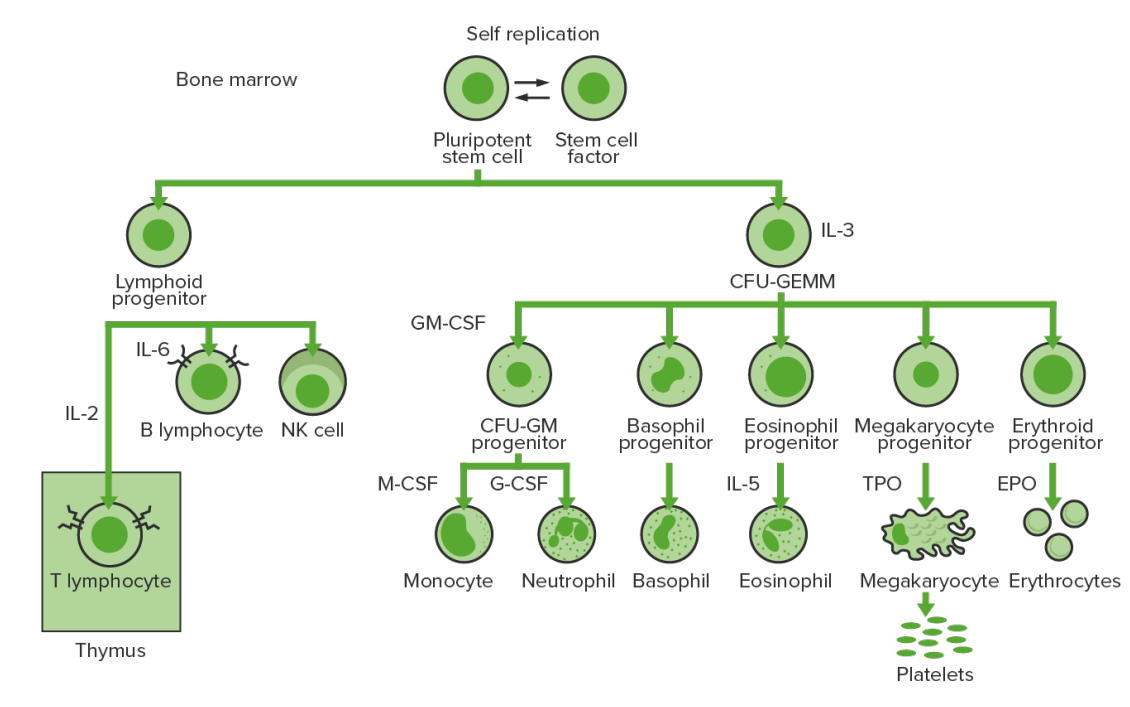
  • Las células madre linfoides dan lugar a los LOS Neisseria linfocitos.
  • Las células madre mieloides finalmente se diferencian en EN Erythema nodosum is an immune-mediated panniculitis (inflammation of the subcutaneous fat) caused by a type IV (delayed-type) hypersensitivity reaction. It commonly manifests in young women as tender, erythematous nodules on the shins. Erythema Nodosum plaquetas, eritrocitos, granulocitos (neutrófilos, basófilos, eosinófilos) y monocitos:
    • La interleuquina-3 estimula la diferenciación de células madre hematopoyéticas multipotenciales en EN Erythema nodosum is an immune-mediated panniculitis (inflammation of the subcutaneous fat) caused by a type IV (delayed-type) hypersensitivity reaction. It commonly manifests in young women as tender, erythematous nodules on the shins. Erythema Nodosum células progenitoras mieloides.
    • Factor estimulante de colonias de granulocitos y macrófagos → diferenciación de progenitores mieloides a granulocitos (neutrófilos) y monocitos
    • Interleuquina-5 → diferenciación a eosinófilos
    • Trombopoyetina → diferenciación a trombocitos (plaquetas)
    • Eritropoyetina → diferenciación a eritrocitos
Hematopoyesis de la médula ósea

Hematopoyesis de la médula ósea:
Proliferación y diferenciación de los elementos formes de la sangre:
En la leucemia mieloide crónica, existe una proliferación sostenida de células en la línea granulocítica (mieloblastos → neutrófilos, basófilos, eosinófilos). Se observan tanto células maduras como en proceso de maduración; por lo tanto, hay células que son solo parcialmente efectivas.
CFU-GEMM: unidad formadora de colonias: granulocitos, eritrocitos, monocitos, megacariocitos
GM-CSF: factor estimulante de colonias de granulocitos y macrófagos
M-CSF: factor estimulante de colonias de macrófagos
G-CSF: factor estimulante de colonias de granulocitos
NK: células asesinas naturales

Imagen por Lecturio.

Mutación

La leucemia mieloide crónica es una anomalía adquirida de las células madre hematopoyéticas en EN Erythema nodosum is an immune-mediated panniculitis (inflammation of the subcutaneous fat) caused by a type IV (delayed-type) hypersensitivity reaction. It commonly manifests in young women as tender, erythematous nodules on the shins. Erythema Nodosum la médula ósea.
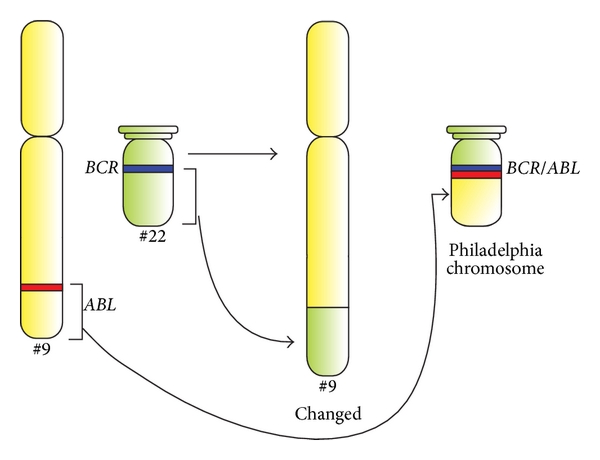
  • Se produce una mutación en EN Erythema nodosum is an immune-mediated panniculitis (inflammation of the subcutaneous fat) caused by a type IV (delayed-type) hypersensitivity reaction. It commonly manifests in young women as tender, erythematous nodules on the shins. Erythema Nodosum el gen de fusión BCR-ABL1:
    • Involucra BCR BCR Lymphocytes: Histology en EN Erythema nodosum is an immune-mediated panniculitis (inflammation of the subcutaneous fat) caused by a type IV (delayed-type) hypersensitivity reaction. It commonly manifests in young women as tender, erythematous nodules on the shins. Erythema Nodosum el cromosoma 22 y ABL1 en EN Erythema nodosum is an immune-mediated panniculitis (inflammation of the subcutaneous fat) caused by a type IV (delayed-type) hypersensitivity reaction. It commonly manifests in young women as tender, erythematous nodules on the shins. Erythema Nodosum el cromosoma 9
    • Por lo general, resulta de una translocación recíproca (9;22)(q34;q11) que da lugar al AL Amyloidosis cromosoma Filadelfia:
      • Cromosoma 22 anormal
      • Aberración genética distintiva de la leucemia mieloide crónica
    • El gen de fusión BCR-ABL1 produce un producto único, la proteína de fusión BCR-ABL1.
  • Proteína BCR-ABL1:
    • Proteína oncogénica que induce una actividad aumentada persistente de la tirosina quinasa
    • La actividad de tirosina quinasa desregulada conduce a la leucemia mieloide crónica a través de:
      • Sobreproliferación de células mieloides en EN Erythema nodosum is an immune-mediated panniculitis (inflammation of the subcutaneous fat) caused by a type IV (delayed-type) hypersensitivity reaction. It commonly manifests in young women as tender, erythematous nodules on the shins. Erythema Nodosum la médula ósea
      • Maduración discordante de las células
      • Apoptosis Apoptosis A regulated cell death mechanism characterized by distinctive morphologic changes in the nucleus and cytoplasm, including the endonucleolytic cleavage of genomic DNA, at regularly spaced, internucleosomal sites, I.e., DNA fragmentation. It is genetically-programmed and serves as a balance to mitosis in regulating the size of animal tissues and in mediating pathologic processes associated with tumor growth. Ischemic Cell Damage
  • El sello clínico de la leucemia mieloide crónica es la producción descontrolada de granulocitos maduros e inmaduros:
    • Predominantemente neutrófilos
    • Algunos basófilos y eosinófilos
  • ↑ División celular → ↑ expansión de la médula ósea
Diagrama esquemático de la translocación en el cromosoma Filadelfia

Diagrama esquemático de la translocación que forma el cromosoma Filadelfia y representación esquemática de los genes BCR y ABL.
Los genes ABL1 y BCR residen en los brazos largos de los cromosomas 9 y 22, respectivamente. El gen de fusión BCR-ABL se forma con la translocación del gen ABL1 (del cromosoma 9) al brazo largo del cromosoma 22, creando un cromosoma 22 modificado (el llamado cromosoma Filadelfia).

Imagen: “Figure 1” por Ewelina Trela, Sylwester Glowacki, and Janusz Błasiak. Licencia: CC BY 3.0

Presentación Clínica

Características clínicas generales

  • De la anemia Anemia Anemia is a condition in which individuals have low Hb levels, which can arise from various causes. Anemia is accompanied by a reduced number of RBCs and may manifest with fatigue, shortness of breath, pallor, and weakness. Subtypes are classified by the size of RBCs, chronicity, and etiology. Anemia: Overview and Types y el aumento de la renovación celular:
    • Fiebre, sudores nocturnos
    • Malestar, fatiga
    • Pérdida de peso
  • De la esplenomegalia e infarto esplénico:
    • Dolor Dolor Inflammation o plenitud en EN Erythema nodosum is an immune-mediated panniculitis (inflammation of the subcutaneous fat) caused by a type IV (delayed-type) hypersensitivity reaction. It commonly manifests in young women as tender, erythematous nodules on the shins. Erythema Nodosum el cuadrante superior izquierdo
    • Saciedad temprana
  • De la disfunción plaquetaria:
    • Petequias
    • Equimosis
    • Sangrado
  • De la expansión de la médula ósea:
  • Del ↑ producción de ácido úrico (ácido úrico liberado como resultado de la degradación celular): artritis gotosa
  • De eventos relacionados con hiperviscosidad o trombóticos (debido a leucocitosis severa y/o trombocitosis):
    • Confusión
    • Cefalea
    • Visión borrosa
    • Priapismo

Fases de la enfermedad

Los LOS Neisseria síntomas discutidos anteriormente varían en EN Erythema nodosum is an immune-mediated panniculitis (inflammation of the subcutaneous fat) caused by a type IV (delayed-type) hypersensitivity reaction. It commonly manifests in young women as tender, erythematous nodules on the shins. Erythema Nodosum severidad dependiendo de las 3 fases de la enfermedad de la leucemia mieloide crónica (basadas en EN Erythema nodosum is an immune-mediated panniculitis (inflammation of the subcutaneous fat) caused by a type IV (delayed-type) hypersensitivity reaction. It commonly manifests in young women as tender, erythematous nodules on the shins. Erythema Nodosum los LOS Neisseria leucocitos inmaduros o células blásticas en EN Erythema nodosum is an immune-mediated panniculitis (inflammation of the subcutaneous fat) caused by a type IV (delayed-type) hypersensitivity reaction. It commonly manifests in young women as tender, erythematous nodules on the shins. Erythema Nodosum la sangre o la médula ósea).

Fase crónica estable:

  • Células blásticas: < 10%
  • La mayoría de los LOS Neisseria pacientes se presentan en EN Erythema nodosum is an immune-mediated panniculitis (inflammation of the subcutaneous fat) caused by a type IV (delayed-type) hypersensitivity reaction. It commonly manifests in young women as tender, erythematous nodules on the shins. Erythema Nodosum la fase crónica estable.
  • Comienzo insidioso con síntomas generalmente leves:
    • Hasta el 50% de los LOS Neisseria pacientes son asintomáticos (diagnóstico basado en EN Erythema nodosum is an immune-mediated panniculitis (inflammation of the subcutaneous fat) caused by a type IV (delayed-type) hypersensitivity reaction. It commonly manifests in young women as tender, erythematous nodules on the shins. Erythema Nodosum pruebas de laboratorio).
    • Fatiga, malestar
    • Pérdida de peso, sudoración
    • Plenitud abdominal
  • Curso clínico indolente con una duración de varios años
  • La respuesta a la terapia es excelente.

Fase acelerada:

  • La leucemia mieloide crónica no tratada por lo general progresa a la fase acelerada.
  • ≥ 1 de las siguientes características:
    • Células blásticas: aumentan a 10%–19%.
    • Basófilos de sangre periférica: ≥ 20%
    • Recuento de plaquetas: < 100 000/µL, no debido a la terapia
    • Plaquetas: > 1 millón/µL, que no responde a la terapia
    • Esplenomegalia progresiva y leucocitos en EN Erythema nodosum is an immune-mediated panniculitis (inflammation of the subcutaneous fat) caused by a type IV (delayed-type) hypersensitivity reaction. It commonly manifests in young women as tender, erythematous nodules on the shins. Erythema Nodosum aumento, resistentes a la terapia
    • Nuevos cambios cromosómicos (evolución de células leucémicas observadas con anomalías cromosómicas además del cromosoma Filadelfia)
  • Las células se multiplican agresivamente y causan:
    • Fiebre
    • Pérdida de peso significativa
    • Fatiga severa
    • Dolor Dolor Inflammation óseo y articular significativo
    • Plenitud/ dolor Dolor Inflammation abdominal
    • Hemorragia
    • Síntomas trombóticos o de hiperviscosidad
  • La respuesta a la terapia es menos favorable.

Crisis blástica (o fase aguda):

  • Los LOS Neisseria blastos mieloides o linfoides proliferan de forma descontrolada.
  • Presencia de ≥ 1 de los LOS Neisseria siguientes:
    • > 20% de los LOS Neisseria blastos en EN Erythema nodosum is an immune-mediated panniculitis (inflammation of the subcutaneous fat) caused by a type IV (delayed-type) hypersensitivity reaction. It commonly manifests in young women as tender, erythematous nodules on the shins. Erythema Nodosum sangre periférica o médula ósea
    • Grandes grupos de blastos en EN Erythema nodosum is an immune-mediated panniculitis (inflammation of the subcutaneous fat) caused by a type IV (delayed-type) hypersensitivity reaction. It commonly manifests in young women as tender, erythematous nodules on the shins. Erythema Nodosum biopsia de médula ósea
    • Proliferación blástica extramedular (otros tejidos/órganos más allá de la médula)
  • Indistinguible de la leucemia aguda: fiebre, hemorragia, petequias, equimosis, palidez y esplenomegalia progresiva
  • La respuesta al AL Amyloidosis tratamiento es mala.

Diagnóstico

Hallazgos hematológicos y bioquímicos

  • Pruebas hematológicas:
    • Hemograma: Leucocitosis
    • Frotis periférico:
      • Aumento del número de células inmaduras de la serie granulocítica
      • Abultamiento de mielocitos (mielocito > metamielocito)
      • Anemia Anemia Anemia is a condition in which individuals have low Hb levels, which can arise from various causes. Anemia is accompanied by a reduced number of RBCs and may manifest with fatigue, shortness of breath, pallor, and weakness. Subtypes are classified by the size of RBCs, chronicity, and etiology. Anemia: Overview and Types
      • Trombocitosis
      • Basofilia, eosinofilia
  • Hallazgos bioquímicos:
    • Puntuación baja de fosfatasa alcalina leucocitaria
    • ↑ Ácido úrico, ↑ lactato deshidrogenasa ( LDH LDH Osteosarcoma)

Médula ósea y hallazgos citogenéticos

  • Biopsia de médula ósea:
    • Hipercelular (↑ precursores granulocíticos)
    • Hiperplasia mieloide con relación mieloide:eritroide de 15:1–20:1
    • Histiocitos azul marino (macrófagos dispersos con aumento de citoplasma verde azulado)
    • ↑ Deposición de reticulina
  • Estudios citogenéticos:
    • Realizar pruebas para:
      • Cromosoma Filadelfia
      • Gen de fusión BCR-ABL1
      • Producto del gen de ácido ribonucleico mensajero (ARNm) de fusión
    • Técnicas:
      • Cariotipo
      • Hibridación fluorescente in situ
      • Reacción en EN Erythema nodosum is an immune-mediated panniculitis (inflammation of the subcutaneous fat) caused by a type IV (delayed-type) hypersensitivity reaction. It commonly manifests in young women as tender, erythematous nodules on the shins. Erythema Nodosum cadena de polimerasa con transcripción inversa ( RT-PCR RT-PCR A variation of the pcr technique in which cDNA is made from RNA via reverse transcription. The resultant cDNA is then amplified using standard pcr protocols. Polymerase Chain Reaction (PCR), por sus siglas en EN Erythema nodosum is an immune-mediated panniculitis (inflammation of the subcutaneous fat) caused by a type IV (delayed-type) hypersensitivity reaction. It commonly manifests in young women as tender, erythematous nodules on the shins. Erythema Nodosum inglés)

Comparación con otras neoplasias mieloproliferativas

Las neoplasias mieloproliferativas se pueden comparar con la siguiente clasificación de la World Health Organization (WHO):

Tabla: Tipos clásicos de neoplasias mieloproliferativas
Enfermedad Mutaciones Puntos clave
Leucemia mieloide crónica BCR-ABL1 (cromosoma Filadelfia) Proliferación de granulocitos maduros y en EN Erythema nodosum is an immune-mediated panniculitis (inflammation of the subcutaneous fat) caused by a type IV (delayed-type) hypersensitivity reaction. It commonly manifests in young women as tender, erythematous nodules on the shins. Erythema Nodosum proceso de maduración
Trombocitemia esencial JAK2, CALR o MPL Producción clonal excesiva de plaquetas
Policitemia vera JAK2 Elevación de la producción eritrocitaria
Mielofibrosis primaria JAK2, CALR o MPL Fibrosis Fibrosis Any pathological condition where fibrous connective tissue invades any organ, usually as a consequence of inflammation or other injury. Bronchiolitis Obliterans obliterativa de la médula ósea
JAK: Janus quinasa
CALR: calreticulina

Otros tipos:

  • Leucemia neutrofílica crónica
  • Leucemia eosinofílica crónica, no especificada de otra manera
  • Neoplasia mieloproliferativa, inclasificable

Tratamiento

Objetivos y opciones de tratamiento

  • Objetivos de la terapia:
    • Remisión hematológica: lograr recuentos sanguíneos normales y tamaño del bazo normal
    • Remisión citogenética: abolir todas las células con cromosoma Filadelfia positivo
    • Remisión molecular: gen de fusión BCR-ABL1 negativo en EN Erythema nodosum is an immune-mediated panniculitis (inflammation of the subcutaneous fat) caused by a type IV (delayed-type) hypersensitivity reaction. It commonly manifests in young women as tender, erythematous nodules on the shins. Erythema Nodosum PCR PCR Polymerase chain reaction (PCR) is a technique that amplifies DNA fragments exponentially for analysis. The process is highly specific, allowing for the targeting of specific genomic sequences, even with minuscule sample amounts. The PCR cycles multiple times through 3 phases: denaturation of the template DNA, annealing of a specific primer to the individual DNA strands, and synthesis/elongation of new DNA molecules. Polymerase Chain Reaction (PCR)
  • El tratamiento se basa en EN Erythema nodosum is an immune-mediated panniculitis (inflammation of the subcutaneous fat) caused by a type IV (delayed-type) hypersensitivity reaction. It commonly manifests in young women as tender, erythematous nodules on the shins. Erythema Nodosum la fase específica de la enfermedad y las opciones incluyen:
    • Inhibidores de la tirosina quinasa:
      • Inhiben la tirosina quinasa constitutivamente activa y provocan la apoptosis Apoptosis A regulated cell death mechanism characterized by distinctive morphologic changes in the nucleus and cytoplasm, including the endonucleolytic cleavage of genomic DNA, at regularly spaced, internucleosomal sites, I.e., DNA fragmentation. It is genetically-programmed and serves as a balance to mitosis in regulating the size of animal tissues and in mediating pathologic processes associated with tumor growth. Ischemic Cell Damage de las células neoplásicas
      • Tratamiento inicial de elección
      • Imatinib Imatinib A tyrosine kinase inhibitor and antineoplastic agent that inhibits the bcr-abl kinase created by chromosome rearrangements in chronic myeloid leukemia and acute lymphoblastic leukemia, as well as pdg-derived tyrosine kinases that are overexpressed in gastrointestinal stromal tumors. Targeted and Other Nontraditional Antineoplastic Therapy, dasatinib Dasatinib A pyrimidine and thiazole derived antineoplastic agent and protein kinase inhibitor of bcr-abl kinase. It is used in the treatment of patients with chronic myeloid leukemia who are resistant or intolerant to imatinib. Targeted and Other Nontraditional Antineoplastic Therapy, nilotinib Nilotinib Targeted and Other Nontraditional Antineoplastic Therapy, bosutinib, ponatinib
      • Efectos adversos: náuseas, diarrea, retención de líquidos, mielosupresión, prolongación del intervalo QT
    • Trasplante alogénico de células hematopoyéticas
    • Otros agentes (utilizados si son refractarios al AL Amyloidosis tratamiento inicial y/o el paciente no es candidato a trasplante):
      • Hidroxiurea: para reducir los LOS Neisseria leucocitos
      • Interferón alfa (con/sin citarabina)
      • Busulfán
      • Mepesuccinato de omacetaxina (inhibidor de la síntesis de proteínas)

Abordaje terapéutico

Fase crónica estable:

  • Inhibidores de la tirosina quinasa:
    • Tratamiento de elección para casi todos los LOS Neisseria pacientes recién diagnosticados
    • Lograr un control a largo plazo en EN Erythema nodosum is an immune-mediated panniculitis (inflammation of the subcutaneous fat) caused by a type IV (delayed-type) hypersensitivity reaction. It commonly manifests in young women as tender, erythematous nodules on the shins. Erythema Nodosum la mayoría de los LOS Neisseria pacientes, con respuestas citogenéticas y moleculares
  • El pronóstico es bueno.

Fase acelerada:

  • Tiende a ser difícil de controlar
  • Inhibidores de la tirosina quinasa:
    • Se puede ver una respuesta inicial, pero generalmente es de corta duración.
    • Tasa de recaída significativa incluso después de un tratamiento exitoso con los LOS Neisseria inhibidores de la tirosina quinasa
  • Trasplante alogénico de células hematopoyéticas:
    • Potencialmente curativo
    • La derivación para trasplante (con búsqueda de un donante) también se inicia durante el tratamiento con inhibidores de la tirosina quinasa para todos los LOS Neisseria pacientes elegibles.
  • El pronóstico es malo.

Crisis blástica:

  • Enfermedad agresiva
  • Todas las terapias discutidas hasta ahora son opciones viables.
  • Tratar como leucemia aguda.
  • Tratamiento paliativo para aliviar los LOS Neisseria síntomas
  • El pronóstico es desalentador.

Monitoreo y tratamiento de soporte

  • Monitoreo de lo siguiente:
    • Hemograma para determinar la respuesta hematológica
    • Análisis de bandas cromosómicas (porcentaje de células con cromosoma Filadelfia positivo) para determinar la respuesta citogenética
    • BCR-ABL1 por PCR PCR Polymerase chain reaction (PCR) is a technique that amplifies DNA fragments exponentially for analysis. The process is highly specific, allowing for the targeting of specific genomic sequences, even with minuscule sample amounts. The PCR cycles multiple times through 3 phases: denaturation of the template DNA, annealing of a specific primer to the individual DNA strands, and synthesis/elongation of new DNA molecules. Polymerase Chain Reaction (PCR) cuantitativa para determinar la respuesta molecular
  • El seguimiento de la respuesta es fundamental para predecir cuándo se deben considerar terapias distintas de los LOS Neisseria inhibidores de la tirosina quinasa.
  • Terapias de soporte:
    • Transfusiones de sangre para la anemia Anemia Anemia is a condition in which individuals have low Hb levels, which can arise from various causes. Anemia is accompanied by a reduced number of RBCs and may manifest with fatigue, shortness of breath, pallor, and weakness. Subtypes are classified by the size of RBCs, chronicity, and etiology. Anemia: Overview and Types
    • Transfusiones de plaquetas para la trombocitopenia
  • Síndrome de lisis tumoral:
    • Emergencia médica causada por alteraciones metabólicas que ocurren cuando un gran número de células cancerosas mueren rápidamente
    • La lisis de las células tumorales conduce a la liberación de contenidos intracelulares en EN Erythema nodosum is an immune-mediated panniculitis (inflammation of the subcutaneous fat) caused by a type IV (delayed-type) hypersensitivity reaction. It commonly manifests in young women as tender, erythematous nodules on the shins. Erythema Nodosum el torrente sanguíneo:
      • Desequilibrios electrolíticos (↑ potasio, ↑ fosfato, ↓ calcio) → complicaciones neurológicas, cardiacas y gastrointestinales
      • Aumento de la descomposición de los LOS Neisseria ácidos nucleicos → hiperuricemia, que puede provocar lesión renal aguda
    • Tratamiento:
      • Hidratación
      • Alopurinol
      • Rasburicasa

Diagnóstico Diferencial

Otras neoplasias mieloproliferativas crónicas

  • Mielofibrosis primaria: neoplasia mieloproliferativa crónica caracterizada por fibrosis Fibrosis Any pathological condition where fibrous connective tissue invades any organ, usually as a consequence of inflammation or other injury. Bronchiolitis Obliterans de la médula ósea y hematopoyesis extramedular en EN Erythema nodosum is an immune-mediated panniculitis (inflammation of the subcutaneous fat) caused by a type IV (delayed-type) hypersensitivity reaction. It commonly manifests in young women as tender, erythematous nodules on the shins. Erythema Nodosum el bazo y el hígado: la mielofibrosis primaria está relacionada con mutaciones en EN Erythema nodosum is an immune-mediated panniculitis (inflammation of the subcutaneous fat) caused by a type IV (delayed-type) hypersensitivity reaction. It commonly manifests in young women as tender, erythematous nodules on the shins. Erythema Nodosum JAK2, CALR y MPL. No existe un gen de fusión BCR-ABL1. Los LOS Neisseria hallazgos clínicos son fatiga intensa, esplenomegalia, hepatomegalia y anemia Anemia Anemia is a condition in which individuals have low Hb levels, which can arise from various causes. Anemia is accompanied by a reduced number of RBCs and may manifest with fatigue, shortness of breath, pallor, and weakness. Subtypes are classified by the size of RBCs, chronicity, and etiology. Anemia: Overview and Types. El frotis de sangre periférica es leucoeritroblástico y contiene precursores de leucocitos y eritrocitos, eritrocitos nucleados y dacriocitos. El diagnóstico se realiza mediante examen de médula ósea y pruebas moleculares. El tratamiento incluye trasplante alogénico de células hematopoyéticas y terapia con ruxolitinib Ruxolitinib Targeted and Other Nontraditional Antineoplastic Therapy y fedratinib.
  • Policitemia vera: sobreproducción no regulada de células madre hematopoyéticas, principalmente eritrocitos, a pesar de niveles bajos de eritropoyetina: en EN Erythema nodosum is an immune-mediated panniculitis (inflammation of the subcutaneous fat) caused by a type IV (delayed-type) hypersensitivity reaction. It commonly manifests in young women as tender, erythematous nodules on the shins. Erythema Nodosum la policitemia vera, hay una mutación de ganancia de función en EN Erythema nodosum is an immune-mediated panniculitis (inflammation of the subcutaneous fat) caused by a type IV (delayed-type) hypersensitivity reaction. It commonly manifests in young women as tender, erythematous nodules on the shins. Erythema Nodosum el gen JAK2. La mayoría de los LOS Neisseria pacientes presentan síntomas de hiperviscosidad. El tratamiento incluye flebotomía, aspirina en EN Erythema nodosum is an immune-mediated panniculitis (inflammation of the subcutaneous fat) caused by a type IV (delayed-type) hypersensitivity reaction. It commonly manifests in young women as tender, erythematous nodules on the shins. Erythema Nodosum dosis bajas y terapias mielosupresoras.
  • Trombocitemia esencial: proliferación de megacariocitos, generalmente debido a mutaciones en EN Erythema nodosum is an immune-mediated panniculitis (inflammation of the subcutaneous fat) caused by a type IV (delayed-type) hypersensitivity reaction. It commonly manifests in young women as tender, erythematous nodules on the shins. Erythema Nodosum JAK2, CALR y MPL, que da como resultado trombocitosis: las manifestaciones clínicas de la trombocitemia esencial son cefaleas, alteraciones visuales y eritromelalgia. Los LOS Neisseria recuentos excesivos de plaquetas provocan tanto trombosis como hemorragias. El tratamiento está dirigido a reducir el recuento de plaquetas (con hidroxiurea) y disminuir el riesgo de trombosis (mediante anticoagulación sistémica y/o agentes antiplaquetarios).
  • Leucemia neutrofílica crónica: trastorno raro caracterizado por la proliferación de granulocitos maduros en EN Erythema nodosum is an immune-mediated panniculitis (inflammation of the subcutaneous fat) caused by a type IV (delayed-type) hypersensitivity reaction. It commonly manifests in young women as tender, erythematous nodules on the shins. Erythema Nodosum la sangre y la médula ósea: la infiltración de órganos puede ocurrir en EN Erythema nodosum is an immune-mediated panniculitis (inflammation of the subcutaneous fat) caused by a type IV (delayed-type) hypersensitivity reaction. It commonly manifests in young women as tender, erythematous nodules on the shins. Erythema Nodosum la leucemia neutrofílica crónica, lo que lleva a hepatoesplenomegalia. No existe el cromosoma Filadelfia, pero se observa una puntuación de fosfatasa alcalina leucocitaria aumentada en EN Erythema nodosum is an immune-mediated panniculitis (inflammation of the subcutaneous fat) caused by a type IV (delayed-type) hypersensitivity reaction. It commonly manifests in young women as tender, erythematous nodules on the shins. Erythema Nodosum la leucemia neutrofílica crónica. La leucemia neutrofílica crónica generalmente no progresa a leucemia mieloide aguda. Las opciones terapéuticas no están bien definidas, pero el inhibidor de JAK1/2, ruxolitinib Ruxolitinib Targeted and Other Nontraditional Antineoplastic Therapy, es una opción.
  • Leucemia eosinofílica crónica, no especificada de otro modo: trastorno mieloproliferativo crónico clonal raro caracterizado por una producción excesiva de eosinófilos en EN Erythema nodosum is an immune-mediated panniculitis (inflammation of the subcutaneous fat) caused by a type IV (delayed-type) hypersensitivity reaction. It commonly manifests in young women as tender, erythematous nodules on the shins. Erythema Nodosum la médula ósea que conduce a la proliferación en EN Erythema nodosum is an immune-mediated panniculitis (inflammation of the subcutaneous fat) caused by a type IV (delayed-type) hypersensitivity reaction. It commonly manifests in young women as tender, erythematous nodules on the shins. Erythema Nodosum la sangre y la infiltración de órganos (hepatomegalia/esplenomegalia): según la citogenética en EN Erythema nodosum is an immune-mediated panniculitis (inflammation of the subcutaneous fat) caused by a type IV (delayed-type) hypersensitivity reaction. It commonly manifests in young women as tender, erythematous nodules on the shins. Erythema Nodosum la leucemia eosinofílica crónica, esta no exhibe el cromosoma Filadelfia o el gen de fusión BCR-ABL1. El tratamiento es de soporte e implica la terapia con imatinib Imatinib A tyrosine kinase inhibitor and antineoplastic agent that inhibits the bcr-abl kinase created by chromosome rearrangements in chronic myeloid leukemia and acute lymphoblastic leukemia, as well as pdg-derived tyrosine kinases that are overexpressed in gastrointestinal stromal tumors. Targeted and Other Nontraditional Antineoplastic Therapy.

Otros trastornos que se asemejan a la leucemia mieloide crónica

  • Reacción leucemoide: afección caracterizada por leucocitos > 50 000/µl por causas distintas de la leucemia: son típicas la neutrofilia y la desviación prominente a la izquierda, por lo general en EN Erythema nodosum is an immune-mediated panniculitis (inflammation of the subcutaneous fat) caused by a type IV (delayed-type) hypersensitivity reaction. It commonly manifests in young women as tender, erythematous nodules on the shins. Erythema Nodosum respuesta a una infección. Los LOS Neisseria hallazgos incluyen granulación tóxica en EN Erythema nodosum is an immune-mediated panniculitis (inflammation of the subcutaneous fat) caused by a type IV (delayed-type) hypersensitivity reaction. It commonly manifests in young women as tender, erythematous nodules on the shins. Erythema Nodosum los LOS Neisseria neutrófilos, una puntuación de fosfatasa alcalina leucocitaria alta, ausencia de incremento de mielocitos y, lo que es más importante, la presencia de una causa obvia de neutrofilia. Se realizan pruebas citogenéticas o moleculares para descartar leucemia mieloide crónica si no se puede hacer la distinción. El tratamiento es de soporte e implica el tratamiento de la etiología subyacente. La leucoaféresis está indicada en EN Erythema nodosum is an immune-mediated panniculitis (inflammation of the subcutaneous fat) caused by a type IV (delayed-type) hypersensitivity reaction. It commonly manifests in young women as tender, erythematous nodules on the shins. Erythema Nodosum casos de hiperviscosidad.
  • Leucemia mielomonocítica crónica: neoplasia mielodisplásica/mieloproliferativa rara con aumento de la producción de células monocíticas en EN Erythema nodosum is an immune-mediated panniculitis (inflammation of the subcutaneous fat) caused by a type IV (delayed-type) hypersensitivity reaction. It commonly manifests in young women as tender, erythematous nodules on the shins. Erythema Nodosum maduración y, a veces, neutrófilos displásicos. La leucemia mielomonocítica crónica a menudo se acompaña de síntomas constitucionales, esplenomegalia, anemia Anemia Anemia is a condition in which individuals have low Hb levels, which can arise from various causes. Anemia is accompanied by a reduced number of RBCs and may manifest with fatigue, shortness of breath, pallor, and weakness. Subtypes are classified by the size of RBCs, chronicity, and etiology. Anemia: Overview and Types y/o trombocitopenia. La morfología de la médula ósea muestra displasia prominente en EN Erythema nodosum is an immune-mediated panniculitis (inflammation of the subcutaneous fat) caused by a type IV (delayed-type) hypersensitivity reaction. It commonly manifests in young women as tender, erythematous nodules on the shins. Erythema Nodosum al AL Amyloidosis menos 2 de los LOS Neisseria 3 linajes mieloides. No existe el cromosoma Filadelfia ni el gen BCR-ABL1. El tratamiento es de soporte, hidroxiurea, un agente hipometilante y trasplante alogénico de células hematopoyéticas.

Referencias

  1. Chen, Y., Wang, H., Kantarjian, H., Cortes, J. (2013). Trends in chronic myeloid leukemia incidence and survival in the United States from 1975 to 2009. Leuk Lymphoma 54:1411–1417. https://pubmed.ncbi.nlm.nih.gov/23121646/
  2. Cortes, J.E., Talpaz, M., O’Brien, S., et al. (2006). Staging of chronic myeloid leukemia in the imatinib era: an evaluation of the World Health Organization proposal. Cancer 106:1306–1315. https://pubmed.ncbi.nlm.nih.gov/16463391/
  3. Konopka, J.B., Witte, O.N. (1985). Detection of c-abl tyrosine kinase activity in vitro permits direct comparison of normal and altered abl gene products. Mol Cell Biol 5:3116–3123. https://pubmed.ncbi.nlm.nih.gov/3879812/
  4. Schiffer, C., Atallah, E. (2021). Overview of the treatment of chronic myeloid leukemia. In Larson, R. (Ed.), UpToDate. Retrieved March 27, 2021, from https://www.uptodate.com/contents/overview-of-the-treatment-of-chronic-myeloid-leukemia
  5. Van Etten, R. (2021). Clinical manifestations and diagnosis of chronic myeloid leukemia. In Larson, R. (Ed.), UpToDate. Retrieved March 27, 2021, from https://www.uptodate.com/contents/clinical-manifestations-and-diagnosis-of-chronic-myeloid-leukemia
  6. Van Etten, R. A., Atallah, E., (2025). Chronic myeloid leukemia: Pathogenesis, clinical manifestations, and diagnosis. UpToDate. Retrieved July 15, 2025, from https://www.uptodate.com/contents/chronic-myeloid-leukemia-pathogenesis-clinical-manifestations-and-diagnosis
  7. Van Etten, R. (2003). c-Abl regulation: a tail of two lipids. Curr Biol 13:R608–R610. https://pubmed.ncbi.nlm.nih.gov/12906815/
  8. Vardiman, J.W., Harris, N.L., Brunning, R.D. (2002). The World Health Organization (WHO) classification of the myeloid neoplasms. Blood 100:2292–2302. https://pubmed.ncbi.nlm.nih.gov/12239137/

¡Crea tu cuenta gratis o inicia una sesión para seguir leyendo!

Regístrate ahora y obtén acceso gratuito a Lecturio con páginas de concepto, videos médicos y cuestionarios para tu educación médica.

User Reviews

Que tengas una sesión de estudio alegre y navideña 🎁 Ahorra 50% en todos los planes >>

Details