Domina Conceptos Médicos

Estudia para la escuela de medicina y tus examenes con Lecturio.

Lepra

La lepra, también conocida como enfermedad de Hansen, es una infección bacteriana crónica causada por bacterias del complejo Mycobacterium leprae Mycobacterium leprae A species of gram-positive, aerobic bacteria that causes leprosy in man. Its organisms are generally arranged in clumps, rounded masses, or in groups of bacilli side by side. Mycobacterium. Los LOS Neisseria síntomas afectan principalmente a la piel y a los LOS Neisseria nervios periféricos, dando lugar a manifestaciones cutáneas (e.g., máculas hipopigmentadas) y neurológicas (e.g., pérdida de la sensibilidad). La lepra es conocida por su estigma histórico y sus efectos psicosociales en EN Erythema nodosum is an immune-mediated panniculitis (inflammation of the subcutaneous fat) caused by a type IV (delayed-type) hypersensitivity reaction. It commonly manifests in young women as tender, erythematous nodules on the shins. Erythema Nodosum las personas infectadas, lo que llevó a la World Health Organization (WHO) a seguir un plan de eliminación de la enfermedad que condujo a una reducción significativa de la prevalencia de la lepra. El diagnóstico de la lepra se establece clínicamente y se respalda con una biopsia de piel. Se trata con combinaciones de múltiples medicamentos antibióticos a largo plazo. La lepra no tratada provoca discapacidad y daño permanente a la piel, los LOS Neisseria nervios, las extremidades y los LOS Neisseria ojos.

Last updated: Dec 15, 2025

Editorial responsibility: Stanley Oiseth, Lindsay Jones, Evelin Maza

Descripción General

Definición

La lepra (también conocida como enfermedad de Hansen) es una enfermedad infecciosa que afecta a la piel y a los LOS Neisseria nervios periféricos.

Epidemiología

  • Prevalencia: < 1 por cada 10 000 desde el 2002
  • Mayor incidencia en EN Erythema nodosum is an immune-mediated panniculitis (inflammation of the subcutaneous fat) caused by a type IV (delayed-type) hypersensitivity reaction. It commonly manifests in young women as tender, erythematous nodules on the shins. Erythema Nodosum India, Brasil, Indonesia, Bangladesh y Nigeria
  • En EN Erythema nodosum is an immune-mediated panniculitis (inflammation of the subcutaneous fat) caused by a type IV (delayed-type) hypersensitivity reaction. It commonly manifests in young women as tender, erythematous nodules on the shins. Erythema Nodosum el 2015, hubo 178 nuevos casos de lepra en EN Erythema nodosum is an immune-mediated panniculitis (inflammation of the subcutaneous fat) caused by a type IV (delayed-type) hypersensitivity reaction. It commonly manifests in young women as tender, erythematous nodules on the shins. Erythema Nodosum Estados Unidos.
  • Los LOS Neisseria inmigrantes representan el 75% de los LOS Neisseria casos nuevos en EN Erythema nodosum is an immune-mediated panniculitis (inflammation of the subcutaneous fat) caused by a type IV (delayed-type) hypersensitivity reaction. It commonly manifests in young women as tender, erythematous nodules on the shins. Erythema Nodosum Estados Unidos.

Etiología

La lepra es causada por bacterias del complejo Mycobacterium leprae Mycobacterium leprae A species of gram-positive, aerobic bacteria that causes leprosy in man. Its organisms are generally arranged in clumps, rounded masses, or in groups of bacilli side by side. Mycobacterium:

  • Incluye M. leprae y M. lepromatosis
  • Bacilos ácido-alcohol resistentes
  • Bacterias aeróbicas, intracelulares obligadas, en EN Erythema nodosum is an immune-mediated panniculitis (inflammation of the subcutaneous fat) caused by a type IV (delayed-type) hypersensitivity reaction. It commonly manifests in young women as tender, erythematous nodules on the shins. Erythema Nodosum forma de bastón

Factores de riesgo:

  • Contacto cercano con pacientes con lepra
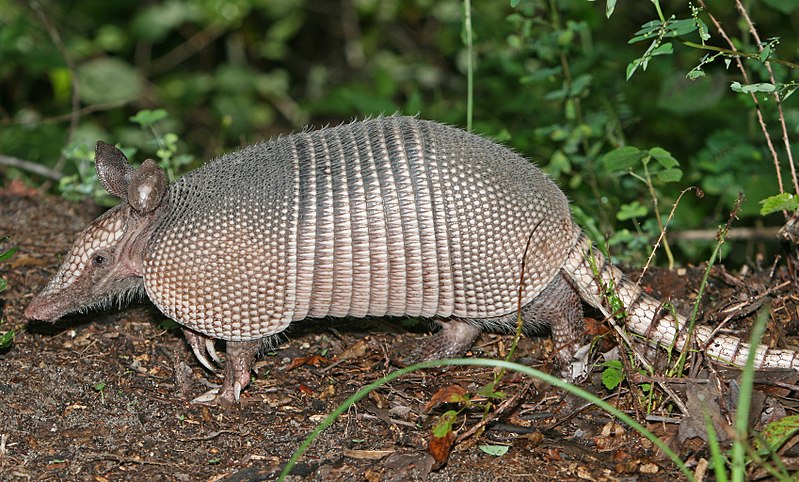
  • Exposición a armadillos de nueve bandas (reservorio natural de M. leprae en EN Erythema nodosum is an immune-mediated panniculitis (inflammation of the subcutaneous fat) caused by a type IV (delayed-type) hypersensitivity reaction. It commonly manifests in young women as tender, erythematous nodules on the shins. Erythema Nodosum el sur de EE. UU.)
  • Edad avanzada
  • Factores genéticos
  • Inmunosupresión

Fisiopatología

  • Las bacterias se inhalan o transmiten a través del contacto directo con la piel y son captadas por macrófagos alveolares y diseminadas en EN Erythema nodosum is an immune-mediated panniculitis (inflammation of the subcutaneous fat) caused by a type IV (delayed-type) hypersensitivity reaction. It commonly manifests in young women as tender, erythematous nodules on the shins. Erythema Nodosum la sangre.
  • M. leprae se propaga a los LOS Neisseria nervios y la piel, donde prolifera (especialmente en EN Erythema nodosum is an immune-mediated panniculitis (inflammation of the subcutaneous fat) caused by a type IV (delayed-type) hypersensitivity reaction. It commonly manifests in young women as tender, erythematous nodules on the shins. Erythema Nodosum las células de Schwann).
  • La lepra puede manifestarse en EN Erythema nodosum is an immune-mediated panniculitis (inflammation of the subcutaneous fat) caused by a type IV (delayed-type) hypersensitivity reaction. It commonly manifests in young women as tender, erythematous nodules on the shins. Erythema Nodosum diferentes formas que reflejan un espectro de la respuesta inmune del huésped.
  • Clasificación de la lepra de Ridley-Jopling:
    • Tuberculoide
    • Tuberculoide limítrofe
    • Limítrofe media
    • Lepromatosa limítrofe
    • Lepromatosa
    • Indeterminada
  • Las formas tuberculoide y lepromatosa se encuentran en EN Erythema nodosum is an immune-mediated panniculitis (inflammation of the subcutaneous fat) caused by a type IV (delayed-type) hypersensitivity reaction. It commonly manifests in young women as tender, erythematous nodules on the shins. Erythema Nodosum los LOS Neisseria 2 extremos del espectro:
    • Lepra tuberculoide:
      • Buena respuesta inmune celular (respuesta de linfocitos T colaboradores tipo 1)
      • Hipersensibilidad retardada con interferón-γ y activación de macrófagos
      • Afecta la piel (localizada) y los LOS Neisseria nervios periféricos
    • Lepra lepromatosa:
      • Respuesta inmune celular mínima
      • Respuesta humoral (anticuerpos; activada por linfocitos T colaboradores tipo 2)
      • Afectación extensa de la piel
      • La afectación nerviosa tiende a ser simétrica.

Presentación Clínica

Lesiones de la piel:

  • Bien demarcadas en EN Erythema nodosum is an immune-mediated panniculitis (inflammation of the subcutaneous fat) caused by a type IV (delayed-type) hypersensitivity reaction. It commonly manifests in young women as tender, erythematous nodules on the shins. Erythema Nodosum la lepra tuberculoide:
    • Generalmente 1 o 2 lesiones
    • Hipopigmentación central o eritematosa
    • Hipoestesia
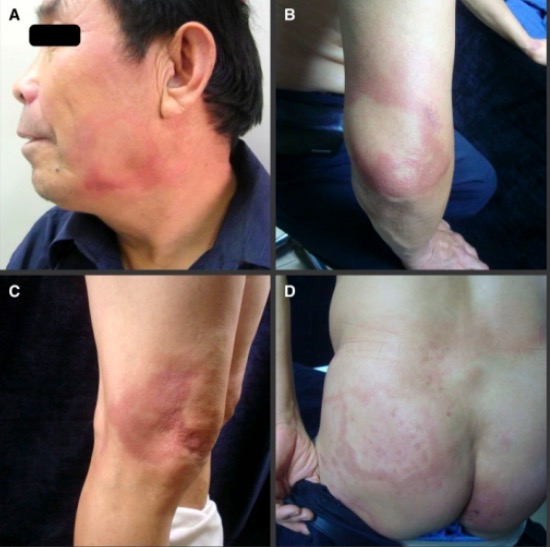
  • Mal demarcadas en EN Erythema nodosum is an immune-mediated panniculitis (inflammation of the subcutaneous fat) caused by a type IV (delayed-type) hypersensitivity reaction. It commonly manifests in young women as tender, erythematous nodules on the shins. Erythema Nodosum lepra lepromatosa:
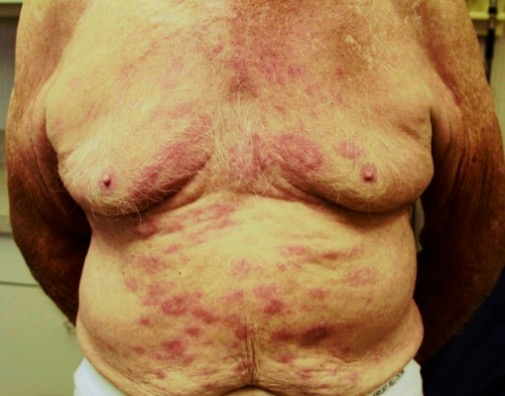
    • Pueden ser maculares, elevadas o nodulares
    • Numerosas; aparecen en EN Erythema nodosum is an immune-mediated panniculitis (inflammation of the subcutaneous fat) caused by a type IV (delayed-type) hypersensitivity reaction. It commonly manifests in young women as tender, erythematous nodules on the shins. Erythema Nodosum todo el cuerpo

Otras manifestaciones:

  • Neuropatía, parestesias
  • Nervios periféricos agrandados y sensibles (lepra tuberculoide)
  • Heridas indoloras en EN Erythema nodosum is an immune-mediated panniculitis (inflammation of the subcutaneous fat) caused by a type IV (delayed-type) hypersensitivity reaction. It commonly manifests in young women as tender, erythematous nodules on the shins. Erythema Nodosum las extremidades
  • Bultos faciales o en EN Erythema nodosum is an immune-mediated panniculitis (inflammation of the subcutaneous fat) caused by a type IV (delayed-type) hypersensitivity reaction. It commonly manifests in young women as tender, erythematous nodules on the shins. Erythema Nodosum las orejas
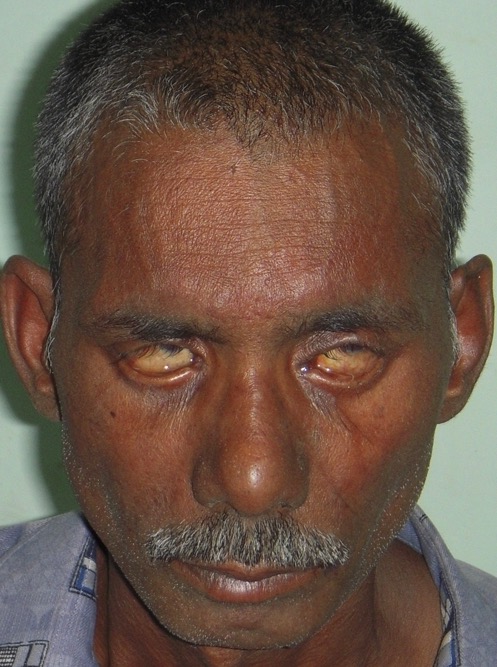
  • Lesión oftálmica:
    • Lagoftalmos (incapacidad para cerrar los LOS Neisseria párpados por completo)
    • Abrasiones/ulceraciones de la córnea
Espectro clínico de la lepra
Tuberculoide Lepromatosa
Presentación Individuos inmunocompetentes Individuos inmunocomprometidos
Localización Piel y nervios Piel y nervios
Síntomas
  • Daño temprano a los LOS Neisseria nervios periféricos
  • Pérdida sensorial completa
  • Agrandamiento visible de nervios
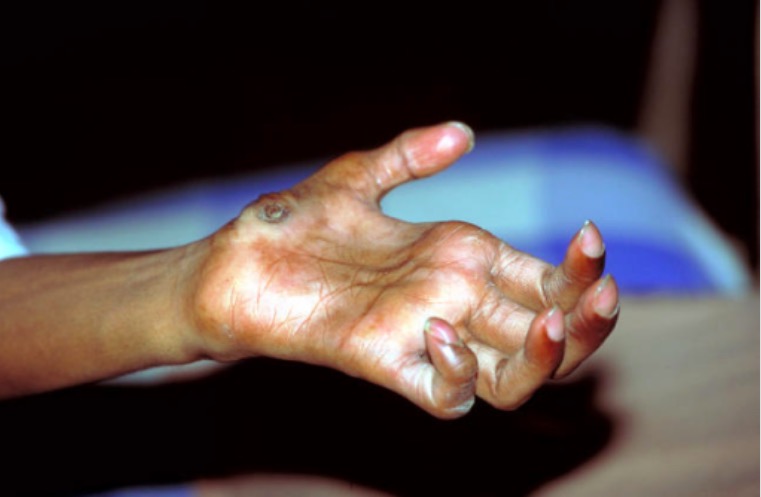
  • Autoamputación de dedos
  • Erupción: algunas placas atróficas hipopigmentadas con centros planos y bordes demarcados elevados
  • Daño nervioso difuso tardío, pérdida sensorial irregular
  • Sin agrandamiento de nervios
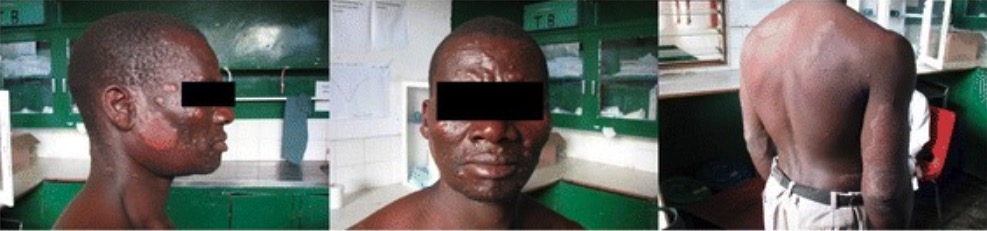
  • Erupción: muchas máculas, pápulas o nódulos, con daño en el cartílago nasal, los huesos y los testículos; facies “leonina”

Los LOS Neisseria hallazgos tardíos pueden incluir:

  • Parálisis facial
  • Nariz colapsada
  • Dedos en EN Erythema nodosum is an immune-mediated panniculitis (inflammation of the subcutaneous fat) caused by a type IV (delayed-type) hypersensitivity reaction. It commonly manifests in young women as tender, erythematous nodules on the shins. Erythema Nodosum garra
  • Pie caído
  • Falta de pestañas/cejas

Posibles reacciones inmunológicas:

  • Complicaciones inflamatorias sistémicas
  • Puede ocurrir antes, durante o después del tratamiento
  • Dos tipos:
    • Tipo 1: reacción de reversión
    • Tipo 2: eritema nodoso leproso
  • Pueden ser difíciles de distinguir clínicamente
  • Los LOS Neisseria síntomas incluyen:
    • Fatiga, fiebre, malestar
    • Neuritis, artritis, iritis Iritis Inflammation of the iris characterized by circumcorneal injection, aqueous flare, keratotic precipitates, and constricted and sluggish pupil along with discoloration of the iris. Leprosy, síntomas nasofaríngeos

Fenómeno de Lucio:

  • Complicación muy rara de la lepra lepromatosa
  • Vasculopatía necrosante

Diagnóstico

Criterios diagnósticos de la World Health Organization (WHO)

La WHO define la lepra como la aparición en EN Erythema nodosum is an immune-mediated panniculitis (inflammation of the subcutaneous fat) caused by a type IV (delayed-type) hypersensitivity reaction. It commonly manifests in young women as tender, erythematous nodules on the shins. Erythema Nodosum una persona que no ha HA Hemolytic anemia (HA) is the term given to a large group of anemias that are caused by the premature destruction/hemolysis of circulating red blood cells (RBCs). Hemolysis can occur within (intravascular hemolysis) or outside the blood vessels (extravascular hemolysis). Hemolytic Anemia completado un ciclo de tratamiento y tiene uno o más de los LOS Neisseria siguientes:

  • Lesiones cutáneas hipopigmentadas o rojizas indoloras
  • Engrosamiento de nervio periférico y pérdida de sensibilidad asociada
  • Frotis cutáneo positivo para bacilos ácido-alcohol resistentes

La WHO basa el diagnóstico en EN Erythema nodosum is an immune-mediated panniculitis (inflammation of the subcutaneous fat) caused by a type IV (delayed-type) hypersensitivity reaction. It commonly manifests in young women as tender, erythematous nodules on the shins. Erythema Nodosum la presentación clínica anterior combinada con una prueba de laboratorio confirmatoria.
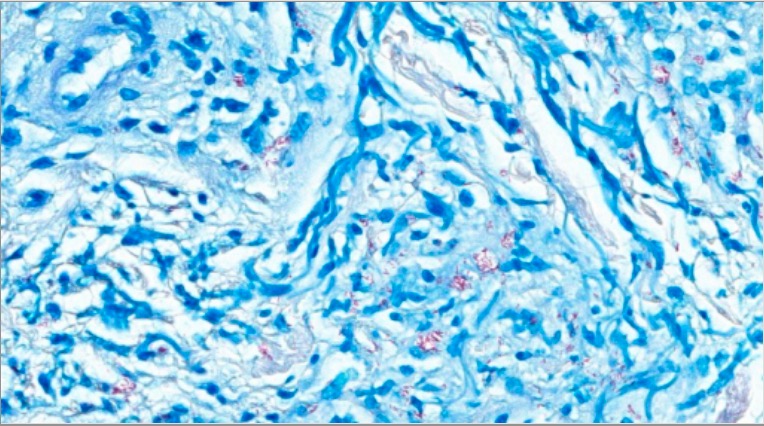
Estudios de laboratorio

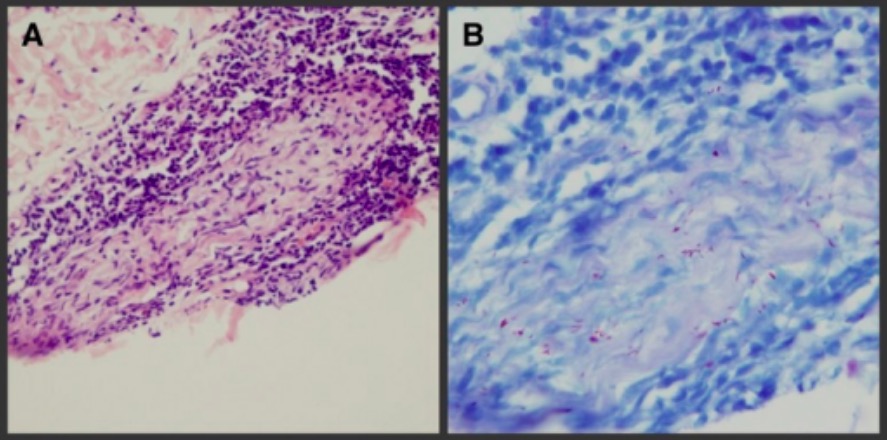
  • Biopsia de piel:
    • Muestra de espesor total tomada del margen más activo de la lesión más activa
    • La tinción de Ziehl-Neelsen o Fite puede mostrar la presencia de bacilos ácido-alcohol resistentes, lo que confirma el diagnóstico de lepra.
    • El frotis de corte de piel puede ayudar a diagnosticar a las personas con enfermedad lepromatosa.
    • M. leprae no se puede cultivar en EN Erythema nodosum is an immune-mediated panniculitis (inflammation of the subcutaneous fat) caused by a type IV (delayed-type) hypersensitivity reaction. It commonly manifests in young women as tender, erythematous nodules on the shins. Erythema Nodosum medios artificiales.
    • Puede ser necesario realizar un cultivo de micobacterias para descartar otros patógenos (M. tuberculosis Tuberculosis Tuberculosis (TB) is an infectious disease caused by Mycobacterium tuberculosis complex bacteria. The bacteria usually attack the lungs but can also damage other parts of the body. Approximately 30% of people around the world are infected with this pathogen, with the majority harboring a latent infection. Tuberculosis spreads through the air when a person with active pulmonary infection coughs or sneezes. Tuberculosis).
  • Ensayos serológicos:
    • Detecta fenólico-glicolípido-1 y lipoarabinomanano
    • 95% de sensibilidad para la lepra lepromatosa
    • 30% de sensibilidad para la lepra tuberculoide
  • Sondas moleculares:
    • Detectan entre el 40%–50% de los LOS Neisseria casos omitidos en EN Erythema nodosum is an immune-mediated panniculitis (inflammation of the subcutaneous fat) caused by a type IV (delayed-type) hypersensitivity reaction. It commonly manifests in young women as tender, erythematous nodules on the shins. Erythema Nodosum la evaluación histológica
    • No puede identificar la lepra tuberculoide
  • Reacción en EN Erythema nodosum is an immune-mediated panniculitis (inflammation of the subcutaneous fat) caused by a type IV (delayed-type) hypersensitivity reaction. It commonly manifests in young women as tender, erythematous nodules on the shins. Erythema Nodosum cadena de la polimerasa( PCR PCR Polymerase chain reaction (PCR) is a technique that amplifies DNA fragments exponentially for analysis. The process is highly specific, allowing for the targeting of specific genomic sequences, even with minuscule sample amounts. The PCR cycles multiple times through 3 phases: denaturation of the template DNA, annealing of a specific primer to the individual DNA strands, and synthesis/elongation of new DNA molecules. Polymerase Chain Reaction (PCR), por sus siglas en EN Erythema nodosum is an immune-mediated panniculitis (inflammation of the subcutaneous fat) caused by a type IV (delayed-type) hypersensitivity reaction. It commonly manifests in young women as tender, erythematous nodules on the shins. Erythema Nodosum inglés):
    • Sondas de genes Genes A category of nucleic acid sequences that function as units of heredity and which code for the basic instructions for the development, reproduction, and maintenance of organisms. DNA Types and Structure con secuencias específicas de M. leprae
    • Puede usarse para identificar micobacterias en EN Erythema nodosum is an immune-mediated panniculitis (inflammation of the subcutaneous fat) caused by a type IV (delayed-type) hypersensitivity reaction. It commonly manifests in young women as tender, erythematous nodules on the shins. Erythema Nodosum muestras de biopsia, piel, frotis nasales, sangre y secciones de tejido
  • Prueba de inhibición de la migración de linfocitos:
    • Pruebas de inmunidad celular a M. leprae
    • Ausente en EN Erythema nodosum is an immune-mediated panniculitis (inflammation of the subcutaneous fat) caused by a type IV (delayed-type) hypersensitivity reaction. It commonly manifests in young women as tender, erythematous nodules on the shins. Erythema Nodosum pacientes con lepra lepromatosa
    • Presente en EN Erythema nodosum is an immune-mediated panniculitis (inflammation of the subcutaneous fat) caused by a type IV (delayed-type) hypersensitivity reaction. It commonly manifests in young women as tender, erythematous nodules on the shins. Erythema Nodosum personas con lepra tuberculoide
  • Prueba de lepromina:
    • No disponible en EN Erythema nodosum is an immune-mediated panniculitis (inflammation of the subcutaneous fat) caused by a type IV (delayed-type) hypersensitivity reaction. It commonly manifests in young women as tender, erythematous nodules on the shins. Erythema Nodosum Estados Unidos
    • La prueba se realiza inyectando antígeno por vía intradérmica.
    • Revise el sitio de inyección en EN Erythema nodosum is an immune-mediated panniculitis (inflammation of the subcutaneous fat) caused by a type IV (delayed-type) hypersensitivity reaction. It commonly manifests in young women as tender, erythematous nodules on the shins. Erythema Nodosum busca de induración, similar a lo que se hace HACE Altitude Sickness para la prueba cutánea de tuberculina.
    • No confiable: detecta la capacidad de desarrollar granulomas Granulomas A relatively small nodular inflammatory lesion containing grouped mononuclear phagocytes, caused by infectious and noninfectious agents. Sarcoidosis cuando se expone al AL Amyloidosis antígeno, pero no la exposición real

Tratamiento

Tratamiento

  • Régimen de terapia con múltiples medicamentos:
    • Necesario para prevenir la resistencia a los LOS Neisseria medicamentos
    • Dapsona + rifampicina + clofazimina durante 6 meses para la lepra tuberculoide y la lepra tuberculoide limítrofe
    • Dapsona + rifampicina + clofazimina durante 12 meses para la lepra limítrofe, la lepromatosa y la limítrofe media
    • Medicamentos alternativos:
      • Minociclina
      • Ofloxacina
      • Levofloxacina
      • Claritromicina
      • Moxifloxacina
  • Reacciones inmunológicas:
    • Pueden tratarse solo con medidas de soporte si son leves y no hay neuritis presente
    • La neuritis debe tratarse de manera agresiva para prevenir un daño nervioso permanente.
    • Esteroides e inmunosupresores

Prevención

  • La vacuna BCG BCG An active immunizing agent and a viable avirulent attenuated strain of Mycobacterium bovis, which confers immunity to mycobacterial infections. It is used also in immunotherapy of neoplasms due to its stimulation of antibodies and non-specific immunity. Cancer Immunotherapy es parcialmente protectora.
  • Contactos cercanos de personas afectadas:
    • Deben ser monitoreados anualmente durante al AL Amyloidosis menos 5 años.
    • Rifamicina en EN Erythema nodosum is an immune-mediated panniculitis (inflammation of the subcutaneous fat) caused by a type IV (delayed-type) hypersensitivity reaction. It commonly manifests in young women as tender, erythematous nodules on the shins. Erythema Nodosum dosis única para contactos cercanos de pacientes con lepra lepromatosa con alta carga bacteriana.
    • La OMS y China recomiendan profilaxis con rifapentina o rifampicina para los LOS Neisseria contactos.

Complicaciones

  • Parálisis y mutilación de manos y pies
  • Autoamputación de dedos de pies y manos
  • Úlceras crónicas que no cicatrizan en EN Erythema nodosum is an immune-mediated panniculitis (inflammation of the subcutaneous fat) caused by a type IV (delayed-type) hypersensitivity reaction. It commonly manifests in young women as tender, erythematous nodules on the shins. Erythema Nodosum la planta de los LOS Neisseria pies
  • Ceguera
  • Pérdida de cejas
  • Desfiguración de la nariz
  • Atrofia testicular
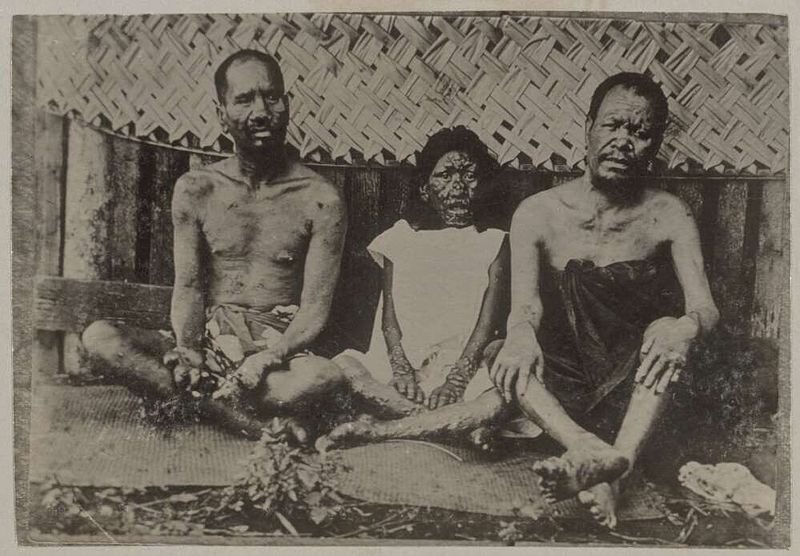
Imagen histórica de los enfermos de lepra

Tres pacientes que padecen lepra:
Nótese la desfiguración de la nariz y las amputaciones de dedos.

Imagen: “Tahitians suffering from leprosy” por Unknown author. Licencia: Dominio Público

Diagnóstico Diferencial

  • Neurofibromatosis tipo 1: un trastorno genético neural de tumores benignos que surgen de las células de la cresta neural en EN Erythema nodosum is an immune-mediated panniculitis (inflammation of the subcutaneous fat) caused by a type IV (delayed-type) hypersensitivity reaction. It commonly manifests in young women as tender, erythematous nodules on the shins. Erythema Nodosum la vaina del nervio periférico: la neurofibromatosis tipo 1 se presenta en EN Erythema nodosum is an immune-mediated panniculitis (inflammation of the subcutaneous fat) caused by a type IV (delayed-type) hypersensitivity reaction. It commonly manifests in young women as tender, erythematous nodules on the shins. Erythema Nodosum la adolescencia como nódulos cutáneos suaves e indoloros. Las pruebas genéticas pueden confirmar el diagnóstico después del examen físico y la biopsia. El tratamiento incluye resección quirúrgica y medicamentos antitumorales.
  • Dermatofibroma: una reacción común, benigna, de proliferación fibrohistiocítica, generalmente como reacción a un traumatismo, una infección viral o una picadura de insecto: el dermatofibroma se presenta en EN Erythema nodosum is an immune-mediated panniculitis (inflammation of the subcutaneous fat) caused by a type IV (delayed-type) hypersensitivity reaction. It commonly manifests in young women as tender, erythematous nodules on the shins. Erythema Nodosum las superficies anteriores de la parte inferior de las piernas como un nódulo móvil, firme e indurado que se retrae debajo la piel al AL Amyloidosis intentar comprimirla y elevarla. El diagnóstico se realiza mediante biopsia. El tratamiento incluye resección quirúrgica.
  • Lupus eritematoso sistémico: un trastorno autoinmune sistémico que afecta con mayor frecuencia a las mujeres: los pacientes pueden presentar afectación de múltiples órganos. Las manifestaciones cutáneas del lupus incluyen “erupción facial en mariposa” o erupción maculopapular Maculopapular Dermatologic Examination eritematosa generalizada que afecta áreas expuestas al AL Amyloidosis sol. El diagnóstico se basa en EN Erythema nodosum is an immune-mediated panniculitis (inflammation of the subcutaneous fat) caused by a type IV (delayed-type) hypersensitivity reaction. It commonly manifests in young women as tender, erythematous nodules on the shins. Erythema Nodosum la sospecha clínica y la presencia de determinados anticuerpos. El tratamiento incluye esteroides, inmunosupresores y agentes biológicos.
  • Esclerodermia: una afección autoinmune caracterizada por depósito difuso de colágeno y fibrosis Fibrosis Any pathological condition where fibrous connective tissue invades any organ, usually as a consequence of inflammation or other injury. Bronchiolitis Obliterans: la presentación clínica varía desde la afectación cutánea limitada hasta la afectación difusa de los LOS Neisseria órganos internos. El diagnóstico se establece mediante una combinación de hallazgos físicos y serología. No existe tratamiento curativo. Las opciones de tratamiento son limitadas, pero incluyen medicamentos inmunosupresores y tratamiento sintomático.

Referencias

  1. Ochoa MT, Adler B, Dasco M. (2024). Leprosy: Epidemiology, microbiology, clinical manifestations, and diagnosis. UpToDate. Retrieved May 31, 2025, from https://www.uptodate.com/contents/leprosy-epidemiology-microbiology-clinical-manifestations-and-diagnosis
  2. Smith D, Riopelle JC, Owah JO. (2023). Leprosy. Emedicine. Retrieved May 31, 2025, from https://emedicine.medscape.com/article/220455-overview
  3. World Health Organization. (2025). Leprosy. ARO/Department of Control of Neglected Tropical Diseases. Retrieved May 31, 2025, from https://www.who.int/en/news-room/fact-sheets/detail/leprosy
  4. Deps, P. D., Kahawita, I., Yotsu, R., & Lambert, S. M. (2025). Leprosy research updates: Shaping the future of global health. The Indian journal of medical research161(2), 120–124. https://doi.org/10.25259/IJMR_195_2025
  5. Zhang, K., Zhang, W., & Lu, H. (2025). Global Trends in the Incidence, Prevalence and Disability-Adjusted Life Years of Leprosy from 1990 to 2019: An Age-Period-Cohort Analysis Using the Global Burden of Disease Study 2019. Clinical, cosmetic and investigational dermatology18, 883–898. https://doi.org/10.2147/CCID.S508600
  6. Campbell, P. O., Douglas, N. M., & Chambers, S. T. (2025). A Review of the Efficacy, Safety, and Feasibility of Rifamycin-Based Post-Exposure Chemoprophylaxis for Leprosy. Tropical medicine and infectious disease, 10(4), 84. https://doi.org/10.3390/tropicalmed10040084
  7. Singh, S., Narang, T., & Dogra, S. (2025). Beating leprosy: Unmasking challenges, ending stigma, & prioritizing mental well-being. The Indian journal of medical research161(1), 1–4. https://doi.org/10.25259/IJMR_2212_2024
  8. Lopes-Luz, L., Saavedra, D. P., Fogaça, M. B. T., Bührer-Sékula, S., & Stefani, M. M. A. (2023). Challenges and advances in serological and molecular tests to aid leprosy diagnosis. Experimental biology and medicine (Maywood, N.J.)248(22), 2083–2094. https://doi.org/10.1177/15353702231209422
  9. Coleman, M., Hill, J., Timeon, E., Rimon, E., Bauro, T., Ioteba, N., Cunanan, A., Douglas, N. M., Islam, T., Tomlinson, J., Campbell, P. O., Williman, J., Priest, P., Marais, B. J., Britton, W. J., & Chambers, S. T. (2023). Effectiveness of population-wide screening and mass drug administration for leprosy control in Kiribati: the COMBINE protocol. BMJ open13(6), e065369. https://doi.org/10.1136/bmjopen-2022-065369
  10. Centers for Disease Control and Prevention. (2024, April 11). About Hansen’s disease (leprosy). Centers for Disease Control and Prevention. https://www.cdc.gov/leprosy/about/index.html
  11. Ochoa MT, Adler B, Dasco M. (2025). Leprosy: Treatment and prevention. UpToDate. Retrieved May 31, 2025, from https://www.uptodate.com/contents/leprosy-treatment-and-prevention

¡Crea tu cuenta gratis o inicia una sesión para seguir leyendo!

Regístrate ahora y obtén acceso gratuito a Lecturio con páginas de concepto, videos médicos y cuestionarios para tu educación médica.

User Reviews

Que tengas una sesión de estudio alegre y navideña 🎁 Ahorra 50% en todos los planes >>

Details