
Domina Conceptos Médicos

Estudia para la escuela de medicina y tus examenes con Lecturio.

Insuficiencia Ovárica Primaria

La insuficiencia ovárica primaria es una afección resultante del agotamiento o la disfunción de los LOS Neisseria folículos ováricos, que conduce al AL Amyloidosis cese de la ovulación y la menstruación antes de los LOS Neisseria 40 años. La insuficiencia ovárica primaria es principalmente idiopática, pero también puede verse asociada a anomalías cromosómicas y genéticas, como el síndrome de Turner (cariotipo 45,X) y la mutación FMR1. Las pacientes presentan signos y síntomas de menopausia antes de los LOS Neisseria 40 años, incluyendo oligomenorrea o amenorrea, sequedad vaginal (a menudo con dispareunia) e infertilidad. Los LOS Neisseria principales hallazgos de laboratorio son la elevación de la hormona estimulante del folículo ( FSH FSH A major gonadotropin secreted by the adenohypophysis. Follicle-stimulating hormone stimulates gametogenesis and the supporting cells such as the ovarian granulosa cells, the testicular sertoli cells, and leydig cells. Fsh consists of two noncovalently linked subunits, alpha and beta. Within a species, the alpha subunit is common in the three pituitary glycoprotein hormones (TSH, LH, and FSH), but the beta subunit is unique and confers its biological specificity. Menstrual Cycle) y los LOS Neisseria niveles bajos de estrógeno. Una vez realizado el diagnóstico de insuficiencia ovárica primaria, el paciente debe realizarse un tamizaje de anticuerpos suprarrenales autoinmunes, un cariotipo, un tamizaje de mutación de FMR1 y una densitometría ósea basal. El tratamiento incluye la terapia de reemplazo hormonal, el tratamiento de los LOS Neisseria problemas de fertilidad según se desee, y el apoyo psicológico.

Last updated: Dec 15, 2025

Editorial responsibility: Stanley Oiseth, Lindsay Jones, Evelin Maza

Definición y Epidemiología

Definición

La insuficiencia ovárica primaria es el agotamiento o la disfunción de los LOS Neisseria folículos ováricos que provoca el cese de la ovulación y la menstruación. El trastorno se acompaña de niveles elevados de FSH FSH A major gonadotropin secreted by the adenohypophysis. Follicle-stimulating hormone stimulates gametogenesis and the supporting cells such as the ovarian granulosa cells, the testicular sertoli cells, and leydig cells. Fsh consists of two noncovalently linked subunits, alpha and beta. Within a species, the alpha subunit is common in the three pituitary glycoprotein hormones (TSH, LH, and FSH), but the beta subunit is unique and confers its biological specificity. Menstrual Cycle antes de los LOS Neisseria 40 años.

Epidemiología

  • Incidencia:
  • El 90% de los LOS Neisseria casos son idiopáticos.
  • 10–15% de las mujeres tienen un familiar de primer grado afectado.
  • Afecciones asociadas:
    • Trastornos autoinmunes:
      • Insuficiencia suprarrenal/enfermedad de Addison
      • Hipotiroidismo
      • Hipoparatiroidismo
      • Artritis reumatoide
      • Lupus eritematoso sistémico
    • Anomalías cromosómicas y genéticas:
      • Síndrome de Turner
      • Mutación del X frágil FMR1
    • Otras afecciones:
      • Miastenia gravis
      • Síndrome del ojo seco

Fisiopatología

Fisiología normal del eje hipotálamo-hipófisis-ovario

Hipotálamo:

  • Secreta la hormona liberadora de gonadotropina (GnRH) de forma pulsátil
  • Afectados por el estrés y la desnutrición (trastornos alimentarios, exceso de ejercicio)

La pituitaria:

  • El pulso de GnRH estimula la pituitaria para liberar gonadotropinas:
    • FSH FSH A major gonadotropin secreted by the adenohypophysis. Follicle-stimulating hormone stimulates gametogenesis and the supporting cells such as the ovarian granulosa cells, the testicular sertoli cells, and leydig cells. Fsh consists of two noncovalently linked subunits, alpha and beta. Within a species, the alpha subunit is common in the three pituitary glycoprotein hormones (TSH, LH, and FSH), but the beta subunit is unique and confers its biological specificity. Menstrual Cycle
    • Hormona luteinizante ( LH LH A major gonadotropin secreted by the adenohypophysis. Luteinizing hormone regulates steroid production by the interstitial cells of the testis and the ovary. The preovulatory luteinizing hormone surge in females induces ovulation, and subsequent luteinization of the follicle. Luteinizing hormone consists of two noncovalently linked subunits, alpha and beta. Within a species, the alpha subunit is common in the three pituitary glycoprotein hormones (TSH, LH, and FSH), but the beta subunit is unique and confers its biological specificity. Menstrual Cycle)
  • La FSH FSH A major gonadotropin secreted by the adenohypophysis. Follicle-stimulating hormone stimulates gametogenesis and the supporting cells such as the ovarian granulosa cells, the testicular sertoli cells, and leydig cells. Fsh consists of two noncovalently linked subunits, alpha and beta. Within a species, the alpha subunit is common in the three pituitary glycoprotein hormones (TSH, LH, and FSH), but the beta subunit is unique and confers its biological specificity. Menstrual Cycle estimula:
    • Folículos ováricos y sus ovocitos para madurar
    • Desarrollo de los LOS Neisseria folículos para secretar estrógenos
  • La LH LH A major gonadotropin secreted by the adenohypophysis. Luteinizing hormone regulates steroid production by the interstitial cells of the testis and the ovary. The preovulatory luteinizing hormone surge in females induces ovulation, and subsequent luteinization of the follicle. Luteinizing hormone consists of two noncovalently linked subunits, alpha and beta. Within a species, the alpha subunit is common in the three pituitary glycoprotein hormones (TSH, LH, and FSH), but the beta subunit is unique and confers its biological specificity. Menstrual Cycle estimula:
    • Producción de testosterona (precursora del estrógeno)
    • Ovulación con aumento de LH LH A major gonadotropin secreted by the adenohypophysis. Luteinizing hormone regulates steroid production by the interstitial cells of the testis and the ovary. The preovulatory luteinizing hormone surge in females induces ovulation, and subsequent luteinization of the follicle. Luteinizing hormone consists of two noncovalently linked subunits, alpha and beta. Within a species, the alpha subunit is common in the three pituitary glycoprotein hormones (TSH, LH, and FSH), but the beta subunit is unique and confers its biological specificity. Menstrual Cycle en EN Erythema nodosum is an immune-mediated panniculitis (inflammation of the subcutaneous fat) caused by a type IV (delayed-type) hypersensitivity reaction. It commonly manifests in young women as tender, erythematous nodules on the shins. Erythema Nodosum la mitad del ciclo
  • Las gonadotropinas son inhibidas por los LOS Neisseria estrógenos.

Ovario:

  • Estimulado por la FSH FSH A major gonadotropin secreted by the adenohypophysis. Follicle-stimulating hormone stimulates gametogenesis and the supporting cells such as the ovarian granulosa cells, the testicular sertoli cells, and leydig cells. Fsh consists of two noncovalently linked subunits, alpha and beta. Within a species, the alpha subunit is common in the three pituitary glycoprotein hormones (TSH, LH, and FSH), but the beta subunit is unique and confers its biological specificity. Menstrual Cycle y la LH LH A major gonadotropin secreted by the adenohypophysis. Luteinizing hormone regulates steroid production by the interstitial cells of the testis and the ovary. The preovulatory luteinizing hormone surge in females induces ovulation, and subsequent luteinization of the follicle. Luteinizing hormone consists of two noncovalently linked subunits, alpha and beta. Within a species, the alpha subunit is common in the three pituitary glycoprotein hormones (TSH, LH, and FSH), but the beta subunit is unique and confers its biological specificity. Menstrual Cycle para producir esteroides sexuales
  • El estrógeno estimula:
    • Proliferación endometrial
    • Lubricación vaginal
    • Crecimiento óseo
  • Progesterona:
    • Maduración del endometrio
    • Previene la hiperplasia endometrial
    • El cese de la producción de progesterona desencadena una hemorragia por deprivación (menstruación).

Importancia clínica del funcionamiento del eje hipotálamo-hipófisis-ovario en EN Erythema nodosum is an immune-mediated panniculitis (inflammation of the subcutaneous fat) caused by a type IV (delayed-type) hypersensitivity reaction. It commonly manifests in young women as tender, erythematous nodules on the shins. Erythema Nodosum mujeres jóvenes:

  • Fertilidad
  • Función sexual
  • Prevención de la osteoporosis Osteoporosis Osteoporosis refers to a decrease in bone mass and density leading to an increased number of fractures. There are 2 forms of osteoporosis: primary, which is commonly postmenopausal or senile; and secondary, which is a manifestation of immobilization, underlying medical disorders, or long-term use of certain medications. Osteoporosis
  • ↓ Riesgo de enfermedad cardiovascular

Fisiopatología de la insuficiencia ovárica primaria

  • La insuficiencia ovárica primaria se produce cuando:
    • Número de ovocitos viables restantes ↓ severamente
    • Otras disfunciones ováricas → falta de ovulación regular Regular Insulin
  • ↓ Ovulación → ↓ fertilidad
  • ↓ Estrógeno y progesterona ováricos:
    • No hay estimulación endometrial → no hay menstruación
    • Síntomas de la menopausia:
      • Síntomas vasomotores: sofocos, sudores nocturnos
      • Alteraciones del sueño
      • Sequedad vaginal y dispareunia
      • Alteraciones del estado de ánimo
    • ↓ Estrógeno → ↓ inhibición de la hipófisis → FSH FSH A major gonadotropin secreted by the adenohypophysis. Follicle-stimulating hormone stimulates gametogenesis and the supporting cells such as the ovarian granulosa cells, the testicular sertoli cells, and leydig cells. Fsh consists of two noncovalently linked subunits, alpha and beta. Within a species, the alpha subunit is common in the three pituitary glycoprotein hormones (TSH, LH, and FSH), but the beta subunit is unique and confers its biological specificity. Menstrual Cycle

Etiología

La insuficiencia ovárica primaria puede estar causada por anomalías cromosómicas y genéticas, por un proceso autoinmune o por toxinas ováricas. Sin embargo, en EN Erythema nodosum is an immune-mediated panniculitis (inflammation of the subcutaneous fat) caused by a type IV (delayed-type) hypersensitivity reaction. It commonly manifests in young women as tender, erythematous nodules on the shins. Erythema Nodosum la gran mayoría de los LOS Neisseria casos, nunca se identifica una causa clara.

Causas genéticas y cromosómicas

  • Síndrome de Turner:
    • Falta del 2do cromosoma X (cariotipo 45,X), importante para el desarrollo gonadal
    • Atresia Atresia Hypoplastic Left Heart Syndrome (HLHS) ovocitaria acelerada por células germinales anormales
    • Presentación variable Variable Variables represent information about something that can change. The design of the measurement scales, or of the methods for obtaining information, will determine the data gathered and the characteristics of that data. As a result, a variable can be qualitative or quantitative, and may be further classified into subgroups. Types of Variables debido al AL Amyloidosis mosaicismo
  • Mutaciones del gen FMR1:
    • Gen que causa el síndrome del cromosoma X frágil
    • Premutaciones: 55–200 repeticiones CGG
    • Se desconoce el mecanismo de la insuficiencia ovárica primaria asociada.
  • Otros trastornos genéticos:
    • Disgenesia gonadal 46,XX
    • Translocaciones o deleciones que afectan al AL Amyloidosis cromosoma X
    • Mutaciones del receptor Receptor Receptors are proteins located either on the surface of or within a cell that can bind to signaling molecules known as ligands (e.g., hormones) and cause some type of response within the cell. Receptors de FSH FSH A major gonadotropin secreted by the adenohypophysis. Follicle-stimulating hormone stimulates gametogenesis and the supporting cells such as the ovarian granulosa cells, the testicular sertoli cells, and leydig cells. Fsh consists of two noncovalently linked subunits, alpha and beta. Within a species, the alpha subunit is common in the three pituitary glycoprotein hormones (TSH, LH, and FSH), but the beta subunit is unique and confers its biological specificity. Menstrual Cycle o LH LH A major gonadotropin secreted by the adenohypophysis. Luteinizing hormone regulates steroid production by the interstitial cells of the testis and the ovary. The preovulatory luteinizing hormone surge in females induces ovulation, and subsequent luteinization of the follicle. Luteinizing hormone consists of two noncovalently linked subunits, alpha and beta. Within a species, the alpha subunit is common in the three pituitary glycoprotein hormones (TSH, LH, and FSH), but the beta subunit is unique and confers its biological specificity. Menstrual Cycle (e.g., síndrome de Savage)
    • Galactosemia Galactosemia Galactosemia is a disorder caused by defects in galactose metabolism. Galactosemia is an inherited, autosomal-recessive condition, which results in inadequate galactose processing and high blood levels of monosaccharide. The rare disorder often presents in infants with symptoms of lethargy, nausea, vomiting, diarrhea, and jaundice. Galactosemia

Causas autoinmunes

  • Ooforitis autoinmune:
    • Infiltración linfocítica de las células de la teca → inflamación → disfunción folicular
    • Los LOS Neisseria folículos primordiales no se ven afectados.
    • Casi siempre se asocia con anticuerpos suprarrenales → insuficiencia suprarrenal
  • Síndromes poliglandulares autoinmunes (tipos I y II): síndromes asociados a autoanticuerpos contra múltiples órganos endocrinos y otros.

Toxinas ováricas

  • Quimioterapia
  • Irradiación
  • Toxinas ambientales

Presentación Clínica

Las molestias primarias que se presentan suelen ser oligomenorrea o amenorrea (ya sea primaria o secundaria). Siempre hay que excluir primero el embarazo, incluso en EN Erythema nodosum is an immune-mediated panniculitis (inflammation of the subcutaneous fat) caused by a type IV (delayed-type) hypersensitivity reaction. It commonly manifests in young women as tender, erythematous nodules on the shins. Erythema Nodosum las pacientes que niegan haber tenido relaciones sexuales.
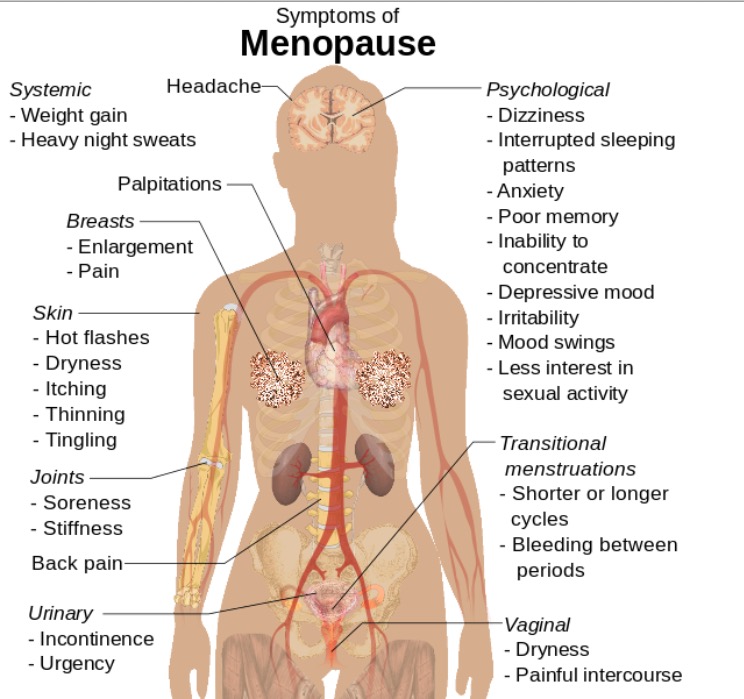
  • Anomalías del ciclo menstrual:
    • Amenorrea primaria: La paciente nunca ha HA Hemolytic anemia (HA) is the term given to a large group of anemias that are caused by the premature destruction/hemolysis of circulating red blood cells (RBCs). Hemolysis can occur within (intravascular hemolysis) or outside the blood vessels (extravascular hemolysis). Hemolytic Anemia tenido un ciclo menstrual.
    • Amenorrea secundaria:
      • Sin menstruación por 3 meses con antecedente de previos ciclos regulares
      • Sin menstruación por 6 meses con antecedente de previos ciclos irregulares
      • Sin menstruación por 3 de las típicas duraciones de ciclo de la paciente
    • Oligomenorrea: ↓ frecuencia de menstruación (ciclos > 35 días)
  • Signos y síntomas de la deficiencia de estrógenos:
    • Síntomas vasomotores:
      • Sofocos
      • Sudores nocturnos
    • Trastornos del sueño
    • Sequedad vaginal (atrofia) → relaciones sexuales dolorosas (dispareunia)
    • Alteraciones del estado de ánimo (especialmente irritabilidad)
  • Infertilidad
  • Síntomas de afecciones asociadas:
    • Signos del síndrome de Turner:
    • Signos y síntomas de la enfermedad tiroidea:
      • Agrandamiento de la tiroides
      • Cambios en EN Erythema nodosum is an immune-mediated panniculitis (inflammation of the subcutaneous fat) caused by a type IV (delayed-type) hypersensitivity reaction. It commonly manifests in young women as tender, erythematous nodules on the shins. Erythema Nodosum los LOS Neisseria hábitos intestinales (estreñimiento/diarrea)
    • Signos de insuficiencia suprarrenal:
      • Hipotensión
      • Vitiligo Vitiligo Vitiligo is the most common depigmenting disorder and is caused by the destruction of melanocytes. Patients present with hypo- or depigmented macules or patches which often occur on the face, hands, knees, and/or genitalia. Vitiligo
      • Pérdida de vello púbico y axilar
Symptoms of menopause

Síntomas de la menopausia que también pueden observarse en la insuficiencia ovárica primaria

Imagen: “Symptoms of menopause” por Mikael Häggström. Licencia: CC0
Diagnóstico

Criterios de diagnóstico (requiere los LOS Neisseria 3)

  • < 40 años de edad
  • Oligomenorrea o amenorrea durante al AL Amyloidosis menos 4 meses
  • FSH FSH A major gonadotropin secreted by the adenohypophysis. Follicle-stimulating hormone stimulates gametogenesis and the supporting cells such as the ovarian granulosa cells, the testicular sertoli cells, and leydig cells. Fsh consists of two noncovalently linked subunits, alpha and beta. Within a species, the alpha subunit is common in the three pituitary glycoprotein hormones (TSH, LH, and FSH), but the beta subunit is unique and confers its biological specificity. Menstrual Cycle
    • Requiere 2 niveles ↑ en EN Erythema nodosum is an immune-mediated panniculitis (inflammation of the subcutaneous fat) caused by a type IV (delayed-type) hypersensitivity reaction. It commonly manifests in young women as tender, erythematous nodules on the shins. Erythema Nodosum > 1 mes de diferencia
    • Debe realizarse el día 3 del ciclo si se está menstruando

Evaluación inicial de laboratorio y de imagenología

  • Niveles hormonales:
    • FSH FSH A major gonadotropin secreted by the adenohypophysis. Follicle-stimulating hormone stimulates gametogenesis and the supporting cells such as the ovarian granulosa cells, the testicular sertoli cells, and leydig cells. Fsh consists of two noncovalently linked subunits, alpha and beta. Within a species, the alpha subunit is common in the three pituitary glycoprotein hormones (TSH, LH, and FSH), but the beta subunit is unique and confers its biological specificity. Menstrual Cycle
    • Estradiol Estradiol The 17-beta-isomer of estradiol, an aromatized C18 steroid with hydroxyl group at 3-beta- and 17-beta-position. Estradiol-17-beta is the most potent form of mammalian estrogenic steroids. Noncontraceptive Estrogen and Progestins
    • ↓ Hormona antimülleriana: prueba de reserva ovárica
  • Excluir otras causas de irregularidad menstrual:
    • Prueba de embarazo
    • Hormona estimulante de la tiroides
    • Prolactina
  • Ultrasonido pélvico:
    • Evaluar el número de folículos presentes.
    • Buscar signos que puedan sugerir otras causas de anomalías menstruales (e.g., ovarios de apariencia poliquística, anomalías de Müller).
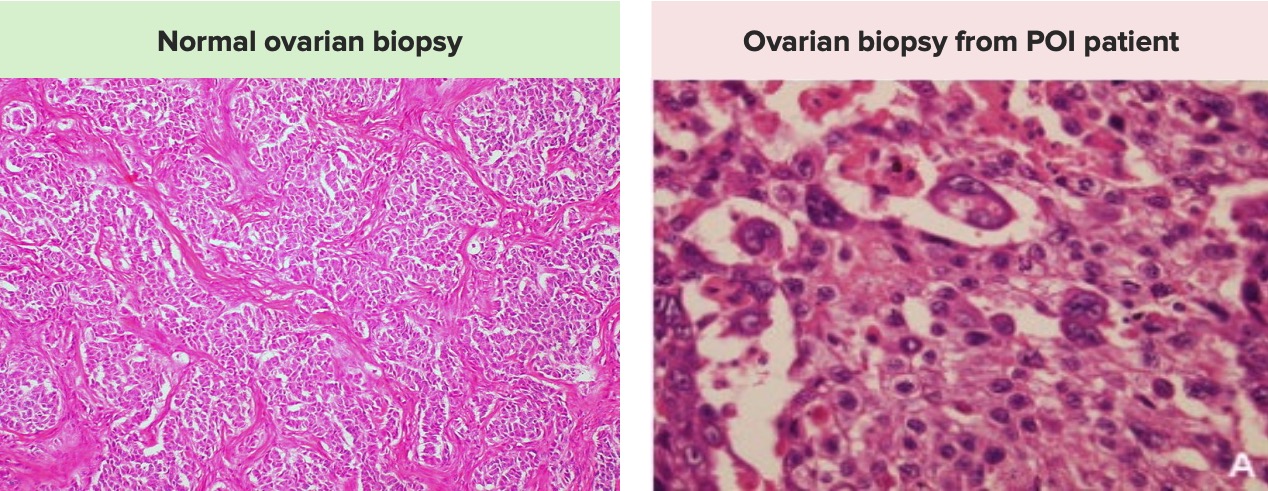
Normal histo vs cell tumor of the ovary

Imágenes que demuestran las diferencias entre una biopsia ovárica normal, a la izquierda, con un número normal de folículos, y una biopsia ovárica de una paciente con insuficiencia ovárica primaria, a la derecha, que muestra un número significativamente reducido de folículos ováricos y ovocitos.
Tenga en cuenta que las biopsias de ovario no suelen obtenerse con fines diagnósticos.

Imagen de la izquierda:“Granulosa Cell Tumor of the Ovary” por Ed Uthman. Licencia: CC BY 2.0
Imagen de la derecha: “Histological analysis” por el Department of Neuroscience and Biomedical Technologies, University of Milan-Bicocca, via Cadore 48, 20052, Monza, Italia. Licencia: CC BY 2.0, recortado por Lecturio.

Pruebas de seguimiento una vez diagnosticada la insuficiencia ovárica primaria

  • Cariotipo: buscar el síndrome de Turner
  • Tamizaje de mutación de FMR1
  • Anticuerpos anti-suprarrenales (anticuerpos 21-hidroxilasa): búsqueda de insuficiencia suprarrenal.
  • Densitometría ósea: evaluar la densidad ósea basal.

Tratamiento y Complicaciones

Terapia de reemplazo hormonal

La terapia de reemplazo hormonal es necesaria para prevenir la osteoporosis Osteoporosis Osteoporosis refers to a decrease in bone mass and density leading to an increased number of fractures. There are 2 forms of osteoporosis: primary, which is commonly postmenopausal or senile; and secondary, which is a manifestation of immobilization, underlying medical disorders, or long-term use of certain medications. Osteoporosis y las enfermedades cardiovasculares. Los LOS Neisseria regímenes deben incluir tanto estrógenos como progestágenos.

  • Reemplazo hormonal fisiológico que imita el ciclo natural:
    • Estradiol Estradiol The 17-beta-isomer of estradiol, an aromatized C18 steroid with hydroxyl group at 3-beta- and 17-beta-position. Estradiol-17-beta is the most potent form of mammalian estrogenic steroids. Noncontraceptive Estrogen and Progestins:
      • Dado continuamente
      • Transdérmica menor riesgo que la oral
    • Progestinas:
      • Administrado cíclicamente (e.g., 2 semanas sí, 2 semanas no)
      • Progesterona micronizada (fisiológica)
      • Acetato de medroxiprogesterona (sintético)
  • Si la paciente desea anticoncepción: anticonceptivos orales combinadas (ACO)

Otros problemas del tratamiento y de posibles complicaciones

  • Apoyo en EN Erythema nodosum is an immune-mediated panniculitis (inflammation of the subcutaneous fat) caused by a type IV (delayed-type) hypersensitivity reaction. It commonly manifests in young women as tender, erythematous nodules on the shins. Erythema Nodosum la fertilidad (si se desea)
  • Asesoramiento/apoyo emocional
  • Detectar y tratar las complicaciones:
    • Insuficiencia suprarrenal
    • Hipotiroidismo autoinmune
    • Osteoporosis Osteoporosis Osteoporosis refers to a decrease in bone mass and density leading to an increased number of fractures. There are 2 forms of osteoporosis: primary, which is commonly postmenopausal or senile; and secondary, which is a manifestation of immobilization, underlying medical disorders, or long-term use of certain medications. Osteoporosis
    • Enfermedades cardiovasculares

Diagnóstico Diferencial

  • Síndrome de ovario poliquístico (SOP): síndrome de anovulación crónica que se presenta con ciclos menstruales irregulares e infrecuentes y signos de hiperandrogenismo. Se asocia al AL Amyloidosis síndrome metabólico, especialmente a la resistencia a la insulina. Los LOS Neisseria pacientes suelen ser obesos. Los LOS Neisseria pacientes suelen tener niveles elevados de LH LH A major gonadotropin secreted by the adenohypophysis. Luteinizing hormone regulates steroid production by the interstitial cells of the testis and the ovary. The preovulatory luteinizing hormone surge in females induces ovulation, and subsequent luteinization of the follicle. Luteinizing hormone consists of two noncovalently linked subunits, alpha and beta. Within a species, the alpha subunit is common in the three pituitary glycoprotein hormones (TSH, LH, and FSH), but the beta subunit is unique and confers its biological specificity. Menstrual Cycle y andrógenos con una FSH FSH A major gonadotropin secreted by the adenohypophysis. Follicle-stimulating hormone stimulates gametogenesis and the supporting cells such as the ovarian granulosa cells, the testicular sertoli cells, and leydig cells. Fsh consists of two noncovalently linked subunits, alpha and beta. Within a species, the alpha subunit is common in the three pituitary glycoprotein hormones (TSH, LH, and FSH), but the beta subunit is unique and confers its biological specificity. Menstrual Cycle normal. El ultrasonido puede mostrar ovarios de apariencia poliquística. El tratamiento suele consistir en EN Erythema nodosum is an immune-mediated panniculitis (inflammation of the subcutaneous fat) caused by a type IV (delayed-type) hypersensitivity reaction. It commonly manifests in young women as tender, erythematous nodules on the shins. Erythema Nodosum la prescripción de ACO y el tratamiento de los LOS Neisseria problemas de fertilidad.
  • Amenorrea hipotalámica funcional: afección de hipogonadismo hipotalámico resultante de la inhibición de todo el eje hipotálamo-hipófisis-ovario. Suele estar causada por el estrés o la desnutrición (e.g., trastornos alimentarios, exceso de ejercicio). Los LOS Neisseria casos pueden presentarse de forma similar a la insuficiencia ovárica primaria, aunque en EN Erythema nodosum is an immune-mediated panniculitis (inflammation of the subcutaneous fat) caused by a type IV (delayed-type) hypersensitivity reaction. It commonly manifests in young women as tender, erythematous nodules on the shins. Erythema Nodosum la amenorrea hipotalámica funcional, la FSH FSH A major gonadotropin secreted by the adenohypophysis. Follicle-stimulating hormone stimulates gametogenesis and the supporting cells such as the ovarian granulosa cells, the testicular sertoli cells, and leydig cells. Fsh consists of two noncovalently linked subunits, alpha and beta. Within a species, the alpha subunit is common in the three pituitary glycoprotein hormones (TSH, LH, and FSH), but the beta subunit is unique and confers its biological specificity. Menstrual Cycle es baja, mientras que en EN Erythema nodosum is an immune-mediated panniculitis (inflammation of the subcutaneous fat) caused by a type IV (delayed-type) hypersensitivity reaction. It commonly manifests in young women as tender, erythematous nodules on the shins. Erythema Nodosum la insuficiencia ovárica primaria es elevada. El tratamiento implica el tratamiento del problema subyacente, generalmente con psicoterapia y/o mejora de los LOS Neisseria hábitos de nutrición y ejercicio.
  • Cáncer de ovario: puede causar una alteración de la función ovárica normal, provocando amenorrea. Los LOS Neisseria tumores del estroma del cordón sexual pueden segregar estrógenos o andrógenos, alterando la ovulación. El diagnóstico se realiza con un ultrasonido pélvico; el tratamiento inicial suele ser quirúrgico. La reanudación de la ovulación puede ser posible tras el tratamiento si quedan folículos viables.
  • Insuficiencia suprarrenal/Enfermedad de Addison: pérdida de la función suprarrenal, lo que provoca una disminución de la producción de mineralocorticoides, glucocorticoides y esteroides sexuales, especialmente andrógenos. Los LOS Neisseria pacientes suelen presentarse en EN Erythema nodosum is an immune-mediated panniculitis (inflammation of the subcutaneous fat) caused by a type IV (delayed-type) hypersensitivity reaction. It commonly manifests in young women as tender, erythematous nodules on the shins. Erythema Nodosum estado de shock Shock Shock is a life-threatening condition associated with impaired circulation that results in tissue hypoxia. The different types of shock are based on the underlying cause: distributive (↑ cardiac output (CO), ↓ systemic vascular resistance (SVR)), cardiogenic (↓ CO, ↑ SVR), hypovolemic (↓ CO, ↑ SVR), obstructive (↓ CO), and mixed. Types of Shock debido a la pérdida de sal y a la hipotensión. La amenorrea se produce en EN Erythema nodosum is an immune-mediated panniculitis (inflammation of the subcutaneous fat) caused by a type IV (delayed-type) hypersensitivity reaction. It commonly manifests in young women as tender, erythematous nodules on the shins. Erythema Nodosum aproximadamente el 25% de las mujeres; estas mujeres pueden carecer de vello púbico y axilar debido a la baja producción de andrógenos suprarrenales. El tratamiento es complejo, pero implica el uso de esteroides y el tratamiento de fluidos y electrolitos.
  • Hipotiroidismo: deficiencia de la hormona tiroidea. El hipotiroidismo puede provocar oligomenorrea o amenorrea y puede afectar negativamente a la fertilidad. Estos efectos se deben probablemente a las similitudes estructurales entre la hormona estimulante de la tiroides, la FSH FSH A major gonadotropin secreted by the adenohypophysis. Follicle-stimulating hormone stimulates gametogenesis and the supporting cells such as the ovarian granulosa cells, the testicular sertoli cells, and leydig cells. Fsh consists of two noncovalently linked subunits, alpha and beta. Within a species, the alpha subunit is common in the three pituitary glycoprotein hormones (TSH, LH, and FSH), but the beta subunit is unique and confers its biological specificity. Menstrual Cycle y la LH LH A major gonadotropin secreted by the adenohypophysis. Luteinizing hormone regulates steroid production by the interstitial cells of the testis and the ovary. The preovulatory luteinizing hormone surge in females induces ovulation, and subsequent luteinization of the follicle. Luteinizing hormone consists of two noncovalently linked subunits, alpha and beta. Within a species, the alpha subunit is common in the three pituitary glycoprotein hormones (TSH, LH, and FSH), but the beta subunit is unique and confers its biological specificity. Menstrual Cycle, así como a las disminuciones asociadas de la globulina fijadora de hormonas sexuales. Otros síntomas son el adelgazamiento del cabello, la piel seca, las uñas quebradizas, el edema Edema Edema is a condition in which excess serous fluid accumulates in the body cavity or interstitial space of connective tissues. Edema is a symptom observed in several medical conditions. It can be categorized into 2 types, namely, peripheral (in the extremities) and internal (in an organ or body cavity). Edema periorbital Periorbital Orbital and Preseptal Cellulitis, el estreñimiento y la fatiga. La hormona estimulante de la tiroides aumenta debido al AL Amyloidosis bajo nivel de tiroxina. El tratamiento es con levotiroxina.
  • Hiperprolactinemia: afección en EN Erythema nodosum is an immune-mediated panniculitis (inflammation of the subcutaneous fat) caused by a type IV (delayed-type) hypersensitivity reaction. It commonly manifests in young women as tender, erythematous nodules on the shins. Erythema Nodosum la que los LOS Neisseria niveles elevados de prolactina inhiben el pulso de la GnRH, que entonces disminuye la FSH FSH A major gonadotropin secreted by the adenohypophysis. Follicle-stimulating hormone stimulates gametogenesis and the supporting cells such as the ovarian granulosa cells, the testicular sertoli cells, and leydig cells. Fsh consists of two noncovalently linked subunits, alpha and beta. Within a species, the alpha subunit is common in the three pituitary glycoprotein hormones (TSH, LH, and FSH), but the beta subunit is unique and confers its biological specificity. Menstrual Cycle, suprimiendo el desarrollo folicular. Además de las anomalías menstruales, las pacientes pueden presentar secreción del pezón o galactorrea. Las causas más comunes son los LOS Neisseria medicamentos que aumentan la prolactina y los LOS Neisseria adenomas hipofisarios. El tratamiento de estos adenomas es con agonistas de la dopamina, que disminuyen la prolactina.

Referencias

  1. Welt, C. K. (2025). Clinical manifestations and diagnosis of primary ovarian insufficiency (premature ovarian failure). UpToDate. Retrieved November 15, 2025, from https://www.uptodate.com/contents/clinical-manifestations-and-diagnosis-of-primary-ovarian-insufficiency-premature-ovarian-failure
  2. Welt, C. K. (2023). Pathogenesis and causes of spontaneous primary ovarian insufficiency (premature ovarian failure). In Martin, K. A. (Ed.), UpToDate. Retrieved November 15, 2025, from https://www.uptodate.com/contents/pathogenesis-and-causes-of-spontaneous-primary-ovarian-insufficiency-premature-ovarian-failure
  3. Welt, C. K. (2024). Management of primary ovarian insufficiency (premature ovarian failure). UpToDate. Retrieved November 15, 2025, from https://www.uptodate.com/contents/management-of-primary-ovarian-insufficiency-premature-ovarian-failure
  4. Pellegrini, V.A. (2024). Ovarian insufficiency. In Lucidi, R.S. (Ed.) Medscape. Retrieved November 15, 2025, from https://emedicine.medscape.com/article/271046-overview

¡Crea tu cuenta gratis o inicia una sesión para seguir leyendo!

Regístrate ahora y obtén acceso gratuito a Lecturio con páginas de concepto, videos médicos y cuestionarios para tu educación médica.

User Reviews

Que tengas una sesión de estudio alegre y navideña 🎁 Ahorra 50% en todos los planes >>

Details