Domina Conceptos Médicos

Estudia para la escuela de medicina y tus examenes con Lecturio.

Fracturas Orbitales

Una fractura orbital es una ruptura en EN Erythema nodosum is an immune-mediated panniculitis (inflammation of the subcutaneous fat) caused by a type IV (delayed-type) hypersensitivity reaction. It commonly manifests in young women as tender, erythematous nodules on the shins. Erythema Nodosum la continuidad de uno o varios huesos de la cuenca del ojo, causada por un traumatismo directo o indirecto en EN Erythema nodosum is an immune-mediated panniculitis (inflammation of the subcutaneous fat) caused by a type IV (delayed-type) hypersensitivity reaction. It commonly manifests in young women as tender, erythematous nodules on the shins. Erythema Nodosum la órbita. Los LOS Neisseria pacientes suelen presentar laceraciones alrededor del ojo, dolor Dolor Inflammation orbital, edema Edema Edema is a condition in which excess serous fluid accumulates in the body cavity or interstitial space of connective tissues. Edema is a symptom observed in several medical conditions. It can be categorized into 2 types, namely, peripheral (in the extremities) and internal (in an organ or body cavity). Edema, equimosis, diplopía al AL Amyloidosis mirar hacia arriba, entumecimiento alrededor del ojo y signos de atrapamiento muscular. El diagnóstico se basa en EN Erythema nodosum is an immune-mediated panniculitis (inflammation of the subcutaneous fat) caused by a type IV (delayed-type) hypersensitivity reaction. It commonly manifests in young women as tender, erythematous nodules on the shins. Erythema Nodosum el examen clínico y en EN Erythema nodosum is an immune-mediated panniculitis (inflammation of the subcutaneous fat) caused by a type IV (delayed-type) hypersensitivity reaction. It commonly manifests in young women as tender, erythematous nodules on the shins. Erythema Nodosum la imagenología. El pilar del tratamiento es evitar que se produzcan más lesiones en EN Erythema nodosum is an immune-mediated panniculitis (inflammation of the subcutaneous fat) caused by a type IV (delayed-type) hypersensitivity reaction. It commonly manifests in young women as tender, erythematous nodules on the shins. Erythema Nodosum el ojo mientras se determina si es necesaria la cirugía. Las complicaciones incluyen el síndrome compartimental orbital, ceguera y diplopía persistente.

Last updated: Dec 15, 2025

Editorial responsibility: Stanley Oiseth, Lindsay Jones, Evelin Maza

Descripción General

Definición

Una fractura orbital es una rotura del hueso que afecta a la cuenca del ojo, ya sea en EN Erythema nodosum is an immune-mediated panniculitis (inflammation of the subcutaneous fat) caused by a type IV (delayed-type) hypersensitivity reaction. It commonly manifests in young women as tender, erythematous nodules on the shins. Erythema Nodosum el borde orbital, en EN Erythema nodosum is an immune-mediated panniculitis (inflammation of the subcutaneous fat) caused by a type IV (delayed-type) hypersensitivity reaction. It commonly manifests in young women as tender, erythematous nodules on the shins. Erythema Nodosum el suelo orbital o en EN Erythema nodosum is an immune-mediated panniculitis (inflammation of the subcutaneous fat) caused by a type IV (delayed-type) hypersensitivity reaction. It commonly manifests in young women as tender, erythematous nodules on the shins. Erythema Nodosum ambos.

Epidemiología

  • Las fracturas orbitarias representan aproximadamente el 3% de todos los LOS Neisseria pacientes atendidos en EN Erythema nodosum is an immune-mediated panniculitis (inflammation of the subcutaneous fat) caused by a type IV (delayed-type) hypersensitivity reaction. It commonly manifests in young women as tender, erythematous nodules on the shins. Erythema Nodosum sala de emergencias.
  • Más frecuente en EN Erythema nodosum is an immune-mediated panniculitis (inflammation of the subcutaneous fat) caused by a type IV (delayed-type) hypersensitivity reaction. It commonly manifests in young women as tender, erythematous nodules on the shins. Erythema Nodosum hombres que en EN Erythema nodosum is an immune-mediated panniculitis (inflammation of the subcutaneous fat) caused by a type IV (delayed-type) hypersensitivity reaction. It commonly manifests in young women as tender, erythematous nodules on the shins. Erythema Nodosum mujeres (4:1)
  • Más común en EN Erythema nodosum is an immune-mediated panniculitis (inflammation of the subcutaneous fat) caused by a type IV (delayed-type) hypersensitivity reaction. It commonly manifests in young women as tender, erythematous nodules on the shins. Erythema Nodosum adultos que en EN Erythema nodosum is an immune-mediated panniculitis (inflammation of the subcutaneous fat) caused by a type IV (delayed-type) hypersensitivity reaction. It commonly manifests in young women as tender, erythematous nodules on the shins. Erythema Nodosum niños
  • Edad media: 30 años

Etiología

  • La causa más común de las fracturas orbitales es el traumatismo ocular por objeto contundente.
  • Alrededor del 85% de las lesiones oculares traumáticas (incluidas las fracturas orbitales) son causadas por:
    • Accidentes de tráfico: la causa más común de traumatismos maxilofaciales
    • Deportes de contacto
    • Accidentes de trabajo
    • Proyectos de reparación de viviendas
  • Alrededor del 15% se debe a agresiones violentas.
  • En EN Erythema nodosum is an immune-mediated panniculitis (inflammation of the subcutaneous fat) caused by a type IV (delayed-type) hypersensitivity reaction. It commonly manifests in young women as tender, erythematous nodules on the shins. Erythema Nodosum el caso de las fracturas en EN Erythema nodosum is an immune-mediated panniculitis (inflammation of the subcutaneous fat) caused by a type IV (delayed-type) hypersensitivity reaction. It commonly manifests in young women as tender, erythematous nodules on the shins. Erythema Nodosum mujeres adultas, es importante evaluar por violencia doméstica.

Anatomía y Fisiopatología

Para entender la fisiopatología de las fracturas orbitarias, es importante comprender la anatomía de la órbita, la presentación clínica y las posibles consecuencias de las fracturas.

Anatomía

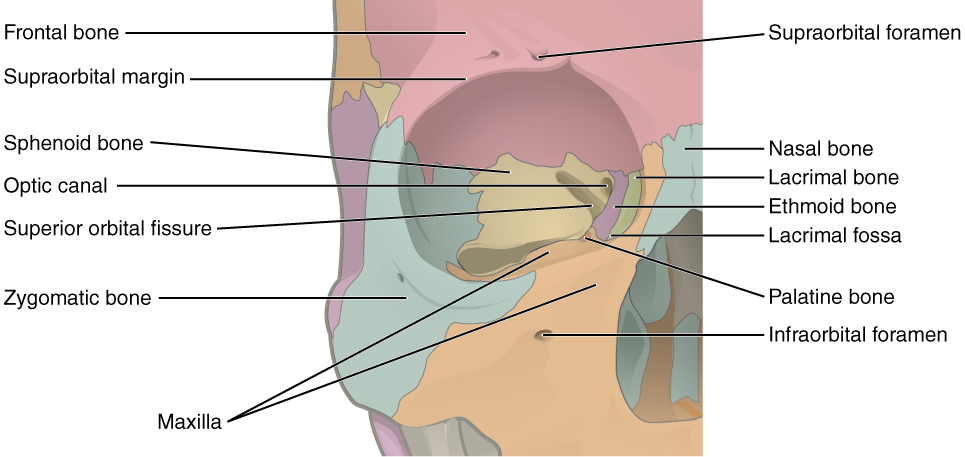
Los LOS Neisseria 7 huesos de la órbita son:

  • Maxilar
  • Cigomático
  • Frontal Frontal The bone that forms the frontal aspect of the skull. Its flat part forms the forehead, articulating inferiorly with the nasal bone and the cheek bone on each side of the face. Skull: Anatomy
  • Etmoides
  • Lagrimal
  • Esfenoides
  • Palatino

Las paredes de la órbita son:

  • Superior (techo):
    • Porción orbital del hueso frontal Frontal The bone that forms the frontal aspect of the skull. Its flat part forms the forehead, articulating inferiorly with the nasal bone and the cheek bone on each side of the face. Skull: Anatomy
    • Ala menor del esfenoides
  • Medial:
    • Formada por la apófisis frontal Frontal The bone that forms the frontal aspect of the skull. Its flat part forms the forehead, articulating inferiorly with the nasal bone and the cheek bone on each side of the face. Skull: Anatomy del maxilar
    • Hueso lagrimal
    • Placa orbital del hueso etmoides
    • Cuerpo del esfenoides
  • Inferior (suelo):
    • Hueso maxilar
    • Hueso cigomático
    • Hueso palatino
  • Lateral:
    • Ala mayor del esfenoides
    • Parte orbital del hueso frontal Frontal The bone that forms the frontal aspect of the skull. Its flat part forms the forehead, articulating inferiorly with the nasal bone and the cheek bone on each side of the face. Skull: Anatomy
    • Apófisis frontal Frontal The bone that forms the frontal aspect of the skull. Its flat part forms the forehead, articulating inferiorly with the nasal bone and the cheek bone on each side of the face. Skull: Anatomy del hueso cigomático
Huesos que forman la órbita

La órbita derecha y los 7 huesos que componen sus paredes: frontal (rojo), maxilar (naranja), lagrimal (verde), etmoides (morado), esfenoides (amarillo), palatino (naranja oscuro) y cigomático (azul)

Imagen: “Illustration from Anatomy & Physiology” por OpenStax College. Licencia: CC-BY-3.0

Fisiopatología

Existen 4 tipos principales de fracturas orbitarias, que se clasifican en EN Erythema nodosum is an immune-mediated panniculitis (inflammation of the subcutaneous fat) caused by a type IV (delayed-type) hypersensitivity reaction. It commonly manifests in young women as tender, erythematous nodules on the shins. Erythema Nodosum función de la anatomía implicada.
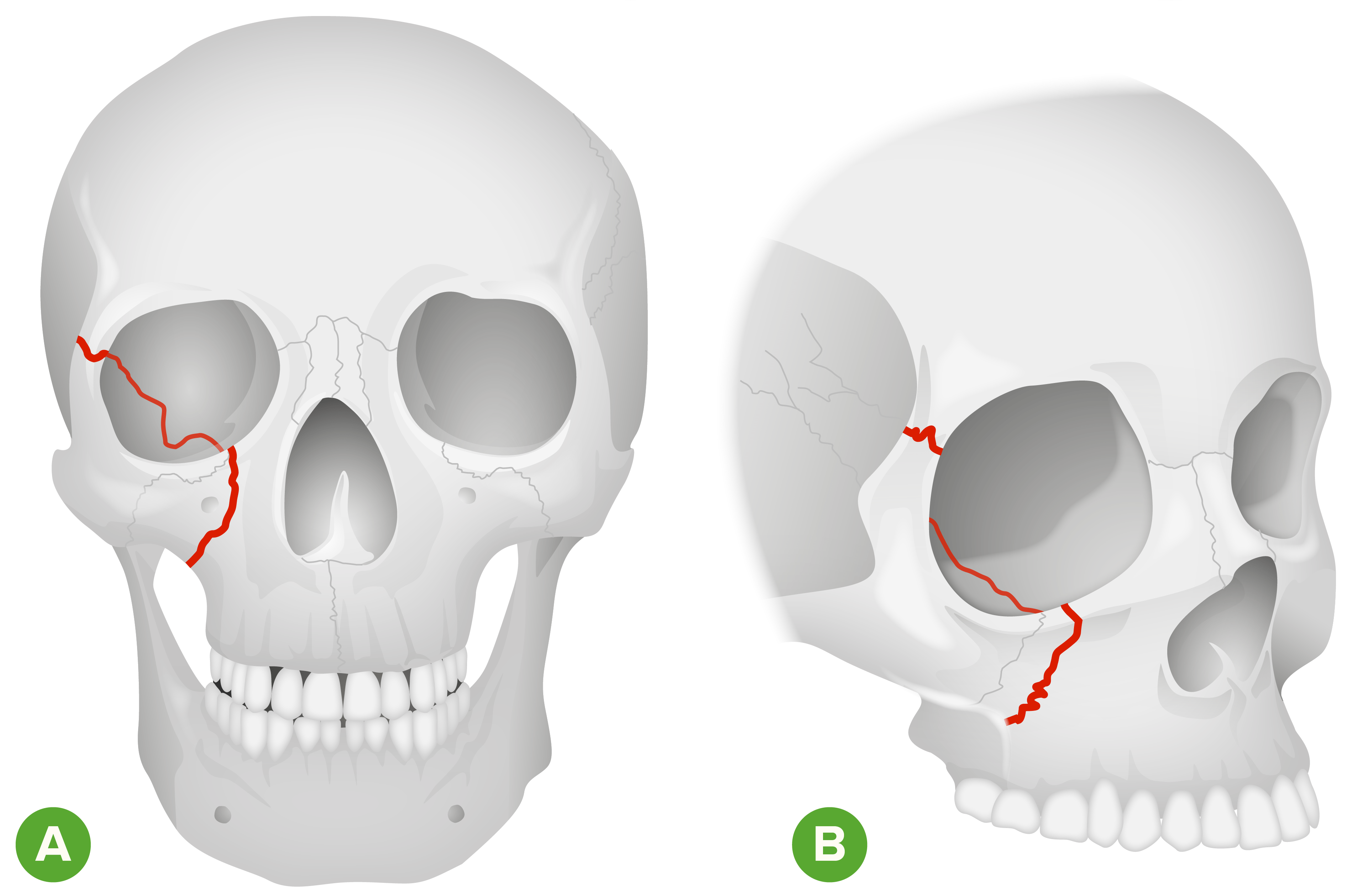
  • Fractura cigomática orbital:
    • La región cigomática de la órbita es la localización más común de una fractura del borde orbitario.
    • La causa más común: un golpe de alto impacto en EN Erythema nodosum is an immune-mediated panniculitis (inflammation of the subcutaneous fat) caused by a type IV (delayed-type) hypersensitivity reaction. It commonly manifests in young women as tender, erythematous nodules on the shins. Erythema Nodosum la órbita lateral
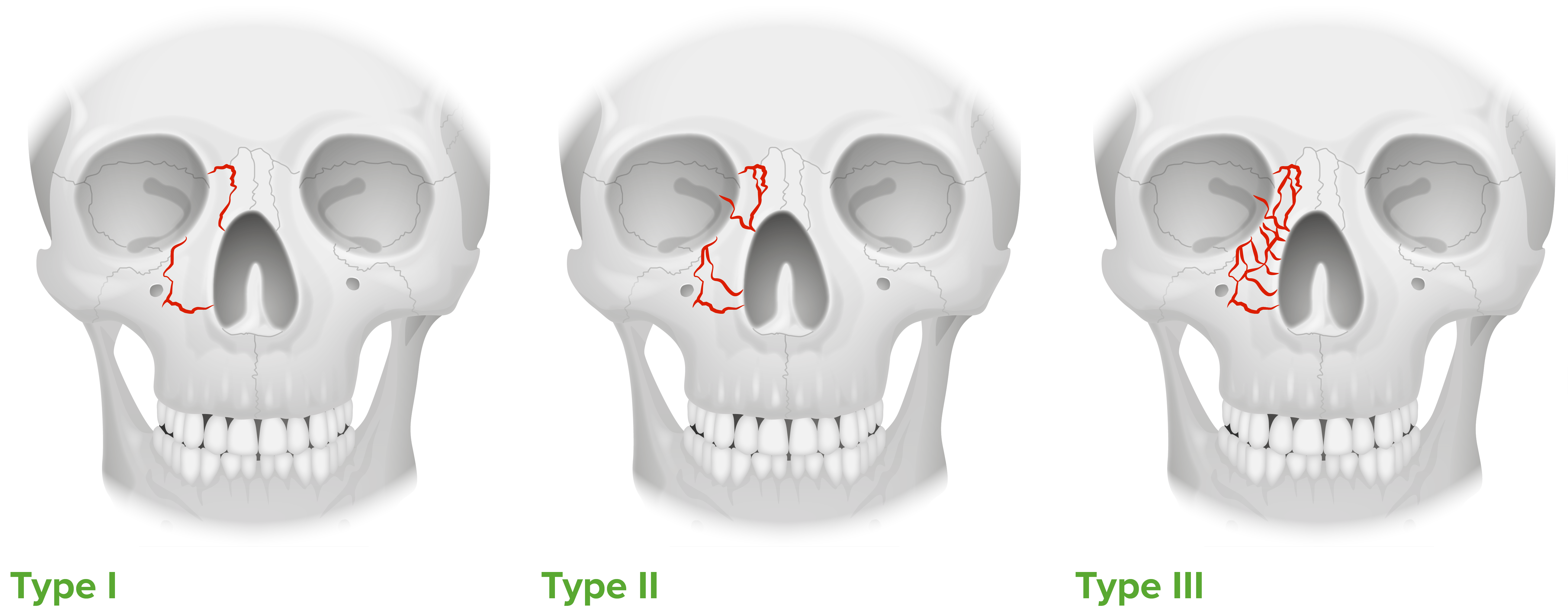
  • Fractura nasoetmoidea:
    • Fractura de la pared medial de la órbita
    • A menudo se asocia con fracturas del suelo orbital
    • Debido a la fuerza directa aplicada al AL Amyloidosis hueso nasal
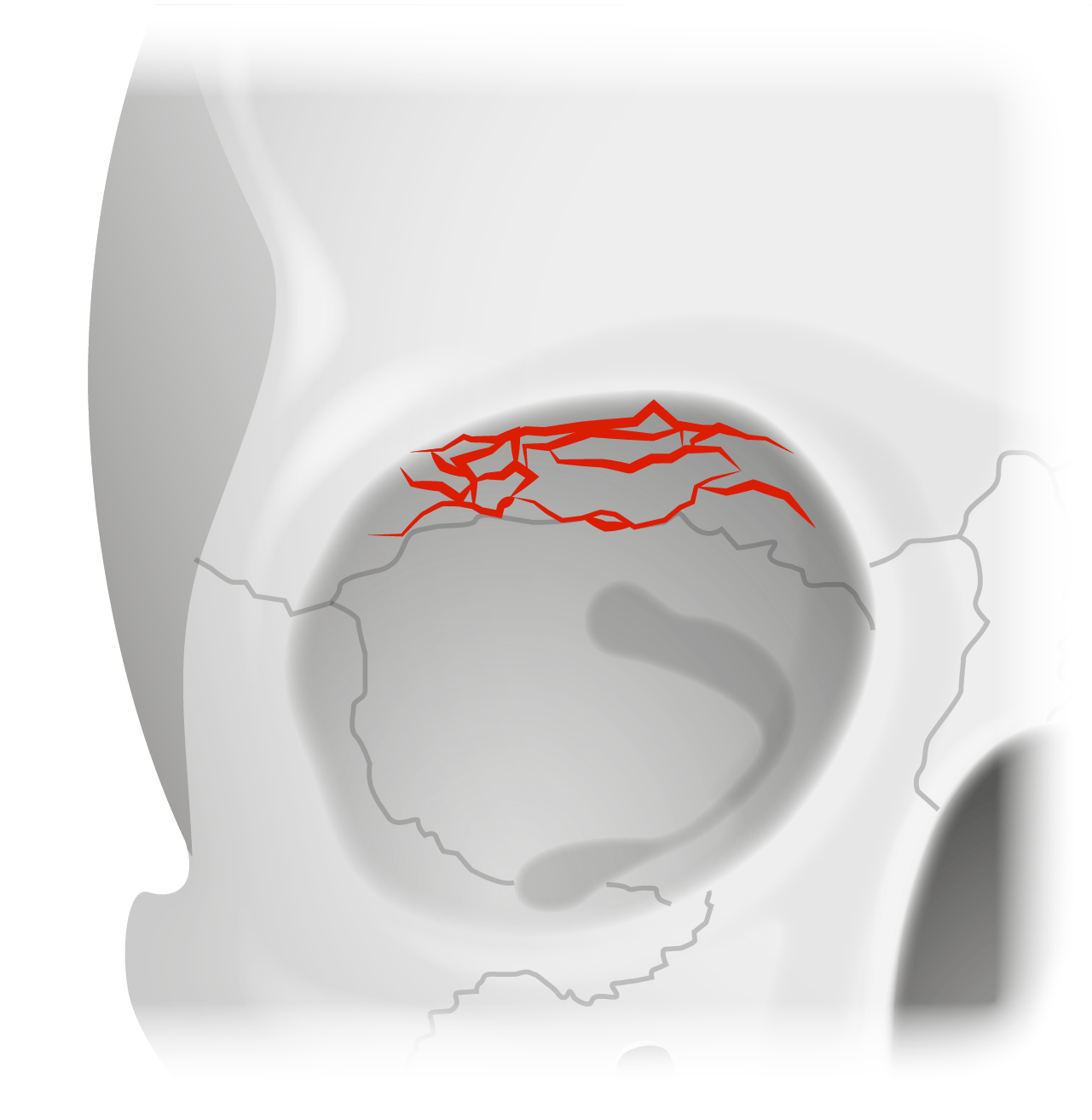
  • Fractura del techo orbital:
    • Localización: hueso frontal Frontal The bone that forms the frontal aspect of the skull. Its flat part forms the forehead, articulating inferiorly with the nasal bone and the cheek bone on each side of the face. Skull: Anatomy (techo de la órbita)
    • Frecuentemente asociada a lesiones intracraneales
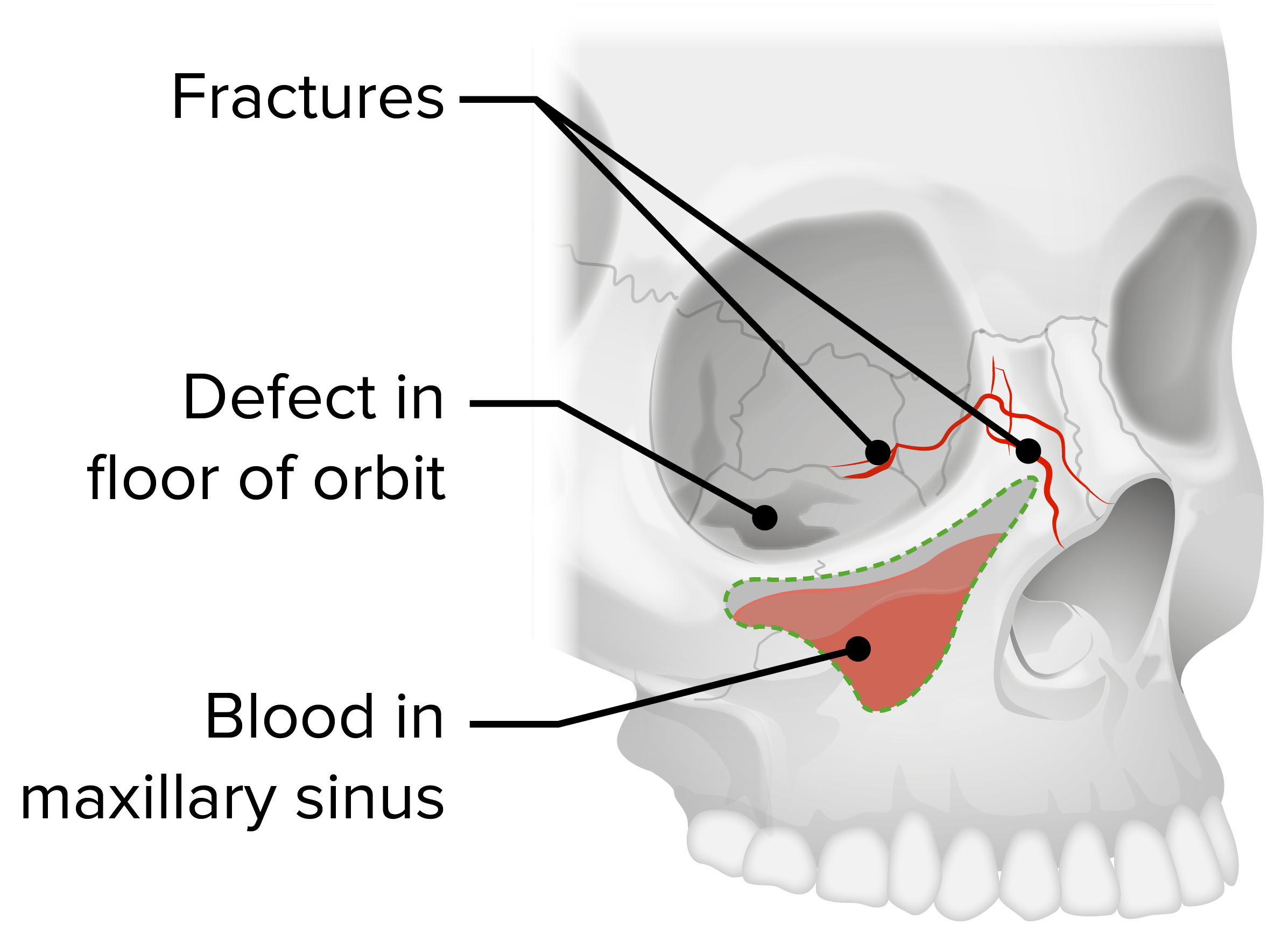
  • Fractura del suelo orbital:
    • “Fractura por estallido”
    • Tipo más frecuente de fractura orbitaria
    • Localización: huesos maxilar, cigomático y palatino
    • La motilidad ocular puede verse alterada, ya que el tejido orbital suele estar afectado.

Presentación Clínica

En EN Erythema nodosum is an immune-mediated panniculitis (inflammation of the subcutaneous fat) caused by a type IV (delayed-type) hypersensitivity reaction. It commonly manifests in young women as tender, erythematous nodules on the shins. Erythema Nodosum un paciente que se presenta con posibles fracturas orbitales, es importante identificar las lesiones asociadas que ponen en EN Erythema nodosum is an immune-mediated panniculitis (inflammation of the subcutaneous fat) caused by a type IV (delayed-type) hypersensitivity reaction. It commonly manifests in young women as tender, erythematous nodules on the shins. Erythema Nodosum peligro la vida y/o son graves, especialmente las lesiones intracraneales y las fracturas de la columna cervical.
Antecedentes y síntomas

  • Antecedentes de traumatismos contundentes (más comunes) o penetrantes
  • Dolor Dolor Inflammation orbital difuso
  • El dolor Dolor Inflammation al AL Amyloidosis mover los LOS Neisseria ojos sugiere una lesión en EN Erythema nodosum is an immune-mediated panniculitis (inflammation of the subcutaneous fat) caused by a type IV (delayed-type) hypersensitivity reaction. It commonly manifests in young women as tender, erythematous nodules on the shins. Erythema Nodosum los LOS Neisseria músculos extraoculares.
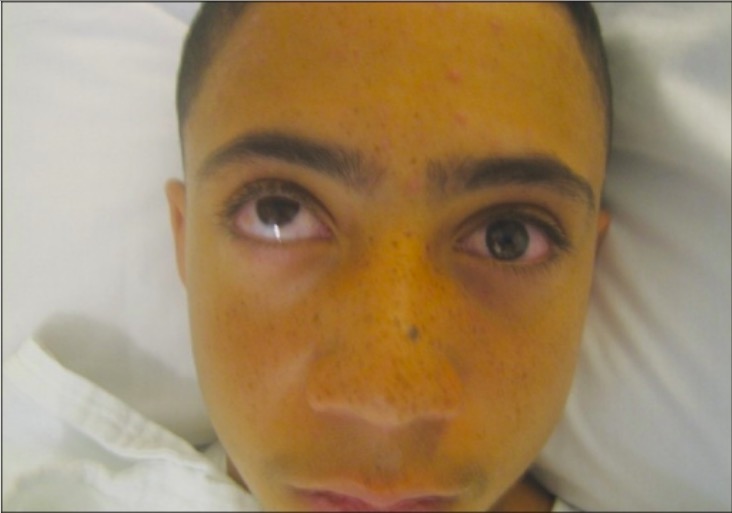
  • La diplopía al AL Amyloidosis mirar hacia arriba sugiere una lesión en EN Erythema nodosum is an immune-mediated panniculitis (inflammation of the subcutaneous fat) caused by a type IV (delayed-type) hypersensitivity reaction. It commonly manifests in young women as tender, erythematous nodules on the shins. Erythema Nodosum el suelo orbital.
  • El adormecimiento de la frente sugiere una lesión en EN Erythema nodosum is an immune-mediated panniculitis (inflammation of the subcutaneous fat) caused by a type IV (delayed-type) hypersensitivity reaction. It commonly manifests in young women as tender, erythematous nodules on the shins. Erythema Nodosum el techo orbital.
  • Las náuseas pueden ser causadas por el atrapamiento de los LOS Neisseria músculos extraoculares.

Hallazgos de la exploración física

  • Edema Edema Edema is a condition in which excess serous fluid accumulates in the body cavity or interstitial space of connective tissues. Edema is a symptom observed in several medical conditions. It can be categorized into 2 types, namely, peripheral (in the extremities) and internal (in an organ or body cavity). Edema periorbital Periorbital Orbital and Preseptal Cellulitis
  • Equimosis
  • Diplopía: debida al AL Amyloidosis atrapamiento mecánico de los LOS Neisseria músculos oblicuo inferior y recto inferior
  • Ausencia de reflejo luminoso pupilar si se dañan los LOS Neisseria nervios aferentes
  • Enoftalmos: desplazamiento posterior del globo ocular dentro de la órbita, visto en EN Erythema nodosum is an immune-mediated panniculitis (inflammation of the subcutaneous fat) caused by a type IV (delayed-type) hypersensitivity reaction. It commonly manifests in young women as tender, erythematous nodules on the shins. Erythema Nodosum las fracturas por explosión
  • Proptosis Proptosis Retinoblastoma: protrusión del globo ocular, observada en EN Erythema nodosum is an immune-mediated panniculitis (inflammation of the subcutaneous fat) caused by a type IV (delayed-type) hypersensitivity reaction. It commonly manifests in young women as tender, erythematous nodules on the shins. Erythema Nodosum las fracturas cigomáticas orbitales
  • Distancia intercantal ampliada debido a la ruptura del ligamento cantal medial
  • Bradicardia: asociada al AL Amyloidosis “reflejo oculocardíaco” (reducción de la frecuencia del pulso asociada a la presión ejercida sobre los LOS Neisseria músculos extraoculares)
Fractura del suelo orbital izquierdo

Restricción de la mirada ascendente izquierda por atrapamiento de los músculos extraoculares izquierdos en una fractura por explosión

Imagen: “Left orbital floor fracture” por Department of Ophthalmology, Division of Oculoplastic and Orbital Surgery, Rocky Mountain Lions Eye Institute, University of Colorado, Aurora, CO, USA. Licencia: CC BY 2.0

Diagnóstico

Las lesiones oculares están presentes hasta en EN Erythema nodosum is an immune-mediated panniculitis (inflammation of the subcutaneous fat) caused by a type IV (delayed-type) hypersensitivity reaction. It commonly manifests in young women as tender, erythematous nodules on the shins. Erythema Nodosum el 29% de los LOS Neisseria pacientes con fracturas orbitarias. Es imprescindible realizar un examen ocular lo antes posible para mitigar el riesgo de pérdida de visión.
Examen ocular

  • Agudeza visual
  • Motilidad ocular
  • Presión intraocular
  • Examen con lámpara de hendidura para visualizar cualquier daño en EN Erythema nodosum is an immune-mediated panniculitis (inflammation of the subcutaneous fat) caused by a type IV (delayed-type) hypersensitivity reaction. It commonly manifests in young women as tender, erythematous nodules on the shins. Erythema Nodosum la retina Retina The ten-layered nervous tissue membrane of the eye. It is continuous with the optic nerve and receives images of external objects and transmits visual impulses to the brain. Its outer surface is in contact with the choroid and the inner surface with the vitreous body. The outermost layer is pigmented, whereas the inner nine layers are transparent. Eye: Anatomy
  • Examen del campo visual

Imagenología

  • Radiografía:
    • Tamizaje para identificar fracturas
    • Vista de Water (también conocida como vista occipitomental): el haz de rayos X está inclinado a 45 grados y muestra el “signo de la lágrima” en EN Erythema nodosum is an immune-mediated panniculitis (inflammation of the subcutaneous fat) caused by a type IV (delayed-type) hypersensitivity reaction. It commonly manifests in young women as tender, erythematous nodules on the shins. Erythema Nodosum el antro.
  • Tomografía computarizada (TC):
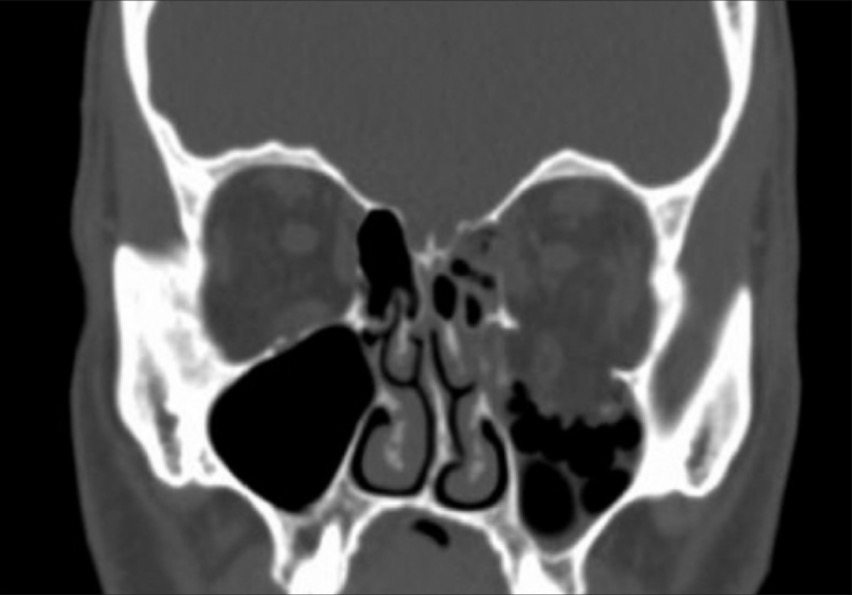
    • Estándar de oro para la detección de fracturas orbitales
    • Se prefieren cortes finos < 2 mm.
    • Las vistas coronal Coronal Computed Tomography (CT) y sagital diferencian entre el edema Edema Edema is a condition in which excess serous fluid accumulates in the body cavity or interstitial space of connective tissues. Edema is a symptom observed in several medical conditions. It can be categorized into 2 types, namely, peripheral (in the extremities) and internal (in an organ or body cavity). Edema periorbitario y el atrapamiento de estructuras intraoculares.
  • Resonancia magnética (RM):
    • Determina el alcance de la lesión de los LOS Neisseria tejidos blandos
    • Evalúa los LOS Neisseria daños en EN Erythema nodosum is an immune-mediated panniculitis (inflammation of the subcutaneous fat) caused by a type IV (delayed-type) hypersensitivity reaction. It commonly manifests in young women as tender, erythematous nodules on the shins. Erythema Nodosum los LOS Neisseria vasos
Gran fractura de más del 50% del suelo orbital izquierdo

TC que muestra una gran fractura del suelo orbital izquierdo

Imagen: “Left orbital floor fracture” por Department of Ophthalmology, Division of Oculoplastic and Orbital Surgery, Rocky Mountain Lions Eye Institute, University of Colorado, Aurora, CO, USA. Licencia: CC BY 2.0

Tratamiento y Complicaciones

Las fracturas orbitales son lesiones faciales y deben tratarse de forma urgente. El retraso en EN Erythema nodosum is an immune-mediated panniculitis (inflammation of the subcutaneous fat) caused by a type IV (delayed-type) hypersensitivity reaction. It commonly manifests in young women as tender, erythematous nodules on the shins. Erythema Nodosum el diagnóstico puede dar lugar a complicaciones o a complicaciones postoperatorias.

Tratamiento

Tratamiento de soporte:

  • Estabilizar la vía aérea.
  • Asegurar la estabilidad hemodinámica.
  • Líquidos intravenosos
  • Medicamentos para el dolor Dolor Inflammation y las náuseas
  • Elevar la cabeza.
  • Evaluar en EN Erythema nodosum is an immune-mediated panniculitis (inflammation of the subcutaneous fat) caused by a type IV (delayed-type) hypersensitivity reaction. It commonly manifests in young women as tender, erythematous nodules on the shins. Erythema Nodosum búsqueda de:
    • Integridad de la columna cervical
    • Posibles lesiones en EN Erythema nodosum is an immune-mediated panniculitis (inflammation of the subcutaneous fat) caused by a type IV (delayed-type) hypersensitivity reaction. It commonly manifests in young women as tender, erythematous nodules on the shins. Erythema Nodosum la cabeza
    • Lesiones de tejidos blandos y huesos en EN Erythema nodosum is an immune-mediated panniculitis (inflammation of the subcutaneous fat) caused by a type IV (delayed-type) hypersensitivity reaction. It commonly manifests in young women as tender, erythematous nodules on the shins. Erythema Nodosum la cabeza y el cuello

Tratamiento empírico:

  • Antibióticos para cubrir los LOS Neisseria patógenos de los LOS Neisseria senos paranasales
  • Aconsejar al AL Amyloidosis paciente que no se suene la nariz, para evitar el aire en EN Erythema nodosum is an immune-mediated panniculitis (inflammation of the subcutaneous fat) caused by a type IV (delayed-type) hypersensitivity reaction. It commonly manifests in young women as tender, erythematous nodules on the shins. Erythema Nodosum la cavidad orbital.
  • Reducir el edema Edema Edema is a condition in which excess serous fluid accumulates in the body cavity or interstitial space of connective tissues. Edema is a symptom observed in several medical conditions. It can be categorized into 2 types, namely, peripheral (in the extremities) and internal (in an organ or body cavity). Edema periorbital Periorbital Orbital and Preseptal Cellulitis:
    • Compresas frías
    • Esteroides orales

Consulta oftalmológica urgente si:

  • Evidencia de lesión del globo ocular: se observa en EN Erythema nodosum is an immune-mediated panniculitis (inflammation of the subcutaneous fat) caused by a type IV (delayed-type) hypersensitivity reaction. It commonly manifests in young women as tender, erythematous nodules on the shins. Erythema Nodosum el 30% de las fracturas orbitarias
  • Disminución de la agudeza visual
  • Ampliación de la distancia intercantal
  • Evidencia de síndrome compartimental orbital:
    • Disminución de la retropulsión
    • Párpados “duros como piedras”
  • Globo ocular abierto
  • Síntomas vagales severos

Cirugía para reducir la fractura y prevenir futuras deformidades:

  • Puede aplazarse hasta 14 días si el edema Edema Edema is a condition in which excess serous fluid accumulates in the body cavity or interstitial space of connective tissues. Edema is a symptom observed in several medical conditions. It can be categorized into 2 types, namely, peripheral (in the extremities) and internal (in an organ or body cavity). Edema periorbital Periorbital Orbital and Preseptal Cellulitis interfiere con la visualización y la evaluación
  • Se aconseja para pacientes con:
    • Hematoma Hematoma A collection of blood outside the blood vessels. Hematoma can be localized in an organ, space, or tissue. Intussusception orbital
    • Fuga de líquido cefalorraquídeo (LCR)
    • Desplazamiento del globo ocular: exoftalmos o proptosis Proptosis Retinoblastoma
    • Atrapamiento de las estructuras infraorbitarias que provocan el reflejo oculocardíaco

Los LOS Neisseria implantes más utilizados para la reconstrucción son:

  • Autoinjerto óseo:
    • Proporciona una buena base para la reconstrucción
    • Se utiliza comúnmente en EN Erythema nodosum is an immune-mediated panniculitis (inflammation of the subcutaneous fat) caused by a type IV (delayed-type) hypersensitivity reaction. It commonly manifests in young women as tender, erythematous nodules on the shins. Erythema Nodosum niños < 7 años de edad
  • Cartílago:
    • Lo más biocompatible
    • Sufre una fácil reabsorción
    • Lo más habitual es que se utilice para fracturas pequeñas
  • Alloplast Alloplast Orbital Fractures:
    • Malla de titanio: se utiliza para los LOS Neisseria grandes defectos del suelo
    • Polietileno poroso: se utiliza para defectos con bordes bien definidos
    • Láminas reabsorbibles: se utilizan en EN Erythema nodosum is an immune-mediated panniculitis (inflammation of the subcutaneous fat) caused by a type IV (delayed-type) hypersensitivity reaction. It commonly manifests in young women as tender, erythematous nodules on the shins. Erythema Nodosum huecos pequeños con bordes bien definidos

Complicaciones

Las complicaciones derivadas de las fracturas orbitarias pueden deberse a la propia lesión o a la cirugía.

Complicaciones relacionadas con las lesiones:

  • Ruptura del globo ocular
  • Hematoma Hematoma A collection of blood outside the blood vessels. Hematoma can be localized in an organ, space, or tissue. Intussusception orbital
  • Hematoma Hematoma A collection of blood outside the blood vessels. Hematoma can be localized in an organ, space, or tissue. Intussusception de la vaina del nervio óptico
  • Desprendimiento de retina Retina The ten-layered nervous tissue membrane of the eye. It is continuous with the optic nerve and receives images of external objects and transmits visual impulses to the brain. Its outer surface is in contact with the choroid and the inner surface with the vitreous body. The outermost layer is pigmented, whereas the inner nine layers are transparent. Eye: Anatomy
  • Hifema
  • Atrapamiento muscular
  • Síndrome compartimental orbital

Complicaciones quirúrgicas:

  • Complicaciones intraoperatorias:
    • Lesión del globo ocular y del nervio óptico
    • Eliminación inadecuada del tejido prolapsado
    • Hemorragia
  • Complicaciones postoperatorias:
    • Pérdida de visión permanente
    • Diplopía persistente
    • Infección
    • Extrusión o malposición del implante

Referencias

  1. Neuman, I., Bachur, R.G. (2025). Orbital fractures. UpToDate. Retrieved April 13, 2025, from https://www.uptodate.com/contents/orbital-fractures
  2. Boyette, J. R., et al. (2015). Management of orbital fractures: challenges and solutions. Clinical Ophthalmology 9:2127–2137. https://doi.org/10.2147/OPTH.S80463
  3. Joseph, J. M., Glavas, I. P. (2011). Orbital fractures: a review. Clinical Ophthalmology. 5, 95–100.  https://doi.org/10.2147/OPTH.S14972
  4. Sihota, R., Tando, R. (2019). Parson’s Diseases of the Eye, 22nd ed. Chapter 30.
  5. Gardiner, M. F. (2023). Approach to diagnosis and initial treatment of eye injuries in the emergency department. In S. B. Torrey, D. S. Jacobs, & M. Ganetsky (Eds.), UpToDate. Retrieved April 13, 2025, from https://www.uptodate.com/contents/approach-to-diagnosis-and-initial-treatment-of-eye-injuries-in-the-emergency-department

¡Crea tu cuenta gratis o inicia una sesión para seguir leyendo!

Regístrate ahora y obtén acceso gratuito a Lecturio con páginas de concepto, videos médicos y cuestionarios para tu educación médica.

User Reviews

Que tengas una sesión de estudio alegre y navideña 🎁 Ahorra 50% en todos los planes >>

Details