
Domina Conceptos Médicos

Estudia para la escuela de medicina y tus examenes con Lecturio.

Fístula Anal

Las fístulas anales son comunicaciones anormales entre la luz anorrectal y otra estructura corporal, a menudo la piel. Las fístulas anales a menudo ocurren debido a la extensión de abscesos anales, pero también están asociadas con enfermedades específicas como la enfermedad de Crohn. Los LOS Neisseria síntomas incluyen dolor Dolor Inflammation o irritación alrededor del ano; secreción anormal o drenaje purulento; e inflamación, enrojecimiento o fiebre si hay un absceso. El tratamiento es principalmente quirúrgico, con fistulotomía, pero puede incluir antibióticos si hay infección. Las complicaciones después de la cirugía incluyen recurrencia e incontinencia.

Last updated: Dec 15, 2025
Editorial responsibility: Stanley Oiseth, Lindsay Jones, Evelin Maza

Definición y Epidemiología

Definición

  • Conexión anormal entre el epitelio del canal anal y otra estructura del cuerpo (a menudo la piel)
  • También llamada fístula en EN Erythema nodosum is an immune-mediated panniculitis (inflammation of the subcutaneous fat) caused by a type IV (delayed-type) hypersensitivity reaction. It commonly manifests in young women as tender, erythematous nodules on the shins. Erythema Nodosum el ano

Epidemiología

  • Incidencia: 9 por 100 000 adultos por año
  • Sexo: hombres > mujeres
  • Más frecuente entre la 3ra y 5ta décadas de la vida
  • El 50% de los LOS Neisseria pacientes con absceso anorrectal eventualmente desarrollarán una fístula.

Etiología y Fisiopatología

Etiología

  • Las fístulas anorrectales ocurren con mayor frecuencia por:
    • Un absceso anal agudo → se rompe o se drena → se forma un trayecto epitelizado que conecta el absceso en EN Erythema nodosum is an immune-mediated panniculitis (inflammation of the subcutaneous fat) caused by a type IV (delayed-type) hypersensitivity reaction. It commonly manifests in young women as tender, erythematous nodules on the shins. Erythema Nodosum el ano con la piel (proceso crónico)
    • Abscesos anales (criptas de las glándulas anales infectadas frecuentemente con reducción del flujo sanguíneo)
  • Otras causas:
    • Cuerpos extraños rectales
    • Enfermedad inflamatoria intestinal (enfermedad de Crohn)
    • Trauma (lesión obstétrica)
    • Fisuras anales
    • Malignidad
    • Proctitis Proctitis Inflammation of the mucous membrane of the rectum, the distal end of the large intestine. Chronic Granulomatous Disease por radiación
    • Infecciones (linfogranuloma venéreo)

Fisiopatología

  • Obstrucción de las glándulas anales en EN Erythema nodosum is an immune-mediated panniculitis (inflammation of the subcutaneous fat) caused by a type IV (delayed-type) hypersensitivity reaction. It commonly manifests in young women as tender, erythematous nodules on the shins. Erythema Nodosum la pared del canal anal → estasis y crecimiento excesivo de bacterias → formación de abscesos anales → extensión del absceso a los LOS Neisseria espacios perirrectales adyacentes → formación de fístulas
  • También puede ocurrir de forma secundaria a estados patológicos (e.g., enfermedad de Crohn)
  • Las fístulas pueden permanecer abiertas debido a:
    • Cuerpo extraño
    • Radiación
    • Infección
    • Epitelización
    • Neoplasia
    • Obstrucción distal
    • Otro:
      • Flujo aumentado
      • Esteroides

Presentación Clínica

Antecedentes

  • Absceso anal que no cicatriza, a menudo asociado con drenaje purulento o secreción maloliente
  • Dolor Dolor Inflammation rectal

Examen físico

  • Piel perianal inflamada
  • La apertura del trayecto de la fístula externa puede observarse o palparse como un área de induración.
  • Asociado con un tracto palpable similar a un cordón.
    • La apertura del trayecto de la fístula interna puede palparse en EN Erythema nodosum is an immune-mediated panniculitis (inflammation of the subcutaneous fat) caused by a type IV (delayed-type) hypersensitivity reaction. It commonly manifests in young women as tender, erythematous nodules on the shins. Erythema Nodosum el tacto rectal; sin embargo, es posible que se necesite un anoscopio o más imagenología para identificar el trayecto de la fístula.

Diagnóstico y Tratamiento

Diagnóstico

  • Basado en EN Erythema nodosum is an immune-mediated panniculitis (inflammation of the subcutaneous fat) caused by a type IV (delayed-type) hypersensitivity reaction. It commonly manifests in young women as tender, erythematous nodules on the shins. Erythema Nodosum los LOS Neisseria antecedentes, el examen físico y los LOS Neisseria hallazgos radiológicos
  • Identificación:
    • Apertura interna en EN Erythema nodosum is an immune-mediated panniculitis (inflammation of the subcutaneous fat) caused by a type IV (delayed-type) hypersensitivity reaction. It commonly manifests in young women as tender, erythematous nodules on the shins. Erythema Nodosum el examen del área rectal
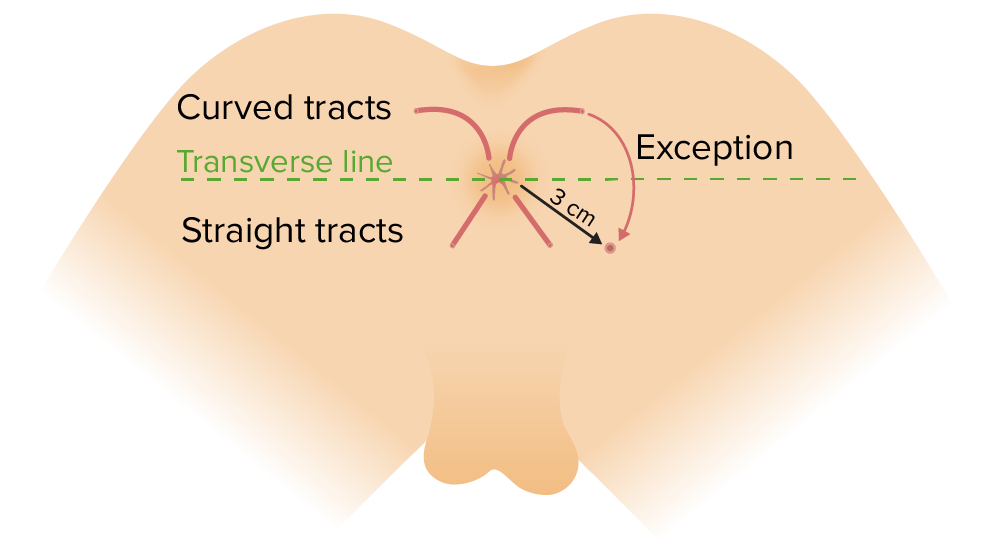
    • Regla de Goodsall
      • Las fístulas que se originan por adelante de una línea transversal a través del ano tendrán un trayecto recto y saldrán por adelante.
      • Las fístulas que se originan por detrás de la línea transversal comenzarán en EN Erythema nodosum is an immune-mediated panniculitis (inflammation of the subcutaneous fat) caused by a type IV (delayed-type) hypersensitivity reaction. It commonly manifests in young women as tender, erythematous nodules on the shins. Erythema Nodosum la línea media y tendrán un trayecto curvo.
    • Excepción a la regla de Goodsall: fístulas >3 cm desde el margen anal
    • Tracto fistuloso:
      • Se puede detectar mediante sondaje o fistulografía bajo anestesia
      • Una sonda de fístula debe ser usada con cuidado para prevenir penetración de la pared de la fístula.
      • En EN Erythema nodosum is an immune-mediated panniculitis (inflammation of the subcutaneous fat) caused by a type IV (delayed-type) hypersensitivity reaction. It commonly manifests in young women as tender, erythematous nodules on the shins. Erythema Nodosum caso de afectación renal, se requiere el uso de un sigmoidoscopio.
  • Imagenología preferida:
    • RM de la pelvis Pelvis The pelvis consists of the bony pelvic girdle, the muscular and ligamentous pelvic floor, and the pelvic cavity, which contains viscera, vessels, and multiple nerves and muscles. The pelvic girdle, composed of 2 “hip” bones and the sacrum, is a ring-like bony structure of the axial skeleton that links the vertebral column with the lower extremities. Pelvis: Anatomy (con o sin contraste): el método de diagnóstico más sensible
    • Ecografía endoanal: alta precisión, en EN Erythema nodosum is an immune-mediated panniculitis (inflammation of the subcutaneous fat) caused by a type IV (delayed-type) hypersensitivity reaction. It commonly manifests in young women as tender, erythematous nodules on the shins. Erythema Nodosum particular junto con la RM
    • Ecografía transperineal (TPUS): puede servir como una alternativa no invasiva, pero se utiliza con menos frecuencia debido a la dependencia del operador.
Goodsall rule

Regla de Goodsall:
Las fístulas que se originan por delante de la línea transversal a través del ano tendrán un recorrido recto y saldrán por delante (una excepción a esta regla son las aberturas anteriores > 3 cm del borde anal). Las fístulas que se originan posteriormente a la línea transversal comenzarán en la línea media y tendrán un tracto curvo.
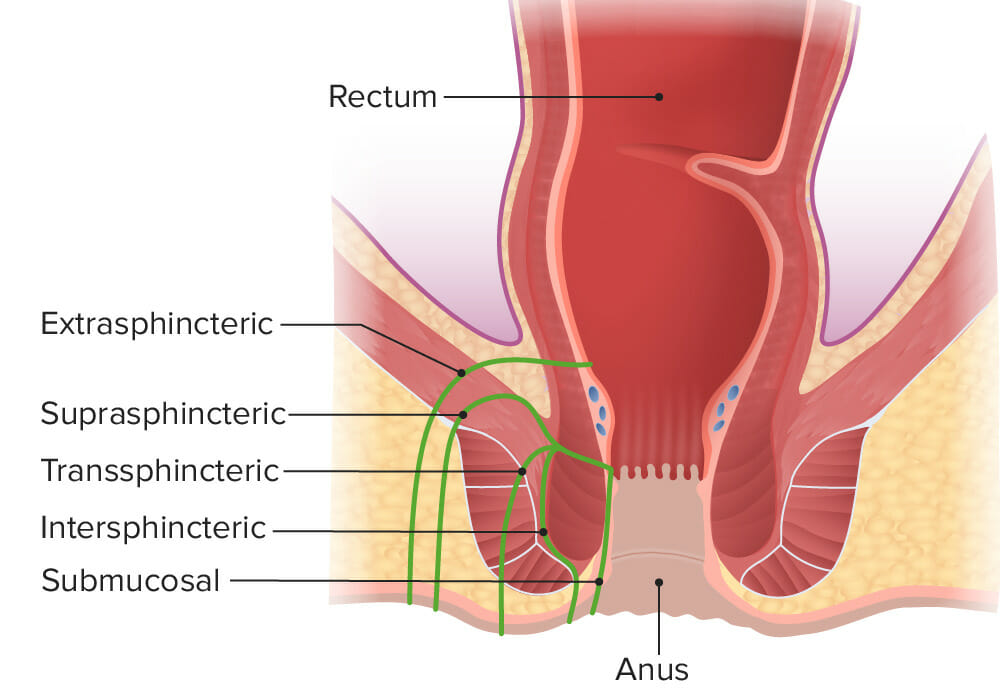
Imagen por Lecturio.

Tipos de fístula

  • Clasificación de Parks:
    • Interesfinteriana (más común):
      • Fístula entre los LOS Neisseria esfínteres externo e interno, terminando en EN Erythema nodosum is an immune-mediated panniculitis (inflammation of the subcutaneous fat) caused by a type IV (delayed-type) hypersensitivity reaction. It commonly manifests in young women as tender, erythematous nodules on the shins. Erythema Nodosum la piel perianal
      • Conserva el esfínter externo
    • Transesfinteriana: El trayecto es a través del esfínter externo hacia la fosa isquiorrectal.
    • Supraesfinteriana: La fístula comienza en EN Erythema nodosum is an immune-mediated panniculitis (inflammation of the subcutaneous fat) caused by a type IV (delayed-type) hypersensitivity reaction. It commonly manifests in young women as tender, erythematous nodules on the shins. Erythema Nodosum la cripta anal, penetra el esfínter anal interno, y se dirige superiormente por encima del plano interesfinteriano.
    • Extraesfinteriana:
      • Posición superior en EN Erythema nodosum is an immune-mediated panniculitis (inflammation of the subcutaneous fat) caused by a type IV (delayed-type) hypersensitivity reaction. It commonly manifests in young women as tender, erythematous nodules on the shins. Erythema Nodosum el canal anal y con trayecto a través del complejo esfinteriano, yendo de lateral hacia los LOS Neisseria esfínteres antes de culminar en EN Erythema nodosum is an immune-mediated panniculitis (inflammation of the subcutaneous fat) caused by a type IV (delayed-type) hypersensitivity reaction. It commonly manifests in young women as tender, erythematous nodules on the shins. Erythema Nodosum la piel
      • Resulta de traumatismo, enfermedad de Crohn y cuerpos extraños
  • No incluidas en EN Erythema nodosum is an immune-mediated panniculitis (inflammation of the subcutaneous fat) caused by a type IV (delayed-type) hypersensitivity reaction. It commonly manifests in young women as tender, erythematous nodules on the shins. Erythema Nodosum la clasificación de Parks: superficial o submucosa (no afecta a los LOS Neisseria músculos esfinterianos)
Types of fistula

Tipos de fístula:
Una fístula interesfinteriana (la más común) se sitúa entre los esfínteres, lo que ahorra el esfínter externo. Una fístula transesfinteriana atraviesa los esfínteres interno y externo, extendiéndose hasta la fosa isquiorrectal. Una fístula supraesfintérica penetra en el esfínter anal interno y se dirige por encima del plano interesfinteriano. Una fístula extraesfinteriana se encuentra en la parte alta del canal anal y se dirige a través del complejo esfinteriano, pasando por el lateral de los esfínteres antes de terminar en la piel. Una fístula submucosa no penetra en ningún músculo del esfínter.

Imagen por Lecturio.

Tratamiento

  • El tratamiento quirúrgico es el tratamiento de 1ra línea
    • Objetivo: eliminar la fístula sin causar incontinencia fecal
    • Fistulotomía: destapa el trayecto de la fístula desde la abertura externa a la interna
      • Permite drenaje y cicatrización por segunda intención
      • Fístula de ubicación baja (no afecta el esfínter externo) → fistulotomía primaria
      • Fístula de ubicación alta, o compleja (compromete el esfínter externo) → fistulotomía por etapas con sutura de setón, una sutura no absorbible colocada a través del tracto para comprimir la fístula y estimular la fibrosis Fibrosis Any pathological condition where fibrous connective tissue invades any organ, usually as a consequence of inflammation or other injury. Bronchiolitis Obliterans circundante
  • Medidas postoperatorias:
    • Baños de asiento e irrigación
    • Empaquetado para asegurar la curación
    • Antibióticos: generalmente reservados para pacientes con un absceso anorrectal complicado con celulitis, signos sistémicos de infección o inmunosupresión subyacente.
  • Complicaciones:
    • Reaparición
    • Empeoramiento de la infección
    • Incontinencia fecal (raro)

Mnemotecnia

Por qué las fístulas permanecen abiertas: “FRIENDS” ( en EN Erythema nodosum is an immune-mediated panniculitis (inflammation of the subcutaneous fat) caused by a type IV (delayed-type) hypersensitivity reaction. It commonly manifests in young women as tender, erythematous nodules on the shins. Erythema Nodosum inglés):
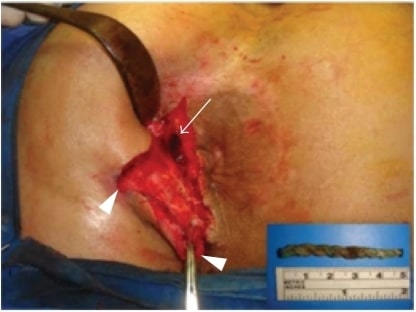
  • F Foreign body Foreign Body Foreign Body Aspiration (cuerpo extraño)
  • R Radiation Radiation Emission or propagation of acoustic waves (sound), electromagnetic energy waves (such as light; radio waves; gamma rays; or x-rays), or a stream of subatomic particles (such as electrons; neutrons; protons; or alpha particles). Osteosarcoma (radiación)
  • I – Infection (infección)
  • E Epithelialization Epithelialization Anal Fistula (epitelización)
  • N – Neoplasm (neoplasia)
  • D – Distal obstruction (obstrucción distal)
  • S Steroids Steroids A group of polycyclic compounds closely related biochemically to terpenes. They include cholesterol, numerous hormones, precursors of certain vitamins, bile acids, alcohols (sterols), and certain natural drugs and poisons. Steroids have a common nucleus, a fused, reduced 17-carbon atom ring system, cyclopentanoperhydrophenanthrene. Most steroids also have two methyl groups and an aliphatic side-chain attached to the nucleus. Benign Liver Tumors (esteroides)

Diagnóstico Diferencial

  • Carcinoma anal: enfermedad neoplásica en EN Erythema nodosum is an immune-mediated panniculitis (inflammation of the subcutaneous fat) caused by a type IV (delayed-type) hypersensitivity reaction. It commonly manifests in young women as tender, erythematous nodules on the shins. Erythema Nodosum la que se forman y crecen células cancerosas en EN Erythema nodosum is an immune-mediated panniculitis (inflammation of the subcutaneous fat) caused by a type IV (delayed-type) hypersensitivity reaction. It commonly manifests in young women as tender, erythematous nodules on the shins. Erythema Nodosum el ano. Los LOS Neisseria síntomas incluyen sangrado del ano, dolor Dolor Inflammation anal, masa anal o picazón. Los LOS Neisseria factores de riesgo incluyen edad avanzada, infecciones, incluido el virus Virus Viruses are infectious, obligate intracellular parasites composed of a nucleic acid core surrounded by a protein capsid. Viruses can be either naked (non-enveloped) or enveloped. The classification of viruses is complex and based on many factors, including type and structure of the nucleoid and capsid, the presence of an envelope, the replication cycle, and the host range. Virology del papiloma humano (VPH), múltiples parejas sexuales y sexo anal. El carcinoma anal se diagnostica mediante biopsia. El tratamiento puede incluir cirugía, radiación o quimioterapia. En EN Erythema nodosum is an immune-mediated panniculitis (inflammation of the subcutaneous fat) caused by a type IV (delayed-type) hypersensitivity reaction. It commonly manifests in young women as tender, erythematous nodules on the shins. Erythema Nodosum una fisura anal crónica o atípica, se debe descartar un carcinoma anal.
  • Hemorroides: agrandamiento de las almohadillas anales (vasos submucosos) en EN Erythema nodosum is an immune-mediated panniculitis (inflammation of the subcutaneous fat) caused by a type IV (delayed-type) hypersensitivity reaction. It commonly manifests in young women as tender, erythematous nodules on the shins. Erythema Nodosum el recto distal. Dependiendo de la ubicación de las venas, las hemorroides pueden ser internas o externas. Las hemorroides externas son dolorosas, pero las hemorroides internas son indoloras; ambas pueden sangrar y aparecer como una masa rectal blanda en EN Erythema nodosum is an immune-mediated panniculitis (inflammation of the subcutaneous fat) caused by a type IV (delayed-type) hypersensitivity reaction. It commonly manifests in young women as tender, erythematous nodules on the shins. Erythema Nodosum el examen. Comúnmente causadas por estreñimiento y diagnosticadas en EN Erythema nodosum is an immune-mediated panniculitis (inflammation of the subcutaneous fat) caused by a type IV (delayed-type) hypersensitivity reaction. It commonly manifests in young women as tender, erythematous nodules on the shins. Erythema Nodosum un examen físico. El tratamiento incluye ablandadores de heces, hidrocortisona tópica y baños de asiento. Para casos recurrentes, está indicada la ligadura con banda elástica o la extirpación quirúrgica.
  • Ulceraciones perianales: erosiones en EN Erythema nodosum is an immune-mediated panniculitis (inflammation of the subcutaneous fat) caused by a type IV (delayed-type) hypersensitivity reaction. It commonly manifests in young women as tender, erythematous nodules on the shins. Erythema Nodosum la mucosa perianal. Se producen de forma secundaria a la enfermedad inflamatoria intestinal, sobre todo la enfermedad de Crohn, infecciones y cáncer. Los LOS Neisseria síntomas incluyen dolor Dolor Inflammation, sangrado y erosiones en EN Erythema nodosum is an immune-mediated panniculitis (inflammation of the subcutaneous fat) caused by a type IV (delayed-type) hypersensitivity reaction. It commonly manifests in young women as tender, erythematous nodules on the shins. Erythema Nodosum el revestimiento de la mucosa. El tratamiento está dirigido a la enfermedad causante. Se diferencian de las fisuras anales en EN Erythema nodosum is an immune-mediated panniculitis (inflammation of the subcutaneous fat) caused by a type IV (delayed-type) hypersensitivity reaction. It commonly manifests in young women as tender, erythematous nodules on the shins. Erythema Nodosum el examen físico por erosiones más profundas en EN Erythema nodosum is an immune-mediated panniculitis (inflammation of the subcutaneous fat) caused by a type IV (delayed-type) hypersensitivity reaction. It commonly manifests in young women as tender, erythematous nodules on the shins. Erythema Nodosum la mucosa y evidencia de otra enfermedad causal.
  • Fisura anal: un doloroso desgarro superficial del revestimiento epitelial (anodermo) del canal anal. Las fisuras anales se producen con mayor frecuencia como consecuencia de traumatismos locales o irritación por estreñimiento, diarrea, coito anal o laceraciones perineales durante el parto. El tratamiento generalmente es conservador e incluye ablandadores de heces, agentes de carga, baños de asiento y/o vasodilatadores tópicos.

Referencias

  1. Vogel, John D. (2023). Anorectal fistula: Clinical manifestations, diagnosis, and management principles. UpToDate. Retrieved November 30, 2024, from https://www.uptodate.com/contents/anorectal-fistula-clinical-manifestations-diagnosis-and-management-principles
  2. Turner, S. V., & Singh, J. (2023). Perirectal abscess. In StatPearls. StatPearls Publishing. Retrieved November 30, 2024, from https://www.ncbi.nlm.nih.gov/books/NBK507895/
  3. Carr, S., Velasco, A.L. (2023). Fistula In Ano. In: StatPearls [Internet]. Treasure Island (FL): StatPearls Publishing. Retrieved November 30, 2024, from https://www.ncbi.nlm.nih.gov/books/NBK557517/
  4. Sanchez-Haro, E., Vela, E., Cleries, M., Vela, S., Tapiolas, I., Troya, J., Julian, J.-F., & Parés, D. (2023). Clinical characterization of patients with anal fistula during follow-up of anorectal abscess: A large population-based study. Techniques in Coloproctology, 27(10), 897–907. https://doi.org/10.1007/s10151-023-02840-z 
  5. Gaertner, W. B., et al. (2022). The American Society of Colon and Rectal Surgeons clinical practice guidelines for the management of anorectal abscess, fistula-in-ano, and rectovaginal fistula. Diseases of the Colon & Rectum, 65(8), 964–985. https://doi.org/10.1097/DCR.0000000000002473

¡Crea tu cuenta gratis o inicia una sesión para seguir leyendo!

Regístrate ahora y obtén acceso gratuito a Lecturio con páginas de concepto, videos médicos y cuestionarios para tu educación médica.

User Reviews

Que tengas una sesión de estudio alegre y navideña 🎁 Ahorra 50% en todos los planes >>

Details