
Domina Conceptos Médicos

Estudia para la escuela de medicina y tus examenes con Lecturio.

Esferocitosis Hereditaria

La esferocitosis hereditaria es el tipo más común de anemia Anemia Anemia is a condition in which individuals have low Hb levels, which can arise from various causes. Anemia is accompanied by a reduced number of RBCs and may manifest with fatigue, shortness of breath, pallor, and weakness. Subtypes are classified by the size of RBCs, chronicity, and etiology. Anemia: Overview and Types hemolítica hereditaria. La afección está causada por una deficiencia proteica del citoesqueleto en EN Erythema nodosum is an immune-mediated panniculitis (inflammation of the subcutaneous fat) caused by a type IV (delayed-type) hypersensitivity reaction. It commonly manifests in young women as tender, erythematous nodules on the shins. Erythema Nodosum la membrana de los LOS Neisseria eritrocitos. Esto da lugar a la pérdida de estabilidad de la membrana y a la deformabilidad de los LOS Neisseria eritrocitos, dando a la célula su forma esférica (esferocito). Estas células son susceptibles de degradación esplénica, lo que conduce a la hemólisis. El examen físico puede mostrar ictericia y esplenomegalia, mientras que las pruebas de laboratorio son consistentes con anemia Anemia Anemia is a condition in which individuals have low Hb levels, which can arise from various causes. Anemia is accompanied by a reduced number of RBCs and may manifest with fatigue, shortness of breath, pallor, and weakness. Subtypes are classified by the size of RBCs, chronicity, and etiology. Anemia: Overview and Types hemolítica y aumento de la concentración de hemoglobina. Entre las múltiples pruebas de confirmación de la esferocitosis hereditaria, se prefiere la prueba de unión a eosina-5'-maleimida. El único tratamiento definitivo de la esferocitosis hereditaria es la esplenectomía.

Last updated: Dec 15, 2025

Editorial responsibility: Stanley Oiseth, Lindsay Jones, Evelin Maza

Epidemiología y Etiología

Epidemiología

  • El tipo más común de anemia Anemia Anemia is a condition in which individuals have low Hb levels, which can arise from various causes. Anemia is accompanied by a reduced number of RBCs and may manifest with fatigue, shortness of breath, pallor, and weakness. Subtypes are classified by the size of RBCs, chronicity, and etiology. Anemia: Overview and Types hemolítica hereditaria por defecto de la membrana de los LOS Neisseria eritrocitos
  • Común en EN Erythema nodosum is an immune-mediated panniculitis (inflammation of the subcutaneous fat) caused by a type IV (delayed-type) hypersensitivity reaction. It commonly manifests in young women as tender, erythematous nodules on the shins. Erythema Nodosum los LOS Neisseria descendientes del norte de Europa, afectando a 1 de cada 3 000 individuos
  • Estados Unidos: El 1,4% de la población puede ser portadora silenciosa de esferocitosis hereditaria

Etiología

  • La mayoría de los LOS Neisseria casos son autosómicos dominantes con penetrancia variable Variable Variables represent information about something that can change. The design of the measurement scales, or of the methods for obtaining information, will determine the data gathered and the characteristics of that data. As a result, a variable can be qualitative or quantitative, and may be further classified into subgroups. Types of Variables
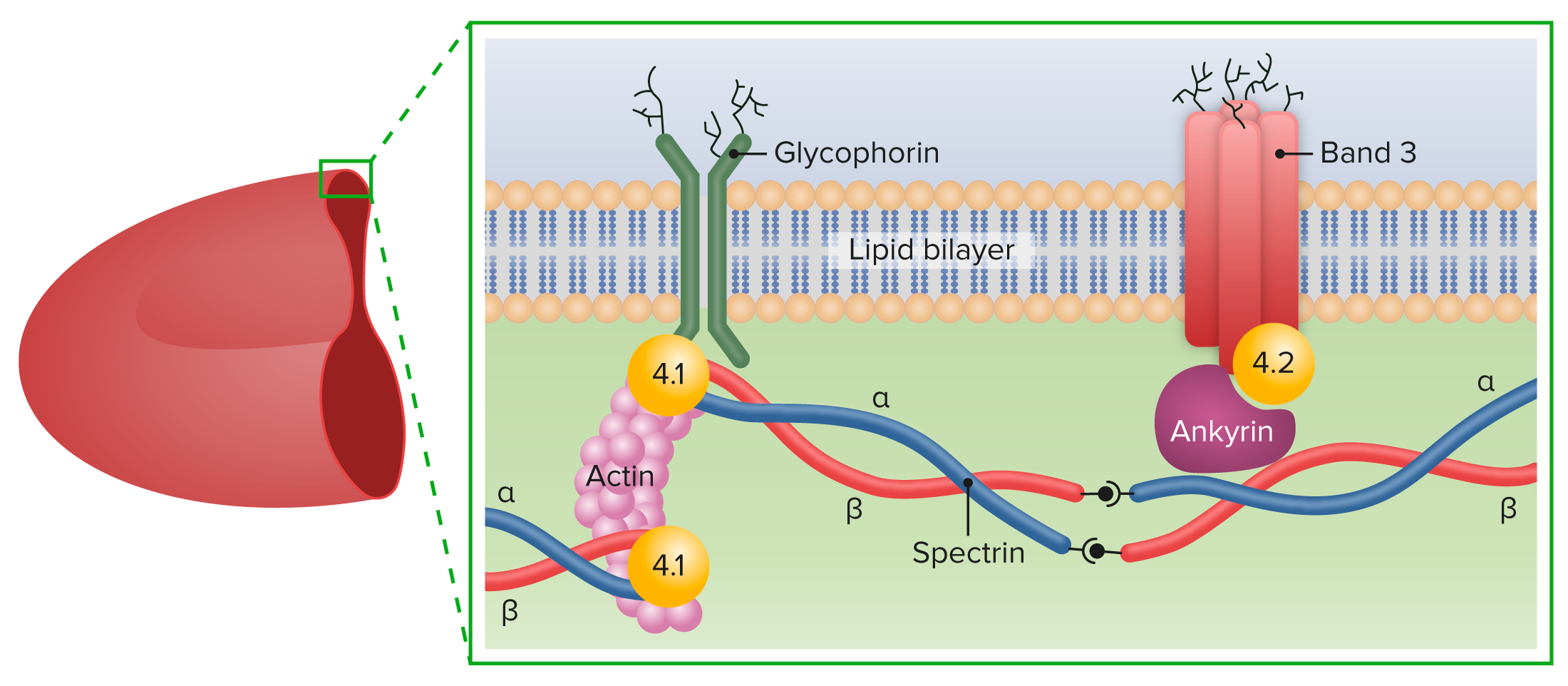
  • Afecta a la membrana celular de los LOS Neisseria eritrocitos, que tiene 3 componentes principales:
    • Bicapa lipídica
    • Proteínas de membrana (la banda 3 es una de ellas)
    • Red del citoesqueleto, de la que la espectrina es la proteína más abundante

En EN Erythema nodosum is an immune-mediated panniculitis (inflammation of the subcutaneous fat) caused by a type IV (delayed-type) hypersensitivity reaction. It commonly manifests in young women as tender, erythematous nodules on the shins. Erythema Nodosum la esferocitosis hereditaria, las mutaciones genéticas conducen a la deficiencia de las proteínas del citoesqueleto:
  • Deficiencia de espectrina
    • La espectrina, una proteína compuesta por heterodímeros α y β, mantiene la forma y la elasticidad de la célula.
    • Genes Genes A category of nucleic acid sequences that function as units of heredity and which code for the basic instructions for the development, reproduction, and maintenance of organisms. DNA Types and Structure:
      • SPTA1 codifica para heterodímeros α (mutaciones autosómicas recesivas).
      • SPTB1 codifica para heterodímeros β (mutaciones autosómicas dominantes).
    • La deficiencia puede ser por:
      • Otras proteínas de membrana defectuosas que se unen a la espectrina (incluso en EN Erythema nodosum is an immune-mediated panniculitis (inflammation of the subcutaneous fat) caused by a type IV (delayed-type) hypersensitivity reaction. It commonly manifests in young women as tender, erythematous nodules on the shins. Erythema Nodosum la mutación de ANK1 que causa un defecto en EN Erythema nodosum is an immune-mediated panniculitis (inflammation of the subcutaneous fat) caused by a type IV (delayed-type) hypersensitivity reaction. It commonly manifests in young women as tender, erythematous nodules on the shins. Erythema Nodosum la ankirina, hay una deficiencia de espectrina debido a la pérdida de los LOS Neisseria sitios de unión de la ankirina)
      • Deterioro de la síntesis de espectrina por la mutación SPTA1/SPTB1
    • El grado de deficiencia de espectrina se correlaciona con la gravedad de la esferocitosis.
  • Deficiencia de ankirina
    • Ancla las proteínas transmembrana al AL Amyloidosis esqueleto a través de la espectrina, la banda 3 y la proteína 4,2
    • Codificada por gen ANK1 (mutación autosómica dominante)
    • La mutación de ANK1 provoca una deficiencia combinada de anquirina y espectrina (véase más arriba), que se encuentra en EN Erythema nodosum is an immune-mediated panniculitis (inflammation of the subcutaneous fat) caused by a type IV (delayed-type) hypersensitivity reaction. It commonly manifests in young women as tender, erythematous nodules on the shins. Erythema Nodosum el 75% de los LOS Neisseria pacientes con esferocitosis hereditaria autosómica dominante.
  • Banda 3
    • Codificada por el gen SLC4A1 (mutación autosómica dominante)
    • Las mutaciones pueden presentarse con acidosis Acidosis A pathologic condition of acid accumulation or depletion of base in the body. The two main types are respiratory acidosis and metabolic acidosis, due to metabolic acid build up. Respiratory Acidosis del túbulo renal distal.
  • Proteína 4,2
    • Regula la unión de la banda 3 a la ankirina
    • Codificada por el gen EPB42 (mutaciones mayoritariamente autosómicas recesivas)
    • Mutaciones habituales en EN Erythema nodosum is an immune-mediated panniculitis (inflammation of the subcutaneous fat) caused by a type IV (delayed-type) hypersensitivity reaction. It commonly manifests in young women as tender, erythematous nodules on the shins. Erythema Nodosum Japón
Esferocitosis hereditaria

Principales proteínas de la membrana de los eritrocitos

Imagen por Lecturio.

Fisiopatología

  • Los LOS Neisseria eritrocitos bicóncavos normales circulan repetidamente por canales estrechos → requieren una amplia deformación reversible
  • Proteínas del citoesqueleto defectuosas → interrumpen la estructura vertical (interacción espectrina-actina) → cohesión interrumpida del esqueleto de la membrana interna y de la bicapa lipídica externa → pérdida de superficie y estabilidad de los LOS Neisseria eritrocitos → esferocitos.
  • Los LOS Neisseria esferocitos son propensos a la hemólisis:
    • Eritrocitos anormales sin deformabilidad celular → atrapados por el bazo → destruidos sucesivamente por los LOS Neisseria macrófagos
    • Un pH pH The quantitative measurement of the acidity or basicity of a solution. Acid-Base Balance bajo, glucosa baja y un alto nivel de radicales libres en EN Erythema nodosum is an immune-mediated panniculitis (inflammation of the subcutaneous fat) caused by a type IV (delayed-type) hypersensitivity reaction. It commonly manifests in young women as tender, erythematous nodules on the shins. Erythema Nodosum el entorno esplénico provocan más daños en EN Erythema nodosum is an immune-mediated panniculitis (inflammation of the subcutaneous fat) caused by a type IV (delayed-type) hypersensitivity reaction. It commonly manifests in young women as tender, erythematous nodules on the shins. Erythema Nodosum las membranas.

Presentación Clínica

Características generales

  • Anemia Anemia Anemia is a condition in which individuals have low Hb levels, which can arise from various causes. Anemia is accompanied by a reduced number of RBCs and may manifest with fatigue, shortness of breath, pallor, and weakness. Subtypes are classified by the size of RBCs, chronicity, and etiology. Anemia: Overview and Types: palidez, taquicardia, fatiga, dificultad respiratoria, dependencia de transfusiones
  • Hemólisis extravascular que causa bilirrubina
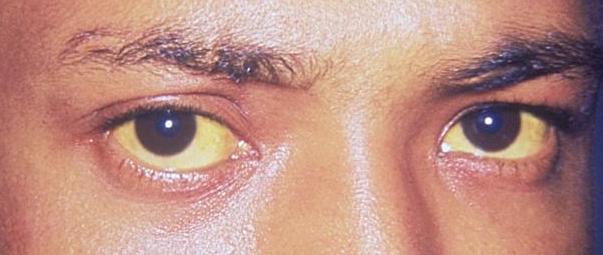
    • Ictericia recurrente
    • Hemoglobinuria Hemoglobinuria The presence of free hemoglobin in the urine, indicating hemolysis of erythrocytes within the vascular system. After saturating the hemoglobin-binding proteins (haptoglobins), free hemoglobin begins to appear in the urine. Transfusion Reactions
    • Cálculos biliares (+/- dolor Dolor Inflammation en EN Erythema nodosum is an immune-mediated panniculitis (inflammation of the subcutaneous fat) caused by a type IV (delayed-type) hypersensitivity reaction. It commonly manifests in young women as tender, erythematous nodules on the shins. Erythema Nodosum el cuadrante superior derecho)
    • Esplenomegalia

Categorías

Se han establecido cuatro categorías clínicas basadas en EN Erythema nodosum is an immune-mediated panniculitis (inflammation of the subcutaneous fat) caused by a type IV (delayed-type) hypersensitivity reaction. It commonly manifests in young women as tender, erythematous nodules on the shins. Erythema Nodosum la hemoglobina ( Hb Hb The oxygen-carrying proteins of erythrocytes. They are found in all vertebrates and some invertebrates. The number of globin subunits in the hemoglobin quaternary structure differs between species. Structures range from monomeric to a variety of multimeric arrangements. Gas Exchange), el recuento de reticulocitos y el nivel de bilirrubina.
  1. Rasgo de esferocitosis hereditaria:
    • Sin anemia Anemia Anemia is a condition in which individuals have low Hb levels, which can arise from various causes. Anemia is accompanied by a reduced number of RBCs and may manifest with fatigue, shortness of breath, pallor, and weakness. Subtypes are classified by the size of RBCs, chronicity, and etiology. Anemia: Overview and Types, recuento normal de reticulocitos, asintomático
  2. Esferocitosis hereditaria leve:
    • Hb Hb The oxygen-carrying proteins of erythrocytes. They are found in all vertebrates and some invertebrates. The number of globin subunits in the hemoglobin quaternary structure differs between species. Structures range from monomeric to a variety of multimeric arrangements. Gas Exchange 11–15 g/dL, recuento reticulocitario 3–6%, bilirrubina 1–2 mg/dL
    • 20%–30% de los LOS Neisseria casos
  3. Esferocitosis hereditaria moderada:
    • Hb Hb The oxygen-carrying proteins of erythrocytes. They are found in all vertebrates and some invertebrates. The number of globin subunits in the hemoglobin quaternary structure differs between species. Structures range from monomeric to a variety of multimeric arrangements. Gas Exchange 8–12 g/dL, recuento reticulocitario > 6%, bilirrubina > 2 mg/dL
    • 60%–75% de los LOS Neisseria casos
  4. Esferocitosis hereditaria severa:
    • Hb Hb The oxygen-carrying proteins of erythrocytes. They are found in all vertebrates and some invertebrates. The number of globin subunits in the hemoglobin quaternary structure differs between species. Structures range from monomeric to a variety of multimeric arrangements. Gas Exchange 6–8 g/dL, recuento reticulocitario > 10%, bilirrubina > 3 mg/dL
    • 5% de los LOS Neisseria casos
Ojo ictérico

Ictericia escleral: El 1er signo clínico de depósito de bilirrubina en el organismo

Imagen: “Jaundice eye new” por CDC/Dr. Thomas F. Sellers/Emory University. Licencia: Dominio Público
Diagnóstico

Antecedentes y examen físico

  • Comprobar si hay antecedentes familiares de esferocitosis hereditaria, cálculos biliares
  • Ictericia o esplenomegalia (actualmente o en EN Erythema nodosum is an immune-mediated panniculitis (inflammation of the subcutaneous fat) caused by a type IV (delayed-type) hypersensitivity reaction. It commonly manifests in young women as tender, erythematous nodules on the shins. Erythema Nodosum antecedentes)

Pruebas iniciales

  • Hemograma
    • Anemia Anemia Anemia is a condition in which individuals have low Hb levels, which can arise from various causes. Anemia is accompanied by a reduced number of RBCs and may manifest with fatigue, shortness of breath, pallor, and weakness. Subtypes are classified by the size of RBCs, chronicity, and etiology. Anemia: Overview and Types (↓ hemoglobina)
    • Volumen corpuscular medio (VCM) normal a ligeramente ↓
    • Concentración de la hemoglobina corpuscular media (CHCM)
      • ≥ 36 g/dL
      • Hallazgo más común en EN Erythema nodosum is an immune-mediated panniculitis (inflammation of the subcutaneous fat) caused by a type IV (delayed-type) hypersensitivity reaction. It commonly manifests in young women as tender, erythematous nodules on the shins. Erythema Nodosum neonatos
      • A menudo el parámetro más útil para la esferocitosis
  • Frotis de sangre periférica
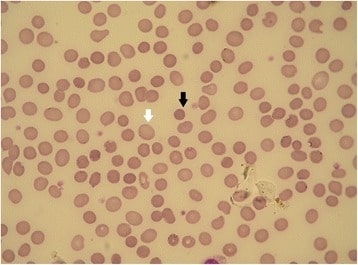
    • Esferocitos: ausencia de palidez central, aumento de la densidad (no específico de la esferocitosis hereditaria)
    • Formas anormales de eritrocitos
    • Policromatofilia (afinidad por múltiples tinciones)
  • Análisis de hemólisis:
    • Lactato deshidrogenasa ( LDH LDH Osteosarcoma)
    • Reticulocitos
    • Bilirrubina indirecta/no conjugada
    • ↓ Haptoglobina

Pruebas de confirmación

  • Prueba de unión de eosina-5′-maleimida
    • Prueba más confiable
    • La tinción fluorescente a base de eosina se une a la proteína de la membrana celular (banda 3) en EN Erythema nodosum is an immune-mediated panniculitis (inflammation of the subcutaneous fat) caused by a type IV (delayed-type) hypersensitivity reaction. It commonly manifests in young women as tender, erythematous nodules on the shins. Erythema Nodosum los LOS Neisseria eritrocitos
    • ↓ Intensidad de fluorescencia en EN Erythema nodosum is an immune-mediated panniculitis (inflammation of the subcutaneous fat) caused by a type IV (delayed-type) hypersensitivity reaction. It commonly manifests in young women as tender, erythematous nodules on the shins. Erythema Nodosum esferocitosis hereditaria
    • Ventajas: alta especificidad y sensibilidad, respuesta rápida, mínima cantidad de sangre utilizada (5 µL)
    • La esferocitosis hereditaria leve puede arrojar un falso negativo.
  • Prueba de fragilidad osmótica
    • Positivo en EN Erythema nodosum is an immune-mediated panniculitis (inflammation of the subcutaneous fat) caused by a type IV (delayed-type) hypersensitivity reaction. It commonly manifests in young women as tender, erythematous nodules on the shins. Erythema Nodosum esferocitosis hereditaria
    • Eritrocitos colocados en EN Erythema nodosum is an immune-mediated panniculitis (inflammation of the subcutaneous fat) caused by a type IV (delayed-type) hypersensitivity reaction. It commonly manifests in young women as tender, erythematous nodules on the shins. Erythema Nodosum soluciones salinas en EN Erythema nodosum is an immune-mediated panniculitis (inflammation of the subcutaneous fat) caused by a type IV (delayed-type) hypersensitivity reaction. It commonly manifests in young women as tender, erythematous nodules on the shins. Erythema Nodosum serie; los LOS Neisseria esferocitos con una baja relación superficie-volumen se hemolizan en EN Erythema nodosum is an immune-mediated panniculitis (inflammation of the subcutaneous fat) caused by a type IV (delayed-type) hypersensitivity reaction. It commonly manifests in young women as tender, erythematous nodules on the shins. Erythema Nodosum soluciones hipoosmóticas.
    • Requiere mucho trabajo, tarda entre 18–24 horas
    • Baja sensibilidad en EN Erythema nodosum is an immune-mediated panniculitis (inflammation of the subcutaneous fat) caused by a type IV (delayed-type) hypersensitivity reaction. It commonly manifests in young women as tender, erythematous nodules on the shins. Erythema Nodosum la detección de la esferocitosis hereditaria leve y la esferocitosis hereditaria neonatal
  • Prueba de lisis con glicerol acidificado:
    • Prueba de fragilidad osmótica modificada con solución de glicerol
    • “Prueba rosa”: una prueba de lisis con glicerol acidificado modificada
    • Sensibilidad comparable con la prueba de unión de eosina-5′-maleimida
    • La combinación de la prueba de unión de eosina-5′-maleimida con prueba de lisis con glicerol acidificado identifica a todos los LOS Neisseria pacientes con esferocitosis hereditaria.
  • Análisis molecular de mutaciones genéticas
    • Caracterización adicional de la mutación para miembros de la familia
    • Se realiza si la(s) prueba(s) no es(son) concluyente(s) y/o se va VA Ventilation: Mechanics of Breathing a modificar el tratamiento (e.g., esplenectomía)
Esferocitosis hereditaria

Esferocitosis hereditaria: frotis de sangre periférica

La flecha negra muestra un esferocito. La flecha blanca muestra un eritrocito normal (la falta de palidez central es un artefacto). Las formas de esferocitosis hereditaria que tienen diferentes defectos de membrana pueden mostrar diferentes morfologías de los eritrocitos.

Imagen: “Previously undiagnosed HS” por US National Library of Medicine. Licencia: CC BY 4.0

Tratamiento y Complicaciones

Tratamiento

  • Educación sobre los LOS Neisseria riesgos de crisis aplásica y ruptura esplénica ( en EN Erythema nodosum is an immune-mediated panniculitis (inflammation of the subcutaneous fat) caused by a type IV (delayed-type) hypersensitivity reaction. It commonly manifests in young women as tender, erythematous nodules on the shins. Erythema Nodosum aquellos con esplenomegalia)
  • Suplemento de folato
    • Para el embarazo (4–5 mg/día)
    • En EN Erythema nodosum is an immune-mediated panniculitis (inflammation of the subcutaneous fat) caused by a type IV (delayed-type) hypersensitivity reaction. It commonly manifests in young women as tender, erythematous nodules on the shins. Erythema Nodosum la esferocitosis hereditaria moderada a grave (1–2 mg/día)
  • Transfusión en EN Erythema nodosum is an immune-mediated panniculitis (inflammation of the subcutaneous fat) caused by a type IV (delayed-type) hypersensitivity reaction. It commonly manifests in young women as tender, erythematous nodules on the shins. Erythema Nodosum las crisis aplásicas
  • Colecistectomía por cálculos biliares sintomáticos
  • Esplenectomía
    • Tratamiento definitivo de la hemólisis grave (> 6 años para reducir el riesgo de sepsis Sepsis Systemic inflammatory response syndrome with a proven or suspected infectious etiology. When sepsis is associated with organ dysfunction distant from the site of infection, it is called severe sepsis. When sepsis is accompanied by hypotension despite adequate fluid infusion, it is called septic shock. Sepsis and Septic Shock), especialmente los LOS Neisseria que requieren transfusiones recurrentes
    • Inmunización contra organismos encapsulados ( Streptococcus Streptococcus Streptococcus is one of the two medically important genera of gram-positive cocci, the other being Staphylococcus. Streptococci are identified as different species on blood agar on the basis of their hemolytic pattern and sensitivity to optochin and bacitracin. There are many pathogenic species of streptococci, including S. pyogenes, S. agalactiae, S. pneumoniae, and the viridans streptococci. Streptococcus pneumoniae, Haemophilus influenzae Haemophilus Influenzae A species of Haemophilus found on the mucous membranes of humans and a variety of animals. The species is further divided into biotypes I through viii. Haemophilus tipo B y Neisseria meningitidis Neisseria meningitidis A species of gram-negative, aerobic bacteria. It is a commensal and pathogen only of humans, and can be carried asymptomatically in the nasopharynx. When found in cerebrospinal fluid it is the causative agent of cerebrospinal meningitis. It is also found in venereal discharges and blood. There are at least 13 serogroups based on antigenic differences in the capsular polysaccharides; the ones causing most meningitis infections being a, b, c, y, and w-135. Each serogroup can be further classified by serotype, serosubtype, and immunotype. Neisseria) antes de la esplenectomía
  • Casos pediátricos:
    • La eritropoyetina puede administrarse en EN Erythema nodosum is an immune-mediated panniculitis (inflammation of the subcutaneous fat) caused by a type IV (delayed-type) hypersensitivity reaction. It commonly manifests in young women as tender, erythematous nodules on the shins. Erythema Nodosum lactantes anémicos para disminuir la necesidad de transfusión.
    • Ictericia neonatal:
      • Fototerapia
      • Exanguinotransfusión

Complicaciones

  • Exacerbaciones de la anemia Anemia Anemia is a condition in which individuals have low Hb levels, which can arise from various causes. Anemia is accompanied by a reduced number of RBCs and may manifest with fatigue, shortness of breath, pallor, and weakness. Subtypes are classified by the size of RBCs, chronicity, and etiology. Anemia: Overview and Types
    • Las crisis aplásicas transitorias pueden estar causadas por infecciones víricas o bacterianas (comúnmente parvovirus B19 Parvovirus B19 Primate erythroparvovirus 1 (generally referred to as parvovirus B19, B19 virus, or sometimes erythrovirus B19) ranks among the smallest DNA viruses. Parvovirus B19 is of the family Parvoviridae and genus Erythrovirus. In immunocompetent humans, parvovirus B19 classically results in erythema infectiosum (5th disease) or “slapped cheek syndrome.” Parvovirus B19).
      • La producción de eritrocitos en EN Erythema nodosum is an immune-mediated panniculitis (inflammation of the subcutaneous fat) caused by a type IV (delayed-type) hypersensitivity reaction. It commonly manifests in young women as tender, erythematous nodules on the shins. Erythema Nodosum la médula ósea está suprimida, por lo que no puede compensar la pérdida periférica de eritrocitos por la hemólisis crónica.
    • Esplenomegalia:
      • Se observa en EN Erythema nodosum is an immune-mediated panniculitis (inflammation of the subcutaneous fat) caused by a type IV (delayed-type) hypersensitivity reaction. It commonly manifests in young women as tender, erythematous nodules on the shins. Erythema Nodosum el 75% de los LOS Neisseria pacientes afectados
      • Si se ve VE Ventilation: Mechanics of Breathing aumentada por una causa superpuesta de esplenomegalia, (e.g., mononucleosis Mononucleosis Infectious mononucleosis (IM), also known as “the kissing disease,” is a highly contagious viral infection caused by the Epstein-Barr virus. Its common name is derived from its main method of transmission: the spread of infected saliva via kissing. Clinical manifestations of IM include fever, tonsillar pharyngitis, and lymphadenopathy. Mononucleosis infecciosa, cirrosis, linfoma), puede producirse un mayor secuestro de eritrocitos y/o hemólisis.
    • Déficit de nutrientes: Los LOS Neisseria déficits de folato, hierro o vitamina B12 pueden interferir en EN Erythema nodosum is an immune-mediated panniculitis (inflammation of the subcutaneous fat) caused by a type IV (delayed-type) hypersensitivity reaction. It commonly manifests in young women as tender, erythematous nodules on the shins. Erythema Nodosum la producción de eritrocitos.
      • Embarazo: el estrés añadido por el aumento de la masa de eritrocitos y la expansión del volumen plasmático puede empeorar la anemia Anemia Anemia is a condition in which individuals have low Hb levels, which can arise from various causes. Anemia is accompanied by a reduced number of RBCs and may manifest with fatigue, shortness of breath, pallor, and weakness. Subtypes are classified by the size of RBCs, chronicity, and etiology. Anemia: Overview and Types, y pueden producirse deficiencias de ácido fólico y de hierro
    • Cálculos biliares de pigmento (bilirrubina):
      • Raro antes de los LOS Neisseria 10 años
      • Debido a la hiperbilirrubinemia
      • Puede presentarse como colecistitis
  • Recién nacidos con riesgo de kernícterus (daño neurológico por hiperbilirrubinemia grave)

Diagnóstico Diferencial

El diagnóstico diferencial incluye otras causas de hemólisis, la mayoría de las cuales mostrarán al AL Amyloidosis menos algunos esferocitos en EN Erythema nodosum is an immune-mediated panniculitis (inflammation of the subcutaneous fat) caused by a type IV (delayed-type) hypersensitivity reaction. It commonly manifests in young women as tender, erythematous nodules on the shins. Erythema Nodosum la sangre periférica.

  • Anemia Anemia Anemia is a condition in which individuals have low Hb levels, which can arise from various causes. Anemia is accompanied by a reduced number of RBCs and may manifest with fatigue, shortness of breath, pallor, and weakness. Subtypes are classified by the size of RBCs, chronicity, and etiology. Anemia: Overview and Types de células falciformes: grupo de trastornos hereditarios caracterizados por una estructura anormal de la hemoglobina que conduce a la polimerización y deformación de los LOS Neisseria eritrocitos. Los LOS Neisseria pacientes se presentan en EN Erythema nodosum is an immune-mediated panniculitis (inflammation of the subcutaneous fat) caused by a type IV (delayed-type) hypersensitivity reaction. It commonly manifests in young women as tender, erythematous nodules on the shins. Erythema Nodosum la primera infancia con anemia Anemia Anemia is a condition in which individuals have low Hb levels, which can arise from various causes. Anemia is accompanied by a reduced number of RBCs and may manifest with fatigue, shortness of breath, pallor, and weakness. Subtypes are classified by the size of RBCs, chronicity, and etiology. Anemia: Overview and Types hemolítica crónica, dolor Dolor Inflammation crónico e infecciones. Las crisis drepanocíticas son episodios de aumento agudo de la hemólisis que requieren transfusiones de sangre. El trasplante de médula ósea es el único tratamiento curativo.
  • Deficiencia de glucosa-6-fosfato deshidrogenasa: defecto recesivo ligado al AL Amyloidosis cromosoma X que aumenta la susceptibilidad de los LOS Neisseria eritrocitos al AL Amyloidosis estrés oxidativo, lo que provoca episodios de anemia Anemia Anemia is a condition in which individuals have low Hb levels, which can arise from various causes. Anemia is accompanied by a reduced number of RBCs and may manifest with fatigue, shortness of breath, pallor, and weakness. Subtypes are classified by the size of RBCs, chronicity, and etiology. Anemia: Overview and Types hemolítica. Los LOS Neisseria pacientes presentan dolor Dolor Inflammation abdominal, ictericia, hemoglobinuria Hemoglobinuria The presence of free hemoglobin in the urine, indicating hemolysis of erythrocytes within the vascular system. After saturating the hemoglobin-binding proteins (haptoglobins), free hemoglobin begins to appear in the urine. Transfusion Reactions y agrandamiento del bazo. Los LOS Neisseria factores desencadenantes son el consumo de habas, medicamentos (antimaláricos, antibióticos, antiinflamatorios no esteroideos (AINE)) y las infecciones. El tratamiento incluye evitar los LOS Neisseria desencadenantes. No existe ningún tratamiento curativo.
  • Hemólisis relacionada con la inmunidad: causada por inmunoglobulinas reactivas al AL Amyloidosis frío o al AL Amyloidosis calor Calor Inflammation que se adhieren a los LOS Neisseria eritrocitos y destruyen la membrana. Muchos casos son idiopáticos; entre las causas secundarias se encuentran las neoplasias, infecciones y otras enfermedades autoinmunes como el lupus eritematoso sistémico (LES). El tratamiento incluye evitar los LOS Neisseria desencadenantes, inmunosupresores (glucocorticoides, rituximab Rituximab A murine-derived monoclonal antibody and antineoplastic agent that binds specifically to the cd20 antigen and is used in the treatment of leukemia; lymphoma and rheumatoid arthritis. Immunosuppressants) y las inmunoglobulinas intravenosas.

Referencias

  1. Bianchi, P. et al. (2012). Diagnostic power of laboratory tests for hereditary spherocytosis: a comparison study in 150 patients grouped according to molecular and clinical characteristics. 97(4): 516–523. https://www.ncbi.nlm.nih.gov/pmc/articles/PMC3347664/
  2. Ciepiela,O. (2018). Old and new insights into the diagnosis of hereditary spherocytosis. Ann Transl Med. 6(17): 339. https://www.ncbi.nlm.nih.gov/pmc/articles/PMC6174190/
  3. Gonzalez, G.; Talavera, F. & Sacher, R. (Eds.). (2018). Hereditary Spherocytosis. Medscape. Retrieved 24 Aug, 2020, from https://emedicine.medscape.com/article/206107
  4. Mentzer, W.; Leung, L. (Ed.); Tirnauer, J. (Ed.). (2019). Hereditary Spherocytosis. Uptodate. Retrieved 24 Aug, 2020, from https://www.uptodate.com/contents/hereditary-spherocytosis
  5. Saavides, P.; Shalev, O.; John, K.; Lux, S.(1993). Combined Spectrin and Ankyrin deficiency is common in autosomal dominant hereditary spherocytosis. Blood.82:2953-2960.
  6. Tole, S., Dhir, P., Pugi, J., et al. (2020). Genotype–phenotype correlation in children with hereditary spherocytosis. Br J Haematol. doi:10.1111/bjh.16750
  7. Perrotta, S., Gallagher, P.G., Mohandas, N. (2008). Hereditary spherocytosis. Lancet 2008; 372: 1411–26
  8. Lynch, E.. (1990). Peripheral Blood Smear. In: Walker, H.K., Hall, W.D., Hurst, J.W. (Eds.). Clinical Methods: The History, Physical, and Laboratory Examinations. 3rd edition. Boston: Butterworths; 1990. Chapter 155. Retrieved 16 Oct, 2020, from https://www.ncbi.nlm.nih.gov/books/NBK263/

¡Crea tu cuenta gratis o inicia una sesión para seguir leyendo!

Regístrate ahora y obtén acceso gratuito a Lecturio con páginas de concepto, videos médicos y cuestionarios para tu educación médica.

User Reviews

Que tengas una sesión de estudio alegre y navideña 🎁 Ahorra 50% en todos los planes >>

Details