
Domina Conceptos Médicos

Estudia para la escuela de medicina y tus examenes con Lecturio.

Enfermedad de Ménière

La enfermedad de Ménière es una afección caracterizada por episodios de vértigo, tinnitus Tinnitus A nonspecific symptom of hearing disorder characterized by the sensation of buzzing, ringing, clicking, pulsations, and other noises in the ear. Objective tinnitus refers to noises generated from within the ear or adjacent structures that can be heard by other individuals. The term subjective tinnitus is used when the sound is audible only to the affected individual. Tinnitus may occur as a manifestation of cochlear diseases; vestibulocochlear nerve diseases; intracranial hypertension; craniocerebral trauma; and other conditions. Cranial Nerve Palsies y pérdida de la audición, probablemente causados por hidropesía endolinfática del sistema laberíntico en EN Erythema nodosum is an immune-mediated panniculitis (inflammation of the subcutaneous fat) caused by a type IV (delayed-type) hypersensitivity reaction. It commonly manifests in young women as tender, erythematous nodules on the shins. Erythema Nodosum el oído interno. Los LOS Neisseria factores de riesgo incluyen antecedentes familiares de la enfermedad de Ménière, trastornos autoinmunes preexistentes, alergias y traumatismos en EN Erythema nodosum is an immune-mediated panniculitis (inflammation of the subcutaneous fat) caused by a type IV (delayed-type) hypersensitivity reaction. It commonly manifests in young women as tender, erythematous nodules on the shins. Erythema Nodosum la cabeza o el oído. El diagnóstico se realiza clínicamente, mediante audiometría, pruebas vestibulares y, en EN Erythema nodosum is an immune-mediated panniculitis (inflammation of the subcutaneous fat) caused by a type IV (delayed-type) hypersensitivity reaction. It commonly manifests in young women as tender, erythematous nodules on the shins. Erythema Nodosum ocasiones, mediante imagenología. El tratamiento consiste en EN Erythema nodosum is an immune-mediated panniculitis (inflammation of the subcutaneous fat) caused by a type IV (delayed-type) hypersensitivity reaction. It commonly manifests in young women as tender, erythematous nodules on the shins. Erythema Nodosum modificación de la dieta y el estilo de vida, vasodilatadores, diuréticos, antihistamínicos, benzodiacepinas, antieméticos, glucocorticoides, intervención quirúrgica y/o auxiliares auditivos.

Last updated: Dec 15, 2025

Editorial responsibility: Stanley Oiseth, Lindsay Jones, Evelin Maza

Descripción General

Definición

La enfermedad de Ménière es una tríada de vértigo episódico, tinnitus Tinnitus A nonspecific symptom of hearing disorder characterized by the sensation of buzzing, ringing, clicking, pulsations, and other noises in the ear. Objective tinnitus refers to noises generated from within the ear or adjacent structures that can be heard by other individuals. The term subjective tinnitus is used when the sound is audible only to the affected individual. Tinnitus may occur as a manifestation of cochlear diseases; vestibulocochlear nerve diseases; intracranial hypertension; craniocerebral trauma; and other conditions. Cranial Nerve Palsies y pérdida auditiva probablemente causada por hidropesía endolinfática del sistema laberíntico del oído interno.

El síndrome de Ménière es la enfermedad de Ménière secundaria a otras infecciones del oído interno.
Epidemiología

  • Puede ocurrir a cualquier edad, pero se presenta con mayor frecuencia entre los LOS Neisseria 40 y los LOS Neisseria 60 años.
  • Incidencia anual: ~15 por 100 000 personas
  • Prevalencia: ~190 por 100 000 personas
  • La enfermedad bilateral ocurre en EN Erythema nodosum is an immune-mediated panniculitis (inflammation of the subcutaneous fat) caused by a type IV (delayed-type) hypersensitivity reaction. It commonly manifests in young women as tender, erythematous nodules on the shins. Erythema Nodosum el 10%–50% de los LOS Neisseria pacientes.

Factores de riesgo

  • Antecedentes familiares de la enfermedad de Ménière
  • Trastornos autoinmunes preexistentes
  • Malformaciones congénitas del oído interno
  • Alergias
  • Traumatismo en EN Erythema nodosum is an immune-mediated panniculitis (inflammation of the subcutaneous fat) caused by a type IV (delayed-type) hypersensitivity reaction. It commonly manifests in young women as tender, erythematous nodules on the shins. Erythema Nodosum la cabeza o el oído
  • Sífilis

Fisiopatología

  • La endolinfa y la perilinfa están separadas por finas membranas que contienen el aparato neural de la audición y el equilibrio.
  • Las fluctuaciones de presión causan estrés en EN Erythema nodosum is an immune-mediated panniculitis (inflammation of the subcutaneous fat) caused by a type IV (delayed-type) hypersensitivity reaction. It commonly manifests in young women as tender, erythematous nodules on the shins. Erythema Nodosum las membranas ricas en EN Erythema nodosum is an immune-mediated panniculitis (inflammation of the subcutaneous fat) caused by a type IV (delayed-type) hypersensitivity reaction. It commonly manifests in young women as tender, erythematous nodules on the shins. Erythema Nodosum nervios → trastornos auditivos, tinnitus Tinnitus A nonspecific symptom of hearing disorder characterized by the sensation of buzzing, ringing, clicking, pulsations, and other noises in the ear. Objective tinnitus refers to noises generated from within the ear or adjacent structures that can be heard by other individuals. The term subjective tinnitus is used when the sound is audible only to the affected individual. Tinnitus may occur as a manifestation of cochlear diseases; vestibulocochlear nerve diseases; intracranial hypertension; craniocerebral trauma; and other conditions. Cranial Nerve Palsies, vértigo, desequilibrio y sensación de presión en EN Erythema nodosum is an immune-mediated panniculitis (inflammation of the subcutaneous fat) caused by a type IV (delayed-type) hypersensitivity reaction. It commonly manifests in young women as tender, erythematous nodules on the shins. Erythema Nodosum el oído interno
  • Aumento de la presión endolinfática → ruptura de la membrana que separa la perilinfa de la endolinfa
  • La mezcla química resultante baña los LOS Neisseria receptores del nervio vestibular → bloqueo de la despolarización y pérdida transitoria de la función
  • El cambio repentino en EN Erythema nodosum is an immune-mediated panniculitis (inflammation of the subcutaneous fat) caused by a type IV (delayed-type) hypersensitivity reaction. It commonly manifests in young women as tender, erythematous nodules on the shins. Erythema Nodosum la velocidad de activación del nervio vestibular crea un desequilibrio vestibular agudo.
  • Aumento de la presión endolinfática → distensión física → alteración mecánica de los LOS Neisseria órganos auditivos y otolíticos
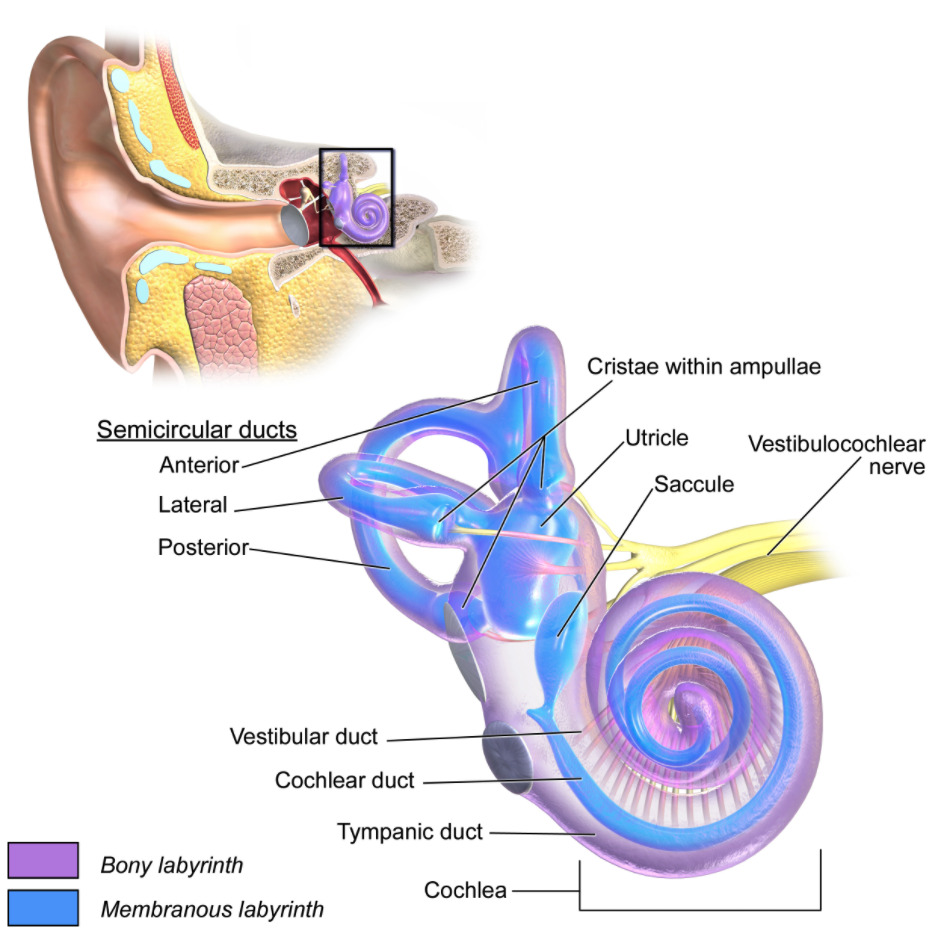
  • El utrículo y el sáculo son responsables de la detección del movimiento lineal y de traslación.
  • La irritación produce síntomas vestibulares no rotacionales.
  • También ocurre distensión física → alteración mecánica del órgano de Corti → distorsión de la membrana basilar y de las células ciliadas internas y externas → pérdida auditiva y/o tinnitus Tinnitus A nonspecific symptom of hearing disorder characterized by the sensation of buzzing, ringing, clicking, pulsations, and other noises in the ear. Objective tinnitus refers to noises generated from within the ear or adjacent structures that can be heard by other individuals. The term subjective tinnitus is used when the sound is audible only to the affected individual. Tinnitus may occur as a manifestation of cochlear diseases; vestibulocochlear nerve diseases; intracranial hypertension; craniocerebral trauma; and other conditions. Cranial Nerve Palsies
  • El ápice de la cóclea se enrolla más que la base → ápice más sensible a los LOS Neisseria cambios de presión que la base
el oído interno

Anatomía del oído interno

Imagen: “El oído interno” por BruceBlaus. Licencia: CC BY 3.0

Presentación Clínica

  • Vértigo:
    • Movimiento percibido de giro rotatorio o balanceo mientras el paciente permanece inmóvil
    • A veces asociado con náuseas y vómitos
    • Los LOS Neisseria síntomas pueden persistir de 20 minutos a 24 horas
  • Pérdida auditiva: inicialmente intermitente, luego progresa a pérdida auditiva permanente
  • Tinnitus Tinnitus A nonspecific symptom of hearing disorder characterized by the sensation of buzzing, ringing, clicking, pulsations, and other noises in the ear. Objective tinnitus refers to noises generated from within the ear or adjacent structures that can be heard by other individuals. The term subjective tinnitus is used when the sound is audible only to the affected individual. Tinnitus may occur as a manifestation of cochlear diseases; vestibulocochlear nerve diseases; intracranial hypertension; craniocerebral trauma; and other conditions. Cranial Nerve Palsies:
    • Ruidos percibidos (generalmente timbres agudos) que en EN Erythema nodosum is an immune-mediated panniculitis (inflammation of the subcutaneous fat) caused by a type IV (delayed-type) hypersensitivity reaction. It commonly manifests in young women as tender, erythematous nodules on the shins. Erythema Nodosum realidad no están presentes
    • Fluctuante o constante con tono e intensidad variable Variable Variables represent information about something that can change. The design of the measurement scales, or of the methods for obtaining information, will determine the data gathered and the characteristics of that data. As a result, a variable can be qualitative or quantitative, and may be further classified into subgroups. Types of Variables

Diagnóstico

Criterios diagnósticos

Diagnóstico clínico realizado por la presencia de:
  • 2 o más episodios espontáneos de vértigo, cada uno con una duración de 20 minutos a 12 horas
  • Pérdida auditiva neurosensorial de baja a media frecuencia documentada audiométricamente en EN Erythema nodosum is an immune-mediated panniculitis (inflammation of the subcutaneous fat) caused by a type IV (delayed-type) hypersensitivity reaction. It commonly manifests in young women as tender, erythematous nodules on the shins. Erythema Nodosum el oído afectado
  • Síntomas auditivos fluctuantes (audición reducida o distorsionada, tinnitus Tinnitus A nonspecific symptom of hearing disorder characterized by the sensation of buzzing, ringing, clicking, pulsations, and other noises in the ear. Objective tinnitus refers to noises generated from within the ear or adjacent structures that can be heard by other individuals. The term subjective tinnitus is used when the sound is audible only to the affected individual. Tinnitus may occur as a manifestation of cochlear diseases; vestibulocochlear nerve diseases; intracranial hypertension; craniocerebral trauma; and other conditions. Cranial Nerve Palsies o plenitud) en EN Erythema nodosum is an immune-mediated panniculitis (inflammation of the subcutaneous fat) caused by a type IV (delayed-type) hypersensitivity reaction. It commonly manifests in young women as tender, erythematous nodules on the shins. Erythema Nodosum el oído afectado
  • Los LOS Neisseria síntomas no se explican mejor por otro diagnóstico vestibular

Estudios complementarios

  • Audiometría:
    • Para todos los LOS Neisseria pacientes
    • Patrón más común:
      • Hipoacusia neurosensorial de baja frecuencia
      • Pérdida auditiva neurosensorial combinada de baja y alta frecuencia
      • Audición normal en EN Erythema nodosum is an immune-mediated panniculitis (inflammation of the subcutaneous fat) caused by a type IV (delayed-type) hypersensitivity reaction. It commonly manifests in young women as tender, erythematous nodules on the shins. Erythema Nodosum las frecuencias medias
    • Con el tiempo, la audición se “aplana” con la pérdida auditiva en EN Erythema nodosum is an immune-mediated panniculitis (inflammation of the subcutaneous fat) caused by a type IV (delayed-type) hypersensitivity reaction. It commonly manifests in young women as tender, erythematous nodules on the shins. Erythema Nodosum todos los LOS Neisseria rangos de frecuencia.
  • Pruebas vestibulares:
    • Pueden ser normales al AL Amyloidosis principio del curso de la enfermedad.
    • Anormales a medida que la enfermedad avanza en EN Erythema nodosum is an immune-mediated panniculitis (inflammation of the subcutaneous fat) caused by a type IV (delayed-type) hypersensitivity reaction. It commonly manifests in young women as tender, erythematous nodules on the shins. Erythema Nodosum el lado afectado
    • Incluir electronistagmografía, prueba de silla rotatoria y posturografía dinámica computarizada
  • Imagenología:
    • RM del hueso temporal: puede identificar características que apoyan el diagnóstico (e.g., conducto endolinfático menos prominente)
    • RM/TC cerebral: lesiones del SNC
Menière's disease

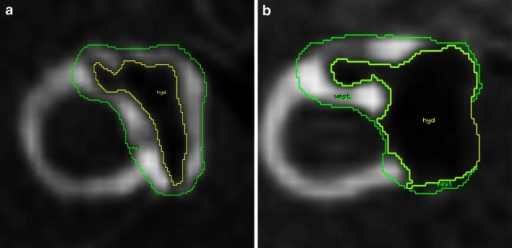
RM de la hidropesía endolinfática en pacientes con enfermedad de Ménière:
a: Hidropesía endolinfática correspondiente a leve
b: Hidropesía endolinfática correspondiente a significativa

Imagen: “Fig2” por R. Gürkov et al. License: CC BY 4.0

Tratamiento

  • El tratamiento mejora y alivia los LOS Neisseria síntomas, pero no corrige la fisiopatología subyacente.
  • Los LOS Neisseria objetivos del tratamiento incluyen:
    • Reducir la frecuencia y la gravedad de los LOS Neisseria ataques de vértigo
    • Reducir o eliminar el tinnitus Tinnitus A nonspecific symptom of hearing disorder characterized by the sensation of buzzing, ringing, clicking, pulsations, and other noises in the ear. Objective tinnitus refers to noises generated from within the ear or adjacent structures that can be heard by other individuals. The term subjective tinnitus is used when the sound is audible only to the affected individual. Tinnitus may occur as a manifestation of cochlear diseases; vestibulocochlear nerve diseases; intracranial hypertension; craniocerebral trauma; and other conditions. Cranial Nerve Palsies y la pérdida de audición asociados con los LOS Neisseria ataques
    • Aliviar los LOS Neisseria síntomas crónicos de tinnitus Tinnitus A nonspecific symptom of hearing disorder characterized by the sensation of buzzing, ringing, clicking, pulsations, and other noises in the ear. Objective tinnitus refers to noises generated from within the ear or adjacent structures that can be heard by other individuals. The term subjective tinnitus is used when the sound is audible only to the affected individual. Tinnitus may occur as a manifestation of cochlear diseases; vestibulocochlear nerve diseases; intracranial hypertension; craniocerebral trauma; and other conditions. Cranial Nerve Palsies y desequilibrio
    • Minimizar la discapacidad asociada con la enfermedad de Ménière
    • Prevención de la progresión de la hipoacusia
  • Tratamiento inicial de la dieta y el estilo de vida
    • Restricción de sal
    • Limitar la cafeína y el alcohol a 1 bebida al AL Amyloidosis día
      • La cafeína y la nicotina son vasoconstrictores que reducen el flujo microvascular en EN Erythema nodosum is an immune-mediated panniculitis (inflammation of the subcutaneous fat) caused by a type IV (delayed-type) hypersensitivity reaction. It commonly manifests in young women as tender, erythematous nodules on the shins. Erythema Nodosum el sistema laberíntico.
      • El alcohol provoca cambios en EN Erythema nodosum is an immune-mediated panniculitis (inflammation of the subcutaneous fat) caused by a type IV (delayed-type) hypersensitivity reaction. It commonly manifests in young women as tender, erythematous nodules on the shins. Erythema Nodosum los LOS Neisseria líquidos corporales y electrolitos, estresando un oído vulnerable.
  • Rehabilitación vestibular del desequilibrio residual entre los LOS Neisseria ataques
    • Utilizada en EN Erythema nodosum is an immune-mediated panniculitis (inflammation of the subcutaneous fat) caused by a type IV (delayed-type) hypersensitivity reaction. It commonly manifests in young women as tender, erythematous nodules on the shins. Erythema Nodosum:
      • Pacientes con respuesta al AL Amyloidosis tratamiento quirúrgico o médico con desequilibrio residual
      • Pacientes con síntomas significativos de equilibrio y desequilibrio entre los LOS Neisseria ataques de vértigo agudo
    • No reduce la frecuencia ni la gravedad de los LOS Neisseria ataques de vértigo.
  • Farmacoterapia para pacientes con síntomas refractarios
    • Objetivo: reducir la gravedad y la intensidad de los LOS Neisseria ataques
    • Tratamiento crónico:
      • Betahistina: vasodilatador (preferido porque es bien tolerado)
      • Hidroclorotiazida: diurético
      • Furosemida: diurético
      • Acetazolamida: diurético
    • Tratamiento agudo:
      • Antihistamínicos: reducen la hidropesía y mejoran el flujo sanguíneo al AL Amyloidosis oído interno
        • Dimenhidrinato
        • Difenhidramina
        • Meclizina
      • Benzodiacepinas: supresión vestibular
        • Alprazolam Alprazolam A triazolobenzodiazepine compound with antianxiety and sedative-hypnotic actions, that is efficacious in the treatment of panic disorders, with or without agoraphobia, and in generalized anxiety disorders. Benzodiazepines
        • Clonazepam Clonazepam An anticonvulsant used for several types of seizures, including myotonic or atonic seizures, photosensitive epilepsy, and absence seizures, although tolerance may develop. It is seldom effective in generalized tonic-clonic or partial seizures. The mechanism of action appears to involve the enhancement of gamma-aminobutyric acid receptor responses. Benzodiazepines
        • Diazepam Diazepam A benzodiazepine with anticonvulsant, anxiolytic, sedative, muscle relaxant, and amnesic properties and a long duration of action. Its actions are mediated by enhancement of gamma-aminobutyric acid activity. Benzodiazepines
        • Lorazepam Lorazepam A benzodiazepine used as an anti-anxiety agent with few side effects. It also has hypnotic, anticonvulsant, and considerable sedative properties and has been proposed as a preanesthetic agent. Benzodiazepines
      • Antieméticos: suprimen las náuseas asociadas.
        • Domperidona
        • Metoclopramida
        • Ondansetrón
        • Proclorperazina
        • Prometazina
    • Síntomas refractarios e incapacitantes a pesar de la farmacoterapia inicial:
      • Continuar con la betahistina o los LOS Neisseria diuréticos, si son beneficiosos.
      • Terapia con glucocorticoides para todos los LOS Neisseria pacientes
        • Glucocorticoides sistémicos: prednisona
        • Glucocorticoides intratimpánicos: dexametasona
    • Síntomas refractarios e incapacitantes a pesar de la terapia con glucocorticoides:
      • Terapias destructivas: reducen o eliminan las señales del sistema laberíntico afectado
        • Gentamicina intratimpánica
        • Laberintectomía quirúrgica
        • Neurectomía vestibular
      • Procedimientos no destructivos: reducen la acumulación del líquido o alteran la fisiología de los LOS Neisseria líquidos y electrolitos
        • Descompresión y/o derivación del saco endolinfático
        • Saculotomía
    • Amplificación auditiva (ayuda auditiva) para la pérdida auditiva:
      • Pacientes con pérdida auditiva binaural significativa
      • En EN Erythema nodosum is an immune-mediated panniculitis (inflammation of the subcutaneous fat) caused by a type IV (delayed-type) hypersensitivity reaction. It commonly manifests in young women as tender, erythematous nodules on the shins. Erythema Nodosum las primeras etapas de la enfermedad, la fluctuación de la audición genera frustración con los LOS Neisseria dispositivos de amplificación y un cumplimiento deficiente del paciente.

Diagnóstico Diferencial

  • Migraña (vértigo migrañoso o migraña vestibular): afección asociada con cefalea y, a veces, vértigo. Las migrañas suelen ir acompañadas de fotofobia o fonofobia que no se observan en EN Erythema nodosum is an immune-mediated panniculitis (inflammation of the subcutaneous fat) caused by a type IV (delayed-type) hypersensitivity reaction. It commonly manifests in young women as tender, erythematous nodules on the shins. Erythema Nodosum la enfermedad de Ménière. Para el diagnóstico, deben estar presentes síntomas vestibulares episódicos y al AL Amyloidosis menos 2 síntomas de migraña (cefalea migrañosa, fotofobia, fonofobia o aura Aura Reversible neurological phenomena that often precede or coincide with headache onset. Migraine Headache visual o de otro tipo) que ocurren durante al AL Amyloidosis menos 2 episodios vertiginosos.
  • Schwannoma Schwannoma Schwannomas (also known as neurilemmomas) are benign nerve sheath tumors in the peripheral nervous system (PNS), arising from Schwann cells that encase the peripheral nerves. Schwannomas are the most common tumors in the PNS. Schwannoma vestibular: se presenta con pérdida auditiva asimétrica progresiva con pérdida auditiva fluctuante ocasional. Los LOS Neisseria pacientes rara vez tienen vértigo verdadero, pero a menudo se quejan de desbalance y desequilibrio. En EN Erythema nodosum is an immune-mediated panniculitis (inflammation of the subcutaneous fat) caused by a type IV (delayed-type) hypersensitivity reaction. It commonly manifests in young women as tender, erythematous nodules on the shins. Erythema Nodosum ocasiones, los LOS Neisseria pacientes pueden tener tinnitus Tinnitus A nonspecific symptom of hearing disorder characterized by the sensation of buzzing, ringing, clicking, pulsations, and other noises in the ear. Objective tinnitus refers to noises generated from within the ear or adjacent structures that can be heard by other individuals. The term subjective tinnitus is used when the sound is audible only to the affected individual. Tinnitus may occur as a manifestation of cochlear diseases; vestibulocochlear nerve diseases; intracranial hypertension; craniocerebral trauma; and other conditions. Cranial Nerve Palsies y desequilibrio, pero no pérdida auditiva. Las pruebas de respuesta auditiva del tronco encefálico y la RM muestran anomalías que indican compresión nerviosa del octavo par PAR The PAR is the attributable risk for an entire population. It represents the fraction of cases that would not occur in a population if the exposure was eliminated. Measures of Risk craneal.
  • Esclerosis múltiple: Caracterizada por parches diseminados de desmielinización en EN Erythema nodosum is an immune-mediated panniculitis (inflammation of the subcutaneous fat) caused by a type IV (delayed-type) hypersensitivity reaction. It commonly manifests in young women as tender, erythematous nodules on the shins. Erythema Nodosum el cerebro y la médula espinal. Los LOS Neisseria pacientes pueden presentar síntomas idénticos a los LOS Neisseria de la enfermedad de Ménière. Sin embargo, durante un ataque de esclerosis multiple con vértigo, el nistagmo suele ser más intenso y duradero que en EN Erythema nodosum is an immune-mediated panniculitis (inflammation of the subcutaneous fat) caused by a type IV (delayed-type) hypersensitivity reaction. It commonly manifests in young women as tender, erythematous nodules on the shins. Erythema Nodosum los LOS Neisseria pacientes con enfermedad de Ménière. Los LOS Neisseria pacientes con esclerosis multiple también pueden tener quejas neurológicas adicionales. En EN Erythema nodosum is an immune-mediated panniculitis (inflammation of the subcutaneous fat) caused by a type IV (delayed-type) hypersensitivity reaction. It commonly manifests in young women as tender, erythematous nodules on the shins. Erythema Nodosum las pruebas de electronistagmografía, a menudo se observan anomalías centrales en EN Erythema nodosum is an immune-mediated panniculitis (inflammation of the subcutaneous fat) caused by a type IV (delayed-type) hypersensitivity reaction. It commonly manifests in young women as tender, erythematous nodules on the shins. Erythema Nodosum pacientes con esclerosis multiple, pero por lo general están ausentes en EN Erythema nodosum is an immune-mediated panniculitis (inflammation of the subcutaneous fat) caused by a type IV (delayed-type) hypersensitivity reaction. It commonly manifests in young women as tender, erythematous nodules on the shins. Erythema Nodosum las primeras etapas de la enfermedad de Ménière. En EN Erythema nodosum is an immune-mediated panniculitis (inflammation of the subcutaneous fat) caused by a type IV (delayed-type) hypersensitivity reaction. It commonly manifests in young women as tender, erythematous nodules on the shins. Erythema Nodosum la esclerosis multiple, las lesiones de la sustancia blanca se pueden ver en EN Erythema nodosum is an immune-mediated panniculitis (inflammation of the subcutaneous fat) caused by a type IV (delayed-type) hypersensitivity reaction. It commonly manifests in young women as tender, erythematous nodules on the shins. Erythema Nodosum la RM del cerebro y se pueden detectar anomalías en EN Erythema nodosum is an immune-mediated panniculitis (inflammation of the subcutaneous fat) caused by a type IV (delayed-type) hypersensitivity reaction. It commonly manifests in young women as tender, erythematous nodules on the shins. Erythema Nodosum el LCR, pero tales hallazgos están ausentes en EN Erythema nodosum is an immune-mediated panniculitis (inflammation of the subcutaneous fat) caused by a type IV (delayed-type) hypersensitivity reaction. It commonly manifests in young women as tender, erythematous nodules on the shins. Erythema Nodosum pacientes con enfermedad de Ménière.
  • Vértigo posicional paroxístico benigno: afección caracterizada por la percepción de movimiento rotatorio. La afección se asocia con vértigo relacionado con los LOS Neisseria movimientos de la cabeza, que dura de segundos a minutos sin síntomas auditivos. Los LOS Neisseria síntomas auditivos están ausentes, a diferencia de la enfermedad de Ménière.

Referencias

  1. National Institute on Deafness and Other Communication Disorders. (n.d.). Ménière’s disease. Retrieved August 5, 2025, from https://www.nidcd.nih.gov/health/menieres-disease
  2. Basura, G., et al. (2020). Clinical practice guideline: Ménière’s disease executive summary. Otolaryngol Head Neck Surg. 162(4), 415-434. https://pubmed.ncbi.nlm.nih.gov/32267820/ 
  3. Coelho, DH, & Lalwani, AK. (2008). Medical management of Ménière’s disease. Laryngoscope. https://pubmed.ncbi.nlm.nih.gov/18418279/ 
  4. Lustig, LR. (2023). Meniere disease. [Online] MSD Manual Professional Version. Retrieved on August 5, 2025, from https://www.msdmanuals.com/professional/ear,-nose,-and-throat-disorders/inner-ear-disorders/meniere-disease
  5. Koenen, L., & Andaloro, C. (2023). Meniere Disease. In StatPearls. StatPearls Publishing. Retrieved August 5, 2025, from https://www.ncbi.nlm.nih.gov/books/NBK536955/ 
  6. Koenen, L., & Andaloro, C. (2023). Meniere Disease. In StatPearls [Internet]. StatPearls Publishing. Retrieved August 5, 2025, from https://www.ncbi.nlm.nih.gov/books/NBK536955/

¡Crea tu cuenta gratis o inicia una sesión para seguir leyendo!

Regístrate ahora y obtén acceso gratuito a Lecturio con páginas de concepto, videos médicos y cuestionarios para tu educación médica.

User Reviews

Que tengas una sesión de estudio alegre y navideña 🎁 Ahorra 50% en todos los planes >>

Details