Domina Conceptos Médicos

Estudia para la escuela de medicina y tus examenes con Lecturio.

Dolor de Rodilla

El dolor Dolor Inflammation de rodilla es una presentación común para los LOS Neisseria médicos de atención primaria. El diagnóstico puede ser un desafío, ya que el dolor Dolor Inflammation puede surgir de la articulación, los LOS Neisseria tejidos circundantes o referirse a la articulación desde estructuras distantes. El diagnóstico diferencial del dolor Dolor Inflammation de rodilla es amplio y es útil categorizar los LOS Neisseria diversos diagnósticos relacionados con el momento (agudo o crónico). Un conocimiento profundo de la anatomía pertinente, examen físico apropiado y problemas frecuentes de la articulación de la rodilla son esenciales para el diagnóstico y el tratamiento adecuado del dolor Dolor Inflammation de rodilla. La terapia basada en EN Erythema nodosum is an immune-mediated panniculitis (inflammation of the subcutaneous fat) caused by a type IV (delayed-type) hypersensitivity reaction. It commonly manifests in young women as tender, erythematous nodules on the shins. Erythema Nodosum ejercicios es a menudo el tratamiento de primera línea de muchos trastornos de la rodilla, pero la intervención quirúrgica está justificada para diagnósticos específicos.

Last updated: Dec 15, 2025
Editorial responsibility: Stanley Oiseth, Lindsay Jones, Evelin Maza

Descripción General

Epidemiología

  • ↑ Prevalencia del dolor Dolor Inflammation de rodilla con el aumento de la edad
  • ↑ Prevalencia del dolor Dolor Inflammation de rodilla con el aumento del IMC
  • La rodilla es la articulación más comúnmente afectada por la osteoartritis ( OA OA Osteoarthritis (OA) is the most common form of arthritis, and is due to cartilage destruction and changes of the subchondral bone. The risk of developing this disorder increases with age, obesity, and repetitive joint use or trauma. Patients develop gradual joint pain, stiffness lasting < 30 minutes, and decreased range of motion. Osteoarthritis).
  • La artrosis es la causa más común de dolor Dolor Inflammation de rodilla en EN Erythema nodosum is an immune-mediated panniculitis (inflammation of the subcutaneous fat) caused by a type IV (delayed-type) hypersensitivity reaction. It commonly manifests in young women as tender, erythematous nodules on the shins. Erythema Nodosum personas de 50 años o más.
  • Mujeres > hombres
  • Es una dolencia común entre los LOS Neisseria corredores y los LOS Neisseria deportistas

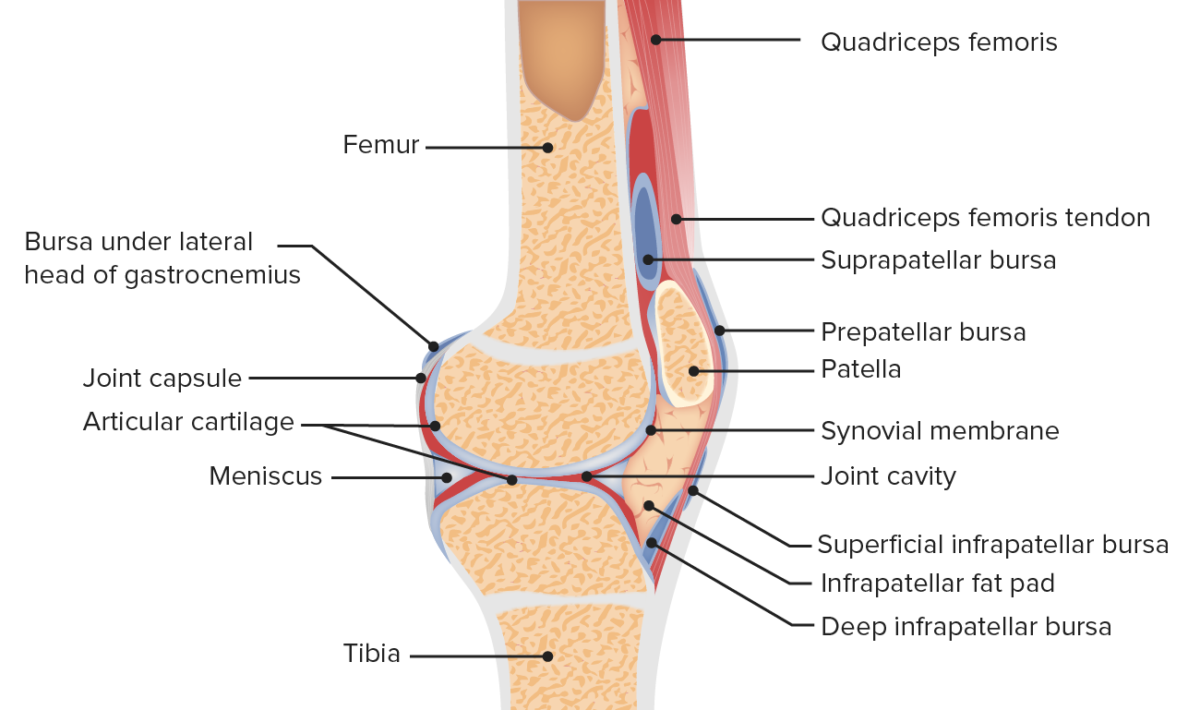
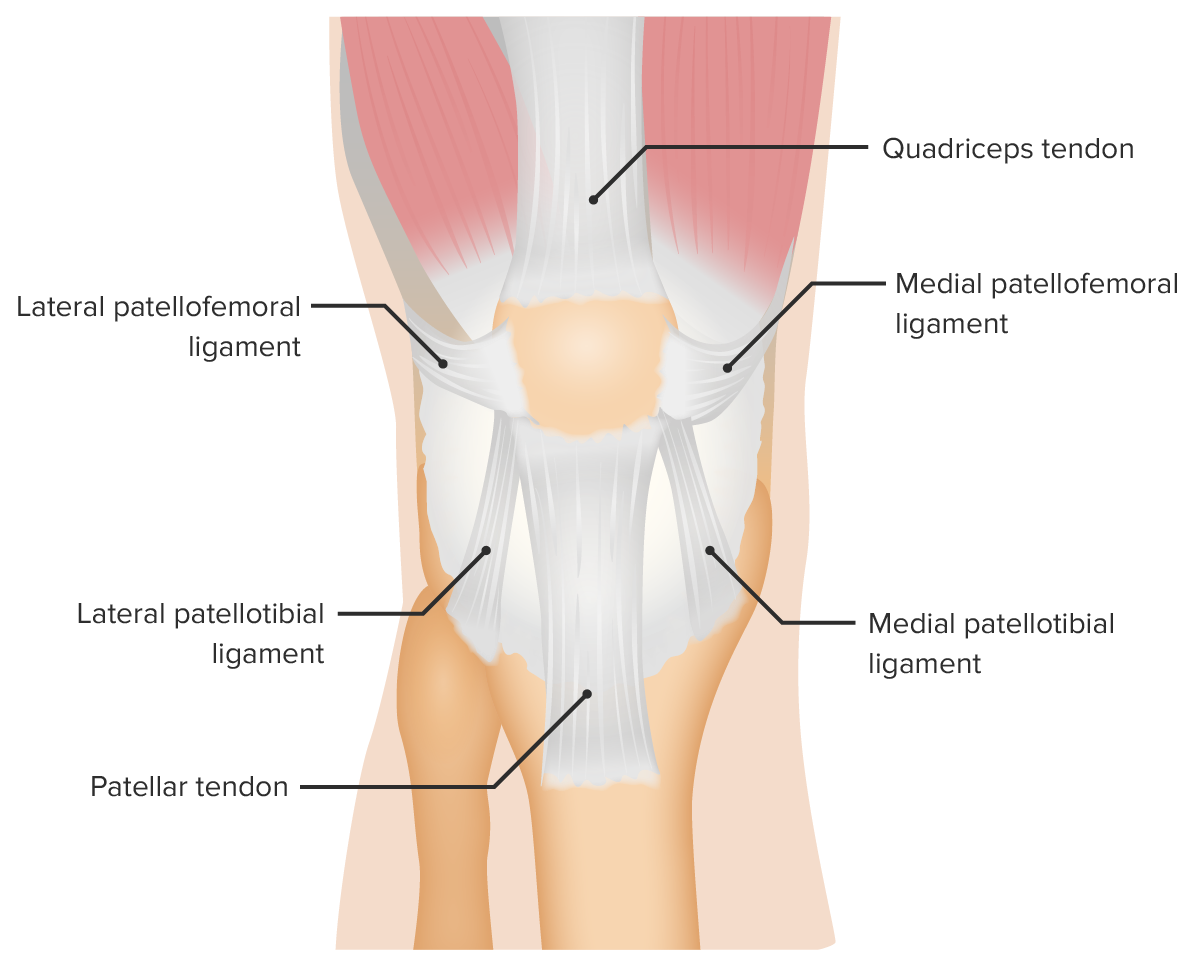
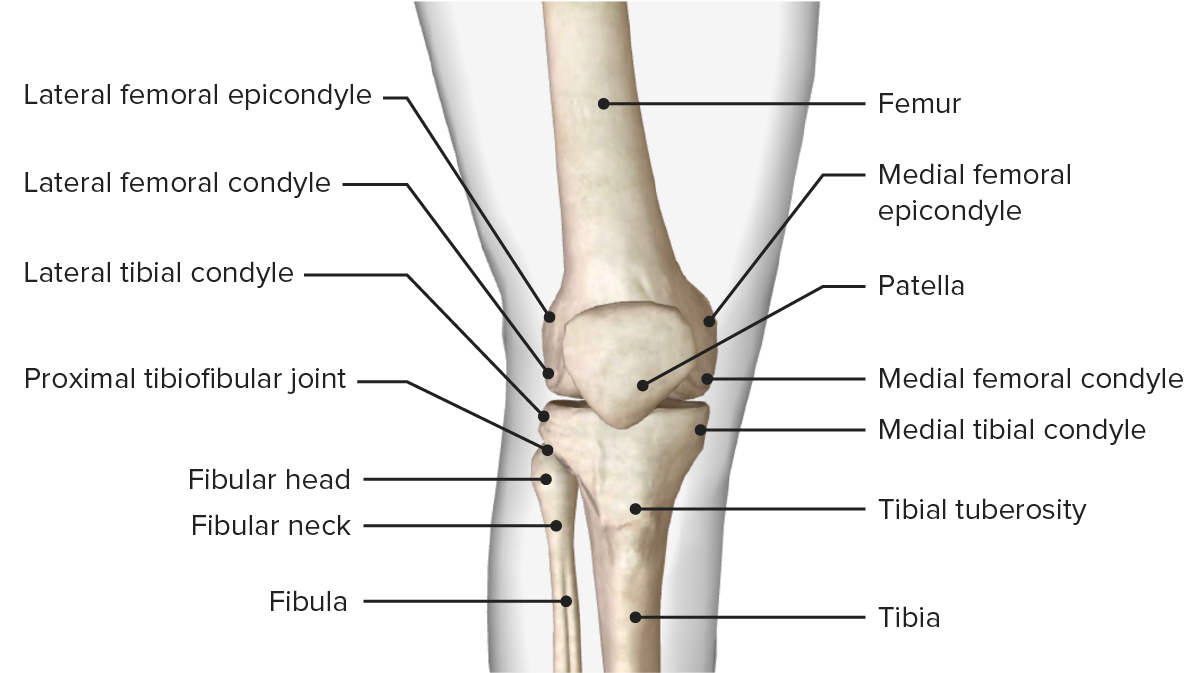
Anatomía de la articulación de la rodilla

  • Articulación más grande y compleja del cuerpo humano.
  • Articulación de bisagra sinovial
  • Las estructuras de apoyo incluyen:
    • Cápsula de la articulación
    • Meniscos lateral y medial
    • Múltiples ligamentos para la movilidad y estabilidad de la rodilla.

Categorías de dolor Dolor Inflammation de rodilla

  • Dolor Dolor Inflammation agudo de rodilla:
    • Trauma
    • Exacerbación aguda del dolor Dolor Inflammation crónico de rodilla.
    • Infección
    • Problema reumatológico
  • Dolor Dolor Inflammation crónico de rodilla:
    • Uso excesivo
    • OA OA Osteoarthritis (OA) is the most common form of arthritis, and is due to cartilage destruction and changes of the subchondral bone. The risk of developing this disorder increases with age, obesity, and repetitive joint use or trauma. Patients develop gradual joint pain, stiffness lasting < 30 minutes, and decreased range of motion. Osteoarthritis
    • Tendinopatías
    • Inestabilidad rotuliana
    • Síndrome de dolor Dolor Inflammation femororrotuliano (PFPS, por sus siglas en EN Erythema nodosum is an immune-mediated panniculitis (inflammation of the subcutaneous fat) caused by a type IV (delayed-type) hypersensitivity reaction. It commonly manifests in young women as tender, erythematous nodules on the shins. Erythema Nodosum inglés)
  • Dolor Dolor Inflammation de rodilla sin trauma:
    • Infección
    • Etiología reumatológica
    • Malignidad

Presentación Clínica y Diagnóstico

Historia clínica

Obtener una historia clara es fundamental para realizar el diagnóstico correcto y orientar la exploración:

  • Ubicación de problemas comunes:
    • Anterior:
    • Medio:
      • Esguince del ligamento colateral medial (LCM)
      • Artrosis del compartimento medial (compartimento más comúnmente afectado)
      • Desgarro del menisco medial
      • Bursitis pes PES Removal of plasma and replacement with various fluids, e.g., fresh frozen plasma, plasma protein fractions (ppf), albumin preparations, dextran solutions, saline. Used in treatment of autoimmune diseases, immune complex diseases, diseases of excess plasma factors, and other conditions. Thrombotic Thrombocytopenic Purpura anserina
    • Lateral:
      • Desgarro de menisco lateral
      • Osteoartritis del compartimento lateral
      • Síndrome de la banda iliotibial (ITBS, por sus siglas en EN Erythema nodosum is an immune-mediated panniculitis (inflammation of the subcutaneous fat) caused by a type IV (delayed-type) hypersensitivity reaction. It commonly manifests in young women as tender, erythematous nodules on the shins. Erythema Nodosum inglés)
  • Factores agravantes y atenuantes
  • Presencia de hinchazón / derrame
  • Síntomas mecánicos (considere una lesión de menisco o cartílago):
    • Chasquido
    • Bloqueo
  • Cirugía/procedimientos previos
  • Signos/síntomas sistémicos:
    • Fiebre
    • Escalofríos
    • Eritema
  • Recuerde: el dolor Dolor Inflammation de rodilla puede deberse a una patología de la cadera (especialmente en EN Erythema nodosum is an immune-mediated panniculitis (inflammation of the subcutaneous fat) caused by a type IV (delayed-type) hypersensitivity reaction. It commonly manifests in young women as tender, erythematous nodules on the shins. Erythema Nodosum niños).

Examen físico

El examen está dirigido por la duración y el tipo de lesión (aguda o crónica) y la edad del individuo. La comparación de la rodilla sana es importante:
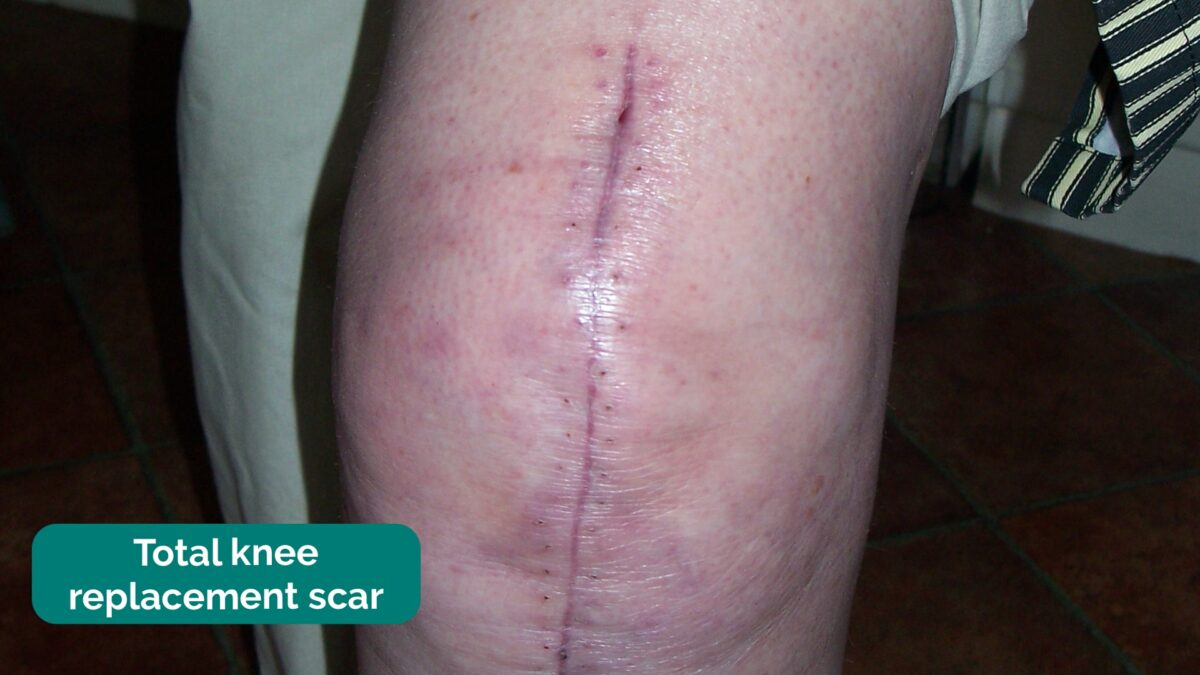
  • Observación:
    • Cicatrices quirúrgicas previas
    • Postura y marcha:
      • Cojear
      • Incapacidad para soportar peso
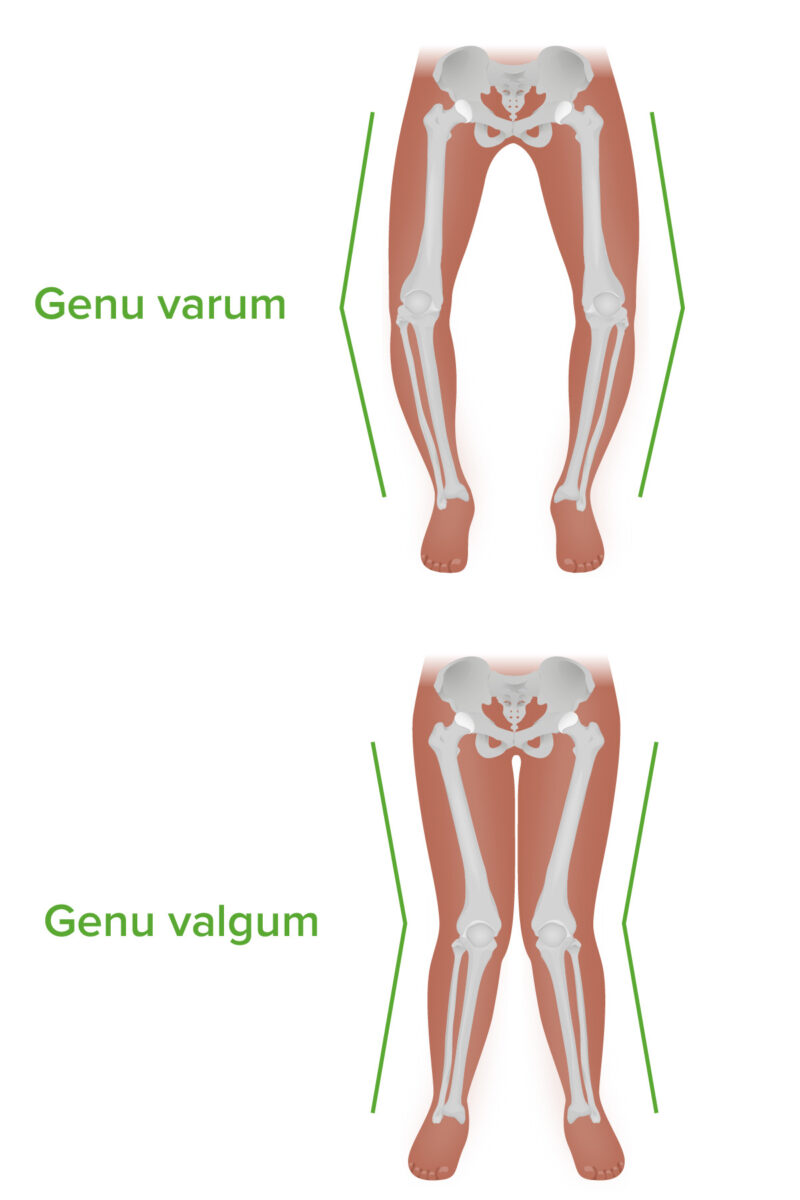
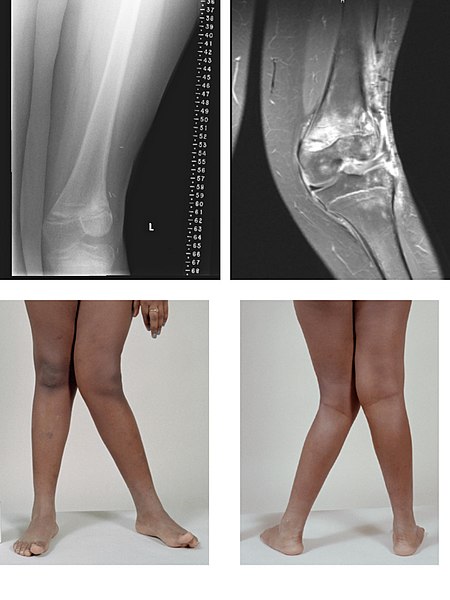
    • Deformidades angulares:
      • Genu varum Genu varum Genu varum is a deformation of the knee joint(s) that creates angulation of the lower limb(s) away from the midline in the coronal plane. Children ages 1-5 years are commonly affected. Genu Varum (pata arqueada)
      • Genu valgum Genu valgum Genu valgum is a deformation of the knee joint(s) that creates angulation of the lower limb(s) toward the midline in the coronal plane. Children ages 1-5 years are commonly affected. Genu Valgum (golpe de rodilla)
    • Hinchazón, eritema, equimosis
    • Capacidad para realizar una sentadilla profunda
    • Atrofia muscular
  • Rango de movimiento:
    • Flexión: 0–135 grados
    • Compare con el lado opuesto.
    • Evalúe la cadera.
  • Palpación:
    • Generalmente, se realiza con la rodilla a 90 grados de flexión mientras está sentado o en EN Erythema nodosum is an immune-mediated panniculitis (inflammation of the subcutaneous fat) caused by a type IV (delayed-type) hypersensitivity reaction. It commonly manifests in young women as tender, erythematous nodules on the shins. Erythema Nodosum decúbito supino con 20–30 grados de flexión
    • Palpación de la línea articular:
      • Lesión de menisco
      • Ligamentos colaterales
      • OA OA Osteoarthritis (OA) is the most common form of arthritis, and is due to cartilage destruction and changes of the subchondral bone. The risk of developing this disorder increases with age, obesity, and repetitive joint use or trauma. Patients develop gradual joint pain, stiffness lasting < 30 minutes, and decreased range of motion. Osteoarthritis
      • Almohadilla gorda
    • Anterior:
      • Rótula
      • Ligamento rotuliano
      • Tendón rotuliano
      • Tendón del cuádriceps
      • Tubérculo tibial
      • Bursa prepatelar
      • Almohadilla gorda
    • Medialmente:
      • LCM
      • Tendones anserinos
      • Bursa anserina
    • Lateralmente:
      • Ligamento colateral lateral (LCL)
      • Banda iliotibial
      • Cabeza del peroné
    • Posterior:
      • Quiste poplíteo (quiste de Baker)
      • Arteria poplítea
    • Crépito
    • Calor Calor Inflammation excesivo
    • Efusión:
      • Balonamiento de la rótula
      • “Onda de fluido” para derrames más pequeños
    • Pruebas de fuerza y neurovasculares:
      • Examen neurológico de las extremidades inferiores
      • Evaluación de pulsos distales
Tabla: Maniobras de examen especiales al AL Amyloidosis examinar a una persona con dolor Dolor Inflammation de rodilla
Lesión Maniobra
Lesión del ligamento cruzado anterior (LCA)
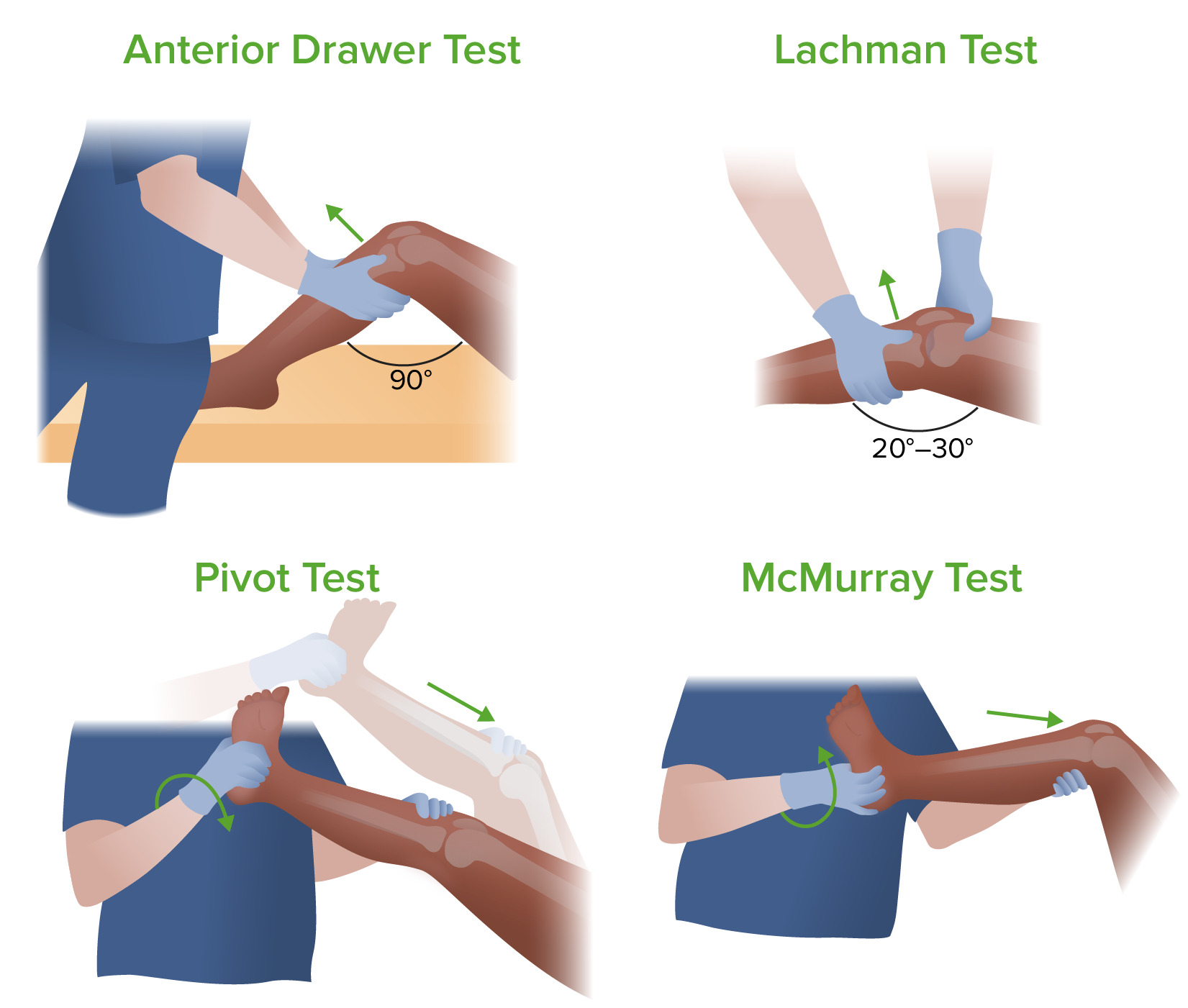
  • Prueba del cajón anterior:
    • Flexione la rodilla a 90 grados y traslade la tibia Tibia The second longest bone of the skeleton. It is located on the medial side of the lower leg, articulating with the fibula laterally, the talus distally, and the femur proximally. Knee Joint: Anatomy con fuerza dirigida anteriormente.
    • La laxitud en EN Erythema nodosum is an immune-mediated panniculitis (inflammation of the subcutaneous fat) caused by a type IV (delayed-type) hypersensitivity reaction. It commonly manifests in young women as tender, erythematous nodules on the shins. Erythema Nodosum la traslación anterior indica lesión del LCA.
  • Prueba de Lachman:
    • Prueba más sensible para la rotura del LCA
    • Flexione la rodilla a 30 grados y traslade la tibia Tibia The second longest bone of the skeleton. It is located on the medial side of the lower leg, articulating with the fibula laterally, the talus distally, and the femur proximally. Knee Joint: Anatomy con fuerza dirigida anteriormente.
    • La laxitud en EN Erythema nodosum is an immune-mediated panniculitis (inflammation of the subcutaneous fat) caused by a type IV (delayed-type) hypersensitivity reaction. It commonly manifests in young women as tender, erythematous nodules on the shins. Erythema Nodosum la traslación anterior indica lesión del LCA.
  • Cambio de pivote:
    • Individual en EN Erythema nodosum is an immune-mediated panniculitis (inflammation of the subcutaneous fat) caused by a type IV (delayed-type) hypersensitivity reaction. It commonly manifests in young women as tender, erythematous nodules on the shins. Erythema Nodosum decúbito supino con rodilla completamente extendida
    • Coloque una rotación interna y fuerza en EN Erythema nodosum is an immune-mediated panniculitis (inflammation of the subcutaneous fat) caused by a type IV (delayed-type) hypersensitivity reaction. It commonly manifests in young women as tender, erythematous nodules on the shins. Erythema Nodosum valgo sobre la tibia Tibia The second longest bone of the skeleton. It is located on the medial side of the lower leg, articulating with the fibula laterally, the talus distally, and the femur proximally. Knee Joint: Anatomy proximal mientras flexiona la rodilla.
    • “Clunk” con flexión indica lesión del LCA.
Lesión de LCP
  • Prueba del cajón posterior:
    • Rodilla a 90 grados de flexión y trasladar la tibia Tibia The second longest bone of the skeleton. It is located on the medial side of the lower leg, articulating with the fibula laterally, the talus distally, and the femur proximally. Knee Joint: Anatomy con una fuerza dirigida hacia atrás.
    • Laxitud en EN Erythema nodosum is an immune-mediated panniculitis (inflammation of the subcutaneous fat) caused by a type IV (delayed-type) hypersensitivity reaction. It commonly manifests in young women as tender, erythematous nodules on the shins. Erythema Nodosum la traslación posterior indica lesión del LCP.
  • Prueba activa de cuádriceps:
    • Con la rodilla extendida, pida al AL Amyloidosis individuo que levante la pierna de la mesa en EN Erythema nodosum is an immune-mediated panniculitis (inflammation of the subcutaneous fat) caused by a type IV (delayed-type) hypersensitivity reaction. It commonly manifests in young women as tender, erythematous nodules on the shins. Erythema Nodosum posición supina.
    • Evaluar la subluxación posterior de la tibia Tibia The second longest bone of the skeleton. It is located on the medial side of the lower leg, articulating with the fibula laterally, the talus distally, and the femur proximally. Knee Joint: Anatomy cuando la parte superior de la pierna se mueve en EN Erythema nodosum is an immune-mediated panniculitis (inflammation of the subcutaneous fat) caused by a type IV (delayed-type) hypersensitivity reaction. It commonly manifests in young women as tender, erythematous nodules on the shins. Erythema Nodosum sentido anterior (indica lesión del LCP).
Lesión de LCM Prueba de esfuerzo en EN Erythema nodosum is an immune-mediated panniculitis (inflammation of the subcutaneous fat) caused by a type IV (delayed-type) hypersensitivity reaction. It commonly manifests in young women as tender, erythematous nodules on the shins. Erythema Nodosum valgo para la inestabilidad del LCM:
  • Realizado a 0 grados de flexión y 30 grados de flexión
  • Coloque la tensión en EN Erythema nodosum is an immune-mediated panniculitis (inflammation of the subcutaneous fat) caused by a type IV (delayed-type) hypersensitivity reaction. It commonly manifests in young women as tender, erythematous nodules on the shins. Erythema Nodosum valgo contra la cara lateral de la rodilla.
  • Evalúe el dolor Dolor Inflammation y la laxitud.
Lesión de LCL Prueba de esfuerzo en EN Erythema nodosum is an immune-mediated panniculitis (inflammation of the subcutaneous fat) caused by a type IV (delayed-type) hypersensitivity reaction. It commonly manifests in young women as tender, erythematous nodules on the shins. Erythema Nodosum varo para inestabilidad del LCL:
  • Realizado a 0 grados de flexión y 30 grados de flexión
  • Coloque la tensión en EN Erythema nodosum is an immune-mediated panniculitis (inflammation of the subcutaneous fat) caused by a type IV (delayed-type) hypersensitivity reaction. It commonly manifests in young women as tender, erythematous nodules on the shins. Erythema Nodosum varo contra la cara medial de la rodilla.
  • Evalúe el dolor Dolor Inflammation y la laxitud.
Desgarro meniscal
  • Prueba de McMurray: Un chasquido palpable o auditivo en EN Erythema nodosum is an immune-mediated panniculitis (inflammation of the subcutaneous fat) caused by a type IV (delayed-type) hypersensitivity reaction. It commonly manifests in young women as tender, erythematous nodules on the shins. Erythema Nodosum flexión y/o extensión activa durante la rotación interna y externa de la rodilla sugiere una rotura de menisco.
  • Sensibilidad en EN Erythema nodosum is an immune-mediated panniculitis (inflammation of the subcutaneous fat) caused by a type IV (delayed-type) hypersensitivity reaction. It commonly manifests in young women as tender, erythematous nodules on the shins. Erythema Nodosum la línea articular
ITBS
  • Sensibilidad donde ITB cruza el cóndilo femoral lateral
  • Prueba de compresión noble (maniobra de provocación para reproducir los LOS Neisseria síntomas): El dolor Dolor Inflammation se produce con la palpación sobre el cóndilo femoral lateral con flexión/extensión dinámica pasiva de la rodilla.
PFPS
  • Dolor Dolor Inflammation al AL Amyloidosis ponerse en EN Erythema nodosum is an immune-mediated panniculitis (inflammation of the subcutaneous fat) caused by a type IV (delayed-type) hypersensitivity reaction. It commonly manifests in young women as tender, erythematous nodules on the shins. Erythema Nodosum cuclillas
  • Sensibilidad al AL Amyloidosis retináculo rotuliano
  • Evaluación del deslizamiento rotuliano
  • Signo “J”: movimiento lateral de la rótula en EN Erythema nodosum is an immune-mediated panniculitis (inflammation of the subcutaneous fat) caused by a type IV (delayed-type) hypersensitivity reaction. It commonly manifests in young women as tender, erythematous nodules on the shins. Erythema Nodosum extensión completa
LCA: ligamento cruzado anterior
LCP: ligamento cruzado posterior
LCM: ligamento colateral medial
LCL: ligamento colateral lateral
ITBS: síndrome de la banda iliotibial
ITB: banda iliotibial
PFPS: síndrome de dolor femororrotuliano
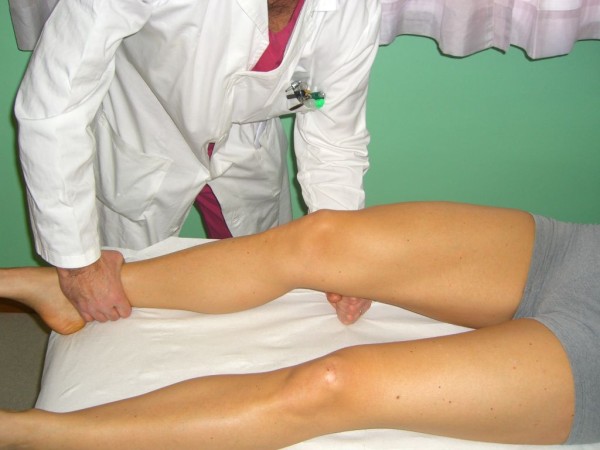
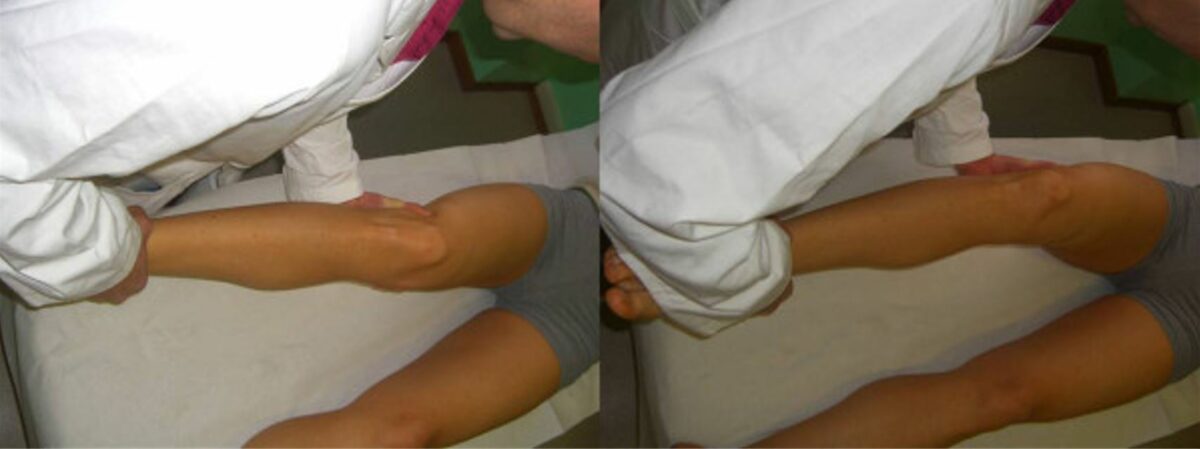
Cuatro exámenes utilizados para determinar la causa del dolor de rodilla.

Cuatro exámenes para determinar la causa del dolor de rodilla: prueba del cajón anterior, prueba de Lachman, prueba de pivote y prueba de McMurray

Imagen por Lecturio.
Imagenología

  • Se utiliza como complemento de la historia clínica y el examen físico.
  • Herramientas de toma de decisiones clínicas de rayos X simples:
    • Las reglas de rodilla de Ottawa y las reglas de rodilla de Pittsburgh son útiles en EN Erythema nodosum is an immune-mediated panniculitis (inflammation of the subcutaneous fat) caused by a type IV (delayed-type) hypersensitivity reaction. It commonly manifests in young women as tender, erythematous nodules on the shins. Erythema Nodosum el entorno de cuidados agudos para decidir si una persona debe recibir imagenología de la rodilla.
    • Las reglas de Ottawa para la rodilla se aplican a adultos (≥ 18 años) con traumatismo cerrado agudo de rodilla (no se necesitan imágenes si todas son negativas):
      • > 55 años
      • Sensibilidad puntual en EN Erythema nodosum is an immune-mediated panniculitis (inflammation of the subcutaneous fat) caused by a type IV (delayed-type) hypersensitivity reaction. It commonly manifests in young women as tender, erythematous nodules on the shins. Erythema Nodosum la cabeza del peroné
      • Sensibilidad puntual de la rótula
      • Flexión de la rodilla < 90 grados
      • Incapacidad para caminar 4 pasos con soporte de peso.
    • Las reglas de la rodilla de Pittsburgh se aplican a todas las personas con una lesión aguda en EN Erythema nodosum is an immune-mediated panniculitis (inflammation of the subcutaneous fat) caused by a type IV (delayed-type) hypersensitivity reaction. It commonly manifests in young women as tender, erythematous nodules on the shins. Erythema Nodosum la última semana, sin una cirugía de rodilla previa o una evaluación en EN Erythema nodosum is an immune-mediated panniculitis (inflammation of the subcutaneous fat) caused by a type IV (delayed-type) hypersensitivity reaction. It commonly manifests in young women as tender, erythematous nodules on the shins. Erythema Nodosum la sala de emergencias (no se necesitan imágenes si todas son negativas):
      • <12 años
      • > 50 años
      • Incapacidad para caminar 4 pasos con soporte de peso.
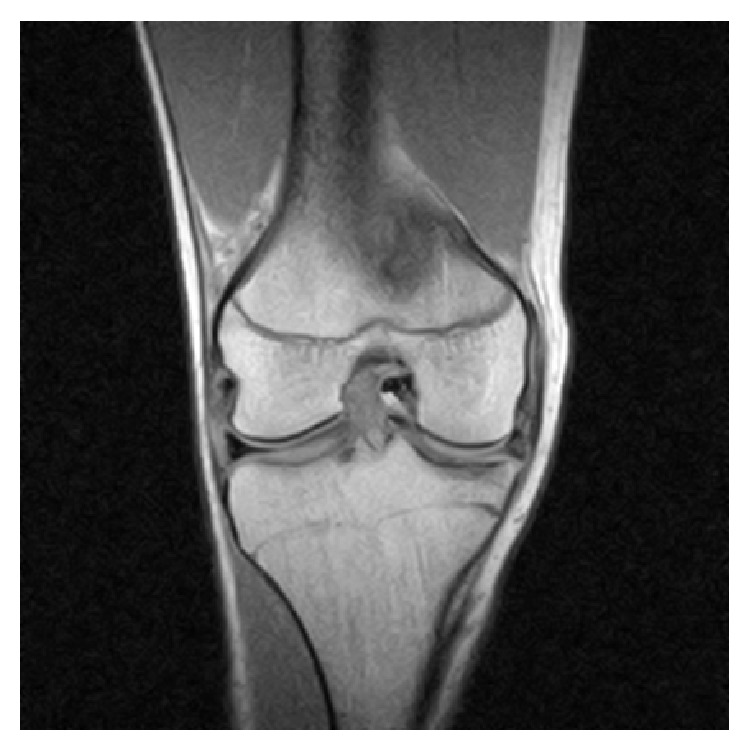
  • RM:
    • Importante en EN Erythema nodosum is an immune-mediated panniculitis (inflammation of the subcutaneous fat) caused by a type IV (delayed-type) hypersensitivity reaction. It commonly manifests in young women as tender, erythematous nodules on the shins. Erythema Nodosum la evaluación de lesiones de tejidos blandos de la rodilla.
    • No indicado para evaluación inicial
  • Ultrasonido:
    • Evalúe los LOS Neisseria tejidos blandos alrededor de la rodilla (e.g., tendones, ligamentos colaterales).
    • Puede ser útil para aspiración / inyecciones.

Related videos

Diagnóstico Diferencial del Dolor de Rodilla

La evaluación del dolor Dolor Inflammation de rodilla es un desafío. Un enfoque para el diagnóstico diferencial es agrupar las diversas condiciones en EN Erythema nodosum is an immune-mediated panniculitis (inflammation of the subcutaneous fat) caused by a type IV (delayed-type) hypersensitivity reaction. It commonly manifests in young women as tender, erythematous nodules on the shins. Erythema Nodosum función de la agudeza de la presentación, la presencia o ausencia de derrame y las actividades precipitantes.

Lesiones traumáticas de rodilla

Tabla: Causas de lesiones traumáticas de rodilla con hinchazón significativa
Entidad Mecanismo Características Diagnóstico
Desgarro del ligamento cruzado anterior (LCA)
  • Cambio repentino de dirección
  • Desaceleración rapida
  • Aterrizando de un salto
  • Sin contacto con frecuencia
  • “Pop” audible en EN Erythema nodosum is an immune-mediated panniculitis (inflammation of the subcutaneous fat) caused by a type IV (delayed-type) hypersensitivity reaction. It commonly manifests in young women as tender, erythematous nodules on the shins. Erythema Nodosum el momento de la lesión
  • Hinchazón rápida (hemartrosis)
  • Inestabilidad articular
  • Prueba de Lachman positiva
  • Prueba de cajón anterior positiva
  • Prueba de cambio de pivote positivo
  • Resonancia magnética para confirmar
Desgarro de LCP
  • Golpe directo a la tibia Tibia The second longest bone of the skeleton. It is located on the medial side of the lower leg, articulating with the fibula laterally, the talus distally, and the femur proximally. Knee Joint: Anatomy anterior proximal
  • E.g., lesión en EN Erythema nodosum is an immune-mediated panniculitis (inflammation of the subcutaneous fat) caused by a type IV (delayed-type) hypersensitivity reaction. It commonly manifests in young women as tender, erythematous nodules on the shins. Erythema Nodosum el tablero, aterrizaje sobre una rodilla flexionada
  • Lesión por hiperextensión
  • Dolor Dolor Inflammation de rodilla posterior
  • Pérdida de la flexión terminal de la rodilla
  • Prueba positiva del cajón posterior
  • Prueba activa de cuádriceps positiva
  • RM para confirmar
Desgarro de menisco
  • Mecanismo de torsión con el pie plantado
  • Degeneración asociada del cartílago del menisco
  • Sensación de desgarro / estallido
  • Bloquear / atrapar
  • ↓ Rango de movimiento
  • Sensibilidad en EN Erythema nodosum is an immune-mediated panniculitis (inflammation of the subcutaneous fat) caused by a type IV (delayed-type) hypersensitivity reaction. It commonly manifests in young women as tender, erythematous nodules on the shins. Erythema Nodosum la línea de las articulaciones
  • Prueba de McMurray positiva
  • Resonancia magnética para confirmar
Luxación rotuliana Giro o cambio repentino de dirección
  • Desplazamiento lateral
  • Deformidad generalmente notada
  • Detención
  • Laxitud
  • Efusión
  • Diagnóstico clínico
Desgarro del ligamento rotuliano
  • Parada o arranque repentino y enérgico (mecanismo excéntrico)
  • Tratando de evitar una caída
  • Incapacidad para extender
  • Inflamación infrapatelar
  • Desplazamiento de rótula superior
  • Diagnóstico clínico
  • Ecografía o RM para confirmar
Desgarro del tendón del cuádriceps
  • Parada o arranque repentino y forzado (mecanismo excéntrico)
  • Tratando de evitar una caída
  • Incapacidad para extender
  • Inflamación suprapatelar
  • Desplazamiento de la rótula inferior
  • Diagnóstico clínico
  • Ecografía o RM para confirmar
Fractura intraarticular
  • Trauma de alta velocidad
  • Deportes de contacto
  • Gran derrame
  • Lipohemartrosis
  • Radiografía
  • TC para evaluación adicional
LCA: ligamento cruzado anterior
LCP: ligamento cruzado posterior
Tabla: Causas de lesiones traumáticas de rodilla con hinchazón mínima
Entidad Mecanismo Características Diagnóstico
Esguince de LCM
  • Fuerza en EN Erythema nodosum is an immune-mediated panniculitis (inflammation of the subcutaneous fat) caused by a type IV (delayed-type) hypersensitivity reaction. It commonly manifests in young women as tender, erythematous nodules on the shins. Erythema Nodosum valgo en EN Erythema nodosum is an immune-mediated panniculitis (inflammation of the subcutaneous fat) caused by a type IV (delayed-type) hypersensitivity reaction. It commonly manifests in young women as tender, erythematous nodules on the shins. Erythema Nodosum la rodilla
  • Ligamento de rodilla más comúnmente lesionado
  • Prueba de esfuerzo en EN Erythema nodosum is an immune-mediated panniculitis (inflammation of the subcutaneous fat) caused by a type IV (delayed-type) hypersensitivity reaction. It commonly manifests in young women as tender, erythematous nodules on the shins. Erythema Nodosum valgo positiva
  • Resonancia magnética para confirmar
Esguince de LCL Fuerza en EN Erythema nodosum is an immune-mediated panniculitis (inflammation of the subcutaneous fat) caused by a type IV (delayed-type) hypersensitivity reaction. It commonly manifests in young women as tender, erythematous nodules on the shins. Erythema Nodosum varo en EN Erythema nodosum is an immune-mediated panniculitis (inflammation of the subcutaneous fat) caused by a type IV (delayed-type) hypersensitivity reaction. It commonly manifests in young women as tender, erythematous nodules on the shins. Erythema Nodosum la rodilla
  • Prueba de esfuerzo en EN Erythema nodosum is an immune-mediated panniculitis (inflammation of the subcutaneous fat) caused by a type IV (delayed-type) hypersensitivity reaction. It commonly manifests in young women as tender, erythematous nodules on the shins. Erythema Nodosum varo positiva
  • Resonancia magnética para confirmar
LMC: ligamento colateral medial
LCL: ligamento colateral lateral

Lesiones atraumáticas de rodilla

Tabla: Causas y características del dolor Dolor Inflammation de rodilla atraumático con derrame significativo
Entidad Características
Osteoartritis de rodilla
  • Pérdida de cartílago articular y remodelación ósea
  • Factores de riesgo:
    • > 50 años
    • Mujeres > hombres
    • ↑ IMC
    • Lesión o infección previa
  • Historia clínica:
    • Inicio insidioso de dolor Dolor Inflammation relacionado con la actividad
    • Rigidez breve después de la inactividad o por la mañana (gelificante)
    • Lentamente ↓ RDM
  • Examen:
    • Crepitación con movimiento
    • Sensibilidad en EN Erythema nodosum is an immune-mediated panniculitis (inflammation of the subcutaneous fat) caused by a type IV (delayed-type) hypersensitivity reaction. It commonly manifests in young women as tender, erythematous nodules on the shins. Erythema Nodosum la línea de las articulaciones
    • Posible derrame y calor Calor Inflammation
  • Diagnóstico:
    • Diagnóstico clínico
    • Confirmación de rayos X
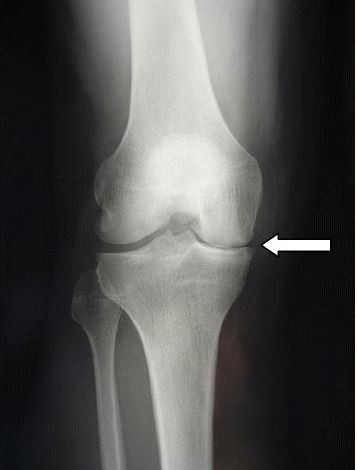
  • Radiografías: estrechamiento del espacio articular, esclerosis, osteofitos y quistes subcondrales.
Artropatía por cristales
  • Episodio agudo de:
    • Dolor Dolor Inflammation severo
    • Hinchazón
    • Derrame potencialmente grande
    • Eritema en EN Erythema nodosum is an immune-mediated panniculitis (inflammation of the subcutaneous fat) caused by a type IV (delayed-type) hypersensitivity reaction. It commonly manifests in young women as tender, erythematous nodules on the shins. Erythema Nodosum una o más articulaciones
  • Diagnóstico por análisis de líquido sinovial:
    • Gota: cristales de urato (birrefringencia negativa)
    • CPPD o seudogota:
      • Cristales de CPPD
      • Condrocalcinosis en EN Erythema nodosum is an immune-mediated panniculitis (inflammation of the subcutaneous fat) caused by a type IV (delayed-type) hypersensitivity reaction. It commonly manifests in young women as tender, erythematous nodules on the shins. Erythema Nodosum rayos X
Artritis septica
  • Infección de una o más articulaciones.
  • Más comúnmente bacteriano, pero incluye infecciones fúngicas y virales
  • Factores de riesgo:
    • ↑ Edad
    • Abuso de drogas intravenosas
    • DM DM Diabetes mellitus (DM) is a metabolic disease characterized by hyperglycemia and dysfunction of the regulation of glucose metabolism by insulin. Type 1 DM is diagnosed mostly in children and young adults as the result of autoimmune destruction of β cells in the pancreas and the resulting lack of insulin. Type 2 DM has a significant association with obesity and is characterized by insulin resistance. Diabetes Mellitus
    • Inmunosupresión
    • Articulación protésica
    • Cirugía previa
  • Organismos más comunes:
    • Staphylococcus aureus Staphylococcus aureus Potentially pathogenic bacteria found in nasal membranes, skin, hair follicles, and perineum of warm-blooded animals. They may cause a wide range of infections and intoxications. Brain Abscess
    • Especies de estreptococos
  • Presentación:
    • Dolor Dolor Inflammation agudo
    • Gran derrame
    • ↑ Calidez
    • ↓ RDM sin antecedentes de trauma
    • Signos y síntomas sistémicos
  • Diagnóstico:
    • Artrocentesis:
      • Tinción de Gram
      • Conteo de células
      • Cultura
      • Evaluación de cristales
    • Hemocultivos
    • Hemogramas y marcadores inflamatorios
Artritis reumatoide
  • Presentación:
    • Poliartritis simétrica de manos y pies.
    • Deterioro articular progresivo
  • Afecta la articulación de la rodilla en EN Erythema nodosum is an immune-mediated panniculitis (inflammation of the subcutaneous fat) caused by a type IV (delayed-type) hypersensitivity reaction. It commonly manifests in young women as tender, erythematous nodules on the shins. Erythema Nodosum ⅓ de personas
  • Examen:
    • Grandes derrames
    • Engrosamiento de la membrana sinovial
RDM: rango de movimiento
CPPD: enfermedad por depósito de pirofosfato de calcio dihidrato
DM: diabetes mellitus
CBC: hemograma completo
Tabla: Dolor Dolor Inflammation atraumático de rodilla que se presenta sin derrame articular significativo (por ubicación)
Entidad Características
Dolor Dolor Inflammation de rodilla anterior
Apofisitis del tubérculo tibial (Osgood-Schlatter)
  • Apofisitis de la tuberosidad tibial en EN Erythema nodosum is an immune-mediated panniculitis (inflammation of the subcutaneous fat) caused by a type IV (delayed-type) hypersensitivity reaction. It commonly manifests in young women as tender, erythematous nodules on the shins. Erythema Nodosum desarrollo.
  • Presentación:
    • Dolor Dolor Inflammation sobre la tuberosidad tibial en EN Erythema nodosum is an immune-mediated panniculitis (inflammation of the subcutaneous fat) caused by a type IV (delayed-type) hypersensitivity reaction. It commonly manifests in young women as tender, erythematous nodules on the shins. Erythema Nodosum adolescentes a menudo asociado con un brote de crecimiento reciente
    • Agravado por el deporte / actividad, mejora con el descanso
  • Examen: dolor Dolor Inflammation a la palpación y prominencia en EN Erythema nodosum is an immune-mediated panniculitis (inflammation of the subcutaneous fat) caused by a type IV (delayed-type) hypersensitivity reaction. It commonly manifests in young women as tender, erythematous nodules on the shins. Erythema Nodosum el tubérculo tibial, sin derrame
  • Radiografía no indicada de forma rutinaria
SCFE SCFE Slipped capital femoral epiphysis (SCFE) is an orthopedic disorder of early adolescence characterized by the pathologic “slipping” or displacement of the femoral head, or epiphysis, on the femoral neck. Slipped Capital Femoral Epiphysis
  • Deslizamiento de la epífisis femoral proximal en EN Erythema nodosum is an immune-mediated panniculitis (inflammation of the subcutaneous fat) caused by a type IV (delayed-type) hypersensitivity reaction. It commonly manifests in young women as tender, erythematous nodules on the shins. Erythema Nodosum el cuello femoral en EN Erythema nodosum is an immune-mediated panniculitis (inflammation of the subcutaneous fat) caused by a type IV (delayed-type) hypersensitivity reaction. It commonly manifests in young women as tender, erythematous nodules on the shins. Erythema Nodosum la fisis femoral proximal (placa de crecimiento)
  • Común en EN Erythema nodosum is an immune-mediated panniculitis (inflammation of the subcutaneous fat) caused by a type IV (delayed-type) hypersensitivity reaction. It commonly manifests in young women as tender, erythematous nodules on the shins. Erythema Nodosum niños con trastornos endocrinos y obesidad
  • Dolor Dolor Inflammation referido a la rodilla ipsolateral, cojera
Bursitis prerrotuliana
  • Inflamación e hinchazón de la bolsa prepatelar.
  • Etiología: presión por arrodillarse excesivamente (“rodilla de criada”)
  • 3 categorías principales:
    • Traumático: trauma agudo o crónico (no infeccioso)
    • Infeccioso: Staphylococcus aureus Staphylococcus aureus Potentially pathogenic bacteria found in nasal membranes, skin, hair follicles, and perineum of warm-blooded animals. They may cause a wide range of infections and intoxications. Brain Abscess más común
    • Enfermedad de los LOS Neisseria cristales: gota
Síndrome de dolor Dolor Inflammation femororrotuliano
  • Común
  • Visto en EN Erythema nodosum is an immune-mediated panniculitis (inflammation of the subcutaneous fat) caused by a type IV (delayed-type) hypersensitivity reaction. It commonly manifests in young women as tender, erythematous nodules on the shins. Erythema Nodosum corredores / ciclistas
  • Otros factores de riesgo:
    • Mujer
    • Valgo dinámico
    • Inestabilidad rotuliana
  • Presentación:
  • Diagnóstico: basado en EN Erythema nodosum is an immune-mediated panniculitis (inflammation of the subcutaneous fat) caused by a type IV (delayed-type) hypersensitivity reaction. It commonly manifests in young women as tender, erythematous nodules on the shins. Erythema Nodosum la presentación clínica.
  • Radiografías: generalmente no indicadas
Dolor Dolor Inflammation medial de rodilla
Bursitis pes PES Removal of plasma and replacement with various fluids, e.g., fresh frozen plasma, plasma protein fractions (ppf), albumin preparations, dextran solutions, saline. Used in treatment of autoimmune diseases, immune complex diseases, diseases of excess plasma factors, and other conditions. Thrombotic Thrombocytopenic Purpura anserina
  • Inflamación de la bolsa entre la tibia Tibia The second longest bone of the skeleton. It is located on the medial side of the lower leg, articulating with the fibula laterally, the talus distally, and the femur proximally. Knee Joint: Anatomy y los LOS Neisseria 3 tendones de la región pes PES Removal of plasma and replacement with various fluids, e.g., fresh frozen plasma, plasma protein fractions (ppf), albumin preparations, dextran solutions, saline. Used in treatment of autoimmune diseases, immune complex diseases, diseases of excess plasma factors, and other conditions. Thrombotic Thrombocytopenic Purpura anserina:
  • Visto con obesidad y uso excesivo
  • Dolor Dolor Inflammation a lo largo de la tibia Tibia The second longest bone of the skeleton. It is located on the medial side of the lower leg, articulating with the fibula laterally, the talus distally, and the femur proximally. Knee Joint: Anatomy anteromedial.
Dolor Dolor Inflammation de rodilla lateral
ITBS
  • Inicio insidioso de dolor Dolor Inflammation lateral de rodilla
  • Relacionado con el uso excesivo
  • Principalmente en EN Erythema nodosum is an immune-mediated panniculitis (inflammation of the subcutaneous fat) caused by a type IV (delayed-type) hypersensitivity reaction. It commonly manifests in young women as tender, erythematous nodules on the shins. Erythema Nodosum corredores, pero también con ejercicio
  • Dolor Dolor Inflammation cuando la ITB cruza el cóndilo femoral lateral.
Dolor Dolor Inflammation de rodilla posterior
Quiste poplíteo (de Baker)
  • Masa más común en EN Erythema nodosum is an immune-mediated panniculitis (inflammation of the subcutaneous fat) caused by a type IV (delayed-type) hypersensitivity reaction. It commonly manifests in young women as tender, erythematous nodules on the shins. Erythema Nodosum la fosa poplítea
  • El quiste surge en EN Erythema nodosum is an immune-mediated panniculitis (inflammation of the subcutaneous fat) caused by a type IV (delayed-type) hypersensitivity reaction. It commonly manifests in young women as tender, erythematous nodules on the shins. Erythema Nodosum asociación con OA OA Osteoarthritis (OA) is the most common form of arthritis, and is due to cartilage destruction and changes of the subchondral bone. The risk of developing this disorder increases with age, obesity, and repetitive joint use or trauma. Patients develop gradual joint pain, stiffness lasting < 30 minutes, and decreased range of motion. Osteoarthritis o artritis inflamatoria de la rodilla.
  • Resultado de la extrusión de líquido desde el espacio de la articulación de la rodilla hacia la bolsa semimembranosa y gastrocnemio
  • Presentación:
    • Dolor Dolor Inflammation de rodilla posterior
    • Hinchazón
    • Rigidez
    • Sensación de masa detrás de la rodilla.
  • El diagnóstico se realiza mediante un examen clínico (ecografía o RM)
  • Las complicaciones incluyen:
    • Pseudotrombophlebitis: ruptura aguda del quiste que se asemeja a la TVP
    • La ecografía puede descartar TVP y confirmar un quiste poplíteo.

SCFE: epífisis femoral capital deslizada
ITBS: síndrome de la banda iliotibial
ITB: banda iliotibial
OA: osteoartritis
EE. UU.: Ultrasonido
TVP: trombosis venosa profunda

Dolor Dolor Inflammation referido

  • El individuo se presenta con:
    • Dolor Dolor Inflammation de rodilla vagamente localizado
    • Sin sensibilidad focal
    • Sin signos inflamatorios
  • Asociado con trastornos que afectan la columna lumbar, la articulación sacroilíaca o la articulación de la cadera:
    • El dolor Dolor Inflammation proviene de la cadera (i.e., OA OA Osteoarthritis (OA) is the most common form of arthritis, and is due to cartilage destruction and changes of the subchondral bone. The risk of developing this disorder increases with age, obesity, and repetitive joint use or trauma. Patients develop gradual joint pain, stiffness lasting < 30 minutes, and decreased range of motion. Osteoarthritis en EN Erythema nodosum is an immune-mediated panniculitis (inflammation of the subcutaneous fat) caused by a type IV (delayed-type) hypersensitivity reaction. It commonly manifests in young women as tender, erythematous nodules on the shins. Erythema Nodosum adultos, deslizamiento de la epífisis de la cabeza femoral en EN Erythema nodosum is an immune-mediated panniculitis (inflammation of the subcutaneous fat) caused by a type IV (delayed-type) hypersensitivity reaction. It commonly manifests in young women as tender, erythematous nodules on the shins. Erythema Nodosum adolescentes).
    • Dolor Dolor Inflammation radicular: más comúnmente en EN Erythema nodosum is an immune-mediated panniculitis (inflammation of the subcutaneous fat) caused by a type IV (delayed-type) hypersensitivity reaction. It commonly manifests in young women as tender, erythematous nodules on the shins. Erythema Nodosum las raíces nerviosas L5, S1 S1 Heart Sounds
  • Causas poco frecuentes de dolor Dolor Inflammation de rodilla:
    • Tumores óseos benignos y malignos
    • La rodilla es un sitio común.
    • Presentación:
      • A menudo, síntomas inespecíficos
      • Imita los LOS Neisseria trastornos musculoesqueléticos comunes
      • Dolor Dolor Inflammation regional o localizado
      • Fiebre e hinchazón de tejidos blandos.
      • Dolor Dolor Inflammation nocturno
      • Fracturas patológicas
    • Los LOS Neisseria principales determinantes en EN Erythema nodosum is an immune-mediated panniculitis (inflammation of the subcutaneous fat) caused by a type IV (delayed-type) hypersensitivity reaction. It commonly manifests in young women as tender, erythematous nodules on the shins. Erythema Nodosum el análisis de los LOS Neisseria tumores óseos incluyen:
      • Morfología de la lesión ósea:
        • Bien o mal definida
        • Presencia de esclerosis
      • Edad del individuo
    • Tumores óseos benignos:
      • La mayoría de los LOS Neisseria tumores óseos son hallazgos benignos e incidentales.
      • Puede presentarse con:
        • Hinchazón
        • Deformidad
        • Fracturas patológicas
      • Más común en EN Erythema nodosum is an immune-mediated panniculitis (inflammation of the subcutaneous fat) caused by a type IV (delayed-type) hypersensitivity reaction. It commonly manifests in young women as tender, erythematous nodules on the shins. Erythema Nodosum grupos de edad más jóvenes
    • Tumores óseos malignos:
      • Poco comúnes
      • Provocan morbilidad y mortalidad significativas
      • El osteosarcoma Osteosarcoma Osteosarcoma is a primary malignant tumor of the bone characterized by the production of osteoid or immature bone by the tumor cells. The disease is most common in children and young adults and most frequently affects growth plates of the long bones, although it can involve any bone. Osteosarcoma es el cáncer de hueso más frecuente.
      • Los LOS Neisseria cánceres de médula ósea incluyen mieloma múltiple, linfoma y leucemia.

Tratamiento

  • El tratamiento eficaz del dolor Dolor Inflammation de rodilla depende del diagnóstico correcto.
  • Muchos trastornos que causan dolor Dolor Inflammation de rodilla se pueden tratar de forma no quirúrgica.
  • Algunas lesiones requieren tratamiento quirúrgico.
Tabla: Pautas generales para el tratamiento del dolor Dolor Inflammation de rodilla
Entidad Tratamiento
Lesión del ligamento cruzado anterior (LCA)
  • Tratamiento inicial: RICE
  • Considere el tratamiento no operatorio en EN Erythema nodosum is an immune-mediated panniculitis (inflammation of the subcutaneous fat) caused by a type IV (delayed-type) hypersensitivity reaction. It commonly manifests in young women as tender, erythematous nodules on the shins. Erythema Nodosum:
    • Personas mayores sedentarias
    • Individuos dispuestos a modificar la actividad.
  • Considere el tratamiento operatorio:
    • Lesiones asociadas
    • Adultos jóvenes activos
    • Individuos con inestabilidad recurrente después de una prueba de TP
  • Para la reconstrucción se utilizan tejidos de autoinjerto y aloinjerto procesado.
Lesiones de LCP
  • Lesionado con frecuencia en EN Erythema nodosum is an immune-mediated panniculitis (inflammation of the subcutaneous fat) caused by a type IV (delayed-type) hypersensitivity reaction. It commonly manifests in young women as tender, erythematous nodules on the shins. Erythema Nodosum combinación con otros ligamentos.
  • Tratamiento inicial: terapia RICE
  • Los LOS Neisseria desgarros parciales y de menor grado no son quirúrgicos.
  • Los LOS Neisseria desgarros de mayor grado y espesor total necesitan cirugía.
Lesiones meniscales
  • Inicialmente: RDM, hielo / elevación y muletas para limitar la carga de peso
  • Evaluación artroscópica para síntomas persistentes, rodilla “bloqueada”, desgarro grande / complejo y otras lesiones asociadas
Lesión de LCM
  • Ligamento de rodilla más comúnmente lesionado
  • La lesión aislada del LCM a menudo se trata de forma conservadora:
    • RICE inicialmente con soporte de peso según lo tolerado
    • Rodillera con bisagras con movimiento protegido
  • A menudo asociado con otras lesiones ligamentosas (desgarro del LCA)
Osteoartritis
  • La terapia con ejercicios (preferiblemente sin carga de peso) es la piedra angular del tratamiento (e.g., natación, aeróbicos acuáticos, ciclismo).
  • Pérdida de peso (si tiene sobrepeso)
  • Glucosamina / condroitina (evidencia limitada de eficacia)
  • Tratamientos tópicos: AINE, capsaicina
  • Tratamiento del dolor Dolor Inflammation: AINE, acetaminofén
  • Glucocorticoides intraarticulares (duración limitada del beneficio)
  • Biológicos (evidencia limitada)
  • Intervención quirúrgica
Artropatía por cristales: gota y CPPD Tratamiento de la gota:
  • Educación del paciente:
    • Dieta
    • Eliminación de alcohol
    • Pérdida de peso
  • Manejar ataques agudos:
    • Colchicina u otros AINE
    • Considere los LOS Neisseria glucocorticoides: orales o intraarticulares
  • Terapia de reducción de urato: medicamentos profilácticos a largo plazo para ataques recurrentes:
    • Alopurinol
    • Febuxostat Febuxostat A thiazole derivative and inhibitor of xanthine oxidase that is used for the treatment of hyperuricemia in patients with chronic gout. Gout Drugs
    • Agente uricosúrico: probenecid Probenecid The prototypical uricosuric agent. It inhibits the renal excretion of organic anions and reduces tubular reabsorption of urate. Probenecid has also been used to treat patients with renal impairment, and, because it reduces the renal tubular excretion of other drugs, has been used as an adjunct to antibacterial therapy. Gout Drugs
CPPD (pseudogota):
  • Tratamiento inicial: aspiración y glucocorticoides intraarticulares
  • Se pueden considerar los LOS Neisseria glucocorticoides orales.
  • AINEs
  • Profilaxis:
    • Colchicina
    • AINEs
    • Metotrexato
Artritis séptica
  • Aspiración emergente
  • Desbridamiento e irrigación de la articulación.
  • Antibióticos intravenosos
PFPS
  • Terapia de ejercicios (fortalecimiento de cuádricep y cadera)
  • Evite las actividades que agravan el dolor Dolor Inflammation.
  • Complementos de la terapia con ejercicios:
    • Ortesis femororrotuliana
    • Kinesiotaping (evidencia limitada)
  • Las intervenciones quirúrgicas carecen de evidencia.
Quiste poplíteo (de Baker)
  • El quiste surge como consecuencia de una enfermedad articular subyacente.
  • Si no hay respuesta a la inyección intraarticular, considere la aspiración e inyección directa del quiste.
  • Escisión quirúrgica: muy rara
LCA: ligamento cruzado anterior
RICE: reposo, hielo, compresión y elevación.
PT: fisioterapia
LCP: ligamento cruzado posterior
RDM: rango de movimiento
LCM: ligamento colateral medial
AINE: medicamentos antiinflamatorios no esteroides
CPPD: enfermedad por depósito de cristales de pirofosfato de calcio dihidrato
PFPS: síndrome de dolor femororrotuliano

Relevancia Clínica

  • La articulación de la rodilla está formada por articulaciones entre el fémur, la tibia Tibia The second longest bone of the skeleton. It is located on the medial side of the lower leg, articulating with the fibula laterally, the talus distally, and the femur proximally. Knee Joint: Anatomy y la rótula. La articulación de la rodilla es una de las articulaciones más grandes y complejas del cuerpo humano. La rodilla se clasifica como una articulación de bisagra sinovial, que principalmente permite la flexión y extensión. Las estructuras de soporte incluyen una cápsula articular, los LOS Neisseria meniscos lateral y medial y múltiples ligamentos, que ayudan a asegurar la movilidad y estabilidad de la rodilla.
  • La osteoartritis se debe a la destrucción del cartílago y cambios del hueso subcondral. El riesgo de desarrollar el trastorno aumenta con la edad, la obesidad y el uso repetido de las articulaciones o el trauma. Los LOS Neisseria individuos experimentan dolor Dolor Inflammation en EN Erythema nodosum is an immune-mediated panniculitis (inflammation of the subcutaneous fat) caused by a type IV (delayed-type) hypersensitivity reaction. It commonly manifests in young women as tender, erythematous nodules on the shins. Erythema Nodosum las articulaciones, rigidez y disminución del rango de movimiento. El examen físico puede revelar crepitación con movimiento articular y formación de osteofitos. El diagnóstico es clínico y se apoya con hallazgos radiográficos articulares. El tratamiento es conservador.
  • La artritis reumatoide es una poliartritis inflamatoria simétrica. La artritis reumatoide es un trastorno autoinmunitario crónico y progresivo que se presenta con mayor frecuencia en EN Erythema nodosum is an immune-mediated panniculitis (inflammation of the subcutaneous fat) caused by a type IV (delayed-type) hypersensitivity reaction. It commonly manifests in young women as tender, erythematous nodules on the shins. Erythema Nodosum mujeres de mediana edad con inflamación de las articulaciones, dolor Dolor Inflammation y rigidez matutina. El diagnóstico se basa en EN Erythema nodosum is an immune-mediated panniculitis (inflammation of the subcutaneous fat) caused by a type IV (delayed-type) hypersensitivity reaction. It commonly manifests in young women as tender, erythematous nodules on the shins. Erythema Nodosum la presencia de factor reumatoide, anticuerpos antipéptido cíclico citrulinado y hallazgos imagenológicos. El tratamiento incluye medicamentos antirreumáticos, agentes biológicos y fisioterapia.
  • La gota es una enfermedad metabólica asociada con niveles elevados de ácido úrico en EN Erythema nodosum is an immune-mediated panniculitis (inflammation of the subcutaneous fat) caused by a type IV (delayed-type) hypersensitivity reaction. It commonly manifests in young women as tender, erythematous nodules on the shins. Erythema Nodosum suero y depósitos anormales de urato monosódico en EN Erythema nodosum is an immune-mediated panniculitis (inflammation of the subcutaneous fat) caused by a type IV (delayed-type) hypersensitivity reaction. It commonly manifests in young women as tender, erythematous nodules on the shins. Erythema Nodosum los LOS Neisseria tejidos. La gota es a menudo familiar e inicialmente se caracteriza por articulaciones inflamadas monoarticulares dolorosas y recurrentes, seguidas de artritis deformante crónica. El tratamiento es con AINE, esteroides o terapia para reducir los LOS Neisseria uratos.
  • La enfermedad por depósito de cristales de pirofosfato de calcio se produce como consecuencia del depósito de cristales de pirofosfato de calcio dihidratados en EN Erythema nodosum is an immune-mediated panniculitis (inflammation of the subcutaneous fat) caused by a type IV (delayed-type) hypersensitivity reaction. It commonly manifests in young women as tender, erythematous nodules on the shins. Erythema Nodosum los LOS Neisseria tejidos periarticulares de las articulaciones y tejidos blandos. La enfermedad, también conocida como seudogota, puede producir una inflamación articular similar a la gota. El tratamiento se realiza con colchicina, AINE y metotrexato.
  • Deslizamiento de la epífisis de la cabeza femoral es un trastorno ortopédico de la adolescencia temprana caracterizado por el “deslizamiento” patológico o desplazamiento de la cabeza femoral, o epífisis, en EN Erythema nodosum is an immune-mediated panniculitis (inflammation of the subcutaneous fat) caused by a type IV (delayed-type) hypersensitivity reaction. It commonly manifests in young women as tender, erythematous nodules on the shins. Erythema Nodosum el cuello femoral. El trastorno se debe a una combinación de factores biomecánicos y endocrinos. El diagnóstico se efectúa con una radiografía de la cadera. El tratamiento varía de conservador a quirúrgico y el pronóstico depende de la gravedad del deslizamiento o desplazamiento.

Referencias

  1. Covey, C. (2025). Approach to the adult with unspecified knee pain. UpToDate. Retrieved November 12, 2025, from https://www.uptodate.com/contents/approach-to-the-adult-with-unspecified-knee-pain
  2. Beutler, A. & Fields, K. (2025). Approach to the adult with knee pain likely of musculoskeletal origin. UpToDate. Retrieved November 12, 2025, from https://www.uptodate.com/contents/approach-to-the-adult-with-knee-pain-likely-of-musculoskeletal-origin
  3. Modarresi, S. & Matilda C. (2025). Radiologic evaluation of the acutely painful knee in adults. UpToDate. Retrieved November 12, 2025, from https://www.uptodate.com/contents/radiologic-evaluation-of-the-acutely-painful-knee-in-adults
  4. Evans, J., & Nielson, J. L. (2023). Anterior cruciate ligament knee injuries. StatPearls. Retrieved November 12, 2025, from http://www.ncbi.nlm.nih.gov/books/NBK499848/
  5. Naqvi, U., & Sherman, A. L. (2023). Medial collateral ligament knee injuries. StatPearls. Retrieved November 12, 2025, from http://www.ncbi.nlm.nih.gov/books/NBK431095/
  6. Yaras, R. J., O’Neill, N., & Yaish, A. M. (2024). Lateral collateral ligament knee injuries. StatPearls. http://www.ncbi.nlm.nih.gov/books/NBK560847/
  7. Martin, S. N., & DeWeber, K. (2025). Lateral collateral ligament injury and related posterolateral corner injuries of the knee. UpToDate. Retrieved November 12, 2025, from https://www.uptodate.com/contents/lateral-collateral-ligament-injury-and-related-posterolateral-corner-injuries-of-the-knee
  8. MacDonald, J. & Rodenberg, R. (2025). Posterior cruciate ligament injury. UpToDate. Retrieved November 12, 2025, from https://www.uptodate.com/contents/posterior-cruciate-ligament-injury
  9. McQuillen, K. K. (2018). Musculoskeletal disorders. In R. M. Walls MD, R. S. Hockberger MD & Gausche-Hill, Marianne, MD, FACEP, FAAP, FAEMS (Eds.), Rosen’s emergency medicine: Concepts and clinical practice (pp. 2201-2217.e2).

¡Crea tu cuenta gratis o inicia una sesión para seguir leyendo!

Regístrate ahora y obtén acceso gratuito a Lecturio con páginas de concepto, videos médicos y cuestionarios para tu educación médica.

User Reviews

Que tengas una sesión de estudio alegre y navideña 🎁 Ahorra 50% en todos los planes >>

Details