Domina Conceptos Médicos

Estudia para la escuela de medicina y tus examenes con Lecturio.

Diuréticos Osmóticos

Los LOS Neisseria diuréticos osmóticos aumentan la osmolaridad del líquido tubular, arrastrando agua hacia los LOS Neisseria túbulos colectores e impidiendo la reabsorción de agua, lo que da lugar a una diuresis osmótica. El principal diurético osmótico utilizado clínicamente es el manitol. La indicación principal del manitol es para el tratamiento del aumento de la presión intracraneal o intraocular, que puede tener efectos significativos sobre el volumen de líquido y la concentración de sodio corporal, por lo que debe tenerse precaución al AL Amyloidosis utilizar estos agentes.

Last updated: Dec 15, 2025

Editorial responsibility: Stanley Oiseth, Lindsay Jones, Evelin Maza

Estructura Química y Farmacodinamia

Definición

Un diurético osmótico es un agente osmóticamente activo que se filtra en EN Erythema nodosum is an immune-mediated panniculitis (inflammation of the subcutaneous fat) caused by a type IV (delayed-type) hypersensitivity reaction. It commonly manifests in young women as tender, erythematous nodules on the shins. Erythema Nodosum los LOS Neisseria túbulos renales, pero no se reabsorbe. La presencia de esta sustancia en EN Erythema nodosum is an immune-mediated panniculitis (inflammation of the subcutaneous fat) caused by a type IV (delayed-type) hypersensitivity reaction. It commonly manifests in young women as tender, erythematous nodules on the shins. Erythema Nodosum los LOS Neisseria túbulos renales mantiene el agua en EN Erythema nodosum is an immune-mediated panniculitis (inflammation of the subcutaneous fat) caused by a type IV (delayed-type) hypersensitivity reaction. It commonly manifests in young women as tender, erythematous nodules on the shins. Erythema Nodosum los LOS Neisseria túbulos, lo que provoca la diuresis.

  • El único diurético osmótico importante que es utilizado clínicamente es el manitol.
  • La glucosa también puede actuar como un diurético osmótico cuando los LOS Neisseria niveles son lo suficientemente altos como para superar la capacidad de reabsorción de glucosa de los LOS Neisseria riñones.

Estructura química

El manitol es un alcohol de azúcar simple de 6 carbonos y no absorbible.
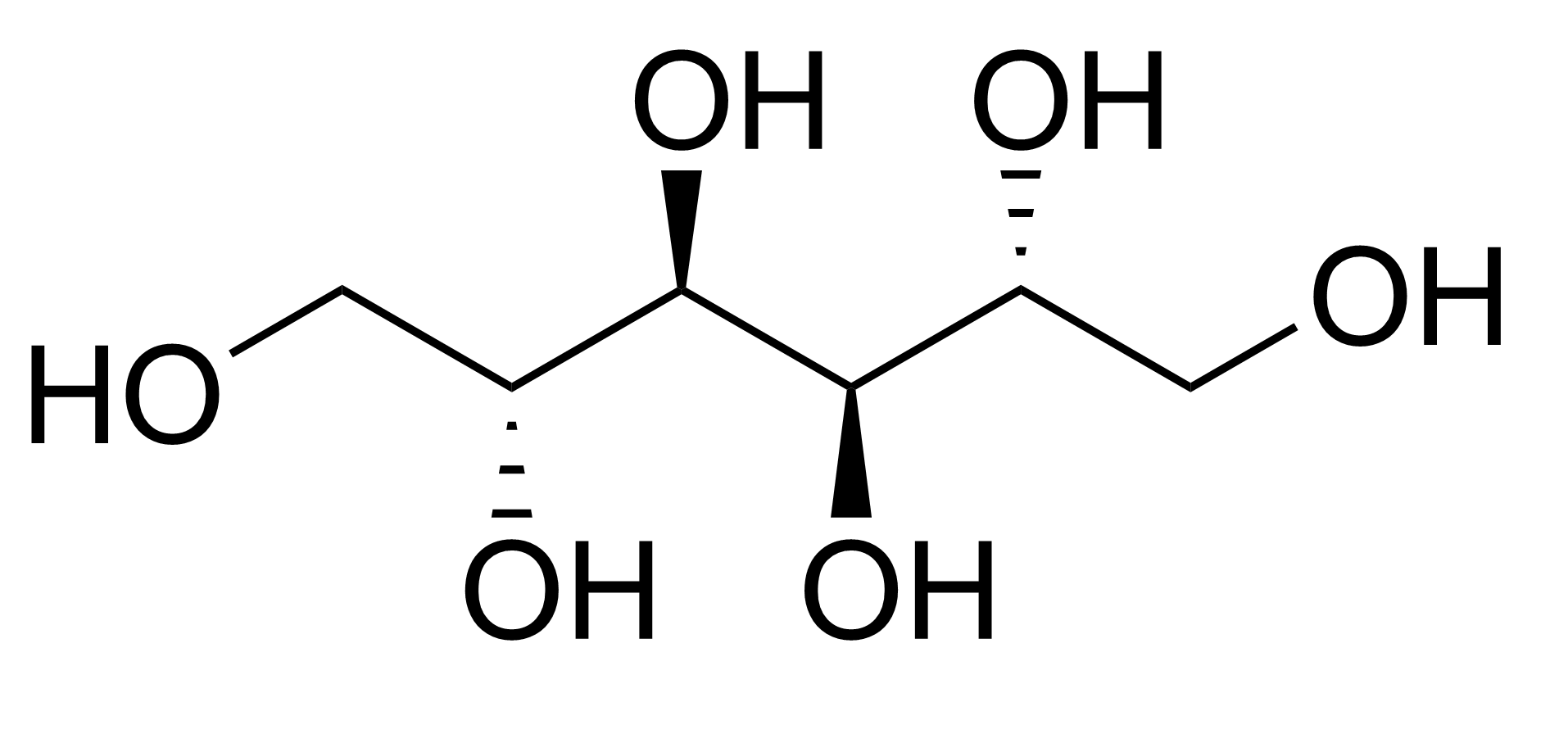
Estructura química del manitol Diuréticos osmóticos

Estructura química del manitol

Imagen: Chemical Structure of Mannitol por Edgar181. Licencia: Dominio Público
Mecanismo de acción

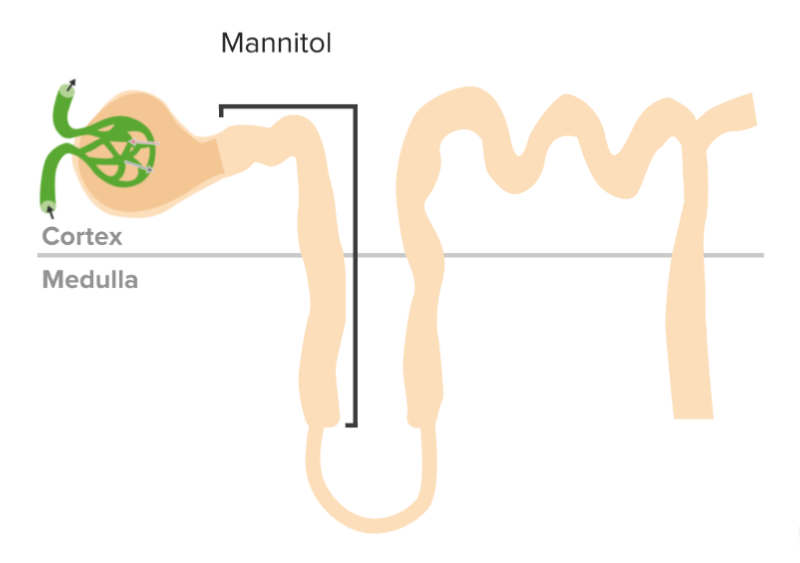
  • Los LOS Neisseria diuréticos osmóticos se filtran en EN Erythema nodosum is an immune-mediated panniculitis (inflammation of the subcutaneous fat) caused by a type IV (delayed-type) hypersensitivity reaction. It commonly manifests in young women as tender, erythematous nodules on the shins. Erythema Nodosum los LOS Neisseria túbulos renales, pero no se reabsorben → ↑ osmolaridad del líquido tubular
  • Debido a esta mayor osmolaridad del líquido tubular, el agua que normalmente se reabsorbería permanece en EN Erythema nodosum is an immune-mediated panniculitis (inflammation of the subcutaneous fat) caused by a type IV (delayed-type) hypersensitivity reaction. It commonly manifests in young women as tender, erythematous nodules on the shins. Erythema Nodosum los LOS Neisseria túbulos.
  • Sitios principales de acción en EN Erythema nodosum is an immune-mediated panniculitis (inflammation of the subcutaneous fat) caused by a type IV (delayed-type) hypersensitivity reaction. It commonly manifests in young women as tender, erythematous nodules on the shins. Erythema Nodosum la nefrona (áreas que son libremente permeables al AL Amyloidosis agua):
Mecanismo de acción Diuréticos osmóticos

Mecanismo de acción de los diuréticos osmóticos

Imagen por Lecturio. Licencia: CC BY-NC-SA 4.0

Efectos fisiológicos

  • Inicialmente, ↑ la osmolaridad del plasma Plasma The residual portion of blood that is left after removal of blood cells by centrifugation without prior blood coagulation. Transfusion Products:
    • Da lugar a una expansión inicial del volumen → puede precipitar un edema Edema Edema is a condition in which excess serous fluid accumulates in the body cavity or interstitial space of connective tissues. Edema is a symptom observed in several medical conditions. It can be categorized into 2 types, namely, peripheral (in the extremities) and internal (in an organ or body cavity). Edema pulmonar en EN Erythema nodosum is an immune-mediated panniculitis (inflammation of the subcutaneous fat) caused by a type IV (delayed-type) hypersensitivity reaction. It commonly manifests in young women as tender, erythematous nodules on the shins. Erythema Nodosum pacientes con insuficiencia cardíaca
    • Atrae agua hacia los LOS Neisseria vasos desde el parénquima cerebral y el espacio ocular → ↓ las presiones intracraneales e intraoculares
  • ↑ Osmolaridad del líquido tubular: diuresis osmótica
  • Efectos sobre la concentración de sodio:
    • El flujo urinario aumentado provoca un incremento en EN Erythema nodosum is an immune-mediated panniculitis (inflammation of the subcutaneous fat) caused by a type IV (delayed-type) hypersensitivity reaction. It commonly manifests in young women as tender, erythematous nodules on the shins. Erythema Nodosum la excreción de Na+.
    • La pérdida de agua supera las pérdidas de Na+, lo que, con el tiempo, provoca una hipernatremia.
    • A dosis muy altas o en EN Erythema nodosum is an immune-mediated panniculitis (inflammation of the subcutaneous fat) caused by a type IV (delayed-type) hypersensitivity reaction. It commonly manifests in young women as tender, erythematous nodules on the shins. Erythema Nodosum pacientes con insuficiencia renal, el manitol no puede ser eliminado eficazmente → ↑ la osmolaridad del plasma Plasma The residual portion of blood that is left after removal of blood cells by centrifugation without prior blood coagulation. Transfusion Products:
      • Esto atraerá más líquido, aumentando el volumen intravascular y puede llegar a provocar hiponatremia.
      • Es importante identificarlo porque el tratamiento debe dirigirse a aumentar la osmolaridad más que a bajar los LOS Neisseria niveles de Na+.

Farmacocinética

  • Absorción:
    • Poca absorción oral:
      • Normalmente se administra por vía intravenosa como una solución hipertónica
      • Cuando se administra por vía oral, puede causar diarrea osmótica
    • Inicio de acción:
      • Diuresis: 1–3 horas
      • Reducción de la presión intracraneal (PIC): 15–30 minutos
  • Distribución:
    • Confinado al AL Amyloidosis compartimento de líquido extracelular
    • No penetra la barrera hematoencefálica
    • Es filtrado libremente a través del glomérulo
    • No se reabsorbe ni se secreta en EN Erythema nodosum is an immune-mediated panniculitis (inflammation of the subcutaneous fat) caused by a type IV (delayed-type) hypersensitivity reaction. It commonly manifests in young women as tender, erythematous nodules on the shins. Erythema Nodosum los LOS Neisseria riñones
    • Volumen de distribución: 17 L
  • Metabolismo: mínimo metabolismo hepático al AL Amyloidosis glucógeno
  • Excreción:
    • Aproximadamente el 80% se excreta por vía renal como medicamento inalterado
    • El aclaramiento de manitol es aproximadamente igual a la TFG.
    • Vida media:
      • 0,5–2,5 horas con función renal normal
      • 6–36 horas en EN Erythema nodosum is an immune-mediated panniculitis (inflammation of the subcutaneous fat) caused by a type IV (delayed-type) hypersensitivity reaction. It commonly manifests in young women as tender, erythematous nodules on the shins. Erythema Nodosum casos de insuficiencia renal

Indicaciones

Las principales indicaciones para el uso de manitol incluyen:

  • Aumento de la PIC debido a:
    • Edema Edema Edema is a condition in which excess serous fluid accumulates in the body cavity or interstitial space of connective tissues. Edema is a symptom observed in several medical conditions. It can be categorized into 2 types, namely, peripheral (in the extremities) and internal (in an organ or body cavity). Edema cerebral
    • Masas cerebrales
  • Aumento de la presión intraocular (e.g., glaucoma Glaucoma Glaucoma is an optic neuropathy characterized by typical visual field defects and optic nerve atrophy seen as optic disc cupping on examination. The acute form of glaucoma is a medical emergency. Glaucoma is often, but not always, caused by increased intraocular pressure (IOP). Glaucoma agudo)
  • Nefrotoxicidad relacionada con la rabdomiólisis (actúa conservando el flujo urinario)
  • Como solución de irrigación durante procedimientos transuretrales (e.g., resección prostática)
  • Para mejorar la función renal durante el trasplante de riñón mientras se reduce el flujo sanguíneo (uso fuera de la indicación autorizada):
    • Administrado al AL Amyloidosis donante antes de la nefrectomía
    • Administrado al AL Amyloidosis receptor Receptor Receptors are proteins located either on the surface of or within a cell that can bind to signaling molecules known as ligands (e.g., hormones) and cause some type of response within the cell. Receptors antes de la revascularización
  • También puede administrarse para favorecer la diuresis con el fin de ↑ la excreción de sustancias tóxicas y/o metabolitos

Efectos Adversos y Contraindicaciones

Efectos adversos

  • Hiperpotasemia
  • Inicialmente:
    • Hipervolemia
    • Descompensación en EN Erythema nodosum is an immune-mediated panniculitis (inflammation of the subcutaneous fat) caused by a type IV (delayed-type) hypersensitivity reaction. It commonly manifests in young women as tender, erythematous nodules on the shins. Erythema Nodosum pacientes con insuficiencia cardíaca
    • Hiponatremia en EN Erythema nodosum is an immune-mediated panniculitis (inflammation of the subcutaneous fat) caused by a type IV (delayed-type) hypersensitivity reaction. It commonly manifests in young women as tender, erythematous nodules on the shins. Erythema Nodosum pacientes que reciben dosis altas o en EN Erythema nodosum is an immune-mediated panniculitis (inflammation of the subcutaneous fat) caused by a type IV (delayed-type) hypersensitivity reaction. It commonly manifests in young women as tender, erythematous nodules on the shins. Erythema Nodosum aquellos con insuficiencia renal
  • Efectos a largo plazo:
    • Deshidratación
    • Hipernatremia hipovolémica (porque con el tiempo las pérdidas de agua superan las de Na+ en EN Erythema nodosum is an immune-mediated panniculitis (inflammation of the subcutaneous fat) caused by a type IV (delayed-type) hypersensitivity reaction. It commonly manifests in young women as tender, erythematous nodules on the shins. Erythema Nodosum pacientes con función renal normal)
  • Otros síntomas:
    • Prurito
    • Eritema localizado, erupción o necrosis Necrosis The death of cells in an organ or tissue due to disease, injury or failure of the blood supply. Ischemic Cell Damage cutánea en EN Erythema nodosum is an immune-mediated panniculitis (inflammation of the subcutaneous fat) caused by a type IV (delayed-type) hypersensitivity reaction. It commonly manifests in young women as tender, erythematous nodules on the shins. Erythema Nodosum el lugar de la inyección (el manitol es un vesicante)
    • Mialgias y/o artralgias

Contraindicaciones

  • Anuria Anuria Absence of urine formation. It is usually associated with complete bilateral ureteral (ureter) obstruction, complete lower urinary tract obstruction, or unilateral ureteral obstruction when a solitary kidney is present. Acute Kidney Injury
  • Hipovolemia severa
  • Hemorragia intracraneal activa
  • Edema Edema Edema is a condition in which excess serous fluid accumulates in the body cavity or interstitial space of connective tissues. Edema is a symptom observed in several medical conditions. It can be categorized into 2 types, namely, peripheral (in the extremities) and internal (in an organ or body cavity). Edema pulmonar

Precauciones

  • El manitol puede acumularse en EN Erythema nodosum is an immune-mediated panniculitis (inflammation of the subcutaneous fat) caused by a type IV (delayed-type) hypersensitivity reaction. It commonly manifests in young women as tender, erythematous nodules on the shins. Erythema Nodosum el cerebro, provocando un rebote en EN Erythema nodosum is an immune-mediated panniculitis (inflammation of the subcutaneous fat) caused by a type IV (delayed-type) hypersensitivity reaction. It commonly manifests in young women as tender, erythematous nodules on the shins. Erythema Nodosum el aumento de la PIC
  • Utilizar con precaución en EN Erythema nodosum is an immune-mediated panniculitis (inflammation of the subcutaneous fat) caused by a type IV (delayed-type) hypersensitivity reaction. It commonly manifests in young women as tender, erythematous nodules on the shins. Erythema Nodosum pacientes con insuficiencia renal.
  • Utilizar con precaución en EN Erythema nodosum is an immune-mediated panniculitis (inflammation of the subcutaneous fat) caused by a type IV (delayed-type) hypersensitivity reaction. It commonly manifests in young women as tender, erythematous nodules on the shins. Erythema Nodosum el embarazo y la lactancia.

Comparación de medicamentos

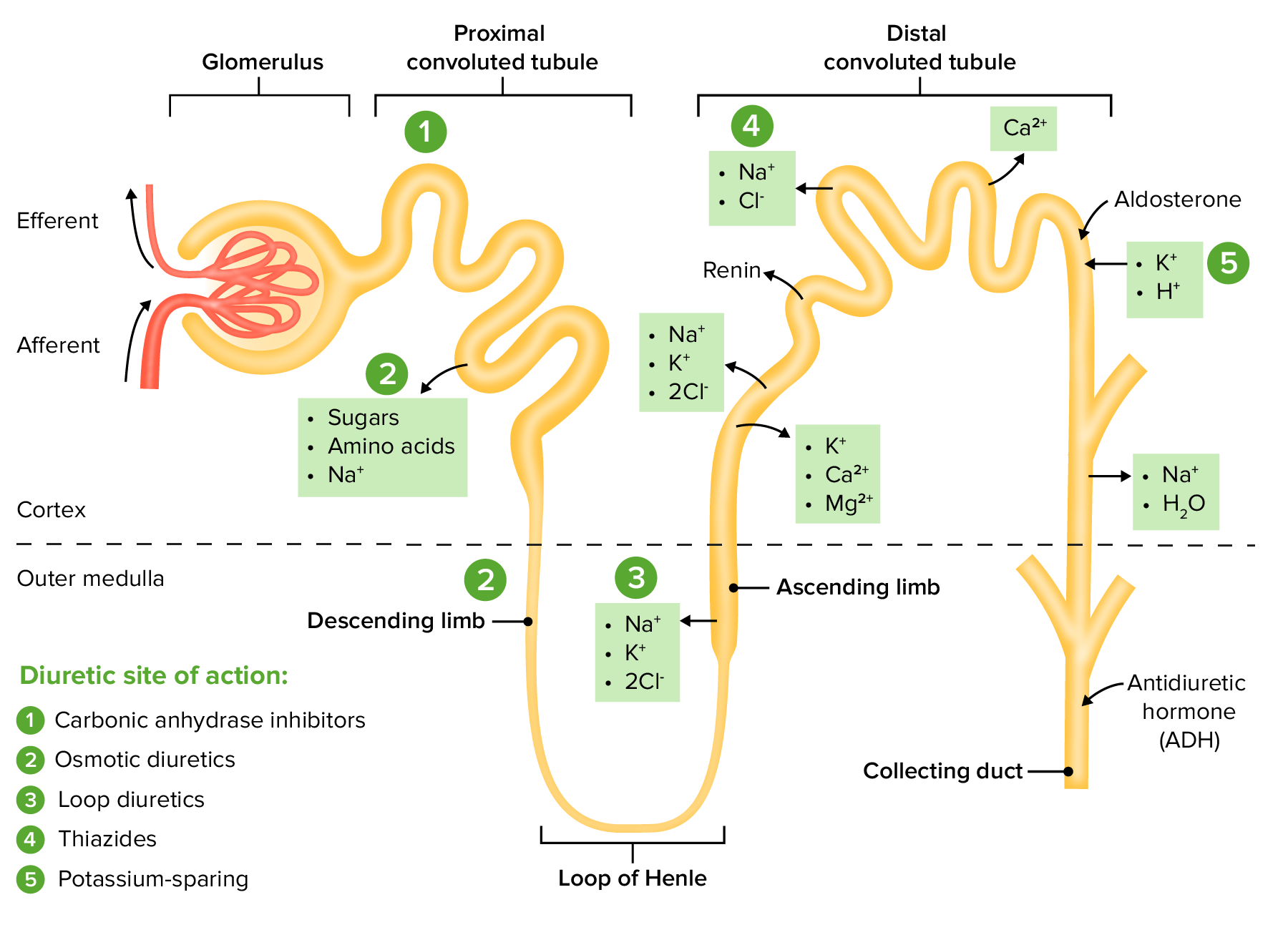
Algunos de los LOS Neisseria otros diuréticos más comunes son los LOS Neisseria diuréticos tiazídicos (e.g., la hidroclorotiazida), los LOS Neisseria diuréticos de asa ASA Anterior Cord Syndrome (e.g., la furosemida), los LOS Neisseria diuréticos ahorradores de potasio (e.g., la espironolactona) y los LOS Neisseria inhibidores de la anhidrasa carbónica (e.g., la acetazolamida).

Tabla: Comparación de los LOS Neisseria diuréticos
Medicamento Mecanismo Efecto fisiológico Indicación
Diurético tiazídico: Hidroclorotiazida ↓ Reabsorción de NaCl en EN Erythema nodosum is an immune-mediated panniculitis (inflammation of the subcutaneous fat) caused by a type IV (delayed-type) hypersensitivity reaction. It commonly manifests in young women as tender, erythematous nodules on the shins. Erythema Nodosum el túbulo contorneado distal a través de la inhibición del cotransportador de Na+/Cl.
  • ↓ Presión arterial
  • Edema Edema Edema is a condition in which excess serous fluid accumulates in the body cavity or interstitial space of connective tissues. Edema is a symptom observed in several medical conditions. It can be categorized into 2 types, namely, peripheral (in the extremities) and internal (in an organ or body cavity). Edema
  • Hipertensión
  • Edema Edema Edema is a condition in which excess serous fluid accumulates in the body cavity or interstitial space of connective tissues. Edema is a symptom observed in several medical conditions. It can be categorized into 2 types, namely, peripheral (in the extremities) and internal (in an organ or body cavity). Edema
Diurético de asa ASA Anterior Cord Syndrome: Furosemida Inhibe el cotransportador luminal de Na+/K+/Cl en EN Erythema nodosum is an immune-mediated panniculitis (inflammation of the subcutaneous fat) caused by a type IV (delayed-type) hypersensitivity reaction. It commonly manifests in young women as tender, erythematous nodules on the shins. Erythema Nodosum la rama gruesa ascendente del asa ASA Anterior Cord Syndrome de Henle
  • Edema Edema Edema is a condition in which excess serous fluid accumulates in the body cavity or interstitial space of connective tissues. Edema is a symptom observed in several medical conditions. It can be categorized into 2 types, namely, peripheral (in the extremities) and internal (in an organ or body cavity). Edema
  • ↓ Presión arterial
  • Edema Edema Edema is a condition in which excess serous fluid accumulates in the body cavity or interstitial space of connective tissues. Edema is a symptom observed in several medical conditions. It can be categorized into 2 types, namely, peripheral (in the extremities) and internal (in an organ or body cavity). Edema/ascitis
  • Insuficiencia cardíaca
  • Hipertensión
Diurético ahorrador de potasio: Espironolactona
  • ↓ Reabsorción de Na a través de los LOS Neisseria canales ENaC ENaC Sodium channels found on salt-reabsorbing epithelial cells that line the distal nephron; the distal colon; salivary ducts; sweat glands; and the lung. They are amiloride-sensitive and play a critical role in the control of sodium balance, blood volume, and blood pressure. Liddle Syndrome en EN Erythema nodosum is an immune-mediated panniculitis (inflammation of the subcutaneous fat) caused by a type IV (delayed-type) hypersensitivity reaction. It commonly manifests in young women as tender, erythematous nodules on the shins. Erythema Nodosum el túbulo colector
  • Inhibición de los LOS Neisseria receptores de aldosterona en EN Erythema nodosum is an immune-mediated panniculitis (inflammation of the subcutaneous fat) caused by a type IV (delayed-type) hypersensitivity reaction. It commonly manifests in young women as tender, erythematous nodules on the shins. Erythema Nodosum el túbulo colector
  • ↓ Presión arterial
  • Edema Edema Edema is a condition in which excess serous fluid accumulates in the body cavity or interstitial space of connective tissues. Edema is a symptom observed in several medical conditions. It can be categorized into 2 types, namely, peripheral (in the extremities) and internal (in an organ or body cavity). Edema
  • No causa ↑ excreción de K+
  • Efectos antiandrogénicos
  • Insuficiencia cardíaca
  • Edema Edema Edema is a condition in which excess serous fluid accumulates in the body cavity or interstitial space of connective tissues. Edema is a symptom observed in several medical conditions. It can be categorized into 2 types, namely, peripheral (in the extremities) and internal (in an organ or body cavity). Edema/ascitis
  • Hipertensión
  • Hirsutismo en EN Erythema nodosum is an immune-mediated panniculitis (inflammation of the subcutaneous fat) caused by a type IV (delayed-type) hypersensitivity reaction. It commonly manifests in young women as tender, erythematous nodules on the shins. Erythema Nodosum las mujeres
  • Hiperaldosteronismo primario
Inhibidor de la anhidrasa carbónica: Acetazolamida Inhibe tanto la hidratación del CO2 en EN Erythema nodosum is an immune-mediated panniculitis (inflammation of the subcutaneous fat) caused by a type IV (delayed-type) hypersensitivity reaction. It commonly manifests in young women as tender, erythematous nodules on the shins. Erythema Nodosum las células epiteliales del túbulo contorneado proximal como la deshidratación del H2CO3 en EN Erythema nodosum is an immune-mediated panniculitis (inflammation of the subcutaneous fat) caused by a type IV (delayed-type) hypersensitivity reaction. It commonly manifests in young women as tender, erythematous nodules on the shins. Erythema Nodosum el lumen del túbulo contorneado proximal; provocando una excreción ↑ de HCO3 y Na+.
  • ↑ Excreción urinaria de HCO3 acidosis Acidosis A pathologic condition of acid accumulation or depletion of base in the body. The two main types are respiratory acidosis and metabolic acidosis, due to metabolic acid build up. Respiratory Acidosis metabólica
  • ↓ Presión intraocular
  • Edema Edema Edema is a condition in which excess serous fluid accumulates in the body cavity or interstitial space of connective tissues. Edema is a symptom observed in several medical conditions. It can be categorized into 2 types, namely, peripheral (in the extremities) and internal (in an organ or body cavity). Edema en EN Erythema nodosum is an immune-mediated panniculitis (inflammation of the subcutaneous fat) caused by a type IV (delayed-type) hypersensitivity reaction. It commonly manifests in young women as tender, erythematous nodules on the shins. Erythema Nodosum pacientes con alcalosis metabólica
  • Mal agudo de montaña
  • ↑ Presión intraocular
  • Uso fuera de las indicaciones autorizadas: hidrocefalia de presión normal
Diuréticos osmóticos: Manitol ↑ Presión osmótica en EN Erythema nodosum is an immune-mediated panniculitis (inflammation of the subcutaneous fat) caused by a type IV (delayed-type) hypersensitivity reaction. It commonly manifests in young women as tender, erythematous nodules on the shins. Erythema Nodosum el filtrado glomerular → ↑ líquido tubular e impide la reabsorción de agua
  • ↓ Agua libre
  • ↓ Volumen sanguíneo cerebral
  • Aumento de la presión intracraneal
  • Aumento de la presión intraocular


Diuréticos

Sitios de acción, dentro de la nefrona, para las distintas clases de medicamentos diuréticos

Imagen por Lecturio. Licencia: CC BY-NC-SA 4.0

Referencias

  1. Lexicomp drug topic pages: mannitol (systemic). (2025). UpToDate. Retrieved January 19, 2025, from https://www.uptodate.com/contents/mannitol-systemic-drug-information 
  2. Ives, H.E. (2012). Diuretic agents. In Katzung, B.G., Masters, S.B., Trevor, A.J. (Eds.) Basic and Clinical Pharmacology, 12th ed. pp. 263‒264. Trevor AJ, Katzung BG, & Masters SB: McGraw-Hill.
  3. Mesghali, E., et al. (2019). Safety of peripheral line administration of 3% hypertonic saline and mannitol in the emergency department. J Emerg Med 56:431–436. https://pubmed.ncbi.nlm.nih.gov/30745195/
  4. Alnemari, A.M., et al. (2017). A comparison of pharmacologic therapeutic agents used for the reduction of intracranial pressure after traumatic brain injury. World Neurosurg 106:509–528. https://pubmed.ncbi.nlm.nih.gov/28712906/
  5. Pasarikovski, C.R., et al. (2017). Hypertonic saline for increased intracranial pressure after aneurysmal subarachnoid hemorrhage: a systematic review. World Neurosurg 105:1–6. https://pubmed.ncbi.nlm.nih.gov/28549643/
  6. Wakai, A., et al. (2013). Mannitol for acute traumatic brain injury. Cochrane Database Syst Rev 8:CD001049. https://pubmed.ncbi.nlm.nih.gov/23918314/
  7. Weber, A.C., et al. (2018). Effect of mannitol on the globe and orbital volumes in humans. Eur J Ophthalmol 28:163–167. https://pubmed.ncbi.nlm.nih.gov/28777386/
  8. Mc Causland, F.R., et al. (2012). Preservation of blood pressure stability with hypertonic mannitol during hemodialysis initiation. Am J Nephrol 36:168–174. https://pubmed.ncbi.nlm.nih.gov/22846598/
  9. Wakai, A., et al. (2013). Mannitol for acute traumatic brain injury. Cochrane Database of Systematic Reviews 8:CD001049. https://pubmed.ncbi.nlm.nih.gov/23918314/
  10. ASHP. (2024, April 10). Mannitol monograph for professionals. Retrieved January 14, 2025, from https://www.drugs.com/monograph/mannitol.html
  11. Rapoport, S. (2000). Osmotic opening of the blood-brain barrier: principles, mechanism, and therapeutic applications. Cell Mol Neurobiol 20:217–230. https://pubmed.ncbi.nlm.nih.gov/10696511/

¡Crea tu cuenta gratis o inicia una sesión para seguir leyendo!

Regístrate ahora y obtén acceso gratuito a Lecturio con páginas de concepto, videos médicos y cuestionarios para tu educación médica.

User Reviews

Que tengas una sesión de estudio alegre y navideña 🎁 Ahorra 50% en todos los planes >>

Details