Domina Conceptos Médicos

Estudia para la escuela de medicina y tus examenes con Lecturio.

Deficiencia de Alfa-1 Antitripsina

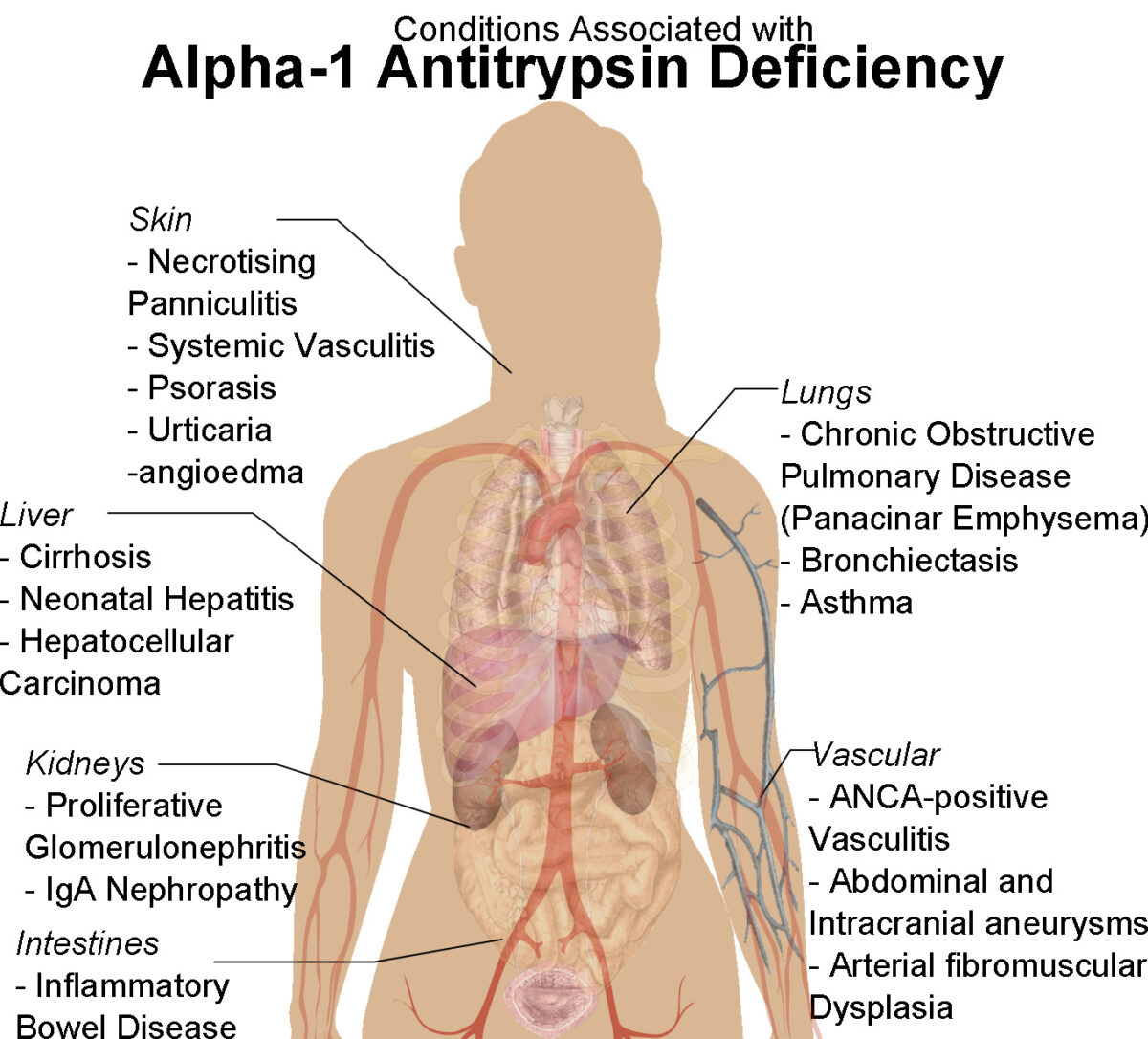
La deficiencia de alfa-1 antitripsina es un trastorno genético hereditario causado por mutaciones genéticas del gen SERPINA1, que provocan la producción defectuosa del inhibidor de la proteasa alfa-1 antitripsina. Estas mutaciones pueden dar lugar a deficiencia de la enzima causando enfermedades pulmonares, producción de una forma anormal de la enzima que provoque una disfunción hepática, o ambas. Los LOS Neisseria pacientes suelen presentar enfisema, neumotórax espontáneo, cirrosis, hepatitis o carcinoma hepatocelular. Al AL Amyloidosis momento no se dispone de cura. El tratamiento consiste es de soporte e incluye: la infusión de la proteína alfa-1-antitripsina, el tratamiento adecuado de las comorbilidades y el trasplante de hígado. El pronóstico puede variar según la forma de la enfermedad adquirida y la gravedad de los LOS Neisseria síntomas.

Last updated: Apr 25, 2025

Editorial responsibility: Stanley Oiseth, Lindsay Jones, Evelin Maza

Descripción General

Bioquímica

  • Glicoproteína de cadena única producida por los LOS Neisseria hepatocitos, los LOS Neisseria fagocitos y las células epiteliales del pulmón
    • Cadena de 394 aminoácidos que muestran varias glicoformas
    • Masa de 52 kDa
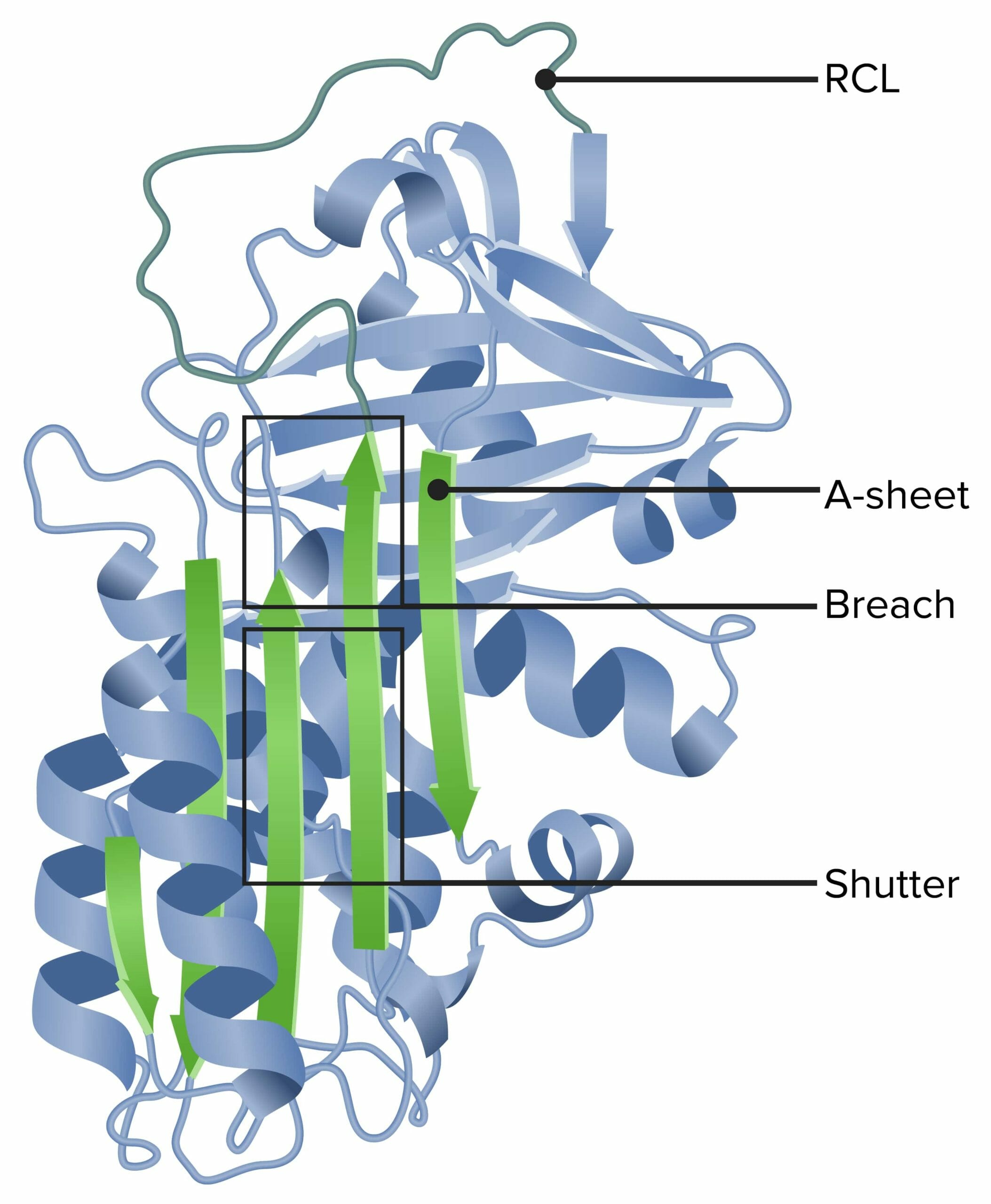
  • Pertenece a una superfamilia de proteasas llamadas serpinas:
    • SERine Protease INhibitor (Inhibidor de la proteasa de la serina, en EN Erythema nodosum is an immune-mediated panniculitis (inflammation of the subcutaneous fat) caused by a type IV (delayed-type) hypersensitivity reaction. It commonly manifests in young women as tender, erythematous nodules on the shins. Erythema Nodosum inglés)
    • Un grupo de proteínas con estructuras similares
    • Inactivan irreversiblemente las proteasas similares a la quimotripsina: provocan un cambio conformacional en EN Erythema nodosum is an immune-mediated panniculitis (inflammation of the subcutaneous fat) caused by a type IV (delayed-type) hypersensitivity reaction. It commonly manifests in young women as tender, erythematous nodules on the shins. Erythema Nodosum la estructura de la proteasa → inhiben la unión del sitio activo al AL Amyloidosis ligando

Funciones protectoras

  • La alfa-1 antitripsina inhibe la acción de muchas serinproteasas.
    • La elastasa de neutrófilos
    • Catepsina G
    • Proteinasa 3
  • Estas proteasas suelen ser producidas por los LOS Neisseria neutrófilos durante los LOS Neisseria procesos inflamatorios.
  • Se sabe que la ausencia de alfa-1 antitripsina tiene efectos nocivos en EN Erythema nodosum is an immune-mediated panniculitis (inflammation of the subcutaneous fat) caused by a type IV (delayed-type) hypersensitivity reaction. It commonly manifests in young women as tender, erythematous nodules on the shins. Erythema Nodosum el hígado y los LOS Neisseria pulmones, así como en EN Erythema nodosum is an immune-mediated panniculitis (inflammation of the subcutaneous fat) caused by a type IV (delayed-type) hypersensitivity reaction. It commonly manifests in young women as tender, erythematous nodules on the shins. Erythema Nodosum los LOS Neisseria vasos sanguíneos de tamaño pequeño y mediano.

Epidemiología

  • Enfermedad rara, pero se cree que está muy poco reconocida
  • Aproximadamente 1 de cada 1 600–2 000 nacidos vivos
  • Es el factor genético más común para los LOS Neisseria problemas hepáticos juveniles
  • Mayor incidencia entre los LOS Neisseria caucásicos de ascendencia europea
  • Incidencia más baja en EN Erythema nodosum is an immune-mediated panniculitis (inflammation of the subcutaneous fat) caused by a type IV (delayed-type) hypersensitivity reaction. It commonly manifests in young women as tender, erythematous nodules on the shins. Erythema Nodosum poblaciones asiáticas

Etiología

  • La única etiología conocida es la mutación genética heredada del gen SERPINA1.
    • El gen se encuentra en EN Erythema nodosum is an immune-mediated panniculitis (inflammation of the subcutaneous fat) caused by a type IV (delayed-type) hypersensitivity reaction. It commonly manifests in young women as tender, erythematous nodules on the shins. Erythema Nodosum el cromosoma 14 y es pleomórfico
    • ≥ 150 alelos conocidos
  • Herencia autosómica codominante:
    • Para que se exprese el fenotipo patológico debe heredarse un alelo mutado de cada progenitor:
      • El alelo M es normal.
      • El alelo S provoca una disminución moderada de la producción de proteínas.
      • El alelo Z provoca una disminución drástica de la producción de proteínas.
      • Individuos con genotipo MM y EM → normales
      • Individuos con genotipo MZ → mayor riesgo de enfermedad pulmonar
      • Individuos con genotipo ZZ → acumulación de proteínas no funcionales en EN Erythema nodosum is an immune-mediated panniculitis (inflammation of the subcutaneous fat) caused by a type IV (delayed-type) hypersensitivity reaction. It commonly manifests in young women as tender, erythematous nodules on the shins. Erythema Nodosum el hígado y altas tasas de enfermedad pulmonar
      • Homocigoto para mutaciones nulas → alfa-1-antitripsina plasmática no detectable, enfermedad pulmonar pero no hepática

Fisiopatología

Enfermedad hepática:

  • La sustitución de un solo aminoácido (e.g., E342K) da lugar a un plegamiento anormal de la proteína:
    • La anormalidad resultante en EN Erythema nodosum is an immune-mediated panniculitis (inflammation of the subcutaneous fat) caused by a type IV (delayed-type) hypersensitivity reaction. It commonly manifests in young women as tender, erythematous nodules on the shins. Erythema Nodosum la estructura conduce a una alteración en EN Erythema nodosum is an immune-mediated panniculitis (inflammation of the subcutaneous fat) caused by a type IV (delayed-type) hypersensitivity reaction. It commonly manifests in young women as tender, erythematous nodules on the shins. Erythema Nodosum la movilidad de la proteína hacia fuera de la célula secretora (e.g., los LOS Neisseria hepatocitos).
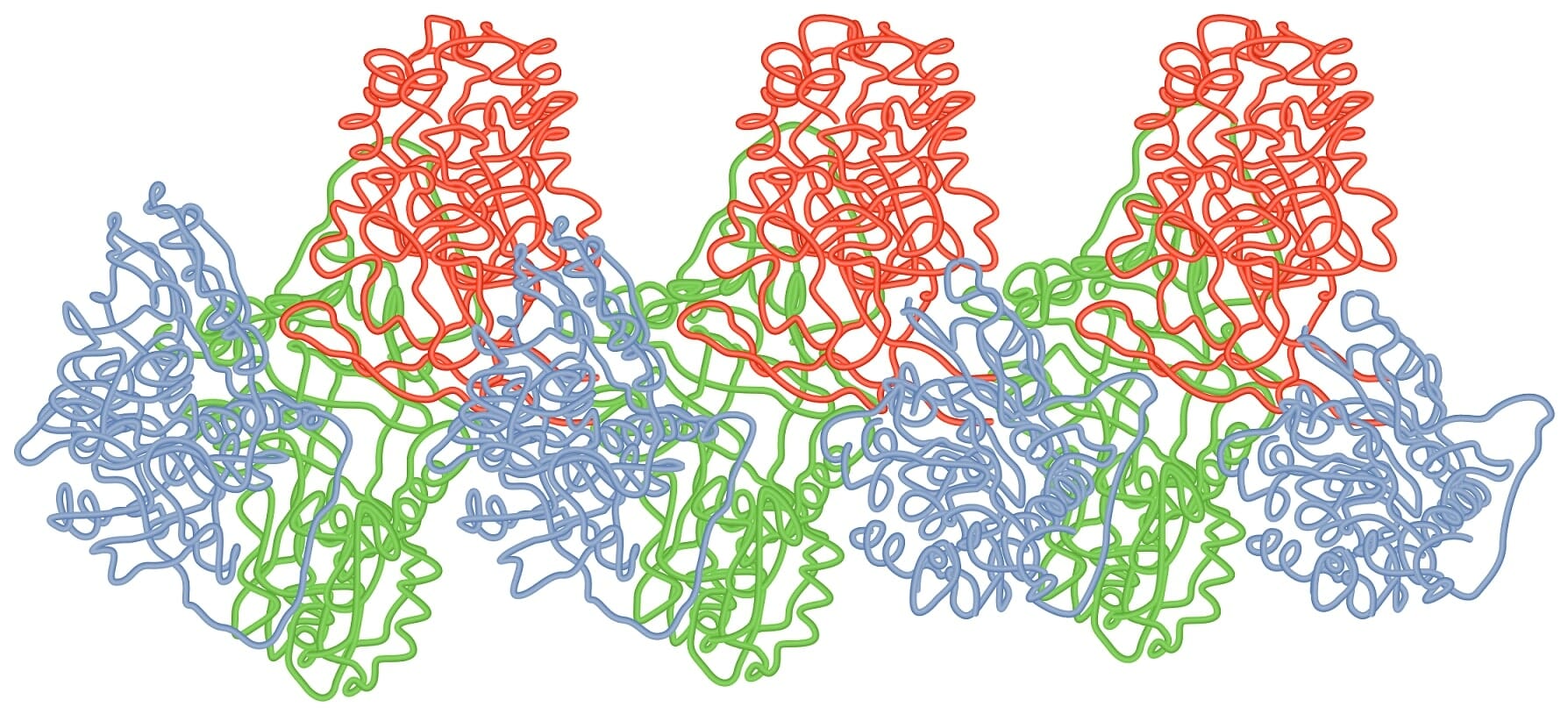
    • Esto conduce a daños por inflamación del hígado, ya que la proteína acumulada se polimeriza y se agrega
    • La toxicidad hepática (que produce inflamación) predispone al AL Amyloidosis cáncer de hígado.
  • Los LOS Neisseria factores ambientales desempeñan un papel fundamental en EN Erythema nodosum is an immune-mediated panniculitis (inflammation of the subcutaneous fat) caused by a type IV (delayed-type) hypersensitivity reaction. It commonly manifests in young women as tender, erythematous nodules on the shins. Erythema Nodosum el desarrollo de la enfermedad
  • Los LOS Neisseria polimorfismos de un solo nucleótido en EN Erythema nodosum is an immune-mediated panniculitis (inflammation of the subcutaneous fat) caused by a type IV (delayed-type) hypersensitivity reaction. It commonly manifests in young women as tender, erythematous nodules on the shins. Erythema Nodosum la región que flanquea el retículo endoplásmico; la manosidasa I puede afectar el grado de deficiencia de alfa-1 antitripsina y el daño hepático.

Enfermedad pulmonar:

  • En EN Erythema nodosum is an immune-mediated panniculitis (inflammation of the subcutaneous fat) caused by a type IV (delayed-type) hypersensitivity reaction. It commonly manifests in young women as tender, erythematous nodules on the shins. Erythema Nodosum individuos sanos:
    • Los LOS Neisseria neutrófilos utilizan la elastasa para degradar el moco y las bacterias.
    • El exceso de actividad de la elastasa degrada el tejido pulmonar → disminución del retroceso elástico del tejido → aumento de la distensibilidad pulmonar.
    • La alfa-1 antitripsina bloquea la actividad de la elastasa.
  • Pacientes afectados por AAT:
    • No equilibra la actividad de la elastasa.
    • El tabaquismo y la infección pulmonar aumentan la carga de elastasa en EN Erythema nodosum is an immune-mediated panniculitis (inflammation of the subcutaneous fat) caused by a type IV (delayed-type) hypersensitivity reaction. It commonly manifests in young women as tender, erythematous nodules on the shins. Erythema Nodosum el tejido pulmonar: destrucción de la estructura de los LOS Neisseria alvéolos y pérdida del retroceso elástico del tejido pulmonar, lo que conduce al AL Amyloidosis enfisema

Presentación Clínica

Hígado

  • La enfermedad se diagnostica en EN Erythema nodosum is an immune-mediated panniculitis (inflammation of the subcutaneous fat) caused by a type IV (delayed-type) hypersensitivity reaction. It commonly manifests in young women as tender, erythematous nodules on the shins. Erythema Nodosum la infancia y se manifiesta a partir de los LOS Neisseria 2 meses de edad
  • Síntomas neonatales:
    • Deterioro de la síntesis de la vitamina K que provoca hemorragias en EN Erythema nodosum is an immune-mediated panniculitis (inflammation of the subcutaneous fat) caused by a type IV (delayed-type) hypersensitivity reaction. It commonly manifests in young women as tender, erythematous nodules on the shins. Erythema Nodosum:
      • Muñón umbilical
      • Tracto gastrointestinal
      • Espacio intracraneal
      • Hematomas inexplicables
    • Hepatitis neonatal con ictericia colestática
  • Síntomas en EN Erythema nodosum is an immune-mediated panniculitis (inflammation of the subcutaneous fat) caused by a type IV (delayed-type) hypersensitivity reaction. It commonly manifests in young women as tender, erythematous nodules on the shins. Erythema Nodosum la infancia/adolescencia:
    • Hepatomegalia
    • Esplenomegalia
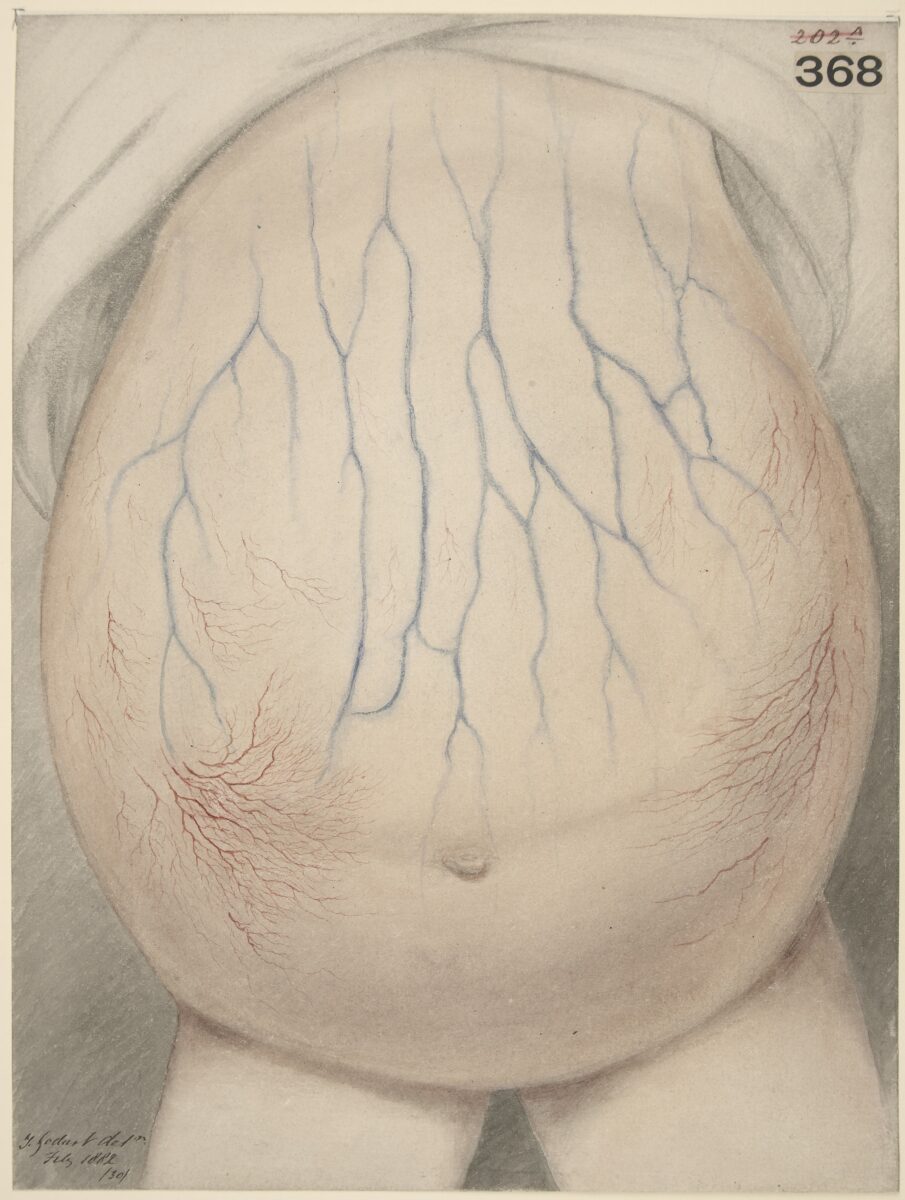
    • Ascitis
    • Varices esofágicas sangrantes
    • Ictericia escleral
  • Manifestaciones asociadas a la cirrosis en EN Erythema nodosum is an immune-mediated panniculitis (inflammation of the subcutaneous fat) caused by a type IV (delayed-type) hypersensitivity reaction. It commonly manifests in young women as tender, erythematous nodules on the shins. Erythema Nodosum adultos: carcinoma hepatocelular

Pulmones

  • El inicio de la manifestación pulmonar comienza en EN Erythema nodosum is an immune-mediated panniculitis (inflammation of the subcutaneous fat) caused by a type IV (delayed-type) hypersensitivity reaction. It commonly manifests in young women as tender, erythematous nodules on the shins. Erythema Nodosum la 3ra o 4ta década de la vida.
  • Síntomas comunes
    • Tos TOS Thoracic outlet syndrome (TOS) is a broad term used for a spectrum of syndromes related to the general region of the thoracic outlet, which involves the compression or irritation of elements of the brachial plexus, subclavian artery, or subclavian vein. Thoracic Outlet Syndrome
    • Dificultad para respirar
    • Producción crónica de esputo
    • Sibilancias
  • Los LOS Neisseria factores externos, como la exposición profesional a sustancias irritantes y el tabaquismo, aceleran la progresión de la enfermedad.

Otras manifestaciones de enfermedades inflamatorias

  • Paniculitis necrosante
  • Granulomatosis con poliangitis
  • Glomerulonefritis membranoproliferativa
  • Nefropatía por IgA IgA Represents 15-20% of the human serum immunoglobulins, mostly as the 4-chain polymer in humans or dimer in other mammals. Secretory iga is the main immunoglobulin in secretions. Immunoglobulins: Types and Functions
  • Otros síndromes de vasculitis Vasculitis Inflammation of any one of the blood vessels, including the arteries; veins; and rest of the vasculature system in the body. Systemic Lupus Erythematosus

Diagnóstico

  • La deficiencia de alfa-1 antitripsina debe sospecharse en EN Erythema nodosum is an immune-mediated panniculitis (inflammation of the subcutaneous fat) caused by a type IV (delayed-type) hypersensitivity reaction. It commonly manifests in young women as tender, erythematous nodules on the shins. Erythema Nodosum pacientes con antecedentes de:
    • Enfermedad hepática crónica, especialmente a una edad temprana
    • Enfisema a la edad < 45 años
    • Enfisema en EN Erythema nodosum is an immune-mediated panniculitis (inflammation of the subcutaneous fat) caused by a type IV (delayed-type) hypersensitivity reaction. It commonly manifests in young women as tender, erythematous nodules on the shins. Erythema Nodosum un no fumador
    • Antecedentes familiares de enfisema o enfermedad hepática y paniculitis
  • El diagnóstico de la deficiencia de alfa-1 antitripsina puede confirmarse mediante:
    • Medición de los LOS Neisseria niveles séricos de alfa-1 antitripsina:
      • Los LOS Neisseria pacientes con niveles séricos < 20 µmol/L (100 mg/dL) deben ser evaluados más a fondo.
      • La alfa-1 antitripsina se encuentra elevada en EN Erythema nodosum is an immune-mediated panniculitis (inflammation of the subcutaneous fat) caused by a type IV (delayed-type) hypersensitivity reaction. It commonly manifests in young women as tender, erythematous nodules on the shins. Erythema Nodosum los LOS Neisseria procesos inflamatorios.
      • La elevación en EN Erythema nodosum is an immune-mediated panniculitis (inflammation of the subcutaneous fat) caused by a type IV (delayed-type) hypersensitivity reaction. It commonly manifests in young women as tender, erythematous nodules on the shins. Erythema Nodosum la medición sérica no debe utilizarse como única base para la exclusión de la deficiencia de alfa-1-antitripsina
    • Pruebas genéticas específicas:
      • Pruebas de reacción en EN Erythema nodosum is an immune-mediated panniculitis (inflammation of the subcutaneous fat) caused by a type IV (delayed-type) hypersensitivity reaction. It commonly manifests in young women as tender, erythematous nodules on the shins. Erythema Nodosum cadena de polimerasa ( PCR PCR Polymerase chain reaction (PCR) is a technique that amplifies DNA fragments exponentially for analysis. The process is highly specific, allowing for the targeting of specific genomic sequences, even with minuscule sample amounts. The PCR cycles multiple times through 3 phases: denaturation of the template DNA, annealing of a specific primer to the individual DNA strands, and synthesis/elongation of new DNA molecules. Polymerase Chain Reaction (PCR)) para determinar qué alelos están presentes
      • Electroforesis en EN Erythema nodosum is an immune-mediated panniculitis (inflammation of the subcutaneous fat) caused by a type IV (delayed-type) hypersensitivity reaction. It commonly manifests in young women as tender, erythematous nodules on the shins. Erythema Nodosum gel de enfoque isoeléctrico para determinar qué variantes de proteínas están presentes
  • Radiografía de tórax:
    • No es diagnóstico, pero tiene un patrón característico
    • Bullas enfisematosas de predominio basilar
  • Biopsia de hígado:
    • Puede ayudar a determinar la extensión del daño hepático y la presencia de carcinoma hepatocelular
    • La presencia de inclusiones positivas y resistentes a la diastasa con la tinción de ácido periódico de Schiff es diagnóstico de la enfermedad

Tratamiento, Pronóstico y Complicaciones

Tratamiento

  • El tratamiento de apoyo está indicado en EN Erythema nodosum is an immune-mediated panniculitis (inflammation of the subcutaneous fat) caused by a type IV (delayed-type) hypersensitivity reaction. It commonly manifests in young women as tender, erythematous nodules on the shins. Erythema Nodosum las formas más leves o en EN Erythema nodosum is an immune-mediated panniculitis (inflammation of the subcutaneous fat) caused by a type IV (delayed-type) hypersensitivity reaction. It commonly manifests in young women as tender, erythematous nodules on the shins. Erythema Nodosum las fases iniciales de la enfermedad.
    • El estrés oxidativo de los LOS Neisseria hepatocitos y la estasis biliar pueden prevenirse administrando vitamina E y ácido ursodesoxicólico, respectivamente.
    • Educación para la salud, cesación del hábito tabáquico
    • Vacunación contra la gripe, el neumococo y la hepatitis A Hepatitis A Hepatitis A is caused by the hepatitis A virus (HAV), a nonenveloped virus of the Picornaviridae family with single-stranded RNA. HAV causes an acute, highly contagious hepatitis with unspecific prodromal symptoms such as fever and malaise followed by jaundice and elevated liver transaminases. Hepatitis A Virus y B indicada para reducir la progresión de la enfermedad
  • Solamente para la forma pulmonar: suele estar indicada la terapia de sustitución con plasma Plasma The residual portion of blood that is left after removal of blood cells by centrifugation without prior blood coagulation. Transfusion Products que contenga alfa-1 antitripsina
  • Formas severas:
    • Trasplante hepático
    • Trasplante de pulmón

Pronóstico y complicaciones

  • La afectación hepática en EN Erythema nodosum is an immune-mediated panniculitis (inflammation of the subcutaneous fat) caused by a type IV (delayed-type) hypersensitivity reaction. It commonly manifests in young women as tender, erythematous nodules on the shins. Erythema Nodosum la deficiencia de alfa-1 antitripsina progresa lentamente, pero puede acelerarse en EN Erythema nodosum is an immune-mediated panniculitis (inflammation of the subcutaneous fat) caused by a type IV (delayed-type) hypersensitivity reaction. It commonly manifests in young women as tender, erythematous nodules on the shins. Erythema Nodosum presencia de comorbilidades e infecciones.
  • Las manifestaciones evolucionan hacia formas graves, muy parecidas a las observadas en EN Erythema nodosum is an immune-mediated panniculitis (inflammation of the subcutaneous fat) caused by a type IV (delayed-type) hypersensitivity reaction. It commonly manifests in young women as tender, erythematous nodules on the shins. Erythema Nodosum otras enfermedades hepáticas crónicas.
  • Las complicaciones incluyen:
    • Hemorragias graves, especialmente entre los LOS Neisseria recién nacidos
    • Desnutrición
    • Malabsorción causada por colestasis
  • Los LOS Neisseria pacientes con deficiencia de alfa-1 antitripsina pueden seguir viviendo sin complicaciones relacionadas con el hígado.
  • En EN Erythema nodosum is an immune-mediated panniculitis (inflammation of the subcutaneous fat) caused by a type IV (delayed-type) hypersensitivity reaction. It commonly manifests in young women as tender, erythematous nodules on the shins. Erythema Nodosum casos avanzados, los LOS Neisseria trasplantes de hígado han demostrado resultados favorables.

Diagnóstico Diferencial

  • Bronquiectasias: enfermedad crónica en EN Erythema nodosum is an immune-mediated panniculitis (inflammation of the subcutaneous fat) caused by a type IV (delayed-type) hypersensitivity reaction. It commonly manifests in young women as tender, erythematous nodules on the shins. Erythema Nodosum la que se produce una dilatación y destrucción bronquial como consecuencia de la inflamación e infección. Los LOS Neisseria síntomas de las bronquiectasias incluyen disnea, tos TOS Thoracic outlet syndrome (TOS) is a broad term used for a spectrum of syndromes related to the general region of the thoracic outlet, which involves the compression or irritation of elements of the brachial plexus, subclavian artery, or subclavian vein. Thoracic Outlet Syndrome crónica y esputo purulento. El diagnóstico se basa en EN Erythema nodosum is an immune-mediated panniculitis (inflammation of the subcutaneous fat) caused by a type IV (delayed-type) hypersensitivity reaction. It commonly manifests in young women as tender, erythematous nodules on the shins. Erythema Nodosum imagenología, incluyendo rayos X y TC. El tratamiento incluye broncodilatadores y antibióticos para las exacerbaciones agudas
  • Enfermedad pulmonar obstructiva crónica (EPOC): enfermedad pulmonar caracterizada por una obstrucción progresiva y en EN Erythema nodosum is an immune-mediated panniculitis (inflammation of the subcutaneous fat) caused by a type IV (delayed-type) hypersensitivity reaction. It commonly manifests in young women as tender, erythematous nodules on the shins. Erythema Nodosum gran medida irreversible del flujo de aire. Los LOS Neisseria síntomas de la EPOC incluyen disnea progresiva y tos TOS Thoracic outlet syndrome (TOS) is a broad term used for a spectrum of syndromes related to the general region of the thoracic outlet, which involves the compression or irritation of elements of the brachial plexus, subclavian artery, or subclavian vein. Thoracic Outlet Syndrome crónica. En EN Erythema nodosum is an immune-mediated panniculitis (inflammation of the subcutaneous fat) caused by a type IV (delayed-type) hypersensitivity reaction. It commonly manifests in young women as tender, erythematous nodules on the shins. Erythema Nodosum el examen físico puede observarse una espiración prolongada, sibilancias o disminución de los LOS Neisseria ruidos respiratorios. El diagnóstico se confirma con pruebas de función pulmonar. El tratamiento incluye la cesación del hábito tabáquico, rehabilitación pulmonar y terapia con medicamentos.
  • Hepatitis autoinmune: inflamación del hígado que se produce cuando el sistema inmune del organismo se vuelve contra las células hepáticas. La presentación clínica va VA Ventilation: Mechanics of Breathing desde una presentación asintomática hasta los LOS Neisseria síntomas de insuficiencia hepática aguda. Se diagnostica mediante pruebas de anticuerpos anti-músculo liso en EN Erythema nodosum is an immune-mediated panniculitis (inflammation of the subcutaneous fat) caused by a type IV (delayed-type) hypersensitivity reaction. It commonly manifests in young women as tender, erythematous nodules on the shins. Erythema Nodosum suero y biopsia de hígado. El tratamiento es con corticoides y azatioprina. Con un tratamiento temprano, el pronóstico es favorable. Sin tratamiento adecuado, la mitad de los LOS Neisseria pacientes fallecen en EN Erythema nodosum is an immune-mediated panniculitis (inflammation of the subcutaneous fat) caused by a type IV (delayed-type) hypersensitivity reaction. It commonly manifests in young women as tender, erythematous nodules on the shins. Erythema Nodosum los LOS Neisseria primeros años.
  • Hepatitis viral: infección por un virus Virus Viruses are infectious, obligate intracellular parasites composed of a nucleic acid core surrounded by a protein capsid. Viruses can be either naked (non-enveloped) or enveloped. The classification of viruses is complex and based on many factors, including type and structure of the nucleoid and capsid, the presence of an envelope, the replication cycle, and the host range. Virology que provoca una enfermedad hepática aguda. La hepatitis viral se presenta con ictericia, fiebre con hepatomegalia, y la elevación de las transaminasas suele ser > 500. Se puede establecer una mayor diferenciación mediante la detección de antígenos y anticuerpos virales en EN Erythema nodosum is an immune-mediated panniculitis (inflammation of the subcutaneous fat) caused by a type IV (delayed-type) hypersensitivity reaction. It commonly manifests in young women as tender, erythematous nodules on the shins. Erythema Nodosum el suero. El tratamiento se basa en EN Erythema nodosum is an immune-mediated panniculitis (inflammation of the subcutaneous fat) caused by a type IV (delayed-type) hypersensitivity reaction. It commonly manifests in young women as tender, erythematous nodules on the shins. Erythema Nodosum la causa subyacente y, en EN Erythema nodosum is an immune-mediated panniculitis (inflammation of the subcutaneous fat) caused by a type IV (delayed-type) hypersensitivity reaction. It commonly manifests in young women as tender, erythematous nodules on the shins. Erythema Nodosum el caso de ciertos tipos, puede prevenirse mediante la vacunación.

Referencias

  1. Fromme, M., Strnad, P., & Trautwein, C. (2025). Alpha-1 antitrypsin deficiency-associated liver disease: From understudied disorder to the poster child of genetic medicine. Hepatology Communications, 9(5). https://doi.org/10.1513/AnnalsATS.202406-600FR
  2. Kumar, V., Abbas, A. K., & Aster, J. C. (2020). Robbins & Cotran pathologic basis of disease (10th ed.). Elsevier.
  3. Seçinti, E., Nelsen, L., Ferguson, S., Hahn-Pedersen, J., Saadi, M. S., & Gnanasakthy, A. (2025). Patient-centered assessment of treatment for alpha-1 antitrypsin deficiency: Literature review to identify concepts and measures for people with alpha1-antitrypsin deficiency. Orphanet Journal of Rare Diseases, 20(1), 83. https://doi.org/10.1186/s13023-025-03592-9
  4. Stoller, J. K. (2025). Detecting alpha-1 antitrypsin deficiency: Current state, impediments, opportunities, and future directions. Annals of the American Thoracic Society, 22(1), 23–31. https://doi.org/10.1513/AnnalsATS.202406-600FR
  5. Turner, A. M., Wu, H., Gupta, A., & Ross, J. (2025). Advancing the understanding and treatment of lung pathologies associated with alpha 1 antitrypsin deficiency. Therapeutic Advances in Respiratory Disease, 19, 17534666251318841. https://doi.org/10.1177/17534666251318841
  6. UpToDate. (2025a). Clinical manifestations, diagnosis, and natural history of alpha-1 antitrypsin deficiency. https://www.uptodate.com/contents/clinical-manifestations-diagnosis-and-natural-history-of-alpha-1-antitrypsin-deficiency
  7. UpToDate. (2025b). Extrapulmonary manifestations of alpha-1 antitrypsin deficiency. https://www.uptodate.com/contents/extrapulmonary-manifestations-of-alpha-1-antitrypsin-deficiency
  8. UpToDate. (2025c). Treatment of emphysema from alpha-1 antitrypsin deficiency. https://www.uptodate.com/contents/treatment-of-emphysema-from-alpha-1-antitrypsin-deficiency

¡Crea tu cuenta gratis o inicia una sesión para seguir leyendo!

Regístrate ahora y obtén acceso gratuito a Lecturio con páginas de concepto, videos médicos y cuestionarios para tu educación médica.

User Reviews

Que tengas una sesión de estudio alegre y navideña 🎁 Ahorra 50% en todos los planes >>

Details